Beschreibung
What Makes the ZQ110 the Right Injection Blow Moulding Machine for UK Manufacturers?
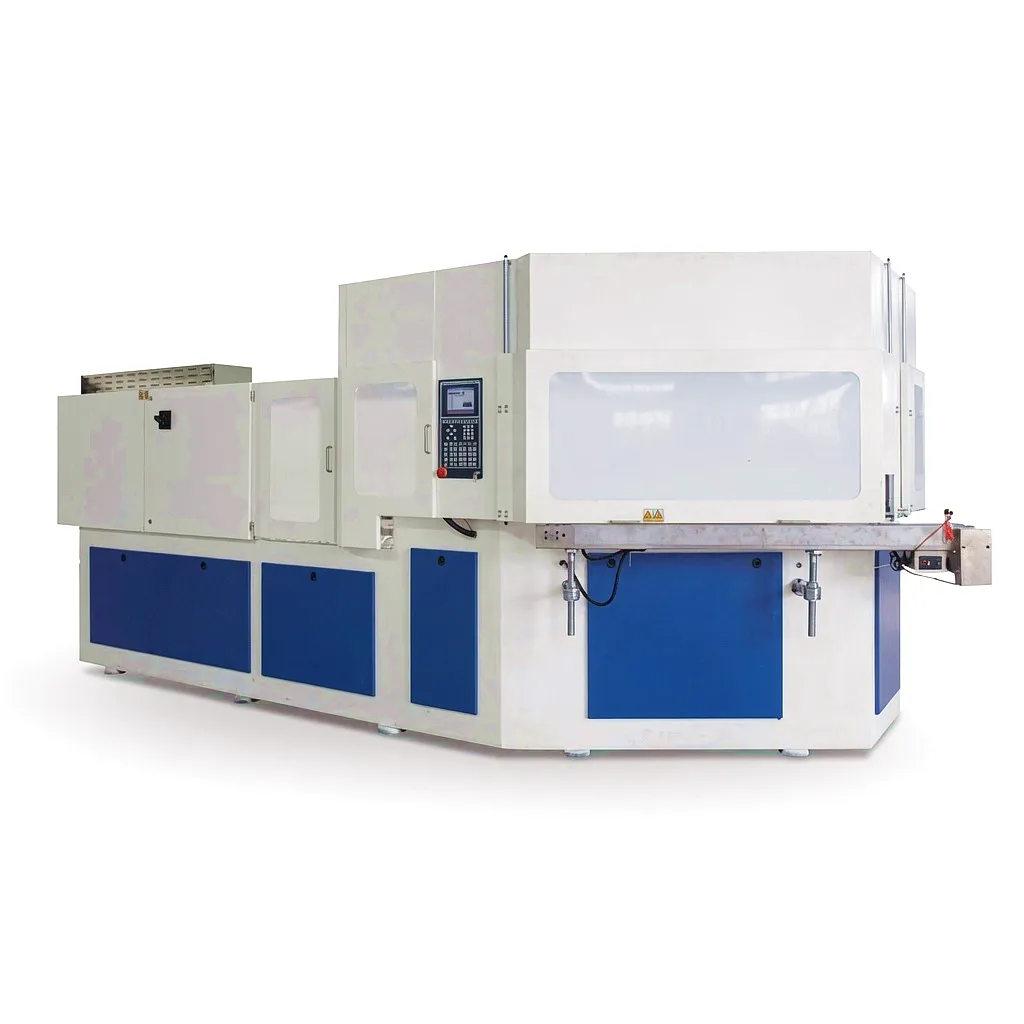 The ZQ110 injection blow moulding machine is a fully European-style, single-stage ISBM system engineered to meet the exacting standards of the UK plastics processing industry. Whether your operation produces pharmaceutical bottles, personal care containers, or food-grade packaging, this machine delivers consistent wall thickness, superior neck finish, and repeatable cycle accuracy — without the energy overhead typical of comparable models in its class. Its clamping force of 1,100 kN on the injection side is 20–30% greater than most machines in the same tier, and the unique pressurised clamping structure means the booster cylinder never participates in the open/close cycle, cutting total energy consumption by 20–30%. For production managers in the UK looking to reduce downtime and stabilise output quality, these are not marginal gains — they are the difference between a profitable line and a costly one.
The machine handles container volumes from 1 ml up to 2,000 ml across a broad cavity count range, making it genuinely versatile for contract manufacturers and dedicated production facilities alike. With a dry cycle of just 4 seconds and an operating power efficiency of 52–70%, the ZQ110 is built to run profitably in the competitive UK and European packaging market.
Core Engineering Advantages
Full European-Style Clamping
The clamping force of the ZQ110 is 20–30% larger than machines of comparable size. The hydraulic double system is standard, and the booster cylinder is completely decoupled from the open/close mechanism — reducing mechanical stress and prolonging tooling life significantly.
High-Precision Angle Divider
The standard high-precision angle divider achieves synchronised opening/closing and turret lifting in a single controlled action. This eliminates timing variation between stations — a critical factor when producing pharmaceutical containers that require ISO-grade consistency across every cavity.
20–30% Lower Energy Use
The unique pressurised clamping structure means energy is consumed only when it is needed. The operating power ratio of 52–70% of total installed power reflects real-world running costs rather than peak figures — an honest metric that resonates with UK plant engineers managing tight energy budgets.
Wide Container Range
From 1 ml laboratory-grade vials to 2,000 ml bulk containers, the ZQ110 covers an exceptional volume range without requiring a machine change. Up to 24 cavities for 10 ml containers makes this a genuinely high-throughput system for small-format personal care and pharmaceutical production.
Technical Specifications
Note: All parameters are for reference only. The company reserves the right to modify them due to equipment improvements.
| Category | Parameter | Unit | ZQ110 |
|---|---|---|---|
| Injection System | |||
| Injection System | Screw Diameter | mm | 65 |
| Injection System | Screw L/D | % | 22:1 |
| Injection System | Injection Weight | g | 540 |
| Injection System | Heating Power | KW | 20 |
| Injection System | Number of Barrel Zones | — | 5+N |
| Injection System | Injection Stroke | mm | 200 |
| Clamping System | |||
| Clamping | Clamping Force of Injection | KN | 1100 |
| Clamping | Opening Stroke for Injection | mm | 140 |
| Clamping | Clamping Force of Blowing | KN | 150 |
| Clamping | Opening Stroke for Blowing | mm | 140 |
| Clamping | Lifting Height of Rotary Table | mm | 70 |
| Mould | |||
| Mould | Max. Platen Size (L x W) | mm | 1100 x 460 |
| Mould | Mould Thickness | mm | 280 |
| Mould | Max. Bottle Diameter | mm | 120 |
| Mould | Max. Bottle Height | mm | 220 |
| Mould | Suitable Bottle Volume | ml | 1–2000 |
| Mould | Stripping Stroke | mm | 260 |
| Hydraulic System | |||
| Hydraulic | Hydraulic Pressure | MPa | 14 |
| Hydraulic | Motor Power | KW | 22 + 22 |
| Hydraulic | Dry Cycle | s | 4 |
| Hydraulic | Total Power | KW | 80 |
| Hydraulic | Operating Power | % | 52–70 |
| Other Parameters | |||
| Utilities | Min. Compressed Air Pressure | MPa | 0.7–1.2 |
| Utilities | Compressed Air Capacity | m3/min | 0.7 |
| Utilities | Water Flow Rate | m3/h | 4 |
| Utilities | Cooling Water Pressure | MPa | 0.3–0.4 |
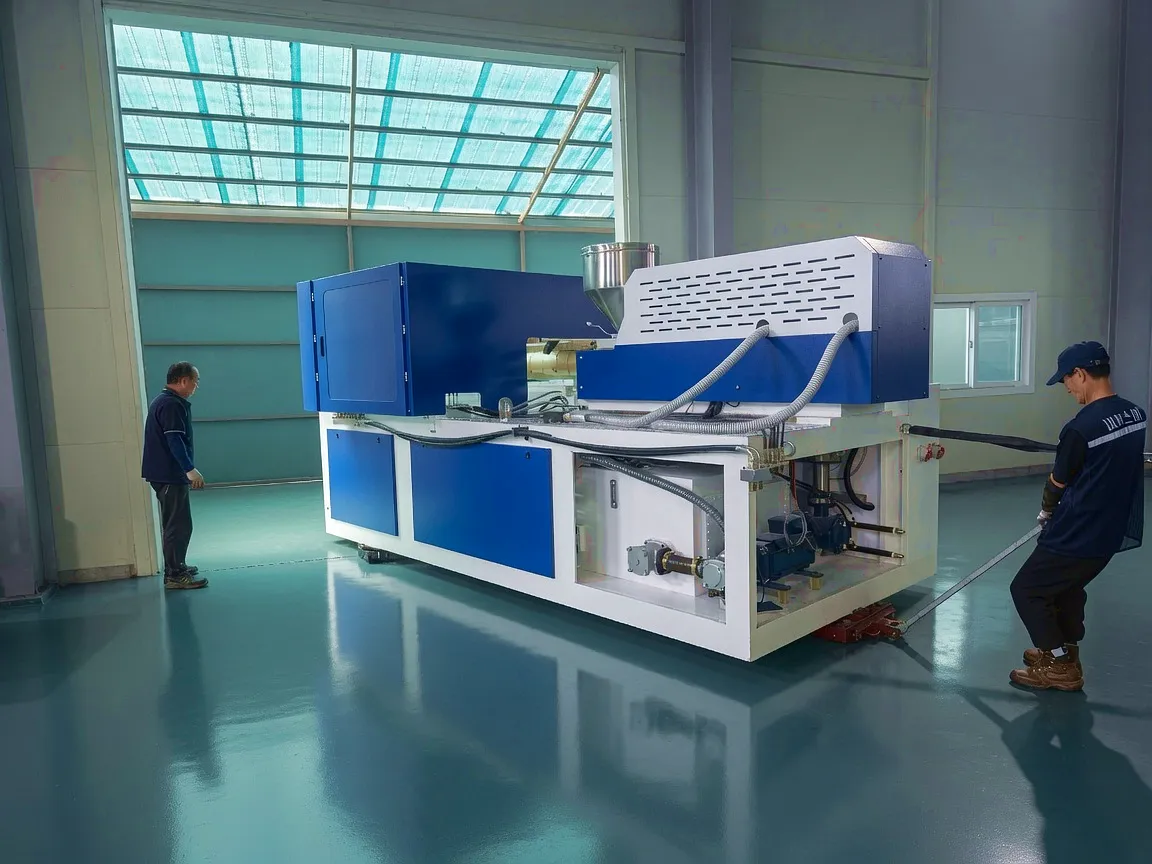
| Dimensions | Machine Dimensions (L x W x H) | m | 5 x 1.8 x 2.2 |
| Dimensions | Net Weight | Ton | 15 |
Mould Cavity Reference (For Reference Only)
Maximum cavity count per container volume — actual figures may vary by mould design.
| Approx. Volume | 10 ml | 30 ml | 60 ml | 100 ml | 250 ml | 500 ml | 1000 ml |
|---|---|---|---|---|---|---|---|
| Max. Cavities | 24 | 22 | 18 | 14 | 10 | 8 | 6 |
How the ZQ110 Injection Blow Moulding Machine Works
The ZQ110 operates on a three-station rotary principle: inject, blow, and eject — all performed in a single-stage process with no intermediate reheating step. Plastic resin (most commonly HDPE, PP, or PETG depending on application) is first injected around a core pin to form a parison at Station 1. The rotary table, driven by the precision angle divider, then indexes to Station 2, where blow air at 0.7–1.2 MPa expands the parison against the blow mould cavity walls to produce the final container shape. Station 3 handles ejection via the stripping stroke mechanism. Because the parison is transferred in a thermally controlled state — never fully cooled or reheated — wall thickness distribution is inherently more uniform than in two-stage stretch blow processes. This single-stage advantage is especially valued in pharmaceutical and cosmetic container production, where neck finish tolerances are measured in tenths of a millimetre.
The ZQ110 is deployed across a wide set of industries in the UK and European markets. Pharmaceutical manufacturers use it to produce HDPE tablet bottles and syrup bottles with tamper-evident necks. Personal care producers rely on it for shampoo, lotion, and serum containers where aesthetic surface quality is paramount. Food packaging operations use the machine for condiment bottles, cooking oil containers, and child-resistant closure formats. The machine’s compatibility with a 1–2,000 ml range means it can serve multiple product lines within the same facility, reducing capital expenditure on multiple machines.
Customer Success Case
Real-world application across UK and European packaging operations
Northern England Pharmaceutical Supplier Reduces Cycle Time by 22%
A mid-sized contract pharmaceutical packaging operation based in West Yorkshire had been running a two-stage blow moulding process for their 30 ml and 60 ml HDPE tablet bottles. Neck finish rejection rates were running at approximately 3.2%, and energy costs per 1,000 units were a persistent concern for their plant director. After installing the ZQ110 injection blow moulding machine and commissioning a 22-cavity 30 ml tool, the operation saw rejection rates fall to below 0.6% within the first three months. The single-stage process eliminated the parison reheating step, which had been the primary source of dimensional variation. Cycle time per batch dropped by 22%, and total line energy consumption per 1,000 units fell by approximately 27% — closely matching the machine’s rated performance advantage. The client has since ordered a second ZQ110 unit for a new 100 ml syrup bottle line.
“We replaced a competitor machine with the ZQ110 and the difference in neck finish quality was immediately obvious. Our pharmaceutical client signed a longer supply contract on the basis of the improved consistency alone.”
“The machine arrived well-packaged, installation was straightforward, and the engineering support team responded to our questions within hours. We have been running 24-cavity 10 ml vials for a cosmetics client for eight months without a single unplanned stoppage.”
“Energy costs in our facility are under constant scrutiny. The ZQ110’s actual running power consumption came in at the lower end of the stated 52–70% range, and that saving alone justified the capital investment within 18 months of operation.”
Manufacturing Facility & Custom Engineering Capability
Our injection blow moulding machines are produced in a purpose-built manufacturing facility with a complete in-house engineering team covering mechanical design, hydraulic systems, electrical controls, and tooling development. Every ZQ110 unit undergoes a full factory acceptance test — including dry-cycle verification, hydraulic pressure testing, and PLC programme validation — before despatch. The factory holds ISO-certified quality management processes, and traceability records are maintained for all critical components including the injection barrel, screw, and clamping platens.
A particularly important capability for UK and European customers is our product customisation service. We regularly work with buyers who need non-standard platen sizes, modified injection weight configurations, or specific PLC interfaces compatible with existing factory automation systems. If your application requires a container geometry outside the standard mould range — unusual bottle heights, asymmetric necks, or multi-layer wall constructions — our engineering team will review the specification and advise on tooling modifications or machine parameter adjustments. Customised machines typically carry the same warranty and lead time as standard units. Speak to our team about your specific requirements.
Explore Our Injection Blow Moulding Machine Range
Other models suited for different production scales and container formats
BPET-94V3
A compact, high-speed single-stage injection blow moulding machine ideally suited to small-format pharmaceutical vials and cosmetic containers. Features rapid cycle capability and precise neck finish control for demanding production environments.
BPET-125V4
A larger-format four-station injection blow moulding machine engineered for medium-to-high volume production of bottles up to 250 ml. Expanded clamping force and wider platen dimensions make it the right choice for producers scaling beyond the ZQ110’s core format.
Frequently Asked Questions
Common questions from UK buyers and procurement teams
Ready to Specify Your Next Injection Blow Moulding Machine?
Talk to our applications engineering team about your container format, material, and volume requirements. We’ll provide a detailed proposal including machine specification, mould cavity recommendations, and indicative pricing.