Beschreibung
Medicine Bottle Series
Blow Molding Machine
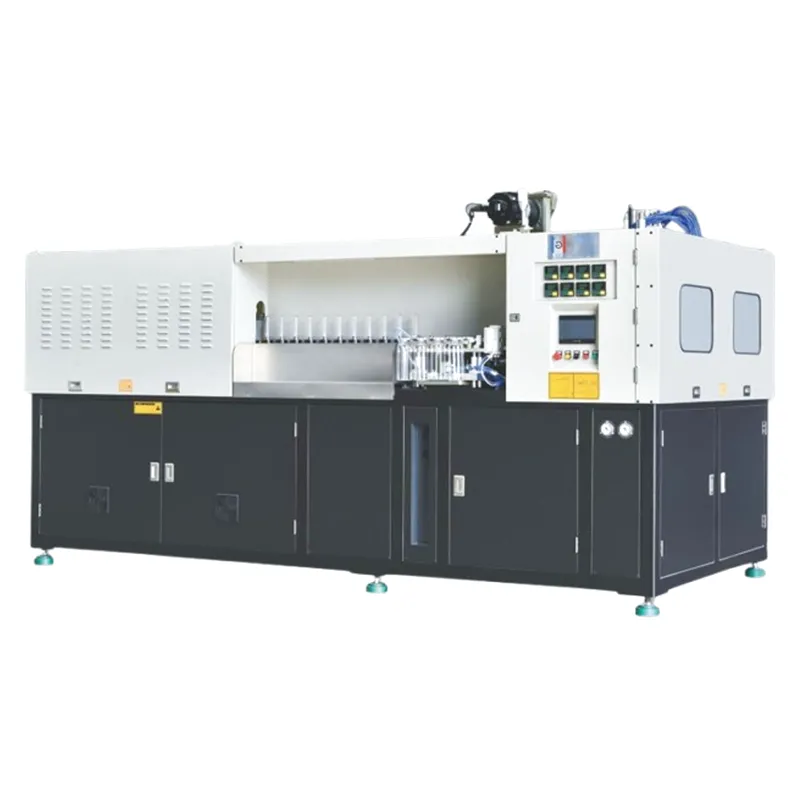
Engineered for pharmaceutical, cosmetic and hotel amenity containers — the UK market’s preferred two-step stretch blow molding solution with 7 mm micro-neck capability.
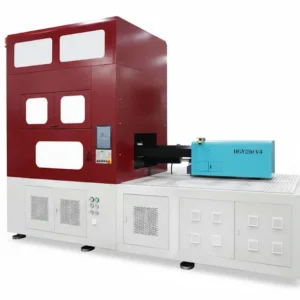
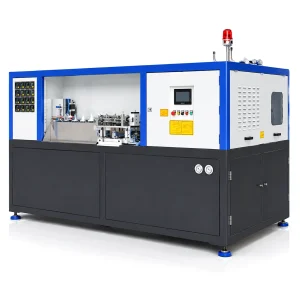
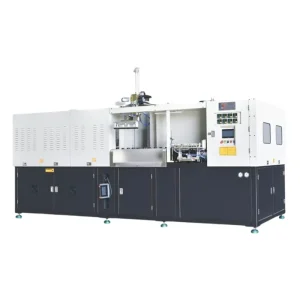
The Medicine Bottle Series is a dedicated line of two-step blow molding machines — also known as two-stage ISBM (Injection Stretch Blow Molding) equipment — designed to convert preforms into finished PET, PP or PC containers with exceptional dimensional accuracy. Unlike single-stage processes, the two-step method separates preform injection from bottle blowing, giving production teams independent control over each stage and allowing the use of pre-qualified standard preforms. This translates to higher output consistency and lower per-unit cost, particularly for high-volume pharmaceutical packaging runs across England, Scotland and Wales.
What sets this series apart in the UK market is its patent-registered 7 mm small-neck automatic mechanism — the first of its kind developed domestically in China and now exported to British pharmaceutical packaging converters. The machine suits eye-drop vials, hotel amenity bottles, nasal spray containers and a wide range of small-capacity healthcare vessels that demand tight neck tolerances and sterile-grade surface quality. Production speeds reach up to 7,200 bph in the six-cavity configuration, giving contract packagers a scalable throughput path without multiplying floor space.
Blown Bottle Samples
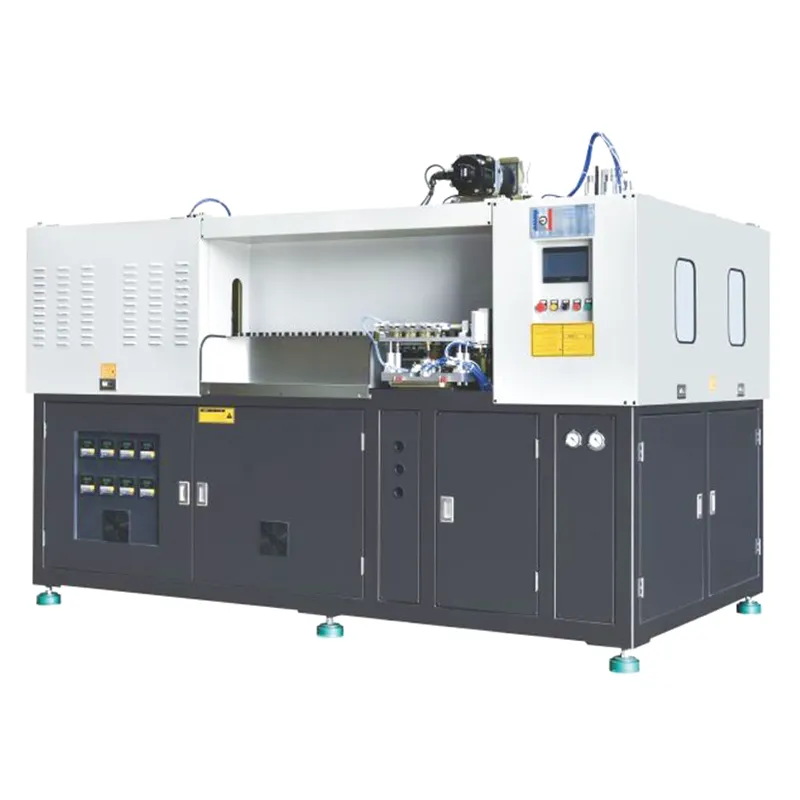
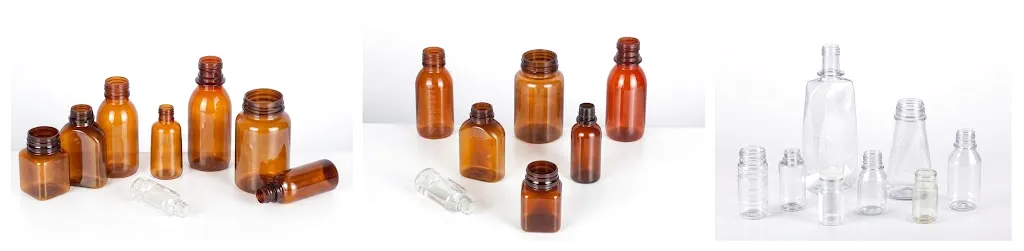
Below are finished containers produced by the Medicine Bottle Series — showcasing surface clarity, neck precision and wall uniformity achieved under two-step process conditions.
How the Two-Step Process Works
Step 1 — Preform Conditioning
Pre-qualified PET or PP preforms are loaded into an infrared oven where segmented heating zones bring each gate, body and neck section to the precise temperature profile required for stretch-blow. Independent zone control prevents over-heating of the neck finish — critical for pharmaceutical container integrity and tamper-evident sealing.
Step 2 — Stretch-Blow Station
Conditioned preforms transfer to the blow station where a mechanical stretch rod extends axially while high-pressure air (up to 35 kg/cm²) expands the material radially into the mold cavity. Biaxial orientation locks molecular chains into a highly crystalline lattice, delivering superior drop-impact resistance, gas-barrier performance and optical clarity — attributes demanded by UK GMP pharmaceutical packaging standards.
Materials & Compatible Resins
The machine handles PET (the predominant resin for pharmaceutical and cosmetic bottles), PP (favoured for hotel amenity and personal-care lines) and PC (used in laboratory and reagent vessels). Molds are precision-machined from aluminium alloy or pre-hardened steel depending on cavity count and run length, with optional mirror-polish inserts for premium bottle aesthetics.
Application Scenarios
Proven in UK and European pharmaceutical packaging facilities for eye-drop bottles (5–30 ml), nasal-spray vials, oral suspension containers, hotel shampoo and lotion bottles, and laboratory reagent flasks. The 7 mm micro-neck configuration targets specialist niches where conventional reheat-blow equipment lacks the neck-finish precision to maintain tight thread tolerances at high speed.
Why UK Packaging Converters Choose This Machine
First-to-market automatic mechanism for eye-drop and nasal-spray bottles requiring sub-10 mm neck finishes — a niche that larger generic reheat machines cannot reliably serve.
Six-cavity configuration reaches 7,200 bottles per hour, supporting contract packaging lines that require continuous high-volume throughput without sacrificing dimensional tolerance.
Decoupled preform production allows quality-checked standard preforms from any approved supplier, dramatically reducing downtime risk and simplifying GMP raw material traceability documentation.
Models span 2-cavity entry configurations through 6-cavity production variants, meaning converters can invest in a platform that grows with their order book without acquiring entirely new equipment.
Machine dimensions start from 2,660 x 1,660 x 2,150 mm — making installation practical in older UK industrial units with limited ceiling height or tight floor-plan constraints.
Typical heating power consumption ranges from 8 to 26 kW at steady state across the model range, well within the energy budgets of modern UK manufacturing facilities targeting reduced carbon output.
Technical Specifications
Full parameter table as per original machine datasheet — all models in the Medicine Bottle Series.
| Category | Parameter | Unit | HGA.AS-2C114.3 | HGA.AS-4C76.2 | HGA.ES-2C100 | HGA.ES-2C114.3 | HGA.ES-2C130 | HGA.ES-3C76 | HGA.ES-4C76 | HGA.ES-4C100 | HGA.ES-6C76 |
|---|---|---|---|---|---|---|---|---|---|---|---|
| Molding | Clamping Stroke | mm | 122 | 100 | 110 | 132 | 160 | 100 | 100 | 128 | 100 |
| Mold-Open Distance | mm | 302 | 280 | 280 | 312 | 360 | 300 | 300 | 328 | 300 | |
| Mold-Close Distance | mm | 180 | 180 | 170 | 180 | 200 | 200 | 200 | 200 | 200 | |
| Stretching Stroke | mm | 400 | 350 | 350 | 400 | 350 | 240 | 350 | 350 | 350 | |
| Mold-Open Distance (Bottom) | mm | 50 | 50 | 50 | 50 | 50 | 60 | 50 | 50 | 50 | |
| Bottle Mold-Close Distance | mm | 114.3 | 76.2 | 100 | 114.3 | 130 | 76 | 76 | 100 | 76 | |
| Preform Holder | — | 48 | 96 | 60 | 60 | 60 | 72 | 96 | 92 | 130 | |
| Cavities | — | 2 | 4 | 2 | 2 | 2 | 3 | 4 | 4 | 6 | |
| Container | Max. Container Volume | ml | 1000 | 500 | 500 | 1000 | 1500 | 700 | 700 | 800 | 700 |
| Neck Diameter Range | mm | 88 | 48 | 68 | 88 | 98 | 18–38 | 48 | 68 | 38 | |
| Max. Container Diameter | mm | 94 | 65 | 80 | 94 | 110 | 68 | 68 | 80 | 68 | |
| Max. Container Height | mm | 260 | 250 | 200 | 260 | 250 | 240 | 240 | 250 | 240 | |
| Theoretical Output | bph | 2000 | 4000 | 2400 | 2000 | 1800 | 3000 | 4800 | 4600 | 7200 | |
| Electrical System | Max. Heating Power | kW | 45 | 33 | 34 | 50 | 42.5 | 40 | 40 | 62.5 | 62.5 |
| Heating Power (Typical) | kW | 20 | 17 | 8–12 | 16 | 8–13 | 18 | 18 | 21 | 26 | |
| Air System | Operating Pressure | kg/cm² | 7 | 7 | 7 | 7 | 7 | 7 | 7 | 7 | 7 |
| Low Pressure Air Consumption | ltr/min | 600 | 600 | 600 | 600 | 600 | 1500 | 800 | 800 | 900 | |
| Blowing Pressure | kg/cm² | 35 | 35 | 26–35 | 35 | 26–35 | 35 | 35 | 35 | 35 | |
| High Pressure Air Consumption | ltr/min | 1600 | 4000 | 1000–1400 | 1000 | 1000–1500 | 2400 | 3900 | 4000 | 5800 | |
| Cooling Water | Operating Pressure | kg/cm² | 6 | 5–6 | 5–6 | 6 | 5–6 | 5–6 | 5–6 | 5–6 | 5–6 |
| Temperature | °C | 8–12 | 8–10 | 8–10 | 8–12 | 8–10 | 8–12 | 8–12 | 8–12 | 8–12 | |
| Flow Rate | ltr/min | 30 | 40 | 30 | 30 | 30 | 30 | 30 | 30 | 40 | |
| Machine | Size (L x W x H) | mm | 2660x1660x2150 | 3370x1850x2100 | 2900x1525x1930 | 3220x1660x2010 | 3600x1800x1980 | 2850x1850x2180 | 3290x1850x2260 | 4170x1930x2340 | 4690x2000x2000 |
| Weight | kg | 2600 | 4000 | 2000 | 3000 | 3000 | 3500 | 3500 | 4000 | 5500 |
Customer Success Story
A real-world deployment showing how the Medicine Bottle Series performs under pharmaceutical-grade production conditions.
A contract pharmaceutical packaging company in the West Midlands had previously relied on a legacy single-stage IBM machine to produce 10 ml eye-drop vials for NHS-supplied generic ophthalmic products. Neck-finish rejection rates were running at 3.8%, and the narrow 7 mm neck tolerances required for child-resistant caps were beyond the consistent capability of their existing equipment. After a site evaluation by our technical team, they commissioned an HGA.ES-4C76 two-step blow molding machine. Within eight weeks of installation and operator training, the line was running at 4,200 bph sustained throughput — well within rated capacity — with neck-finish reject rates reduced to 0.4%. The two-step process also simplified their raw material approval workflow under UK MHRA packaging guidelines, as preform qualification could be handled independently of blow-line scheduling. The customer subsequently ordered a second unit for their nasal-spray container line.
The neck consistency on these machines is genuinely impressive. We moved from constant micro-crack issues to virtually zero rejects on our 7 mm vials within the first production month. The technical support from the supplier was thorough throughout commissioning.
We supply hotel chains across the UK with small-format amenity bottles. Switching to the two-step process gave us the flexibility to run different preform sizes without changing the blow station setup. Changeovers that used to take a full shift now take under two hours.
Price-wise this machine sits well below European competitors offering similar cavity counts, and the build quality has held up through over 5,000 operating hours without any major component failures. Spare parts logistics from the supplier have been reliable and faster than we expected.
Manufacturing Facility & Custom Engineering
Our production base spans over 40,000 m² and houses a dedicated R&D centre for two-step blow molding equipment. Every machine in the Medicine Bottle Series is built, assembled and factory-tested in-house before shipment, with full documentation packages available to satisfy UK import compliance requirements.
We configure machines from 2 to 6 cavities and can engineer non-standard cavity arrangements for specialist bottle geometries not covered by the standard range.
Full mold design and manufacture in-house for customer-supplied bottle drawings. Mirror-finish inserts, hot-runner adapters and container-specific neck guides are standard custom options.
Full CE marking documentation, risk assessments, electrical schematics and spare-parts lists are supplied as standard, supporting UK machinery directive compliance from day one.
Factory-trained engineers are available to travel to UK sites for installation supervision, parameter optimisation and operator training — typically completed within five working days.
Related Injection Blow Molding Machines
For facilities seeking ZQ-series injection blow molding platforms — including direct replacements for legacy IBM equipment — our ZQ range offers proven one-step cycle performance for small-capacity pharmaceutical and cosmetic containers.
A direct-fit injection blow molding platform engineered as a modern replacement for the Bloma IBM45. Compact and suited to small-volume pharmaceutical bottle production lines.
Built for converters upgrading from the Jomar IBM175, the ZQ135 delivers improved output and reduced cycle time while maintaining full tooling compatibility with existing IBM175 mold sets.
Frequently Asked Questions
Ready to specify the right two-step blow molding machine for your UK pharmaceutical or cosmetic packaging line?
edit by gzl