Injection Blow Molding · UK Oral Care Industry
Injection Blow Molding Machines for Oral Care Packaging: Manufacturing Mouthwash Bottles, Fluoride Rinse Containers & Pump Dispensers
A technical and commercial deep-dive for UK packaging engineers, procurement managers and brand owners sourcing high-precision IBM equipment for chemically demanding oral care applications.
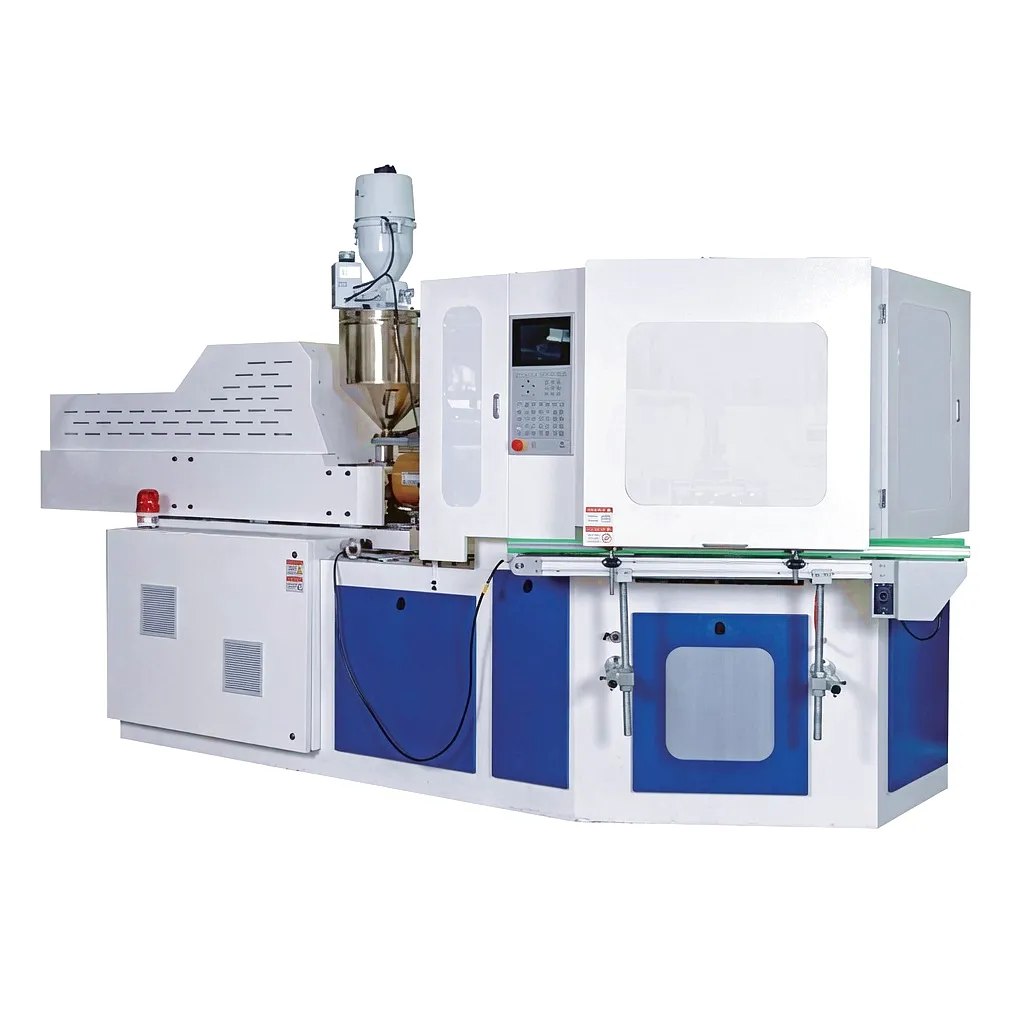 Oral care packaging sits at an unusual crossroads of chemistry, regulation and consumer aesthetics. A mouthwash bottle must endure prolonged contact with ethanol concentrations up to 27%, active fluoride compounds, cetylpyridinium chloride (CPC) and essential oil blends — all without leaching, stress-cracking or distorting. At the same time, UK retailers and pharmacy chains expect containers that project clinical confidence on the shelf. Injection blow molding machines have become the dominant solution for this category precisely because they marry dimensional precision with chemical-grade material performance in a single, tightly controlled production cycle.
Unlike extrusion blow molding, an injection blow molding machine begins by injection-molding a thermoplastic parison over a steel core rod, producing a preform with a gate-free, dimensionally exact neck and thread. The parison is then transferred — still on the core rod, retaining heat — to the blow station, where it is expanded into a finished container inside a closed mold. The core rod finally advances to an ejection station. Because the neck geometry is formed by injection rather than by pinch-off, wall thickness distribution is predictable and repeatable to within ±0.05 mm across a full production run. For oral care containers, this matters: thin spots in a mouthwash bottle wall are potential failure sites under sustained chemical exposure, and inconsistent neck tolerances cause cap torque problems at high-speed filling lines.
The UK oral care market — valued at over £1.4 billion annually and served by a supply chain that runs from manufacturing clusters in the West Midlands and South Wales through to contract fillers across Yorkshire and Essex — demands packaging machinery that can handle short runs for branded innovation as readily as it handles long runs for private label. Modern injection blow molding equipment, particularly servo-driven platforms, answers both needs through rapid mold change systems, programmable shot weight control and material-specific barrel configurations.
Working Principle of an Injection Blow Molding Machine
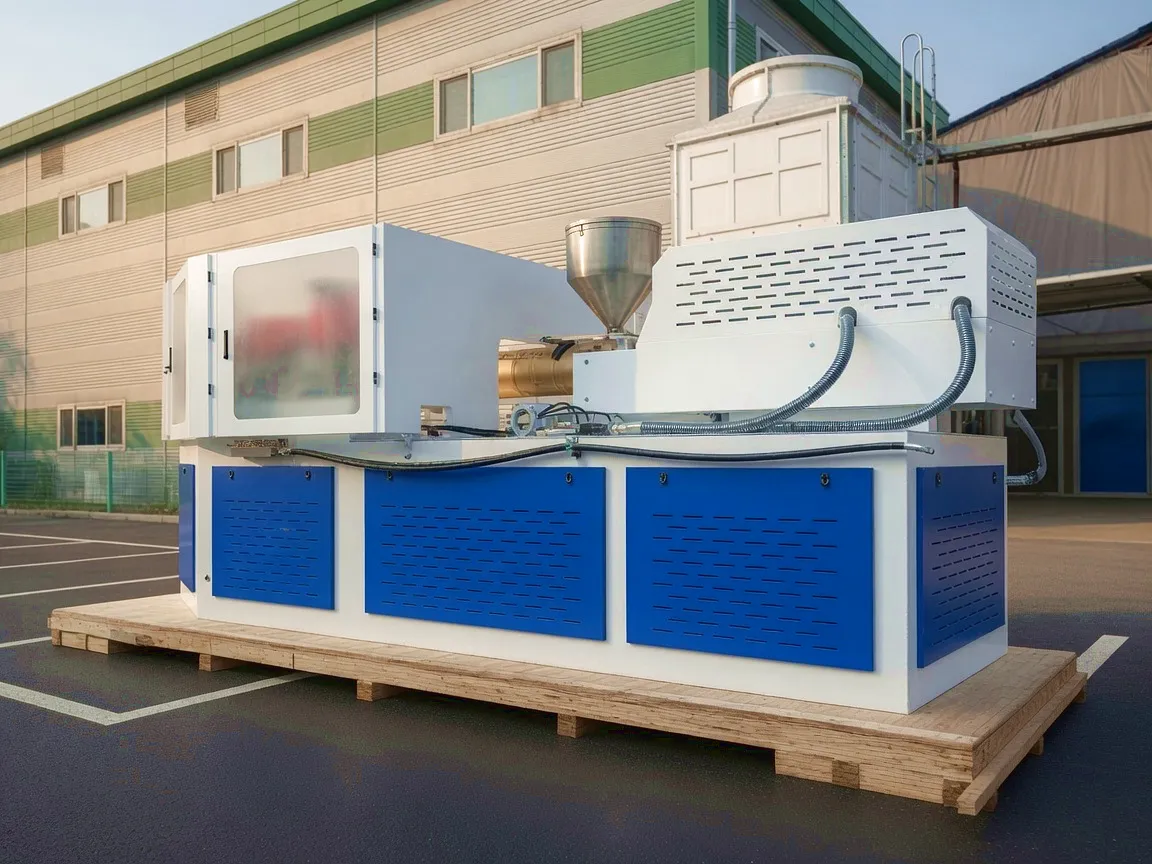
The operating cycle of an injection blow molding machine unfolds across three stations arranged radially around a central indexing head. Understanding each stage clarifies why this technology is so well-suited to the dimensional and chemical demands of oral care packaging.
At the injection station, plasticated resin — typically medical- or food-contact-grade PET, HDPE or PP — is injected around a hardened steel core rod inside a closed injection mold. The core rod defines the interior bore of the neck and body preform; the outer mold cavity defines the preform’s external geometry. Melt temperatures, injection pressure and hold time are precisely programmed to ensure complete cavity fill and accurate wall thickness at this stage. The resulting preform has a finished neck with threads and a sealing surface, already formed to final tolerance. This is the characteristic advantage of the IBM process over extrusion blow molding: the neck requires no trimming, no flash removal and no secondary thread-rolling operation.
The indexing head rotates the core rods — still carrying the hot preforms — to the blow station. Here, blow mold halves close around each preform, and compressed air at between 6 and 10 bar is introduced through the core rod tip, stretching the softened parison radially and longitudinally to fill the blow mold cavity. Because the preform has retained a controlled portion of its initial heat, the material orientation achieved during blowing is uniform, resulting in containers with consistent sidewall thickness and high optical clarity in the case of PET. For HDPE mouthwash bottles, this thermal uniformity translates into repeatable top-load crush resistance — a property that UK contract fillers increasingly specify, given the demands of automated capping and palletising systems.
After blowing and a brief cooling dwell, the head indexes again to the ejection station, where finished containers are stripped from the core rods and passed to a conveyor or take-away system. The entire three-station cycle — injection, blow, eject — repeats simultaneously on all stations with each index, so the machine’s output rate equals the number of cavities per station multiplied by cycles per minute. Modern servo-driven injection blow molding machines achieve cycle times of 8–15 seconds per cycle depending on container volume, resin grade and wall thickness specification.
Core Materials Used in Oral Care IBM Packaging
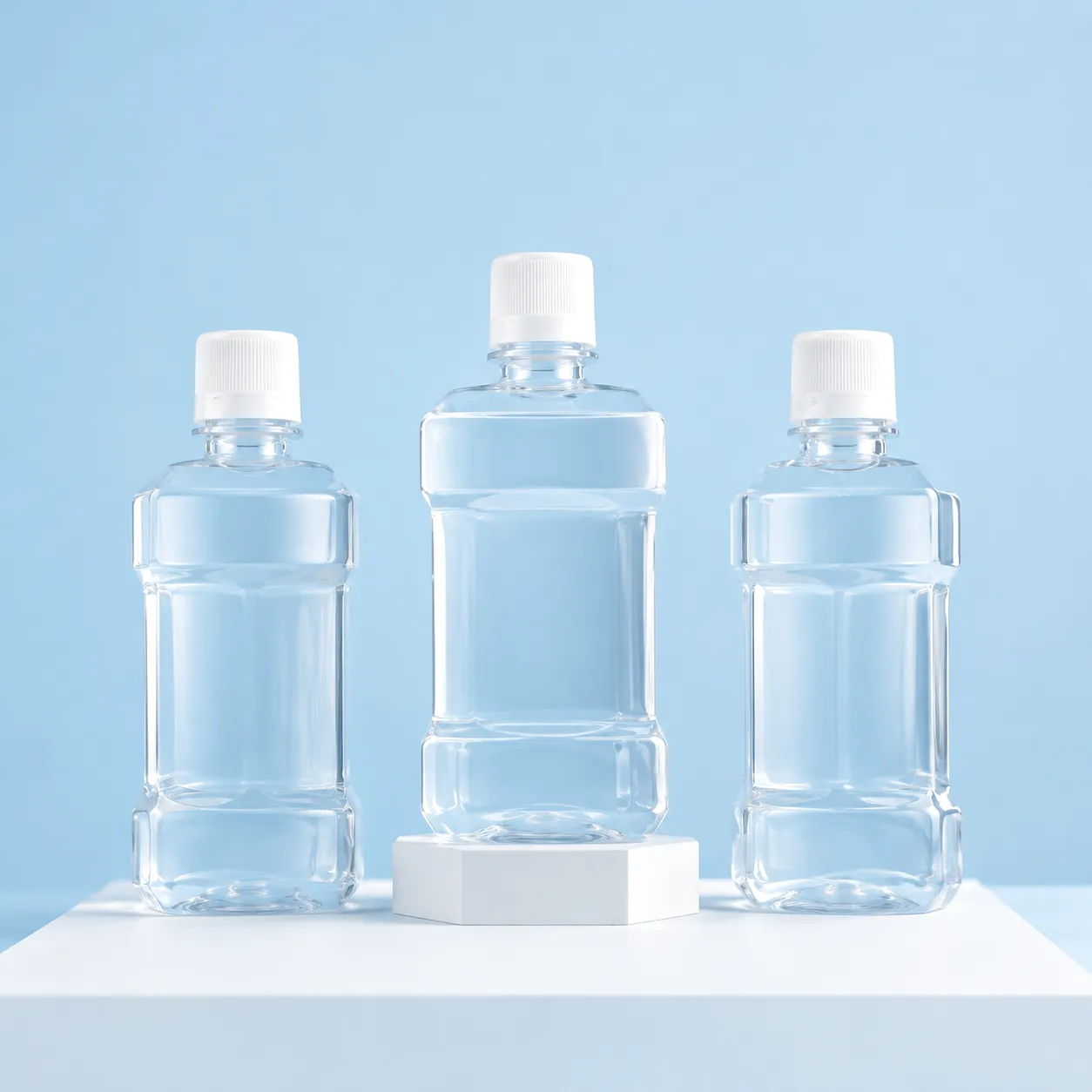 Material selection for oral care containers processed on an injection blow molding machine is driven by three concurrent requirements: chemical resistance to active pharmaceutical and cosmetic ingredients; compliance with UK and EU food-contact and cosmetic-packaging regulations (notably GB Regulation (EC) No 1935/2004 and the UK Cosmetics Regulation 2013); and meeting the aesthetic benchmarks demanded by UK pharmacy buyers and FMCG brand teams.
High-density polyethylene (HDPE) remains the primary choice for mouthwash bottles, fluoride rinse containers and gum-care liquid dispensers. Its outstanding chemical inertness — particularly resistance to alcohols, quaternary ammonium compounds such as CPC, and fluoride salts — makes it the industry default for volumes from 150 ml to 1 litre. Natural HDPE exhibits a haze level of 20–35%, acceptable for opaque or pigmented products; where translucency is needed to show liquid level, thin-wall HDPE grades or bimodal HDPE resins with improved optical properties are specified. The blow pin force requirements for HDPE on an injection blow molding machine are moderate, typically 4–7 bar, and demolding is straightforward owing to the material’s low coefficient of friction on polished tool steel.
Polyethylene terephthalate (PET) is used where optical clarity and premium shelf presence are the design brief. PET mouthwash bottles of 500 ml and above present a glass-like appearance while delivering the drop resistance and weight saving that shipping logistics demand. Drying to below 50 ppm moisture content before injection is essential; undried PET undergoes hydrolytic degradation in the barrel, resulting in IV drop, surface haze and reduced mechanical properties. Polypropylene (PP) fills the gap between HDPE and PET, offering a softer tactile feel, good chemical resistance to essential oils and a broad colour-matching palette. PP is frequently specified for children’s oral care liquid containers, pump bottles and flip-top dispensers where hinge durability is critical.
Technical Advantages of Injection Blow Molding for Oral Care
✅
Flash-Free Neck Geometry
Because the neck is injection-moulded rather than pinch-blown, there is no weld line, no flash and no trimming waste. For oral care containers requiring 410, 28/415 or 38mm closures, this translates to first-pass cap torque compliance at the filler without manual rework.
📈
Tight Wall Thickness Control
Wall uniformity of ±0.05 mm is achievable across the full container body, critical for mouthwash bottles that must resist stress cracking under sustained chemical load. UK fillers operating high-speed torque-check stations benefit from the dimensional consistency that the IBM process delivers.
⚙️
Single-Step, Scrap-Free Production
IBM combines injection and blowing in one integrated cycle with no regrind tail, no sprue and no trimmed flash to be reclaimed. This reduces material waste by 15–25% compared to extrusion blow moulding and removes a contamination risk point relevant to food-contact and cosmetic-grade production.
🔨
Rapid Format Changeover
Servo-driven IBM platforms support fast mold swap protocols — down to under 45 minutes with pre-warmed tooling — enabling UK contract packagers to switch between 150 ml children’s fluoride rinse and 1 L adult mouthwash formats on the same machine in a single shift without extended downtime.
💫
Chemical Inertness & Compliance
IBM-processed HDPE and PET containers meet EC 1935/2004 and UK Cosmetics Regulation requirements without secondary barrier coatings. The process’s inherent precision means wall thickness is never sacrificed at the base gate or pinch zone — the structural weak points most prone to chemical permeation.
🌎
Sustainability-Compatible Processing
IBM is fully compatible with PCR (post-consumer recycled) HDPE and rPET, both of which are increasingly demanded by UK retailers under voluntary commitments to the UK Plastics Pact. Shot weight precision on IBM equipment minimises the performance variability that is the main processing challenge with recycled-content resins.
Application Scenario: Oral Care — Mouthwash Bottles, Fluoride Rinse Containers & Pump Oral Care Dispensers
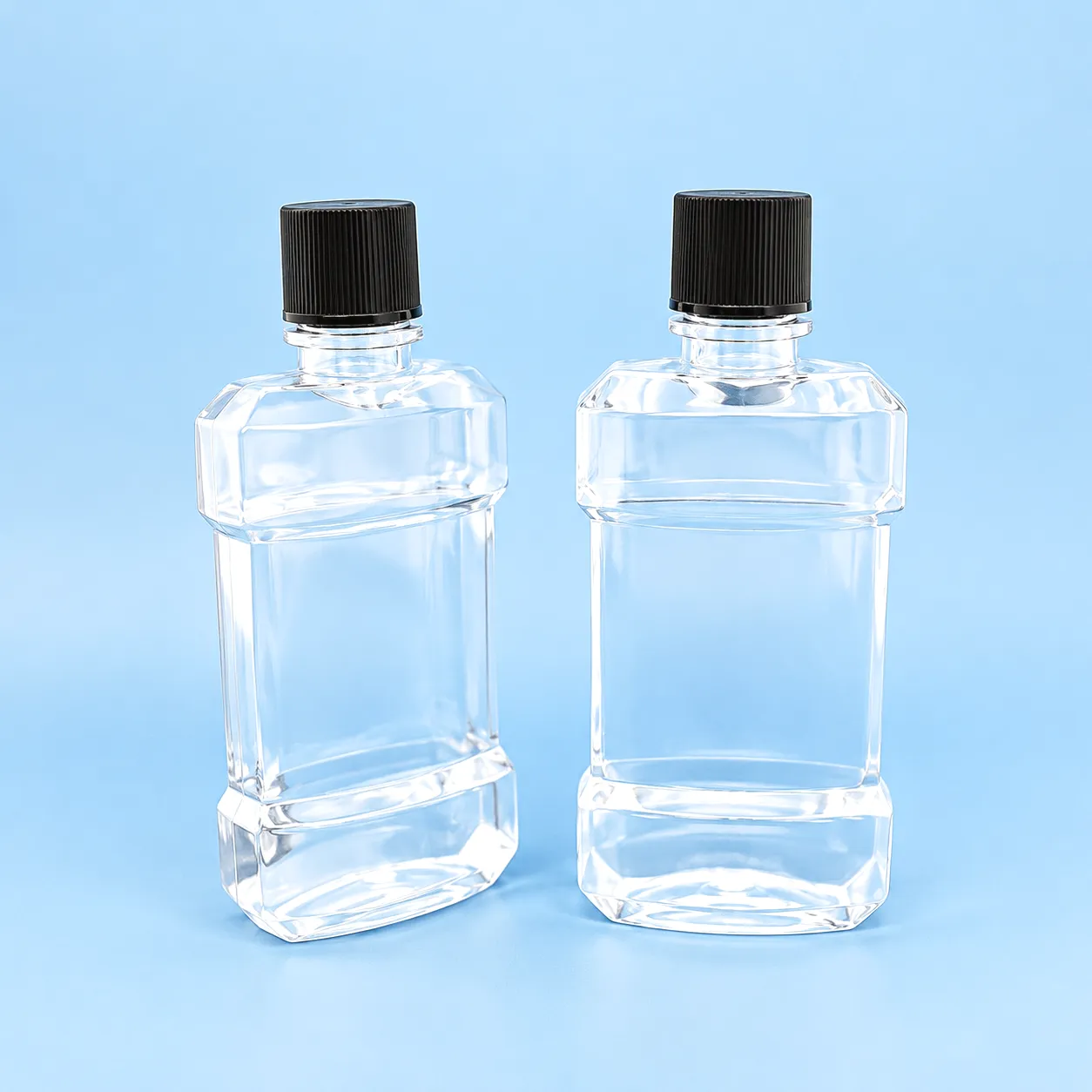 Oral care is one of the most technically demanding segments in consumer packaged goods for any injection blow molding machine operator. The product range is broad — mouthwash bottles from 150 ml to 1,000 ml, fluoride anti-caries rinse bottles, pump-dispensed gum care liquids, children’s oral care containers and interdental rinse refill packs — and each sub-category carries its own specification burden. Mouthwashes based on ethanol at concentrations up to 27% require HDPE or PET containers that pass ASTM F2136 stress-crack resistance testing; fluoride rinse containers must demonstrate sub-ppm fluoride migration through the container wall over a 24-month shelf life test at 40°C/75% RH; pump dispensers need a neck diameter and thread engagement depth precise enough to guarantee a torque-free but leak-proof fitment with standard 24/410 or 28/415 pump mechanisms.
The IBM process addresses all three challenges in one platform. Mouthwash bottle HDPE-grade selection — typically a bimodal HDPE with a melt flow index (MFI) of 0.3–0.6 g/10 min at 190°C/2.16 kg — provides the necessary ESCR performance (F50 > 1,000 hours in Igepal CO-630 per ASTM D1693 Method B Condition C) while remaining processable in the 180–220°C barrel temperature window of a standard injection blow molding machine. PET grades for transparent mouthwash containers are typically homopolymer PET with intrinsic viscosity (IV) of 0.72–0.80 dL/g, providing adequate melt strength during stretch-blow without yellowing. Crystallisation at the neck finish — induced by the injection phase — provides dimensional stability under hot-fill or steam-sterilisation conditions, which some anti-bacterial mouthwash fillers employ.
UK-market oral care brands sourcing IBM containers face an additional set of considerations centred on the supply chain. Birmingham-based and Manchester-area contract fillers running ISO 22716 (GMP for cosmetics) or BRCGS-certified lines expect containers that arrive ready for the filler without incoming inspection delays. The gate-free base and trimmed-free neck of IBM containers — in contrast to the trimmed tail of EBM containers — eliminate the most common cause of AQL failures at incoming goods receipt. For private-label programmes supplied to major UK grocery multiples including Tesco, Sainsbury’s and Boots, this reduction in incoming quality non-conformances has a direct commercial value. Several Birmingham contract fillers have reported a 30–40% reduction in container-related line stoppages after transitioning from extrusion blow molded to injection blow molded mouthwash bottles.
🧹 Mouthwash Bottles (150 ml – 1 L)
HDPE and PET IBM containers with gate-free bases, precision 38/400 or 28/415 necks, and ESCR values exceeding 1,000 hours in standard surfactant tests. Compatible with ethanol formulations up to 27% v/v and CPC active at standard concentrations.
💊 Fluoride Anti-Caries Rinse Bottles
HDPE IBM containers demonstrating fluoride barrier performance below 0.5 ppm migration over 24 months at accelerated stability conditions. Preferred in 250 ml and 500 ml formats for school-programme and pharmacy distribution across Yorkshire, Cheshire and Greater London NHS supply chains.
💦 Pump-Dispensed Oral Care Liquids
PP IBM containers with 24/410 neck finishes for pump dispensers serving gum care serums and premium whitening liquids. The dimensional precision of IBM neck forming enables consistent pump fitment torque across high-speed assembly lines without manual adjustment.
🔥 Children’s Oral Care Containers
PP and HDPE IBM containers in 150–200 ml formats for children’s fluoride rinse and low-alcohol mouthwash. Child-resistant closure compatibility is achievable through IBM’s precise neck geometry without a secondary CRC-fitting operation. Shapes can be customised for ergonomic grip by younger users.
🏚 Gum Care Serum Dispensers
Premium PP IBM containers for gum-health serum and periodontal rinse products, typically 50–100 ml with dropper or serum pump fitments. The clarity of IBM-processed transparent PP (haze <15%) enables the premium visual cues demanded by brands targeting the specialist dental retailer and dental practice channels in London, Bristol and Edinburgh.
Technical & Performance Parameters — Injection Blow Molding Machine (ZQ Series)
The table below summarises the key technical parameters applicable to injection blow molding machines used in oral care container production. These figures are representative of the ZQ-series platform and reflect the specifications most commonly requested by UK packaging engineers and procurement managers when evaluating supplier capability.
| Parameter | Specification / Range | Relevance to Oral Care |
|---|
| Container Volume Range | 5 ml – 2,000 ml | Covers full oral care range from 50 ml whitening serum to 1 L mouthwash |
| Number of Cavities | 1 – 6 per station (configurable) | Multi-cavity tooling for high-volume mouthwash; single-cavity for premium serum SKUs |
| Cycle Time | 8 – 15 seconds | Output of 1,400 – 2,600 units/hour (4-cavity, 500 ml format) |
| Compatible Resins | HDPE, PP, PET, PETG, PVC, PC | All primary oral care container resins processable on one platform |
| Barrel Temperature Range | 150°C – 300°C (zone-controlled) | Precise zone control prevents PET degradation; enables PP at lower temperatures |
| Blow Air Pressure | 4 – 10 bar | Adjustable per resin and container wall thickness requirement |
| Wall Thickness Tolerance | ±0.05 mm across body | Critical for ESCR compliance; eliminates thin-spot failure under alcohol stress |
| Neck Finish Precision | ±0.10 mm on OD; ±0.08 mm on thread depth | Ensures cap torque within 0.5–1.5 Nm band required by UK fillers’ cap-torque protocols |
| Clamping Force | 40 – 120 kN (model-dependent) | Scalable from small pharmacy-format containers to large 1 L mouthwash bottles |
| Energy Consumption | 12 – 35 kW (servo-driven models) | Up to 35% energy saving vs. hydraulic machines — supports UK Net Zero commitments |
| Mold Change Time | < 45 minutes (pre-warmed tooling) | Enables multi-SKU oral care production on a single shift without long downtime |
| Control System | PLC + HMI touch screen; Industry 4.0 data output | Process data logging for GMP batch records required by BRCGS-certified UK fillers |
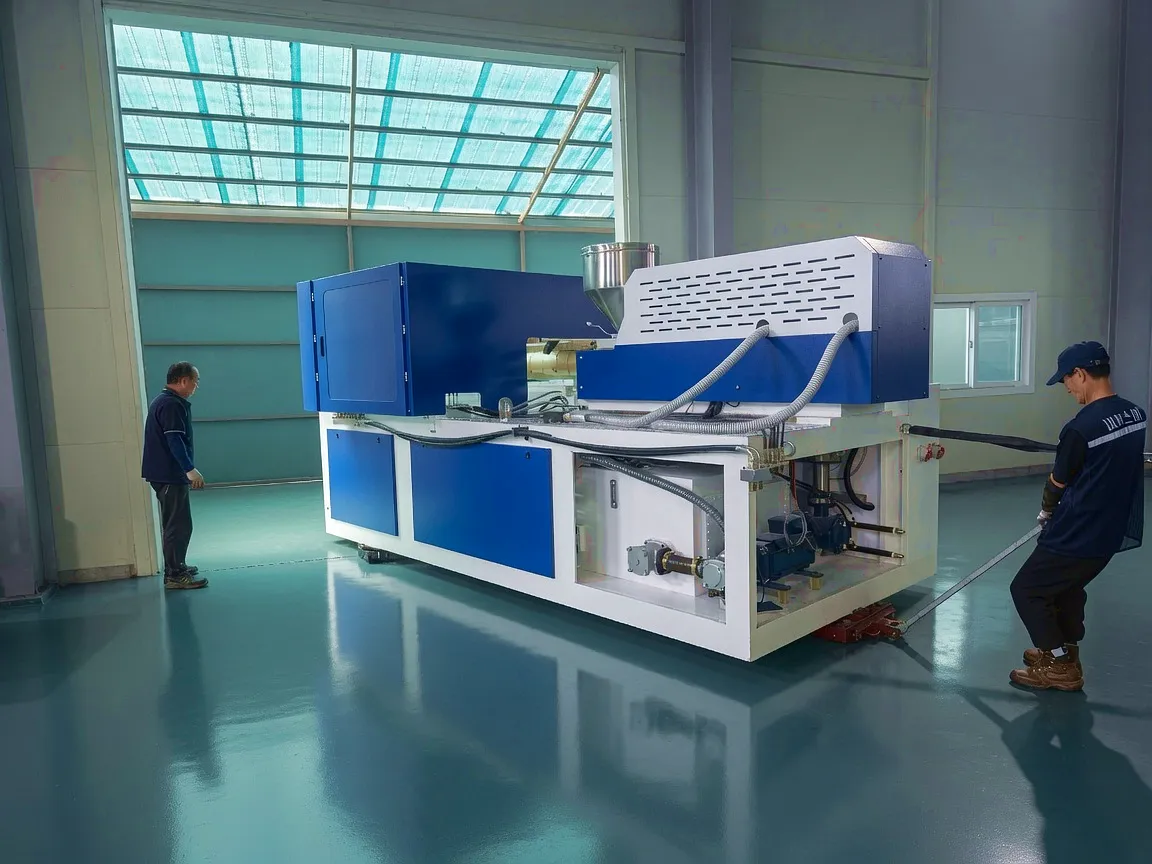
Ever Power Manufacturing Workshop — IBM Assembly Line
Manufacturer Spotlight
Ever Power — Precision IBM Equipment for the Global Oral Care Industry
Ever Power designs and manufactures injection blow molding machines for demanding pharmaceutical, personal care and food & beverage packaging applications. The company’s ZQ-series platform has been engineered specifically to handle the chemical compatibility and dimensional precision requirements of oral care container production, with configurations available from small-format 40 kN machines for serum dispensers through to heavy-duty 120 kN platforms for 1 L mouthwash production.
Ever Power’s customisation capabilities are a central part of the value proposition for UK oral care brands and contract fillers. Core rod geometry, blow mold cavity profiles, neck finish tooling and barrel screw specifications are all configurable at the order stage to match the exact resin grade and container specification requested by the customer. This means that a Birmingham-based oral care contract packer sourcing their first IBM platform does not need to adapt their existing bottle designs to a standard machine — the machine is configured around the container.
20+
Years in IBM Manufacturing
ISO 9001
Certified Manufacturing
48 hr
Technical Response Guarantee
Ever Power’s supply chain infrastructure — encompassing in-house mold design, toolroom CNC machining, servo system integration and pre-delivery acceptance testing — means that lead times from confirmed order to machine readiness for factory acceptance testing (FAT) are typically 10–16 weeks, competitive for UK procurement cycles that operate on quarterly capital budget approvals. Spare parts availability in the UK is supported through an established logistics corridor, with critical wear components available on next-day courier from the European distribution hub.
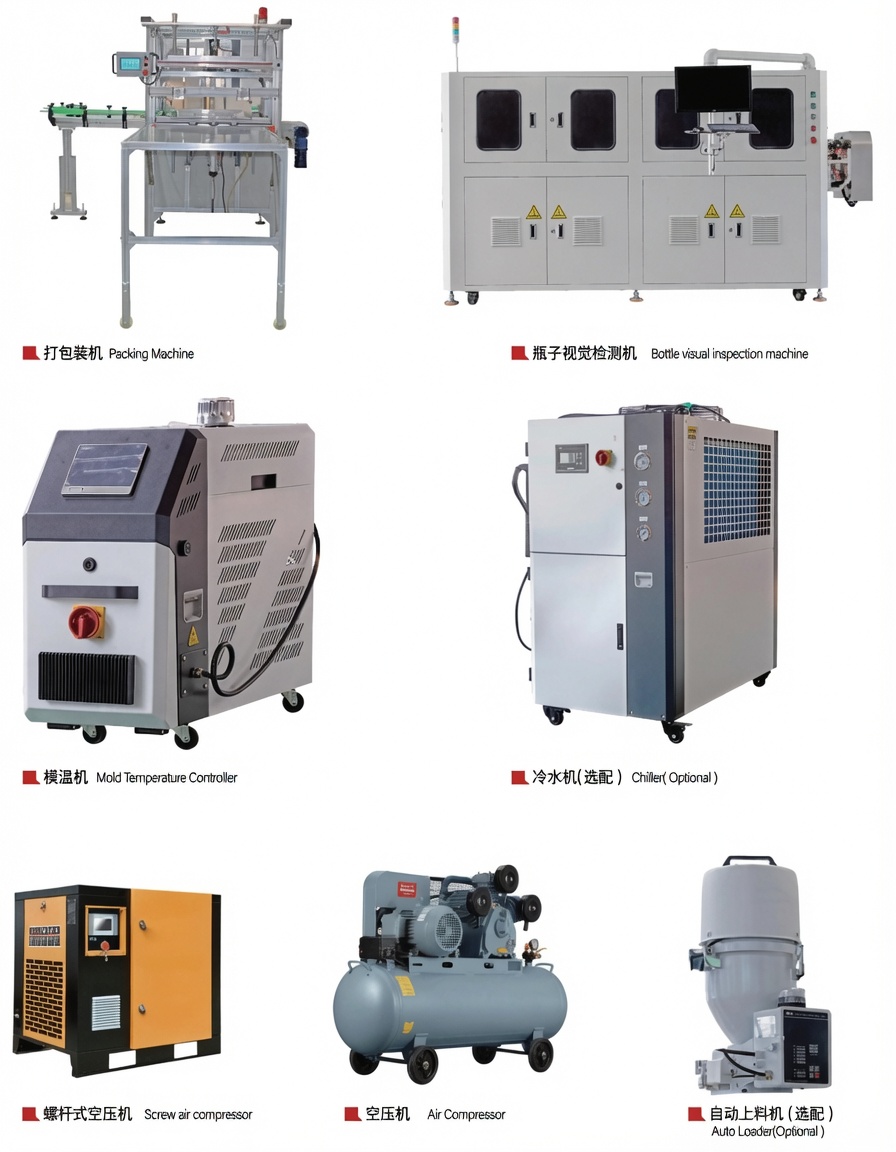
Auxiliary Equipment — Dryer, Chiller & Material Handling
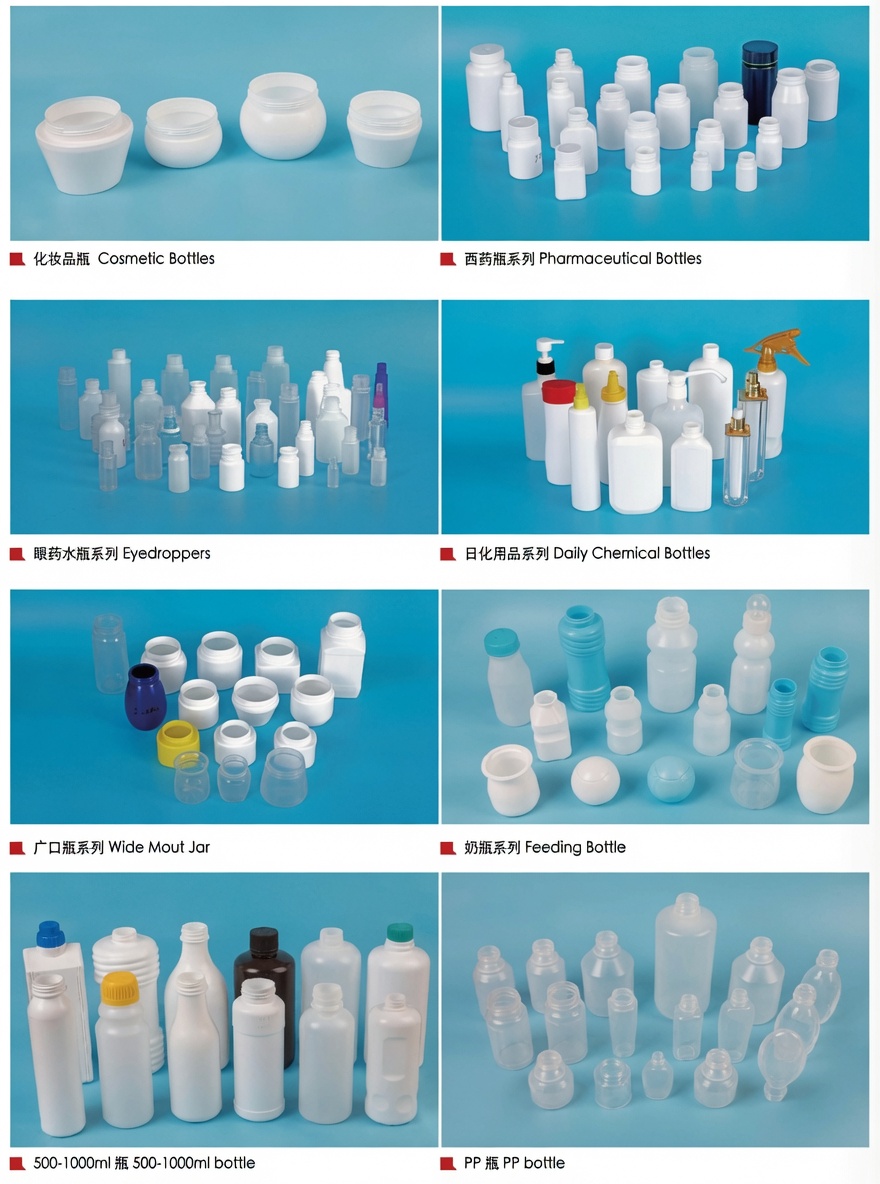
Complete Turnkey IBM Line with Integrated Quality Inspection
Featured ZQ40 Platform — ZQ-Series IBM Machines
The ZQ40 injection blow molding machine is designed as a high-precision replacement platform compatible with tooling and process parameters from legacy IBM machines, enabling UK oral care manufacturers to upgrade their production lines without retooling investment. The two models below are optimised for common oral care container specifications.
ZQ40 — Uniloy UIB 70 Replacement
Drop-in replacement for Uniloy UIB 70 tooling
The ZQ40 platform offers direct tooling compatibility with Uniloy UIB 70 injection blow molding machines, allowing oral care packaging lines running on legacy Uniloy equipment to upgrade to servo-driven IBM technology without purchasing new molds. Servo drive system delivers up to 35% energy saving, and the upgraded PLC control provides Industry 4.0 data output for GMP batch logging required by BRCGS-certified UK fillers.
Replacement of Uniloy UIB 70 Injection Blow Molding Machine – ZQ40 →
ZQ40 — Bloma IBM45 Replacement
Compatible with Bloma IBM45 core rod and mold tooling
The ZQ40 configured as a Bloma IBM45 replacement maintains core rod pitch, indexing geometry and blow station alignment matched to IBM45 tooling specifications. This makes it directly relevant to UK oral care contract fillers operating Bloma machines who are facing end-of-life on hydraulic drive systems and seeking a servo replacement without capital investment in new tooling. Dimensional repeatability on neck finish is maintained to the same ±0.10 mm standard.
Replacement of Bloma IBM45 Injection Blow Molding Machine – ZQ40 →
Customer Success Story
Sheffield Oral Care Contract Filler Cuts Line Stoppages by 38% with ZQ40 IBM Platform
A contract packaging operation based on the outskirts of Sheffield — supplying private-label mouthwash, fluoride rinse and gum care liquid to three of the UK’s largest grocery multiples — had been running a legacy hydraulic IBM machine for nine years. The machine had been reliable in its early years, but increasing frequency of hydraulic seal failures, combined with the end of the original manufacturer’s parts support programme, was creating mounting downtime risk. The business operated two eight-hour shifts and a six-day production week, meaning each unplanned stoppage had immediate commercial consequences in the form of unfulfilled dispatch orders to distribution centres in Wakefield and Doncaster.
After evaluating three IBM machine suppliers, the Sheffield company selected Ever Power’s ZQ40 platform configured as a replacement for their existing machine, with tooling compatibility verified against their current core rod set and blow mold inventory. The selection was driven primarily by Ever Power’s willingness to customise the barrel screw geometry for the HDPE grade the Sheffield site had been using for five years — a specification that one competing supplier declined to accommodate without a separate screw purchase. The pre-delivery factory acceptance test (FAT) was conducted in the presence of the Sheffield company’s process engineer and quality manager, with a full production run of 500 ml mouthwash bottles demonstrating ESCR sample compliance and cap torque values within the site’s acceptance window.
Following installation and a three-day commissioning programme supported by Ever Power’s field engineer, the Sheffield site reported a 38% reduction in container-related line stoppages over the subsequent quarter. The most significant contributor to this improvement was the elimination of neck dimension variability that had been causing sporadic cap-torque failures at the automated capping station. The servo drive system reduced electricity consumption on the IBM machine by 29% compared to the legacy hydraulic unit, a saving the site’s operations manager confirmed was material in the context of energy cost pressures facing UK manufacturers in the current period.
★★★★★
“The neck finish consistency from the ZQ40 is noticeably tighter than what we were getting from the old machine. Our automated capping line runs without the torque-fail alarms we were seeing almost every shift before. That alone has paid for a significant portion of the investment.”
— Production Manager, Sheffield Oral Care Contract Filler
★★★★★
“Ever Power was the only supplier we spoke to that was prepared to configure the barrel screw for our specific HDPE grade rather than asking us to change resin to suit their standard machine. That flexibility is exactly what a contract filler needs — we cannot afford to re-validate a resin grade mid-contract.”
— Quality & Compliance Manager, Sheffield Packaging Site
★★★★★
“The energy saving is real — we measured it over a full quarter and the IBM machine is drawing 29% less power than the hydraulic unit it replaced. With electricity tariffs where they are for UK manufacturers right now, that is not a trivial figure on our monthly cost sheet.”
— Operations Director, Sheffield Contract Packaging Group
Frequently Asked Questions — Injection Blow Molding Machines for UK Oral Care
Questions UK-based packaging buyers, process engineers and oral care brand managers most frequently ask when evaluating injection blow molding machine options for mouthwash, fluoride rinse and pump oral care container production.
What is the typical price range for an injection blow molding machine suitable for producing mouthwash bottles in the UK, and what factors most affect the cost?
+
The cost of an injection blow molding machine configured for mouthwash bottle production in the UK typically ranges from £80,000 to £280,000 depending on clamping force, number of cavities, drive system type (hydraulic vs. servo), and the extent of customisation required for a specific resin and container format. Servo-driven platforms are priced at a premium of 15–25% above equivalent hydraulic models but deliver energy savings that typically recover that premium within 18–36 months at UK electricity tariff rates. Tooling (core rods, injection molds, blow molds) is priced separately and adds approximately £25,000–£80,000 per container format. For an accurate quote tailored to your specific mouthwash bottle specification, contact Ever Power at
[email protected].
How does an injection blow molding machine differ from an extrusion blow molding machine when producing fluoride rinse bottles for a UK pharmacy supply chain?
+
The critical difference for UK pharmacy supply chains is neck finish quality and dimensional consistency. An injection blow molding machine forms the neck and threads by injection moulding, producing a flash-free, trimming-free finish with thread dimensions held to ±0.10 mm. An extrusion blow molding machine forms the neck by pinching extruded parison material, leaving a weld line and requiring the neck to be trimmed — introducing dimensional variation. For fluoride rinse bottles supplied to NHS or pharmacy channels where cap integrity is a regulatory compliance matter, the injection blow moulding process provides a more reliable and auditable container than EBM, and eliminates the incoming inspection step that many UK pharmacy contract fillers include in their goods-in protocol for EBM containers.
Which UK oral care contract fillers in Birmingham or Sheffield are most likely to benefit from upgrading to a servo injection blow molding machine from a legacy hydraulic machine?
+
The contract fillers that gain most from a servo IBM upgrade are those operating BRCGS or ISO 22716 (GMP Cosmetics) certified sites running two or more shifts, supplying UK grocery multiples or NHS pharmacy supply chains, and experiencing recurring cap-torque failures or container-related AQL rejections traceable to neck dimension variation in their existing hydraulic IBM equipment. Birmingham and Sheffield sites with energy cost pressures — currently acute across the UK manufacturing sector — see additional benefit from the 25–35% electricity saving that servo platforms deliver over legacy hydraulic machines. The payback case is typically strongest for sites running mouthwash volumes above 3 million containers per year.
What resin grades are recommended for processing children’s oral care containers on an injection blow molding machine in a UK cosmetics GMP environment?
+
For children’s oral care containers — including low-alcohol fluoride rinse and mild mouthwash in the 150–200 ml format — polypropylene (PP) random copolymer grades with melt flow index of 8–20 g/10 min at 230°C/2.16 kg are typically preferred on injection blow molding machines. PP delivers good chemical resistance to fluoride and mild surfactant formulations, a softer tactile surface for children to hold, and a translucency level that allows visible fill inspection without the full clarity of PET. For sites certified under ISO 22716 in the UK, PP is also preferred over PVC for children’s products on toxicological grounds. HDPE food-contact grades are an alternative where opaque containers are acceptable for the brand brief.
Where can a UK packaging buyer get a reliable quote for an injection blow molding machine with fast delivery and local technical support for a mouthwash production line upgrade?
+
Ever Power supplies injection blow molding machines to UK packaging buyers with a 48-hour technical response guarantee, factory acceptance testing (FAT) available in the buyer’s presence, and spare parts dispatch from the European distribution hub on a next-day courier service to UK addresses. Quotations are tailored to the specific container format, resin grade, production volume and cavity count requirement of each enquiry — not based on a standard price list. To request a detailed quotation for your mouthwash or oral care container production line, contact
[email protected] with your container format, annual volume target and current or target resin specification.
When is the right time for a UK oral care manufacturer in the West Midlands to consider replacing an existing injection blow molding machine rather than continuing to repair it?
+
For West Midlands oral care manufacturers, the decision to replace rather than repair an existing injection blow molding machine is typically triggered when two or more of the following conditions apply: hydraulic or electrical components are no longer available from the original manufacturer’s parts supply network; unplanned downtime has exceeded 6% of planned production hours over two or more consecutive quarters; energy consumption on the machine is more than 30% above equivalent modern servo platforms; or container quality metrics (ESCR sample failures, cap-torque AQL rejections) have been trending negatively despite maintenance investment. The business case for replacement is typically clearest when the machine is over 10–12 years old and was originally hydraulic-driven.
How long does it take to get an injection blow molding machine delivered and installed in the UK after placing an order with Ever Power, and what does the commissioning process involve?
+
From confirmed order to machine readiness for factory acceptance testing (FAT), Ever Power’s standard lead time for a customised ZQ40 injection blow molding machine is 10–16 weeks. Shipping to UK ports (Felixstowe, Southampton, Teesport) typically adds 4–6 weeks for sea freight. Installation and commissioning on the customer’s site is a three-to-five day process conducted by an Ever Power field engineer, covering mechanical installation, electrical commissioning, trial runs on the customer’s resin grade and container tooling, process parameter optimisation, and operator training. Documentation produced during commissioning — including process parameter records, initial quality samples and operator sign-off sheets — is formatted to support BRCGS or ISO 22716 quality system requirements.
Ready to Upgrade Your Oral Care Packaging Line?
Tell Ever Power your container format, resin grade and annual volume. We’ll configure the right injection blow molding machine specification and provide a detailed quotation within 48 hours.
📧 Get a Quote — [email protected]
© Ever Power · Injection Blow Molding Machine Specialists ·
[email protected] · edit by gzl