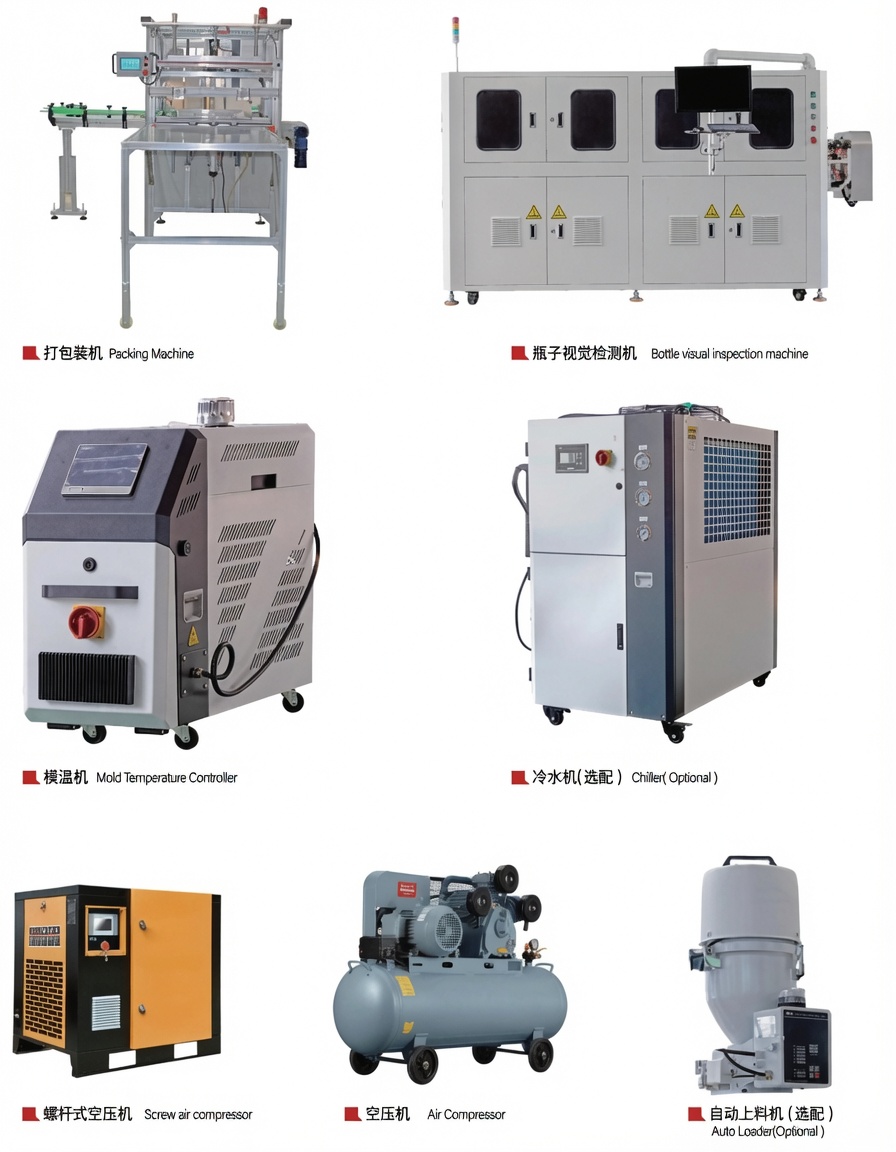
 The injection-blow molding machine has quietly become one of the most strategically important pieces of equipment in British manufacturing. From the pharmaceutical corridors of Cambridge to the consumer-goods factories lining the M6 corridor near Birmingham, the technology is embedded in production lines that demand dimensional accuracy, material efficiency, and the capacity to meet exacting regulatory standards without compromise. Unlike stretch-blow or extrusion-blow methods, the injection-blow molding process integrates injection molding and blow molding within a single machine cycle, producing hollow containers with a fully formed neck finish straight off the tooling, with no trimming, no secondary neck reaming, and no neck-ring flash to remove before filling operations begin.
This dual-stage precision is what drives adoption at scale. When a pharmaceutical company in Sunderland needs a multi-dose eye-drop bottle with a controlled dispensing orifice measuring 0.4 mm, or when a personal care brand in Leeds demands that five million shampoo bottles per annum carry an identical thread geometry for a child-resistant closure system, the injection-blow molding machine is typically the only equipment class that can deliver with sufficient process repeatability to satisfy both the production audit and the regulatory submission file simultaneously.
The purpose of this guide is to take you beyond the product brochure. We examine the real engineering principles at work, the material science behind parison and preform behaviour, the performance envelope that separates a mid-range IBM machine from a precision platform, and the industrial application scenarios where the technology is generating measurable commercial returns across the UK today. Whether you are a procurement manager evaluating capital investment options, a process engineer specifying new production capacity, or a contract moulder assessing market positioning, the following analysis is written to inform decisions rather than to impress with specification numbers alone.
How an Injection-Blow Molding Machine Actually Works
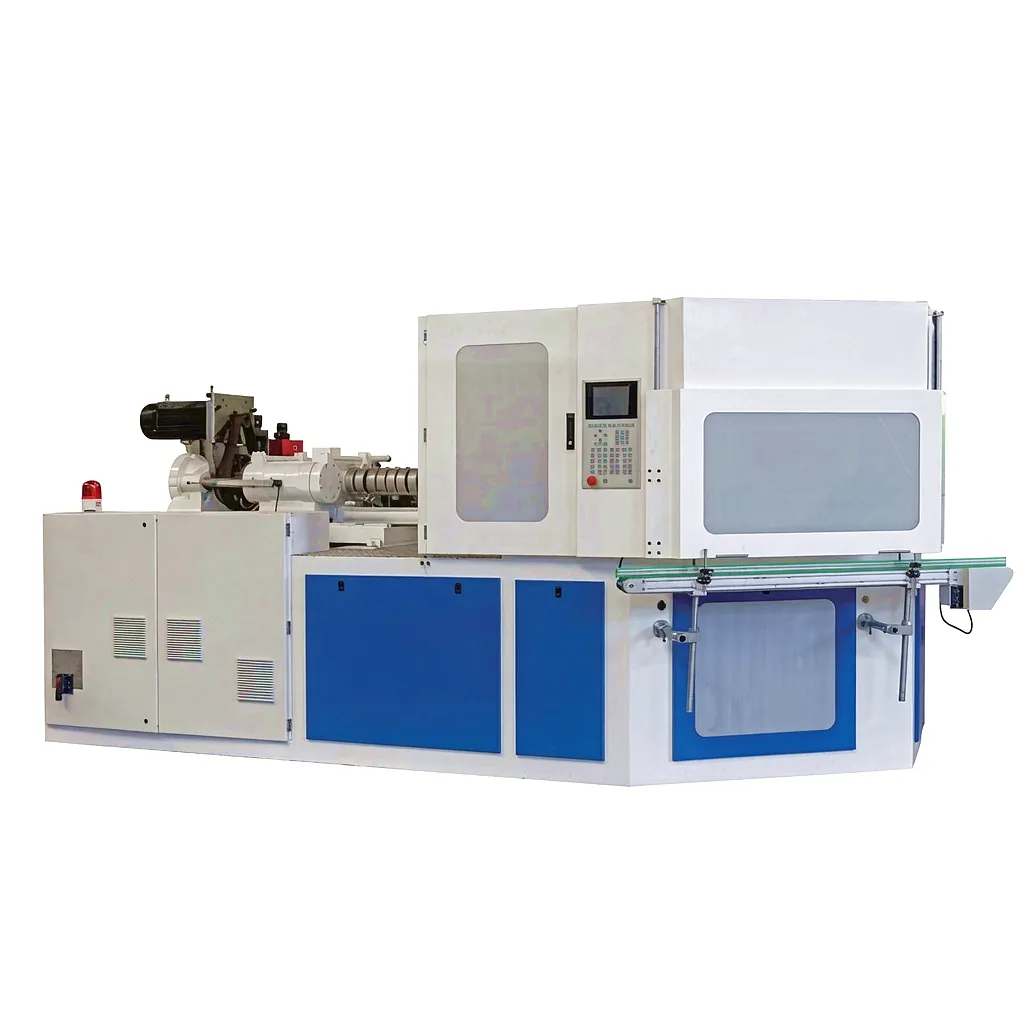
 The IBM cycle operates on a three-station rotary mechanism that is as elegant in theory as it is demanding to maintain at high tolerance in practice. In the first station, polymer melt is injected around a core rod inside a closed cavity mould. This injection stage forms a parison, a thick-walled preform that already carries the finished neck geometry. The neck thread, closure seat, and dispensing port geometry are fully dimensionally set at this point in the cycle, which is a fundamental advantage over extrusion-blow approaches where the neck is formed under much lower control conditions during pinch-off. The precision achievable at station one directly determines the container’s regulatory compliance profile, its closure fitment performance, and its filling-line acceptance rate downstream.
The second station rotates the core rod with the still-warm parison into the blow mould, where compressed air at typically 6 to 10 bar inflates the parison outward against the cooled mould cavity wall. Because the parison temperature is precisely controlled between the first and second stations, the blow ratio and material distribution across the container wall can be managed with a level of accuracy that directly determines wall-thickness consistency. For a 10 ml eye-drop bottle where wall thickness must fall within plus or minus 0.1 mm to pass container integrity testing, this stage is where IBM earns its premium over competing processes. Servo-driven core rod temperature management systems, now standard on premium IBM platforms, allow independent temperature profiling across the parison length to optimise material distribution in shoulder and base areas without affecting neck zone geometry.
The third station strips the finished container from the core rod and ejects it onto a conveyor or collection system. Modern injection-blow molding machines from manufacturers like Ever Power integrate servo-driven indexing systems that maintain rotational precision below 0.05 degrees of angular deviation per cycle, which directly correlates to parison positioning repeatability and, by extension, container mass and volume consistency. Understanding this three-station architecture also clarifies why tool changeover on an IBM machine demands skilled tooling technicians. The interdependence of injection, blow, and eject tooling means that a dimensional change in one station must be compensated across the other two, and the engineering expertise required to manage that interdependency efficiently is one of the differentiators that separates experienced IBM machine suppliers from general plastic machinery distributors.
Core Materials Processed by IBM Equipment
🧪
Polypropylene (PP)
The workhorse of pharmaceutical IBM. PP offers excellent chemical resistance, a melting range of 160 to 170 degrees Celsius, and FDA and EU food contact compliance. Its hinge-fatigue characteristics make it ideal for integral-hinge dispensing caps formed in the same mould as the container body, a configuration that eliminates secondary assembly operations entirely.
🌿
High-Density Polyethylene (HDPE)
HDPE processes well on IBM platforms in the 0.945 to 0.965 g/cm3 density range. Its low moisture absorption, broad chemical resistance, and recyclability make it increasingly favoured in UK personal care and household-chemical packaging where ESG compliance is now a procurement criterion alongside cost-per-unit.
💎
PET & PETG
While stretch-blow PET processing dominates large beverage bottle production, IBM machines handling standard PET and PETG in the 2 to 150 ml volume range produce containers with outstanding clarity and barrier properties. PETG’s lower processing temperature around 220 degrees Celsius and superior impact resistance at low gauge thicknesses make it a growing choice in cosmetic packaging across UK markets.
🔬
Cyclic Olefin Copolymer (COC/COP)
COC and COP grades are gaining traction in high-value ophthalmic and injectable packaging segments. Their near-zero moisture vapour transmission rate, glass-like clarity, and extremely low extractable and leachable profiles make them compatible with the most stringent pharmaceutical container specifications, including ICH Q1C compatibility studies required for injectable submissions to the MHRA.
Application Scenarios: Where IBM Machines Deliver Unmatched Value
💊
Application Scenario 01
Healthcare & Ophthalmic Products — Eye Drops, Nasal Sprays & Sterile Irrigation Containers
Eye Drop Bottles
Nasal Spray Containers
Sterile Saline Wash Bottles
Multi-dose Ophthalmic Dispensers
Eye Wash Cup Containers
Healthcare packaging occupies the highest precision and regulatory compliance tier of all IBM applications. Products that contact ocular or nasal mucosa must satisfy pharmacopoeial standards covering particulate matter, extractables, container integrity, and sterility assurance that no other packaging process can meet as consistently through high-volume production. The injection-blow molding machine’s closed-mould formation characteristic, meaning the parison never contacts the ambient manufacturing environment between injection and blow stations, dramatically reduces the risk of airborne contamination events that would require batch investigations under Good Distribution Practice. For UK manufacturers supplying the NHS supply chain or exporting to EU markets under post-Brexit mutual recognition frameworks, this contamination-risk profile is not a theoretical concern. It is an audit finding that can halt a product licence.
The precision neck formation capability of IBM is equally critical in this segment. An eye-drop nozzle tip with an orifice diameter of 0.35 to 0.55 mm must be formed to tolerances that ensure a consistent droplet volume, typically 35 to 50 microlitres per squeeze, to meet both pharmacopoeial labelling claims and patient dosing safety requirements. The IBM process achieves this because the tip geometry is defined by the injection mould at station one, not stretched or blown into shape. Production facilities in Cambridge, Oxford, and the East Midlands pharmaceutical cluster have adopted IBM lines specifically for this capability, with several contract development and manufacturing organisations specifying IBM equipment in their master file submissions to the MHRA. The process is equally applicable to nasal spray containers where the actuator fitment geometry demands dimensional accuracy that standard extrusion-blow tooling cannot consistently achieve across multi-million unit production runs without significant defect rates at the automated filling and assembly stage.
✨
Application Scenario 02
Personal Care & Cosmetics — Precision Packaging at Commercial Scale
The UK personal care and cosmetics sector represents a significant and growing market for injection-blow molding machine output. Major brands operating out of London, Manchester, and the broader West Yorkshire manufacturing corridor have consistently moved higher-value product lines, including serums, toners, eye creams, nail treatment formulations, and concentrated fragrance products, from generic extrusion-blow containers to IBM-produced packaging over the past decade. The commercial driver is straightforward: IBM bottles carry superior neck finish quality, a glass-like wall clarity achievable in PET and PETG, and a dimensional consistency that enables automated filling, capping, and labelling lines to operate at reduced defect rates compared with equivalent extrusion-blow containers.
The design flexibility that IBM tooling offers is less widely appreciated but commercially important. Tooling engineers can produce asymmetric container profiles, integral ridges or tactile features moulded directly into the body wall, and base configurations with complex geometry that would be impossible or prohibitively expensive in extrusion-blow tooling. For a premium skincare brand in Leeds seeking to differentiate on shelf through distinctive bottle architecture rather than label design alone, the IBM route offers that design latitude within a multi-cavity production configuration that keeps per-unit costs competitive. Production cavitation on mid-range injection-blow molding machines typically runs four to twelve cavities, allowing annual volumes between two million and fifteen million units per year on a single machine depending on cycle time and container volume.
Pump dispenser preform moulding is another application within this sector where IBM demonstrates a specific advantage. The inner diameter of the dispenser collar and the thread pitch can be moulded to a tolerance that eliminates pump fitment failures on the automated assembly line, a persistent quality problem in extrusion-blow production of similar containers that costs UK contract fillers measurable downtime per shift. The ability to form the pump collar and container body as a single moulded part, with the collar geometry controlled at injection-moulding tolerance, is a genuinely differentiating capability that justifies IBM tooling investment even for mid-volume programmes where the per-unit tooling amortisation is higher than it would be on an extrusion-blow alternative.
🍯
Application Scenario 03
Food, Condiment & Speciality Beverage Packaging
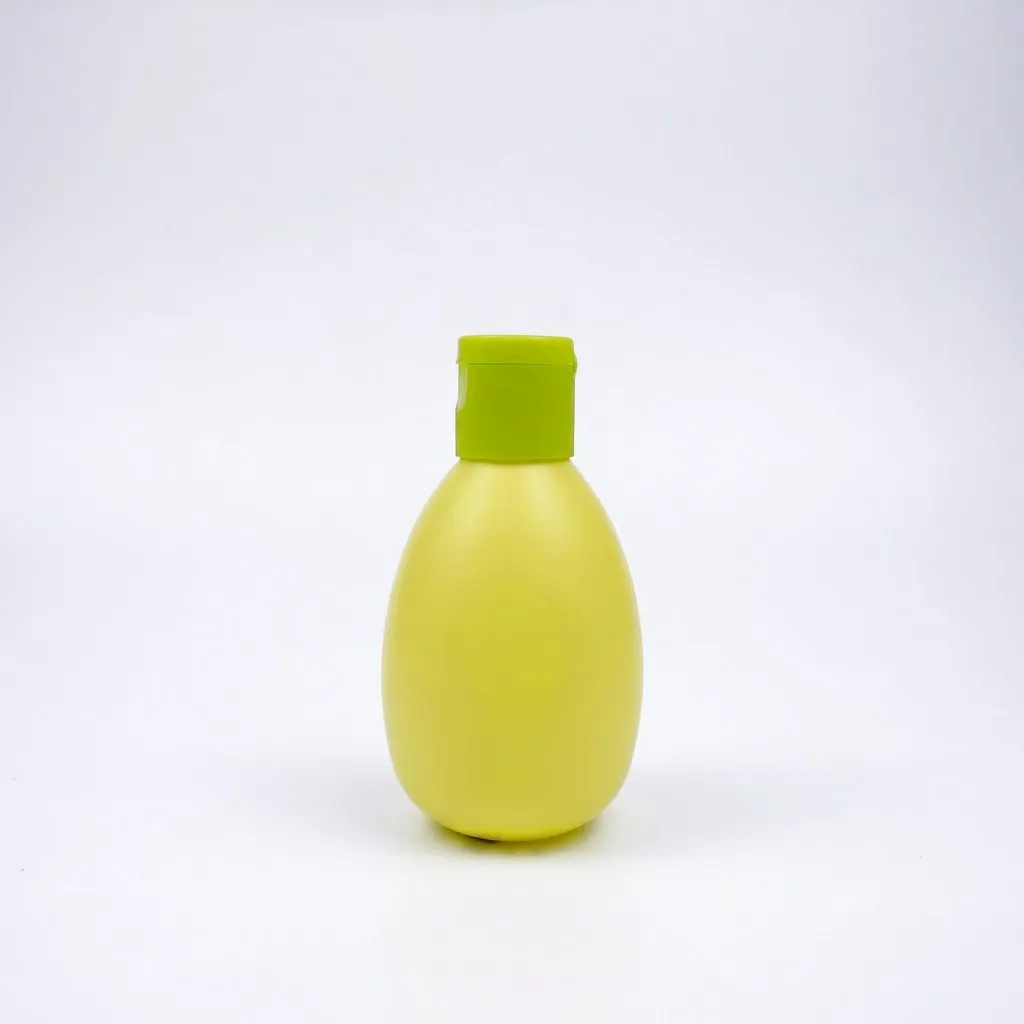
The food and speciality beverage sector in the UK presents a nuanced opportunity for IBM equipment. Standard large-volume beverage packaging is dominated by stretch-blow PET and glass, but the segment between approximately 5 ml and 250 ml, covering sauces, concentrated cordials, cooking oils, flavouring drops, nutritional supplements in liquid form, children’s vitamins, and allergen-specific food products, is served predominantly by IBM production. Sheffield’s food manufacturing cluster and the agricultural processing facilities of Lincolnshire and East Anglia represent regional concentrations of this demand, and IBM machines operating in these facilities produce some of the most dimensionally consistent small-format food containers manufactured anywhere in the country.
In this container range, IBM’s ability to produce wide-mouth containers with precision-formed pouring necks, combined with the material options of HDPE and PP that carry full food-contact certification under EU 10/2011 and its retained UK equivalents, makes it the practical production choice over alternative blow moulding methods. The closed-mould process also benefits food-contact applications by minimising polymer surface oxidation during manufacture, which can affect organoleptic properties of the container. This is particularly relevant when the product being filled is a premium Scottish single malt whisky miniature or a high-value artisanal condiment where flavour integrity and packaging compatibility are a combined selling proposition that a brand cannot afford to compromise with poorly specified container tooling.
🧴
Application Scenario 04
Household Chemicals, Cleaning Products & Child-Resistant Packaging
Birmingham and the wider West Midlands represent one of Britain’s most concentrated areas of household chemical and cleaning product manufacturing. The IBM process is particularly well-suited to this segment when container volumes fall between 30 ml and 500 ml, the product has significant chemical aggressiveness, and the closure system must meet BS EN ISO 8317 child-resistant certification or the equivalent CRC standard. The injection-blow molding machine’s ability to produce the closure thread geometry within the injection mould, rather than depending on a secondary post-blow trimming and shaping operation, is what makes consistent CRC fitment achievable in automated assembly at the volumes required by UK household brand manufacturers.
HDPE is the dominant material in this segment due to its resistance to alkalis, dilute acids, bleach formulations, and quaternary ammonium compounds, the active ingredient class in the majority of surface disinfectants. For the highly alkaline formulations common in oven cleaners or drain unblocking products, specific HDPE grades with enhanced stress-crack resistance are specified, and IBM tooling engineers calibrate the blow ratio and parison wall profile to ensure uniform material distribution in the base and sidewall areas where stress-crack failures most commonly initiate in filled containers stored in transit or warehouse conditions. The net result is a container that passes accelerated environmental stress-crack resistance testing with significantly higher confidence than an equivalent extrusion-blow container produced from the same resin, which matters directly to the risk assessment obligations that UK chemical container manufacturers carry under the Dangerous Substances and Explosive Atmospheres Regulations.
Technical Advantages: What Separates Precision IBM from Commodity Blow Moulding
🎯
Finished Neck at Station One
Thread, sealing surface, and tip geometry are formed in the injection mould with injection-moulding tolerance, not blow-moulding tolerance. This eliminates secondary operations and is the defining advantage of IBM over extrusion-blow in regulated packaging markets where neck dimension is a critical quality attribute.
📐
Zero Flash, Zero Trim Waste
IBM produces containers without pinch-off flash, eliminating trim waste streams and the energy cost of regrinding. For pharmaceutical and food operations where regrind cannot be used in primary containers, this reduces material waste rates to near-zero, a measurable advantage in UK operations targeting ISO 14001 environmental performance targets.
⚙️
Consistent Wall Distribution
Because the parison is formed by injection rather than extrusion, wall thickness profile is highly repeatable cycle-to-cycle. This is directly measurable as reduced weight variation, typically below plus or minus 0.5% on a well-maintained IBM machine versus 2 to 4% on equivalent extrusion-blow equipment running the same container design.
🔒
Clean-Room Compatibility
The enclosed moulding area and short open-air transfer path in IBM machines makes them compatible with ISO Class 7 and Class 8 clean-room environments, a prerequisite for ophthalmic and injectable packaging production in MHRA-regulated UK facilities where contamination control is a validated system requirement.
⚡
All-Electric Servo Drive Options
Modern IBM machines incorporate servo-electric drives across injection, clamping, and indexing axes, reducing energy consumption by 30 to 45% compared to hydraulic equivalents. This brings utility costs down to levels that improve competitiveness against contract moulders in lower-cost markets, a meaningful consideration for UK OEM procurement departments managing landed-cost comparisons.
🤖
Integrated Process Monitoring
PLC-based process monitoring with data logging capability allows IBM machines to maintain a per-shot record of injection pressure, blow pressure, cycle time, and mould temperature, all data sets required for process validation protocols in FDA 21 CFR Part 211 and equivalent MHRA GMP Annex 15 compliant UK production environments.
Performance & Technical Parameter Reference Table
| Parameter | ZQ80 | ZQ110 | Industry Requirement Range |
|---|
| Clamping Force | 800 kN | 1,100 kN | 600 kN to 1,500 kN |
| Max Container Volume | 500 ml | 1,000 ml | 5 ml to 2,000 ml |
| Plasticising Screw Diameter | 40 mm | 50 mm | 35 mm to 80 mm |
| Injection Pressure | Up to 180 MPa | Up to 200 MPa | 120 MPa to 220 MPa |
| Blow Pressure | 0.6 to 1.0 MPa | 0.6 to 1.0 MPa | 0.5 to 1.2 MPa |
| Rotary Indexing Precision | +/- 0.05 deg | +/- 0.05 deg | Below 0.1 deg (pharma) |
| Container Weight Variation | +/- 0.4% | +/- 0.3% | Below 0.5% (pharmaceutical) |
| Compatible Materials | PP, HDPE, LDPE, PET | PP, HDPE, LDPE, PET, PETG, COC | Container specification dependent |
| Typical Cavitation | 2 to 6 cavities | 4 to 12 cavities | Based on volume and cycle time |
| Drive System | Servo-electric or Hydraulic | Full servo-electric | Full servo preferred (clean-room) |
Featured Equipment: Ever Power IBM Machine Series
Ever Power
ZQ80 Injection Blow Molding Machine
An 800 kN clamping force platform designed for mid-volume pharmaceutical, personal care, and food-contact container production. Supports PP, HDPE, and PET with 2 to 6 cavity configurations and servo-electric drive options for energy-efficient clean-room operation across UK regulated manufacturing environments.
View ZQ80 Details →
Ever Power
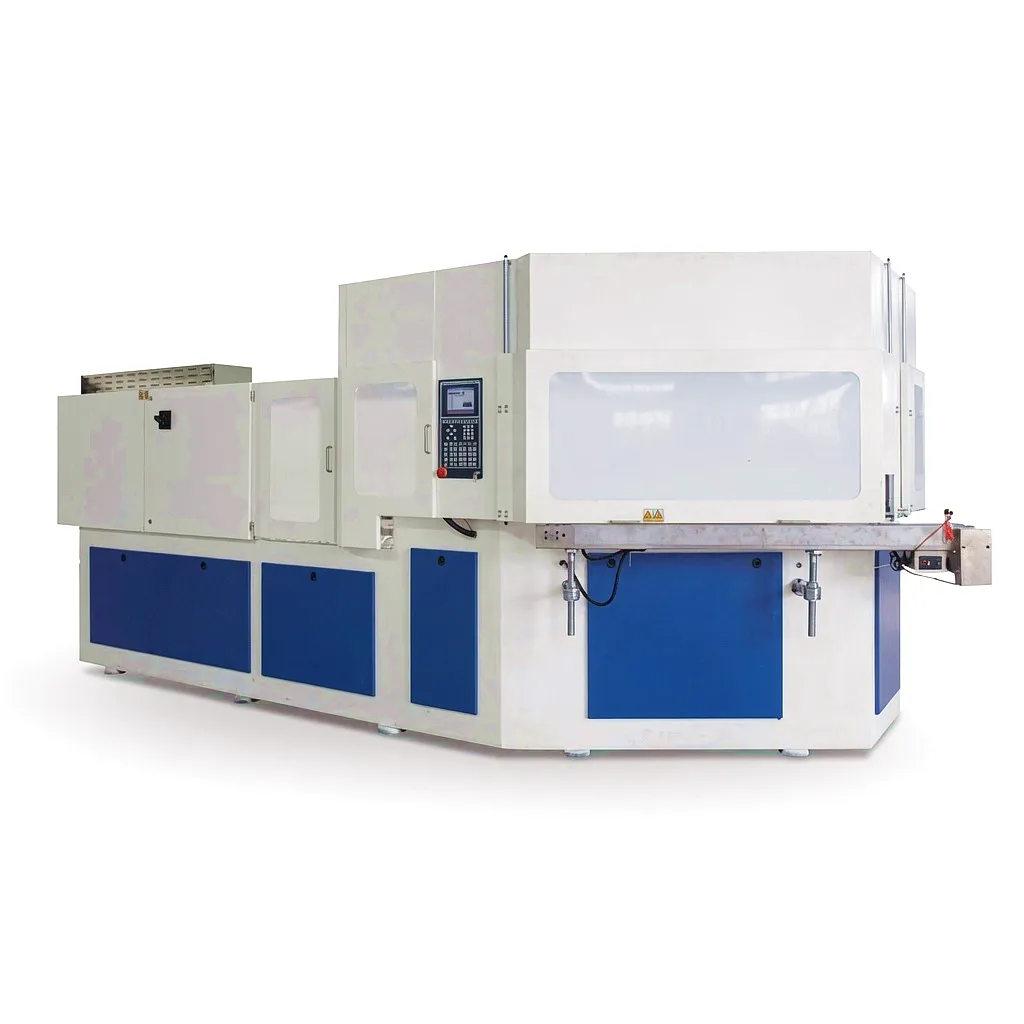
ZQ110 Injection Blow Molding Machine
A high-output 1,100 kN system for large-volume and high-cavitation applications across multiple sectors. Full servo-electric drive on all axes, extended material compatibility including PETG and COC grades, and a 4 to 12 cavity range makes this the specification choice for UK contract moulders serving pharmaceutical, personal care, and food sectors concurrently from a single machine platform.
View ZQ110 Details →
Ever Power: Manufacturing Capability & Custom IBM Solutions
25,000+
sq metres factory area
20+
years IBM design experience
CE
Machinery Directive certified
48h
spare parts air freight to UK
Ever Power stands among the most capable injection-blow molding machine manufacturers serving UK and European markets today. The company delivers machine platforms that are purpose-designed IBM systems engineered from the ground up for the precision, reliability, and regulatory compliance demands that pharmaceutical, food, and personal care customers impose. The engineering team’s depth of IBM-specific knowledge is reflected in the calibration detail of the machines they produce: core rod temperature uniformity specifications, servo axis tuning protocols, and blow pressure ramp profiles are developed from an accumulated database of IBM process data covering hundreds of machine installations across multiple sectors and material types.
The customisation capability at Ever Power extends well beyond cosmetic changes to standard catalogue machines. Engineering teams work directly with UK customers’ tooling and process engineers to specify core rod geometry, cavitation layout, parison temperature management systems, and integrated downstream automation including conveyor systems, vision inspection units, and in-process control sampling stations that fit within the customer’s existing facility footprint and utilities supply. The company holds CE machine safety certification and supplies machines that comply with the Machinery Directive 2006/42/EC as retained UK law, facilitating straightforward PSSR and machinery risk assessment documentation for UK health and safety compliance under current HSE guidance.
Supply chain continuity is a specific concern for UK packaging manufacturers operating in a post-Brexit logistics environment, where lead times on European-sourced machinery and spare parts have extended in some categories. Ever Power maintains an international spare parts distribution capability with air freight routing to major UK logistics centres including Heathrow, Manchester Airport Logistics Centre, and East Midlands Airport, ensuring that critical wear components such as core rods, blow pins, and screw and barrel assemblies can reach a customer site within 48 to 72 hours of dispatch. This supply assurance directly minimises unplanned downtime risk on high-OEE production lines where every unscheduled hour off-line carries a measurable contribution-margin cost that procurement managers and plant directors track on a monthly basis.
Customer Success Story: Sheffield Pharmaceutical Packaging Group
Location
Sheffield, South Yorkshire
Sector
Contract Pharmaceutical Packaging
A pharmaceutical contract packaging organisation based in Sheffield’s Advanced Manufacturing Park approached Ever Power with a specific operational challenge. The company had been running a fleet of aging hydraulic injection-blow molding machines to produce ophthalmic container ranges for three NHS supply-chain customers, and increasing downtime events caused by hydraulic seal failures and indexing mechanism wear were threatening their contractual on-time delivery commitments. Each unplanned downtime event triggered a cascade of consequences including overtime rescheduling, batch record deviations requiring quality investigation, and commercial penalty discussions with customers whose downstream filling lines had scheduled the container deliveries into production windows already committed to NHS contract dates.
The project scope involved replacing two hydraulic IBM units with a pair of ZQ110 full servo-electric platforms, tooled for the customer’s existing ophthalmic bottle range spanning 5 ml, 10 ml, and 15 ml eye-drop containers in PP across cavitation configurations ranging from 6 to 12 cavities depending on container size. Ever Power’s engineering team conducted a site survey in Sheffield prior to specification, assessing floor-load capacity, compressed air supply quality, and chiller capacity, and identified an upgrade requirement in the compressed air drying system that, if unaddressed, would have compromised parison quality with the new machine’s tighter blow-pressure tolerances. This pre-installation engineering review is a standard element of Ever Power’s UK project delivery methodology.
38%
Energy cost reduction vs hydraulic units
OEE 94%
Within 6 months of commissioning
0.3%
Max container weight variation (12-cavity)
14 Days
Delivery to validated production
Ever Power’s commissioning engineers worked on-site in Sheffield for the full installation and process qualification period, supporting the customer’s validation team through Installation Qualification, Operational Qualification, and Performance Qualification protocols. The ZQ110’s data logging architecture provided the per-shot process records required for the OQ report submission to the customer’s quality assurance function, and the servo-electric drive system’s inherent repeatability allowed the PQ acceptance criteria to be met on the second PQ run attempt. The validated machine suite now operates as the primary production asset for the customer’s NHS ophthalmic container supply, running double-shift patterns with maintenance windows scheduled to align with planned shutdown periods rather than unplanned stoppages as had been the case with the previous hydraulic equipment fleet.
★★★★★
“The weight variation figures on the ZQ110 running our 10 ml ophthalmic bottles are genuinely better than anything we achieved on the previous equipment. The process stability across an eight-hour shift is outstanding. The data we pull off the PLC logging system has made our batch record review significantly faster, and our quality team no longer needs to spend half a day investigating weight deviations that turn out to be equipment-related rather than material-related.”
Technical Director
Contract Pharmaceutical Packaging, Sheffield
★★★★★
“Ever Power’s commissioning support during the IQ, OQ, and PQ phase was exactly what we needed. The engineers understood validation requirements from the inside, not just as an external checklist. The spare parts turnaround since the machine went live has been excellent, with critical components arriving within 48 hours. For a facility supplying NHS contracts, that response time is not a nice-to-have. It is part of the risk management framework we audit annually.”
Validation Manager
Pharmaceutical CDMO, South Yorkshire
★★★★★
“We specified the ZQ80 for our nasal spray container line after evaluating three competing machines over a four-month period. The neck geometry repeatability on Ever Power’s machine was measurably superior when we ran the full cavitation across 5,000 consecutive cycles. The customisation of the core rod design to match our existing container specification was handled professionally and delivered ahead of schedule, which gave us the factory acceptance testing window we needed before the production launch date.”
Process Engineering Lead
Personal Care Packaging Manufacturer, Leeds
Frequently Asked Questions
Q
How much does an injection-blow molding machine cost in the UK, and what factors most affect the purchase price for a pharmaceutical-grade system?
Entry-level injection-blow molding machine platforms with 2 to 4 cavities and hydraulic drives typically fall in the GBP 80,000 to 150,000 range ex-works. Mid-range servo-electric systems such as the ZQ110 with full cavitation tooling and downstream automation can range from GBP 200,000 to GBP 450,000 depending on cavitation, material specification, and integrated inspection systems. MHRA-compliant pharmaceutical-grade builds with clean-room preparation and IQ/OQ documentation support can exceed GBP 500,000 as a fully commissioned turn-key installation. Contact Ever Power at
[email protected] for a detailed UK market quotation specific to your container specification and volume requirements.
Q
Which injection-blow molding machine supplier in the UK can provide MHRA-compliant pharmaceutical packaging equipment with IQ and OQ validation support documentation?
Ever Power is an established IBM equipment supplier providing CE-certified machines with complete IQ/OQ/PQ documentation support. The ZQ80 and ZQ110 platforms both incorporate PLC data logging architectures that generate per-shot process records aligned with MHRA GMP Annex 15 validation protocol requirements. Ever Power’s commissioning engineers are experienced in on-site validation support at UK pharmaceutical packaging facilities, having completed validation programmes at sites in Sheffield, Cambridge, and the East Midlands pharmaceutical manufacturing corridor.
Q
What container volumes can an injection-blow molding machine produce, and where does IBM become a better choice than stretch-blow molding for UK contract packaging operations?
IBM machines are most competitive in the 2 ml to approximately 1,000 ml container range. Below 2 ml, injection moulding of solid dosage containers is typically preferred. Above 1,000 ml, stretch-blow or extrusion-blow becomes more economical at scale. The critical crossover point where IBM wins is determined by neck finish quality requirements. Whenever a precisely formed neck thread, controlled dispensing orifice, or child-resistant closure compatibility is specified as a quality attribute, IBM is the preferred process regardless of container volume within the applicable range.
Q
How long does it take to get a custom injection-blow molding machine delivered to a Birmingham or Sheffield manufacturing facility, and what is the typical lead time for bespoke tooling?
Standard machine platforms without custom tooling typically carry a lead time of 10 to 16 weeks from order confirmation to delivery at a UK port. Custom cavitation tooling for specific container specifications requires an additional 8 to 14 weeks of tooling manufacture and Factory Acceptance Testing time. For customers in Birmingham and Sheffield, Ever Power coordinates logistics through established freight partners with direct consolidation services from their manufacturing facility to major UK freight hubs, with door-to-site delivery typically completed within 5 to 7 working days of UK port clearance.
Q
What is the difference between injection-blow molding and extrusion-blow molding, and which process should a UK personal care manufacturer choose for high-volume pump dispenser production?
Injection-blow molding forms the parison by injection moulding around a core rod, which produces a pre-formed neck geometry with injection-level dimensional accuracy. Extrusion-blow forms the parison by extruding a tube and pinching it in a blow mould, which introduces flash and lower neck geometry accuracy. For pump dispenser production where the collar inner diameter and thread pitch must match pump actuator fitment specifications with minimal defect rate on automated assembly, IBM is the technically superior choice regardless of the difference in raw machine output rates between the two processes.
Q
Who should I contact to get a competitive price quote for an injection-blow molding machine that can handle both polypropylene eye-drop bottles and HDPE household chemical containers in a UK facility?
For multi-material and multi-sector requirements of this type, Ever Power’s application engineering team is best placed to advise on machine platform selection, screw and barrel specification for material changeover efficiency, and tooling configuration. Reach the team directly at
[email protected] with your container specifications, annual volumes, and material range, and a technical proposal can typically be prepared within 5 to 7 working days.
Ready to Invest in Precision IBM Technology?
Get Your Custom Machine Specification & Price
Tell us your container specification, annual volume, and material requirements. Ever Power’s engineering team will respond with a detailed technical proposal within 5 working days.
📧 Contact Ever Power Now
edit by gzl