Technical Deep-Dive · IBM Blow Molding · UK Manufacturing
Wall Thickness Uniformity in PET Bottle Production: Causes, Mechanisms, and Engineering Solutions
A precision-engineering perspective for plastic container manufacturers, packaging converters, and process engineers operating injection blow moulding equipment across the UK and global markets.
Blowing Technology Comparison: IBM, ISBM, EBM, and Extrusion
To appreciate the wall-thickness challenges unique to injection blow moulding, it is instructive to contrast the four principal blow-forming technologies used in industrial PET bottle production. Each process has a different thermal history, parison geometry, and stretching mechanism, and each produces a characteristic wall-thickness distribution profile. Extrusion blow moulding (EBM) continuously extrudes a tubular parison of molten polymer and then clamps and inflates it inside a split mould. The pinch-off weld at the base is inherently a weakness zone, and thickness variation from top to bottom of the parison is typically 8–15% without parison programming. Injection stretch blow moulding (ISBM) injects a solid preform in a separate moulding press, reheats it to orientation temperature, and then stretches it axially with a stretch rod before radial inflation — the biaxial orientation this delivers produces exceptional strength-to-weight ratios in PET but demands highly consistent preform geometry as a prerequisite. Extrusion-based processes offer wide material versatility, processing HDPE, PP, and PVC with relatively low tooling costs, but cannot match IBM or ISBM for neck-finish accuracy on threaded closures. Injection blow moulding itself — the IBM process — injects directly onto the core rod without a separate preform stage, and the parison temperature at the moment of blow is determined almost entirely by the thermal management of the core rod and the time-indexed carousel rotation. This tight coupling between the injection and blow stages is simultaneously IBM’s greatest quality advantage and the root cause of its most challenging wall-thickness failure modes.
| Technology | Parison Form | Wall Thickness Tolerance | Neck Finish Accuracy | Typical Materials |
|---|---|---|---|---|
| IBM | Injected parison on core rod | ±0.05–0.10 mm | Excellent (mould-defined) | PET, PP, PE, PETG |
| ISBM | Reheated injection preform | ±0.04–0.08 mm | Very good | PET (primarily) |
| EBM | Extruded tubular parison | ±0.15–0.30 mm | Moderate (flash-based) | HDPE, PP, PVC, PC |
| Extrusion (general) | Continuous tubular extrusion | ±0.20–0.50 mm | Low | PE, PP, ABS, multi-layer |
Root Causes of Wall Thickness Non-Uniformity in IBM Machines
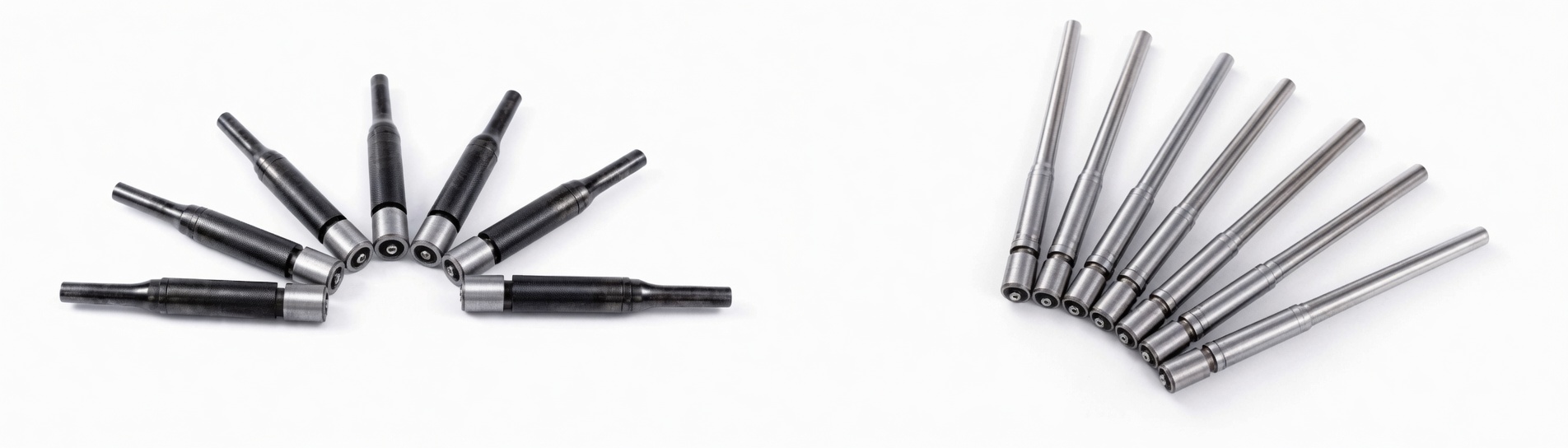
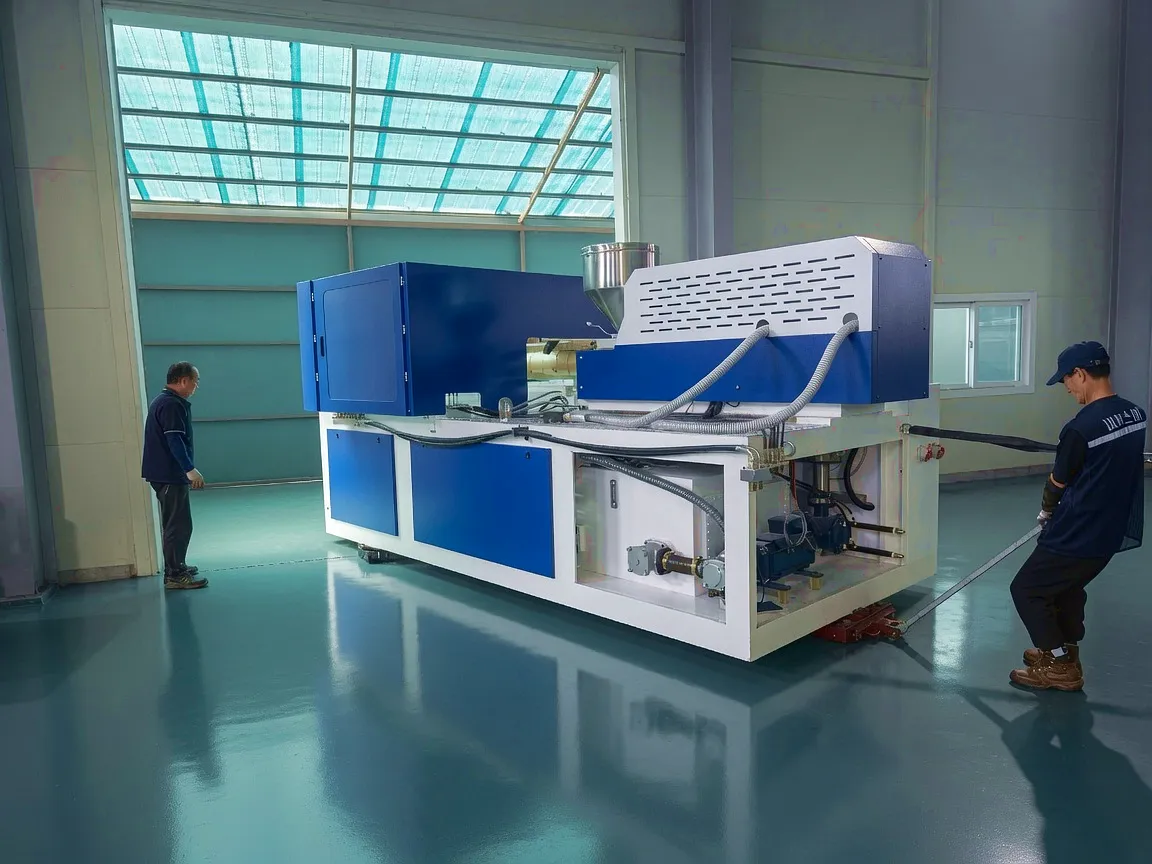 Wall thickness non-uniformity in injection blow moulding machines arises from a complex interplay of thermal gradients, mechanical tolerances, and material rheological behaviour. The most prevalent cause is an asymmetric temperature distribution within the parison at the moment of blow initiation. Because the parison remains on the core rod from injection through indexing to the blow station, any thermal difference between the core rod surface and the cavity wall — or between the leading and trailing faces of the parison as the carousel rotates — will create a viscosity gradient across the parison wall. When blow air pressure is applied, polymer flows preferentially away from hotter, lower-viscosity zones, producing localised thinning. In IBM machinery operating at high cycle rates — above 15 cycles per minute — this thermal asymmetry is exacerbated because the parison has less time to reach thermal equilibrium before blowing. Engineering countermeasures include zoned core-rod heater bands, insulated indexing guard shields, and staged blow-pressure profiles that allow the hotter zones to partially recover viscosity before full inflation pressure is applied.
▶ Thermal Gradient Asymmetry
Uneven parison temperature at blow initiation is the leading cause. Occurs at high cycle rates when the parison cannot reach thermal equilibrium during carousel indexing. Zoned core-rod heater bands and staged blow-pressure ramping are the primary engineering remedies applied on modern IBM equipment.
▶ Core Rod Eccentricity
Offset of as little as 0.02 mm between the core rod centreline and the injection cavity centreline produces pronounced one-sided thinning. Thermal expansion of the clamp structure during warm-up is a frequent but overlooked source. Laser alignment verification after every 500-hour maintenance interval is recommended for IBM machines running at tight pharmaceutical tolerances.
▶ Injection Fill Imbalance
In multi-cavity IBM tooling, natural runner-length imbalance causes outer cavities to fill later than inner cavities. This produces parisons of marginally different weight and wall geometry. Rheologically balanced runner systems — or individually adjustable gate restriction inserts — eliminate this variance without requiring cavity-by-cavity parameter adjustment on the injection controller.
Parison Preheating Temperature Curves and Their Influence on Wall Distribution
The relationship between parison temperature at blow and the resulting wall thickness distribution is governed by the polymer’s viscosity-temperature behaviour — specifically, for PET, the way shear viscosity drops sharply as temperature rises above the glass transition point (Tg) of approximately 75°C toward the ideal blow-temperature window of 90–110°C. Within this window, PET is sufficiently fluid to inflate uniformly under blow pressures of 0.6–1.2 MPa yet retains enough structural memory to resist localised thinning at regions of high surface curvature. Below 88°C, inflation requires excessive pressure, and the material stress-whitens at the shoulder and heel radii — precisely the zones most prone to material concentration. Above 115°C, the material loses orientation memory entirely and drapes rather than stretches, producing a bottle with poor hoop-strength and significant mid-body sagging.
In IBM machinery, achieving a controlled parison temperature profile is different from the ISBM process because there is no separate reheat oven. The thermal state of the parison at the blow station is the product of the injection melt temperature (typically 260–285°C for PET), the cooling applied at the injection station via core rod and cavity cooling channels, the heat lost to ambient during carousel indexing, and any supplementary heating applied at the blow station. Most high-performance IBM machines — including the European-standard models manufactured by Ever Power — incorporate individually zoned mould-cooling circuits at the injection station, allowing the engineer to sculpt a non-uniform axial cooling rate so that the shoulder and base regions cool more aggressively than the mid-body, pre-conditioning the parison for more uniform blow-stretch behaviour. This technique is often called differential thermal conditioning of the parison and is a key differentiator between commodity IBM machines and precision pharmaceutical-grade equipment.
| Parison Zone | Target Temp at Blow (°C) | Blow Pressure (MPa) | Expected Wall Uniformity | Common Defect if Deviating |
|---|---|---|---|---|
| Neck/Finish | Below Tg (retained) | N/A (no blow) | Mould-defined ±0.03 mm | Thread distortion |
| Shoulder | 90–95°C | 0.6–0.8 | ±0.06 mm | Stress whitening / thin shoulder |
| Mid-body | 98–108°C | 0.8–1.0 | ±0.04 mm | Sagging / excessive thinning |
| Base / Heel | 92–100°C | 1.0–1.2 | ±0.05 mm | Base blow-out / gate sink |
Mould Design and Bottle Profile Optimisation for Uniform Wall Thickness
Parting line placement in IBM moulds directly influences the wall thickness map of the finished bottle. Because the blow mould is a two-piece split tool, the parting line introduces a micro-step in the cavity surface that acts as a friction discontinuity during inflation. If this step is not controlled to below 0.015 mm mismatch across the split, the material will advance more rapidly on one side of the parting line, producing a systematic thickness asymmetry along the 180° opposed meridional lines of every bottle produced. Precision-ground parting line faces, combined with actively cooled mould-frame components that maintain dimensional stability during production, are engineering prerequisites for IBM bottles intended for pressure-sensitive pharmaceutical or carbonated beverage applications.
IBM Machine Technical Performance Specification Table
The following parameters represent the engineering specifications for precision IBM equipment capable of meeting pharmaceutical, personal care, and food-grade PET bottle wall-thickness uniformity requirements. These figures reflect the performance benchmarks established across high-volume lines currently operating in UK manufacturing environments and form the basis for machine selection and process validation protocols.
| Parameter | Value / Range | Unit / Standard | Notes |
|---|---|---|---|
| Wall Thickness Uniformity (IBM PET) | ±0.04 – 0.08 | mm | At nominal wall 0.3–1.0 mm |
| Injection Melt Temperature (PET) | 260 – 285 | °C | Screw tip to nozzle |
| Parison Blow Temperature Window | 90 – 115 | °C | Ideal: 98–108°C mid-body |
| Blow Air Pressure | 0.6 – 1.2 | MPa | Two-stage: pre-blow + final blow |
| Core Rod Runout Tolerance | <0.015 | mm TIR | Check interval: every 500 hrs |
| Mould Parting Line Mismatch | <0.015 | mm | Precision-ground split faces |
| Cavity Cooling Circuit Temperature | 8 – 18 | °C | Independently zoned per station |
| IBM Cycle Rate (typical) | 10 – 22 | cycles/min | Dependent on bottle volume |
| Core Rod Material | H13 / P20 / S136 Tool Steel | — | Hardness 48–54 HRC |
| Blow Cavity Surface Finish | Ra 1.2 – 2.4 | µm | Bead-blast for release |
| Minimum Corner Radius (blow mould) | 1.5 x nominal wall | mm ratio | Prevents localised thinning |
| Clamp Force (IBM) | 40 – 120 | kN | Machine dependent |
| Drive System | All-electric servo / Hydraulic | — | Servo preferred for repeatability |
Troubleshooting Common Wall Thickness Defects in IBM Production
 Systematic troubleshooting of wall-thickness defects in injection blow moulding begins with accurate measurement rather than parameter adjustment. The dominant measurement methods in industrial practice are destructive cross-section sampling — where selected bottles from the production stream are sectioned and measured under a calibrated optical comparator — and non-destructive inline thickness gauging using ultrasonic transducers or near-infrared transmission sensors. Ultrasonic gauging at 10 MHz provides resolution to approximately 0.01 mm in PET at normal production-line speeds and is increasingly deployed as a 100%-inspection station on high-value pharmaceutical IBM lines rather than as a sampling tool. Establishing a clear thickness map — showing the spatial distribution of thin spots and thick spots around the bottle circumference and along its height — is the prerequisite for correct root-cause identification. Thin spots along one meridional line, consistent across cavities, indicate a parting-line mismatch problem. Thin spots at the shoulder and heel with a thick mid-body suggest a parison temperature that is too high. Thin spots at the base gate point to a base cooling or gate geometry issue rather than a blow-station problem.
| Defect | Location | Probable Root Cause | Corrective Action | Priority |
|---|---|---|---|---|
| Thin wall on one side only | Full height, one meridian | Core rod eccentricity | Laser-align core rod; replace worn bushings | High |
| Shoulder thinning + stress white | Shoulder radius | Parison temp too low at blow | Reduce injection-station cooling flow; increase indexing pause | High |
| Mid-body sagging / thick mid | Central sidewall | Parison temp too high | Increase cooling time at injection station; reduce melt temp | High |
| Thick along parting line | 180° opposed lines | Parting line mismatch >0.015 mm | Re-grind mould faces; check clamp parallelism | Medium |
| Base blow-out / base thin | Base gate area | Insufficient base cooling | Increase base core rod cooling flow; reduce base-zone melt temp | High |
| Cavity-to-cavity weight variation | Multiple cavities | Runner fill imbalance | Balance runner rheologically; fit gate restriction inserts | Medium |
| Surface ripple / sink marks | Sidewall general | Premature blow-pressure release | Extend blow-hold time; verify blow-valve timing | Medium |
Energy Consumption Optimisation and Retrofit Strategies for IBM Lines
Energy efficiency in injection blow moulding has become a significant commercial and regulatory consideration for UK manufacturers, particularly since the implementation of the Energy Savings Opportunity Scheme (ESOS) and increasing pressure from brand-owner sustainability commitments. IBM machinery operates several energy-intensive subsystems — the injection plasticising barrel, the hydraulic clamp unit, the blow-air compressor, and the mould-temperature control units — and gains in uniformity control often deliver simultaneous energy savings by reducing scrap rates, shortening cycle times, and enabling thinner nominal wall targets without loss of bottle integrity. The plasticising barrel is typically the largest single energy consumer, accounting for 35–45% of total machine power draw. Variable-frequency drive (VFD) control on the barrel heater zones, combined with infrared barrel insulation blankets, reduces this consumption by 18–28% without affecting melt quality. On older hydraulic-clamp IBM machines, replacing the fixed-displacement hydraulic pump with a servo-hydraulic or variable-displacement unit typically reduces hydraulic power consumption by 30–40% and also reduces oil temperature rise, which stabilises clamp alignment over long production runs — a secondary benefit for wall-thickness consistency.
Blow air is a surprisingly large energy cost on IBM lines. The compressor supplying 1.0–1.2 MPa blow air typically runs at full load regardless of cycle rate variation, because conventional IBM blow-air systems use a fixed-pressure reservoir and exhaust the blow air to atmosphere at the end of each cycle. Air-recovery or recirculation systems capture the residual pressure from the blow mould after inflation — typically 0.4–0.6 MPa at mould opening — and redirect it to the pre-blow stage of the next cycle, reducing compressor load by 20–35%. This technology, already standard on large-capacity ISBM lines in the UK beverage industry, is increasingly available as a retrofit option for smaller-volume IBM machines in the pharmaceutical and personal care sectors. Mould-temperature controller consolidation — replacing multiple standalone TCUs with a centralised multi-zone manifold controller — also reduces standby power consumption and enables tighter temperature control that feeds directly into improved wall-thickness uniformity.
VFD Barrel Heater Control
Reduces plasticising barrel energy draw by 18–28%. Infrared insulation blankets complement VFD control by reducing radiant heat loss from the barrel surface, maintaining more consistent melt temperature across long production runs.
Blow Air Recovery Systems
Recirculates residual blow pressure (0.4–0.6 MPa) from mould exhaust to the pre-blow circuit of the next cycle. Compressor energy savings of 20–35% with payback periods typically under 18 months on continuous production IBM lines in the UK.
Servo-Hydraulic Clamp Retrofit
Replaces fixed-displacement pump with servo-hydraulic or variable-displacement unit. Reduces hydraulic power consumption by 30–40%, lowers oil temperature, and improves clamp alignment stability — directly benefiting wall-thickness repeatability over extended production campaigns.
Industrial Application Scenarios: Where IBM Wall Thickness Uniformity is Mission-Critical
💊 Pharmaceutical Packaging — Birmingham & Midlands
Oral solid-dose (OSD) and liquid-medicine containers produced on IBM machines in the Birmingham and East Midlands pharmaceutical manufacturing cluster operate under BS EN ISO 15223 and MHRA approval requirements. Wall thickness uniformity below ±0.06 mm is a validation prerequisite for tamper-evidence and child-resistance closure engagement. IBM machinery — specifically the three-station rotary design — is preferred because the neck finish is formed entirely by the injection mould, eliminating the flash-trim variability inherent in EBM containers. Regulatory submissions from UK contract packaging organisations consistently cite IBM process capability indices (Cpk above 1.67) for wall thickness as a dossier requirement for primary pharmaceutical packaging approval.
💊 Premium Personal Care — London & South East
PET bottles for premium cosmetic and personal care brands based in London and distributed via major UK retail chains demand wall thickness uniformity not only for structural performance but for optical clarity. Thickness variation above ±0.07 mm in transparent PET produces visible optical banding — a ripple effect visible under retail lighting that is unacceptable for premium shelf presentation. IBM machinery running clear PET at 0.35–0.55 mm nominal wall must maintain injection melt temperature within ±3°C and core-rod temperature within ±2°C to hold optical banding below the visible threshold. Hot-runner system qualification and routine pyrometer calibration are non-negotiable maintenance disciplines on these lines.
💊 Food-Grade Condiment Containers — Yorkshire & North West
Sauce, vinegar, and condiment producers across Yorkshire and the North West use IBM-produced PET containers with specific wall-thickness profiles engineered for high-speed filling-line performance. Rotary filling machines operating at 600–900 bottles per minute require container bases and sidewalls capable of withstanding gripper pressure without base distortion — a failure mode directly traceable to sub-specification base wall thickness. The IBM process is selected over EBM for these applications because the base integrity is guaranteed by the injection-moulded base form rather than a pinch-off weld, providing consistent stack-load performance through distribution on UK logistics networks.
💊 Agrochemical & Specialty Chemicals — Sheffield
Chemical-grade HDPE and PP containers produced on IBM machines in the Sheffield and South Yorkshire industrial corridor must demonstrate uniform wall thickness as part of UN-approved packaging certification for hazardous substances. The standard requires drop-test, stacking-test, and top-load performance at specified gross weights, and wall thickness variance is directly correlated with pass-rate consistency across batch certifications. IBM tooling is routinely specified by Sheffield-based chemical producers because the closed injection-blow cycle eliminates regrind contamination risk associated with EBM flash trim, maintaining material purity critical for chemical compatibility certification.
Ever Power IBM Machine Range: ZQ European Series
Ever Power’s ZQ European series injection blow moulding machines are engineered specifically for the precision demands of pharmaceutical, personal care, and food-grade PET bottle production. Each machine incorporates multi-zone core-rod temperature control, servo-driven carousel indexing for precise parison thermal management, and European-standard electrical and safety certification — making them the equipment of choice for UK manufacturers requiring both performance and regulatory compliance.
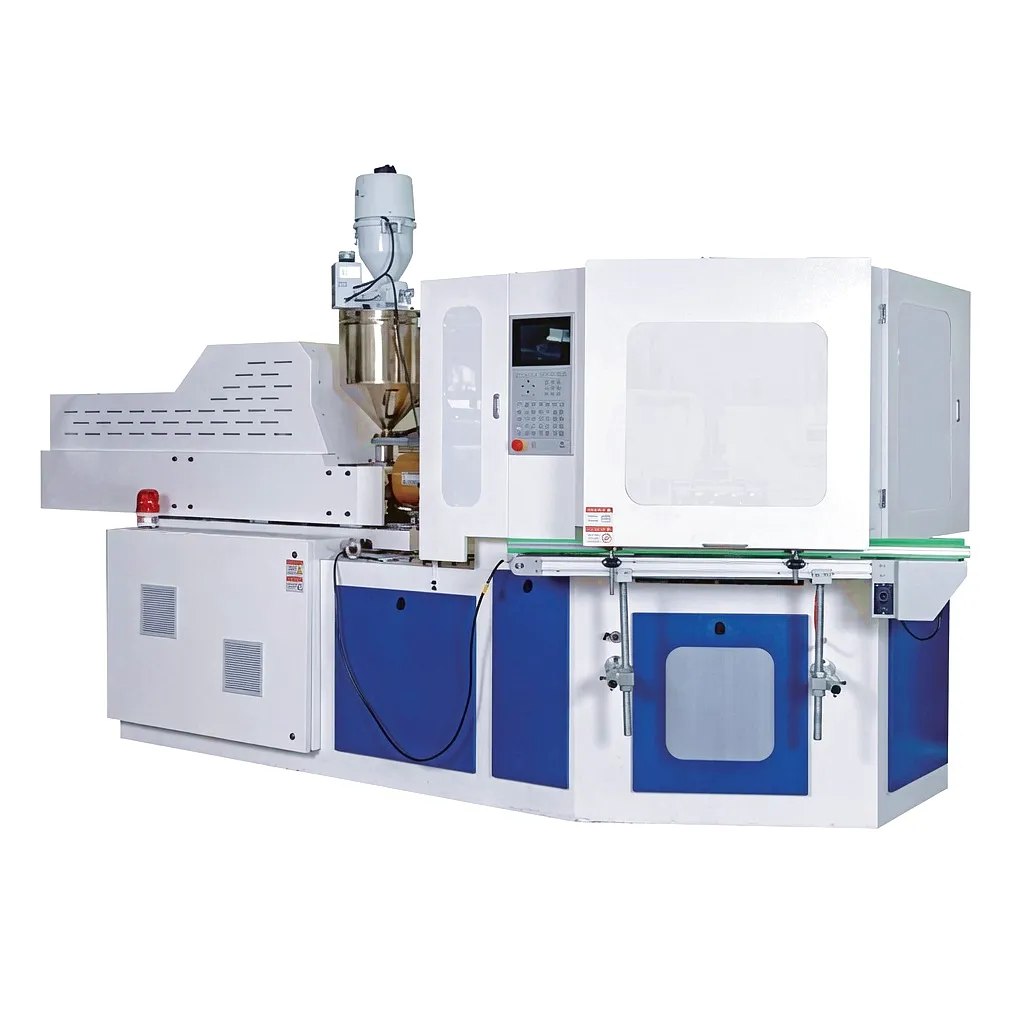
ZQ40 Injection-Blow Molding Machine (European)
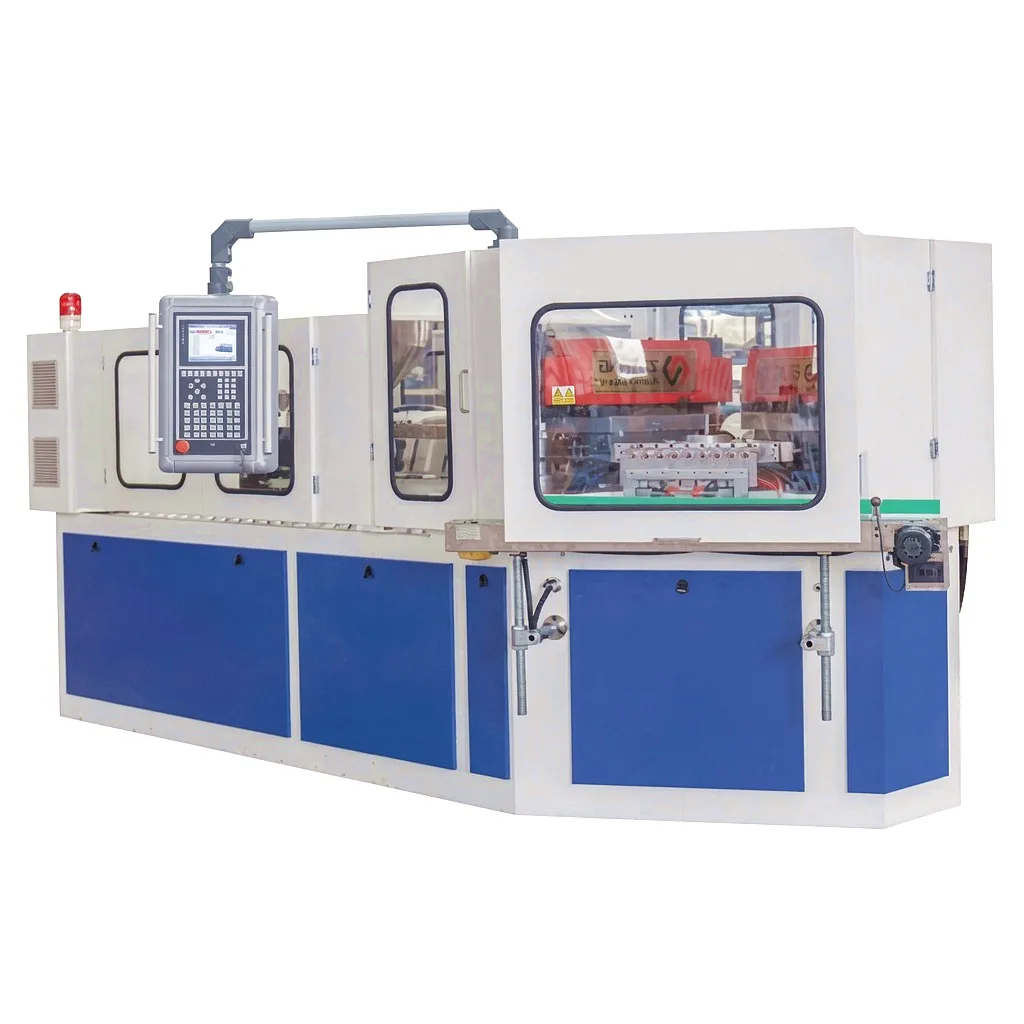
The ZQ40 is a compact, high-precision three-station IBM machine engineered for pharmaceutical, personal care, and small-volume specialty containers up to 40 ml. Features include independent zoned cooling at each station, servo-driven indexing for ±0.5° positional repeatability, and a compact footprint suited to cleanroom or GMP-compliant production environments. Its all-European electrical specification — Siemens PLC, CE-certified safety circuits — makes it directly compliant for UK and EU pharmaceutical manufacturing facilities without additional modification.
ZQ60 Injection-Blow Molding Machine (European)
The ZQ60 scales the ZQ40 architecture to mid-volume production, handling container volumes up to 60 ml across multi-cavity tooling configurations of up to 6 cavities. The advanced servo-hydraulic clamp system delivers 30% lower energy consumption versus conventional hydraulic IBM machines of equivalent output. Multi-zone core rod heating with ±1.5°C control accuracy ensures wall thickness uniformity targets of ±0.05 mm are consistently achieved in PET pharmaceutical containers, while the open-architecture PLC allows integration with inline ultrasonic wall-thickness gauging and MES production data systems deployed across modern UK GMP manufacturing sites.
Ever Power: Precision Manufacturing and Customisation Capabilities
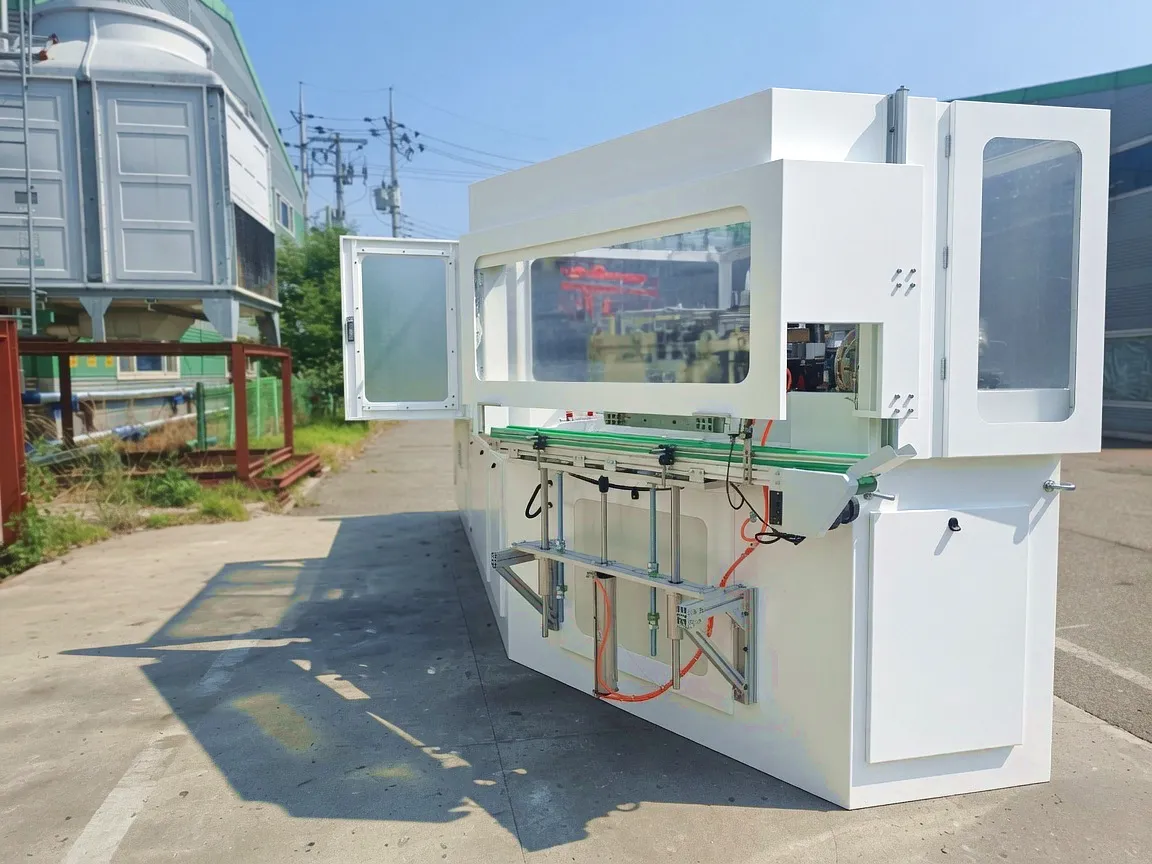 Ever Power operates a precision engineering facility equipped with CNC 5-axis machining centres, co-ordinate measuring machines (CMM), and a dedicated IBM tooling assembly and trial area that allows complete machine and mould validation before dispatch. The facility’s ISO 9001:2015 certified quality management system governs every stage of IBM machine production, from raw material receipt inspection through component machining tolerances — held to ±0.005 mm on critical core rod and clamp geometry — to final functional acceptance testing at rated cycle speeds with customer-specified materials and bottle geometries. This end-to-end manufacturing capability means that Ever Power can offer UK customers a fully configured IBM machine with validated wall-thickness performance data against the customer’s bottle specification before the equipment leaves the factory, dramatically reducing commissioning risk and time-to-production at the customer’s facility.
Discuss Your IBM Machine Requirements with Ever Power
Whether you are specifying a new IBM line for pharmaceutical PET production, upgrading an existing installation with better wall-thickness uniformity, or require application-specific tooling customisation, Ever Power’s engineering team provides full technical consultation from initial specification through production validation. Contact us to discuss machine selection, tooling design, and wall-thickness performance targets for your specific application.
IBM Auxiliary Equipment and Production System Integration
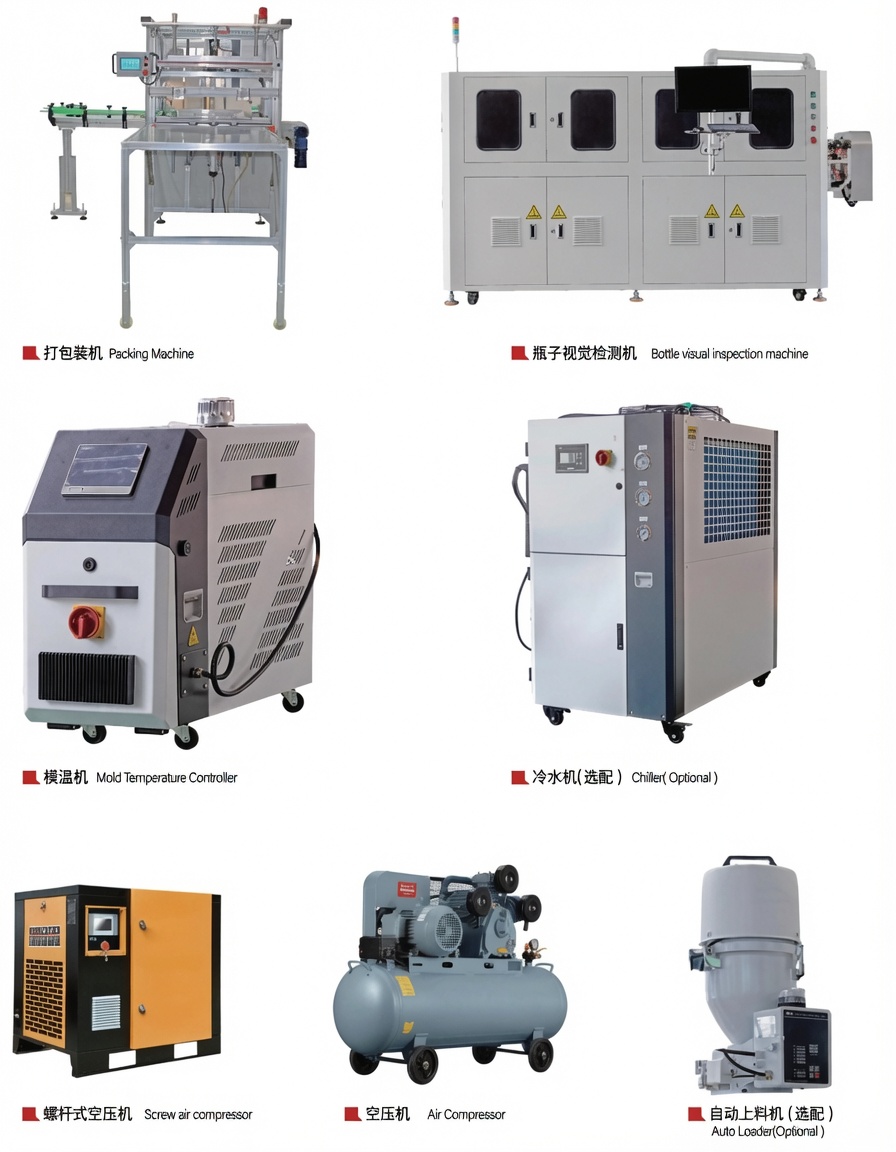
Achieving consistent wall thickness uniformity in injection blow moulding is not achievable by the IBM machine alone — the auxiliary equipment ecosystem surrounding the machine plays an equally important role in delivering production-level process stability. Material drying — maintaining PET moisture content below 0.005% at the hopper before plasticising — is the single most critical upstream variable. Underdried PET undergoes hydrolytic degradation at melt temperatures, reducing intrinsic viscosity and causing erratic fill behaviour that produces wall-thickness variation impossible to compensate through machine parameter adjustment. Hot-air desiccant dryers with closed-loop dewpoint control to below minus 40°C dewpoint are standard specification on pharmaceutical IBM lines in the UK. Downstream, automated bottle inspection systems incorporating inline ultrasonic wall-thickness measurement, polarimetric stress birefringence detection, and dimensional gauging complete the quality loop, providing the feedback data required for closed-loop SPC control of the IBM machine parameters.
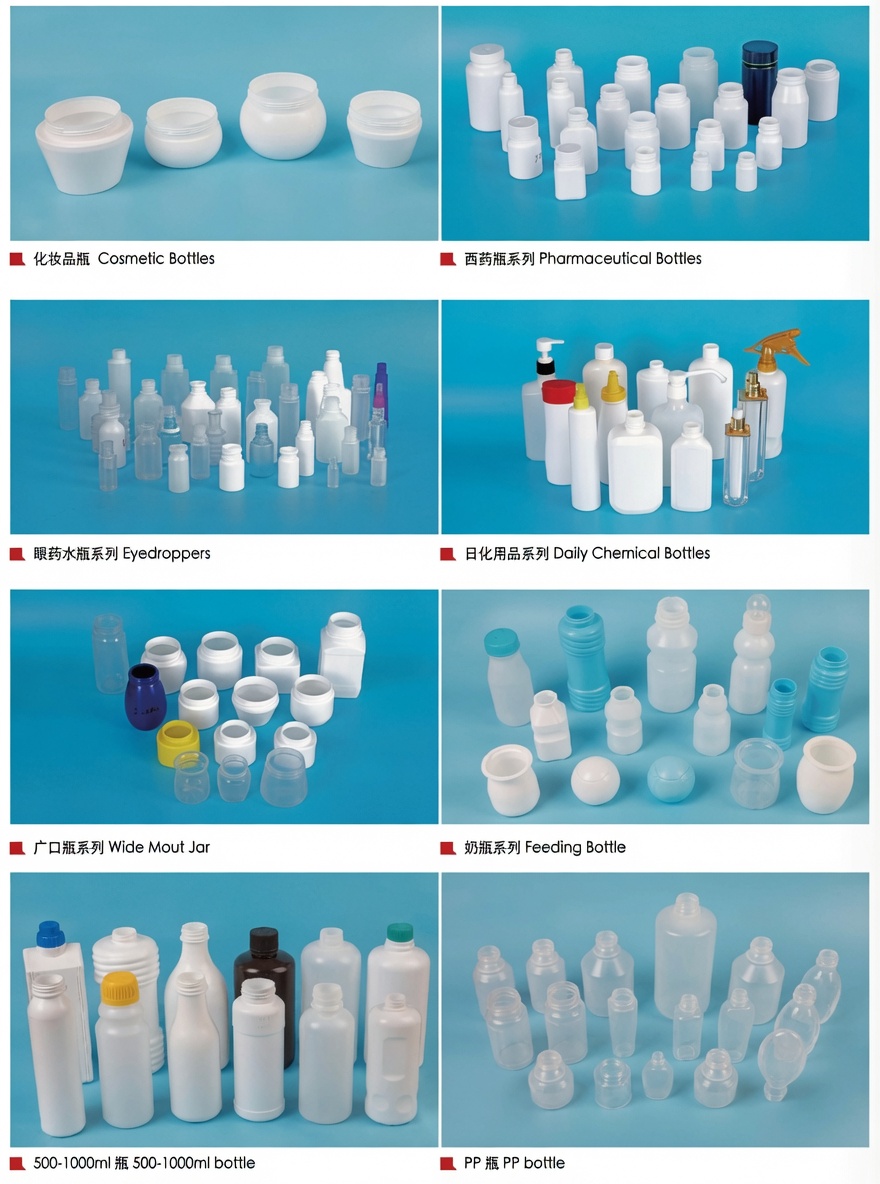
Customer Success Story: Pharmaceutical Packaging Manufacturer, Nottingham
A contract pharmaceutical packaging manufacturer based in Nottingham — supplying oral liquid medicine containers to NHS dispensaries and major UK retail pharmacy chains — was experiencing consistent MHRA process validation failures on their legacy IBM line. Wall-thickness Cpk values across the 28 ml syrup bottle were averaging 1.24, against a validation requirement of 1.67, with the primary failure mode being systematic thin-wall at the shoulder radius on the trailing face of the parison during carousel indexing. Bottle weight variation of ±0.18 g at 8.4 g nominal was causing downstream capper torque inconsistency and random closure-engagement failures at a rate of 0.4% — unacceptable for primary pharmaceutical packaging.
The manufacturer commissioned Ever Power to supply a ZQ40 European IBM machine with custom three-zone core rod heating, active carousel guard insulation to reduce parison heat loss during indexing, and a differentiated cooling profile at the injection station — aggressive at the base and shoulder, reduced at the mid-body — to equalise parison temperature at the blow station to within ±4°C across all zones. The blow-station tooling was redesigned with an increased shoulder corner radius from 0.4 mm to 0.85 mm, and a precision parting-line ground to below 0.010 mm mismatch. The complete installation, including mould qualification and IQ/OQ/PQ documentation, was completed within the agreed 14-week programme.
Post-installation validation demonstrated wall-thickness Cpk of 1.89 across all measurement positions on the 28 ml bottle, exceeding the 1.67 validation requirement with a meaningful margin for process drift allowance. Bottle weight variation reduced to ±0.06 g, and closure-engagement failure rate dropped to 0.02%. Material yield improved by 6.2% due to the ability to run a 0.04 mm thinner nominal wall without risk of under-specification bottles. The Nottingham facility subsequently ordered a second ZQ40 IBM machine for capacity expansion within 8 months of the initial installation, citing the measurable production efficiency improvement and the quality of Ever Power’s post-installation technical support service.
★★★★★
“The ZQ40 delivered Cpk values we had been struggling to achieve for two years on our previous IBM machine. Ever Power’s thermal conditioning solution for the carousel indexing stage was exactly what our process needed. The IQ/OQ/PQ support was thorough and the documentation met MHRA expectations without revision.”
— Process Validation Manager, Pharmaceutical Contract Packager, Nottingham
★★★★★
“We ordered the ZQ60 for our personal care PET bottle line and the optical clarity results have eliminated the banding complaints we were receiving from brand clients. The zoned cooling system and the tight core-rod runout specification are clearly not just marketing — they show up directly in product quality. Ever Power’s technical team was responsive from pre-sales through commissioning.”
— Production Director, Premium Packaging Converter, Greater Manchester
★★★★★
“The quick-change tooling system on our Ever Power IBM machine reduced format changeover time from over 3 hours to 38 minutes, which was critical for our contract scheduling flexibility. The wall-thickness performance on the agrochemical UN-approved containers has been consistently above specification, and we have not had a batch certification failure since commissioning.”
— Operations Manager, Chemical Container Manufacturer, Sheffield
Frequently Asked Questions: IBM Blow Moulding and Wall Thickness Uniformity
What causes wall thickness to be uneven on one side of a PET bottle produced on an IBM machine?
Unilateral thinning in IBM-produced PET bottles is most commonly caused by core rod eccentricity — where the core rod centreline is offset from the injection cavity centreline. A deviation of as little as 0.02 mm produces measurable asymmetric wall thickness. Thermal asymmetry of the parison during carousel indexing is a secondary cause, especially at high cycle rates. Laser alignment verification of the core rod and platen bushing replacement are the primary corrective actions.
How does an IBM machine compare with ISBM when it comes to achieving tight wall thickness tolerances for pharmaceutical PET bottles in the UK?
IBM and ISBM can both achieve pharmaceutical-grade wall-thickness tolerances of ±0.05–0.08 mm. IBM is preferred for small containers below approximately 100 ml because it produces neck finishes entirely within the injection mould, eliminating trim variability and providing superior thread-finish dimensional accuracy for precision pharmaceutical closures. ISBM provides better strength-to-weight ratio in larger bottles through biaxial orientation. For volumes up to 60 ml — typical of oral liquid medicines — IBM machines such as the Ever Power ZQ40 are the industry-standard choice in the UK pharmaceutical packaging sector.
Where in the UK can I find a reliable supplier of injection blow moulding machines that can meet MHRA pharmaceutical packaging validation requirements?
Ever Power supplies IBM machines to pharmaceutical packaging manufacturers across the UK, including facilities in Birmingham, Nottingham, Sheffield, Manchester, and London. The ZQ40 and ZQ60 European series machines are supplied with full IQ/OQ/PQ documentation support, CE certification, and wall-thickness validation data against customer bottle specifications. Contact the Ever Power sales team at [email protected] to discuss MHRA-compliant IBM machine selection for your specific container and closure requirements.
How much does it typically cost to upgrade an existing IBM machine with better wall thickness uniformity control, and what is the expected ROI for a UK manufacturer?
The cost of retrofitting improved wall-thickness controls to an existing IBM machine — including multi-zone core rod heating, carousel insulation, and updated cooling circuits — typically ranges from GBP 12,000 to GBP 35,000 depending on machine age and the number of stations. Material savings from thinner nominal wall targets, combined with reduced scrap rates and elimination of validation failures, typically deliver payback within 9–18 months on continuous pharmaceutical or personal care IBM production lines in the UK. For a detailed quote tailored to your specific machine and production volumes, contact [email protected].
Which PET bottle wall thickness specification should I target when setting up an IBM machine for pharmaceutical liquid containers destined for NHS dispensaries across England?
For oral liquid pharmaceutical containers in the 10–50 ml range produced on IBM machines for NHS supply, a nominal wall thickness of 0.35–0.50 mm is typical, with a process capability Cpk of at least 1.67 required for pharmaceutical validation. The sidewall should not fall below 0.28 mm at any point — including at the shoulder and heel radii — to maintain structural integrity under top-load and drop-test conditions. Ever Power’s ZQ40 IBM machine achieves Cpk values above 1.89 at 0.38 mm nominal wall in PET for NHS-standard oral liquid containers, as demonstrated in validated production at Nottingham-based pharmaceutical packaging facilities.
When is the right time to replace rather than repair an ageing IBM machine that is producing inconsistent wall thickness across its cavities?
The decision to replace rather than refurbish an IBM machine producing wall-thickness inconsistency should be made when the root causes include structural wear in the clamp platens, carousel bearing journals, or core rod mounting flanges — conditions where the mechanical tolerance budget for wall-thickness uniformity has been consumed by component wear and cannot be restored by thermal or process parameter adjustment. Machines over 15 years old with worn platen guides, or where three or more major refurbishment cycles have been completed, typically reach a point where new IBM machine investment delivers better total cost of ownership over a 10-year horizon than continued reactive maintenance. Ever Power can provide a no-obligation technical assessment and price comparison to support your capital investment decision.