Deskripsi
Edible Oil Bottle & Handle Bottle Series
Two-Step Blow Moulding Machine
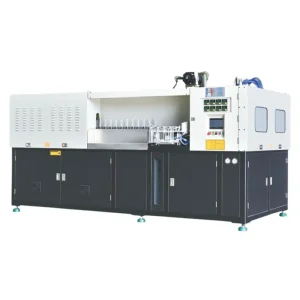
Precision-engineered for the edible oil and condiment packaging industry, the Edible Oil Bottle & Handle Bottle Series blow moulding machine delivers consistent, high-capacity production of front-handle, rear-handle, and large-volume oil containers ranging from 1.5 L up to 20 L. Designed with centralised heating and distributed blowing technology — a standout configuration that cuts energy consumption and maximises throughput across every shift.
Built for High-Volume Edible Oil Bottle Production in the UK & Europe
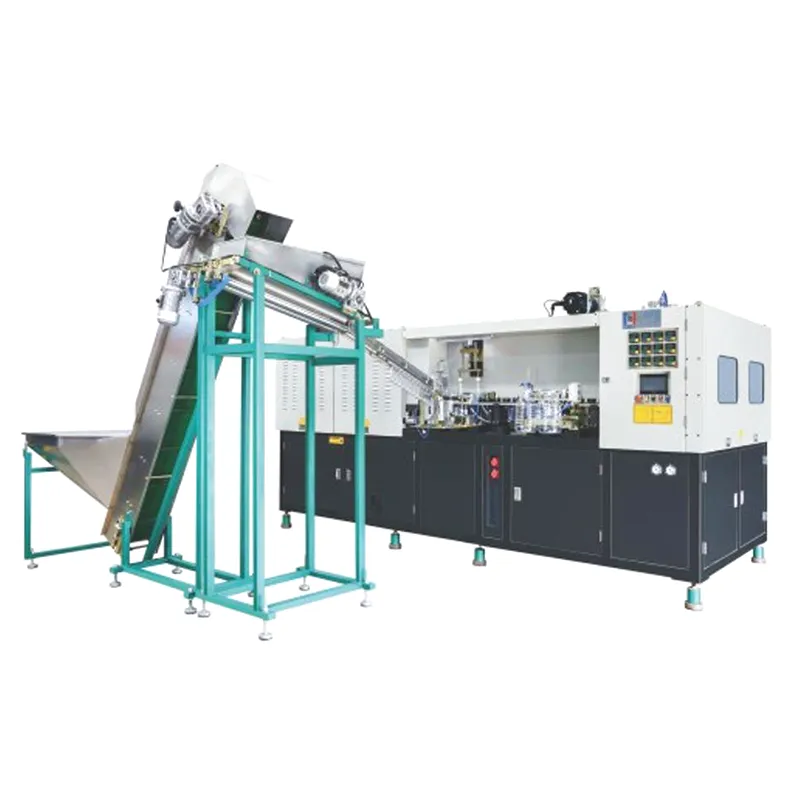 The Edible Oil Bottle & Handle Bottle Series is a purpose-built two-step blow moulding machine line developed specifically for the edible oil and condiment packaging market. Unlike single-stage injection blow moulding systems, this two-step (reheat stretch blow moulding) process separates preform production from the blowing stage — allowing greater flexibility, higher output speeds, and superior bottle consistency when running large-capacity PET containers.
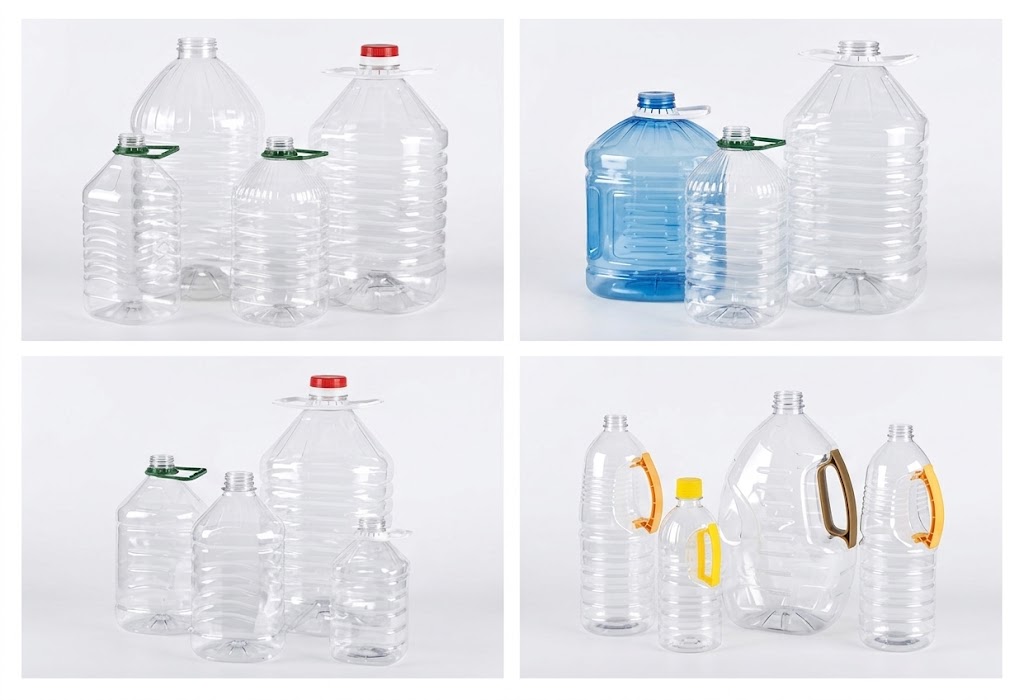
The machine series is engineered to handle front-positioned and rear-positioned handle bottles, as well as plain oil bottles in capacities of 5 L, 10 L, and 20 L. A key engineering highlight is the centralised heating with distributed blowing design — the preforms are uniformly heated in a single zone before being individually blown at distributed stations. This configuration dramatically reduces thermal inconsistencies across cavities, resulting in a more uniform wall distribution and a significantly lower reject rate compared to conventional blow moulding approaches.
UK and European food packaging converters benefit directly from this two-step blow moulding architecture because it aligns with FDA and EU food-contact compliance requirements for PET: the separation of preform manufacturing from the blowing cell means finished bottles remain closed to atmospheric contamination throughout the production cycle, a critical factor for edible oil and condiment safety standards increasingly mandated by UK retailers and supermarket chains.
Core Advantages of the Two-Step Blow Moulding System
How the Two-Step Blow Moulding Process Works
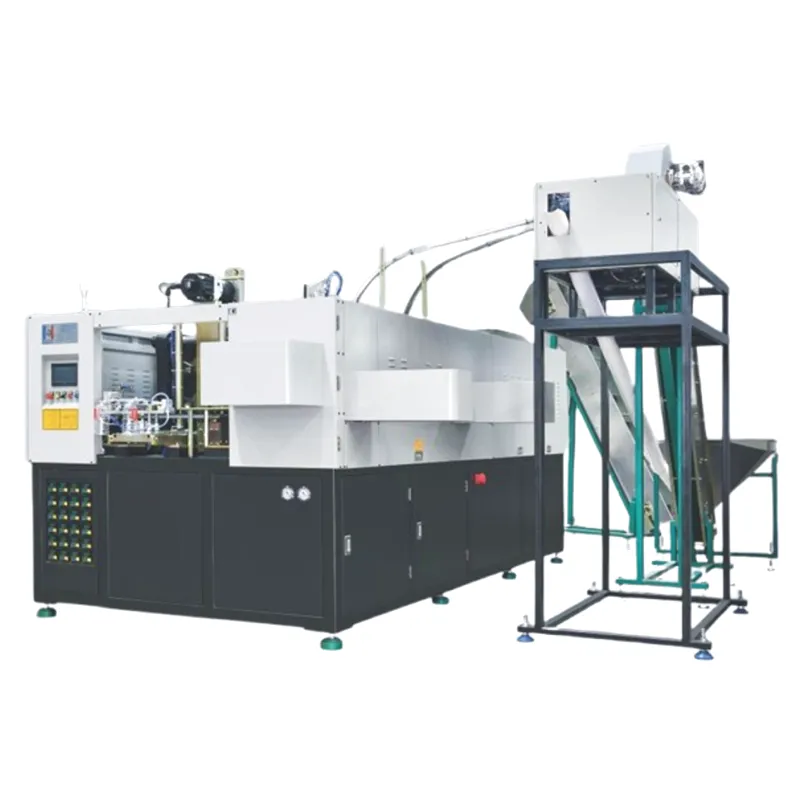 In a two-step blow moulding system, the manufacturing cycle is divided into two fully independent stages. During the first stage, PET preforms are manufactured using a separate injection moulding process. These preforms — which carry the finished bottle neck geometry and threading — are then cooled, inspected, and stored or transported to the blowing cell as required. This decoupled approach gives packaging manufacturers in the UK the freedom to source preforms from third-party suppliers or to run their own preform injection line at a different production rate, providing significant operational scheduling flexibility.
During the second stage, preforms are loaded into the blow moulding machine, reheated in a centralised infrared oven to the precise orientation temperature of the PET material (typically 90–120°C depending on resin grade and wall thickness), and then transferred to individual blow stations. At each station, a stretch rod extends axially to orientation-stretch the preform simultaneously as high-pressure air (26–35 kg/cm2) inflates it against the mould cavity walls. The centralised heating zone across the series ensures that every preform reaches the same thermal profile before blowing — a critical quality factor when producing large-diameter, handle-integrated containers where uneven heating causes cosmetic and structural defects.
The materials most commonly processed on this blow moulding machine series include food-grade PET (polyethylene terephthalate) resin meeting EU food-contact regulation (EU) No 10/2011 and UK equivalent retained legislation. The resulting bottles exhibit excellent clarity, high oxygen barrier performance, good chemical resistance to edible oils and condiment acids, and the structural rigidity needed to withstand pallet-stacking loads during distribution through UK retail supply chains.
Handle bottles (front & rear)
Condiment containers
Cooking wine & sauce bottles
Full Parameter Table — Edible Oil Bottle & Handle Bottle Series
| Category | Parameter | Unit | HGA.ES-2C130 | HGA.ES-2C150 | HGA.ES-2C200 | HGA.FS-2C200(5L) | HGA.JS-2CB152 | HGA.JS-2C200 | HGA.J-2C366(20L) |
|---|---|---|---|---|---|---|---|---|---|
| Molding | Clamping stroke | mm | 160 | 190 | 215 | 225 | 190 | 225 | 332 |
| Mold-open distance | mm | 360 | 440 | 499 | 509 | 440 | 509 | 772 | |
| Mold-close distance | mm | 200 | 250 | 284 | 284 | 250 | 284 | 440 | |
| Stretching stroke | mm | 350 | 450 | 500 | 500 | 450 | 450 | 620 | |
| Mold-open distance (bottom) | mm | 50 | 50 | 50 | 50 | 50 | 50 | 75 | |
| Preform Holder | — | 60 | 60 | 50 | 76 | Blow: 10 + Heat: 128 | Blow: 8 + Heat: 128 | 116 | |
| Cavities | — | 2 | 2 | 2 | 2 | 2 | 2 | 2 | |
| Container | Max. Container Volume | ml | 1500 | 2500 | 5000 | 5000 | 3000 | 5000 | 22000 |
| Neck Diameter Range | mm | 98 | 110 | 138 | 50 | 46 | 58 | 90 | |
| Max. Container Diameter | mm | 110 | 130 | 180 | 180 | 140 | 180 | 300 | |
| Max. Container Height | mm | 250 | 250 | 350 | 330 | 330 | 340 | 480 | |
| Theoretical Output | bph | 1800 | 1800 | 1600 | 1200 | 1600 | 1000 | 700 | |
| Electrical System | Max. Heating Power | kW | 42.5 | 42.5 | 85 | 72 | 48 | 65 | 86 |
| Heating Power | kW | 8–13 | 18 | 35 | 24 | 12 | 26 | 45 | |
| Air System | Operating Pressure | kg/cm2 | 7 | 7 | 7 | 7 | 7 | 7 | 7 |
| Low Pressure Air Consumption | ltr/min | 600 | 600 | 600 | 2000 | 1000 | 1600 | 4000 | |
| Blowing Pressure | kg/cm2 | 26–35 | 26–35 | 30 | 35 | 35 | 35 | 35 | |
| High Pressure Air Consumption | ltr/min | 1000–1500 | 1000–1500 | 6000 | 3600 | 2800 | 5000 | 12500 | |
| Cooling Water | Operating Pressure | kg/cm2 | 5–6 | 5–6 | 5–6 | 5–6 | 5–6 | 5–6 | 5–6 |
| Temperature Range | °C | 8–10 | 8–10 | 8–12 | 8–12 | 8–12 | 8–12 | 8–12 | |
| Flow Rate | ltr/min | 30 | 30 | 91.4 | 60 | 30 | 30 | 120 | |
| Machine | Size (L x W x H) | mm | 3600x1800x1980 | 4290x1800x2220 | 4300x2100x2500 | 3450x2150x2290 | 4200x2100x2260 | 4100/4450×2150/2750×2350 | 4090x2660x3040 |
| Weight | kg | 3000 | 3500 | 4500 | 3500 | 3000 | 2500 | 7000 |
In-House Engineering. Full Customisation Capability.
Our manufacturing facility operates a full-loop customisation workflow, from initial product concept and bottle design through mould engineering, tooling manufacture, machine assembly, and factory acceptance testing. Every blow moulding machine in the Edible Oil Bottle & Handle Bottle Series can be configured against a customer’s specific bottle geometry — whether that involves a unique handle profile, a custom neck finish for a proprietary closure system, or a label-panel geometry tuned to a specific shrink-sleeve or pressure-sensitive label format.
For UK food and beverage packaging manufacturers, this end-to-end customisation service eliminates the typical lead-time risk associated with sourcing moulds and machines from separate suppliers. Our engineering team works alongside your product development and quality teams during the design phase, using 3D mould simulation and bottle structural analysis to validate each design before a single piece of steel is cut. This significantly reduces iterative tooling changes after delivery and shortens the time to first validated production batch.
How a UK Cooking Oil Manufacturer Cut Packaging Costs by 22%
Location: Birmingham, West Midlands, UK
Machine Installed: HGA.ES-2C200
Container Type: 5 L handle bottle (rear-positioned grip)
After evaluating several blow moulding suppliers, the Birmingham-based converter selected the HGA.ES-2C200 from our two-step range on the basis of its ability to produce their specific rear-handle 5 L bottle geometry — something that standard EBM extrusion blow moulding machines cannot achieve with the same clarity and material efficiency. The centralised heating architecture was a deciding factor: the process engineer cited consistent wall distribution across the handle section as the primary quality requirement, since the original imported bottles had experienced inconsistent handle thickness that led to returns from one major UK retailer.
Following installation and a 6-week process qualification period, the line achieved a 22% reduction in per-unit packaging cost compared to the imported bottle programme, and the reject rate dropped to under 0.4%. The client subsequently ordered a second HGA.JS-2C200 unit 14 months later to expand capacity ahead of a private-label contract with a major British supermarket chain.
The handle bottle quality is genuinely better than what we were importing. The wall thickness around the grip area is consistent shift after shift, which is exactly what our retail buyer was demanding. We have had zero handle-related complaints since installation.
We produce 10 L and 20 L containers for the foodservice wholesale market in Germany and the Netherlands. The HGA.J-2C366 handles both sizes with a mould change of under 45 minutes, which keeps our changeover costs manageable. The after-sales technical support has been responsive and knowledgeable.
The two-step process gave us the flexibility to switch preform suppliers without retooling the machine. That was critical for us during a period when resin supply was constrained. The blow moulding machine itself has run with no unplanned downtime over our first 18 months of operation.
Injection Blow Moulding Machine Replacements
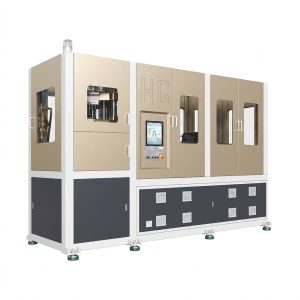
For facilities currently running older injection blow moulding (IBM) equipment, we supply purpose-built replacement machines that integrate directly into existing production cells without requiring tooling changes. If you are upgrading ageing IBM lines or replacing end-of-life machines from other manufacturers, the following models are engineered as direct-fit alternatives:
Common Questions from UK Packaging Buyers
Ready to Discuss Your Edible Oil Bottle Production Requirements?
Our engineering team works with UK and European food packaging manufacturers to specify, configure, and commission the right two-step blow moulding machine for your production environment. Contact us for a no-obligation technical discussion and quotation.
edit by gzl