Ever Power Industrial Equipment
Injection-Blow Molding Machine: Applications, Technology & Industry Insights
A deep-dive into how injection-blow molding machines are reshaping packaging production across the UK and global markets — from personal care to pharmaceuticals.
How the Injection-Blow Molding Process Works
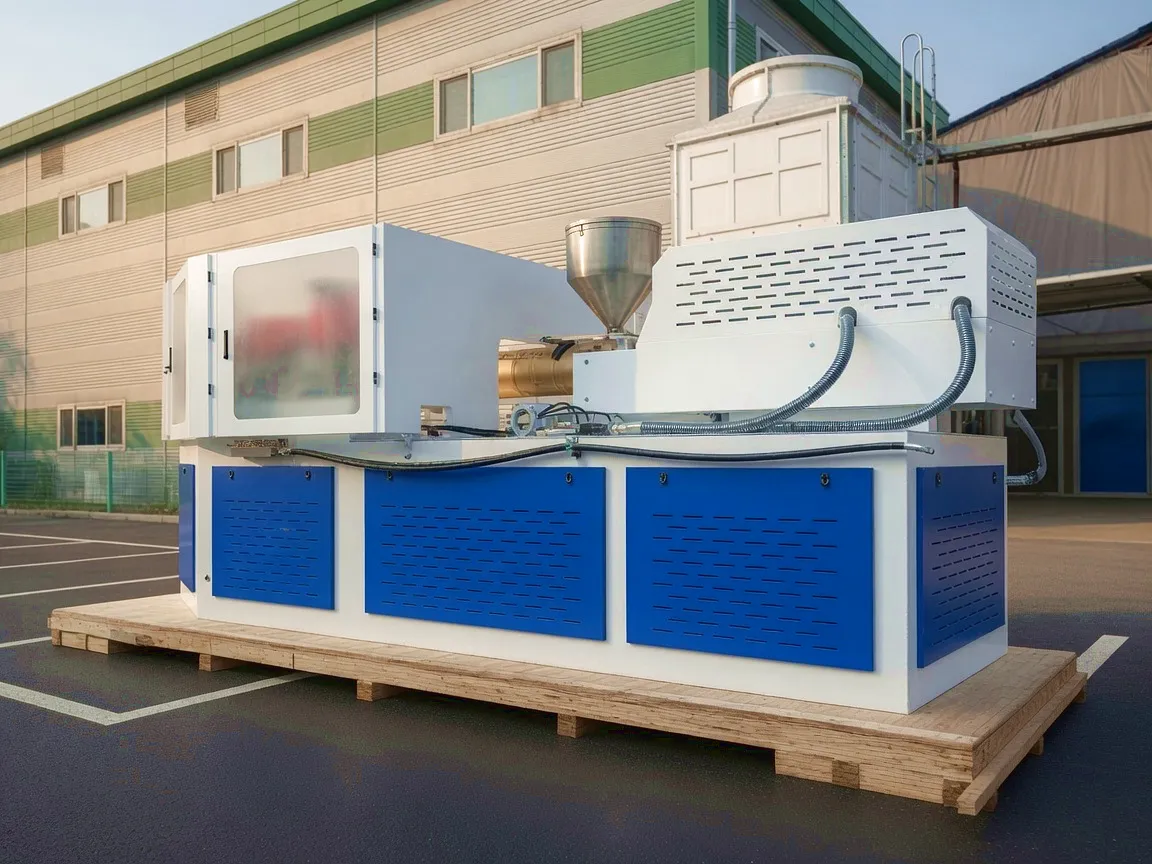
The process begins at Station 1, where polymer melt — most commonly PET, PP, HDPE, or LDPE — is injected under high pressure around a precision steel core rod to form a parison. This parison already carries the final neck geometry of the container, meaning thread profiles and sealing surfaces are dimensionally perfect before any blowing occurs. The core rod then rotates to Station 2, where compressed air expands the parison against a temperature-controlled blow mold cavity. Because the material is still in a conditioned thermal state, orientation of polymer chains is optimised, resulting in superior clarity and impact resistance in the finished wall. At Station 3, the core rod indexed again, and the finished container is stripped cleanly from the tool.
One of the technical subtleties that separates an injection-blow molding machine from competing processes is the absence of a separate preform-reheating step. In conventional ISBM, the preform is cooled, stored, and reheated in a separate oven pass. The IBM process eliminates this reheat phase entirely, reducing energy consumption, floor space, and the risk of contamination or moisture absorption in hygroscopic materials like PET. For pharmaceutical and cosmetic manufacturers in regulated environments — sectors operating under MHRA or BS EN ISO quality frameworks — this single-stage thermodynamic integrity is not just a convenience; it is a compliance advantage.
Core Materials Used in Injection-Blow Molding
PET (Polyethylene Terephthalate)
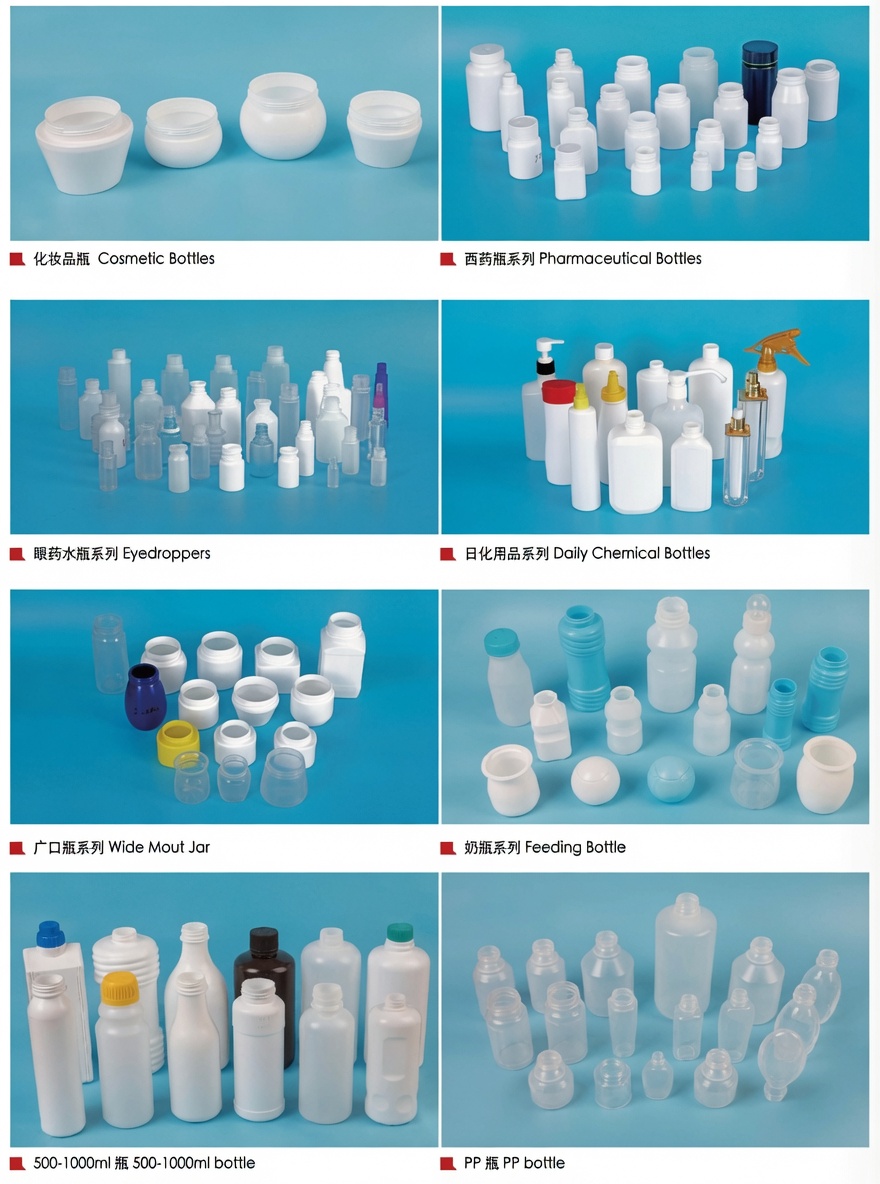
Industry standard for pharmaceutical and cosmetic bottles. Exceptional clarity, chemical resistance, and barrier properties against moisture and oxygen make it the go-to resin for premium personal care containers.
PP (Polypropylene)
Preferred where heat resistance and chemical stability are paramount. PP containers produced on an injection-blow molding machine withstand sterilisation cycles, making them ideal for medical dispensing and laboratory consumables.
HDPE / LDPE
High-density and low-density polyethylene variants are widely processed for agrochemical, household chemical, and food packaging. Their broad chemical compatibility and toughness suit squeezable and rigid formats equally well.
PETG & Specialty Grades
PETG offers enhanced toughness over standard PET and excels in cosmetics where unusual geometries or vivid colouration are required. Bio-based PLA grades are gaining traction in the UK under sustainability procurement mandates from major retailers.
Personal Care & Cosmetics Packaging — Shampoo, Conditioner & Shower Gel Containers

Pharmaceutical Packaging — Medicine Bottles, Syrup Containers & Clinical Vials

Food & Beverage Applications — Sauce, Condiment & Flavouring Containers
The UK food manufacturing sector — valued at over £28 billion annually and concentrated in production regions spanning Yorkshire, Lincolnshire, and the Home Counties — relies on injection-blow molding machines for a broad range of condiment and flavouring containers. Ketchup, hot sauce, salad dressing, cooking oils, and flavour concentrates are typically packed in PET or HDPE bottles where clarity, squeezability, and shelf-life protection are the primary design drivers. IBM’s wall uniformity advantage directly benefits these applications: uniform wall thickness means consistent squeeze-force across the bottle’s cross-section, which translates into predictable dispensing behaviour that end consumers associate with quality.
For the premium end of the food market — artisanal hot sauces, cold-pressed oils, and gourmet condiments targeting food-service and delicatessen trade customers — the visual quality of IBM-produced PET containers is a commercial differentiator. The glass-like appearance of a well-produced IBM bottle supports premium price positioning, a critical consideration as challenger brands compete against heritage glass packaging at retail. Several Bristol and London-based food brands have made the transition from glass to IBM-produced PET specifically to reduce logistics cost and breakage risk while maintaining the visual quality their customers expect.
Honey, syrups, and viscous fruit preparations represent a technically demanding sub-segment where the injection-blow molding machine’s ability to produce wide-mouth formats with excellent thread accuracy is particularly valued. Wide-mouth honey jars with smooth, low-torque screw closures require dimensional consistency that only the injection-formed neck station can reliably deliver at production speeds exceeding several thousand units per hour.
Household Chemical & Agrochemical Packaging
Cleaning agents, disinfectants, fabric softeners, and agrochemical formulations present some of the most chemically aggressive environments that plastic packaging must endure. HDPE containers produced on an injection-blow molding machine offer resistance to the wide pH range present in alkaline drain cleaners, acidic descalers, and solvent-based agricultural pesticides. The UK agrochemical distribution sector, with significant operations around East Anglia and the Fens — one of the most intensively farmed regions in Europe — depends on robust, leak-proof containers that maintain integrity through rough handling in farm environments and across extended storage under variable temperature conditions.
IBM-produced agrochemical containers meet the United Nations transport requirements for dangerous goods packaging (UN/DOT certifications) when manufactured with the appropriate wall thickness parameters and resin grades. The process’s inherent wall thickness control makes UN compliance testing more predictable and reproducible than with extrusion blow moulding, where wall distribution variations can create localised weak spots that jeopardise test results. For UK chemical distributors filing packaging notifications under the GB CLP regulations post-Brexit, this reliability in container performance data significantly simplifies the compliance documentation process.
Household surface cleaners, antibacterial sprays, and bathroom cleaning products manufactured and packed in UK facilities serving the grocery multiples — Tesco, Sainsbury’s, and Morrisons — increasingly specify IBM-produced containers in their supplier packaging standards. The surface quality and printability of IBM bottles means that pressure-sensitive labels and direct-print decoration adhere with fewer rejects, reducing labelling line downtime and waste.
Ever Power — Precision Manufacturing Workshop
Technical Performance Specifications
The table below presents the principal technical parameters of Ever Power’s European-series injection-blow molding machines. All data reflects factory-tested values under standard operating conditions with PET resin at standard melt temperatures.
| Parameter | ZQ40 (European) | ZQ60 (European) | Unit / Notes |
|---|---|---|---|
| Clamping Force | 40 | 60 | kN |
| Screw Diameter | 30 | 35 | mm |
| Injection Volume | Up to 55 | Up to 120 | cm3 |
| Container Volume Range | 3 – 500 | 10 – 1,000 | ml |
| Blow Air Pressure | 0.6 – 1.0 | 0.6 – 1.2 | MPa |
| Cycle Time (PET, 100 ml) | ~3.5 – 5 | ~3.5 – 5 | seconds (typical) |
| Stations | 3 | 3 | Injection / Blow / Eject |
| Compatible Resins | PET, PP, HDPE, LDPE, PETG | PET, PP, HDPE, LDPE, PETG | Custom resin on request |
| Control System | PLC + HMI Touchscreen | PLC + HMI Touchscreen | European CE-standard |
| Power Supply | 380V / 50Hz / 3Ph | 380V / 50Hz / 3Ph | European standard |
| Machine Weight | ~2,200 | ~3,500 | kg (approx.) |
| Certifications | CE, ISO 9001 | EU Machinery Directive compliant | |
Key Technical Advantages of the Injection-Blow Molding Machine
Zero Flash, Zero Waste
No trimming, no regrind lines, and no secondary handling. The IBM process produces net-shape parts from the first cycle, significantly reducing material waste and the energy consumed by regrind processing. UK manufacturers targeting ISO 14001 environmental credentials find this intrinsically attractive.
Superior Neck Finish Accuracy
Neck thread profiles, sealing faces, and closure fitments are injection-moulded — not blown — delivering tolerances tighter than ±0.1 mm on critical dimensions. This is the reason IBM dominates pharmaceutical and precision dispensing container applications.
Excellent Optical Clarity
PET containers produced by IBM exhibit haze values typically below 3%, approaching glass clarity. This directly supports premium shelf presence for cosmetic, food, and nutraceutical brands where product visibility inside the container influences the purchase decision.
Compact Footprint, High Output
The rotary three-station configuration integrates injection, blow, and eject within a single machine envelope. Compared with linear ISBM or two-stage SBM installations, the IBM machine requires substantially less floor space — an important consideration for UK industrial units in older trading estate buildings with constrained layouts.
Single-Stage Thermal Integrity
One continuous thermal cycle from pellet to finished part eliminates reheat energy expenditure and the associated risk of thermal degradation in moisture-sensitive polymers like PET. In practice, this produces better colour consistency, fewer yellow-index deviations, and superior acetaldehyde control for food-contact applications.
Rapid Mould Changeover
Modern IBM machines with quick-release tooling systems — as offered on the Ever Power European series — achieve mould changeover in under two hours, enabling contract manufacturers to maintain flexible production schedules across multiple SKUs without prohibitive downtime costs.
IBM Auxiliary Equipment — Hopper, Chiller & Air Compressor Units
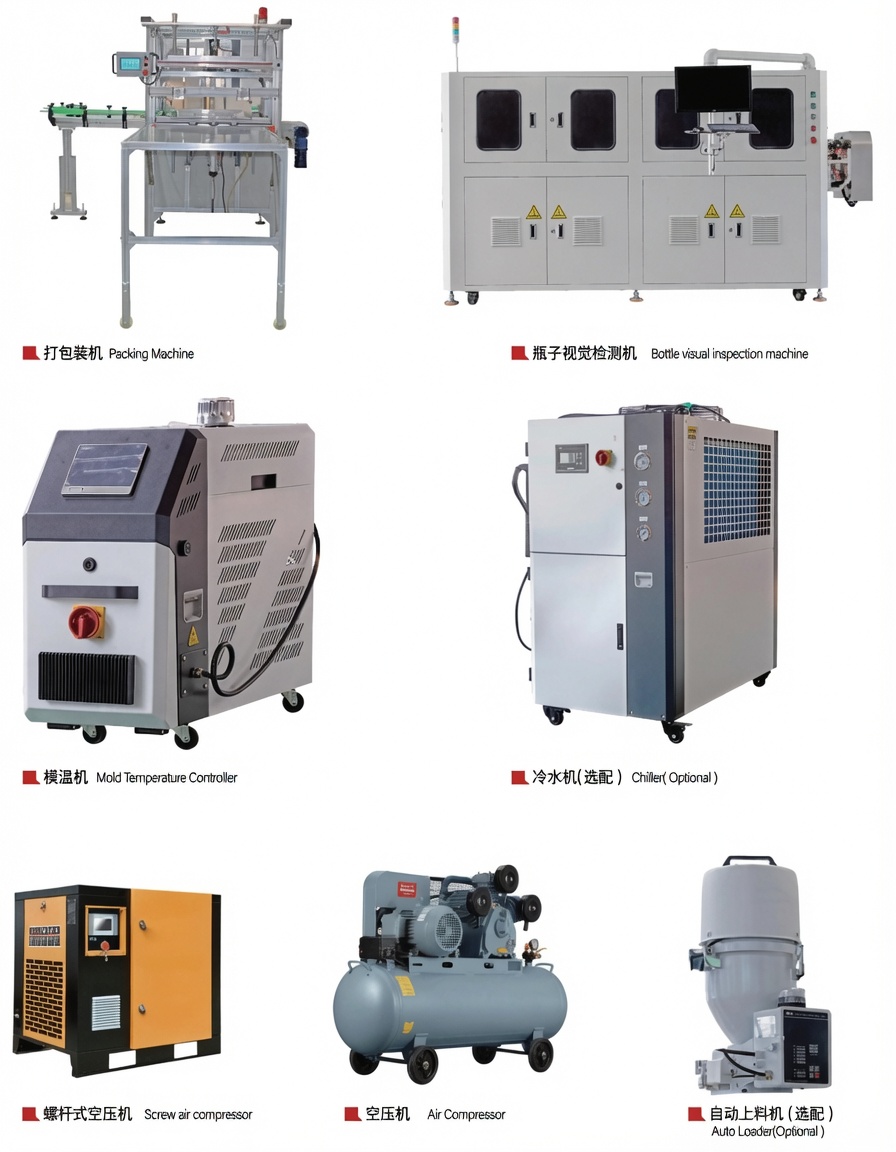
Complete Peripheral Support Systems
Featured Products — European Series Injection-Blow Molding Machines
Ever Power’s European-series machines are engineered to meet CE and EU Machinery Directive requirements out of the box, with PLC-driven servo control, energy-saving hydraulics, and rapid-exchange tooling systems ready for demanding production environments in the UK and Europe.
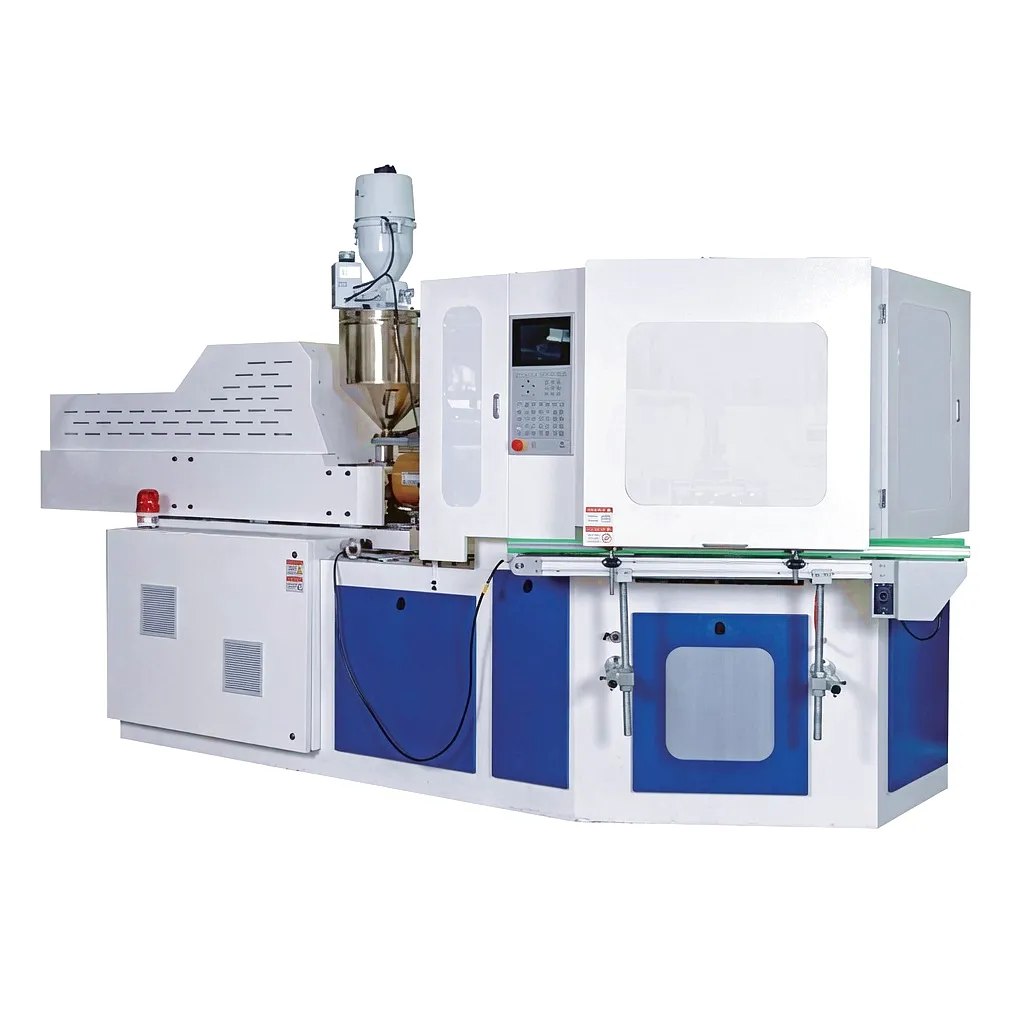
ZQ40 Injection-Blow Molding Machine (European)
The ZQ40 is Ever Power’s entry-level European-series model, delivering a 40 kN clamping force with compact dimensions suited to contract packaging startups and mid-size cosmetic or pharmaceutical producers. It handles container volumes from 3 ml to 500 ml across PET, PP, and HDPE, with a fully enclosed servo-driven rotary table for repeatable precision at cycle times as low as 3.5 seconds.
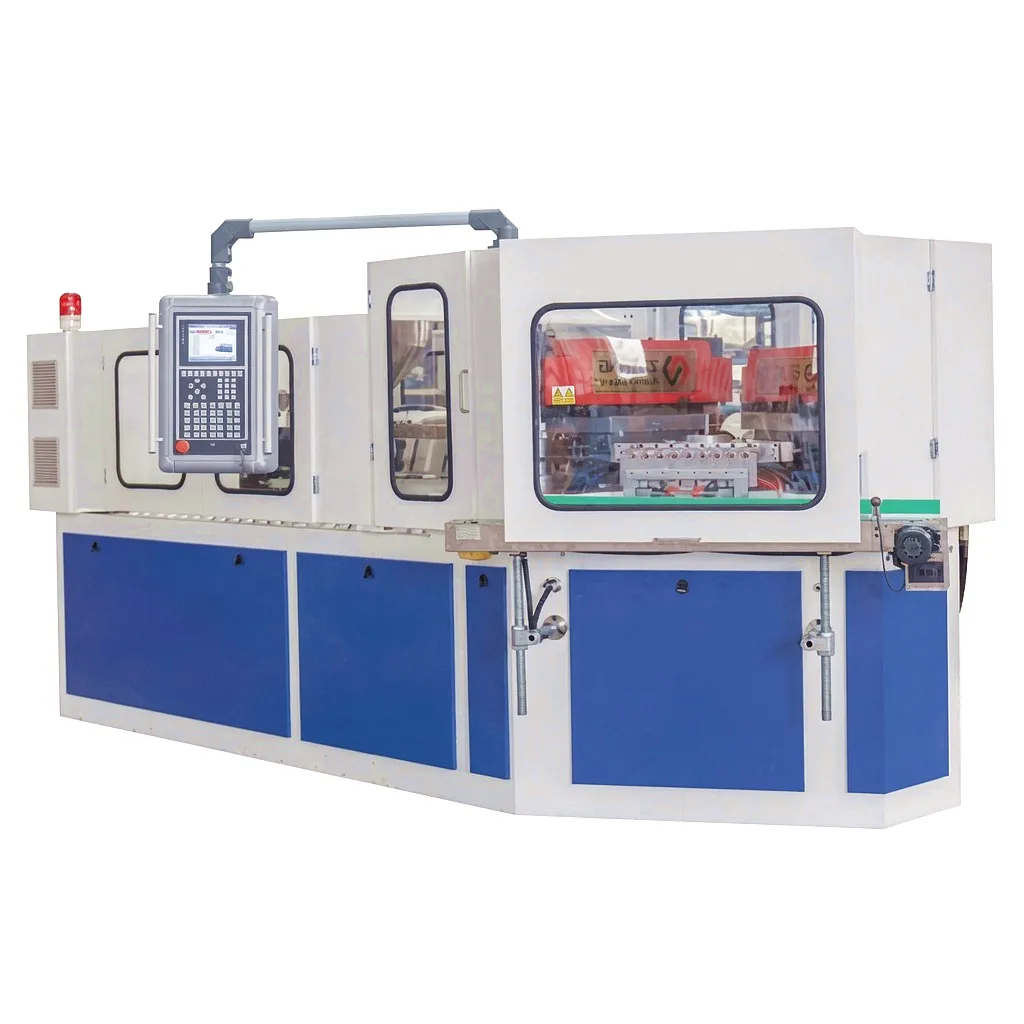
ZQ60 Injection-Blow Molding Machine (European)
The ZQ60 steps up to a 60 kN clamping force and an expanded injection volume capacity of up to 120 cm3, making it the machine of choice for medium-to-high-volume production of 10 ml to 1,000 ml containers. Enhanced temperature-zone control across six independent heating rings and a high-torque servo drive assembly give operators granular process control for demanding technical resins and multi-cavity tooling configurations.
Ever Power — Manufacturing Capability & Customisation Services
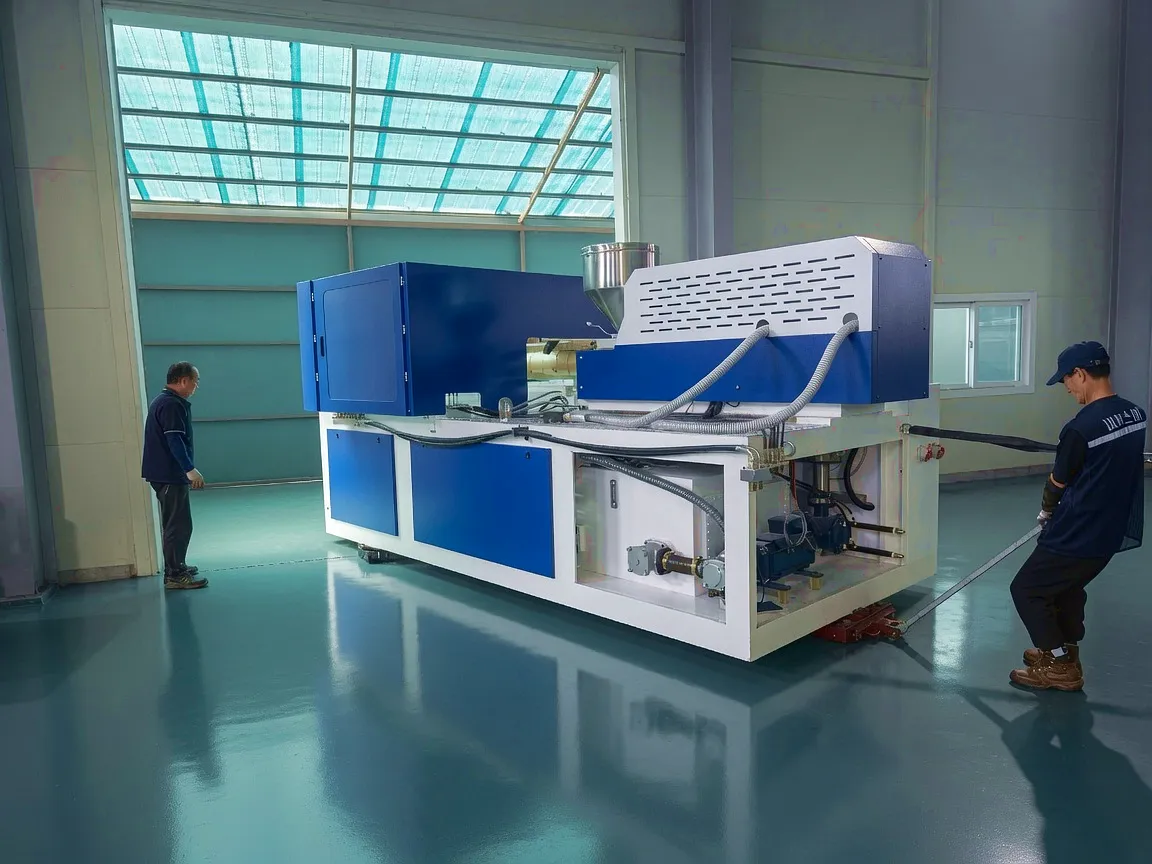
Ever Power operates a dedicated injection-blow molding machine manufacturing facility spanning over 12,000 square metres, equipped with precision CNC machining centres, hardness testing laboratories, and a fully equipped quality assurance department running dimensional verification against traceable calibration standards. The facility’s vertically integrated structure — encompassing in-house mould manufacturing, hydraulic assembly, electrical panel build, and factory acceptance testing — gives Ever Power a level of supply chain control that offshore-assembled alternatives simply cannot replicate.
Customisation is not an afterthought at Ever Power — it is a core engineering discipline. The technical team works directly with customers to specify machine configurations tailored to their resin choices, container geometry requirements, cavity counts, and production throughput targets. Bespoke tooling design is carried out using CAD/CAM simulation to validate parison geometry and blow ratio before any steel is cut, dramatically reducing the time and cost risk associated with new container development. For UK customers operating on tight product launch timelines — particularly in the competitive personal care and food packaging sectors — this front-loaded engineering process is a significant competitive advantage.
Ever Power’s global after-sales network provides UK customers with remote PLC diagnostics, spare parts dispatch with next-day DHL capability to major logistics hubs including Coventry, East Midlands Airport, and Heathrow freight terminals, and on-site commissioning support. The company’s documentation package — CE Declaration of Conformity, Operation and Maintenance Manuals, electrical schematics, and parts catalogues — is supplied in English as standard for all UK-bound equipment, eliminating the translation burden that complicates installation with some alternative suppliers.
Customer Success Story — Sheffield Cosmetics Contract Manufacturer
A specialist contract packaging company based in Sheffield — operating a 6,500 m2 facility serving premium personal care brands across Yorkshire and the North East — faced a critical production challenge in 2024. Their existing extrusion blow moulding lines were generating an average flash trim waste rate of 8.5% by material weight, and neck-finish rejection rates on a newly won shampoo bottle contract were running at 2.1% — well above the 0.5% tolerance specified by their retail customer. The cost of secondary inspection, regrind processing, and delayed shipment penalties was threatening the commercial viability of the contract.
Following a technical evaluation that included site visits to reference installations in Germany and the Netherlands, the company selected two Ever Power ZQ60 injection-blow molding machines for installation. Ever Power’s engineering team provided a dedicated application engineer for the four-day commissioning process, and bespoke tooling was supplied pre-validated with FAT (Factory Acceptance Test) data. Within the first three weeks of production, neck-finish rejection rates fell to 0.12% — well below the customer specification. Material waste dropped from 8.5% to under 0.4% on the same container geometry, as the IBM process generates no flash by design.
Over the twelve months following installation, the Sheffield facility recorded a 17% reduction in total material consumption for the product range, a 23% improvement in overall equipment effectiveness (OEE) on the IBM lines compared with the displaced EBM equipment, and a successful audit by the retail customer’s packaging technical team who confirmed container specifications were met across 100% of the submitted samples. The contract was renewed and expanded to include two additional SKUs in the same personal care range.
★★★★★
“The neck accuracy on the IBM containers is in a completely different class from what we were getting before. We’ve gone from chasing a neck spec every shift to setting it once and walking away. The Ever Power team understood exactly what our pharmaceutical customer needed and the tooling hit spec on first article.”
— Production Director, Sheffield Contract Packer
★★★★★
“Material waste was our biggest headache on the old EBM line. Moving to the ZQ60 took waste from over 8% down to almost nothing. That saving alone paid back a significant portion of the machine cost in under a year. Ever Power’s customisation of the mould to handle our PETG grade was handled professionally and without delays.”
— Operations Manager, Yorkshire Packaging Group
★★★★★
“We specified ever Power because their after-sales commitment to the UK market was documented and verifiable — spare parts from a UK-held stock with same-week delivery and a remote diagnostic line that actually picks up. Eighteen months in, we’ve had two minor calls to their technical team and both were resolved same day. That’s the kind of supplier relationship a lean operation needs.”
— Technical Manager, North East Personal Care Manufacturer
Frequently Asked Questions
Ready to Upgrade Your Production Line?
Talk to Ever Power About Your Next Injection-Blow Molding Machine
Whether you are in Birmingham, Sheffield, Manchester, or anywhere across the UK, our team is ready to specify the right machine configuration, tooling, and support package for your exact production requirements.
edit by gzl