Industry Trends · UK Manufacturing Intelligence
The Rise of Lightweighting in PET Packaging: What Blow Molders Need to Know
From Birmingham packaging lines to Sheffield contract moulders — how IBM blow moulding machines are enabling the next generation of lightweight PET containers without sacrificing structural integrity.
PET Lightweighting
IBM Technology
UK Market 2025
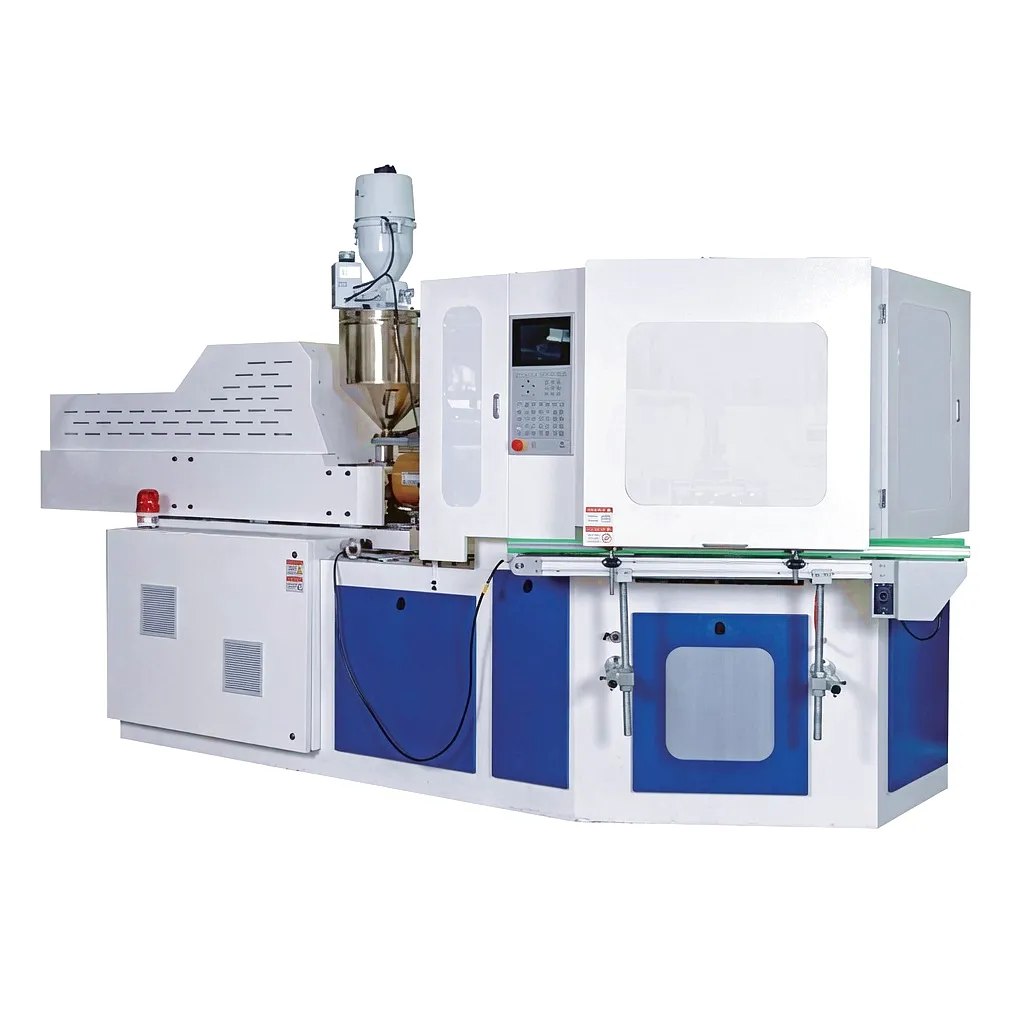
Across the UK plastics processing sector — from the packaging corridors of the East Midlands to the precision manufacturing hubs of the North West — a commercially significant shift is well underway. Brand owners and their contract packaging partners are under mounting pressure to reduce the material weight of rigid PET containers without compromising drop resistance, top-load strength, or the clarity that consumers expect on shelf. This is not a trend driven by aesthetics alone; the UK Plastic Packaging Tax, Extended Producer Responsibility regulations, and retailer sustainability commitments have turned lightweighting from an engineering aspiration into a commercial imperative. The injection blow moulding machine — commonly referred to as an IBM machine — has emerged as a central enabling technology in this transition, precisely because the IBM process offers a level of wall-thickness control and preform geometry precision that competing blow moulding methods struggle to match at comparable output rates. For UK converters running pharmaceutical droppers, personal care bottles, or food-grade sauce containers, this capability translates directly into measurable raw material savings and a lower per-unit weight declared to the Plastic Packaging Tax authority.
The physics of lightweight PET containers demand that every micron of material is placed exactly where it contributes to structural performance. Conventional extrusion blow moulding scatters material unpredictably across the bottle wall; injection stretch blow moulding introduces biaxial orientation that improves strength-to-weight ratio but adds process complexity and a secondary reheating step. The IBM process — which forms a preform and blows it in a single thermally continuous operation — preserves the melt molecular orientation in a way that supports consistent wall distribution at reduced gauge, making it the most precise route to lightweight rigid PET containers currently available in commercial production.
Blow Moulding Process Comparison: IBM, ISBM, EBM and Extrusion
Understanding which process delivers the thinnest wall with the tightest tolerance
RECOMMENDED
IBM — Injection Blow Moulding
Single-stage process: inject preform, blow to final shape on the same core rod with no re-heat step, no flash, and no trimming. Delivers the tightest wall thickness tolerance of any commercial blow process — typically ±0.05 mm on panel walls — making it the default choice for pharmaceutical and cosmetic containers where precise neck geometry is non-negotiable. For lightweight PET programmes, IBM is the only process that consistently achieves sub-0.30 mm panel walls in multi-cavity production without rejects exceeding 2%.
No flash
±0.05 mm wall
Pharma-grade
ISBM — Injection Stretch Blow
Two-stage process delivering biaxial molecular orientation in PET — the technology behind most beverage bottles. Excellent for large-volume PET production where clarity and gas barrier matter most. The reheating step introduces temperature variables that can widen wall distribution by ±0.12 mm compared to IBM, making it less suitable for small precision bottles and lightweight pharmaceutical containers where tight tolerance is contractually mandated.
High clarity
Beverage PET
EBM — Extrusion Blow Moulding
Continuous extrusion parison captured between two mould halves; flash and parting line require downstream trimming. Inferior neck thread accuracy — typically ±0.25 mm — and base flash adds material waste of 5–12% per cycle. Flash trimming also introduces a contamination risk that pharmaceutical GMP assessors specifically target during MHRA facility audits. Best fit: large HDPE containers and industrial canisters where precision is secondary to volume.
Flash trimming
Large containers
Extrusion — Multi-Layer Co-Ex
Co-extrusion with barrier layers (EVOH, nylon) for oxygen-sensitive products. High capital cost and complex die head design. Lightweight capability is limited because the barrier layer itself contributes minimum gauge that cannot be removed without compromising oxygen transmission performance. Positioned for specialty agrochemical and food packaging requiring oxygen barrier rather than high-precision lightweight programmes targeting sub-0.30 mm walls.
Barrier layers
Specialty products
How Injection Blow Moulding Machines Work: The Three-Station Operating Principle
Core engineering cycle enabling zero-flash, precision lightweight container production
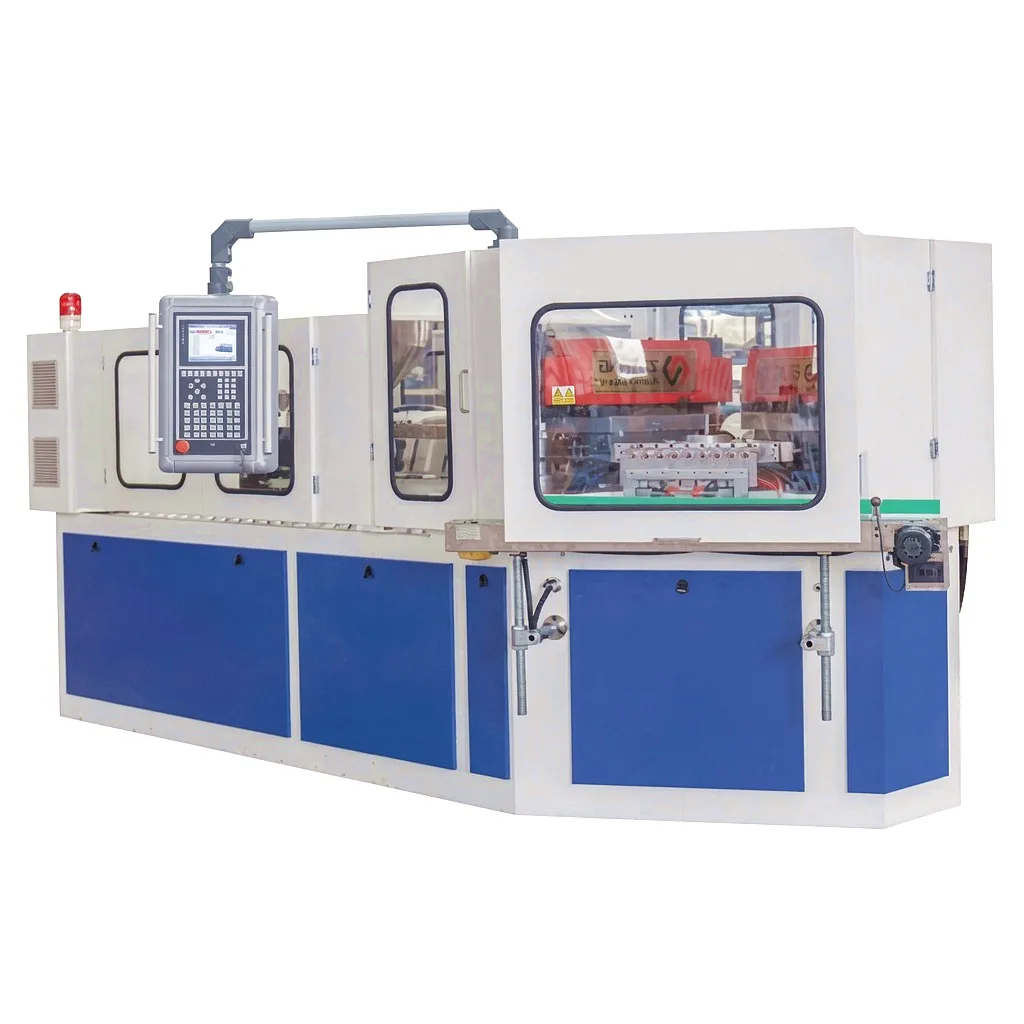
The IBM process is built around a rotating indexing plate that carries hardened steel core rods through three consecutive stations simultaneously. At Station 1 — the injection station — molten thermoplastic resin is injected under high pressure into a precision-machined cavity that encapsulates the core rod. The resulting preform takes on the exact internal geometry dictated by the core rod and the external geometry defined by the injection cavity. Because both surfaces are formed against rigid steel, preform walls are extraordinarily uniform from the outset — a foundational advantage that differentiates IBM from any parison-extrusion route where wall distribution is governed only by die gap and blowing dynamics. These two variables introduce variability that ultimately limits how thin the finished wall can be taken without structural failure in the blown container.
As the indexing plate rotates, the warm preform — still on its core rod, retaining controlled residual heat from injection — enters Station 2, the blow station. Compressed air is introduced through the centre of the core rod at pressures typically between 0.6 MPa and 1.0 MPa, inflating the preform against a chilled blow cavity maintained at 8–18°C by closed-loop chiller circuits. The combination of controlled residual heat and chilled cavity wall produces wall thickness distributions that routinely achieve a coefficient of variation below 4% across the full bottle body — the critical metric for lightweighting programmes where every gram of removed material must be structurally compensated by precise gauge placement at load-bearing zones such as the shoulder radius and base heel.
Station 3 is the stripping station: the finished container is ejected from the core rod onto a conveyor, and the empty core rod re-enters Station 1 for the next injection cycle. All three stations operate simultaneously, so the effective cycle time is determined by the slowest station. On a four-cavity IBM machine running 30 ml pharmaceutical bottles in PET, cycle times of 4.5 to 6.5 seconds are standard, yielding 2,200 to 3,200 bottles per hour — competitive with two-stage ISBM on equivalent container sizes without the preform buffer inventory that two-stage processes require between the injection moulding and reheating operations.
①
Injection Station
Resin injected into cavity around core rod. Preform geometry fixed in rigid steel — both internal and external surfaces formed simultaneously with no parison sag or distribution uncertainty.
②
Blow Station
Warm preform inflated by compressed air (0.6–1.0 MPa) against chilled cavity (8–18°C). Wall thickness coefficient of variation below 4% — essential for sub-0.30 mm lightweight walls in precision containers.
③
Ejection Station
Finished container stripped from core rod. Zero flash, zero trimming. Core rod returns to Station 1 immediately — continuous three-station overlap maximises output per installed machine.
Wall Thickness Uniformity Control and Preform Temperature Profile Engineering
The technical levers that make lightweight PET containers structurally viable at reduced gauge
±0.05 mm
IBM wall thickness tolerance — best in class
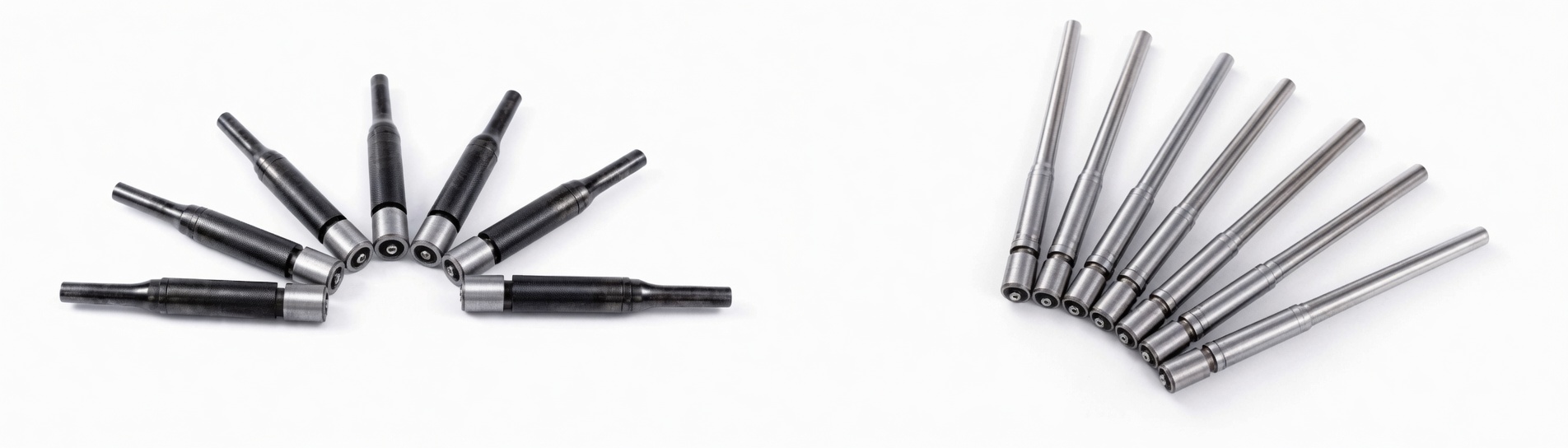
Wall uniformity in IBM starts with core rod geometry. The annular gap between the injection cavity bore and the core rod outer diameter determines preform wall at each axial position. On Ever Power IBM machines, core rods are manufactured from H13 hot-work tool steel, nitrided to surface hardness HRC 58–62, and ground to a cylindricity tolerance of 0.005 mm. This mechanical precision gives the preform a consistent wall distribution before blowing even begins. During blowing, the critical variable is the residual heat gradient along the preform length. IBM retains injection heat directly — avoiding the lamp-heating non-uniformities that affect ISBM re-heat stations — which means the temperature profile is governed entirely by the injection thermal design: barrel zone temperatures, hot-runner setpoints held within ±1°C by PID controllers, and the precise timing of the indexing sequence. UK processors running lightweight pharmaceutical bottles at 0.28 mm nominal wall report that IBM holds within ±0.04 mm across all cavities consistently — a tolerance that remains out of reach for EBM at any commercially viable production rate.
6-Zone Barrel
Independent PID thermal control per zone
The preform temperature curve — the axial distribution of temperature along the parison at the moment of blowing — is the single most influential variable in achieving lightweight bottle performance. IBM machines on Ever Power’s platform control this curve through a six-zone barrel temperature profile (feed zone typically 160°C for PET, rising to 275–285°C at the metering zone), a manifold controller maintaining hot-runner temperature at 280–290°C, and index timing control with 0.05 second resolution. When lightweighting targets require reducing nominal panel wall from 0.35 mm to 0.28 mm, operators typically raise the metering zone temperature by 4–6°C to increase melt flowability, tighten injection speed to the upper end of the resin supplier’s recommended window, and reduce blow delay time from 0.3 s to 0.15 s — preserving the heat in the thin-wall preform long enough for complete cavity filling before the melt cools below PET’s glass transition temperature of approximately 76°C.
Mould Design and Bottle Geometry Optimisation for Lightweight Applications
Engineering the tool set that makes ±0.05 mm tolerance achievable in sustained production
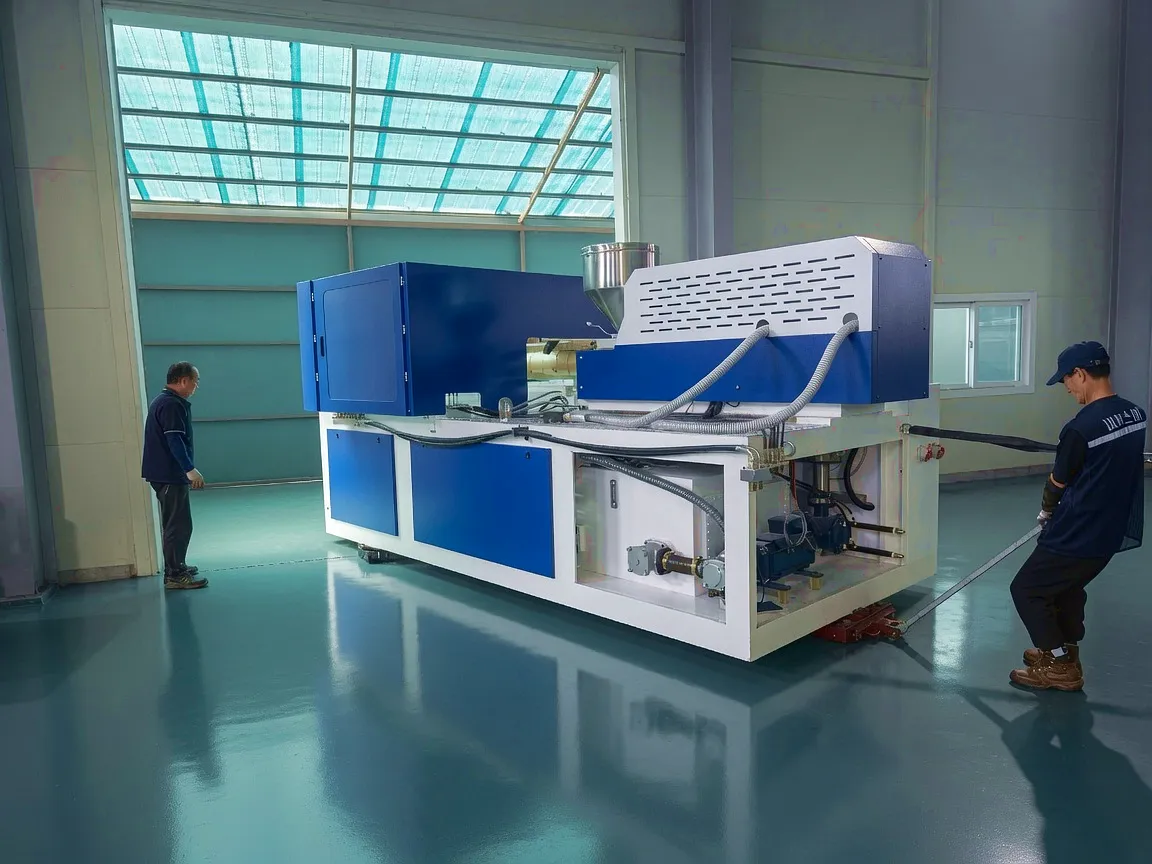
Tooling for IBM is a three-component system: the injection cavity set, the core rod assembly, and the blow cavity set. For lightweight bottle programmes, the relationship between preform wall thickness and blow cavity volume must be engineered so that the blowing ratio — the ratio of finished bottle cross-sectional diameter to core rod diameter — falls within the resin’s workable blow ratio window. For standard PET, this window is approximately 1.5:1 to 3.0:1. Pushing beyond 3.0:1 produces panels that risk stress-whitening or insufficient top-load strength in the finished lightweight bottle, typically manifesting as visible haze rings in transparent PET at points of maximum stretch during blowing. Managing this boundary is the primary mould design constraint in any IBM lightweighting programme targeting sub-0.30 mm walls.
Base geometry optimisation is particularly critical for lightweight containers because the base is the zone most likely to fail under drop-impact loading as wall gauge is reduced. IBM produces a base formed entirely within the blow cavity — unlike EBM where a pinch-off weld creates a stress concentration — which means the IBM base can be engineered with petaloid or champagne-punt geometry that distributes impact stress over a larger contact area. Ever Power’s mould engineering team conducts finite element analysis on proposed lightweight base geometries before cutting steel, modelling impact scenarios at 1.5 m drop height to verify that reduced-gauge designs meet UK cosmetic packaging drop test requirements and pharmaceutical container UN certification requirements where applicable.
Production tooling uses P20 or H13 steel with optical polishing on blow cavities to Ra 0.025 µm for containers requiring glass-like transparency. Injection cavities are chrome-plated to improve melt release and extend tool life beyond 1.5 million cycles between refurbishment intervals. Cooling channel design follows conformal principles on Ever Power tooling, reducing the temperature delta across the cavity face from the 8–12°C typical in conventional straight-bore tooling to 2–4°C — directly reducing cycle time and improving wall uniformity in the blown container across all production shifts.
Core Construction Materials of IBM Machines
Metallurgy and engineering materials underpinning production durability and dimensional precision
MACHINE FRAME
Stress-Relieved Cast Iron
Vibration damping, thermal stability across full duty cycle. CNC-machined on five-axis centres to 0.01 mm flatness. Tensile strength 500–700 MPa for sustained high-pressure injection loads.
CORE RODS
H13 + Optional DLC Coating
H13 hot-work steel nitrided to HRC 58–62. DLC coating 8–12 µm for glass-filled resin grades. Cylindricity ±0.005 mm. Service life: 2 million+ cycles before refurbishment.
INJECTION BARREL
Bi-metallic / Xaloy Bore
Bore hardness HRC 60+. 38CrMoAl nitrided screw with barrier-mixing geometry. Processes rPET, PP, HDPE, LDPE, PVC, PC, ABS across standard and engineering grades.
HYDRAULIC SYSTEM
Servo Variable-Displacement Pump
Axial piston design. ISO VG 46 anti-wear oil. Reservoir 200–400 L. Servo matching reduces idle energy draw by up to 50% versus conventional fixed-speed systems.
CONTROL SYSTEM
Siemens / Mitsubishi PLC + HMI
15″ colour touchscreen. Real-time SPC on clamp force, injection pressure, cavity temperature. OPC-UA export for Industry 4.0. 21 CFR Part 11 audit trail available as option.
TIEBARS
42CrMo4 Alloy Steel
Induction-hardened bearing surfaces. Ground to H7/p6 tolerance. Ensures clamp force consistency across the full production run without periodic re-calibration.
IBM Machine Technical and Performance Specification Table
ZQ Series — key data for UK procurement and engineering evaluation
| Parameter | ZQ40 | ZQ80 | ZQ110 | Unit |
|---|
| Injection Capacity | 40 | 80 | 110 | g (PS) |
| Clamp Force — Injection | 250 | 450 | 600 | kN |
| Clamp Force — Blow | 100 | 180 | 250 | kN |
| Max. Blow Air Pressure | 1.0 | 1.0 | 1.0 | MPa |
| Barrel Temperature Zones | 4 | 5 | 6 | zones |
| Temperature Accuracy (PID) | ±1 | ±1 | ±1 | °C |
| Wall Thickness Tolerance | ±0.05 | ±0.05 | ±0.05 | mm |
| Max. Container Volume | 250 | 500 | 1,000 | ml |
| Dry Cycle Time | 3.2 | 3.8 | 4.5 | s |
| Installed Power | 18.5 | 30 | 45 | kW |
| Screw L/D Ratio | 22:1 | 22:1 | 24:1 | — |
| Mould Open Stroke | 250 | 320 | 380 | mm |
| Core Rod Material | H13 Nitrided Steel + Optional DLC Coating | — |
| Compatible Resins | PET, rPET, PP, HDPE, LDPE, PVC, PC, ABS, Bio-PP | — |
| Noise Level | <70 | <70 | <72 | dB(A) |
| UKCA / CE Compliance | Yes | Yes | Yes | — |
Core Technical Advantages of IBM Machines for Lightweight PET Production
Six reasons IBM leads in precision lightweight packaging for UK converters
🎯
Zero Flash, Zero Trim
IBM produces fully enclosed containers with no bottom pinch-off weld, eliminating the deburring step required in EBM and the contamination risk it introduces. For pharmaceutical converters in Birmingham and Nottingham operating under MHRA GMP requirements, the absence of trim debris removes a significant validation burden from cleanroom assessment and allows GMP Annex 1 compliance with fewer engineering controls around the blow moulding line itself.
⚡
Energy Efficiency via Servo Drive
Servo-hydraulic drive systems on Ever Power IBM machines consume energy only when hydraulic movement is demanded, delivering 30–50% lower power draw than fixed-speed predecessors. For a two-shift UK production operation, this translates to annual electricity savings of GBP 8,000–18,000 per machine at current industrial tariff levels — a payback contribution increasingly factored into capital expenditure evaluations across the UK plastics sector as energy prices remain elevated relative to pre-2022 baselines.
📐
Neck Finish Precision
Thread pitch, ovality, and bore diameter are formed in rigid injection steel at Station 1, delivering neck tolerances within ±0.08 mm — the standard specified by UK pharmaceutical suppliers requiring tamper-evident and child-resistant closure integrity. This level of precision is achievable consistently across multi-cavity tooling without the neck dimension scatter that affects parison-based processes, where the finish is formed against a soft pinch rather than a rigid machined cavity with defined thread geometry.
📊
Real-Time SPC for Compliance
Cavity pressure transducers and mould-temperature sensors feed continuous data to the HMI and, via OPC-UA, to MES or ERP systems. UK converters supplying NHS pharmaceutical accounts or major grocery retailers are increasingly required to demonstrate real-time process data traceability as a qualification condition — an obligation that IBM machines from Ever Power meet natively, reducing audit response complexity for production sites from Sheffield to Bristol without additional data acquisition infrastructure.
🌿
rPET and Bio-Resin Compatibility
Ever Power screw geometry and barrel metallurgy are engineered to handle recycled PET with variable intrinsic viscosity and bio-based PP. UK manufacturers subject to the Plastic Packaging Tax can achieve 30%+ recycled content targets without a separate machine platform, reducing capital expenditure while supporting Extended Producer Responsibility declarations. Closed-loop dewpoint drying systems supplied with Ever Power IBM machines maintain rPET moisture below 0.02% — the threshold above which IV degradation and splay defects occur in thin-wall lightweight production runs.
🔧
Rapid Mould Changeover
Quick-release clamp systems on Ever Power IBM machines enable mould changeover in under 45 minutes for trained operators, supporting the short-run, multi-SKU production model common among UK contract moulders. Birmingham and Manchester converters running eight or more product variants per week cite rapid changeover as a direct IBM machine selection factor, preserving OEE on lines that would otherwise lose 2–3 hours per change on conventional fastening systems, a loss that compounds significantly across a multi-shift production week.
Application Scenarios for IBM Machines Across UK Manufacturing Sectors
From pharmaceutical packaging in the Midlands to agrochemical containers in Yorkshire
💊
Pharmaceutical Packaging — Nottingham, Birmingham
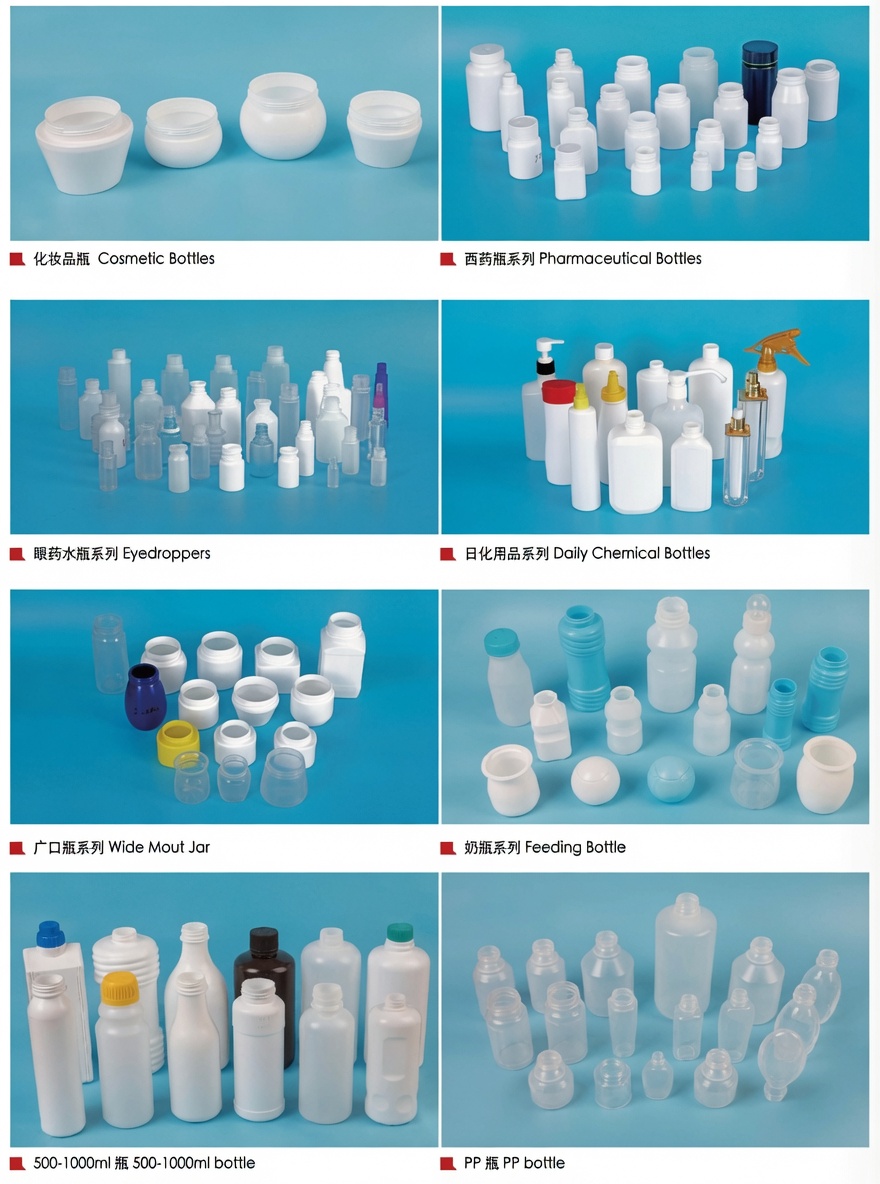
Amber PET dropper bottles, nasal spray units, and eye-drop vials produced under MHRA GMP represent the dominant IBM application sector in the UK. The clean, flash-free production path simplifies Annex 1 cleanroom validation. Neck thread tolerances within ±0.08 mm satisfy child-resistant closure torque specifications that NHS formulary suppliers are contractually required to demonstrate on every production batch. Lightweighted designs at 0.28 mm nominal wall pass UN drop-test certification at 1.5 m, reducing raw material cost by up to 18% per unit against legacy bottle designs.
🧴
Personal Care and Cosmetics — Manchester, Leeds
Shampoo, conditioner, and body lotion bottles for own-label retail and premium cosmetics brands manufactured across Greater Manchester and West Yorkshire benefit from IBM’s high surface gloss and absence of a parting line. IBM produces sculpted oval forms without a visible weld mark — the primary aesthetic specification for premium personal care packaging positioned as a glass surrogate on UK grocery shelves. Lightweighted IBM bottles at 22 g versus 28 g for equivalent EBM designs represent a meaningful contribution to retailer-mandated packaging weight reduction targets applied through supplier codes of practice.
🌱
Agrochemicals — East Anglia, Yorkshire
HDPE and PP bottles for pesticide and fertiliser concentrates in East Anglian and North Yorkshire agricultural supply chains specify IBM for exact neck thread integrity that prevents spillage during inversion filling on high-speed capping lines. Compatibility with COEX barrier technology allows single-machine production of multi-layer containers meeting UK HSE chemical containment standards for Class 1 agrochemical concentrates that require UN certification for transport by road and rail.
🍶
Food and Supplement Packaging — Nationwide
Condiment bottles, nutraceutical supplement containers, and medical food packaging produced at UK contract manufacturing facilities use IBM to achieve EFSA food-contact-grade surfaces in PET and PP without secondary decoration that would compromise food safety declarations. The absence of flash contamination risk is particularly valued by BRC AA-rated manufacturers whose retailer supply contracts mandate cleanroom production evidence and zero-particulate-contamination assurance at every production batch audit point.
Energy Consumption Optimisation and Sustainable Upgrade Pathways
Reducing energy cost per thousand bottles on UK IBM production lines
30–50%
Power reduction vs fixed-speed hydraulic
Servo-hydraulic variable-displacement pumps draw energy only during movement phases. Idle power during hold and cooling drops to near zero — the dominant saving on machines with cycle times over 5 seconds where cooling represents 40–60% of total cycle time and fixed-speed systems waste electricity at full power throughout.
25–35%
Heater saving via barrel insulation retrofit
Insulated barrel jacket kits reduce ambient heat loss and shorten heater duty cycles. Payback under 12 months at current UK electricity tariffs — one of the highest-ROI retrofits available to existing IBM machine operators running continuous two-shift or three-shift production programmes.
15–20%
Chiller saving via inverter-driven compressor
VFD-driven chiller compressors reduce cooling energy proportionally with demand — particularly effective during summer months when UK ambient temperatures require higher chiller output and fixed-speed systems waste power at constant full capacity regardless of actual thermal load on the mould.
Heat Recovery
Barrel waste heat to granule pre-warming
Ever Power’s latest IBM series can redirect barrel surface heat to pre-warm incoming resin granules or supply space heating in production halls — practical energy integration that UK customers in uninsulated East Midlands and South Yorkshire facilities have used to offset gas heating costs during winter production quarters.
Common Faults and Troubleshooting Guide for IBM Blow Moulding Machines
Root-cause analysis and corrective actions for the most frequent production issues
FAULT
Uneven wall thickness
CAUSE & FIX
Blocked core rod cooling channels — limescale common in East Midlands hard-water areas — or asymmetric injection fill speed. Verify core rod coolant flow at minimum 3 L/min per rod. Review injection fill profile; slow early-stage fill causes preferential solidification on one preform face before blowing commences, amplifying wall asymmetry in the finished bottle.
FAULT
Flow marks on bottle surface
CAUSE & FIX
Injection-phase flow marks amplified by blowing. Raise melt temperature 3–5°C, increase injection speed in fill phase 1, verify hot-runner gate temperature at upper end of resin window. Check gate diameter for wear — worn gates on high-cycle pharmaceutical tooling require re-bushing after approximately 500,000 cycles on standard PET grades.
FAULT
Incomplete base / sink marks
CAUSE & FIX
Insufficient pack pressure or time. Increase pack pressure setpoint, extend pack time 0.3–0.5 s. Verify hydraulic pump achieving programmed pressure — worn pump or contaminated proportional valve causes shortfall. Check base insert cooling temperature: inadequate control prevents resin setting before pack pressure releases.
FAULT
Short shot / incomplete preform fill
CAUSE & FIX
Cold front barrel zone restricting flow; feed throat over-cooling; worn non-return valve. Increase back pressure 5–10 bar, raise Zone 1 temperature 5°C, inspect check ring. For PET: verify dryer dewpoint at or below -40°C — moisture above 0.02% causes splay that mimics short-shot appearance in thin-wall preforms.
FAULT
Core rod deflection, asymmetric necks
CAUSE & FIX
Excessive injection pressure or worn support bushing. Measure core rod runout with dial gauge — runout exceeding 0.015 mm at tip warrants replacement or straightening. Reduce injection peak pressure if process window allows; verify core rod clamping torque to manufacturer specification — under-torqued rods rock under injection load causing repeatable asymmetric neck defects.
Manufacturing Excellence
Ever Power Factory Capabilities and Customisation Services
Ever Power operates a 12,000 m² purpose-built IBM machine manufacturing facility integrating in-house five-axis CNC machining, heat treatment, precision grinding, and CMM inspection into a vertically integrated supply chain. Every critical component — from machine frame castings to core rod assemblies and injection barrels — is manufactured and quality-verified within the same production campus, giving Ever Power full accountability over dimensional accuracy and material certification across the complete bill of materials. This level of integration means that when a UK customer requests a non-standard configuration — an extended barrel for high-molecular-weight HDPE, a custom HMI language pack, or a EUROMAP-compliant mould interface for existing European tooling — the engineering team can scope and confirm the modification within the production planning cycle rather than waiting on third-party subcontractors.
Customisation capabilities span machine frame scale, servo-hydraulic drive configuration, barrel and screw geometry for specific resin grades, EUROMAP or SPI mould interface standards, control system platform (Siemens S7, Mitsubishi iQ-R, or Beckhoff TwinCAT), and CE or UKCA certification documentation. UK customers benefit from a dedicated export documentation service that prepares UKCA Declaration of Conformity, third-party pre-shipment inspection reports, and commercial invoice documentation formatted for Felixstowe and Southampton port customs clearance. Remote commissioning via secure VPN connection to the machine HMI enables UK engineers to work through process qualification in real time with Ever Power applications engineers — a service that has reduced on-site travel requirements substantially for customers in Scotland, Northern Ireland, and Wales.
Get a Quote from Ever Power
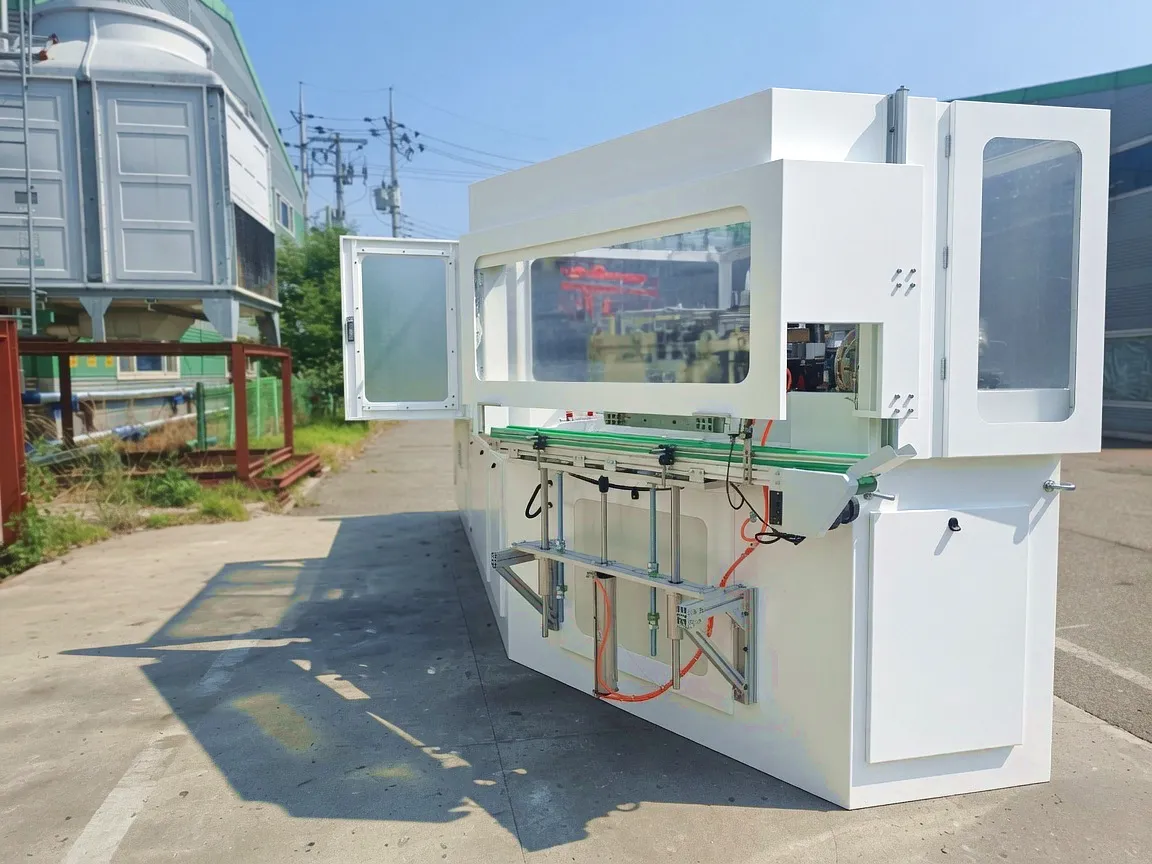
Featured IBM Machine Models from Ever Power
Two precision platforms for UK pharmaceutical, personal care, and food packaging converters
PHARMACEUTICAL · PERSONAL CARE
ZQ80 Injection Blow Molding Machine
80 g injection capacity IBM machine optimised for mid-volume pharmaceutical and personal care bottle production. Five-zone barrel with ±1°C PID control, servo-hydraulic drive reducing energy cost per bottle by up to 40% versus fixed-speed predecessors, and maximum container size of 500 ml. Compact footprint for cleanroom environments. UKCA and CE certified. Mould changeover under 45 minutes for multi-SKU UK contract moulding operations.
View ZQ80 Specifications
FOOD · AGROCHEMICAL · HIGH OUTPUT
ZQ110 Injection Blow Molding Machine
High-output IBM machine for containers up to 1,000 ml. Six-zone barrel with 24:1 screw L/D ratio for excellent melt homogeneity with engineering-grade resins including PC and PA. 600 kN injection clamp force, full OPC-UA data connectivity, optional 21 CFR Part 11 audit-trail HMI. Preferred by UK agrochemical packagers in Yorkshire and East Anglia and food supplement manufacturers requiring IFS and BRC traceability documentation.
View ZQ110 Specifications
Customer Success Story: Pharmaceutical Packaging Lightweighting in Nottingham
How MedPack Solutions reduced material cost by 18% while passing MHRA GMP audit
MedPack Solutions Ltd, a contract pharmaceutical packaging manufacturer based in Nottingham, had operated legacy fixed-pump IBM equipment for seven years producing 30 ml and 60 ml amber PET dropper bottles for NHS-approved liquid medicines. Rising energy costs following the 2022–2023 tariff increases were eroding margin on pharmaceutical contracts, and a growing private-label supplement order book demanded a second machine with higher output capability and 21 CFR Part 11-compatible data logging for a US-registered brand owner. A competitive evaluation covering four equipment suppliers — including site visits to reference installations in Birmingham — led to the specification of two ZQ80 IBM machines, configured with servo-hydraulic drives, Siemens S7-1500 PLC, closed-loop dewpoint dryer for rPET processing, and audit-trail-capable HMI software.
The machines were delivered to the Nottingham facility via sea freight through Felixstowe and road transport on the A1 corridor, with Ever Power’s logistics partner managing customs clearance and UKCA documentation within the contracted 16-week lead time. On-site commissioning took four days, with remote process engineering support from Ever Power handling PET drying parameter development and first-off cavity qualification. A lightweighting programme implemented during commissioning reduced the nominal panel wall on the 30 ml dropper from 0.35 mm to 0.28 mm — achieving an 18% reduction in raw material weight per unit while maintaining drop-test performance to BS EN ISO 15223 packaging requirements.
After 14 months of operation, MedPack reports a 38% reduction in energy consumption per thousand bottles, zero unplanned downtime attributable to machine failure, and a successful MHRA GMP audit. Real-time SPC data visibility was specifically noted as a positive observation by MHRA inspectors. Expanded capacity has enabled MedPack to take on two additional pharmaceutical contract accounts representing a combined annual revenue increase of approximately GBP 480,000.
Customer Reviews
★★★★★
“The ZQ80 machines transformed our wall thickness consistency. Dropper bottle variation is now within 5% across all cavities — something our previous machine couldn’t achieve. The servo drive has cut monthly electricity costs noticeably, and remote commissioning support from Ever Power saved us two weeks of downtime during initial qualification.”
Production Manager
MedPack Solutions Ltd, Nottingham
★★★★★
“We evaluated four suppliers before choosing Ever Power for our personal care line. What set them apart was the speed of DFM drawings for our oval bottle mould and willingness to customise the hot-runner gate for our specific PP grade. Nine months of three-shift production — no major issues. Would recommend to any UK converter requiring genuine customisation depth.”
Technical Director
Midlands Contract Moulding Ltd, Birmingham
★★★★☆
“The ZQ110 handles our HDPE agrochemical bottles at the output rate we needed for East Anglia supply contracts. UKCA documentation was comprehensive and accepted without amendment by our insurer. Responsiveness during mould design phase was excellent — lead times were met. We’d recommend Ever Power to any UK manufacturer needing IBM with serious customisation support.”
Engineering Manager
AgriPack Yorkshire Ltd, Leeds
Frequently Asked Questions: IBM Blow Moulding Machines for UK Manufacturers
Conversational answers to the questions UK packaging engineers and procurement managers ask most
What is the typical lead time for an IBM injection blow moulding machine delivered to the UK, and how does the shipping process from China actually work?+
Standard IBM machine configurations have a manufacturing lead time of 10–16 weeks. Shipping uses sea freight via Shanghai or Ningbo, with transit time of 28–35 days to Felixstowe or Southampton. Total door-to-door timeline is typically 14–20 weeks. Ever Power’s export documentation service covers the UKCA Declaration of Conformity, CE technical file, and third-party pre-shipment inspection report formatted for UK border clearance requirements.
How much does an injection blow moulding machine cost in the UK, and what is typically included in the supplier price quote?+
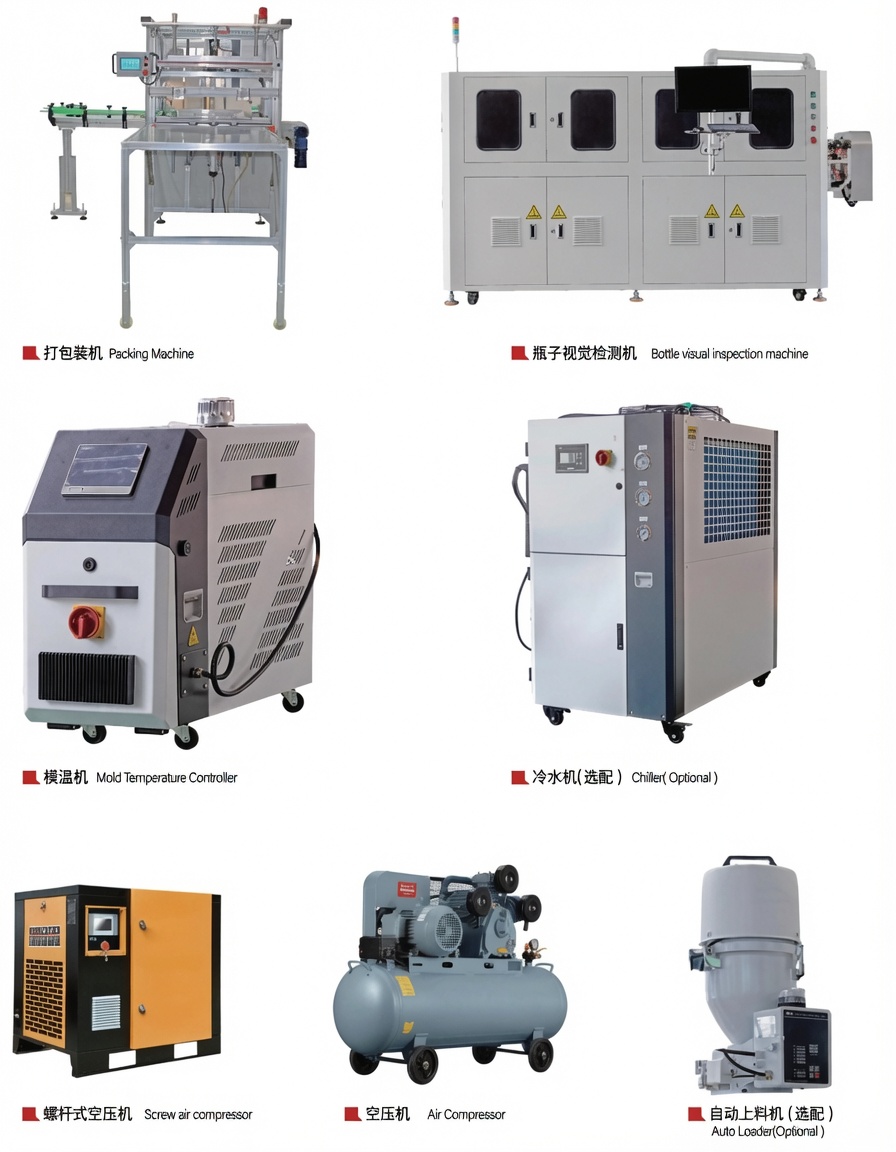
Indicative CIF UK port prices range from approximately GBP 45,000–65,000 for a small-format 40 g class IBM machine to GBP 90,000–155,000 for a large-format machine such as the ZQ110. The base price typically includes the machine, electrical panel, hydraulic unit, standard tooling interface, and machine documentation. Moulds, ancillaries (dryers, chillers, conveyors), and UKCA certification support are normally quoted separately. Contact
[email protected] for a specification-specific quote within two business days.
Which resins can an IBM machine process, and is it suitable for running rPET or bio-based plastics to meet UK Plastic Packaging Tax requirements?+
IBM machines process PET, rPET, PP, bio-PP, HDPE, LDPE, PVC, PC, ABS, and engineering thermoplastics. Running rPET requires closed-loop dewpoint control to maintain moisture below 0.02% — standard on Ever Power machines. Using 30% or more recycled or bio-based content can support UK Plastic Packaging Tax exemption declarations, and the machine’s SPC data system provides the production-batch evidence that HMRC may request during compliance audits.
Where can I find a reliable IBM blow moulding machine supplier who can provide UKCA certification and proper after-sales support for a UK production site?+
Ever Power supplies IBM machines with complete UKCA and CE technical file documentation and Declaration of Conformity to retained UK Machinery Regulations standards. After-sales support is provided via secure VPN remote access to the machine HMI and a UK-based service coordination contact point. Critical spare parts are held in UK-based safety stock for same-day or next-day despatch to any UK address, including Scotland, Northern Ireland, and the Channel Islands.
How does an IBM machine compare in cost and performance to an EBM machine for pharmaceutical bottle production in Birmingham or Sheffield?+
IBM tooling typically costs 20–35% more than comparable EBM tooling, but IBM eliminates the trimming station, deburring labour, and flash recycling logistics that EBM requires — costs that quickly erode the tooling saving on pharmaceutical lines. For MHRA-regulated production in Birmingham or Sheffield, IBM’s clean-process advantage simplifies GMP validation and removes a particle contamination risk category that inspectors specifically review during facility assessments.
Who should I contact to get a price and technical quote for an IBM blow moulding machine suitable for agrochemical bottle production in Yorkshire or East Anglia?+
Contact Ever Power’s UK sales team at
[email protected]. Include your target container volume, required output rate, resin type, and regulatory requirements such as HSE, BRC, IFS, or UN certification. For agrochemical applications, mention UN-approved packaging requirements upfront so the team can specify appropriate neck geometry and base drop-test validation scope from the outset. Expect a preliminary recommendation and indicative pricing within two business days.
What bottle sizes and wall thickness tolerances can an IBM blow moulding machine achieve for lightweight cosmetic packaging applications in the UK?+
Ever Power IBM machines handle containers from 3 ml to 1,000 ml depending on model. Wall thickness is held within ±0.05 mm of nominal with servo injection control. For lightweight cosmetic bottles at 0.28 mm nominal panel wall, this gives a coefficient of variation below 5%, supporting 15–20% resin reduction programmes without compromising drop-test integrity at 1.5 m. Surface gloss of 85–95 GU at 60° is routinely achieved on polished blow cavities without secondary treatment, meeting the glass-surrogate specification that UK premium personal care brand owners require.
Ready to Specify Your IBM Machine?
Get a Technical Quote from Ever Power
Tell us your container volume, resin, output target, and regulatory requirements — our IBM engineering team responds within two business days.
edit by gzl