Industrial Packaging Technology · UK Market Deep Dive
Injection-Blow Molding Machine Applications in Oral Care Packaging: Mouthwash Bottles, Fluoride Rinse Containers and Pump-Dispensed Solutions
How advanced IBM technology meets the chemical, regulatory and aesthetic demands of the UK oral care sector — from Birmingham contract fillers to Sheffield pharmaceutical plants.
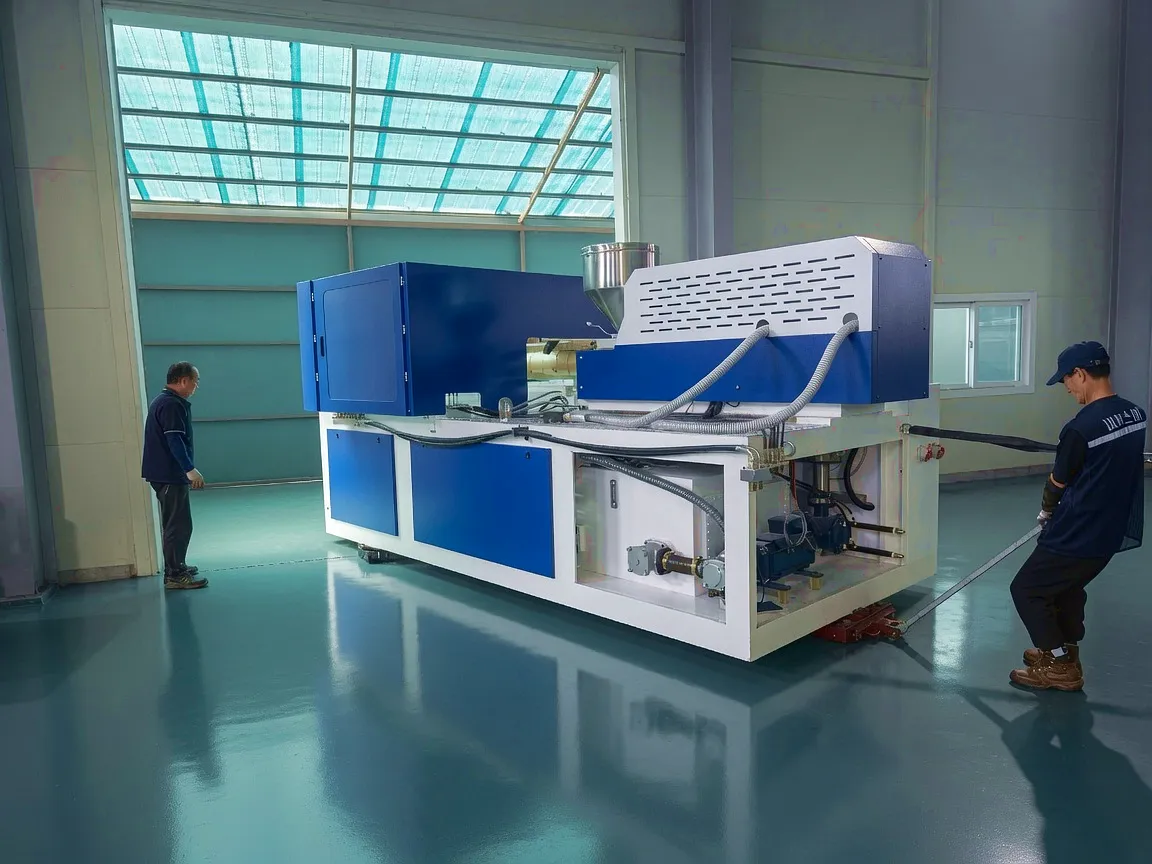 The oral care packaging sector is one of the most technically demanding environments for plastic container manufacture. Products ranging from alcohol-based mouthwash at concentrations up to 27% ethanol, to fluoride rinse formulations carrying active cetylpyridinium chloride (CPC), impose strict chemical compatibility requirements on every bottle that leaves the production line. An injection-blow molding machine engineered for these conditions is not simply a piece of forming equipment — it is a precision system that must deliver consistent wall thickness, hermetic neck sealing and optical clarity on every cycle, across millions of containers per shift.
Ready to upgrade your oral care packaging line? Our engineers are standing by.
How an Injection-Blow Molding Machine Actually Works
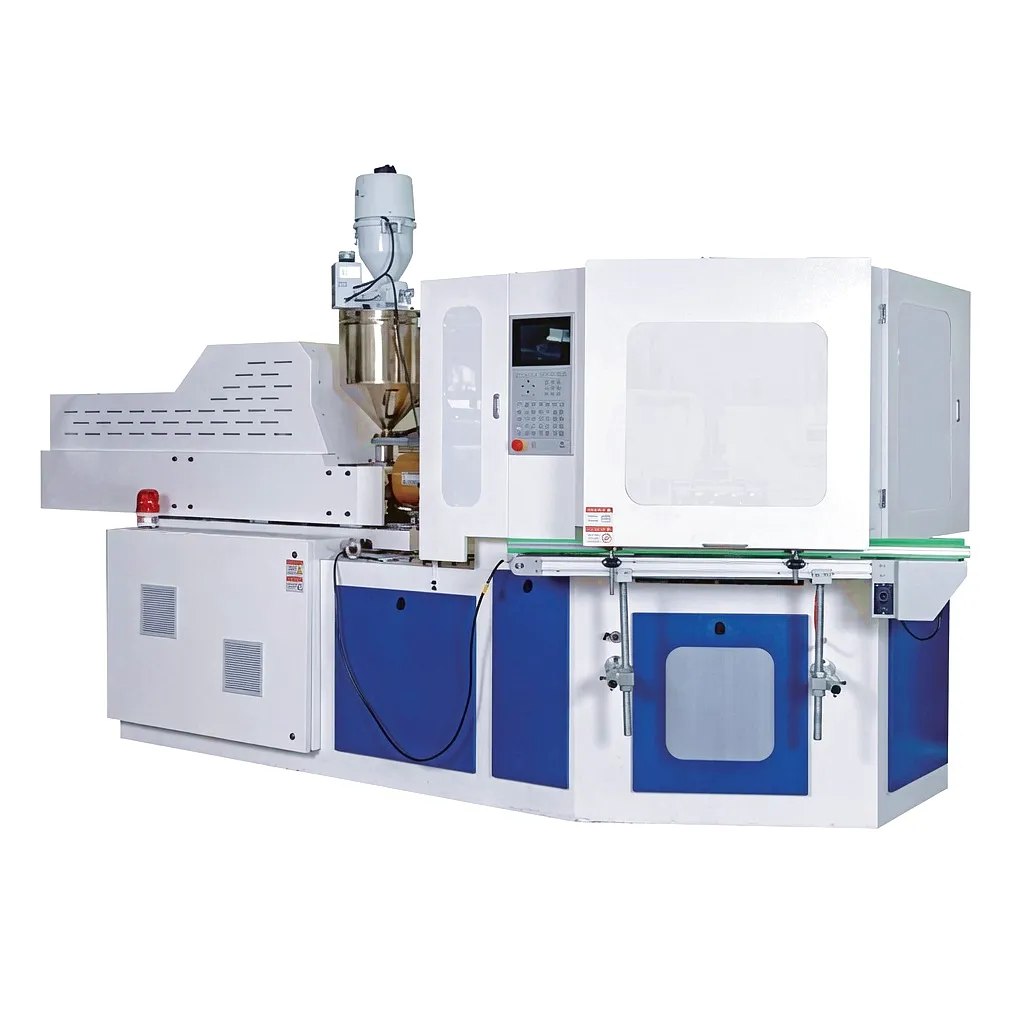 The injection-blow molding process separates itself from extrusion blow molding by generating a thermally homogeneous, injection-moulded preform before any blowing step takes place. In stage one, polymer pellets — typically HDPE, PP or PET depending on the chemical demands of the fill product — are plasticated in a reciprocating screw barrel, then injected under controlled pressure into a preform cavity that is dimensioned to precise tolerances. The neck finish, thread geometry and shoulder profile are all formed at this stage, which is why injection-blow molding machine output consistently outperforms extrusion routes on neck-dimension accuracy — a critical attribute when the container must accept a metered pump, a child-resistant closure or a tamper-evident foil seal.
Stage two involves transferring the preform, while it retains its heat, onto blow cores within the blow station. Compressed air — typically delivered at between 6 and 12 bar, depending on material and container geometry — inflates the preform against a cooled blow mould. Because the polymer is already at a uniform temperature throughout its wall section (no cold-spot variations from extrusion), the resulting container exhibits consistent wall distribution from base to shoulder. For mouthwash bottles in the 150 ml to 1,000 ml range, this means that every unit leaving the injection-blow molding machine carries a verifiable, controlled wall thickness — important both for chemical barrier performance and for the aesthetic clarity that brand owners in Birmingham and Bristol demand on retail shelves.
Stage three is ejection — the finished, fully formed container is stripped from the blow core and transferred to downstream conveyors. Because there is no trimming, no flash and no weld line in standard IBM output, the process inherently eliminates several post-processing steps that add cost and introduce contamination risk on pharmaceutical-adjacent filling lines. The cyclical nature of the three-station rotary system means that injection, blow and ejection occur simultaneously, keeping output rates high while energy consumption per unit remains competitive with any alternative forming method currently available in the UK market.
Core Materials Processed on IBM Equipment for Oral Care Containers
High-density polyethylene is the workhorse for mouthwash bottles. Its resistance to ethanol at concentrations up to 27% is well-documented, and its HDPE barrier properties prevent active ingredient migration through the container wall. Density range 0.941–0.965 g/cm³; MFR typically 0.3–1.0 g/10 min for IBM grades. UV-stabilised grades support amber or opaque finishes demanded by fluoride formulations.
Polypropylene offers a higher service temperature ceiling (up to 130 °C) and outstanding chemical resistance to surfactants and essential oil components found in premium mouthwash formulations. PP is the preferred material for pump bottle bodies where the integral hinge points of the pump mechanism demand fatigue resistance. MFR 4–12 g/10 min at 230 °C/2.16 kg for IBM-specific grades.
Polyethylene terephthalate delivers the glass-like optical clarity specified by premium retail brands targeting London supermarket fixtures. PET IBM containers show oxygen transmission rates below 0.05 cc/container/day, making them suitable for oxygen-sensitive whitening rinses. IV range 0.72–0.85 dl/g is optimal for IBM; material must be pre-dried to below 50 ppm moisture to prevent hydrolytic degradation during plastication.
Low-density grades find application in paediatric oral care containers where the bottle must be squeezable by a small child’s hand — typically requiring a Shore D hardness below 50. LDPE IBM bottles for children’s fluoride drops deliver the required compliance without compromising the neck-thread accuracy that a metered dropper tip demands. Wall thickness typically 0.4–0.6 mm in this application.
Application Scenario 1: Mouthwash Bottles (150 ml – 1 L)
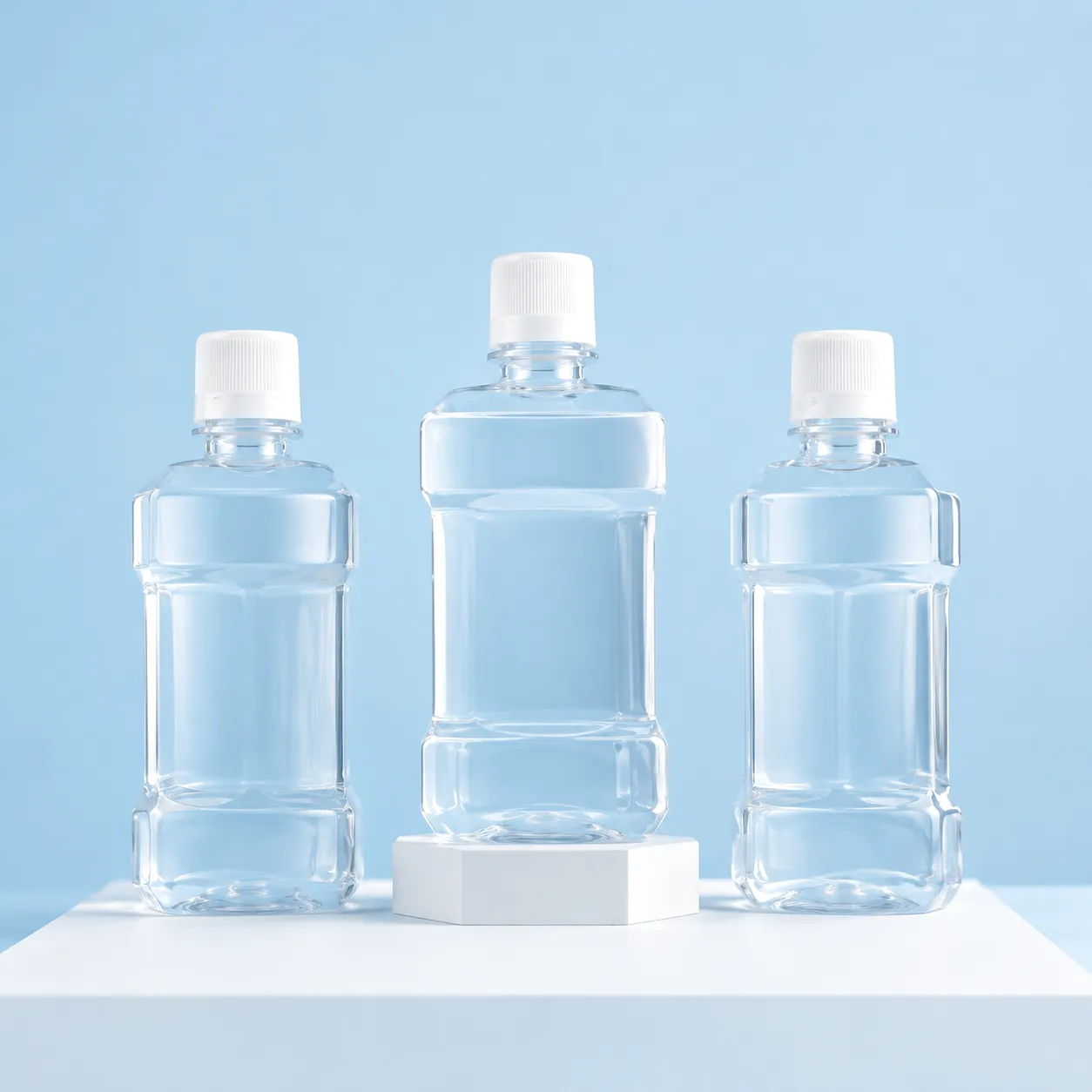 Mouthwash represents the highest-volume segment within oral care IBM packaging. A standard supermarket mouthwash line in the UK — such as those running from contract manufacturing facilities in Birmingham or Swindon — may require between 40,000 and 120,000 containers per shift depending on bottle size. The injection-blow molding machine in this context must deliver consistent neck diameter (commonly 28 mm or 38 mm DIN finishes) to ensure reliable fitment with the flip-top or screw cap selected by the brand owner.
Application Scenario 2: Fluoride Rinse and Anti-Caries Container Production
Fluoride-based rinses occupy a unique position in the UK oral care market: they straddle the boundary between cosmetic and medicinal product classification under MHRA guidelines, meaning that packaging must often satisfy both BS EN ISO 15223-1 device marking conventions and the cosmetics regulation baseline simultaneously. The bottles produced on an injection-blow molding machine for this category typically range from 150 ml for daily-use formats to 500 ml for family-size supermarket SKUs, with a distinct subset at 250 ml targeting NHS community pharmacy dispensing packs.
Fluoride ion permeation through the container wall is a measurable concern for long-shelf-life products. IBM-produced HDPE containers with wall thickness of 0.7 mm or greater present fluoride ion permeation rates below 0.001 mg/cm²/day under standard UK distribution temperature conditions (4–25 °C). This performance is consistent across the full production run because the IBM process inherently avoids the wall thinning at pinch points that characterises extrusion blow moulding. Pharmaceutical-adjacent lines operating from Sheffield and Leeds have validated this performance against MHRA stability protocols with typical accelerated ageing test durations of 18 months.
Child-resistant closures (CRC) present an additional engineering challenge in this segment. The neck thread produced by the IBM preform injection station must conform to BS EN ISO 8317 engagement geometry to receive CRC caps without cross-threading — a failure mode that triggers mandatory line stops at UK filling plants. The capability of the injection-blow molding machine to hold neck thread tolerances within ±0.1 mm across multi-cavity production is a primary reason this technology has displaced older EBM lines in Sheffield and Huddersfield pharmaceutical packaging operations over the past five years.
Application Scenario 3: Pump-Dispensed Oral Care Liquid Containers
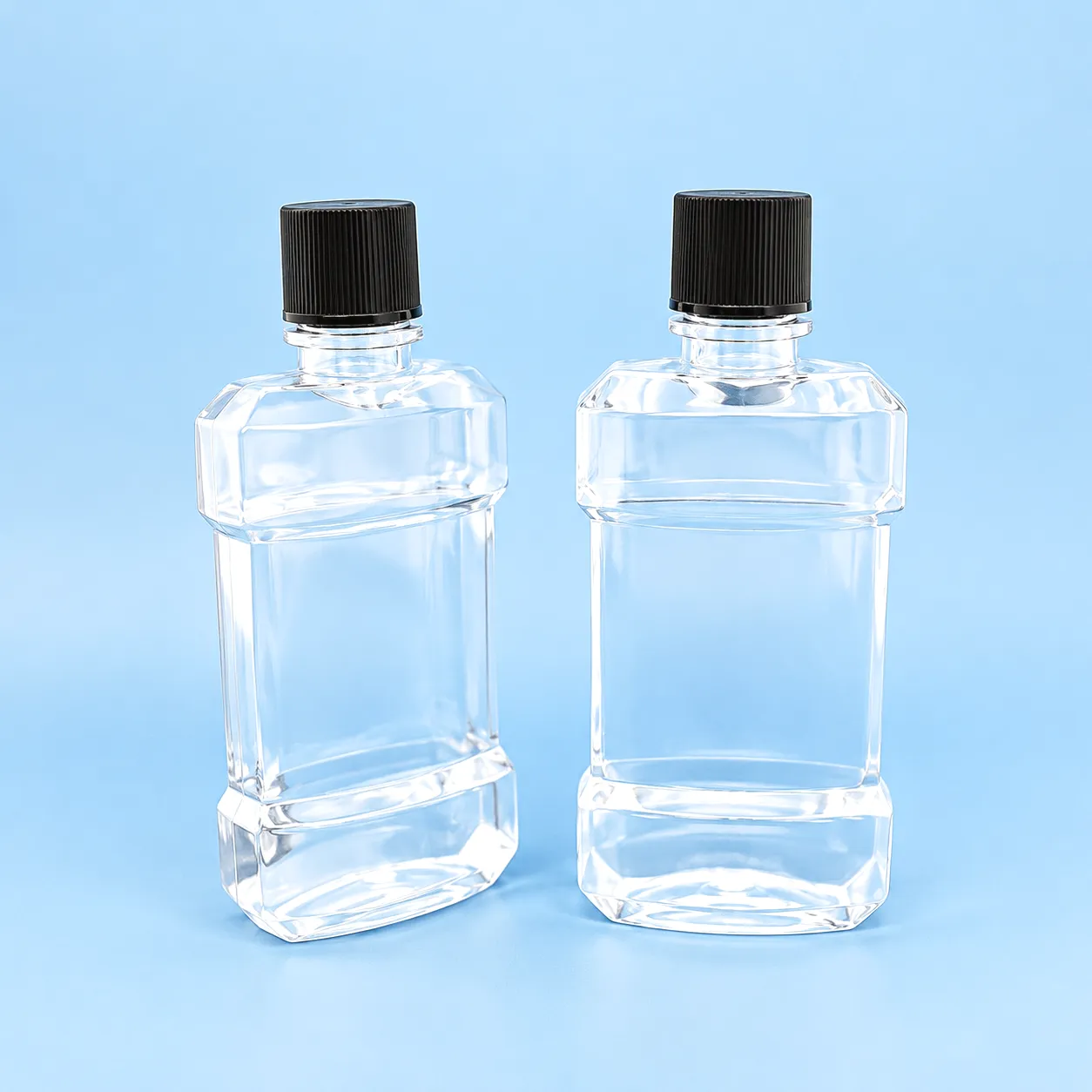 Pump-dispensed oral care containers represent the fastest-growing packaging format in the UK premium oral care segment, driven by consumer preference for metered dosage and reduced product contamination. The pump body — typically a straight-walled 200 ml to 350 ml cylinder — places unique requirements on the injection-blow molding machine: the container body must present a near-perfect circular cross-section so that the pump dip-tube maintains consistent contact with the bottom of the vessel without bridging or air-locking.
Application Scenario 4: Children’s Oral Care — Paediatric Fluoride Drops and Rinse Containers
Paediatric oral health has become a UK public health priority, with NHS England’s Child Smile-equivalent programmes driving significant volume in children’s fluoride supplement packaging. Containers for this market — typically 60 ml to 150 ml dropper bottles and 250 ml rinse containers — face uniquely stringent requirements: the package must be CRC-compliant, yet the bottle body must be soft enough for a parent to dose by squeezing without the application of excessive force. An injection-blow molding machine running LDPE or LLDPE is the only forming technology that reliably achieves this combination of neck-thread rigidity and body compliance in a single integrated production cycle.
The aesthetic demands of this segment are equally rigorous. Children’s oral care brands — sold through UK pharmacy chains and supermarkets from Aberdeen to Plymouth — require bright, colour-moulded bottles with smooth surfaces for label adhesion and decorating. IBM delivery of consistent surface gloss (typically 80–95 GU at 60°) eliminates the post-moulding buffing operations that older EBM lines required. Fruit-flavoured fluoride rinse lines operating from East Midlands contract manufacturers typically validate injection-blow molding machine output at 6-hourly intervals against a GS1-coded reference standard that verifies colour, dimension and neck geometry simultaneously, reflecting the traceability requirements imposed by UK grocery retailers on their private-label suppliers.
Application Scenario 5: Gingival Care Liquid Bottles and Specialist Therapeutic Containers
Gingival care products — including chlorhexidine-based rinses, hyaluronic acid gum serums and high-concentration essential oil concentrates — represent the premium end of the oral care market and carry the most demanding packaging specifications encountered by any injection-blow molding machine operator in the sector. Chlorhexidine gluconate at 0.2% w/v is the UK’s most widely prescribed gingival antiseptic; its containers must demonstrate zero sorption of the active molecule onto the container wall across a 24-month shelf life, a specification that immediately disqualifies PVC and that rules out several commodity PP grades.
IBM HDPE in pharmaceutical-grade formulation — fully compliant with Ph. Eur. 3.1.4 — has become the validated container material for chlorhexidine rinse packaging across NHS and private dental practice supply chains. Manufacturers operating from Yorkshire and the North West of England have adopted injection-blow molding machine platforms for this category because they deliver the extractable and leachable (E&L) profile required by MHRA dossier submissions: n-hexane-extractable content below 5 mg/kg for the contact layer. Batch traceability, a standard feature on modern IBM control systems, supports the full audit trail that UK dental device distributors are required to maintain under MDR 2017/745 transition arrangements.
Technical Performance Parameters: Injection-Blow Molding Machine for Oral Care Applications
| Parameter | Specification / Range | Oral Care Relevance |
|---|---|---|
| Container Volume Range | 30 ml – 2,000 ml | Covers dropper bottles (fluoride drops) through family-size mouthwash |
| Clamping Force | 40 – 200 kN | Scales with container size; lower tonnage for small dropper formats |
| Injection Pressure | 80 – 180 MPa | Ensures complete preform fill for consistent neck thread geometry |
| Blow Air Pressure | 6 – 12 bar | Adjusted per material; PP requires higher pressure than LDPE |
| Wall Thickness Uniformity | ±0.05 mm (body) | Critical for chemical barrier consistency in therapeutic rinses |
| Neck Thread Tolerance | ±0.1 mm | Required for CRC fitment on fluoride drops and gum-care serums |
| Container Ovality | < 0.15 mm | Ensures pump dip-tube engagement in dispensed oral care products |
| Output Rate (4-cavity) | 3,600 – 8,000 pcs/hr | Supports high-volume mouthwash lines (500 ml format) |
| Mould Temperature Range | 5 – 80 °C (water/oil) | Cold side for rapid HDPE solidification; warm for crystalline PP |
| Compatible Materials | HDPE, PP, PET, LDPE, LLDPE, PC | Full range for oral care from commodity to pharmaceutical-grade |
| Surface Gloss (60°) | 80 – 95 GU | Retail-shelf premium appearance without post-moulding treatment |
| Cycle Time (500 ml HDPE) | 8 – 14 seconds | Competitive with EBM on throughput; superior on quality |
| Screw L/D Ratio | 18:1 – 22:1 | Optimised melt homogeneity for colour-sensitive oral care resins |
Core Technical Advantages of IBM Technology in Oral Care Production
No Flash, No Trim — The IBM process produces a finished container directly from the blow station with zero material flash. This eliminates grinding costs, regrind contamination risk and the manual inspection step that flash trimming requires — a significant labour saving for high-volume mouthwash lines in Birmingham.
Superior Neck Accuracy — The injection step forms the neck finish under controlled cavity pressure, not by pinching molten parison. Tolerances of ±0.1 mm on neck diameter and thread depth are routinely achieved, ensuring consistent cap torque values (typically 1.2–2.0 Nm for 28 mm flip-top closures) across the entire production batch.
Consistent Wall Distribution — The preform-based process distributes polymer wall mass predictably, eliminating the thin zones at container shoulders and bases that characterise EBM output. For chemical barrier applications — chlorhexidine rinse, therapeutic fluoride — this consistency is what allows accelerated stability studies to succeed at the first attempt.
Multi-Cavity Efficiency — Modern IBM platforms offer up to 6-cavity tooling on a single rotary head, enabling output rates that match or exceed EBM for small-to-medium container sizes. For a 250 ml mouthwash bottle at 4-cavity configuration, cycle time of 10–12 seconds yields over 1,400 units per hour per cavity — competitive economics for UK oral care contract manufacturers.
Rapid Colour and Material Changeover — Servo-controlled injection units with purging optimisation reduce colour change downtime to under 20 minutes on well-maintained IBM systems. For UK oral care co-packers running multiple brand lines from a single machine, this flexibility directly translates to higher asset utilisation and better response to seasonal SKU launches at Christmas and back-to-school periods.
Regulatory Audit-Ready — Modern IBM control systems log injection pressure, mould temperature, cycle time and cavity fill balance to an on-board historian. This data architecture supports GDP-compliant batch records for oral care manufacturers subject to MHRA oversight, and satisfies the traceability requirements imposed by major UK retail buyers through their responsible sourcing audits.
Ever Power: Precision Manufacturing and Customisation for UK Oral Care Packaging Lines
Ever Power has invested over two decades in developing injection-blow molding machine technology that addresses the precise demands of pharmaceutical-adjacent and premium consumer oral care production. The company operates purpose-built machining facilities equipped with CNC turning, five-axis milling and spark-erosion EDM systems that deliver mould cavity finishes to Ra 0.4 µm — the standard required for medical-grade optical clarity on PET containers. Every injection-blow molding machine leaving the Ever Power facility undergoes a full commissioning cycle that includes multi-cavity fill balance verification, process capability studies (Cpk > 1.33 on critical dimensions) and a 72-hour endurance run before shipment.
Customisation is genuinely central to the Ever Power value proposition — not a sales narrative. The engineering team works directly with UK buyers to translate their container drawings into preform and blow-mould geometry, accounting for material shrinkage, draft angles and parting-line placement that will minimise any witness marks on the final container body. For oral care clients in particular, Ever Power offers integrated neck-ring customisation that supports non-standard thread finishes — including the proprietary pitch specifications used by several UK pump closure manufacturers — without sourcing delays. The lead time from design freeze to first article approval is typically 8–12 weeks for standard oral care formats, and Ever Power maintains a library of pre-qualified cavity sizes for common UK mouthwash and rinse formats that can reduce this to 4–6 weeks for repeat geometries.
Supply chain reliability for UK buyers operating under just-in-time delivery contracts with major retailers is supported by Ever Power’s parts inventory programme. Critical wear components — blow-core seals, non-return valve assemblies, screw tip assemblies — are held in bonded stock and can be dispatched from the Ever Power distribution partner network within 48 hours to UK mainland addresses, including same-day dispatch for emergency orders placed before 11:00 GMT. This service architecture means that a mouthwash production line in Manchester or a fluoride-drop filling operation in Leeds faces minimal unplanned downtime exposure even in periods of high machine utilisation.
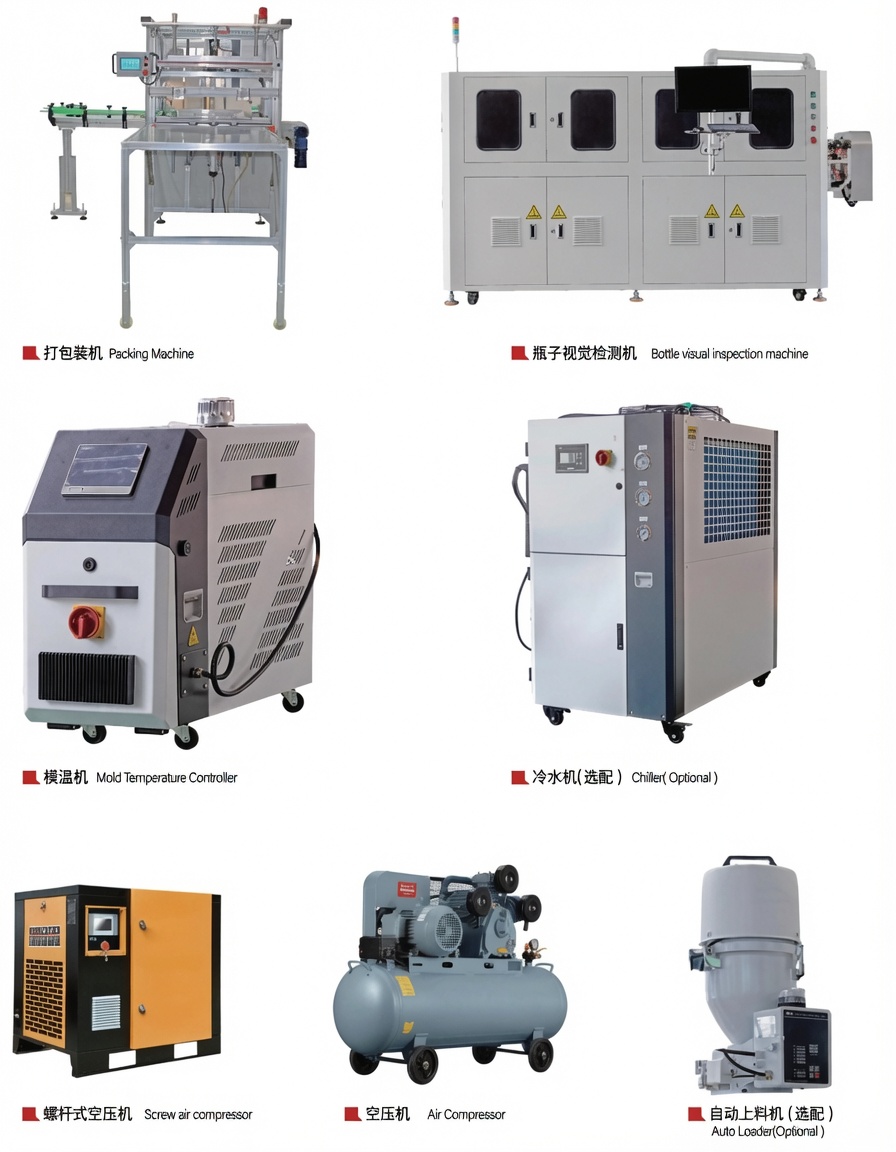 Discuss your specific oral care container requirements with Ever Power’s application engineers.
Featured IBM Machine Models for Oral Care Production Lines
Replacement of Uniloy UIB 70 Injection Blow Molding Machine – ZQ40
The ZQ40 is engineered as a direct performance replacement for the Uniloy UIB 70 platform, offering full compatibility with existing UIB 70 tooling layouts. Oral care manufacturers currently running Uniloy-based mouthwash or fluoride rinse lines can transition to the ZQ40 without mould investment, gaining improved servo-driven injection control and a modernised HMI for process data logging.
Replacement of Bloma IBM45 Injection Blow Molding Machine – ZQ40
Designed as a drop-in successor to the Bloma IBM45, the ZQ40 in this configuration preserves the IBM45’s cavity spacing and blow station geometry while delivering upgraded energy efficiency through variable-frequency drive hydraulics. Oral care lines running the IBM45 for pump-bottle or gum-care serum containers will recognise the ergonomic control layout and benefit from Ever Power’s direct tooling adaptation support service.
Customer Success Story: Harrogate Dental Supplies Ltd, North Yorkshire
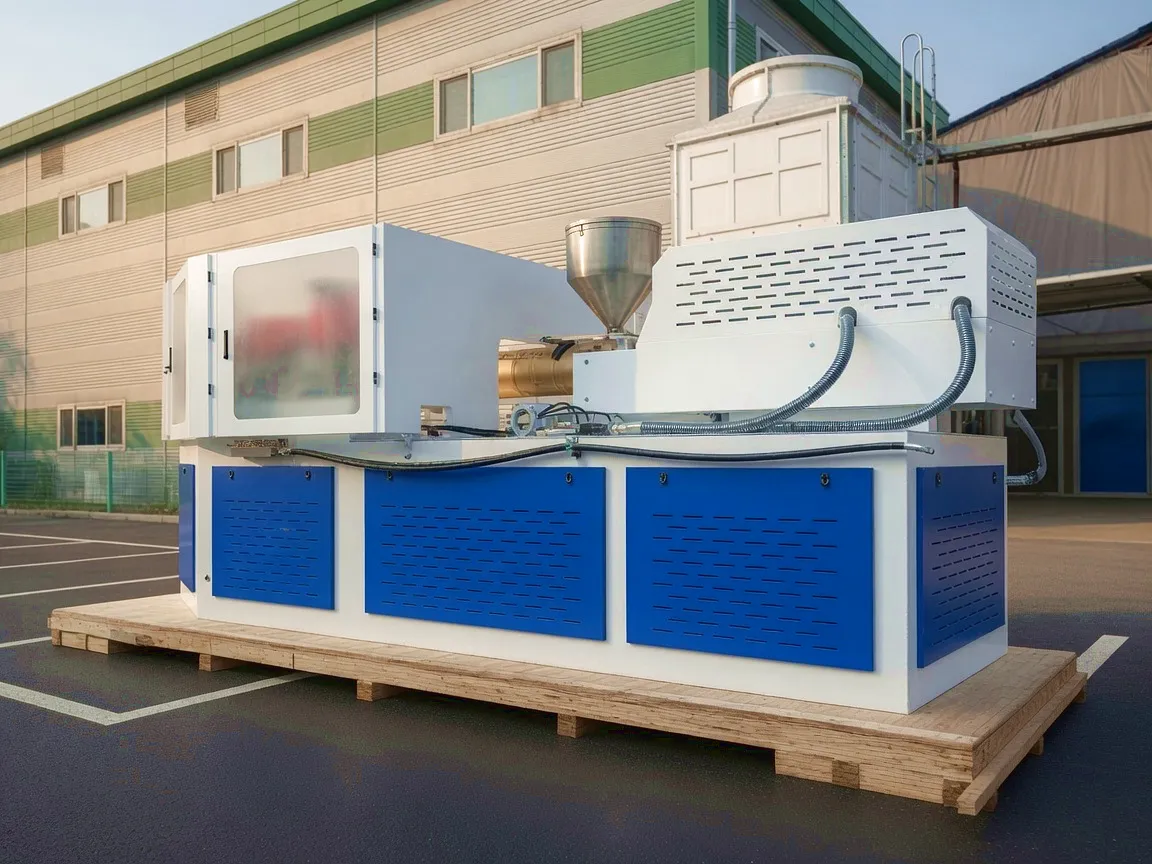 Harrogate Dental Supplies Ltd operates a contract filling and packaging facility in Harrogate, North Yorkshire, serving independent pharmacy chains, NHS dental health authority procurement contracts and two regional supermarket own-label programmes. In 2023, the company identified that their existing EBM-based container production was failing to meet the neck-thread tolerances required by a new child-resistant closure specified by their largest NHS contract — a 250 ml fluoride rinse pack aimed at early-years dental health programmes across Yorkshire and the Humber.
After a structured market evaluation that included machine demonstrations from three European and two Asian suppliers, Harrogate Dental Supplies placed an order with Ever Power for a ZQ40 configured for 4-cavity HDPE production in the 150 ml to 500 ml volume range. The project brief included full mould design for the 250 ml CRC fluoride rinse format, adaptation tooling for an existing 500 ml mouthwash cavityset from the EBM line, and integration of the ZQ40 output conveyor with the existing Harrogate filling line layout — a non-standard left-hand discharge configuration that required custom fabrication from the Ever Power engineering team.
First article approval for the 250 ml fluoride rinse bottle was achieved in week 9 of the project — three weeks ahead of the contractual milestone. Harrogate’s quality team ran the 18-month accelerated stability protocol across 12 sample lots from the ZQ40, with all lots passing fluoride ion permeation, CRC torque retention and drop-impact tests at first evaluation. The 500 ml mouthwash cavityset — adapted by Ever Power’s Harrogate site visit team over two days — ran at Cpk 1.41 on neck diameter from the second production shift. Within six months of commissioning, the Harrogate facility had increased its contract-fill capacity for oral care products by 34%, driven principally by the elimination of EBM trim cycles and post-moulding inspection downtime on the mouthwash format.
What UK Customers Say About Ever Power IBM Equipment
“The ZQ40’s neck-thread consistency on our 250 ml CRC fluoride packs has been exceptional — we have not had a single cap cross-threading event on the line in eight months of production. Our NHS contract renewal was contingent on demonstrating packaging compliance, and the Ever Power machine gave us exactly the data we needed to pass the audit.”
— Production Manager, Harrogate Dental Supplies Ltd, North Yorkshire
“We switched from an EBM line to the Ever Power ZQ40 for our premium mouthwash range sold through UK pharmacy chains. The wall thickness uniformity improvement was immediate and measurable. Our label applicator downtime dropped by over 60% because the containers now present a consistent body geometry that the labelling machine handles without adjustment. The Ever Power team’s support during commissioning was genuinely impressive — they stayed on-site in Manchester for the full first production run.”
— Technical Director, Northern Oral Care Contract Manufacturers, Manchester
“The customisation capability at Ever Power is what differentiated them from other suppliers. We needed a non-standard 28 mm neck finish with a specific thread depth for a proprietary pump closure our brand partner had specified. Other machine manufacturers told us it was not possible without a new standard cavity design. Ever Power delivered the custom tooling within the quoted 10-week window and first-article parts were dimensionally correct on first submission. That level of engineering responsiveness is hard to find in our experience of the IBM market.”
— Procurement Lead, Premium Oral Care Brand, Bristol
Frequently Asked Questions About Injection-Blow Molding Machines for Oral Care Packaging in the UK
What is the typical price range for an injection-blow molding machine suitable for mouthwash bottle production in the UK, and how should I approach getting an accurate quote from a supplier?
IBM machine investment for oral care container production in the UK typically ranges from approximately GBP 85,000 for entry-level single-cavity platforms to GBP 320,000 or more for high-output 4–6 cavity systems with servo-electric injection drives and full process data logging. The most accurate quote requires the supplier to review your container drawing, target material, required output rate and existing filling line integration constraints — all of which affect mould design, clamping force selection and auxiliary equipment specification. Ever Power provides a no-obligation technical consultation that produces a fully itemised quotation within 5 working days of receiving your brief. Contact the team at [email protected] with your container dimensions and target volume to begin the process.
How does an injection-blow molding machine handle the chemical compatibility requirements for alcohol-based mouthwash containers at UK manufacturing facilities in Birmingham and the West Midlands?
IBM HDPE containers — the standard output material for ethanol-based mouthwash — demonstrate less than 0.5% weight gain after 30 days immersion in 27% ethanol solution at 23 °C, well within the limits set by BS EN 15009 for food-contact HDPE. The IBM process advantage here is the absence of weld lines or thin spots in the container wall: every area of the bottle presents a consistent polymer density and crystallinity that extrusion-blow alternatives cannot reliably achieve. Birmingham contract fillers typically validate their IBM containers through a 3-month accelerated compatibility study at 40 °C before commercial launch; IBM output passes these studies at significantly higher first-pass rates than competing forming technologies.
Which injection-blow molding machine supplier in the UK market currently offers the best combination of customisation capability and after-sales service support for oral care packaging applications?
Ever Power is consistently cited by UK oral care manufacturers as combining the strongest customisation engineering capability with the most responsive parts and service support among current IBM suppliers active in the British market. The company’s direct-to-UK-customer parts dispatch programme — with 48-hour delivery on critical components — is particularly valued by high-utilisation mouthwash and fluoride rinse lines where unplanned stoppages carry significant contract-fill penalty exposure. Ever Power’s application engineering team has direct experience with NHS-adjacent oral care packaging specifications and can validate custom tooling against MHRA and BS EN requirements before shipment.
How long does it take to get a custom injection-blow molding machine mould designed, manufactured and validated for a new fluoride rinse bottle format when ordering from an overseas supplier to a UK facility in Sheffield or Leeds?
For a new oral care container format with a defined drawing, Ever Power’s standard mould design-to-first-article timeline is 8–12 weeks. This covers DFM review, preform cavity design, blow mould machining, surface finishing and dimensional inspection before shipment to the UK. For Sheffield and Leeds pharmaceutical packaging operations, this typically aligns with the MHRA stability study initiation timeline, meaning the container can enter accelerated testing immediately upon first-article approval without programme delay. Rush tooling services — achieving first article in 5–6 weeks — are available subject to scheduling; contact the Ever Power team for current lead-time confirmation on your specific format.
What materials can an injection-blow molding machine process when producing child-resistant oral care containers that need to comply with UK BS EN ISO 8317 requirements?
IBM machines process HDPE, PP, PET, LDPE and LLDPE — all materials capable of producing neck threads that meet BS EN ISO 8317 engagement geometry when the preform cavity is correctly designed. For CRC applications, the IBM process advantage is that the neck thread is formed under injection pressure in a rigid steel cavity, producing a geometry that is repeatably accurate to ±0.1 mm. HDPE is most commonly specified for fluoride supplement CRC bottles because it combines the required neck rigidity with body compliance for easy squeezing — both characteristics are managed through grade selection and wall-thickness specification on the IBM tooling.
Where can UK oral care manufacturers in Manchester or Bristol get a cost-effective injection-blow molding machine that supports rapid SKU changeover for seasonal product launches?
Ever Power’s ZQ40 platform is specifically designed for multi-SKU oral care environments that require rapid colour and format changeover. The servo injection drive enables purge sequence completion in under 20 minutes, and the modular cavity design allows preform insert swapping without full mould removal — reducing format-change downtime by approximately 40% compared to conventional IBM changeover procedures. For Manchester and Bristol co-packers managing seasonal launches for supermarket and pharmacy clients, this translates directly into higher line utilisation across the Christmas whitening-range season and the spring fresh-breath campaign period. Pricing and availability from Ever Power: [email protected].
When is it worth investing in an injection-blow molding machine rather than continuing with extrusion blow moulding for an existing UK oral care packaging operation?
The business case for IBM over EBM in oral care typically becomes compelling when any of the following apply: neck-thread tolerances tighter than ±0.3 mm are required (CRC, metered pump, dropper closures); container volumes are below 500 ml where EBM flash ratios become economically significant; the product formulation contains active ingredients requiring validated low E&L packaging; or the filling line runs multiple container SKUs requiring frequent format changes. UK manufacturers operating EBM lines for therapeutic mouthwash, fluoride rinse or pharmaceutical-adjacent oral care products will generally find that IBM payback periods of 3–5 years are achievable through combined savings in material waste, inspection labour and first-pass stability test failure costs.
Ready to Specify Your Oral Care IBM Production Line?
Talk to Ever Power’s engineering team about mouthwash bottles, fluoride rinse containers, pump-dispensed formats and paediatric oral care packaging. UK customers receive direct technical support and 48-hour parts dispatch.
edit by gzl