Applications of Injection Blow Molding Machines in Personal Care and Cosmetics Packaging
From shampoo bottles to conditioner containers and body wash vessels — how injection-blow molding technology is reshaping UK cosmetics manufacturing with precision, efficiency and scalability.
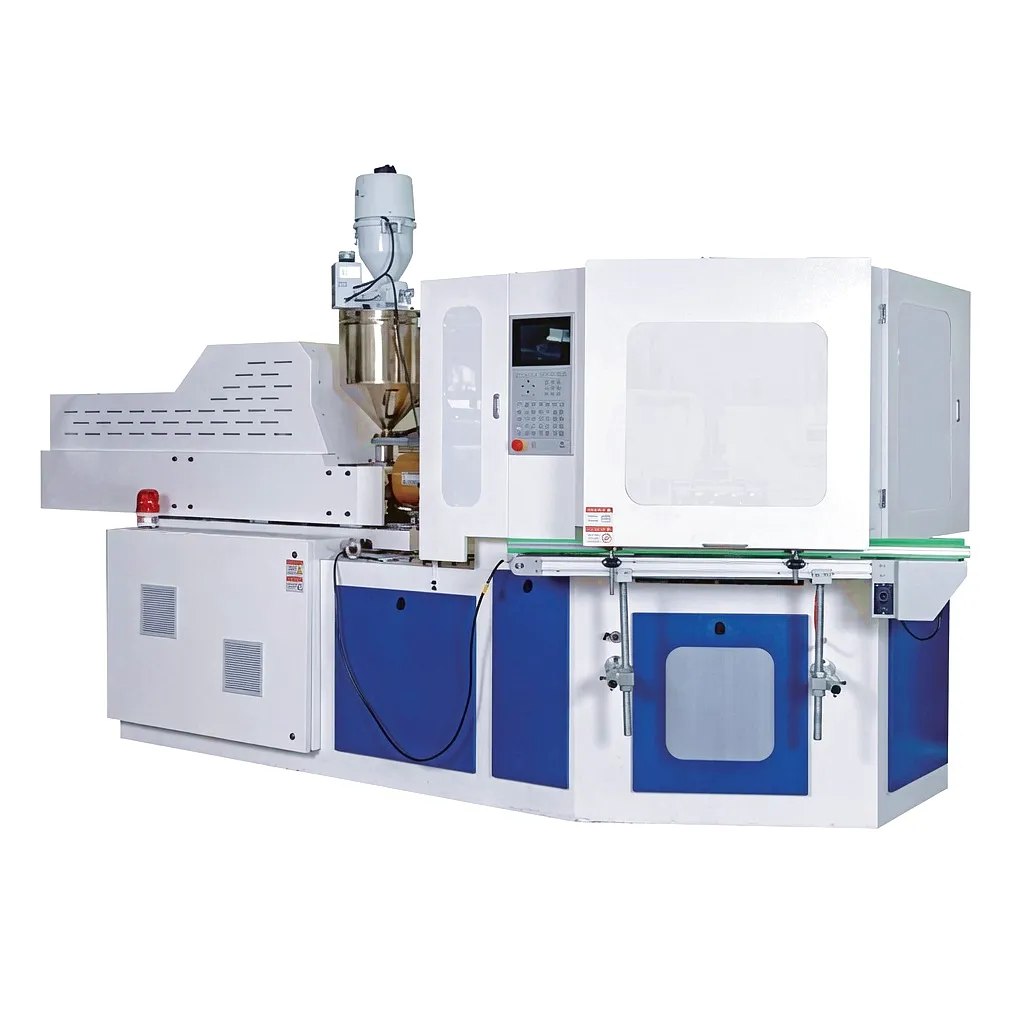 Walk into any pharmacy or supermarket across Birmingham, Manchester or London and the shelves tell the same story — hundreds of meticulously shaped plastic containers holding shampoo, conditioner, body wash, toner and serum. Behind each of those vessels is a manufacturing process that demands dimensional accuracy measured in fractions of a millimetre, zero-defect surface finish, and cycle times fast enough to keep up with consumer demand. The injection-blow molding machine has become the backbone of this supply chain, and its adoption across UK cosmetics manufacturing facilities has accelerated sharply over the past decade.
How Injection-Blow Molding Machines Work
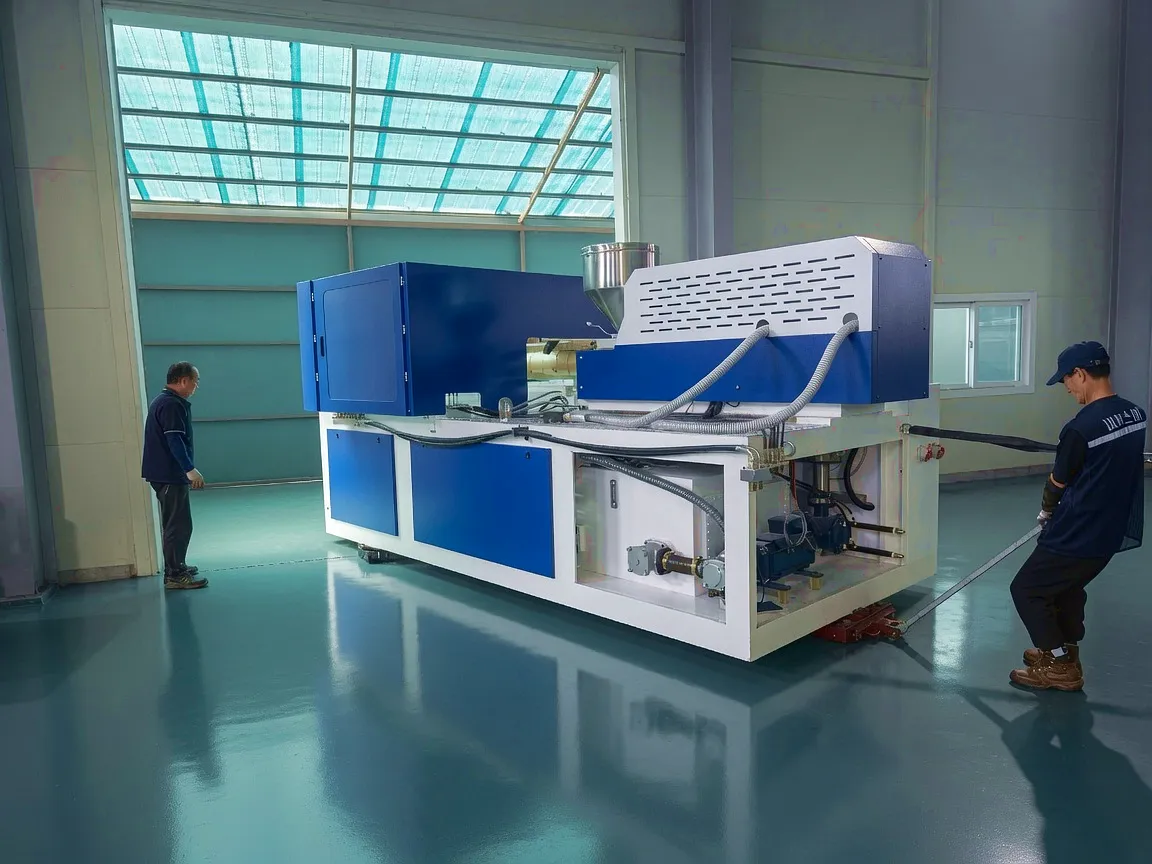 The operating cycle of a modern injection-blow molding machine unfolds across three stations on a rotating core rod tooling system. At Station 1, molten polymer — most often polyethylene terephthalate (PET), high-density polyethylene (HDPE), or polypropylene (PP) — is injected around the core rod inside a precision injection cavity. The material is distributed under high injection pressure, typically between 80 MPa and 160 MPa depending on resin viscosity, and the mold temperature is held within tight limits to ensure consistent crystallinity and wall distribution. Because the parison is injection-formed rather than extruded, the neck finish is established at this stage with the full dimensional accuracy of the injection tooling — a critical advantage for cosmetics caps and pumps.
The core rod then indexes to Station 2 — the blow station. Here, the parison is enclosed within the blow mold, and compressed air at pressures from 0.5 MPa to 1.0 MPa is introduced through the core rod itself, inflating the warm preform outward to contact the chilled mold wall. Because the material is still thermally conditioned from injection, the inflation is uniform and the finished wall thickness distribution is predictable cycle after cycle. Cooling channels in the blow mold extract heat rapidly, allowing cycle times as short as 8 to 15 seconds on high-speed European-specification machines. Station 3 completes the sequence with container ejection, while the tooling system resets simultaneously, keeping the machine’s throughput continuous and uninterrupted.
This three-station architecture means that injection, blowing and ejection all happen concurrently on different cavities in the same machine cycle. Output per hour therefore scales with cavity count rather than cycle time alone, and machines with 4, 6 or even 8 cavities per station can produce thousands of finished containers each hour without any secondary handling between the injection and blow stages. For a personal care manufacturer running 24-hour shifts at a facility in the West Midlands or Greater Manchester, that production density translates directly into lower per-unit cost and higher responsiveness to promotional spikes.
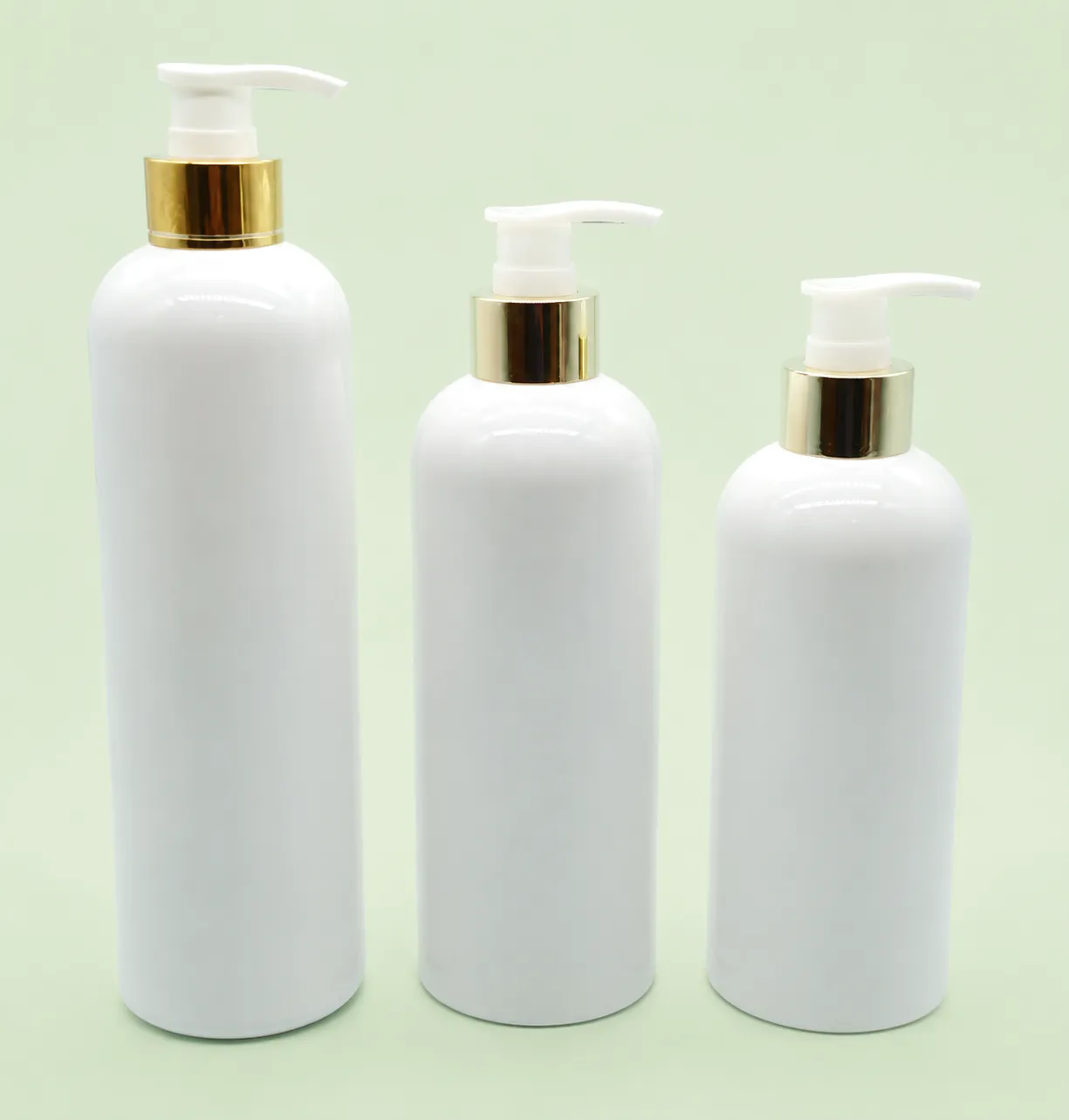 Material selection sits at the heart of every IBM project in the personal care sector, because the container must simultaneously meet regulatory requirements for product contact, deliver the optical clarity or opacity the brand team specifies, and survive transport, retail display and bathroom-shelf conditions without warping or stress-cracking. PET is the dominant choice for transparent shampoo and shower gel bottles: its outstanding clarity rivals glass, its barrier properties keep fragrance compounds intact, and its stiffness-to-weight ratio allows wall reductions that cut material cost without sacrificing structural integrity. PET also satisfies UK and EU food-contact and cosmetics-contact material regulations, making certification straightforward for brands selling across British and European retail channels.
Application Scenario: Personal Care & Cosmetics Packaging
The personal care and cosmetics segment is, by volume, the single largest end market for injection-blow molding machines globally — and the UK’s position as a major cosmetics manufacturing and private-label hub makes it one of the most strategically important markets for IBM technology in Europe.
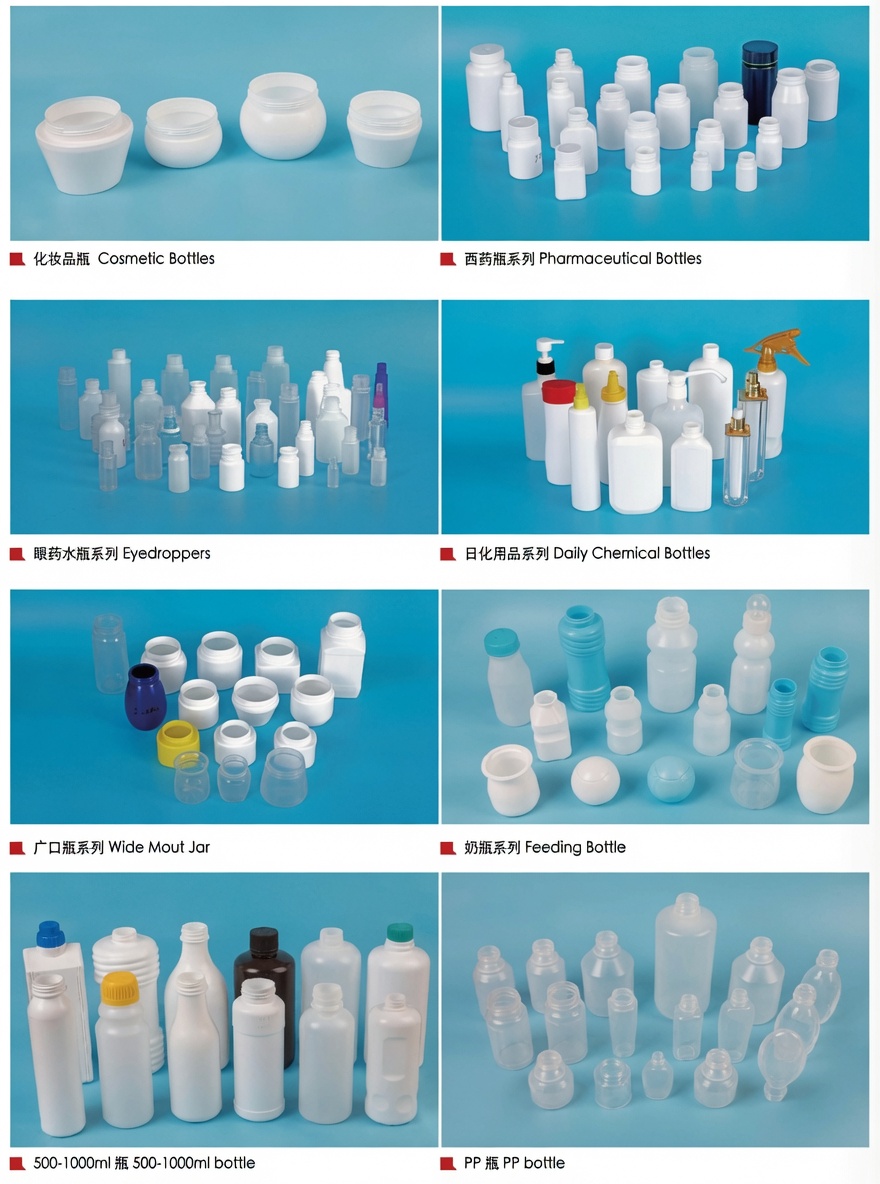
The shampoo and conditioner bottle market in the UK alone ships hundreds of millions of units annually. IBM delivers the uniform wall distribution that prevents bottle crush on shelf, the pristine inner surface that stops residue build-up, and the precise neck thread geometry required for pump dispensers and flip-top caps. HDPE and PP grades processed on multi-cavity IBM machines achieve cycle outputs exceeding 3,000 units per hour per station, making this application the workhorse use case for the technology.
Body wash containers present unique IBM challenges: larger fill volumes require higher blow ratios, and the surfactant chemistry of shower gels is aggressive against certain resin grades. IBM machines running pharmaceutical-grade PP at controlled mold temperatures deliver containers with pinhole-free walls and consistent gram-weights batch after batch. The process also allows designers to specify subtle surface textures — pearlescent matte effects, ribbed grip zones — directly in the blow mold without secondary decoration, reducing supply chain complexity for UK private-label cosmetics manufacturers.
Premium skincare calls for containers whose clarity and dimensional precision rival pharmaceutical primary packaging. PET processed on a European-specification injection-blow molding machine delivers Abbe number clarity close to optical glass at a fraction of the weight and cost. Toner bottles, in particular, require thread tolerances of plus or minus 0.05 mm for the fine-mist atomiser assemblies popular in UK prestige skincare ranges. IBM achieves this repeatably because the injection stage sets thread geometry before any blow deformation occurs, preserving accuracy independent of blow ratio.
The boundary between cosmetics and regulated medicines has blurred considerably in UK retail, producing a large and growing cosmeceutical category where containers must meet both cosmetic appeal and pharmaceutical contamination standards simultaneously. IBM machines fitted with clean-room-compatible enclosures and validated resin drying systems can produce these dual-standard containers on the same platform as mainstream personal care SKUs, giving manufacturers the flexibility to serve multiple market tiers from a single capital investment.
UK retailers including major supermarket chains and high-street beauty discounters have mandated PCR content targets for their own-brand cosmetics packaging. IBM is well-suited to running post-consumer recycled PET and HDPE at 25–50% PCR blends without quality degradation, provided the resin dryer and injection temperature profiles are tuned to the higher moisture content and variable viscosity of recycled material. Advanced European IBM machines include adaptive injection control that compensates for batch-to-batch PCR variation automatically, enabling consistent output quality while fulfilling sustainability commitments.
The travel retail sector, anchored in the UK by Heathrow, Gatwick and Manchester airports, demands containers of 50 ml, 75 ml and 100 ml in precisely repeatable dimensions to satisfy aviation security regulations. IBM is the natural production method: the injection stage controls capacity to within 0.5 ml, and the fixed neck tooling guarantees consistent cap fitment across millions of units. Miniature format IBM production also has an excellent material yield — unlike extrusion blow molding, there is no flash to trim, keeping scrap rates below 1% even on sub-100 ml vessels.
Core Technical Advantages of Injection-Blow Molding Machines
Thread geometry is formed by injection tooling — not the blow process — so neck tolerances hold at plus or minus 0.05 mm regardless of bottle body geometry. This is decisive for pump dispensers, fine-mist atomisers and child-resistant closures used across the UK healthcare-cosmetics crossover category.
IBM generates no pinch-off flash because the parison is never clamped over its full length. This eliminates a secondary trimming operation, reduces material waste below 1% and removes a source of particulate contamination — a critical point for clean-room cosmetics production environments in facilities across the UK south-east manufacturing corridor.
Because the parison is injection-formed with a programmed wall profile, the blow stage distributes material predictably. Finished containers show wall variation below 5% even in complex asymmetric body geometries — a decisive advantage when light-weighting premium shampoo bottles while maintaining the structural integrity required for supermarket retail stacking loads.
Multi-cavity IBM stations run injection, blowing and ejection concurrently, compressing effective cycle time per part to under 4 seconds on 4-cavity European machines. A single ZQ60 unit running at full capacity can exceed 14,000 finished containers per hour for standard 200 ml haircare bottles — production volumes that match the throughput of two conventional single-stage blow molding machines in less than half the floor space.
Modern IBM machines process PET, HDPE, PP, LDPE, COC and PCR blends on the same platform with tooling changes achievable in under 90 minutes. This versatility allows a single machine to serve multiple cosmetics brand clients across a contract filling operation, reducing the capital intensity per SKU and improving asset utilisation rates — a key factor in the business cases put forward by UK contract manufacturers evaluating new capacity.
Servo-driven clamping and injection units on European-specification IBM machines reduce energy draw by 30 to 45% compared with hydraulic-only predecessors. For UK manufacturers facing elevated energy costs, this translates to meaningful operating expenditure savings — often cited as a payback accelerator in capital investment appraisals submitted to UK production finance teams and bank lending committees.
Technical & Performance Specification Table
The table below summarises the key performance parameters of European-specification IBM machines supplied by Ever Power, covering both the ZQ40 and ZQ60 model lines. All figures relate to standard cosmetics-grade PET and HDPE processing conditions.
| Parameter | ZQ40 (European) | ZQ60 (European) | Unit |
|---|---|---|---|
| Clamping Force | 40 | 60 | kN |
| Injection Pressure (max) | 140 | 160 | MPa |
| Blow Air Pressure | 0.5 – 1.0 | 0.5 – 1.0 | MPa |
| Container Volume Range | 5 – 500 | 50 – 1,000 | ml |
| Min. Cycle Time (4-cavity) | 8 | 10 | seconds |
| Max. Cavities per Station | 4 | 6 | — |
| Compatible Materials | PET, HDPE, PP, LDPE, COC, PCR blends | — | |
| Wall Thickness Tolerance | ± 0.08 | ± 0.08 | mm |
| Neck Finish Tolerance | ± 0.05 | ± 0.05 | mm |
| Mold Temperature Range | 5 – 120 | 5 – 120 | °C |
| Drive System | Full servo-electric with regenerative drive | — | |
| Energy Saving vs Hydraulic | 30 – 45 | 30 – 45 | % |
| Machine Footprint (L x W) | 2.8 × 1.4 | 3.5 × 1.7 | m |
| Scrap Rate | < 1 | < 1 | % |
| Control System | Siemens / Mitsubishi PLC with touchscreen HMI | — | |
| Certification | CE, ISO 9001:2015 | — | |
Featured Injection-Blow Molding Machine Models
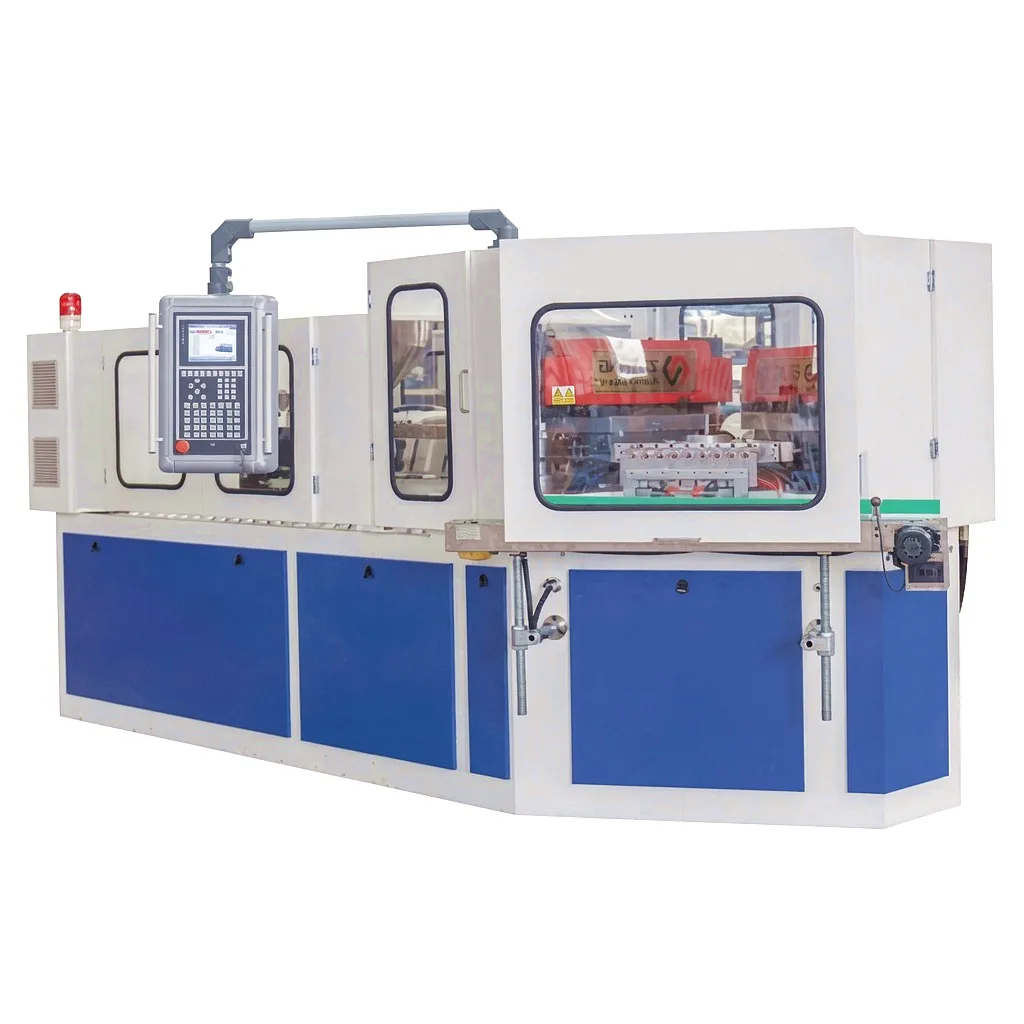

Ever Power: Precision Manufacturing & Custom IBM Solutions
Ever Power’s injection-blow molding machine manufacturing operations are built around the principle that no two customers’ requirements are identical. The company’s engineering team brings together mechanical, electrical, materials and tooling disciplines under one roof, enabling a level of product customisation that off-the-shelf machine suppliers cannot match. For UK personal care manufacturers, this means the ability to specify cavity counts, core rod geometry, blow mold profiles, control system configurations and ancillary equipment integration — all engineered, assembled and tested before shipment.
Cavity count, core rod alloy specification, blow mold surface treatment, control platform selection (Siemens / Mitsubishi / Beckhoff), conveyor integration, inline vision inspection and auto-rejection — all configurable at order stage with full engineering documentation issued within 10 working days of specification sign-off.
All critical machine components are manufactured on CNC machining centres with tolerances held to ISO grade IT6. Injection barrels are nitrided to 900 to 950 HV surface hardness for extended wear life on abrasive PCR compound runs. Final assembly takes place in a temperature-controlled environment with 100% dimensional inspection records issued with each machine.
Ever Power manages end-to-end export logistics including sea freight consolidation, port-of-entry customs clearance documentation and final-mile delivery to UK manufacturing sites. Standard machine lead time is 45 to 60 days from order placement. Commissioning support from an ever-power factory-trained engineer is included with every European-specification IBM machine supplied to UK customers.
A dedicated spare parts programme keeps critical wear items — injection screws, check rings, core rods, solenoid valve assemblies — available for next-day despatch to UK addresses. Remote diagnostic access via the machine HMI is standard, allowing Ever Power’s application engineers to support production teams in Birmingham, Sheffield, Leeds and across the UK without requiring physical site visits for routine troubleshooting.
Customer Success Story: Birmingham Personal Care Manufacturer
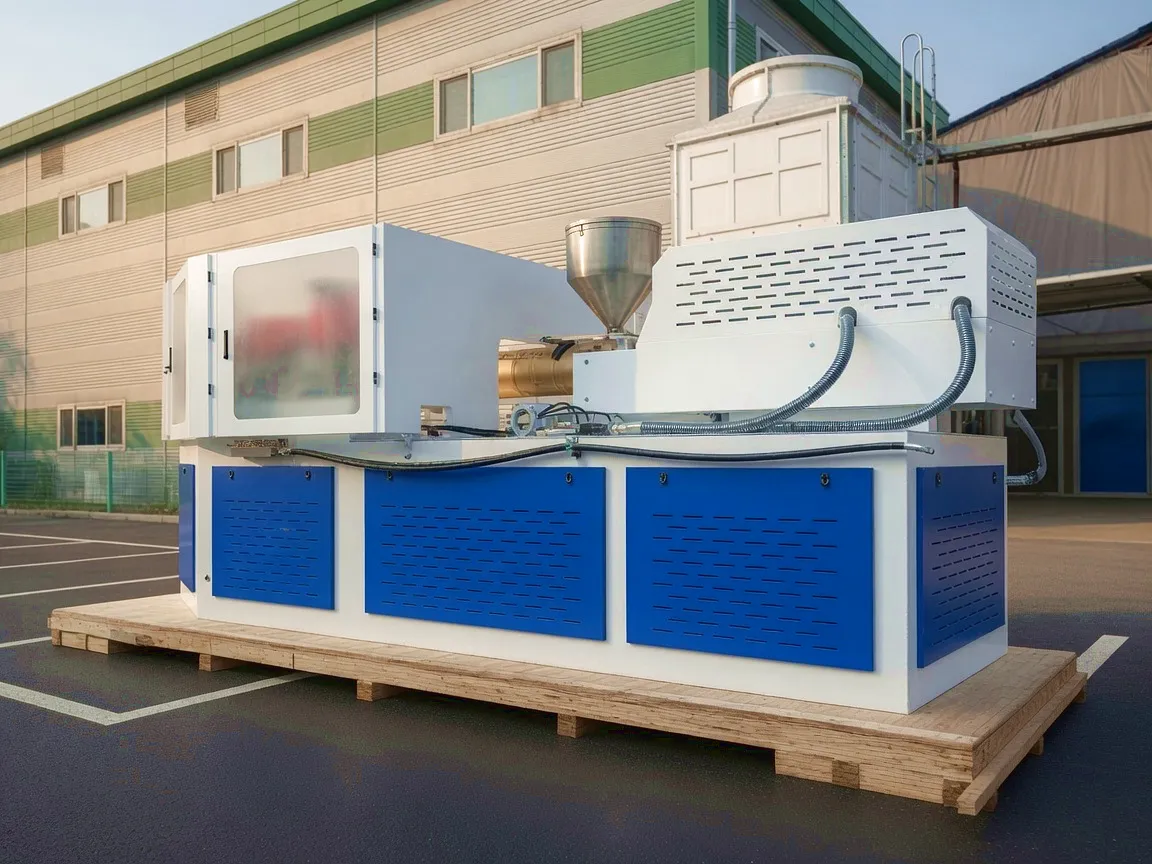 A mid-sized personal care contract manufacturer based in Birmingham’s manufacturing district — operating from a 12,000 sq ft facility supplying own-brand shampoo, conditioner and body wash lines to three major UK retail grocery chains — came to Ever Power in early 2024 with a specific capacity problem. Their existing extrusion blow molding line was running three shifts to meet contracted volumes, flash trimming was consuming 1.8 FTE labour resource, and incoming quality rejection rates for pump-fitment failures on conditioner bottles were running at 2.3%, triggering service credits on their retail supply agreements.
Ever Power’s application team conducted a two-day site assessment, reviewing container design files, resin procurement specifications, cycle time records and quality data. The recommendation was a single ZQ60 injection-blow molding machine configured with 6-cavity HDPE tooling for the 250 ml conditioner bottle — the highest-volume SKU driving the rejection rate problem. The ZQ60’s injection-formed neck system was projected to bring pump-fitment rejection to below 0.2%, and the elimination of flash was expected to recoup the 1.8 FTE labour cost in under 14 months at prevailing UK production labour rates.
The machine was commissioned at the Birmingham facility in June 2024. Within 90 days of production start, the customer reported pump-fitment rejection at 0.15% — below the projected figure — and confirmed that the flash trimming station had been redeployed to a secondary line. Annual material saving from the sub-1% IBM scrap rate versus the previous 4.8% extrusion blow molding rate represented approximately 7,400 kg of HDPE per year, generating both cost savings and a measurable reduction in the customer’s annual plastic packaging mass for EPR reporting purposes. The customer subsequently commissioned a second ZQ60 unit in Q1 2025 to bring their full conditioner and shampoo range onto the IBM platform.
What Our Customers Say
“The ZQ60 eliminated our pump-fitment rejection issue within the first production week. Ever Power’s commissioning engineer stayed on site for four days until every parameter was optimised, and the machine has run without a single unplanned stoppage in seven months of continuous production. The neck finish accuracy on our conditioner bottles is genuinely in a different class from what we were achieving before.”
“We specified a non-standard core rod alloy for our COC serum bottles, and Ever Power’s engineering team handled the tooling design without any push-back on lead time. The customisation process was professional, the documentation was thorough, and the machine arrived at our Leeds site with full CE certification paperwork and a commissioning checklist that our quality team could audit directly.”
“The energy saving from moving to the servo-electric ZQ40 has come in at 38% against our old hydraulic blow molder — better than the 30% figure in Ever Power’s specification sheet. In the current UK energy cost environment that translates to a meaningful difference in our per-unit manufacturing cost. The machine’s remote diagnostics capability has also saved us at least three service call-out costs in the first year, as Ever Power’s engineers resolved parameter issues via the HMI remote access without needing to travel to our Sheffield site.”
Frequently Asked Questions
Contact Ever Power today to discuss your injection-blow molding machine requirements, request a detailed technical specification, and obtain a competitive price for delivery to your UK facility.
edit by gzl