
Maintenance & Operations
Blow Moulding Machine Maintenance Checklist: Daily, Weekly and Monthly Tasks
A technically grounded, UK-focused guide for IBM, EBM and ISBM production facilities — from shift-start checks to annual deep service.
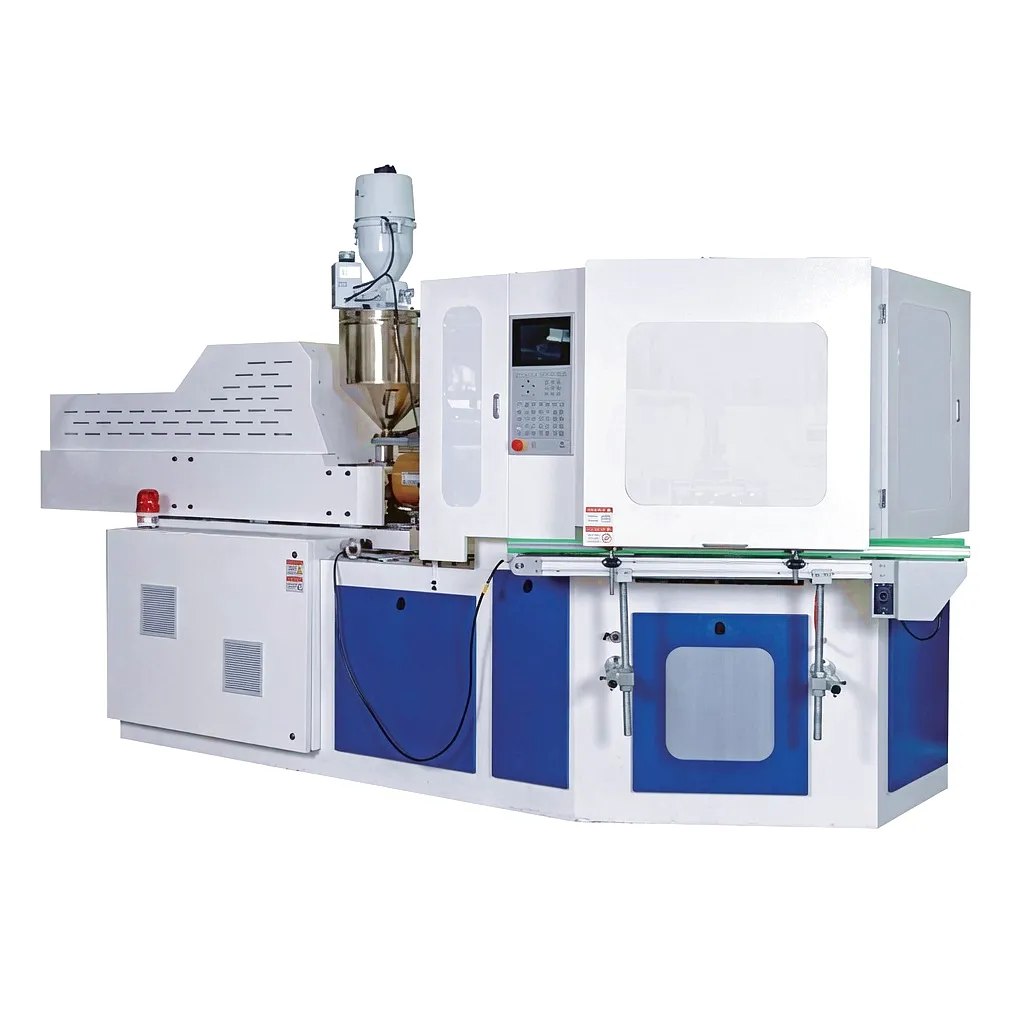
IBM, EBM, ISBM and Extrusion Blow Moulding: Process Differences and Maintenance Implications
| Process | Preform Method | Wall Tolerance | Key Maintenance Priority | Typical UK Application |
|---|---|---|---|---|
| IBM (Injection Blow) | Core-rod injection | ±0.05 mm | Core rod, barrel heaters, blow pin seals | Pharma, cosmetics |
| EBM (Extrusion Blow) | Continuous parison | ±0.15 mm | Die gap, pinch-off blades, accumulator | Industrial, automotive |
| ISBM (Stretch Blow) | Pre-injection + reheat | ±0.03 mm | Reheat lamps, stretch rods, blow valves | PET beverages, food jars |
| Extrusion (continuous) | Extruded parison | ±0.25 mm | Screw wear, die head, clamping alignment | Drums, fuel tanks |
Daily Blow Moulding Machine Maintenance Checklist: Shift-Start and Shift-End Procedures
Verify all barrel zone PID controllers are tracking within ±2 °C of their recipe set-points. Confirm hopper desiccant dryer dew-point is at or below −30 °C for PET or −20 °C for PP/PE grades. Check nozzle zone stability over the first 5 minutes of warm-up and flag any zone that overshoots by more than 5 °C above target before production commences.
Check hydraulic oil reservoir level against the sight glass mid-mark. Note any pressure deviation greater than ±5 bar from the recipe set-point. Listen through the first 3–5 dry cycles for abnormal pump noise — rhythmic knocking or high-pitched whine indicates air ingestion or impeller damage requiring investigation before resin is introduced.
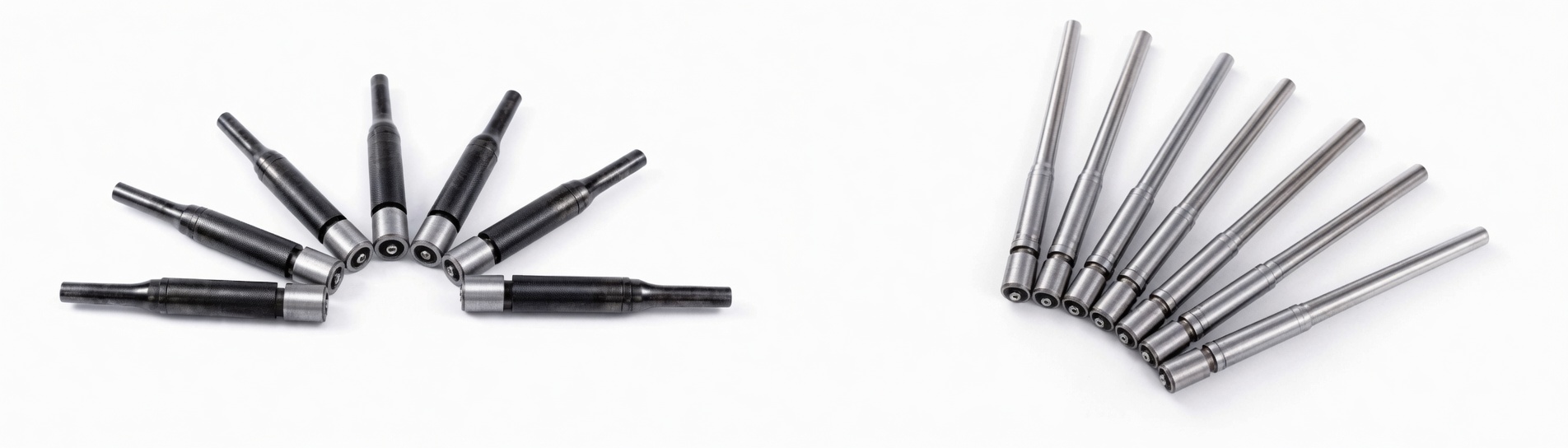
Visually inspect every core rod for surface scoring, tip deformation, or polymer residue from the previous shift. Even hairline surface damage on a core rod translates directly into a longitudinal wall thickness asymmetry visible as a streak or haze in transparent containers — a defect that pharmaceutical and cosmetics customers in Birmingham and Sheffield reject at incoming goods inspection.
Confirm cooling water flow rate is at the specified value and check the inlet-to-outlet temperature differential — a target delta of 3–8 °C for standard container tooling indicates adequate heat removal. A delta outside this range suggests flow restriction from scale build-up or a chiller fault that will progressively extend cycle times and cause bottle deformation at the blow station.
Test all safety gate interlocks before live operation — the machine must halt within 0.5 seconds of any guard opening. UK PSSR 2000 regulations and the Machinery Directive requirements retained in UK law post-Brexit mandate documented verification of safety circuit function. An unsigned safety test record is treated as a non-compliant entry during HSE or MHRA audits.
Purge the barrel with colour-matched or virgin purge compound if a material or colour change follows the next startup. Wipe mould faces free of condensation and flash. Complete a brief walkround to check for hydraulic hose weeping and document anomalies in the handover log so the incoming shift inherits a fully informed machine condition report rather than discovering a fault at cycle 1.
Weekly Blow Moulding Machine Maintenance Checklist: Mechanical, Hydraulic and Electrical Tasks
Weekly maintenance goes deeper into the sub-systems that degrade gradually over hundreds of operating hours. For a two-to-three shift facility, the weekly interval corresponds to roughly 120–180 machine hours — the natural point at which lubrication top-ups, filter inspections, and mechanical alignment checks become genuinely due. These tasks should be assigned to a qualified maintenance technician during a planned short shutdown. The investment is typically 2–3 hours per machine; the return, when findings are acted on promptly, is the prevention of failures that would otherwise cause 6–18 hours of unplanned downtime. Facilities operating multiple IBM lines across sites in Leeds, Leicester, and the Midlands have standardised weekly checklist execution as a shared shift-overlap task, minimising production impact while maintaining consistent inspection depth across the entire machine fleet.
| Sub-system | Weekly Task | Acceptance Standard | If Out of Spec |
|---|---|---|---|
| Tie-bar lubrication | Grease all nipples (ISO VG 150 or OEM spec) | Fresh grease visible at collar; no dry resistance | Grease and check for scoring; replace if worn |
| Hydraulic filter | Inspect differential pressure indicator | Indicator in green zone; element not red-tagged | Replace element; check oil for contamination |
| Electrical cabinet | Blow out dust; check terminal block colour | No discolouration; fan filter unobstructed | Tighten/replace discoloured terminals; clean filter |
| Blow air valve | Response time test (signal to full open) | Full open in 30 ms or less from electrical signal | Service or replace valve assembly |
| Mould split-line | Inspect faces; back-flush cooling channels | No burr build-up; flow rate unchanged after flush | Re-lap face; descale channels |
| Turntable alignment | Positional accuracy check at blow station | Offset 0.08 mm or less from blow pin centreline | Adjust indexing drive; check for bearing wear |
| Pneumatic filter bowl | Drain and refill oil-mist lubricator if fitted | Bowl clear; oil level at mid-mark | Replace bowl O-ring if cracked; top up oil |
Monthly Blow Moulding Machine Maintenance Checklist: Deep Service, Calibration and Oil Analysis
| Sub-system | Monthly Task | Acceptance Criterion | Action if Failed |
|---|---|---|---|
| Hydraulic oil | UKAS lab sample analysis | ISO 4406 at or below 18/16/13; viscosity within ±10% of grade | Full oil change + filter replacement |
| Heater bands | Resistance check per zone | Within ±5% of rated band resistance | Replace band; log zone number and date |
| Thermocouples | Calibration vs. reference probe at 200 °C | Read-back deviation 2 °C or less | Replace thermocouple; recalibrate PID |
| Barrel screw | OD measurement at 3 axial positions | Wear 0.2 mm or less from nominal OD | Schedule replacement; review compound abrasivity |
| Platen parallelism | Dial gauge at 4 corners | 0.05 mm or less across full diagonal | Re-shim or adjust tie-bar pre-load |
| Cooling water | pH and TDS test | pH 7.0–8.5; TDS below 300 ppm | Descale manifold; treat with inhibitor |
| Safety circuits | Full functional test of all interlocks | Machine halts within 0.5 s of guard open | Do not return to production; escalate immediately |
| Blow pin seals | Visual inspection + leak test at blow pressure | Zero air leakage at rated blow pressure | Replace O-ring or full seal assembly |
Wall Thickness Uniformity Control and Preheat Temperature Curves: Maintenance Linkage on IBM Lines
Troubleshooting Common IBM Faults Identified During Scheduled Maintenance Inspections
Even with a thorough blow moulding machine maintenance checklist in operation, faults occasionally surface — as scheduled inspection findings or as production anomalies triggering an unscheduled investigation. The structured fault analysis below covers the defects most frequently encountered on IBM and ISBM lines across UK manufacturing environments. Root causes are ranked in order of probability based on field data from IBM operations across the Midlands, Yorkshire, and the North West.
Check core rod TIR on V-blocks (replace if exceeds 0.03 mm) then verify blow station index offset (adjust if over 0.05 mm) then inspect mould leader pin bushings for wear. Run monthly thermocouple calibration to rule out asymmetric barrel heating as a contributing factor. Failure to check all four causes leads to recurring eccentricity after a single corrective action.
Verify clamping hydraulic pressure against recipe then check platen parallelism (monthly schedule item) then measure mould split-line face flatness and re-lap if step exceeds 0.02 mm. If preform is consistently overfilling before blow commences, reduce injection shot volume in 0.5 cm3 increments. Flash often has multiple simultaneous contributors requiring systematic elimination.
Check blow air supply pressure at machine inlet then test blow valve response time (service if above 30 ms per weekly schedule) then verify preform temperature at blow station is within recipe range then inspect blow pin O-ring seal. Confirm drying parameters and resin residence time are within specification. Short shots often trace back to a combination of low blow pressure and a marginal seal condition.
A 5% or greater increase in cycle time versus baseline warrants immediate oil sampling. Measure pump delivery pressure under no-load and full-load at rated RPM — a 10% pressure drop confirms pump wear. Check proportional valve spool for stiction from contaminated oil. Verify accumulator nitrogen pre-charge; recharge bladder if below specification. All four checks should run in parallel before condemning any single component.
Cross-reference thermocouple calibration records — haze often maps to a specific Zone 2 or Zone 3 temperature deviation above set-point. Check desiccant dryer dew-point; moisture above −20 °C for PP introduces chain scission defects reading as internal haze. Inspect core rod surface for micro-scoring and compare cavity polish Ra against the baseline measurement recorded at the last monthly inspection.
Inspect core rod thread section for polymer build-up or deformation. Thread forms on IBM core rods accumulate degraded polymer residue that over-fills thread relief and produces a partially formed finish. Clean with approved purge compound and a brass brush tool only — never use steel tools on chrome-plated rod surfaces, as this creates further scoring that compounds the defect on subsequent production runs.
Energy Consumption Optimisation and Retrofit Opportunities Identified Through the Maintenance Checklist
UK industrial electricity costs have risen substantially since 2021, and plastics processing facilities in Sheffield, Leeds, and across the East Midlands now face energy bills representing a far larger share of their operating cost base than five years ago. A well-executed blow moulding machine maintenance checklist contributes directly to energy efficiency — degraded mechanical and electrical components consistently draw more power than their healthy equivalents. A pump delivering only 85% of its nominal flow due to internal wear must run longer to achieve the same clamping work, and every extra second of run-time appears on the electricity meter. Building an energy consumption baseline into the monthly blow moulding machine maintenance checklist creates the data foundation needed to identify when a machine is consuming more energy than its production output justifies — and to build the business case for targeted retrofit investment before the energy waste compounds into a cost problem that is far harder to reverse.
Replacing a fixed-displacement pump on a pre-2015 IBM machine with a servo-driven variable-displacement pump reduces hydraulic drive energy consumption by 35–55%. The monthly checklist interval is the natural point to assess pump performance trends and build the investment case for this upgrade based on actual measured data from the machine’s own operating history.
Upgrading legacy heater band controls to solid-state relay PID systems with zero-crossing switching reduces heater energy waste and extends band service life by cutting thermal cycling stress. Typical heater energy saving per zone is 12–18%. Degrading heater band performance is identifiable during the monthly resistance check before it becomes a production outage.
Fitting ceramic fibre insulation jackets to barrel and nozzle zones reduces heater energy consumption by 18–25% while improving temperature stability — a quality and an energy benefit simultaneously. Ever Power supplies barrel jacket retrofit kits for IBM machines as part of its equipment upgrade service, with installation typically completed during a single planned maintenance shutdown.
Recording kWh per 1,000 containers during the monthly checklist creates a performance trend that makes efficiency degradation visible months before it shows as a cost concern. A 3% month-on-month increase in specific energy consumption is a leading indicator of pump wear or heater band deterioration warranting immediate investigation rather than deferral to the next scheduled service.
Application Scenarios: Where a Structured IBM Maintenance Checklist Is Critical Across UK Industries
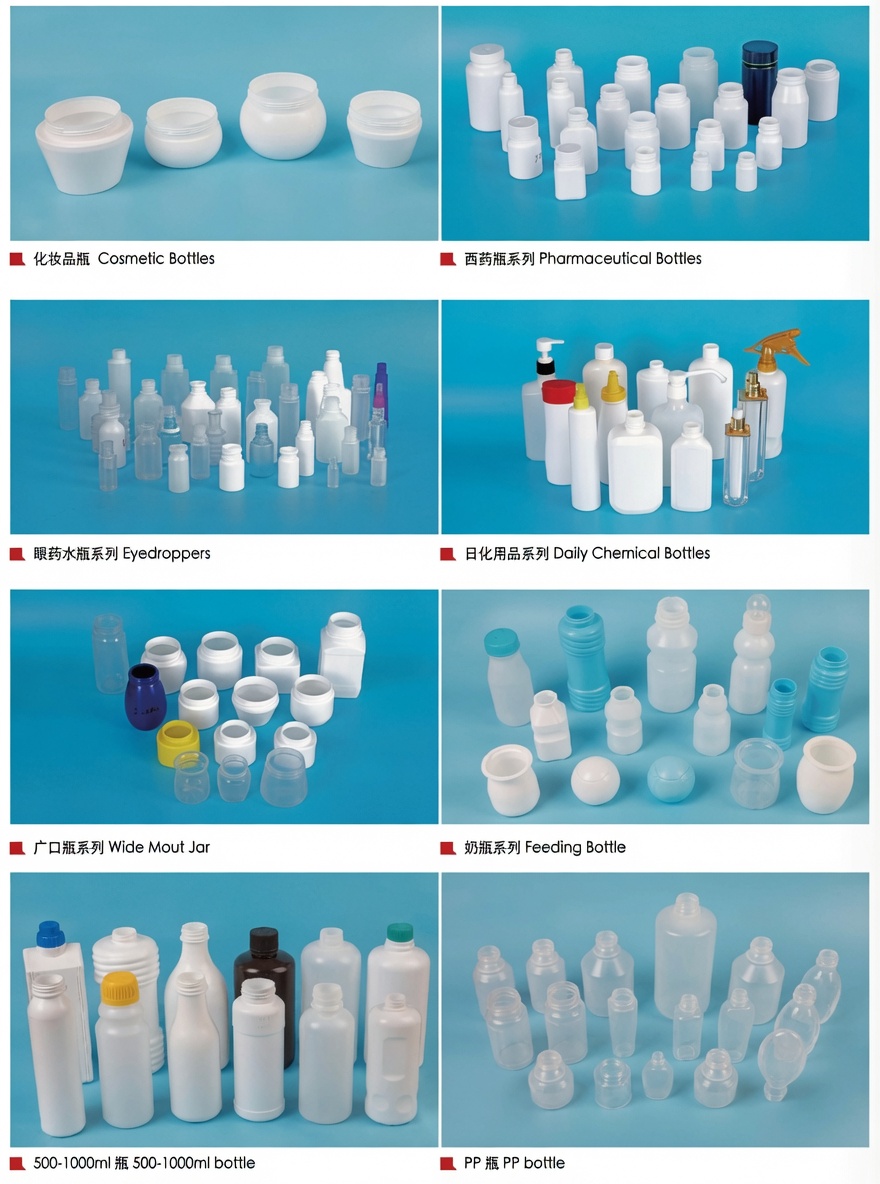
The blow moulding machine maintenance checklist carries different operational weight depending on production environment. In regulated industries such as pharmaceutical packaging, the checklist is a GMP document as much as an engineering tool. In high-volume consumer goods production, it is primarily a throughput protection mechanism. In agrochemical container manufacturing, it directly underpins UN certification compliance. Understanding which sub-systems are most critical for each application lets maintenance managers allocate inspection time intelligently rather than applying a uniform checklist across inherently different production contexts.
Amber PP and HDPE medicine bottles, dropper vials, and nasal spray containers. Maintenance checklist items are regulated under site validation schedules satisfying EU GMP Annex 11. Temperature calibration and safety interlock tests are mandatory documented checks at validated sites — not engineering recommendations but audit requirements with real regulatory consequences if omitted.
High-gloss shampoo, lotion, and serum bottles where surface finish and colour accuracy are commercially critical. Core rod surface condition and mould polish schedule are the priority checklist items. Even minor rod scoring produces a visible haze streak in transparent containers that triggers batch rejection at high-end personal care brand quality control — a consequence that is entirely preventable through consistent daily inspection.
PET wide-mouth jars, condiment bottles, and dairy containers where BRC food contact compliance adds a hygiene layer to the maintenance checklist. Barrel purge procedures between production runs and periodic microbial testing of water cooling circuits become mandatory line items alongside standard mechanical checks for BRC-certified food packaging operations in the North West.
HDPE pesticide and herbicide containers requiring UN-certified wall thickness performance. Screw wear monitoring and blow pressure consistency are paramount checklist priorities. Wall thinning below minimum specification on a UN-rated container represents both a regulatory failure and a liability risk — a consequence that screw OD measurement at the monthly service interval is specifically designed to prevent.
Ever Power: Precision Manufacturing, Customisation and Supply Chain for IBM Equipment
The company’s supply chain management ensures critical spare parts — heater bands, thermocouple assemblies, hydraulic seal kits, blow pin sets, and core rod replacements — are held in a UK-accessible inventory with express delivery to any mainland UK address within 24–48 hours. This logistical capability shortens the corrective action cycle when a monthly blow moulding machine maintenance checklist inspection identifies a component requiring replacement — keeping facilities from Scottish industrial estates to Welsh manufacturing parks on schedule without waiting a week for parts from an overseas source.
Featured Ever Power IBM Machines for UK Manufacturers
Ever Power’s current IBM portfolio includes two production-ready platforms widely deployed in UK pharmaceutical, personal care, and consumer goods facilities. Both machines are supplied with full maintenance documentation including blow moulding machine maintenance checklist templates established at Factory Acceptance Test, giving UK customers a complete and measured starting point for their ongoing maintenance programme rather than a blank-page exercise.
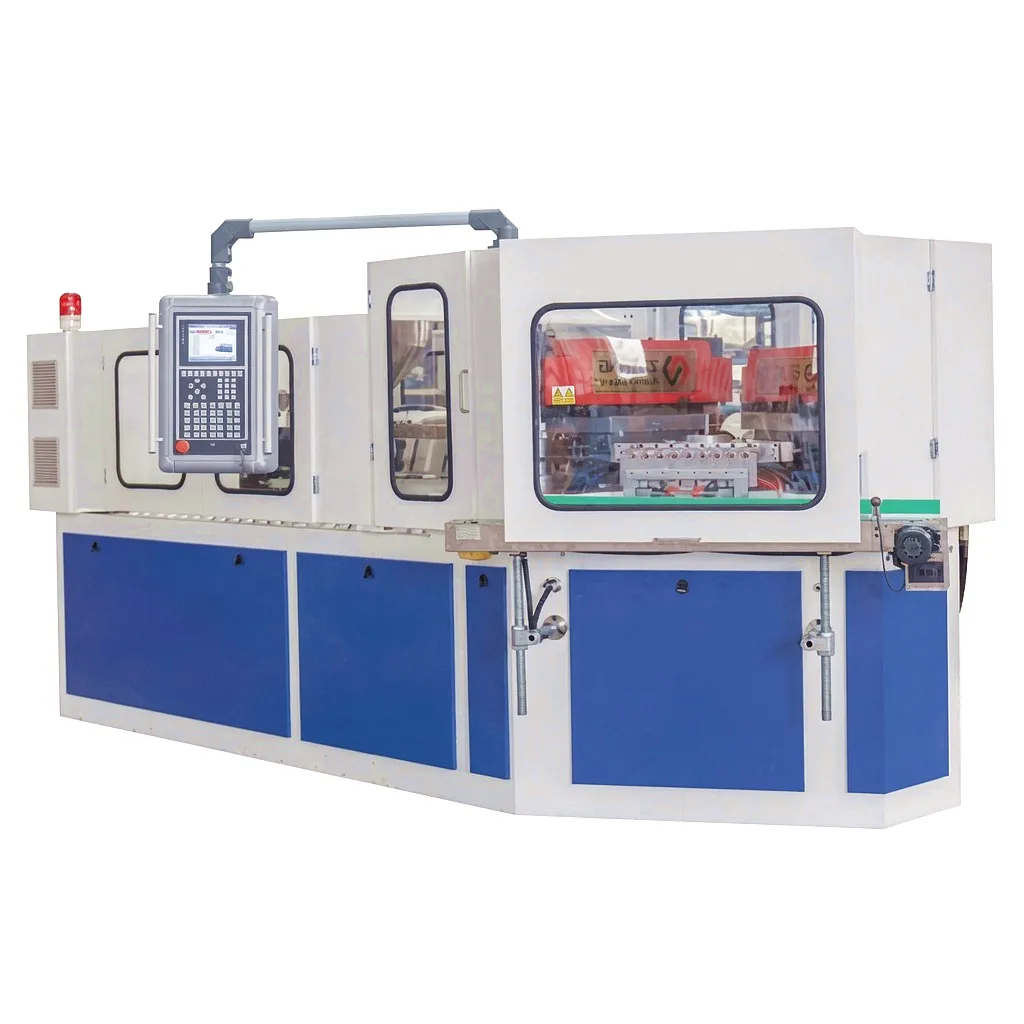
An 80-tonne clamping force three-station IBM platform designed for high-cavitation pharmaceutical and personal care tooling. Features servo-hydraulic drive for reduced energy consumption and simple integration with site maintenance management systems. FAT-validated blow moulding machine maintenance checklist baselines supplied with every unit to eliminate guesswork at the first service interval.
A 110-tonne heavy-duty IBM platform for large-format containers and high-cavitation industrial production runs. The ZQ110’s modular hydraulic manifold architecture simplifies the monthly maintenance service significantly — quick-release manifold blocks reduce component-swap time during scheduled inspections, enabling a smaller on-site maintenance team to complete the full monthly checklist within a single shift changeover window.
Customer Success Story: Sheffield Pharmaceutical Packaging Facility Reduces Unplanned Downtime by 31% in 12 Months
“The blow moulding machine maintenance checklist Ever Power produced for our Sheffield lines is the most practical document our maintenance department has received from any equipment supplier. It is specific to our machine configurations, written in plain engineering language, and has genuinely changed how our technicians approach the start of every production shift.”
“We ordered ZQ80 core rods and seal kits and had them on-site within 36 hours. That supply chain response is what makes Ever Power’s maintenance support viable for a two-shift pharmaceutical operation — waiting a week for parts from an overseas supplier is simply not compatible with a clinical supply commitment.”
“We had persistent wall thickness variation on one cavity that three different technicians had failed to diagnose. Ever Power’s application engineer identified a worn blow station index pin during a systematic checklist-guided inspection in under two hours. The repair cost £140. The defect had been generating scrap and customer returns worth considerably more than that every single week.”
Frequently Asked Questions: IBM Machine Maintenance in UK Manufacturing
Content prepared for isbm-equipment.com | UK Market | Ever Power Industrial Equipment | [email protected] | edit by gzl