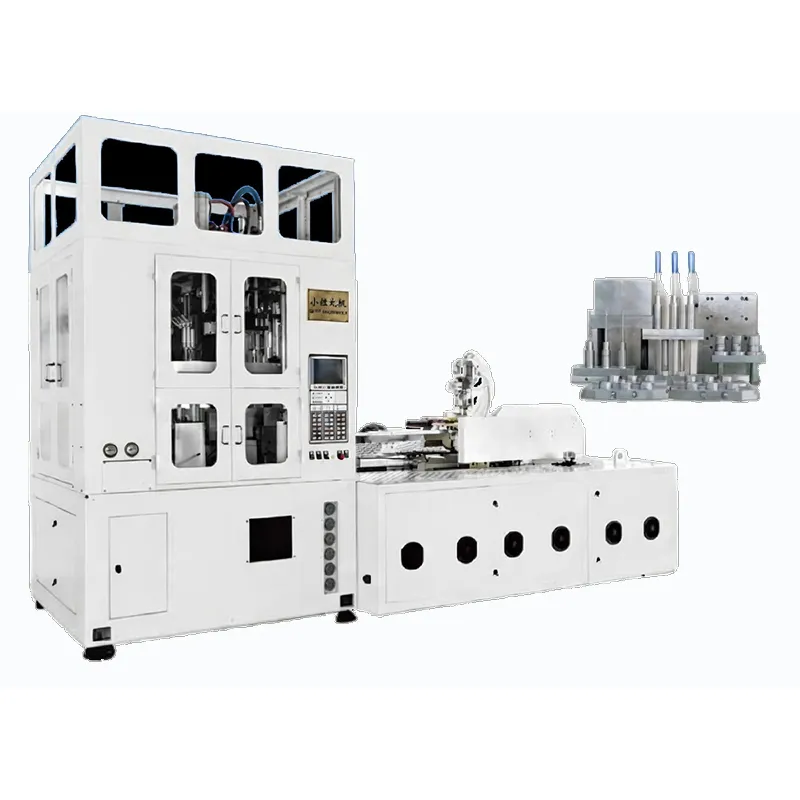
 The cosmetic packaging sector has never faced more pressure to deliver on multiple fronts simultaneously. Premium beauty brands expect their bottles and jars to look as though they were hand-crafted from optical crystal, yet production teams need those same containers delivered at throughput rates that keep shelf prices commercially viable. Sustainability managers are demanding thinner walls and lighter packaging without sacrificing structural integrity, while procurement directors scrutinise energy consumption data as part of wider carbon-reduction commitments. Against this backdrop, the single-stage ISBM machine arrives not as a marginal improvement over existing technology but as a categorically different solution — one that integrates injection moulding, thermal conditioning, and stretch blow moulding into a single uninterrupted thermal cycle. The commercial consequences of that integration cascade through every measurable aspect of production: material yield, energy consumption, container clarity, dimensional consistency, and mould changeover flexibility. This article examines, in concrete technical and commercial terms, why single-stage injection stretch blow moulding has become the technology of choice for forward-thinking cosmetic packaging manufacturers across the United Kingdom and the markets they serve globally.
Talk to Our Engineers
Discuss your container geometry, output targets, resin grade, and timeline. Our applications team responds within one working day.
What Is a Single-Stage ISBM Machine?
Injection Stretch Blow Moulding — Core Concepts Explained
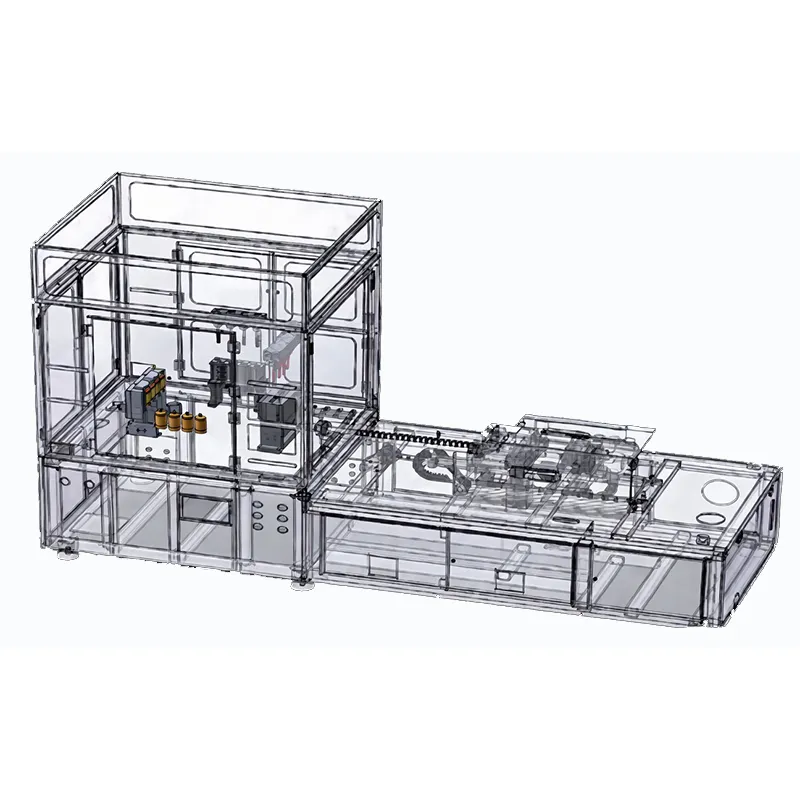
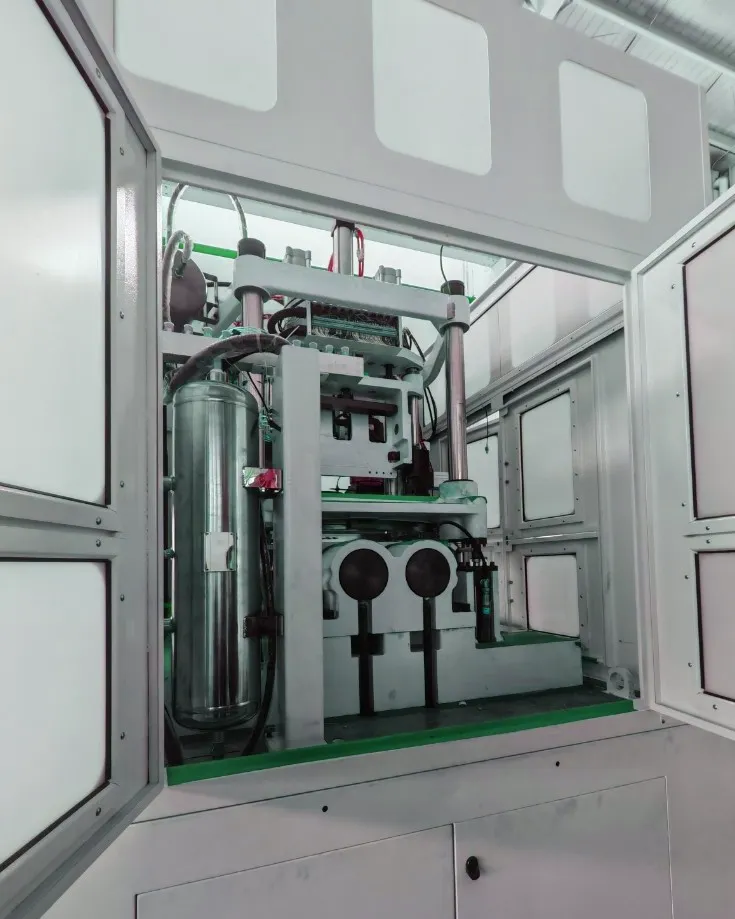
ISBM stands for Injection Stretch Blow Moulding. In the single-stage variant — widely referred to as the one-step process — a single integrated machine performs the complete production sequence without any intermediate handling or storage of preforms. Plastic resin is injected into a cavity to form a preform, the preform is conditioned to an optimised blowing temperature profile while still secured on the machine’s rotating platen, and it is then simultaneously stretch-blown into its final container shape using a precision servo-driven stretch rod and high-pressure air. The whole sequence typically completes in under 20 seconds per cycle depending on container volume and wall specification. Crucially, because the preform never fully cools between injection and blow moulding, the molecular orientation achieved in the finished container is consistently more uniform than what two-stage reheat-blow processes can reliably deliver at equivalent production speeds.
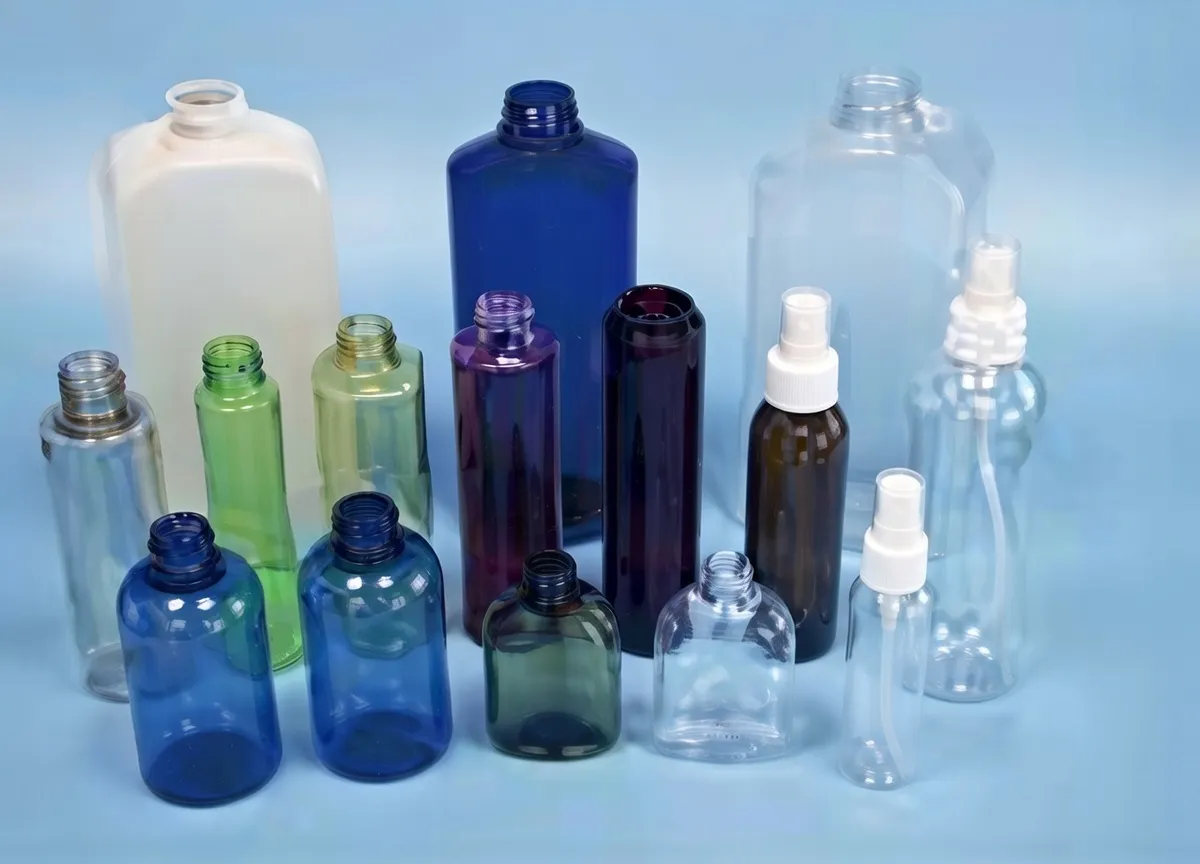
For cosmetic packaging specifically, this matters enormously. Bottles holding luxury serums, vitamin C emulsions, high-end body oils, and premium fragrances are not evaluated purely on functional grounds — they are aesthetic objects. Consumers and brand managers alike inspect them for clarity, for the evenness of tinted colourways, for the way light moves through a shoulder or catches on a base profile. Single-stage ISBM machines produce containers with glass-like transparency and wall consistency that is genuinely difficult to replicate in two-stage systems, particularly when working with PET at higher intrinsic viscosity grades, or when running PETG for applications where chemical resistance and fine-detail surface embossing are both requirements.
The distinction from competing technologies is not merely technical — it is commercial. A UK contract cosmetic manufacturer operating a single-stage ISBM line can offer brand clients container clarity, dimensional precision, and design flexibility that positions them meaningfully above commodity packaging suppliers. In an industry where packaging differentiation is a genuine sales driver at retail, that capability advantage translates directly into the ability to win and retain premium accounts.
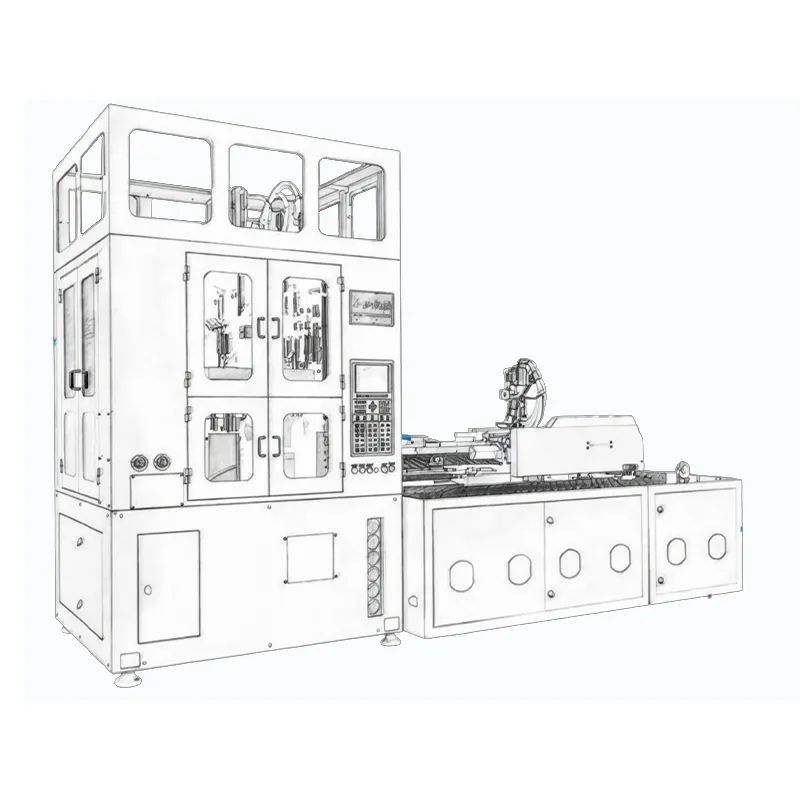
Three Integrated Stages
Resin plasticised → preform formed
Thermal profile optimised for blowing
Biaxial orientation → final container
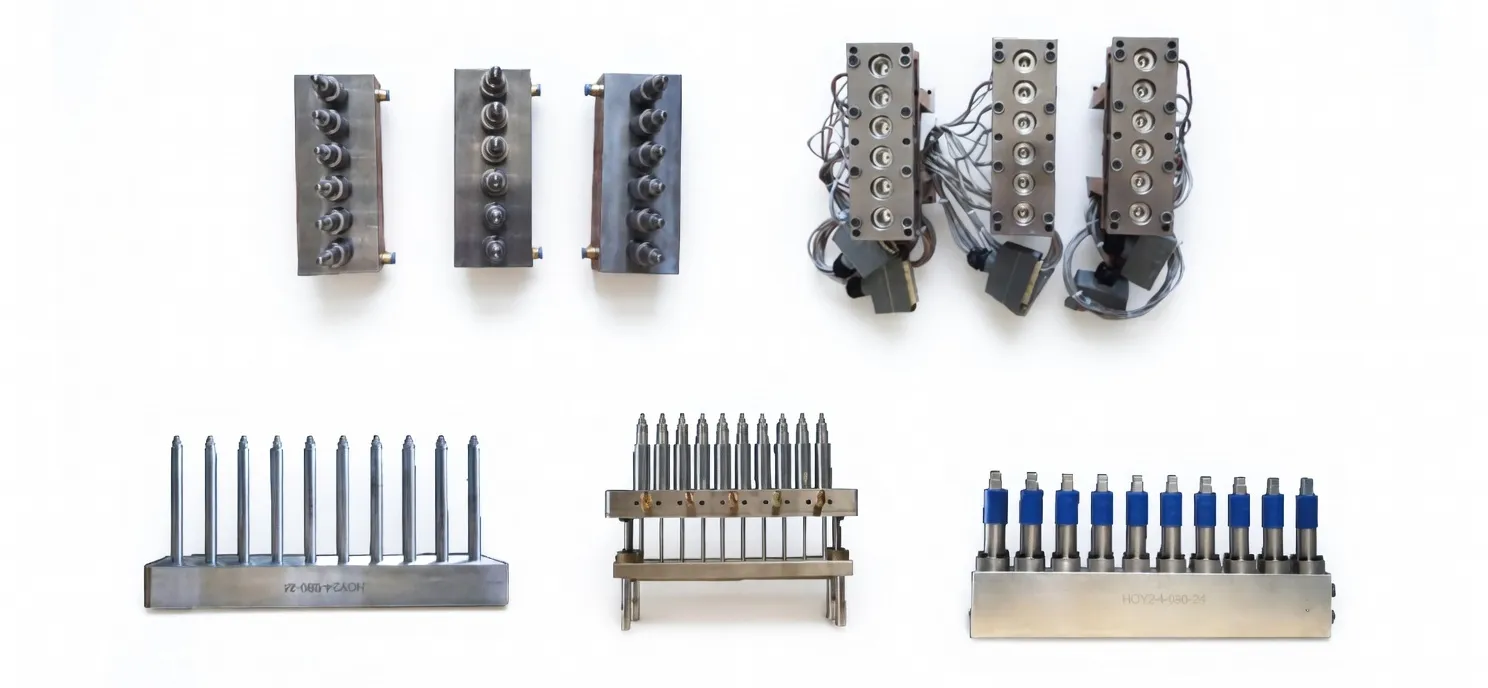
The Engineering Behind Single-Stage ISBM
A precise, stage-by-stage examination of the injection stretch blow moulding process
Stage 1 — Injection
Precisely metered PET or PP resin is plasticised in the injection unit and injected into the preform cavity under controlled melt pressure. Gate design and melt temperature are optimised for the specific resin grade to prevent crystallisation in the gate area, which would compromise optical clarity in the finished container. The injection station on modern single-stage ISBM machines uses hot-runner manifolds with individual zone control to maintain melt uniformity across all cavities simultaneously — a technical requirement that becomes increasingly critical as cavity counts rise and preform volume decreases. Any temperature deviation at this stage propagates through the entire process, which is why precision melt temperature control is a non-negotiable feature of production-grade equipment.
Stage 2 — Thermal Conditioning
The preform — still carried on the rotating platen — moves to the conditioning station. Segmented ceramic heaters create a deliberately non-uniform temperature profile across the preform wall, applying higher heat to areas that require greater stretching and maintaining lower temperatures at the neck and gate zones. This differential conditioning is what allows single-stage ISBM machines to produce the asymmetric geometries — shoulder-heavy cosmetic flacons, oval cross-sections, flat bottles with integral decoration areas — that are impossible to achieve reliably through simple reheat-blow methods. The precision of this temperature mapping has a direct, measurable effect on wall thickness distribution in the finished container and on the optical uniformity of any tinting or colouration in the resin.
Stage 3 — Stretch Blow Moulding
The conditioned preform transfers to the blow station, where a servo-driven stretch rod descends axially while high-pressure blowing air — typically 25–40 bar — inflates the preform radially against chilled mould cavity walls. The biaxial orientation induced by simultaneous axial stretching and radial inflation aligns polymer chains in two dimensions, yielding a finished container with significantly higher mechanical strength per unit weight than an unstretched equivalent. Mould cavity surfaces are precision-machined to mirror finishes, producing the high-gloss surface quality that cosmetic bottles demand without secondary polishing operations. The chilled mould walls rapidly freeze the container shape, locking in the molecular orientation and dimensional accuracy that define the quality standard.
Why Thermal Continuity Is the Critical Differentiator
The single most important advantage of the one-step ISBM process is that the preform retains its latent heat from injection through to blowing. This means the energy input required to reach blowing temperature is dramatically lower than in two-stage systems, where a fully cooled preform must be reheated from ambient temperature using infrared lamps — a process that introduces variability and consumes significant electrical energy.
Independent energy audits on comparable production volumes consistently find that single-stage ISBM systems consume 18–25% less electrical energy per thousand containers than equivalent two-stage reheat-blow lines. For a UK manufacturing facility running three shifts per day, that differential translates directly into operating cost reductions that are visible on the profit and loss account within the first production quarter — a commercially tangible outcome, not just a theoretical efficiency claim.
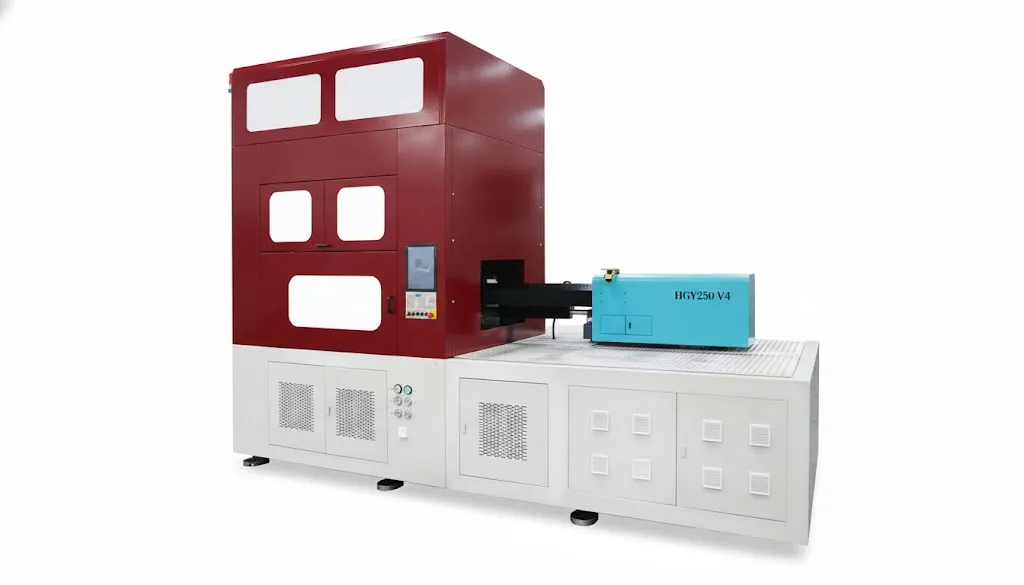
Core Technical Advantages of Single-Stage ISBM
Six reasons why leading cosmetic packaging manufacturers choose one-step injection stretch blow moulding
Superior Optical Clarity
Because the preform is blown while still thermally active from injection, the stress concentrations that cause haze in reheated preforms simply do not form to the same extent. The result is a container with light-transmission values typically 3–5 percentage points higher than two-stage equivalents made from the same resin batch. For premium fragrance bottles, vitamin serums, and tinted beauty oils, that clarity differential is commercially significant — it is visible to consumers at point of sale in retail environments where lighting quality varies considerably from one retailer to another.
Reduced Energy Consumption
Eliminating the preform reheat phase typically reduces total energy consumption by 18–25% per thousand containers produced. With UK industrial electricity prices having remained elevated above 20p/kWh in recent years, the per-unit energy saving has a direct and quantifiable impact on production margins. Manufacturers running multi-cavity single-stage ISBM lines at full capacity can realistically achieve energy savings in excess of £40,000 annually compared to equivalent two-stage operations at the same output volume — a material contribution to operating profit on a standalone production line.
Compact Production Footprint
A single-stage ISBM machine occupies roughly 40–60% of the floor space required for a separate injection moulding machine and reheat-blow unit combination at equivalent output capacity. For UK manufacturers operating in older industrial estates in cities like Birmingham, Coventry, or Leeds — where unit sizes are typically measured in hundreds rather than thousands of square metres — this footprint advantage can be the deciding factor in whether a production expansion is financially viable without acquiring additional leasehold space at the prevailing commercial property rates.
Consistent Wall Thickness
In cosmetic packaging, inconsistent wall thickness causes optical distortion — the kind of visual aberration that a consumer perceives as poor quality even without being able to identify the technical root cause. Single-stage ISBM machines routinely achieve wall thickness variation below ±0.05 mm across the container body on stable, well-tuned processes. This consistency is achievable because the relationship between preform geometry and blowing temperature is established at the time of preform manufacture rather than managed retrospectively during a separate blowing operation, resulting in predictable structural performance under drop, compression, and stacking tests.
Wide Design Flexibility
Wide-mouth jars, oval bottles, asymmetric flacons, and containers with integral decoration panels can all be produced on a properly configured single-stage ISBM machine. Design changes are managed primarily at the mould and preform design stage, giving product development teams a relatively short validation cycle from new concept to approved production sample. Ever Power provides dedicated design support for brands working through this phase, with in-house mould flow simulation capability to de-risk container geometry decisions before tooling investment is committed — a practical service that reduces costly late-stage redesign iterations.
Lower Scrap & Waste Rates
Because the single-stage process eliminates the handling, conveying, and reloading of loose preforms, the incidence of contamination-related rejects is substantially lower than in two-stage lines. There are no dropped preforms, no static-charge adhesion problems in pneumatic conveying systems, and no moisture pickup during ambient storage between injection and blowing. Scrap rates below 0.5% are routinely achievable on stable single-stage ISBM lines, compared to the 1.5–3% scrap rates common in two-stage operations processing the same cosmetic-grade PET, with meaningful downstream savings in raw material costs and waste disposal charges.
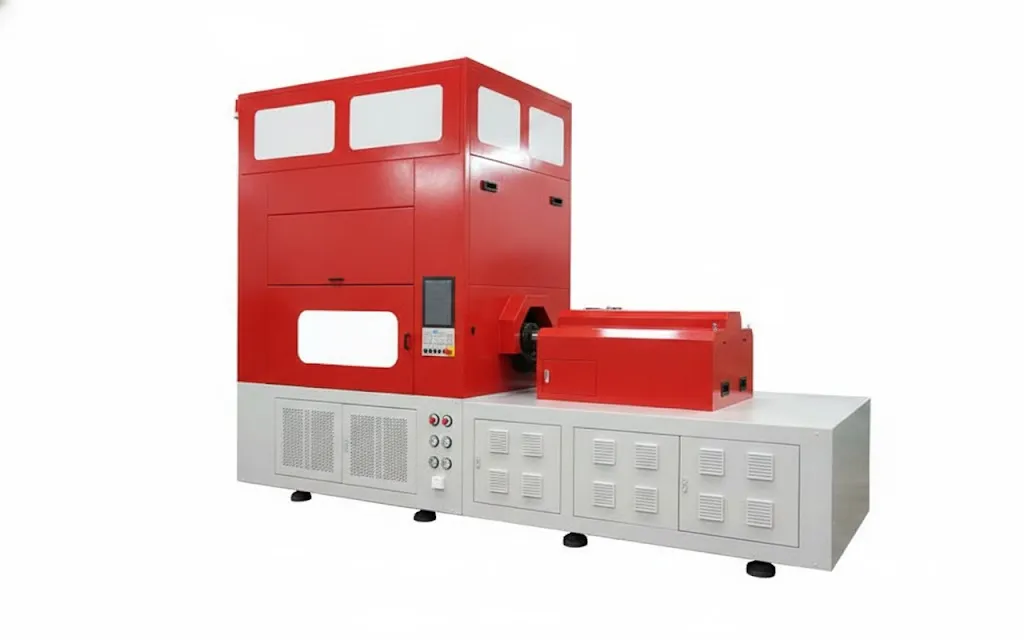
Technical Performance Parameters
Representative specification data for the Ever Power ISBM machine series — indicative values; confirm exact specification at quotation stage
| Parameter | HGY100 Series | HGY200 Series | HGY250 Series |
|---|---|---|---|
| Number of Cavities | 1 – 4 | 2 – 6 | 4 – 8 |
| Container Volume | 5 mL – 500 mL | 50 mL – 1,500 mL | 100 mL – 3,000 mL |
| Cycle Time (s) | 8 – 16 | 12 – 22 | 15 – 28 |
| Blow Pressure (bar) | 25 – 35 | 28 – 40 | 30 – 40 |
| Compatible Materials | PET, PP, PETG | PET, PP, PETG, rPET | PET, PP, PETG, rPET, bio-PET |
| Clamping Force (kN) | 600 – 1,000 | 1,200 – 1,800 | 2,000 – 2,500 |
| Wall Thickness Tolerance | ±0.05 mm | ±0.05 mm | ±0.04 mm |
| Drive System | Servo-hydraulic | Full servo-electric | Full servo-electric |
| Installed Power (kW) | 18 – 35 | 40 – 75 | 75 – 120 |
| Neck Finish Range (mm) | 18 – 38 | 18 – 63 | 18 – 100 |
| Control System | PLC + HMI touchscreen | PLC + 15″ HMI + remote diagnostic | Advanced PLC + 21″ HMI + Industry 4.0 interface |
| Stretch Rod Drive | Pneumatic | Servo | Servo (independent per cavity) |
Cosmetic Packaging Application Scenarios
Where single-stage injection stretch blow moulding delivers measurable competitive advantage
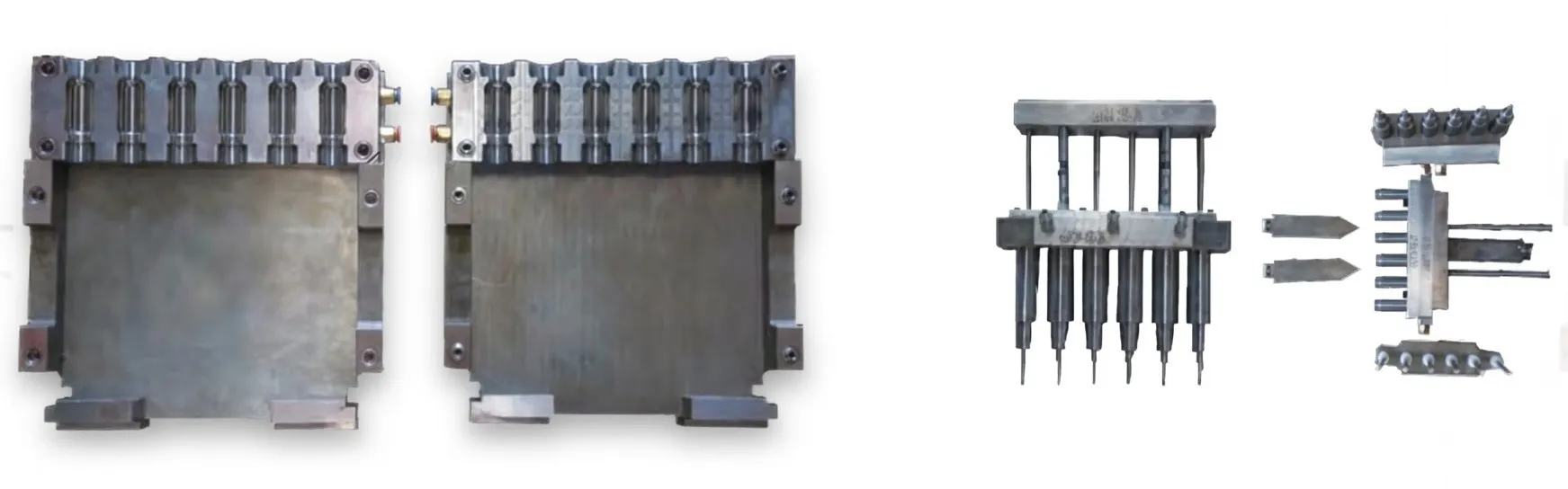
Skincare & Serum Bottles
Premium skincare brands — particularly those marketed through UK department store retail, independent beauty retailers, and direct-to-consumer subscription models — require containers where the packaging quality physically reflects the product’s premium market positioning. Single-stage ISBM machines excel at producing the thin-walled, glass-adjacent PET or PETG bottles used for vitamin C serums, hyaluronic acid treatments, facial oils, and retinol formulations. The consistent wall thickness achievable on ISBM lines means that even at 0.3 mm wall sections, the container feels satisfyingly substantial in the hand — a tactile cue that consumers associate with quality, independently of product performance.
Fragrance Flacons & Perfume Bottles
The fragrance sector demands bottles where optical quality rivals glass, and where complex geometric forms — tall cylindrical flacons, wide-shouldered bottles, designer asymmetric shapes — can be replicated across production runs of tens of thousands. Single-stage ISBM machines, particularly when configured with high-precision servo-driven stretch rods and temperature-zoned conditioning stations, achieve the dimensional precision that fragrance brands require for tight-fitting pump and atomiser assemblies. Cocked-neck defects and ovality deviations that plague less capable equipment are effectively eliminated through the inherent process stability of the single-stage approach, reducing assembly-line rejects at the filling and capping operations downstream.
Shampoo, Conditioner & Body Care
High-volume personal care packaging — shampoo and conditioner bottles in the 250 mL to 500 mL range, body lotion dispensers, and liquid soap pumps — benefits from the efficiency of multi-cavity single-stage ISBM production. An 8-cavity ISBM machine running a 20-second cycle can output over 1,400 containers per hour, with each bottle produced to the dimensional consistency that enables reliable automated capping and labelling downstream. PP grades are frequently specified for these applications given the chemical compatibility requirements of high-pH personal care formulations, and the transition from PET to PP on a properly configured single-stage ISBM machine can be executed within a standard scheduled changeover window.
Nutraceutical & Wellness Packaging
The UK nutraceuticals market — encompassing food supplements, sports nutrition, and functional wellness products sold through pharmacy chains and health food retailers — increasingly uses ISBM containers that bridge the gap between cosmetic aesthetics and functional packaging requirements. Wide-mouth PET jars produced on ISBM machines provide excellent UV barrier properties when formulated with appropriate UV-absorbing additives in the resin, protecting light-sensitive ingredients such as omega-3 oils, certain probiotic cultures, and vitamin complexes from photodegradation during retail display and consumer storage. The closure tolerances achievable on ISBM neck finishes are also compatible with child-resistant cap systems required by UK regulations for certain supplement categories.
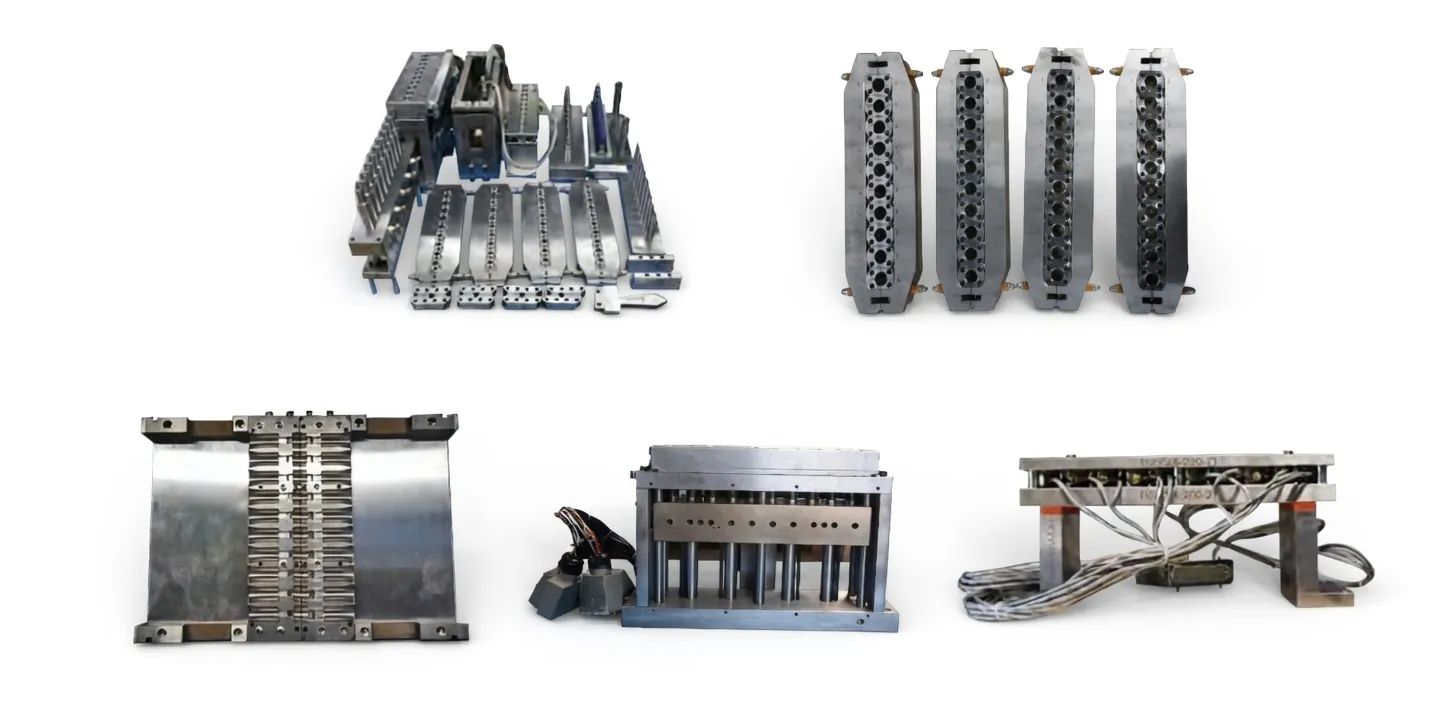
The UK Cosmetic Packaging Manufacturing Landscape
Why British manufacturers are accelerating single-stage ISBM adoption
 The United Kingdom’s cosmetic and personal care manufacturing sector generates approximately £9 billion annually and ranks consistently among the top five in Europe by output value. Production is geographically concentrated around several established manufacturing corridors: the West Midlands — anchored by Birmingham and Coventry — has a deep tradition in precision plastics and packaging machinery, with a skilled engineering workforce and dense supply chain infrastructure. The Yorkshire corridor, stretching from Sheffield through Leeds, houses a substantial concentration of personal care contract manufacturers and specialist packaging converters who have historically relied on imports for their container supply. The M62 corridor connecting Greater Manchester with Hull provides natural logistics infrastructure for both manufacturing and export.
Post-Brexit procurement strategy has shifted dynamics considerably for UK packaging manufacturers. Supply chain resilience has moved to board-level priority, and investment in domestic ISBM production capability has accelerated as manufacturers seek to reduce dependency on imported containers subject to extended lead times and currency exposure. Producers across the West Midlands, Yorkshire, and the North West are increasingly evaluating single-stage ISBM machines as a route to bringing container manufacturing in-house, shortening new product launch timelines, and building the quality differentiation that commands premium contract pricing from brand customers.
📍 West Midlands Hub
Birmingham, Coventry, and Wolverhampton form the UK’s densest cluster of plastics packaging manufacturers. Access to skilled toolmaking trades and proximity to major motorway freight networks make single-stage ISBM investment particularly viable for producers in this region, where the economics of in-house container production can be modelled with high confidence against known logistics costs.
📍 Yorkshire & Sheffield
Sheffield’s advanced manufacturing heritage in precision engineering and materials translates naturally into ISBM tooling and mould design capability. Leeds-based contract packagers increasingly specify single-stage ISBM for high-clarity cosmetic containers serving major national retail chains and growing direct-to-consumer beauty brands headquartered in the region.
📍 North West & M62 Corridor
Greater Manchester’s cosmetic manufacturing base encompasses several of the UK’s largest private-label beauty producers. Consumer preference shifts toward premium-looking containers at accessible price points have made single-stage ISBM technology economically compelling for this market segment, where the clarity and design flexibility of ISBM containers directly support brand differentiation on crowded retail shelves.
Ever Power: Precision ISBM Machines Built for Demanding Markets
Ever Power operates a fully integrated manufacturing facility where single-stage ISBM machines are engineered from fundamental principles to meet the exacting demands of cosmetic packaging production. The factory encompasses a precision CNC machining centre capable of working to ±0.01 mm tolerances on critical motion components, a comprehensive quality control laboratory, an in-house mould design and simulation department with flow analysis capability, and a dedicated customer test facility where production samples can be fully evaluated before equipment commissioning is signed off. This infrastructure exists not as a marketing claim but as the operational foundation that allows Ever Power to make and keep specific, measurable performance guarantees on every machine it supplies.
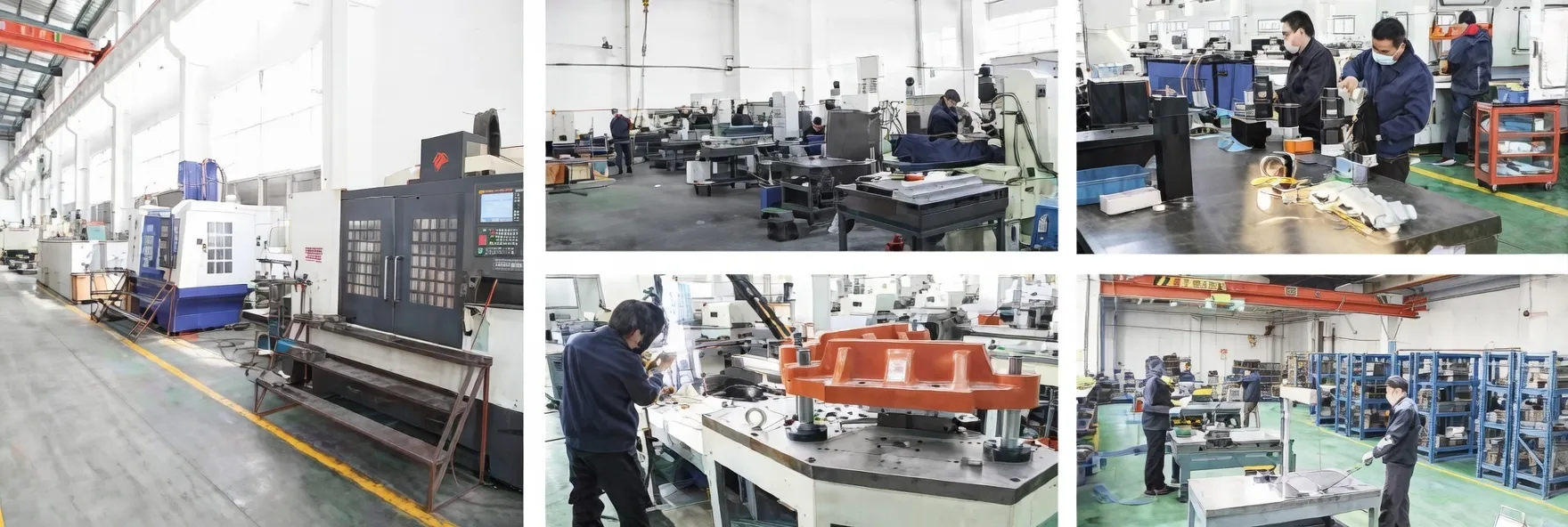
Customisation at Ever Power is treated as a core engineering competency rather than a premium add-on. Whether a customer needs a modified platen configuration for a non-standard bottle geometry, a cavity count outside the standard series range, integration with a downstream vision inspection system and automated packing line, or electrical specification matched to a specific site supply infrastructure, Ever Power’s applications engineering team works through the full specification in close collaboration with the customer’s production and quality functions. CE-marked electrical schematics, UK-compatible safety documentation packages, and comprehensive operator training programmes are delivered as standard with every machine dispatched.
🔩 Precision Machining
CNC machining to ±0.01 mm on critical motion components; hardened and ground steel platens; precision-lapped mould contact surfaces delivering high-gloss cosmetic container finishes without secondary processing.
🧪 In-House Testing
Full production trials with customer resins and container designs before factory acceptance; wall thickness measurement, clarity spectrophotometry, drop test, and pressure leak verification performed to agreed acceptance criteria.
⚙️ Full Customisation
Custom cavity counts, non-standard container geometries, downstream integration interfaces, adapted electrical supply specifications, and modified platen configurations — all available within standard engineering lead times without premium surcharges.
🌍 UK-Ready Logistics
Established freight partnerships with UK import agents; machines shipped with full CE certification and customs documentation; European spare parts inventory with expedited dispatch for production-critical components.
Customer Success Story
How a Birmingham contract manufacturer transformed its production performance with Ever Power
📍 Birmingham, West Midlands
Premium Skincare Contract Manufacturing
Annual container volume: 6.8 million units · Product range: 18 mL – 340 mL skincare and body oil bottles · Resins: PET, PETG, rPET
The Challenge
A well-established cosmetics contract manufacturer based in Birmingham’s Jewellery Quarter — with a client portfolio spanning several mid-tier British skincare and body care brands sold through national retail chains — was operating a two-stage PET production line installed in 2011. By 2023, the ageing equipment was generating scrap rates of 2.4%, consuming disproportionate maintenance budget, and unable to process the PETG grades that newer client contracts now required. The company’s operations director had evaluated multiple machine suppliers but found that most standard offerings required substantial workshop modifications to accommodate the site’s older three-phase electrical supply infrastructure — modifications that threatened to inflate the total cost of ownership well beyond initial capital projections.
The Ever Power Solution
Ever Power’s applications team conducted a detailed site survey and production audit before proposing a 4-cavity HGY200 series single-stage ISBM machine configured for PET, PETG, and rPET processing. The electrical specification was adapted to match the Birmingham site’s supply parameters without additional transformer investment. A bespoke conditioning station temperature profile was developed and validated on Ever Power’s test facility using resin samples and preform dimensions representative of the client’s core container range. Factory acceptance testing completed in seven working days, with full production documentation, CE certification, and an on-site operator training programme delivered during commissioning. Spare parts inventory was pre-positioned at a European distribution point to guarantee next-business-day delivery on production-critical items.
Measured Outcomes — 12 Months Post-Commissioning
0.38%
Scrap Rate
(down from 2.4%)
22%
Energy Reduction
vs. previous line
+31%
Throughput Increase
per operator-hour
3 new
Client Contracts Won
citing PETG capability
What UK Manufacturers Say About Ever Power
“We had run two-stage equipment for over a decade and assumed the clarity difference between single-stage ISBM and reheat-blow was marginal in commercial practice. The first production run on the Ever Power machine genuinely changed that assumption. The container clarity on PETG was something our brand clients had not seen from a UK contract manufacturer before, and it directly helped us win two new premium skincare accounts within six months of commissioning.”
— Operations Director, Premium Skincare Contract Manufacturer, Birmingham
“The customisation support from Ever Power was a genuine differentiator compared to other suppliers we assessed. We had non-standard neck finish requirements for a proprietary pump assembly, and their engineering team returned validated tooling designs and conditioning profiles inside three weeks. We have not recorded a single dimensional reject on that container since full production started. Their aftersales response time has also been consistently faster than our experience with European machine suppliers.”
— Head of Packaging Engineering, Personal Care Manufacturer, Sheffield
“We specified the HGY250 series specifically for its rPET compatibility because two of our largest retail customers now include packaging sustainability as a procurement criterion. The machine handles 30% rPET blends without any measurable change in cycle time or finished container quality. Ever Power’s documentation package was comprehensive enough that our sustainability team could extract accurate energy and material data for our annual environmental report without any additional instrumentation investment.”
— Production Manager, Cosmetic Packaging Converter, Manchester
Frequently Asked Questions
Real questions from UK cosmetic packaging manufacturers and procurement teams
What is the typical price or cost of a single-stage ISBM machine suitable for cosmetic bottle production in the UK, and how can I get an accurate quote?
Pricing for single-stage ISBM machines varies considerably depending on cavity count, container volume range, drive system specification, and the degree of customisation required. Entry-level 2-cavity configurations suitable for small-to-medium cosmetic packaging runs typically begin from approximately USD 45,000–70,000 ex-works; 4–8 cavity production systems with full servo-electric drive, Industry 4.0 connectivity, and custom tooling packages can extend to USD 150,000–280,000. UK-specific landed costs will include import duties, freight, and installation. Contacting Ever Power directly at [email protected] is the most reliable route to an itemised landed-cost quotation specific to your container specifications and site requirements.
How exactly does a single-stage ISBM machine differ from a two-stage reheat blow moulding system when you need to produce high-clarity cosmetic containers at volume?
The critical difference is thermal history and process continuity. A single-stage ISBM machine moves from injection directly to conditioning and stretch blowing without the preform fully cooling — meaning the energy from injection is conserved through to the blow phase, molecular orientation in the finished container is more consistent, and stress-whitening defects on complex geometries are substantially reduced. Two-stage systems require a separate reheating pass that introduces variability, consumes significant additional electrical energy, and adds contamination risk through preform handling. The optical clarity advantage in single-stage ISBM containers is measurable and commercially visible, particularly on PETG and high-IV PET grades where the two-stage clarity disadvantage is most pronounced.
Which plastic materials can a single-stage ISBM machine process for UK cosmetic and personal care packaging, and which is best for premium beauty bottles?
Ever Power’s single-stage ISBM machines can process PET, PETG, PP, rPET, and bio-based PET grades. For premium beauty bottles where glass-like clarity and complex surface embossing are the priority, PETG is the preferred choice — it delivers superior optical performance to standard PET and tolerates the sharp radii in cosmetic bottle geometries without stress-whitening. PET is specified for mainstream skincare and fragrance applications where the combination of clarity, barrier performance, and recyclability under the UK’s PET stream is the deciding factor. PP is the right choice where high-pH or chemically active formulations require higher compatibility, or where hot-fill capability above 85°C is needed.
Where can a cosmetic packaging manufacturer based in Birmingham or Sheffield find a reliable ISBM machine supplier with proper UK aftersales support and fast parts delivery?
Ever Power supplies single-stage ISBM machines to manufacturers across Birmingham, Sheffield, Leeds, Manchester, and the broader UK market, with aftersales support delivered through remote diagnostic access built directly into the machine’s control system, a European spare parts inventory with expedited dispatch capability, and on-site service visits coordinated through established UK logistics infrastructure. The quotation process begins with a production requirements assessment — container specifications, annual volumes, resin grades, and downstream integration — followed by a fully itemised machine proposal typically within five working days. Reach the sales team at [email protected] to start the assessment.
How long does a mould changeover typically take on a single-stage ISBM machine when switching between different cosmetic bottle designs on the same production line?
On a well-designed single-stage ISBM machine, complete mould changeovers — replacing both preform tooling and blow moulds — typically take between 2 and 4 hours for a trained operator, compared to 4–8 hours on older or less ergonomically considered equipment. Ever Power incorporates quick-clamp mould mounting systems on its current machine series, and conditioning station temperature profiles for different container designs can be stored and recalled directly from the HMI touchscreen without manual re-entry. This profile recall capability reduces changeover time and essentially eliminates the operator error risk that can extend time-to-first-good-part after a change, making short-run and multi-SKU cosmetic production genuinely viable on ISBM equipment.
What production output rate can a cosmetic packaging business realistically expect from an 8-cavity single-stage ISBM machine running PET bottles at full production?
An 8-cavity single-stage ISBM machine processing cosmetic-grade PET at container volumes between 100 mL and 300 mL will typically achieve cycle times in the 18–24 second range at steady-state operation, delivering a net output of approximately 1,200–1,600 containers per hour. On a standard three-shift production day with allowances for planned maintenance and scheduled mould changeovers, an annual output of 7–9 million containers per machine is consistently achievable on well-utilised lines. Machine efficiency data from cosmetic packaging operations shows that single-stage ISBM systems maintain higher average OEE than two-stage lines primarily because inter-process handling losses and contamination-related rejects are structurally absent from the process.
When is the right time for a growing UK cosmetic packaging business to invest in a single-stage ISBM machine rather than continuing to buy containers from an external supplier?
The crossover point at which in-house ISBM production becomes financially superior to external procurement typically occurs somewhere between 2 and 5 million containers annually, depending on container specification and current procurement price. At those volumes, the fixed cost of machine depreciation, tooling, and direct operating labour is more than offset by the margin improvement from internalising the manufacturing step, the lead time reduction from producing to order rather than managing buffer stock, and the design flexibility that comes with controlling the mould specification in-house. Manufacturers experiencing quality variability from existing suppliers, or those needing rapid new-design sampling capability to respond to brand client requests, often reach the investment decision earlier than pure volume analysis would suggest — commercial responsiveness has a value that is harder to quantify but no less real than the direct cost comparison.
Ready to Upgrade Your Cosmetic Packaging Production Line?
Ever Power’s engineering team is ready to evaluate your production requirements and propose the optimal single-stage ISBM configuration for your cosmetic packaging application. UK enquiries welcome — detailed proposals delivered within five working days of receiving your brief.
edit by gzl