 The global demand for lightweight, high-clarity plastic containers has placed injection stretch blow moulding — universally known by the abbreviation ISBM — at the centre of modern packaging manufacturing strategy. Whether you are commissioning a new production line in Birmingham, upgrading ageing equipment in Sheffield, or entering the plastics packaging market for the very first time, understanding the fundamental difference between single-stage ISBM and two-stage ISBM can determine whether your capital investment delivers maximum efficiency, outstanding output quality, and a genuine return on investment. This is not simply a technical question — it is a strategic business decision that touches tooling costs, energy consumption, material waste, cycle times, and the flexibility of your entire container portfolio. The pages that follow cut through the complexity and deliver a precise, data-driven comparison built on real engineering practice and operational experience gathered across the UK and international packaging industry.
Response within 24 hours · UK-tailored solutions · [email protected]
What Is ISBM Technology — and Why Does the Process Choice Matter?
Understanding the fundamentals before choosing your production architecture
Injection stretch blow moulding is a polymer processing method that combines three distinct manufacturing operations into a seamless, coordinated production sequence: injection moulding of a preform, axial stretching of that preform using a mechanical rod, and radial blow moulding to achieve the final container shape. The result is a bottle, jar, or container with exceptional optical clarity, uniform wall thickness, and superior mechanical strength compared to products made by conventional extrusion blow moulding alone. The biaxial molecular orientation introduced by simultaneous stretching and blowing aligns polymer chains in two directions simultaneously, dramatically improving barrier properties, top-load performance, and resistance to environmental stress cracking. For materials such as PET, PP, and PC, the ISBM process unlocks mechanical properties that simpler forming methods simply cannot replicate — which is why ISBM machines have become standard capital equipment across the UK packaging sector from the smallest specialist converter to the largest FMCG contract packager.
What makes the decision between single-stage and two-stage ISBM so commercially significant is that each machine architecture embodies a fundamentally different manufacturing philosophy. One approach prioritises thermal efficiency and product quality by keeping the preform continuously warm throughout the complete production cycle; the other prioritises volume output and supply chain flexibility by entirely decoupling preform manufacture from final container forming. Both approaches are proven, legitimate, and widely deployed across sectors ranging from pharmaceutical packaging to food processing, personal care, and industrial chemical distribution. The right answer for your business depends on your specific production volumes, container geometry requirements, material processing needs, and capital investment strategy.
ISBM vs. Extrusion Blow Moulding
ISBM consistently delivers better optical clarity, tighter dimensional tolerances, and improved barrier performance compared to EBM — making it the preferred choice for premium UK packaging applications where container quality is a brand differentiator rather than a commodity specification.
UK Market Scale
The UK plastics packaging industry processes billions of PET and PP containers each year, with ISBM machines forming the technological backbone of production facilities from Manchester’s logistics corridor to the pharmaceutical manufacturing clusters of Nottingham, Leicester, and the East Midlands.
The Single-Stage ISBM Process: One Machine, One Heat Cycle, Complete Thermal Control
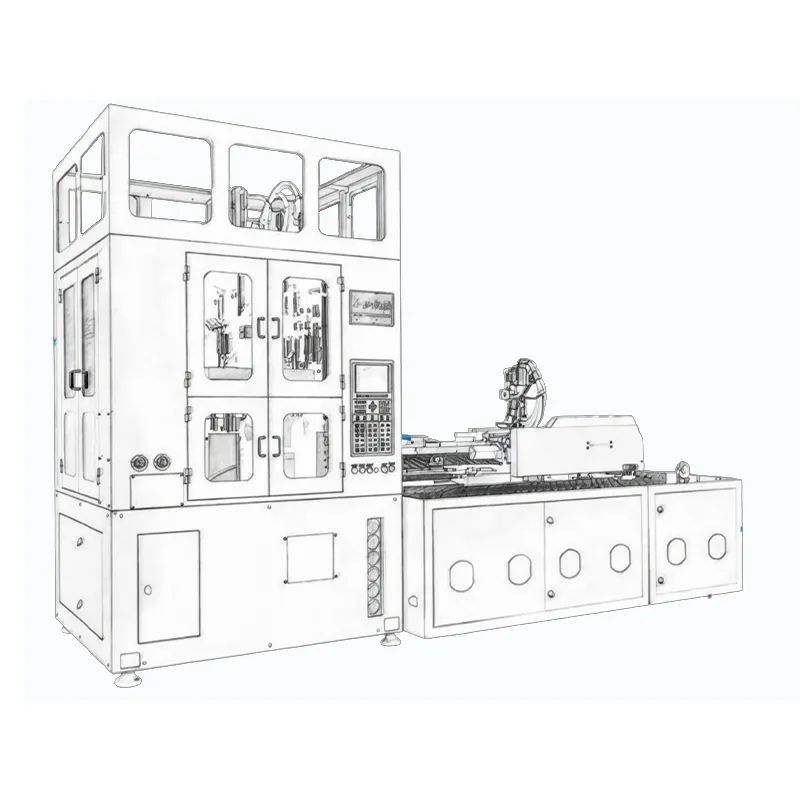 In a single-stage ISBM machine, the entire production sequence — from raw polymer granules to a finished, quality-inspected container — occurs within a single integrated system and, crucially, within a single thermal cycle. Plastic resin is injected into a preform cavity under pressures between 100 and 180 MPa, forming a thick-walled intermediate shape. That preform is then transferred — while still retaining residual heat from the injection stage — directly into the blow mould station, where it is simultaneously stretched axially by a mechanical rod and inflated radially by high-pressure air. No external reheating energy is required at any point in the process. This thermal efficiency is one of the most commercially compelling arguments for single-stage ISBM technology, particularly in an era of rising UK industrial energy tariffs above 28p per kWh and mounting ESG-driven manufacturing sustainability targets.
The single-stage approach is particularly well-suited for containers requiring close dimensional control at the neck finish, for wide-mouth jars, and for non-standard oval or rectangular cross-sections that challenge two-stage equipment. Cosmetic packaging manufacturers in London, pharmaceutical bottle producers in the East Midlands, and specialty food container suppliers across Yorkshire regularly specify single-stage ISBM machines precisely because this process inherently avoids the gate vestige marks and crystallisation-related haze that appear in two-stage systems when preforms are not reheated with absolute uniformity across the preform wall section.
Single-Stage ISBM — Production Sequence
Preform moulded
→
Residual heat kept
→
Biaxial orientation
→
Ejected & cooled
The Two-Stage ISBM Process: Decoupled Production for Maximum Volume Throughput
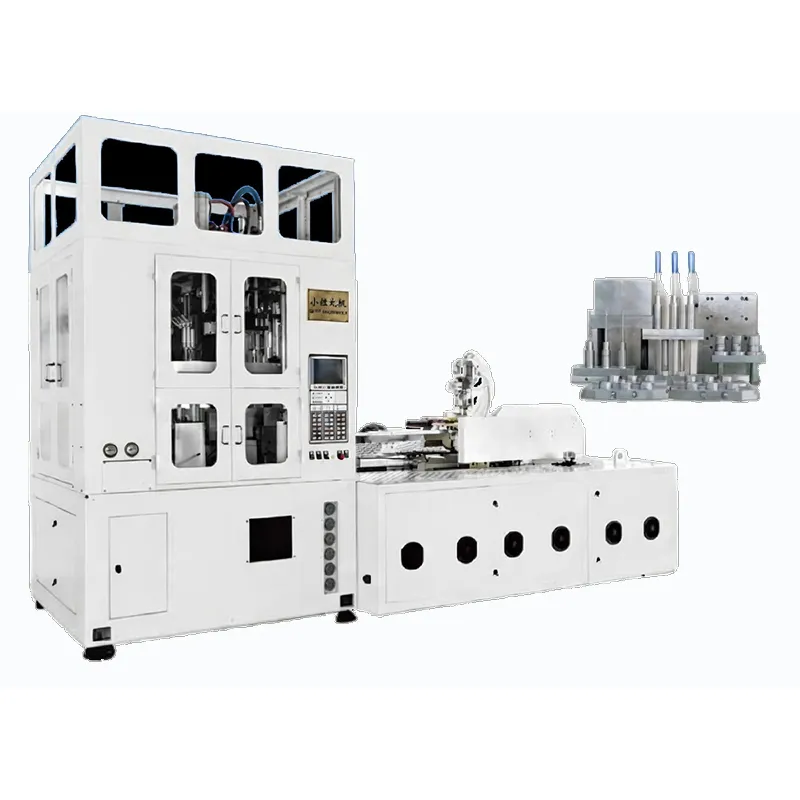 The two-stage ISBM process — frequently referred to as reheat stretch blow moulding — separates preform manufacture from final container forming into two entirely distinct operations. In stage one, preforms are produced on a dedicated injection moulding machine, then fully cooled to ambient temperature and stored on-site or transported to a separate facility. In stage two, those cooled preforms are fed into a reheat stretch blow machine, where infrared lamps raise them to the optimal processing temperature — typically 95–115°C for PET — before the stretch-blow cycle executes and the finished container is ejected.
This decoupling creates operational flexibility that single-stage systems cannot match at scale. Preforms can be manufactured at one centralised polymer processing plant in the East Midlands or West Yorkshire while bottle forming takes place at regional filling plants closer to end customers across Scotland, Wales, or the South West. For companies running very high annual volumes — such as major UK carbonated drink manufacturers or large private-label water suppliers — two-stage ISBM systems can deliver outputs exceeding 20,000 bottles per hour on a single multi-cavity machine, a throughput level that is architecturally beyond what any single-stage ISBM configuration can achieve.
Two-Stage ISBM — Production Sequence
Stage 1 machine
→
Inventory buffer
→
95–115°C for PET
→
High output rate
Single-Stage vs. Two-Stage ISBM: A Comprehensive Decision-Making Comparison
Key technical, operational, and commercial factors side by side
Choosing between single-stage ISBM and two-stage ISBM is rarely as simple as picking the machine with the lowest purchase price or the highest raw output figure. The decision demands a thorough evaluation of how each production architecture maps against your container designs, target volumes, operational infrastructure, and strategic objectives over a 10–15 year investment horizon. The comparison table below summarises the most commercially critical parameters across both process types, drawing on operational experience from packaging facilities across the UK manufacturing landscape. Use it as a structured starting point — an Ever Power applications consultant can build a bespoke analysis aligned to your precise production scenario.
| Comparison Factor | Single-Stage ISBM | Two-Stage ISBM |
|---|---|---|
| Process Stages | 1 machine, 1 heat cycle | 2 machines, 2 thermal stages |
| Output Rate | 500 – 6,000 bottles/hr | 2,000 – 80,000+ bottles/hr |
| Energy Efficiency | Higher ✓ | Lower (reheat energy overhead) |
| Optical Clarity | Superior | Very Good |
| Capital Investment | Lower initial outlay | Higher (2-machine system) |
| Container Shape Flexibility | Excellent — wide-mouth, oval | Primarily round standard profiles |
| Suitable Materials | PET, PP, PC, PETG, PLA | Primarily PET |
| Gate Mark / Aesthetics | Invisible / flush base | Small gate mark possible |
| Factory Floor Space | Compact — 1 machine | Large — 2-machine system |
| Ideal Annual Volume | Up to ~10M units/yr | 10M to 1B+ units/yr |
Working Principle of Single-Stage ISBM Machines
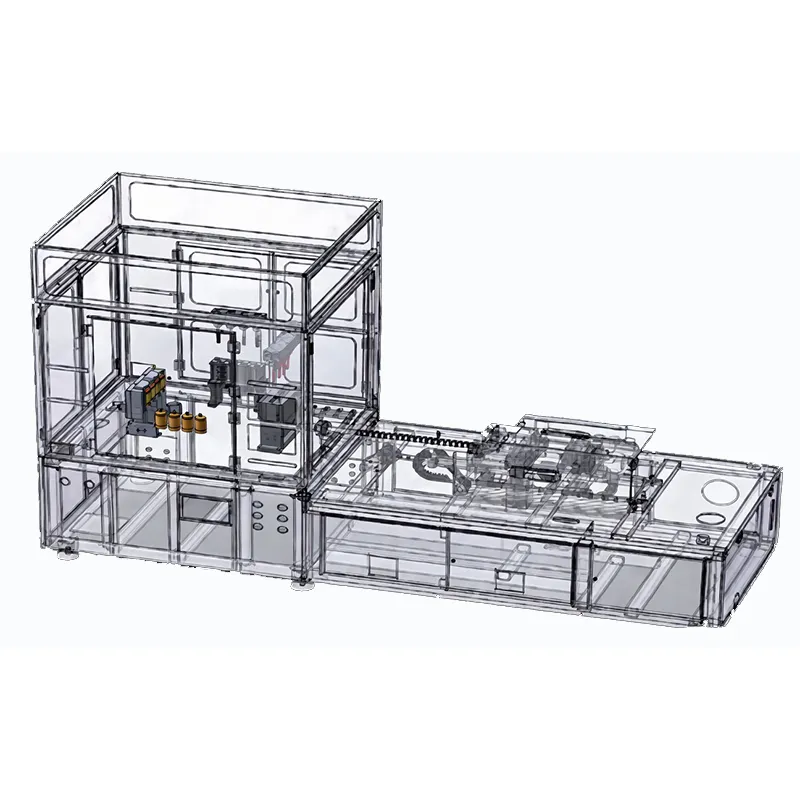
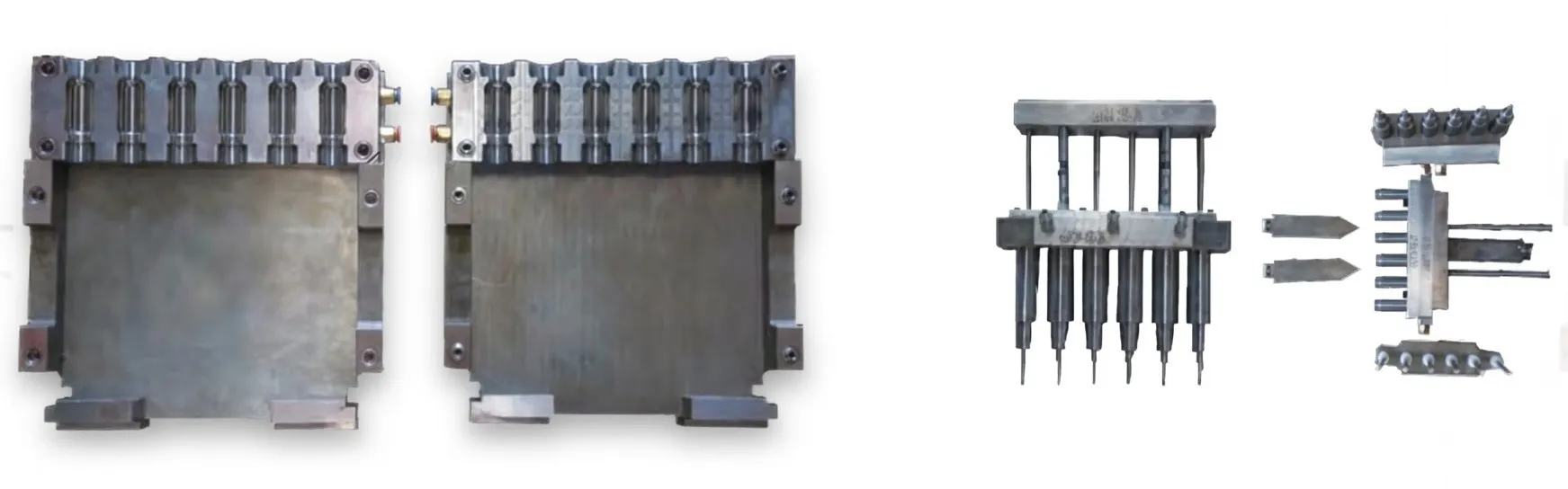
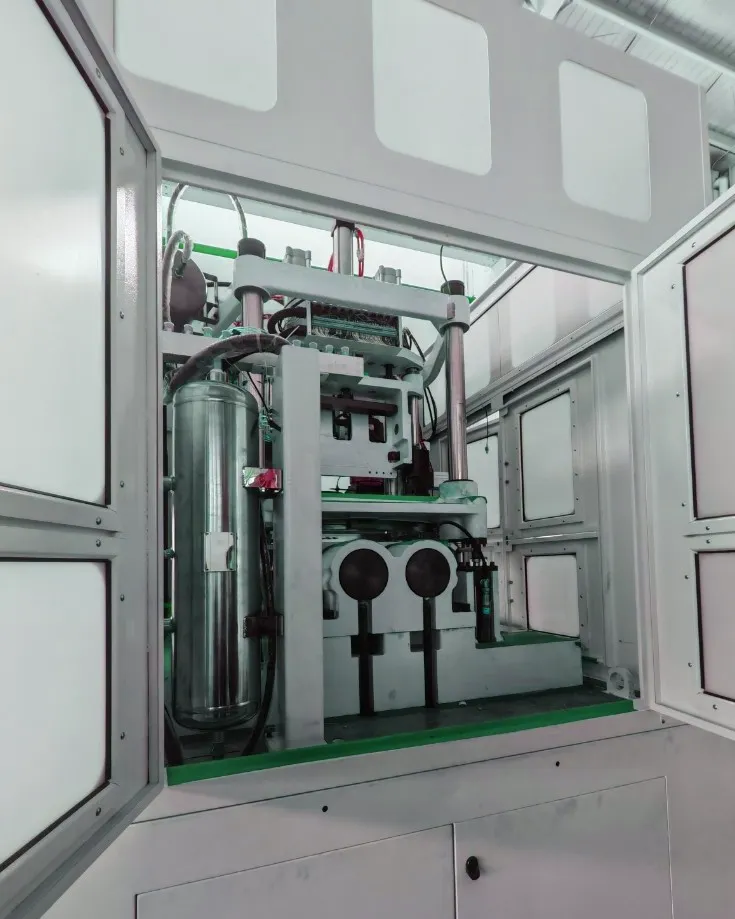
The mechanical heart of a single-stage ISBM machine consists of four coordinated functional zones operating in a precisely timed rotary or linear sequence. At the injection zone, polymer melt is delivered at pressures between 100 and 180 MPa through a hot runner manifold, filling the preform cavity in a single shot to form the neck thread, shoulder profile, and body wall geometry. The preform then passes to a conditioning station, where zone-by-zone temperature profiling ensures the preform wall reaches a uniform orientation temperature throughout its entire cross-section — a critical step that directly governs wall thickness distribution in the finished container. Proper conditioning is what separates a well-set single-stage ISBM machine from a poorly optimised one, and it is the area where Ever Power’s applications engineers invest the greatest process development effort during machine commissioning at UK customer facilities.
At the blow station, a precision-machined stretch rod descends into the conditioned preform at a controlled velocity of 0.8–1.5 m/s, delivering axial elongation of 2.5:1 to 3.5:1. Simultaneously, high-pressure air at 25–40 bar inflates the preform radially in two stages: a low-pressure pre-blow phase initiates lateral expansion, followed by a high-pressure final blow that forces the biaxially oriented material firmly against the chilled blow mould cavity walls. Contact with the cooled mould surface instantly freezes the oriented molecular structure into the final container geometry, permanently locking in all the mechanical performance benefits that stretch orientation delivers — including enhanced gas barrier performance, improved top-load strength, and superior impact resistance.
Core Materials in ISBM Production: Polymers, Machine Construction & Tooling
What the machine is built from, and what it processes
Material selection in ISBM spans two distinct categories: the polymer resins the machine processes to form containers, and the engineering materials used to construct the machine and its tooling. Both categories have profound implications for production quality, operational longevity, energy efficiency, and total maintenance cost over the machine’s service life. A thorough understanding of these material choices allows UK procurement teams to evaluate machine specifications more critically and ask the right technical questions when requesting quotations from ISBM equipment suppliers.
Technical Performance Specifications — Ever Power ISBM Machine Range
EP Series single-stage ISBM machines: indicative parameters across the product range
| Parameter | EP-1 | EP-2 | EP-4 | EP-6 |
|---|---|---|---|---|
| Cavities | 1 | 2 | 4 | 6 |
| Clamping Force (kN) | 250 | 450 | 800 | 1,600 |
| Max Shot Weight (g) | 10–25 | 25–60 | 60–120 | 120–200 |
| Container Capacity (ml) | 30–250 | 100–1,000 | 200–5,000 | 500–10,000 |
| Output (bottles/hr) | 500–1,200 | 1,200–2,500 | 2,500–4,500 | 4,000–6,000+ |
| Cycle Time (s) | 8–12 | 10–16 | 12–20 | 14–22 |
| Power Consumption (kW) | 8–15 | 15–28 | 28–50 | 45–80 |
| Injection Pressure (MPa) | 100 – 180 (all models) | |||
| Blow Pressure (bar) | 25 – 40 (process dependent) | |||
| Axial Stretch Ratio | 2.5:1 – 3.5:1 (adjustable) | |||
| Hoop Stretch Ratio | 2.5:1 – 4.5:1 (geometry dependent) | |||
| Platen Material | EN24 alloy steel (817M40) — 850 MPa+ tensile strength | |||
| Tooling Material Options | P20 tool steel / 7075-T6 aluminium (customer choice) | |||
| Hydraulic Pressure (bar) | 140 – 180 | |||
| Control System | Siemens PLC + 10″ HMI touchscreen (UKCA & CE marked) | |||
* All specifications are indicative. Actual values vary by polymer type, container geometry, and production conditions. Contact Ever Power for application-specific data.
Six Core Technical Advantages of Single-Stage ISBM Machines
Energy Efficiency & Lower Running Costs
By eliminating the energy-intensive preform reheating stage entirely, single-stage ISBM machines typically reduce energy consumption per unit by 20–35% compared to two-stage systems at equivalent output rates. For UK manufacturers facing electricity costs above 28p/kWh, this saving directly reduces per-unit production cost and measurably improves the facility’s carbon intensity metric — a figure increasingly scrutinised under supply chain sustainability programmes by major UK retailer groups and brand owners with net-zero commitments.
Superior Optical Clarity & Premium Aesthetics
Because the preform material in a single-stage ISBM machine is never permitted to fully cool and crystallise, resulting containers consistently achieve haze values below 1.5% — a quality standard particularly valued in cosmetics packaging, premium spirits bottling, and high-end food presentation. The complete absence of gate marks on the base of single-stage ISBM containers is an aesthetic advantage that resonates strongly with UK luxury brand packaging teams and high-street retail buyers alike.
Broader Material & Container Design Flexibility
Single-stage ISBM technology opens access to materials that are impractical or impossible to run on two-stage systems: polypropylene, polycarbonate, PETG, PLA, and emerging bio-based polyesters. Simultaneously, integrated thermal control enables the production of wide-mouth jars, oval-section bottles, non-round industrial containers, and complex shoulder geometries that would generate unacceptable wall thickness variation on a reheat blow machine.
Compact Footprint & Lower Capital Outlay
A single-stage ISBM machine consolidates two machine platforms’ worth of functionality into one integrated system, reducing factory floor space requirements by 40–60% compared to a full two-stage installation. For SME packaging businesses in the West Midlands, Yorkshire, or the North East, where factory floor space commands a premium, this compact footprint can be the deciding factor in investment feasibility when competing for new contract packaging business.
Pharmaceutical & Food-Grade Compliance
Single-stage ISBM machines designed for pharmaceutical and food-grade applications can be configured for Class D cleanroom compatibility, with stainless steel contact parts, filtered air supply systems, and validated cleaning protocols. Ever Power ISBM machines with FDA-compliant material contact surfaces are routinely deployed in MHRA-regulated pharmaceutical packaging facilities, including sites within the East Midlands pharmaceutical manufacturing corridor.
Fast Changeover & Multi-SKU Flexibility
Modern Ever Power single-stage ISBM machines incorporate quick-release mould clamping and standardised tooling interfaces enabling product changeover in under two hours by trained production teams. This operational agility makes single-stage ISBM the preferred choice for contract packaging operations, short-run premium products, and seasonal packaging lines where multiple SKU sizes and bottle designs must be accommodated on a single machine platform throughout the production calendar.
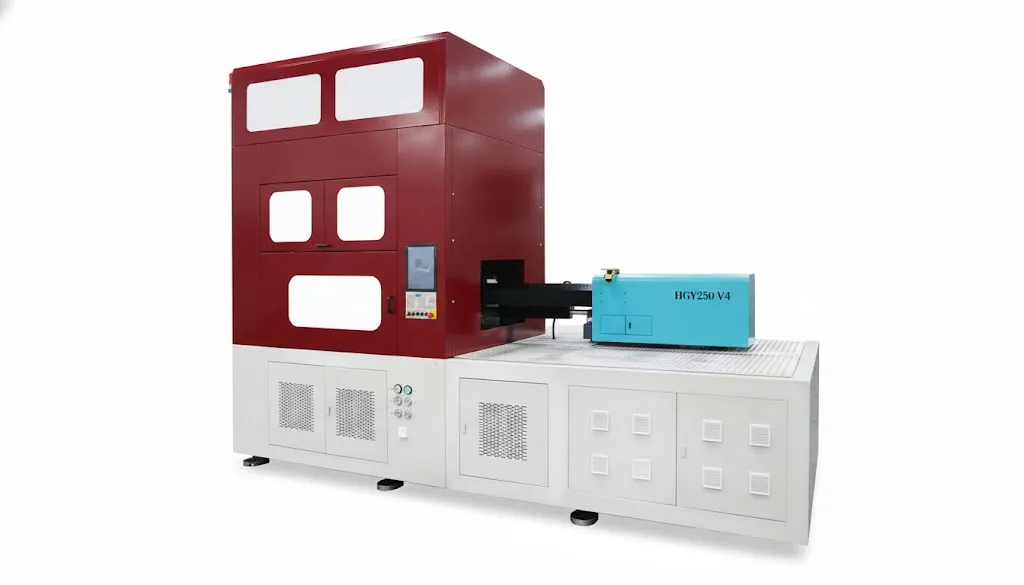
Ever Power HGY250 — precision entry-level ISBM platform
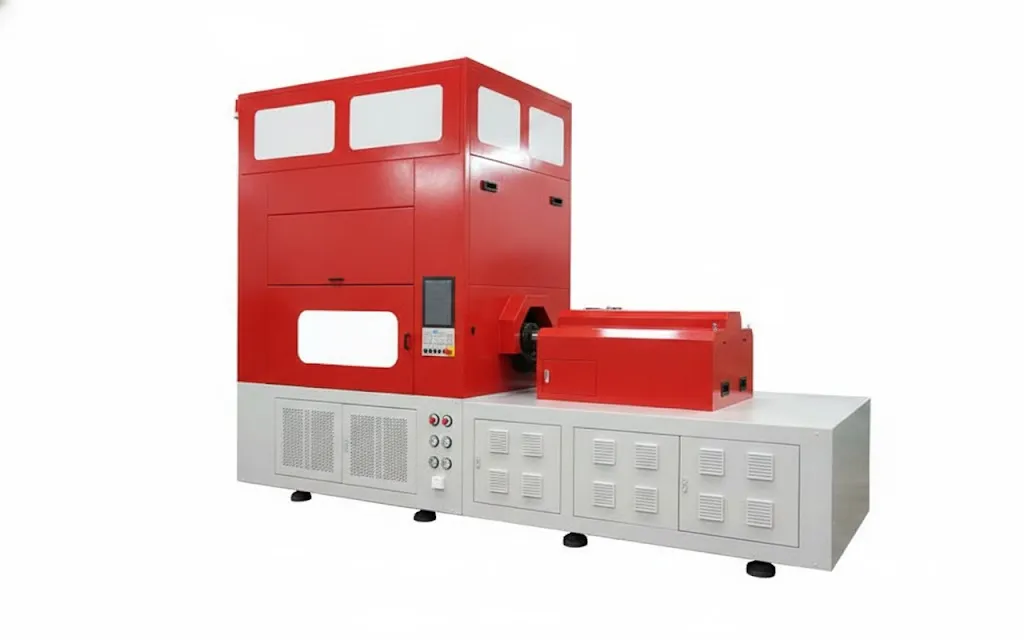
HGY250 V4B variant — enhanced servo drive system
Where Single-Stage ISBM Machines Deliver the Most Value
From pharmaceutical compliance to luxury cosmetics — the versatility of single-stage ISBM across key UK industrial sectors
Pharmaceutical & Healthcare Packaging
Single-stage ISBM machines process PP and PETG into oral liquid bottles, syrup containers, eye-drop bottles, and diagnostic reagent vials. PP ISBM containers comply with EU/UK Pharmacopoeia container standards and offer autoclave-compatible heat resistance. Key UK production hubs include pharmaceutical packaging facilities in Nottingham, Leicester, and Stoke-on-Trent operating under MHRA regulatory oversight.
Cosmetics & Personal Care
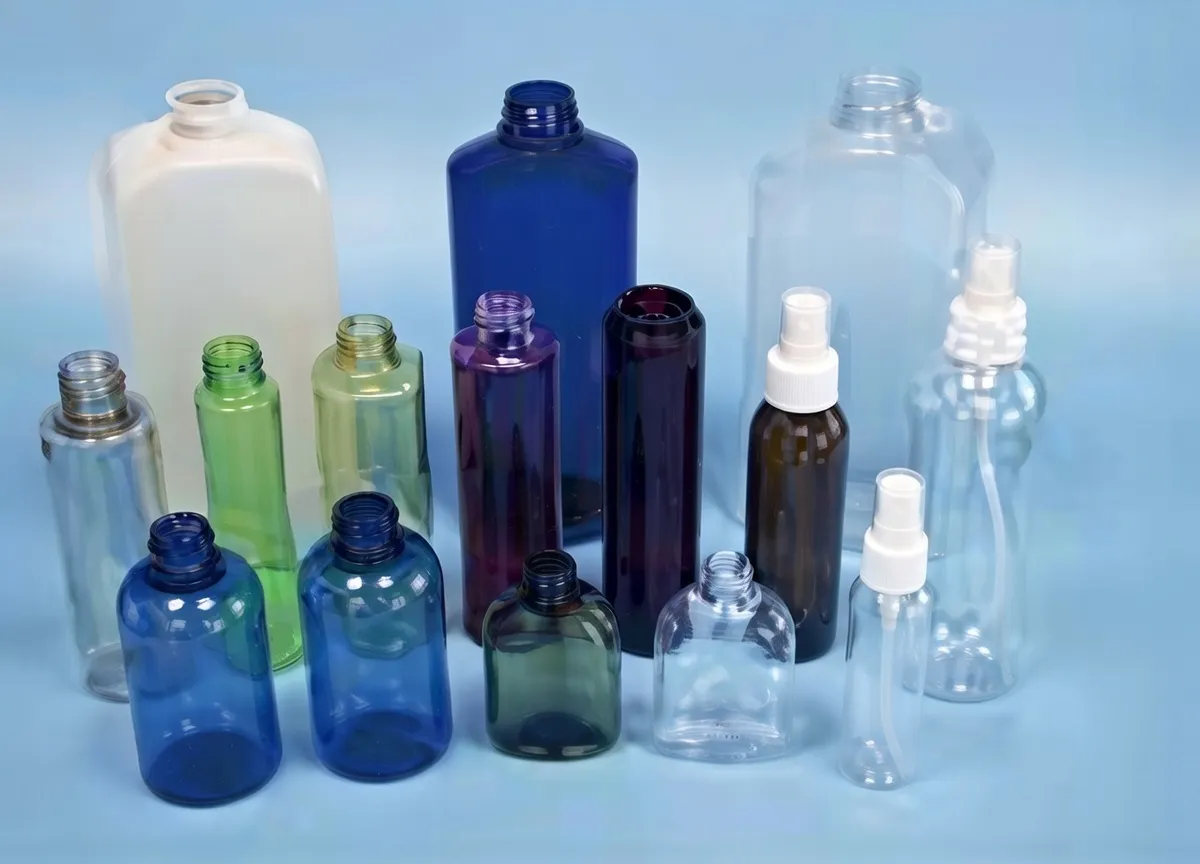
High-clarity PET and PETG containers from single-stage ISBM machines dominate premium cosmetic packaging for shampoos, conditioners, lotions, and serums supplied to major UK retailers. The absence of gate marks and superior optical transparency create standout shelf presence. London and Bristol cosmetic contract packaging facilities are substantial users of this technology for premium beauty brand programmes.
Food & Condiments Packaging
Wide-mouth PP and PET ISBM jars serve honey, condiments, sauces, spreads, and powdered food manufacturers extensively across the UK. Wide-mouth geometries with 63mm or 89mm neck finishes are a particular strength of single-stage ISBM machines, which produce these forms with consistent wall thickness and superior top-load performance. Yorkshire-based food producers represent one of the most active regional procurement bases for this container type.
Industrial Chemicals & Lubricants
Solvent-resistant PETG and PC single-stage ISBM containers serve the automotive aftermarket, industrial maintenance, and agrochemical distribution sectors. Containers supplied to Sheffield’s tool, engineering, and industrial supply companies regularly require 1–5 litre square or rectangular profiles that only a single-stage ISBM machine can consistently produce at competitive unit cost with adequate chemical resistance.
Household & Cleaning Products
PET and PP containers from single-stage ISBM machines account for a significant share of UK household cleaning product packaging — including trigger-spray bottles, concentrate containers, and fabric softener vessels. Birmingham’s household goods manufacturing cluster represents a strong regional market, with contract manufacturers supplying major supermarket own-label programmes in this segment.
Laboratory & Diagnostic Containers
Optical clarity, dimensional precision, and chemical inertness make single-stage ISBM PET and PP containers highly suited to laboratory reagent bottles, sample collection vessels, and diagnostic kit packaging. The UK life sciences sector — with major clusters in Cambridge, Oxford, and Manchester — represents a growing procurement base for pharmaceutical-grade ISBM containers manufactured to validated process specifications.
Ever Power: Precision ISBM Manufacturing & Custom Engineering for UK Operations
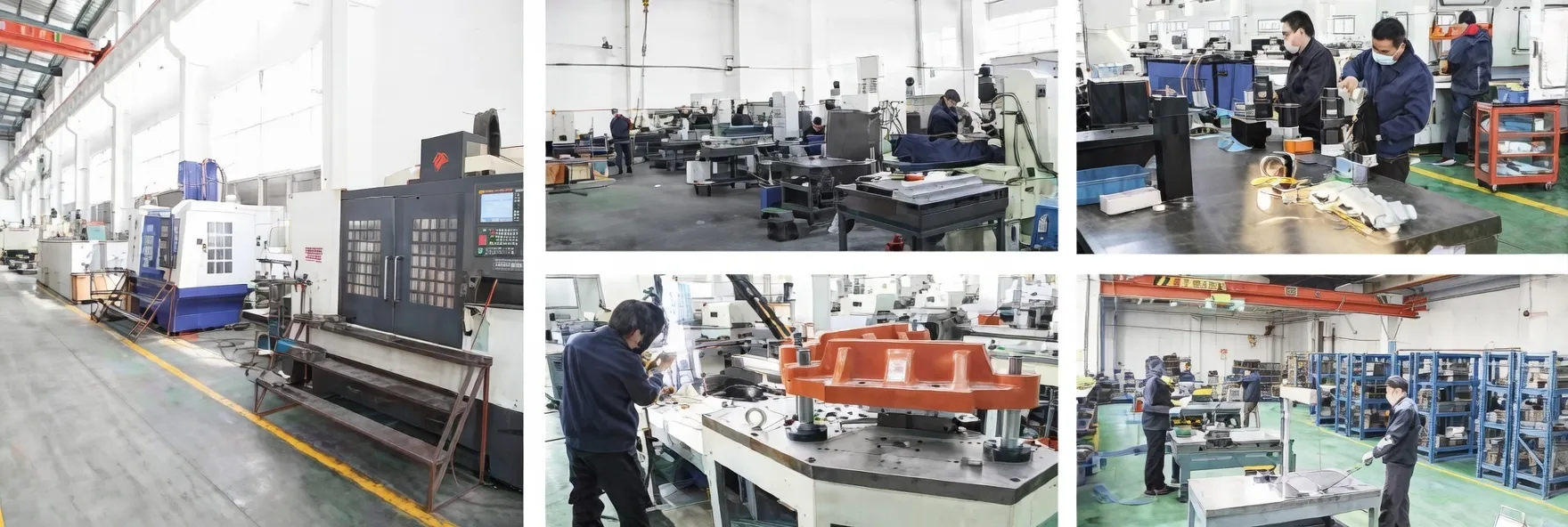
Ever Power has established itself as one of the most technically capable and commercially dependable ISBM machine manufacturers supplying the global packaging industry. Our manufacturing facility operates a vertically integrated production model — from raw steel procurement and precision CNC machining through to electrical assembly, Siemens PLC software integration, and pre-shipment full-load testing — ensuring that every single-stage ISBM machine leaving our factory meets the exact specifications agreed with each individual customer. This end-to-end manufacturing control is uncommon in the ISBM equipment sector and is a primary reason why packaging engineers across the UK, from Birmingham to Edinburgh, specify Ever Power machines when quality and reliability are non-negotiable business requirements on a long-term capital asset.
Our customisation capabilities extend across every aspect of the machine platform. UK customers routinely request modifications including UKCA-compliant electrical systems, CE-marked safety guarding designed to BS EN ISO 12100, IP65-rated control panels for humid production environments, and application-specific mould configurations covering PCO 1881 neck finishes, wide-mouth pharmaceutical closure systems, and complex asymmetric bottle geometries. Ever Power’s applications engineering team works directly with customers’ packaging development and process engineering staff to validate the machine configuration against production requirements before any order is committed — a collaborative approach that eliminates specification mismatches and reduces commissioning time on site.
Our supply chain management programme guarantees consistent lead times and spare parts availability that UK production operations depend upon. We maintain a UK-held spare parts inventory covering all critical wear components — including hot runner nozzles, stretch rods, blow mould inserts, and hydraulic seals — enabling same-day dispatch on urgent maintenance requirements. Our field service team provides installation commissioning, operator training, and scheduled preventive maintenance programmes tailored to UK production environments, ensuring your ISBM machine investment delivers maximum uptime throughout its operational life.
Ready to Discuss Your ISBM Requirements?
Our applications engineers provide a complimentary process feasibility assessment and customised machine specification — no obligation, just expert guidance aligned to your production needs.
Email: [email protected] · Response within 24 hours
Ever Power precision ISBM manufacturing facility
Why UK Buyers Choose Ever Power
Customer Success Story: Sheffield Specialty Packaging Ltd.
Single-stage ISBM investment transforms pharmaceutical container production in South Yorkshire
The Challenge
Sheffield Specialty Packaging Ltd. — a family-owned contract packaging business with 22 years of experience serving Yorkshire’s healthcare and pharmaceutical distribution supply chains — faced a production quality crisis in 2024. Their existing extrusion blow moulding equipment was producing PP oral liquid containers with inconsistent wall thickness, unacceptable haze levels that failed MHRA supplier qualification audits, and gate mark defects that major NHS supply-chain customers were flagging during incoming goods inspection. The company needed to upgrade to a process capable of consistently delivering pharmaceutical-grade optical clarity and dimensional repeatability across their 60ml, 100ml, and 250ml PP bottle range. Their technical director had evaluated several ISBM equipment suppliers but was specifically concerned about finding a machine partner who thoroughly understood the PP processing constraints that are well outside the capability of standard reheat blow systems.
The Ever Power Solution
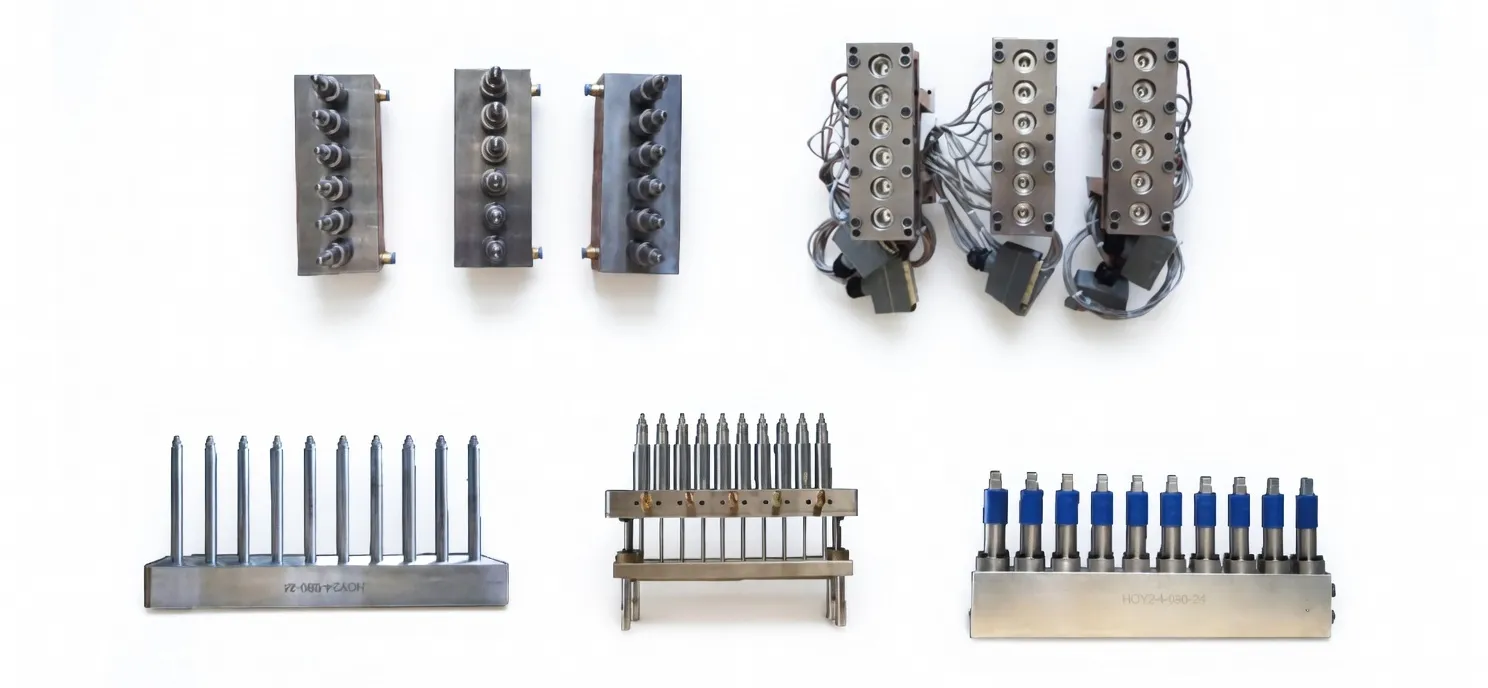
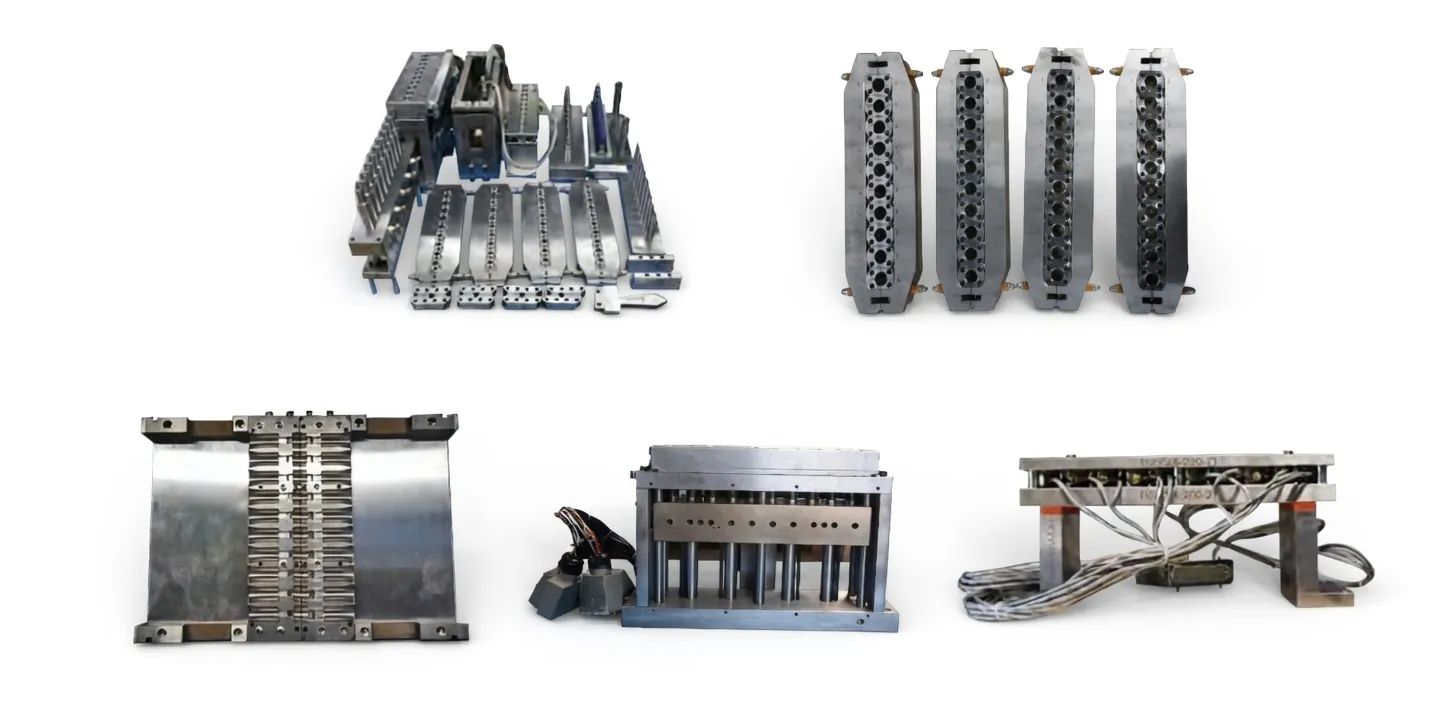
Ever Power’s applications engineering team conducted a full process feasibility study based on Sheffield Specialty Packaging’s bottle drawings, polymer specification data sheets, and annual volume projections. The recommended solution was an EP-4 single-stage ISBM machine configured specifically for random copolymer PP processing, incorporating a four-zone temperature profiling conditioning station to ensure uniform preform temperature distribution across the complex 60mm shoulder geometry of the 250ml bottle. Bespoke mould tooling was designed and manufactured by Ever Power’s in-house toolroom to match Sheffield Specialty Packaging’s existing neck finish dimensions, eliminating any need for costly closure procurement changes. The machine was delivered to the Sheffield facility and commissioned by Ever Power’s field engineering team in four working days, with full operator training delivered in-parallel during commissioning. A process validation documentation package was provided concurrently, directly supporting Sheffield Specialty Packaging’s submission to their pharmaceutical customer qualification programme.
The Results
Sheffield Specialty Packaging passed their NHS supply chain pharmaceutical packaging qualification audit within three months of commissioning the Ever Power EP-4, unlocking a new annual contract worth approximately £380,000 in container supply revenue. The single-stage ISBM machine’s ability to hold ±0.15mm dimensional tolerance consistently across all three bottle sizes eliminated the incoming goods rejection events that had previously damaged the company’s customer relationship. The investment payback period of 18 months was achieved six months ahead of the original business case projection — driven by the combination of energy savings, scrap rate reduction, and new contracted revenue from the NHS supply programme.
What Our UK Customers Say About Ever Power ISBM Machines
“We’ve been running the Ever Power EP-4 single-stage ISBM machine for 14 months on PP pharmaceutical bottles and the consistency is simply outstanding. The four-zone conditioning station gives us a temperature profile across the preform wall that no two-stage system we trialled could match for our 250ml PP container geometry. Our qualification audit results speak for themselves — three consecutive passes with zero dimensional non-conformances.”
“As a cosmetics contract packager in Birmingham, optical clarity is everything our luxury clients are paying for. The PETG containers coming off our Ever Power single-stage ISBM machine have a crystal-clear finish that our premium skincare brand customers now specify by name when placing orders. We’ve also been genuinely impressed by Ever Power’s UK spare parts despatch speed — next-day delivery on the stretch rod assembly kept us from a costly unplanned line shutdown.”
“We supply wide-mouth PP ISBM jars to Yorkshire food manufacturers and the Ever Power EP-2 has been running 18-hour shifts without issue since commissioning over a year ago. The bespoke 89mm neck-finish tooling that Ever Power designed for our honey jar range is a perfect fit, and the wall thickness consistency we achieve on wide-mouth jars simply cannot be replicated on two-stage equipment for this container geometry at this price point.”
Your ISBM Machine Questions — Answered Directly
Ready to Choose the Right ISBM Process for Your Business?
Ever Power’s applications engineers can provide a no-obligation process recommendation and machine specification tailored to your production requirements, container portfolio, and budget — covering the full UK mainland from Cornwall to the Scottish Highlands.
[email protected] · 24-hour response guarantee · UK-wide service coverage
© Ever Power Equipment · ISBM Machine Specialists · edit by gzl