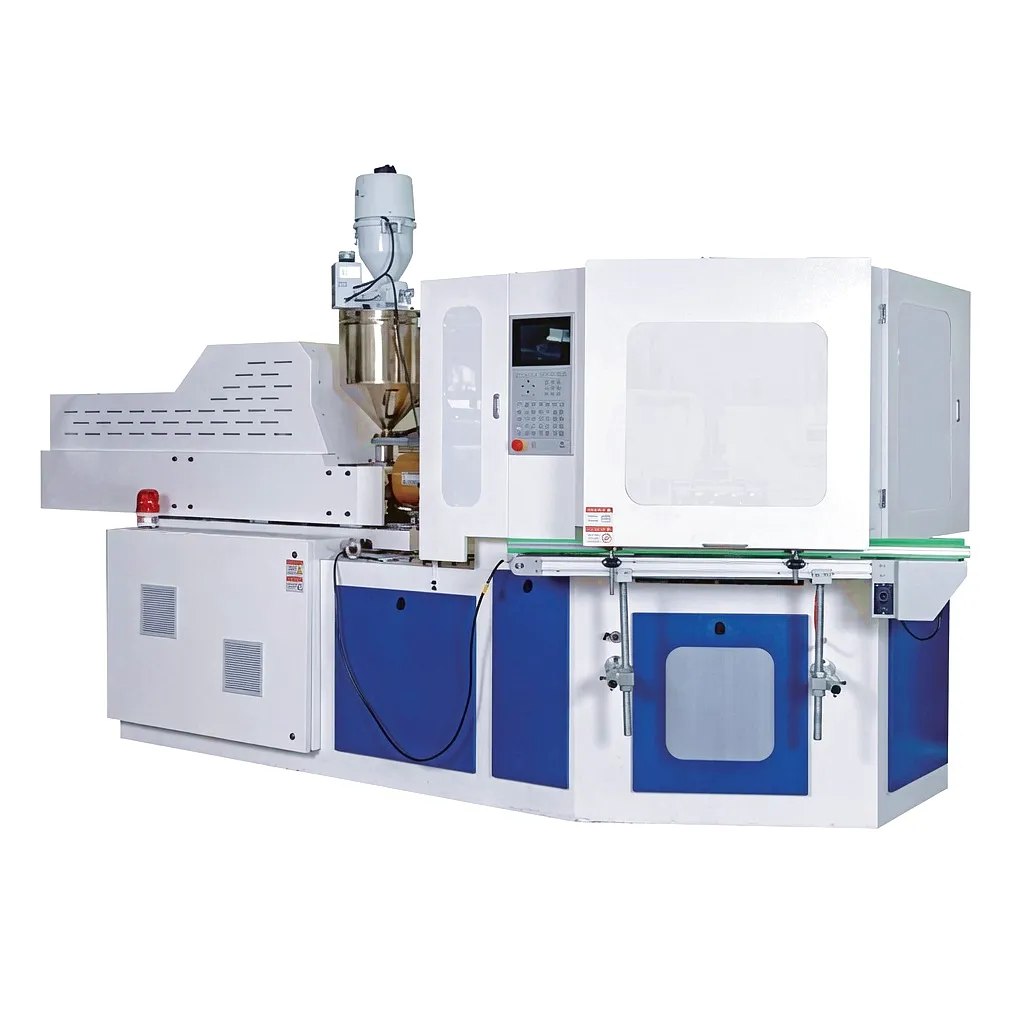
 Injection blow moulding — universally abbreviated as IBM — has become one of the most precise and commercially important polymer-forming processes deployed in British manufacturing. Unlike extrusion or stretch-blow processes, IBM combines the dimensional accuracy of injection moulding with the hollow-forming capability of blow moulding in a single, three-station rotary cycle. The result is a bottle, vial, or container whose wall thickness, neck thread, and base geometry are controlled to tolerances that rival machined components — a performance benchmark that has made IBM equipment indispensable in pharmaceutical packaging lines across the East Midlands, cosmetics production facilities along the M4 corridor, and specialty food-grade bottling operations in Yorkshire and beyond.
Understanding the Four Core Blow Moulding Processes: Why IBM Stands Apart
The plastics packaging industry relies on four distinct hollow-forming methodologies, and choosing the wrong one carries costly consequences in tooling investment, cycle time, and reject rates. Injection blow moulding, extrusion blow moulding (EBM), injection stretch blow moulding (ISBM), and single-stage ISBM each serve different geometries, materials, and production volumes. A clear-eyed comparison is essential for any UK procurement team evaluating new capacity.
| Process | Preform Method | Wall Uniformity | Neck Finish | Typical Materials | Best Application |
|---|---|---|---|---|---|
| IBM | Injection-moulded parison on core rod | Excellent (±0.05 mm) | Precision thread, no trimming | PP, PE, PET, PVC, PS | Pharma vials, cosmetics, small bottles |
| EBM | Extruded parison, pinched at base | Moderate (±0.15–0.3 mm) | Requires flash trimming | HDPE, PP, PVC, PETG | Jerry cans, industrial drums, handles |
| ISBM (2-stage) | Pre-made injection preform, reheated | Very high for PET | High-speed, precise | PET predominantly | Carbonated drinks, large PET bottles |
| 1-Stage ISBM | Inject + condition + stretch + blow | High, heat-sensitive control | Good, moderate speed | PET, PP | Wide-mouth jars, heat-set containers |
IBM machines sit in a unique position in this landscape. Because the parison is injection-moulded directly onto a core rod — with the neck geometry formed in the injection station — there is no need for trimming flash, no risk of weld lines at the pinch-off, and no variance introduced by reheating a pre-made preform. For British pharmaceutical manufacturers supplying the NHS supply chain, or cosmetics brands meeting British Pharmacopoeia container standards, those advantages translate directly into lower batch rejection rates and reduced downstream quality control burden.
Three-Station Rotary Cycle: How an IBM Machine Actually Works
Injection Station
Molten polymer is injected at pressures between 80 and 160 MPa around a precision-ground stainless core rod seated in the injection cavity. The neck thread, support ring, and shoulder geometry are all formed here with tolerances typically held to ±0.05 mm. Because the neck is created in the injection station — not blown — dimensional repeatability across millions of cycles is exceptionally high. Cycle time at this station governs overall machine output, ranging from 8 to 22 seconds depending on wall thickness and resin grade.
Blow Station
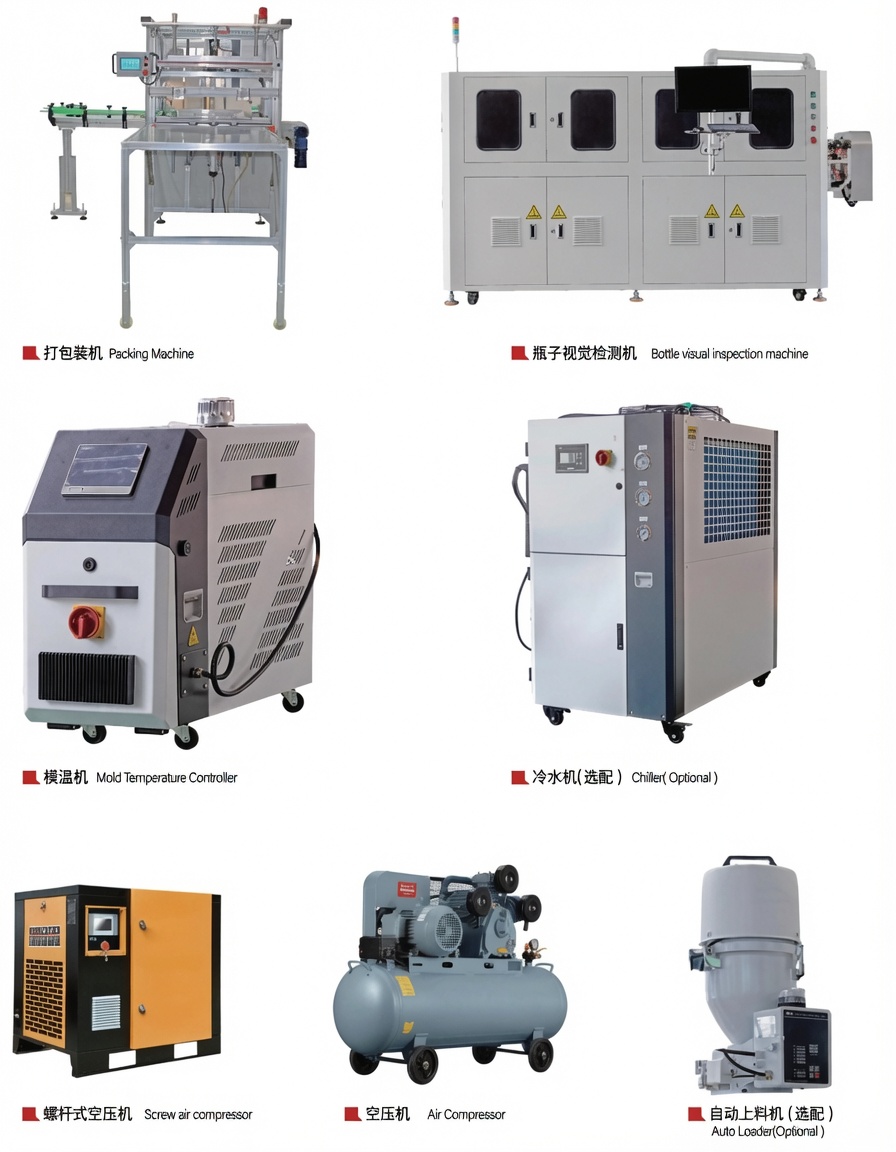
The core rod carrying the injection-moulded parison rotates 120° into the blow mould. Compressed air — typically at 6 to 10 bar for standard thermoplastics, rising to 14 bar for stiffer compounds — inflates the parison against the precisely machined cavity wall. The controlled temperature differential between the warm parison (still at forming temperature, 90–140 °C depending on resin) and the cooled blow mould (typically 10–25 °C via chilled water circuits) drives rapid crystallisation and dimensional lock. Wall thickness distribution is governed entirely by the injection-stage parison geometry, removing the stretch-ratio variability inherent in ISBM.
Ejection Station
After the blow mould opens, the core rod continues its rotation to the third station where the finished container is stripped from the rod by a mechanical stripper ring. Because IBM produces containers with no pinch-off flash or sprue, the finished article drops directly onto the conveyor without any post-mould trimming operation — a significant throughput and labour cost advantage over EBM. The now-vacant core rod re-enters the injection station to begin the next cycle, maintaining a simultaneous three-station operation that keeps productivity high even at moderate cavity counts.
Wall Thickness Uniformity Control and Preheating Temperature Curves
Mould Design and Bottle Profile Optimisation for IBM Equipment
Core Materials Processed on IBM Machines: Properties and Processing Windows
The injection blow moulding process is compatible with a broader range of thermoplastics than is generally recognised, provided the machine’s plasticising unit and mould temperature control are configured appropriately. The five primary resins processed on IBM machines each bring distinct mechanical, optical, and regulatory characteristics that align with specific end-use segments in the UK market. Understanding processing windows — the range of melt temperatures, injection speeds, and cooling times within which a given resin produces dimensionally acceptable parts — is fundamental to setting up a stable production process.
Polypropylene (PP)
Melt temperature 200–260 °C. Mould temperature 15–30 °C. Widely used in pharmaceutical closures and food-grade containers. Excellent chemical resistance against dilute acids and bases, autoclavable grades available for hospital supply. Natural haze can be reduced with nucleating agents. PP’s semi-crystalline structure requires precise cooling time management to avoid post-mould shrinkage variation, with IBM’s controlled thermal environment delivering repeatable results that compression or EBM moulding cannot match.
PET (Polyethylene Terephthalate)
Melt temperature 265–285 °C. Requires pre-drying to moisture content below 0.005% to prevent hydrolytic degradation and visible splay. IBM-produced PET containers offer outstanding clarity (haze <1.5%), ideal for premium cosmetics and nutraceutical packaging. Barrier properties against oxygen and CO2 make PET IBM bottles attractive for UK speciality beverage producers. Intrinsic viscosity (IV) management — typically targeting 0.78–0.85 dL/g for IBM grade — is critical and should be specified with the resin supplier from the outset.
HDPE / LDPE
Processing temperature 170–230 °C. IBM-grade HDPE containers serve agrochemical, industrial lubricant, and household chemical markets across the UK. The high melt flow index grades (MFI 4–10 g/10 min) preferred for IBM allow faster injection speeds without excessive shear heating, keeping melt temperatures within the process window. LDPE on IBM machines is used for squeeze bottles — eye-drop containers for NHS pharmacy supply being a notable application in the West Midlands — where controlled wall flexibility is as important as dimensional accuracy.
PVC (Medical Grade)
Processing temperature 160–185 °C. IBM-grade PVC requires heat-stabilised formulations — typically tin-based or calcium-zinc systems for pharmaceutical contact — and careful barrel residence time management to prevent discolouration or chlorine gas generation. Despite pressure from European regulatory trends, medical-grade PVC IBM containers remain significant in UK hospital dispensing for oral liquid medicines, where PVC’s oxygen-barrier performance and compatibility with polypropylene closures is established in MHRA-approved packaging specifications dating back several decades.
IBM Machine Technical Performance Parameters: Key Specification Data
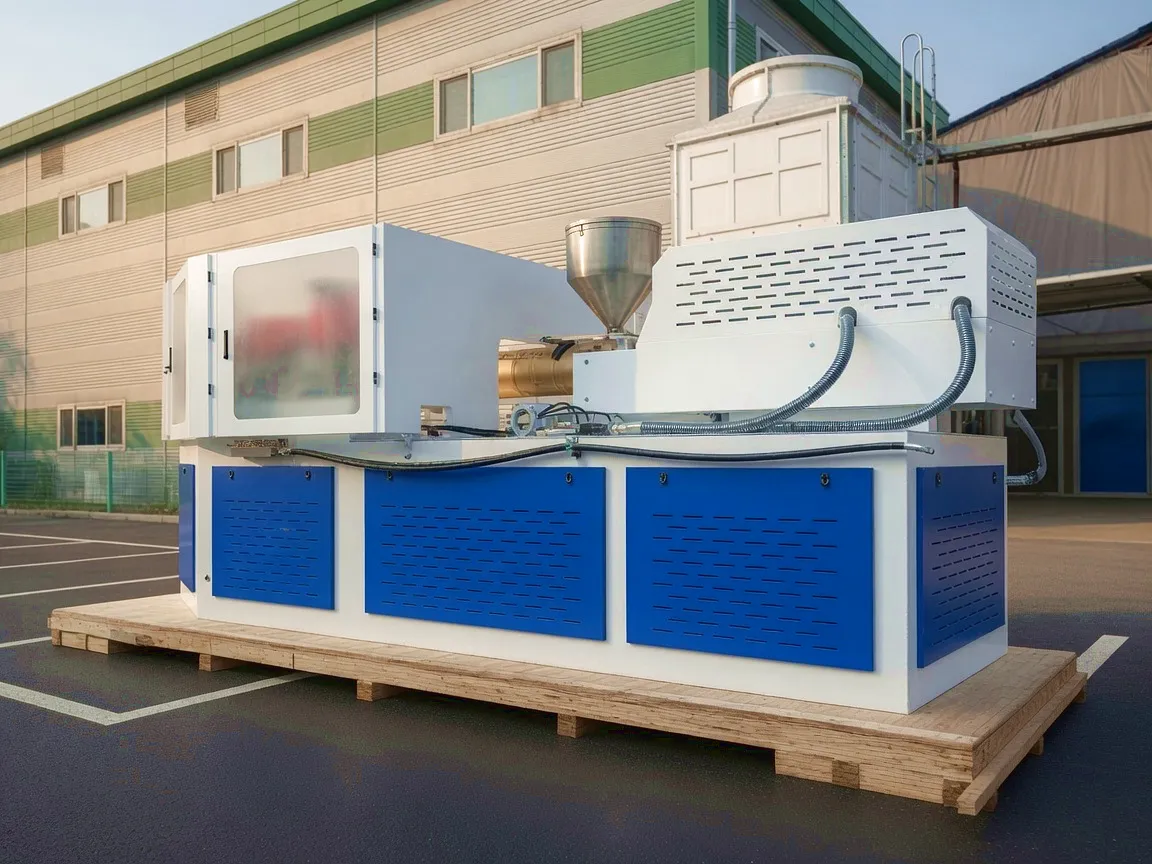
The following specification matrix covers the principal engineering parameters relevant to IBM machine selection, tooling design, and production planning. Data ranges reflect standard Ever Power IBM platforms; specific models ZQ80 and ZQ110 may exceed or sub-set these ranges — consult the individual product data sheets for binding values.
| Parameter | Unit | Range / Typical Value | Notes |
|---|---|---|---|
| Injection pressure | MPa | 80 – 160 | Higher end for engineering resins (PET, PC) |
| Blow air pressure | bar | 6 – 14 | Standard PP/PE: 6–8 bar; PET: 10–14 bar |
| Barrel temperature zones | Zones | 5 (independent PID) | ±1 °C stability, PT100 sensors |
| Mould temperature (blow) | °C | 10 – 40 | Chilled water via precision temperature controller |
| Parison melt temperature | °C | 160 – 285 | Resin-dependent; PVC low end, PET high end |
| Wall thickness tolerance | mm | ±0.05 | With conformal-cooled tooling |
| Cycle time | s | 8 – 22 | Wall thickness and cooling circuit design dependent |
| Cavity count per station | Cavities | 2 – 12 | Balanced runner mandatory for 4+ cavity tools |
| Container volume range | mL | 5 – 1,000 | Standard IBM; larger volumes require custom platen tooling |
| Core rod material | — | 420 SS or Beryllium-free Copper alloy | Pharma: electropolished to Ra ≤ 0.2 µm |
| Neck thread tolerance | mm | ±0.03 | PCO, GPI, DIN thread standards available |
| Motor drive | — | AC servo + variable frequency drive | Energy saving vs. fixed-speed hydraulic: 30–45% |
| Installed electrical power | kW | 18 – 75 | Model dependent; ZQ80 typ. 37 kW; ZQ110 typ. 55 kW |
Core Technical Advantages of IBM Equipment Over Competing Hollow-Body Processes
No Flash, No Trim
IBM produces finished containers in a single machine cycle with no pinch-off weld lines and no flash requiring secondary removal. This eliminates a complete downstream operation — flash trimming and inspection — saving labour, equipment capital, and floor space. For UK contract manufacturers running multi-line 24/7 operations, removing one secondary operation per container per cavity represents substantial annual savings.
Precision Neck Geometry
Neck threads, support ledges, and tamper-evident bead profiles are all formed in the injection station with tolerances that meet ISO 22715 and USP <661> packaging standards without secondary machining or gauging. IBM-produced necks achieve consistent torque-to-strip values that keep pharmaceutical and cosmetics filling lines running without closure application faults — a key quality metric for UK filling operations monitored under MHRA GMP.
High Material Efficiency
IBM’s controlled parison weight and wall distribution translate to material usage efficiencies typically 5–12% better than EBM for equivalent container strength — a significant financial advantage given polymer commodity price volatility. Sprue-less hot-runner injection systems on modern IBM machines eliminate cold-runner regrind entirely, ensuring 100% of material fed into the process appears in saleable containers. In a climate of UK plastic packaging tax obligations (£200/tonne on non-recycled plastic), minimising polymer waste is now a boardroom-level concern.
Rapid Changeover for Short-Run Production
IBM tooling mounts as a matched three-station set on the rotary platen, enabling trained technicians to perform a complete container-to-container mould changeover in under 90 minutes on modern Ever Power platforms. This capability makes IBM commercially viable for short-run pharmaceutical development batches, cosmetics seasonal SKUs, and food supplement lines where volumes of 20,000–200,000 units per run are the norm rather than the exception — a market pattern particularly prevalent among UK contract packaging operations in the M62 corridor serving FMCG brands.
Industrial Application Scenarios: Where IBM Machines Deliver Competitive Advantage
Pharmaceutical Packaging — NHS Supply Chain, East Midlands and Southeast England
Cosmetics and Personal Care Packaging — London, Reading, and the M4 Technology Corridor
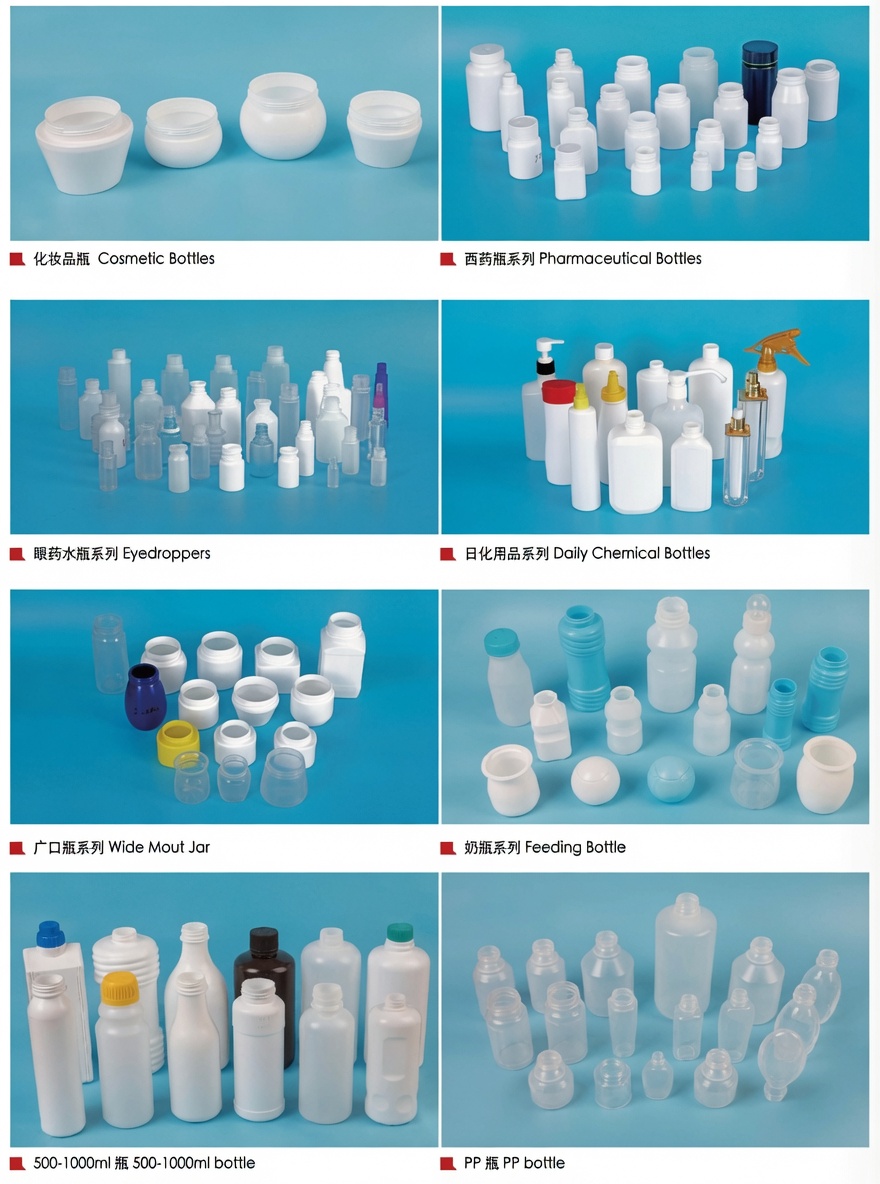
Premium cosmetics brands headquartered in London and their contract manufacturers along the M4 corridor use IBM-produced PET and PP bottles for serums, toners, body lotions, and perfume ancillaries. The optical clarity achievable with IBM PET — haze values below 1.5%, surface gloss above 90 GU — eliminates the need for post-mould coating or lacquering that adds cost and complexity in EBM alternatives. IBM’s precise neck geometry supports snap-fit pumps, aerosol valves, and disc-top closures to the tight tolerance specifications demanded by leading cosmetics brands, where closure application torque consistency is monitored to ±0.1 N·m on automated filling lines. Seasonal packaging programmes with run lengths of 50,000–300,000 units per SKU suit IBM’s rapid changeover capability ideally.
Food-Grade Containers and Speciality Beverages — Yorkshire and the Humber Food Manufacturing Cluster
Yorkshire’s well-established food manufacturing sector — from Harrogate mineral water bottlers to Sheffield condiment producers — deploys IBM machines to produce food-grade PP and PET containers meeting the retained UK version of EU Regulation 10/2011 on food contact materials. IBM-produced PET bottles for cold-fill beverages, honey jars in PP, and sauce dispensers in HDPE all benefit from IBM’s baseline dimensional repeatability, which keeps cappers and fillers running at rated capacity without the shutdown events caused by neck diameter variation in EBM-produced containers. The absence of weld lines in IBM containers also removes a structural weak point — relevant for bottles subjected to stacking loads in warehouse and transit environments on UK palletised distribution networks.
Agrochemical and Industrial Chemical Containers — Lincolnshire and East Anglia Agricultural Distribution
HDPE IBM containers for crop protection chemicals, fertiliser concentrates, and industrial cleaning agents are a growing application in the Lincolnshire and East Anglian agricultural heartland. IBM’s ability to produce thick-walled HDPE containers (1.2–3.5 mm nominal wall) with precisely moulded neck finishes compatible with locked-cap child-resistant closure systems addresses HSE Control of Substances Hazardous to Health (COSHH) containment requirements. The absence of the base pinch weld — which represents a structural and chemical resistance weak point in EBM — makes IBM containers measurably more reliable under the vibration, temperature cycling, and chemical exposure conditions experienced during farm storage and vehicle transport across UK agricultural distribution networks operated by national agri-merchants and regional cooperatives.
IBM Machine Fault Diagnosis and Troubleshooting Guide
Production faults on IBM machines follow consistent patterns that experienced process engineers learn to diagnose from visual inspection of rejected containers alone. The following guide covers the five most frequent defect categories encountered in UK plastics processing facilities, with root causes and corrective actions mapped to specific machine settings and tooling conditions.
| Defect | Symptoms | Root Causes | Corrective Actions |
|---|---|---|---|
| Wall Thinning | Thin zones, base stress-whitening | Low melt temp; core rod eccentricity; worn gate land | Increase barrel zone 3–4 by 5 °C; check core rod concentricity; replace gate insert |
| Neck Flash / Overfill | Fin at parting line of neck mould | Excessive injection pressure; worn neck insert parting face | Reduce injection pressure 5–10%; inspect neck insert for wear and re-grind parting face |
| Surface Haze / Cloudiness | Milky or frosted container surface | Moisture in resin (PET); blow mould temperature too low; contamination | Verify drying: PET <0.005% moisture; raise blow mould temp 2–5 °C; clean hopper and dryer |
| Stripping Difficulty | Container sticks to core rod; ejection force spikes | Core rod undercut damage; blow mould overcooling; wrong draft angle | Inspect core rod for scratches/undercuts; increase blow mould temperature 3 °C; verify draft ≥ 0.5° |
| Short Shot (Incomplete Fill) | Parison incomplete; sink marks on shoulder | Injection pressure too low; gate freeze-off; cold barrel | Increase injection speed; raise gate zone temperature; verify nozzle heater output |
Energy Consumption Optimisation and Retrofit Strategies for IBM Lines
Energy costs represent the second-largest variable operating expense on IBM lines after polymer raw material, making energy optimisation a genuine priority for UK processors facing industrial electricity prices that have risen sharply since 2022. Modern IBM machine architectures address energy consumption at four levels: drive systems, thermal management, compressed air delivery, and cycle time reduction. Understanding each lever and its potential impact enables engineering teams to build realistic payback calculations for equipment refresh or retrofit investment.
AC Servo Drive Replacement
Replacing fixed-speed hydraulic drive systems with AC servo-driven all-electric or electro-hydraulic hybrid configurations reduces installed power demand by 30–45% per machine. The servo drive delivers hydraulic pressure only when needed — at injection, clamp, and rotation — eliminating the parasitic energy consumption of continuously running hydraulic pumps. On a typical 37 kW IBM machine operating three shifts, this retrofit can save £8,000–£14,000 per year at current UK industrial electricity tariffs.
Insulated Barrel and Nozzle Heating
Ceramic band heater insulation jackets reduce barrel heat loss to atmosphere by 35–50%, directly cutting the duty cycle of barrel heaters. For UK facilities with unheated production floors — common in converted industrial units across the North West and Yorkshire — this measure also improves barrel temperature stability, reducing reject rates caused by process drift during cold winter shifts. Insulation retrofit kits are available for all common IBM barrel diameters and typically pay back in under 14 months.
Compressed Air Pressure Optimisation
Blow air represents 15–25% of total IBM machine energy consumption. Matching blow pressure precisely to minimum required levels — confirmed by wall thickness mapping after pressure reduction — and installing variable-speed compressors rather than fixed-speed units can reduce compressed air energy costs by 20–35%. Leak detection surveys on compressed air ring mains in UK plastics facilities typically reveal losses of 15–30% of generated volume, representing a recoverable energy saving addressable with standard ultrasonic leak detection equipment.
Featured IBM Products from Ever Power
Ever Power’s IBM machine range is engineered for UK and European market standards, offering full CE marking and compliance with Machinery Directive 2006/42/EC. Two core platforms serve the majority of pharmaceutical, cosmetic, and food-grade packaging applications encountered in British manufacturing facilities.
ZQ80 Injection Blow Molding Machine
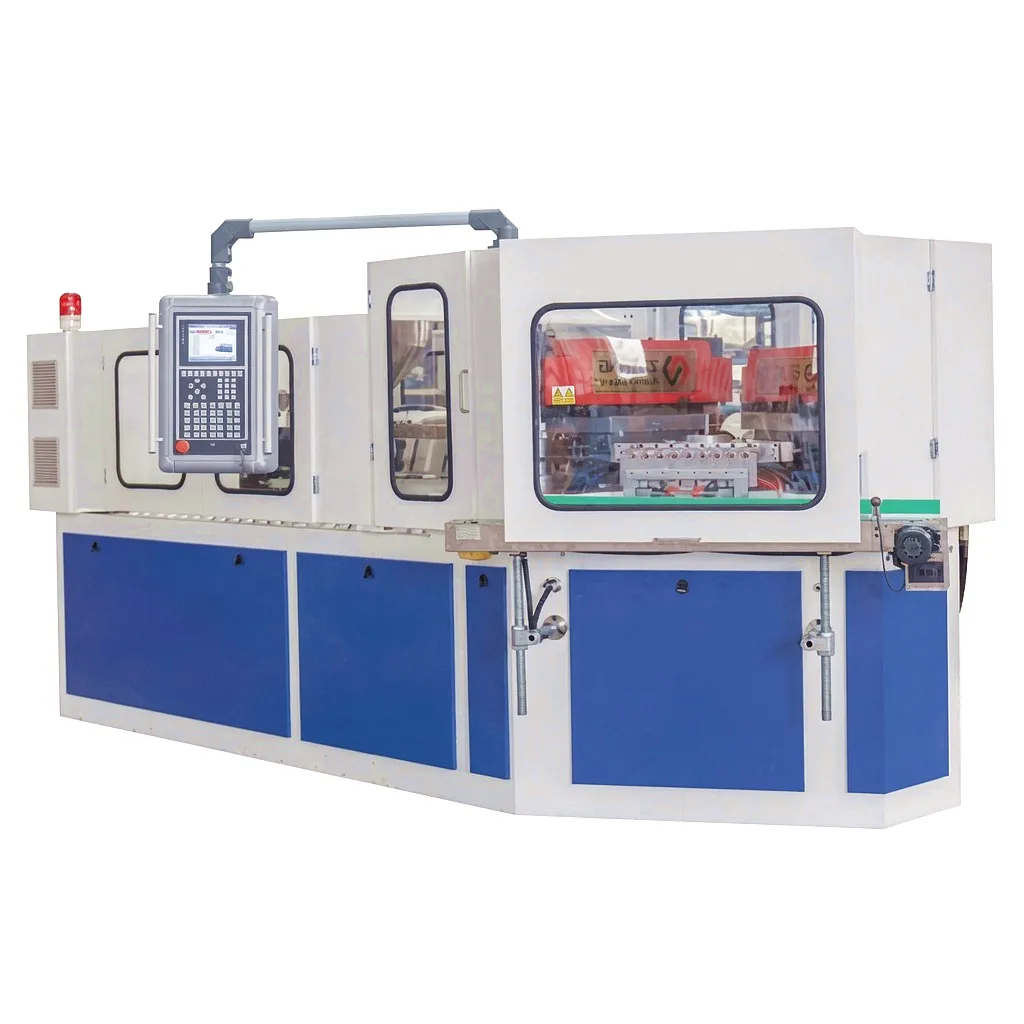
The ZQ80 is Ever Power’s mid-range IBM platform, engineered for pharmaceutical vial production, cosmetics serum bottles, and personal care packaging in the 10–250 mL range. Featuring a 5-zone all-electric barrel with AC servo clamp drive, the ZQ80 delivers cycle times from 10 seconds with cavity counts from 2 to 6. Its compact footprint — 3.2 m x 1.8 m — suits constrained UK production floors and cleanroom installations. CE marked, full MHRA GMP documentation pack available.
ZQ110 Injection Blow Molding Machine
The ZQ110 is Ever Power’s high-output IBM platform targeting production volumes from 300,000 to several million containers per month. With a larger plasticising unit capable of processing engineering-grade PET and PC alongside standard PP and PE, the ZQ110 supports cavity counts up to 12, container volumes from 20 to 1,000 mL, and servo-driven clamp forces up to 110 tonnes. Full hot-runner injection system with individual cavity pressure monitoring makes the ZQ110 suitable for validated pharmaceutical manufacturing environments with 21 CFR Part 11 data logging requirements.
Ever Power Manufacturing Capability and Customisation Services
Key Manufacturing Metrics
Customer Success Story: Pharmaceutical Container Manufacturer, Nottingham
A contract pharmaceutical packaging manufacturer based in Nottingham’s Beeston industrial district had been sourcing PP oral liquid medicine bottles from a European supplier under a long-term supply agreement. When that supplier gave notice of a 14-week lead time extension and a 22% unit cost increase, the company’s operations director initiated an in-house IBM capability assessment in Q2 2024.
After evaluating three IBM machine suppliers — including one UK-stocked brand at significantly higher capital cost — the procurement team selected the Ever Power ZQ80 platform with a 4-cavity PP tool producing 30 mL and 50 mL oral liquid bottles to PCO 28 neck standard. Ever Power’s technical team provided full mould flow analysis using Moldflow simulation, confirming wall thickness distribution within BP specification across the cavity count before tool fabrication commenced. Total lead time from purchase order to first article inspection passing: 16 weeks — including shipping, installation, and IQ/OQ validation at the customer’s MHRA-licensed facility.
Production data after six months of operation showed a container weight variance of 0.21% (target: <0.5%), neck diameter CPk of 1.84, and a machine overall equipment effectiveness (OEE) figure of 91.3% — against the customer’s site-wide OEE target of 85%. The in-house IBM capacity eliminated the company’s dependence on external container suppliers for two key NHS tender product lines, directly supporting a successful contract renewal with NHS Logistics Authority worth £3.2 million over 24 months.
Ever Power provided post-installation support through a UK-based technical representative conducting quarterly preventive maintenance visits, with remote monitoring access enabling the Ever Power engineering team in Hangzhou to review process data and provide optimisation recommendations without requiring travel — a support model that proved particularly valuable during the customer’s initial process validation phase.
What Our UK Customers Say About Ever Power IBM Machines
“The neck finish consistency on the ZQ80 is genuinely exceptional — we ran 200,000 bottles before our first closure application fault, which is a record for this line. Ever Power’s customisation of the core rod temperature balance across our 4-cavity tool made a measurable difference to our CPk figures during OQ.”
“We compared three suppliers on total cost of ownership over five years and Ever Power came out clearly ahead once you factor in tooling cost, energy consumption with the servo drive, and the support package. The ZQ110 has been running at over 90% OEE for eight months. I’d recommend them without reservation to any UK plastics processor evaluating IBM capacity.”
“Ever Power designed a bespoke 6-cavity PP tool for our specialist nutraceutical bottle — an oval cross-section with a non-standard 38mm neck finish — and delivered it within the agreed 14-week programme. The conformal cooling channels they machined into the blow mould dropped our cycle time from 17 seconds to 13.5 seconds compared to the previous straight-drilled tooling. That cycle time saving alone justified the tooling investment within six months.”
Ready to Invest in IBM Machine Capacity for Your UK Facility?
Whether you are evaluating IBM for pharmaceutical packaging in Nottingham, cosmetics production in Reading, or food-grade containers in Yorkshire — Ever Power’s technical team is ready to size, specify, and quote a solution matched to your production requirements.