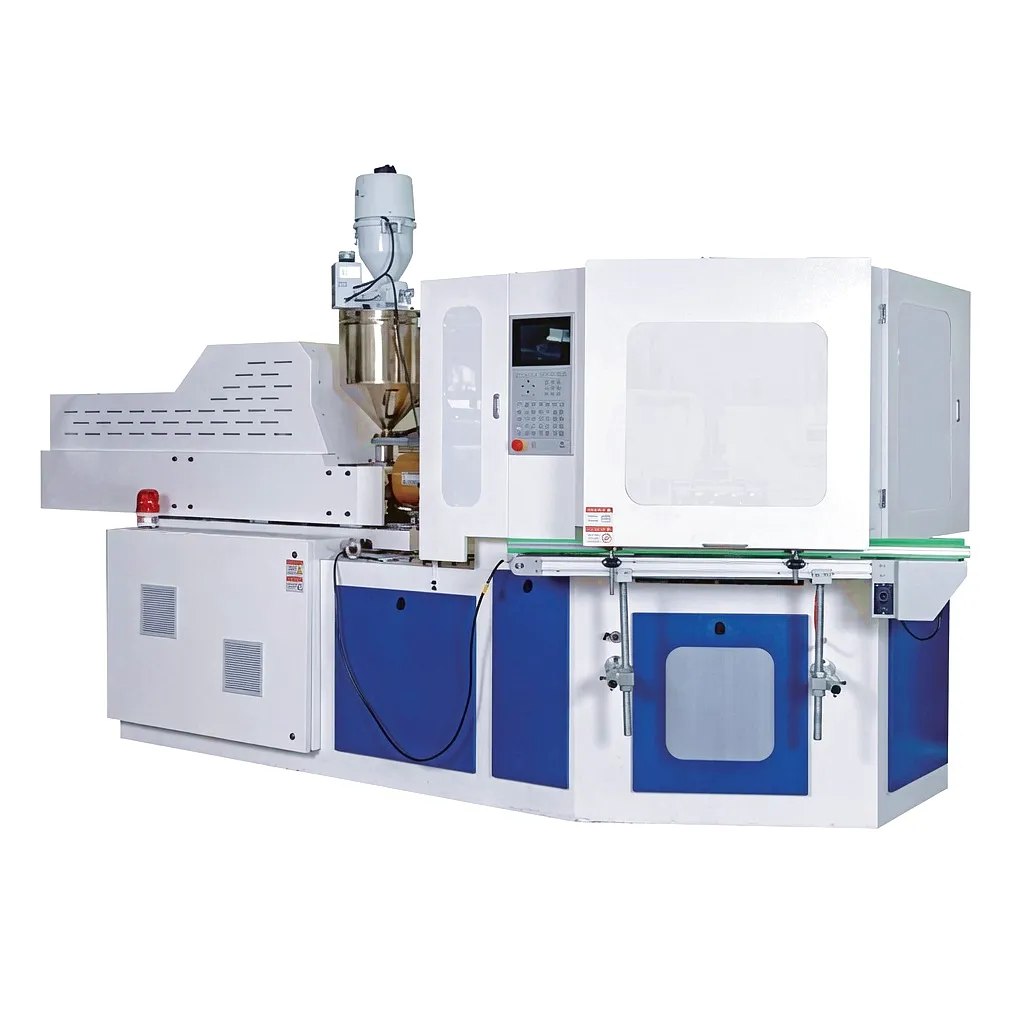
 The pharmaceutical industry places some of the most stringent demands on container integrity, dimensional accuracy, and material purity of any sector on earth. When a bottle must preserve the potency of a sensitive antibiotic or maintain tamper-evidence for a regulated analgesic, the manufacturing process behind the container becomes as critical as the molecule inside it. Injection blow molding machines have emerged as the preferred platform for producing such containers at scale — combining the precision of injection molding with the geometric freedom of blow molding in a single, seamlessly integrated cycle. Across the United Kingdom, contract packaging houses in Birmingham, pharmaceutical distributors in Manchester, and specialty bottle converters in Sheffield are investing in injection blow molding technology to meet rising demand for precision-formed, regulatory-compliant pharmaceutical packaging.
Sourcing an injection blow molding machine for pharmaceutical or medical-grade production?
Our engineering team will configure the right solution for your bottle geometry and production volume.
How an Injection Blow Molding Machine Works: The Three-Station Principle
Understanding the mechanism behind every container your pharmaceutical line produces.
Injection Station
Molten polymer — typically HDPE, PP, or PET — is injected under high pressure into the preform cavity, wrapping tightly around a precision-machined core rod. The neck finish is formed at this stage to its final, exact dimensions. Wall thickness distribution across the preform is controlled by the geometry of both the core rod and the cavity, giving the process engineer complete command over material distribution before blowing even begins. This is the defining advantage of the injection blow molding machine over alternative container-forming methods: the preform carries all the dimensional intelligence of the finished bottle.
Blow Station
Still mounted on its core rod and at optimal blow temperature, the preform is indexed to the blow cavity. Compressed air — typically delivered at 6 to 10 bar — inflates the preform outward until it contacts every surface of the blow mold. Because the preform retains its thermal profile precisely from injection, material flows predictably and the resulting container walls are uniform to within fractions of a millimeter. No reheating step is required, which reduces cycle time, eliminates a potential contamination window, and conserves thermal energy — a consideration increasingly important to UK manufacturers with net-zero commitments.
Stripping Station
Cooled and dimensionally stable, the finished bottle is stripped from the core rod at the ejection station. Because no weld lines, flash, or trimming are introduced anywhere in the cycle, pharmaceutical-grade containers emerge in a virtually finished state, ready for downstream filling lines. The three-station rotary table — common on machines such as the ZQ40 and ZQ60 series — allows all three operations to run simultaneously, so every index of the table produces one finished bottle per cavity. This simultaneous operation is the fundamental reason injection blow molding machines achieve the output-per-unit-energy ratios that have made them the industry standard for pharmaceutical bottles under 500 ml.
Core Materials Processed by Pharmaceutical-Grade Injection Blow Molding Machines
HDPE (High-Density Polyethylene)
The dominant material for pharmaceutical tablet and capsule bottles in the UK, HDPE offers an excellent moisture-vapor transmission rate, broad chemical resistance, and compatibility with a wide range of active pharmaceutical ingredients. When processed on a calibrated injection blow molding machine, HDPE bottles achieve consistent wall thickness of 0.8 mm to 2.5 mm depending on container volume, giving packs both structural integrity for stacking and lightweight properties for distribution. HDPE bottles can be produced in white (UV-blocking) or natural-translucent formats to suit pharmacist counting needs.
PET (Polyethylene Terephthalate)
Where glass-clarity is a commercial or clinical requirement — visible liquid oral medicines, effervescent tablets, or nutritional supplement formulations — pharmaceutical converters turn to PET processed on an injection blow molding machine. PET delivers outstanding optical clarity, low gas permeability, and a premium aesthetic that resonates with UK retail pharmacy customers. Its stiffness-to-weight ratio also reduces material usage compared with glass alternatives, supporting both sustainability goals and logistic cost savings for distribution centres serving major pharmacy chains across England, Scotland, and Wales.
PP (Polypropylene)
Polypropylene injection blow molding excels where moderate chemical resistance, autoclave sterilisability, and living-hinge integration are required. For child-resistant flip-top closures and push-turn cap systems — a regulatory requirement for many prescription medicines dispensed through NHS and private pharmacy channels — PP is the preferred polymer. Its higher melt temperature demands a precisely controlled barrel temperature profile on the injection blow molding machine, a parameter that Ever Power machines handle through zoned ceramic heater bands with closed-loop PID control to within ±1°C across each zone.
Amber PET / Tinted HDPE
Light-sensitive pharmaceuticals — including certain antibiotics, vitamins, and hormonal preparations — require amber or UV-blocking opaque containers that shield the product from photodegradation across the 300 nm to 450 nm wavelength range. Amber PET is widely specified for injectable and oral liquid medicines in compliance with British Pharmacopoeia and EU 2017/745 requirements. An injection blow molding machine processing amber PET must maintain tight melt temperature consistency to avoid colour streaking or clarity variation in the body of the bottle — both of which can trigger regulatory rejection during incoming quality control.
Application Scenario 1: Oral Solid Drug Bottles — Tablets, Capsules and Effervescent Strips
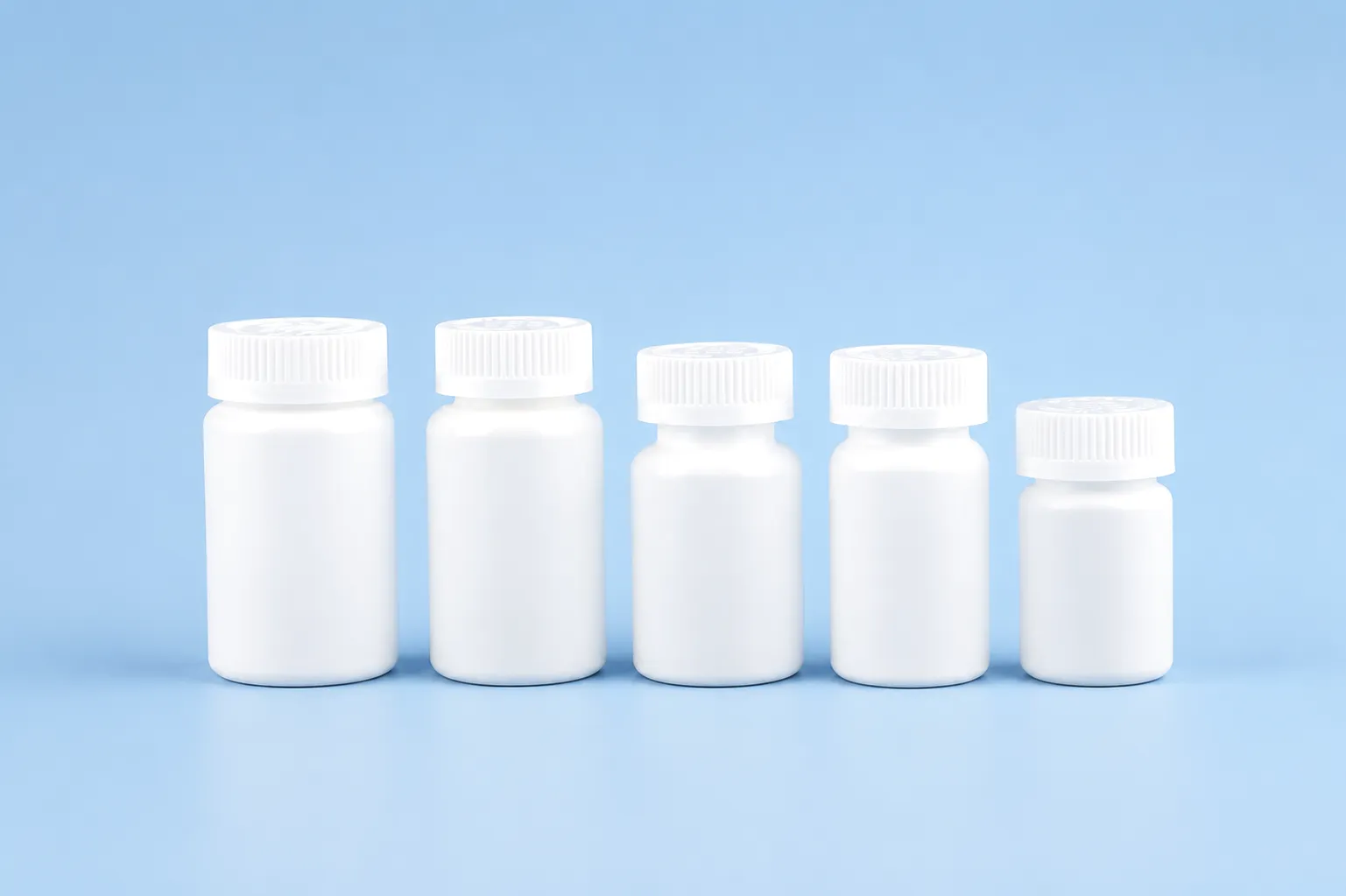
Effervescent tablet packaging presents additional technical demands. Containers must combine a moisture-barrier neck finish with an inner foil-seal landing surface accurate enough for induction sealing. The injection blow molding machine achieves the required sealing-surface flatness of less than 0.05 mm deviation at the neck face — a specification that conventional extrusion blow molding cannot guarantee — enabling zero-leak induction seals essential for moisture-sensitive vitamin C and antacid effervescent packs distributed through UK high-street pharmacy chains including Boots, Lloyds Pharmacy, and Well Pharmacy.
Application Scenario 2: Child-Resistant Closure (CRC) Bottles for Prescription Medicines
The Medicines and Healthcare products Regulatory Agency (MHRA) mandates child-resistant packaging for a broad range of prescription and over-the-counter medicines marketed in the United Kingdom, with the specific performance protocol defined by BS EN ISO 8317. Meeting this standard is not purely a closure design challenge — it begins with the precision of the bottle neck finish. A child-resistant push-down-and-turn or squeeze-and-turn cap depends entirely on the interference geometry between the outer neck surface and the inner cap thread. An injection blow molding machine delivers the neck finish diameter tolerance of ±0.1 mm and the thread lead accuracy that this interference fit demands, guaranteeing that every bottle in a production run locks correctly with the cap rather than allowing intermittent failures that could lead to accidental child ingestion events.
Polypropylene is the dominant material for CRC pharmaceutical bottles in the UK because PP’s slightly higher stiffness — flexural modulus of approximately 1,500 MPa versus 800 MPa for HDPE — gives the push-down-and-turn mechanism the tactile resistance children find difficult to defeat. Producing PP on an injection blow molding machine requires careful management of barrel zones at temperatures between 200°C and 240°C, as well as blow air pressure tuning to prevent stress whitening in transparent PP formulations. Ever Power engineering teams work with UK pharmaceutical clients during factory acceptance testing to establish a validated process window that maintains Cpk values above 1.33 on all critical-to-quality dimensions — the threshold typically required for pharmaceutical process validation under the UK’s post-Brexit regulatory framework.
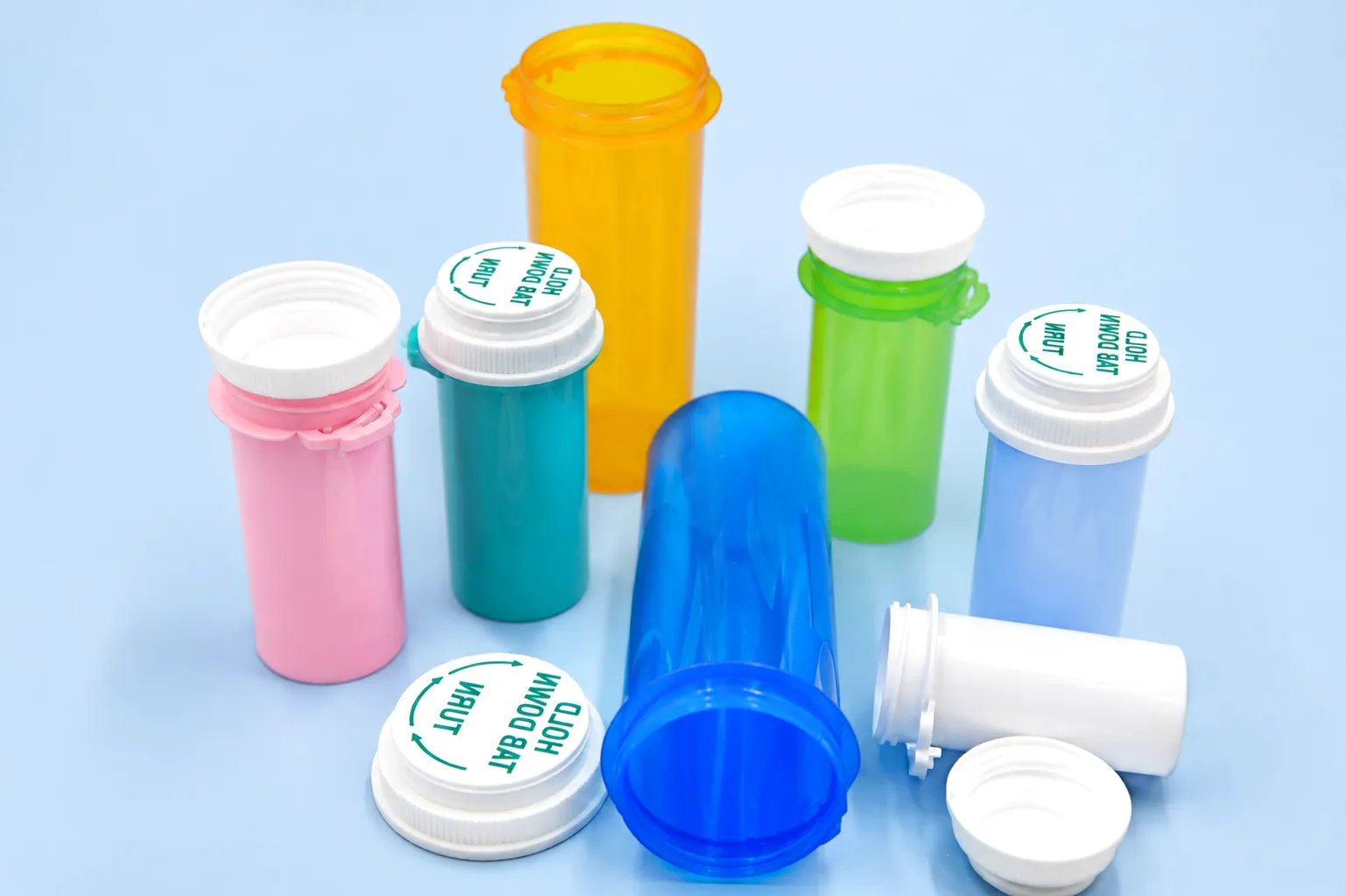
UK MHRA requirement: Child-resistant closure bottles must achieve BS EN ISO 8317 compliance — injection blow molding machines are the most reliable path to the neck-finish precision this standard demands.
Application Scenario 3: Amber Medicine Vials for Light-Sensitive Pharmaceuticals
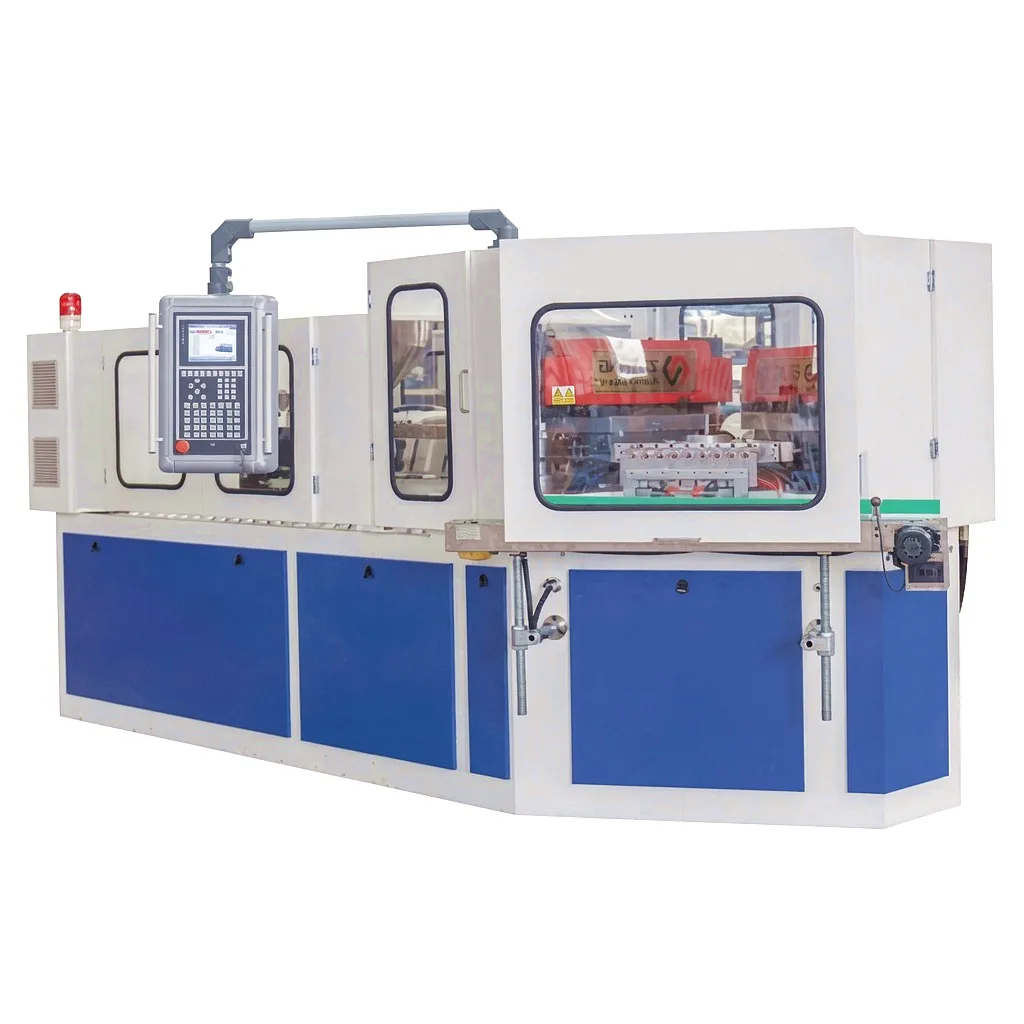 Amber medicine vials represent one of the most technically demanding applications for an injection blow molding machine in pharmaceutical primary packaging. The amber colourant must be dispersed with absolute homogeneity throughout the HDPE or PET matrix — any colour streaking reduces UV attenuation in localised zones, potentially exposing the medicine to wavelengths against which the bottle was supposed to provide protection. On Ever Power injection blow molding machines, the colour concentrate is metered through a calibrated gravimetric dosing unit directly into the injection barrel throat, ensuring let-down ratios consistent to within ±0.1% across an entire production shift. Spectrophotometric inline measurement can be integrated into the quality loop for customers producing bottles intended for liquid antibiotics, hormonal preparations, or photosensitive vitamins such as riboflavin, where British Pharmacopoeia light-transmission specifications carry regulatory weight.
Ever Power Manufacturing Facility
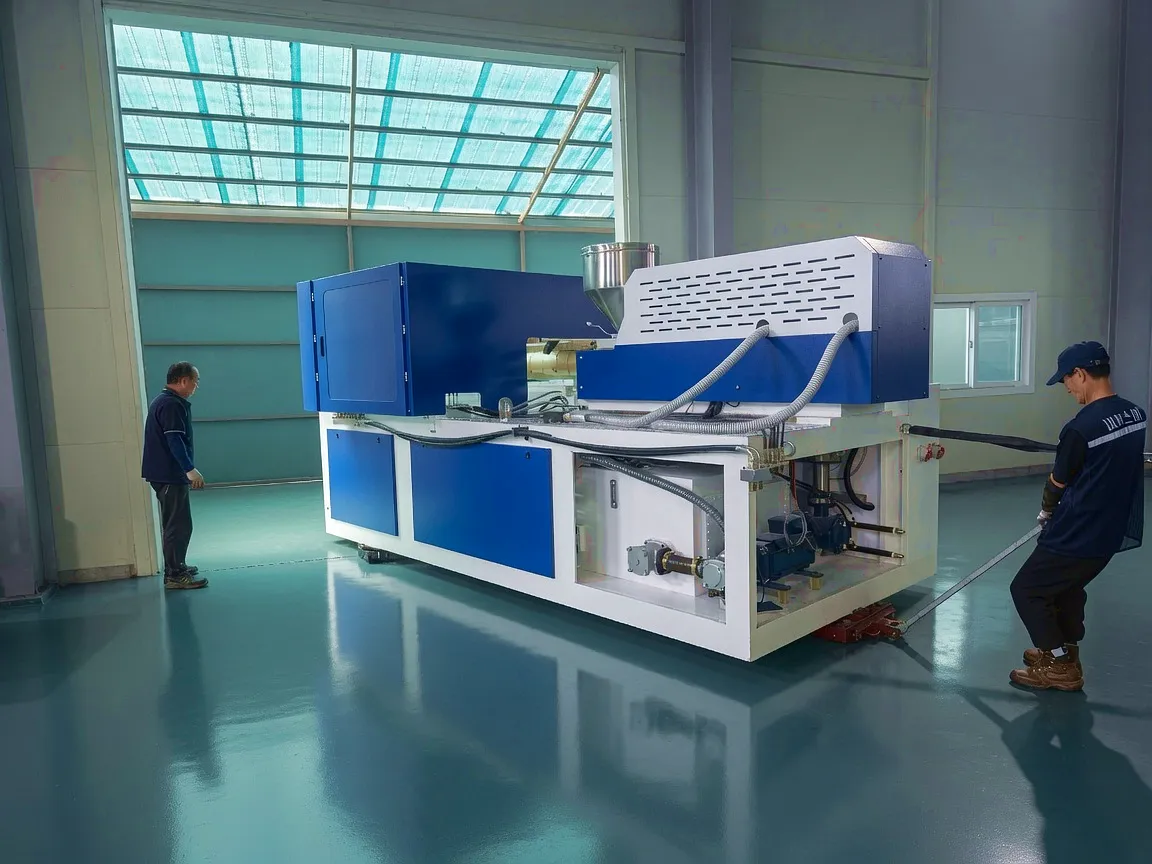
CNC machining and assembly floor — injection blow molding machine production
Core Technical Advantages of Pharmaceutical-Specification Injection Blow Molding Machines
No Flash, No Waste
The injection blow molding machine produces containers with no flash, no parting-line trim, and no re-grind requirement. For pharmaceutical grade production where virgin-only material is often mandated, this clean waste profile reduces raw material cost and eliminates contamination risk from regrind blending.
Superior Neck Finish Precision
Because the neck is injection-formed, not blown, dimensional tolerance at the sealing surface is held to ±0.05 mm on diameter and ±0.10 mm on thread lead. This makes injection blow molding machine-produced bottles the first choice wherever reliable cap application torque and induction-seal integrity are critical quality attributes.
Rapid Cavity Changeover
Modular core rod and blow cavity sets on Ever Power machines allow SKU changeovers in under 60 minutes — a critical flexibility advantage for UK contract packaging organisations running multiple pharmaceutical clients with different bottle specifications on shared production assets.
Validated Process Control
Ever Power injection blow molding machines feature PLC-based recipe management with password-locked parameter storage. Up to 200 product recipes can be stored and recalled instantly, supporting the IQ/OQ/PQ validation protocols required for pharmaceutical manufacturing site registrations with the MHRA and the European Medicines Agency (EMA).
Energy Efficiency
Servo-hydraulic or all-electric drive systems on Ever Power injection blow molding machines reduce power consumption by 30% to 45% compared with fixed-displacement hydraulic predecessors — a meaningful operational saving for UK facilities facing elevated industrial electricity tariffs and sustainability reporting requirements under the UK Streamlined Energy and Carbon Reporting (SECR) framework.
Technical Performance Parameter Table
Representative specifications for pharmaceutical-grade injection blow molding machines. Custom configurations available on request.
| Parameter | ZQ40 (European) | ZQ60 (European) | Unit / Standard |
|---|---|---|---|
| Injection Pressure | Up to 180 | Up to 200 | MPa |
| Blow Air Pressure | 6 — 10 | 6 — 10 | bar |
| Clamping Force | 400 | 600 | kN |
| Max Container Volume | 500 | 1,000 | ml |
| Neck Finish Diameter Tolerance | ± 0.05 | ± 0.05 | mm |
| Wall Thickness Uniformity | ± 0.08 | ± 0.08 | mm (max deviation) |
| Barrel Temperature Zones | 5 | 5 | zones (PID ±1°C) |
| Cycle Time (100 ml HDPE bottle) | 8 — 12 | 10 — 14 | seconds |
| Drive System | Servo-hydraulic | Servo-hydraulic | — |
| Materials Processed | HDPE, PP, PET | HDPE, PP, PET | ISO 10993 grades available |
| Control System | Siemens S7 PLC + HMI | Siemens S7 PLC + HMI | 21 CFR Part 11 compatible |
| Energy Saving vs Hydraulic | 30 — 40% | 35 — 45% | % reduction |
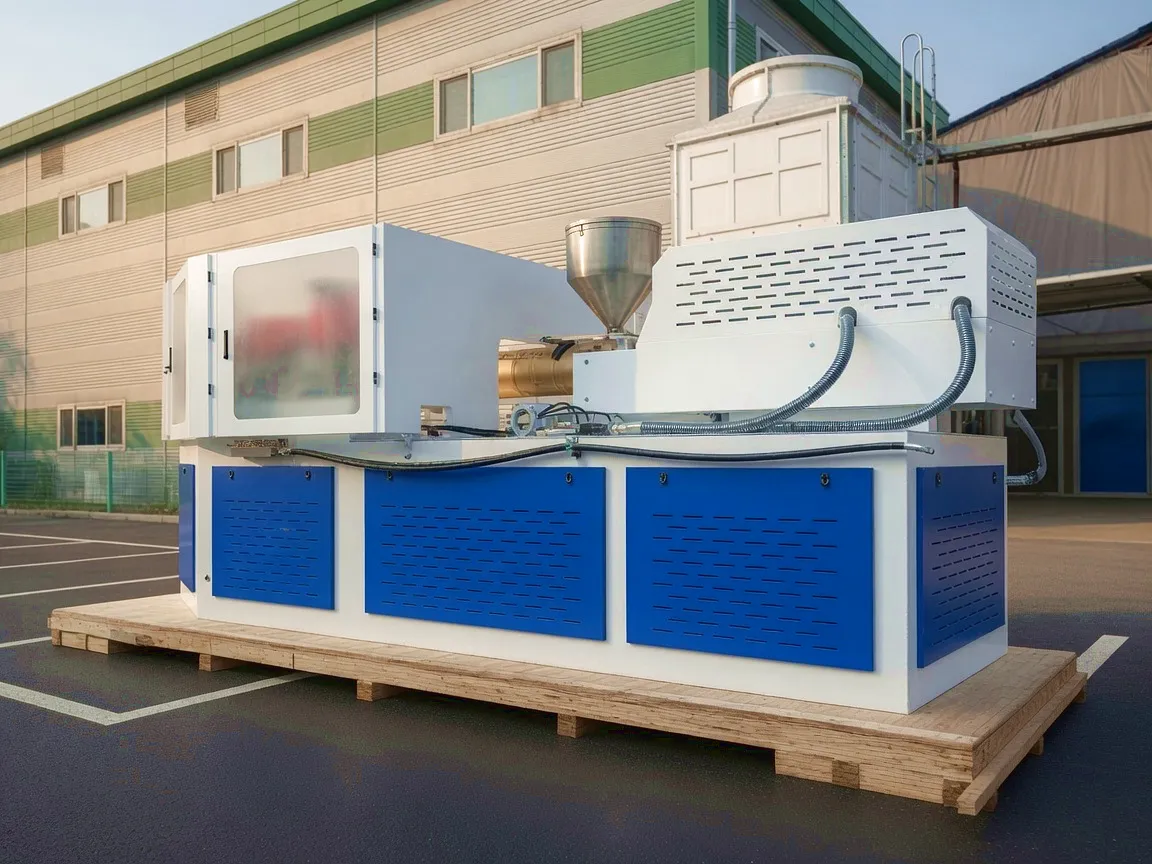
Complete System Configuration — Auxiliary Equipment
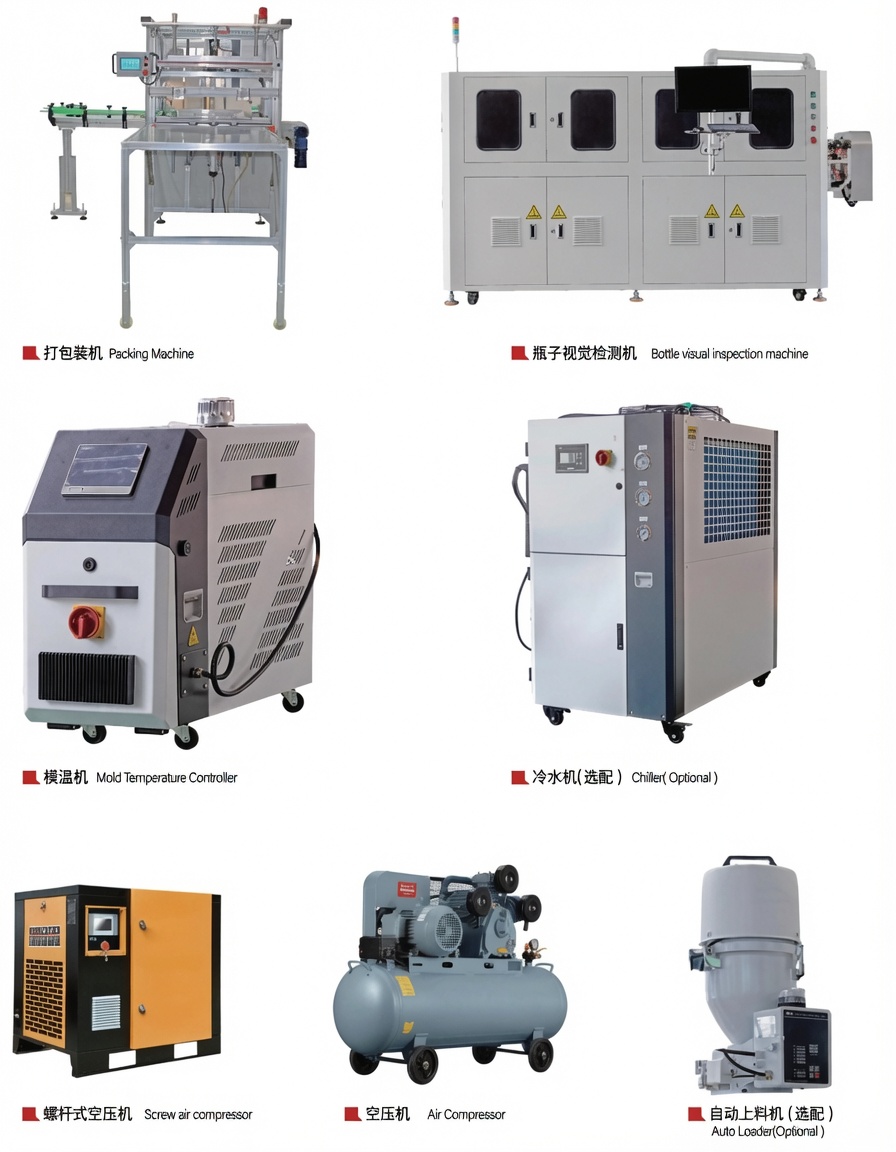
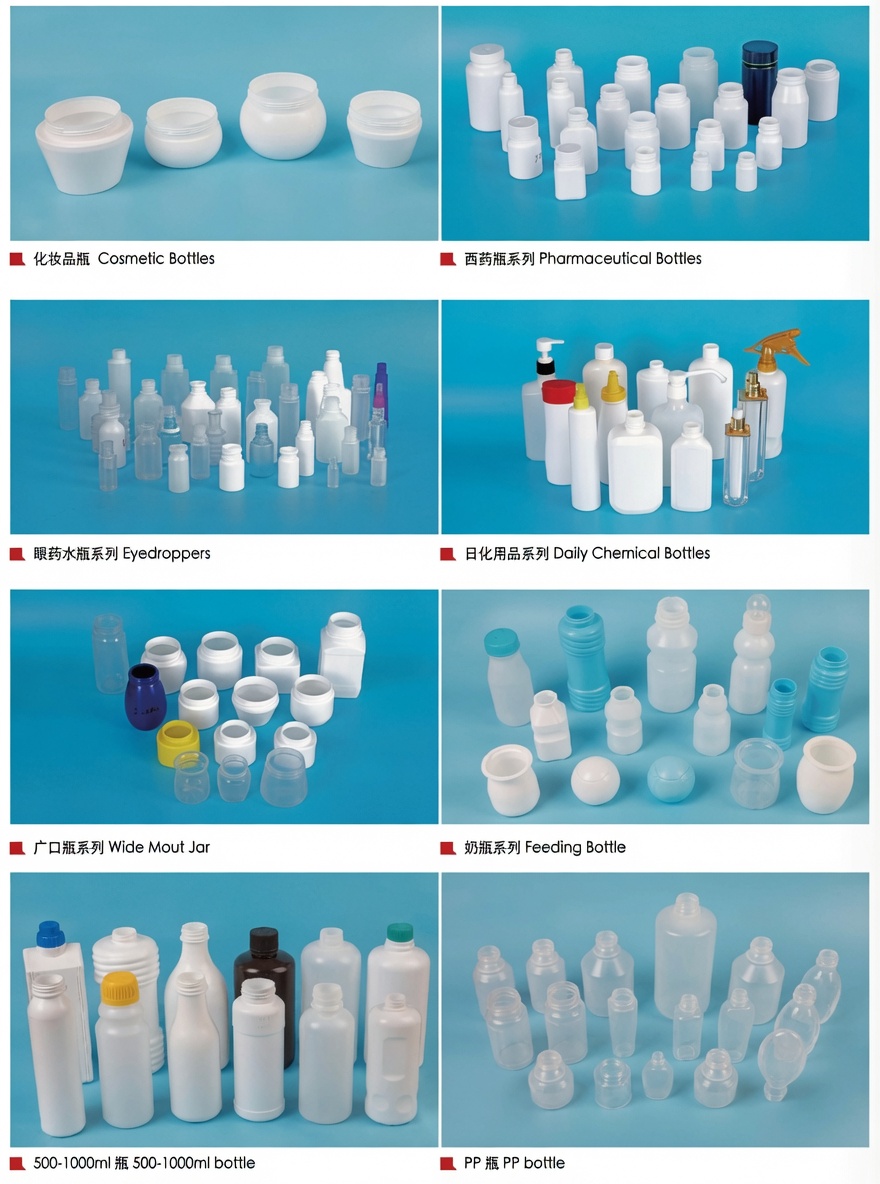
Integrated auxiliary systems: chiller, hopper dryer, conveyor, and inspection units available as turnkey packages.
Ever Power: Precision Manufacturing and Custom Engineering for Pharmaceutical IBM Machines
Ever Power has built its reputation on a simple but demanding principle: every injection blow molding machine that leaves the factory floor must perform to pharmaceutical-grade expectations from the very first cycle. The company’s engineering team works with UK pharmaceutical manufacturers, contract packagers, and bottle converters from the earliest stages of a project — analysing bottle drawings, reviewing material data sheets, and running mold-flow simulation before a single piece of tooling is machined. This front-loaded engineering investment consistently eliminates the costly process development cycles that plague relationships between buyers and less experienced machinery suppliers, and it is a discipline that reflects the precision manufacturing ethos Ever Power has cultivated since its founding.
Customisation at Ever Power encompasses every sub-system of the injection blow molding machine. Customers specifying containers for NHS-regulated prescription medicines can request machines built with stainless-steel contact surfaces on all polymer pathways, electropolished barrel liners for reduced adhesion in high-fill-colour applications, and barrel purge documentation traceable to batch numbers for GMP compliance. The electrical cabinet can be configured to CE marking requirements applicable in Great Britain under the UK Product Safety and Metrology etc. (Amendment etc.) (EU Exit) Regulations 2019, ensuring straightforward site acceptance by UK facilities management and electrical safety teams.
Global supply chain resilience is another dimension of Ever Power’s value proposition that resonates strongly with UK pharmaceutical procurement teams who have experienced the import disruption risks highlighted by recent geopolitical and logistics events. Ever Power maintains finished machine stock and pre-assembled sub-components at regional logistics partners, enabling committed delivery schedules that competing suppliers rarely match. Spare parts are held under long-term supply agreements at UK bonded warehouse locations, so downtime events that might stretch to weeks waiting for international shipments are reduced to same-day or next-day resolutions.
ISO 9001 Certified Manufacturing
Full quality management system from raw material intake to final FAT.
Full Customisation Capability
Machine frame dimensions, cavity count, drive system, control interface — all configurable.
UK Market Support
Technical documentation in English, CE compliance, UK spare parts stocking.
Featured Injection Blow Molding Machines for Pharmaceutical Packaging
Two proven platforms trusted by pharmaceutical container manufacturers across Europe and the UK.
Customer Success Story: Nottingham Contract Pharmaceutical Packager Achieves NHS Compliance Milestone
Client
MedPack Solutions Ltd, Nottingham
Sector
Contract Pharmaceutical Packaging
Machine Installed
Ever Power ZQ40 (European, x2 units)
Output
95,000 HDPE bottles/shift
MedPack Solutions Ltd operates a 12,000 square metre manufacturing facility on the outskirts of Nottingham, supplying primary packaging to over 30 pharmaceutical licence holders across the East Midlands and Yorkshire. When the company was awarded a long-term contract to produce HDPE oral solid drug bottles for a generic analgesic manufacturer, it faced an immediate capacity and compliance challenge: the existing extrusion blow molding equipment on site could not meet the ±0.1 mm neck finish tolerance specified in the pharmaceutical client’s container qualification dossier. Repeated cap application failures during pilot trials were generating rejection rates above 4%, far exceeding the 0.1% defect acceptance criteria required for NHS supply chain entry.
After evaluating three injection blow molding machine suppliers, MedPack Solutions selected two Ever Power ZQ40 European-specification machines. The decision was driven by Ever Power’s willingness to conduct a factory-based process qualification trial before contract signature — running the client’s container design on a trial tool set and providing dimensional data reports across 500 consecutive bottles. The results confirmed neck finish diameter Cpk values of 1.68 and wall thickness uniformity deviation below 0.06 mm. Equally important to MedPack’s quality assurance team was the Siemens PLC control system’s capability to store and password-protect validated process recipes under a 21 CFR Part 11-compatible audit trail — a requirement for the company’s MHRA site licence.
Installation and IQ/OQ completion were achieved within 14 weeks of purchase order, with Ever Power’s commissioning engineers spending two weeks on-site in Nottingham to complete OQ testing and provide hands-on operator training. Within the first full production month, MedPack Solutions achieved a rejection rate of 0.04% against the 0.1% threshold — a performance that secured the pharmaceutical client’s approval for commercial supply and allowed MedPack to subsequently expand the contract to include amber PET cough syrup vials and child-resistant PP capsule bottles, both produced on the same two ZQ40 machines with tooling changeovers completed in under 55 minutes.
Client Testimonials
“The ZQ40’s neck finish precision eliminated our cap application failures overnight. We went from 4% rejection to below 0.05% in the first production week. The Ever Power engineering team understood pharmaceutical container requirements in a way that generalist machinery suppliers simply do not — they had reviewed our container qualification protocol before the site visit and came prepared with answers, not questions.”
— Head of Manufacturing, MedPack Solutions Ltd, Nottingham
“Running child-resistant PP bottles on the ZQ40 has been transformative for our prescription packaging line. The tooling changeover is genuinely under 60 minutes — a claim we were sceptical about before installation, but which has held up consistently across 18 months of production. The Ever Power customisation team also adapted the electrical interlocks to integrate with our existing safety relay network without any third-party integrator involvement.”
— Quality Systems Manager, MedPack Solutions Ltd, Nottingham
“What distinguished Ever Power from other injection blow molding machine suppliers we evaluated was their spare-parts availability in the UK. When a core rod bearing failed at 11 pm on a Thursday, we had a replacement delivered from a UK stocking location by 8 am Friday — our line was down for less than nine hours. For a pharmaceutical contract packer operating under delivery commitments to NHS supply chains, that level of after-sales support is not a nice-to-have; it is non-negotiable.”
— Operations Director, MedPack Solutions Ltd, Nottingham
Frequently Asked Questions
Answers to the questions pharmaceutical packaging buyers and procurement managers ask most often about injection blow molding machines.
Ready to Specify Your Pharmaceutical Injection Blow Molding Machine?
Tell our engineering team your container specification, annual volume, and compliance requirements. We will respond with a tailored configuration proposal within 48 hours.
edit by gzl