How an Injection Blow Molding Machine Works
Stage 01
Injection of the Preform
Molten polymer — typically HDPE, PP, or PET — is injected under high pressure into a closed mold cavity surrounding a hardened steel core rod. The injection mold defines the outer shape and all neck-finish dimensions of the preform. Because the material fills the cavity in a single controlled shot, wall thickness distribution is tightly governed by the mold geometry and injection parameters rather than by post-process stretching. The result is a preform with precise thread geometry, no weld lines across critical sealing surfaces, and a uniform temperature profile that prepares it perfectly for the subsequent blow stage.
Stage 02
Transfer & Blow Expansion
Still retained on the core rod, the hot preform is rotated or indexed to the blow station where the blow mold closes around it. Compressed air — typically between 0.5 and 1.2 MPa depending on material and container geometry — is introduced through the core rod, inflating the softened polymer against the cooled blow mold walls. Cooling is rapid because the mold is temperature-controlled, usually by chilled water circulating through internal channels. As the material contacts the cold steel, it sets almost instantly. The core rod continues to define the inner neck bore while the blow mold shapes every exterior surface detail including shoulders, body contours, and base geometry.
Stage 03
Ejection & Quality Control
Once cooled sufficiently, the blow mold opens and the finished container is stripped from the core rod at the ejection station. Because the injection blow molding machine produces a fully finished article in one integrated cycle, there is no neck-flash trimming and no secondary deflashing operation required. Integrated vision systems and leak-testing stations can be positioned immediately downstream to verify dimensional compliance before parts enter the packaging line. For high-volume runs serving UK pharmaceutical and personal care customers, this seamless three-stage sequence — injection, blow, eject — running continuously at cycle times between 8 and 20 seconds delivers output rates that competing processes simply cannot match at the same quality level.
Core Materials Processed by Injection Blow Molding Machines
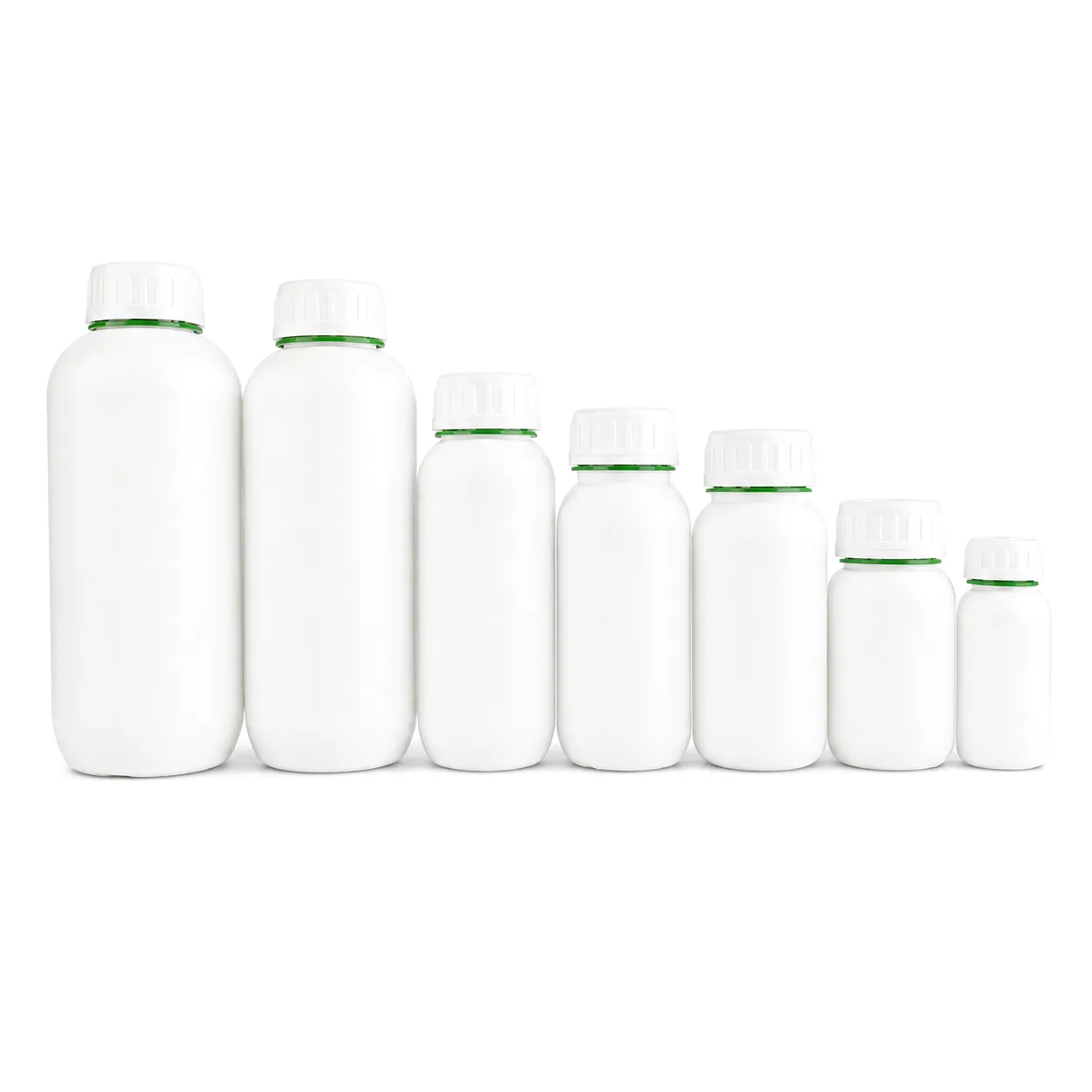 Material selection sits at the heart of every injection blow molding project. The machine must be configured — in terms of screw geometry, barrel temperature profile, shot size, and hot-runner architecture — specifically around the polymer being processed. Unlike commodity extrusion processes, injection blow molding works predominantly with thermoplastics that combine good melt-flow properties with the ability to retain heat through the transfer stage long enough to blow cleanly. The five materials below account for the overwhelming majority of commercial production on injection blow molding machines operating across the UK market today.
HDPE (High-Density Polyethylene)
The workhorse of agricultural chemical and industrial packaging. Outstanding chemical resistance to pesticides, herbicides, and fertiliser concentrates, combined with good low-temperature impact strength. HDPE injection blow molding machine runs are common across manufacturing facilities in the Midlands and North of England, producing containers from 100 ml to 5 L in a single integrated cycle. Its relatively narrow processing window demands precise barrel temperature control, typically 180–240 °C, which modern machines handle through multi-zone closed-loop PID systems.
PP (Polypropylene)
Polypropylene’s heat resistance — with a softening point above 130 °C — makes it the standard choice for containers intended for steam sterilisation or hot-fill processes. In pharmaceutical and healthcare applications across the UK, PP is specified for tablet dispensing caps, dropper bottles, and nasal pump containers where autoclave compatibility is required. Injection blow molding machines processing PP benefit from carefully controlled cooling to avoid stress whitening in thin-walled sections, with mould temperatures typically held between 15 and 40 °C using precision chiller units.
PET (Polyethylene Terephthalate)
PET delivers crystal-clear transparency combined with an excellent barrier performance against oxygen and carbon dioxide. While stretch-blow molding dominates large-format PET bottle production, injection blow molding machines are well-suited to small PET containers below 500 ml — particularly for premium cosmetics, health supplements, and specialty food packaging where optical clarity is a marketing differentiator. UK personal care brands based in London and Manchester increasingly specify injection-blown PET for serum bottles and toner containers because the process produces a flawless interior finish without any vestigial weld lines.
LDPE / LLDPE
Low-density and linear-low-density polyethylene grades are chosen when squeeze-ability is the primary performance requirement. Eye-drop bottles, nasal spray containers, and flexible dosing vials all benefit from the material’s inherent compliance, which allows users to express controlled volumes of liquid with gentle finger pressure. Injection blow molding machine tooling for LDPE containers demands careful core-rod surface finishing to minimise adhesion during ejection, as the material’s low stiffness makes it prone to distortion if the ejection force is not uniformly distributed around the container neck.
Engineering-Grade Polymers
In specialised industrial and medical applications, injection blow molding machines process engineering polymers including PC (polycarbonate), COP (cyclic olefin polymer), and TPE-V (thermoplastic vulcanisate). These materials demand more sophisticated machine configurations — higher injection pressures often exceeding 180 MPa, corrosion-resistant barrel linings, and hot-runner manifolds capable of sustained operation above 300 °C. The reward is superior performance characteristics: PC bottles offer exceptional optical clarity combined with impact resistance, while COP is virtually impermeable to moisture vapour, making it the preferred choice for injectable drug packaging where product stability over a multi-year shelf life is paramount.
Industrial Application Scenarios
Injection blow molding machines serve diverse sectors — from life sciences to agrochemicals. Below are the primary application contexts in today’s UK manufacturing landscape.
Pharmaceutical & Healthcare Packaging
Pharmaceutical manufacturers in Manchester and Cambridge rely on injection blow molding machines to produce medicine bottles, dropper vials, and dosing containers that must meet strict GMP standards. The process eliminates flash and weld lines on internal surfaces, ensuring no contamination sites for microbial colonisation. Containers for syrup, ophthalmic solutions, and oral suspensions are produced from PP or LDPE with child-resistant caps that click into precision-formed neck profiles. The MHRA requires documented traceability for pharmaceutical packaging, and the injection blow molding machine’s servo-driven repeatability makes batch documentation significantly more straightforward than variable-output extrusion processes.
Cosmetics & Personal Care Bottles
The UK personal care market — centred on brands operating out of London, Bristol, and Leeds — demands packaging that combines premium aesthetics with functional precision. Injection blow molding machines excel here because they produce containers with optically clear walls (in PET), superior gloss, and complex custom body geometries that distinguish shelf presence. Shampoo bottles, serum droppers, hand-sanitiser containers, and perfume blanks are all produced via this process. The absence of any parting-line flash means that labelling adhesion surfaces are perfectly smooth, a detail that matters enormously in high-end retail environments where label lift-off or misalignment translates directly into brand damage and customer returns.
Food-Grade Containers & Specialty Jars
Food-safe injection blow molding machine applications in the UK include wide-mouth jars for honey, nutritional supplements, protein powders, and condiments. PP containers for hot-fill applications — sauces and gravies filled above 85 °C — require precise material selection and wall-thickness profiling to resist thermal distortion during filling and subsequent cooling. The injection blow molding machine’s ability to produce containers with completely smooth internal surfaces eliminates the product-trapping micro-crevices that can harbour bacteria, a critical hygiene consideration for any food-contact packaging subject to UK Food Standards Agency oversight. Yorkshire-based food manufacturers have adopted this process specifically for premium artisan product ranges where packaging quality is a key brand attribute.
Automotive Fluids & Industrial Chemical Bottles
From the West Midlands automotive cluster to Sheffield’s engineering supply chain, injection blow molding machines produce HDPE containers for brake fluid, windscreen washer concentrate, engine flush, and specialist lubricants. These containers face severe chemical compatibility demands — brake fluid, for instance, is highly hygroscopic and can attack poorly specified polyolefins, causing container deformation and contamination of the fluid itself. Injection blow molding machine tooling for automotive containers typically incorporates fluorination treatment options that significantly enhance chemical resistance beyond standard HDPE capability, allowing the same container to hold multiple different fluid types across a manufacturer’s product portfolio without tooling duplication.
Core Advantages of Injection Blow Molding Machines
🎯
Flash-Free Production
Because the neck finish is formed during injection rather than trimmed after blow molding, injection blow molding machines produce containers that require no deflashing or secondary trimming operations. This eliminates an entire downstream process step, reduces labour costs, and removes a major source of dimensional variability from the production chain. For pharmaceutical and food-grade packaging where any particulate contamination from trimming debris is categorically unacceptable, this is not merely a convenience — it is a fundamental quality requirement.
⚓
Precise Neck-Finish Accuracy
The core rod defines the inner neck bore of every container produced, ensuring that closure torque specifications are met reliably across every part in a production run. For child-resistant closures, pump dispensers, and metering caps — all of which rely on precise neck-thread engagement to function correctly — this level of dimensional consistency is a competitive advantage that the injection blow molding machine delivers inherently, without any additional process control overhead.
⚡
Energy Efficiency via Servo Drive
Modern servo-electric injection blow molding machines consume energy only when actuating, drawing zero standby power during dwell periods within the cycle. Compared with continuously running hydraulic power packs, this can reduce total machine energy consumption by 40 to 60%. For UK manufacturers operating under increasing pressure from rising energy costs and carbon-reduction commitments, specifying a servo-driven injection blow molding machine is both an economic and an environmental benefit that pays back over the asset’s lifetime.
📈
Zero-Scrap Process Integration
Unlike extrusion blow molding, the injection blow molding machine generates no parison scrap or pinch-off waste. The shot weight is precisely metered for each cavity, and what is injected is entirely consumed in forming the preform. This zero-scrap characteristic has significant material-cost implications, particularly when processing engineering polymers or custom-coloured compounds that carry a substantial price premium over commodity grades.
🔨
Multi-Cavity Scalability
Injection blow molding machine tooling can be configured with multiple cavities operating in parallel — typically 4, 6, or 8 cavities on mid-range machines and up to 16 or more on large-scale production platforms. Because all cavities are fed from the same hot-runner manifold and indexed on the same core-rod carousel, cavity-to-cavity dimensional variation is inherently lower than on multi-cavity extrusion blow systems. This scalability allows manufacturers to grow output in line with demand without purchasing new machines, simply by upgrading tooling sets.
Technical & Performance Parameters
The table below summarises representative technical parameters for a mid-range injection blow molding machine. Specific values vary by model, tooling configuration, and material being processed. Consult Ever Power’s engineering team for application-specific specification confirmation.
| Parameter | ZQ60 (UIB-90 Replacement) | ZQ80 (UIB-120 Replacement) | Notes |
|---|---|---|---|
| Number of Cavities | 3 / 6 | 4 / 8 | Configurable per tooling |
| Container Volume Range | 5 ml – 500 ml | 5 ml – 1,000 ml | Depends on mould design |
| Injection Pressure | Up to 160 MPa | Up to 180 MPa | Servo-controlled |
| Clamp Force | 600 kN | 800 kN | 5-point double toggle |
| Barrel Temperature Range | 160 – 320 °C | 160 – 340 °C | PID multi-zone control |
| Blow Air Pressure | 0.5 – 1.0 MPa | 0.5 – 1.2 MPa | Adjustable per material |
| Cycle Time | 8 – 18 s | 10 – 20 s | Container-size dependent |
| Compatible Materials | HDPE, LDPE, PP, PET, PC, COP, TPE-V | Custom barrels for PC/COP | |
| Drive System | Full servo-electric | Energy saving: up to 60% vs hydraulic | |
| Core Rod Material | H13 tool steel, nitrided surface | Ra ≤ 0.4 µm finish | |
| Neck-Finish Tolerance | ±0.05 mm | As-moulded; no trimming | |
| Control System | 15″ touchscreen HMI, Siemens PLC | Remote diagnostics ready | |
Featured Ever Power Injection Blow Molding Machines
Direct replacements for Uniloy UIB machines — proven across UK manufacturing sites.
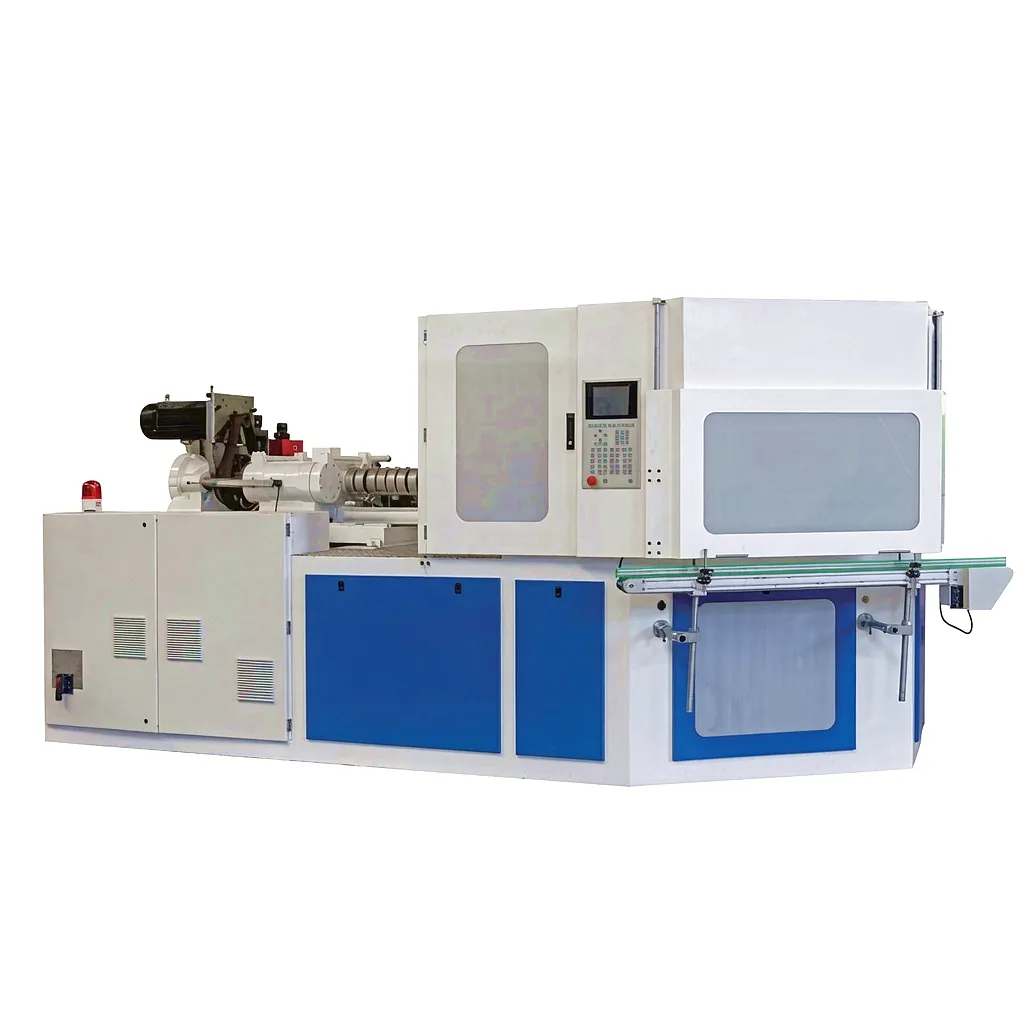
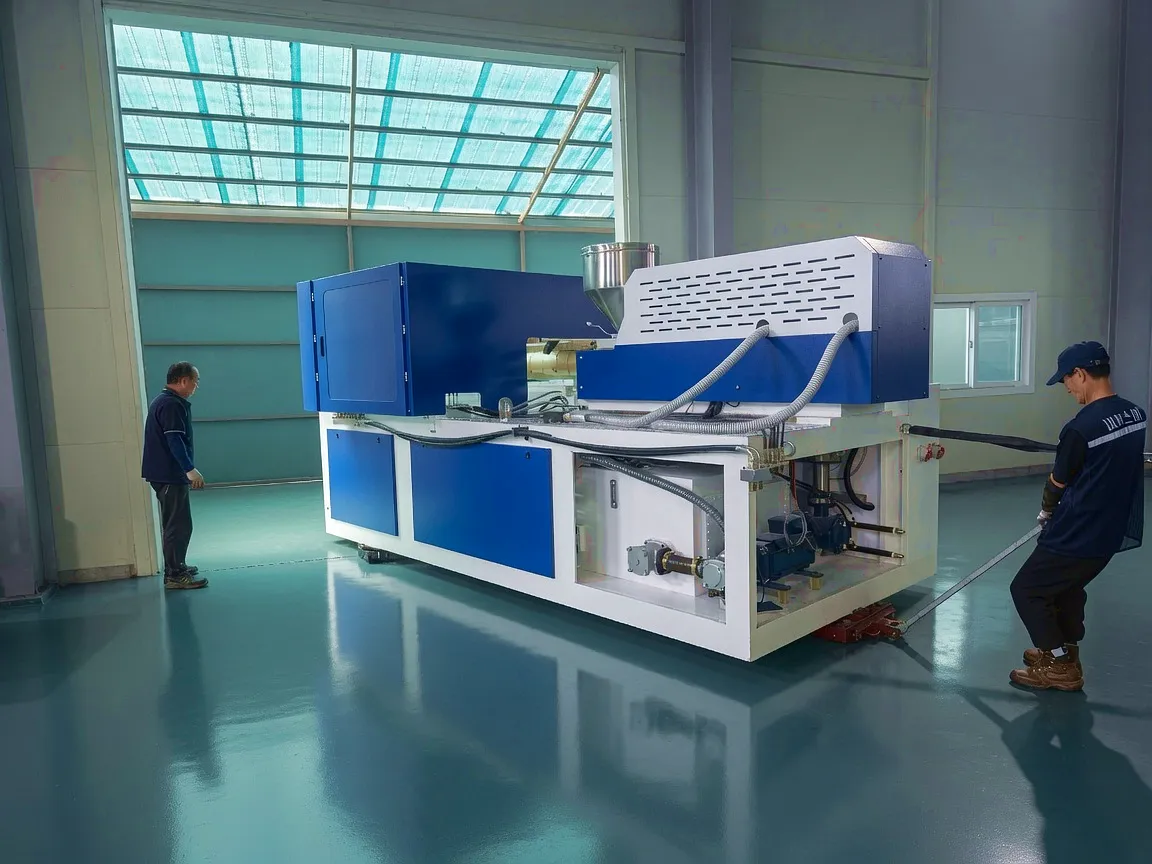
Replacement of Uniloy UIB 120 Injection Blow Molding Machine – ZQ80
The ZQ80 is Ever Power’s flagship direct replacement for the Uniloy UIB 120, delivering equivalent or superior cavity performance with a full servo-electric drive system. With a clamp force of 800 kN and the ability to process containers up to 1,000 ml across 4 or 8 cavities, it serves agricultural chemical, personal care, and pharmaceutical packaging applications with equal confidence. Existing UIB-120 tooling is compatible, minimising changeover investment.
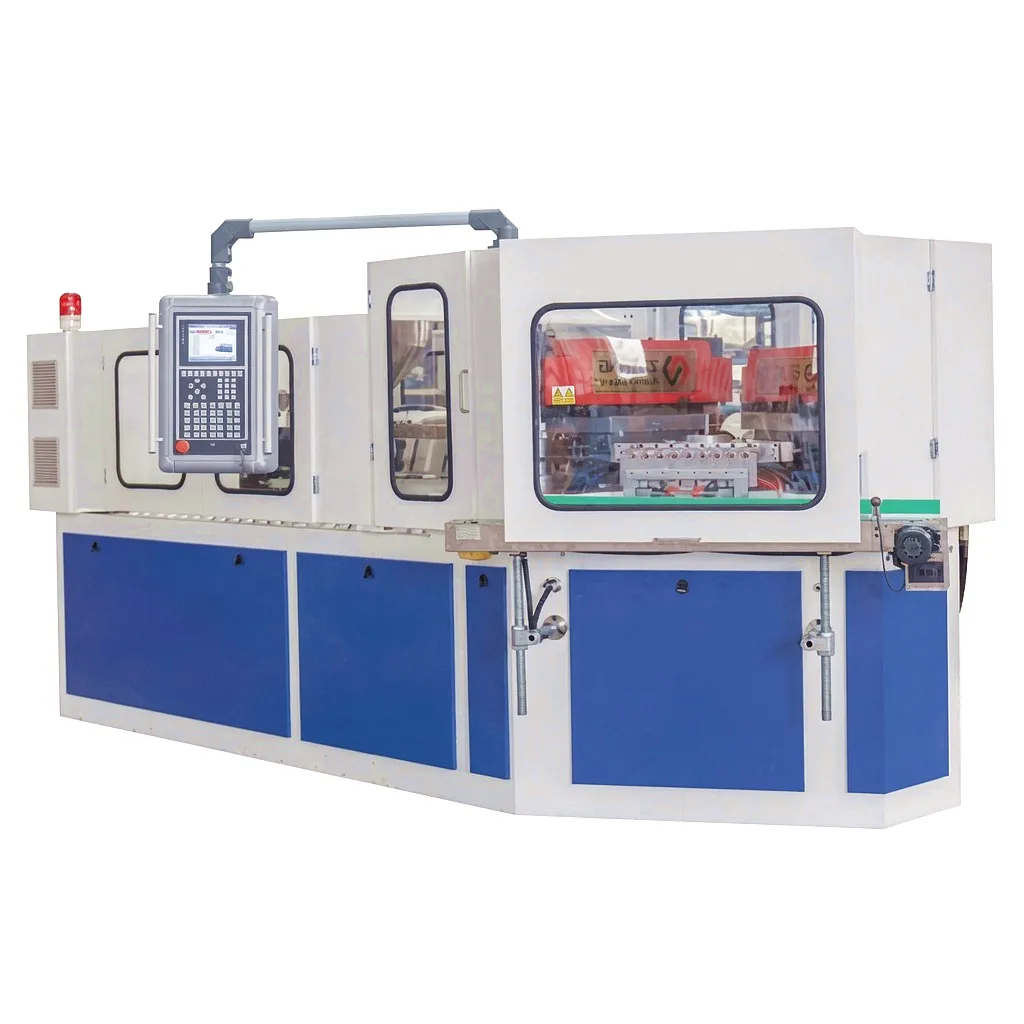
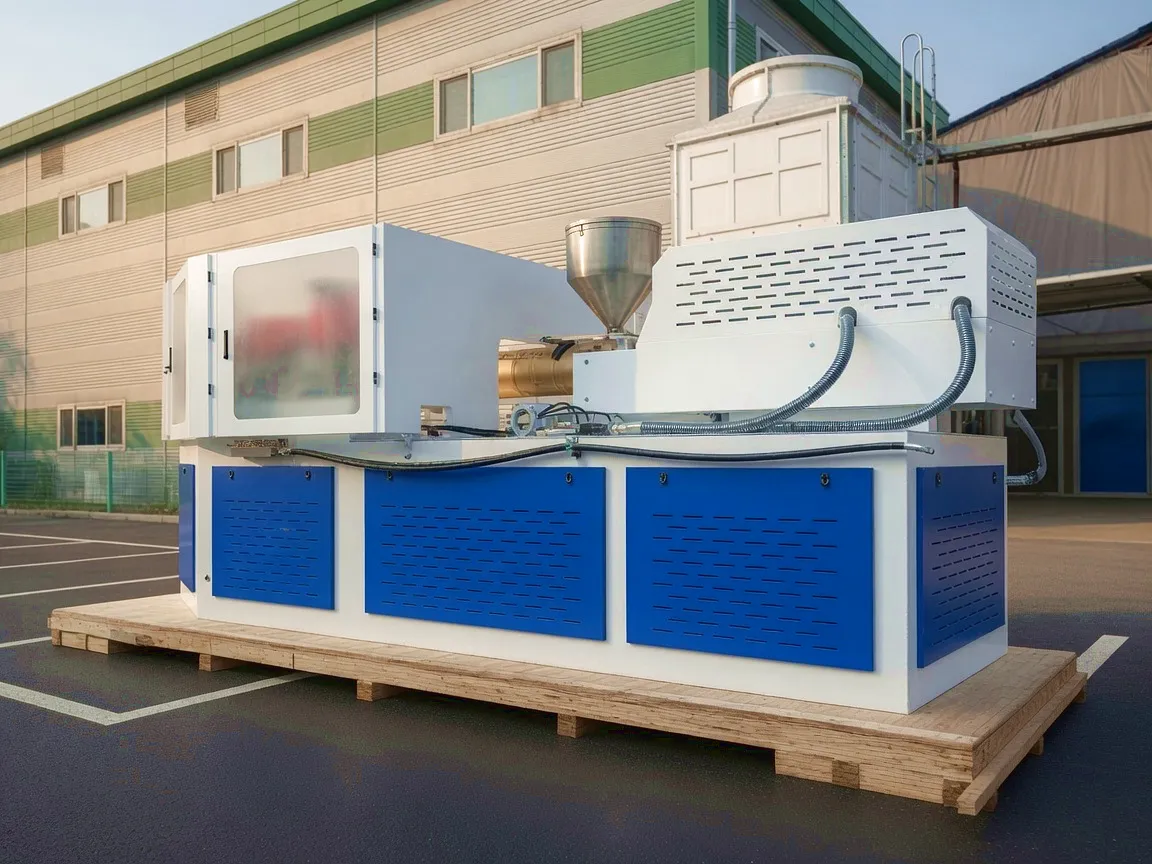
Replacement of Uniloy UIB 90 Injection Blow Molding Machine – ZQ60
The ZQ60 replaces the Uniloy UIB 90 in applications where container volumes up to 500 ml and cavity counts of 3 or 6 meet production requirements. At 600 kN clamp force with a full servo drive, it processes HDPE, PP, LDPE, and PET with measurably lower energy consumption than the hydraulic UIB-90 it supersedes. The ZQ60’s compact footprint makes it particularly suitable for UK mid-tier contract manufacturers operating in space-constrained facilities where floor area is a premium.
Ever Power: Precision Manufacturing & Customisation Capability
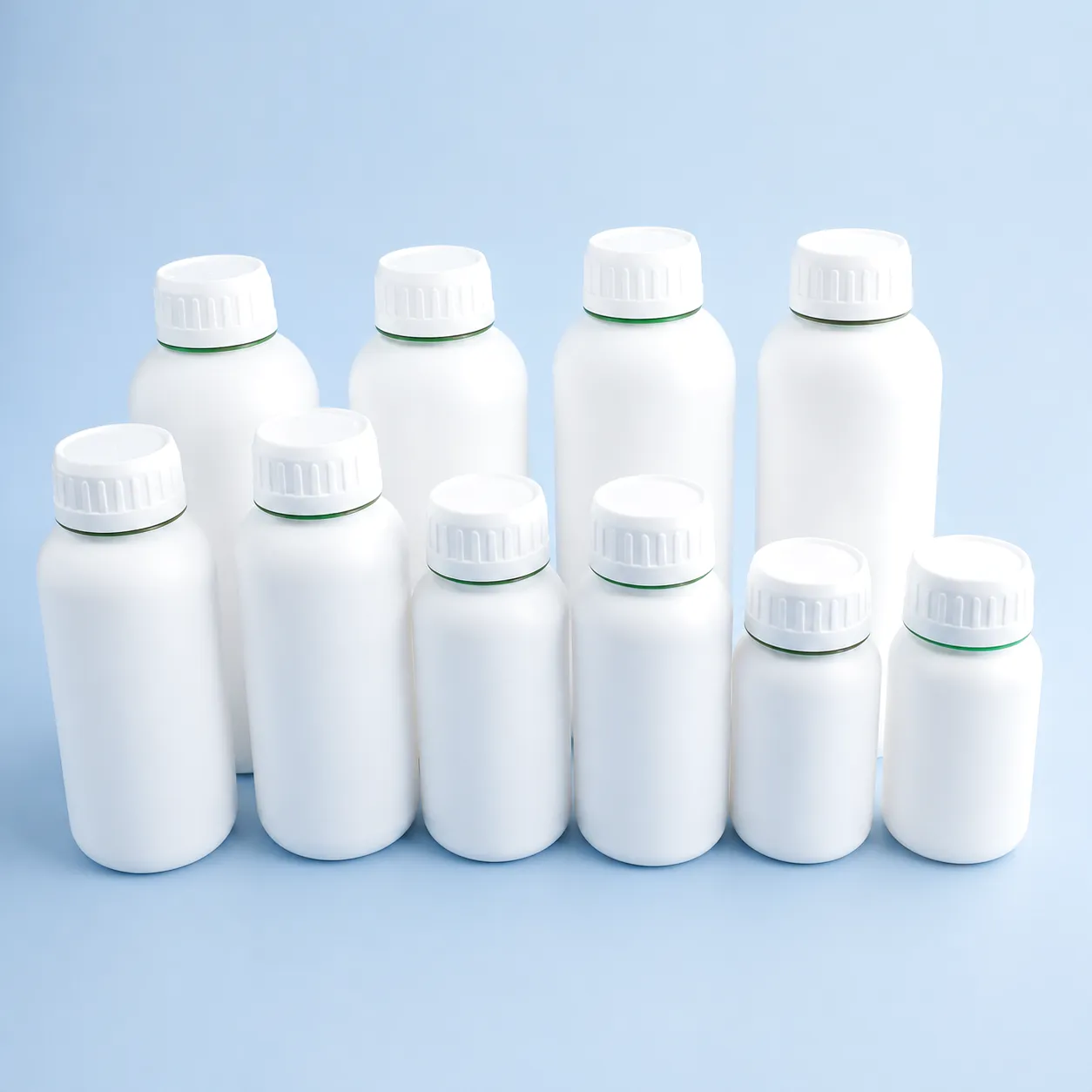 Ever Power has spent over two decades refining its injection blow molding machine manufacturing process to a point where standard catalogue models represent only part of what the company delivers. For the significant share of customers — particularly in the UK, where regulatory demands, brand differentiation requirements, and unusual container geometries frequently combine — the ability to customise at the machine level rather than simply at the tooling level is what separates Ever Power from commodity equipment suppliers. Ever Power’s engineering team works directly with procurement and process engineers at customer sites to understand the specific combination of material, container geometry, cavity count, output rate, and downstream integration that the application requires, then configures the machine accordingly before factory acceptance testing begins.
The manufacturing facility operates across a purpose-built precision engineering campus equipped with five-axis CNC machining centres, CMM (coordinate measuring machine) inspection rooms, and an in-house heat-treatment facility for core rod and mould tooling. Every injection blow molding machine assembly passes through a multi-stage quality protocol that includes dry-cycle verification, material-specific wet-run testing at production rates, and a full documentation package covering injection pressure curves, temperature profiles, and dimensional inspection results for the tooling installed. This documentation is provided as standard and forms the basis for the customer’s own incoming inspection acceptance criteria when the machine arrives at their facility.
Customisation capabilities cover a wide range of scope. Customers requiring fluorinated container production for particularly aggressive agrochemicals can request integrated in-line fluorination modules that treat the internal container surface immediately after moulding. Customers in the pharmaceutical sector requiring cleanroom-compatible machine enclosures can specify stainless-steel guarding, positive-pressure filtered air-supply to the mould area, and surface-finish specifications on all machine surfaces that contact the clean-zone air stream. For UK customers concerned about after-sales support — a legitimate concern when specifying equipment from an overseas manufacturer — Ever Power maintains a European spare-parts distribution hub and a technical support arrangement with UK-based service engineers capable of responding to machine-down situations within 48 hours.
Ready to discuss your injection blow molding machine specification?
Our engineers provide no-obligation technical consultations and budgetary quotations within 24 hours.
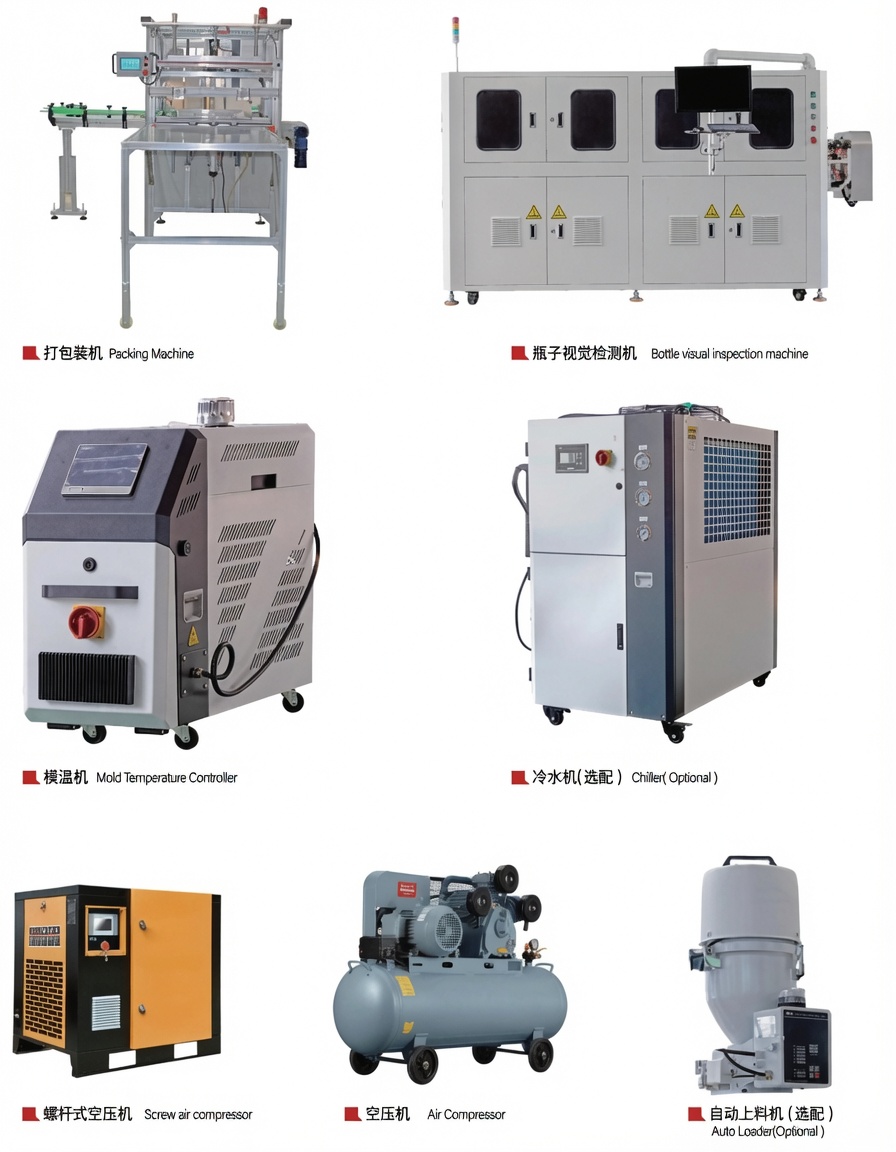
Customer Success Story: Sheffield Agrochemical Packaging Manufacturer
 A mid-sized agrochemical packaging contractor based in Sheffield’s industrial east zone had been operating two ageing hydraulic injection blow molding machines that were approaching the end of their economically viable service lives. The machines — both over 18 years old — were producing HDPE pesticide containers in the 500 ml and 1 L range for a regional crop protection chemical distributor. Running costs were escalating: hydraulic seal replacements had become a quarterly event, heating element failures on the barrel zones were occurring with increasing frequency, and the combined energy consumption of the two machines was roughly 85 kWh per production hour — a figure that had become difficult to justify commercially as electricity prices climbed through 2024 and 2025.
After an engineering evaluation that included visits to two reference sites operating Ever Power ZQ80 machines in mainland Europe, the Sheffield business commissioned two ZQ80 units from Ever Power, configured with 8-cavity tooling compatible with their existing mould inserts. Installation and commissioning were completed over a nine-day period during a planned factory maintenance shutdown, with Ever Power’s commissioning engineers working alongside the customer’s production team throughout. The line was at full production rate by day ten of the changeover schedule — two days ahead of the original project plan.
The measurable outcomes at the six-month post-installation review included a 54% reduction in total energy consumption for the affected production lines, a reject rate that dropped from 1.8% on the legacy machines to 0.22% on the ZQ80 units, and zero unplanned maintenance downtime in the first two quarters of operation. The neck-finish dimensional consistency achieved on the ZQ80s allowed the Sheffield plant to qualify for a new contract supplying herbicide containers to a major national agrochemical brand — a contract that had previously been inaccessible due to the brand’s tight tolerance requirements for cap-engagement consistency across high-volume runs.
What Our Customers Say
★★★★★
“The ZQ80 transformed our pesticide container line completely. The neck-finish consistency we are now achieving is genuinely superior to what the old hydraulic machine ever produced — our closure supplier has actually commented on it. Ever Power’s commissioning team was professional and thorough, and their remote diagnostic support has been responsive every time we have needed it.”
— Production Manager, Sheffield Agrochemical Packaging Plant
★★★★★
“We specified the Ever Power injection blow molding machine for a new RTU spray container contract and it has exceeded expectations. The wall-thickness uniformity across our 500 ml LDPE containers is consistent to within 0.08 mm — tighter than anything our previous supplier was able to offer. The fact that Ever Power adapted the core rod surface finish specifically for our LDPE grade made a real difference to ejection reliability.”
— Technical Director, Birmingham Contract Moulding Company
★★★★★
“From initial enquiry to machine delivery, Ever Power’s process was organised and transparent. The quotation was detailed and technically accurate, the lead time was met precisely, and the documentation supplied with the machine satisfied our pharmaceutical client’s stringent incoming qualification requirements without any supplementary paperwork requests. The energy saving compared with our old machine has been close to 50%, which at current UK electricity rates represents a very significant annual cost reduction.”
— Operations Director, Manchester Pharmaceutical Packaging Contractor
Frequently Asked Questions
Specify Your Injection Blow Molding Machine with Ever Power
Whether you are upgrading ageing hydraulic equipment, expanding production capacity, or specifying your first injection blow molding machine, Ever Power’s engineering team is ready to help. Contact us for a technical consultation and no-obligation quotation.
📧 [email protected] — Get Your Quote Today
edit by gzl