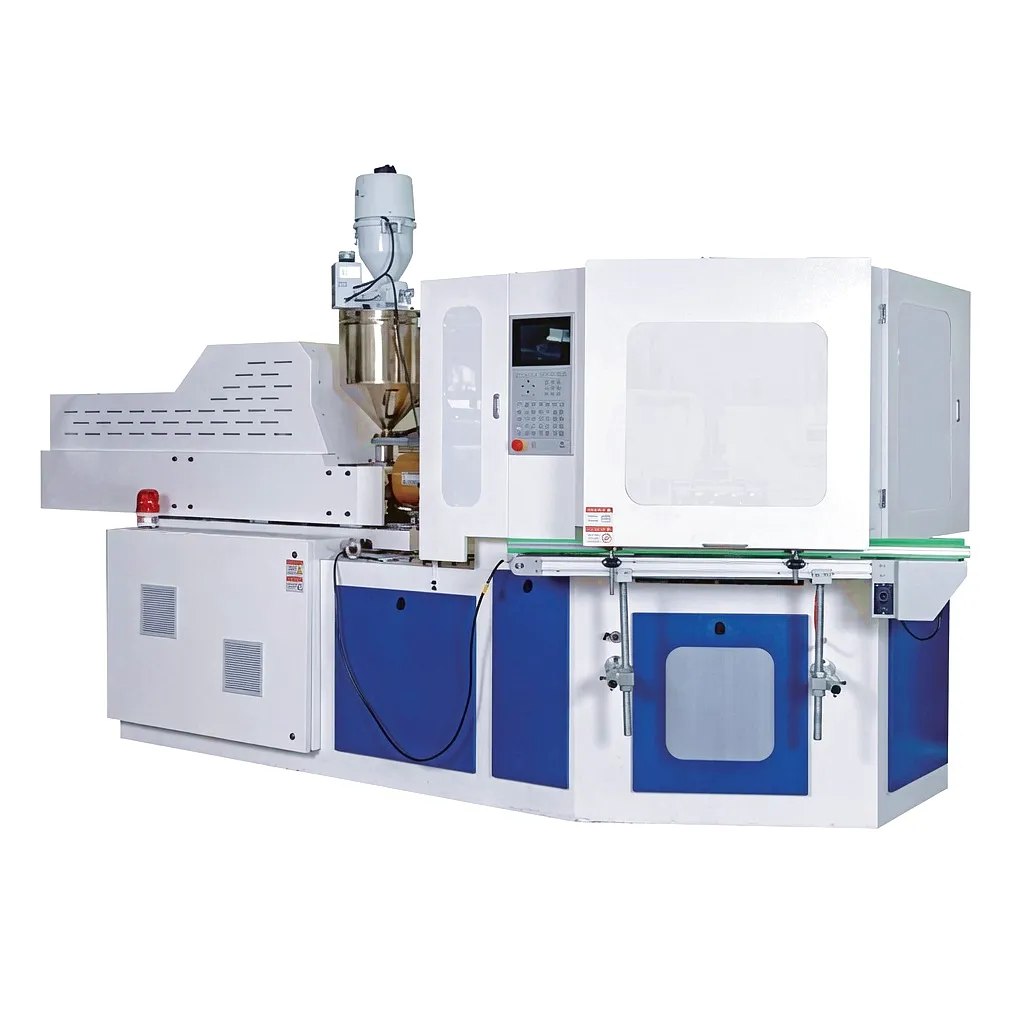
 The injection-blow molding machine has become one of the most consequential pieces of capital equipment in the British food and beverage packaging industry. Across production facilities in the Midlands, the North-West, and Yorkshire, manufacturers have moved decisively away from two-stage stretch blow processes towards single-station IBM technology that combines parison injection, core-rod transfer, and final blow in one continuous cycle. The resulting containers — whether for hot-fill fruit juice, isotonic sports drinks, or precision-dosed condiment bottles — achieve dimensional tolerances that are simply not replicable by alternative forming methods. Neck finishes are moulded to specification in the same cycle, eliminating the secondary reaming or trimming that plagued earlier technologies, while wall thickness distribution across shoulder curves and base panels remains consistent from the first shot to the hundred-thousandth.
How It Works
Working Principle of the Injection-Blow Molding Machine
Plastic resin — typically PET, HDPE, or PP — is metered into a reciprocating-screw barrel where frictional and conductive heating bring it to a homogeneous melt. The melt is injected at high pressure into a closed parison mould around a core rod, forming a precisely dimensioned tube with a fully finished neck thread. This injection phase is the single biggest quality gate in the entire process: wall distribution here predetermines everything downstream.
The rotating index plate transfers the core rod — and the still-warm parison cradled around it — to the blow station without releasing it. This retained-heat transfer is what distinguishes IBM from two-stage processing: because the parison never cools below its orientation temperature, no reheat energy is consumed, and thermal gradients that cause off-centre blowing are avoided. At the blow station, air at 6–10 bar is delivered through the hollow core rod, inflating the parison outward against the blow mould cavity walls. Contact with the cooled cavity surface freezes the molecular structure in the oriented state.
The third station strips the finished container from the core rod and delivers it to the outfeed conveyor or downstream inspection system. On three-station machines the injection, blow, and eject positions operate simultaneously, meaning every machine cycle produces one complete container — or multiple containers on multi-cavity tooling. Cycle times for standard 500 ml PET bottles run between 6 and 12 seconds depending on wall thickness and resin grade, giving practical outputs of 1,200 to 3,600 units per hour per cavity set. This simultaneous operation also provides a genuinely linear relationship between uptime and output, which plant managers across Birmingham and Sheffield increasingly recognise as a scheduling advantage.
Core Materials
Materials Processed by Injection-Blow Molding Equipment
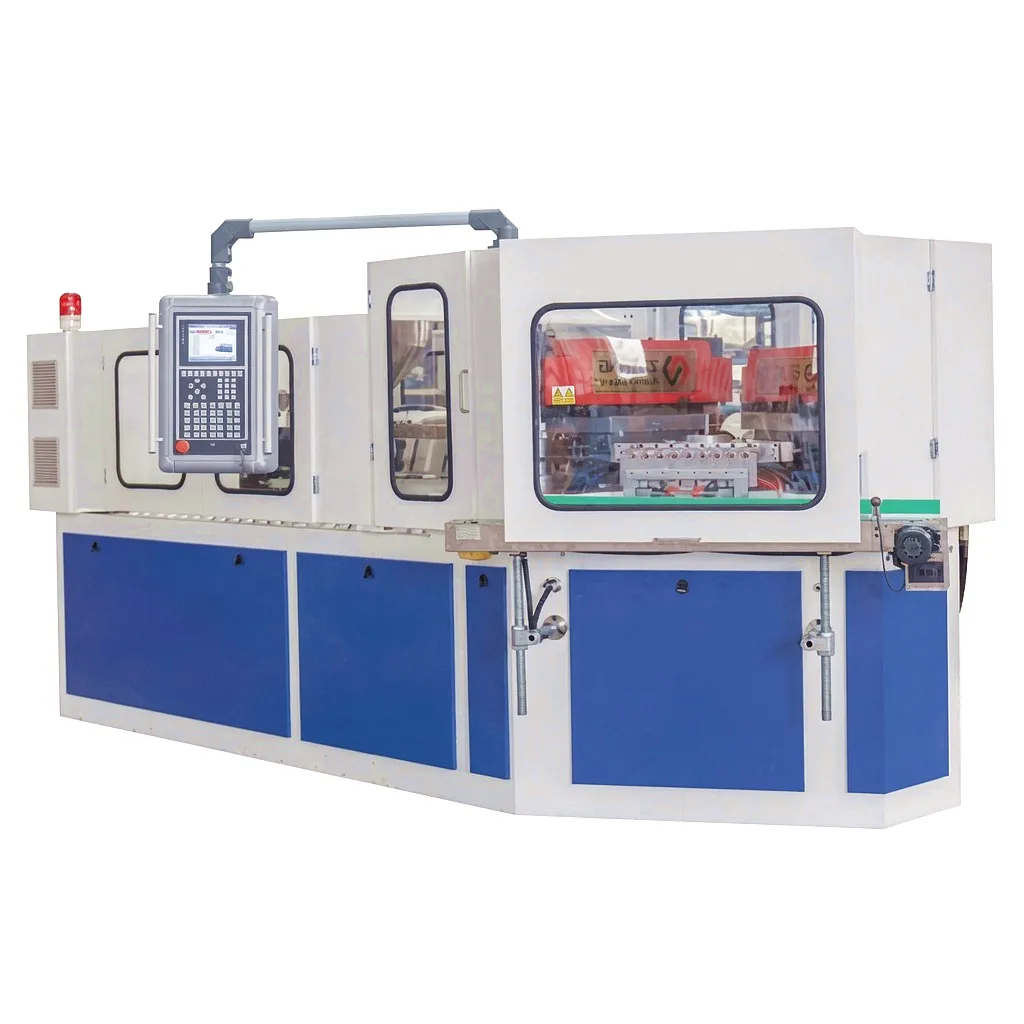
Technical Advantages
Core Technical Advantages of Modern Injection-Blow Molding Machines
Zero Flash, Finished Neck
Because the neck finish is injection-moulded to its final form, there is no pinch-off flash and no secondary trimming. This eliminates a source of contamination in food-grade lines and removes a labour-intensive downstream step that adds cost on every shift.
Consistent Wall Distribution
Parison programming on injection IBM machines allows precise metering of wall thickness at any axial point along the container. This translates directly to optimised material usage — achieving designed top-load performance with the minimum preform weight — which at UK electricity and resin prices delivers measurable savings per thousand units.
Rapid Format Changeover
Purpose-engineered quick-release mould clamps and core-rod assemblies allow a trained two-person team to switch between bottle formats in 90 to 120 minutes. For UK contract packers running mixed production schedules across a week, this agility directly improves equipment utilisation and customer service capability.
High Barrier Compatibility
Multilayer IBM configurations support co-injection of barrier resins such as EVOH between structural layers, producing containers with oxygen transmission rates below 0.01 cc/package/day — essential for ambient-stable products filling UK export channels to mainland European retail networks where shelf-life requirements are stringent.
Energy Efficiency
All-electric servo drive platforms on current IBM equipment have reduced specific energy consumption by 35–50% compared with hydraulic predecessors. With UK industrial electricity prices exceeding £0.19/kWh in 2024–2025, the energy saving on a machine running 6,000 hours per year can offset a significant fraction of capital repayment, strengthening the investment case considerably for cost-conscious production directors.
Performance Parameters
Technical & Performance Parameter Table
| Parameter | Typical Range / Value | Notes |
|---|---|---|
| Container Volume Range | 5 ml – 2,000 ml | Covers eye drops to 2L juice bottles |
| Output (per cavity set) | 1,200 – 3,600 units/hr | Depends on wall thickness and resin grade |
| Injection Pressure | 80 – 180 MPa | Adjusted per resin viscosity |
| Blow Pressure | 6 – 10 bar | Clean dry compressed air |
| Cycle Time (500 ml PET) | 6 – 12 seconds | All-electric servo platform |
| Barrel Temperature (PET) | 260 – 290 °C | Zone-controlled, ±1 °C precision |
| Mould Stations | 3 (Inject / Blow / Eject) | Simultaneous operation |
| Wall Thickness Tolerance | ±0.05 mm | Key for carbonated beverage containers |
| Compatible Resins | PET, HDPE, PP, EVOH, PC | Multi-layer capability on configured models |
| Screw L/D Ratio | 20:1 – 24:1 | Optimised for plasticising uniformity |
| Drive System | All-electric servo / hybrid | 35–50% energy saving vs hydraulic |
| Clamping Force | 40 – 200 kN (model-dependent) | Scales with container diameter and resin |
Application Scenarios
Application Scenario 1: Hot-Fill Fruit Juice Bottles
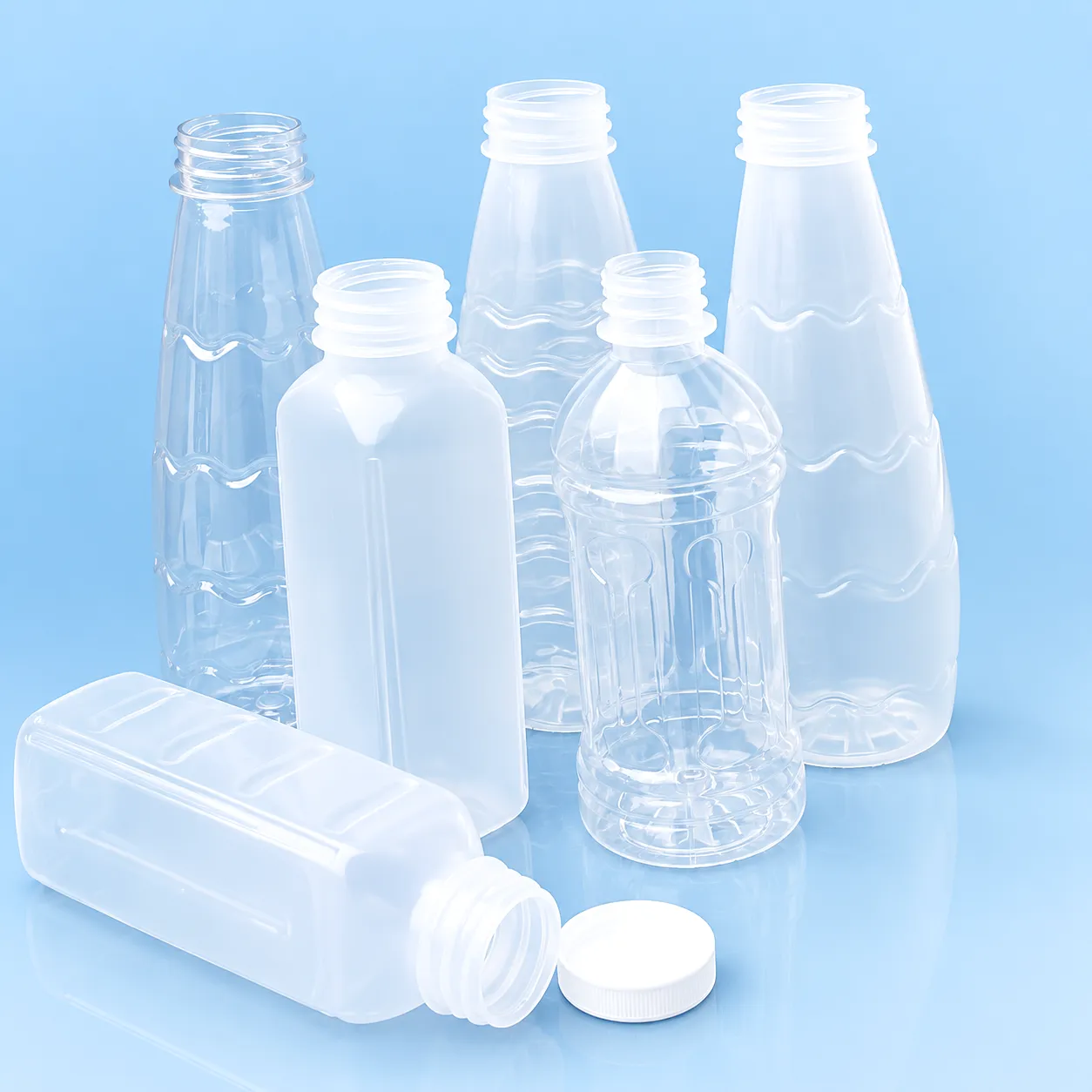 Hot-fill juice production is one of the most technically demanding segments in the entire food and beverage packaging market, and it is precisely where the injection-blow molding machine — using heat-set PET — has reshaped British soft drinks manufacturing. The process involves filling a container with product at 82–92 °C, sealing it, inverting it briefly to sterilise the cap and neck, then allowing the container to cool on an ambient conveyor. During cooling, the contents contract, generating a partial vacuum inside the bottle that the container walls must absorb without panelling or collapsing. This thermal resilience is engineered directly into the IBM-blown sidewall through the heat-set mould cycle: by holding the blown container against a mould maintained at 130–150 °C before releasing it, crystallinity in the sidewall rises to 30–35%, dramatically improving the modulus at elevated service temperatures. The result is a container that passes the vacuum-panel test and the stacking top-load test required by UK retail distribution centres, such as those serving major grocery chains out of the East Midlands and Thames Valley hubs. Manufacturers in Bristol and the South-West who supply chilled juice to supermarket chains have been particularly active adopters of heat-set IBM, using the technology to eliminate the heavy glass containers that previously dominated premium ambient juice ranges and to reduce freight costs on runs to Scottish distribution points.
Application Scenario 2: Sports Drink & Isotonic Beverage Containers
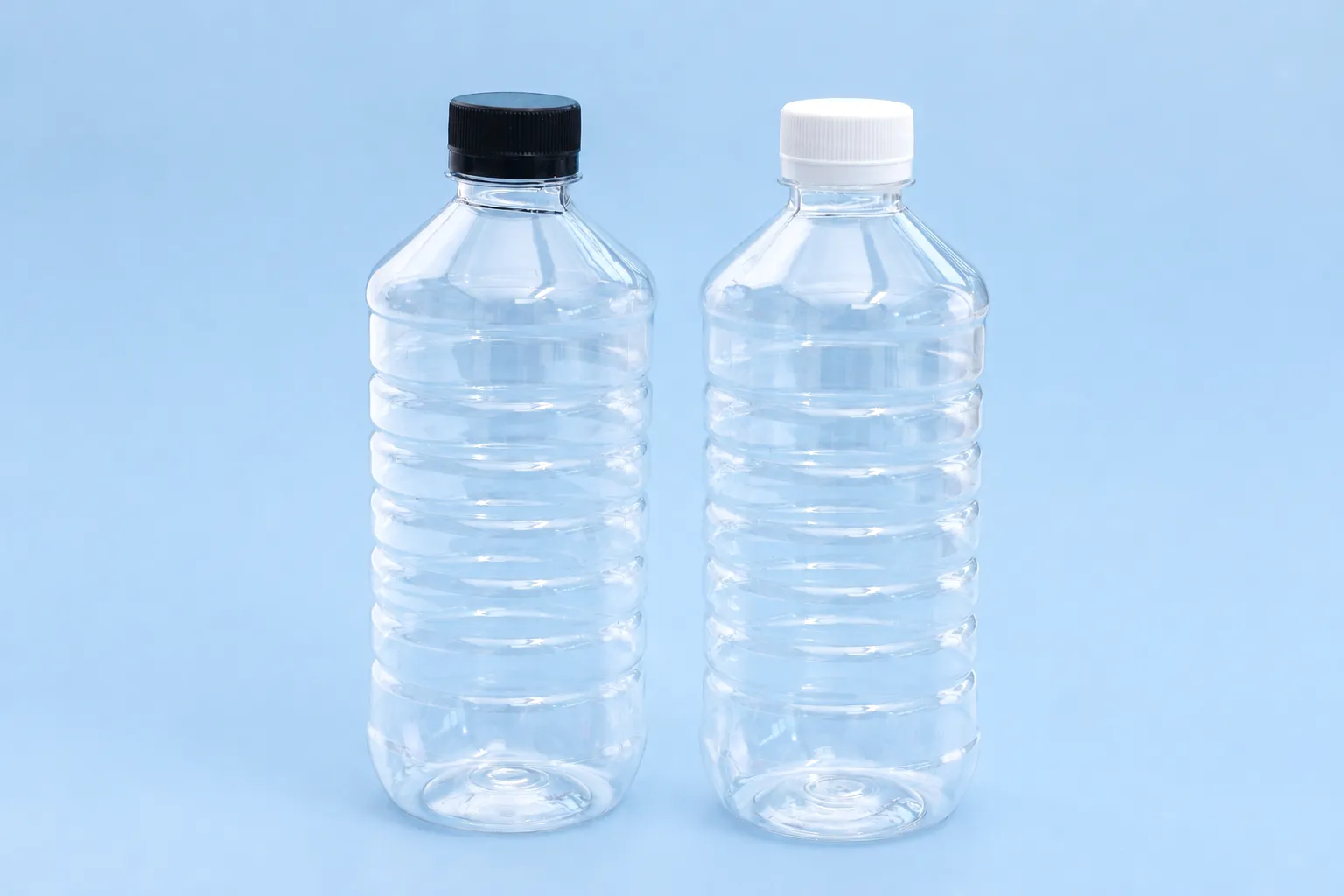 The sports nutrition and isotonic beverage market in the United Kingdom has expanded rapidly since the early 2010s, fuelled by the growth of premium functional drinks and a consumer base with heightened interest in endurance fitness. Containers for these products carry specific design requirements that make the injection-blow molding machine a near-ideal production platform. The ergonomic grip waist, the sport closure threads, and the precisely calibrated fill line marking are all features that IBM produces with zero secondary operations. PET containers for isotonic drinks are typically blown cold — without heat-set — to maximise biaxial orientation and achieve the high burst pressure resistance needed for carbonated or semi-carbonated variants. This means the injection IBM machine is operating in a high-stretch regime where screw-speed stability and core-rod temperature control are tightly coupled to the container’s final mechanical properties. Facilities in Manchester and the North-West supply branded sports drink ranges to national sporting goods retailers and to gym chains that require weekly deliveries in full trailer loads — a logistics profile that favours the IBM’s ability to run continuously for 22-hour shifts without the format breaks that plague less integrated production systems. The compact footprint of a single-station injection-blow machine — typically 4 m x 2 m — is also a practical advantage for existing factory layouts in converted Victorian mill premises across Yorkshire and Lancashire where floor space is constrained.
Application Scenario 3: Condiment & Sauce Containers
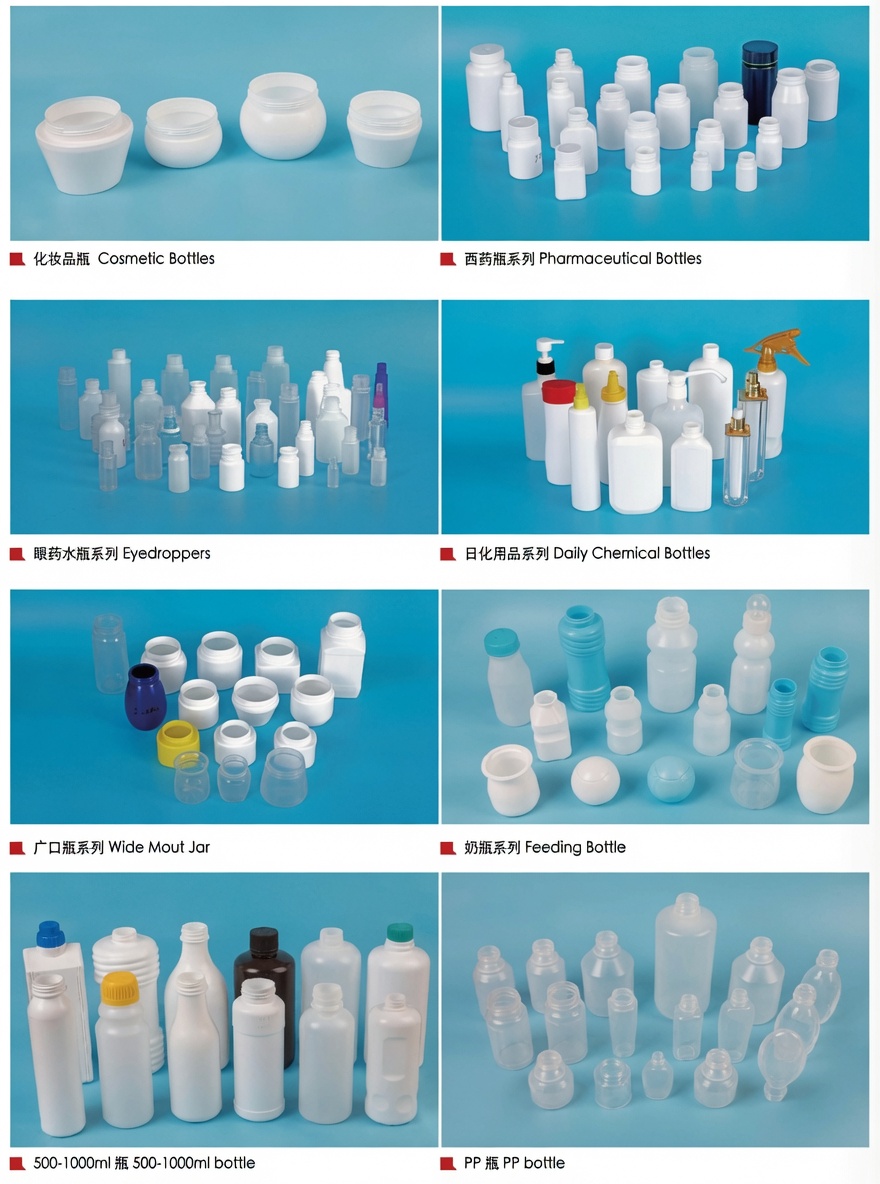
Condiment and sauce packaging is a segment where the dimensional precision of the injection-blow molding machine translates directly to shelf presence and dispensing performance. A squeeze ketchup bottle, a salad dressing with a flip-top sport cap, or a premium mustard jar with a wide-mouth PP closure all rely on a finished neck thread that mates perfectly with the chosen closure system — a requirement that conventional extrusion blow moulding satisfies only after a trimming and inspection step, while IBM delivers it intrinsically. HDPE is the dominant resin for opaque sauce bottles, offering the chemical resistance needed against the high acidity and salt content of vinegar-based products, while maintaining sufficient flexibility for squeeze dispensing. The UK condiment market is notable for its variety of regional producers in the West Midlands, Yorkshire, and East Anglia supplying both domestic retailers and export channels to European delis and specialty food importers. These producers typically run small to medium production batches with frequent SKU changes — exactly the operating profile for which IBM changeover agility is most commercially valuable. Where a sauce brand requires a container with a partial ribbed texture for grip and a flat-panel area for label adhesion, the injection IBM mould can incorporate both features with equal fidelity, eliminating the post-blow labelling-area reaming that causes scrap on less capable equipment. British consumers and retailers have also become increasingly focused on lightweighting: achieving a condiment bottle that is 15% lighter than the previous generation without sacrificing top-load performance during pallet stacking is a challenge that IBM wall-thickness programming handles elegantly, since material can be redistributed axially in the parison to reinforce the shoulder and base while reducing the sidewall mass.
Manufacturing Excellence
Ever Power: Factory Capability & Customisation Services
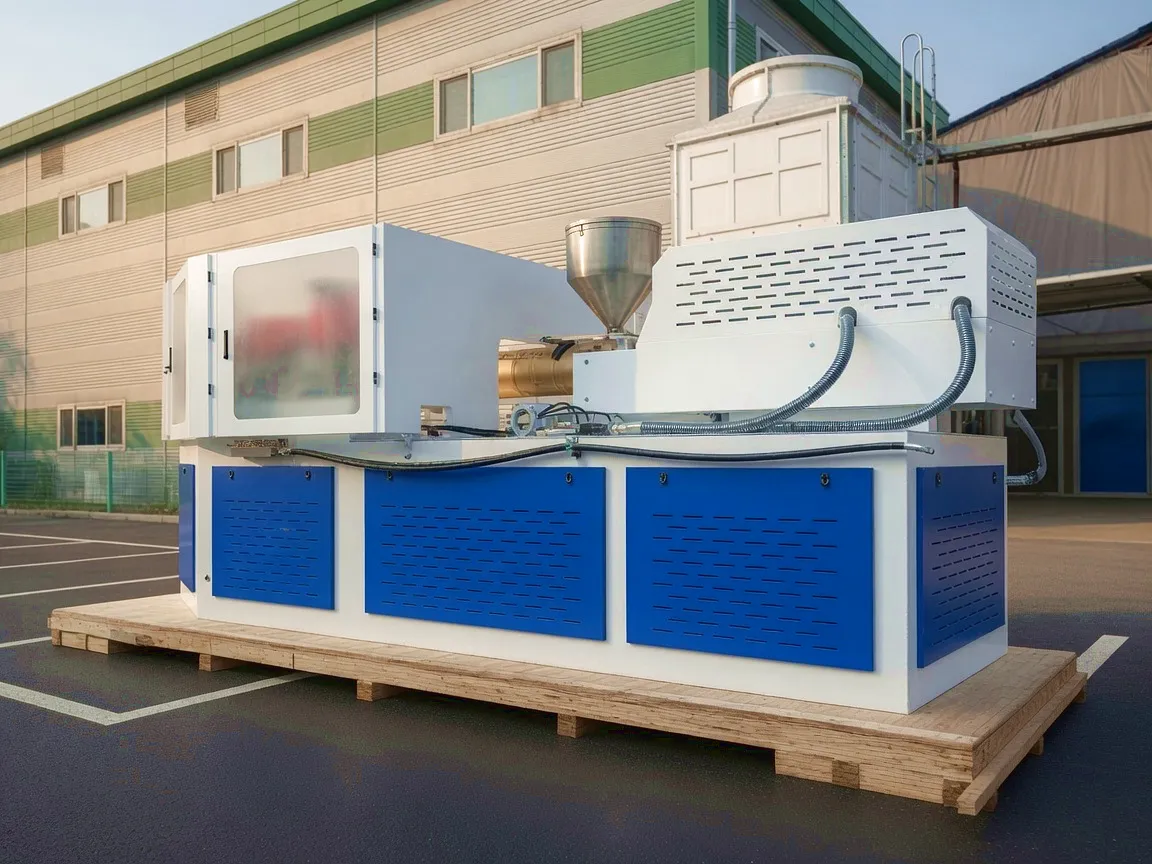
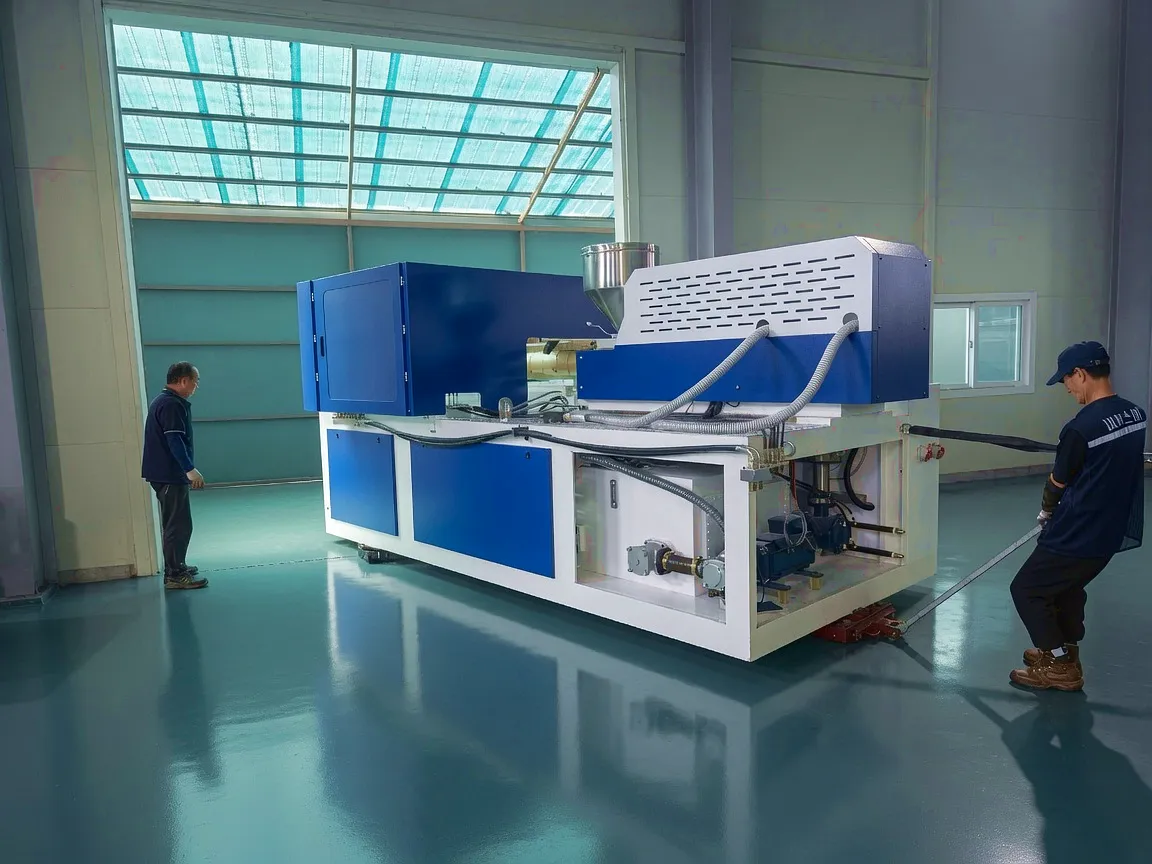
Ever Power brings more than two decades of precision manufacturing experience to the design and production of injection-blow molding machines. The company operates a dedicated manufacturing campus equipped with five-axis CNC machining centres, precision grinding lines, and fully automated assembly bays, where every machine undergoes a 72-hour factory acceptance test under full load before despatch. This rigorous validation process — covering thermal stability, shot-weight repeatability, and blow-pressure consistency — means that machines arrive at British customer sites with a complete production baseline already established, dramatically reducing commissioning time for the end user.
The customisation capability at Ever Power spans the entire machine architecture. For UK food and beverage customers requiring compliance with British Retail Consortium (BRC) and FSSC 22000 standards, Ever Power engineers design barrel and mould temperature control systems that log process data to an OPC-UA compliant historian, providing the audit trail that certification bodies require. Mould sets for specific container formats — including unusual neck diameters for premium closure systems, or multi-cavity arrangements for high-volume beverage production — are designed and machined in-house using CNC data derived directly from the customer’s container drawings, ensuring first-article dimensional compliance without the iterative trial-and-error cycle that adds weeks to project timelines. The company also offers full after-sales support packages tailored for UK operating conditions, including remote monitoring via VPN-linked PLC access, a European spare-parts hub that guarantees next-business-day delivery to UK mainland addresses, and on-site commissioning by factory-trained engineers who can be mobilised from the European technical centre within 48 hours of a service request.
Ready to discuss a customised IBM solution for your UK production facility? Our engineering team is available for technical consultations and will provide a detailed, no-obligation quotation.
Featured Products
Ever Power IBM Machine Product Range
European Series
The ZQ40 is Ever Power’s entry-level European-specification IBM machine, designed for small-to-medium container formats from 5 ml to 500 ml. With a 40 kN clamping force, all-electric servo drive, and a three-station rotating index plate, it delivers up to 2,400 units per hour with wall-thickness tolerances of ±0.05 mm. The machine’s compact footprint makes it well-suited for UK contract packers operating in premises with limited floor area, and its PLC control system supports remote diagnostic access — a valued feature for production teams in regional centres such as Leeds and Birmingham.
European Series
The ZQ60 steps up to a 60 kN clamping force and a wider container volume range extending to 2,000 ml, making it the preferred specification for beverage producers requiring 1.5 L PET juice bottles or 2 L HDPE dairy containers. Equipped with an enhanced servo injection system and a precision temperature-controlled mould, the ZQ60 achieves cycle times of 8–14 seconds for full-size beverage containers and supports multi-cavity tooling for high-volume lines. Its European-specification control panel and safety guarding are fully CE-marked, ensuring straightforward compliance with UK Machinery Regulations as applied in the post-Brexit regulatory environment.
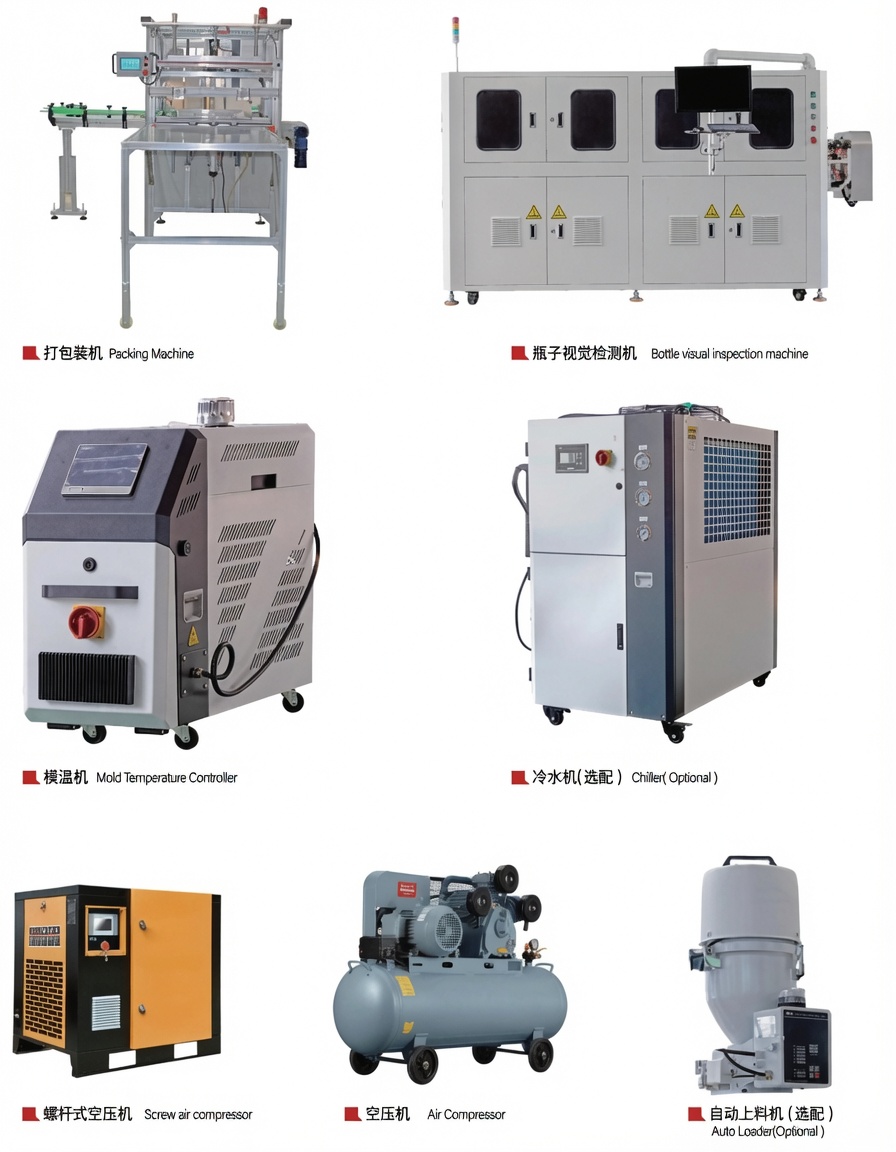
Ever Power injection-blow molding machine auxiliary equipment suite
Customer Success
Customer Success Story: Birmingham Juice Manufacturer
Hartwell Fresh Beverages, a privately owned juice and soft drink manufacturer operating from a 12,000 m² facility in the Erdington industrial area of Birmingham, approached Ever Power in late 2023 seeking a replacement for its ageing extrusion blow moulding line. The company had experienced persistent scrap rates of 4.2% attributable to flash trimming, neck-finish rejects, and wall-distribution failures on its 330 ml and 750 ml ambient juice range. These quality losses, combined with the energy cost of reheating trim scrap, had pushed the cost-per-bottle above a threshold that was eroding the company’s margin on own-label supply contracts to two of the UK’s large grocery chains.
After a site survey and a resin-compatibility review conducted by Ever Power’s application engineers, the team recommended installing an EP ZQ60 injection-blow molding machine configured for heat-set PET and fitted with an integrated chiller unit and dehumidifying dryer sized for the Erdington site’s humidity profile. Commissioning was completed in 11 working days. Within the first production month, Hartwell’s quality team recorded a scrap rate of 0.6% — a reduction of more than 85% from the previous line’s baseline. Cycle time for the 750 ml heat-set bottle settled at 11 seconds, yielding a sustained output of 2,950 bottles per hour on a single-cavity mould — 18% above the extrusion line’s net throughput after scrap losses were accounted for. The reduction in compressed air demand from the elimination of flash trimming also allowed the site’s compressor duty cycle to be reduced, saving approximately £14,000 per year in energy cost. Hartwell’s production director noted that the changeover from the 330 ml format to the 750 ml format — previously a six-hour operation requiring overnight scheduling — could now be completed in 110 minutes, enabling the team to run both SKUs within a single daytime shift for the first time.
What UK Customers Say About Ever Power IBM Machines
“The ZQ60’s wall-thickness consistency has transformed our heat-set juice line. We went from throwing away 40 bottles per thousand to fewer than six. The Ever Power team understood our BRC compliance requirements from day one and designed the process logging accordingly — something no other supplier had even mentioned.”
James Whitmore, Production Director
Hartwell Fresh Beverages, Birmingham
“Format changeover used to cost us half a shift. With the ZQ40 it takes 95 minutes and two people. For a contract packer running four different SKUs a week in Leeds, that agility is not a convenience — it is what keeps us competitive against the integrated beverage companies. Ever Power’s quick-release mould system is genuinely engineered, not just marketed.”
Rachel Okafor, Operations Manager
Pennine Packaging Solutions, Leeds
“We specified a multilayer HDPE-EVOH configuration for our premium sauce range and were honestly sceptical that any single supplier could deliver the mould engineering, the screw geometry, and the layer-ratio control within budget. Ever Power delivered all three, commissioned in Sheffield on schedule, and the first-article containers passed our oxygen-transmission test at 0.008 cc/package/day. That is a commercial-grade barrier in a cost structure we can actually pass on to retail.”
Dr. Priya Chandrasekaran, R&D Lead
Heritage Condiments Group, Sheffield
FAQ