How an Injection Blow Molding Machine Works: The Three-Station Cycle
Station 1 — Injection
Polymer melt is injected around a precision steel core rod inside a multi-cavity injection mould, forming a hollow preform with a fully finished neck thread. Melt temperature for PET typically runs 275–295 °C; for HDPE it sits around 200–230 °C. Residence time in the injection cavity is typically 3–7 seconds depending on wall thickness and cavity count. This station governs wall distribution and sets the crystalline morphology of the final container.
Station 2 — Blow Moulding
Still on the core rod, the conditioned preform is indexed to the blow station. Low-pressure air (0.5–1.2 MPa) inflates the preform outward against the blow mould cavity walls. Because the preform was injected in near-net shape, the blow inflation ratio is typically only 1.5:1 to 3:1 — far lower than extrusion blow molding — enabling exceptional wall-thickness uniformity, typically ± 0.05 mm. This station determines the final external geometry, surface gloss, and clarity of the container.
Station 3 — Ejection
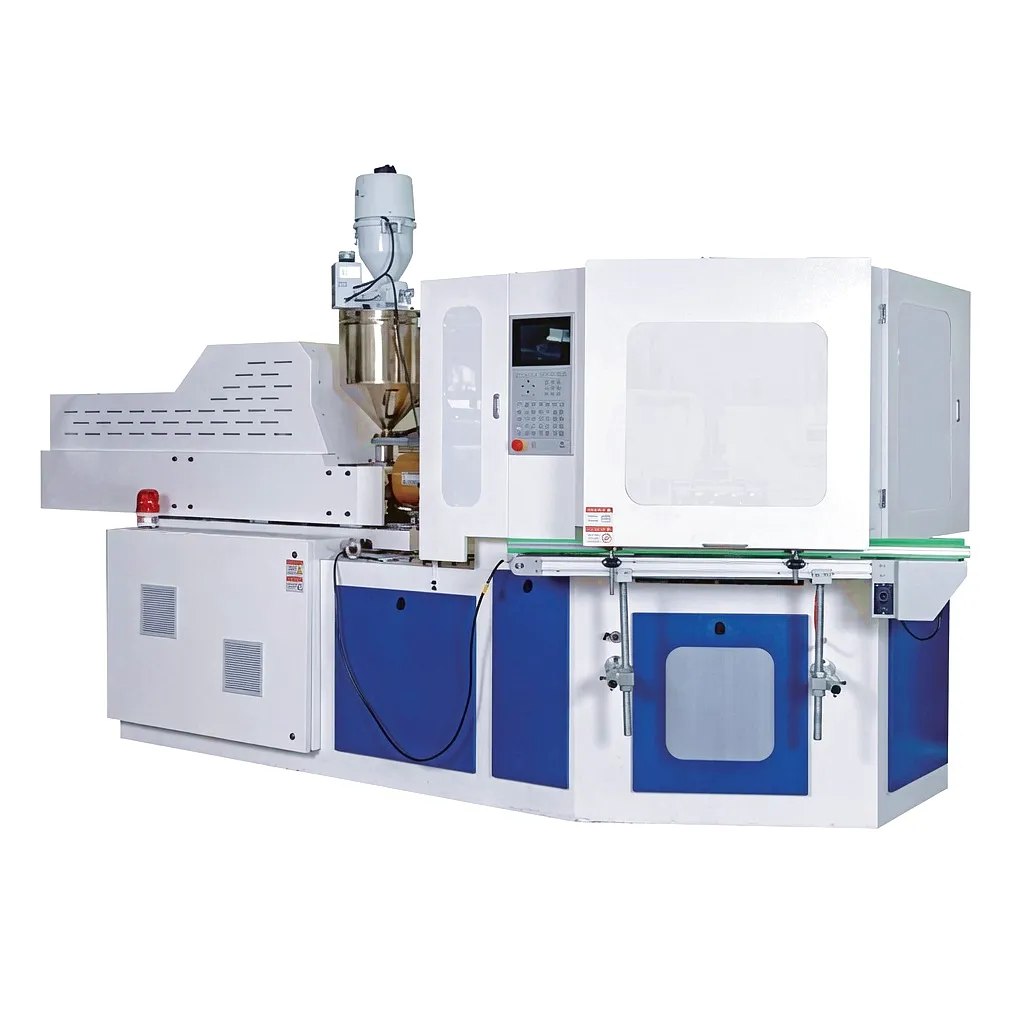
The finished container is stripped from the core rod and conveyed away, while the core rod rotates back to Station 1 to begin the next cycle. The rotary design means all three operations proceed simultaneously — injection, blowing, and ejection all occur in the same machine cycle. Cycle times on modern IBM machines range from 8 to 25 seconds depending on container volume, material, wall thickness, and cavity configuration, giving typical output rates of 500 to 6,000 parts per hour on a single machine.
The rotary platform design — where a central turntable carries the core rods between stations — is the defining mechanical architecture of most IBM machines. Some shuttle-type machines use a linear indexing motion instead, which offers advantages in mould change speed but typically achieves lower output rates. The rotary configuration, as used in the ZQ-series IBM machines manufactured by Ever Power, allows simultaneous operation of all three stations, making it the preferred architecture for high-volume pharmaceutical and cosmetics packaging production in the UK market.
IBM vs EBM vs ISBM vs Extrusion: Which Process Is Right for Your UK Production Line?
UK production engineers often face a strategic choice between IBM, extrusion blow molding (EBM), injection stretch blow molding (ISBM), and conventional extrusion when specifying new blow moulding equipment. Each process has a distinct performance envelope, and selecting the wrong technology leads to costly rework, quality nonconformances, or underutilised capital. The table below provides a direct technical comparison across the parameters that matter most to British manufacturers.
Core Materials Processed on IBM Machines
Wall Thickness Uniformity Control and Preform Temperature Conditioning
Wall Thickness Uniformity
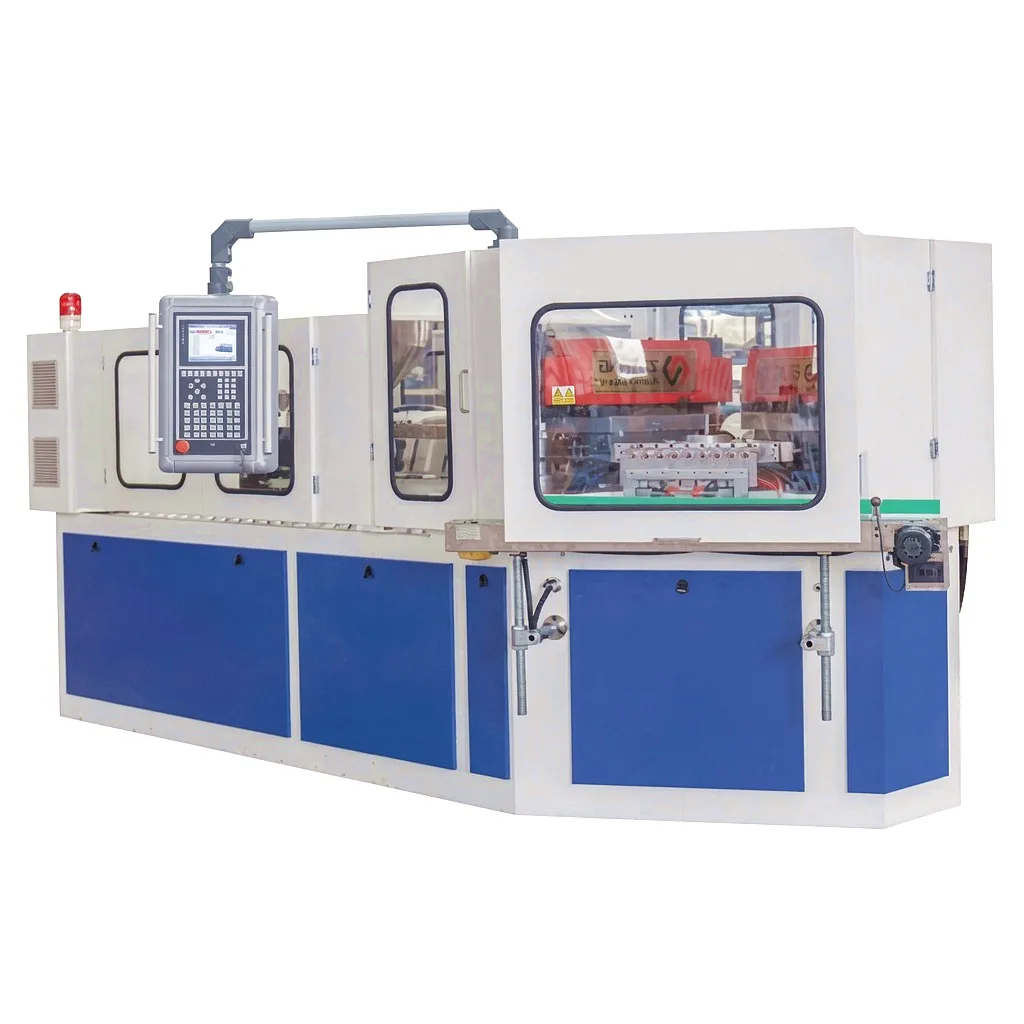
Wall thickness uniformity is the single most critical quality metric in IBM production. Variation beyond ± 10% of nominal wall specification causes failures during fall-impact tests, pressure integrity checks, and top-load compression testing — all of which are routinely required by UK retail buyers and pharmaceutical regulators alike. On a properly set-up IBM machine, uniform wall distribution is achieved by a combination of accurate core rod concentricity (runout ≤ 0.01 mm), balanced hot runner manifold pressure within each injection cavity, and controlled preform temperature entering the blow station.
Core rod temperature management is particularly important. The core rod acts as the inner mould surface during injection, and its temperature — typically maintained at 60–80 °C through internal water cooling channels — directly controls the solidification rate of the inner preform surface. An IBM machine with independently controlled core rod temperature zones gives engineers the ability to fine-tune inner wall crystallinity without affecting the outer surface condition entering the blow station.
Preform Temperature Conditioning Curve
Unlike ISBM, where preforms are reheated from ambient temperature using IR lamps in a separate reheat unit, IBM relies on the residual heat of the freshly injected preform to condition it for blowing. This means the injection cycle time, the dwell time at the injection station, and the indexing time must all be precisely synchronised to deliver the preform to the blow station within a narrow temperature window. For PP, this window is typically 130–155 °C; for PET, it is 95–120 °C.
When the preform temperature falls below the lower bound of the conditioning window, incomplete inflation occurs — the material has cooled too much to stretch uniformly. When it exceeds the upper bound, the preform is too soft and collapses against the blow mould before air pressure can establish the bottle geometry. Process engineers calibrating IBM machines in UK production environments should map preform surface temperature at the blow station entry point using a calibrated IR thermometer as a baseline for process qualification.
IBM Machine Technical and Performance Parameters
The table below presents a representative range of technical parameters across the Ever Power ZQ-series IBM machine lineup, reflecting the specifications relevant to most UK pharmaceutical, cosmetics, and medical device packaging applications. Individual machine configurations may vary based on cavity count, container size range, and material specification.
Mould Design and Bottle Geometry Optimisation
Six Core Technical Advantages of IBM Machines
◉
Zero Flash — Net Shape Output
No material waste at parting lines. IBM eliminates post-mold trimming operations entirely, reducing labour cost and material scrap — critical for high-value resins and regulated medical-grade materials.
◆
Superior Neck Finish Accuracy
The neck thread and sealing surface are formed entirely by injection, not blow moulding. This delivers dimensional accuracy matching injection moulding tolerances — essential for tamper-evident closures and CRC caps on child-resistant pharmaceutical packaging.
⸻
Consistent Wall Thickness
IBM machines deliver wall thickness uniformity of ± 0.05 mm — roughly 3–6x tighter than typical EBM tolerances. This consistency is the foundation for predictable top-load strength, impact-test performance, and barrier properties in pharmaceutical containers.
●
High Optical Clarity in PET
IBM-produced PET containers achieve light transmittance above 90% and haze below 2% — meeting the optical standards of premium cosmetics and high-end nutraceutical packaging lines where visual clarity is a shelf differentiation factor in the competitive UK retail market.
☀
Servo-Driven Energy Efficiency
All-electric and hybrid servo IBM configurations reduce energy consumption by 30–50% compared with hydraulic-only machines. With UK industrial electricity prices above 25 p/kWh, servo IBM machines deliver measurable operational cost savings across multi-shift production environments, supporting UK manufacturers’ carbon reduction commitments.
⚙
Compact Footprint, Clean Room Compatible
IBM machines have a substantially smaller footprint than EBM lines of comparable output rate, and their fully enclosed drive and hydraulic systems allow easier integration into ISO Class 7 or ISO Class 8 clean room environments — a requirement for many UK pharmaceutical and medical device packaging facilities.
Industrial Application Scenarios for IBM Machines in UK Manufacturing
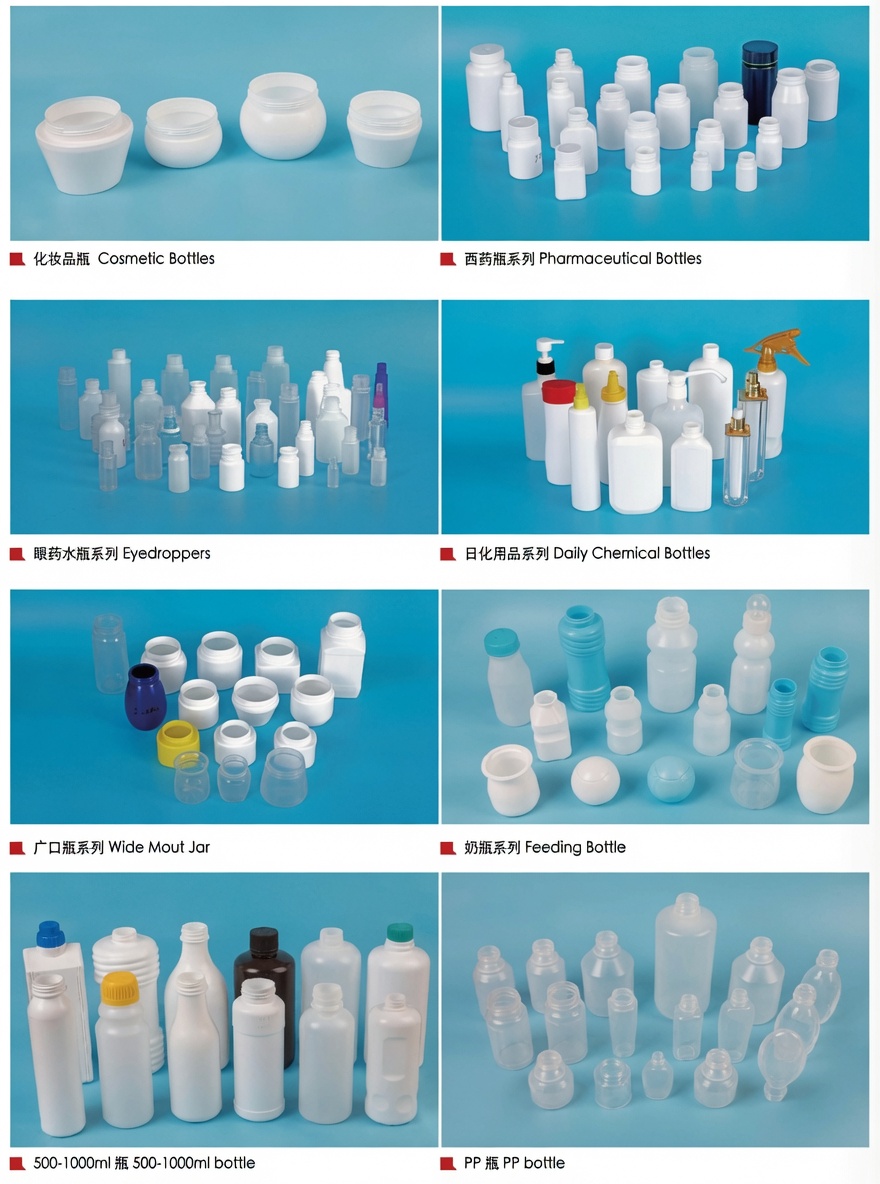
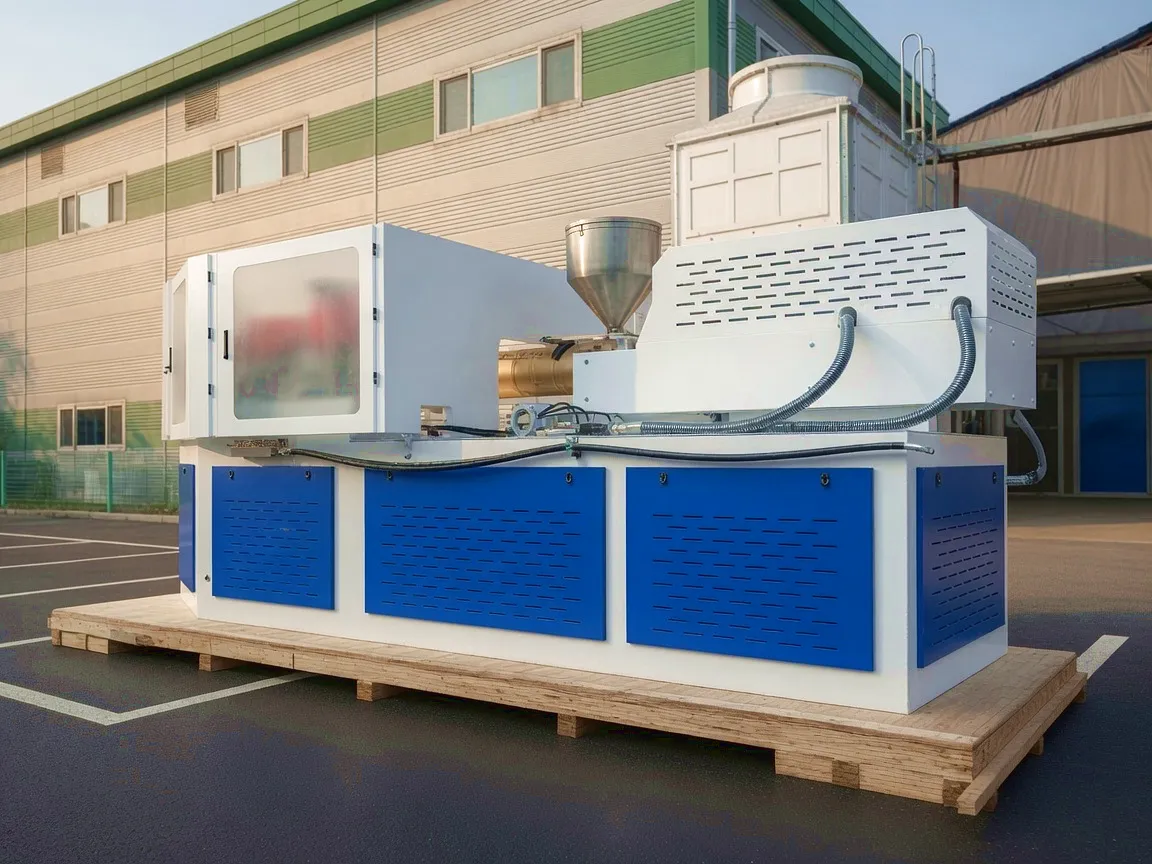 The UK pharmaceutical packaging sector is among the most demanding markets for IBM machine capability. Facilities operated by major contract manufacturing organisations (CMOs) and branded pharmaceutical manufacturers across Nottingham, Swindon, and the M4 technology corridor run IBM machines 24/7 on PP and HDPE oral liquid bottles, dropper vials, and child-resistant closure (CRC) containers. MHRA GMP requirements under UK Annex 1 mandate process validation across all critical quality attributes including container integrity, closure torque, impact-test performance, and extractables/leachables profiles — all of which are more consistently achievable with IBM than with EBM or ISBM for container volumes below 500 ml.
Premium Cosmetics and Personal Care Packaging — London, Manchester, and Leeds
British cosmetics brands — particularly those producing prestige skincare, fragrance, and colour cosmetics lines for the UK market and export — demand IBM-produced PET and PETG containers with crystal clarity, precise label panels, and luxury surface feel. IBM machines enable production of complex multi-faceted bottle geometries, oval cross-sections with label recesses, and narrow-neck fragrance flacons with thread finishes accurate enough to accept precision-engineered collar fittings. London-based brand owners and Manchester contract fillers working with leading UK personal care CMOs consistently specify IBM tooling for any container below 250 ml where visual premium positioning is a commercial requirement. The absence of parting line flash is particularly valued because it eliminates the need for flame polishing or surface finishing operations that could affect print adhesion on decorated containers.
Medical Device Housings and Diagnostic Reagent Containers — Sheffield and Yorkshire Industrial Corridor
Sheffield and the wider Yorkshire manufacturing corridor have a long tradition in precision medical device manufacturing, and IBM machines serve this sector through production of diagnostic reagent vials, optical-quality windows for point-of-care devices, and specialty fluid containers for in-vitro diagnostics. IBM-produced HDPE and PC containers for medical device applications must meet ISO 15747 requirements for plastic containers for intravenous injections and related standards for extractables compliance. The IBM process’s ability to produce containers without weld lines or parting line flash is a direct advantage in meeting these specifications, because weld lines represent potential initiation points for stress cracking under sterilisation conditions.
Specialty Food and Nutraceutical Packaging — Birmingham and the West Midlands
Birmingham’s diverse food manufacturing base — spanning from Asian food processing to premium confectionery and specialist dietary supplements — generates significant demand for IBM-produced PET containers for high-value food products. IBM machines running food-grade PET produce containers for honey portions, single-serve condiments, vitamin and mineral supplement bottles, and specialty sauces where container clarity and presentation are brand differentiators. Birmingham-based contract packagers serving the West Midlands food sector rely on IBM machines specifically for portion-control containers between 30 ml and 500 ml, where the IBM process’s net-shape output eliminates any flash contamination risk that would be unacceptable under UK Food Safety Act requirements and BRC Global Standard audit criteria.
IBM Machine Auxiliary Equipment & System Integration
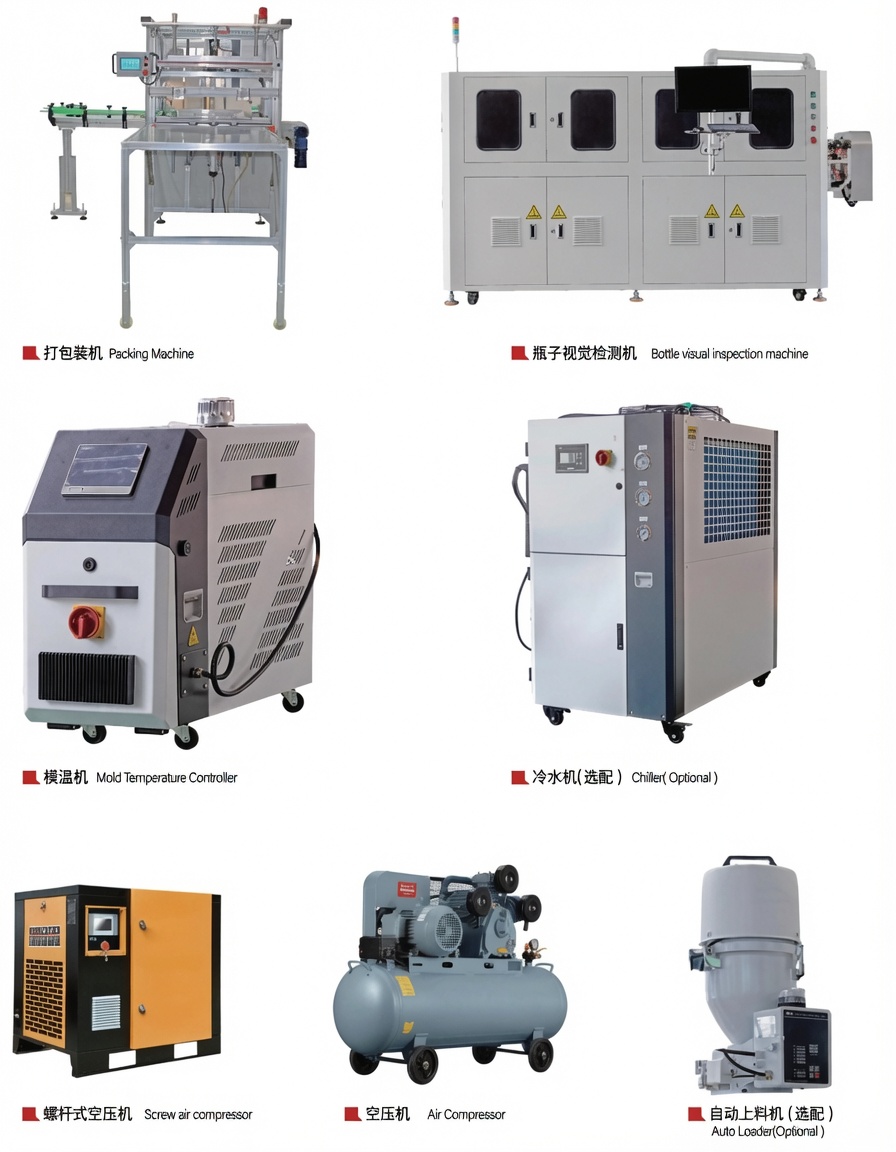
IBM Machine Troubleshooting Guide — Common Faults and Corrective Actions
Experienced IBM process engineers operating production lines at UK pharmaceutical and cosmetics packaging sites recognise a common set of fault conditions that arise across most machine platforms. The following troubleshooting guide covers the most frequent issues encountered on IBM machines processing PP, PET, and HDPE, with root-cause analysis and practical corrective actions drawn from field experience.
Energy Consumption Optimisation and Retrofit Options for IBM Machines
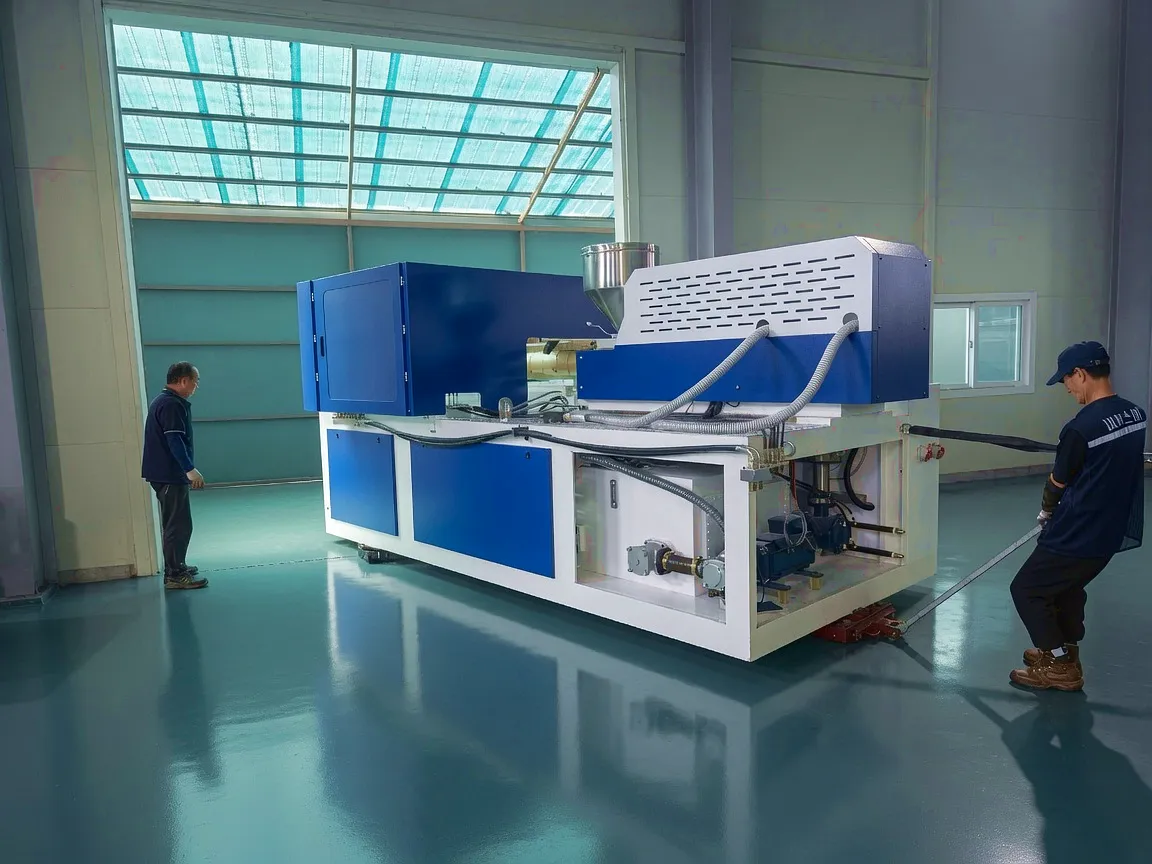 Energy cost management is a growing priority for UK plastics processors, particularly since industrial electricity prices climbed substantially above 25 p/kWh. IBM machines represent a significant energy load — the combination of injection unit heating, hydraulic power pack, mould temperature controllers, and cooling systems typically draws between 35 and 65 kW during production. Reducing this energy footprint requires a structured approach covering both capital equipment decisions and operational parameter optimisation.
Process Optimisation for Energy Reduction
Beyond hardware retrofit, process parameter discipline delivers meaningful energy savings. Reducing barrel setpoint temperatures to the lowest value that maintains melt quality — verified by melt pressure and IV monitoring — reduces heater running time by 8–15%. Minimising injection hold time to the minimum required for gate freeze-off eliminates wasted energy in the holding phase. Optimising cooling water flow rate per mould circuit to achieve the target part temperature at minimum water volume reduces chiller load. These measures collectively can reduce IBM machine energy consumption by 10–20% without capital expenditure, representing savings of GBP 4,000–12,000 per machine per year at UK electricity prices in multi-shift production environments.
Featured IBM Products from Ever Power
Two flagship injection blow molding machines from the Ever Power ZQ series, engineered for UK pharmaceutical and cosmetics packaging applications, available with full CE documentation and UK-compatible electrical specifications.
Ever Power: Manufacturing Capability and Custom IBM Solutions
Ever Power’s IBM machine manufacturing facility operates across a dedicated precision machining and assembly plant equipped with 5-axis CNC machining centres, coordinate measuring machines (CMM) for component verification, and dedicated IBM machine assembly and run-off test bays. Every IBM machine shipped from Ever Power undergoes full factory acceptance testing (FAT) including dry cycling, mould trial with customer-representative resin, dimensional verification of sample containers against customer drawings, and documentation of all critical process parameters for the factory acceptance record. UK-bound machines are supplied with CE marking documentation, EU Machinery Directive declaration of conformity, and all electrical components specified to BS 7671 / IEC 60204-1 standards for direct integration into UK industrial electrical installations.
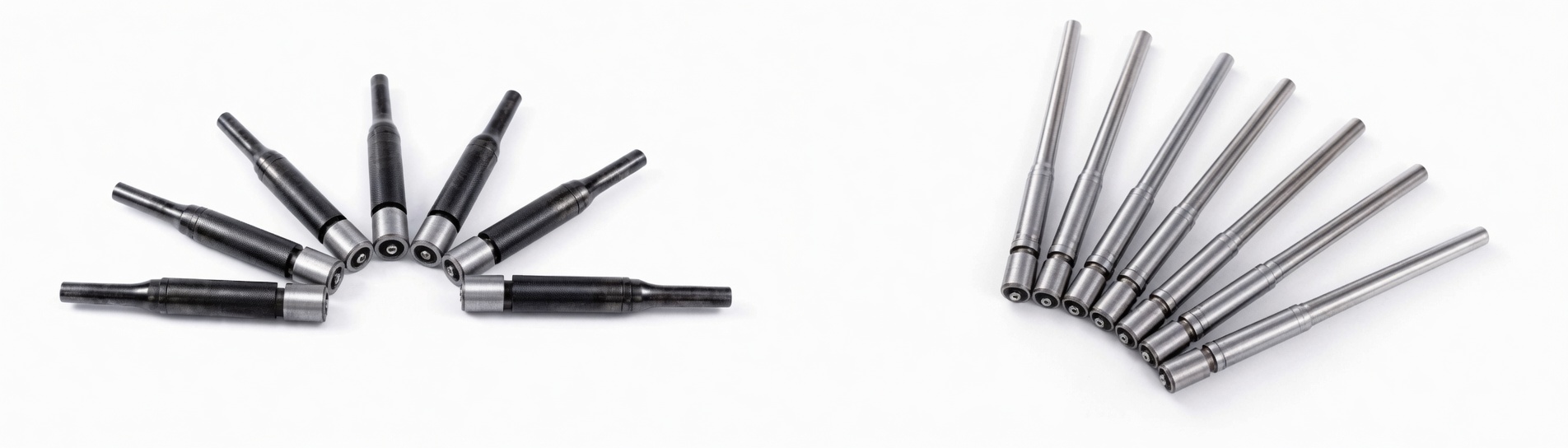
Ever Power’s customisation capabilities for IBM machines span the full scope of production requirements. Core rod sets and tooling can be engineered to any container geometry from 5 ml miniature vials to 1,000 ml wide-mouth jars. Hot runner manifolds are custom-engineered for each cavity configuration, with balanced flow analysis performed computationally before first steel cut. Machine colour, electrical panel specification, control language, and HMI interface can all be configured to customer requirements. For UK pharmaceutical customers requiring IQ/OQ/PQ documentation support, Ever Power provides a complete validation master plan template and works directly with the customer’s quality assurance team to align documentation with MHRA and FDA requirements where the customer exports product to international markets. Spare parts consignments for the UK and Europe are held in a bonded logistics hub in the Netherlands, with next-day express delivery available to UK mainland destinations through Eurotunnel freight services.
Ready to Specify Your IBM Machine?
Get a Custom Quote from Ever Power
Share your container drawing, material spec, and annual volume — receive a detailed technical and commercial proposal within 48 hours. UK pharmaceutical, cosmetics, and medical device enquiries welcome.
Customer Success Story: Precision Pharmaceutical Packaging in Nottingham
Background: Midlands Pharma Packaging Ltd, Nottingham
Midlands Pharma Packaging Ltd, a contract primary packaging organisation based in Nottingham operating under MHRA manufacturing authorisation, approached Ever Power with a project to replace an ageing hydraulic IBM platform that had been producing 60 ml and 100 ml PP oral liquid bottles for two major UK pharmaceutical brands. The existing machine was generating wall-thickness variation above ± 0.15 mm — nearly three times the IBM specification — causing batch failures at the customers’ automated vision inspection stations and resulting in an estimated 6.8% reject rate on the 60 ml bottle line. The reject cost, combined with operator time for manual inspection, was running at approximately GBP 38,000 per year, and MHRA had flagged the reject trend in a recent GMP inspection observation.
After a two-day technical consultation with Ever Power’s applications engineering team — conducted remotely and then in person at the Nottingham facility — the decision was made to install a ZQ80 IBM machine with 6-cavity PP tooling covering both bottle sizes, a dedicated servo-assisted injection unit, and independent dual-zone core rod cooling control. Ever Power’s engineering team provided a full tooling design review using CFD mould flow simulation, verifying that the hot runner manifold balance across all 6 cavities would stay within ± 3% shot weight variation at full production speed.
Machine installation and commissioning were completed over an 8-day window, minimising disruption to the facility’s other packaging lines. Process validation — including IQ, OQ, and a 30-day PQ monitoring run — was completed within 11 weeks of installation, supported by Ever Power’s validation documentation package tailored to MHRA requirements. Following validation, wall-thickness variation on the 60 ml bottle improved to consistently within ± 0.04 mm, and the batch rejection rate dropped from 6.8% to below 0.4%. Annual savings from reduced rejects and manual inspection alone exceeded GBP 36,000 — recovering a substantial portion of the equipment investment within the first 12 months of production.
The servo drive system on the ZQ80 reduced the machine’s energy consumption from the previous platform’s average of 52 kW to 34 kW — a 35% reduction that translated into annual energy cost savings of approximately GBP 11,400 at the site’s contracted electricity tariff. The combination of quality improvement and energy saving delivered a total return that made the equipment investment financially compelling within 18 months, well ahead of the facility’s typical capital payback threshold of 36 months.
Customer Reviews
★★★★★
“The wall-thickness consistency on the ZQ80 is genuinely impressive — our in-line vision inspector that was flagging dozens of containers per shift barely triggers now. Ever Power’s validation package was comprehensive and the applications engineer who came on-site for commissioning clearly knew his IBM process parameters inside out. For pharmaceutical containers where dimensional conformance is a regulatory matter, this machine delivers.”
— Production Manager, Midlands Pharma Packaging Ltd, Nottingham
★★★★★
“We compared quotations from three IBM machine suppliers and Ever Power came out on top not only on price but on the level of technical detail in their proposal. The CFD mould flow simulation report they provided before tooling commitment gave our quality team the confidence that wall distribution would meet spec. Post-installation energy saving has been exactly as calculated — our electricity bill on this line dropped noticeably from the first billing cycle.”
— Technical Director, Prestige Cosmetics Containers Ltd, Manchester
★★★★★
“The customisation support from Ever Power made this project work. We had a non-standard container geometry — an oval cross-section dropper vial with an off-centre neck — and the Ever Power tooling team engaged seriously with our design constraints, produced revised core rod drawings within a week, and the first article inspection results were within tolerance. Lead time from order to delivery to our Sheffield facility was 14 weeks, which was ahead of schedule. The after-sales spare parts availability from their European warehouse has also been excellent.”
— Engineering Manager, Yorkshire Medical Packaging Ltd, Sheffield
Frequently Asked Questions — IBM Machines for UK Manufacturers
How much does an injection blow molding machine cost for a UK pharmaceutical packaging line?
IBM machine price varies significantly by clamping force, cavity count, servo specification, and tooling included. For UK pharmaceutical packaging applications, a fully equipped IBM machine including injection mould and blow mould tooling for a single container typically ranges from GBP 85,000 to GBP 250,000 depending on the machine model and tooling complexity. Contact Ever Power at [email protected] for a detailed quote based on your specific container drawings and production volume targets.
Which IBM machine supplier in the UK can provide CE-marked equipment with MHRA validation documentation support?
Ever Power supplies CE-marked IBM machines with full EU Machinery Directive declaration of conformity, BS 7671-compatible electrical specifications, and a structured validation documentation package covering IQ/OQ template protocols aligned with MHRA GMP requirements. All machines are factory-acceptance tested before shipment, with documented FAT reports provided to the customer.
What is the typical lead time for an IBM machine order to delivery at a facility in Birmingham or Sheffield?
Standard lead time from approved order to machine delivery at UK port is typically 12–16 weeks, depending on machine model and tooling complexity. Machines without custom tooling (using customer-supplied moulds) can be delivered faster. Delivery to Birmingham or Sheffield via freight forwarding from the European logistics hub is a further 3–5 working days from port clearance.
How does an IBM machine compare to ISBM when choosing blow molding equipment for PET cosmetics bottles in the UK?
For PET cosmetics containers below 250 ml requiring optical clarity and precise neck finish, IBM is typically preferred over ISBM because IBM delivers tighter neck-finish dimensional tolerances, eliminates the reheat energy cost of ISBM, and produces net-shape parts with no gate mark on the bottle body. ISBM has advantages for larger containers above 500 ml and higher output rates on a single bottle format. The right choice depends on your volume, container complexity, and quality specification.
Where can I get a price quote for an IBM machine with custom tooling for pharmaceutical dropper bottles in Nottingham or the Midlands?
Send your container drawings, material specification, target annual volume, and site electrical supply details to [email protected]. Ever Power’s applications engineering team will review your requirements and provide a detailed technical and commercial proposal covering machine model, tooling specification, FAT scope, validation documentation, spare parts package, and total delivered cost to your UK facility, typically within 48 business hours.
What materials can an injection blow molding machine process for UK food-grade and medical packaging applications?
IBM machines from Ever Power are configured to process PP, PET, PETG, HDPE, and PC. For UK food-grade applications, PP and PET are most common, both meeting EU Regulation 10/2011 and UK equivalent food contact materials regulations. For medical device packaging, HDPE and PC can be processed to meet ISO 15747 and ISO 11607 requirements when the machine and process are properly validated. Material-specific screw and barrel configurations are available for each resin family.
When is the best time for a UK manufacturer to invest in a new IBM machine given current machinery import costs and lead times?
Current lead times from Ever Power are 12–16 weeks, and machinery import duties for plastics processing equipment into the UK are typically 0–2.5% depending on HS code classification, making this a favourable period for UK equipment investment compared with periods of high tariff uncertainty. Organisations planning production capacity for 2025–2026 should initiate discussions at least 20 weeks before their required production start date to accommodate tooling design, FAT, shipping, and commissioning time.
Who should I contact at an IBM machine supplier to get technical support for process troubleshooting on a PP pharmaceutical bottle line in the UK?
Ever Power provides dedicated after-sales technical support through a combination of remote assistance (video call with screen-sharing of the machine HMI parameter records) and on-site field service visits to the UK. Reach the technical support team through [email protected], providing your machine serial number, the fault symptom, current process parameters, and sample container images. Response from the applications engineering team is typically within 4 business hours during UK working hours.
Injection Blow Molding Machine Specialists
Ready to upgrade your blow moulding capability?
Talk to Ever Power’s IBM applications team — we serve pharmaceutical, cosmetics, food-grade, and medical device packaging customers across the United Kingdom and Europe.
✉ Get a Quote — [email protected]
edit by gzl