Injection Blow Molding Machine: Applications, Technology & Why UK Manufacturers Are Choosing IBM
A comprehensive technical and commercial guide for procurement managers, plant engineers, and packaging directors across the United Kingdom.
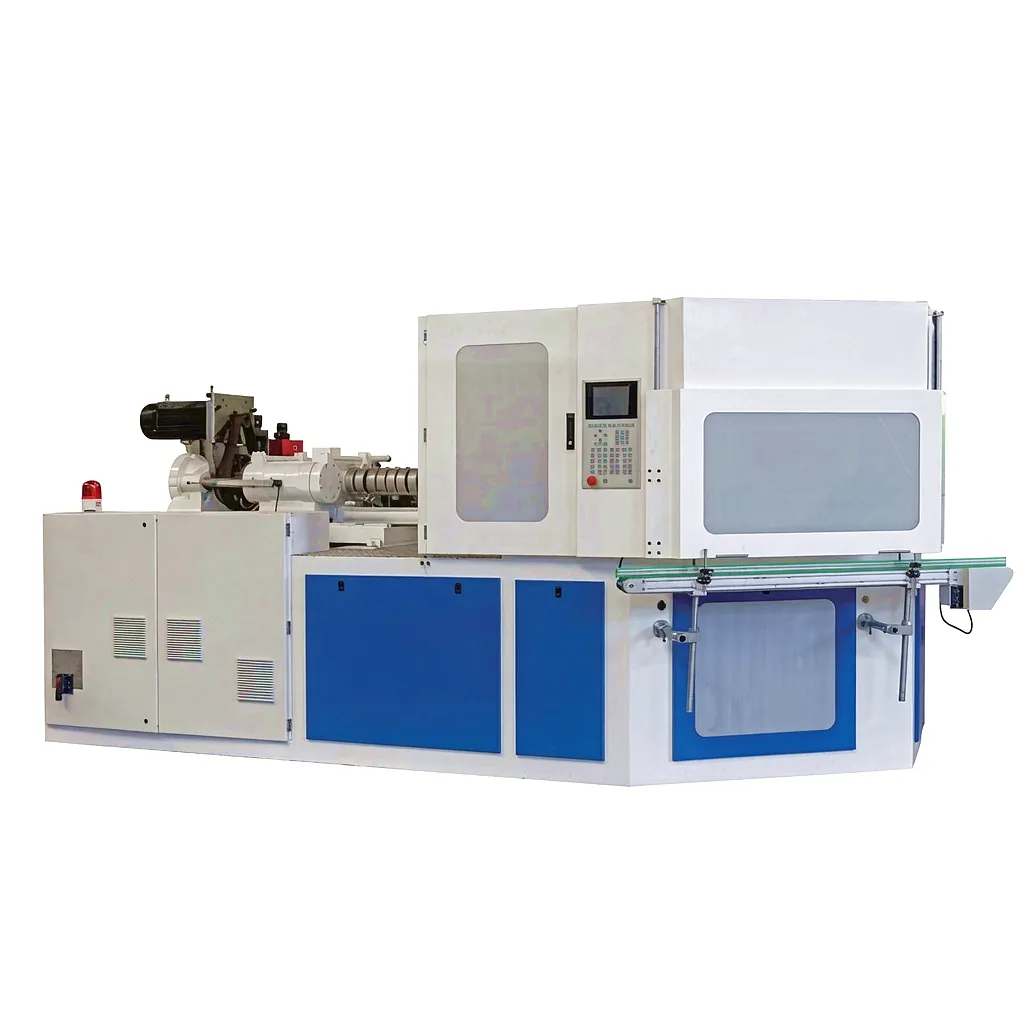 Walk through any modern pharmacy, supermarket, or hospital supply room in Birmingham, Sheffield, or Bristol, and virtually every small rigid plastic container you pick up was formed through a process called injection blow molding. The technology has quietly become one of the most critical manufacturing methods underpinning British industry, yet it remains poorly understood outside specialist circles. An injection blow molding machine combines the precision of injection molding with the hollow-container capability of blow molding in a single, highly repeatable cycle. The result is a finished bottle, vial, or flask that exits the machine with no secondary trimming, no flash, and neck dimensions accurate enough to accept pharmaceutical-grade closures without any rework.
How an Injection Blow Molding Machine Works: The Three-Station Cycle
The injection blow molding process is built around three distinct stations arranged on a rotating core rod assembly. Understanding each phase is essential for anyone specifying a machine for a new production line, since the design decisions made at each station directly determine wall thickness uniformity, neck finish tolerance, and cycle time. Unlike extrusion blow molding, IBM produces no parison neck trimming scrap, which alone can account for up to eight percent of raw material waste in a conventional blow line. The closed-mold nature of the injection phase also eliminates the air-exposure window that makes blown parisons susceptible to contamination — a critical advantage in pharmaceutical and ophthalmic container production.
Injection Station
Molten polymer — most commonly PET, PP, HDPE, or LDPE — is injected around a steel core rod seated inside a precision injection mold. This forms a preform, or parison, with an already-finished neck thread. The injection pressure, melt temperature, and fill speed are tightly controlled to achieve consistent wall distribution across every shot. Typical injection pressures range from 80 to 180 MPa depending on the resin and container geometry.
Blow Station
The core rod, still carrying the warm parison, rotates into the blow mold. Compressed air — typically between 0.6 and 1.2 MPa — is introduced through the core rod tip, inflating the parison against the cooled cavity walls. Because the parison retains heat from the injection phase, no reheat oven is required, reducing energy consumption significantly compared to stretch-blow alternatives. The blow mold determines the final external profile and base geometry of the container.
Stripping Station
The finished, fully cooled container is mechanically stripped from the core rod and conveyed to downstream handling. There is no trimming requirement, no secondary degating, and no flash removal. The ejected article is production-ready immediately. This single characteristic — zero finishing operations — is what makes injection blow molding uniquely attractive to high-volume producers running 24-hour shifts, since it removes an entire handling stage and the labour cost associated with it.
Resin Selection: Core Materials Processed by IBM Equipment
Outstanding clarity, excellent barrier properties, and high rigidity-to-weight ratio. Widely used for pharmaceutical oral solution bottles, mouthwash containers, and clear personal care packaging. Recyclability aligns with UK plastics strategy targets.
Excellent chemical resistance and heat tolerance up to around 130 °C. Preferred in agrochemical dispensing, laboratory reagent bottles, and hot-fill food containers. PP’s living hinge capability also supports integral closure designs, reducing component count in assembly operations.
The workhorse resin for opaque personal care bottles, veterinary pharmaceuticals, and household chemical containers. HDPE’s excellent ESCR (environmental stress crack resistance), low moisture vapour transmission rate, and broad chemical compatibility make it a dependable choice across multiple UK manufacturing sectors.
Flexible, squeezable wall structures are achievable with LDPE and LLDPE. Eye drop bottles, nasal spray reservoirs, and topical lotion dispensers — where the user must apply manual pressure to dispense — are prime LDPE applications. The material’s transparency in thin sections also aids product visibility in pharmacy retail settings.
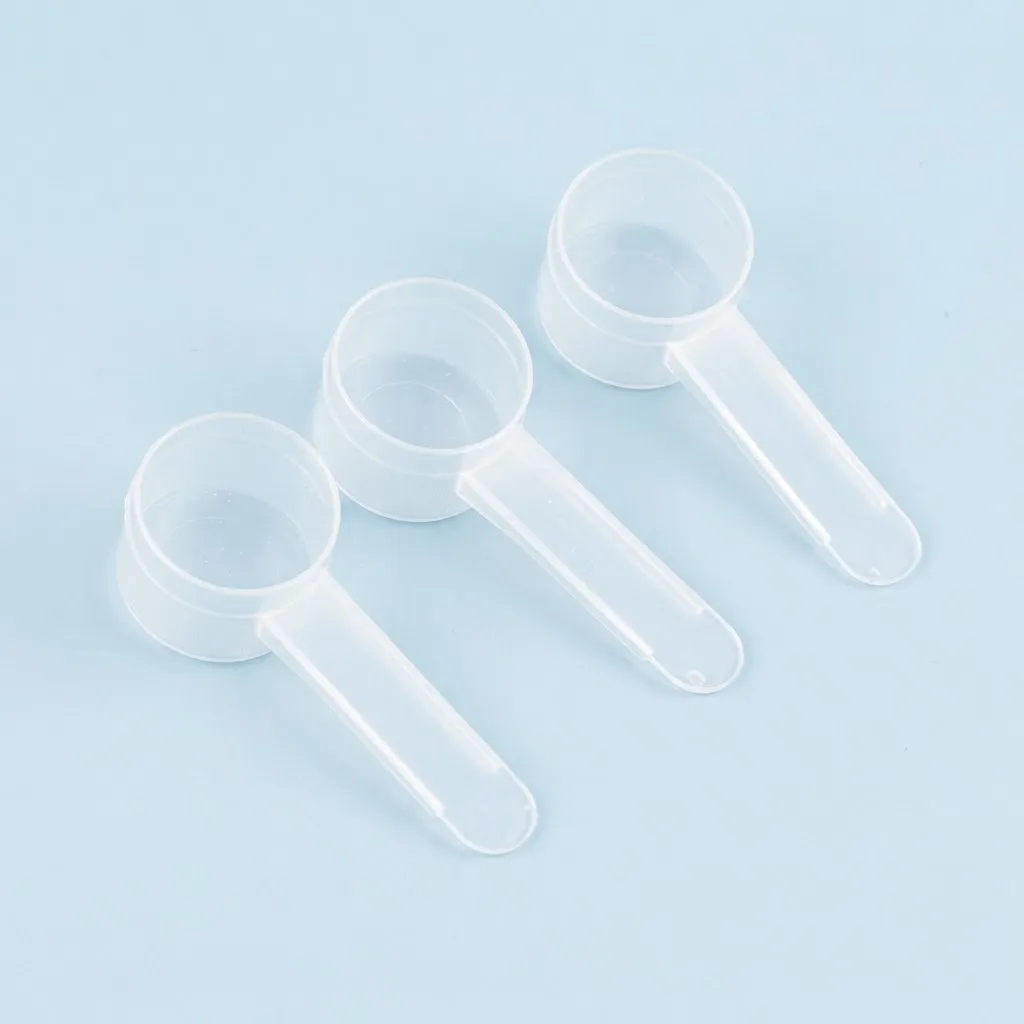 Healthcare packaging represents the most demanding IBM application tier in terms of regulatory compliance and dimensional precision. Products in direct contact with the ocular surface or nasal mucosa must meet pharmacopoeial standards covering particulate contamination, extractables, sterility assurance, and closure integrity. The injection blow molding machine’s closed-mold injection phase is a decisive engineering advantage here: because the molten polymer is never exposed to open air during preform formation, contamination risks associated with that window are substantially mitigated compared to extrusion-based methods.
Application Scenario 2: Personal Care & Cosmetics Packaging
The personal care and cosmetics sector across the UK — particularly the well-established clusters around London, Leeds, and the North West — has long relied on IBM-produced containers for shampoos, conditioners, body lotions, serums, and perfume ancillaries. What draws brand owners to IBM in this sector is a combination of surface finish quality, decorating compatibility, and the ability to hold tight dimensional tolerances across multi-cavity tooling. Pumps, sprayers, and disc-top closures all demand consistent neck diameters to achieve leak-free torque values at automated capping stations running at speeds of 200 or more bottles per minute.
Beyond functional requirements, premium personal care brands increasingly specify complex bottle geometries — oval cross-sections, offset necks, panelled bodies, or ribbed grips — that push the capability envelope of extrusion blow molding while remaining well within IBM’s processing window. The injection station’s cavity steel can be precision-machined to CNC tolerances below 0.02 mm, which translates directly into the crisp surface detail and parting-line quality that brand owners and shelf-display designers demand. In the post-Brexit UK market, shorter lead times for tooling and machine support have also made domestically-sourced or European-stocked IBM equipment preferable for brands managing tight seasonal launch windows.
- Shampoo & conditioner bottles
- Body lotion pump bottles
- Serum dropper vials
- Mouthwash bottles
- Deodorant roll-on shells
- Perfume cap inserts
- Sunscreen dispensers
Application Scenario 3: Food & Beverage — Condiments, Sauces & Nutritional Supplements
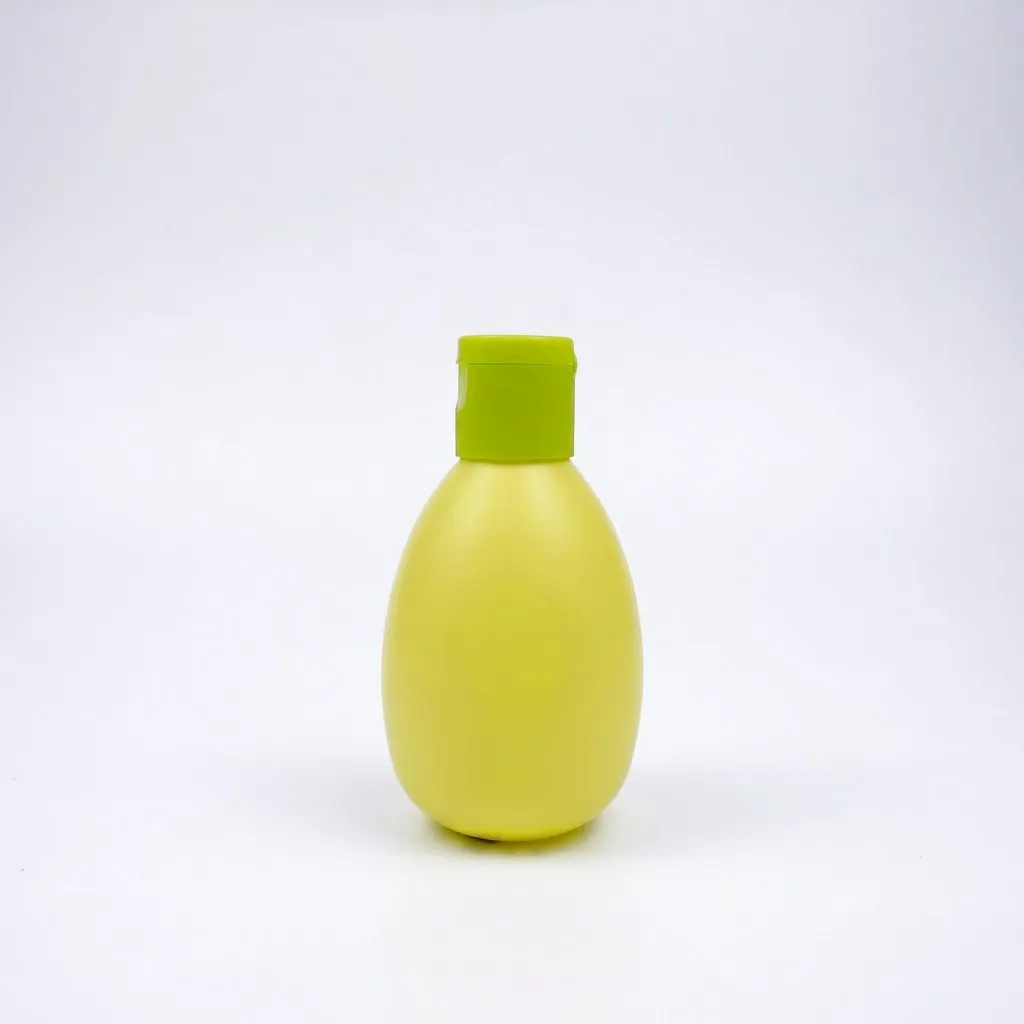
The UK food and drink industry, with manufacturing hubs concentrated in Yorkshire, the East Midlands, and Scotland, generates substantial demand for precision plastic containers for viscous condiments, vitamin syrups, cooking oils, and nutritional supplement capsule bottles. Injection blow molding machines configured for PP or PET processing are particularly well-suited to this sector because they produce containers with excellent base integrity, no bottom seam weld lines, and sidewalls free of the thickness variation that extrusion processes produce near the pinch-off zone. The absence of a bottom seam is not merely a cosmetic advantage — for carbonated soft drink applications and pressurised containers, a seamless base is a structural requirement.
Hot-fill capability is another area where IBM machines configured for PP tooling outperform alternatives. Sauces, gravies, and fruit-based preparations filled at temperatures above 85 °C require containers that retain their geometry without panelling or ovality change on cooling. PP’s high heat deflection temperature, combined with IBM’s consistent sidewall thickness, makes it possible to achieve reliable hot-fill performance without over-engineering wall weights, which is directly relevant to the material cost and container weight targets UK retailers now impose through their packaging sustainability roadmaps.
Application Scenario 4: Agrochemical & Industrial Chemical Dispensing
Agrochemical formulations — herbicides, fungicides, plant growth regulators, and adjuvants — present some of the most chemically aggressive environments a plastic container will encounter. UK agricultural chemical producers, including operations in Lincolnshire, Cambridgeshire, and the Hampshire growing belt, regularly specify HDPE and PP containers produced by injection blow molding machines because the process delivers containers with no weld-line weakness and measurably better ESCR performance versus extrusion-blown equivalents. The ability to incorporate child-resistant closure necks in the injection station — achieving CRC compliance without secondary assembly — is a significant compliance and cost efficiency advantage in this sector, given the strict requirements of UK REACH and GB CLP regulations for hazardous substance packaging.
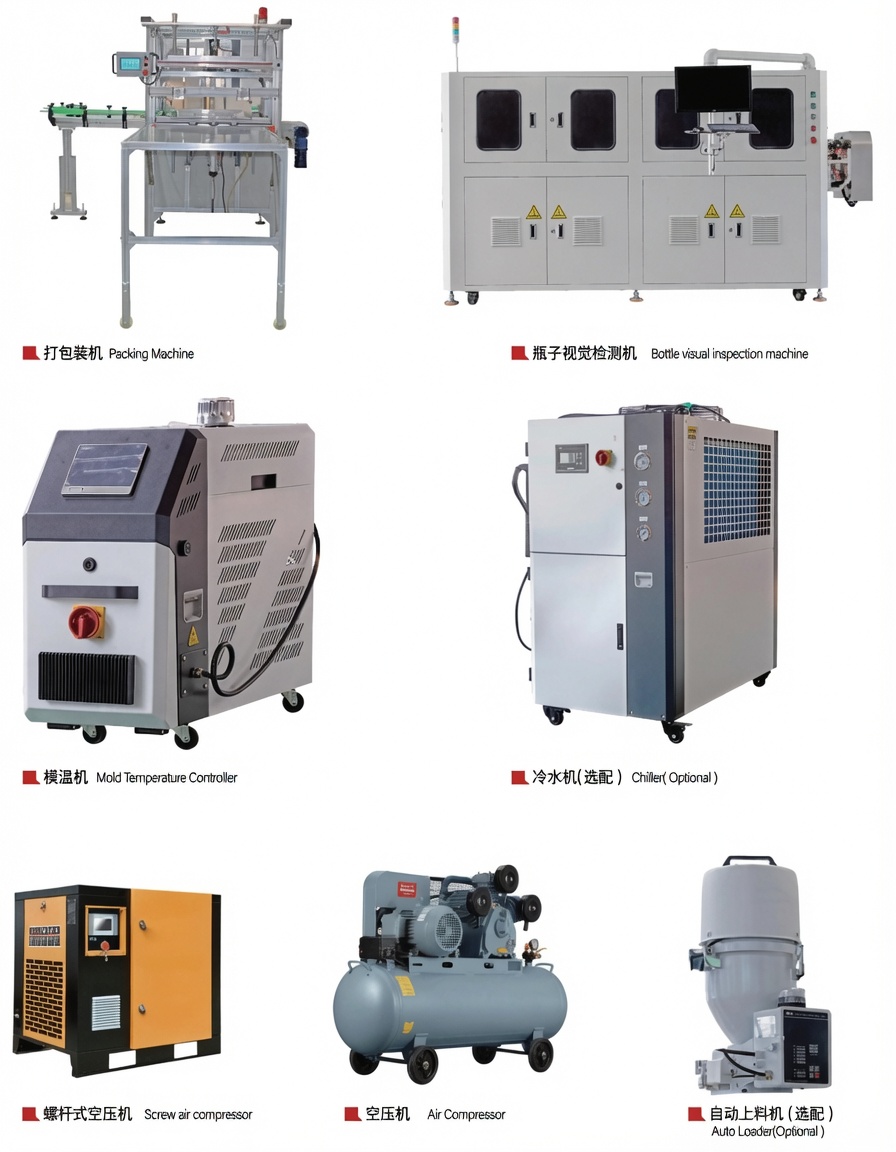
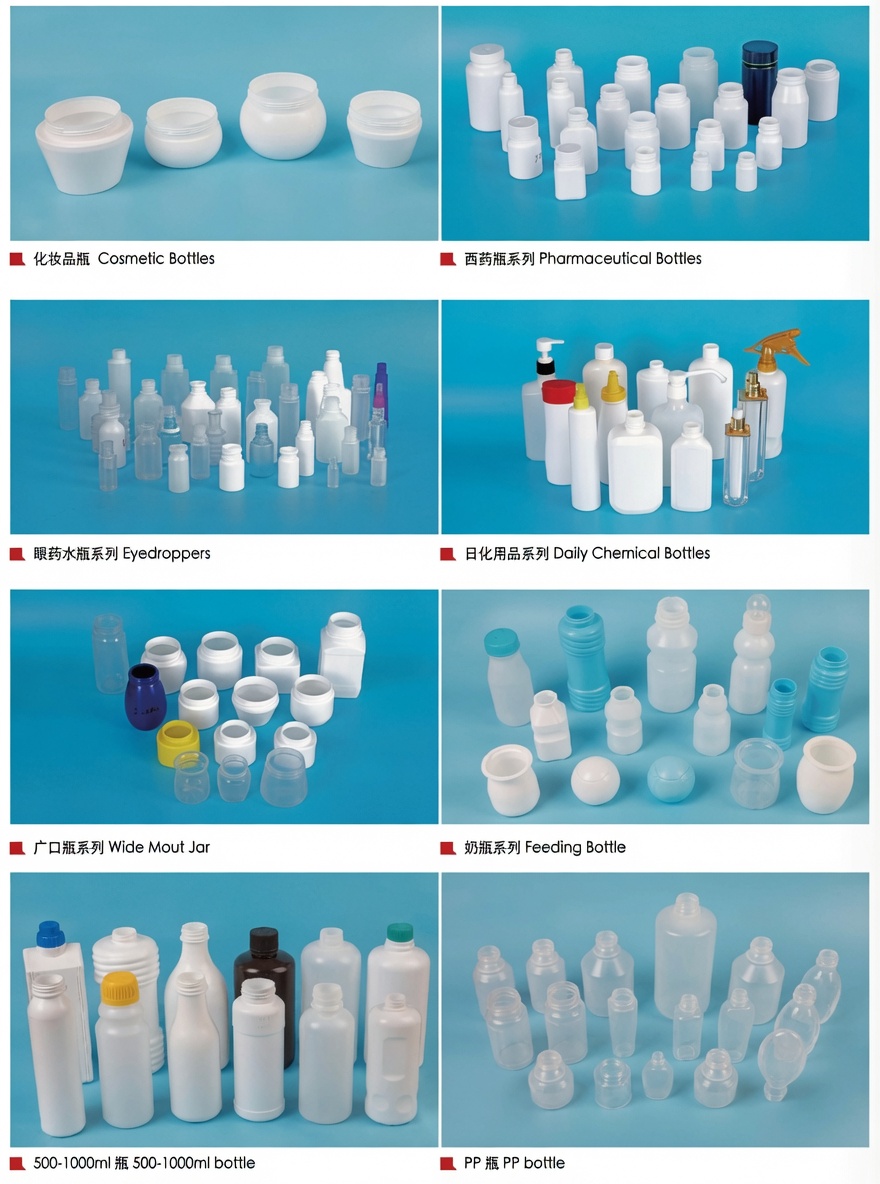
Core Technical Advantages of Injection Blow Molding
No post-mold flash or parison pinch scrap is produced, eliminating one handling stage entirely and reducing raw material consumption versus extrusion alternatives by up to 8%.
Neck threads, bore dimensions, and sealing surfaces are formed in the injection station, not blown, delivering tolerances of ±0.05 mm routinely achievable — critical for pharmaceutical and food-grade closure sealing.
IBM containers have no bottom seam or weld line. This is structurally significant for pressurised applications and cosmetically important for premium brand presentation on retail shelves.
Controlled preform programming eliminates the thin-bottom bias common in free-blown containers. Wall thickness uniformity is achievable within ±10% across the full container body, supporting weight and material reduction programmes.
A single machine cycle takes raw resin pellets and exits a finished, production-ready container. No intermediate preform logistics, no reheat ovens, and no secondary trimming — dramatically simplifying the production footprint and energy consumption profile.
Advanced IBM configurations support co-injection of barrier layers (EVOH, nylon) within the preform injection station, delivering oxygen or moisture barrier performance without compromising recyclability — an increasingly important attribute for UK circular economy compliance.
Technical & Performance Parameter Table: IBM Machine Specifications
| Parameter | ZQ80 Series | ZQ110 Series | Unit / Notes |
|---|---|---|---|
| Clamping Force | 80 | 110 | kN (injection station) |
| Container Volume Range | 3 – 120 | 10 – 250 | ml |
| Max Neck Diameter | up to 38 | up to 48 | mm |
| Cavity Configuration | 2 – 6 cavities | 2 – 8 cavities | Tooling-dependent |
| Cycle Time (4-cavity) | approx. 8 – 12 | approx. 9 – 14 | seconds (resin/geometry dependent) |
| Injection Pressure | 80 – 160 | 90 – 180 | MPa |
| Blow Air Pressure | 0.6 – 1.0 | 0.6 – 1.2 | MPa |
| Compatible Resins | PET, PP, HDPE, LDPE, LLDPE, PC (special config.) | Standard configurations | |
| Neck Tolerance (±) | 0.05 | mm (pharmaceutical grade) | |
| Screw L/D Ratio | 20:1 | 22:1 | Standard plasticising screw |
| Installed Power | approx. 18 | approx. 25 | kW |
| Control System | Siemens / Mitsubishi PLC, touchscreen HMI (10-inch) | Industry 4.0 ready (optional) | |
| Machine Footprint | approx. 2.8 x 1.5 m | approx. 3.2 x 1.7 m | Without auxiliary equipment |
| Wall Thickness Uniformity | within ±10% | Across full container body | |
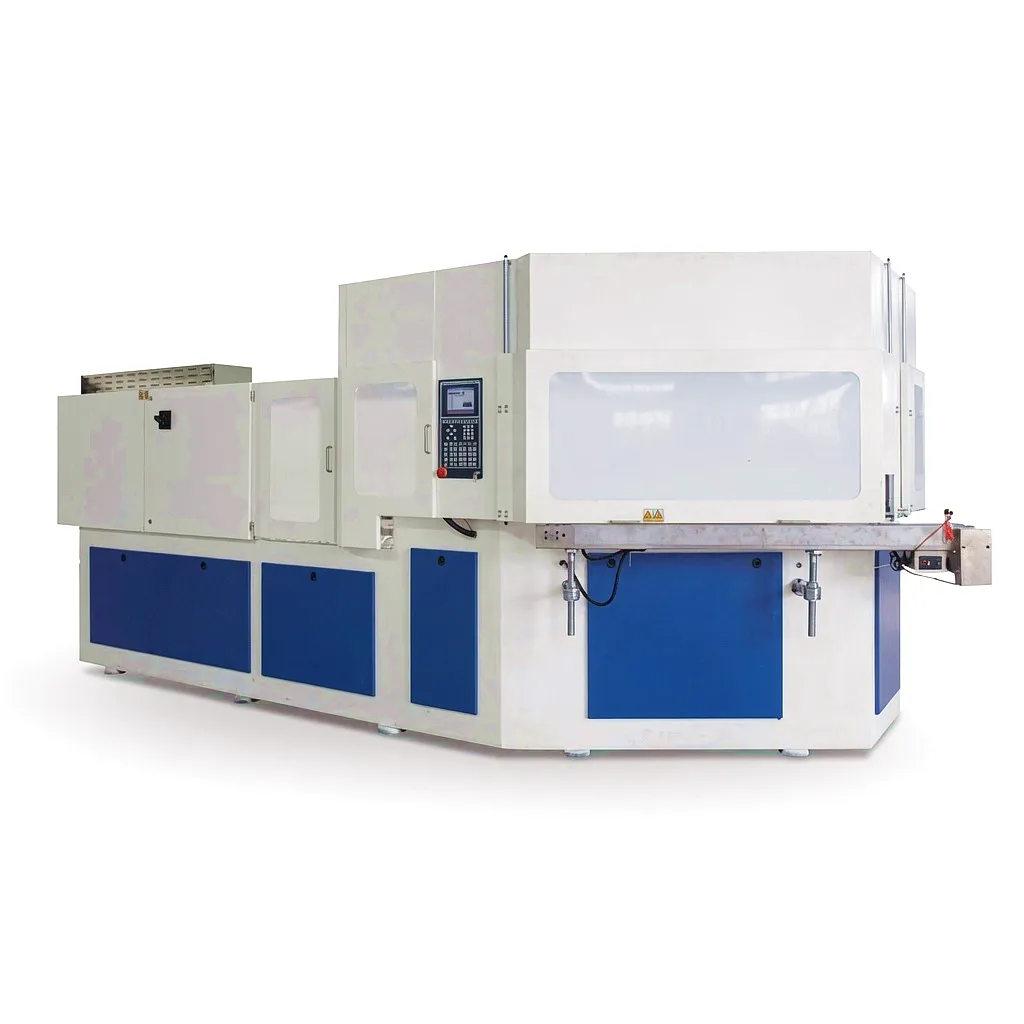
Our Injection Blow Molding Machine Product Range
Ever Power designs and manufactures precision IBM equipment for the global market, with units deployed across pharmaceutical, personal care, and food processing facilities throughout the UK and Europe.
Ever Power: Manufacturing Capability & Customisation Services
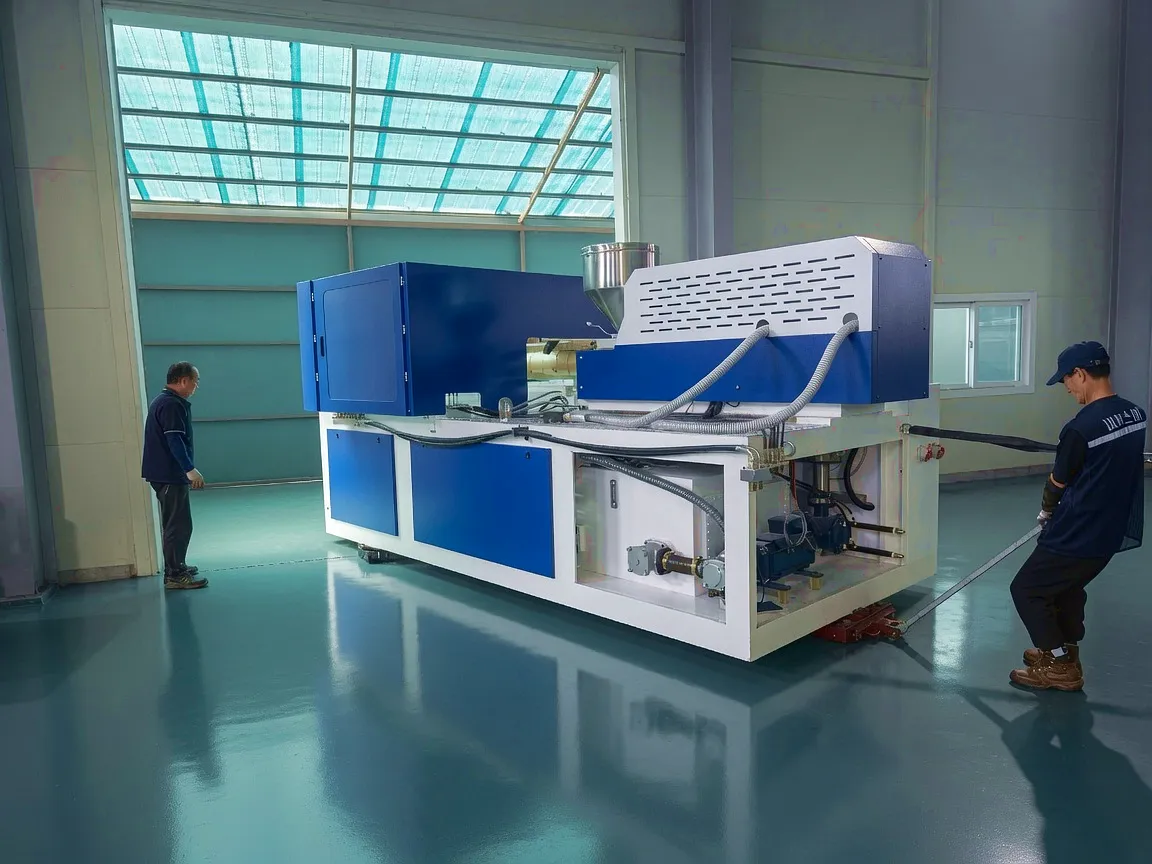
Ever Power’s injection blow molding machine manufacturing programme is built on a foundation of vertically integrated precision engineering. The company operates dedicated machining centres for core rod manufacture, mold cavity milling, and assembly calibration, all conducted within a controlled-environment workshop that maintains dimensional traceability to national metrology standards. This level of in-house control — rather than outsourcing critical tooling components — is precisely what enables Ever Power to guarantee the ±0.05 mm neck tolerance specification that pharmaceutical and ophthalmic customers across the UK routinely require from their packaging supply chain.
Customisation is central to Ever Power’s value proposition, not an afterthought. Whether a Birmingham-based medical device company needs a modified injection unit to handle a high-viscosity medical-grade polymer, or a Sheffield personal care manufacturer requires a 5-cavity die set for an asymmetric oval container, the engineering team works through the specification collaboratively from concept through to FAT (Factory Acceptance Test). Custom screw geometries, specialised core rod alloys for abrasive-resin compatibility, co-injection configurations for barrier packaging, and integrated downstream handling systems are all within the standard project scope. Lead times for fully customised IBM units with bespoke tooling typically run 12 – 18 weeks from confirmed purchase order — considerably faster than many European competitors — and include full remote commissioning support for UK-based customers.
Bespoke cavity sets and core rod assemblies engineered to exact container specifications
IQ/OQ/PQ documentation packages available for pharmaceutical and medical device customers
Sea freight and air freight options with UK clearing agents; DDP delivery available on request
Critical wear parts held in UK bonded stock; 48-hour express despatch to any UK destination
Ready to discuss your injection blow molding machine requirements? Our technical sales team specialises in the UK market.
Customer Success Story: Precision Ophthalmic Packaging in Cambridge
Meridian BioPackaging Solutions Ltd, a Cambridge-based contract pharmaceutical packaging specialist operating two MHRA-licensed cleanroom suites, approached Ever Power in late 2023 with a specific and demanding brief. Their existing extrusion blow molding equipment was producing 10 ml eye drop vials for three licensed pharmaceutical customers, but recurring issues with neck dimensional variation and particulate contamination events were causing batch rejection rates of approximately 3.2%, a figure that was becoming commercially unsustainable given the drug product values involved.
After a detailed process review and trial production run facilitated by Ever Power’s technical team, Meridian commissioned two ZQ80 injection blow molding machines configured with 4-cavity LDPE tooling for the 10 ml eye drop vial profile. Ever Power’s engineering team produced the complete tooling package in-house, including custom core rods machined to the specific bore and thread geometry required by Meridian’s existing eye dropper closure supply. The machines arrived DDP at Meridian’s Cambridge facility, and remote commissioning — conducted via video link with an Ever Power process engineer based in the manufacturing plant — achieved first-shot conforming product within four hours of initial startup.
Within the first three months of production on the ZQ80 units, Meridian’s batch rejection rate for the eye drop vial product fell from 3.2% to below 0.4%. The neck dimensional CPK on the IBM-produced vials consistently exceeded 1.67 — well above the pharmaceutical packaging threshold of 1.33 — and closure integrity test pass rates reached 99.8% on the first inspection pass. Meridian subsequently placed a third ZQ80 order for a new ophthalmic customer programme, citing Ever Power’s tooling quality, responsive UK-focused after-sales support, and competitive pricing as the principal reasons for the repeat purchase decision.
What Our UK Customers Say
“The neck dimensional consistency on the ZQ80 is genuinely impressive — our CPK figures have not dropped below 1.65 in twelve months of continuous production. For ophthalmic primary packaging, that level of process stability is non-negotiable, and Ever Power delivers it reliably.”
“We specified a custom 6-cavity PP tool for a hot-fill sauce container, and the Ever Power engineering team turned around a fully validated toolset in just eleven weeks. The ZQ110 is running at 98.4% OEE on our Sheffield site, and the energy saving versus our previous hydraulic machine has been a genuine revelation.”
“As a personal care brand with very tight launch windows, the 13-week delivery on our bespoke oval bottle tooling was a genuine competitive advantage. The clarity on PET from the ZQ80 is exceptional — our retail buyers commented on it unprompted at the first range review. We would not hesitate to recommend Ever Power to any UK manufacturer looking for a serious IBM partner.”
Frequently Asked Questions About Injection Blow Molding Machines in the UK
► How much does an injection blow molding machine typically cost for a UK manufacturing facility?
Pricing for a production-ready injection blow molding machine in the UK varies substantially based on clamping tonnage, cavity count, resin compatibility, and the degree of customisation required. Entry-level units suitable for small pharmaceutical or cosmetic container production typically start from around USD 45,000 – 65,000 ex-works, while fully customised high-cavity machines with integrated downstream handling and pharmaceutical-grade documentation packages can exceed USD 120,000. Requesting a detailed quote from Ever Power — which includes tooling, FAT, remote commissioning, and a spare parts package — provides the most accurate total cost of ownership figure for your specific application. Contact our sales team at [email protected] for a tailored price and delivery timeline.
► Which UK industries are the largest buyers of injection blow molding equipment right now?
The pharmaceutical and ophthalmic packaging sector currently represents the fastest-growing IBM market in the UK, driven by MHRA requirements for precision primary packaging and the growth of UK-based generic medicine production since 2020. Personal care and cosmetics follows closely, particularly among brands operating out of London, Birmingham, and the North West seeking faster local tooling turnaround. Agrochemical container production in Lincolnshire and Cambridgeshire also shows consistent demand, as do food supplement bottle producers serving the expanding UK nutraceutical sector. Each of these industries values IBM’s zero-trim, high-neck-precision characteristics for different but equally compelling operational reasons.
► What is the typical delivery lead time when I order an injection blow molding machine from a supplier like Ever Power for delivery to the UK?
For standard configurations of the ZQ80 or ZQ110 with a tooling set aligned to an existing container design, Ever Power targets a 10 – 14 week lead time from confirmed purchase order to machine readiness at port of origin. Customs clearance and inland transport to a UK delivery address typically add 2 – 4 weeks depending on port of entry (Felixstowe, Southampton, or Tilbury are most commonly used for this equipment type). Fully customised machines with novel tooling designs requiring engineering review and prototype validation may require 16 – 20 weeks. Air freight options are available for expedited delivery on urgent programmes.
► How do I find a reliable injection blow molding machine supplier who can support a UK-based pharmaceutical packaging operation effectively?
For pharmaceutical packaging applications in the UK, the key supplier selection criteria should include: demonstrated experience with GMP-compliant installations, ability to provide IQ/OQ/PQ validation documentation, accessible technical support during UK working hours (or close to), spare parts availability within the UK or with fast international delivery, and reference sites in comparable applications. Ever Power meets all of these criteria and maintains a growing reference base of MHRA-licensed container producers across England. Requesting a formal technical proposal — including machine specification, tooling design drawings, and a validation document index — is the most effective way to benchmark potential suppliers before issuing a purchase order.
► What container volumes and neck sizes can an injection blow molding machine realistically produce for UK personal care and cosmetics applications?
The volume range achievable on well-specified IBM equipment spans approximately 1 ml (single-dose vials) through to 500 ml for larger format personal care containers, though the optimal range for IBM economics sits between 5 ml and 250 ml. Neck diameters from 13 mm (narrow-bore dropper necks) through to 53 mm (wide-mouth lotion jars) are routinely achievable. The ZQ80 and ZQ110 cover neck diameters of 38 mm and 48 mm maximum respectively in standard configuration, with extended-range tooling available on request. For UK personal care brands requiring oval, asymmetric, or panelled bottle geometries, Ever Power’s in-house cavity design team can model and cost the tooling from a 3D CAD file or a physical sample container.
► Where in the UK do companies typically install injection blow molding machines, and what are the key infrastructure requirements I should plan for on-site?
Injection blow molding machines are installed across the UK’s full manufacturing geography — from cleanroom suites in the Oxford-Cambridge biomedical corridor, to integrated packaging lines in Birmingham’s manufacturing park clusters, to food production facilities across Yorkshire and the East Midlands. Infrastructure requirements for a ZQ80 or ZQ110 installation include: a compressed air supply capable of delivering sustained flow at 0.8 – 1.2 MPa (a standard industrial compressor of 7.5 – 11 kW is usually sufficient), a three-phase 380 V / 415 V electrical supply, chilled water at 8 – 15 degrees Celsius for mold cooling (an integrated chiller unit is available from Ever Power as a package item), and adequate floor loading of at least 1.5 tonnes per square metre in the installation zone.
► When should a UK manufacturer consider upgrading from extrusion blow molding to an injection blow molding machine for their container production?
The upgrade decision from extrusion to injection blow molding is typically driven by one or more of the following: batch rejection rates above 1.5% attributable to neck dimensional variation or contamination; a product move into pharmaceutical or ophthalmic container production requiring pharmacopoeial compliance documentation; a sustainability programme targeting raw material waste reduction (IBM’s zero-flash characteristic is directly relevant); introduction of a new container design with complex neck geometry that extrusion blow cannot achieve reliably; or a volume increase that makes the labour cost of post-mold trimming and inspection economically prohibitive. In every case, an investment in IBM equipment tends to pay back within 18 – 36 months depending on volumes, reject costs, and material savings.