Industrial Manufacturing Technology
Injection-Blow Molding Machine Applications: A Complete Industry Guide for UK Manufacturers
Precision engineering meets scalable production — discover how modern injection blow molding technology is reshaping manufacturing across Britain’s most vital sectors.
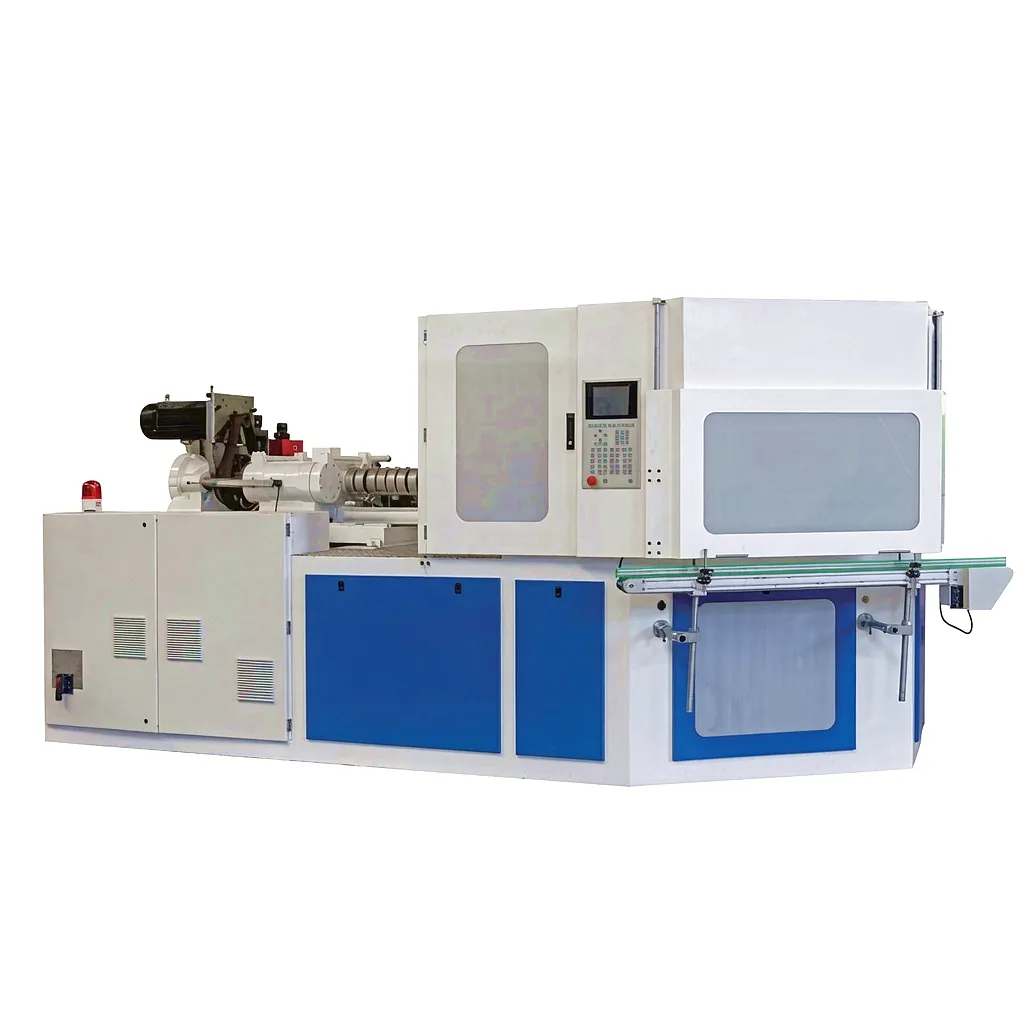 The injection-blow molding machine has quietly become one of the defining pieces of equipment in modern plastics manufacturing. Unlike conventional blow molding methods, this process combines the dimensional precision of injection molding with the hollow-forming capability of blow molding — producing seamless, high-clarity containers with consistent wall thickness and near-zero scrap rates. Across the United Kingdom, from the industrial heartlands of Birmingham and Sheffield to the pharmaceutical corridors of Manchester and the agrochemical processing zones of Yorkshire, manufacturers are turning to injection blow molding to answer increasingly exacting demands for container quality, regulatory compliance, and throughput efficiency. Whether you are producing HDPE bottles for crop protection products or PET vials for pharmaceutical dispensing, understanding the full capability of today’s injection-blow molding equipment is essential to staying competitive.
This guide cuts through the noise to deliver a genuinely technical and commercially grounded overview of injection-blow molding machines — how they work, what materials they handle, which industries rely on them, and why Ever Power’s machines stand apart in both performance and adaptability. If you manufacture in the UK and you are evaluating equipment for your next production line, this article was written with your specific operational context in mind.
How an Injection-Blow Molding Machine Works
①
Stage One — Injection
Molten thermoplastic resin is injected under pressure into a closed mold cavity around a steel core rod. This injection phase produces a precise preform — a test-tube-shaped intermediate blank — with tightly controlled neck geometry and wall distribution. The injection station determines final thread accuracy, which is critical for pharmaceutical closures and agrochemical containers.
②
Stage Two — Blow
Still mounted on the core rod, the warm preform is transferred to the blow station where compressed air expands the parison outward to fill the blow cavity. Because the preform retains heat from the injection stage, cycle times are minimised and dimensional stability is maximised. This co-orientation of material produces containers with notably higher clarity and impact resistance than extrusion-blown alternatives.
③
Stage Three — Ejection
The finished article is stripped from the core rod and ejected without any post-mold trimming. This clean ejection characteristic is one of the primary reasons injection blow molding is preferred for medical-grade and food-contact applications — there are no flash lines, no weld lines, and no secondary operations required before the container enters downstream packaging lines.
The three-station rotary index design common to most modern injection-blow molding machines allows each stage to operate simultaneously on different cavities, keeping the machine fully productive throughout the cycle. High-end machines from Ever Power incorporate servo-driven indexing mechanisms that reduce transition time between stations to under 0.8 seconds, translating directly into more parts per hour without compromising dimensional precision. The entire process is governed by a PLC-based control system that monitors temperature zones across the barrel, nozzle, hot runner manifold, and mold, ensuring that every part produced meets the same specification as the first.
Core Materials Processed by Injection-Blow Molding Equipment
| Material | Key Properties | Typical Applications | Processing Temp (°C) |
|---|
| HDPE | Chemical resistance, opacity, rigidity | Agrochemicals, detergents, lubricants | 180 – 240 |
| PET | High clarity, gas barrier, lightweight | Beverages, personal care, pharmaceuticals | 260 – 285 |
| PP | Heat resistance, fatigue life, FDA-compatible | Medical containers, food jars, closures | 200 – 260 |
| LDPE | Flexibility, squeeze properties, transparency | Eye drops, dropper bottles, squeeze packs | 160 – 220 |
| PVC | High clarity, chemical inertness, stiffness | Cosmetics, pharmaceutical blister packaging | 160 – 190 |
| PETG | Excellent clarity, impact strength, easy decoration | Premium cosmetics, nutraceutical bottles | 220 – 250 |
Material selection in injection blow molding is rarely a simple checkbox exercise. The resin choice interacts directly with mold temperature, core rod surface finish, blow ratio, and cycle time. Ever Power’s engineering team works with customers across the UK to run material compatibility trials before formal production tooling is committed, ensuring that the specific formulation — including masterbatch colorants, UV stabilisers, and processing aids — performs consistently at production speeds. This pre-qualification step, supported by rheology data and melt flow index testing, has saved UK converters significant rework costs during new product launches.
Core Technical Advantages of Modern Injection-Blow Molding Machines
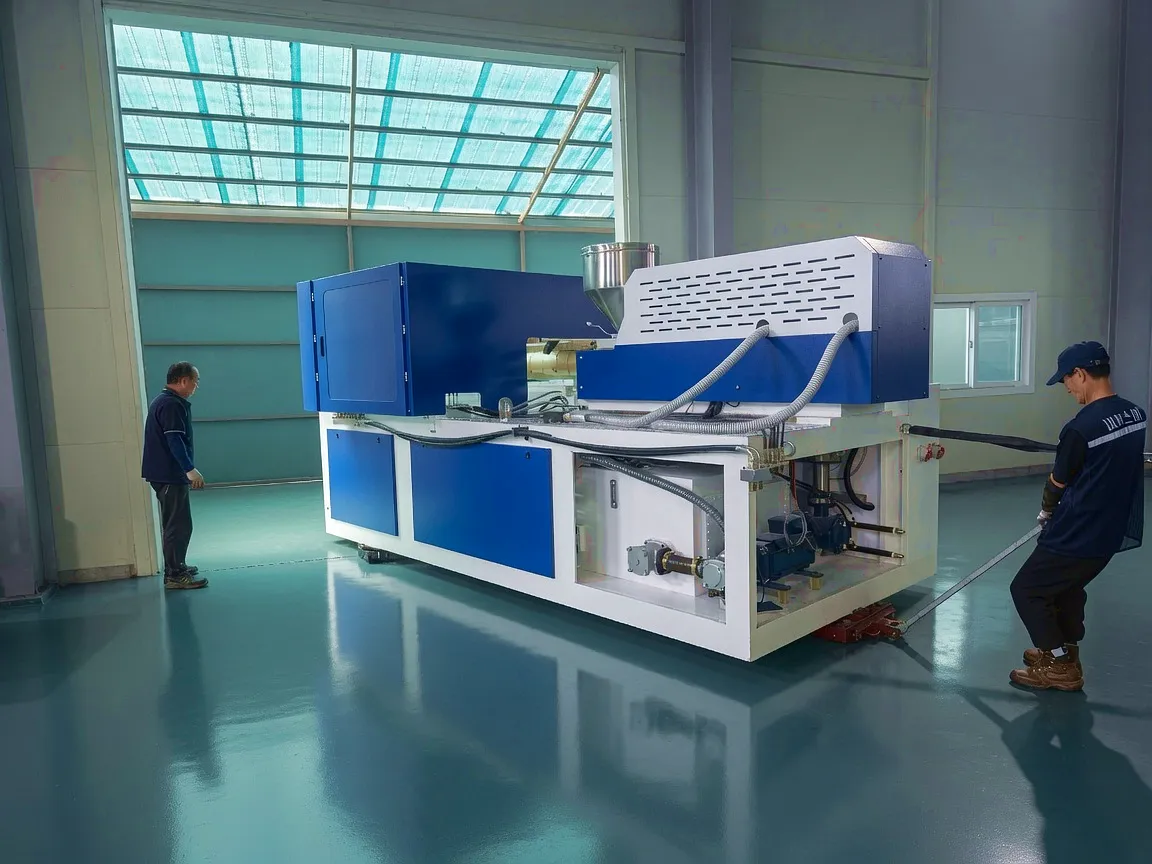
Ever Power manufacturing facility — precision injection blow molding machines produced under ISO-certified conditions.
◆
Zero Flash — No Trim Required
Because the injection phase produces a precision preform with a fully formed neck ring, the blow station simply expands the body — there is no tail or moil to trim. This eliminates secondary trimming machinery, reduces contamination risk, and cuts post-process labor costs that add up significantly over multi-shift production schedules.
◆
Superior Neck Finish Accuracy
Thread profiles and sealing surfaces are formed entirely during injection, where material is constrained by a precision-ground core rod. Tolerance control of ±0.05 mm on neck diameter is routinely achieved in production, making this process the preferred choice for child-resistant closures, tamper-evident caps, and pharmaceutical dispensing fitments used across UK healthcare supply chains.
◆
Consistent Wall Thickness
Wall thickness distribution in injection blow molding is governed by the preform design rather than parison programming, which can introduce variation in extrusion blow molding. Even in complex shoulder geometries and narrow-neck bottle designs, material is distributed predictably, reducing the risk of thin-wall failure during drop testing, transport stacking, or pressure filling operations.
◆
Optical Clarity for Premium Products
PET and PETG containers produced by injection blow molding achieve glass-like clarity without the brittleness or weight penalty of actual glass. UK personal care brands and premium spirits bottlers increasingly specify IBM containers because clarity communicates product purity and luxury at retail — an advantage that directly supports brand positioning and shelf differentiation.
◆
High Output on a Compact Footprint
Modern injection-blow molding machines achieve cavity outputs that rival much larger extrusion blow molding cells, while occupying significantly less floor space. For manufacturers in established UK industrial parks where factory square footage is expensive and expansion constrained, this efficiency ratio is a decisive operational advantage during production line reviews.
◆
Rapid Tooling Changeover
Mold sets in injection blow molding are modular — the injection, blow, and ejection tooling can be changed independently, which means a single machine platform can support multiple product families without full tooling replacement. This flexibility is particularly valued by contract manufacturers in the West Midlands and North West England who run diversified customer portfolios on shared equipment.
Product Technical & Performance Parameters
| Parameter | ZQ60 (UIB 90 Replacement) | ZQ80 (UIB 120 Replacement) |
|---|
| Clamping Force | 60 tons | 80 tons |
| Container Volume Range | 5 ml – 500 ml | 10 ml – 1000 ml |
| Number of Cavities | 1 – 6 | 1 – 8 |
| Injection Unit Capacity (cm3) | Up to 180 | Up to 260 |
| Cycle Time (typical) | 8 – 15 sec | 9 – 18 sec |
| Blow Pressure (bar) | 6 – 12 | 6 – 14 |
| Screw L/D Ratio | 22:1 | 22:1 |
| Temperature Zones | 5 independent zones | 6 independent zones |
| Drive System | Hydraulic / servo-hydraulic hybrid | Servo-electric / hydraulic hybrid |
| Materials Compatible | HDPE, PP, PET, LDPE, PVC, PETG | HDPE, PP, PET, LDPE, PVC, PETG |
| Mold Material (Core Rods) | P20 / H13 tool steel | P20 / H13 tool steel |
| Control System | Siemens / Mitsubishi PLC, touchscreen HMI | Siemens / Mitsubishi PLC, touchscreen HMI |
Industrial Application Scenarios for Injection-Blow Molding Machines
Agriculture & Crop Protection
Application Scenario: Agrochemical Container Manufacturing — Pesticides, Herbicides, Fungicides & Liquid Fertiliser Vessels
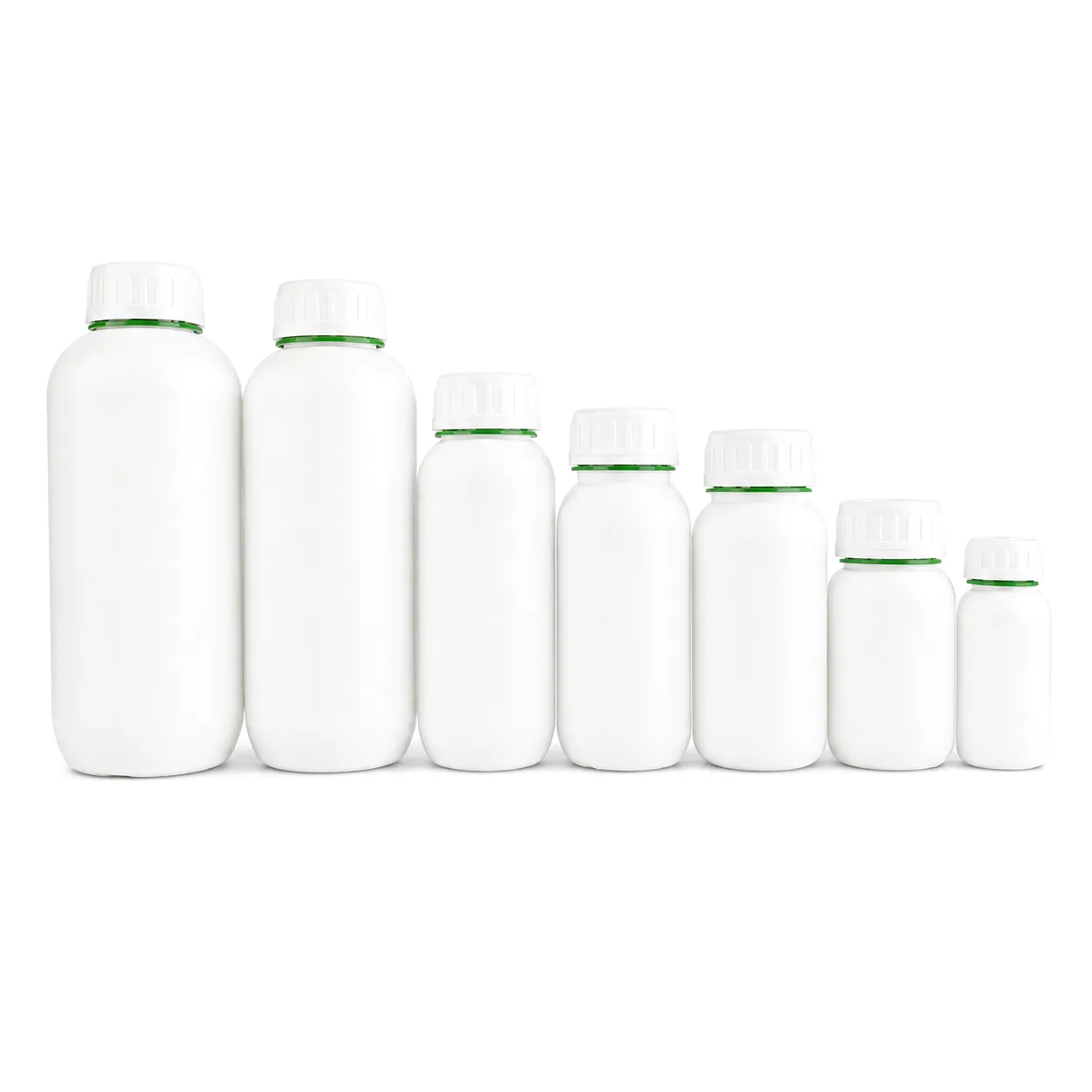 Agriculture is one of the most demanding environments for plastic container performance. Crop protection chemistry — pesticide concentrates, herbicide formulations, fungicide suspensions, and soluble liquid fertilisers — subjects packaging to corrosive active ingredients, wide temperature swings during outdoor storage, and strict regulatory requirements governing container integrity, child resistance, and recoverability through schemes like AgriRetur in Scotland and the Collect and Recycle initiative across England and Wales.
The injection-blow molding process is exceptionally well suited to agrochemical containers because HDPE preforms produced in the injection stage offer an inherently homogeneous wall structure with no flow-lines, weld lines, or stress concentrations that might lead to stress-cracking in contact with surfactant-heavy formulations. Yorkshire-based agrochemical packagers supplying to Agrii, Frontier Agriculture, and other major UK distributors have found that switching from extrusion blow molding to injection blow molding for their 250 ml – 2 L product range reduced warranty claims related to leakage by over 40% in the first year of operation — a statistic that speaks directly to the quality differential the process provides.
◆
Pesticide Concentrate Containers (250 ml – 5 L)
◆
Herbicide Bottles with Integrated Pour Spouts
◆
Fungicide Suspension Containers
◆
Liquid Fertiliser Bottles (1 L – 5 L)
◆
Ready-To-Use (RTU) Spray Bottles
Ready-to-use spray containers present a particularly interesting technical challenge for injection blow molding machines. The trigger sprayer fitment requires an extremely precise neck finish — typically 28 mm or 38 mm in diameter — with thread geometry that must mate reliably with pump mechanisms sourced from multiple suppliers. Injection blow molding delivers that consistency batch after batch without the neck trimming and thread re-cutting sometimes required in extrusion alternatives. For UK contract packagers serving the garden centre and consumer horticulture market from bases in the East Midlands and Lincolnshire, this repeatability translates into reduced stoppage time on automated filling and capping lines.
Pharmaceutical & Healthcare
Application Scenario: Pharmaceutical Dispensing and Medical-Grade Container Production
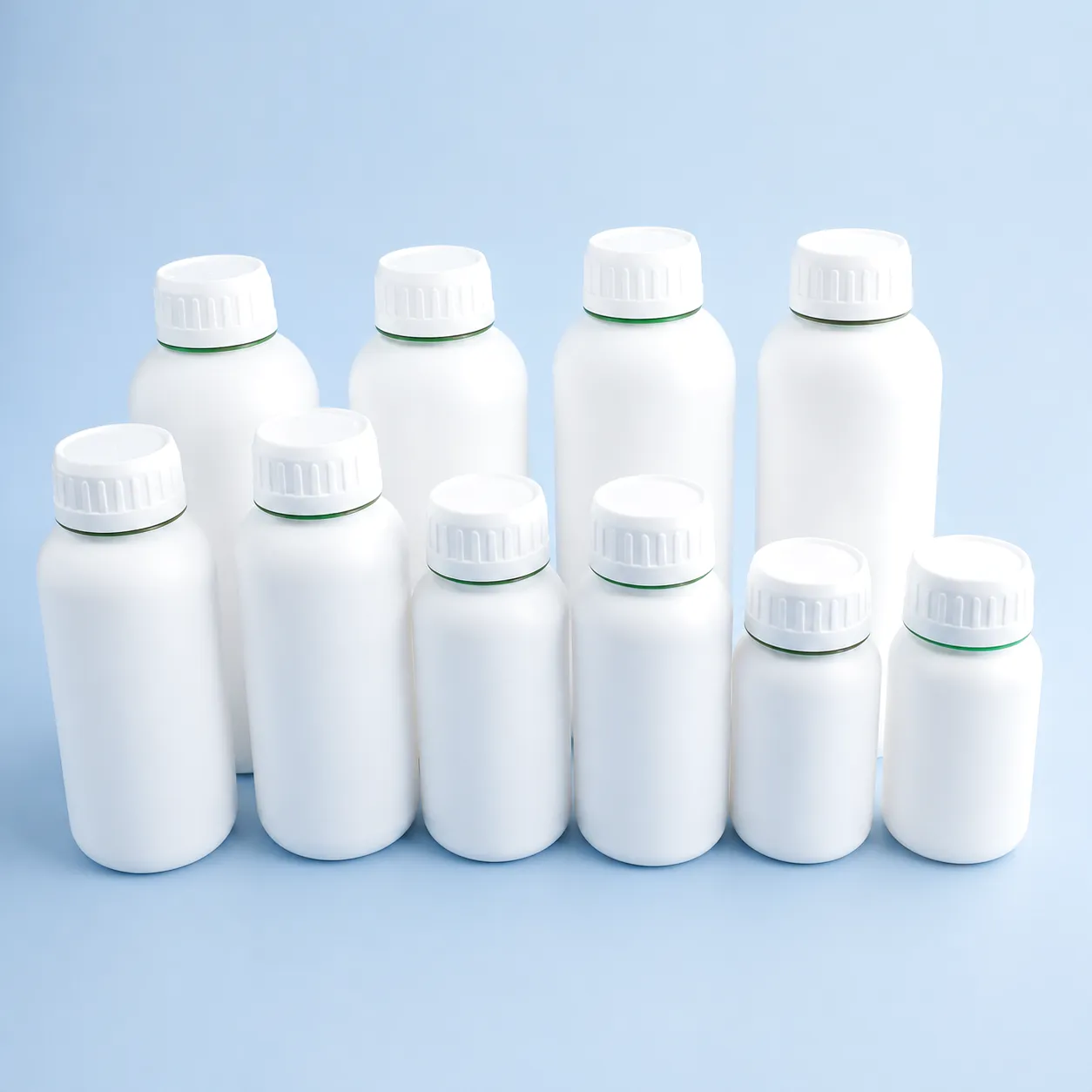 The pharmaceutical sector imposes arguably the most rigorous container specifications of any industry. In the United Kingdom, where manufacturing sites in Manchester, Cambridge, and the so-called Golden Triangle of Oxford–Cambridge–London drive substantial pharmaceutical output, packaging quality is governed by MHRA guidelines, British Pharmacopoeia container standards, and EU GMP annexes that remain recognised within the UK post-Brexit. An injection-blow molding machine used in pharmaceutical production typically operates under validated conditions where every process parameter — barrel temperatures, hold pressures, blow timings, cycle counts — is recorded and traceable to finished container test data.
LDPE and HDPE dropper bottles for ophthalmic products, PP tablet containers with child-resistant locking rings, PETG syrup bottles requiring uniform light transmission for inspection, and PET vials for injectable preparations are all produced with injection blow molding machines. The absence of internal weld lines means particulate contamination from internal surface irregularities is essentially eliminated — a critical quality parameter for sterile products. Ever Power supplies machines with cleanroom-compatible enclosures, HEPA-filtered air circuits for the blow station, and documentation packages suitable for inclusion in FDA Drug Master Files and MHRA product licences.
Personal Care & Cosmetics
Application Scenario: Premium Cosmetics, Shampoo, and Personal Care Bottle Manufacturing
The UK personal care market — estimated to be one of the largest in Europe — demands packaging that does three things simultaneously: protect the formulation, communicate brand premium, and meet an expanding range of sustainability commitments. Injection-blow molding machines produce containers that satisfy all three requirements. The process handles PETG and PET with ease, creating bottles with the visual clarity of glass at a fraction of the weight and a much lower carbon footprint per unit when compared with actual glass alternatives. Birmingham-based contract manufacturers supplying to established UK health and beauty retailers have found that injection blow molding eliminates the need for internal light-block coatings sometimes required with extrusion-blown bottles, as the superior wall uniformity provides inherent opacity consistency when pigmented resins are used.
Shampoo bottles, conditioner containers, body lotion dispensers, serum vials, and premium fragrance packaging are all within the production scope of modern injection-blow molding equipment. The ability to produce multi-layered preforms in coinjection IBM configurations also opens the door to oxygen-barrier structures for sensitive skincare active ingredients — an emerging requirement in the professional cosmetics channel that is particularly active in London’s retail landscape. The process supports sleeve labelling, direct screen printing, hot-foil decoration, and in-mould labelling, giving brand teams full graphic freedom without post-mold handling.
Food & Beverage
Application Scenario: Food-Grade Jar, Sauce Bottle, and Specialty Beverage Container Production
 Food and beverage packaging is governed in the UK by UK Food Safety Act 1990, the Food Contact Materials Regulations 2012, and a suite of industry-specific compliance documents that mandate the use of materials and manufacturing processes that do not transfer contaminants into food. Injection-blow molding produces food-contact containers without the release agents, mold lubricants, or post-mold cutting operations that can introduce contamination risks in other processes. Polypropylene jars for honey, preserves, and premium condiments; PET bottles for cold-pressed juices and still mineral water; HDPE dispensers for cooking oils and sauces — all are produced efficiently on multi-cavity injection-blow molding machines running validated clean cycles.
Sheffield’s growing artisan food sector and the established drinks manufacturing hubs of Scotland increasingly specify injection blow molding for runs of 50,000 – 500,000 units where the quality premium of the process is financially justified by brand positioning. The process is also gaining traction in the functional beverage segment — protein shakes, sports nutrition liquids, energy shot bottles — where the 25 ml – 100 ml single-serve format pairs ideally with the tight tolerance capability and short cycle times available on machines like the ZQ80.
Featured Injection-Blow Molding Machine Models
80-Ton Platform
The ZQ80 delivers 80 tons of clamping force with servo-electric precision, handling containers from 10 ml to 1000 ml across up to 8 cavities. Designed as a direct performance-equivalent replacement for the Uniloy UIB 120, it is compatible with all existing Uniloy UIB 120 tooling, making it the most cost-effective upgrade path for UK manufacturers currently running aging Uniloy presses.
View ZQ80 Details ›
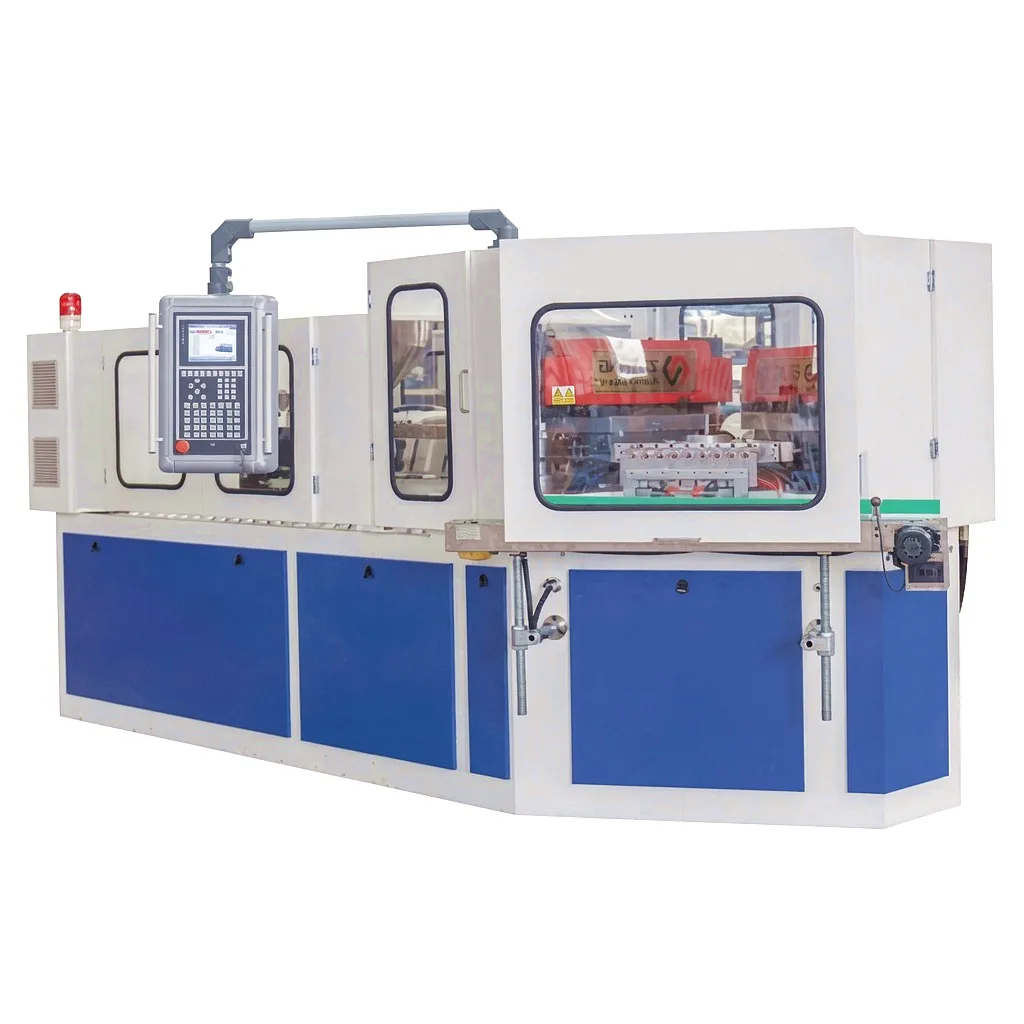
60-Ton Platform
The ZQ60 brings 60-ton injection blow molding capability to mid-volume converters, running containers from 5 ml to 500 ml across up to 6 cavities. Fully tooling-compatible with the Uniloy UIB 90, it provides an affordable entry into servo-assisted injection blow molding for smaller operations across the UK without any requalification of existing mold sets.
View ZQ60 Details ›
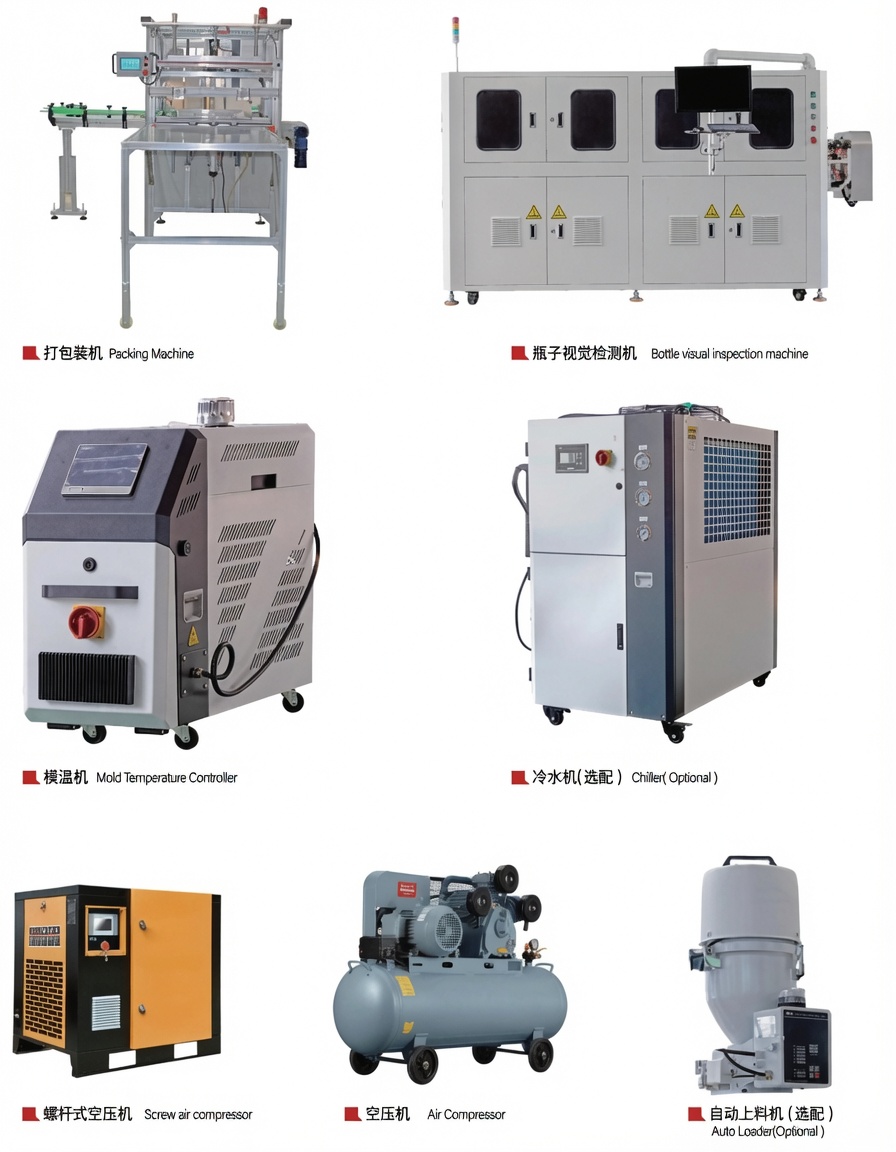
Ever Power IBM machine with integrated auxiliary systems
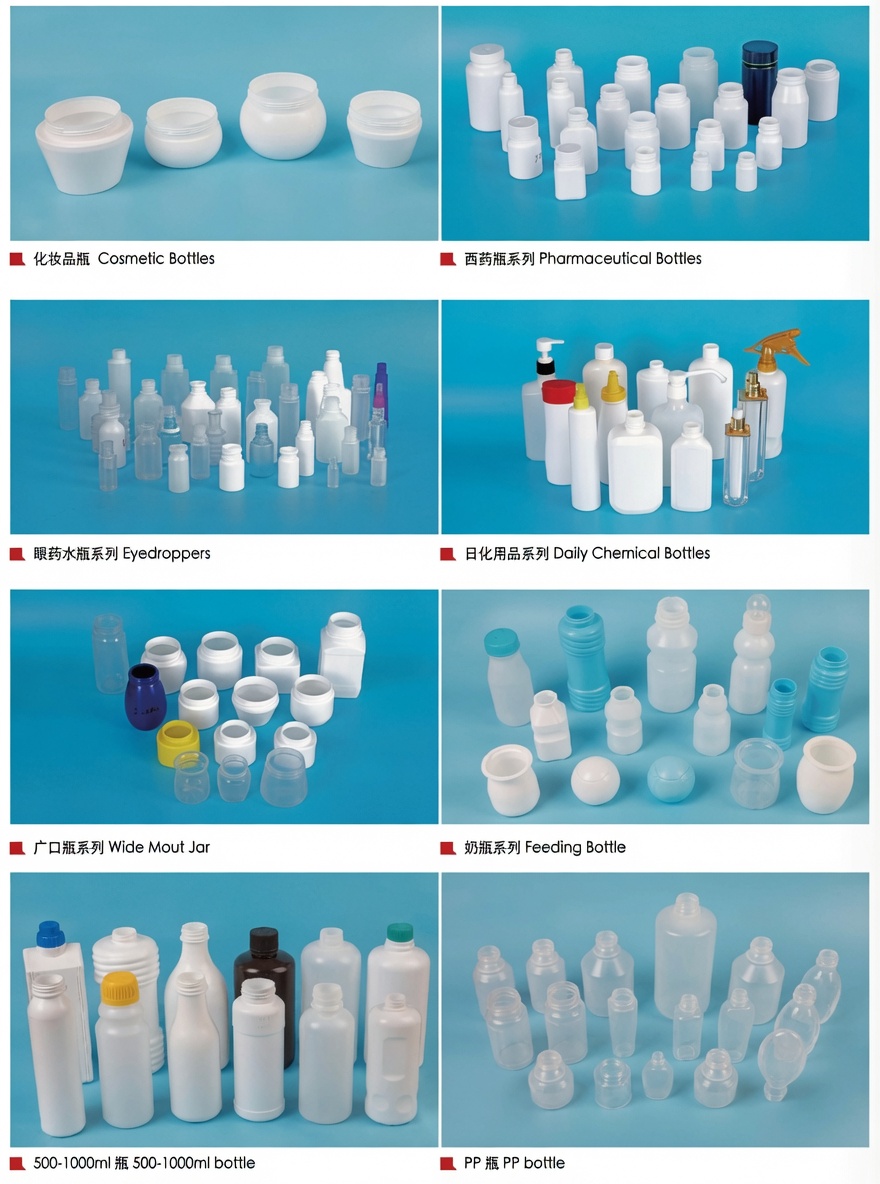
Complete injection blow molding production line configuration
Manufacturing Excellence
Ever Power: Precision Engineering & Custom Injection-Blow Molding Solutions
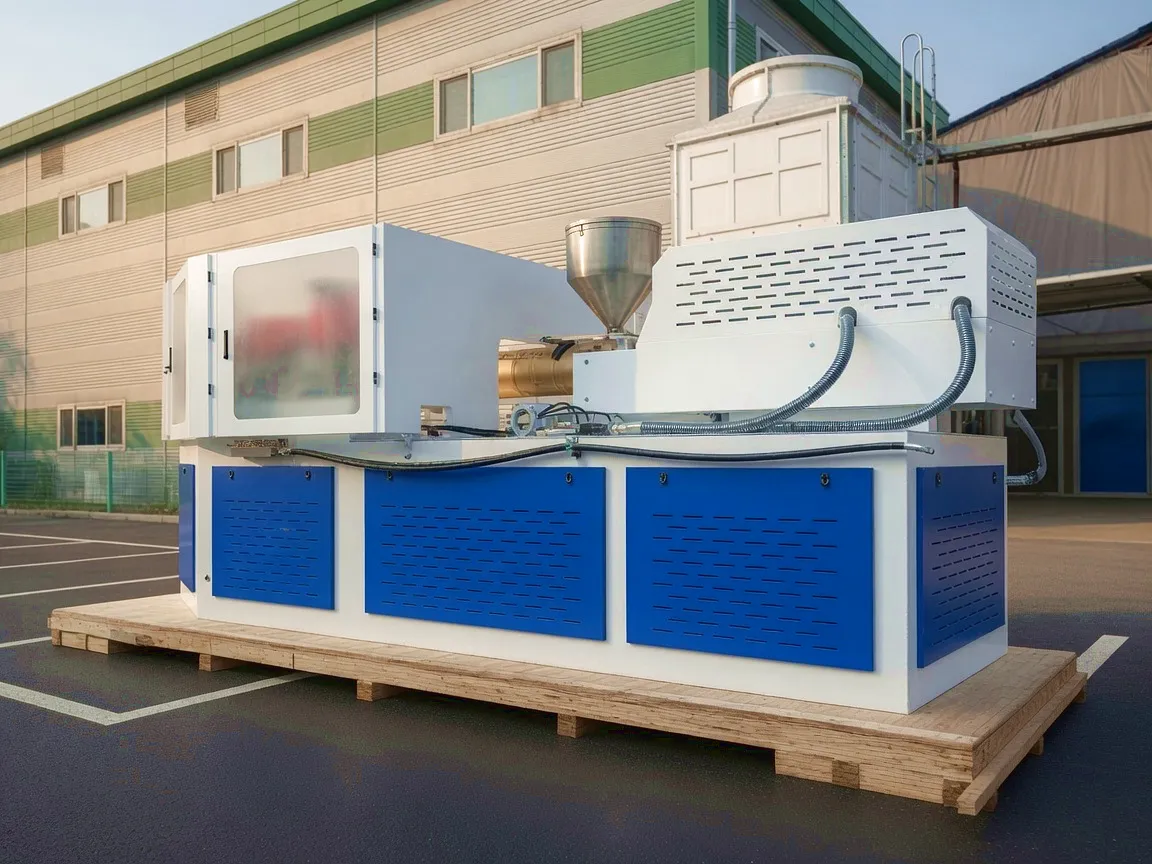 Ever Power operates a dedicated manufacturing facility equipped with CNC machining centres, precision grinding machines, and comprehensive quality inspection equipment. Every injection-blow molding machine that leaves our facility has been subjected to a full 72-hour factory acceptance test running actual customer materials in the specified production configuration. This commitment to pre-delivery validation means our UK customers receive equipment that can enter production immediately, rather than spending weeks on-site commissioning adjustments.
Our customisation capabilities extend beyond standard machine specification. UK customers regularly request bespoke modifications including: explosion-proof electrical enclosures for solvent-based formulation lines, increased injection unit capacities for specific resin systems, custom cavity numbering for container traceability, IQ/OQ/PQ documentation packages for pharmaceutical validation, and machine configurations pre-wired for integration with downstream vision inspection and rejection systems. Every customisation is engineered and documented to BS EN ISO 9001 standards.
Supply chain assurance is built into our procurement model. Ever Power maintains strategic buffer stocks of critical wear items — barrels, screws, core rod sets, check valves, and sealing elements — to support UK customers with rapid dispatch, typically within 3 working days for standard wear items. For customers in Birmingham, Sheffield, Manchester, or other major UK manufacturing centres who cannot afford extended machine downtime, this parts availability commitment is not a selling point but a non-negotiable service standard.
Customer Success Story: Sheffield Agrochemical Packaging Manufacturer
🏭
Norbridge Containers Ltd — Sheffield, South Yorkshire
Agrochemical Packaging | Contract Blow Moulding | UK Midlands & North Distribution
Norbridge Containers Ltd had been operating two 15-year-old extrusion blow molding machines to supply HDPE containers for crop protection formulations distributed by major UK agrochemical companies. The aging equipment was generating an unacceptable reject rate of 4.2% due to inconsistent neck thread dimensions and intermittent wall thinning on the shoulder of their 1-litre rectangular container — a format that accounted for 38% of annual production volume.
After a technical review with Ever Power’s UK sales engineering representative, the decision was made to replace both extrusion lines with a single ZQ80 injection-blow molding machine configured with 6-cavity tooling for the 1-litre format and 4-cavity tooling for a 500 ml round container in the same product family. The machine was delivered to their Attercliffe Road facility on a 14-week lead time and installed by Ever Power’s commissioned engineer over 5 days.
Production results after six months of operation showed a reject rate reduced to 0.3% — a 93% improvement — and a throughput increase of 22% on the 1-litre format due to the reduction in downtime previously associated with trimming machine maintenance. The elimination of the trim conveyors and granulator also freed 18 square metres of valuable factory floor space. Norbridge subsequently ordered tooling for two additional container sizes and has placed an order for a second ZQ80 to support projected volume growth from a new agrochemical distribution contract covering Scotland and Northern Ireland.
⭐
“The ZQ80 solved every quality issue we had with thread consistency on our 1-litre agrochemical containers. Our closure supplier was amazed at the dimensional uniformity across the full 6-cavity set — they’ve never had to adjust their cap-feeding equipment once since we installed the Ever Power machine.”
— James Hartley, Production Manager, Norbridge Containers Ltd
⭐
“We specified a custom explosion-proof enclosure for our solvent-based chemistry line and Ever Power delivered exactly what was needed, fully documented to ATEX Zone 2 requirements. The commissioning engineer knew the machine inside out and had us running production containers within 48 hours of first switch-on.”
— Rachel Cowburn, Operations Director, Norbridge Containers Ltd
⭐
“Parts availability has been outstanding. When we needed a replacement barrel thermocouple at 3am on a Sunday — a night shift problem — Ever Power’s service line had a replacement unit on a next-day courier by 7am Monday. That kind of support from a machine supplier is rare, especially for equipment shipped from outside the UK.”
— David Osei, Maintenance Engineer, Norbridge Containers Ltd
Frequently Asked Questions
How much does an injection-blow molding machine typically cost for a UK manufacturer looking to set up a new container production line?
The cost of an
injection-blow molding machine for a UK production facility varies considerably by tonnage, cavity count, and specification level. Entry-level configurations in the 60-ton class typically start from around £85,000–£130,000 (ex-works), while fully specified 80-ton machines with servo drives, cleanroom enclosures, and validation documentation packages may reach £180,000–£260,000 or more. Tooling costs should be budgeted separately and typically range from £18,000–£60,000 per product family depending on cavity count and container complexity. Ever Power provides itemised quotations covering machine, tooling, delivery to UK port, commissioning, and a 12-month spare parts package — contact
[email protected] for a price specific to your project requirements.
Which injection-blow molding machine supplier in the UK can supply Uniloy-compatible tooling and provide local technical support after installation?
Ever Power’s ZQ60 and ZQ80 machines are specifically designed as drop-in replacements for the Uniloy UIB 90 and UIB 120 respectively, with full mechanical compatibility with existing Uniloy tooling — no adapter plates or tooling rework required. Post-installation, Ever Power provides UK-based technical support through a combination of remote diagnostics (modem-connected HMI access) and field engineering visits coordinated through our European service partners. Critical spare parts are stocked for same-week dispatch to mainland UK addresses.
What is the difference between injection blow molding and extrusion blow molding, and which process is better suited for pharmaceutical containers used in the UK healthcare sector?
Injection blow molding forms containers from a precision preform produced around a steel core rod, which gives exact control over neck geometry, wall distribution, and surface finish — with no flash or trim. Extrusion blow molding squeezes a parison of molten plastic and pinches it shut in a mold, which creates weld lines, tail flash, and variable neck dimensions requiring trimming. For pharmaceutical containers in the UK healthcare supply chain — particularly child-resistant tablet bottles, ophthalmic dropper units, and sterile injectables primary packaging — injection blow molding is strongly preferred because of its superior thread accuracy, absence of internal contamination sites, and suitability for ISO cleanroom production environments.
Where in the UK can I get a quote for a custom injection-blow molding machine with ATEX-rated enclosures suitable for processing solvent-based agrochemical formulations in Sheffield or Yorkshire?
Ever Power supplies ATEX-compatible injection-blow molding machine configurations to UK customers operating in classified hazardous zones. Our custom engineering team designs the relevant explosion-proof enclosures, spark-free wiring, and certified control panel builds for Zone 1 and Zone 2 environments in accordance with BS EN 60079. To get a quote tailored to your Sheffield or Yorkshire facility layout, processing requirements, and ATEX zone classification, email our technical sales team at
[email protected] with your container specifications and we will respond within one working day.
How long does it take to receive and install an injection-blow molding machine ordered from an overseas supplier, and what commissioning support should a UK buyer expect?
Standard lead time for a configured injection-blow molding machine from Ever Power is 12–18 weeks from order confirmation, depending on specification and tooling complexity. Shipping to UK ports typically takes 4–6 weeks via sea freight, with customs clearance handled by an experienced freight forwarder familiar with UK import procedures post-Brexit. Commissioning is carried out by an Ever Power engineer on-site at your factory, typically over 4–7 days. The commissioning scope covers electrical and utility connections, first article production, process parameter setting, operator training, and acceptance testing against agreed container specifications. Full documentation — including electrical schematics, maintenance manuals, and spare parts lists — is supplied in English.
What types of plastic bottles and containers can an injection-blow molding machine produce for agricultural businesses in the UK farming and horticulture sector?
Injection-blow molding machines are capable of producing the full range of container types used across UK agriculture and horticulture: pesticide concentrate bottles in HDPE from 250 ml to 5 litres; herbicide containers with integrated F-style handles; fungicide suspension bottles with wide-mouth openings; soluble liquid fertiliser containers; and ready-to-use spray bottles in HDPE or PP for garden centre retail distribution. The machines handle F-style, Boston round, rectangular, and oval cross-sections with equal facility, and can switch between container families with a mold change typically completed in 2–3 hours by a trained technician.
Who is the best injection-blow molding machine supplier for Birmingham or West Midlands manufacturers needing a Uniloy UIB replacement with existing tooling compatibility?
Ever Power is a specialised supplier of Uniloy-compatible injection-blow molding machines with a proven track record supporting UK converters in the West Midlands and across Britain. The ZQ60 and ZQ80 models are mechanically interchangeable with Uniloy UIB 90 and UIB 120 tooling sets, meaning Birmingham-based manufacturers can transfer their existing molds directly to the new machine without engineering modifications. This dramatically reduces the cost and time to production readiness compared with purchasing a machine from a supplier with a proprietary tooling interface. Request a compatibility check and quote at
[email protected].
Ever Power Industrial Equipment
Speak to our engineering team about your injection-blow molding machine requirements — custom specifications, UK delivery, and Uniloy tooling compatibility all handled in a single conversation.
✉ Get a Quote — [email protected]
edit by gzl