Injection Blow Molding Machine: Application Scenarios, Technical Capabilities & Industry Solutions
A comprehensive guide to how injection blow molding machines serve demanding industries across the UK and global markets — from agriculture to pharmaceuticals.
How an Injection Blow Molding Machine Works
Molten polymer — typically HDPE, PP, PET, or PVC — is injected at high pressure around a steel core rod inside a closed mold cavity. The parison (preform) takes on the precise shape of the cavity, establishing the neck finish and overall geometry of the finished container.
The core rod, still carrying the conditioned parison, rotates to the blow station. Compressed air is introduced through the core rod, expanding the softened parison outward until it conforms to every contour of the blow mold cavity. Controlled air pressure and timing produce uniform wall distribution throughout the container body.
After sufficient cooling time in the temperature-controlled blow mold, the finished container is stripped from the core rod at the ejection station. The result is a perfectly formed, flash-free bottle requiring no trimming or post-processing. The core rod immediately returns to the injection station, keeping cycle times tight and throughput high.
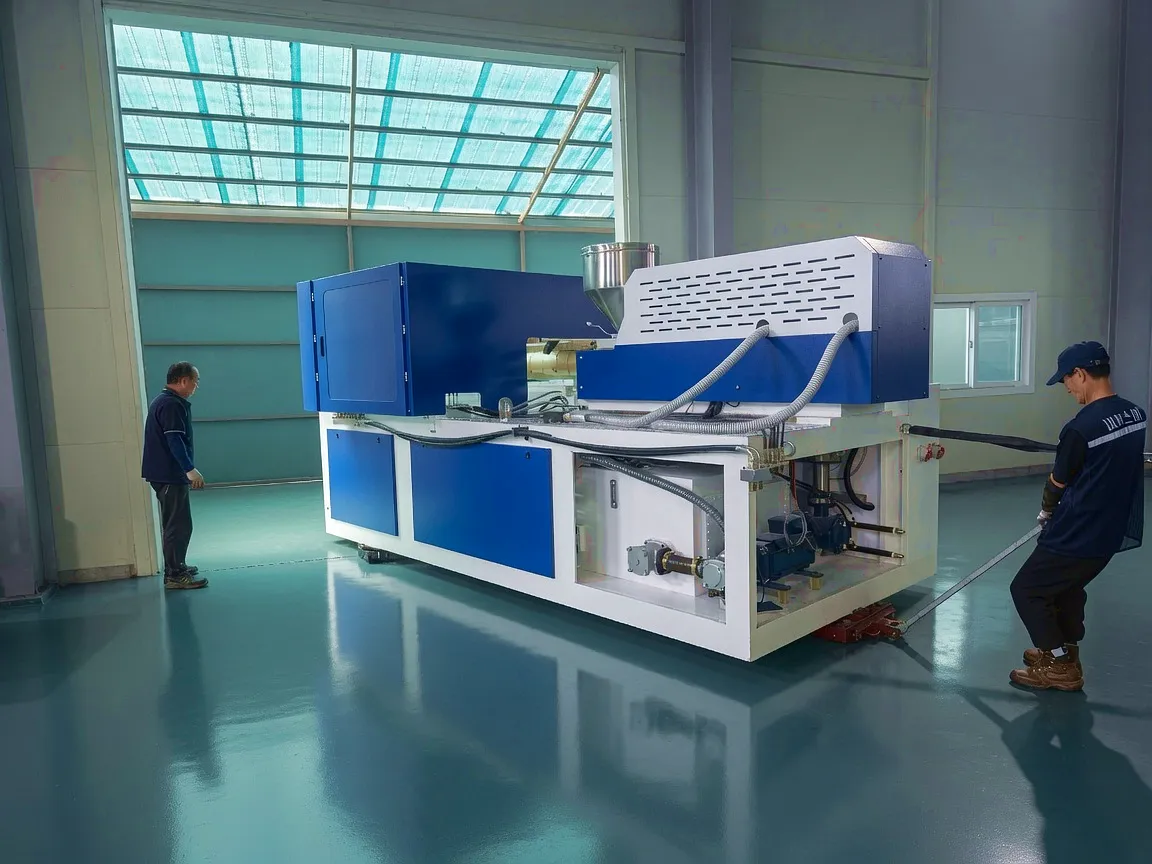
The entire three-station cycle — injection, blow, eject — is orchestrated by a programmable logic controller (PLC) that governs melt temperature, injection speed, air pressure profile, mold temperatures, and indexing speed. Modern injection blow molding machines integrate servo-driven hydraulics or fully electric drive systems that reduce energy consumption by up to 40% compared to conventional hydraulic designs, while delivering repeatability measured in fractions of a gram in part weight consistency.
Core Materials Processed by Injection Blow Molding Machines
High-density polyethylene is the workhorse material for chemical containers, agrochemical bottles, household products, and automotive fluid bottles. Its excellent chemical resistance, rigidity, and compatibility with a wide range of fill products make it the dominant choice across UK packaging converters.
Polypropylene offers superior heat resistance and is FDA-approved for food contact, making it ideal for hot-fill personal care and pharmaceutical applications. PP’s stiffness-to-weight ratio allows thinner walls without sacrificing structural integrity, reducing material cost per unit.
Polyethylene terephthalate delivers exceptional clarity, making finished containers virtually glass-like in appearance. PET is widely specified for cosmetics, fragrance, and premium personal care packaging where shelf appeal drives purchasing decisions in high-street retailers and pharmacy chains across the UK.
Medical-grade PVC and PETG are processed on injection blow molding machines for pharmaceutical vials, IV bottle components, and laboratory sample containers. Both materials meet European pharmacopoeial standards and can be sterilised by gamma radiation, EO, or autoclave, satisfying NHS supply chain requirements.
Core Technical Advantages
The closed-mold injection process eliminates flash entirely, meaning finished containers require no trimming, punching, or secondary processing. This directly reduces scrap rates, labour costs, and downstream quality rejection, which is particularly valued by UK contract manufacturers operating on tight margins.
Because the neck finish is injection-moulded around the core rod rather than blown, thread dimensions are held to tolerances tighter than ±0.05 mm. This precision guarantees correct fitment with child-resistant closures, tamper-evident seals, and dispenser pumps — critical in pharmaceutical and agrochemical packaging regulated under UK HSE and MHRA guidelines.
The core rod guides blow air from within the parison, ensuring even expansion in all directions. The result is wall thickness variation below 5%, which maximises drop resistance and topload strength, reduces raw material consumption per bottle, and ensures the container meets stackability requirements for pallet distribution across UK logistics networks.
Multi-cavity mold tooling on large injection blow molding machines enables 6, 12, or even 24 cavities per shot, dramatically improving output per cycle. For high-volume runs common in FMCG and pharmaceutical production, this translates to output rates exceeding 10,000 containers per hour on a single machine, underpinning the economics of UK filling lines.
Servo-electric drive systems, variable-frequency drives on hydraulic pumps, and heat-recovery units on the barrel reduce electrical energy draw by 35–45% compared to legacy all-hydraulic machines. In the context of UK industrial energy costs, which have remained elevated since 2022, this translates to meaningful savings in operating expenditure, supporting carbon reduction commitments under UK Net Zero targets.
Advanced screw and barrel geometries on contemporary injection blow molding machines can process rPET and rHDPE with recycled content up to 50% without degradation in container quality. This capability positions UK packaging manufacturers to meet the UK Plastic Packaging Tax requirements and the increasing retailer mandates for post-consumer recycled (PCR) content in packaging.
Technical Performance Parameters
The table below outlines representative technical specifications for production-grade injection blow molding machines. Actual values vary with model size, cavity count, and material selection. Ever Power engineering teams provide model-specific data sheets and process simulations as part of the pre-sale technical support package.
Application Scenarios Across UK & Global Industries
Where injection blow molding machines deliver competitive advantage
Application Scenario 1: Pesticide, Herbicide, Fungicide & Liquid Fertiliser Containers
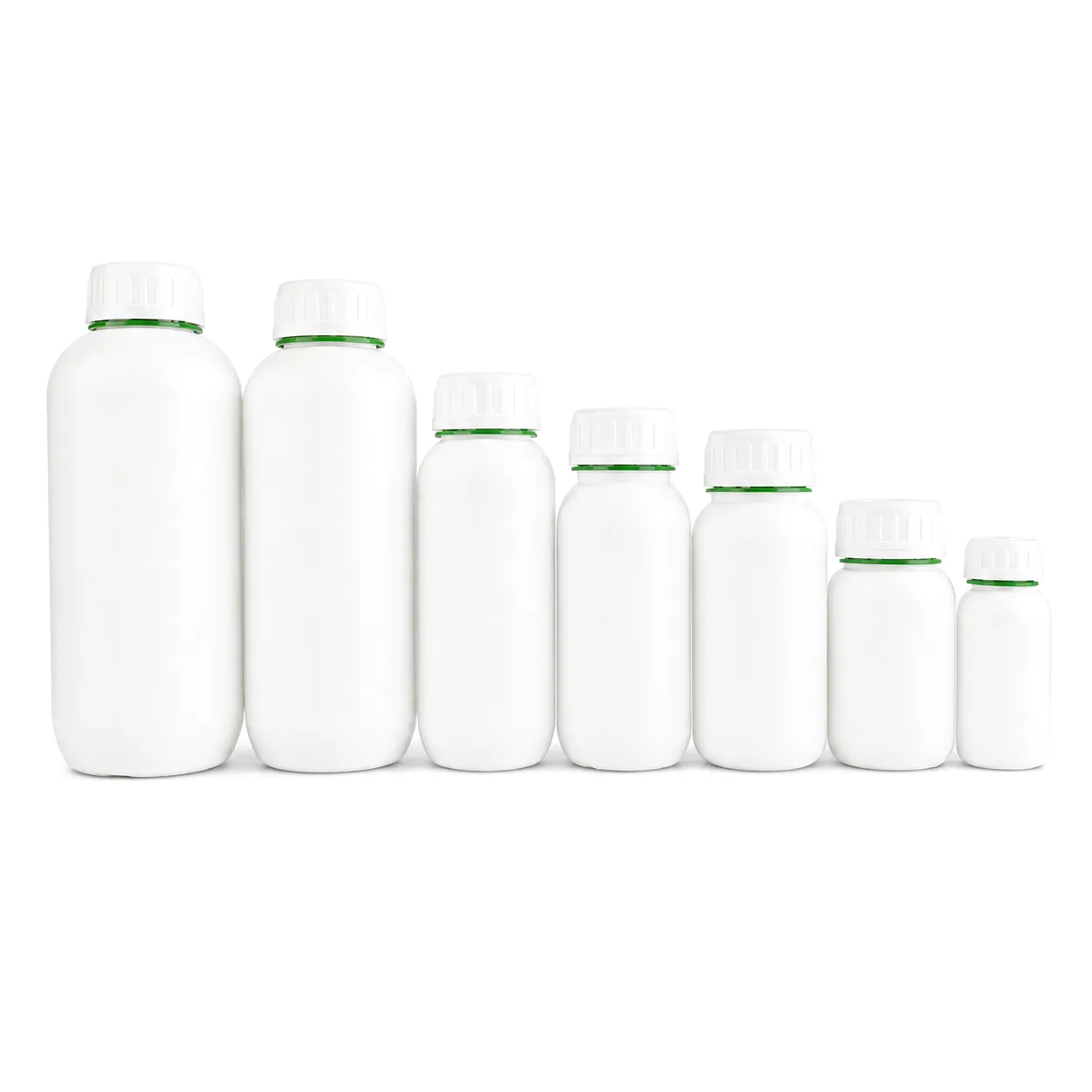 The agriculture and crop protection sector represents one of the most technically demanding application areas for injection blow molding machines. Containers used for pesticide concentrates (250 ml – 5 L), herbicide formulations, fungicide solutions, and liquid fertilisers must meet a complex intersection of chemical compatibility, regulatory, and physical performance requirements that few manufacturing processes can satisfy as consistently as injection blow molding.
In the United Kingdom, crop protection product packaging must comply with the Health and Safety Executive (HSE) requirements under the Plant Protection Products Regulations, which mandate child-resistant closures and tamper-evident seals for a broad range of products. The injection blow molding machine’s inherent ability to produce precision neck finishes — where thread geometry and orifice dimensions are injection-moulded, not blown — makes it the preferred process for containers that must reliably interface with HSE-compliant closures. When a pesticide bottle’s cap fails to seat correctly, the consequences range from spillage and operator exposure to full regulatory non-compliance and product recall.
HDPE containers produced on injection blow molding machines offer outstanding resistance to the solvents, emulsifiers, and surfactants found in commercial agrochemical formulations. For ready-to-use (RTU) spray containers — products intended for direct application without dilution — lightweight yet structurally robust HDPE bottles blown from single-stage parisons deliver the trigger-spray compatibility and ergonomic performance demanded by professional users in arable farming operations across the East of England and specialist horticultural enterprises in Kent and Lincolnshire.
- Pesticide concentrate containers (250 ml – 5 L)
- Herbicide bottles (1 L – 5 L)
- Fungicide solution containers
- Liquid fertiliser bottles
- Ready-to-use (RTU) spray containers
- Chemical resistance (UN certification)
- Child-resistant closure compatibility
- Stackable geometry for pallet efficiency
- HDPE with UV stabiliser
- F-style and round bottle options
Application Scenario 2: Medicine Bottles, Syrup Containers & NHS Supply Chain Packaging
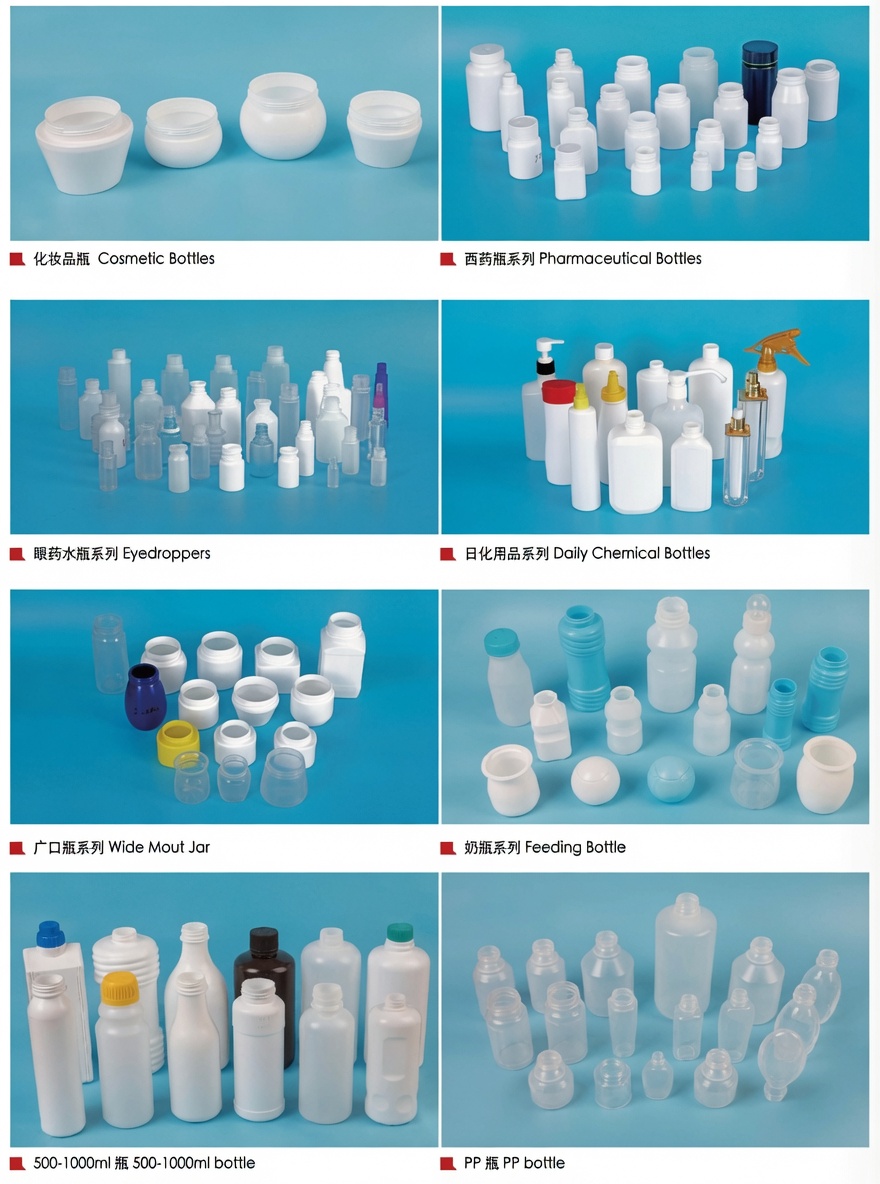
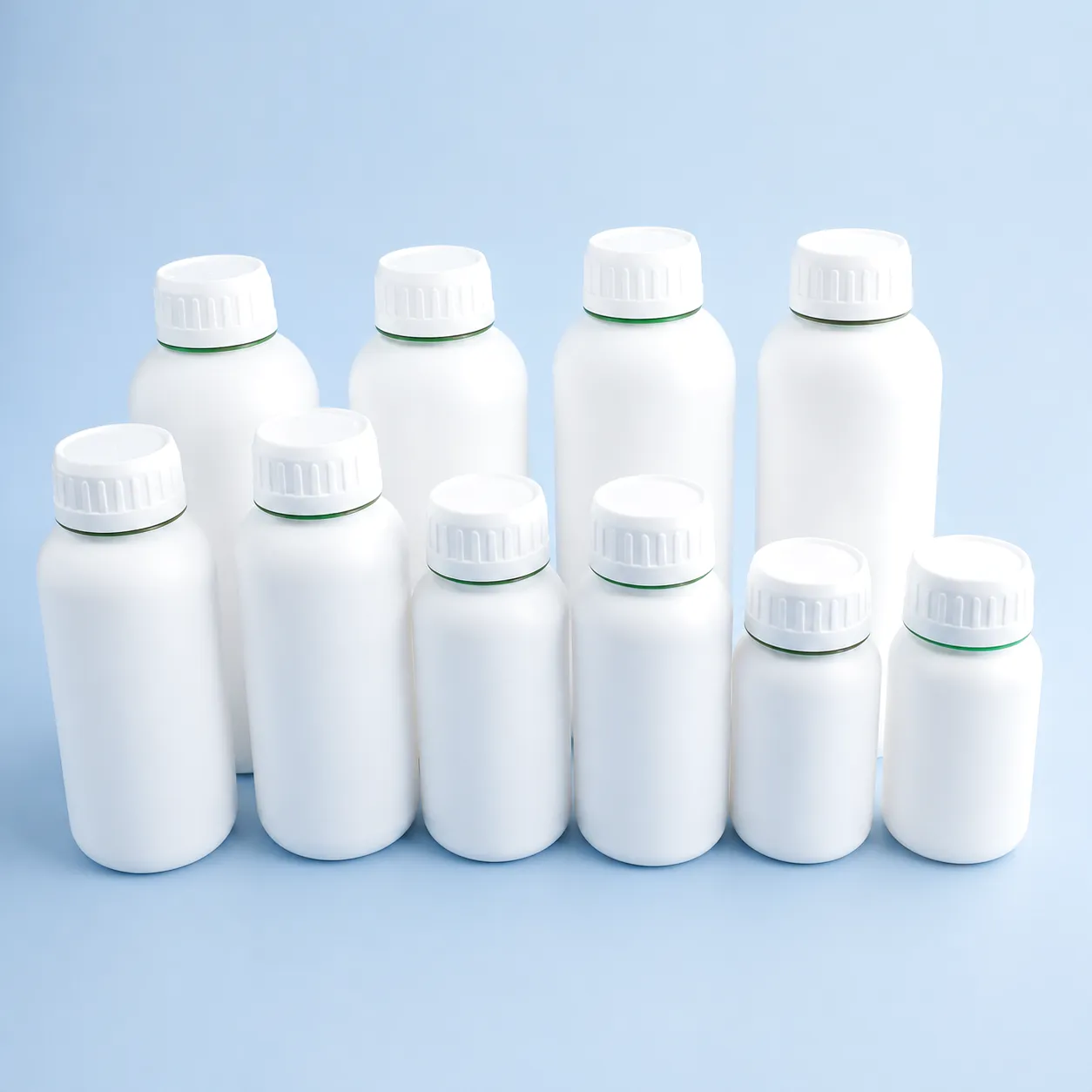 The pharmaceutical and healthcare sector demands the highest standards from any container manufacturing process, and the injection blow molding machine is uniquely positioned to meet these demands. Pharmaceutical-grade bottles for liquid medicines, oral syrups, elixirs, and ophthalmic preparations require neck threads accurate to within ±0.05 mm to interface correctly with child-resistant closures and tamper-evident bands meeting BS EN ISO 8317 standards, as mandated for many categories of medicinal products dispensed through NHS pharmacy chains and hospital formularies across the UK.
Application Scenario 3: Shampoo, Lotion, Cosmetic & Fragrance Packaging
The personal care and cosmetics sector represents perhaps the most visually demanding application area for injection blow molding machines. When consumers select a shampoo, conditioner, or body lotion product from a Boots or Superdrug shelf, the container’s visual appeal — its clarity, its surface finish, its dimensional elegance — is part of the brand experience. PET containers produced through the injection blow molding process deliver optical clarity comparable to glass, enabling brands to present richly coloured products in their true tones while maintaining the lightweight, shatterproof properties essential for bathroom use.
For premium fragrance brands and luxury cosmetics manufacturers concentrated in the South East of England, injection blow molding enables the production of complex container geometries — shouldered bottles, waisted profiles, faceted bodies — that would be prohibitively costly in glass and impossible in extrusion blow molding. The ability to incorporate in-mold labelling (IML) compatibility and accept hot-stamped decorations on the smooth, injection-moulded exterior surfaces further extends the creative palette for brand designers.
PP containers processed on injection blow molding machines serve hot-fill personal care applications where product temperatures at fill exceed 80°C. Closures with integral pumps or disc-top dispensers require the neck dimensions achievable only through injection blow molding — tolerances that extrusion cannot reliably reproduce at the production volumes demanded by UK FMCG supply chains supplying major multiple retailers.
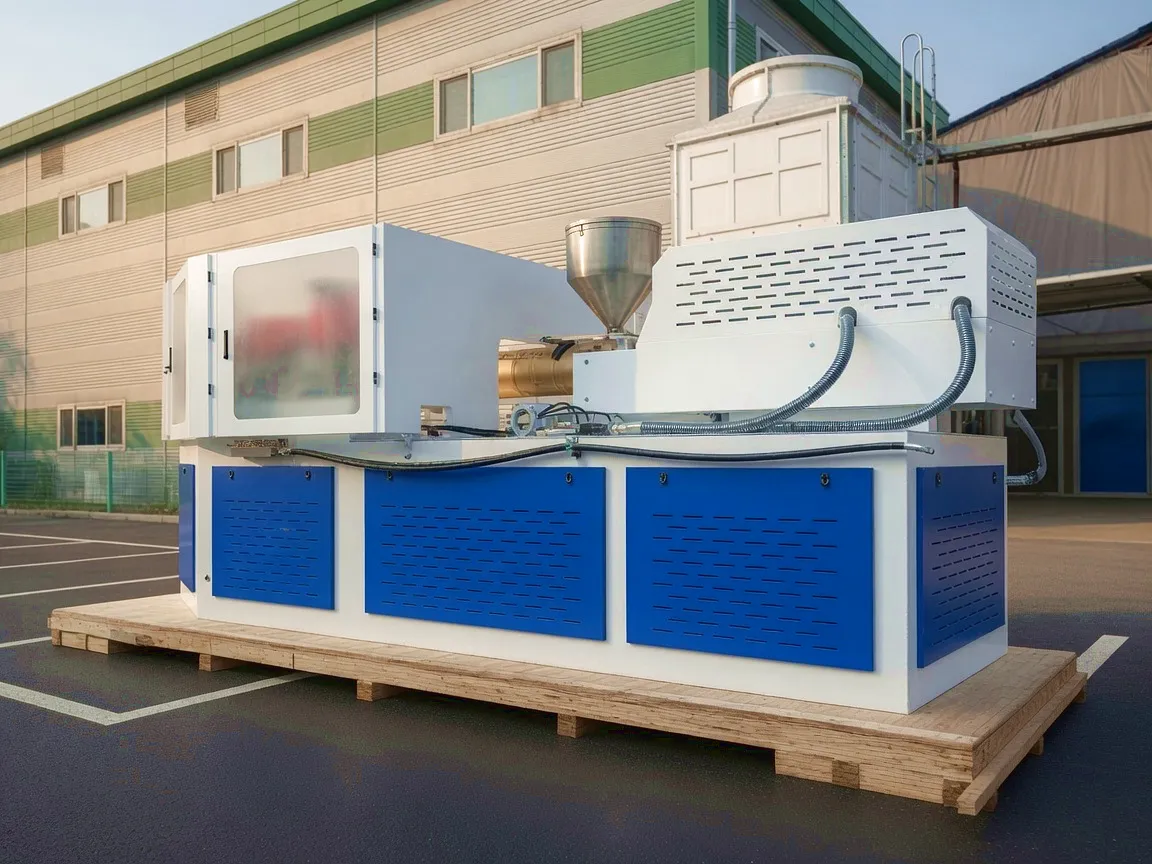
Application Scenario 4: Engine Oil Bottles, Brake Fluid Containers & Automotive Chemical Packaging
 The automotive aftermarket and original equipment sectors across Birmingham, Coventry, and the West Midlands automotive manufacturing corridor generate significant demand for precisely manufactured fluid containers. Engine oils, brake fluids, transmission fluids, coolants, and screenwash products each require containers with specific chemical compatibility profiles and packaging formats that facilitate efficient filling, capping, and distribution across the automotive supply chain.
Application Scenario 5: Sauce Bottles, Condiment Containers & Beverage Packaging
Food contact packaging produced on injection blow molding machines serves a broad spectrum of UK food and beverage manufacturers, from artisan condiment producers in West Yorkshire to large-scale sauce and dressing manufacturers supplying major UK supermarkets. PET containers blow-moulded through the injection process deliver the optical clarity that allows consumers to see the product clearly, a significant factor in purchase decisions at point of sale.
The Food Standards Agency (FSA) and UK food contact materials regulations require that polymer containers meet migration limits for substances that could transfer into foodstuffs. HDPE, PP, and PET processed on well-maintained injection blow molding machines routinely satisfy these requirements, with material declarations available from resin suppliers for inclusion in technical dossiers submitted to food safety authorities or major retailer technical teams.
Condiment and sauce bottles require secure fitment with flip-top, disc-top, or standard screw caps. Injection blow molded necks guarantee that high-speed capping equipment can apply closures without torque variance, preventing under-tightened caps that lead to leakage during transport or over-tightened caps that resist consumer opening. The precision neck geometry produced by injection blow molding machines is a key enabler of filling line efficiency for UK food manufacturers. Hot-fill capability on PP containers — rated to withstand filling temperatures up to 95°C — is increasingly specified by manufacturers of shelf-stable sauces, gravies, and dressings for the UK foodservice and retail sectors.
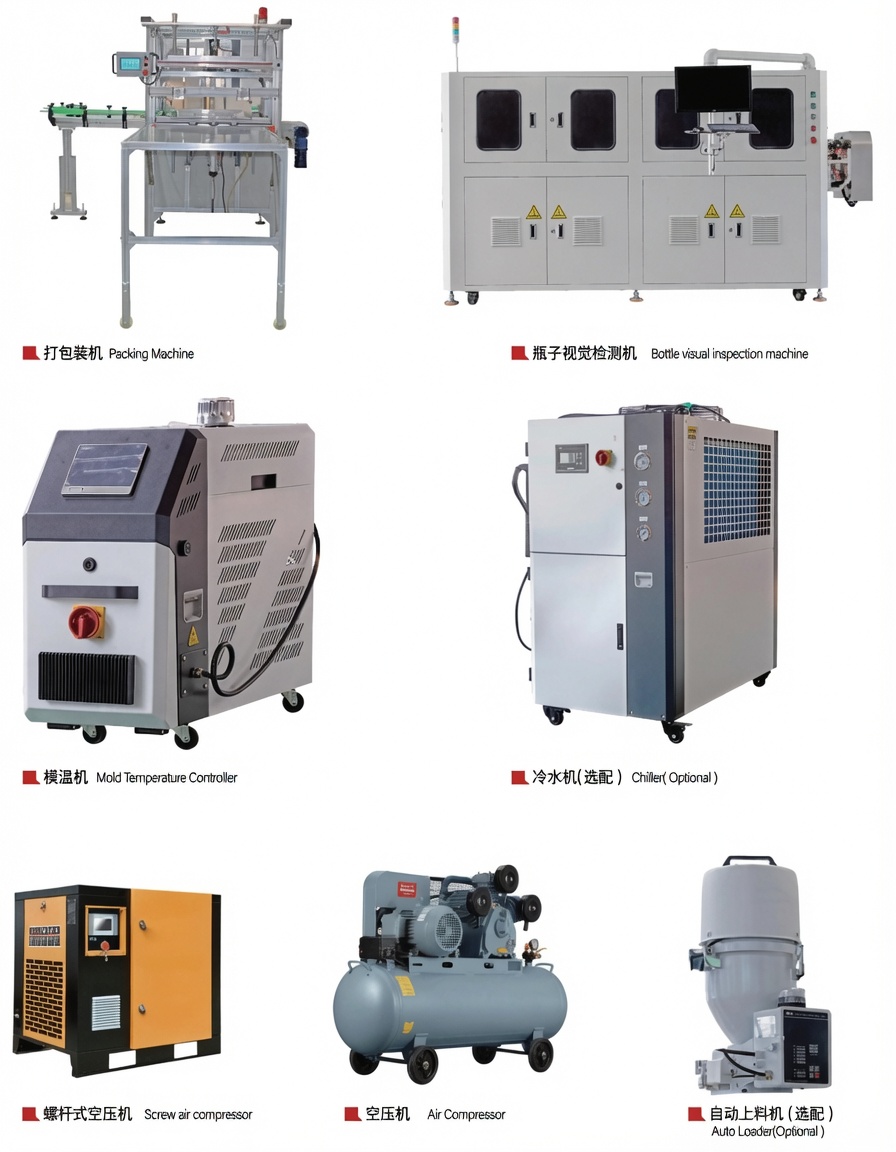
Featured Products from Ever Power
Proven injection blow molding machine models — engineered for high performance, precision, and longevity.
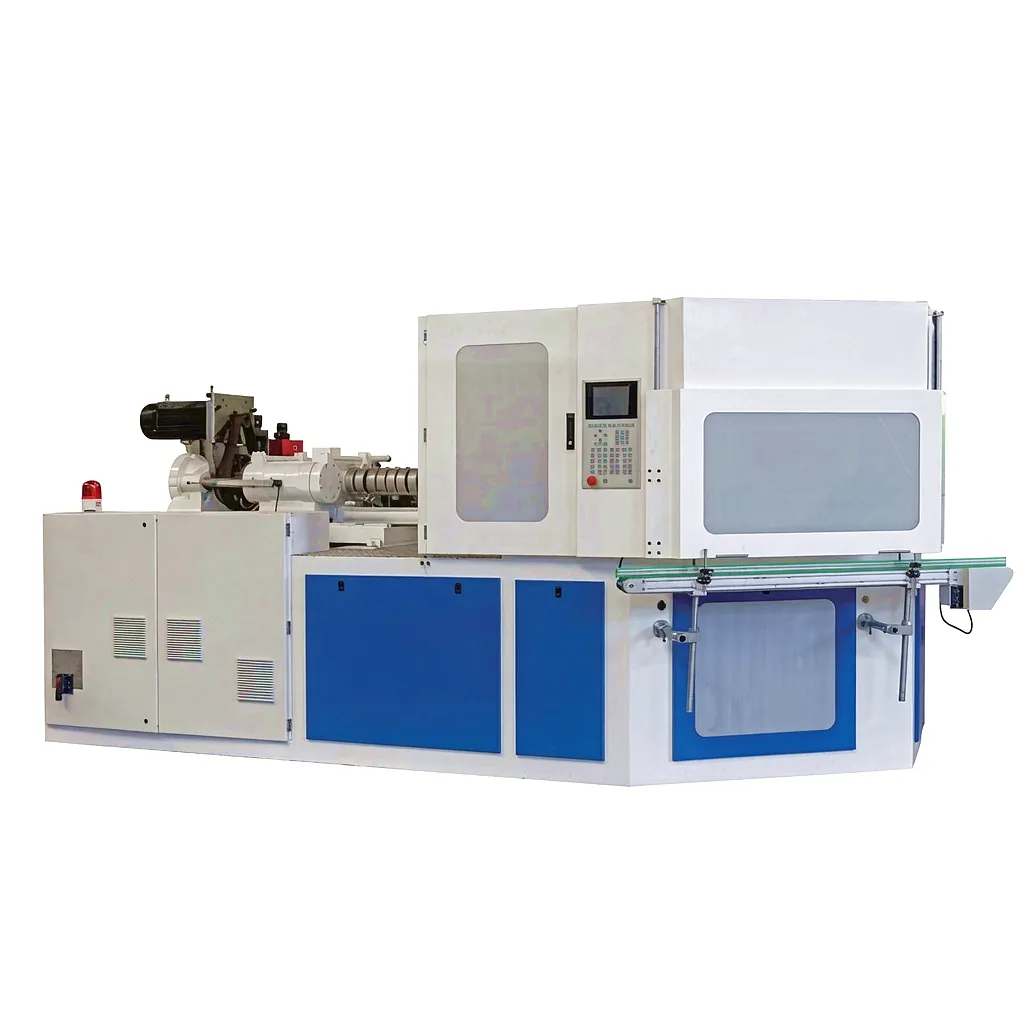
The ZQ80 injection blow molding machine is engineered as a direct performance replacement for the Uniloy UIB 120 platform, delivering equivalent or superior throughput with a modern servo-hydraulic drive system, updated PLC control architecture, and full compatibility with existing UIB 120 tooling investments. Ideal for medium-to-large container production in pharmaceutical, personal care, and agrochemical sectors.
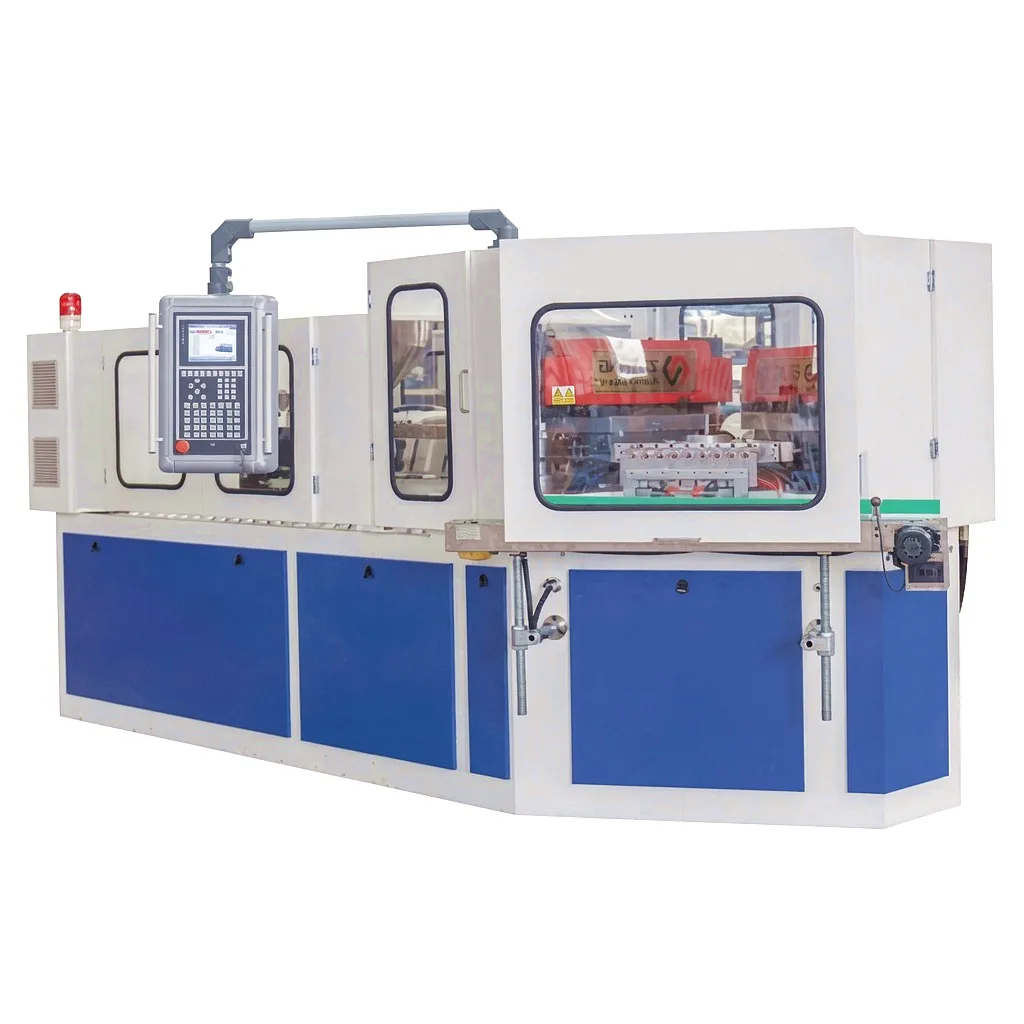
The ZQ60 injection blow molding machine serves as the preferred replacement for the Uniloy UIB 90, combining compact footprint with high cavitation capability. The servo-electric indexing system reduces power consumption while maintaining the tight cycle timing critical for pharmaceutical and small-bottle personal care production runs. Existing UIB 90 tooling integrates without modification.
Ever Power: Precision Manufacturing & Custom Engineering
Ever Power operates a purpose-built manufacturing campus equipped with advanced CNC machining centres, coordinate measuring machines (CMMs), and automated assembly lines dedicated exclusively to injection blow molding machine production. The facility’s quality management system is certified to ISO 9001:2015, and the engineering team brings over two decades of accumulated expertise in injection blow molding machine design, tooling engineering, and process optimisation.
From container volume range and cavity count to neck finish specification, barrel zone configuration, and control system language, Ever Power engineers work directly with UK buyers to specify injection blow molding machines that precisely match production requirements and facility constraints. The engineering team provides DXF/DWG machine layout drawings to facilitate site preparation before delivery.
Ever Power maintains a strategic inventory of critical spare parts — screw and barrel assemblies, core rods, heating bands, hydraulic components, and control boards — with consignment stock available for rapid despatch to UK addresses via air freight and express courier. Typical ex-works lead times for complete injection blow molding machines range from 60 to 90 days depending on model and specification.
Ever Power offers on-site commissioning and operator training at the customer’s UK facility, delivered by factory engineers with hands-on experience on each machine model. Remote support via video conference and diagnostic data sharing is available 24/7 to minimise unplanned downtime and ensure that production targets are met from the first week of operation.
Send your container specification, target volume range, and annual production estimate to the Ever Power sales engineering team for a detailed technical and commercial proposal.
Customer Success Story
Midland Agro Packaging Ltd, a specialist packaging converter headquartered in Birmingham’s Tyseley industrial estate, had been operating a legacy injection blow molding machine fleet for over twelve years. The ageing equipment, while functional, was generating increasing maintenance costs, extended changeover times between container sizes, and inconsistent neck finish quality that had begun to attract attention during audits by one of their major agrochemical brand customers.
After a competitive evaluation that included direct factory visits and third-party reference checks, Midland Agro Packaging selected two Ever Power ZQ80 injection blow molding machines as replacement units, supplemented by a ZQ60 for smaller container formats down to 250 ml. The specification process involved a detailed technical review with Ever Power’s engineering team, resulting in customised screw geometry optimised for the HDPE grades supplied by the customer’s existing resin supplier, and servo-electric indexing drives to reduce energy consumption to levels qualifying for HMRC Enhanced Capital Allowance under the UK energy technology list.
Installation and commissioning were completed in under two weeks per machine, with Ever Power engineers working alongside Midland Agro Packaging’s maintenance team throughout. Within the first full production month, the site recorded a 28% reduction in per-unit material consumption through tighter wall thickness control, eliminated the neck-finish reject rate that had affected 2.1% of output on the previous equipment, and achieved a 17% improvement in overall equipment effectiveness (OEE) against the baseline set by the legacy machines. The Birmingham facility subsequently placed an order for a fourth machine to expand capacity for a new 2 L herbicide container contract.
“The neck thread consistency on the ZQ80 is genuinely superior to anything we ran on the previous platform. Our closure supplier ran a torque audit on the first 50,000 units and every single one was within specification. That has removed a major source of customer complaints for us.”
“Ever Power’s customisation capability set them apart. They worked with our resin supplier’s data sheets to optimise the screw profile, and the result is we are running 4 seconds faster per cycle than the OEM specification suggested. Over a three-shift operation that adds up to a significant volume gain each week.”
“The remote diagnostics system that Ever Power provided has completely changed how we manage unplanned downtime. Their engineers can connect to the machine control system within minutes of a fault appearing and in most cases walk our team through the corrective action without needing a site visit. For a site running 24/7, that responsiveness is invaluable.”
Frequently Asked Questions
Answers to the questions we hear most often from UK buyers, operations managers, and procurement teams evaluating injection blow molding machine investments.
Whether you are evaluating your first injection blow molding machine or upgrading an existing fleet, our team is ready to provide technical guidance and competitive pricing for UK and global buyers.
✉ Get a Quote: [email protected]