Ever Power · Industrial Equipment

IBM Blow Molding Machine:
Technical Guide for UK Industrial Applications

A comprehensive engineering reference covering injection blow molding principles, process control, mould design, energy optimisation, and strategic deployment across United Kingdom manufacturing sectors.

IBM Injection Blow Molding Machine ZQ110

The IBM blow molding machine — formally the injection blow molding machine — occupies a singular position in modern plastics manufacturing. Unlike extrusion-based systems, it fuses two precision operations into one seamless cycle: injecting molten polymer around a steel core pin to form a parison, then immediately inflating that parison against a blow mould cavity to achieve exact dimensional geometry. The result is a container or bottle with tolerances measured in hundredths of a millimetre, wall thickness uniformity across the full vessel, and zero post-production trimming of waste flash. For UK manufacturers competing in personal care, pharmaceutical, food-grade, and specialty chemical packaging, these attributes translate directly into cost efficiency, regulatory compliance, and brand-grade surface finish that extrusion blow moulding simply cannot match at equivalent output rates.

The British market has seen renewed capital investment in precision packaging equipment through 2024 and into 2025, driven by tightening pharmaceutical serialisation requirements, expanded cosmetics GMP auditing under MHRA guidelines, and the continued nearshoring of personal care supply chains that previously ran through EU facilities. Across industrial centres from Birmingham’s pharmaceutical packaging clusters to Sheffield’s advanced materials suppliers and the greater Manchester personal care manufacturing belt, procurement engineers are actively evaluating next-generation IBM equipment capable of multi-layer, multi-material, and neck-finished bottle production within compact factory footprints.

Blow Moulding Process Comparison: IBM vs EBM vs ISBM vs Extrusion

Understanding where the injection blow molding machine sits among competing technologies is essential before specifying equipment. Each process addresses a different geometry profile, output volume, and material handling requirement. Procurement engineers in the UK who conflate IBM with stretch-blow or extrusion blow risk specifying equipment misaligned with their container geometry, leading to costly retrofits.

ProcessParison TypeNeck FinishFlash GeneratedIdeal MaterialTypical Application
IBMInjected (core-pin)Precision ±0.05 mmNonePP, PE, PET, PS, PVCPharma, cosmetics, small bottles
ISBMInjected + biaxially stretchedHigh precisionNonePETCSD bottles, wide-mouth jars
EBMExtruded tubeModerate ±0.3–0.5 mmYes — trimmedHDPE, LDPE, PPJerry cans, industrial containers
Extrusion BMContinuous extrudedLowSignificantHDPE, PPLarge drums, automotive parts

Table 1: Comparative overview of major blow moulding technologies relevant to UK packaging procurement

How the IBM Blow Molding Machine Works: Core Engineering Principle
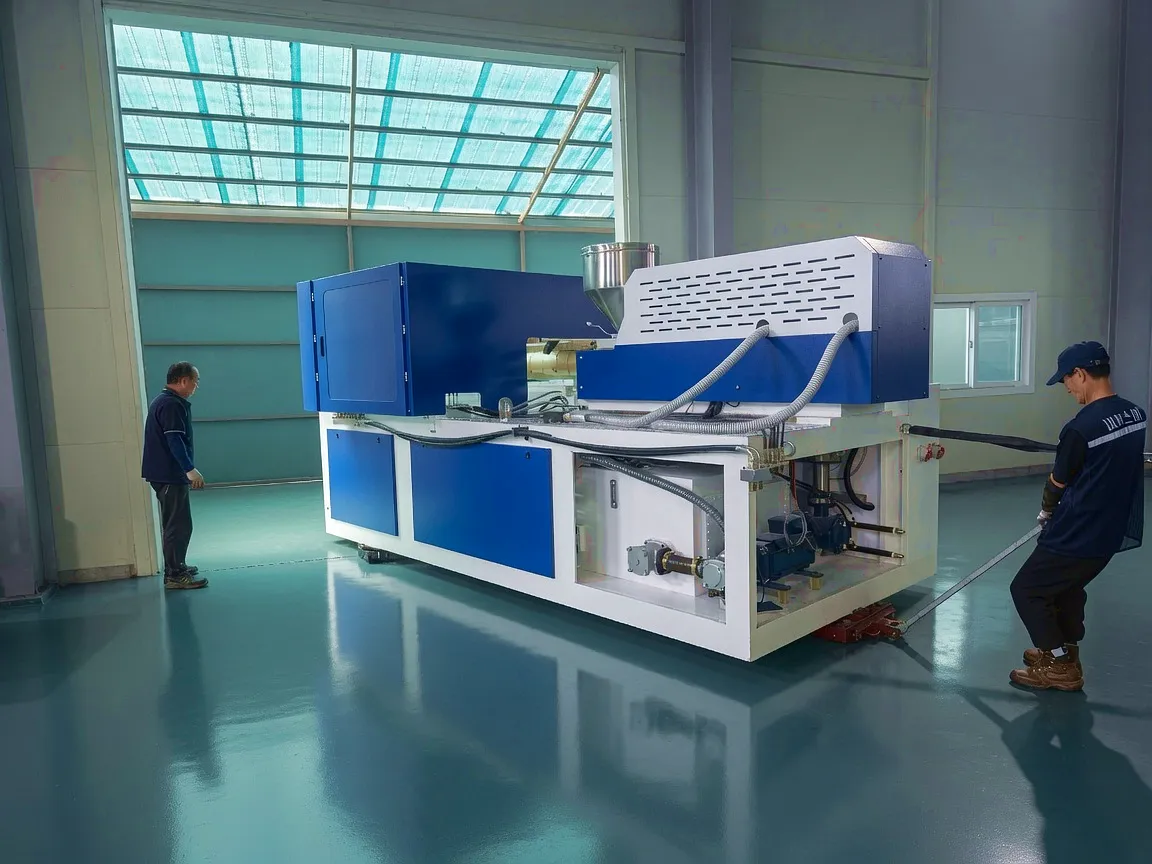
IBM Machine Workshop Interior

The three-station rotary indexing table is the mechanical heart of every IBM blow molding machine. Station one is the injection station: an injection barrel plasticises the selected thermoplastic — commonly polypropylene, high-density polyethylene, polyethylene terephthalate, or acrylonitrile butadiene styrene — and delivers a metered shot into a heated injection cavity surrounding a hardened steel core pin. The cavity defines the exterior profile of the parison while the pin forms the interior bore and, critically, the neck finish geometry. Neck threads, snap-fit beads, and tamper-evident lands are all formed with sub-millimetre accuracy at this stage, eliminating secondary operations.

The rotary table indexes 120 degrees to station two, the blow station, with the core pin and parison still at controlled temperature. Blow air — typically 0.6–1.2 MPa — enters through ports in the core pin, inflating the softened parison against the chilled blow mould cavity walls. The rapid contact with the cooled steel solidifies the container shape within seconds, locking in the precise geometry. The table then indexes a further 120 degrees to station three, the stripping station, where pneumatic or mechanical ejectors remove the finished container from the core pin onto a conveyor. The core pin then re-enters the injection station, completing one full cycle — typically between 8 and 25 seconds depending on container volume and wall thickness.

Temperature control across these stations is the single most influential variable in container quality. Injection barrel zones are maintained within ±1°C of setpoint using closed-loop PID controllers, while the parison temperature at blow station entry must fall within a precise window — the material’s blow-stretch temperature range — to achieve the targeted biaxial orientation and clarity. Modern IBM systems deploy infrared parison temperature monitoring between stations, feeding corrections back to barrel zone heaters in real time. Coolant circuits in the blow mould maintain cavity wall temperatures between 8°C and 18°C, depending on material grade and cycle time target.

Preheating Temperature Curves and Wall Thickness Uniformity Control

PP Preheating Profile

155–175°C

Blow window: 145–165°C at parison surface. Below 145°C causes stress whitening; above 175°C yields sag and dimensional drift.

HDPE Preheating Profile

170–195°C

Broader processing window than PP. Wall thinning risk escalates above 200°C at parison surface — monitor via IR pyrometer.

PET Preheating Profile

260–295°C

Injection at 280–295°C; blow at 95–115°C parison surface. Pre-drying to moisture below 0.005% is mandatory to prevent IV degradation.

Wall thickness uniformity in IBM is governed primarily by parison geometry at injection and by the blow ratio — the ratio of blow mould cavity diameter to core pin diameter. IBM machines maintain wall uniformity more naturally than extrusion blow moulding because the parison is formed under positive pressure against a closed cavity rather than free-falling under gravity. Core pin geometry, particularly the taper angle and land length at the parison body, is engineered per product to target a coefficient of variation below 4% in wall thickness across the finished container. Process engineers in UK pharmaceutical facilities routinely specify IBM equipment precisely because consistent wall thickness enables reliable seal integrity and drop-impact performance, both required under British Pharmacopoeia container specifications.
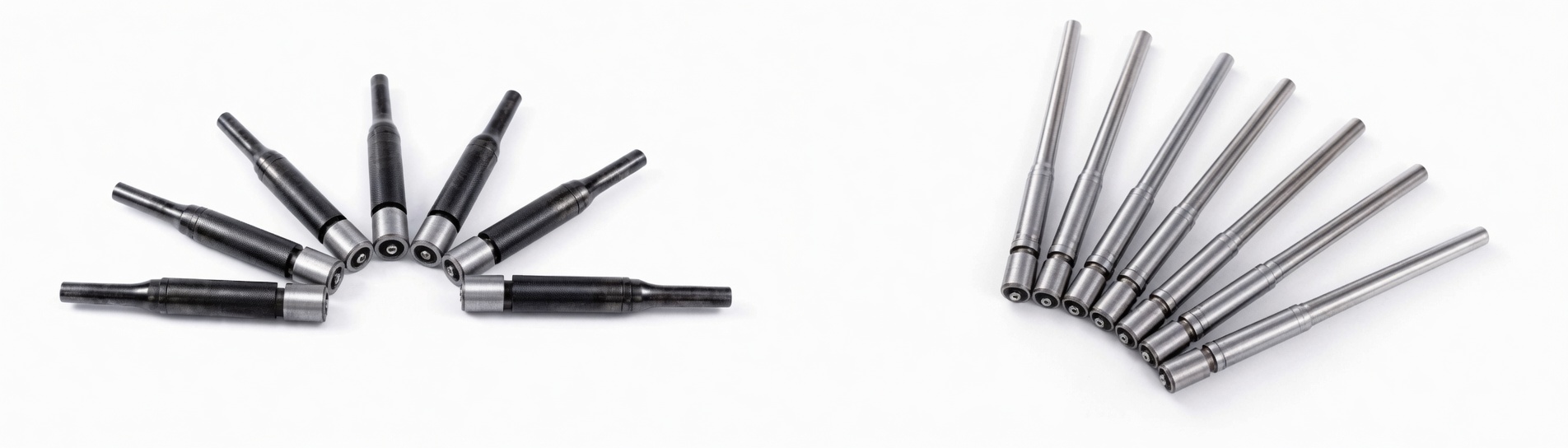
auxiliary equipment

Core Material Selection for Injection Blow Molding Machine Components

Core Pins

H13 tool steel, through-hardened to 48–52 HRC. Chrome plating (15–25 µm) applied to reduce adhesion friction and extend service cycles to 500,000+ shots. Precision ground to Ra 0.2 µm for controlled parison release.

Injection Cavities

P20 pre-hardened tool steel for standard production; S136 stainless (DIN 1.2083) for corrosive materials such as PVC or fluoropolymers. Cavity surfaces polished to SPI-A1 (Ra 0.05 µm) for optical-grade finish.

Blow Moulds

Aluminium alloy 7075 for rapid heat transfer and lightweight tool handling; P20 steel for high-volume production exceeding 5 million cycles. Beryllium-copper inserts used at thin-wall zones for accelerated cooling without compromising surface quality.

Machine Frame & Platens

Ductile iron GG25 for main frame, stress-relieved and precision-machined for platen parallelism within 0.02 mm. Tie bars machined from 42CrMo4 alloy steel, fatigue-rated for 10 million clamping cycles.

IBM Blow Molding Machine: Product Technical & Performance Parameters

The parameters below represent typical performance ranges across the Ever Power IBM machine series, encompassing compact single-station units through to multi-cavity rotary indexing configurations. Machine selection for a given UK production environment must account for container volume, annual throughput target, material MFI, and available utilities. Ever Power application engineers provide detailed OEE modelling and energy consumption audits prior to contract specification.

ParameterSpecification RangeUnit / StandardNotes
Injection Capacity35 – 1,200cm³/shotPer barrel; multi-barrel configurations available
Clamp Force80 – 1,600kNHydraulic toggle or all-electric servo
Blow Air Pressure0.6 – 1.2MPaRegulated per station; independent of plant supply
Cycle Time8 – 25secondsDependent on container volume and wall thickness
Container Volume5 – 3,000mLStandard range; larger on request
Wall Thickness Tolerance±0.03 – ±0.10mmCV below 4% across vessel body
Neck Finish Tolerance±0.05mmISO 2768 fine grade
No. of Cavities1 – 12cavities/shotOdd/even split cavities configurable
Installed Power7.5 – 75kWAll-electric servo 30–45% lower than hydraulic equivalent
Mould Change Time60 – 120minutesWith quick-lock platen system
Control SystemSiemens S7 / Mitsubishi FX / proprietary HMIPLCOPC-UA data export; Industry 4.0 ready
Temperature Zones4 – 12zonesIndependent PID; ±1°C accuracy
Compatible MaterialsPP, HDPE, LDPE, PET, PS, PVC, ABS, PCPolymerBi-material and co-injection optional

Mould Design and Bottle Profile Optimisation
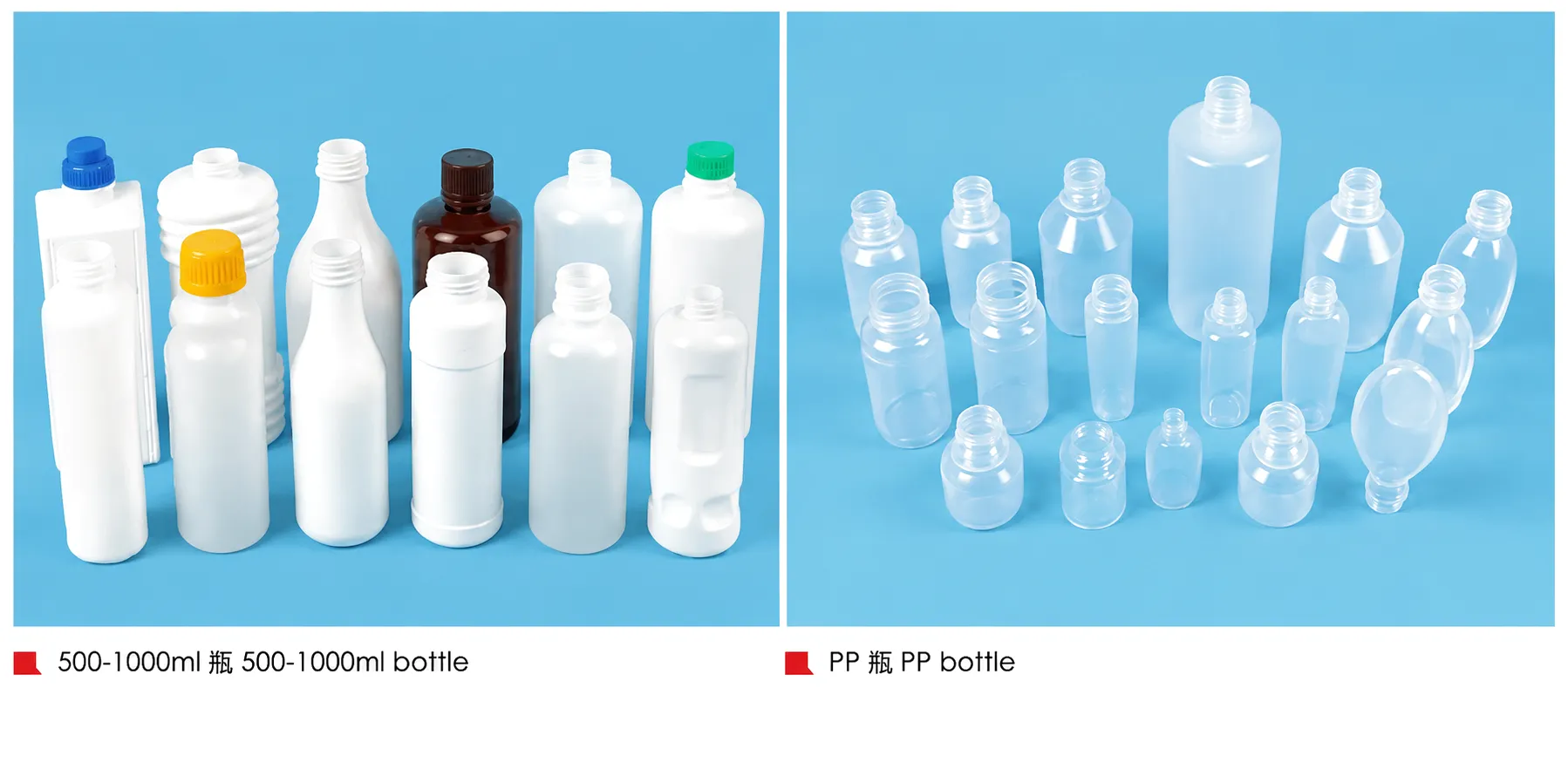
auxiliary equipment

Mould design for IBM blow molding machines is a discipline that demands simultaneous optimisation across thermal, mechanical, and rheological domains. The blow mould cavity defines the final exterior geometry of the container, including the shoulder radius, body taper, base dome configuration, and label panel flatness. Each geometric feature has a measurable effect on drop-impact resistance, stacking load rating, decoration adhesion, and material consumption per container. Ever Power’s tooling design team uses parametric CAD modelling with CFD-based coolant flow simulation to position conformal cooling channels within 3–6 mm of the cavity surface, achieving mould cooling efficiency improvements of 15–28% over conventional drilled-channel tooling.

The draft angle on IBM moulds is considerably more conservative than in injection moulding proper — typically 0.5° to 1.5° on the body sidewalls — because the container is formed against the cavity under blow pressure without requiring a collapsing core. Base gate configuration is another critical design parameter; IBM containers are typically pin-gated at the base dome, with gate vestige planned into the base recessed area to prevent interference with base-standing geometry. Container designers specifying product for UK pharmaceutical or FMCG markets frequently request laboratory weight-to-volume audits before production approval, and Ever Power provides first-article dimensional reports to ISO 9001:2015 standards as standard deliverables with each tooling project.

Core Technical Advantages of IBM Blow Molding Machines

Zero Flash — Zero Waste Trim

Because the parison is contained within the injection cavity from the moment of material entry, no excess polymer escapes the parting line. Containers exit the machine finished, requiring no deflashing stations, no trim conveyor, and no regrind handling — a decisive cost advantage in clean-room pharmaceutical environments and high-throughput cosmetics facilities.

Precise Neck Finish Geometry

Thread profiles, snap-fit beads, and child-resistant closure interfaces are formed in the injection station under full cavity pressure, delivering dimensional repeatability that enables direct in-line capping without manual sorting or gauging. For UK personal care brands operating high-speed filling lines at 300+ cpm, this eliminates the most common cause of capper jamming and cap-reject events.

Multi-Material Capability

Advanced IBM platforms support co-injection of barrier layers — EVOH or nylon sandwiched between PP or HDPE skins — in a single cycle. This eliminates post-production laminating and delivers oxygen barrier performance exceeding 0.01 cc/pkg/day without a secondary process step, opening pharmaceutical amber-grade and premium food-contact applications from a single machine configuration.

Compact Footprint

IBM machines combine injection moulding, blow moulding, and ejection into a single machine envelope typically under 8 m² for mid-range models. UK manufacturers operating in legacy Victorian mill conversions or constrained modern cleanroom bays benefit significantly — a single IBM machine replaces two or three separate stations required in equivalent EBM or ISBM lines.

Superior Optical Clarity

IBM-produced PP and PET containers exhibit haze values below 3% when mould surfaces are polished to SPI-A1 standard, meeting the clarity specifications for over-the-counter pharmaceutical packaging and premium fragrance flacons. The absence of a parison weld line — which appears as a vertical stress-whitening mark in EBM containers — is a defining quality attribute for high-end personal care presentation.

Industrial Application Scenarios for IBM Blow Molding Machines in the UK Market

Pharmaceutical Packaging — Birmingham & Midlands

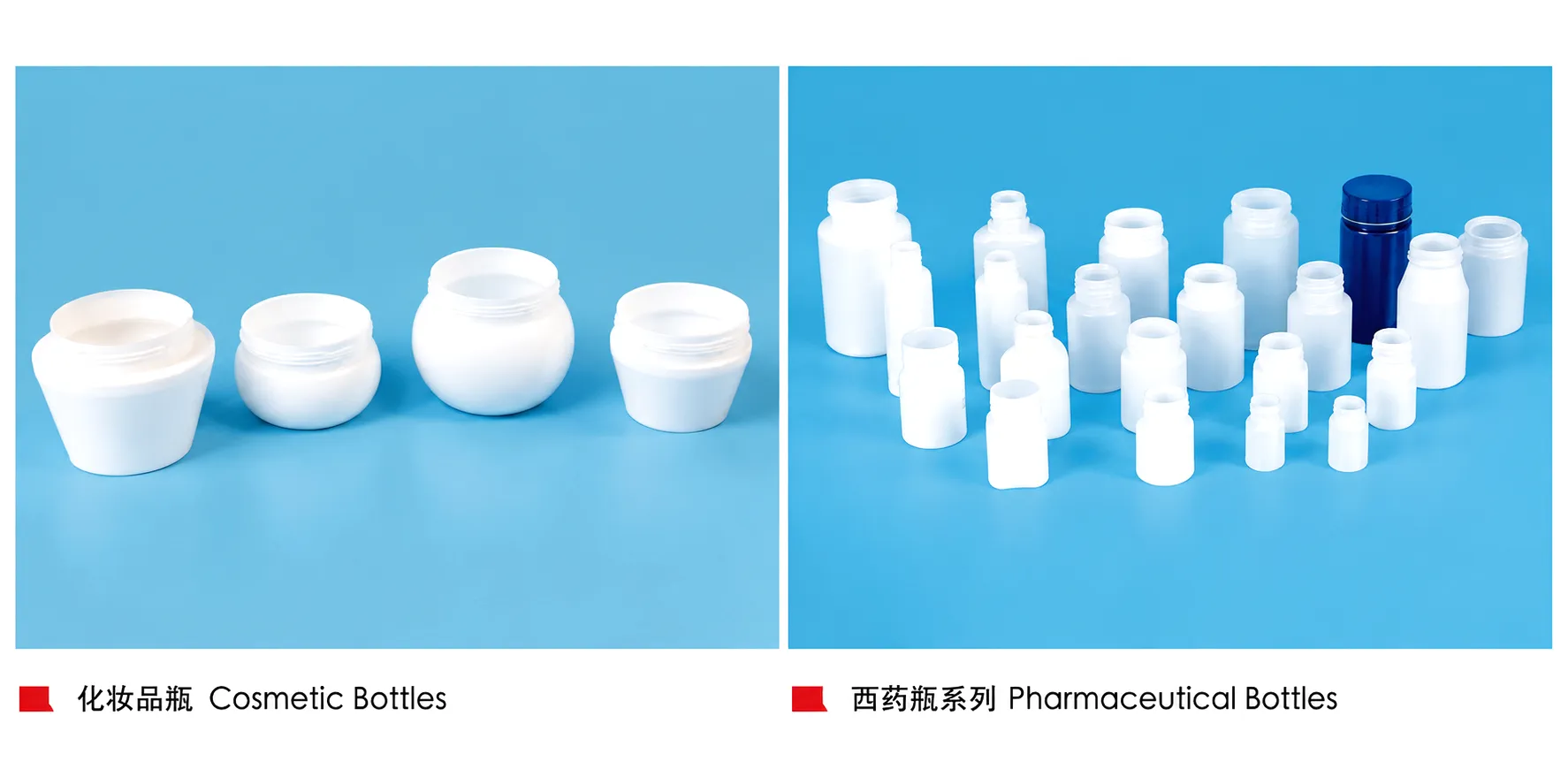
The West Midlands pharmaceutical corridor, anchored around Birmingham and extending to Coventry and Redditch, hosts significant over-the-counter and prescription packaging operations. IBM blow molding machines are the preferred equipment for producing HDPE tablet and capsule bottles (30 mL to 500 mL), PP nasal spray bodies, and polypropylene eye-drop containers — all demanding the neck precision and clean-room compatibility that IBM uniquely provides. MHRA GMP standards require documented process validation, and IBM’s statistical process control data outputs are directly compatible with the validation protocols used by these facilities.

Personal Care and Cosmetics — Greater Manchester

Greater Manchester has re-emerged as a hub for domestic cosmetics manufacturing following significant nearshoring activity post-2022. Shampoo, conditioner, body lotion, and luxury skincare brands operating from Salford, Trafford, and Stockport require complex bottle geometries — curved shoulders, flat oval profiles, asymmetric label panels — that IBM machines can reproduce with complete wall thickness consistency and repeatability. The absence of flash reduces post-line handling labour significantly within the constrained shift structures typical of UK FMCG operations.

Food-Grade Condiment Packaging — Sheffield & South Yorkshire

Sheffield’s advanced materials ecosystem supports food manufacturing supply chains across South Yorkshire. IBM machines producing PP sauce bottles, HDPE honey squeeze containers, and PET salad dressing jars serve South Yorkshire food brands with the BRC food-safety grade and material traceability documentation now required by major UK grocery multiples. The IBM process is inherently more compatible with food contact safety audits than EBM because it produces no flash and therefore no regrind stream entering the production environment.

Veterinary and Agricultural Chemical Packaging — East Midlands

Veterinary medicinal containers and agricultural input packaging in the East Midlands — particularly around Leicester and Nottingham — require HDPE and PP bottles with controlled-emission caps and tamper-evident necks. IBM machines producing 100 mL to 2,000 mL containers with integrated CRC (child-resistant closure) neck profiles satisfy the UK Veterinary Medicines Directorate’s container requirements while achieving output efficiency of 1,200 to 4,800 containers per hour depending on cavity configuration and container size.
auxiliary equipment

Beyond these primary sectors, IBM blow molding machines find growing deployment in laboratory reagent bottle production — particularly amber PP containers for chemical analysis kits distributed from Cambridge and Oxford research clusters — as well as in perfumery auxiliary components (pump collar rings, decorative overcaps) and medical device components manufactured under ISO 13485 conditions. The versatility of the injection blow molding process, capable of running standard commodity thermoplastics through to medical-grade USP Class VI approved polymers on the same platform with barrel and screw changes, makes it the platform of choice for contract manufacturers seeking one machine architecture servable across multiple verticals.

Common Faults and Troubleshooting Guide for IBM Blow Molding Machines

SymptomRoot CauseCorrective Action
Wall thinning at base domeParison too warm at blow station; excessive blow ratioReduce barrel Zone 4 temperature 5–10°C; increase cycle index time; review core pin taper
Stress whitening on shoulderParison too cool at blow station; insufficient blow timeIncrease barrel temperature 3–8°C; extend blow dwell time 0.5–1.0 s; check index timing
Flash at neck parting lineInsufficient clamp force; worn parting line surfacesIncrease clamp tonnage; inspect and re-lap parting line; check platen parallelism
Parison sticking to core pinChrome plating worn; barrel temperature excessive; release agent depletedInspect and re-chrome core pin; reduce temperature; apply food-safe mould release
Surface haze / poor clarityMould cavity contamination; coolant temperature too high; material moistureClean and polish cavity; reduce coolant temperature to 8–12°C; verify material pre-drying
Container weight variation >±2%Inconsistent shot size; back-pressure drift; screw wearRecalibrate shot size via purging test; adjust back pressure 5–15 bar; inspect screw tip
Short-shot (incomplete fill)Insufficient injection pressure; cold slug at nozzle; restricted hot runnerIncrease injection pressure 10–20 bar; purge nozzle; inspect hot runner heater bands

Energy Consumption Optimisation and Sustainable Production Retrofits
auxiliary equipment

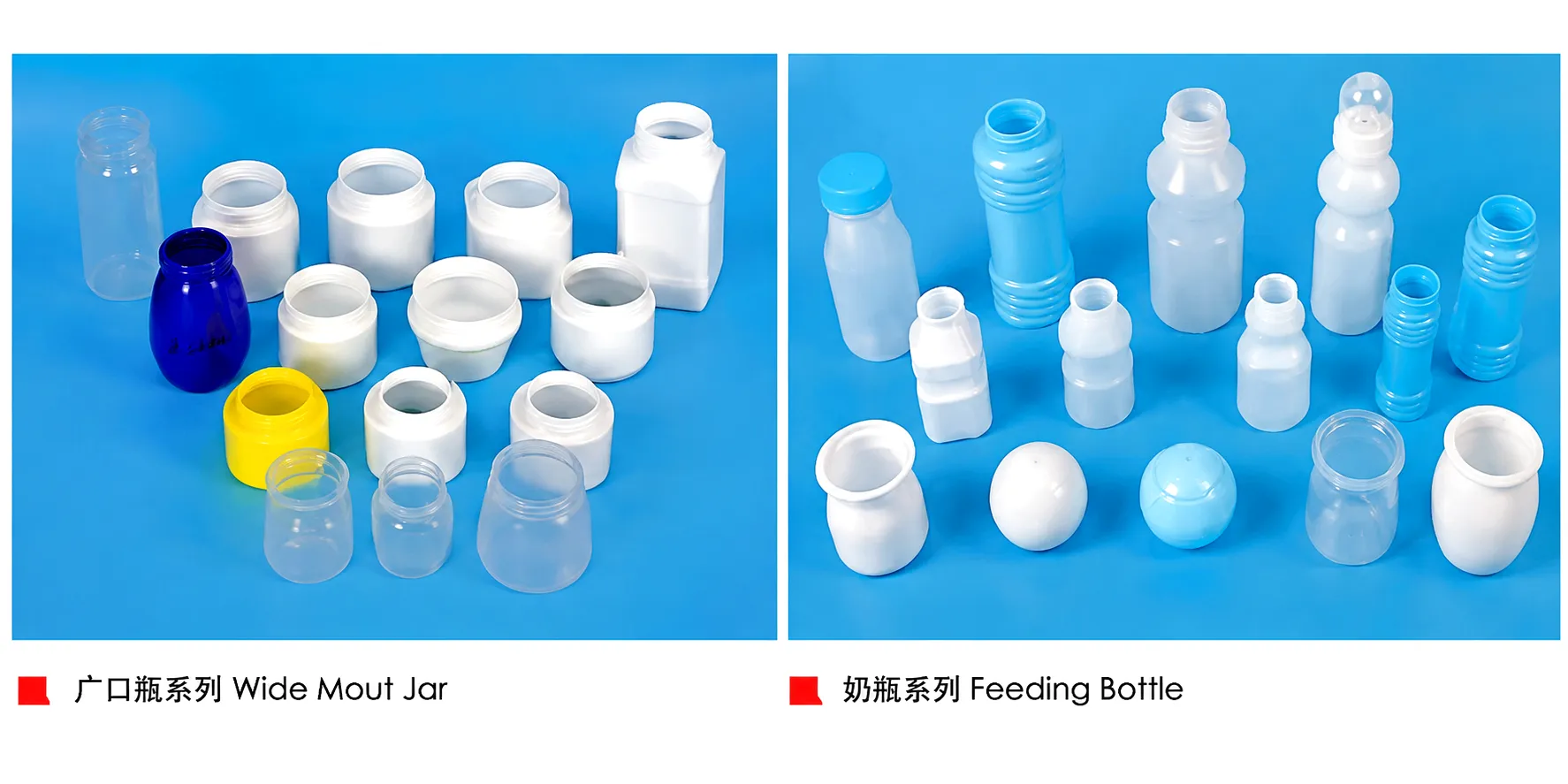
Energy cost is the primary operational variable concern for UK packaging manufacturers, given the industrial electricity tariff landscape that has prevailed since 2022. IBM blow molding machines running hydraulic drive systems typically consume 18–28 kWh per 1,000 containers for mid-sized vessels. Transitioning from a fixed-displacement hydraulic pump to a servo-driven variable-displacement pump — a retrofit available for most machines produced after 2008 — delivers measured energy savings of 30–45% with zero change to cycle time or container quality. Ever Power provides servo-pump retrofit kits engineered to OEM mechanical interfaces, with documented payback periods in the UK market averaging 14–22 months based on 2024 industrial electricity pricing.

Barrel insulation is a frequently overlooked energy optimisation avenue. Uninsulated injection barrels on IBM machines lose 8–15% of total heating energy as radiant and convective surface losses. Fitting aerogel-composite barrel insulation blankets, available as a retrofit kit for standard barrel diameters from 32 mm to 100 mm, typically reduces barrel heating energy consumption by 35–50% with a capital cost recovered in 6–10 months. Coolant chiller optimisation — raising chiller setpoint from 6°C to 12°C where container clarity specifications permit — reduces chiller compressor energy demand by 18–25% with no measurable impact on IBM cycle time for most HDPE and PP applications. All-electric servo IBM platforms, now available in the full Ever Power range, eliminate hydraulic oil completely, reducing maintenance intervals, improving temperature repeatability, and achieving energy figures below 12 kWh per 1,000 containers for standard personal care bottle sizes.

Featured IBM Blow Molding Machines from Ever Power

Two flagship models engineered for UK and European pharmaceutical, personal care, and food-grade packaging applications.
ZQ110 Injection Blow Molding Machine

ZQ110 Injection Blow Molding Machine

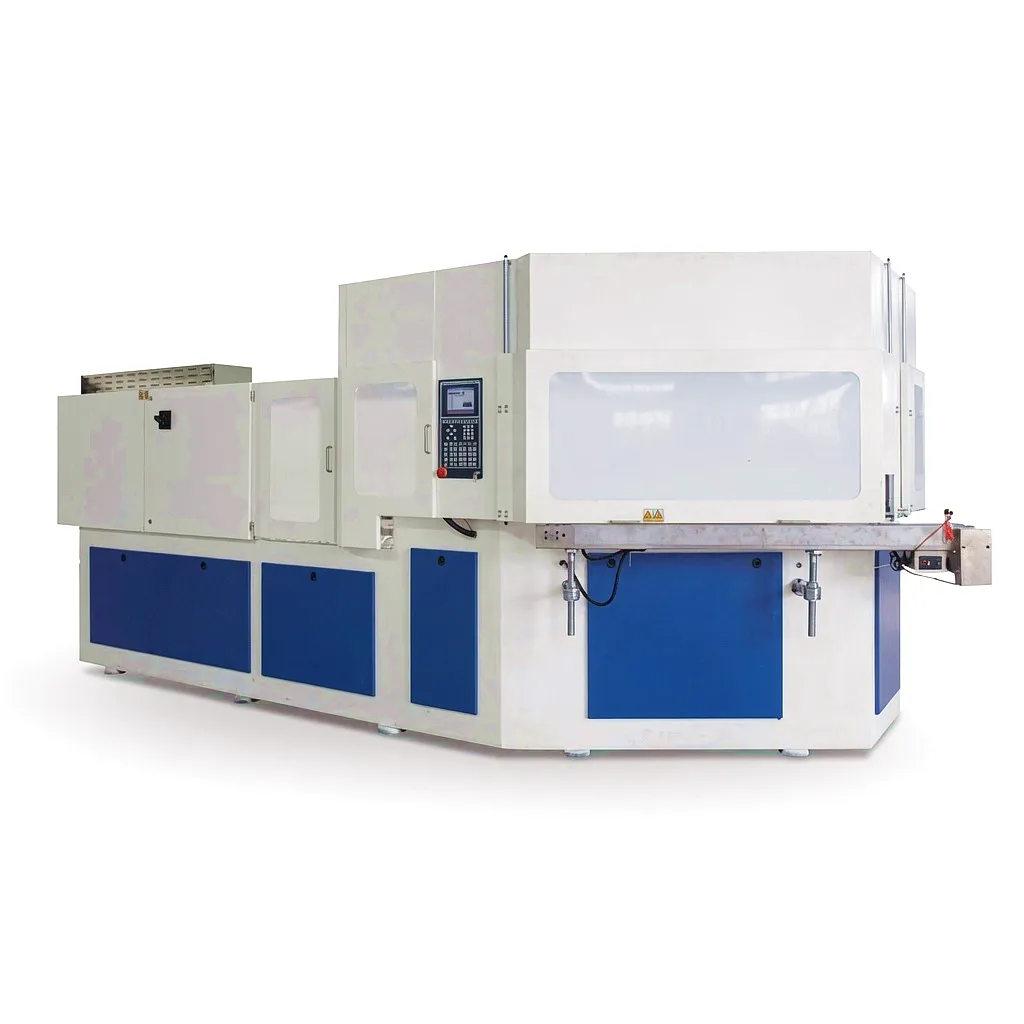
The ZQ110 is a compact three-station rotary IBM machine optimised for small-to-medium containers from 5 mL to 500 mL. With a clamp force of 110 kN and servo-driven hydraulics, it delivers outstanding energy efficiency for personal care and pharmaceutical bottle production. Quick-change tooling and a 7-inch HMI touchscreen make it the preferred choice for UK contract manufacturers managing multi-SKU production schedules requiring rapid product changeover.
ZQ135 Injection Blow Molding Machine

ZQ135 Injection Blow Molding Machine

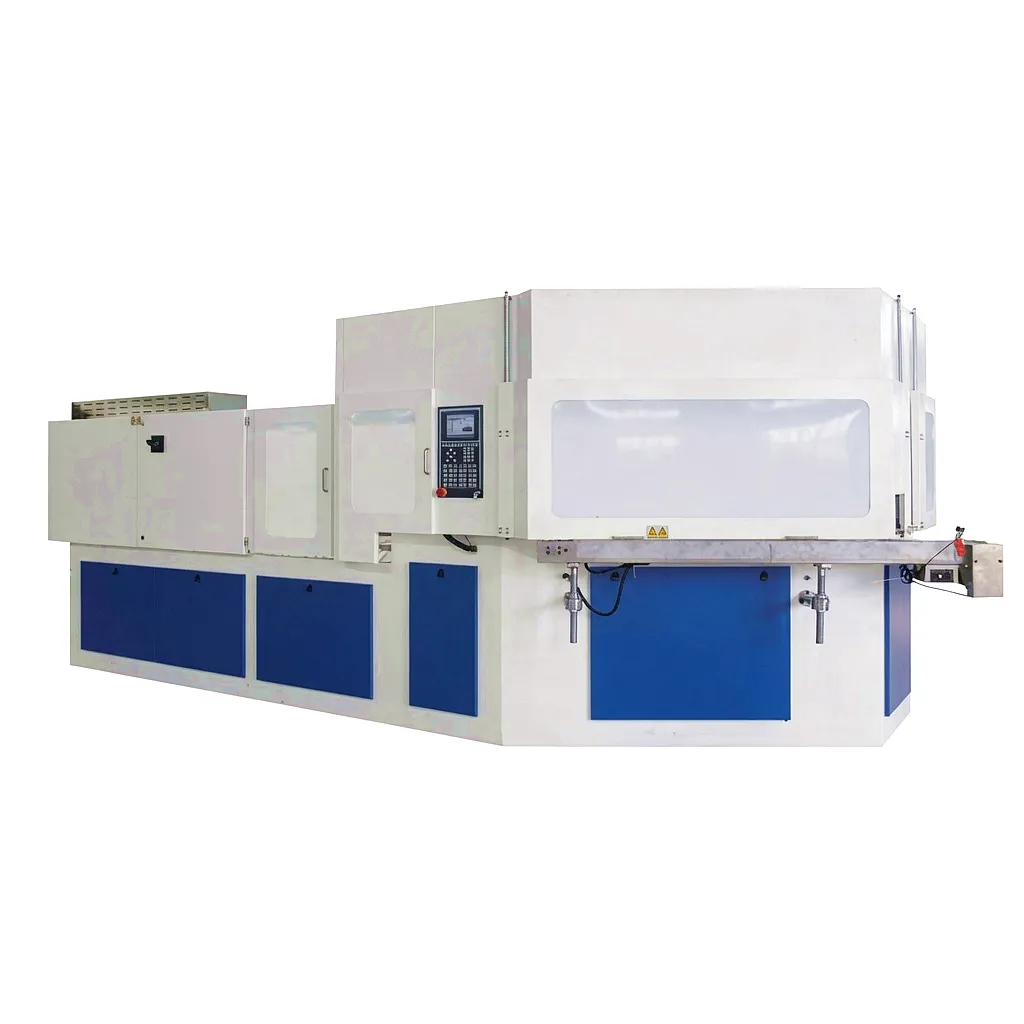
The ZQ135 scales up IBM capability for medium-to-large container applications up to 2,000 mL, with a 135 kN clamp force and a high-torque servo plasticising unit accepting injection capacities to 400 cm³. Its expanded mould space accommodates up to 8-cavity configurations for high-volume pharmaceutical or food-grade packaging runs. The ZQ135 is CE-marked and CE-documented for UK market entry, with full EU Declaration of Conformity to Machinery Directive 2006/42/EC supplied as standard.

Ever Power: Precision Manufacturing & Custom IBM Solutions
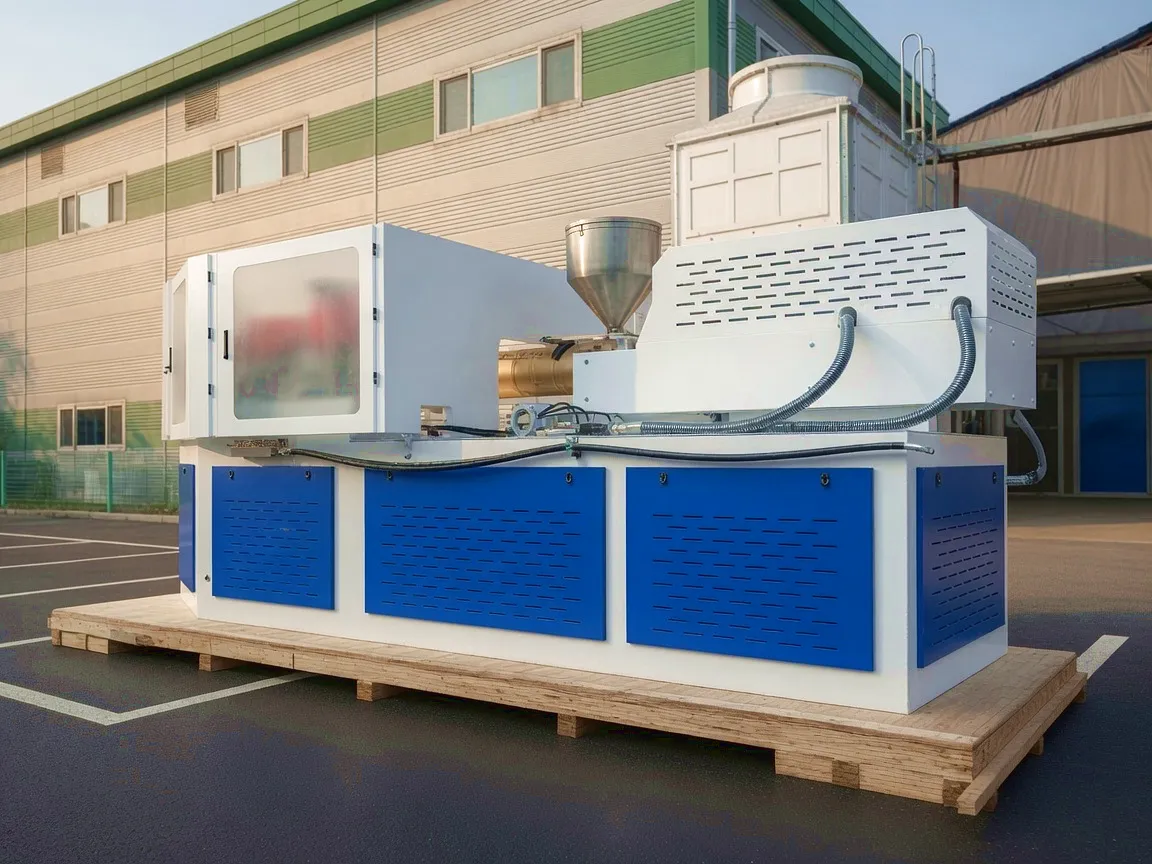
Ever Power IBM Machine Workshop

Ever Power operates an ISO 9001:2015 certified manufacturing complex encompassing machining, assembly, testing, and quality assurance under a single roof. The facility’s CNC machining centre — equipped with five-axis machining capability for complex core pin geometries and conformal mould inserts — maintains dimensional tolerances to IT5 grade across all critical mating surfaces. Every IBM machine undergoes a minimum 72-hour production trial run before final inspection and dispatch, with container samples from the trial run provided to customers as part of the Factory Acceptance Test (FAT) documentation package. This end-to-end manufacturing traceability, from raw material certification through to final FAT report, represents the supply chain integrity standard that UK pharmaceutical customers require when qualifying new equipment suppliers.

Customisation capability at Ever Power spans the full product specification range. For UK customers with specific packaging requirements — non-standard neck finishes, custom mould cavity counts, bi-material co-injection configurations, cleanroom-compatible enclosure panels, or ATEX Zone 2 electrical specifications for solvent-adjacent filling environments — Ever Power’s application engineering team engages at the drawing stage to deliver a machine specification that eliminates the compromises inherent in adapting a standard catalogue product. Lead times for standard IBM machines run to 45–60 days ex-factory; custom configurations are typically completed in 90–120 days. Sea freight groupage services from Ever Power’s logistics partner to UK ports (Felixstowe, Southampton, Tilbury) are coordinated as part of the supply contract, with door-to-door delivery and commissioning support available across mainland Britain.

Ever Power IBM Machine Series — Auxiliary Equipment & Configurations
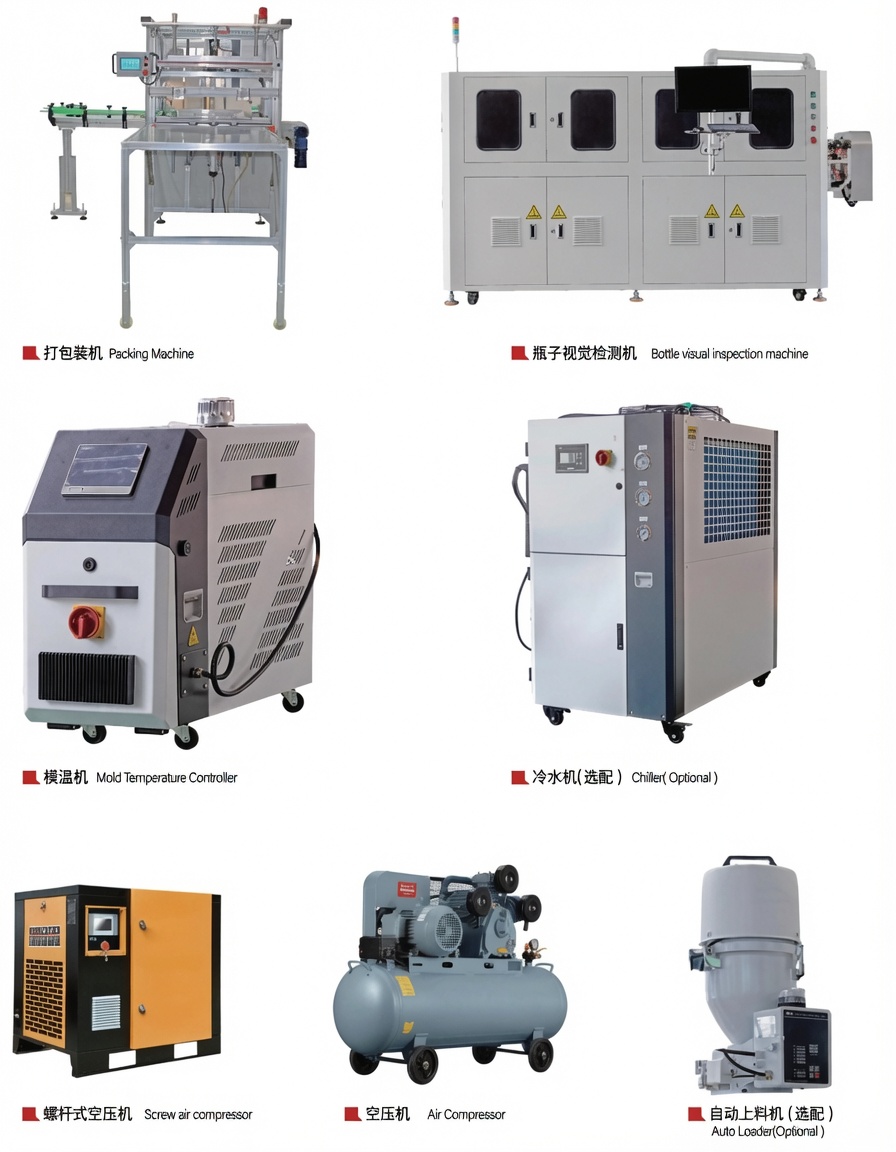
IBM Auxiliary Equipment 1

Customer Success Story: Leeds Personal Care Manufacturer Achieves 40% Cycle Time Reduction

Ayreton Cosmetics Limited, a mid-scale personal care contract manufacturer based in Leeds, West Yorkshire, had operated two legacy hydraulic extrusion blow molding lines for over a decade. Growing contract commitments from two national grocery multiples for premium shampoo and body wash packaging — requiring oval-section PP bottles with in-mould label panels and precise closure thread profiles — exposed fundamental process limitations in the existing EBM setup. Flash trimming was generating 4.8% scrap on average per shift, cap misalignment rates at the filling line exceeded 1.2%, and the EBM process was unable to reproduce the sharp shoulder radius specified by the brand’s design team without stress whitening at the transition zone.

After evaluating three IBM equipment suppliers — two from continental Europe and one domestic remanufacturer — Ayreton Cosmetics selected Ever Power’s ZQ135 Injection Blow Molding Machine following a successful trial run at Ever Power’s factory, where trial containers in customer-specified PP grade passed all dimensional and drop-impact tests against the customer’s product specification first time. Ever Power’s application engineering team worked with Ayreton’s tooling designer to develop a 6-cavity blow mould in aluminium 7075, with conformal cooling channels and a label panel relief configuration agreed through two rounds of mould flow simulation. The complete project, from purchase order to CE-documented, commissioned machine on the Leeds production floor, was completed in 98 days — within the customer’s capital project schedule.

Production data from the first six months of operation showed: cycle time reduction from 28.4 seconds (EBM baseline) to 17.1 seconds (IBM ZQ135); scrap rate down from 4.8% to 0.3%; cap rejection rate at the filling line reduced from 1.2% to below 0.08%; and quarterly energy cost savings of approximately £14,200 attributable to the servo-driven IBM platform versus the replaced hydraulic EBM lines. Ayreton Cosmetics has since placed a follow-on order for a ZQ110 machine for a smaller-format bottle range.

★★★★★

“The ZQ135 has transformed our filling line efficiency. Neck finish repeatability is on a different level compared to our old EBM setup — we went through an entire week’s production run without a single cap rejection. Ever Power’s commissioning engineer stayed on-site for the first five days and resolved every teething issue before leaving. That level of after-sales support is genuinely rare in capital equipment procurement.”

— Production Director, Ayreton Cosmetics Ltd, Leeds

★★★★★

“We specified a co-injection EVOH barrier layer on our pharmaceutical container range, which is not something every IBM supplier can actually deliver in practice. Ever Power’s engineers had run the co-injection variant in their factory trials before we visited, and the barrier performance data they provided was exactly what we needed for our MHRA submission pack. The machine is running at 96.4% OEE after six months — that’s above our internal KPI target.”

— Engineering Manager, Pharmaceutical Packaging Division, Coventry

★★★★★

“Price-to-specification ratio was the decisive factor for us. We obtained three quotations for the same technical spec, and Ever Power’s pricing for the IBM machine with custom 4-cavity tooling was 18% below the nearest European competitor — without any compromise on machine build quality or documentation standards. The CE marking, Declaration of Conformity, and FAT report were all complete and well-structured. I would recommend Ever Power to any UK packaging manufacturer looking for a serious IBM equipment supplier.”

— Operations Director, Food-Grade Packaging, Sheffield

Frequently Asked Questions — IBM Blow Molding Machines for UK Buyers

Answers to the most common questions from UK procurement engineers, operations managers, and packaging technologists evaluating injection blow molding equipment.

How much does an IBM blow molding machine typically cost for a UK pharmaceutical packaging facility, and what is included in the price?+

IBM blow molding machine prices for the UK market range from approximately £45,000 to £220,000 depending on clamp force, cavity count, servo specification, and tooling complexity. Entry-level machines such as the ZQ110 targeting small pharmaceutical bottles typically fall in the £45,000–£80,000 range ex-works, while larger multi-cavity units like the ZQ135 with custom tooling and co-injection options range from £100,000–£220,000. These figures typically include the base machine, one set of tooling, FAT documentation, CE marking, and remote commissioning support. On-site commissioning and operator training by Ever Power engineers are quoted separately and usually add 5–10% to the project cost. To obtain an accurate quotation specific to your container specification and cavity requirements, contact Ever Power at [email protected].

Which IBM blow molding machine supplier in the UK or internationally can provide CE-certified equipment ready for pharmaceutical production under MHRA GMP?+

Ever Power supplies CE-certified IBM blow molding machines with full EU Declaration of Conformity to Machinery Directive 2006/42/EC, making them directly suitable for use in UK pharmaceutical manufacturing environments operating under MHRA GMP guidelines. Each machine is accompanied by a comprehensive technical file, electrical safety documentation to BS EN 60204-1, and a Factory Acceptance Test report generated under ISO 9001:2015 quality management procedures. For MHRA-regulated facilities, Ever Power additionally provides IQ/OQ documentation templates aligned with GAMP 5 principles, reducing validation project overhead for the customer’s quality assurance team.

What is the difference between an injection blow molding machine and an injection stretch blow molding machine, and which one should I choose for producing PET bottles in Birmingham?+

IBM machines inflate the parison with air pressure alone, without mechanical stretching of the preform along its vertical axis. ISBM machines add a stretch rod that simultaneously elongates the preform axially while blow air inflates it radially, inducing biaxial molecular orientation in PET — this dramatically improves barrier properties, impact strength, and top-load performance, making ISBM the technology of choice for CSD (carbonated soft drink) bottles, water bottles, and wide-mouth PET jars. For Birmingham pharmaceutical and personal care manufacturers producing containers under 500 mL in PP or HDPE, IBM is the correct choice: it runs a wider range of materials than ISBM, delivers superior neck finish precision, and does not require pre-drying PET to the 0.005% moisture threshold that ISBM demands. If your product line includes PET containers above 200 mL with barrier or carbonation requirements, ISBM is the more appropriate platform.

How long does it take to get a quote and arrange delivery of an IBM blow molding machine from Ever Power to a manufacturing site in Sheffield, UK?+

Ever Power responds to IBM machine quotation requests within 48 hours of receiving a complete technical enquiry including container dimensions, material specification, annual volume target, and cavity count requirement. Standard machine configurations are quoted with 45–60 day ex-factory lead times; custom tooling and special machine configurations extend this to 90–120 days. Sea freight from Ever Power’s facility to the port of Felixstowe or Southampton typically runs 28–35 days, with customs clearance arranged through Ever Power’s UK freight forwarder. Door-to-door delivery to Sheffield, including on-site installation and commissioning support, can generally be completed within 5–8 months of purchase order — or faster for in-stock standard configurations. Email [email protected] with your product specification to receive a detailed project schedule.

What materials can an IBM injection blow molding machine process, and which plastic is best for producing cosmetic bottles in Manchester’s personal care manufacturing sector?+

IBM blow molding machines can process PP, HDPE, LDPE, PET, PS, PVC, ABS, polycarbonate, and co-polymer blends, provided the barrel and screw specification matches the material’s melt temperature and viscosity. For cosmetic bottles in Greater Manchester’s personal care sector — shampoos, conditioners, body washes — polypropylene (PP random copolymer, MFI 8–14 g/10 min) is the most widely specified material, offering excellent clarity, chemical resistance to surfactants and fragrance components, and compatibility with direct-contact inkjet coding and hot-stamp decoration. HDPE is preferred for thicker-walled squeeze bottles where softness and feel matter. Ever Power’s application engineers can recommend the optimal material-machine combination for your specific container geometry and filling environment.

When is the right time to upgrade from extrusion blow molding to an IBM blow molding machine, and what performance improvements can UK manufacturers realistically expect?+

Upgrading from EBM to IBM becomes commercially justified when one or more of the following conditions apply: scrap from flash trimming exceeds 2% of output; filling line cap-rejection events traceable to neck finish variation exceed 0.5%; your customer is specifying container clarity or wall thickness uniformity standards that EBM cannot consistently achieve; or you are entering pharmaceutical or food-contact markets where flash-free production and validated process data are mandatory requirements. UK manufacturers that have made this switch typically report scrap reductions of 60–85%, cap-rejection reductions of 70–90%, and net container-cost reductions of 8–18% once reduced scrap, lower labour (no deflashing station), and energy savings are aggregated. The capital payback period for an IBM machine investment ranges from 18 to 36 months in typical UK personal care and pharmaceutical production scenarios.

Where can I find a reliable IBM injection blow molding machine supplier who offers after-sales service and spare parts support accessible from the UK?+

Ever Power maintains a strategic spare parts inventory for all current IBM machine models, with fast-ship capability for critical components — screw tip assemblies, check valve sets, heater bands, thermocouple assemblies, and hydraulic seal kits — despatched via DHL Express from the factory to UK addresses within 5–7 working days as standard. Electrical and PLC-level diagnostic support is provided remotely via TeamViewer industrial remote access, enabling Ever Power engineers in China to directly interrogate machine PLC data and fault logs without requiring an engineer flight. For planned maintenance, Ever Power recommends biannual preventive maintenance visits by trained local technicians following Ever Power’s PM protocol, and provides in-person engineering visits to the UK upon request for major overhauls or machine re-specification projects. Contact [email protected] to discuss service contract options.

© Ever Power Industrial Equipment · IBM Blow Molding Machines for UK B2B Markets

For quotations and technical enquiries: [email protected]

edit by gzl