Personal Care & Cosmetics Packaging Machinery
Injection-Blow Molding Machine Applications in Personal Care & Cosmetics Packaging
How shampoo, conditioner, and shower gel container production in the UK is being reshaped by precision IBM technology — and what Ever Power’s engineering means for your production line.
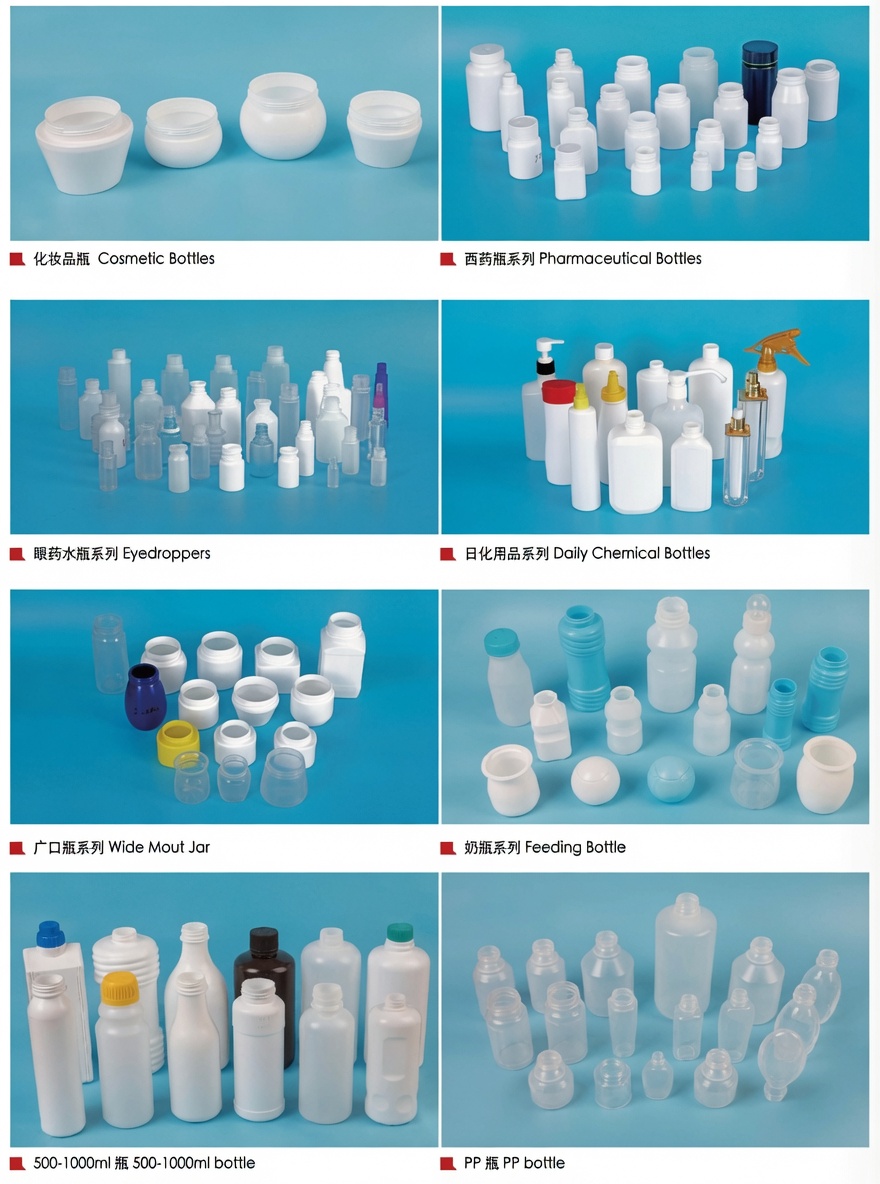
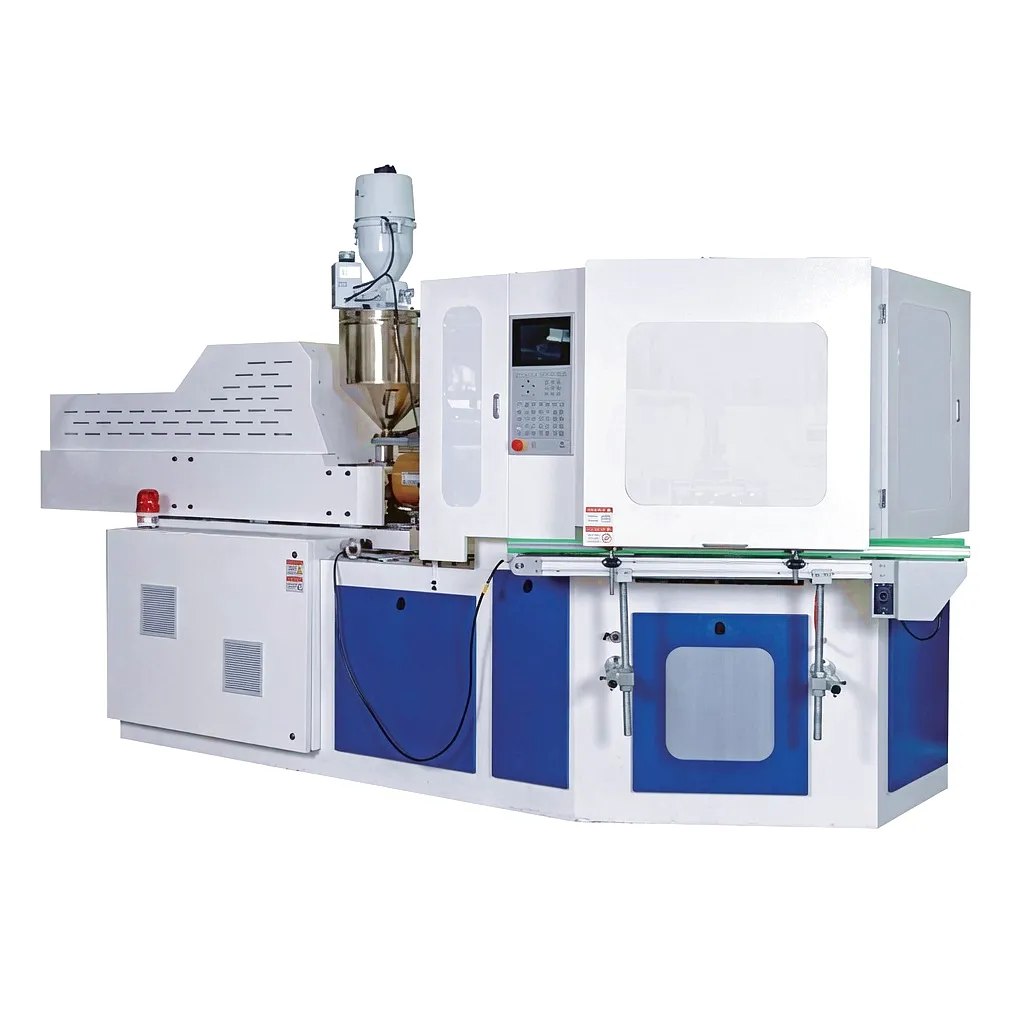 The personal care and cosmetics sector is one of the most demanding environments for plastic container manufacturing. Bottles for shampoo, conditioner, and shower gel must simultaneously satisfy requirements for chemical resistance, dimensional consistency, surface clarity, and an aesthetic finish that reinforces brand value. The injection-blow molding machine has become the production workhorse behind this challenge. Unlike conventional blow molding processes, the IBM process fuses injection precision with blow expansion in a single-station or rotary cycle, producing bottles with tightly controlled wall thickness, minimal flash, and a surface finish that requires no post-processing. For UK-based cosmetics manufacturers — from large-scale facilities in Birmingham to mid-tier contract fillers operating out of the West Midlands — the move toward injection-blow molding machines represents a measurable quality upgrade with direct implications for line efficiency, material consumption, and brand differentiation on shelf.
How an Injection-Blow Molding Machine Actually Works
Stage 1 — Injection
Molten thermoplastic — typically PP, HDPE, or PET — is injected under high pressure into a precision-machined injection mold around a core rod. This produces a parison (preform) with exact wall distribution, thread form, and base geometry already established. The core rod remains inside the parison and serves as the mandrel for the subsequent blow stage.
Stage 2 — Blow
The core rod carrying the conditioned preform rotates or transfers to the blow station. High-pressure air — typically between 6 and 10 bar — is introduced through the core rod, inflating the parison outward against a cooled blow cavity. The bottle takes its final shape: body geometry, shoulder radius, and base contour are all captured in this stage with tolerances that injection molding alone could never achieve for a hollow container.
Stage 3 — Ejection
Once the blow cavity has cooled sufficiently — typically within seconds — the finished bottle is stripped from the core rod and ejected. In a rotary injection-blow molding machine configuration, all three stages operate simultaneously on different cavities, dramatically increasing output without multiplying floor space requirements. The ejected bottle requires no trimming, deflashing, or secondary neck finishing, making it ready for filling or downstream inspection immediately.
The elegance of the IBM process lies in the fact that the thread and neck finish are injection-molded to near-perfect accuracy, while the bottle body benefits from the material distribution advantages of blow molding. For cosmetics containers — where the dispensing cap must seal reliably against a liquid product, and where the shoulder aesthetics affect consumer perception — this dual-process precision is a genuine competitive advantage. UK contract packaging houses supplying retailers such as Boots, Superdrug, or Marks & Spencer have found that IBM-produced containers deliver measurably lower rejection rates at incoming quality inspection compared with extrusion-blow alternatives, particularly for bottles with complex neck geometries or multi-start thread profiles.
Core Materials Processed by the Injection-Blow Molding Machine
HDPE
High-Density Polyethylene
The dominant choice for shampoo and conditioner bottles. Excellent chemical resistance to surfactants, good ESCR (environmental stress crack resistance), and compatible with colorant masterbatches for vibrant shelf presence. Processing temp range: 180–240°C.
PP
Polypropylene
Preferred for premium cosmetics packaging requiring a softer, slightly flexible feel. PP offers outstanding resistance to hot-fill products, autoclave sterilisation (up to 121°C), and is compatible with essential oil formulations. Processing temp range: 200–260°C.
PET
Polyethylene Terephthalate
When crystal clarity is non-negotiable — luxury shower gel in a transparent bottle is a prime example — PET processed through an injection-blow molding machine offers glass-like aesthetics with a significant weight and breakage advantage. The IBM route for PET produces a preform with a gate seal superior to ISBM in smaller volume containers (under 100 ml). Processing temp range: 260–290°C.
LDPE / LLDPE
Flexible Polyethylene Grades
Used where squeezability is a functional requirement — travel-size shampoo sachets, dispensing bottles for leave-in conditioner, or hair oil containers that consumers squeeze directly. LDPE/LLDPE blends through IBM retain a higher gloss finish than comparable extrusion blow products. Processing temp range: 160–210°C.
Application Scenario — Shampoo, Conditioner & Shower Gel Containers
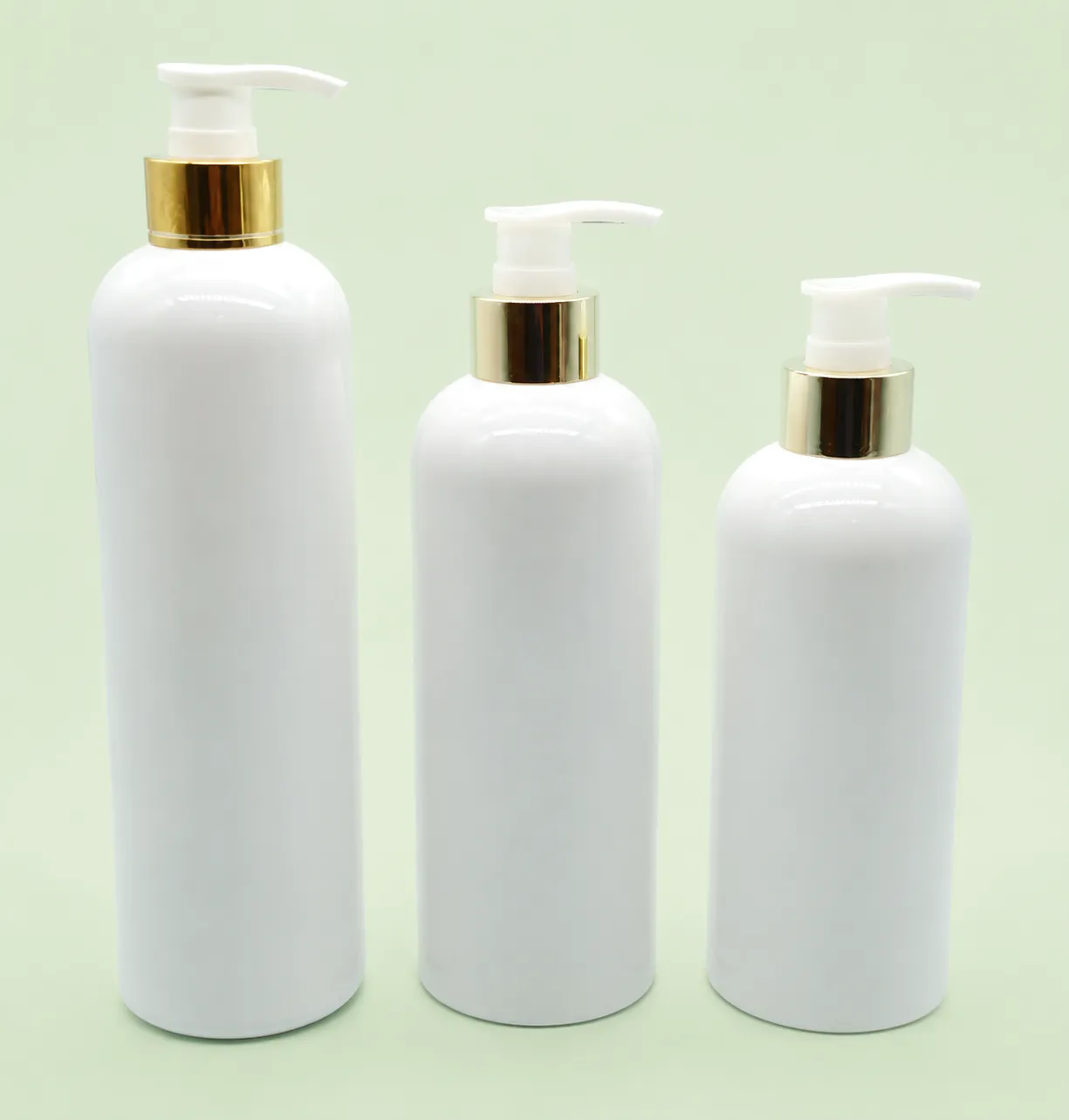 Among all personal care product categories, hair care and body wash present the widest variety of container design requirements. A shampoo bottle must accommodate high-viscosity product, integrate a flip-top or disc-cap neck, resist distortion under the mechanical stress of repeated pumping, and maintain label adhesion through condensation in a wet shower environment. The injection-blow molding machine addresses each of these demands at the tooling level rather than through post-processing, making it the technically preferred production route for quality-conscious UK cosmetics manufacturers.
In practice, a 250 ml or 400 ml HDPE shampoo bottle produced on a rotary IBM machine will exhibit wall-thickness uniformity within ±0.05 mm across the body panel — a specification that extrusion-blow molding rarely achieves without parison programming complexity. This uniformity directly affects the labeling process: uniform wall panels accept pressure-sensitive labels without the bridging or adhesion failures that plague out-of-round EBM bottles. For brands supplying Boots or Superdrug, where labelled bottle aesthetics are assessed against strict planogram standards, the IBM route reduces pack rejections and associated re-labelling costs. Sheffield-based contract manufacturers have reported IBM yield improvements of 12–18% compared with incumbent EBM processes when switching to 300–500 ml personal care container production.
Conditioner containers introduce a further technical dimension: they are almost universally taller relative to their width than shampoo bottles, because the higher product viscosity makes a narrower neck and a longer body functionally preferable. This aspect ratio pushes the injection-blow molding machine to demonstrate its parison stretch distribution capability — the core rod geometry must be engineered to pre-distribute polymer mass so that the shoulder, body, and base each receive appropriate wall thickness after blow expansion. Ever Power’s IBM mold engineering team works directly with cosmetics brand packaging technologists to validate parison geometry through mold-flow simulation before steel is cut, eliminating the iterative sampling cycles that inflate tooling timelines at competing suppliers.
Shower gel containers encompass some of the most aesthetically complex forms in the personal care sector. Body wash brands regularly commission sculpted bottle silhouettes — waisted profiles, faceted shoulders, embossed brand icons — that require blow cavities machined to fine surface finish tolerances. The injection-blow molding machine excels here because the blow cavity is a closed, machined-steel tool: it reproduces geometric features in the bottle body with the same consistency across a million-piece run that it achieves on the first shot. This predictability enables UK cosmetics packaging converters to offer their brand clients fixed quality specifications throughout a full seasonal production run, removing the quality drift that characterises EBM production as tooling temperature cycles vary across a working shift.
Core Technical Advantages of the Injection-Blow Molding Machine
Flash-Free Production
Because the parison never contacts a parting line in the way extrusion-blow does, IBM bottles emerge with no flash requiring trimming. This eliminates a labour-intensive finishing operation, reduces scrap regrind, and prevents the micro-burr contamination risk that is a concern for cosmetics filling lines under UK GMP guidelines.
Superior Neck Accuracy
The neck and thread are injection-formed — not blown — so thread-form accuracy matches injection molding tolerances. For cosmetics bottles with tamper-evident closures or child-resistant caps, this means cap application torques are consistent across the entire production run, avoiding the cap-torque variation that triggers filling-line stoppages when cap applicator heads bind on under-sized threads.
Material Efficiency
The IBM process pre-forms the parison to near-final dimensions before blowing. This means the polymer melt travels a very short blow path, and material distribution is pre-engineered rather than relying on parison programming adjustments. Material usage per bottle is typically 5–10% lower than a comparable EBM bottle achieving the same mechanical performance — a significant saving across multi-million annual volumes in the UK personal care market.
High-Speed Rotary Cycles
Modern rotary injection-blow molding machines operate all three process stages simultaneously on different tool positions, achieving effective cycle times as low as 8–12 seconds for small cosmetics bottles. A four-cavity rotary IBM machine can produce 1,200–2,400 bottles per hour, making it commercially viable even for medium annual volumes (5–20 million units) without the capital investment of a large EBM blow-moulding system.
Clean-Room Compatibility
IBM machines produce bottles in an essentially closed process — the bottle interior is never exposed to the factory atmosphere during formation. This matters for cosmetics manufacturers producing preservative-free or low-preservative formulations, where bioburden control during packaging is subject to UK Cosmetics Regulation (SI 2013/1478) requirements. IBM-produced bottles can be qualified for filling on ISO Class 7 or ISO Class 8 clean-room lines without additional bottle washing steps.
Multi-Layer Capability
Advanced IBM configurations support co-injection of barrier layers — typically EVOH or nylon — within the parison wall. For natural and organic cosmetics formulations that are sensitive to oxygen permeation, this multi-layer injection-blow structure provides an oxygen transmission rate (OTR) below 0.05 cc/pkg/day, meeting the barrier requirements of premium facial serum and vitamin C haircare brands expanding through UK premium retail channels.
Product Technical & Performance Parameters
| Parameter | ZQ40 (European) | ZQ60 (European) | Unit / Note |
|---|---|---|---|
| Max. Shot Weight | 40 g | 60 g | Per cavity, HDPE base |
| Container Volume Range | 10 – 250 ml | 30 – 500 ml | Cosmetics / pharma typical |
| Clamping Force | 400 kN | 600 kN | Injection station |
| Blow Pressure | 0.6 – 1.0 MPa | 0.6 – 1.2 MPa | Adjustable, material dependent |
| Injection Screw Diameter | 38 mm | 45 mm | L/D ratio 22:1 |
| Cycle Time (typical, 100 ml) | 10 – 14 s | 12 – 16 s | HDPE, 4-cavity rotary |
| Wall Thickness Tolerance | ±0.05 mm | ±0.05 mm | Body panel, measured in-process |
| Compatible Materials | HDPE, PP, PET, LDPE | HDPE, PP, PET, LDPE, PA | Screw configuration varies |
| Installed Power | 15 kW | 22 kW | CE-compliant, 3-phase 400V 50Hz |
| Mold Cavities (standard) | 2 / 4 / 6 | 2 / 4 / 6 / 8 | Custom configurations available |
| Machine Footprint | 2800 x 1500 x 1800 mm | 3200 x 1700 x 1900 mm | L x W x H, approx. |
| Control System | Siemens PLC + HMI touchscreen | Siemens PLC + HMI touchscreen | CE, ISO 9001 certified |
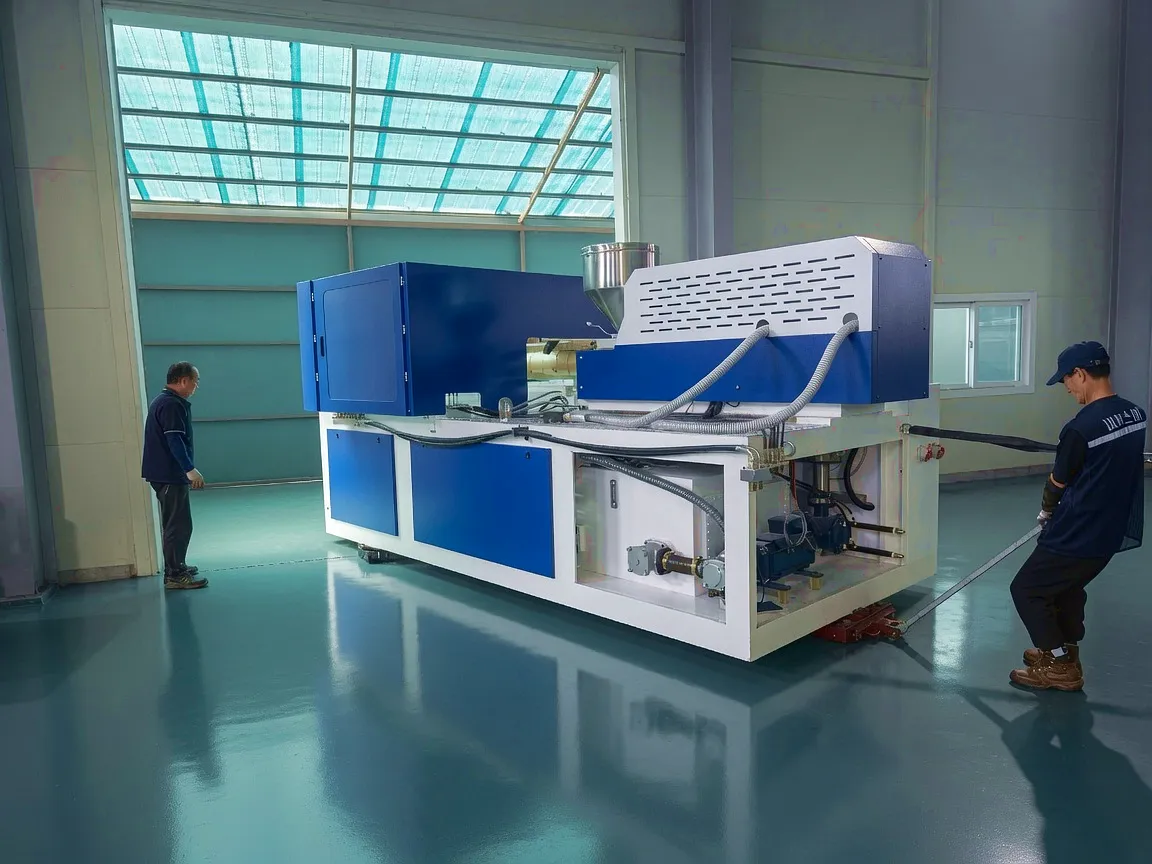
Ever Power manufacturing workshop — IBM machine assembly line
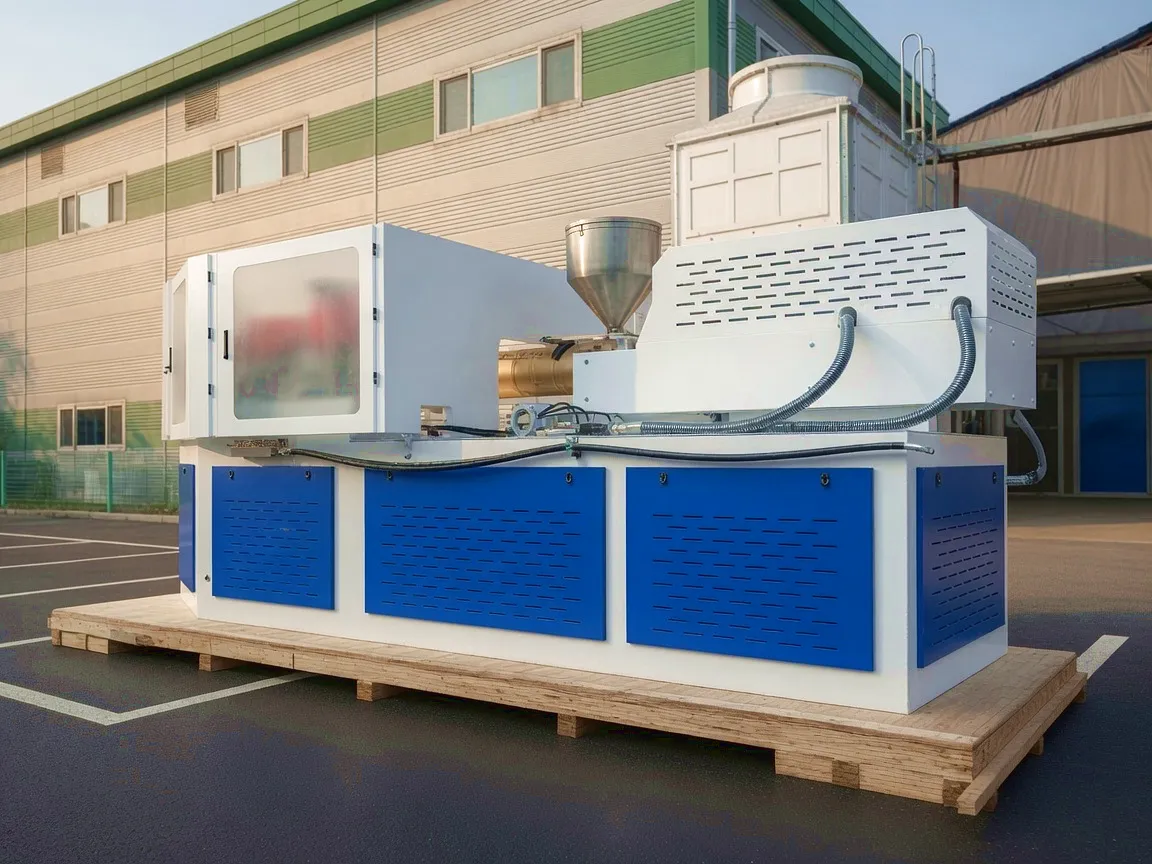
Quality inspection and testing station at Ever Power facility
Ever Power — Precision Manufacturing & Customisation Capability
Ever Power designs and builds its injection-blow molding machines at a dedicated precision engineering facility with vertical integration across the critical value chain steps: mold design, CNC machining of injection cores and blow cavities, hydraulic system assembly, control panel wiring, and final machine commissioning. This level of in-house control translates into customisation capability that differentiates Ever Power from the majority of IBM equipment suppliers, who rely on third-party toolmakers for mold production and therefore cannot guarantee dimensional chain accountability from machine spec through to the finished bottle geometry.
Custom Core Rod Design
Bespoke core rod geometry engineered to your parison wall-distribution target. Validated via mold-flow simulation before machining.
Multi-Cavity Tooling Scaling
Modular cavity inserts allow capacity scaling from 2 to 8 cavities on the same machine platform, protecting capital investment as demand grows.
UK Electrical Compliance
All machines are wired for 3-phase 400V / 50Hz and CE-marked under EU Machinery Directive 2006/42/EC, remaining valid for UK production under UKCA recognition.
After-Sales & Spare Parts
Dedicated spare parts inventory for UK-based customers, with DHL express freight ensuring critical wear items reach Birmingham, Manchester, or Leeds manufacturing facilities within 3–5 working days.
Featured Injection-Blow Molding Machines
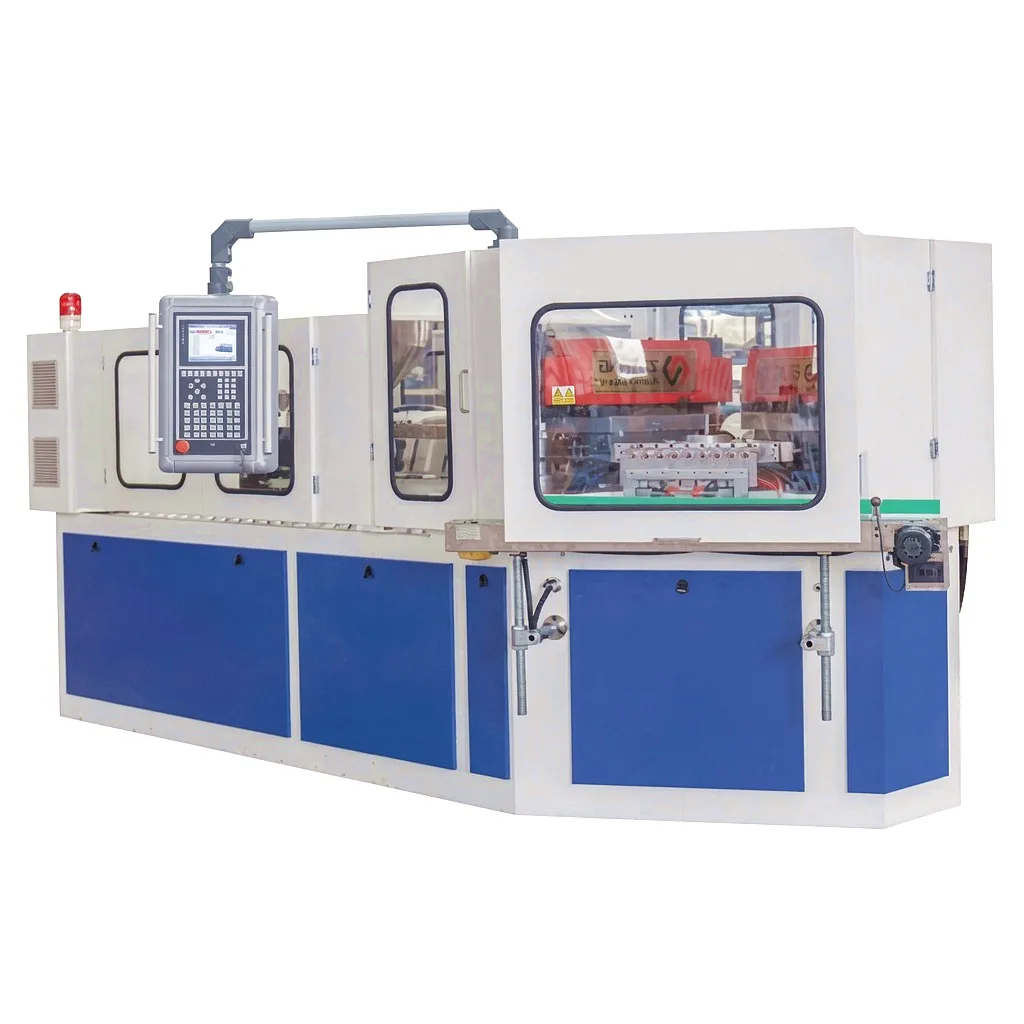
Leeds Personal Care Manufacturer Reduces Rejection Rate by 21%
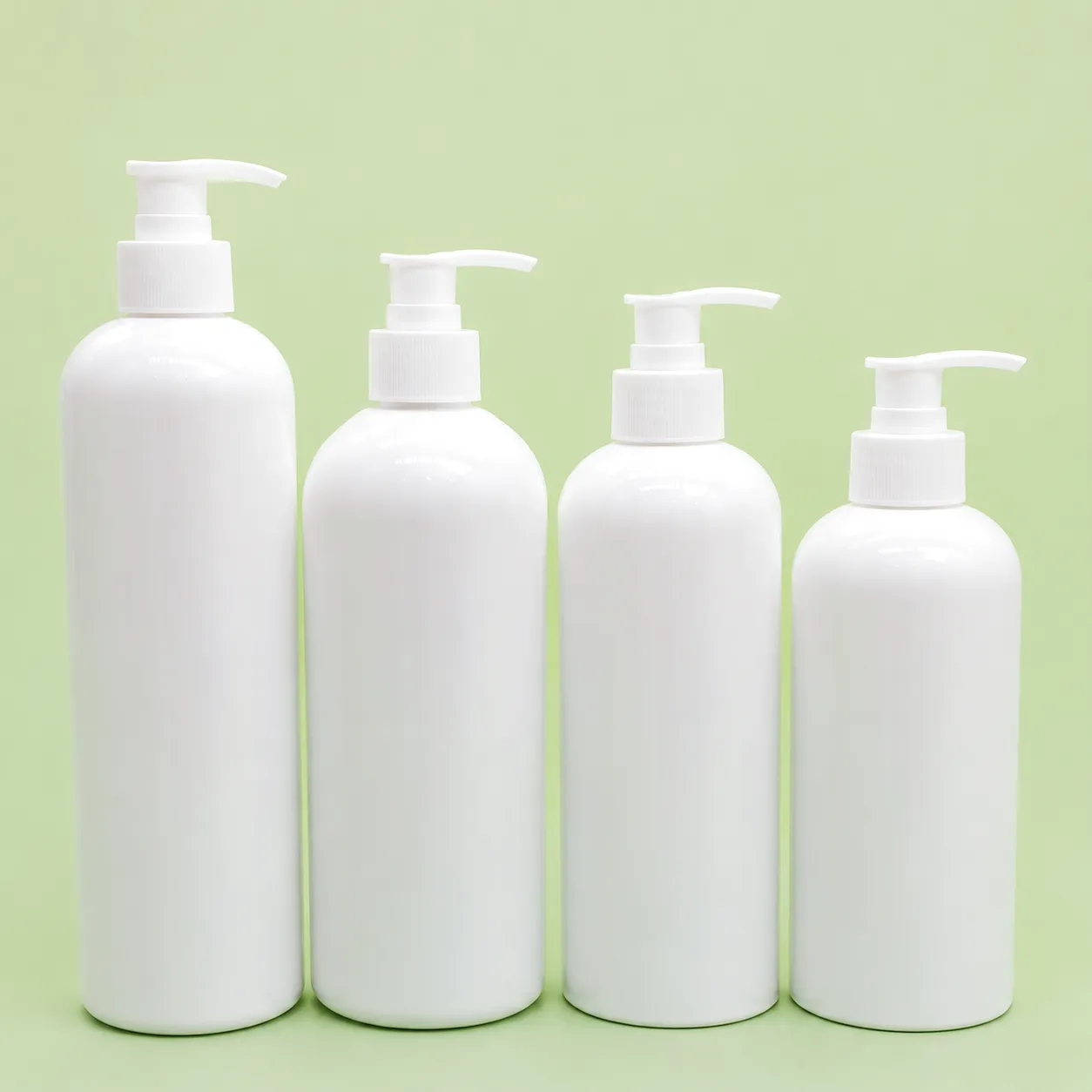 A contract packaging manufacturer based in Leeds — supplying own-label shampoo and conditioner ranges to three major UK grocery retailers — had been operating two legacy extrusion-blow molding lines producing 300 ml HDPE shampoo bottles. Despite repeated parison programming adjustments, the company was experiencing cap-sealing failures at a rate of approximately 3.8% of filled bottles, driven by neck ovality exceeding the cap supplier’s tolerance window. This was triggering costly rework on the filling line and generating weekly customer quality complaints that threatened two retailer contracts.
After an evaluation process that included visits to reference customers and a sample production trial arranged by Ever Power’s European technical team, the company commissioned two ZQ60 injection-blow molding machines with 6-cavity HDPE tooling. Ever Power’s mold design team worked with the client’s packaging technologist to remap the neck thread profile from the previous bottle drawing, producing a revised injection core rod that delivered the thread geometry within ±0.03 mm. Installation and commissioning in the Leeds facility were completed within 12 working days.
21%
Reduction in bottle rejection rate at filling
12
Working days to full commissioning in Leeds
7%
Material saving per bottle vs previous EBM process
3
Retailer contracts retained & expanded post-upgrade
What UK Customers Say About Ever Power
“The ZQ60 transformed our 300 ml shampoo line. Thread accuracy is night and day compared with our old blow-moulding setup — our cap supplier actually noticed the improvement before we told them we’d changed machines. Ever Power’s technical team walked us through every commissioning parameter and we were making saleable bottles within 48 hours of switch-on.”
— James Hartley, Production Director
Contract Packaging Manufacturer, Leeds, Yorkshire
“We specified a custom 4-cavity PP mold for our 150 ml premium conditioner bottle — a tall, waisted profile with a 24/415 neck that our previous IBM supplier said would be difficult to achieve in PP. Ever Power’s mold simulation came back within five working days and the first production samples hit all our dimensional specs. The customisation process was seamless from first enquiry to delivery.”
— Sarah Whitfield, Packaging Development Manager
Premium Cosmetics Manufacturer, Birmingham, West Midlands
“Spares availability was the first question we asked before signing. Ever Power confirmed next-day DHL availability for wear parts to Sheffield and they have delivered on that every time we have needed it. Machine uptime on our ZQ40 over the first 14 months has been 97.3% — that is better than any piece of processing equipment we have bought in the past decade.”
— Alan Roscoe, Plant Manager
Personal Care Converter, Sheffield, South Yorkshire
Frequently Asked Questions — IBM Machines for UK Personal Care Producers
Ready to Upgrade Your Personal Care Packaging Line?
Talk to Ever Power — IBM Specialists Serving the UK Market
Whether you are a contract packager in Birmingham, a cosmetics brand expanding in-house capacity in Sheffield, or a retailer looking to qualify a new bottle for your own-label personal care range — our technical team is available to guide you through machine selection, mold specification, and total cost of ownership modelling.
edit by gzl