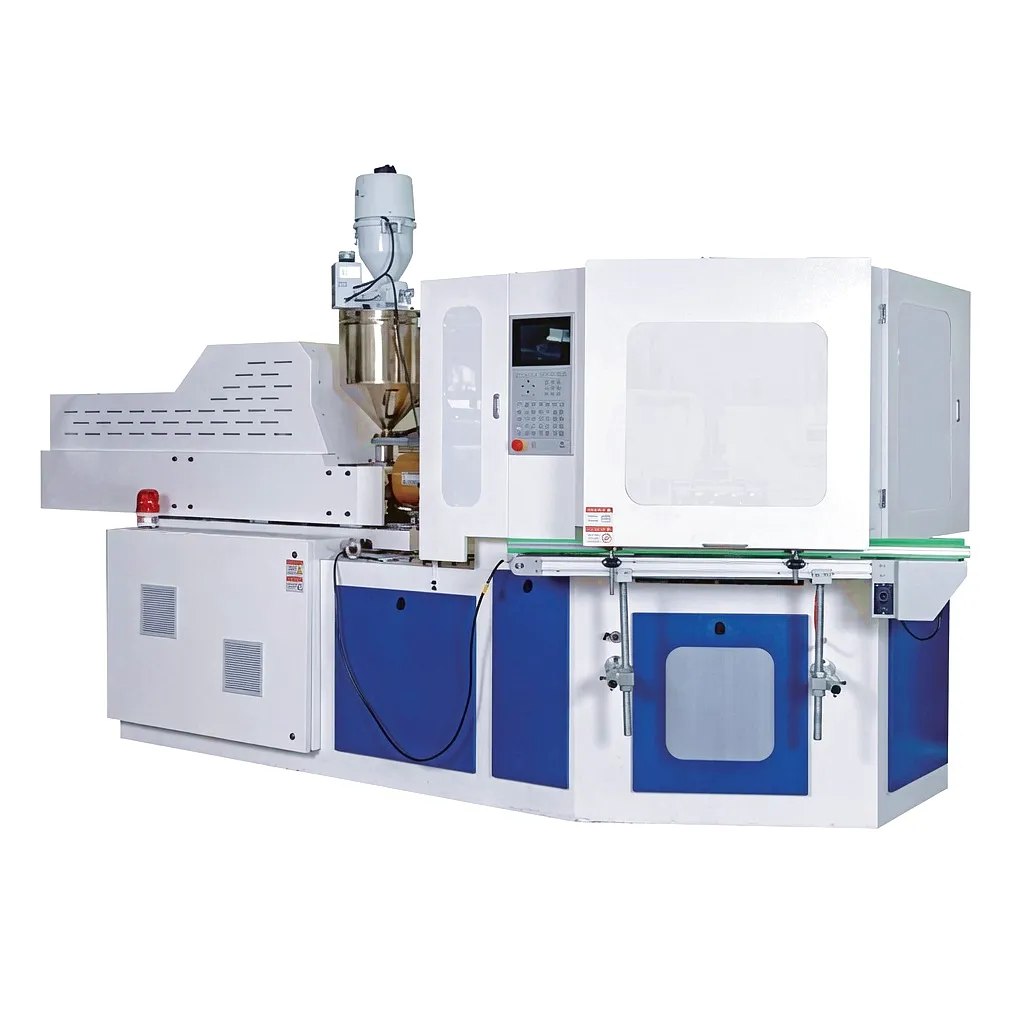
 The injection-blow molding machine stands at the crossroads of precision engineering and high-volume plastics manufacturing. Unlike conventional blow molding or injection molding alone, the injection-blow molding (IBM) process combines both disciplines into a single, integrated cycle — injecting molten polymer over a core rod to form a preform, then inflating that preform within a blow mold to achieve a hollow, finished container with exact dimensional tolerances. The result is a packaging component that meets tight neck-finish specifications, consistent wall thickness across the body, and zero flash — qualities that matter enormously in sectors such as pharmaceuticals, personal care, food-grade liquids, and, critically, automotive chemical packaging.
Across the United Kingdom, manufacturing clusters in Birmingham, Sheffield, Coventry, and the East Midlands have increasingly turned toward injection-blow molding equipment as their answer to stricter regulatory demands, tighter material efficiency targets, and the ongoing push to reduce post-production finishing costs. Whether a contract manufacturer in the Black Country is supplying brake fluid containers to Tier-1 automotive groups, or a packaging company in the Thames Valley is producing narrow-neck HDPE bottles for engine coolants, the injection-blow molding machine delivers the combination of output speed, material consistency, and tooling flexibility that modern production demands.
How the Injection-Blow Molding Process Works
The IBM cycle operates across three primary stations that rotate in sequence. At station one, the injection unit plasticises polymer resin and injects it into a cavity surrounding a hardened steel core rod, producing a thick-walled preform whose internal geometry is shaped precisely to the rod’s profile. The neck finish — threads, sealing surfaces, and external diameter — is formed in this first stage to its final dimensions, which means there is no secondary trimming or reaming operation downstream. This is a key distinction from extrusion blow molding, where neck flash is routine and must be removed.
Station two transfers the still-hot preform on its core rod into the blow mold, where compressed air — typically delivered at 6–12 bar — inflates the softened polymer against the chilled mold wall. The mold cavities are precision-machined to mirror tolerances of ±0.02 mm, and the rapid contact with cooled steel sets the container’s outer geometry in milliseconds. Because the preform temperature and viscosity are precisely controlled through the injection stage, the blow station experiences consistent material distribution, yielding uniform wall thickness — a parameter that is especially critical for containers that must withstand internal pressure or chemical exposure over extended shelf lives of two to five years.
Station three strips the finished container off the core rod and ejects it onto a conveyor or integrated quality vision system. The entire cycle repeats continuously, with cycle times for standard pharmaceutical and automotive containers running between 12 and 25 seconds depending on the number of cavities, material type, and container volume. The closed-loop, three-station nature of the process means there is minimal material waste — no runners, no flash, and no secondary trimming — making the injection-blow molding machine one of the most material-efficient packaging production platforms available to UK manufacturers today.
Core Materials Used in Injection-Blow Molding
HDPE (High-Density Polyethylene)
The dominant choice for automotive chemical containers. Excellent chemical resistance against motor oils, brake fluids, and coolants. MFI range 0.3–5 g/10 min preferred for IBM. Food-grade grades available for direct-contact applications.
PP (Polypropylene)
Widely used for pharmaceutical dropper bottles and narrow-neck laboratory containers. Excellent steam sterilisation tolerance (up to 121°C). Higher stiffness-to-weight ratio than HDPE, enabling thinner walls without structural compromise.
PET (Polyethylene Terephthalate)
Delivers superior clarity and barrier properties for personal care and food-grade containers. Intrinsic viscosity of 0.72–0.84 dL/g is optimal for IBM. Increasingly recycled-content grades (rPET) are being processed on modern injection-blow platforms.
LDPE & EVA Blends
Used for squeezable dispensing containers in personal care and medical-device packaging. Softness and flex-crack resistance are the key drivers. EVA copolymers improve low-temperature flexibility for containers used in cold-chain distribution across Northern Europe and Scotland.
Application Scenario: Automotive Chemical Packaging
Engine Oils · Brake Fluids · Coolants · Power Steering Fluids
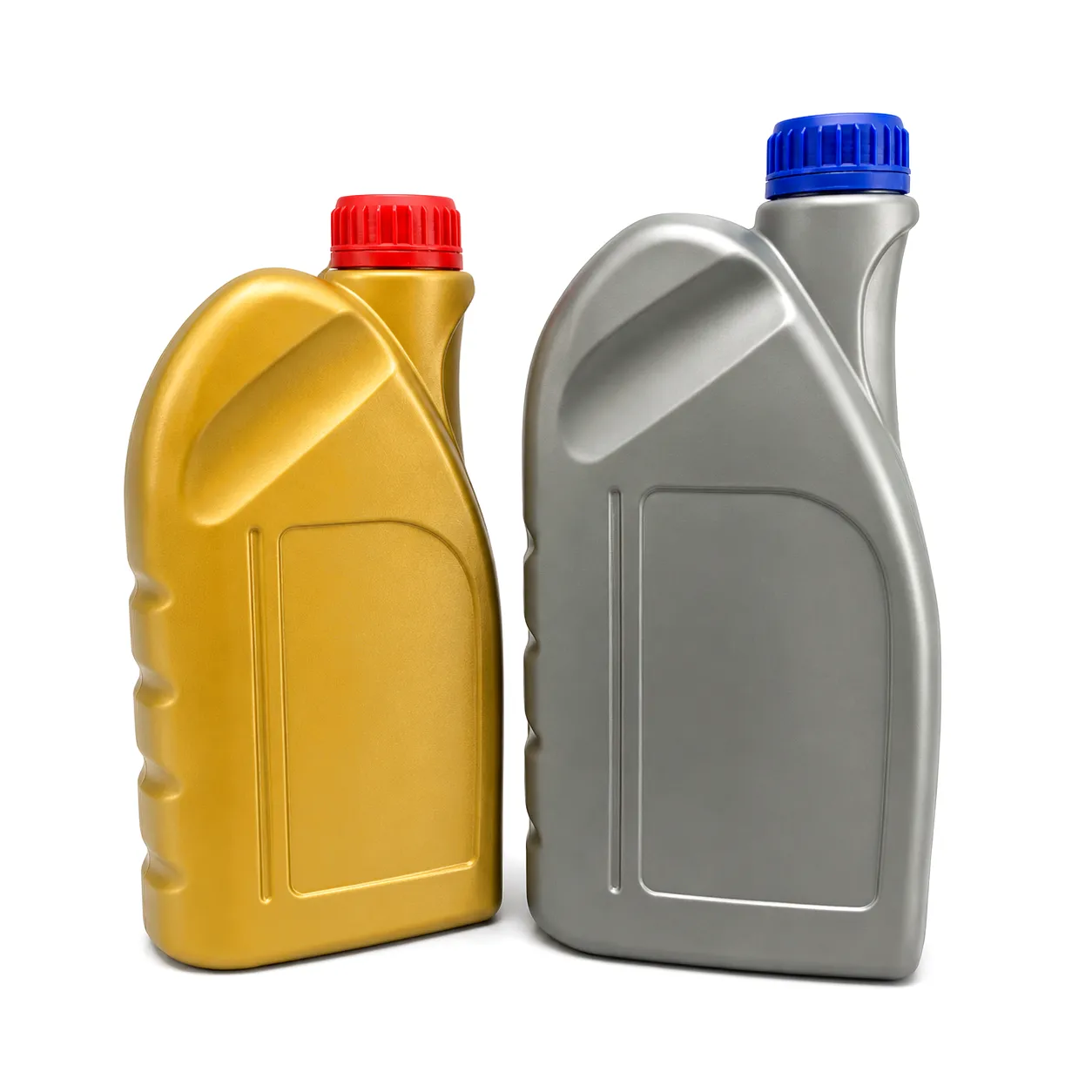
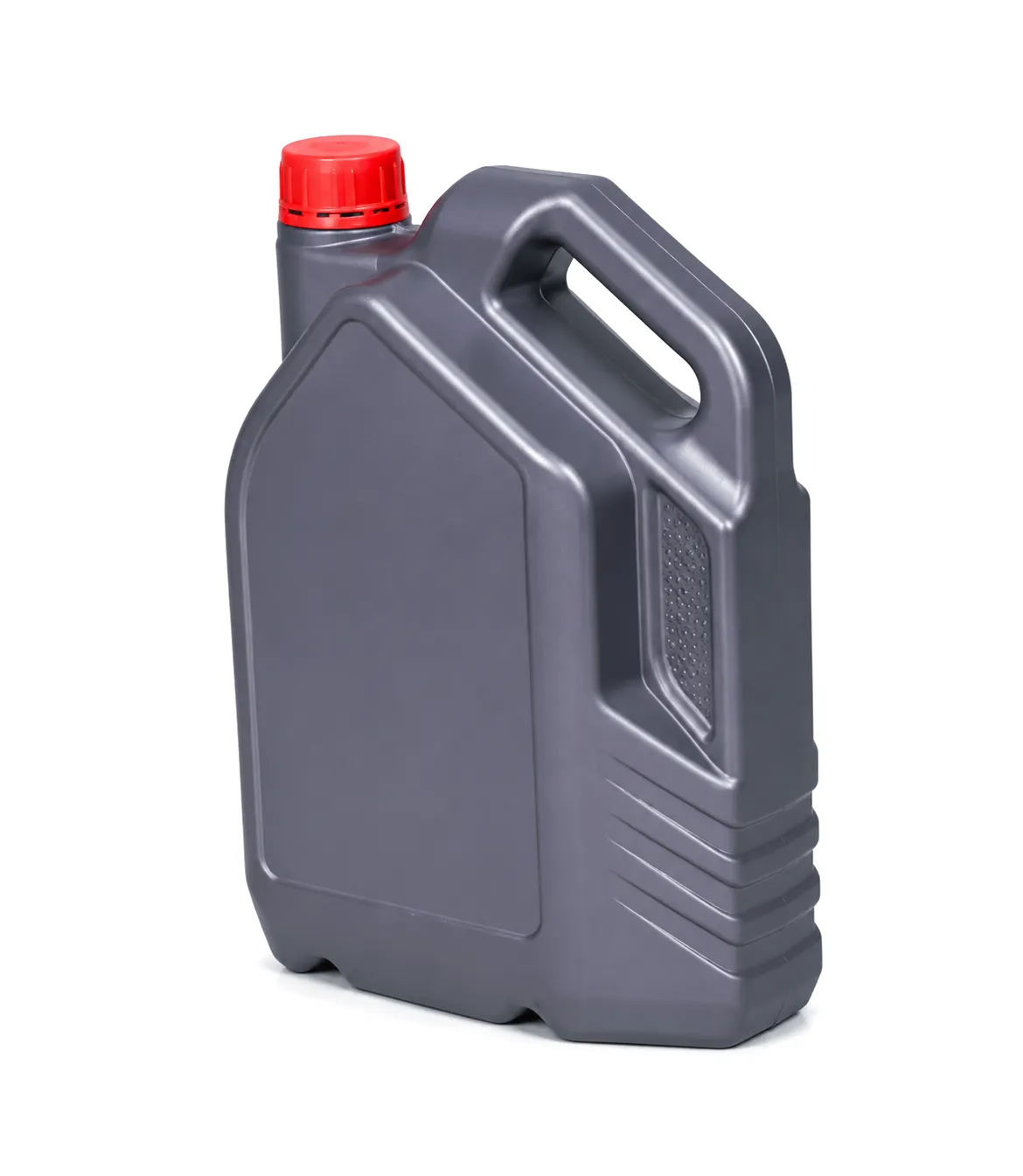 Automotive chemical packaging represents one of the most technically demanding applications for any container manufacturer. Motor oils, brake fluids, engine coolants (antifreeze/antifreeze-coolant blends), power steering fluids, and transmission oils each impose distinct chemical compatibility requirements on the container wall — requirements that a poorly specified packaging process will fail to meet over the two-to-five-year shelf life typical of aftermarket lubricant products distributed through UK motor factors and national retail chains such as Halfords.
The injection-blow molding machine excels in this application precisely because the IBM process produces containers with demonstrably superior wall thickness uniformity compared to extrusion blow molding alternatives. Uniform wall thickness — achievable to within ±0.1 mm across the body — is not merely an aesthetic quality metric. For containers holding DOT 3 or DOT 4 brake fluid, which are highly hygroscopic and chemically aggressive to many polymer systems, wall uniformity directly determines the rate of vapour permeation and the structural integrity of the neck-to-body transition under repeated cap torque cycles. A neck finish formed in the IBM injection stage holds its thread profile to tolerances of ±0.05 mm, meaning the container mates reliably with induction-seal liners and ratchet-lock closures used by premium automotive chemical brands.
In the Birmingham automotive manufacturing corridor — home to JLR supply chain tiers, independent lubricant blenders, and specialist chemical distributors — the shift toward injection-blow molded containers is being driven by both quality assurance and logistics efficiency. Containers produced on IBM platforms arrive downstream with no flash and no secondary trimming requirements, allowing packing lines to operate without the deflashing stations that add labour cost and create particulate contamination risk in controlled environments.
Engine Oil Bottles
946 ml to 5 L capacity range · HDPE · UN-certified for flammable liquid transport · Integrated handle options
Brake Fluid Containers
250 ml & 500 ml · Chemically resistant HDPE · Child-resistant closures compatible · Precise neck finishes
Coolant / Antifreeze Bottles
1 L to 5 L · HDPE or HDPE/EVOH for enhanced oxygen barrier · Embossed fill-level indicators
Transmission & Power Steering
500 ml to 2 L · Precision pour-neck geometries · Compatible with foil induction seals · Drop-impact rated
Core Technical Advantages of Injection-Blow Molding Equipment
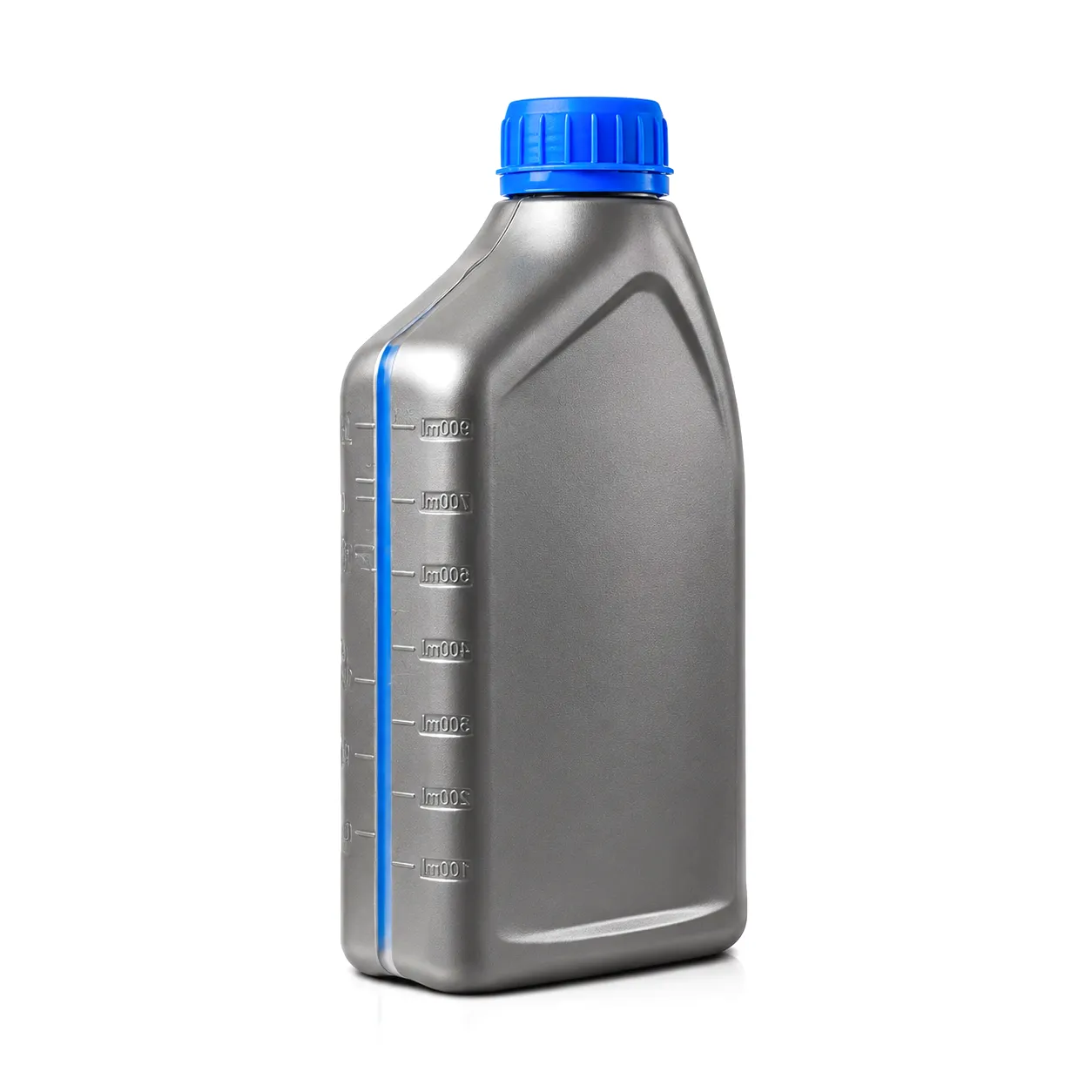 The injection-blow molding machine offers a set of production advantages that are genuinely difficult to replicate on other container-forming platforms. The precision of the neck finish, produced in the injection stage and never touched again, is perhaps the most commercially significant: pharmaceutical and food-grade customers routinely specify neck-finish tolerances of ±0.05 mm on thread diameter and ±0.1 mm on sealing-land flatness. These are tolerances that IBM hits as a standard process output, not as a special capability requiring process adjustment or secondary machining.
Material yield on an IBM machine is exceptionally high. Because there are no runners from a hot-runner-free system and no flash trimming, shot weight efficiency typically runs at 98–99%, compared with extrusion blow molding systems where flash can represent 8–15% of the polymer consumed in each cycle. For UK manufacturers operating in an environment of elevated polymer feedstock costs and sustainability reporting obligations under DEFRA’s packaging waste regulations, this efficiency advantage translates directly to margin improvement and reduced environmental impact per unit produced.
Cycle time predictability is another structural advantage. The three-station rotary configuration means that injection, blow, and ejection operations occur simultaneously on different preform sets. This parallel processing — unlike the sequential steps in reheat-stretch-blow systems — means the machine’s output rate is governed by the longest single-station cycle, typically the injection phase, rather than the sum of all phases. High-cavity tooling on IBM platforms can therefore produce output volumes competitive with larger-format extrusion lines while maintaining the dimensional consistency of the injection process.
Zero Flash Output
Containers exit the machine with no flash, no runners, and no secondary trimming. Eliminates a complete downstream process stage and the particulate contamination risk it carries.
Precise Neck-Finish Tolerances
Thread profiles and sealing surfaces formed in injection stage to ±0.05 mm. Critical for pharmaceutical child-resistant closures and automotive induction-seal compatibility.
Uniform Wall Thickness
Consistent ±0.1 mm wall distribution across body and shoulder. Eliminates thin-wall failure points that cause chemical leakage and structural collapse under stack loads in palletised distribution.
High Material Efficiency
Shot-weight yield of 98–99% versus 85–92% for extrusion blow molding. Meaningful cost-per-unit advantage at production volumes from 50,000 to 10 million containers per annum.
Multi-Cavity Scalability
Tooling configurations from 2 to 24 cavities scale output to demand without changing the machine platform. Single-cavity qualification runs are practical during product development or regulatory approval stages.
Parallel Processing Architecture
Injection, blow, and eject stations operate simultaneously. Overall equipment effectiveness (OEE) on optimised lines regularly exceeds 85%, making IBM competitive on throughput with significantly larger equipment formats.
Technical Performance Parameters: Injection-Blow Molding Machine
| Parameter | Specification Range | Notes / Context |
|---|---|---|
| Injection Capacity (shot weight) | 20 – 2,500 g | Model-dependent; ZQ40 to ZQ60 series covers most pharma/automotive container weights |
| Container Volume Range | 5 ml – 5,000 ml | Automotive: typically 250 ml – 5 L. Pharma: 5 ml – 500 ml. |
| Blow Air Pressure | 6 – 12 bar | Higher pressure for HDPE; lower for LDPE and PP containers |
| Cycle Time | 12 – 25 sec | Single-stage rotary; 12 s achievable on small PP containers, 25 s on large HDPE |
| Wall Thickness Tolerance | +/- 0.1 mm | Superior uniformity vs extrusion BM (+/- 0.3–0.5 mm typical) |
| Neck-Finish Tolerance | +/- 0.05 mm | Thread diameter and sealing-land flatness; formed in injection stage only |
| Number of Cavities | 2 – 24 | Even numbers per station; tooling change typically 4–6 hours on ZQ series |
| Compatible Polymers | HDPE, PP, PET, LDPE, EVA | Multi-material changeover via barrel and screw replacement; PET requires pre-drying |
| Melt Temperature Range | 160 – 290 °C | LDPE: 160–200 °C; PP: 210–240 °C; PET: 265–290 °C |
| Mould Tool Material | P20, H13, S136 stainless | S136 for PET and corrosive-resin applications; hardness HRC 48–52 |
| Core Rod Material | H13 tool steel, chrome-plated | Chrome plating 15–25 microns; polished to Ra 0.2 µm for low-friction preform release |
| Installed Power | 15 – 90 kW | Variable-frequency drive standard; servo-hydraulic option reduces energy consumption by 20–35% |
| Material Yield | 98 – 99% | No runners, no flash; benchmark against extrusion BM at 85–92% |
| OEE (Optimised Lines) | > 85% | With vision inspection, automated reject, and predictive maintenance package |
Industrial Application Scenarios Across UK Sectors
 The pharmaceutical sector in the United Kingdom — with its concentration of major manufacturers in the Thames Valley, the Cambridge life-sciences cluster, and Merseyside chemical parks — represents one of the highest-value market segments for injection-blow molded containers. MHRA regulations and EU GMP equivalence requirements (retained post-Brexit under UK law) impose container specification standards that are unambiguous: dimensional consistency, traceability, and absence of contaminants are non-negotiable.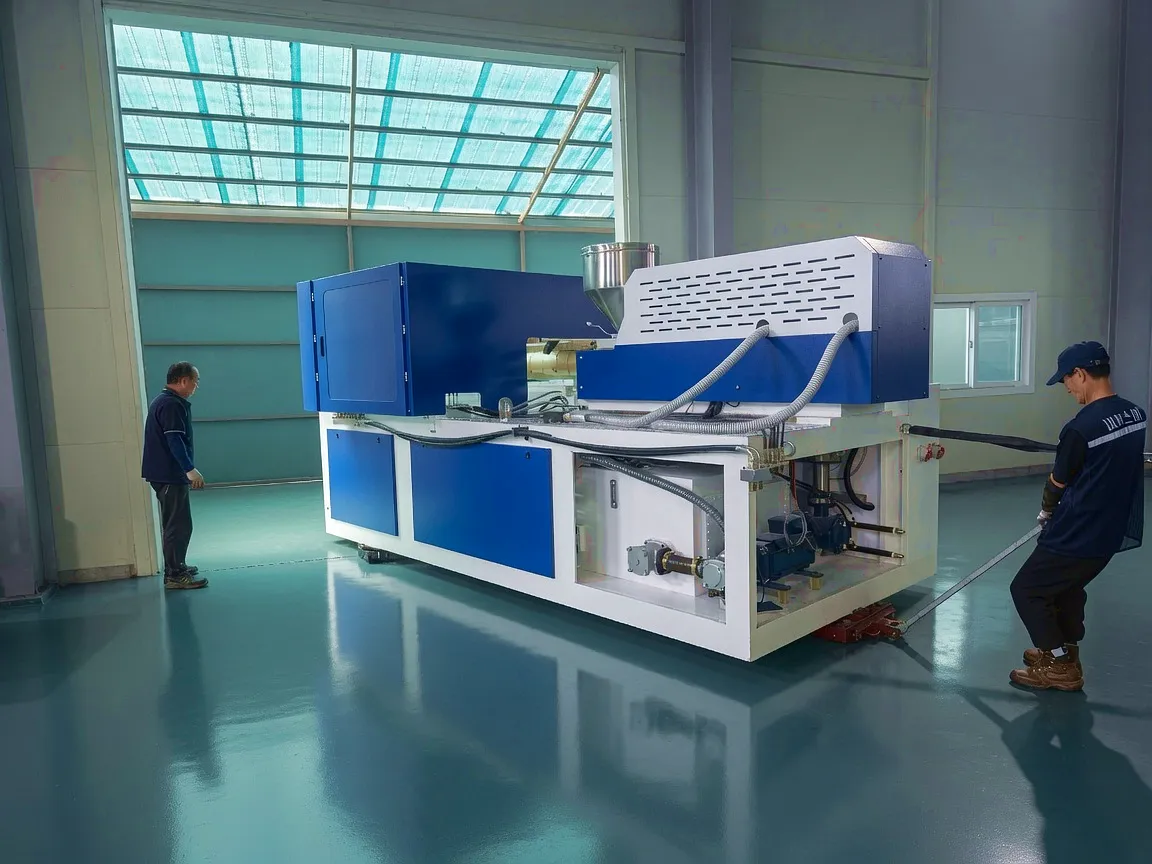
Featured Products from Ever Power
European-standard injection-blow molding machines engineered for global B2B markets, including UK and EU export supply.
Ever Power
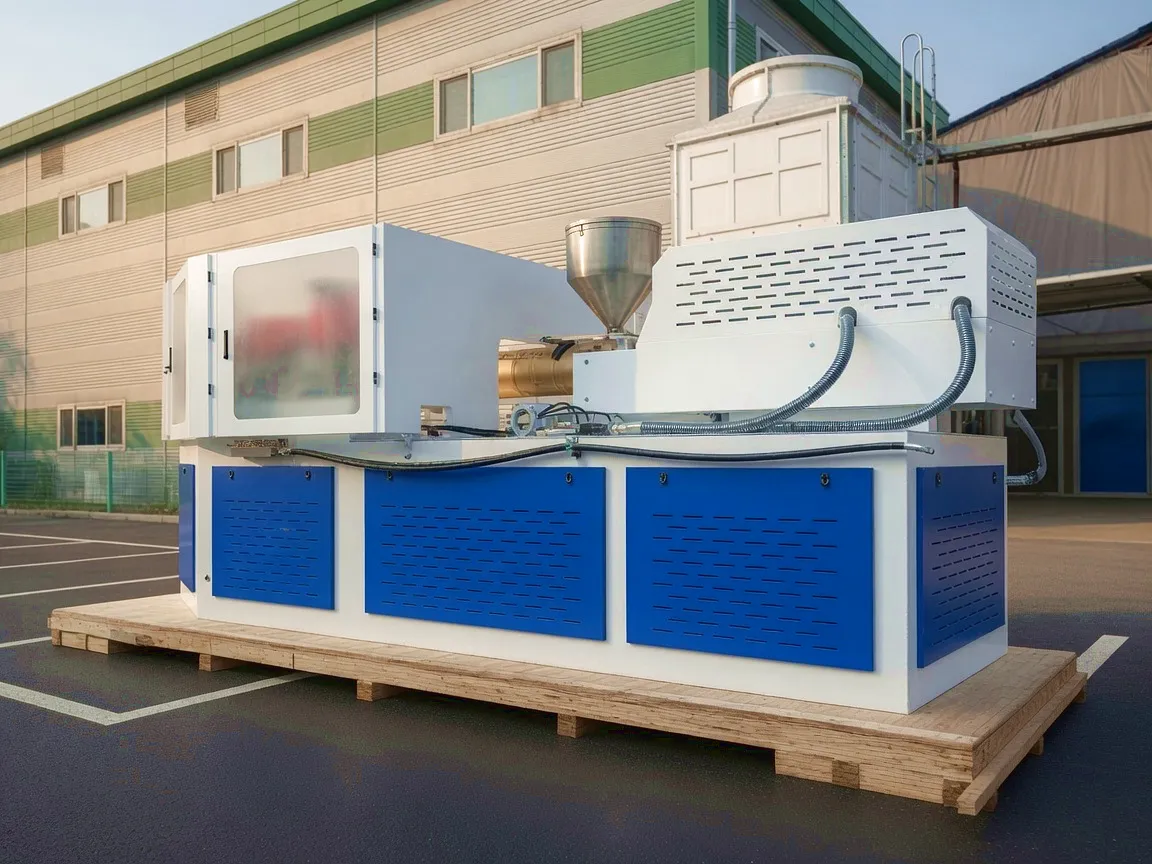
ZQ40 Injection-Blow Molding Machine (European)
The ZQ40 is a mid-range European-specification platform designed for pharmaceutical, personal care, and food-grade container production. With a clamp force of 40 tonnes and tooling capacity up to 12 cavities, it delivers cycle times as low as 14 seconds on PP pharmaceutical bottles. Energy-efficient servo-hydraulic drive reduces power consumption by up to 30% versus conventional hydraulic platforms, making it well-suited to UK manufacturers operating under net-zero energy commitments.
Ever Power
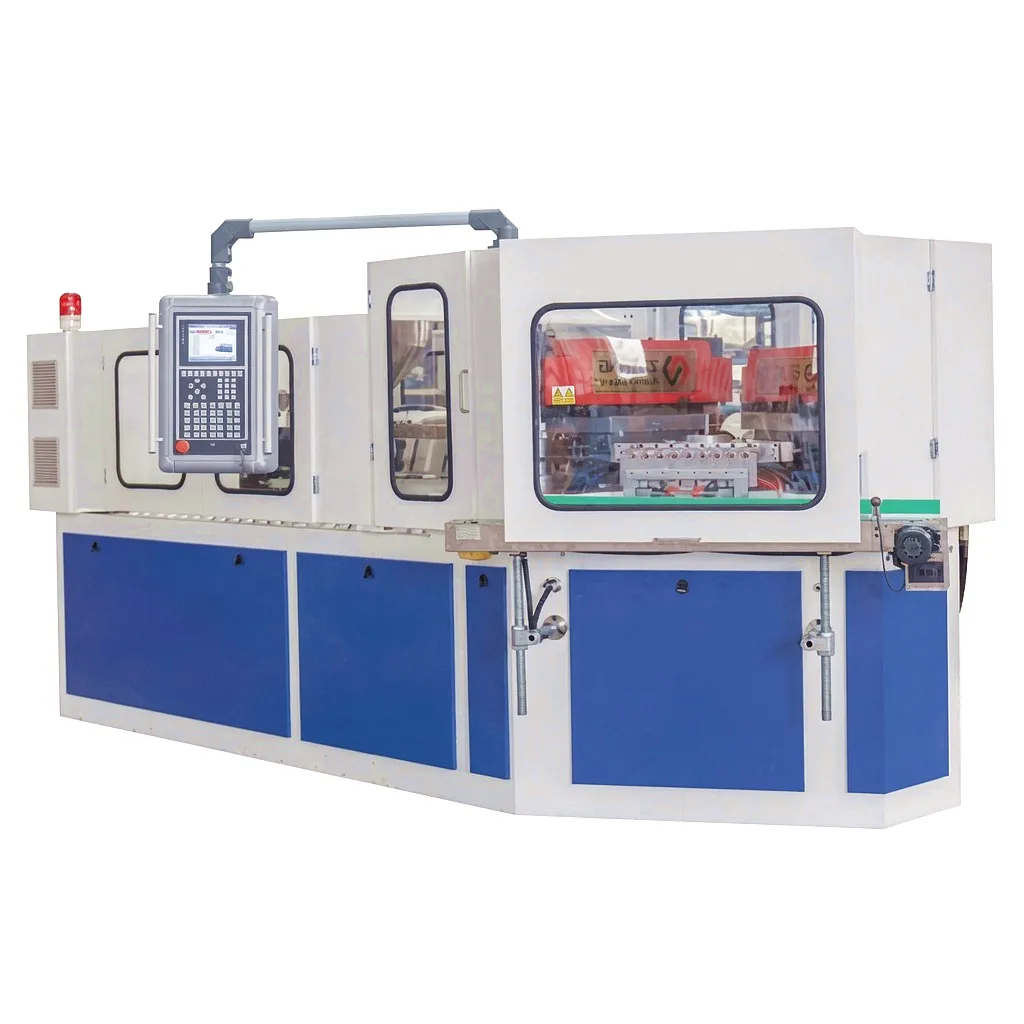
ZQ60 Injection-Blow Molding Machine (European)
The ZQ60 scales up to a 60-tonne clamp force and accommodates container volumes from 50 ml to 5 L across automotive chemical, agrochemical, and large-format personal care applications. Up to 16-cavity tooling configuration. Designed for 24/7 continuous production environments common in automotive Tier-2 supply chains operating to JIT schedules in the West Midlands and Yorkshire. Integrated HMI with remote diagnostic capability supports UK-based maintenance teams.
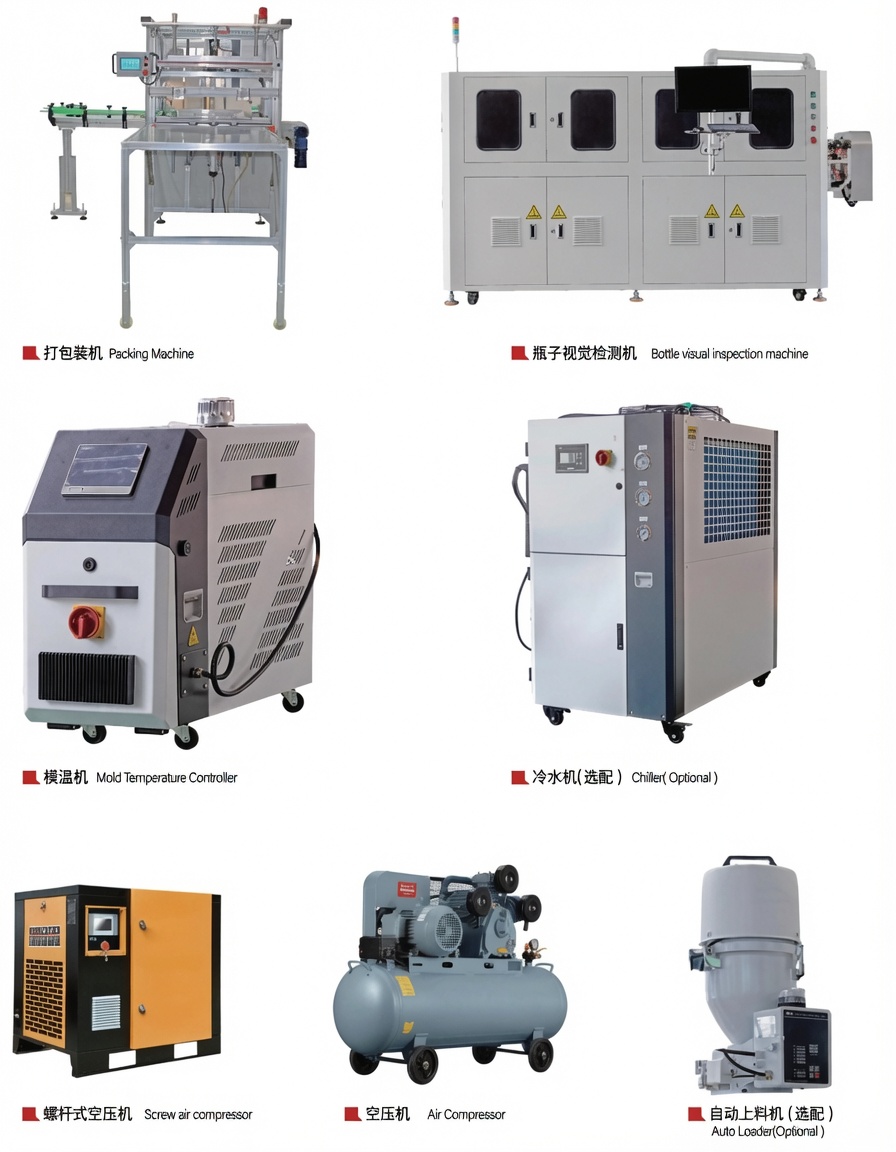
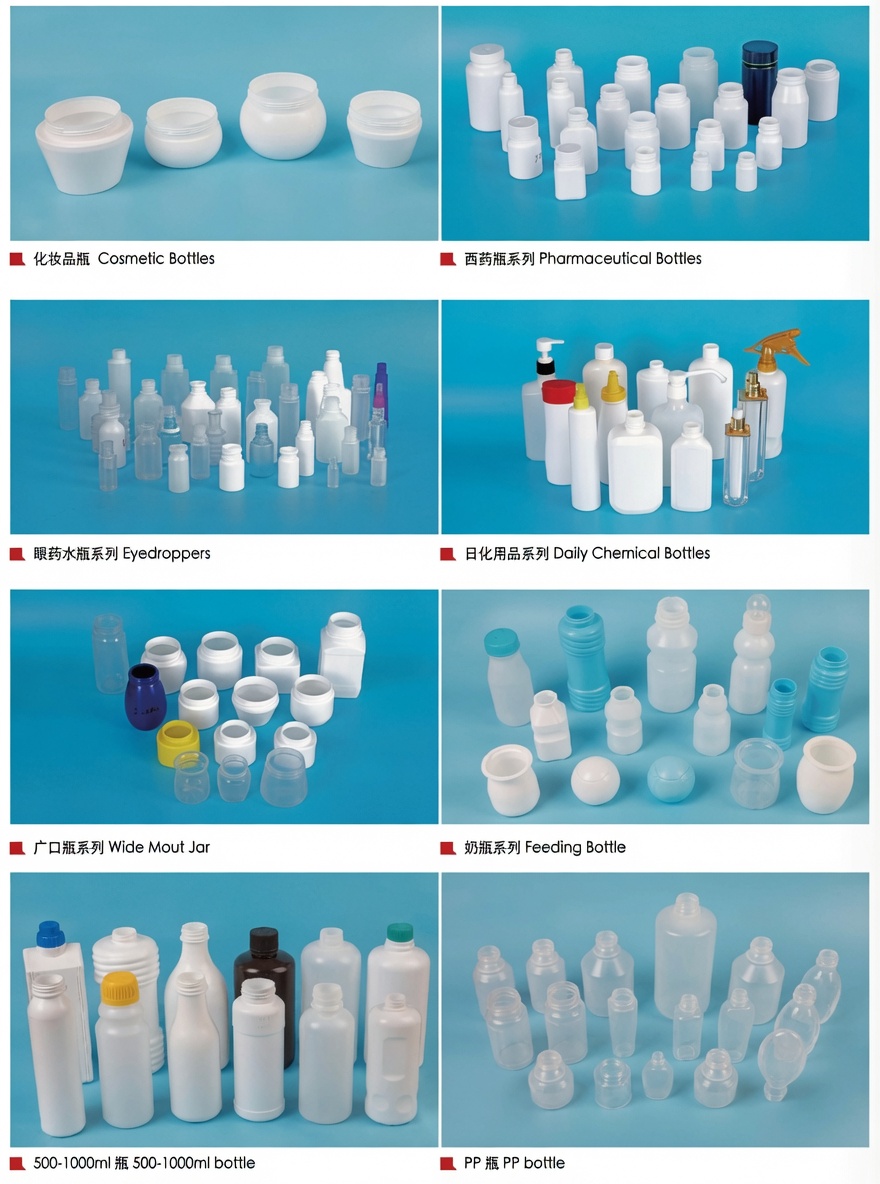
Ever Power: Manufacturing Capability & Customisation
Precision-engineered IBM equipment with deep customisation capability for UK and global B2B clients.
Ever Power operates a vertically integrated manufacturing facility that covers mechanical design, precision machining, assembly, and factory acceptance testing (FAT) under a single roof. The engineering team’s deep familiarity with the polymer processing requirements of both the European pharmaceutical market and the UK automotive chemicals supply chain allows Ever Power to configure injection-blow molding machines at a level of application specificity that standardised catalogue equipment simply cannot match.
Customisation capability at Ever Power extends beyond external aesthetics. Clients from the Birmingham and Coventry automotive sectors have requested machines with modified blow-station cooling circuits to achieve faster cycle times on thick-wall HDPE engine-oil containers. Pharmaceutical packaging specialists in the Thames Valley have worked with Ever Power engineers to specify modified injection-unit barrel geometries optimised for the high-IV PET grades used in multi-layer pharmaceutical closures. In every case, the company’s supply chain infrastructure — including CNC machining centres, EDM wire-cutting equipment, and a dedicated mould-trialling bay — means that custom configurations proceed from specification agreement to first-article production in eight to fourteen weeks, a timeline that competes favourably with European-sourced alternatives that typically require sixteen to twenty-four weeks lead time.
Quality assurance at Ever Power aligns with ISO 9001:2015 procedures, and every machine undergoes a full FAT protocol including cavity-pressure measurement, wall-thickness verification using ultrasonic probes, and cycle-stability trials over a minimum of four continuous hours before shipment is authorised. Documentation packages delivered to UK customers include CE marking compliance dossiers, electrical drawings to BS EN 60204-1, and operating manuals in British English — details that matter to quality managers at UK-regulated manufacturing sites.
Request a Custom Equipment Quote
Share your container specifications, production volume targets, and timeline with our engineering team. We respond within 24 business hours with a detailed feasibility assessment and indicative pricing.
Custom Tooling Design
From single-cavity prototype tools to 24-cavity production sets. In-house CNC and EDM machining. Mould steel certified to customer specification.
Process Configuration
Barrel and screw geometry matched to specific polymer grades. Blow-station cooling circuits tuned per container wall thickness. HMI recipe storage for rapid material changeover.
Supply Chain Reliability
Strategic spare-parts inventory held for all ZQ series models. Air-freight critical components to UK within 48 hours. Dedicated UK-region after-sales engineering support.
Compliance Documentation
CE marking dossiers, UKCA-equivalent declarations, British English manuals, ISO 9001:2015 manufacturing, electrical drawings to BS EN 60204-1.
Birmingham, West Midlands — Automotive Chemical Packaging
Midlands Lubricant Packaging: Upgrading from EBM to IBM with Ever Power ZQ60
A mid-sized automotive lubricant packaging company based in Birmingham, supplying premium motor oil and brake fluid containers to national aftermarket distributors and Tier-2 automotive OEM support programmes, was facing increasing pressure from its customers to reduce container-neck defect rates and improve the compatibility of its HDPE engine-oil bottles with new induction-sealing lines being installed at the customers’ own filling facilities. The company had operated extrusion blow molding equipment for twelve years, but the flash trimming step on its existing lines was generating 6–8% scrap by weight — a significant materials cost — and the neck-finish tolerances achievable on its EBM platform were at the outer limit of what its customers’ induction sealers could reliably accommodate.
After evaluating equipment options at Interplas (Birmingham NEC) and through industry contacts in the West Midlands plastics processing network, the company’s engineering director approached Ever Power to discuss the ZQ60 IBM platform. The key requirement was a machine capable of producing 946 ml and 1 L HDPE engine-oil containers with neck-finish diameter tolerances of ±0.06 mm, output of at least 1,800 containers per hour on an 8-cavity tool, and sufficient build quality to sustain three-shift production five days a week with planned maintenance intervals of no less than 2,000 hours.
Ever Power’s engineering team conducted a two-day application review at the Birmingham site, examining the existing neck-finish specifications against the proposed IBM tooling design and confirming that the servo-hydraulic ZQ60 configuration — with an 8-cavity H13 tool and modified mould-cooling circuit delivering mould surface temperatures of 8–12°C — would meet all dimensional and throughput targets. A custom barrel and screw geometry was specified for the HDPE grade the customer was committed to purchasing through its existing polymer supply agreement, ensuring that melt consistency targets were met without requiring resin reformulation.
Following FAT at Ever Power’s facility and installation by Ever Power engineers at the Birmingham site, the ZQ60 achieved a verified neck-finish tolerance of ±0.048 mm across all 8 cavities during the production validation run — exceeding the ±0.06 mm target. Scrap by weight dropped from the existing 6–8% to under 0.8%, and the induction-seal compatibility issues that had prompted the project were fully resolved. The line’s OEE in the first three months of production settled at 87.4%, against an initial target of 82%. The company subsequently placed an order for a second ZQ60 to expand automotive chemical container capacity for a new coolant-packaging contract it had secured from a Coventry-based chemical blender.
★★★★★
“We spec’d neck tolerances at ±0.06 mm — a tight call for our induction sealers — and the ZQ60 delivered ±0.048 mm in production validation. That margin of confidence completely removed the rework we’d been absorbing for years on our EBM lines. The Ever Power engineers understood what we needed before we’d finished explaining it.”
Engineering Director, Automotive Lubricant Packager — Birmingham, West Midlands
★★★★★
“Scrap going from 7% to below 1% pays for itself in material cost alone inside eighteen months at the volumes we run. But the real value was winning the Coventry coolant contract — we couldn’t have quoted that with our old EBM output quality. The ZQ60 gave us the credentials to compete for that business.”
Operations Manager, Same Birmingham Facility
★★★★★
“Ever Power’s support team had critical spare parts air-freighted to Birmingham within 36 hours of a request during our first month of production. That response capability — knowing they can get components to us fast — is part of why we didn’t hesitate when it came to ordering the second machine.”
Maintenance Lead, Automotive Chemicals Packaging — Birmingham
Frequently Asked Questions
How much does an injection-blow molding machine typically cost for a UK manufacturer looking to enter automotive chemical container production?+
The price of an injection-blow molding machine for automotive chemical container production in the UK typically ranges from £85,000 to £280,000 ex-works, depending on clamp force, cavity count, automation level, and tooling included. The Ever Power ZQ40 and ZQ60 series represent strong mid-range value with European-standard build quality. To receive an accurate quote reflecting your specific container specification, production volume, and site requirements, we recommend contacting our team directly at [email protected] with your target container dimensions and annual volume figures.
Which injection-blow molding machine supplier in the UK or with UK delivery capability can produce HDPE brake fluid containers to DOT 4 specification?+
Ever Power’s ZQ series injection-blow molding machines are configured to process the HDPE grades most commonly specified for DOT 3 and DOT 4 brake fluid containers, including UN-certified packaging chemically resistant to glycol ether-based brake fluids. Our machines deliver the ±0.05 mm neck-finish tolerance required for compatible induction-seal closures — a critical safety feature on brake fluid packaging. Equipment is shipped to UK sites with full CE/UKCA documentation and British English operating manuals. Contact [email protected] to discuss your specific DOT container specification.
What is the difference between injection-blow molding and extrusion blow molding when choosing equipment for pharmaceutical packaging in Birmingham or Sheffield?+
The primary distinction relevant to pharmaceutical manufacturers is neck-finish precision and flash elimination. Injection-blow molding forms the neck in the injection stage to tolerances of ±0.05 mm and produces no flash, which is critical for child-resistant closure compatibility and MHRA-regulated clean production environments. Extrusion blow molding generates flash on every container that requires secondary trimming — introducing a contamination risk and an additional process cost. For pharmaceutical manufacturers in Birmingham or Sheffield operating under UK GMP requirements, IBM is the more appropriate process choice for narrow-neck oral liquid, ophthalmic, and CRC container applications.
Where can I get a competitive price quote for a custom injection-blow molding machine capable of producing automotive coolant and antifreeze containers for UK distribution?+
Ever Power provides competitive custom quotations for injection-blow molding machines configured for coolant and antifreeze container production in HDPE and HDPE/EVOH coextrusion profiles. To receive a price and lead-time quotation, send your container drawing (or dimensional specification), target annual output volume, resin grade, and preferred cavity count to [email protected]. Our engineering team responds within one business day with an initial assessment and indicative pricing for the most appropriate ZQ series configuration.
How long does it take to receive and commission an injection-blow molding machine from an overseas supplier when the production site is in the UK Midlands?+
For Ever Power ZQ series machines with standard tooling, the typical timeline from order confirmation to commissioned production in the UK Midlands is twelve to sixteen weeks: eight to twelve weeks for machine build and FAT at our facility, plus two to four weeks for sea freight, customs clearance at Felixstowe or Southampton, road delivery to site, and installation commissioning by Ever Power engineers. Custom tooling may add two to four weeks to the build phase. Our team supports UK customers through the import documentation process and coordinates with preferred UK freight forwarders to minimise site disruption.
Which polymer materials work best in an injection-blow molding machine when producing motor oil containers that need to meet UN packaging certification for UK road haulage?+
HDPE is the standard material choice for UN-certified motor oil containers produced on injection-blow molding machines, with a melt flow index of 0.3–0.8 g/10 min (190°C/2.16 kg) producing the optimal combination of wall strength, chemical resistance, and processability in the IBM injection stage. For UK road haulage compliance under ADR and the UK’s Carriage of Dangerous Goods regulations, HDPE IBM containers are type-tested to UN standard 3H1 (solid plastics with inner liner), covering the drop, stack, and hydraulic pressure requirements. Ever Power can specify machine parameters and tooling geometry specifically for UN-certified HDPE container production on request.
Who should I contact at Ever Power to get technical support or a service engineer for an injection-blow molding machine operating at a manufacturing plant in the West Midlands or Yorkshire?+
Ever Power’s after-sales support for UK customers is coordinated directly through the sales and technical team at [email protected]. For urgent production issues, remote diagnostic support via our HMI remote-access system is available within four business hours. For site visits, Ever Power dispatches engineers to UK Midlands and Yorkshire sites with critical spare parts pre-shipped to minimise downtime. A comprehensive UK-region spare-parts inventory — covering injection barrels, core rods, blow-station seals, and HMI components — is maintained and available for air-freight delivery within 36 to 48 hours of a confirmed order.
Ever Power Industrial Equipment
Ready to Specify Your Injection-Blow Molding Machine?
Send your container drawing, volume target, and material specification to our engineering team for a custom quote. UK delivery, full CE/UKCA documentation, and ongoing technical support included as standard.
edit by gzl