📅 Updated 2025
🕐 15-min Technical Read
🇬🇧 UK Edition
Why Preform Quality Defines Everything in One-Step ISBM
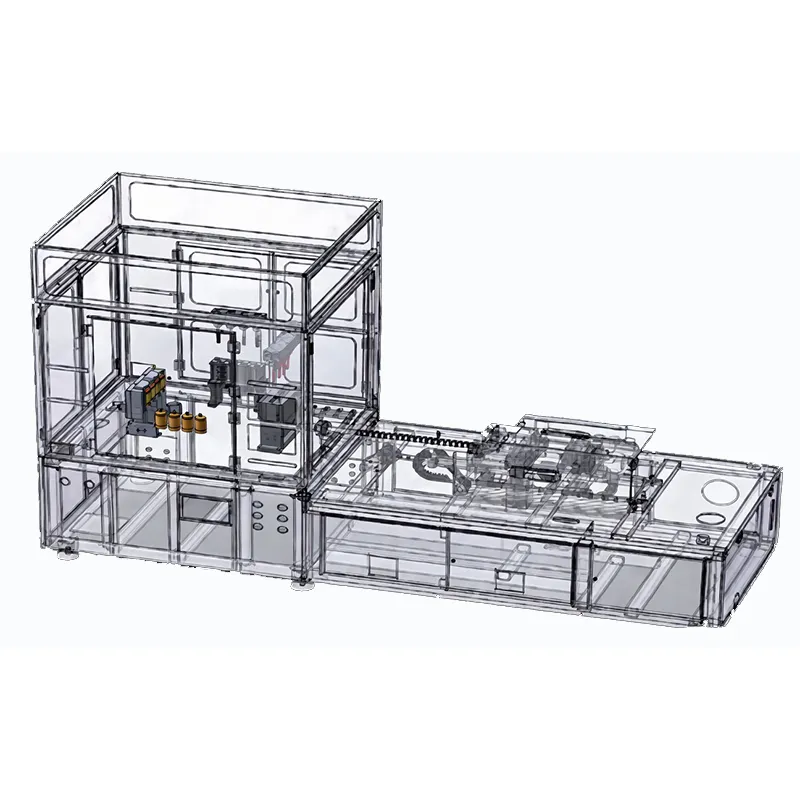 In modern packaging manufacturing, the difference between a competitive operation and a struggling one often comes down to a single stage: preform quality. The ISBM one-step blow molding machine has transformed plastic bottle production across the United Kingdom — from beverage facilities operating in Birmingham and Leeds to pharmaceutical packagers working under regulated conditions in Cheshire and Hertfordshire — precisely because it integrates injection moulding, preform conditioning, and blow moulding into a seamless, thermally continuous production cycle. There are no preform stockpiles, no reheating energy overhead, and no inter-stage contamination risk. What the machine injects is what it blows — and if the injection preform carries a defect, that defect is amplified, not absorbed, when the material is biaxially stretched under blow pressure.
This is the operational reality that production engineers at one-step ISBM facilities know intimately. A wall thickness variation of just 0.15 mm in the preform can translate into a 40% difference in blow distribution across the finished bottle. A cold spot measuring 4°C below the optimal stretch temperature creates a visible stress-whitening patch that renders the container commercially non-conforming. A gate vestige that exceeds tolerance by a fraction of a millimetre disrupts the blow core pin seating and generates a cascade of dimensional failures across an entire production run. These are not theoretical risks — they are the practical realities shaping quality outcomes at one-step ISBM installations throughout the UK and globally.
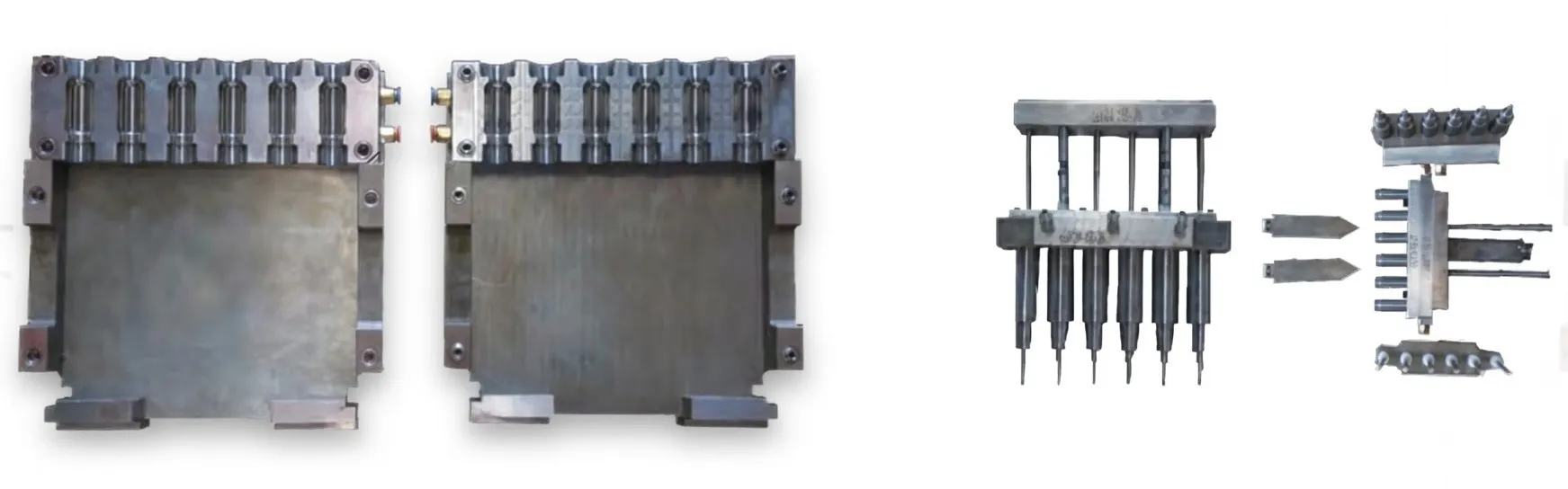
This guide provides a structured, evidence-based approach to diagnosing and resolving the most commonly encountered injection preform issues in one-step ISBM blow molding operations. It draws on material science fundamentals, machine parameter dynamics, and real-world process experience to give production engineers the diagnostic framework needed to identify root causes — not merely symptoms — and implement corrective actions that hold. Whether you are managing a two-cavity ISBM system at a regional filling plant in Sheffield or overseeing a six-cavity pharmaceutical packaging line in Cambridge, the principles covered here are directly applicable.
The Thermal Architecture of One-Step ISBM: Where Preform Defects Begin
To troubleshoot preform defects effectively, it is essential to understand the thermal architecture of the one-step ISBM process. Unlike two-step systems — where a separate injection press and an independent reheat-blow machine operate as disconnected units — the one-step ISBM machine manages the entire production cycle within a single integrated thermal envelope. Granular resin, typically dried PET but also PP and HDPE, is fed into the plasticising barrel, melted at 265–290°C depending on grade and IV, and injected under high pressure into a precision-machined preform cavity polished to a surface finish of Ra ≤ 0.05 μm.
After cavity fill, initial cooling brings the preform skin to a handleable temperature. The preform is then transferred — without fully cooling to ambient — to the conditioning station. Here, infrared heaters or direct-contact heating elements bring the preform body to the target stretch window, typically 85–110°C for standard bottle-grade PET, while the neck finish is held below 60°C to prevent crystallisation or distortion of the thread geometry. This conditioned preform then transfers immediately to the blow station, where a stretch rod extends axially while blow air (8–40 bar) inflates the material radially into the mould cavity to produce the finished container.
This thermal continuity is the one-step ISBM machine’s greatest engineering strength — and its most sensitive variable. Because every temperature deviation introduced at the injection stage carries directly into the conditioning and blow stages, effective troubleshooting demands a chain-of-causation perspective. You cannot resolve a blow-stage defect without first eliminating injection-stage origins, and you cannot reliably diagnose injection-stage problems without understanding how they propagate through the full thermal cycle.
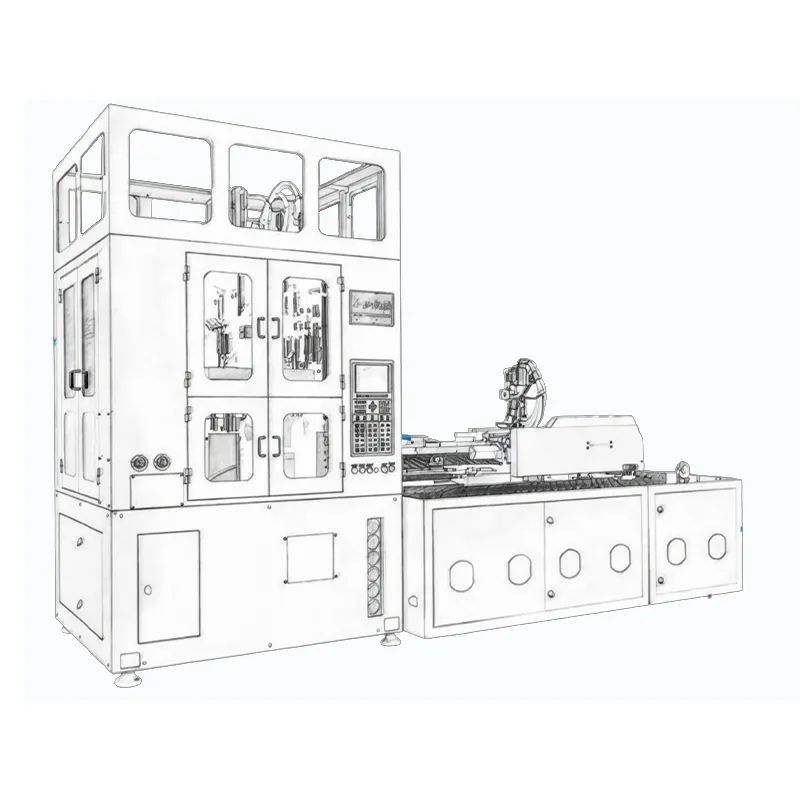
Six Critical Preform Defects: Root Causes and Targeted Solutions
These six defect categories account for over 85% of quality rejections reported in one-step ISBM operations across the UK manufacturing sector.
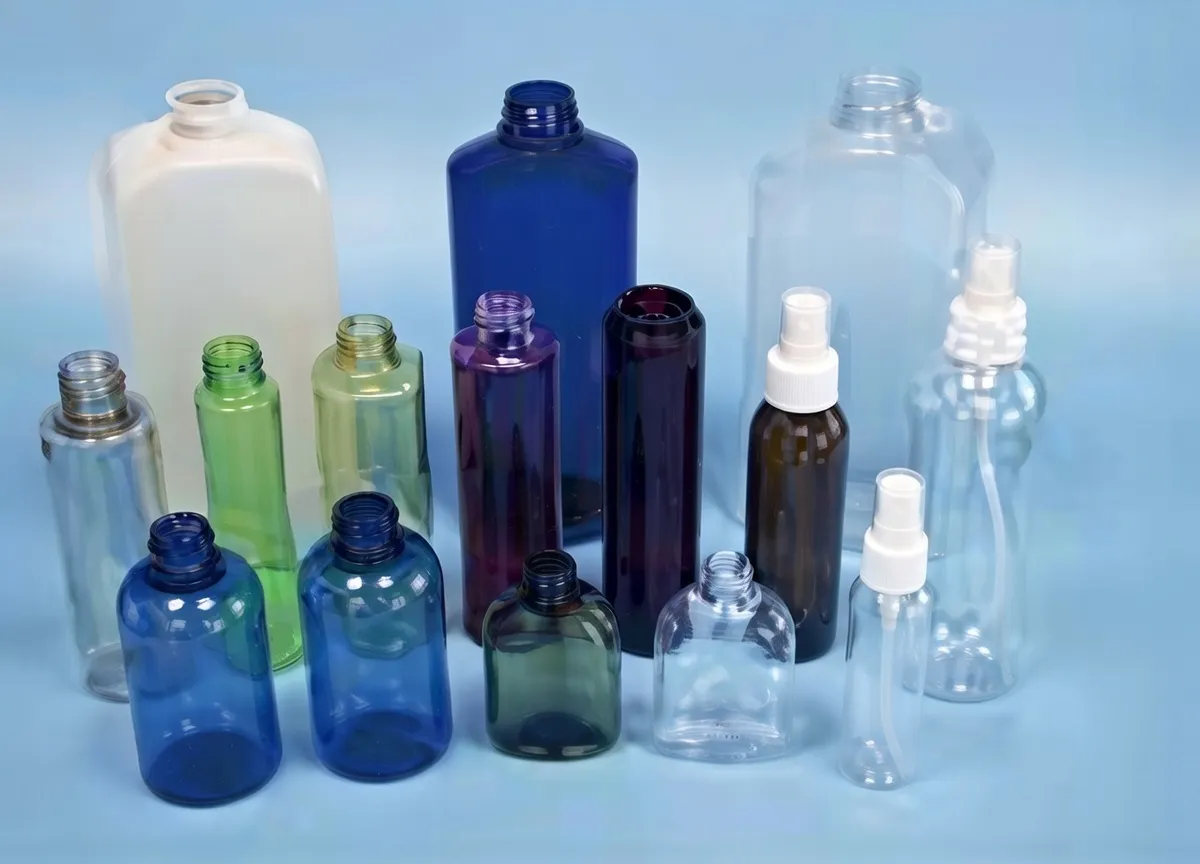
Wall Thickness Inconsistency
Wall thickness inconsistency is among the most frequently reported preform defects in UK and global ISBM operations. When one side of the preform is measurably thicker than the opposite wall, the thinner zone stretches disproportionately at the blow station — producing a finished bottle with a visible distribution asymmetry. In severe cases, the over-stretched zone fails entirely under blow pressure, causing a blow-out that halts production and wastes a full shot of material. The diagnostic approach begins with methodical measurement: ultrasonic wall thickness gauging at four equidistant circumferential points and two axial levels on preforms sampled from each individual cavity. A consistent directional pattern — always thin on the same side — strongly implicates a thermal or flow asymmetry specific to that cavity or its hot runner delivery channel. A random, non-directional pattern across all cavities typically points to material-level contamination, batch-to-batch IV variation in the incoming resin, or a screw wear issue causing inconsistent shot delivery.
- Hot runner manifold temperature imbalance (±5°C or greater across cavities)
- Blocked or limescale-fouled cooling channels — prevalent in hard-water regions such as the West Midlands and Yorkshire
- Turbulent melt flow from worn nozzle or sprue geometry
- Worn cavity steel affecting localised thermal distribution
- Recalibrate hot runner zones to ±2°C across all cavities
- Verify cooling water flow rate: minimum 4 L/min per circuit
- Chemical descale cooling channels — especially important in hard-water supply areas
- Weigh sequential preforms: >0.3% shot weight deviation between cavities flags an imbalance before visible wall defects develop
PET Crystallisation and Preform Hazing
PET crystallisation in the preform body is one of the most commercially damaging defects encountered in ISBM one-step blow molding. Crystallised preforms are visually distinctive — shifting from water-clear transparency to a milky or cloudy white appearance — and are structurally compromised, with dramatically reduced stretchability in the affected zones. Attempting to blow-mould a crystallised preform produces bottles with opaque patches, uneven base wall thickness, and structural weakness at the crystallised boundaries. These are typically non-reworkable rejects with zero salvage value.
The thermal mechanism is well understood. PET crystallises rapidly when held in the temperature range of 120–180°C for any significant duration. In one-step ISBM processing, this danger window is most likely to be breached when the melt temperature is set too high (causing thermal degradation at the surface and increasing crystallisation nucleation rate), the cooling hold time is too short (the preform leaves the cavity still above 80°C), or the conditioning heater power is incorrectly profiled, creating hot spots that push localised zones past the crystallisation onset. The most reliable diagnostic indicator — beyond visual inspection — is measuring intrinsic viscosity (IV). A drop below 0.72 dl/g in bottle-grade PET confirms that thermal degradation has shortened the molecular chain length and raised the crystallisation tendency significantly. UK processors should require IV certificates from their resin suppliers and track lot-to-lot variation as a standard incoming quality control procedure.
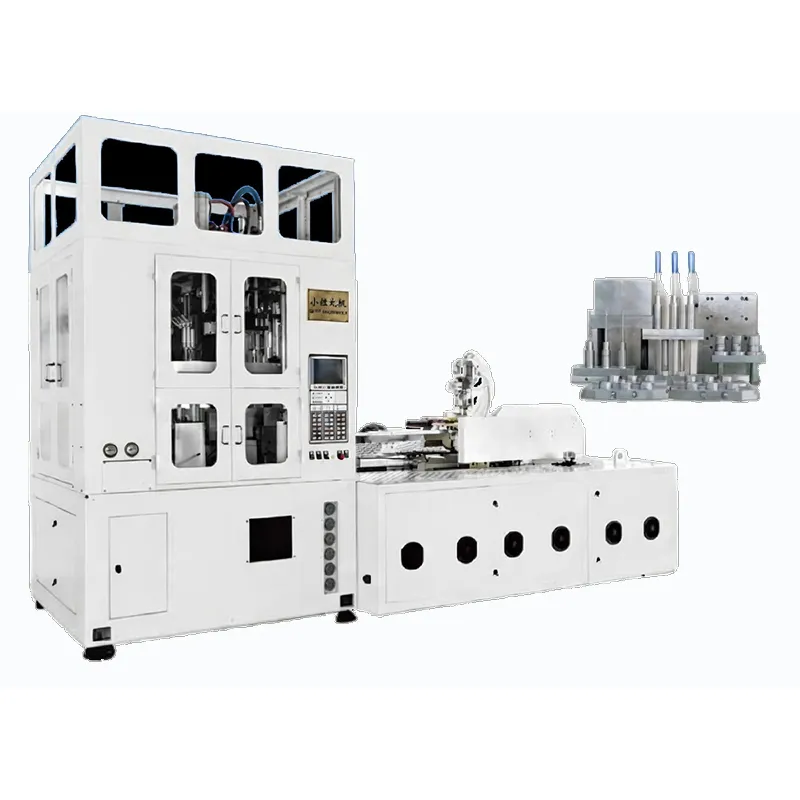
Gate Vestige, Gate Marks and Stringing
The injection gate is geometrically the most complex and thermally the most demanding zone of the ISBM preform tool. Gate vestige — the small nub or scar remaining at the closed base end of the preform after the hot runner tip retracts — is acceptable within tight tolerances (typically 0.3–0.5 mm maximum protrusion) but becomes a serious operational problem when it extends beyond the specified limit, sits off-centre relative to the preform axis, or is accompanied by stringing. Stringing refers to fine filaments of molten polymer that trail from the gate tip back into the cavity after each shot, introducing contamination, partially blocking cavity vents, and causing short shots in adjacent cavities in a multi-cavity ISBM tool.
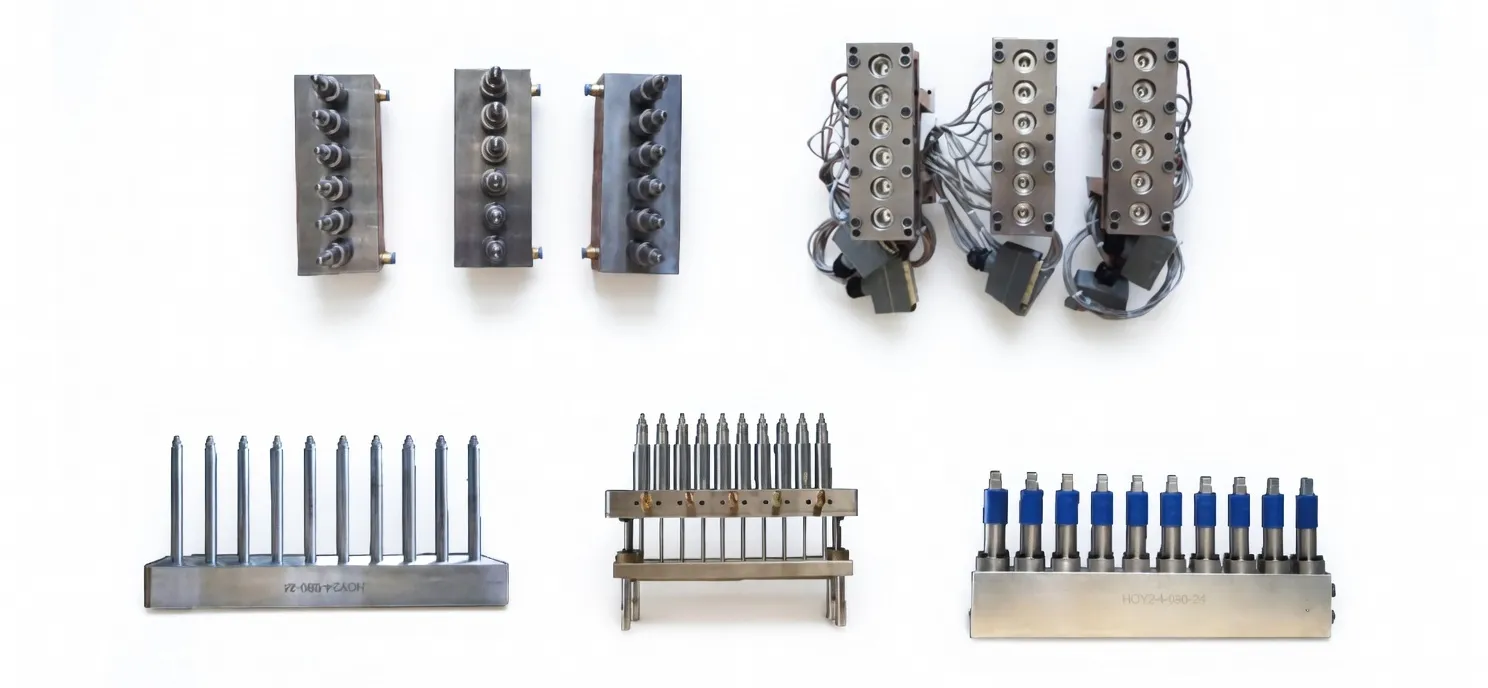
An oversized gate vestige disrupts the critical blow core pin seating at the conditioning station — the pin tip contacts the vestige nub rather than the preform base surface, tilting the preform off-axis. As it rotates under the conditioning heaters in a misaligned position, it develops an asymmetric temperature profile, which produces a bottle with uneven wall distribution and, in severe cases, a localised blow-out at the thinnest zone. The diagnostic approach involves precise dimensional measurement of the vestige height using a calibrated optical comparator or contact gauge, followed by systematic hot runner tip temperature adjustment in 1°C increments.
Adjust tip temperature in 1°C steps while monitoring gate freeze time. Target clean gate separation with zero stringing and vestige height within the tool specification. For valve-gated tools, verify needle close timing against hydraulic actuation response — a delayed closure allows post-hold drool.
Increase the suck-back (decompression) stroke on the injection screw by 0.5 mm increments to prevent post-injection drool. Monitor closely for silver streaks — excessive suck-back draws air into the melt front, creating surface defects in the preform wall that become visible after blowing.
Inspect gate tip bore diameter and land length under a 20× magnifying scope. Worn tips (bore ovality beyond ±0.02 mm) or eroded land geometry are primary causes of erratic gating. Schedule tip replacement intervals based on shot count, not calendar time — high-output ISBM machines can complete over 3 million cycles per year.
Polymer threads from stringing accumulate in cavity vents (standard clearance 0.012–0.015 mm), compressing air ahead of the melt front and contributing to short shots and burn marks. Ultrasonically clean vents at scheduled intervals; inspect with a feeler gauge after every 200,000 cycles in high-output ISBM production.
Sink Marks and Surface Depressions
Sink marks present as localised depressions on the outer surface of the preform, most visible at thicker cross-sections: the neck support ring, the base dome transition zone, or any wall area where a section change creates a differential in cooling rate. The underlying mechanism is volumetric shrinkage — as the outer skin solidifies against the cooled mould wall, the still-molten interior material contracts and pulls the solidified surface inward if holding pressure is insufficient to compensate for the volume change. In the context of one-step ISBM blow molding, sink marks at the preform base dome create a localised thin wall after stretch-blowing that weakens the bottle base — a critical failure point for CSD (carbonated soft drink) containers under fill pressure. For UK beverage manufacturers producing own-label carbonated drinks for major supermarket chains, a base failure rate above 0.1% is typically sufficient to trigger a supplier quality audit.
The corrective protocol follows a clear sequence: increase holding pressure in 5% increments, verify preform weight stability across a 50-shot sample (target: weight variation below 0.3%), and extend hold time in 0.2-second steps. The gate freeze test — cutting the gate early and monitoring for backflow — confirms that the gate has sealed before the end of the hold phase. Over-packing must be avoided; excessive hold pressure introduces residual stress that manifests as whitening during the subsequent stretch-blow stage, trading one defect for another.
Short Shots and Incomplete Preform Fill
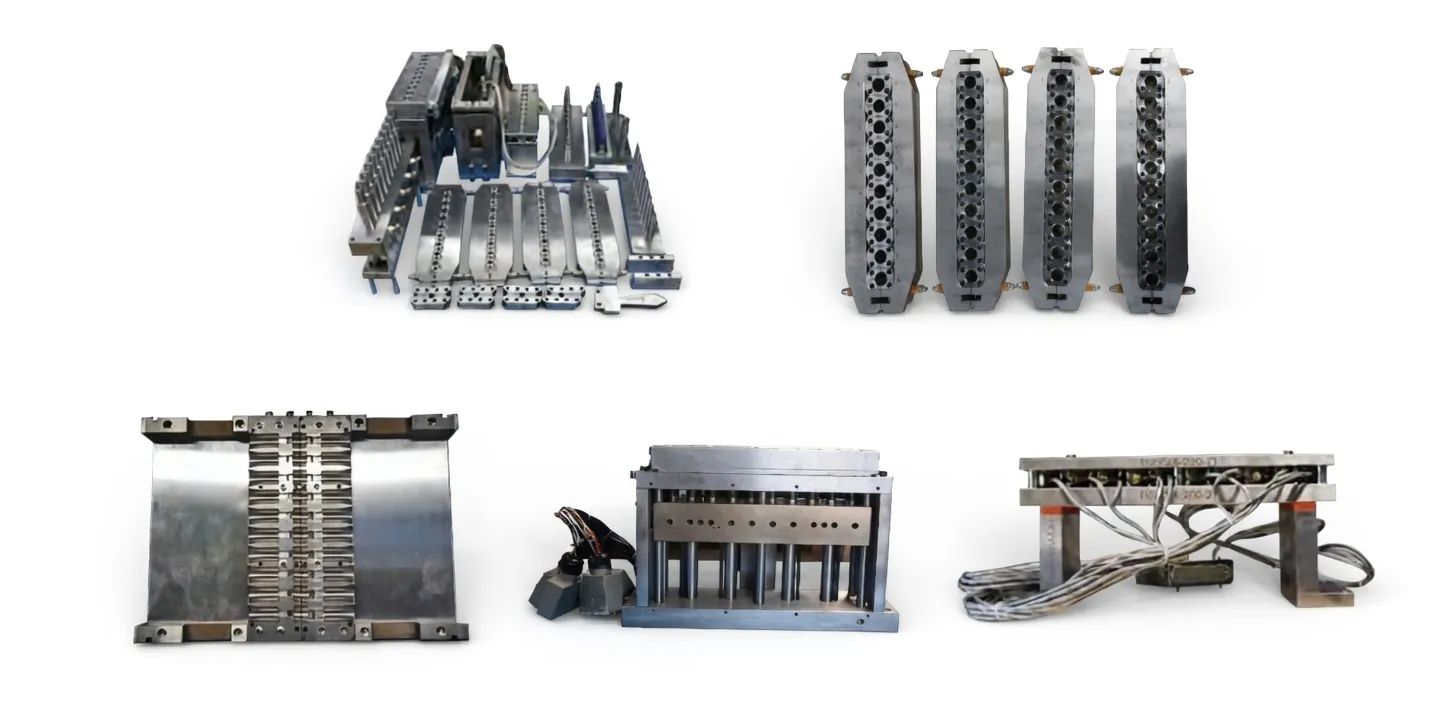
A short shot produces a preform that is incompletely filled — lacking material at the closed base end or presenting a thin, underpacked membrane where a fully formed dome should be. In a multi-cavity ISBM tool, short shots that affect one specific cavity consistently but not others are almost invariably a hot runner flow imbalance, addressed by individual needle valve adjustment or zone temperature correction. Short shots appearing randomly across all cavities typically indicate an inadequate cushion position, a worn non-return valve permitting backflow, or — particularly relevant for UK processors sourcing material through importers — a batch with an unexpectedly high melt flow index (MFI) that reduces fill resistance below the established machine parameters, causing inconsistent fill across the entire shot.
Verify cushion position is 3–8 mm. A cushion reading near zero indicates backflow through a worn non-return valve assembly; replace the screw tip and check ring.
Check cavity vent clearance with a 0.012 mm feeler gauge. Blocked vents compress air ahead of the melt front, resisting complete fill and causing burn marks at the preform base.
Confirm incoming resin MFI against the established specification. Adjust injection speed and transfer position downward for higher-MFI batches to maintain consistent cavity fill balance.
Stress Whitening at the Blow Stage
Stress whitening manifests as opaque white patches — most commonly at the shoulder, the base dome periphery, or the gate point area — when the preform material is stretched beyond its molecular orientation limit before reaching a thermally homogeneous, amorphous condition. While this defect expresses itself at the blow station, its root cause almost always originates at the injection or conditioning stage, making it a classic “downstream symptom of an upstream cause” in the ISBM troubleshooting framework. A cold spot in the preform body — a zone falling even 4–6°C below the target stretch window — will resist biaxial orientation and instead micro-void under blow pressure, scattering light and appearing opaque white.
The diagnostic protocol is systematic: audit the conditioning zone temperature profile using a calibrated IR thermometer or contact pyrometer immediately before preform transfer to the blow mould. Map the temperature at five axial positions across the preform body and identify any zones falling below 83°C for standard bottle-grade PET. Adjust the conditioning power in the affected zone by 5–8% increments and re-audit after a 10-minute thermal stabilisation period. In multi-zone IR conditioning systems, a power difference of just 3% between adjacent zones can generate temperature gradients large enough to produce visible whitening on a high-stretch-ratio bottle. Neck finish geometry cooling failures — where overcooled neck finish zones conduct heat away from adjacent body zones — can also produce cold spots that resist orientation. Verify neck cooling is not excessive.
Resin Selection and Its Direct Impact on Preform Quality
Resin selection is arguably as consequential as machine setup when it comes to preform consistency in one-step ISBM blow molding. The majority of UK ISBM operations run on polyethylene terephthalate (PET), with the remainder divided between polypropylene (PP), high-density polyethylene (HDPE), and, for specialist pharmaceutical or diagnostics applications, cyclic olefin copolymer (COC). For PET — the material of choice for water, CSD, edible oil, and sauce packaging — the critical incoming quality parameter is intrinsic viscosity. Bottle-grade PET runs from IV 0.72 to 0.85 dl/g. Lower IV grades inject more freely but stretch less predictably; higher IV grades deliver superior mechanical performance and barrier properties but require elevated barrel temperatures and longer residence times, increasing the risk of thermal degradation and the associated crystallisation tendency.
Moisture content is equally critical. PET is strongly hygroscopic and must be dried to below 30 ppm before processing. Any residual moisture above this threshold hydrolyses the polymer chains during injection — lowering IV, generating silver streaks, and producing gas bubbles within the preform wall that become visible as cloudy voids after blowing. For UK processors whose storage facilities are subject to the country’s characteristically humid climate, desiccant drying with hopper inlet air dew points of −40°C or lower is considered best practice rather than an optional enhancement.
| Property | PET | PP (RCP) | HDPE |
|---|---|---|---|
| Density (g/cm³) | 1.34 | 0.91 | 0.95 |
| Melt Temp (°C) | 265–290 | 220–250 | 200–240 |
| Stretch Temp (°C) | 85–110 | 130–165 | 120–150 |
| Drying Req. (ppm) | < 30 | Not req. | Not req. |
| Barrier Properties | Excellent | Good | Very Good |
UK facilities storing PET in unheated warehouses during autumn and winter months commonly report elevated moisture uptake. Investing in a dedicated desiccant dryer with closed-loop dew point monitoring at −40°C inlet is strongly recommended for year-round consistency.
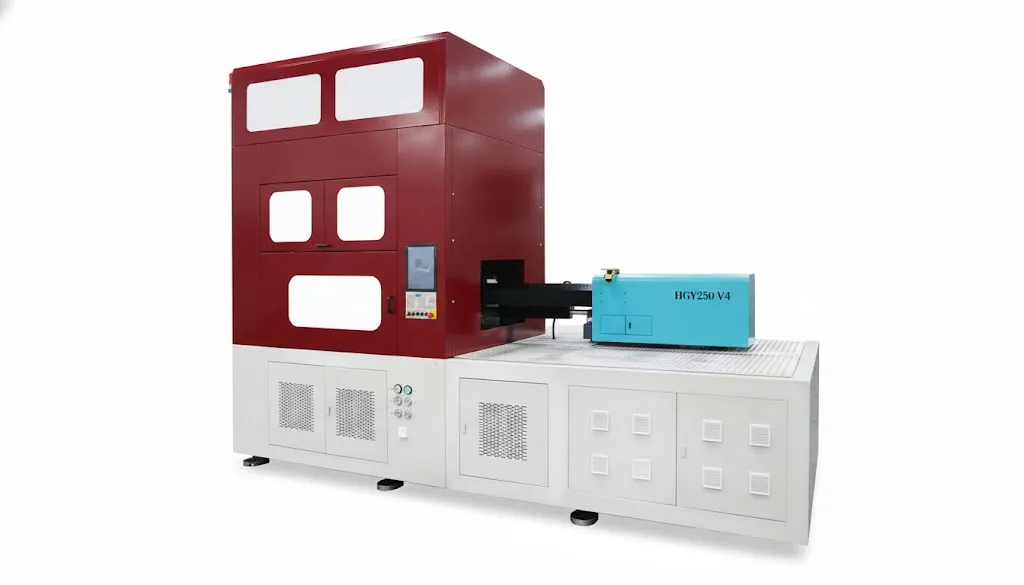
Core Technical Advantages of One-Step ISBM Technology
Why manufacturers across Birmingham, Sheffield, and Manchester choose ISBM over two-step systems
By utilising the residual heat from the injection stage directly in the conditioning and blow stages, one-step ISBM machines eliminate the energy overhead of a separate preform reheat cycle, cutting energy consumption by 18–25% compared to two-step systems for equivalent output.
Because the neck finish is formed in the injection mould and never reheated, one-step ISBM machines consistently achieve tighter dimensional tolerances on thread pitch, outer diameter, and thread height than reheat-blow processes — critical for capping line efficiency at high-speed UK filling operations.
A single integrated ISBM machine occupies significantly less floor space than the combined footprint of a separate injection press, preform storage system, and reheat-blow line. For UK manufacturers in older industrial facilities — particularly in Sheffield’s Don Valley or Birmingham’s industrial estates — this footprint advantage is commercially decisive.
The closed, continuous process of an ISBM machine eliminates the intermediate preform handling, storage, and transport steps where airborne contamination, scratching, and UV exposure can degrade preform quality. This is particularly valuable for food-contact and pharmaceutical packaging applications regulated under UK BRC and BS EN standards.
One-step ISBM machines can produce complex container geometries — including oval bottles, handled containers, and asymmetric decorative shapes — that are difficult or impossible to achieve on reheat-blow systems because the preform geometry is designed specifically for the final container shape.
A single ISBM machine platform can produce containers from 10 ml pharmaceutical droppers to 5,000 ml catering-size bottles through tooling changes alone, without requiring a different base machine. This versatility is particularly valuable for contract packaging manufacturers serving diverse UK retail and pharmaceutical clients from a single production line.
Technical Performance and Specification Data
Ever Power ISBM one-step blow molding machine series — standard platform specifications
| Parameter | HGY-250 | HGY-500 | HGY-1000 |
|---|---|---|---|
| Number of Cavities | 1 – 2 | 2 – 4 | 4 – 6 |
| Container Volume Range | 10 – 600 ml | 50 – 1,500 ml | 100 – 2,500 ml |
| Preform Weight Range | 5 – 120 g | 10 – 280 g | 20 – 500 g |
| Clamping Force | 250 kN | 500 kN | 1,000 kN |
| Injection Capacity | 120 cm³ | 280 cm³ | 500 cm³ |
| Blow Pressure Range | 8 – 40 bar | 8 – 40 bar | 10 – 40 bar |
| Cycle Time | 8 – 15 s | 10 – 18 s | 12 – 22 s |
| Plasticising Temperature | 240 – 300°C | 240 – 300°C | 240 – 300°C |
| Temperature Control Zones | 4 zones | 6 zones | 8 zones |
| Cooling Water Flow | ≥ 4 L/min | ≥ 6 L/min | ≥ 10 L/min |
| Power Consumption | 15 kW | 25 kW | 40 kW |
| Machine Footprint (L × W) | 3.2 × 1.8 m | 4.0 × 2.2 m | 5.2 × 2.6 m |
| Cavity Steel Grade | P20 / H13 | P20 / H13 | H13 / S136 |
| Surface Hardness (HRC) | 50 – 54 | 50 – 54 | 52 – 56 |
| Cavity Surface Finish | Ra ≤ 0.05 µm | Ra ≤ 0.05 µm | Ra ≤ 0.04 µm |
| Compatible Resins | PET, PP | PET, PP, HDPE | PET, PP, HDPE, COC |
* Specifications subject to customisation. Contact Ever Power for application-specific configurations. All dimensions and performance values are nominal; actual figures may vary with tooling, resin grade, and operating conditions.
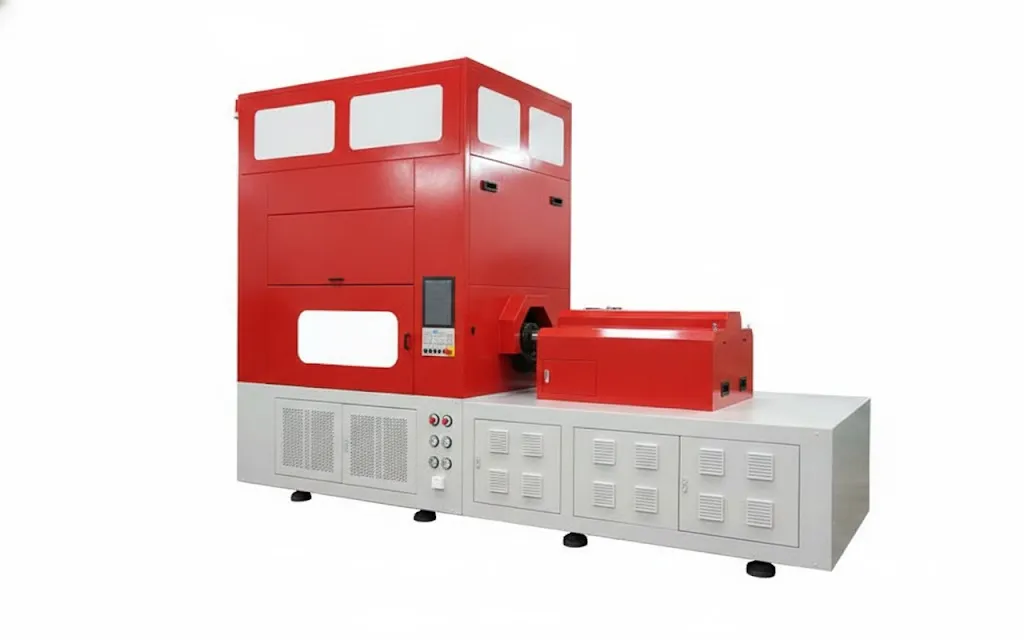
Industrial Applications Across the UK Manufacturing Sector
The packaging manufacturing sector in the United Kingdom represents one of the most technically demanding markets for one-step ISBM blow molding equipment in Europe. From the food and beverage processing plants clustered around Sheffield and the wider Humber region to the pharmaceutical packaging facilities operating under MHRA and BS EN 15223 compliance frameworks in the South East, UK manufacturers consistently demand higher output consistency, tighter dimensional tolerance, and greater container geometry flexibility than comparable markets elsewhere.
Food and beverage packaging is the dominant application segment in the UK. PET bottles for mineral water, carbonated soft drinks, edible oils, sauces, and condiments are produced in enormous quantities at facilities throughout Birmingham’s manufacturing corridor, in and around Leeds and Bradford’s packaging industry cluster, and across Manchester’s extensive FMCG supply chain. In these operations, the one-step ISBM process delivers a decisive advantage over two-step systems by eliminating the preform storage, transport, and reheat stages where contamination risk accumulates. This is particularly relevant under the UK’s post-Brexit food safety framework, which has maintained — and in some respects tightened — the hygiene requirements for food-contact plastic packaging.
Water, CSD, oils, sauces, condiments — facilities in Birmingham, Leeds, Manchester, and Sheffield
Ophthalmic, oral liquids, diagnostics — Cheshire, Cambridgeshire, Hertfordshire facilities
Shampoo, body care, skincare — Greater London, Bristol, and North East packaging specialists
Lubricants, agricultural chemicals, cleaning products — HDPE bottles for industrial end-use across UK distribution networks
Ever Power: Manufacturing Precision Behind Every ISBM Machine
Over two decades of specialised ISBM development, precision manufacturing, and global supply capability
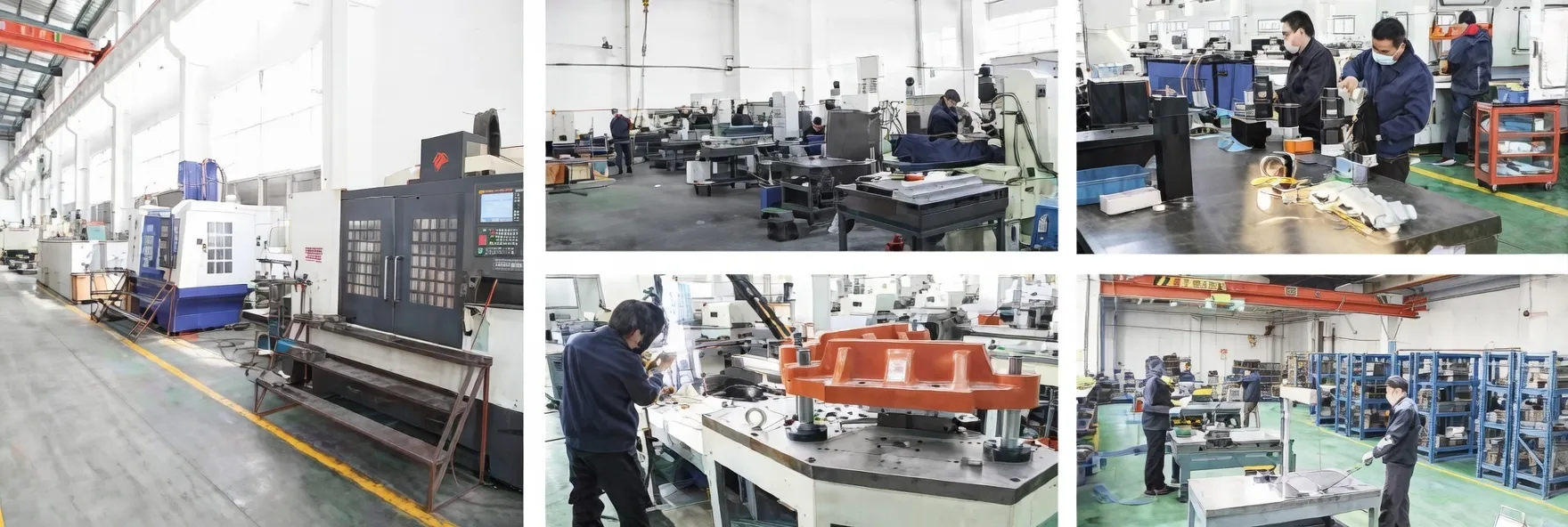
At the core of a high-performance ISBM one-step blow molding machine lies precision manufacturing — and this is precisely where Ever Power has built its global reputation over more than two decades of specialised engineering development. The Ever Power production facility operates a fully integrated manufacturing workflow, from raw material selection and five-axis CNC machining through vacuum heat treatment, precision surface grinding, and final machine assembly. Every ISBM machine dispatched from the Ever Power factory has passed a comprehensive pre-shipment quality validation protocol: CMM dimensional inspection, hydraulic pressure testing to 1.5× working pressure, melt flow analysis across all injection zones, and a minimum 72-hour continuous production run to verify output consistency before crating for international freight.
What genuinely distinguishes Ever Power in the competitive ISBM machine market is the depth and flexibility of its customisation capability. The in-house engineering team works directly with each client to develop container-specific preform tooling, hot runner manifold configurations, blow mould designs, and conditioning station profiles that are fully optimised for the target container, resin, and output rate. Whether a packaging manufacturer in Sheffield needs a four-cavity ISBM system for a narrow-neck mineral water bottle family, or a pharmaceutical packager in Cheshire requires a six-cavity machine with integrated in-line vision inspection for ophthalmic containers, Ever Power has the engineering expertise and precision manufacturing resource to deliver a solution that meets application requirements rather than offering a standard platform that the client must adapt to.
Ever Power’s supply chain is built for reliability in demanding B2B markets. Certified raw materials, traceable component sourcing, and a dedicated UK and European service network — including remote diagnostic access for commissioning support and rapid spare part dispatch — ensure that clients from Birmingham to Glasgow can achieve and maintain the process stability their production targets demand. For UK manufacturers evaluating a new ISBM investment or upgrading an existing line, Ever Power offers application engineering consultations, preform design reviews, and full production trials before purchase commitment.
From 7% Rejection to Sub-1%: A Sheffield Beverage Packager’s Journey
Sheffield, South Yorkshire — Food and Beverage Packaging Sector
A mid-sized beverage and condiment packaging manufacturer based in Sheffield, South Yorkshire, was operating a two-step system — a standalone preform injection press feeding into a separate reheat-blow line — to produce 100 ml to 500 ml PET bottles for edible oil and sauce brands supplied to regional UK supermarket chains. Persistent stress-whitening defects at the blow station were generating a rejection rate of 7.2%, substantially exceeding the 1.5% threshold specified in their customer quality agreements. Preform inventory management was creating floor space constraints, and the separate reheat cycle was adding an estimated £18,000 per year in energy cost at then-current UK industrial electricity rates. The production team had made successive adjustments to the reheat oven profiles but without access to the original injection stage parameters, root cause resolution was elusive.
Following an application engineering consultation with Ever Power’s technical team, the facility invested in a six-cavity HGY-500 ISBM one-step blow molding machine, configured specifically for the 28 mm neck finish PET bottles across their three primary container sizes. The integrated tooling package included a six-cavity balanced hot runner manifold with ±1.5°C zone control, individual cooling channel maps designed for each of the three bottle geometries, a real-time IR temperature monitoring system at the conditioning station with closed-loop feedback to the conditioning power zones, and full operator training delivered at the facility over five production days. Ever Power’s engineering team also conducted a resin quality audit during commissioning, identifying a historical inconsistency in the client’s incoming PET IV values — a root cause factor that had contributed significantly to the previous system’s chronic stress-whitening rate.
Within six weeks of machine installation and operator certification, the facility had achieved a measurable transformation in quality and production economics. Rejection rate dropped from 7.2% to 0.75% — well within the customer quality agreement threshold and sustaining a Cpk of 1.67 across all three bottle size families. The elimination of the separate preform inventory stage freed 340 square metres of previously occupied warehouse floor space. Annual energy cost for PET bottle production dropped by an estimated 22% compared to the two-step baseline. Raw material handling time was reduced by 34% through the elimination of preform kitting, transport, and loading operations between the injection and blow departments.
What UK and International Clients Say About Ever Power ISBM Machines
“The HGY-500 has been running on our Birmingham site for fourteen months now with zero unplanned downtime. The preform wall consistency we’re achieving — consistently within ±0.08 mm across all six cavities — has genuinely changed our quality conversations with our retail customers. We went from quarterly complaints about bottle distribution to none in the last three quarters. The Ever Power team’s understanding of PET crystallisation troubleshooting during commissioning was impressive; they clearly know the process as well as the machine.”
“We operate two Ever Power ISBM machines at our pharmaceutical packaging facility in Cheshire, producing ophthalmic solution bottles to very tight dimensional specifications. The hot runner manifold temperature uniformity across all cavities — consistently within ±1.2°C during a full eight-hour run — is something we struggled to achieve with our previous equipment. The customisation depth that Ever Power brought to our mould design, particularly the cooling circuit layout around the neck finish zone, directly addressed our previous crystallisation issue in that area. Spare part lead times from their European distribution have also been shorter than we expected.”
“As a contract moulding business serving personal care brand owners across the UK and EU, we needed an ISBM machine that could handle genuine variety — different neck finishes, different material grades, different output volumes — without requiring specialist expertise for every changeover. The Ever Power HGY-250 gives us exactly that. The tooling changeover, once the operators were trained by the Ever Power team, now takes our line from one bottle family to another in under 45 minutes. The gate vestige consistency on our cosmetics bottles — a real pain point on our old machine — is now reliably within spec on every production run.”
Frequently Asked Questions
Answers to the questions UK packaging manufacturers and procurement teams ask most frequently about one-step ISBM blow molding machines
edit by gzl