
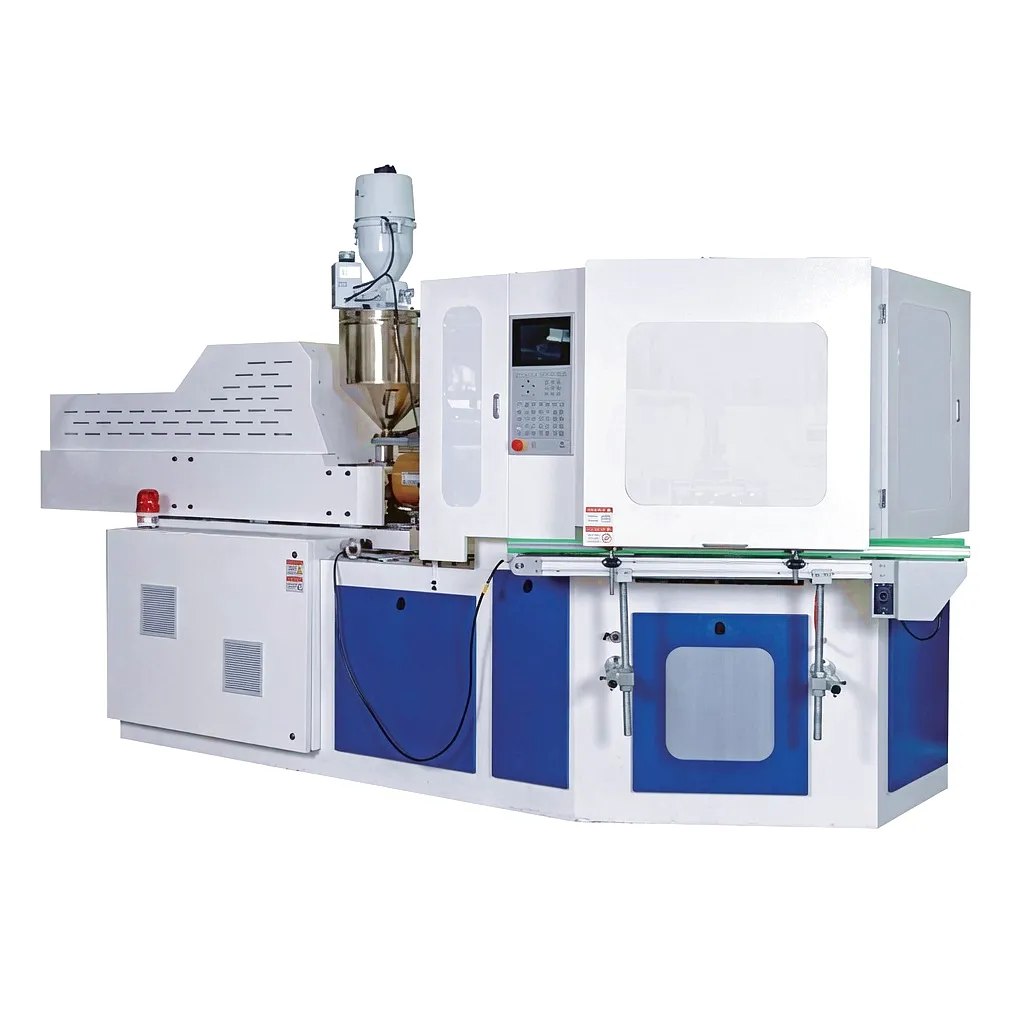
 Injection Blow Molding — commonly abbreviated as IBM — sits at the precision end of the polymer container manufacturing spectrum. Unlike extrusion-based processes that rely on a continuous parison, IBM injects a preform of thermoplastic material around a core pin, transfers it to a blow station, and inflates it against a cooled cavity to produce a finished container with no neck-trim waste and with dimensional tolerances that rival pharmaceutical-grade specifications. That inherent cleanliness makes IBM the default choice for glass-replacement bottles, medical vials, personal-care packs, and multi-layer barrier containers throughout the United Kingdom robust plastics processing sector — from the West Midlands corridor to the advanced manufacturing parks of South Yorkshire.
Blow Molding Process Comparison: IBM vs ISBM vs EBM vs Extrusion
Understanding where IBM fits in the broader landscape explains why its defect profile differs from competing processes.
| Parameter | IBM | ISBM | EBM | Extrusion BM |
|---|---|---|---|---|
| Preform creation | Injection on core pin | Injection, then stretch | Extrusion parison | Continuous extrusion |
| Neck trim waste | None | None | Present | Present |
| Wall-thickness control | Excellent (core pin) | Excellent (stretch) | Good (die programming) | Moderate |
| Typical materials | PP, HDPE, PET, PETG | PET (primary) | HDPE, PP, PVC | HDPE, LDPE |
| Surface finish | Superior | Superior | Good | Moderate |
| UK pharma suitability | High | Medium | Medium | Low |
| Typical output (bph) | 500–6,000 | 2,000–20,000 | 500–3,000 | 300–2,000 |
IBM occupies the niche where dimensional precision, zero post-mold trimming operations, and glass-like clarity converge. The core pin controls the inside diameter from injection through to the blow station, which is why IBM produces more consistent wall thickness than parison-based methods — and why any deviation from that consistency points directly to a discrete, fixable engineering cause rather than systemic process noise. Recognising this is the foundation of effective troubleshooting on any injection blow molding machine platform.
Defect 1 — Wall Thickness Variation and Uneven Distribution
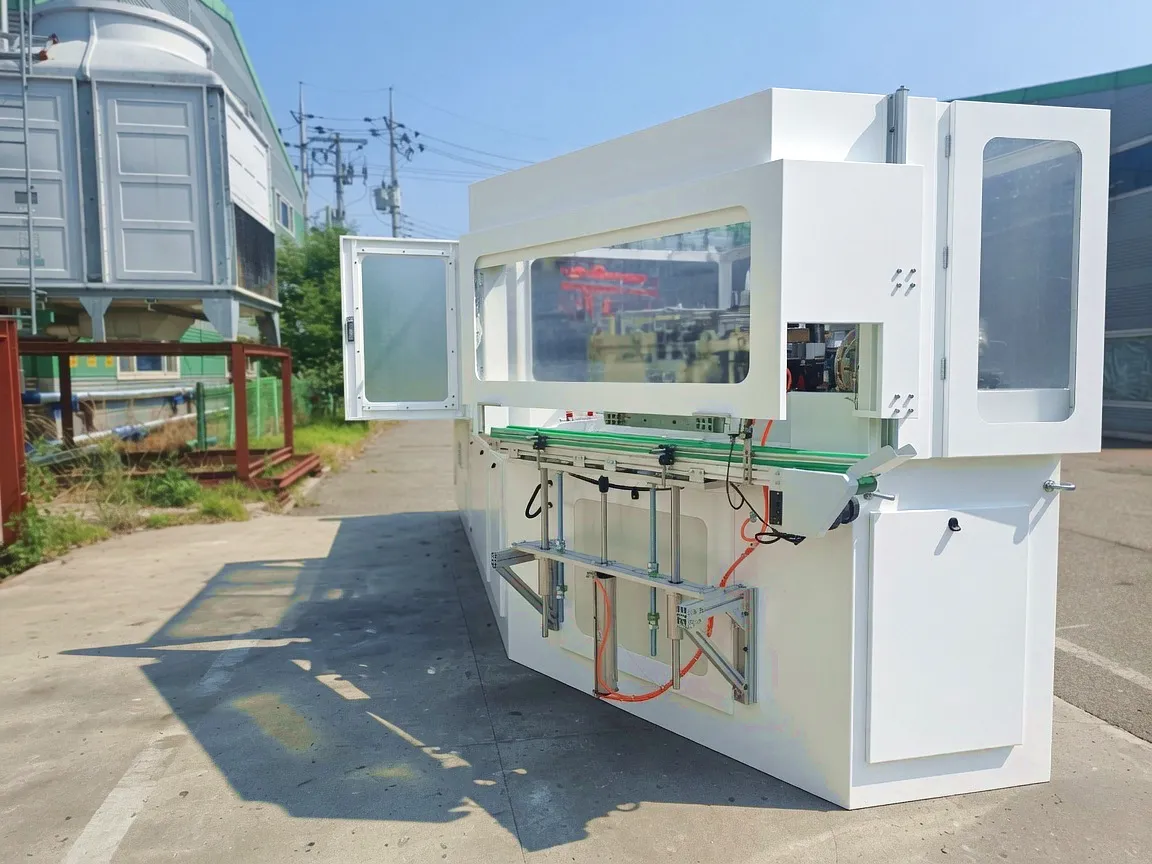 Wall thickness variation is the most frequently cited quality escape on IBM lines producing pharmaceutical vials, cosmetic bottles, and food-grade containers across the UK. On a well-tuned injection blow molding machine, the preform is formed under controlled injection pressure around the core pin, and the wall geometry is essentially locked before the parison is transferred to the blow cavity. When thickness variation appears — whether as thin sidewalls, thick bases, or eccentric distribution around the bottle circumference — the root cause almost always traces back to one of four subsystems: injection temperature, core-pin concentricity, blow pressure, or mold cooling uniformity.
Calibrate all barrel-zone thermocouples monthly. Replace heater bands showing >10% resistance drift. Verify melt temperature with a handheld pyrometer, not barrel sensor alone.
Run a dial-indicator sweep on each core pin after the machine reaches operating temperature. Target TIR (total indicator runout) below 0.02 mm on all IBM tooling.
Verify water-circuit flow rates (minimum 3 L/min per cavity) and inlet temperatures (8–12°C for PP). Asymmetric cooling produces one-sided thick walls even when the pin is perfectly centred.
Insufficient blow pressure causes the preform to sag away from the cavity before full inflation. For typical IBM bottles at 60–250 ml, set final blow pressure at 0.6–0.8 MPa and extend blow time in 0.1-second increments to verify full cavity contact.
Defect 2 — Parting-Line Flash on IBM Containers
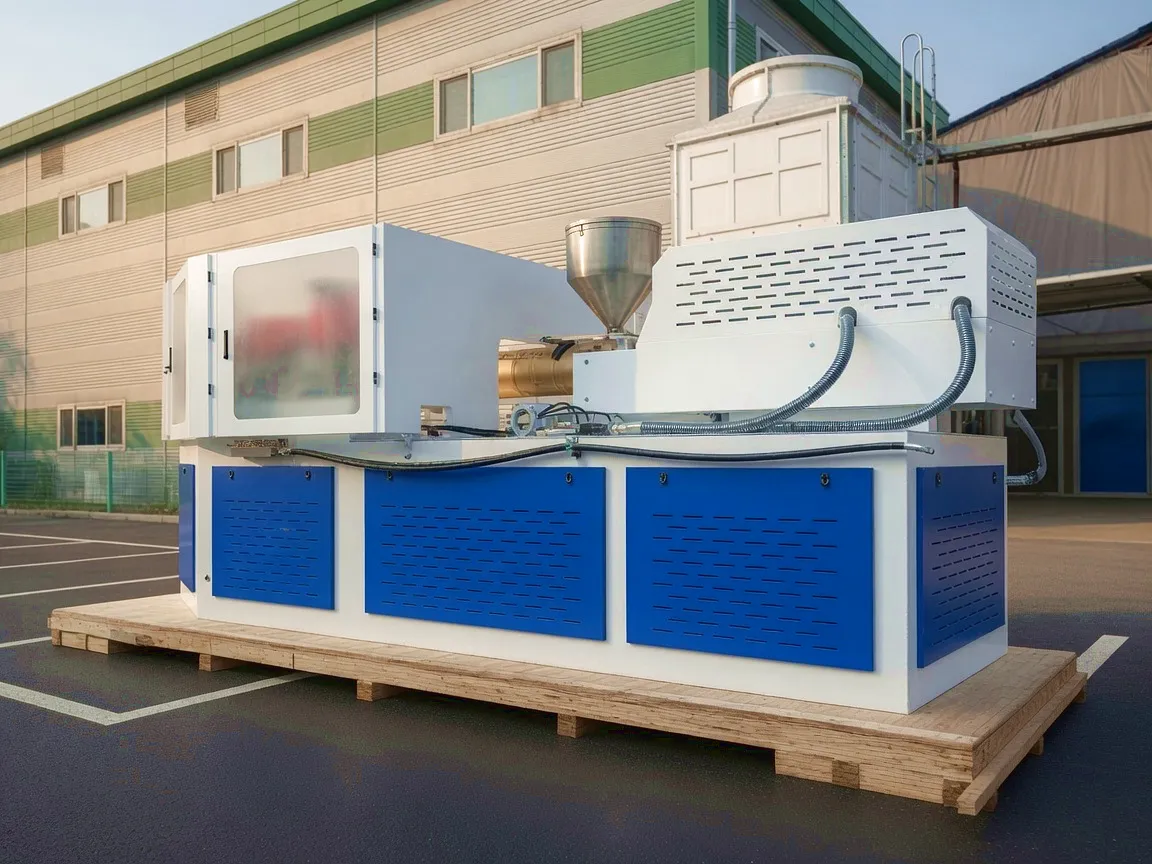 Flash — the thin fin of polymer that extrudes into the parting-line gap between mold halves — is less common in IBM than in EBM precisely because IBM generates no parison pinch-off. However, flash in IBM does appear at the blow-mold parting line when clamping force is insufficient to keep the two cavity halves sealed during the blow cycle. On European-specification injection blow molding machines such as the ZQ40 and ZQ60 series, the toggle clamping mechanism is engineered to develop full locking force at defined coil-spring preload settings, and any deviation — worn toggle bushings, fatigue-cracked toggle links, or contaminated clamping-plate guide rails — can reduce effective clamping tonnage by 15–25% before a process engineer notices parting-line quality degradation.
Defect 3 — Short Shots and Incomplete Preform Fill in IBM Production
A short shot in the injection stage of IBM — where the preform cavity is not completely filled with molten polymer — produces a bottle that either collapses during blowing or exits the mold with voids, pinholes, or incomplete neck finish. On an injection blow molding machine, the injection phase is a precision event: a calculated shot weight of molten resin is injected at controlled pressure and velocity, cushioned by a small decompression phase, and held under pack pressure while the gate and preform solidify. Any disruption to shot weight consistency, injection velocity profile, or nozzle-to-sprue seal integrity can cause a short shot.
The screw retract position determines shot volume. If back-pressure is set too low, air entrapment in the melt causes a compressible cushion and an effectively smaller delivered shot. Raise back-pressure in 0.5 MPa increments (typical range: 3–8 MPa) until cushion stabilises at 2–5 mm.
If the nozzle temperature drops below the resin freeze point between cycles — common on short-cycle IBM with PP at nozzle temps below 215°C — a cold slug forms and blocks the gate. Increase nozzle heater band wattage or reduce decompression stroke to keep the nozzle tip live.
Carbonised resin or pigment agglomerates in the gate land build a restriction that reduces effective injection pressure. Purge the barrel with a compatible purging compound, inspect the gate tip for scoring or deposit build-up, and verify gate diameter has not been inadvertently polished undersized during the last toolroom maintenance cycle.
Trapped air in blind preform cavity sections resists melt advancement and causes short shots and burn marks simultaneously. Vent slots in IBM preform tooling are typically 0.01–0.015 mm deep — easily blocked by resin contamination. Clean vents with solvent and a soft brush; never use metal tools that enlarge vent depth.
Shot-size consistency on a modern injection blow molding machine is a direct function of screw-tip check-valve integrity. A worn or worn-seated check ring allows molten polymer to back-flow during the injection stroke, producing shot-to-shot variation even when the screw retract position appears stable. If cushion variation exceeds ±3 mm between consecutive cycles, strip and inspect the check ring and seat for wear, scoring, or pigment-induced scoring. On the Ever Power ZQ-series IBM platforms, the check ring assembly is accessible without dismounting the screw, reducing maintenance downtime to under two hours — a meaningful advantage in UK facilities operating shift patterns with limited tool-change windows.
Defect 4 — Surface Blemishes: Orange Peel, Haze, and Sink Marks
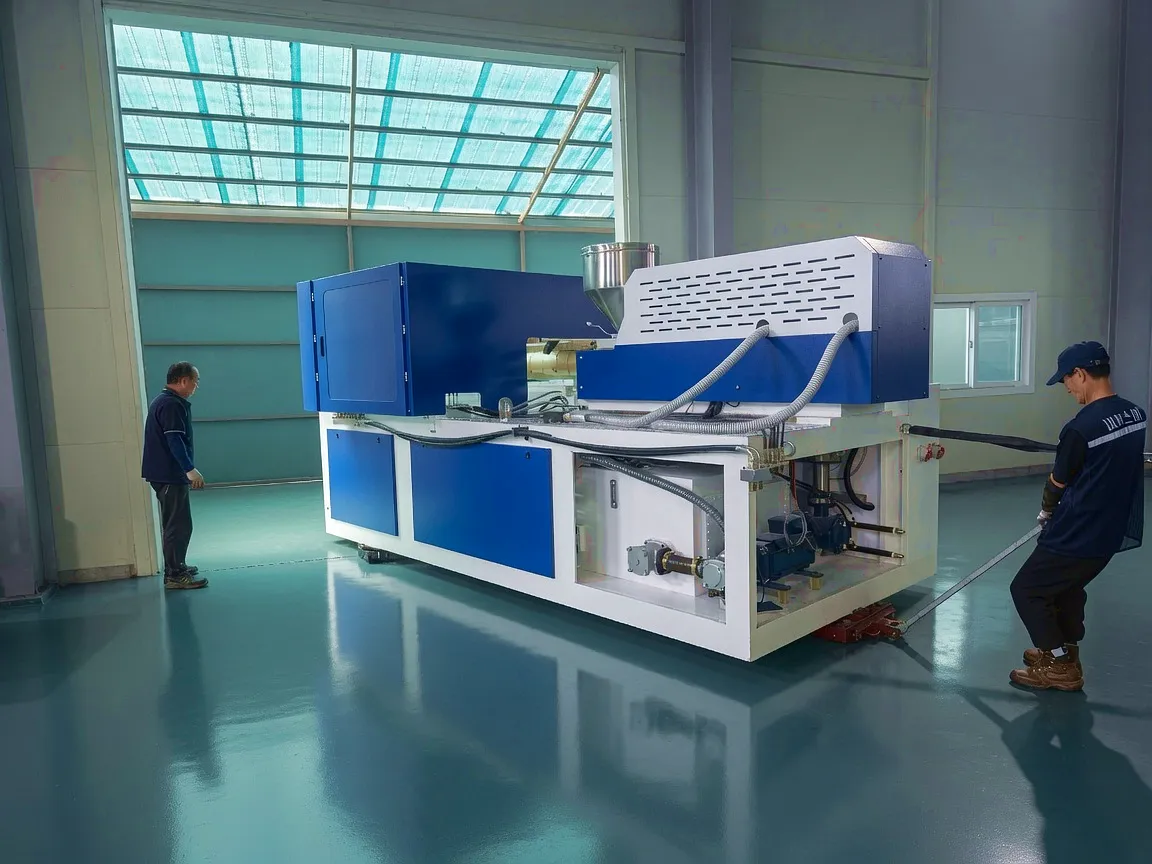 Surface quality defects in IBM containers fall into three main categories, each with a distinct mechanism. Orange peel — the dimpled, granular surface texture that resembles the skin of the fruit — results from the preform surface being too cold at the point of blow inflation, causing the skin to stretch non-uniformly as it contacts the cavity wall. In standard IBM, this most often appears when the core-pin temperature is running too high (cooling the preform inner surface and setting the outer skin too quickly) or when the transfer dwell time between injection and blow stations has been lengthened by a mechanical delay in the rotary index mechanism.
| Defect | Primary Cause | Process Corrective Action | Tooling Corrective Action |
|---|---|---|---|
| Orange Peel | Cold preform skin at blow station | Reduce core-pin cooling water temperature by 3–5°C; shorten index dwell | Polish blow-cavity surface to Ra below 0.4 µm |
| Haze / Milkiness | Rapid crystallisation in cold mold | Raise blow-mold temperature to 50–55°C; verify chiller setpoint | Check water-circuit flow balance with flow meter on each circuit |
| Sink Marks | Premature gate seal, low pack pressure | Increase pack pressure 5 MPa; extend pack time 0.2 s | Increase gate land diameter 0.1–0.2 mm to delay freeze-off |
| Gate Vestige | Nozzle retract before freeze-off | Add 0.3 s nozzle contact dwell; verify nozzle tip radius matches sprue | Fit a heated probe nozzle for better gate-zone temperature control |
| Flow Lines / Weld Lines | Low melt temperature or multi-gate conflict | Increase front-zone temperature 5–8°C; raise injection speed 10% | Review gate location relative to weld-line finish zone |
| Whitening / Stress Marks | Excessive stretch ratio; low blow temp | Increase preform reheat; reduce axial stretch ratio | Modify preform wall distribution to reduce localised stretch |
Energy Optimisation and Retrofit Strategies for IBM Lines
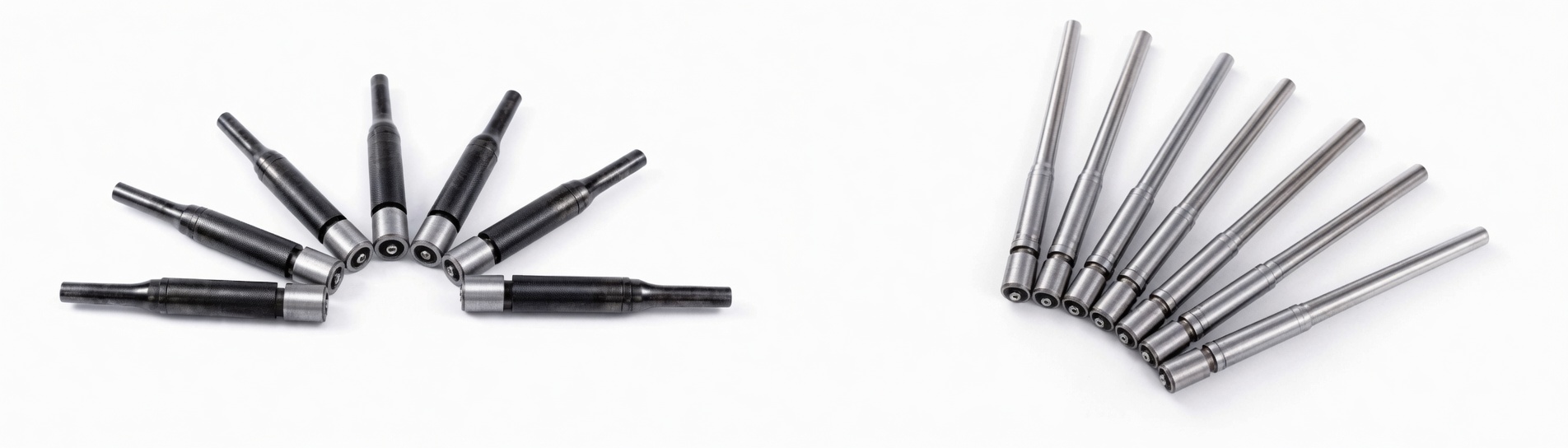
Older IBM machines run fixed-displacement hydraulic pumps at full speed throughout the cycle, even during dwell phases that require minimal flow. Fitting a VFD (variable-frequency drive) to the main hydraulic pump motor and matching pump speed to actual flow demand reduces electrical consumption by 25–40% on injection blow molding machine installations in UK factories — a figure consistently validated by Sheffield and Birmingham plastics processors who have carried out energy monitoring under the UK ESOS (Energy Savings Opportunity Scheme).
Uninsulated plasticising barrels radiate 8–15% of their electrical heating energy directly into the factory environment. Proprietary ceramic-fibre insulation jackets, available for retrofit on IBM barrel assemblies from 30 mm to 100 mm diameter, reduce barrel heater energy draw by 20–30% and simultaneously improve barrel-zone temperature stability — a dual benefit that addresses both energy and quality simultaneously.
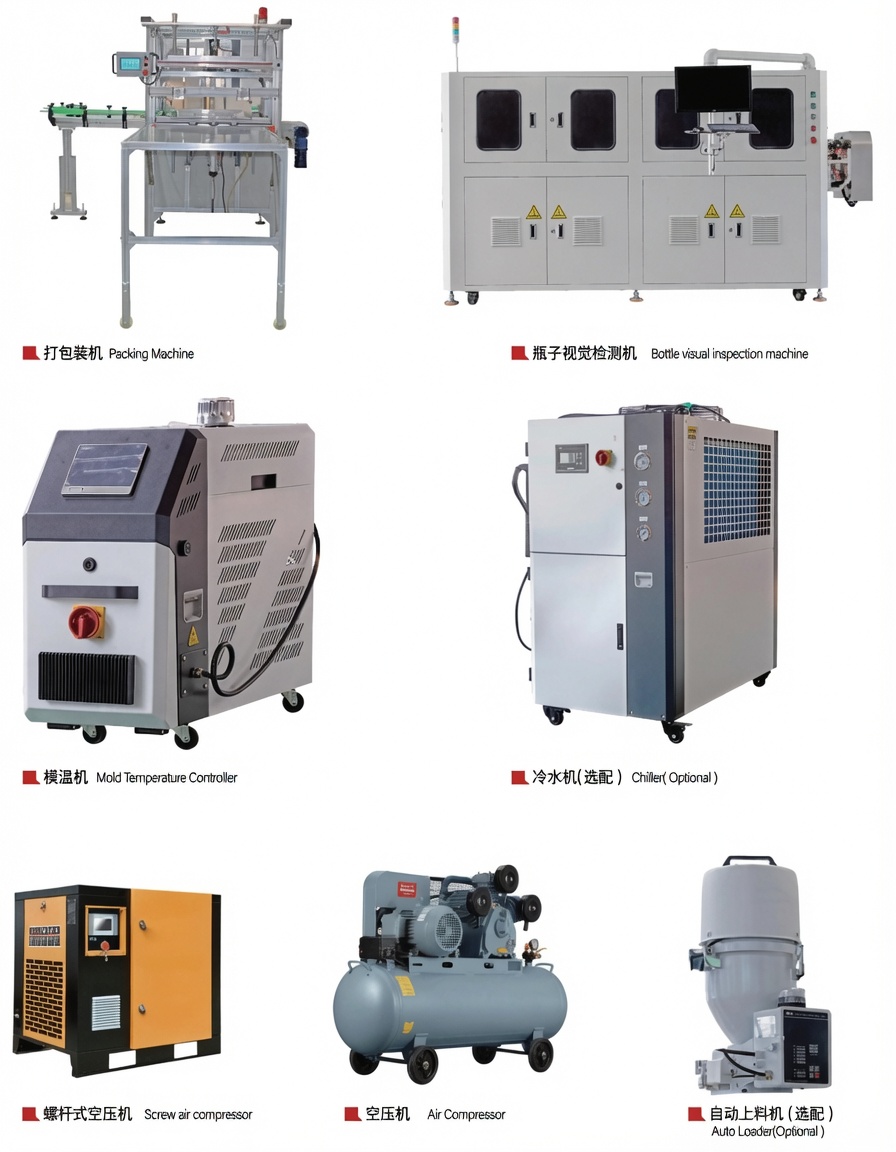
Mold cooling accounts for 50–65% of total IBM cycle time, making chiller efficiency directly proportional to machine productivity. Upgrading to a free-cooling capable chiller allows UK facilities to exploit ambient temperatures below 10°C (common between October and April) to cool mold water without running compressors, reducing cooling energy cost by up to 60% during that period. Plate heat exchangers with low-fouling stainless surfaces maintain thermal performance between service intervals.
Many IBM lines run cooling times 30–40% longer than necessary because the original process setup was conservative and was never optimised once the mold was running. Systematic cooling-time reduction — reducing in 0.2-second steps, monitoring part temperature at ejection with a handheld IR thermometer, and checking dimensional stability for 100 consecutive cycles — can recover 15–25% additional throughput with zero capital expenditure and reduced energy cost per unit produced.
IBM Machine Performance and Technical Parameters — Reference Table
| Parameter | ZQ40 (European) | ZQ60 (European) | Typical IBM Range |
|---|---|---|---|
| Clamping Force | 40 kN | 60 kN | 20–200 kN |
| Injection Volume | Up to 160 cm³ | Up to 260 cm³ | 50–600 cm³ |
| Blow Pressure Range | 0.4–1.0 MPa | 0.4–1.0 MPa | 0.3–1.2 MPa |
| Barrel Temperature Range | 150–280°C | 150–280°C | 130–300°C |
| Mold Temperature (blow) | 10–80°C | 10–80°C | 5–90°C |
| Compatible Materials | PP, HDPE, PET, PETG, LDPE | PP, HDPE, PET, PETG, LDPE | PP, PE, PET, PVC, PS |
| Container Volume Range | 5–500 ml | 10–1,000 ml | 5–2,000 ml |
| Number of Cavities | 1–4 | 1–6 | 1–12 |
| Wall Thickness Tolerance | ±0.05 mm | ±0.05 mm | ±0.03–0.1 mm |
| Installed Power | Approx. 12 kW | Approx. 18 kW | 8–75 kW |
| Core Pin Material | P20 / H13 tool steel, chrome plated | P20 / H13 tool steel, chrome plated | P20, H13, beryllium copper |
| Control System | PLC + HMI touchscreen | PLC + HMI touchscreen | PLC / CNC / PC-based |
Mold Design and Bottle Profile Optimisation in IBM
Minimum 0.5° on all preform cavity surfaces; IBM containers typically require 1–1.5° on external body surfaces to allow clean transfer without drag marks
Ra 0.4 µm maximum, hard chrome plated, 0.8–1.2 µm deposit thickness; chrome maintains thermal conductivity for rapid preform cooling and provides release without mold-release agents
Series-flow cooling creates temperature gradients along the circuit; parallel-flow balancing delivers uniform mold-surface temperature within ±2°C across all cavities, essential for multi-cavity IBM consistency
Blow-mold vents (0.02–0.04 mm depth, 3–6 mm wide) at the parting line and base plug are mandatory; insufficient venting causes air entrapment at the base producing “dead spot” thin areas in heavy-base containers
IBM Machine Application Scenarios Across UK Industries
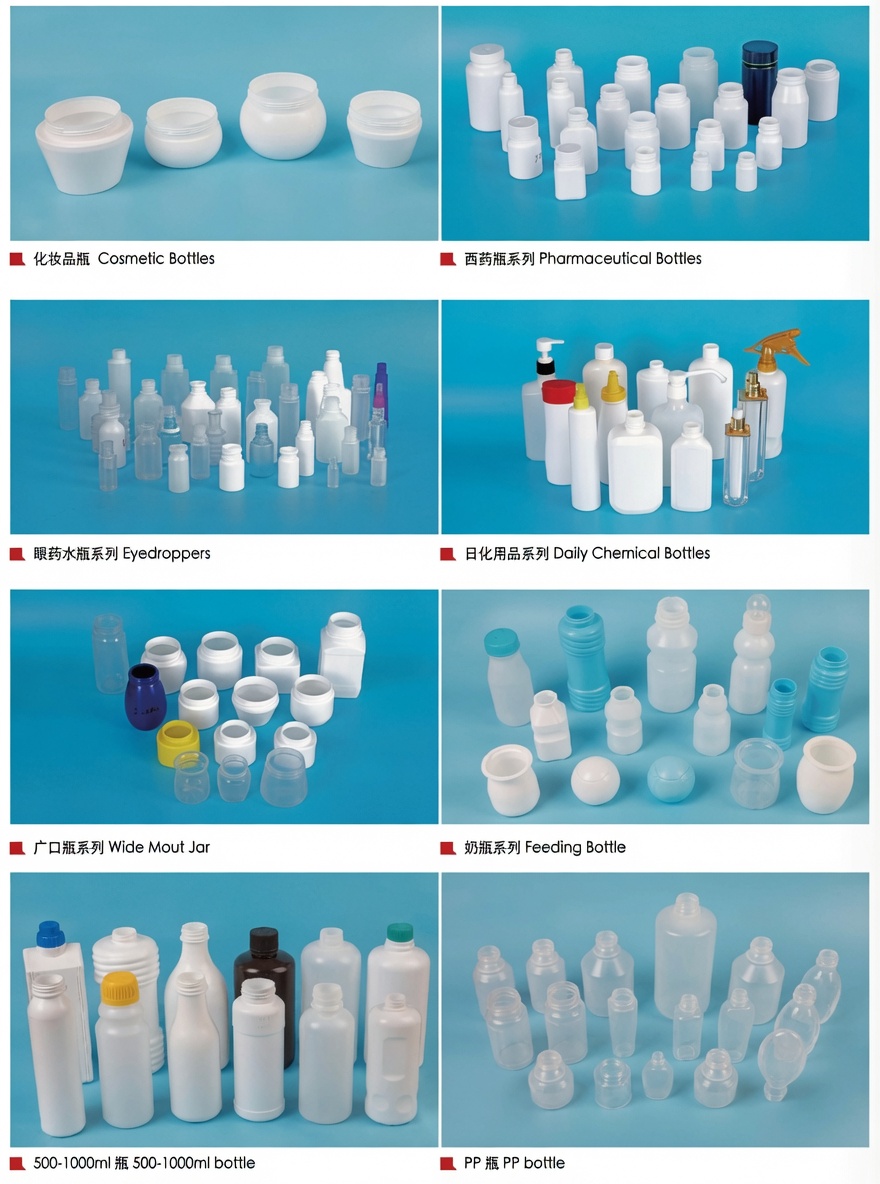
Sauce bottles, condiment jars with wide-mouth IBM necks, and honey containers for UK supermarket supply chains are produced on IBM machines in South Yorkshire food processing infrastructure. The inherently clean injection-mold neck formation meets food-contact regulations (UK retained BfR/EU 10/2011 standards post-Brexit) with no secondary trimming operations.
HDPE bottles for pesticide concentrates and fertiliser additives require chemical resistance, UV stabilisation, and leak-proof neck closures — all strengths of IBM. The East Midlands, serving England agricultural heartland in Lincolnshire and Nottinghamshire, represents a significant market for robust IBM containers with child-resistant closure compatibility.
Oral dosing syringes, drench bottles, and supplement containers for UK livestock farming operations require the tight-tolerance neck finishes and material compatibility that injection blow molding delivers. The northern England and Scottish Borders agricultural zones use IBM-produced containers for compliance with VMD (Veterinary Medicines Directorate) packaging standards.
Precision dispensing bottles for flux, cleaning solvents, and resin systems used in the electronics manufacturing clusters along the M4 corridor from Bristol to Reading require IBM consistent wall thickness for reliable squeeze-and-dispense functionality, compatibility with chemical-resistant resins (HDPE, PP), and the contamination-free interior that injection blow molding machine production inherently delivers.
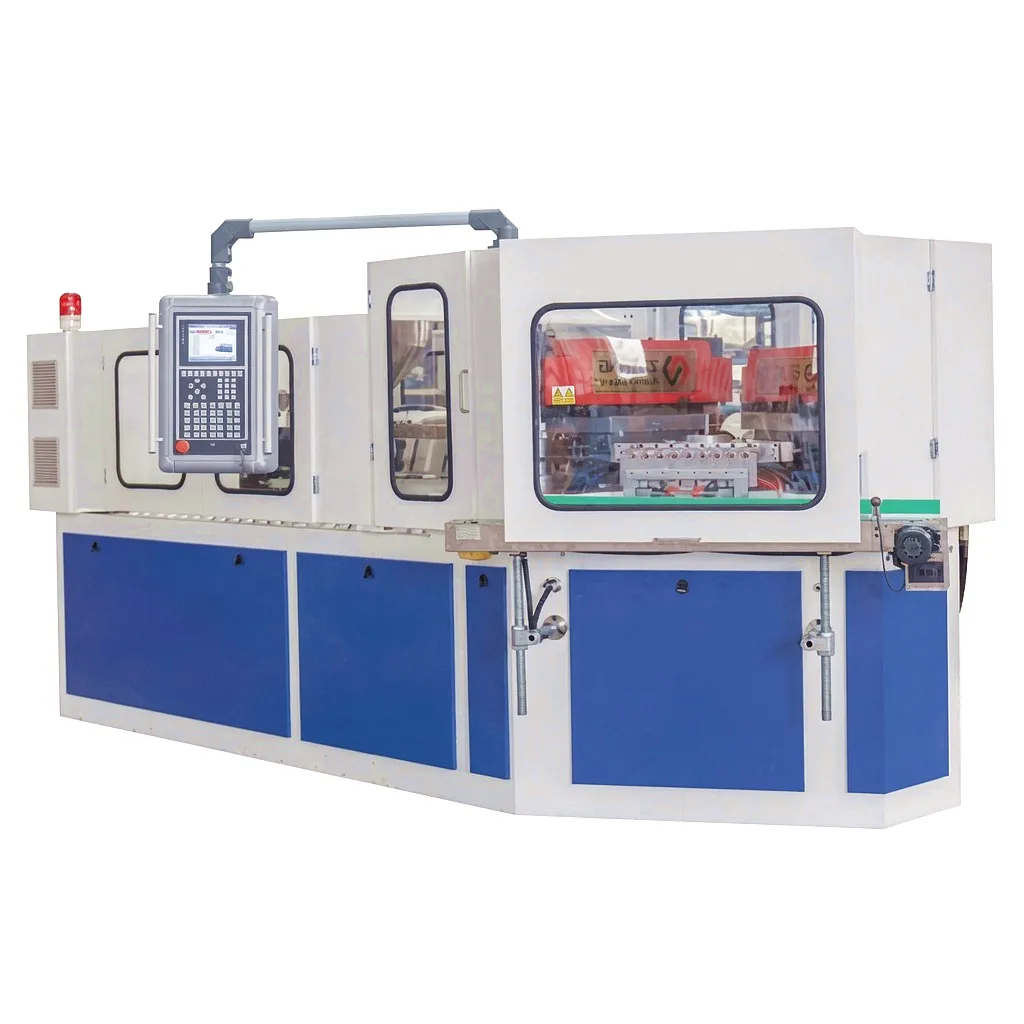
Ever Power European IBM Machine Range
Precision injection blow molding machines engineered for UK and European pharmaceutical, cosmetic, and food-grade container production.
Customer Success Story — Sheffield Pharmaceutical Packaging Converters Ltd
 Sheffield Pharmaceutical Packaging Converters Ltd — a mid-size converter with three production facilities in the Don Valley — approached Ever Power in late 2024 facing a specific production challenge. Their existing IBM fleet, installed over a decade earlier, was generating wall-thickness variation of up to ±0.18 mm on a critical 60 ml amber PP oral liquid bottle used by a major UK generic pharmaceuticals client. The client quality audit had flagged the variation as a risk to seal integrity under MHRA packaging validation guidelines, and Sheffield PPC were facing a re-qualification timeline that would cost the production slot.
Ever Power technical team conducted a remote process audit using logged data from Sheffield PPC existing machine controllers, identifying two compounding causes: barrel-zone temperature drift on the front zone (caused by a partially failed heater-band group, creating ±12°C variation) and core-pin bushing wear that had allowed 0.08 mm lateral pin movement over the previous service interval. The interim corrective actions — heater band replacement and bushing swap — were completed in a single maintenance shift using Ever Power-supplied components despatched next-day from the European distribution hub.
For the long-term solution, Ever Power supplied two ZQ60 European IBM machines configured with closed-loop barrel temperature control, beryllium copper core pins for enhanced preform cooling uniformity, and a pre-validated PP process recipe. Wall-thickness variation on the 60 ml amber bottle was reduced to ±0.04 mm — well within the MHRA packaging validation window — and Sheffield PPC achieved a 19% cycle-time reduction over the previous machines, recovering the production slot and securing an additional two-year supply contract with their pharmaceutical client. Full commissioning was completed within four weeks of machine arrival on site, with Ever Power engineers present on-site for the IQ/OQ validation protocol.
“The wall-thickness consistency on the ZQ60 is on another level compared to what we were achieving before. We went from MHRA-flagged variation to a validated process in under six weeks. Ever Power remote support team diagnosed the root cause before the engineer had even arrived on site — that kind of technical knowledge is rare in this industry.”
“We specified the ZQ40 for a new cosmetics contract in our Birmingham cleanroom facility. Ever Power built the machine with a custom 4-cavity PETG configuration that no other supplier was willing to quote. Commissioning support was excellent — we were at validated output within three days of the machine arriving. The beryllium copper core pins make a measurable difference to preform temperature uniformity.”
“After implementing Ever Power VFD upgrade kit on our existing IBM line in Nottingham, our energy consumption per thousand bottles dropped by 31%. The next-day spare parts despatch has saved us twice from extended downtime — when a check ring failed on a Friday afternoon, the replacement was on-site Saturday morning. That level of supply chain reliability is genuinely competitive for a UK manufacturer.”
Frequently Asked Questions — IBM Blow Molding Defects and Machine Selection for UK Manufacturers
Voice-search optimised answers for UK plastics processors and procurement engineers.
Uneven wall thickness on an IBM machine almost always points to one of three root causes: a barrel temperature zone drifting outside specification (check thermocouple calibration and heater-band resistance), core-pin lateral movement due to worn bushing clearance (measure with a dial indicator at operating temperature), or asymmetric mold-cooling flow across cavities (verify with a clamp-mounted flow meter). You can diagnose and address barrel temperature and cooling issues without stopping the machine; bushing replacement requires a scheduled maintenance window but typically takes under two hours on most IBM platforms.
New IBM machine pricing in the UK market varies considerably by clamping force, number of cavities, drive system (hydraulic vs servo-electric), and control specification. Entry-level single-cavity IBM machines suitable for pharmaceutical or cosmetic sampling applications start from approximately GBP 35,000–50,000 ex-works; production-grade multi-cavity European-specification machines such as the ZQ40 or ZQ60 range from GBP 65,000 upward depending on tooling configuration, delivery terms, and commissioning requirements. Contact Ever Power at [email protected] for a detailed quote matched to your specific container specification, resin, and annual volume.
For pharmaceutical bottles in the UK — particularly where MHRA validation, zero flash on the neck, consistent wall thickness, and glass-clear or opaque presentation matter — IBM is the preferred process for volumes up to around 6,000 containers per hour per cavity set. IBM produces no neck-trim waste, delivers the tightest dimensional tolerances of any blow molding process, and is most compatible with PP, HDPE, and PETG resins favoured in UK pharma packaging. ISBM is preferable for high-volume PET containers where biaxial orientation strength is required. EBM is generally reserved for large non-pharmaceutical containers. Ever Power at [email protected] can provide a process recommendation with supporting data for your specific container.
Haze in PP IBM containers is almost always caused by rapid crystallisation of the polymer at a cold mold surface. In Birmingham facilities where summer ambient temperatures push chiller performance and mold water temperatures can creep up unpredictably, haze often appears seasonally. The corrective action is counterintuitive: raise blow-mold cavity temperature to 50–55°C (verified with a contact thermocouple) to slow spherulite formation at the surface and allow the polymer to cool through its crystallisation window more slowly. Also verify your PP grade — random copolymer PP gives superior clarity over homopolymer in IBM applications.
Ever Power supplies IBM machines to UK pharmaceutical, personal care, food, and industrial packaging manufacturers with next-day European spare-parts despatch, English-language remote technical support, and scheduled on-site field-service visits across all major UK regions including Birmingham, Sheffield, Manchester, Nottingham, and London. Our ZQ40 and ZQ60 European-specification injection blow molding machines come with pre-loaded process recipes, full IQ/OQ validation support for regulated applications, and a minimum two-year machine warranty. Contact our UK sales team at [email protected] for a quotation, process consultation, or to arrange a virtual factory tour of our manufacturing facility.
For a UK pharmaceutical facility running under MHRA guidelines, IBM machine commissioning typically spans four to eight weeks from machine delivery to validated production. This covers installation qualification (IQ — confirming the machine is installed as specified), operational qualification (OQ — demonstrating the machine operates within defined process ranges), and performance qualification (PQ — producing batches within validated product specifications). Ever Power provides IQ/OQ documentation templates and process parameter records to support the qualification timeline, and our engineers can be present on-site for the full protocol if required. Time to validated production can be compressed to three to four weeks for facilities with an experienced internal validation team using pre-approved machine documentation.
A modern European-specification IBM machine in the ZQ40–ZQ60 class consumes approximately 8–20 kW installed power depending on configuration and cycle speed. Actual energy draw per thousand containers produced depends heavily on cycle time and cooling efficiency. Key energy reduction strategies for UK facilities include VFD retrofits on hydraulic pump motors (saving 25–40%), barrel insulation jacketing (saving 20–30% on heater energy), free-cooling chiller upgrades for winter operation (saving up to 60% on cooling energy during the October–April period), and systematic cycle-time reduction to reduce energy consumed per unit output. These measures collectively support compliance with ESOS audit recommendations and contribute meaningfully toward Scope 1 and Scope 2 carbon reduction targets.
Talk to an Ever Power engineer about your specific defect, machine upgrade, or new IBM machine requirement. UK pharmaceutical, cosmetic, and food-grade specialists welcome.
Get a Free Technical Consultation →