 The choice of plastic resin for a single-stage ISBM machine carries consequences that ripple across every layer of production — from machine cycle time and energy consumption to bottle wall uniformity, regulatory compliance, and ultimately the commercial viability of the finished product. Unlike two-stage reheat-blow systems, where the preform is manufactured independently and reheated before blowing, the single-stage injection stretch blow moulding process takes polymer resin from pellet to finished bottle in one continuous thermal cycle. That integration places extraordinary demands on material rheology, thermal stability, and stretch behaviour that are absent in alternative blow moulding methods. A resin that performs beautifully in extrusion blow moulding can fail completely in a single-stage ISBM workflow if its viscosity profile, crystallisation kinetics, or glass transition temperature fall outside the precise processing window the machine requires.
Across the UK manufacturing base — from the precision packaging converters of Sheffield’s Advanced Manufacturing Park to the beverage operations concentrated across the East Midlands, and from the pharmaceutical supply chains threading through Greater Manchester and Cheshire to the personal care product manufacturers radiating outward from the Birmingham metropolitan area — material selection for single-stage ISBM machines has attracted renewed scrutiny. Tightening sustainability legislation, evolving UK food contact material regulations post-Brexit, and persistent pressure to reduce per-unit energy costs have combined to make the question “which plastic?” more technically complex and commercially significant than at any point in the industry’s history. Brand owners are simultaneously demanding lighter, stronger, more transparent packaging and expecting carbon footprint reductions — requirements that often point toward different materials or different grades within the same polymer family.
This guide cuts through the noise with engineering precision. It examines the four principal material families used in single-stage ISBM — PET, PP, PC, and a growing field of specialty and bio-based resins — mapping their mechanical properties, processing parameters, and practical processing behaviour against real-world production demands. Technical data tables, application scenario mapping, and direct UK market context are provided throughout. Whether you are specifying a new single-stage ISBM machine installation, troubleshooting wall-thickness variation or haze on an existing line, or evaluating a material transition driven by sustainability targets or regulatory change, the information below is designed to give you the foundation to make faster, better-informed decisions.
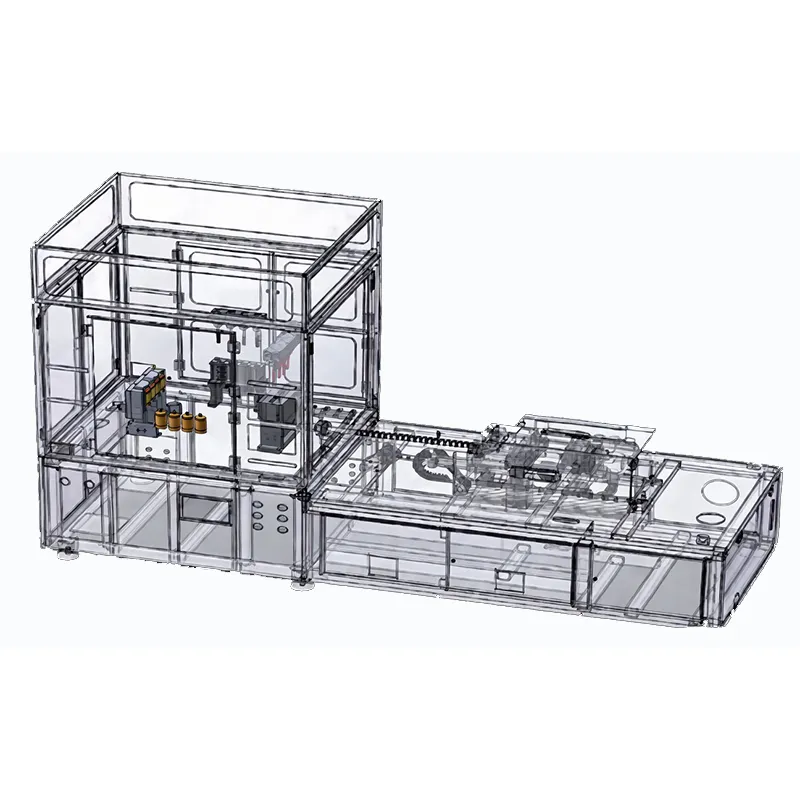
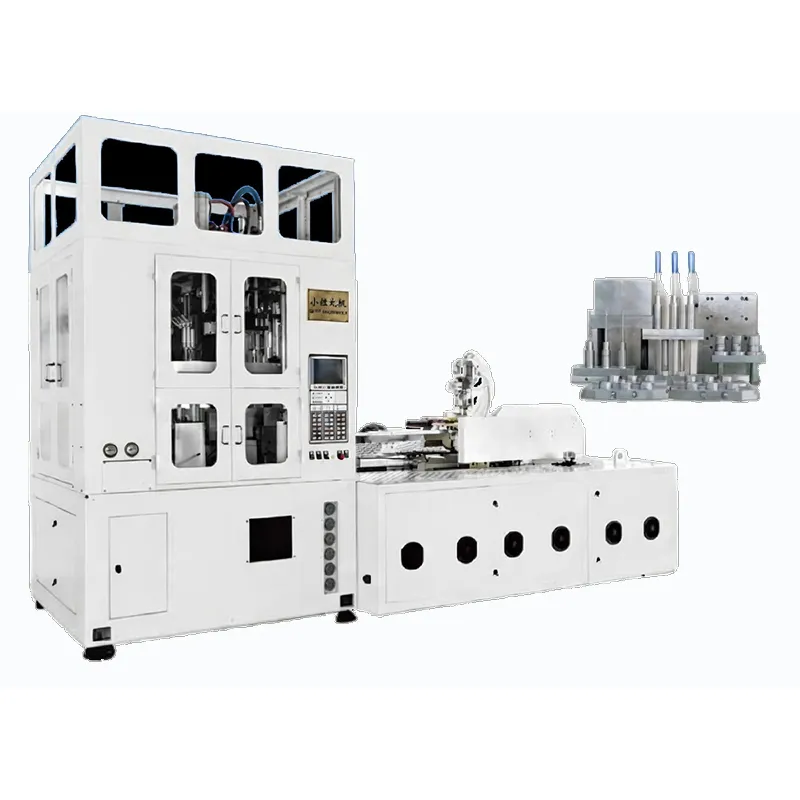
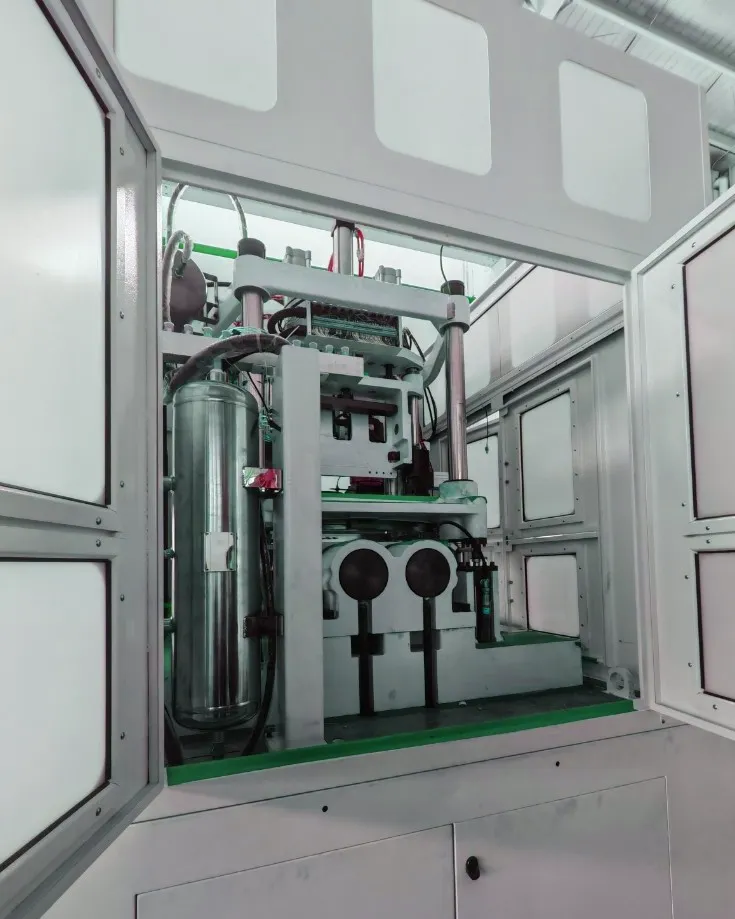
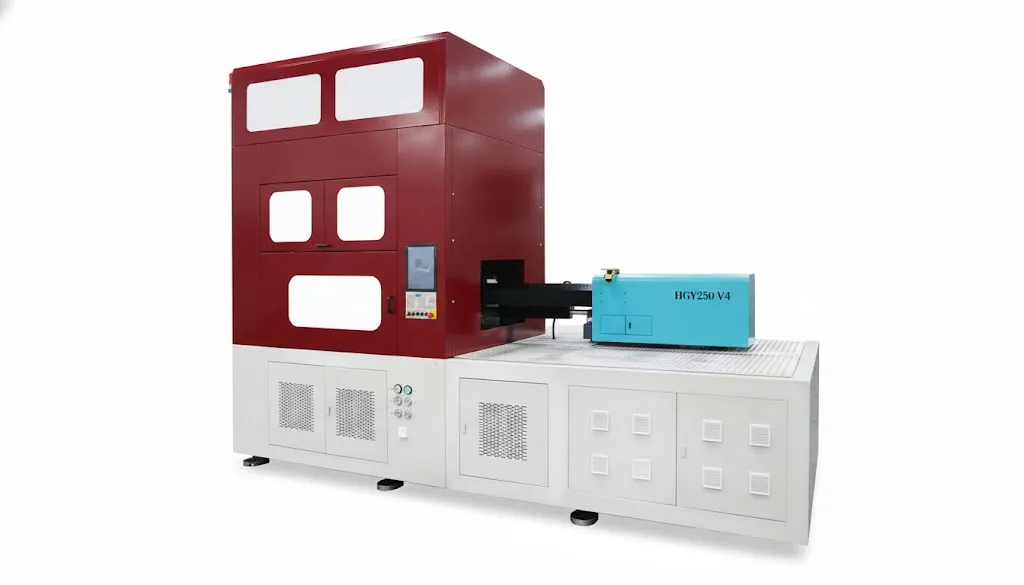
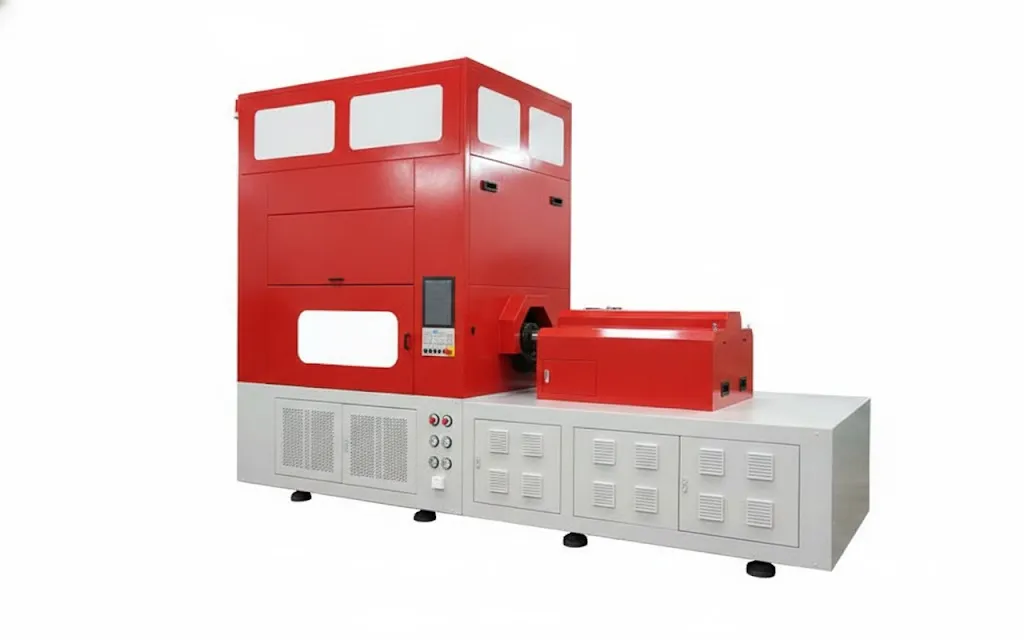
Ever Power single-stage ISBM machine — designed for PET, PP, PC, and specialty resin processing
Understanding the Single-Stage ISBM Process
Why integrated thermal processing changes everything about material selection
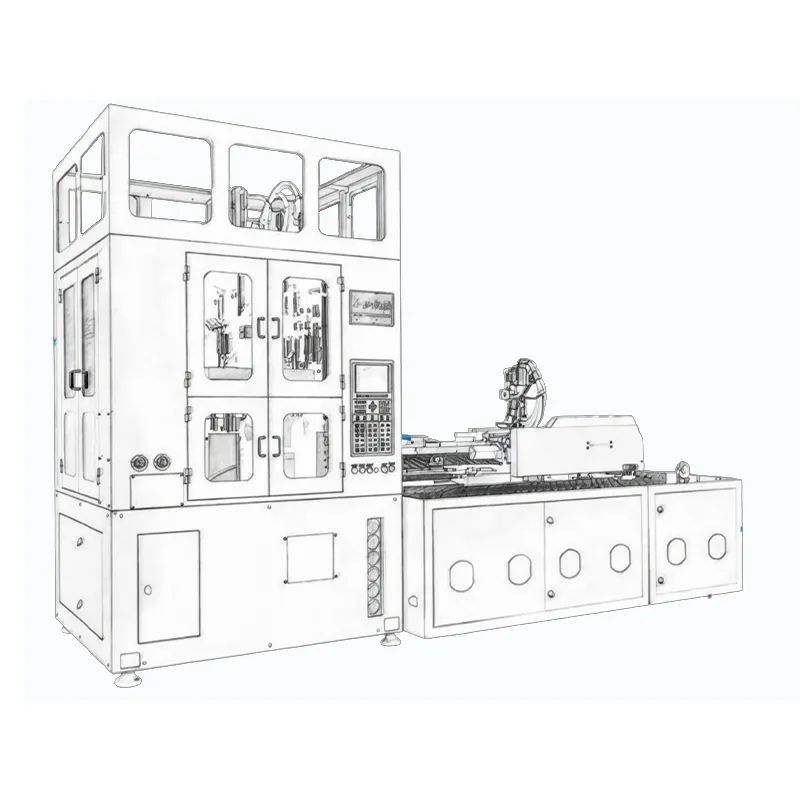 To understand why material choice matters so profoundly in single-stage ISBM, it helps to understand precisely what the machine does — and what it demands from the resin at each stage. In a single-stage injection stretch blow moulding machine, plastic pellets are fed from a hopper into a plasticating screw, where they are melted and homogenised before being injected at high pressure into a preform cavity. This injection phase requires the melt to be at a temperature high enough for complete cavity fill and uniform surface quality, but the preform is not fully cooled before it is transferred to the blow station. Instead, the preform is cooled only to a precisely controlled intermediate temperature — above the material’s glass transition temperature (Tg) but below the onset of significant crystallisation — before a stretch rod extends it axially while high-pressure air (typically 25–42 bar) inflates it radially to fill the blow mould.
This creates the defining challenge of single-stage ISBM material selection: the resin must exhibit stable and predictable melt flow behaviour throughout the injection phase, then transition smoothly and quickly into the precisely controlled semi-crystalline or amorphous state required for optimal biaxial orientation during blow. If the preform retains too much heat, it may sag or stick to mould surfaces, causing dimensional inaccuracy. If it cools too quickly, stretching becomes non-uniform — producing wall thickness variation, stress whitening, or haze. The processing window, which is the temperature range between minimum blow temperature and maximum, must align precisely with the machine’s thermal management capabilities. Modern single-stage ISBM machines from manufacturers such as Ever Power provide programmable multi-zone temperature control and real-time closed-loop monitoring specifically to manage this material-machine interaction with the precision that consistent production quality requires.
Plasticating
Pellets melted & homogenised by reciprocating screw; melt quality is critical
Injection
Melt injected into preform cavity at high pressure; uniform fill essential
Thermal Conditioning
Preform cooled to material-specific blow temperature; the critical window
Stretch Blow
Stretch rod + high-pressure air create biaxial orientation; defines final properties
PET — The Gold Standard for Single-Stage ISBM
Polyethylene Terephthalate: optical clarity, barrier performance, and process predictability
Polyethylene terephthalate — PET — has dominated the stretch blow moulding sector for the better part of four decades, and the reasons remain as technically sound today as when the material was first adopted at commercial scale. In single-stage ISBM processing, PET offers a combination of optical clarity approaching glass, tensile strength enhanced by biaxial molecular orientation, excellent barrier performance against carbon dioxide and oxygen, and a degree of process predictability that no other commodity polymer has matched. For beverage packaging, spirits bottling, edible oil, and ambient food containers, PET on a single-stage ISBM machine is frequently the only specification that satisfies brand, regulatory, and commercial requirements simultaneously.
PET for blow moulding is specified primarily through Intrinsic Viscosity (IV), measured in dL/g, which is a proxy for molecular weight and chain length. For single-stage ISBM applications, the preferred IV range is 0.72–0.84 dL/g. Higher IV resins provide greater melt strength — the ability of the melt to resist sagging and maintain preform geometry during thermal conditioning — which is particularly valuable in single-stage ISBM where the preform must hold its shape between injection and blow stations without the structural support that a fully solidified preform would provide in two-stage processing. However, excessively high IV grades flow less readily and may require elevated injection pressures that stress mould components or create surface defects. The optimal IV for a given application is determined by bottle volume, wall thickness targets, and the thermal management capabilities of the specific single-stage ISBM machine in use.
PET Key Properties
PP — The Hot-Fill and Chemical-Resistance Champion
Polypropylene: dimensional stability at elevated temperatures and broad chemical compatibility
PP Key Properties
Polypropylene brings a distinctly different — and in many applications, superior — set of properties to the single-stage ISBM machine. Its lower density (0.89–0.91 g/cm³), higher continuous service temperature, and broad chemical resistance make it the natural choice when PET’s properties are either unnecessary or inadequate for the application. The most commercially significant advantage PP holds over PET in packaging is its hot-fill capability: PP containers maintain dimensional stability when filled with product at temperatures of 80°C to 95°C, a temperature range that would cause significant distortion in standard PET bottles not specifically designed and engineered for hot-fill duty.
Hot-fill processes are widespread across the UK food manufacturing sector — condiment and sauce production in the Midlands, fruit juice packaging across the South West, and dairy product lines throughout Yorkshire all rely on hot-fill or retort packaging for shelf stability. For these applications, PP on a single-stage ISBM machine provides a one-step route to a container that combines hot-fill dimensional stability with the weight advantage of plastic, the decorative flexibility of transparent or translucent containers, and the chemical inertness to hold acidic, fatty, or aqueous formulations without migration or stress cracking.
In single-stage ISBM processing, random copolymer PP grades — sometimes designated PPr or PP-R — are strongly preferred over homopolymer for most packaging applications. The random distribution of ethylene comonomers disrupts the crystallinity of the polymer sufficiently to improve optical clarity and broaden the blowing window, which makes consistent production on an ISBM machine significantly more achievable. Homopolymer PP, while offering higher stiffness and heat resistance, has a narrower processing window that demands tighter machine temperature control and typically produces containers with a milky-white opacity that suits functional rather than premium packaging aesthetics. UK cosmetics and personal care manufacturers — particularly those supplying the professional hair care, luxury skincare, and household cleaning product markets — have adopted PP-based single-stage ISBM production specifically because it combines chemical resistance with the bottle geometry flexibility that ISBM uniquely provides.
PC — Engineering-Grade Optical Performance
Polycarbonate: near-glass clarity, exceptional impact resistance, and sterilisation compatibility
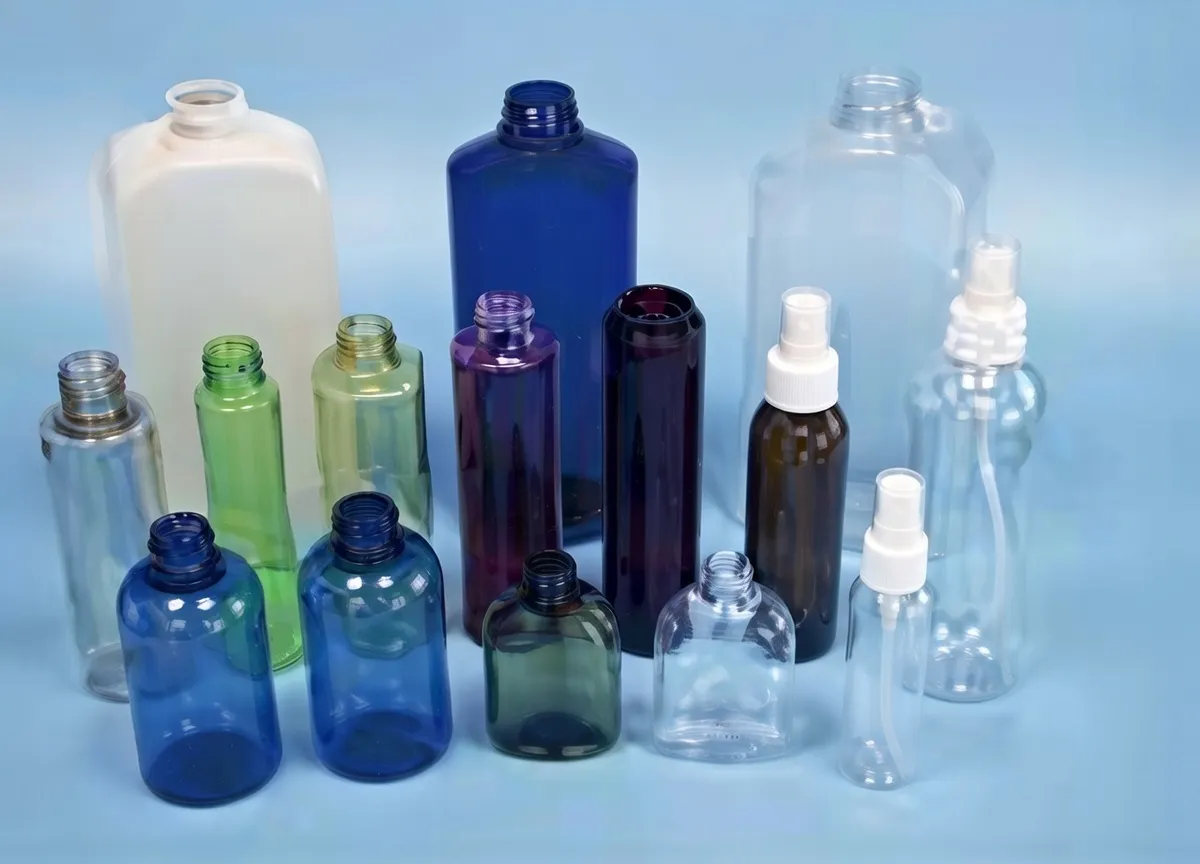
Polycarbonate occupies the premium tier of materials for single-stage ISBM machines. It is significantly more expensive per kilogram than either PET or PP — often three to five times the commodity resin price — but its combination of mechanical and optical properties justifies that cost in applications where alternatives simply cannot meet the specification. PC’s defining characteristics for ISBM applications are three: near-glass optical clarity with light transmission typically exceeding 88%, exceptional impact resistance approximately 30 times greater than standard glass, and a high continuous service temperature that enables steam sterilisation and autoclave compatibility at 121°C.
These properties collectively make PC the material of choice for reusable drinking vessels in the UK hospitality sector, BPA-free baby feeding bottles (where materials compliant with UK FSA guidance and the Food Contact Materials Regulations are specified), medical device components requiring transparency and sterilisability, and laboratory ware including carboys, wash bottles, and media storage containers. The UK’s life sciences and medical device manufacturing clusters — notably in Cambridge, Oxford, and along the research corridor from Paddington to Harwell — rely on single-stage ISBM machines capable of handling PC with the dimensional precision and batch-to-batch consistency that GMP manufacturing and Medical Device Regulation compliance require.
Processing PC on a single-stage ISBM machine is technically more demanding than processing PET or PP. Injection barrel temperatures of 280°C to 320°C are required, and PC is highly hygroscopic — it absorbs moisture readily from ambient air and must be dried to below 0.02% moisture content before processing to prevent hydrolytic degradation. Inadequately dried PC undergoes molecular weight reduction during processing that manifests as permanent loss of impact resistance, surface defects including silvering and bubbles, and reduced optical clarity. A dedicated drying and conveying system with dew point monitoring is therefore a non-negotiable element of any PC-capable ISBM machine installation. Ever Power’s engineering configurations for PC processing include high-torque injection units engineered to handle PC’s elevated melt viscosity, enhanced barrel temperature uniformity, and extended conditioning zones to ensure complete moisture removal before the resin reaches the plasticating screw.
PC vs PET — At a Glance
PET: moderate, orientation-dependent
PET: typically below 70°C
PET: typically <0.005% required
PET: 85–90% (biaxially oriented)
Beyond the Big Three — Specialty Resins in Single-Stage ISBM
PETG, PEN, Tritan, PEF, and the next generation of sustainable packaging materials
The material landscape for single-stage ISBM machines is expanding well beyond the three dominant polymers. Sustainability legislation, evolving brand owner requirements, and the relentless pressure for product differentiation have created commercial space for a new generation of specialty and bio-based resins that offer properties unavailable from commodity materials. Understanding this landscape is increasingly important for UK packaging engineers and procurement managers who need to future-proof their ISBM machine investments against a changing regulatory and market environment.
PETG (glycol-modified PET) has gained significant ground in premium cosmetics and nutraceutical packaging. Its lower processing temperature compared to standard PET, combined with superior chemical resistance, excellent optical clarity, and ease of decoration, make it attractive for perfume, luxury skincare, and high-end supplement packaging. PETG does not require the stringent drying standards that PC demands, making it operationally more accessible for converters who process a range of materials across shifts. The material’s amorphous structure prevents the white crystalline haze that can appear in PET under certain processing conditions, which is a meaningful advantage for packaging designs where absolute clarity is a brand requirement.
PEN (polyethylene naphthalate) represents a step-change upgrade from standard PET in terms of barrier performance and thermal stability. Its glass transition temperature is approximately 40°C higher than PET, providing substantially improved hot-fill capability without the processing complexity of PP, while its barrier performance against oxygen and moisture significantly exceeds PET — advantages that have attracted UK premium beer and juice brands to PEN and PEN/PET blends. Tritan (Eastman Chemical’s proprietary copolyester) has become the leading BPA-free alternative to PC for reusable containers, combining stiffness, toughness, outstanding flavour neutrality, and dishwasher safety in a single material — a combination that PET and PP cannot replicate. Looking further ahead, PEF (polyethylene furanoate), currently entering pilot commercial scale from producers including Avantium, offers oxygen barrier performance approximately 10 times better than PET alongside CO₂ barrier advantages and 100% bio-based carbon content. Ever Power’s engineering teams are actively developing machine processing protocols for PEF to ensure that their single-stage ISBM platforms are fully validated for this next-generation material when it reaches commercial production volumes.
🌱
PEF
Bio-based, 10× oxygen barrier vs PET, emerging scale-up
♻️
Tritan
BPA-free, dishwasher-safe, PC alternative for reusables
🔬
PEN
Superior UV & gas barrier, higher Tg than PET
Material & Machine Performance Parameters
Technical reference tables for ISBM material selection and machine specification
Table 1 — Material Processing Parameters Comparison for Single-Stage ISBM
| Parameter | PET | PP (RCP) | PC | PETG | PEN |
|---|---|---|---|---|---|
| Melt Temperature (°C) | 260–290 | 200–230 | 280–320 | 220–260 | 265–295 |
| Blow Temperature (°C) | 90–115 | 120–150 | 145–175 | 70–90 | 110–135 |
| Glass Transition Tg (°C) | ~75 | -20 to 0 | ~147 | ~81 | ~120 |
| Typical Axial Stretch Ratio | 2.5–3.0:1 | 1.8–2.5:1 | 1.5–2.2:1 | 2.0–2.8:1 | 2.5–3.2:1 |
| Pre-drying Required | Yes (<0.005%) | Optional | Yes (<0.02%) | Yes (<0.01%) | Yes (<0.005%) |
| Optical Clarity | Excellent | Moderate | Excellent | Excellent | Good–Excellent |
| Max Service Temp (°C) | <70 | Up to 110 | Up to 120 | <70 | Up to 100 |
| Relative Cost | Low–Medium | Low | High | Medium | Medium–High |
Table 2 — Ever Power Single-Stage ISBM Machine Technical Specifications
| Specification | Entry Series | Mid Series (HGY250) | High-Output Series |
|---|---|---|---|
| Clamping Force (kN) | 800–1,500 | 1,500–3,000 | 3,000–6,500 |
| Injection Capacity (cm³) | 50–300 | 250–800 | 800–3,000 |
| Cavity Count | 1–4 | 1–12 | 8–24 |
| Container Volume Range | 50 ml – 500 ml | 100 ml – 5 L | 500 ml – 20 L |
| Heating Zones | 3 | 4–6 | 6–8 |
| Blow Pressure (bar) | Up to 35 | Up to 40 | Up to 45 |
| Compatible Materials | PET, PP | PET, PP, PETG, PEN | PET, PP, PC, PETG, PEN, Tritan |
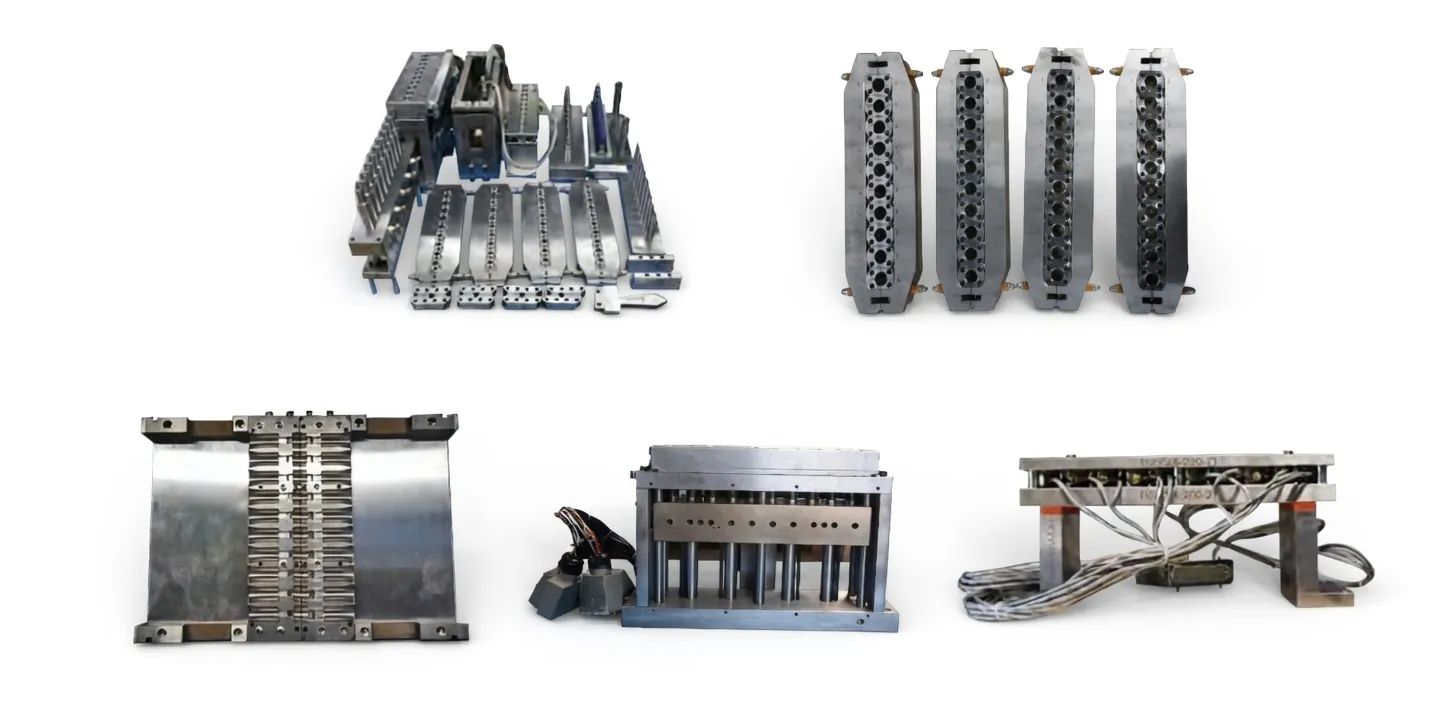
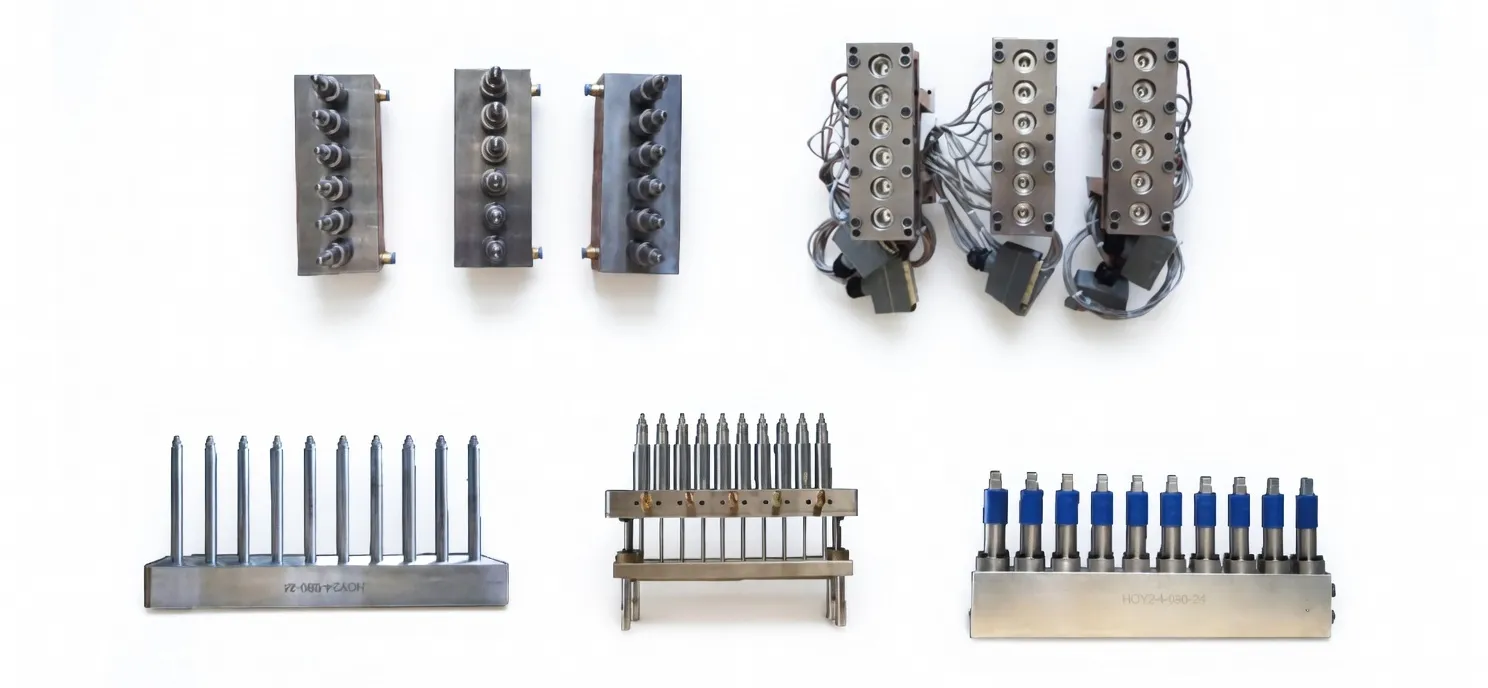
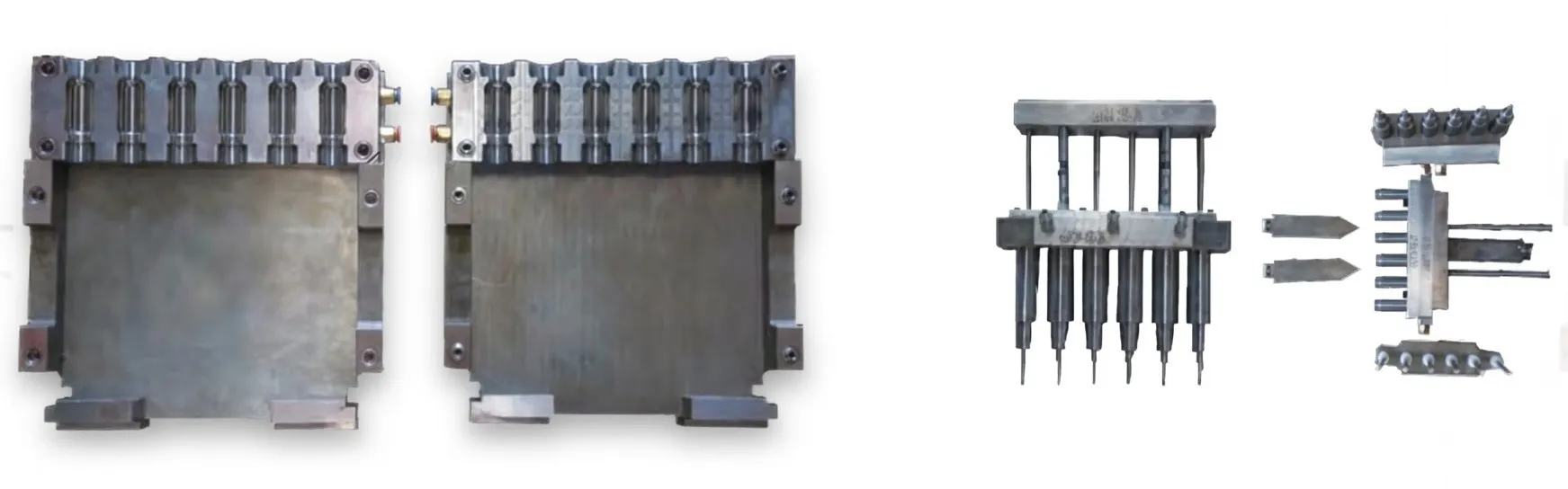
Key Machine Components
Industrial Application Scenarios Across the UK
Where single-stage ISBM and the right material choice deliver transformative production value
Single-stage ISBM machines serve a remarkably wide spectrum of industries across the UK’s diverse manufacturing base, and in each sector, the material choice is inseparable from the application requirements. The examples below reflect real production contexts in UK facilities, illustrating how material selection drives outcomes from the bottle floor to the regulatory submission dossier.
Beverage & Spirits
PET dominates UK carbonated soft drink and still water bottle production from facilities in Nottinghamshire, Lincolnshire, and the broader East Midlands. The combination of CO₂ barrier performance, optical clarity matching glass, and per-unit weight savings of 70–80% versus glass makes PET the only commercially viable ISBM material for this sector. Scotland’s spirits industry — producing whisky miniatures and travel-retail bottles — relies on high-clarity PET for premium pack presentations that require glass-equivalent aesthetics at duty-free weights.
Pharmaceutical & Healthcare
Pharmaceutical packaging converters in Greater Manchester, Cheshire, and the West Midlands depend on PP and PC in single-stage ISBM for oral liquid medicine bottles, ophthalmic containers, and device packaging under MHRA oversight and British Pharmacopoeia standards. The process data logging capabilities of modern ISBM machines support ICH Q10 pharmaceutical quality system compliance, providing audit-ready traceability records without supplementary data capture systems. Single-stage ISBM eliminates inter-stage contamination risks inherent in two-stage processes — a critical advantage in GMP environments.
Personal Care & Cosmetics
PP and PETG on single-stage ISBM machines serve the UK’s substantial personal care manufacturing sector, centred around the London cosmetics corridor and Birmingham’s consumer goods supply chain. These materials enable the complex bottle geometries — asymmetric profiles, integrated handles, deep undercuts — that differentiate premium packaging on retail shelves, combined with the chemical resistance to hold shampoos, conditioners, serums, and cleaning agents without stress cracking or migration. Short production runs enabled by single-stage ISBM’s lower tooling changeover time match the rapid NPD cycles characteristic of UK cosmetics brands.
Industrial & Agricultural Chemicals
The Humber estuary chemical manufacturing complex and the agricultural supply networks serving East Anglia and Yorkshire require PP-based ISBM bottles for crop protection formulations, industrial cleaning agents, and specialty chemical concentrates. PP’s resistance to acids, alkalis, and organic solvents — combined with the dimensional precision of single-stage ISBM that ensures reliable sealing and closure engagement — makes it the material of choice where incorrect closure performance in the field carries safety and liability consequences. Wall thickness uniformity achievable via ISBM exceeds extrusion blow moulding, a quality advantage that end-users in regulated sectors consistently value.
Ever Power — Precision Manufacturing & Custom ISBM Solutions
Built for the demands of global B2B packaging production — engineered specifically for yours
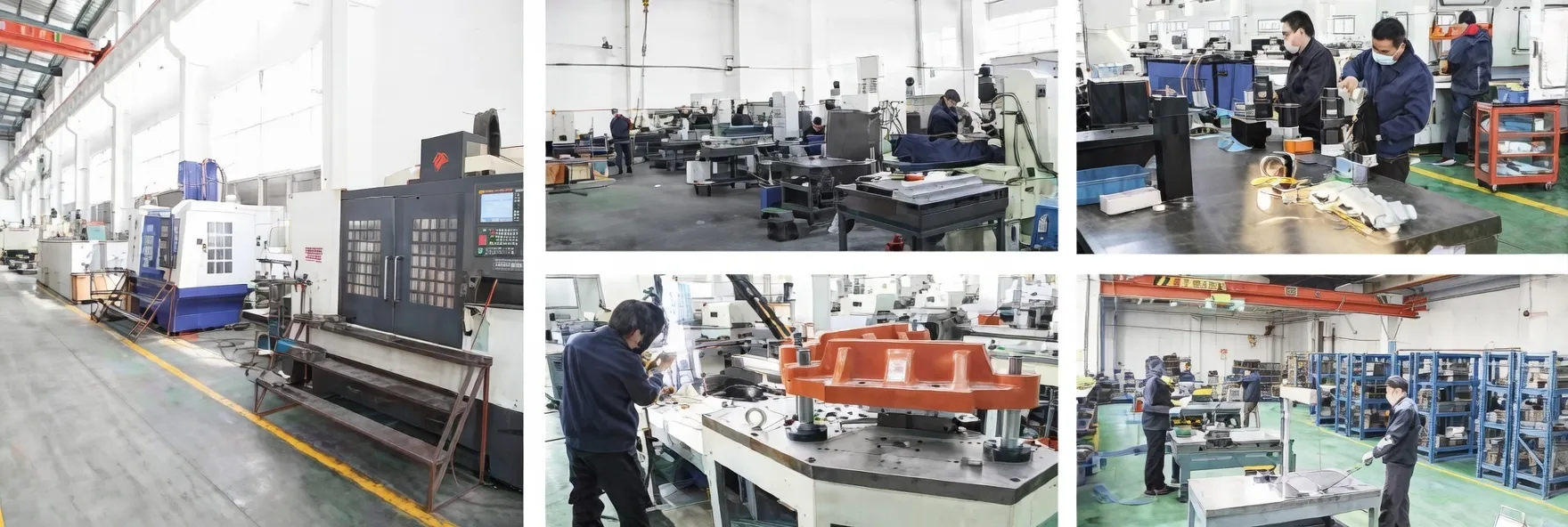
Ever Power has constructed its position in the global single-stage ISBM market not by offering the widest product catalogue, but by delivering machines that are engineered with precision and supported with genuine technical commitment long after the production line is commissioned. The company’s manufacturing facility integrates multi-axis CNC machining centres, precision coordinate measuring equipment, and dedicated material processing laboratories — an end-to-end production capability that enables Ever Power to guarantee dimensional consistency across machine builds at a level that directly translates to bottle quality on the customer’s production floor.
Customisation is where Ever Power separates itself most clearly from competitors operating from fixed product lines with expensive modification charges. The engineering team approaches each enquiry as a design-from-requirements exercise: cavity count, bottle volume range, neck finish specifications, material compatibility, downstream integration with filling, capping, labelling, and inspection equipment, control system requirements, and quality documentation packages for regulated industries are all treated as variable parameters within a structured engineering process rather than forced into a standard frame. For UK customers, this means receiving a machine that matches their actual production context rather than adapting their production context to suit a standard machine.
UK manufacturers have consistently cited Ever Power’s supply chain commitment as a significant operational advantage. Bonded stocks of high-wear items — plasticating screws, check ring assemblies, preform cavity inserts, heating elements, and blow station seals — are maintained for rapid despatch to UK addresses, reducing the downtime risk that has historically deterred UK production managers from sourcing capital equipment from overseas manufacturers. Pre-installation engineering consultation, remote commissioning support, and structured on-site training programmes for production and maintenance teams are provided as integral service elements, not optional commercial add-ons.
Custom Engineering
Cavity count, volume range, material configuration, and downstream integration designed to your specification — not adapted from a standard build
Precision Manufacture
Multi-axis CNC machining, CMM verification, and in-process quality control ensure component tolerances that directly deliver production consistency
UK Supply Chain Support
Bonded spare parts stock for rapid UK despatch, minimising the downtime risk that is the primary concern of production managers evaluating overseas machinery procurement
Regulatory Documentation
Process validation documentation, IQ/OQ/PQ packages, and control system audit logs designed to support pharmaceutical, food, and medical device regulatory compliance
Ready to discuss your single-stage ISBM machine requirements? Our engineering team responds within 24 hours.
Customer Success Story
Sheffield, South Yorkshire — Pharmaceutical Packaging Conversion
Client
Hepworth Precision Packaging Ltd
Location
Sheffield, South Yorkshire, UK
Sector
Pharmaceutical & Healthcare Packaging
Machine
Ever Power ISBM — PP/PC Configuration
Hepworth Precision Packaging, a specialist pharmaceutical and healthcare packaging converter operating from a purpose-built facility within Sheffield’s Advanced Manufacturing corridor, had relied for several years on two ageing two-stage blow moulding systems that were increasingly incompatible with the production quality and compliance documentation demands of their pharmaceutical client base. The inter-stage preform transfer in two-stage processing introduced contamination risk requiring costly clean-room mitigation, while the legacy machine control systems lacked the real-time process data logging capability that clients operating under ICH Q10 pharmaceutical quality systems were beginning to mandate as a supply chain qualification requirement.
After conducting a formal machinery evaluation process — including competitor demonstrations at trade events, processing trials with their specific random copolymer PP and BPA-free PC resin grades, and a structured review of Ever Power’s engineering documentation and quality management certification — Hepworth selected an Ever Power single-stage ISBM machine configured for pharmaceutical-grade PP processing, with an interchangeable tooling set enabling PC production runs for medical container lines. The specification included comprehensive process data logging, an IQ/OQ validation documentation package aligned with MHRA requirements, and a bespoke neck finish tooling set for the proprietary tamper-evident closure systems used across their product range. Installation, commissioning, and production validation were completed within a 15-week programme that aligned with Hepworth’s planned production transition.
Within six months of full production launch, Hepworth recorded measurable operational improvements across every tracked metric. Per-unit energy consumption fell by 34% compared to the outgoing two-stage systems — a saving that contributed meaningfully to the machine’s payback calculation and the facility’s carbon reporting obligations under the UK’s Energy Savings Opportunity Scheme. The elimination of inter-stage transfer removed the contamination risk entirely, with zero non-conformance events attributable to contamination in the first 20 weeks of production. Process validation was achieved on the first submission for both PP and PC product families, accelerating new product introduction timelines for two new pharmaceutical client programmes that had been delayed pending the equipment transition. The integrated process data output from Ever Power’s machine control system provided complete batch records directly compatible with Hepworth’s electronic quality management system, removing the manual data entry burden that had occupied approximately 18 staff hours per week on the previous production line.
Results at 6 Months
What UK Customers Say About Ever Power ISBM Machines
“We run both PET and random copolymer PP on the same Ever Power single-stage ISBM machine, switching between materials with a tooling changeover that our operators complete in under 90 minutes. The machine’s multi-zone temperature control holds blow temperature within ±1.5°C across all cavities — a level of consistency we could not achieve on our previous equipment. Wall thickness variation across a 12-cavity run is routinely under 8%, which is exceptional for ISBM production at this output rate.”
James Whitmore — Production Manager
Beverage Packaging Converter, Nottingham, UK
“The customisation capability at Ever Power is genuinely different from what we encountered with other suppliers. When we specified an unusual neck finish for a tamper-evident pharmaceutical closure, their engineering team provided technical drawings within five working days and the finished tooling performed exactly to specification on first use. The process validation documentation package they provided was directly compatible with our MHRA quality system, saving us weeks of documentation work. For UK pharmaceutical packaging, this level of technical support from a machinery supplier is rare and commercially significant.”
Dr Sarah Fenwick — Quality Systems Director
Healthcare Packaging Manufacturer, Manchester, UK
“We evaluated three ISBM machine suppliers for our PC and PETG luxury cosmetics packaging line, and Ever Power’s technical team was the only one who understood the specific demands of processing PC on a single-stage machine without compromising optical quality. Their recommendation to include the extended conditioning zone and dedicated moisture control circuit was correct — we have had zero moisture-related defects in PC production runs since commissioning. The spare parts availability from their bonded UK stock means our maintenance team can resolve most component issues within 24 hours rather than waiting weeks for overseas shipments.”
Marcus Bell — Engineering Director
Luxury Cosmetics Packaging, Birmingham, UK
Frequently Asked Questions
Technical and commercial questions from UK packaging engineers and procurement managers
What is the best plastic material to use in a single-stage ISBM machine when producing pharmaceutical-grade oral liquid bottles for the UK market?
For pharmaceutical oral liquid containers in the UK, random copolymer PP (polypropylene) is typically the preferred choice. It meets British Pharmacopoeia container requirements for oral liquids, offers chemical inertness across the pH range of typical liquid formulations, and delivers the dimensional consistency required for tamper-evident closure engagement under MHRA GMP expectations. Where container transparency combined with steam sterilisation compatibility is required — such as for ophthalmic products or injectable device components — BPA-free PC grades or Tritan copolyester become appropriate alternatives, processed on an ISBM machine configured with the elevated barrel temperatures and moisture management systems that these engineering-grade polymers demand.
How does PET perform compared to PP in a single-stage injection stretch blow moulding machine, and when should a UK manufacturer choose one over the other?
PET and PP occupy different performance envelopes in single-stage ISBM production. PET excels in applications requiring maximum optical clarity, superior CO₂ and O₂ barrier performance, and cost-efficient commodity-scale production — making it the dominant choice for carbonated soft drinks, still water, spirits, and ambient food containers. PP becomes the preferred option when the filled product will be hot-filled (above 70°C), when chemical resistance to acids or alkalis is required, or when the packaging design calls for opacity or translucency. PP also offers regulatory advantages in pharmaceutical and personal care contexts where its low extractables profile and broad chemical compatibility are valued. On the machine side, PP requires lower melt temperatures but a narrower blow window, demanding tighter temperature control than PET — a consideration when evaluating machine capability for material flexibility.
Which single-stage ISBM machine supplier in the UK or serving the UK market offers genuine customised tooling and mould design for smaller production batch sizes?
Ever Power provides custom tooling and mould design as a core engineering service rather than a premium add-on. For UK customers running smaller or diversified batch sizes — common in pharmaceutical packaging, premium cosmetics, and niche food products — Ever Power engineers the cavity count, preform geometry, and neck finish tooling to the specific container specification rather than requiring adaptation to standard configurations. The company’s ability to deliver IQ/OQ process validation documentation alongside custom tooling is particularly valued by UK pharmaceutical packaging converters operating under MHRA oversight. Enquiries can be directed to [email protected], with initial engineering responses typically within one business day.
What is the typical price range or cost basis for investing in a high-quality single-stage ISBM machine from a reputable international supplier delivering to UK manufacturing facilities?
Single-stage ISBM machine investment varies substantially based on clamping force, cavity count, material compatibility range, and included service packages. Entry-level single-cavity machines configured for standard PET processing represent the lowest investment tier, while multi-cavity high-output machines with engineering-polymer capability (PC, PEN, Tritan) and full validation documentation packages represent a substantially higher specification and cost. The most accurate price basis requires a specific application consultation — factor in tooling costs, commissioning, initial spare parts provision, and training as part of the total cost of ownership calculation. For a detailed quotation aligned to your specific container, material, and output requirements, contact [email protected] with your technical brief.
How long does the process of getting a quote and placing an order for a customised single-stage ISBM machine from Ever Power typically take for a UK buyer?
For UK buyers, the initial technical consultation following a [email protected] enquiry typically produces a preliminary specification proposal and indicative pricing within three to five working days for standard configurations, and within seven to ten working days for complex custom specifications requiring engineering calculation. Formal quotation, once the technical specification is agreed, is typically issued within five working days. Order-to-delivery lead times depend on machine complexity, tooling requirements, and current production scheduling — standard configurations typically target 10–16 weeks, while heavily customised machines with pharmaceutical validation packages may extend to 18–22 weeks. Ever Power provides a detailed project timeline at quotation stage so that UK production planning teams can incorporate the machine delivery into their operational transition schedule.
Where can a packaging manufacturer based in Birmingham or Sheffield find a reliable single-stage ISBM machine supplier with verified engineering expertise and UK after-sales service capability?
UK manufacturers in Birmingham, Sheffield, and across the broader Midlands and Yorkshire manufacturing region can access Ever Power’s single-stage ISBM machine range through direct commercial engagement at [email protected]. Ever Power maintains UK-accessible spare parts inventory for rapid despatch to Midlands and Yorkshire addresses, and provides remote engineering support as a standard service element. For initial capability assessment, the company offers detailed technical documentation, reference customer introductions (with consent), and can arrange machine demonstration schedules aligned to UK buyer travel requirements. UK buyers in the manufacturing-intensive corridors of the West Midlands, South Yorkshire, and Greater Manchester consistently represent a significant proportion of Ever Power’s European commercial pipeline, reflecting both the density of packaging manufacturing operations in these regions and the commercial fit between their production requirements and Ever Power’s machine capabilities.
When should a UK packaging company consider switching from a two-stage reheat blow moulding process to a single-stage ISBM machine, and what are the main technical and commercial factors to evaluate?
The switch from two-stage to single-stage ISBM is worth serious evaluation when any of the following conditions apply: the production operation runs relatively complex bottle geometries where single-stage ISBM’s superior wall thickness uniformity delivers quality advantages; the facility operates in a regulated sector (pharmaceutical, food contact, medical device) where eliminating inter-stage handling reduces compliance risk and validation burden; the production programme includes a range of materials beyond standard PET where single-stage ISBM’s direct material-to-bottle thermal pathway provides processing advantages; or energy and space efficiency are priorities, as single-stage ISBM typically offers lower energy-per-bottle metrics and a smaller combined footprint than equivalent two-stage capacity. The primary trade-off is output rate — high-cavity two-stage systems can achieve higher hourly output for simple commodity bottle geometries in a single material — so the evaluation should model both quality and economic factors against the specific production programme.
Who supplies polycarbonate-compatible single-stage ISBM machines with full mould change capability for medical and laboratory packaging production in the UK?
Ever Power’s ISBM machine range includes configurations specifically validated for PC (polycarbonate) processing with full mould change capability — enabling UK medical and laboratory packaging manufacturers to produce multiple container SKUs on a single machine platform. PC-capable configurations include high-torque injection units with extended barrel temperature uniformity for consistent PC plasticating, dedicated moisture control and drying circuit monitoring, and tooling change systems designed for clean changeover between PC and alternative materials within a single shift. For UK life sciences manufacturers in Cambridge, Oxford, or the London-Harwell research corridor, full IQ/OQ documentation packages and GMP-compatible process data logging are available as standard machine features on these configurations. Direct technical enquiries can be addressed to [email protected] with the specific container specification, production volume requirements, and regulatory context.
Ever Power — ISBM Technology
Single-stage injection stretch blow moulding machines engineered for global B2B packaging production, with deep customisation capability and UK supply chain support.
Materials Covered
PET · PP (Random Copolymer) · PC (Polycarbonate) · PETG · PEN · Tritan · PEF (emerging)
Contact & Enquiries
UK & international enquiries welcome · Engineering responses within 24 hours
© Ever Power ISBM Equipment. All technical specifications subject to engineering confirmation. B2B enquiries only.
edit by gzl