Injection-Blow Molding Machine Applications in Pharmaceutical Packaging: Oral Solid Drug Bottles, Child-Resistant Closures & Amber Medicine Bottles
How precision injection-blow molding technology is redefining pharmaceutical container manufacturing across the UK — from Birmingham’s medical supply chain to Sheffield’s advanced plastics sector.
How the Injection-Blow Molding Process Works
Process Architecture & Cycle Mechanics
Injection Stage
Molten polymer is injected under high pressure into a precision injection mold cavity, forming a parison (preform) around a hardened steel mandrel. The neck finish — including thread form, sealing surface, and child-resistant closure geometry — is formed with final dimensional accuracy at this stage. No secondary neck trimming or finishing is required.
Transfer Stage
Still mounted on the mandrel and retaining thermal energy from the injection stage, the preform is indexed by the rotary table to the blow station. Controlled mandrel temperature management during transfer ensures the preform arrives at the blow station with an optimum temperature profile for expansion — critical for consistent wall thickness distribution in pharmaceutical bottles with complex shoulder geometries.
Blow Stage
Filtered compressed air expands the preform against the cooled blow mold cavity wall. The mandrel constrains the inside diameter at the neck while the external cavity defines the final bottle body shape. Cavity cooling circuits are engineered to achieve rapid, uniform cooling — typically within seconds — to minimize cycle time without introducing residual stress that could cause post-production warpage or impair the optical clarity needed for tablet-count visibility.
Ejection Stage
The finished bottle is stripped from the mandrel at the ejection station. Because there is no flash or sprue on the body of an injection-blown bottle, the ejected container is complete and ready for downstream conveying, vision inspection, or clean-room transfer. This flash-free output is a defining advantage in pharmaceutical environments where particulate generation from trimming operations is categorically unacceptable.
Core Materials Used in Pharmaceutical IBM
Polymer Selection for Regulatory-Grade Packaging

HDPE
Primary resin for oral solid drug bottles. Outstanding moisture barrier, chemical resistance, and compatibility with CRC closures. USP Class VI and EU pharmacopoeia compliant grades widely available.
PP (Polypropylene)
Preferred where autoclave sterilization is needed. Higher heat deflection temperature than HDPE, excellent chemical resistance, compatible with both standard and CRC closure systems.
PET / PETG
Delivers exceptional optical clarity and glass-like aesthetics for OTC medicines and nutraceuticals. Amber-tinted PET provides UV protection below 450nm for photosensitive drug products.
Amber HDPE / Amber PET
Specifically formulated UV-absorbing pigment systems block light in the 290nm–450nm range, protecting contents from photodegradation — a regulatory requirement for many antibiotic, vitamin, and hormone formulations.
Application Scenario 1: Oral Solid Drug Bottles
Tablets, Capsules, Softgels & Multivitamin Containers
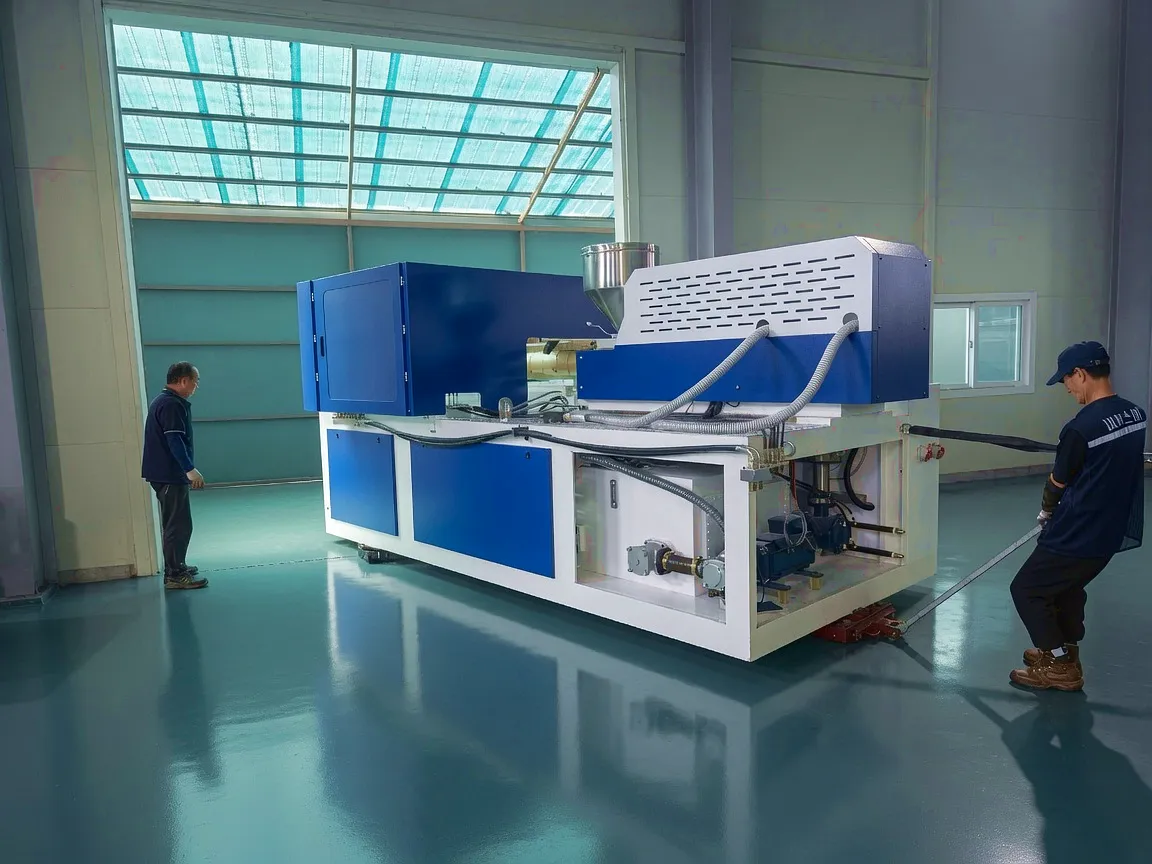
Oral solid dosage (OSD) drug bottles represent the highest-volume pharmaceutical container segment in the UK, encompassing everything from prescription tablet bottles used across NHS dispensaries to over-the-counter (OTC) supplement containers sold through pharmacy chains and supermarkets. The dimensional requirements for these containers are tightly governed: neck finish tolerances must match standard closure specifications such as 28mm, 33mm, or 38mm continuous thread (CT) finishes to within fractions of a millimeter, or push-turn child-resistant specifications where applicable.
The injection-blow molding machine’s greatest advantage in this segment is dimensional repeatability. On high-cavitation tooling — typically 6, 8, or 12 cavities per machine cycle — every cavity must produce bottles that are dimensionally interchangeable. Variation in neck finish diameter, flange geometry, or body height directly translates to filling line rejects and costly downtime at pharmaceutical manufacturers’ facilities in Milton Keynes, Swindon, or the pharmaceutical belt around Macclesfield. IBM tooling, manufactured in hardened tool steel with mirror-polished cavity surfaces, maintains cavity-to-cavity consistency within ±0.05mm across millions of production cycles.
The flash-free body of injection-blown oral solid bottles also eliminates a significant quality risk. In extrusion blow molding, parting-line flash on bottle bodies must be trimmed, generating particulate debris that must be controlled. In IBM production, the bottle body is formed entirely within the closed blow cavity with no parting line at the body wall — only at the base pinch, which is negligible and precisely controlled. This makes IBM-produced bottles inherently cleaner and far easier to certify for pharmaceutical filling environments classified to ISO 8 or above.
Key OSD Bottle Parameters
- Neck finish: 28 – 120mm CT / CRC
- Volume: 15ml – 2,500ml
- Wall thickness: 0.6mm – 2.5mm
- Cavity tolerance: ±0.05mm
- Surface: mirror or matte pharma finish
Application Scenario 2: Child-Resistant Closure Bottles
Safety Packaging for Prescription & OTC Pharmaceuticals — UK CR Standards
⚠ UK CRC Regulatory Context
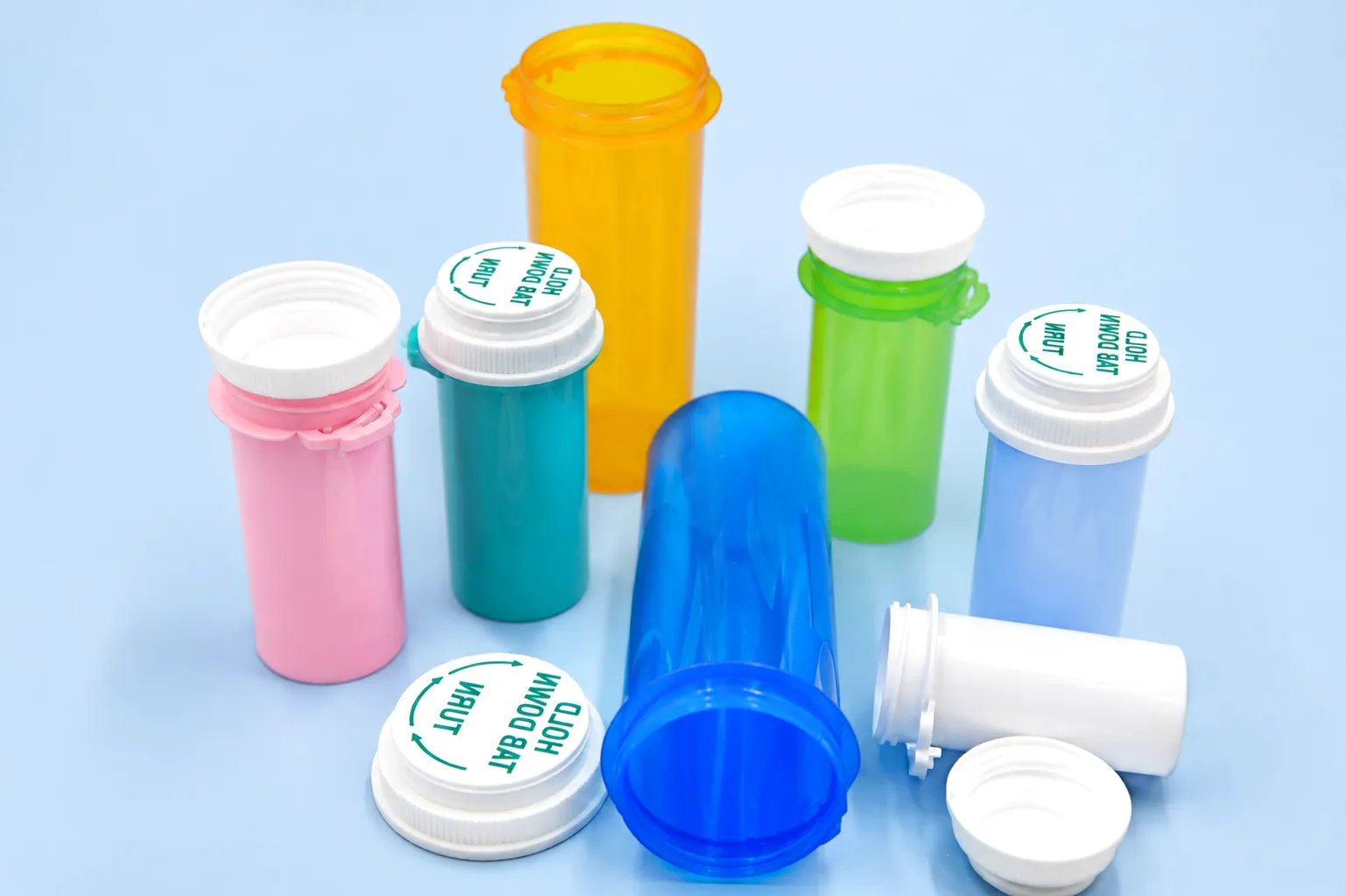
All child-resistant pharmaceutical packaging for sale or dispensing in the United Kingdom must comply with The Medicines (Child Safety) Regulations 2003 and the post-Brexit retention of relevant EU packaging directives under the MHRA framework. Injection-blow molded CRC bottles, with their highly consistent neck finish dimensions, are consistently among the easiest container formats to qualify against ISO 8317 test protocols. Ever Power’s IBM machines can be configured with inline cavity-by-cavity optical inspection to verify critical neck dimensions on every cycle.
Application Scenario 3: Amber Medicine Bottles
Light Protection for Photosensitive Drug Products
Amber medicine bottles occupy a specific and clinically significant niche in pharmaceutical packaging. A large number of widely prescribed drugs — including tetracyclines, certain diuretics, vitamin-based formulations, and many herbal and nutraceutical products — are subject to photodegradation when exposed to light in the 290nm to 450nm wavelength range. Exposure to these wavelengths can accelerate oxidation reactions, reduce active pharmaceutical ingredient (API) potency, and generate degradation products that may be clinically harmful. The amber bottle is the primary container-based defense against this degradation mechanism, and the UK pharmacopoeia prescribes amber glass or its plastic equivalent for any product with demonstrated light sensitivity.
In plastic packaging, the amber color is achieved through the incorporation of UV-absorbing pigment systems — typically iron oxide-based colorants combined with carbon black, titanium dioxide, or organic UV absorbers — into the base resin before processing. The injection-blow molding process is particularly well suited to amber bottle production because the injection stage’s precise melt temperature control and shear-rate management preserve the pigment dispersion quality and UV-absorption characteristics that were established during compound compounding. In extrusion-based processes, the longer melt residence times and higher shear environments can degrade sensitive UV-absorber molecules, reducing light-barrier performance. IBM’s shorter, better-controlled thermal cycle is inherently gentler on these functional additives.
For UK pharmaceutical manufacturers, amber HDPE bottles produced on IBM machines are the format of choice for dispensing antibiotic syrups, pediatric liquid medicines, vitamin D drops, and a range of NHS repeat-prescription products. The ability to maintain tight neck finish tolerances in amber HDPE — which has marginally different rheological behavior compared to natural HDPE — without any process recalibration between color and natural production runs is an operational efficiency that packaging departments at sites in Leeds, Liverpool, and Bristol consistently recognize as a tangible production advantage.
Amber Bottle Light Transmission Specs
- 290nm – 450nm: transmission < 10%
- EU Pharmacopoeia 3.2.1 compliant
- HDPE or PET amber resin options
- 30ml – 1,000ml standard range
- Colorant batch traceability per lot
Technical Performance Parameters
IBM Machine Specification Reference Table — Pharmaceutical Packaging Grade
Core Technical Advantages for Pharmaceutical Packaging
Why IBM Outperforms Other Blow Molding Processes in This Segment
Zero Flash, Zero Particulates
The IBM process produces no parting-line flash on the bottle body. This eliminates the trimming operation and associated particulate generation that is a fundamental contamination risk in pharmaceutical filling environments operating to GMP standards.
Neck Finish Precision
The neck is formed entirely during injection around a hardened mandrel, making it dimensionally independent of the blow stage. Neck finish tolerances of ±0.05mm are routinely maintained across multi-cavity tools, enabling reliable CRC closure qualification and filling line capping consistency.
Single-Stage Efficiency
No reheat stage is required between injection and blow, eliminating both the energy cost and the material degradation risk associated with reheat stretch-blow molding. The single thermal cycle also reduces the cumulative time at elevated temperature, protecting heat-sensitive pigments and additives.
Multi-Resin Versatility
A single IBM platform can process HDPE, PP, PET, and PETG on the same machine with tooling and process parameter changeovers, allowing a packaging converter to serve multiple pharmaceutical clients with differing resin specifications from a single equipment investment.
Clean-Room Compatible Architecture
IBM machines designed for pharmaceutical applications can be configured with sealed enclosures, HEPA-filtered blow air systems, and stainless steel contact surfaces, enabling installation in ISO Class 7 or 8 clean-room environments where some pharmaceutical packaging operations are conducted.
Low Scrap Rate
Because the injection-blow process generates no flash and the process windows are narrow and tightly controlled, start-up scrap volumes are far lower than in extrusion blow molding. For pharmaceutical-grade resins — which carry significant cost premiums over commodity grades — this material efficiency has meaningful impact on production economics.
Featured IBM Machine Products
European-Standard Injection-Blow Molding Machines from Ever Power
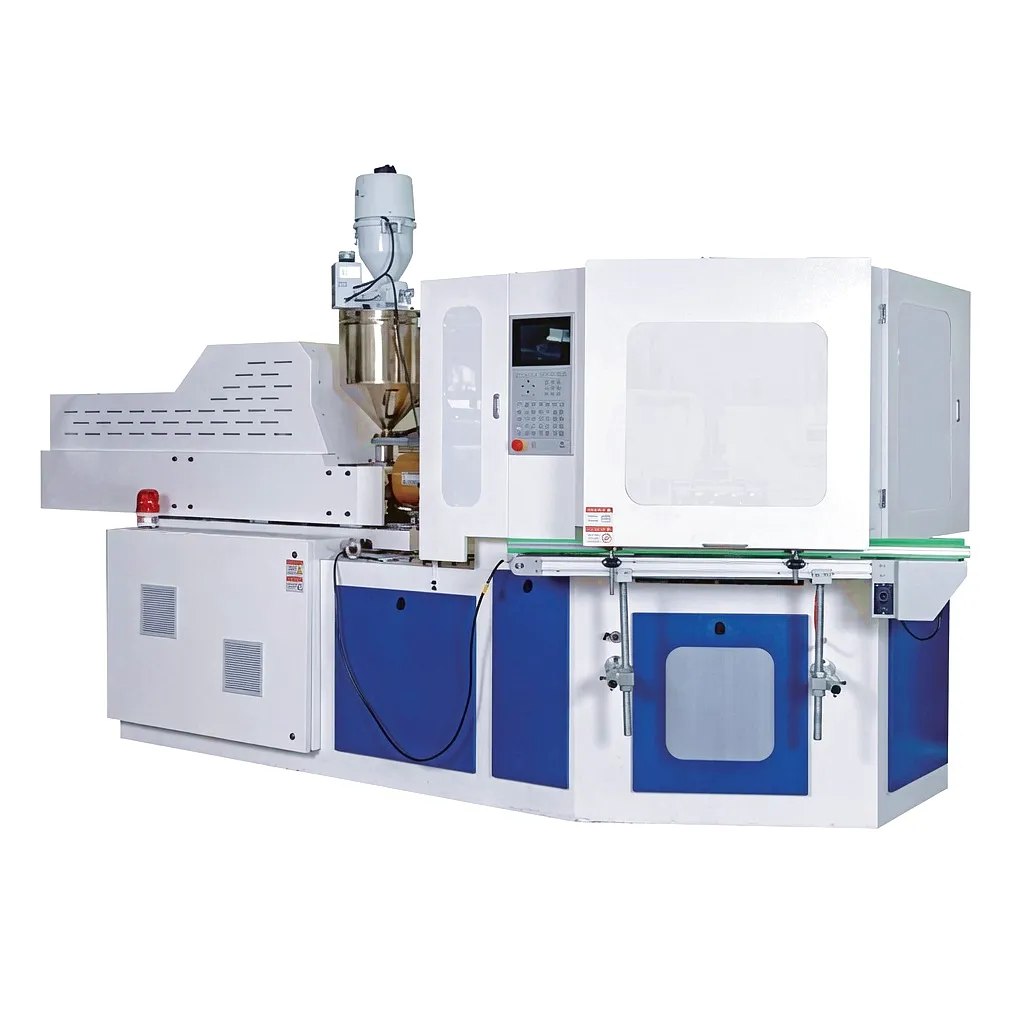
ZQ40 Injection-Blow Molding Machine (European)
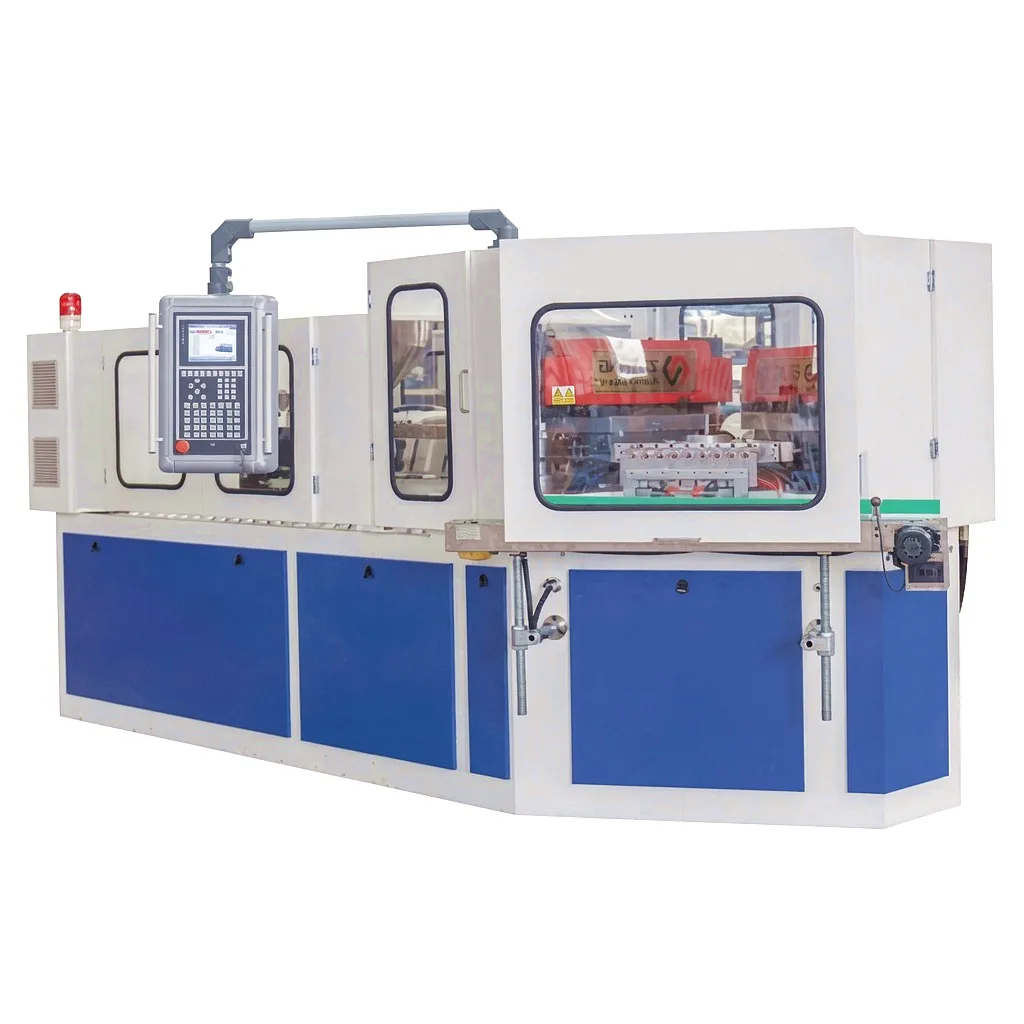
The ZQ40 is engineered for small-to-medium pharmaceutical bottle production: oral solid drug bottles from 15ml to 300ml, CRC pharmaceutical bottles, and amber medicine containers up to 40mm neck diameter. Its compact footprint suits cleanroom-adjacent installations, while Siemens PLC control and CE certification make it immediately deployable in UK and European pharmaceutical packaging facilities. Up to 6-cavity tooling available for high-volume production runs.
ZQ60 Injection-Blow Molding Machine (European)
The ZQ60 steps up capacity with 60mm maximum neck diameter capability, covering the full range of multi-dose pharmaceutical containers, wide-mouth vitamin bottles, and larger amber dispensing bottles up to 600ml. The 8-cavity maximum tooling option delivers the output rates needed for contract pharmaceutical packaging operations — a growing sector in the North West of England and the Midlands. PETG processing compatibility extends its application to nutraceutical and OTC packaging with glass-like visual appeal.
Ever Power Manufacturing: Precision, Scale & Customisation
Factory Capability & Custom Machine Engineering
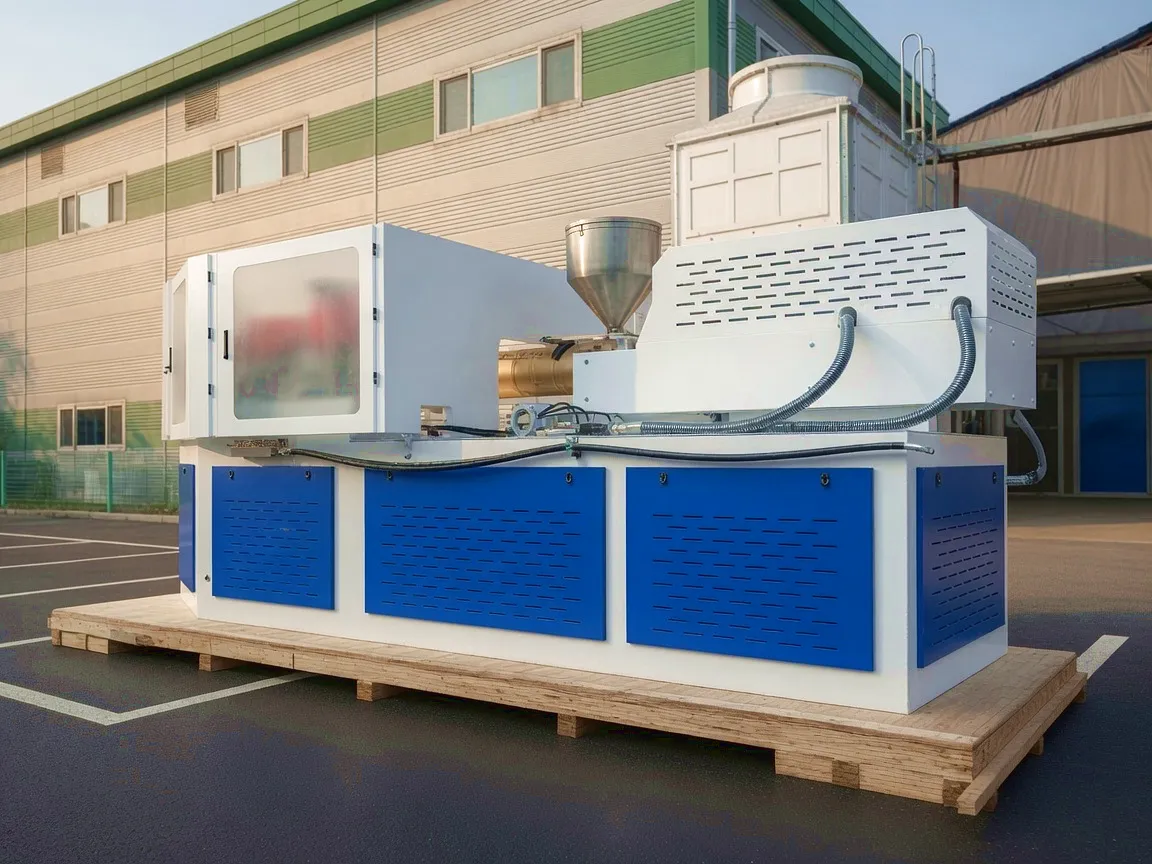 Ever Power has spent more than two decades refining its injection-blow molding machine manufacturing capability into one of the most technically complete platforms in the global market. The production facility encompasses machining centres capable of achieving the micron-level tolerances that pharmaceutical IBM tooling demands, supported by a metrology laboratory equipped for full CMM (coordinate measuring machine) verification of critical cavity dimensions. This in-house measurement infrastructure is not incidental — it is the mechanism by which Ever Power guarantees that the neck finish tolerances specified in a customer’s packaging qualification documentation are physically delivered by the tooling installed in each machine.
Customisation is central to how Ever Power approaches pharmaceutical packaging projects. Standard machine platforms — such as the ZQ40 and ZQ60 — serve as starting points rather than fixed configurations. UK pharmaceutical packaging clients regularly specify modifications including sealed blow enclosures with filtered air supply for clean environment operation, integrated neck-dimension optical inspection systems operating at production line speed, cavity-individual temperature monitoring for multi-cavity tools processing amber-pigmented resins, and custom mandrel geometries to accommodate proprietary CRC neck finish specifications not captured in industry-standard tooling catalogues.
The supply chain infrastructure supporting UK deliveries includes European spare-parts stocking, with a service engineering team that supports installations across the British Isles on competitive response timescales. For pharmaceutical packaging operations where planned maintenance windows are narrow and unplanned downtime is commercially severe, this support structure is as important as the machine specification itself. Ever Power’s documented field service record across European pharmaceutical customers spans tablet bottle lines, amber dispensing bottle operations, and CRC packaging lines in the UK, Ireland, the Netherlands, and Germany.
Discuss your pharmaceutical packaging project with Ever Power
Custom machine configurations, tooling specifications, and delivery timescales for UK pharmaceutical packaging operations — contact our engineering sales team directly.
Auxiliary Equipment & Complete Line Integration
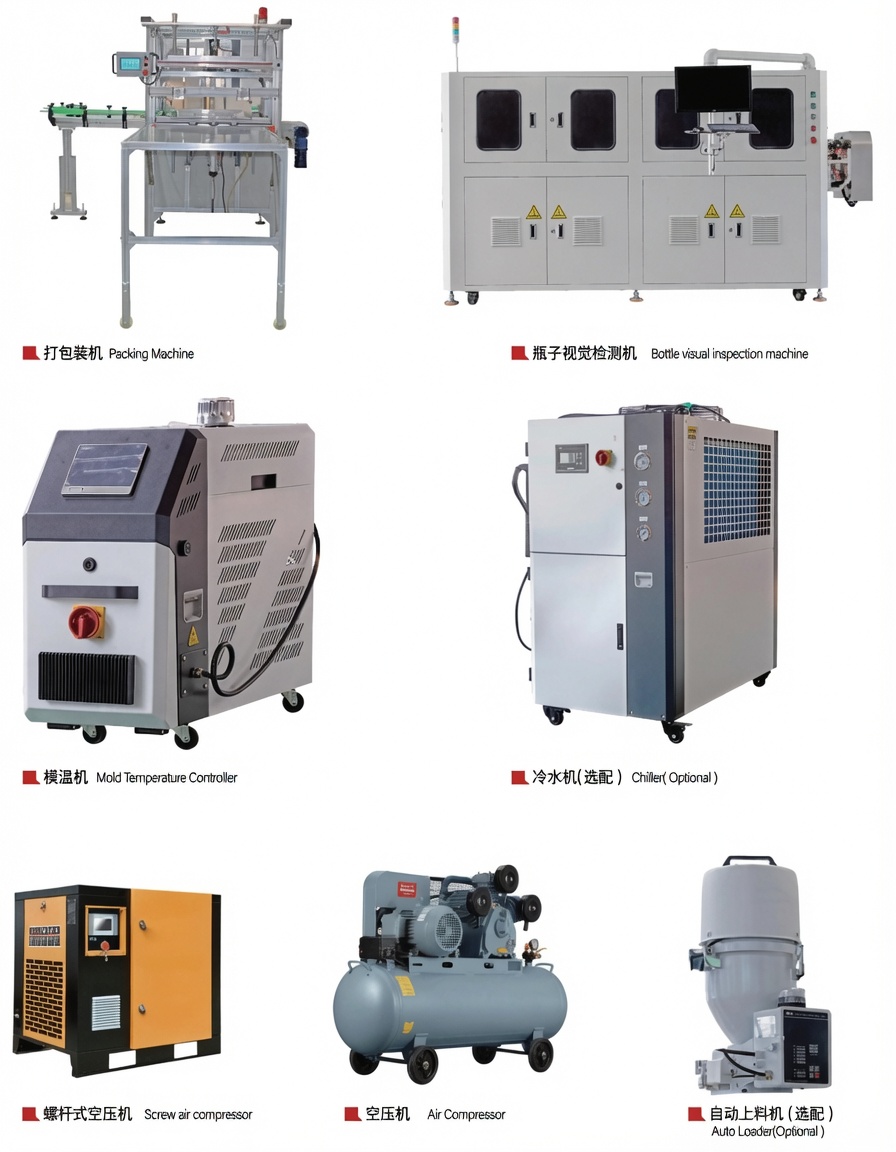
A complete pharmaceutical container production line extends beyond the IBM machine itself. Ever Power supplies integrated auxiliary equipment packages that include mold temperature controllers (MTCs) maintaining cavity cooling circuit temperatures to within ±0.5°C, chiller units delivering the sub-ambient cooling water flows required for optimal cycle times, hopper dryers and dehumidifying dryers for pre-conditioning hygroscopic resins such as PET and PETG to moisture levels below 50ppm before processing, and conveyor systems linking the IBM output to downstream inspection, orientation, and container unscrambling equipment. For pharmaceutical packaging operations in Birmingham, Manchester, or London, the ability to specify and procure the complete line — rather than integrating individual sub-supplier components — substantially reduces project management complexity and commissioning risk.
Line qualification support, including Installation Qualification (IQ), Operational Qualification (OQ), and Performance Qualification (PQ) documentation packages, is available from Ever Power’s technical team for UK pharmaceutical clients operating under MHRA GMP requirements. This documentation service significantly accelerates the qualification timeline for new IBM lines in regulated pharmaceutical environments.
Nottingham Pharmaceutical Packager Upgrades CRC Bottle Line
Midlands UK — Prescription Dispensing Container Manufacturing
A mid-sized contract pharmaceutical packager operating two production sites in and around Nottingham faced a familiar problem: their existing extrusion blow molding line for 100ml and 200ml HDPE child-resistant closure bottles was generating unacceptable levels of parting-line flash. The flash trimming station — a mandatory downstream step in their EBM process — was responsible for approximately 3.8% of their annual HDPE resin spend being landfilled as unrecoverable trim scrap, and the trimming blades were a persistent maintenance liability. More critically, the company’s quality manager had identified airborne particulate contamination events in their bottle unscrambler — traceable to the trimming operation — as a recurring non-conformance in their quarterly GMP internal audits.
After evaluating multiple IBM equipment suppliers, the Nottingham operation selected an Ever Power ZQ60 configured with a 6-cavity pharmaceutical-grade tool and a Siemens-based PLC control system with full production data logging. The project required custom tooling to accommodate a proprietary push-and-turn CRC neck finish specification owned by one of the company’s major NHS dispensary clients — a modification that Ever Power’s tooling engineering team executed from customer drawings without requiring any modification to the machine’s standard mechanical configuration.
Post-installation results over the first 12 months of production included a complete elimination of the trimming operation and its associated particulate non-conformances, a measured reduction in HDPE resin usage per bottle of approximately 4.2% through wall thickness optimisation enabled by the IBM process’s superior wall distribution control, and a cycle time that delivered an effective output rate of 1,260 bottles per hour on the 6-cavity tool — exceeding the original EBM line’s output despite the fundamentally different process. The company’s quality team completed their IQ/OQ/PQ documentation within seven weeks of installation, using the technical package provided by Ever Power.
The neck finish consistency we’re seeing from the Ever Power ZQ60 has completely resolved our closure torque variation issue. Our CRC qualification pass rate went from 94% to 99.7% within two production months of switching from our old EBM line. That improvement alone justified the capital investment.
Production Manager, Nottingham Contract Pharmaceutical Packager
Ever Power’s willingness to engineer a custom mandrel for our proprietary CRC neck finish — without demanding a minimum order volume that was beyond our initial project scope — was the deciding factor in the supplier selection. The tooling arrived exactly to our dimensional specification, and we were making on-spec bottles within the first two hours of commissioning.
Head of Tooling Engineering, Midlands Pharmaceutical Packaging Facility
We had three consecutive quarterly GMP audits with zero particulate-related non-conformances after installing the IBM line. Before the change, that section of our audit report was always a point of discussion. The flash-free output from the injection-blow process has made our pharmaceutical filling environment a genuinely cleaner place.
Quality Assurance Director, UK NHS Supply Chain Packaging Partner
Frequently Asked Questions
Voice Search Optimised — Pharmaceutical IBM UK
Ready to Upgrade Your Pharmaceutical Packaging Line?
Contact Ever Power’s pharmaceutical packaging engineering team today. Whether you are specifying a new injection-blow molding line for oral solid drug bottles, CRC containers, or amber medicine bottles — our team will provide a detailed technical proposal matched to your production requirements and UK regulatory context.
✉ Get a Quote — [email protected]
Also explore: ZQ40 IBM Machine | ZQ60 IBM Machine