ISBM Quality Engineering · Defect Diagnostics · UK Packaging Industry
Common Defects in Single-Stage ISBM Bottles
and How to Fix Them
Have a persistent defect to resolve, or looking to upgrade your ISBM production line?
Understanding the Single-Stage ISBM Cycle Before Diagnosing Defects
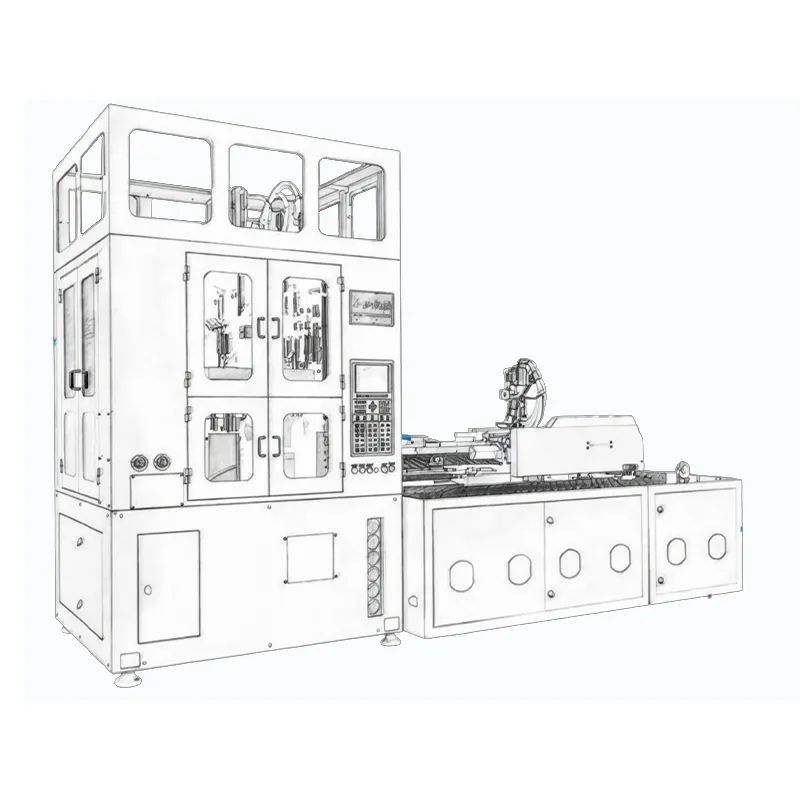
Effective defect diagnosis begins with a clear mental model of what the machine is actually doing at each phase of its cycle. In a single-stage ISBM machine, plastic resin — most commonly PET, though PP, PC, and PETG are also processed — is first melted in the injection unit and injected into a preform mould around a core rod. The preform is a thick-walled, test-tube-shaped object with a fully formed neck finish and a body wall dimensioned to permit subsequent stretch-blow expansion to the final bottle geometry. Unlike two-stage systems, the preform never leaves the machine or cools to ambient temperature. Instead, it transfers directly to a conditioning station, where individually controlled heater segments bring the preform body to the ideal stretching temperature — typically 85°C to 105°C for standard food-grade PET — while the neck, retained in the neck ring assembly, remains cool and dimensionally stable.
Four-Phase Defect Map
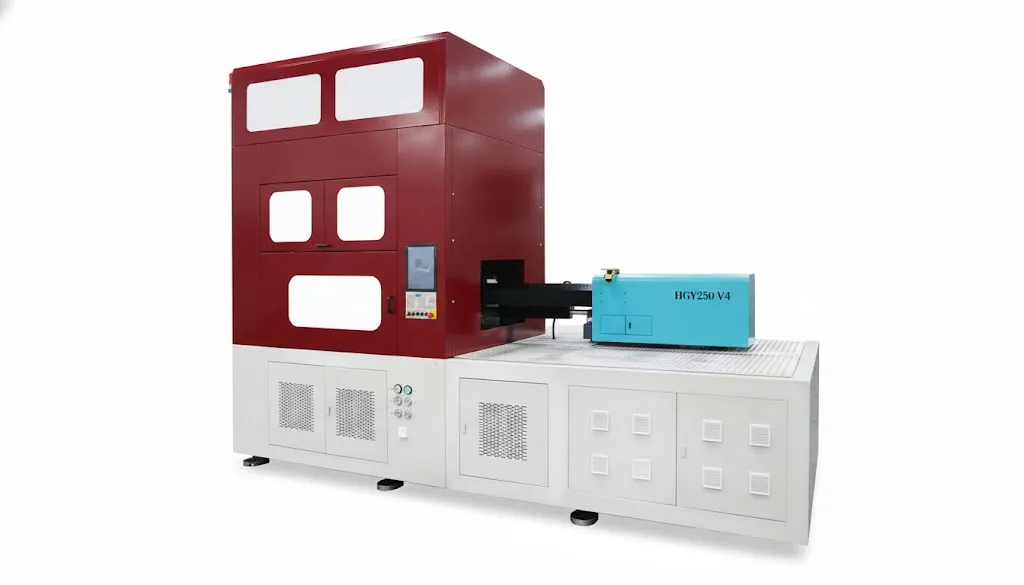
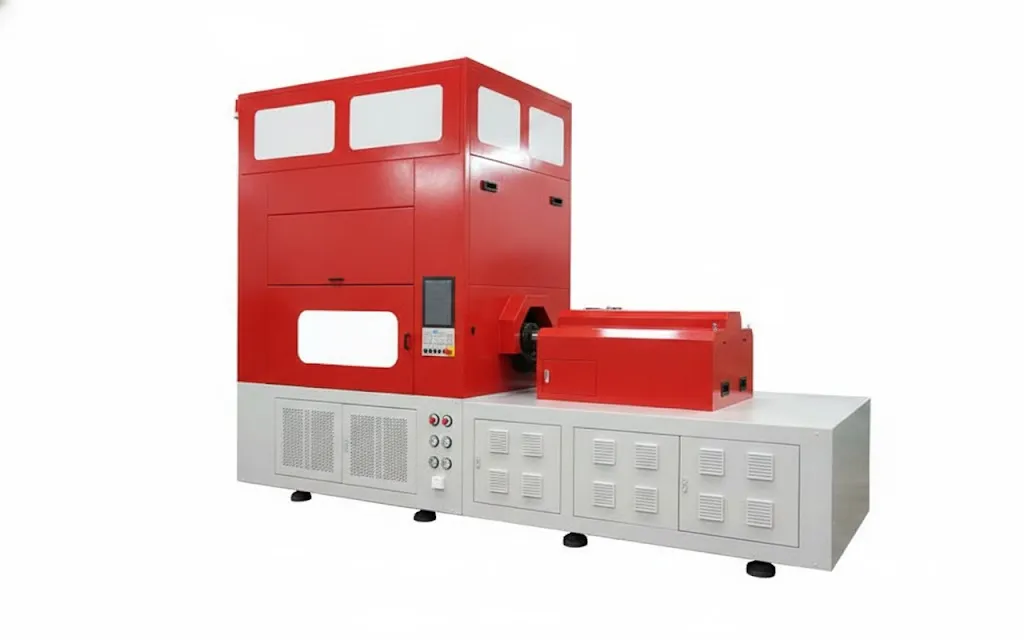
Single-Stage ISBM Machine Technical Performance Parameters
Reference specifications for the Ever Power single-stage ISBM machine series — parameters that directly govern bottle quality and defect risk.
| Parameter | Typical Range / Specification | Notes & Defect Relevance |
|---|---|---|
| Applicable Materials | PET, PP, PC, PETG, PEN | Each resin requires a tailored conditioning temperature profile |
| Bottle Volume Range | 50 ml – 5,000 ml | Larger volumes increase base orientation defect risk |
| Mould Cavities | 1 – 12 cavities | Multi-cavity: flow balance across hot runner is critical |
| Injection Pressure | 80 – 200 MPa | High speed at gate land = gate blush risk |
| Pre-Blow Pressure | 0.6 – 1.5 MPa | Applied before rod completion = pearlescence |
| Final Blow Pressure | 2.5 – 4.5 MPa | Below minimum = short shots and surface texture defects |
| Conditioning Temperature (PET) | 85°C – 120°C (preform body) | Below 85°C = whitening; above 120°C = sag and misshape |
| Axial Stretch Ratio | 2.5:1 – 3.5:1 | Short rod stroke = thick, opaque base gate stub |
| Hoop Stretch Ratio | 3.0:1 – 4.5:1 | Exceeding natural draw ratio = hoop-direction whitening |
| Typical Cycle Time | 8 – 25 seconds | Rushed cycle = insufficient cooling and base/neck failures |
| Mould Cooling Water Temp | 8°C – 15°C | Above 15°C = haze; below dew point = condensation / pitting |
| Preform Weight Range | 5 g – 120 g | Heavier preforms require extended cooling and conditioning times |
| Max. Machine Output | Up to 3,600 bottles/hour | Rate-driven cooling shortfall is a frequent defect trigger |
| PET Moisture Limit (pre-process) | Less than 50 ppm | Excess moisture = haze, reduced IV, brittle bottles |
| Power Consumption | 15 – 75 kW | Depends on machine size, cavity count, and resin type |
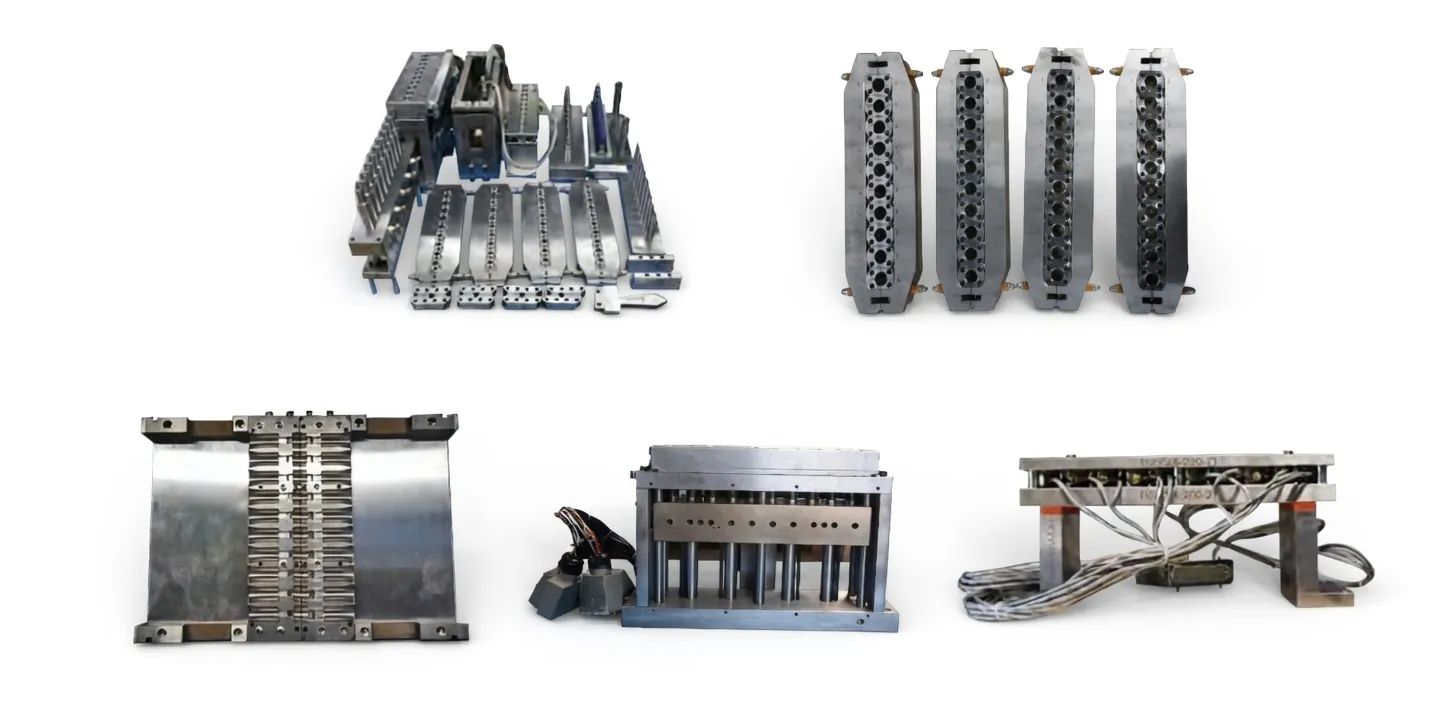
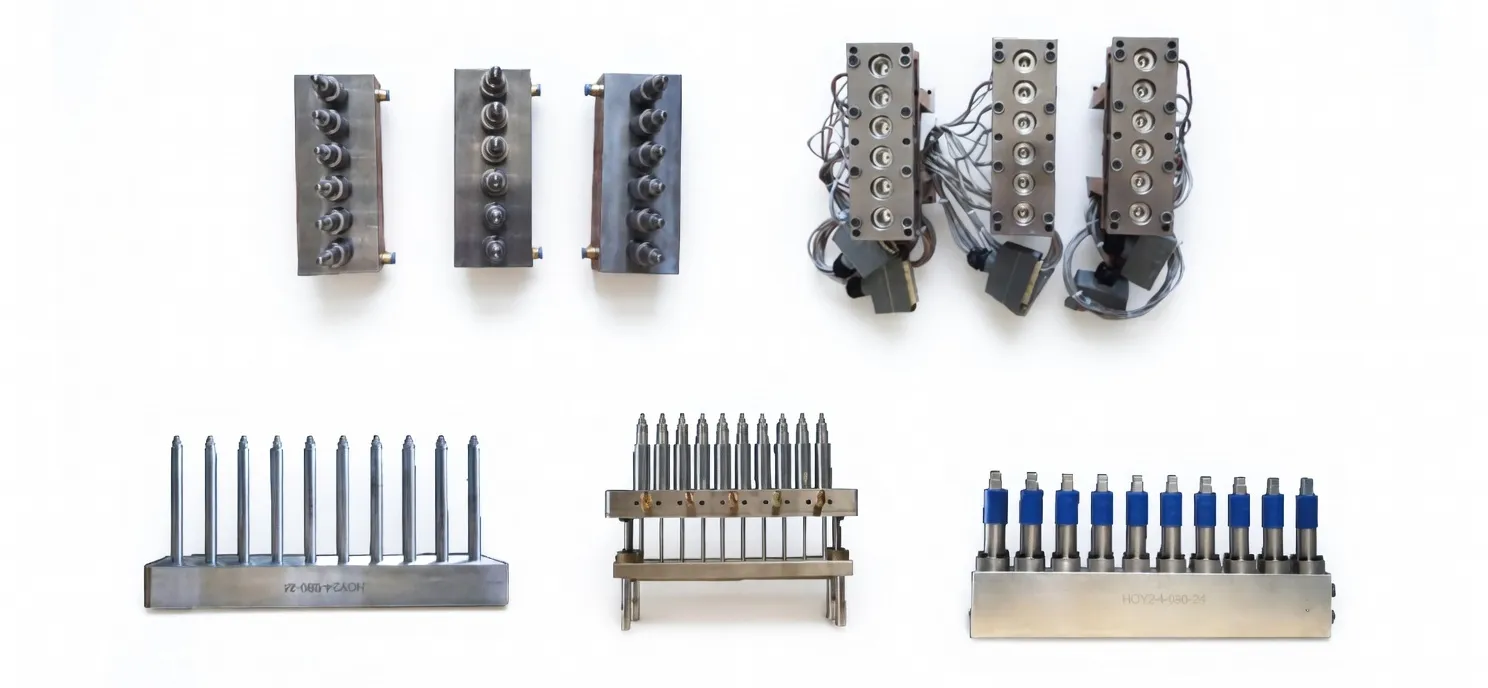
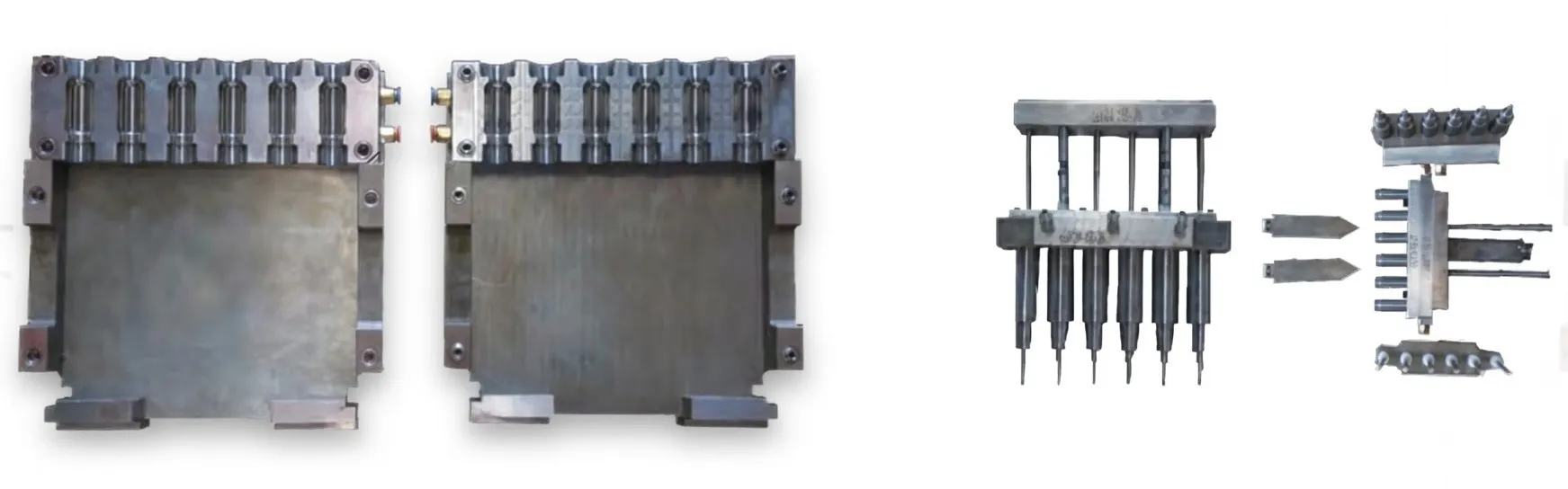
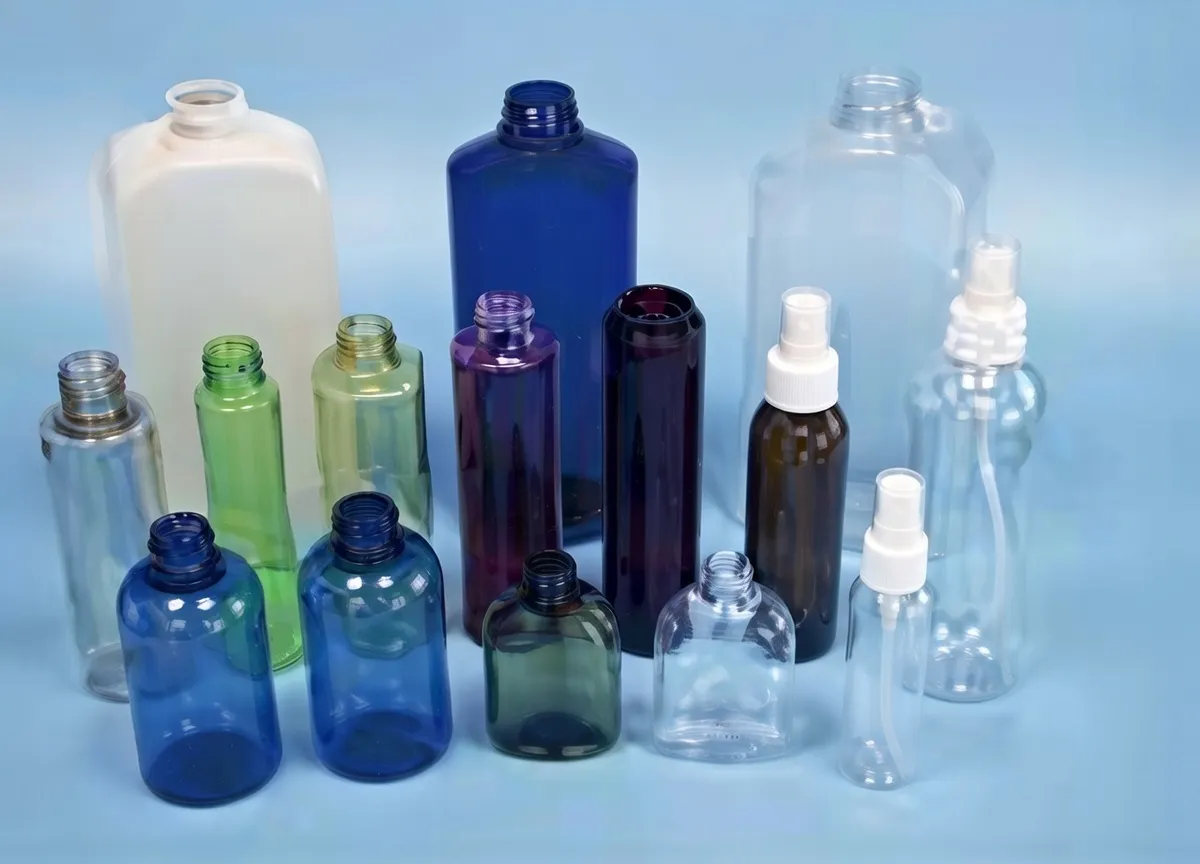
Critical Machine Components That Govern Bottle Quality
The condition and precision calibration of these components determines whether your single-stage ISBM machine produces consistently defect-free bottles or recurring quality problems.
Where UK Manufacturers Depend on Single-Stage ISBM — and Why Defect Control Is Non-Negotiable
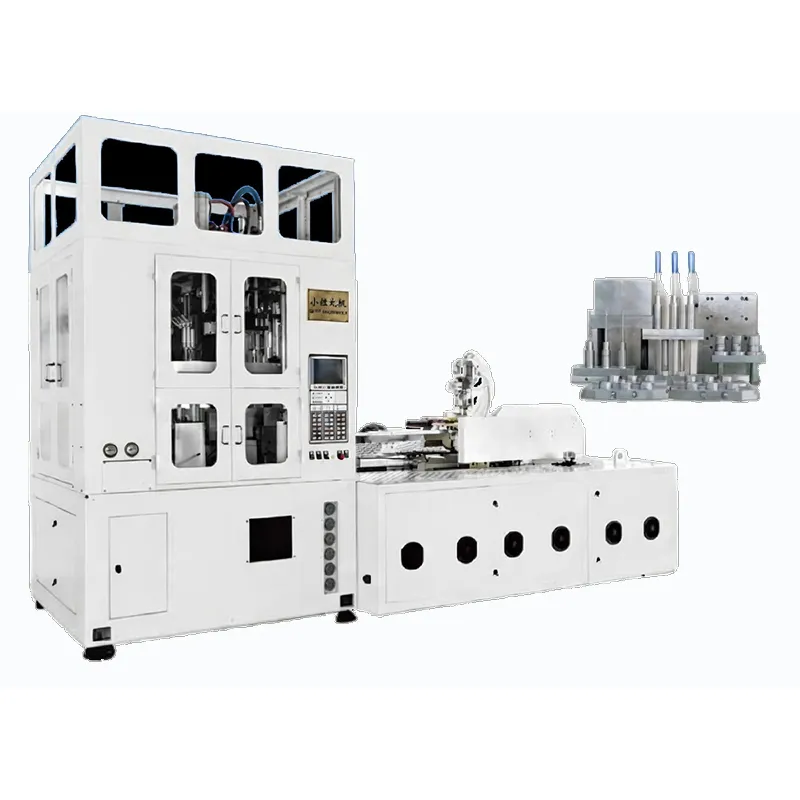
🏃 Pharmaceutical & Healthcare — East Midlands
Pharmaceutical packaging converters in Nottingham, Leicester, and Loughborough operate single-stage ISBM machines to produce amber PET and transparent PETG bottles for tablet, capsule, and liquid medicine applications. In this sector, neck finish accuracy and wall-thickness consistency are mandatory under MHRA-aligned standards, not optional quality targets. Defects such as neck ovality or thread deformation can cause cap torque failure and create a product contamination risk that carries serious regulatory consequences. The closed-cycle nature of single-stage ISBM — which eliminates preform exposure to atmospheric contaminants — makes it particularly well suited to cleanroom-adjacent packaging environments where two-stage reheating equipment introduces unacceptable contamination risk.
🌞 Personal Care & Cosmetics — Birmingham & West Midlands
The West Midlands is home to one of the UK’s most concentrated clusters of personal care product manufacturers and contract packagers, with Birmingham and its surrounding towns maintaining a long tradition in precision manufacturing that extends to high-clarity cosmetics bottles. Haze, pearlescence, and gate blush are commercially unacceptable in bottles supplied to premium fragrance, skincare, and haircare brands whose retail presentation depends on flawless optical quality. ISBM machine operators in this region frequently request precision heater zone mapping services and bespoke cavity cooling improvements — both areas in which Ever Power’s engineering team has a strong track record of delivering documented scrap-rate reductions and quality approval sign-offs.
🍏 Food & Beverage — Yorkshire & the North West
Yorkshire’s food and beverage manufacturing sector — centred on Leeds, Bradford, and the Humber ports area — represents one of the highest-volume applications for single-stage ISBM technology across the UK. Mineral water, juice, and condiment producers run multi-cavity machines on extended shifts where cycle efficiency and consistent bottle quality directly determine per-unit economics. Base failures and short shots carry a particularly high commercial cost in beverage applications: a bottle that fails carbonation pressure retention or collapses under supermarket shelf stacking load generates not only scrap and rework costs but retailer penalties and potential product recall exposure. Structured preventive maintenance aligned with the defect categories in this guide is standard practice on well-run Yorkshire packaging lines.
⚗️ Industrial Chemicals — Merseyside & Greater Manchester
Chemical-resistant bottles for household cleaning products, industrial lubricants, and agricultural chemicals represent one of the most technically demanding ISBM applications, and Merseyside and Greater Manchester support a significant concentration of producers in this category. Manufacturers supplying bottles for bleach, detergent, and agrochemical applications require exceptional base integrity and wall uniformity to withstand both chemical attack and the stresses of high-speed filling lines running above 200 bottles per minute. Stress whitening in the shoulder area and insufficient wall thickness in the grip zone are the defects most likely to result in catastrophic field failure in this sector — and the regulatory and liability implications of a failure in a chemical container make a zero-tolerance defect control approach an operational necessity rather than an aspiration.
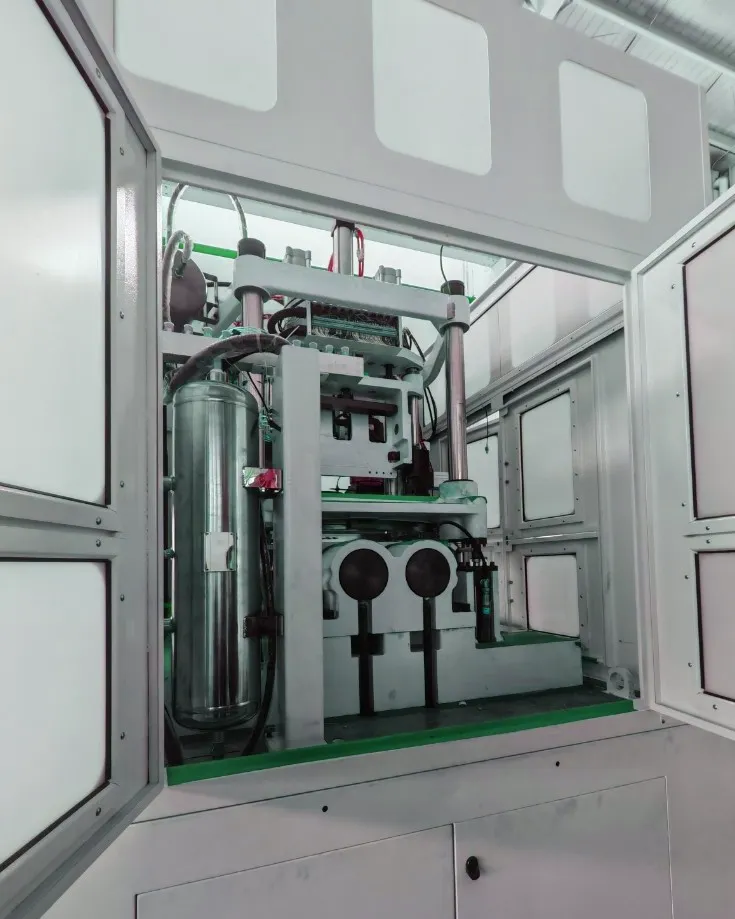
Ever Power · ISBM Manufacturing Excellence
Precision Engineering, Global Delivery, Unmatched Customisation
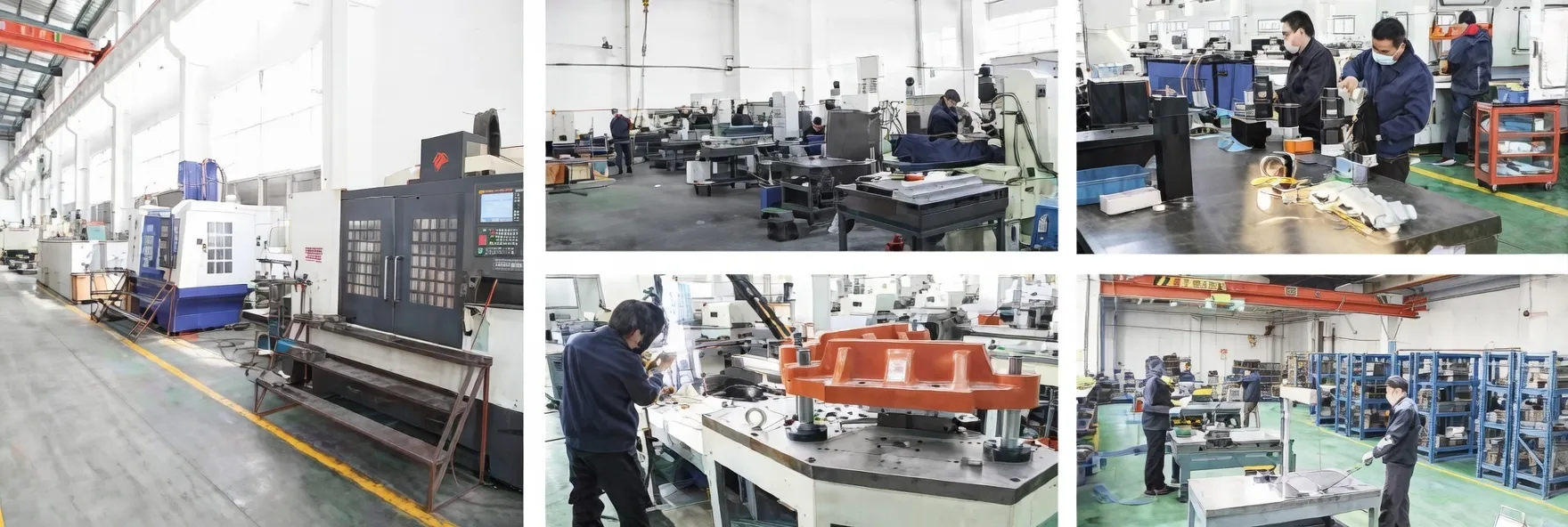
Ever Power has spent over two decades designing and manufacturing single-stage ISBM machines for some of the most demanding packaging applications in the world. Operating from a purpose-built manufacturing facility equipped with CNC precision machining centres, CMM dimensional inspection equipment, and a dedicated R&D process laboratory, Ever Power’s engineering team brings genuine process depth to every machine it builds — and to every defect resolution challenge its customers face. Whether you are establishing a new ISBM production line for a greenfield UK facility or seeking to resolve a persistent quality issue on an existing system, Ever Power offers more than equipment: it offers a partnership grounded in documented engineering performance.
Ever Power’s customisation capabilities span every critical dimension of single-stage ISBM machine design. Cavity count, clamp force, injection unit configuration, conditioning heater arrangement, blow station geometry, and control system specification are all available as engineer-to-requirement solutions rather than catalogue-forced compromises. For UK customers in regulated industries — pharmaceutical, food contact, cosmetics — Ever Power provides full raw material certification for all food- and drug-contact components, factory acceptance testing documentation, and IQ/OQ validation support packages. The company’s supply chain is vertically integrated at key component levels, ensuring consistent lead times and lifetime parts availability for every machine in the field.
20+
Years manufacturing ISBM machines
50+
Countries served including UK
100%
Custom machine configurations available
Customer Success Story: Eliminating Persistent Pearlescence on a Sheffield Production Line
Case File Details
Location: Sheffield, South Yorkshire, UK
Industry: Industrial Lubricants & Automotive Chemicals
Bottle Type: 500 ml and 1 L PET bottles
Machine: Ever Power 4-cavity single-stage ISBM
Defect: Recurring shoulder and grip-zone pearlescence
Pre-intervention scrap rate: 4.2%
Post-intervention scrap rate: 0.3%
Ever Power’s field engineer carried out a full conditioning system audit, mapping each heater zone’s actual thermal output against its setpoint using a calibrated non-contact pyrometer while the machine ran at normal production speed. The investigation revealed that three of the eight conditioning heater elements had degraded to below 80% of their rated power output — a level insufficient to trigger the machine’s standard temperature alarm system, which monitors setpoint deviation rather than element efficiency, but sufficient to drop preform shoulder temperatures by 7–9°C below the optimal stretch window. As the shift progressed and ambient temperature in the Sheffield facility rose with daytime heating, the effective conditioning deficit was compounded rather than partially offset, which explained precisely why the pearlescence worsened through the shift rather than appearing uniformly from start-up.
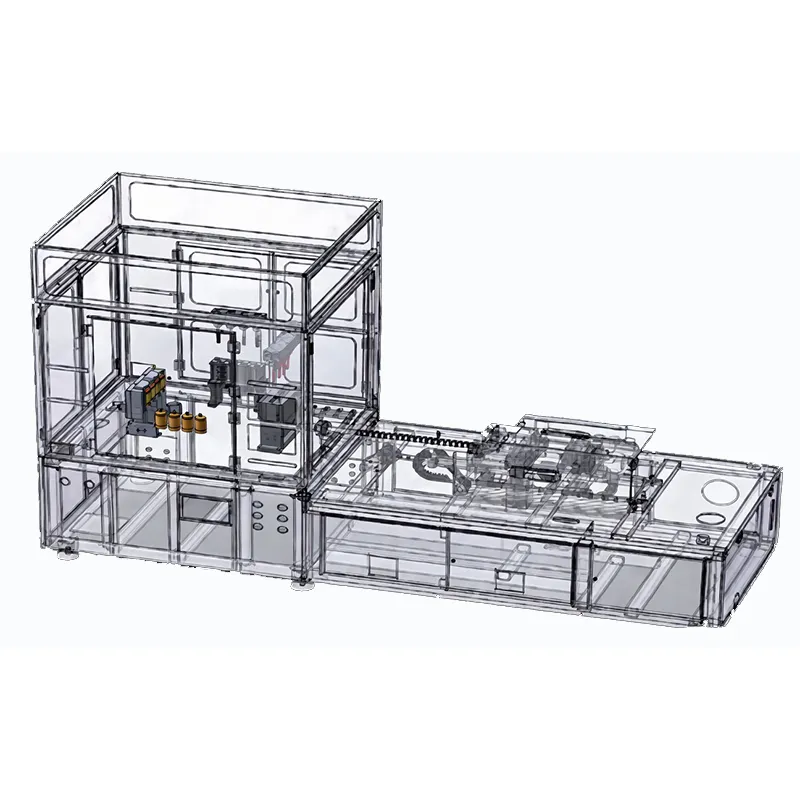
What UK Packaging Manufacturers Say About Ever Power
“We had been managing a wall-thickness variation problem across two production seasons. Ever Power’s field engineer identified the conditioning heater imbalance within a single site visit and had us back to specification within the same shift. The depth of process knowledge they brought was genuinely impressive — they clearly understood the single-stage ISBM cycle at a level our previous machine supplier never demonstrated in several years of service calls.”
— Production Director, Pharmaceutical Packaging, Nottingham
“We specified a custom 6-cavity ISBM machine from Ever Power for a new premium cosmetics bottle line. The tooling came in exactly to our 3D drawings, the neck finish passed BCTC gauge checks first time, and the optical clarity on the clear PET bottles exceeded our minimum haze specification from day one. The commissioning engineer stayed on site until every parameter was locked and fully documented. That is exactly what a capital equipment investment should look like.”
— Operations Manager, Cosmetics Contract Packer, Birmingham
“We run two Ever Power ISBM machines here on Merseyside — one for household cleaning products, one for agricultural chemical bottles. Both have maintained above 97% OEE since commissioning. When a gate sink issue appeared after eighteen months on the second machine, Ever Power diagnosed it remotely via the connected control system and despatched the correct replacement gate insert before we needed to raise a formal service request. Proactive support at that level is rare, and it makes a real commercial difference.”
— Technical Manager, Industrial Chemical Packaging, Merseyside
Frequently Asked Questions
Answered for UK packaging engineers, production managers, and procurement teams evaluating single-stage ISBM equipment and defect solutions.
What are the most common quality defects found in single-stage ISBM PET bottles produced on UK manufacturing lines?
The defects most frequently encountered on single-stage ISBM machines in the UK are uneven wall thickness distribution, pearlescence or stress whitening — particularly in the shoulder zone — optical haze and poor clarity, neck finish dimensional drift, gate sink at the bottle base, and surface texture defects such as orange peel or micro-pitting. UK production environments, particularly those in the North West and Yorkshire where older machine estates are common, also report a higher incidence of haze attributable to scaling in cooling water circuits. The commercial priority ranking of each defect category varies by industry: pharmaceutical manufacturers in the East Midlands regard neck finish accuracy as their most critical parameter, while cosmetics converters in Birmingham are most sensitive to optical clarity and surface finish, and beverage producers in Leeds prioritise base integrity and carbonation retention.
How do I fix pearlescence in the shoulder area of bottles coming off my single-stage ISBM machine during the production shift?
Shoulder-area pearlescence in single-stage ISBM is almost always caused by the preform shoulder temperature running below the optimal stretch window at the point of blowing. Use a calibrated IR pyrometer to measure actual preform shoulder temperature — never assume the controller setpoint reflects the actual preform surface temperature, particularly on older machines with degraded thermocouple circuits. If the shoulder reads below 90°C for standard PET, increase the conditioning zone setpoint in 2°C steps and inspect all conditioning heater elements for power output degradation. Also check the pre-blow delay timer — if pre-blow air is admitted before the stretch rod has completed at least 60% of its axial stroke, the shoulder material is forced to stretch radially in a cold, brittle state regardless of the conditioning temperature setpoint.
Which single-stage ISBM machine configuration is the best fit for a pharmaceutical packaging operation in Nottingham or Leicester in the East Midlands?
Pharmaceutical packaging operations in the East Midlands typically require a single-stage ISBM machine with a minimum of four independently controlled conditioning heater zones per preform station, a precision neck ring cooling system capable of maintaining neck temperature within ±2°C across the full production shift, and a control system with comprehensive parameter logging for batch traceability. Ever Power’s pharmaceutical-grade ISBM configurations are supplied with full IQ/OQ validation documentation, material certifications for all food- and drug-contact components, and are available with FDA-compliant hydraulic fluids and cleanroom-compatible surface finishes for the preform contact zones. Contact the Ever Power team at [email protected] to discuss your specific bottle volume, resin type, neck standard, and annual output requirements in detail.
How much does a single-stage ISBM blow moulding machine cost, and how can I get a competitive price quote for a packaging line in Birmingham or Sheffield?
The price of a single-stage ISBM machine varies significantly with cavity count, bottle volume range, resin capability, degree of automation, and any sector-specific requirements such as pharmaceutical validation documentation or enhanced control architecture. Entry-level 1- and 2-cavity machines for volumes up to 500 ml start at a lower investment level than high-output 8- to 12-cavity systems designed for large-format beverage containers. For UK-based operations in Birmingham, Sheffield, or anywhere else across Great Britain, Ever Power provides a no-obligation technical and commercial quotation based on your actual bottle specification, annual volume target, and site utility constraints. Send your bottle drawing, neck finish standard, resin specification, and output requirement to [email protected] — the sales engineering team typically responds within 24 hours with a detailed proposal.
What cycle time should I realistically expect from a single-stage ISBM machine producing standard 500 ml PET bottles, and when does faster cycling create defects?
A 4-cavity single-stage ISBM machine producing a standard 500 ml PET bottle with a 28 mm PCO neck finish will typically achieve cycle times of 10–14 seconds under fully optimised conditions, corresponding to outputs of roughly 1,000–1,440 bottles per hour per cavity. Cycle time has a direct and often under-appreciated relationship with defect occurrence — compressing cooling time to achieve a faster cycle is one of the most common process compromises made on high-throughput UK packaging lines, and it drives base failures, neck dimensional creep, and increased haze simultaneously. The correct approach to optimising cycle time is to address mechanical transfer timing, injection fill and pack phase efficiency, and conditioning station dwell balance, rather than sacrificing the cooling time that bottle quality fundamentally depends on.
What should I check first when my ISBM machine starts producing bottles with hazy or milky appearance that was not present during initial commissioning?
When haze develops on a previously clear-running single-stage ISBM production line, the cooling circuit is the first and most productive place to check. Scale build-up in mould cooling channels over months of operation is the single most common cause of gradual haze onset on established lines — the mould gradually runs warmer as channel flow rate drops, and bottle clarity degrades incrementally until it crosses the visual acceptance threshold. Flush and descale the cooling circuit, verify actual flow rate and inlet temperature at the mould, and confirm the chiller unit is delivering water at the specified temperature under full production demand. If the cooling circuit checks out, investigate any recent PET raw material lot changes — a new batch with elevated moisture content, different resin grade, or altered intrinsic viscosity can produce haze even with an otherwise unchanged machine process.
Where can a UK packaging manufacturer find a reliable ISBM machine supplier who offers genuine customisation capabilities and long-term after-sales service rather than a standard off-the-shelf product?
Ever Power is one of a small number of single-stage ISBM machine manufacturers that operates a genuine engineer-to-order capability rather than a fixed catalogue model. Every machine is configured to the customer’s specific bottle geometry, resin specification, neck standard, and output target, with cavity count, injection unit size, conditioning heater arrangement, and blow station geometry specified individually rather than selected from a standard range. For UK packaging manufacturers — whether based in Birmingham, Sheffield, Nottingham, Leeds, Manchester, Glasgow, or anywhere else across Great Britain and Northern Ireland — Ever Power provides comprehensive pre-sales application engineering, on-site commissioning support, remote process monitoring via the machine’s connected data interface, and a structured lifetime spare parts programme. Send enquiries directly to [email protected] to receive a detailed technical and commercial proposal.
How do I determine whether asymmetric wall thickness in my ISBM bottles is caused by the injection mould or the blow station, and what diagnostics confirm it?
The most reliable way to distinguish between an injection-side and a blow-station cause for wall thickness variation is to measure the preform wall before blowing. If preform wall variation exceeds ±5% of nominal thickness at four circumferential measurement positions, the injection tooling — specifically core pin centring accuracy, runner flow balance in multi-cavity tooling, or injection speed profile — is the primary suspect and should be addressed before any blow-station parameters are adjusted. If the preform wall is within specification but the blown bottle shows asymmetric thickness distribution, the cause lies in the blow station: conditioning heater zone uniformity, stretch rod concentricity, blow pin alignment, or blow air admission timing are the variables to investigate. Many UK ISBM operations do not routinely measure preform wall thickness as part of their quality plan, which leads to systematic over-adjustment of blow-station parameters on what are actually injection-tooling issues — a time-consuming diagnostic loop that a simple ultrasonic gauge check resolves in minutes.
Ready to Eliminate ISBM Bottle Defects for Good?
Whether you need a new single-stage ISBM machine configured precisely to your bottle specification, a process engineering audit to resolve a persistent quality issue, or a spare-parts and service quotation for an existing line, Ever Power’s team of ISBM specialists is ready to help. UK enquiries receive a prioritised response — typically within 24 hours of first contact.
edit by gzl