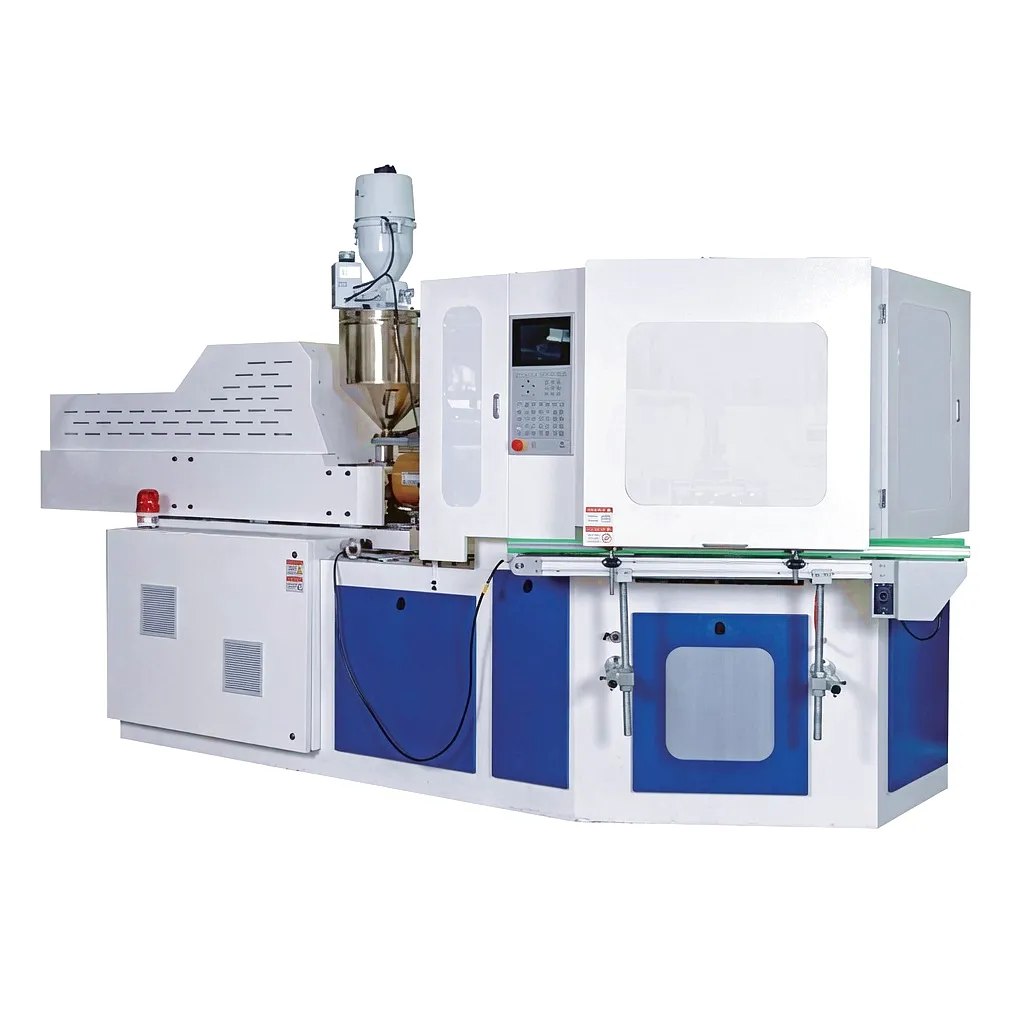
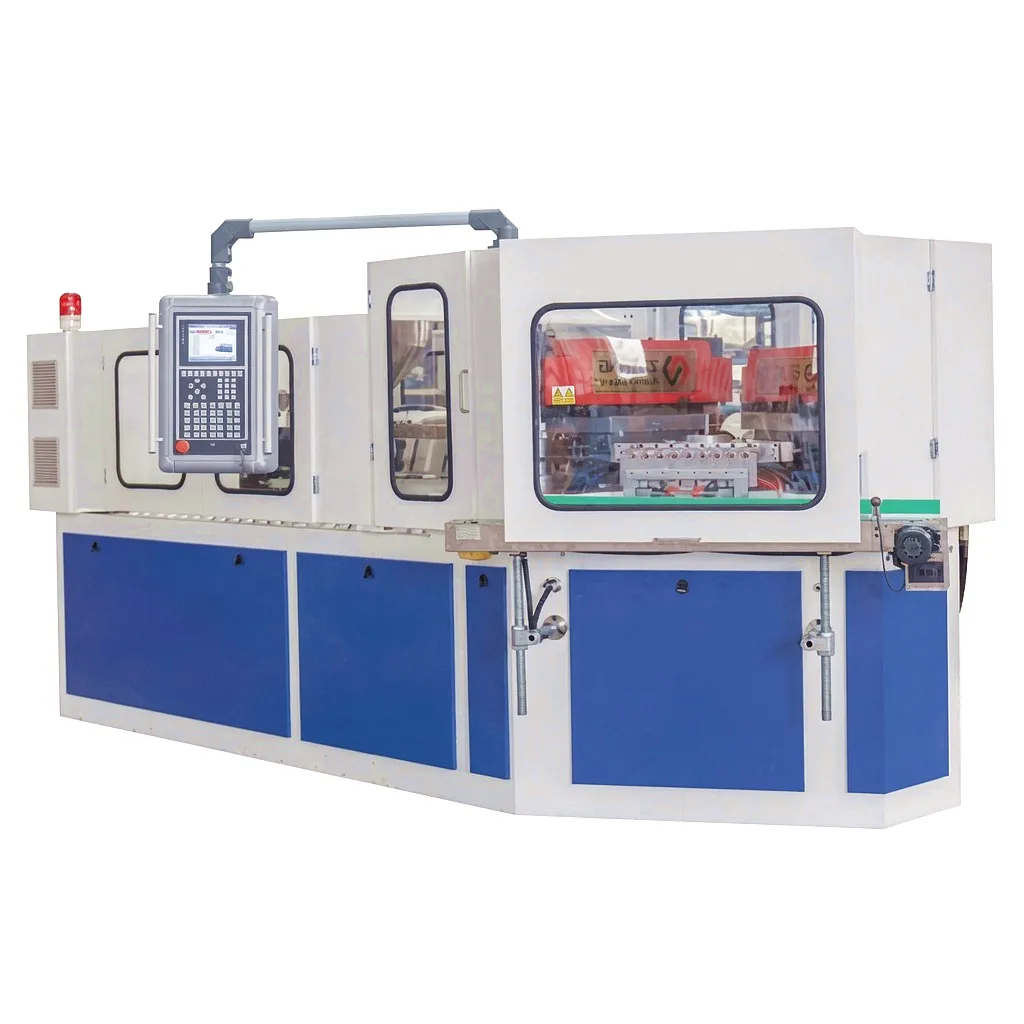
 Pharmaceutical packaging has always sat at the intersection of precision engineering and regulatory compliance. In the United Kingdom, where the Medicines and Healthcare products Regulatory Agency (MHRA) enforces some of the world’s most rigorous container standards, the choice of manufacturing equipment carries consequences that reach far beyond the factory floor. An injection-blow molding machine capable of producing oral solid drug bottles, child-resistant closure caps, and amber medicine vials to consistent dimensional tolerances is not merely a capital investment — it is a quality assurance instrument embedded into the production line itself. The technology integrates injection molding and blow molding into a single, continuous cycle, eliminating the inter-stage contamination risks that plague two-step processes and delivering containers whose wall thickness uniformity, neck-finish accuracy, and surface integrity meet pharmaceutical-grade specifications from the very first cycle.
How an Injection-Blow Molding Machine Works
Injection Stage
Molten polymer — HDPE, PP, or PET — is injected under controlled pressure around a hardened steel core rod to form a precisely dimensioned preform. Neck geometry, thread form, and wall distribution are all determined at this stage, making injection tooling accuracy the foundation of finished container performance.
Transfer & Blow Stage
The preform, still on the core rod and at a thermally precise temperature window, rotates into the blow station. Pressurised air expands it against the cavity wall, replicating body geometry with sub-millimetre fidelity. No separate reheating is required, eliminating energy waste and residual stress concentrations that weaken containers.
Stripping Stage
Finished containers are stripped from the core rod and conveyed automatically to downstream inspection or filling lines. The closed-loop nature of the process — injection, blow, and strip all occurring within one machine cycle — means containers are never exposed to open-air particulate contamination between stages, a critical advantage for pharmaceutical production environments.
Application Scene 1 — Oral Solid Drug Bottles
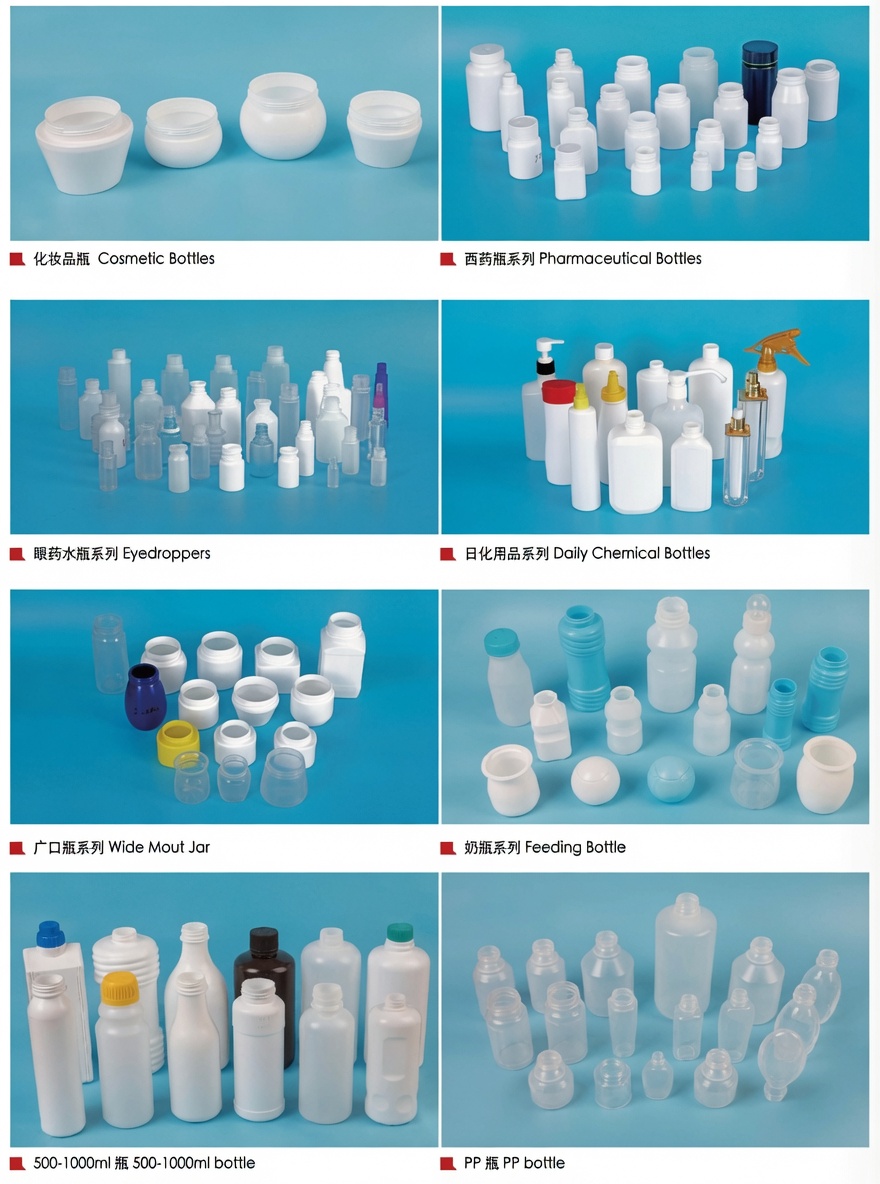
 Oral solid dosage forms — tablets, capsules, and effervescent discs — require containers whose neck-finish accuracy governs both child-resistant and adult-use closure engagement. A poorly formed thread profile means a cap that either torques off too easily (failing child-resistance tests under EN ISO 8317) or seizes so firmly that elderly patients cannot open it, triggering product returns and reputational damage. The injection-blow molding machine addresses this challenge at the tooling level: because the neck is formed entirely during the injection stage around a precision-ground core rod, and is never reheated or mechanically repositioned before the cap is applied, dimensional variability across a production run is measured in microns rather than tenths of millimetres.
Key advantage for UK pharmaceutical lines: MHRA GMP Annex 1 compliance is streamlined when primary container dimensional data is recorded by the injection-blow machine’s PLC and exported directly to the batch manufacturing record system, supporting electronic batch records without additional measurement stations.
Application Scene 2 — Child-Resistant Closure Pharmaceutical Bottles
Child-resistant packaging legislation in the United Kingdom, rooted in the Poisons Act and reinforced by ISO 8317:2015, mandates that closures on certain pharmaceutical products resist opening by at least 85% of children under five while remaining accessible to 90% of adults tested. Meeting both criteria simultaneously demands that the bottle neck — the interface between container and cap mechanism — exhibits a thread form, neck-finish outer diameter, and sealing-surface flatness that are maintained to tolerances tighter than those applied to standard industrial containers. The injection-blow molding machine is uniquely suited to this requirement because it produces the neck geometry in a single, thermally controlled injection event, without the weld lines or post-mold deformation that characterise two-piece neck-in-mold blow molding.
Push-and-turn caps, squeeze-and-turn mechanisms, and continuous-thread child-resistant closures each impose different neck-finish load profiles during the child-test sequence. An injection-blow molding machine running PP homopolymer at a melt temperature of 220°C to 240°C produces neck-finish hardness values that resist deformation under the 2 Nm engagement torque applied during child resistance testing, while the inherent flexibility of the PP bottle body absorbs lateral forces without cracking — a balance that HDPE cannot achieve at equivalent wall thicknesses. Ever Power’s tooling engineers work with UK packaging validation teams from early concept stage to define neck-finish geometry, specifying core-rod surface hardness, cooling channel geometry, and draft angles that yield qualification samples within the first tool trial, compressing the typical 12-week tooling validation timeline to eight weeks or fewer.
Why PP for CRC Bottles?
- Higher flexural modulus than HDPE at equivalent wall thickness
- Superior chemical resistance to aqueous drug solutions
- Lower water vapour transmission rate
- Compatible with induction-foil sealing liners
- Recyclable under UK PRN/PERN extended producer responsibility schemes
Beyond neck performance, child-resistant closure bottles for liquid oral medications — paediatric antibiotics, cough syrups, and iron supplements — require body geometry that allows dosage markings to be embossed or printed with sufficient contrast for caregivers under low-light conditions. The injection-blow molding machine’s blow cavity design controls body taper, sidewall flatness, and surface texture in a way that extrusion-blow molding cannot match, because the polymer is distributed from a preform of controlled geometry rather than an extruded parison of variable wall thickness. UK pharmaceutical manufacturers in Leicester and Nottingham have standardised on injection-blow molding platforms for their liquid OTC ranges precisely because the resulting bottles pass post-fill visual inspection at line speeds of 12,000 units per hour without the rate of edge-flaw rejection they experienced with extrusion-blow alternatives.
Application Scene 3 — Amber Medicine Vials
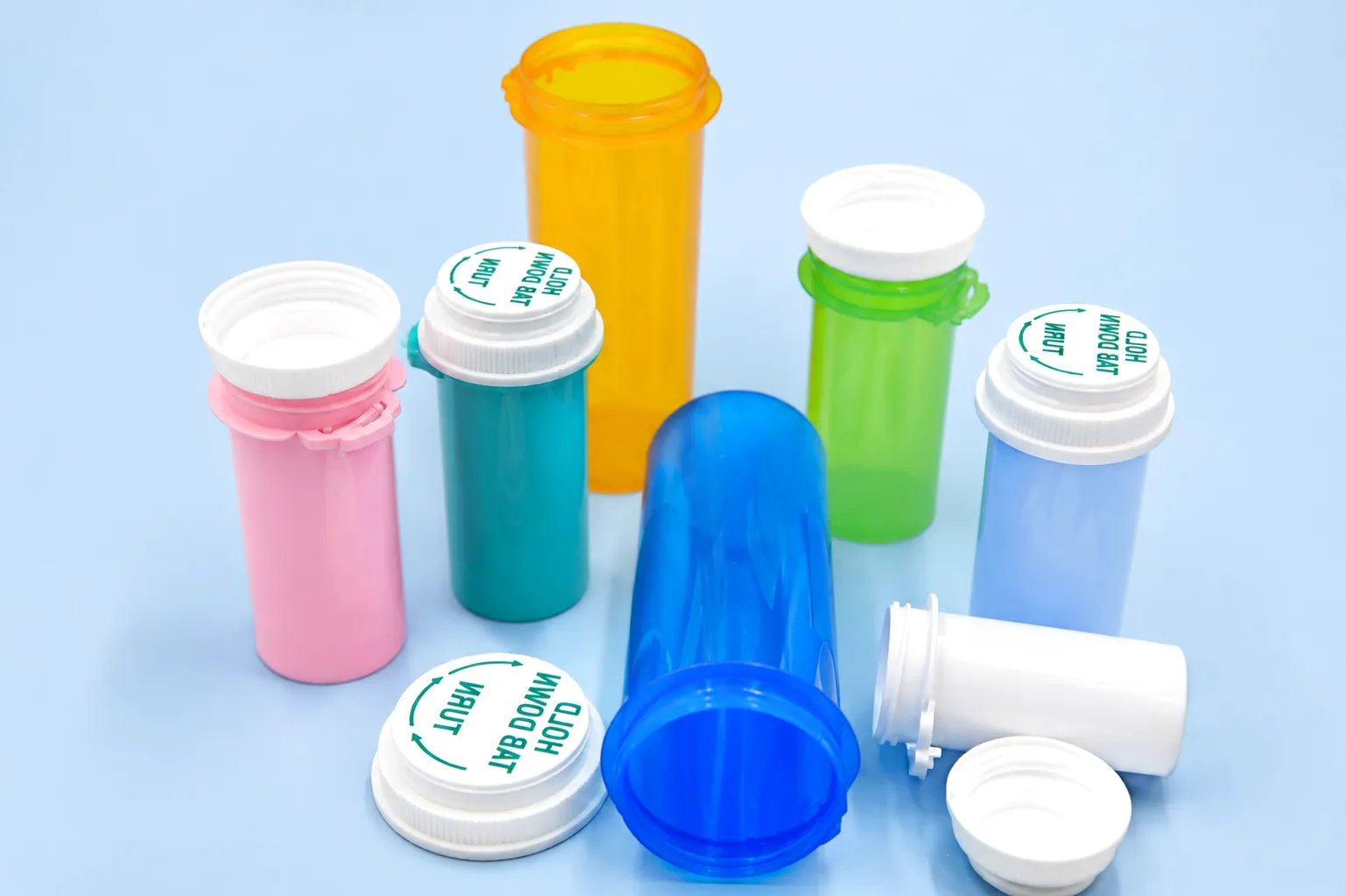 Amber medicine vials represent one of the most technically demanding products produced on injection-blow molding equipment. The amber colouration — achieved through a precisely metered blend of iron oxide and carbon black masterbatch in a PET or PETG matrix — must deliver ultraviolet light transmission values below 10% across the 290 nm to 450 nm wavelength range, as specified in European Pharmacopoeia 3.1.5 and the British Pharmacopoeia Appendix XVII. Meeting this requirement in a thin-walled vial, where the effective amber pigment concentration in the blow-expanded body wall drops relative to the preform, demands extraordinary control over the preform wall distribution and blow ratio — both of which are governed by the injection-blow molding machine’s core-rod geometry and blow-pressure profile.
Core Materials Used in Pharmaceutical Injection-Blow Molding
HDPE
High-density polyethylene is the workhorse material for solid oral dosage bottles. Excellent moisture barrier, impact resistance at ambient and cold-chain temperatures, and straightforward compatibility with desiccant closures make it the standard for tablet and capsule packaging across the UK generic medicines sector.
PP (Polypropylene)
Polypropylene’s superior chemical resistance and autoclavability make it the first-choice material for liquid pharmaceutical containers and child-resistant closure bottles. Its higher melt flow index relative to HDPE allows injection of more complex neck-finish geometries, supporting push-and-turn and snap-hinge closure formats.
PET / PETG
PET offers the clarity and gas-barrier properties required for vitamins and effervescent preparations, while PETG’s lower crystallinity enables the amber pigment distribution consistency needed for light-sensitive API vials. Both materials exhibit low extractables profiles suitable for prolonged drug contact under ICH Q3 guidelines applied across UK and EU markets.
PC (Polycarbonate)
Polycarbonate is selected for high-clarity, high-impact applications such as hospital inpatient eye-drop bottles and surgical preparation vials where drop-resistance under clinical handling conditions outweighs cost considerations. The injection-blow molding machine’s ability to maintain PC melt temperatures above 280°C without thermal degradation is a core capability differentiator.
Auxiliary Equipment Ecosystem
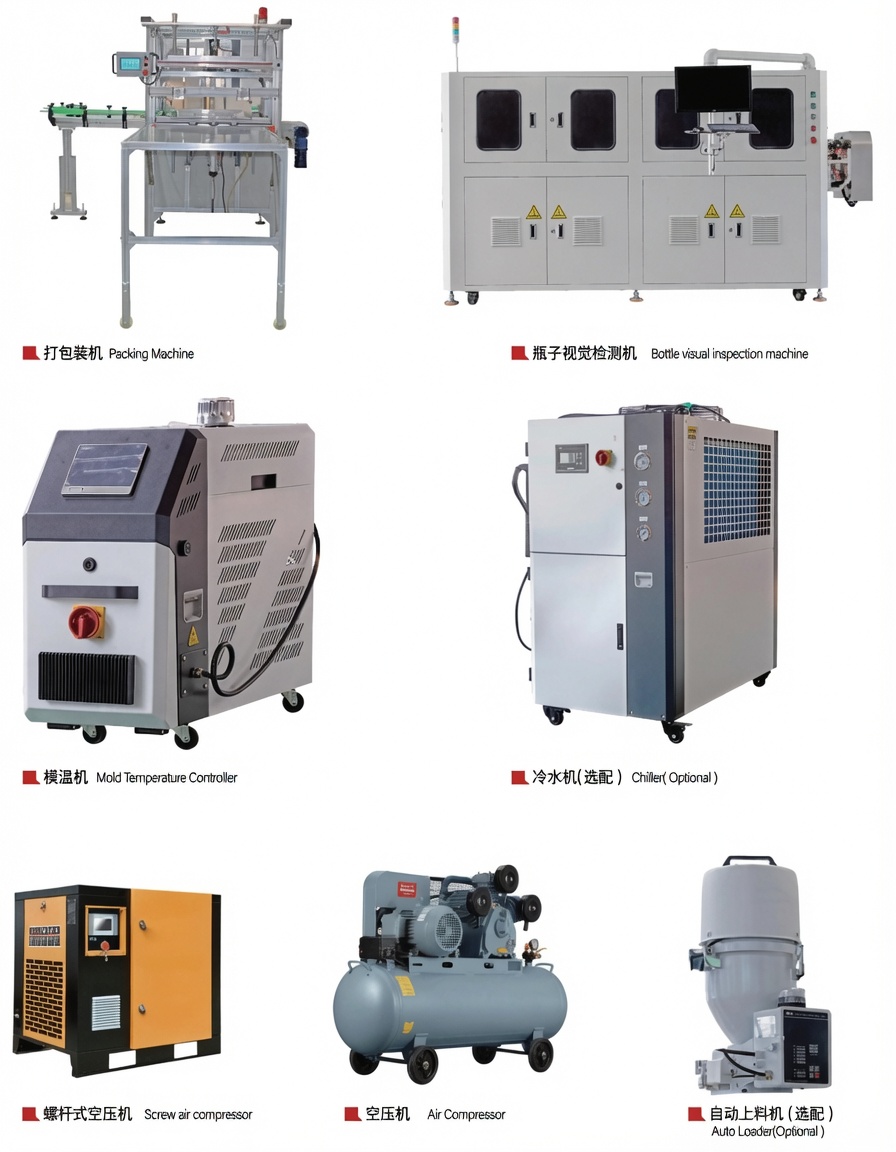
A pharmaceutical-grade injection-blow molding machine operates most effectively within a fully integrated auxiliary system. Mould temperature controllers, chilling units, air compressors, dryers, and conveyor systems each contribute to the consistency of the final container. Ever Power supplies the complete peripheral package alongside the core machine, reducing integration complexity and single-source accountability for the entire output quality chain.
Product Technical & Performance Parameter Table
The following performance parameters are representative of Ever Power’s European-specification injection-blow molding machines as configured for pharmaceutical container production. Custom configurations are available for specialised applications.
| Parameter | ZQ40 (European) | ZQ60 (European) | Unit / Note |
|---|---|---|---|
| Clamping Force | 40 | 60 | kN |
| Screw Diameter | 40 | 60 | mm |
| Max. Container Volume | 500 | 1,000 | ml |
| Injection Pressure (max.) | 154 | 154 | MPa |
| Blow Pressure Range | 0.4 – 1.0 | 0.4 – 1.0 | MPa |
| Wall Thickness Tolerance | +/- 0.05 | +/- 0.05 | mm |
| Compatible Materials | HDPE, PP, PET, PETG, PC | HDPE, PP, PET, PETG, PC | — |
| Output Rate (typical) | Up to 6,000 | Up to 9,000 | pcs/hr (100 ml HDPE) |
| Mould Temperature Control | Closed-loop PLC | Closed-loop PLC | +/- 1 deg C |
| Power Consumption | 22 | 37 | kW (rated motor) |
Core Technical Advantages of Injection-Blow Molding Machines
Neck-Finish Precision
The neck is formed once, in injection, and never disturbed again. Diameter, thread form, and sealing-surface parallelism are locked in by the steel tooling, delivering pharmaceutical-grade closures that pass ISO 8317 and USP leak tests without secondary machining or selection sorting.
No Flash, No Trim Waste
Unlike extrusion-blow molding, which generates a parison pinch-off flash that must be trimmed and recycled, injection-blow produces containers with no excess material. Material utilisation rates exceed 99.8%, eliminating a regrind stream that could compromise pharmaceutical-grade polymer traceability under GMP batch record requirements.
High Throughput, Small Footprint
Ever Power’s European-spec injection-blow molding machines produce up to 9,000 containers per hour from a floor area of under 12 square metres, making them viable even in the constrained clean-room footprints typical of UK pharmaceutical contract manufacturing facilities. Energy-efficient servo drives reduce power draw by up to 35% versus comparable hydraulic machines.
GMP Documentation Ready
Integrated PLC data logging captures cycle time, melt temperature, injection pressure, and blow timing for every production shift. This data exports directly to standard audit-trail formats, supporting MHRA GMP Annex 11 electronic records requirements without retrofitting third-party data acquisition hardware onto the machine.
Ever Power Manufacturing Facility
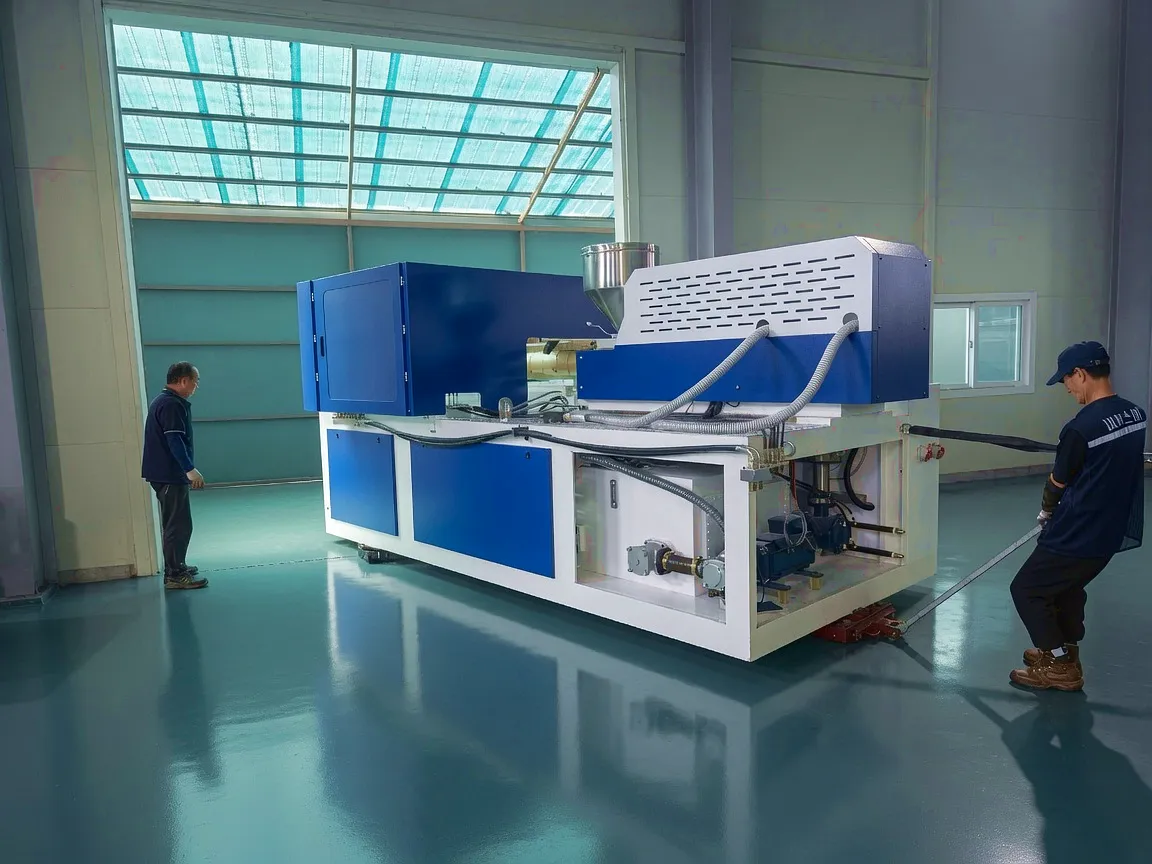
Precision machining and assembly lines for pharmaceutical-grade injection-blow tooling
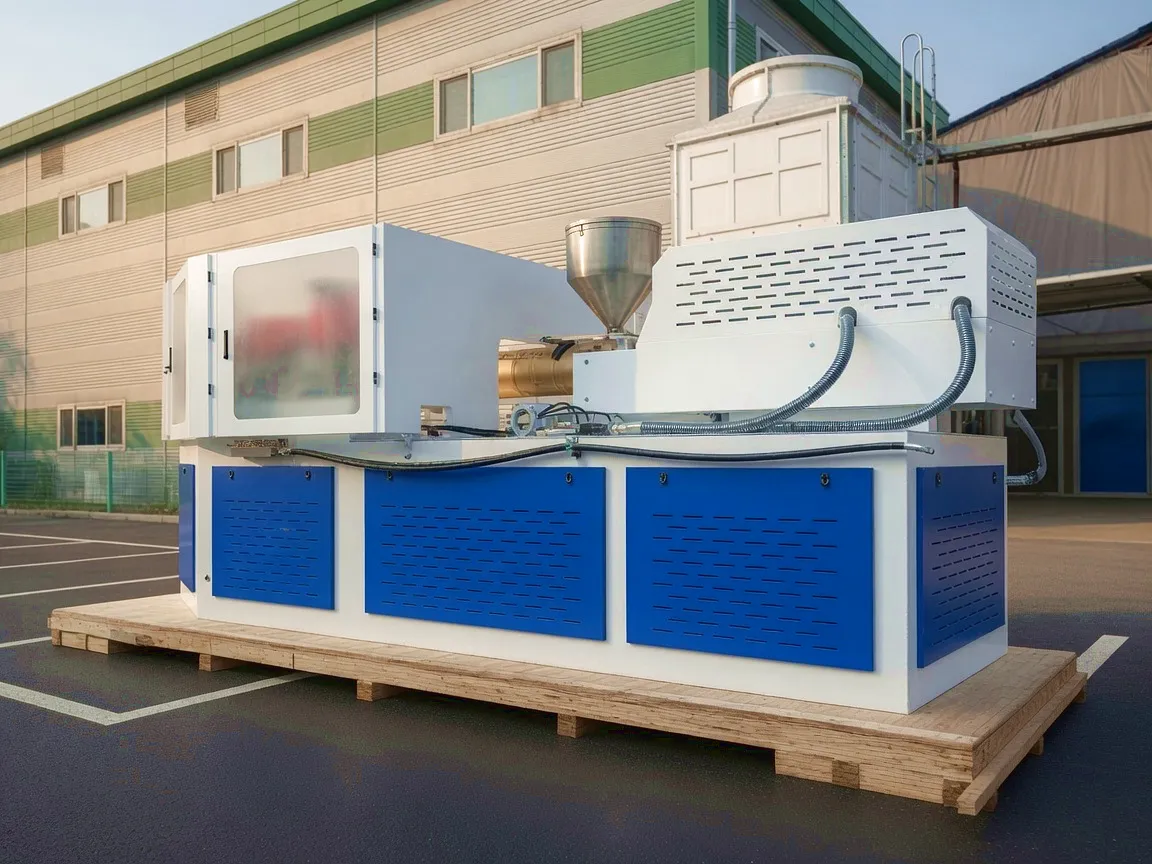
Final inspection and QC testing stations ensure every machine meets European CE standards
Ever Power — Precision Manufacturing & Customisation Capabilities
🏭 Advanced Manufacturing Infrastructure
Ever Power’s manufacturing facility operates a suite of CNC machining centres, EDM spark-erosion units, and coordinate measuring machines calibrated to ISO 10360 standards. Core rod and cavity inserts for pharmaceutical injection-blow tooling are ground to surface roughness values below Ra 0.4 micrometres, the benchmark for pharmaceutical-contact polymer surfaces. All machining documentation is retained for customer IQ/OQ/PQ validation packages, accelerating site acceptance testing at UK pharmaceutical plants.
🔧 Bespoke Customisation Services
Ever Power designs and manufactures injection-blow tooling to customer-supplied container drawings, including complex neck-finish profiles for push-and-turn child-resistant closures, induction-foil-compatible sealing surfaces, and amber pigment masterbatch optimisation for photosensitive API vials. Custom frame configurations accommodate cavitation from 1 to 6 cavities per station, enabling both development-scale and commercial production volumes on the same machine platform.
🌐 Supply Chain & UK Service Coverage
Ever Power maintains a dedicated spare-parts inventory for all European-specification machines, with standard components available for shipment to UK customers within 48 hours via established freight partnerships through Felixstowe and Tilbury. Regional service engineers provide on-site preventive maintenance contracts, with response time guarantees for pharmaceutical customers whose production schedules cannot absorb unplanned downtime exceeding 8 hours.
Featured Injection-Blow Molding Machine Models
Customer Success Story — Nottingham Pharmaceutical Contract Packaging
24%
Reduction in container reject rate
6 wks
Tooling validation completed
3 SKUs
Consolidated onto single machine platform
A contract pharmaceutical packaging operation based in Nottingham — serving multiple branded and generic medicine manufacturers across the East Midlands — approached Ever Power after experiencing unacceptable neck-finish variability on their legacy extrusion-blow molding line. The facility was producing HDPE oral solid bottles in 100 ml and 250 ml formats alongside a PP child-resistant closure liquid bottle in 150 ml, and the three SKUs were running on two separate machines with different rejection profiles and independent QC protocols, creating scheduling conflicts and compliance documentation overhead that was consuming 18% of their quality team’s working hours.
Ever Power’s applications team evaluated the three container drawings and proposed consolidating all three SKUs onto a single ZQ40 injection-blow molding machine with a three-interchangeable-cavity tooling suite. The tooling was custom-engineered to the customer’s validated neck-finish dimensions, with core-rod surface finish and draft angles specified to ensure removal forces remained within the automated stripping system’s load tolerance at the required output rate of 5,400 units per hour across all three formats. Ever Power delivered the tooling qualification package — including first-article inspection reports, SPC control charts, and a full IQ/OQ documentation set — within six weeks of purchase order receipt.
Following installation and site acceptance testing, the Nottingham facility recorded a 24% reduction in container reject rate at its automated vision inspection station, attributed primarily to the elimination of neck-finish diameter variability that had been triggering false-positive closures during the capping-torque verification step. The consolidation from two machines to one also released 14 square metres of clean-room floor area, which the customer repurposed for expanded downstream labelling capacity to service a new NHS generic antibiotics supply contract won partly on the strength of demonstrated GMP container consistency data.
What Customers Say About Ever Power
★★★★★
“The neck-finish precision on the ZQ40 is genuinely in a different class from any extrusion-blow machine we’ve run. Our closure torque audit now passes first time every batch — we haven’t had an ISO 8317 failure since installation. The IQ/OQ package Ever Power delivered cut our validation timeline by four weeks.”
— Production Director, Contract Pharmaceutical Packaging Facility, Nottingham
★★★★★
“We specified amber PET vials for three photosensitive APIs and were concerned about UV transmission consistency across the batch. Ever Power’s applications engineer worked through the blow-ratio calculations with us from the outset and the first sample set passed EP 3.1.5 with margin. Their spare-parts despatch to our Sheffield site is consistently within 48 hours.”
— Technical Manager, Pharmaceutical Primary Packaging, Sheffield
★★★★★
“We run Ever Power’s ZQ60 on a three-shift NHS supply contract producing HDPE tablet bottles and PP child-resistant liquid bottles. The machine’s PLC data export feeds directly into our batch record system — our quality team recovered roughly a day a week that was previously spent manually transcribing process parameters. Genuinely excellent after-sales support from the Ever Power service team.”
— Operations Manager, Generic Medicine Packaging, Birmingham
Frequently Asked Questions
How much does an injection-blow molding machine cost for pharmaceutical packaging production in the UK?
Pricing for pharmaceutical-specification injection-blow molding machines varies considerably depending on clamping force, cavitation, tooling complexity, and included auxiliary equipment. Ever Power’s European-specification ZQ series is competitively positioned for UK buyers when total cost of ownership — including reduced reject rates and lower energy consumption versus hydraulic alternatives — is factored into the investment appraisal. Contact our sales team at [email protected] for a project-specific quotation.
Which injection-blow molding machine supplier in the UK can provide ISO 8317 child-resistant closure validated tooling for my pharmaceutical packaging line?
Ever Power designs and manufactures bespoke tooling for ISO 8317 child-resistant closure applications as part of the complete injection-blow molding machine supply package. Our tooling engineering team works from your validated neck-finish drawings and closure supplier test data to specify core-rod geometry, draft angles, and surface finish that deliver qualification-grade samples from the first trial. UK delivery and on-site commissioning support are included.
What is the difference between injection-blow molding and extrusion-blow molding when I am producing amber medicine vials for NHS pharmacy contracts?
Injection-blow molding produces the neck geometry in a single injection event around a steel core rod, delivering dimensional consistency that extrusion-blow molding — where the parison wall varies across the blow cycle — cannot match. For amber vials serving NHS pharmacy contracts, this matters because wall-thickness uniformity directly governs amber pigment path-length and therefore UV transmission performance under EP 3.1.5. Injection-blow also generates no flash waste, preserving the amber masterbatch lot traceability required by MHRA GMP batch records.
Where can I get a price quote for an injection-blow molding machine for my Birmingham pharmaceutical manufacturing facility?
Ever Power provides project-specific quotations for pharmaceutical container manufacturers across the UK, including facilities in Birmingham, Sheffield, Nottingham, Leicester, and the broader Midlands manufacturing corridor. Send your container drawings, target output rates, and material specifications to [email protected] and our applications engineers will respond with a detailed proposal, typically within two business days of receiving complete project information.
How long does tooling validation take when I order an injection-blow molding machine for MHRA GMP pharmaceutical container production?
Ever Power’s standard tooling manufacturing and qualification timeline for pharmaceutical injection-blow applications is six to eight weeks from receipt of approved container drawings, compared with an industry average of 12 weeks or more. The IQ/OQ documentation package is prepared in parallel with tooling manufacture and delivered with the machine, allowing UK customers to begin site acceptance testing immediately after installation without waiting for supplementary documentation from the supplier.
Which polymer materials can an injection-blow molding machine process when producing child-resistant closure bottles for a UK pharmaceutical contract manufacturer?
Ever Power’s ZQ-series injection-blow molding machines process HDPE, PP homopolymer, PET, PETG, and polycarbonate. For child-resistant closure applications, PP is the most common selection because its higher flexural modulus resists neck deformation under the rotational and axial loads applied during push-and-turn testing, while its chemical compatibility with aqueous pharmaceutical preparations and autoclavability suit it to both solid-dose and liquid-dose packaging across UK GMP facilities.
Ready to specify the right injection-blow molding machine for your pharmaceutical packaging line?
Send your container drawings, resin specifications, and target throughput to our applications team. We respond within two business days with a detailed proposal.
📧 Get a Quote — [email protected]
edit by gzl