Injection-Blow Molding Machine Applications in Personal Care and Cosmetic Packaging
Shampoo bottles, conditioner containers, body wash dispensers — how the injection-blow molding machine is redefining precision packaging for the UK beauty and personal care sector.
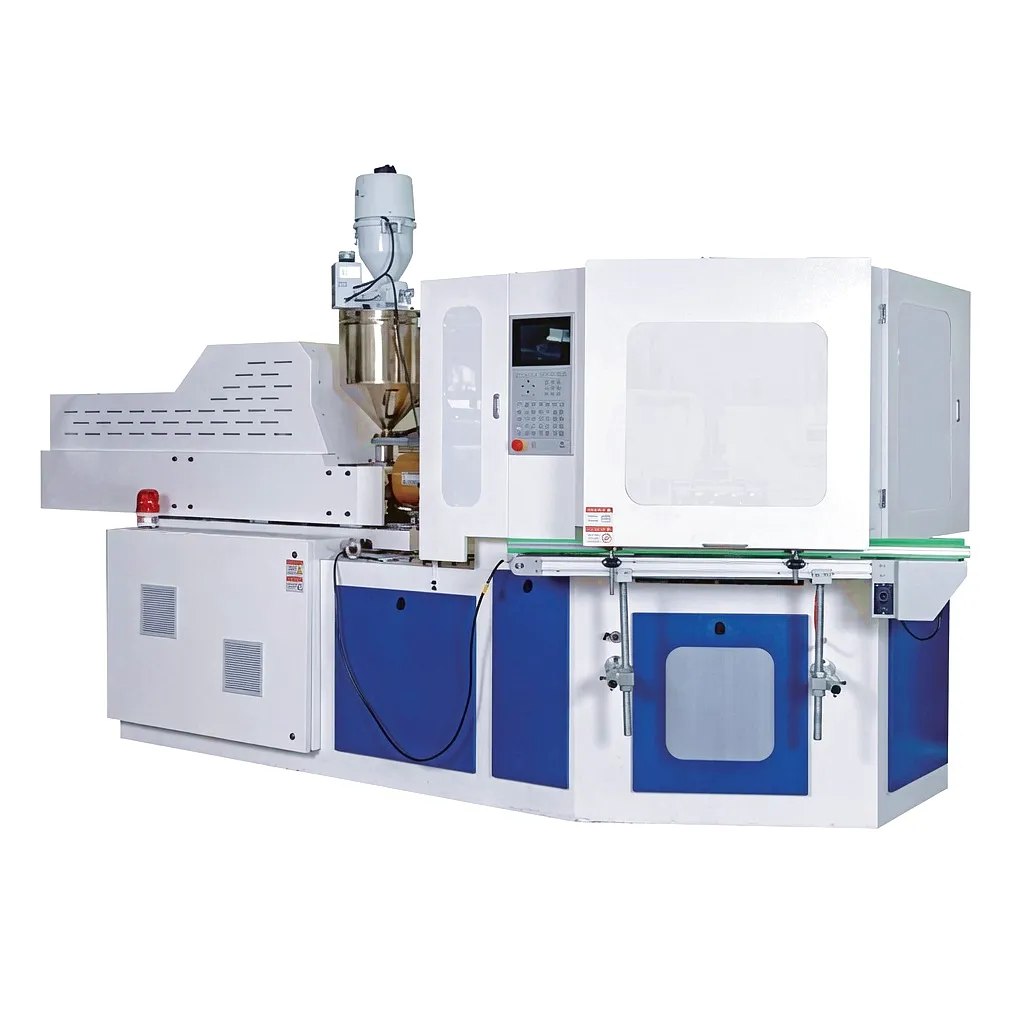 The personal care industry operates in one of the most demanding packaging environments in modern manufacturing. Every bottle of shampoo, every conditioner flip-cap container, every body wash pump dispenser must meet tight dimensional tolerances, pass drop-test and leak-test protocols, and carry a surface finish that communicates brand value at retail. In the United Kingdom, where the personal care market generates billions of pounds annually and brands such as Unilever, Reckitt, and a broad landscape of artisan and indie beauty labels compete shoulder to shoulder, packaging quality is never a secondary consideration. The injection-blow molding machine sits at the intersection of these commercial pressures and the practical demands of high-volume polymer processing, offering a production method that combines the dimensional precision of injection molding with the hollow-forming capability of blow molding in a single, continuous machine cycle.
How an Injection-Blow Molding Machine Works
Molten thermoplastic — typically HDPE, PP, or PET — is injected around a core rod inside a precision injection cavity. The result is a fully formed preform whose neck threads and finish dimensions are set at this stage.
The core rod indexes — rotating on a multi-station turntable — carrying the preform from the injection cavity to the blow cavity while maintaining controlled temperature through conductive and convective thermal management.
Compressed air — typically 6 to 10 bar — is introduced through the core rod’s blow pin, expanding the preform body against the cooled blow cavity wall. The container takes its final shape, with wall thickness uniformity governed by preform design.
The finished container is stripped from the core rod at the ejection station. Because the process generates no flash or pinch-off seam — a limitation inherent to extrusion-blow — the bottle requires no trimming, reducing scrap and post-processing labor.
The rotary-station architecture means that injection, blow, and ejection operations occur simultaneously on different cavities. This parallelism maximises machine throughput without compromising the individual quality of each container. For a personal care manufacturer running three-shift operations in a facility in Birmingham or a contract packer serving multiple brands from a logistics hub near Sheffield, the implications are straightforward: higher output per square metre of floor space, lower unit cost, and a finished article that arrives at the filling line without secondary trimming.
Core Materials Processed in Personal Care Container Production
The material of choice for shampoo and body wash bottles. Excellent chemical resistance to surfactants, acids, and alkaline ingredients. High stiffness-to-weight ratio keeps bottle weight low while maintaining structural rigidity on filling and retail shelves.
Preferred for conditioner and lotion bottles where a slightly softer squeeze is desired. PP offers excellent fatigue resistance for snap-fit and living-hinge closures, and its high melting point allows hot-fill compatibility for certain formulations.
Used for premium cosmetic bottles — serums, toners, and luxury shower gels — where glass-like clarity is demanded. PET processed on an injection-blow molding machine yields a crystal-clear bottle with near-zero haze values, elevating perceived brand value without glass’s weight penalty.
Chosen for squeeze-dispensing applications — travel-size bottles and eye-drop style containers. LDPE’s flexibility means the container springs back reliably after each squeeze, sustaining the dispensing function across hundreds of use cycles without permanent deformation.
Application Scenario: Personal Care and Cosmetic Packaging — Shampoo, Conditioner, and Body Wash Containers
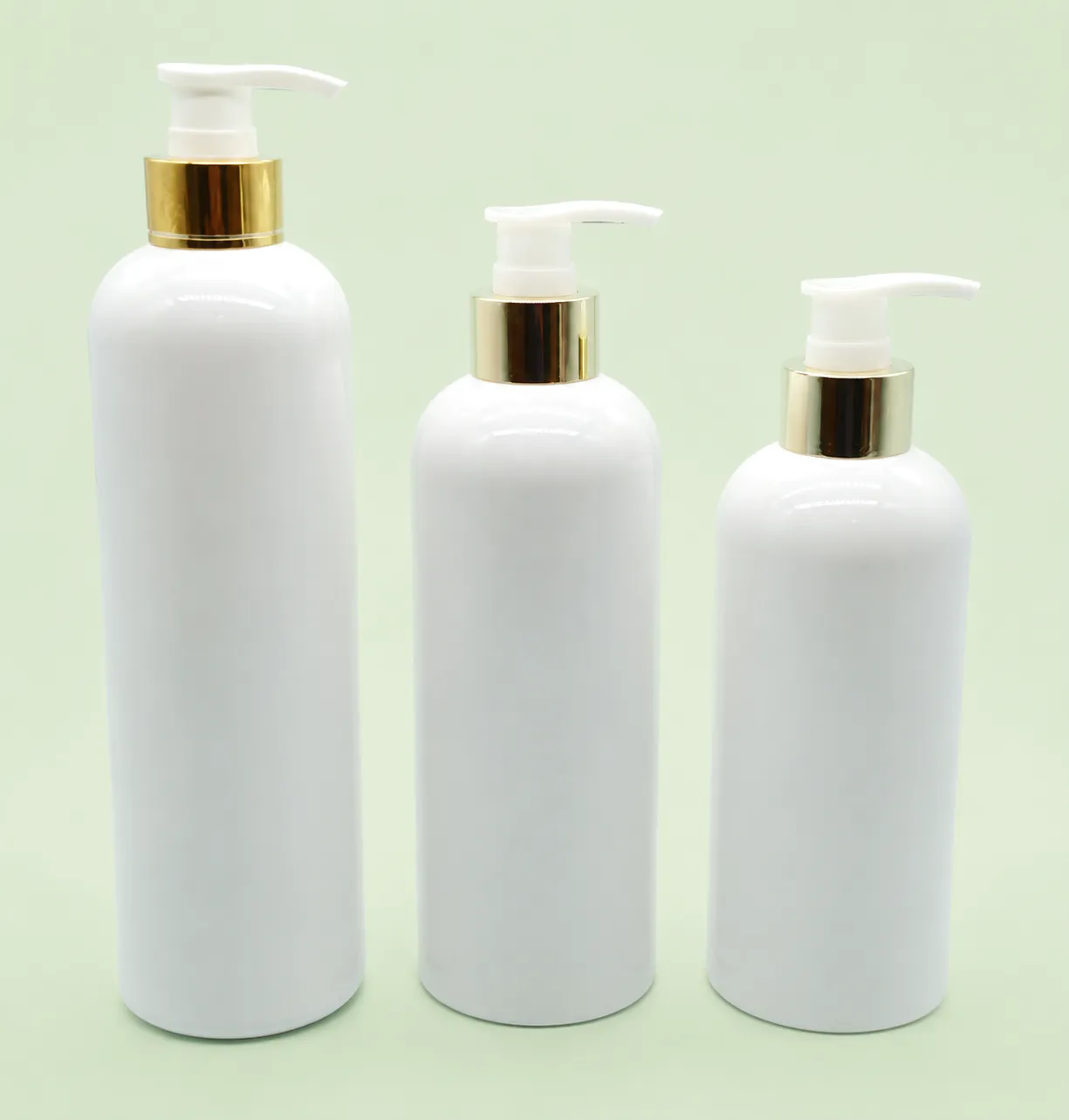
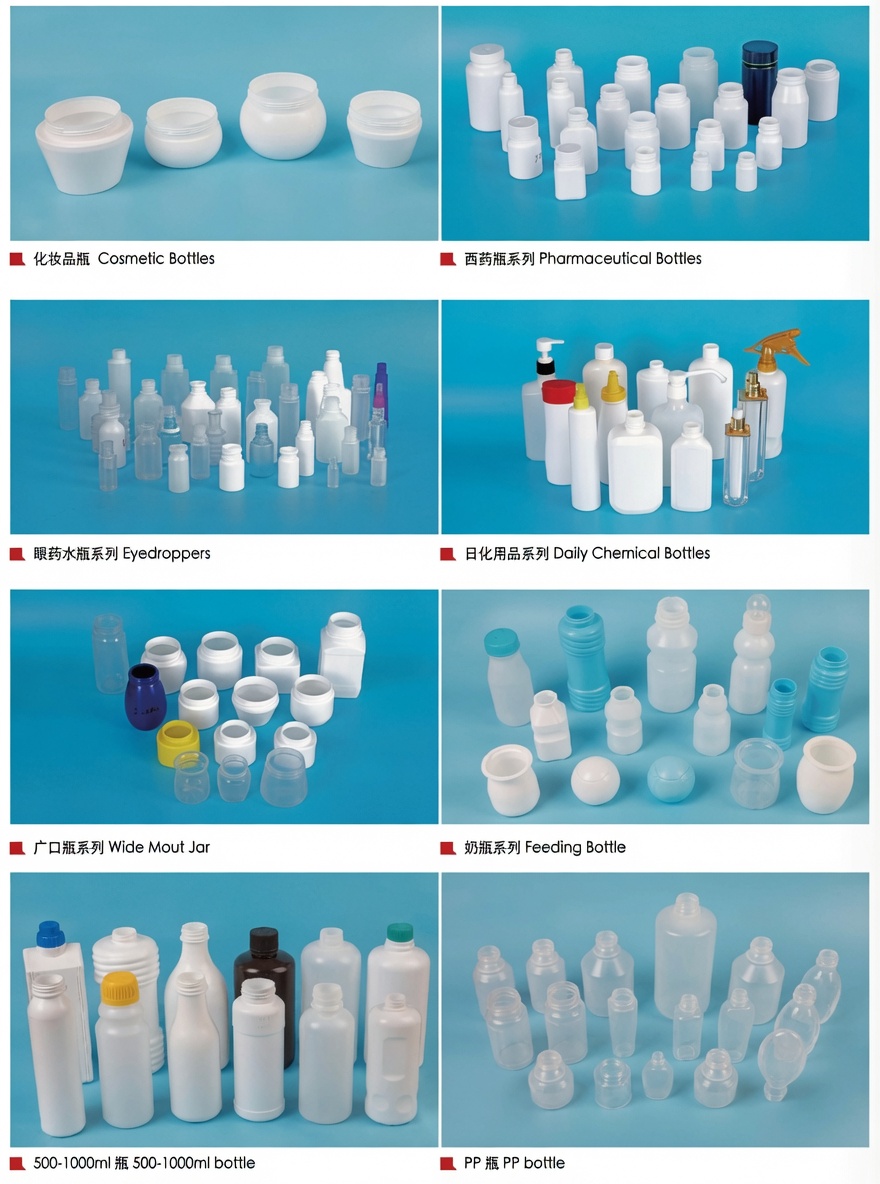
Within the personal care sector, the injection-blow molding machine has become the preferred capital equipment choice for containers ranging from 50 ml travel bottles to 1,000 ml salon-size shampoo dispensers. The reason is structural: personal care formulations — shampoos, conditioners, body washes, and hair treatments — interact chemically with their containers. Surfactants in shampoo can cause stress-cracking in improperly selected or improperly processed materials. Conditioning agents containing silicone derivatives require containers with sufficiently low permeability to prevent ingredient migration. The IBM process, by controlling both preform geometry and blow-cavity temperatures independently, allows wall thickness to be distributed precisely where the container needs it most — at the shoulder where drop forces concentrate, at the side wall where label adhesion requires flatness, and at the base where stacking loads accumulate.
Shampoo bottles in the mass-market segment, whether supplied to supermarket chains in Manchester or own-brand beauty retailers operating across England and Wales, typically run in HDPE at cavity temperatures between 18 °C and 25 °C. The injection-blow molding machine’s ability to set each zone’s temperature independently — barrel zones, nozzle, hot-runner manifold, blow cavity — means material crystallinity and surface gloss can be tuned without changing the resin grade. For an own-label brand sourcing packaging from a converter in the West Midlands, this translates to the same mold tool producing both a matte-surface eco-friendly variant and a high-gloss premium variant simply by adjusting cooling parameters, with no additional tooling investment.
Conditioner containers present a distinct challenge: the product is typically higher-viscosity than shampoo, and the dispensing experience — the weight and feel of the bottle in a wet hand — is part of the brand proposition. Injection-blow molding allows wall-thickness profiling that creates a bottle with a stiffer upper body (for controlled squeeze response) and a slightly more flexible lower body (for complete product evacuation). This capability is not easily replicated on extrusion-blow equipment, where wall distribution depends on parison programming and is less precise at the neck. UK personal care contract manufacturers operating filling lines at rates of 100 to 400 bottles per minute have reported measurable reductions in neck-seal rejects after transitioning from extrusion-blow to injection-blow molding machines, with the principal driver being the injection-formed neck finish’s inherent roundness and thread integrity.
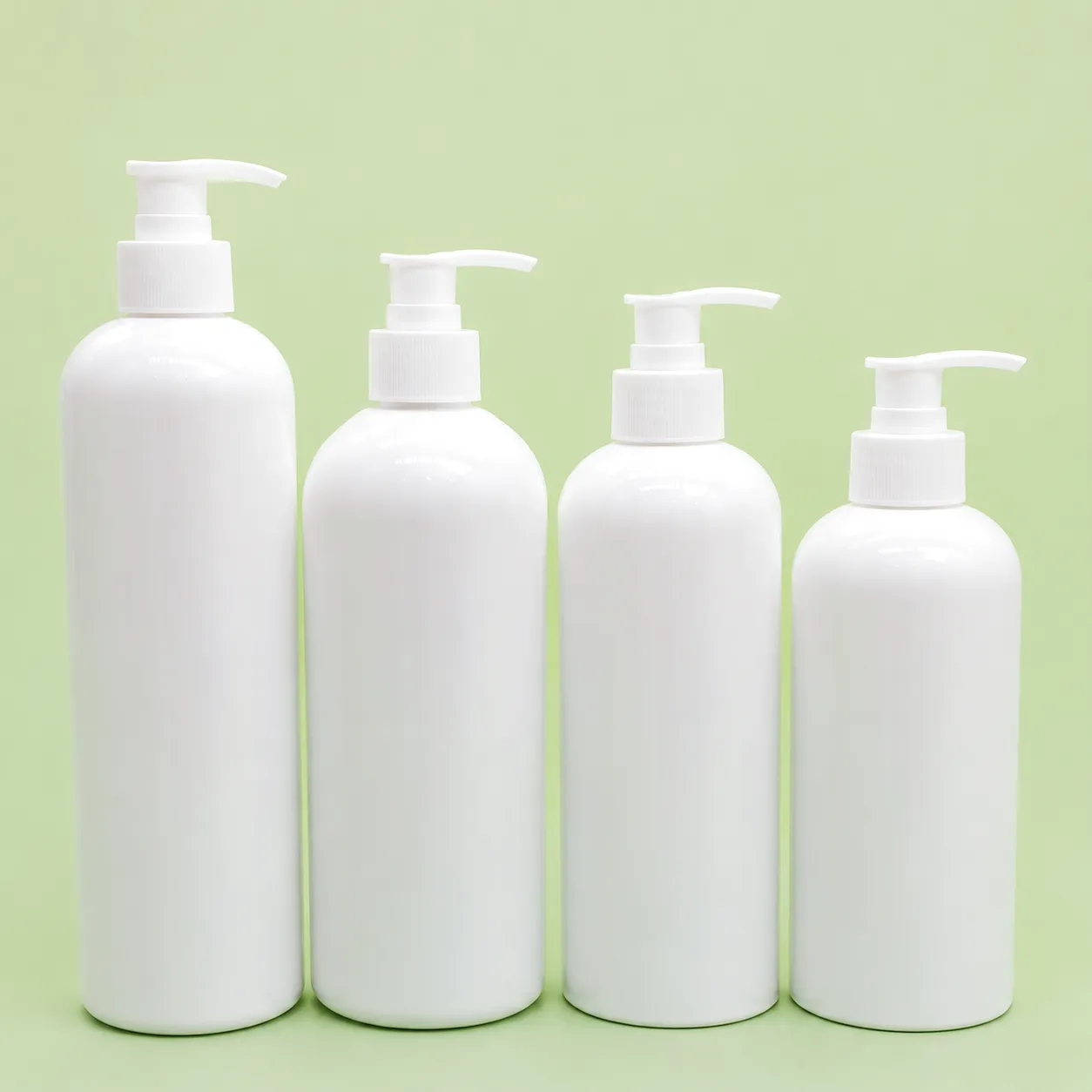
Body wash containers have evolved significantly in the past decade. Where once a simple round HDPE bottle with a flip-top cap dominated the category, contemporary formulations now appear in ergonomic hourglass shapes, asymmetric grip-zone profiles, and transparent variants where the product’s colour itself serves as a visual marketing cue. The injection-blow molding machine accommodates all of these design directions, because the preform and blow cavity are independent tooling elements. A brand agency in London can work with a toolmaker to specify a preform design that concentrates material at the grip waist and a blow cavity that achieves the target volumetric capacity with a defined shoulder angle, and the IBM machine will reproduce that geometry cavity-for-cavity across a multi-cavity tool at the exact same throughput as a simpler round-profile tool.
Sustainability requirements now bear heavily on container design decisions in the UK. The Plastic Packaging Tax, which came into force in April 2022, levies a charge on plastic packaging containing less than 30% recycled content. Injection-blow molding machines process recycled HDPE (rHDPE) and recycled PP (rPP) effectively provided the resin is adequately sorted and pelletised. Because the IBM process generates no trim scrap at the container level, the recycled content calculation for tax compliance is straightforward — the resin blend entering the machine barrel is the material in the finished bottle, without the complication of flash regrind that arises in extrusion-blow operations. Personal care brands seeking to achieve 30% rHDPE content in their shampoo bottles to avoid the tax can rely on the IBM machine’s barrel residence-time consistency to maintain colour uniformity across the recycled-content blend, something that has historically been challenging on extrusion-blow lines due to parison heating variability.
Core Technical Advantages of the Injection-Blow Molding Machine in Cosmetic Packaging
Because the neck is formed under injection pressure, thread profiles and sealing surfaces hold tolerances of ±0.05 mm or better. For pump-top and lotion dispensers, this means closure torque values are consistent from bottle to bottle, eliminating leakage at retail and in transit — a critical quality metric for personal care brands shipping through e-commerce channels to end consumers across England, Scotland, and Wales.
The IBM process does not generate a pinch-off seam or tail flash. Containers come off the machine ready for filling — no deflashing station, no trimming conveyor, no additional labor cost. For UK contract packagers running high-mix, lower-volume programs, eliminating the deflashing step reduces changeover complexity and floor-space requirements.
Preform design controls where material goes during blow expansion. This enables lighter-weight containers — down to 20% below extrusion-blow equivalents in certain geometries — without sacrificing drop performance. Lightweight containers reduce material cost, lower transport carbon footprint for domestic UK logistics, and contribute to recyclability assessments under extended producer responsibility schemes.
Asymmetric bottle bodies, angled shoulders, tapered bases, and contoured grip panels are all achievable within IBM tooling constraints. This flexibility allows personal care brands to differentiate their packaging without switching to a fundamentally different process technology, protecting capital investment in the IBM platform across multiple product generations and SKU launches.
Modern injection-blow molding machines — including the European-specification machines offered by Ever Power — operate with multi-cavity tooling, producing between 2 and 8 containers per cycle depending on bottle size and resin. At cycle times of 8 to 18 seconds, annual output from a single machine can exceed 3 million containers, making the IBM platform economically viable for brands operating at mid-scale production volumes.
Injection-blow molding machines can process post-consumer recycled resins effectively, enabling cosmetic brands to meet UK Plastic Packaging Tax thresholds. The controlled melt-flow environment of the IBM barrel is better suited to the variable viscosity characteristics of rPET compared to the parison-extrusion process, reducing defect rates when running recycled-content blends above 30%.
Technical and Performance Parameters — Injection-Blow Molding Machine
| Parameter | Specification Range | Relevance to Personal Care |
|---|---|---|
| Clamping Force | 40 kN to 600 kN | Higher clamping force supports larger-format bottle tools (500 ml+ shampoo); lower range suits travel and sample-size containers. |
| Container Volume Range | 5 ml to 1,000 ml | Covers full personal care range from miniature perfume atomisers to 1 L salon shampoo dispensers. |
| Number of Stations | 3-station (inject / blow / eject) | Simultaneous operation at each station maximises output per unit time; no waiting between stages. |
| Cavity Count (per tool) | 1 to 8 cavities | 2-cavity for premium/short-run SKUs; 6- to 8-cavity for mass-market shampoo and body wash at contract scale. |
| Cycle Time | 8 s to 22 s (container dependent) | 50 ml LDPE eye-dropper: approx. 8–10 s; 500 ml HDPE shampoo: approx. 14–18 s. |
| Blow Pressure | 6 bar to 10 bar | Standard shop-air pressure range; no high-pressure compressor infrastructure required. |
| Processing Temperature (barrel) | 160 °C to 290 °C | Lower end for HDPE/PP; higher end for PET. Multi-zone barrel control ±1 °C. |
| Neck Finish Tolerance | ±0.05 mm to ±0.10 mm | Ensures consistent sealing torque for pump tops, disc caps, and lotion dispensers. |
| Wall Thickness Range | 0.3 mm to 3.5 mm | Thin walls for premium lightweight containers; thicker walls for structured grip-zone panels and stacking resistance. |
| Drive System | Servo-hydraulic / All-electric | All-electric models reduce energy consumption by 30–50% vs. conventional hydraulic machines — relevant to UK industrial energy cost management. |
| Compatible Resins | HDPE, PP, PET, LDPE, PETG, EVA | Full coverage of personal care and cosmetic container material specifications. |
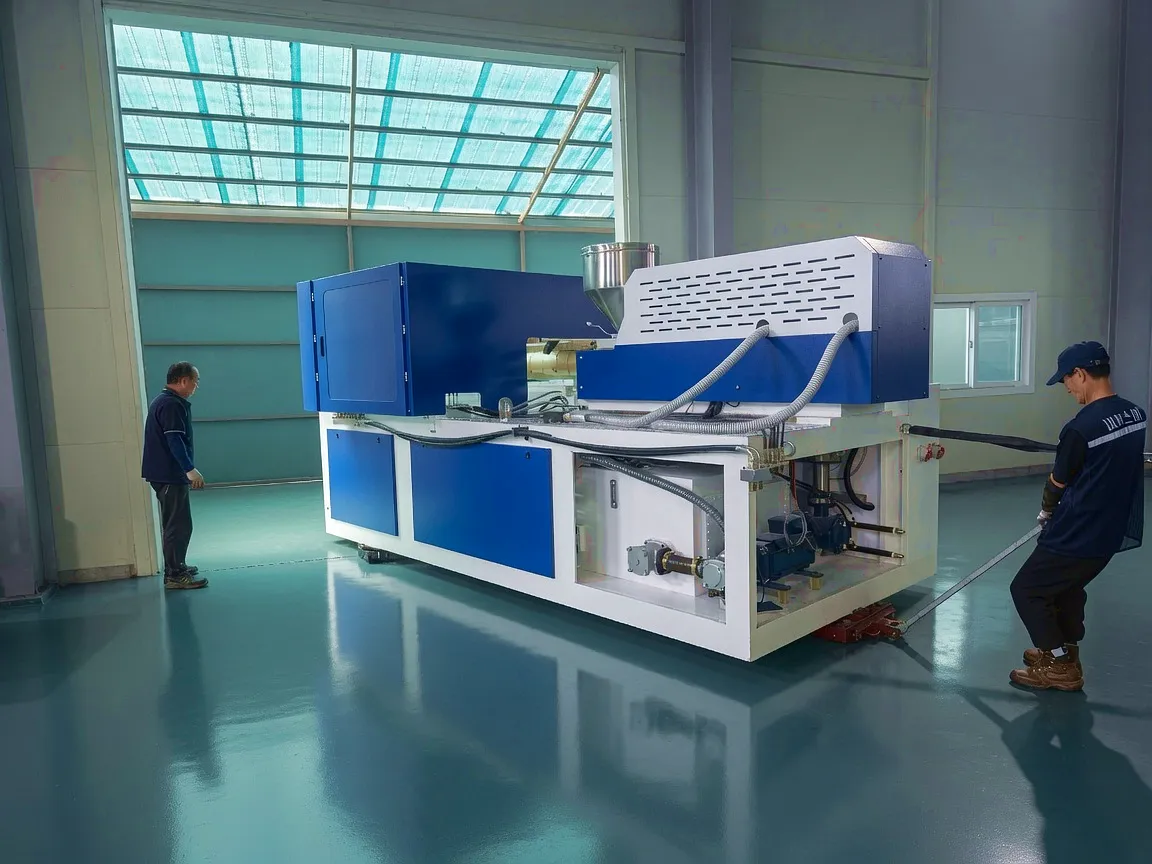
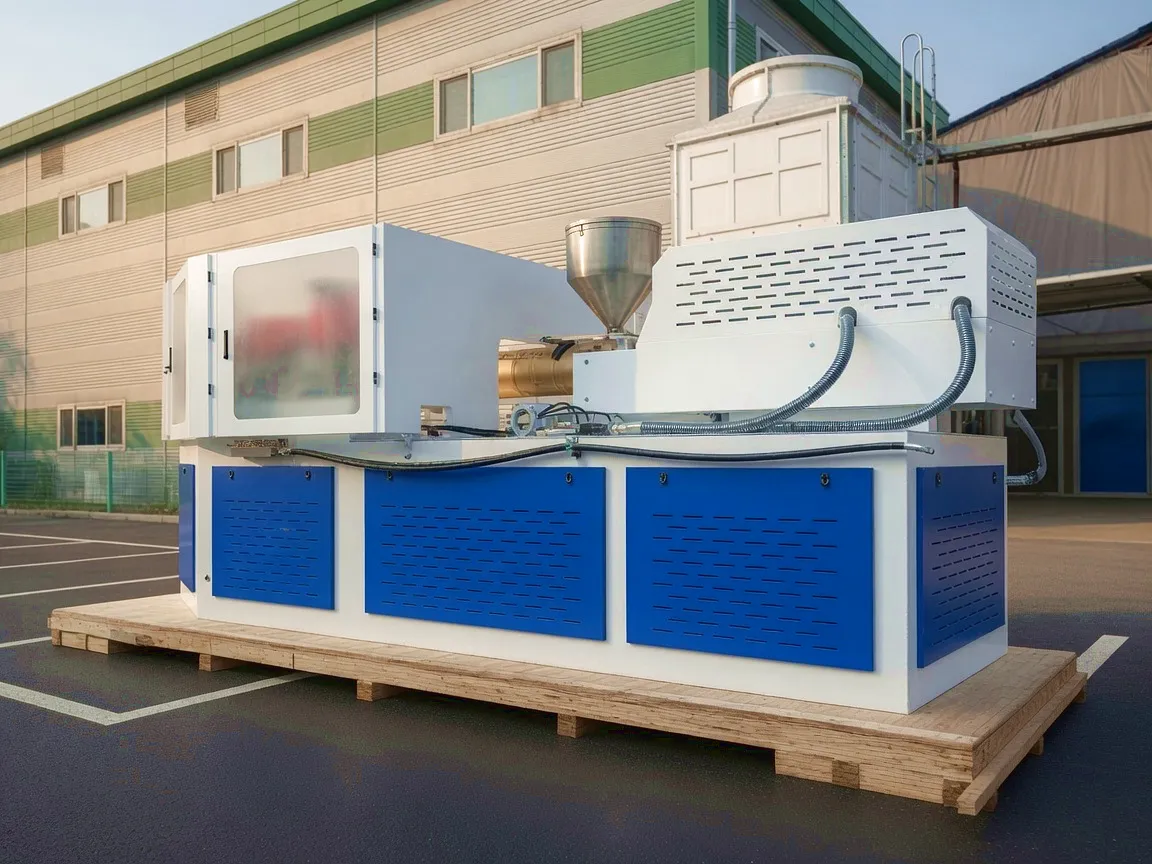
| Machine Footprint (approx.) | 2.2 m x 1.4 m to 4.5 m x 2.5 m | Compact footprint relative to comparable-output extrusion-blow lines; suits older UK industrial buildings with constrained floor plans. |
The UK Packaging Manufacturing Landscape and Where IBM Technology Fits
The United Kingdom has a well-established plastics processing industry, concentrated in industrial clusters across the Midlands, Yorkshire, and the North West. Packaging converters operating in and around Birmingham supply personal care brands throughout the supply chain — from own-label supermarket ranges to prestige beauty lines sold through department stores on Oxford Street and specialty retailers in Edinburgh and Bristol. Sheffield, historically known for steel fabrication, now hosts a significant cluster of precision mold-makers who supply injection-blow tooling to converters across the north of England. The availability of skilled tool-makers and proximity to logistics hubs — including the DIRFT logistics park in the East Midlands — makes the UK an attractive location for high-value packaging manufacturing rather than simple commodity extrusion.
Within this environment, the injection-blow molding machine occupies a specific and growing niche. It is not suited to producing large-volume industrial containers — that remains the domain of extrusion-blow equipment. Nor does it compete with injection stretch-blow molding for large-format PET bottles. Instead, it excels at the 50 ml to 500 ml personal care and cosmetic container segment, where neck-finish precision, design complexity, and flash-free output justify the higher tooling cost compared to extrusion-blow alternatives. Converters who have made this investment in IBM technology consistently report lower scrap rates, reduced closure-leak returns, and greater design latitude when working with new brand clients — all of which are commercially significant in a market where packaging is a primary driver of purchase decisions at retail.
Ever Power: Precision Manufacturing and Full-Scope Customisation for IBM Equipment
Ever Power operates a dedicated injection-blow molding machine manufacturing and assembly facility equipped with CNC machining centres, coordinate measuring machines (CMM), and hydraulic and electrical assembly bays. Every machine undergoes factory acceptance testing under load before despatch, including cavity temperature mapping, cycle-time verification, and dimensional validation of sample containers produced on the customer’s actual tooling where supplied.
Ever Power’s engineering team works directly with customers during the machine specification process to customise clamping force, barrel diameter and L/D ratio, turntable indexing speed, and control-system parameters. For personal care converters requiring specific cavity configurations — such as a 4-cavity tool for 250 ml HDPE conditioner bottles — Ever Power can design and validate the tooling interface as part of the machine build, reducing commissioning time on arrival at the customer’s facility.
Ever Power maintains a parts inventory covering wear components — barrel liners, screw tips, check rings, core rod seals, and blow-pin assemblies — with express despatch capability to UK customers. Remote diagnostic support via PLC data connection allows Ever Power’s technical engineers to review machine performance data in real time, reducing unplanned downtime. Customers in the UK benefit from European-specification voltage and safety certification, facilitating straightforward CE-conformant installation.
All Ever Power IBM machines supplied under the European specification comply with relevant machinery directives and carry appropriate safety documentation for installation in UK industrial facilities. Electrical schematics, PLC programs, and operator manuals are provided in English. Ever Power’s project engineers liaise with the customer’s health and safety team as part of the installation process to satisfy PUWER and relevant UKCA obligations for new machinery.
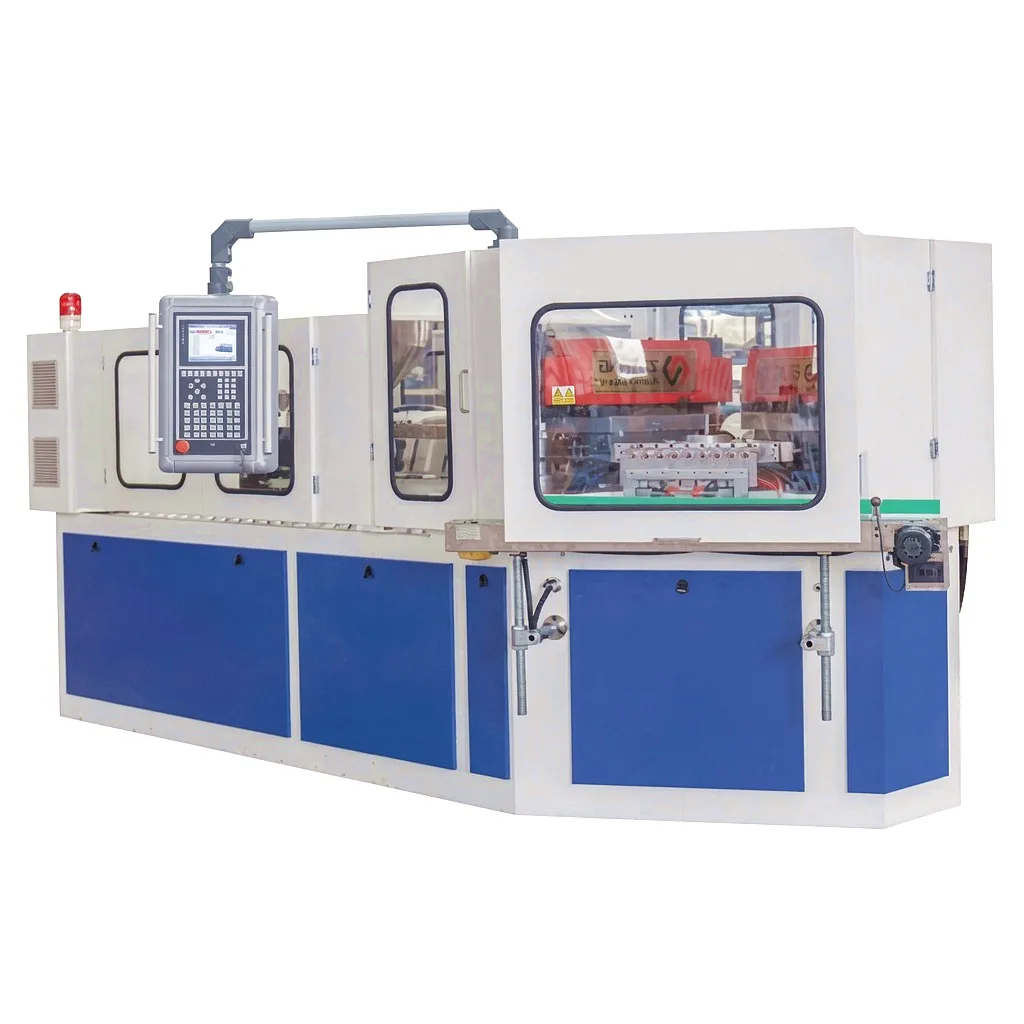
Ever Power European-Specification IBM Machines — Featured Models
Customer Success Story: Leeds-Based Personal Care Contract Packager Transforms Bottle Output
A contract packaging business operating from a 3,200 sq metre facility on the outskirts of Leeds had been running a combination of extrusion-blow and injection-molding equipment to supply own-label shampoo, conditioner, and body wash bottles to three regional supermarket chains and an online direct-to-consumer beauty brand. Persistent challenges with neck-finish leakage — running at approximately 1.4% of output — were generating returns from the filling line customer, requiring rework labour and causing periodic supply disruptions. The tooling team had exhausted adjustments to their extrusion-blow parison programmer without resolving the root cause, which was identified by an independent consultant as dimensional variability in the injection-blow neck finish inherent to the extrusion-blow process.
Following a technical evaluation involving sample containers from multiple IBM machine suppliers, the business selected an Ever Power ZQ60 European-specification machine. Ever Power’s technical team participated in a two-day application review at the Leeds facility prior to machine order, assessing the existing tooling library for IBM compatibility and recommending a phased transition plan. The ZQ60 was specified with a 4-cavity tool for the 300 ml HDPE shampoo SKU — the highest-volume line — and a 2-cavity tool for a 500 ml body wash container running in rHDPE at 30% recycled content.
On commissioning, the neck-finish leak rate on the 300 ml shampoo bottle measured 0.06% — a reduction of approximately 95% compared to the extrusion-blow baseline. Cycle time on the 4-cavity ZQ60 tool delivered an output of approximately 860 bottles per hour, meeting the filling line’s demand with a single-shift operation and freeing a second shift for a new 200 ml travel-size range that the business had previously been unable to resource. The rHDPE body wash container cleared the filling line’s quality audit on the first production run, allowing the company to immediately claim the UK Plastic Packaging Tax exemption threshold on that SKU.
Within nine months of commissioning, the Leeds facility had transitioned four of its seven bottle SKUs to the ZQ60, retired one of its extrusion-blow machines, and recovered approximately 18% of the floor area it had previously occupied for deflashing and trimming operations. The managing director noted in an internal review that the IBM investment had not only resolved the quality issue that prompted the initial enquiry but had materially altered the competitive position of the business by enabling more precise and faster design sampling for new brand clients — turnaround on sample containers from new tooling falling from six weeks to under three weeks with IBM tooling compared to extrusion-blow.
Customer Reviews
“The neck-finish precision on the ZQ60 is a genuine step change. We ran a 72-hour production trial on our 300 ml shampoo line and pulled a statistically significant sample at the end — zero leak failures. That result simply was not achievable on our previous extrusion-blow equipment. The Ever Power technical team was responsive throughout commissioning and the remote diagnostic connection has saved us at least two call-out visits in the first year.”
“We specified a custom 6-cavity tool on the ZQ60 for our 200 ml HDPE conditioner bottle. Ever Power engineered the tooling interface specifically for that cavity count and validated it at their factory before shipping. When the machine arrived at our Birmingham plant, it was producing on-spec containers within four hours of installation. The level of customisation they provided — from barrel zone mapping to blow-pin geometry — reflected a real depth of IBM process knowledge.”
“We were specifically looking for an IBM machine that could handle 30% rHDPE for our body wash range without the colour consistency issues we had seen on trial runs with other equipment. Ever Power’s ZQ60 handles the recycled-content blend with notably better melt-temperature stability than anything else we tested. The fact that the machine documentation came in English and the electrical specification matched our UK supply without adaptation made the installation straightforward. Genuinely impressed by the after-sales responsiveness.”
Frequently Asked Questions
How much does an injection-blow molding machine suitable for UK personal care bottle production typically cost, and what should I budget for tooling? +
Machine cost varies substantially by clamping force, cavity count, and specification level. A compact European-specification IBM machine in the 40 kN class — suitable for 1- to 4-cavity personal care tooling up to approximately 250 ml — typically falls in the range of GBP 35,000 to GBP 70,000 ex-works, with tooling for a 4-cavity 250 ml HDPE shampoo bottle adding GBP 15,000 to GBP 30,000 depending on complexity. Larger machines such as the ZQ60 class with 6- to 8-cavity tooling for 500 ml body wash containers sit at a higher investment level. Ever Power provides detailed quotations including tooling interfaces; contact [email protected] for a project-specific cost breakdown.
What is the lead time for receiving a new injection-blow molding machine delivered to a manufacturing site in Birmingham or Sheffield in the UK? +
Standard lead times for European-specification IBM machines from Ever Power run between 60 and 120 days from order confirmation, depending on the machine model and any customisation scope. Machines with standard configuration and no custom tooling interface are at the shorter end of that range. Delivery to UK locations — whether a facility in Birmingham, Sheffield, Leeds, or the South East — is typically arranged via road freight from the point of export, with customs documentation provided. Ever Power’s logistics team coordinates pre-installation site visits and coordinates with the customer’s plant engineering contact during the delivery window.
Which injection-blow molding machine supplier in the UK market offers the best combination of European compliance certification and rHDPE processing capability for sustainable packaging? +
When evaluating IBM machine suppliers for UK personal care and sustainable packaging applications, the key criteria are: European-specification electrical system (230/400 V 50 Hz, CE marking or UKCA equivalent), verified rHDPE processing history with documented melt-temperature stability data, English-language documentation, and accessible after-sales support. Ever Power’s European-series machines — specifically the ZQ40 and ZQ60 models — meet all of these criteria and have been deployed in UK facilities where recycled-content compliance under the Plastic Packaging Tax was a primary project driver.
How does an injection-blow molding machine differ from an injection stretch-blow molding machine, and when should a UK cosmetic brand choose one over the other? +
The injection-blow molding machine (IBM) inflates a preform using compressed air without a mechanical stretch rod, and is best suited for containers where high clarity, precise neck finish, and moderate output are the priorities — typically in the 5 ml to 500 ml range for personal care. The injection stretch-blow molding machine (ISBM) incorporates a stretch rod that orients the PET molecule axially before radial blow, producing biaxially oriented containers with superior gas-barrier properties and higher mechanical strength — the technology of choice for carbonated beverage bottles and pharmaceutical containers. UK cosmetic brands producing premium serum or lotion bottles in PET for retail should consider IBM for elegant clarity and tight thread tolerances; those requiring carbonation resistance or very high drop performance for heavy product-loaded bottles should explore ISBM.
Where can a packaging converter based in Manchester get a competitive price quote for an injection-blow molding machine configured for high-volume HDPE shampoo bottle production? +
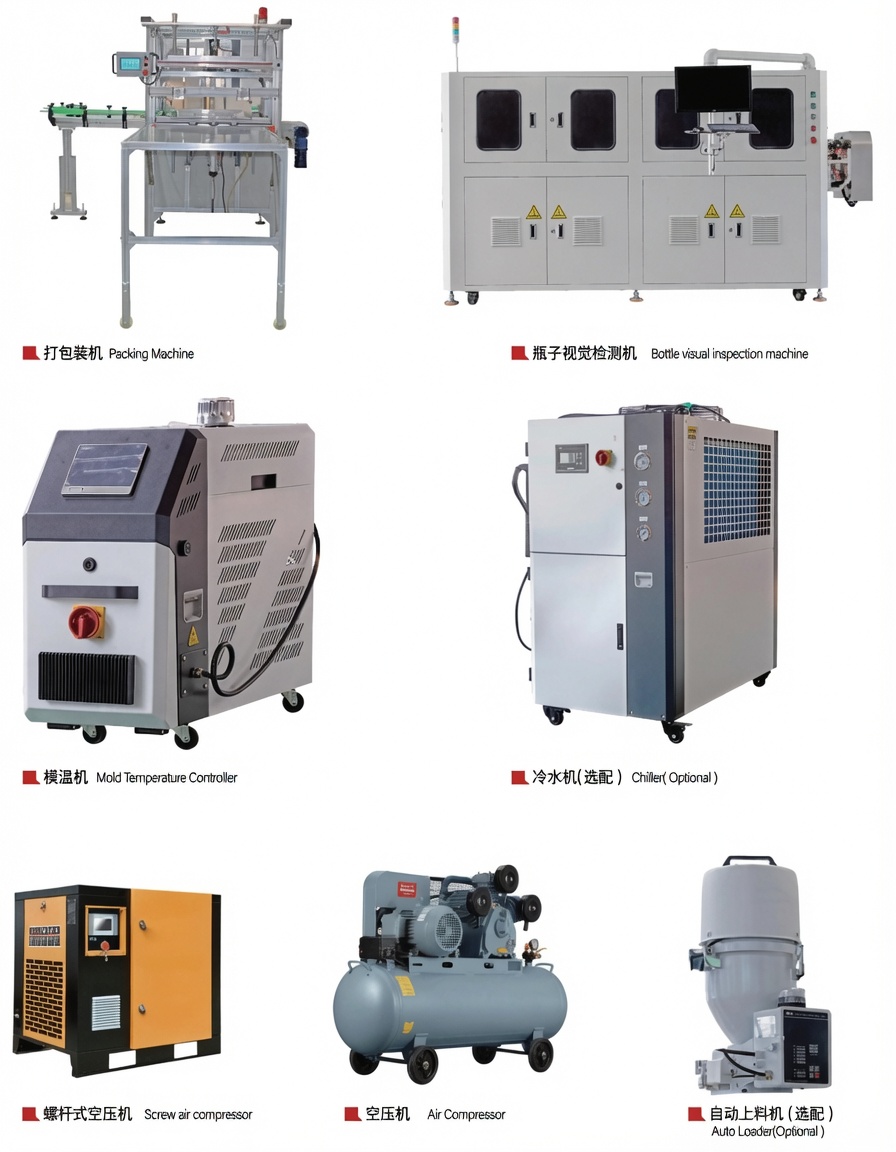
Contact Ever Power directly at [email protected] with details of your target container size, annual volume requirement, preferred cavity count, and resin type. Ever Power’s sales engineers will prepare a detailed quote covering machine model, tooling interface options, auxiliary equipment recommendations (chiller sizing, conveyor configuration, auto-loader), and indicative lead time. The quotation process typically involves a short technical questionnaire and, for larger projects, a video consultation with Ever Power’s application engineering team.
What annual output can a UK personal care manufacturer realistically expect from a 4-cavity injection-blow molding machine running 300 ml HDPE shampoo bottles on a two-shift operation? +
A 4-cavity IBM machine producing 300 ml HDPE shampoo containers at a 16-second cycle time yields approximately 900 containers per hour per cavity set — roughly 3,600 containers per hour at 4 cavities. Running two 8-hour shifts, 250 days per year, at an availability factor of 85%, the machine produces approximately 12.2 million containers annually. This throughput is sufficient to supply a major UK supermarket chain’s own-label shampoo range from a single machine, with headroom for planned maintenance shutdowns and tooling changeovers between SKUs.
Who should I contact at Ever Power to discuss a customised injection-blow molding machine specification for a new personal care packaging facility in the UK, and what information do I need to prepare? +
Reach Ever Power’s sales and application engineering team at [email protected]. Prepare the following information to accelerate the quotation and specification process: target container volume range (ml), preferred resin or resins, required annual output or shift production target, preferred cavity count or annual output target, any existing tooling to be transferred, available floor space and ceiling height at your UK facility, and electrical supply specification. If the project involves a new facility, providing the site location — whether Birmingham, Manchester, Sheffield, or elsewhere in the UK — helps Ever Power tailor the logistics and installation planning to your timeline.
Contact Ever Power’s IBM specialists for a custom machine configuration, performance modelling, and competitive pricing tailored to your UK facility and production volumes.
edit by gzl