Buyer’s Guide · 2025
How Much Does a PET Blow Molding Machine Cost in 2025?
A transparent, engineer-to-buyer breakdown of injection blow molding machine pricing, technology tiers, and total cost of ownership — with UK market context and real procurement considerations.
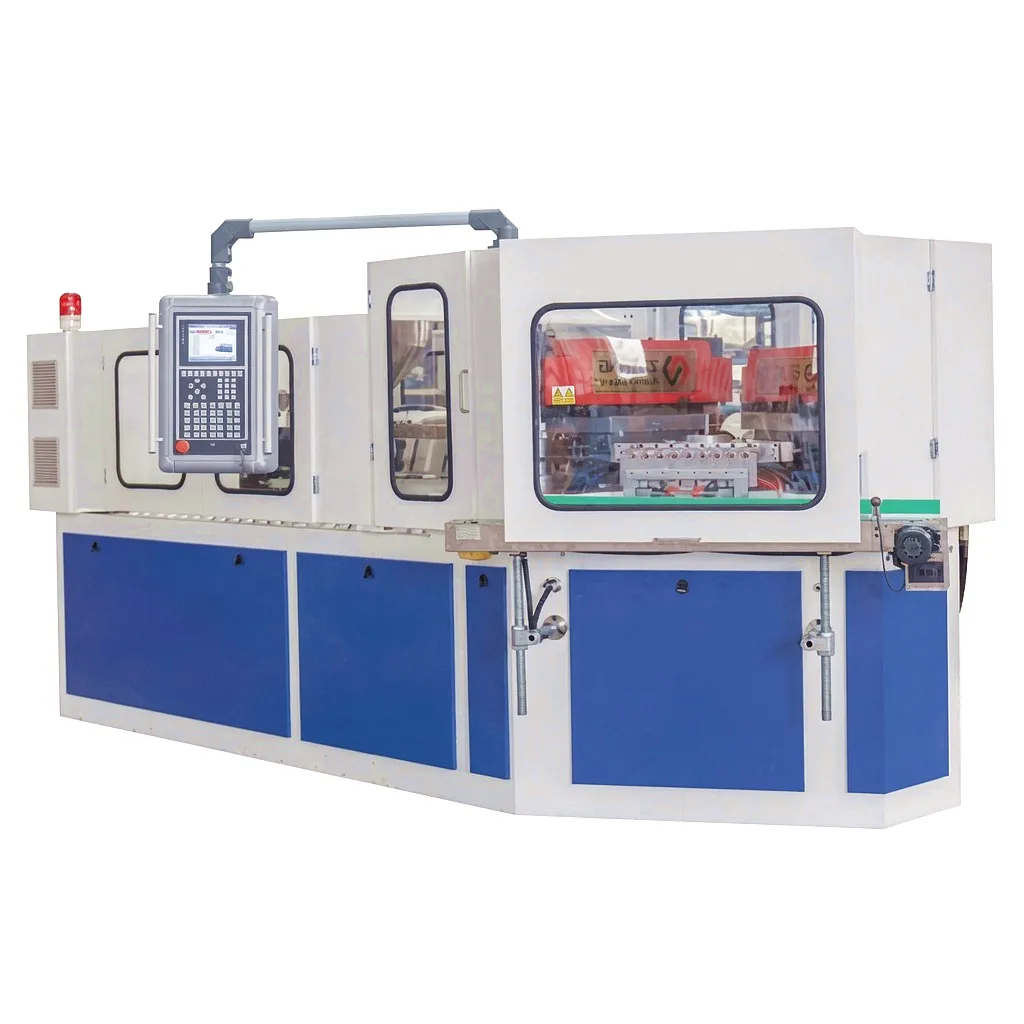
The question that lands in every procurement manager’s inbox — what does a blow molding machine actually cost? — rarely has a short answer, but it deserves a straight one. Whether you are sourcing for a pharmaceutical bottling line in Birmingham, a personal-care packaging operation in Sheffield, or a startup FMCG brand expanding into rigid PET containers, the price range for injection blow molding (IBM) equipment in 2025 spans from roughly £28,000 for a compact entry-level unit to well over £280,000 for a multi-station servo-driven system with full automation. The gap is not arbitrary — it reflects genuine differences in output capacity, control architecture, tooling quality, and long-term operational cost.
Understanding blow molding machine price in 2025 requires looking beyond the invoice figure. UK buyers face the additional complexity of import duties, CE certification requirements, on-site commissioning logistics, and the reality that energy costs in Britain sit markedly higher than in many manufacturing regions. A machine priced lower at purchase can cost significantly more over a five-year horizon if it draws excessive power, requires frequent mould changes, or lacks local service support. This guide examines every cost layer with the technical precision that capital equipment decisions demand — so your procurement team, finance director, and plant engineer can align around a single, evidence-based number.
IBM Machine Price Ranges at a Glance (2025)
Entry Level
£28,000 – £55,000
Compact 2-station IBM, hydraulic drive, up to 8 cavities, suitable for trial production or small-batch pharmaceutical containers
Output: 1,000–3,500 bottles/hr · PET / PP / HDPE
Mid-Range
£56,000 – £130,000
European-standard IBM with servo assistance, 4–6 stations, PLC with touchscreen HMI, suitable for personal care, food & beverage, and medical packaging lines
Output: 3,500–9,000 bottles/hr · multi-layer options
High Capacity / Full Servo
£131,000 – £285,000+
Full servo IBM with robotic unloading, multi-station rotary table, real-time wall-thickness monitoring, clean-room compatible design for pharmaceutical and high-spec beverage applications
Output: 9,000–22,000+ bottles/hr · GMP / FDA traceable
IBM vs EBM vs ISBM vs Extrusion: Which Process — and Which Price?
Before comparing blow molding machine prices, it is important to establish that the four dominant processes — Injection Blow Moulding (IBM), Injection Stretch Blow Moulding (ISBM), Extrusion Blow Moulding (EBM), and straight extrusion — are not interchangeable. Each has a distinct cost profile and production sweet spot, and selecting the wrong process can mean buying a machine that is either underpowered for your application or dramatically over-specified. IBM, which involves injecting a preform and immediately blowing it within a single-machine cycle, is the preferred choice for pharmaceutical bottles, cosmetic containers, and precision-threaded closures where dimensional accuracy and wall-thickness uniformity are non-negotiable. EBM suits large-format containers and complex shapes like jerricans or fuel tanks. ISBM dominates the high-speed PET water bottle market. Understanding where IBM sits in this landscape helps justify its price premium over EBM while remaining cost-effective versus full ISBM lines for the right applications.
| Process | Machine Cost Range (2025) | Wall Thickness Control | Ideal Container | Tooling Cost |
|---|
| IBM (Injection Blow) | £28,000 – £285,000 | Excellent (±0.05 mm) | Pharma, cosmetics, precision containers | Medium (£4,000–£18,000) |
| ISBM (Inject-Stretch-Blow) | £85,000 – £550,000+ | Very good (biaxial orientation) | PET water bottles, CSD | High (£15,000–£45,000) |
| EBM (Extrusion Blow) | £18,000 – £180,000 | Moderate (parison control) | HDPE jerricans, automotive tanks | Low–Medium (£2,000–£12,000) |
| Extrusion (straight) | £8,000 – £60,000 | Basic (die gap only) | Pipes, profiles, film | Low (£500–£6,000) |
How Injection Blow Molding Works — and Why It Affects Machine Cost
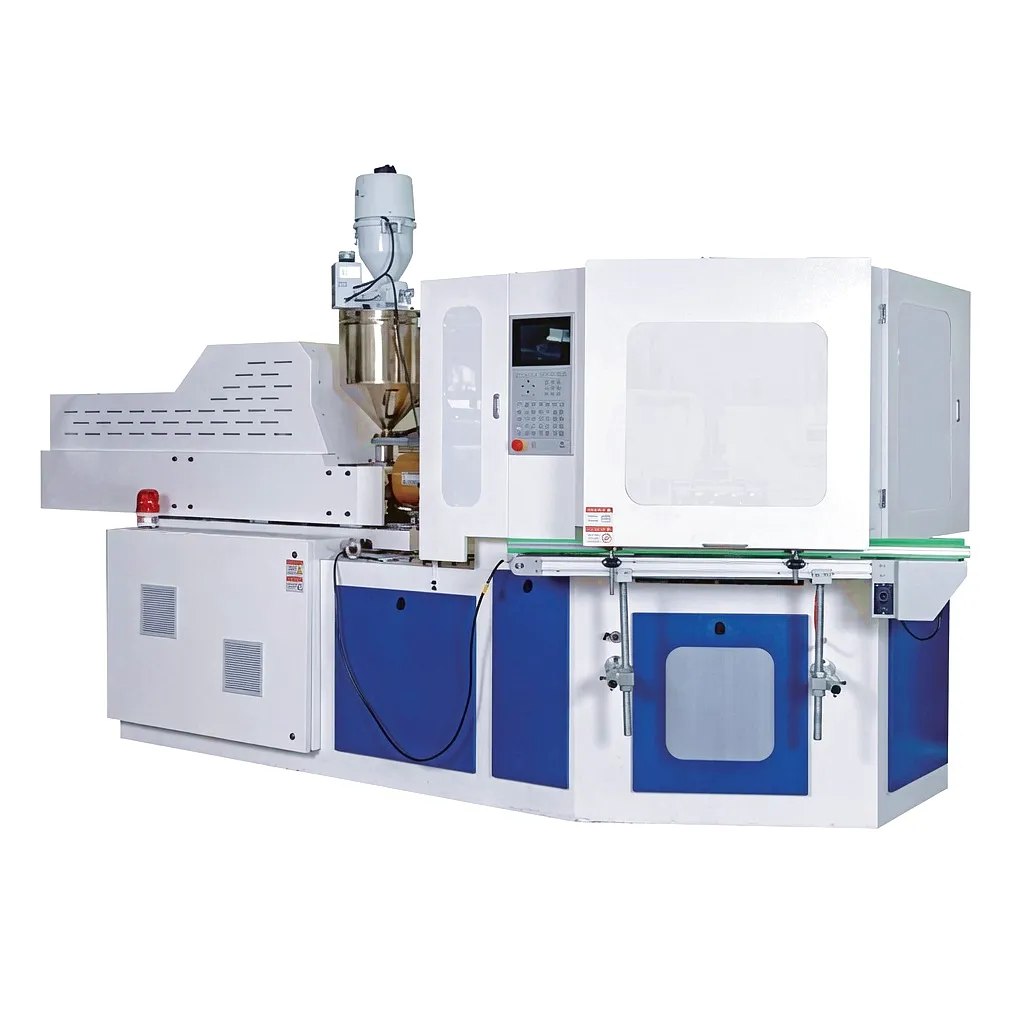
The IBM process runs in three mechanically linked phases on a rotating clamp station. In the injection phase, plasticised resin — typically PET, PP, HDPE, or PETG — is metered precisely into a core-rod-and-cavity toolset. The core rod defines the internal geometry while the cavity moulds the external preform shape, including the neck finish. Because the neck is formed at this stage, IBM machines are uniquely capable of producing very tight neck tolerances — critical for pharmaceutical closures where child-resistant fittings must meet BS EN ISO 8317 standards or ROPP caps must align with high-speed filling lines.
The core rod then rotates — or indexes on a linear shuttle, depending on machine architecture — to the blow station, where compressed air inflates the preform against the blow mould cavity. The preform retains heat from the injection phase, which eliminates the separate reheat stage seen in ISBM systems and is a significant contributor to IBM’s lower operational energy draw compared with two-stage stretch-blow processes. The third station handles stripping and ejection, returning the core rod to injection position. The elegance of this closed-loop thermodynamics is also what determines machine cost: tighter thermal management systems, precision platens, and servo-indexed rotary tables all carry a price premium that directly correlates with container quality consistency.
Core Machine Materials & Their Cost Implications
Platens & Frame
High-grade ductile cast iron (GG-25 or EN-GJL-250) with stress-relief annealing. Machines with fabricated welded steel frames cost less upfront but exhibit higher long-term deflection — directly impacting container wall uniformity over time.
Core Rods
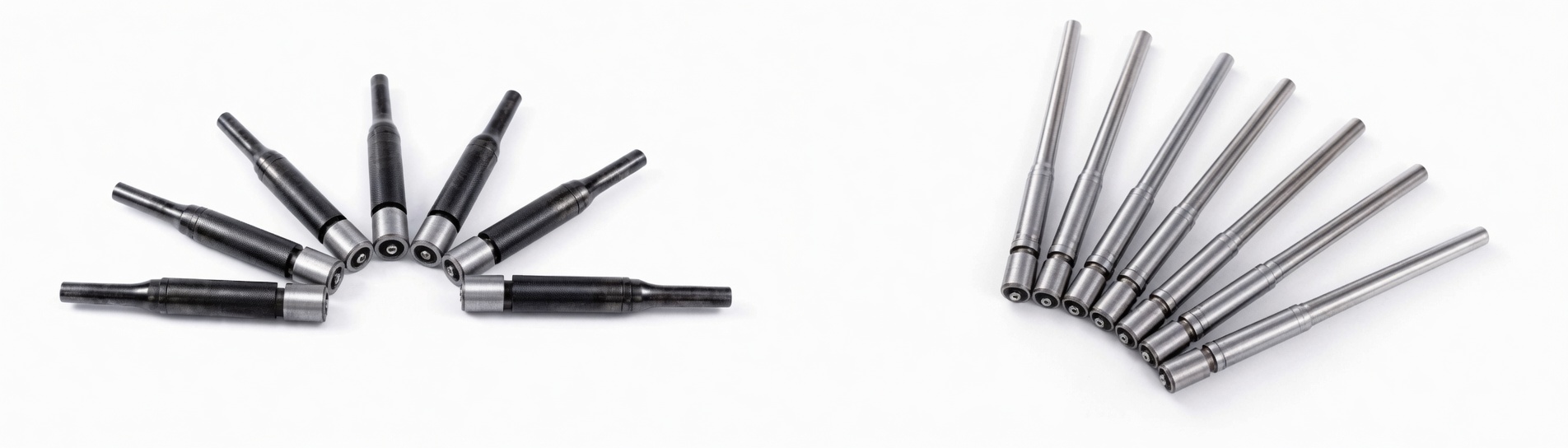
P20 tool steel with hard chrome plating or nitriding surface treatment. High-end IBM machines use H13 hot-work steel core rods for processing glass-filled resins or high-temperature PETG, adding 20–35% to tooling cost but extending service life from 800,000 to over 3 million cycles.
Barrel & Screw
Bi-metallic barrels (iron-boron alloy liner, EN 1.2379 outer) resist PET degradation at 270–295°C processing temperatures. Screw geometry — particularly compression ratio and L/D ratio — is often the hidden differentiator between economy and precision IBM machines.
Blow Mould Cavities
Aluminium alloy (7075-T6) for standard runs gives good thermal conductivity and weight. P20 steel cavities are specified for abrasive resins or containers with tight surface finish requirements such as cosmetic packaging sold into the UK premium market.
Wall Thickness Uniformity & Preheat Temperature: The Technical Price Drivers
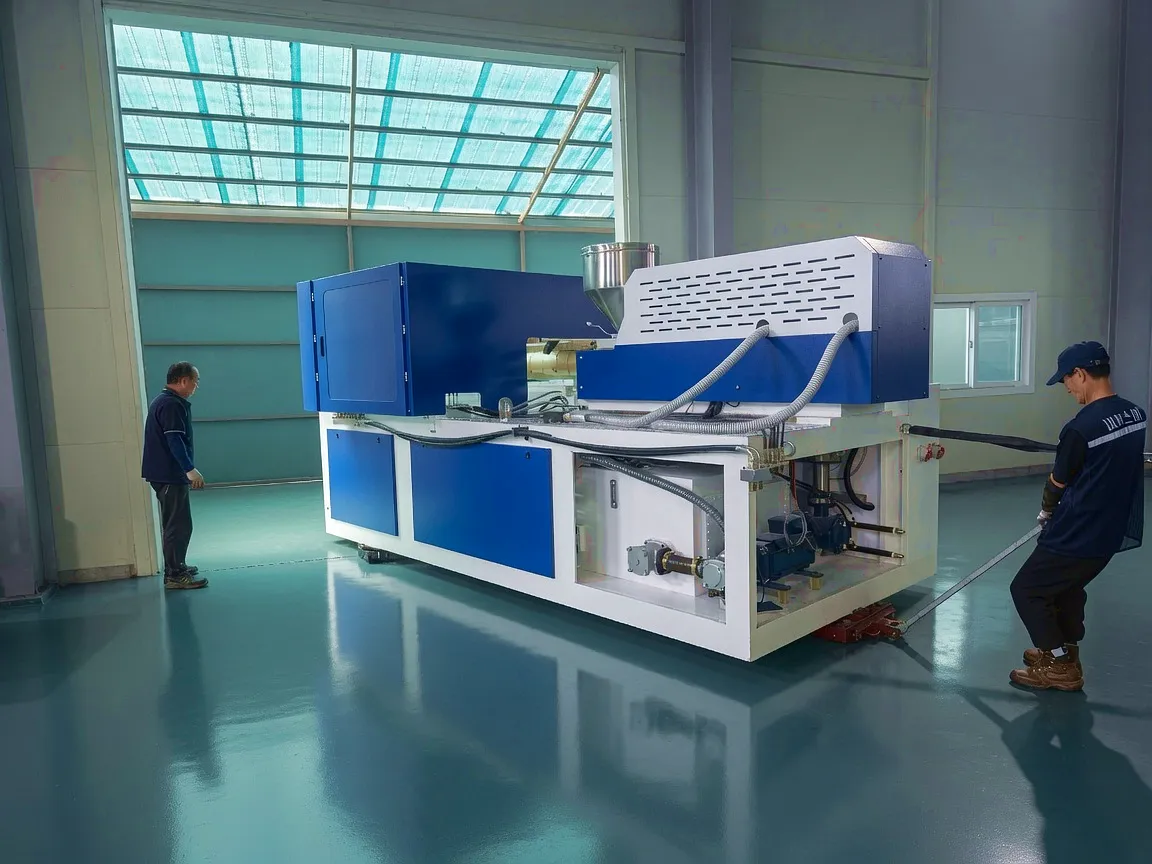
Wall thickness uniformity is perhaps the single most commercially important technical specification for buyers comparing IBM machines at different price points. A pharmaceutical dropper bottle with a 0.4 mm design wall that varies by ±0.15 mm in production will fail drop tests, potentially compromising product integrity and triggering MHRA audit findings. A premium-tier IBM machine achieves wall-thickness consistency through three interlocking mechanisms: precise metering of the injection shot volume (controlled by servo-driven injection units rather than hydraulic proportional valves), uniform mould temperature across all cavities via independent water-channel circuits and proximity-zone PID controllers, and core-rod alignment maintained under repeatably controlled clamping force. Budget machines that share a single cooling circuit across multiple cavities will show measurable wall variation — often 12–25% across a 6-cavity tool — that directly translates to higher resin consumption, more rejects, and reduced downstream fill-line speeds.
Preheat temperature curves in IBM differ from ISBM in a fundamental way: because the preform goes directly from injection to blow without cooling to ambient, the thermal window is much narrower. Typical PET IBM processing requires the preform to enter the blow station at 80–105°C — above Tg (glass transition temperature at approximately 78°C) but below the point of crystallisation. Mid-range and high-spec IBM machines manage this with zone-mapped barrel heating (5–6 independent zones), mould thermal insulation plates between the injection and blow stations, and real-time melt temperature feedback via melt-pressure transducers. These components represent a real cost input; they account for 8–14% of the total machine price differential between economy and precision-grade IBM equipment.
IBM Machine Technical & Performance Specifications (2025 Reference Table)
| Parameter | Entry Level | Mid-Range (ZQ40 Class) | High Spec (ZQ60 Class) |
|---|
| Clamping Force | 30–60 kN | 80–160 kN | 180–320 kN |
| Injection Weight (PET) | 15–40 g | 40–120 g | 120–320 g |
| Number of Cavities | 2–4 | 4–8 | 6–12 |
| Production Rate (bottles/hr) | 1,000–3,500 | 3,500–9,000 | 9,000–22,000 |
| Wall Thickness Tolerance | ±0.15–0.25 mm | ±0.08–0.12 mm | ±0.03–0.07 mm |
| Screw L/D Ratio | 18:1 – 20:1 | 22:1 – 24:1 | 24:1 – 28:1 |
| Barrel Heating Zones | 3 | 4–5 | 5–6 |
| Blow Air Pressure | 0.4–0.8 MPa | 0.6–1.0 MPa | 0.8–1.2 MPa |
| Drive System | Hydraulic | Servo-hydraulic hybrid | Full servo-electric |
| Installed Power (kW) | 7–15 kW | 18–35 kW | 35–75 kW |
| Container Volume Range | 5 mL – 250 mL | 10 mL – 600 mL | 10 mL – 2,000 mL |
| HMI / Control System | Basic PLC, 7-inch screen | Siemens / Omron PLC, 10-inch touchscreen | Siemens S7 / Beckhoff, 15-inch multi-touch, Industry 4.0 ready |
| Resin Compatibility | PET, PP, HDPE | PET, PP, HDPE, PETG, PC | PET, PP, HDPE, PETG, PC, PLA, co-polyester |
| CE / Standards | Basic CE | CE, ISO 9001 | CE, ISO 9001, GMP-compatible, optional FDA 21 CFR Part 11 |
IBM Machine Application Scenarios in UK Industry
The breadth of industries deploying injection blow molding machines across the United Kingdom reflects the process’s unique combination of precision, cleanliness, and economic efficiency at mid-to-large batch sizes. From the life sciences corridor running between Macclesfield and Cambridge to the food manufacturing clusters of Yorkshire and Humberside, IBM equipment forms a critical production backbone. Understanding where your application falls within this landscape helps identify not just the right machine specification, but also the appropriate price band and the service network you will need to support it.
💊
Pharmaceutical & Healthcare Packaging
IBM machines producing HDPE or PP dropper bottles, tablet containers, eye-drop flasks, and nasal spray bodies for pharmaceutical manufacturers operating under MHRA guidelines. Sites in Barnard Castle, Macclesfield, and the Oxford Biomedical Campus rely on IBM equipment for its deterministic neck-finish accuracy, which is mandatory for child-resistant closures. Machine investment typically falls in the £55,000–£140,000 range for compliant configurations. Tooling cost per product adds £8,000–£18,000 but amortises rapidly at production volumes above 200,000 units per run.
🧴
Personal Care & Cosmetics Manufacturing
Shampoo bottles, lotion dispensers, perfume flacons, and eye-cream containers produced for UK beauty brands benefit from IBM’s ability to combine gloss surface finish with precise wall geometry. Facilities in Birmingham’s Jewellery Quarter and along the M62 corridor in West Yorkshire use IBM lines for short-run premium packaging, where consumer perception of quality depends heavily on container feel and visual clarity. PETG and PC resins are common for high-transparency applications, and the machine must maintain consistent melt temperature within ±2°C to prevent haze. This application typically demands mid-range IBM configurations at £60,000–£120,000.
🥤
Food & Beverage — Sauce, Condiment & Dairy Containers
HDPE ketchup bottles, PP yoghurt containers, and PET honey jars produced for UK food brands including private-label supermarket lines distributed from Sheffield, Leeds, and Grimsby ports. IBM’s advantage here versus ISBM is the ability to produce wide-mouth containers with complex base geometries that facilitate product evacuation and resist stackloading. Machines in this segment run at high OEE because product changeovers are infrequent and resin consumption per bottle is well established. Entry-to-mid range IBM at £32,000–£80,000 covers most food packaging applications.
🔬
Laboratory & Diagnostic Consumables
Specimen collection bottles, reagent vials, and diagnostic cartridge housings produced for IVD manufacturers and NHS supply chains. The UK’s growing diagnostics manufacturing base, accelerated by post-pandemic investment in domestic medical supply, is generating strong demand for small-volume IBM containers with ISO Class 7 cleanroom compatibility. These applications require machines with sealed enclosures, HEPA purge options, and full audit trail logging — features that push machine cost to £90,000–£180,000 but are non-negotiable for regulatory compliance.
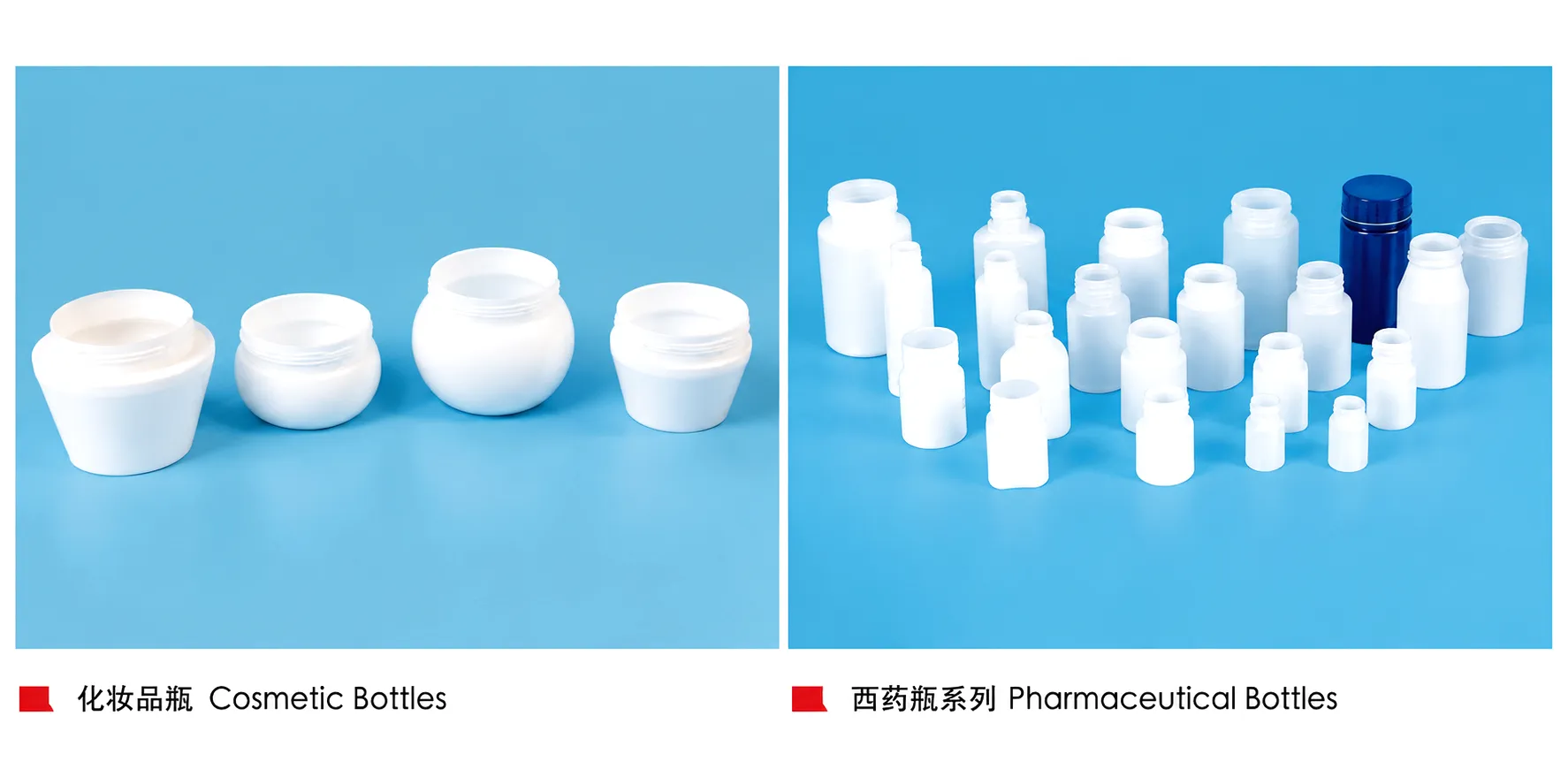
Mould Design, Bottle Optimisation, and Their Effect on Total Cost
Mould design and bottle shape optimisation represent a cost layer that many buyers underestimate when evaluating blow molding machine price. For an IBM system, the tooling is an inseparable part of the capital equation — and a poorly designed tool on an excellent machine will still produce substandard containers. The injection mould must be designed such that the gate location and hot runner balance deliver identical shot weights across all cavities to within ±0.3%. Asymmetric cavity filling is the most common cause of wall-thickness variation, and it cannot be corrected by the machine’s process parameters alone without sacrificing cycle time.
Bottle geometry itself drives tooling cost in ways that are not always obvious at the design stage. Round containers are the most economical to tool and the least demanding on the IBM blowing station. Oval and rectangular cross-sections require precision core-rod alignment features and often demand higher blow pressure to fill sharp corners, which in turn demands better-sealed blow-head assemblies — a detail that differentiates reliable mid-range machines from cut-price alternatives. Container base design is equally important: deep punt designs for stability or anti-vacuum bases for hot-fill applications add both tooling complexity and machine blow pressure requirements. Buyers investing in bespoke container designs for UK retail markets should budget £4,000–£18,000 for tooling depending on cavity count, material, and container complexity, and factor this into total capital expenditure alongside the IBM machine price.
Energy Consumption, UK Electricity Costs, and Total Cost of Ownership
With UK industrial electricity prices averaging approximately 22–28p/kWh as of 2025 — roughly double the rate in many Asian manufacturing regions — energy efficiency is a legitimate and quantifiable factor in IBM machine selection. A hydraulic IBM machine drawing 22 kW continuously over a 16-hour production day consumes approximately 352 kWh, at a daily electricity cost of around £88–£98. A full servo-electric machine of equivalent capacity typically draws 30–45% less power due to the elimination of continuous hydraulic pump operation, reducing daily energy cost to approximately £55–£68. Over a five-year machine life on a two-shift operation, this difference compounds to £27,000–£42,000 in electricity savings — a figure that justifies a meaningful portion of the servo machine’s price premium and should be a standard element of any UK procurement business case.
5-Year Total Cost of Ownership Comparison (UK Market, 2-Shift Operation)
Machine Purchase
Hydraulic: £38,000
Servo: £72,000
5-Yr Energy Cost
Hydraulic: £160,000+
Servo: £100,000–£115,000
Maintenance (5 Yr)
Hydraulic: £18,000–£28,000
Servo: £8,000–£14,000
5-Yr TCO
Hydraulic: ~£216,000–£226,000
Servo: ~£180,000–£201,000
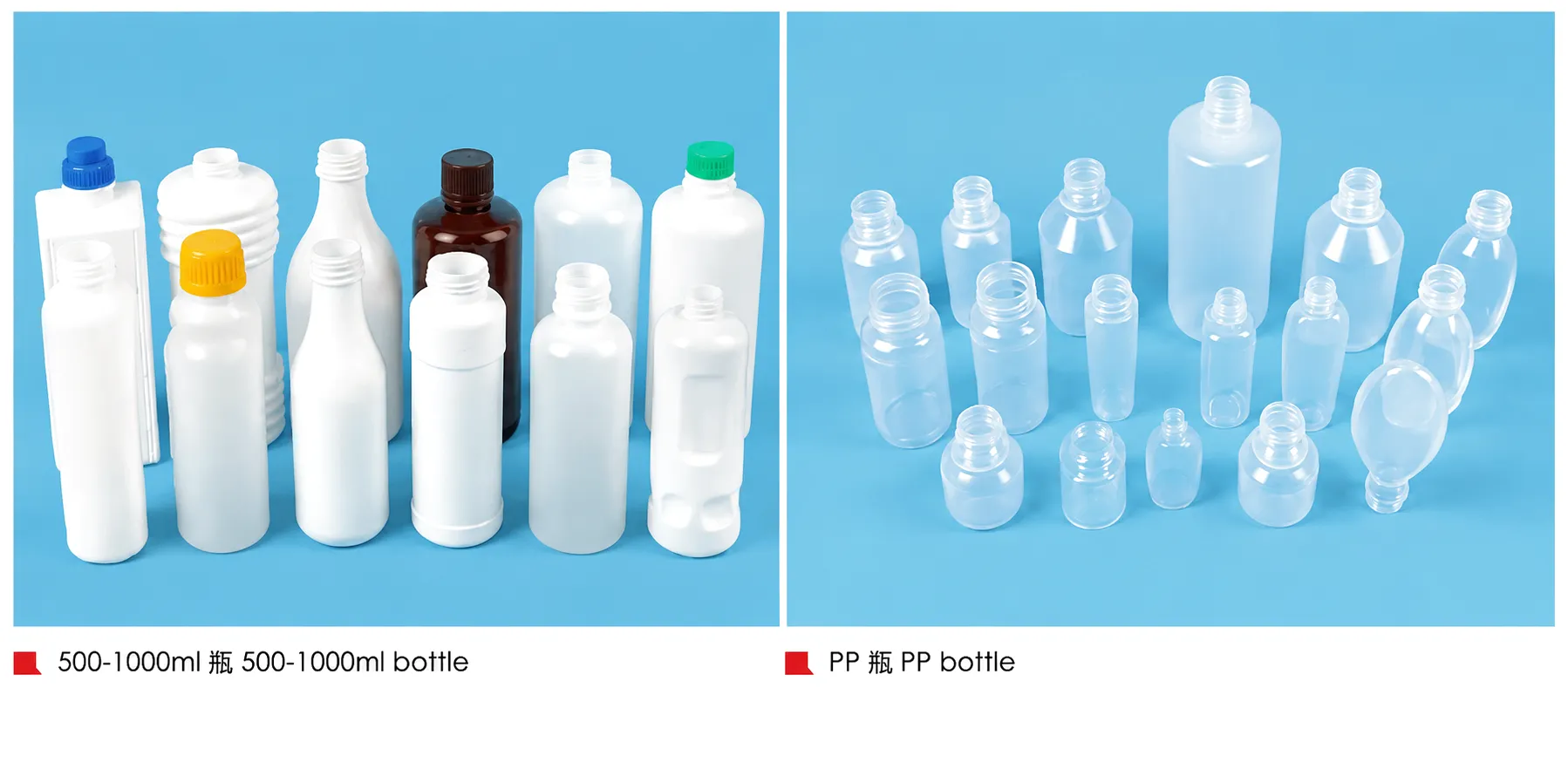
Common IBM Machine Faults, Root Causes, and Troubleshooting
Downtime on an IBM machine is expensive precisely because the equipment typically feeds a downstream filling, labelling, and packing line. Understanding the most common fault modes — and how quickly a supplier can resolve them — is a legitimate part of the purchase decision. Higher-priced machines generally offer more diagnostic capability, faster fault isolation through HMI alarm logging, and better parts availability. The following covers the fault patterns most commonly reported by UK IBM operators, with causes and corrective approaches.
⚠ Wall Thickness Variation
Most common defect
Cause: imbalanced hot runner, worn core rod, misaligned clamp platen. Fix: rebalance runner system, inspect core-rod concentricity, re-torque platen tie bars to specification. Servo machines provide digital clamp-force feedback enabling faster diagnosis.
⚠ Haze or Cloudiness in PET
Optical clarity defect
Cause: resin moisture above 50 ppm (insufficient drying), barrel temperature too low driving crystallisation, blow station temperature drop between stations. Fix: verify desiccant dryer dew point below -40°C, increase barrel Zone 3 temperature by 3–5°C, insulate between-station transfer zone.
⚠ Short Shot / Unfilled Preform
Injection defect
Cause: check valve wear causing backflow, injection speed set too low, insufficient back pressure. Fix: inspect non-return valve seat for wear, increase injection velocity profile velocity in Stage 1, set back pressure to 8–12 MPa for PET. Check barrel band heaters for open circuit.
⚠ Blow-out / Burst Bottles
Structural failure
Cause: blow air pressure too high for preform temperature, gate vestige creating stress concentration, mould cooling insufficient. Fix: reduce blow pressure in 0.05 MPa increments, inspect gate area post-ejection for vestige, increase mould cooling water flow and verify water temperature below 12°C.
⚠ Sticking on Core Rod
Ejection failure
Cause: core rod surface damage or inadequate polishing, container cooling insufficient, draft angle below 1° on container body. Fix: inspect and re-polish core rod to Ra 0.2 µm or better, extend mould cooling time by 0.3 seconds, review container design for adequate draft angle before next tooling run.
Ever Power Featured IBM Models
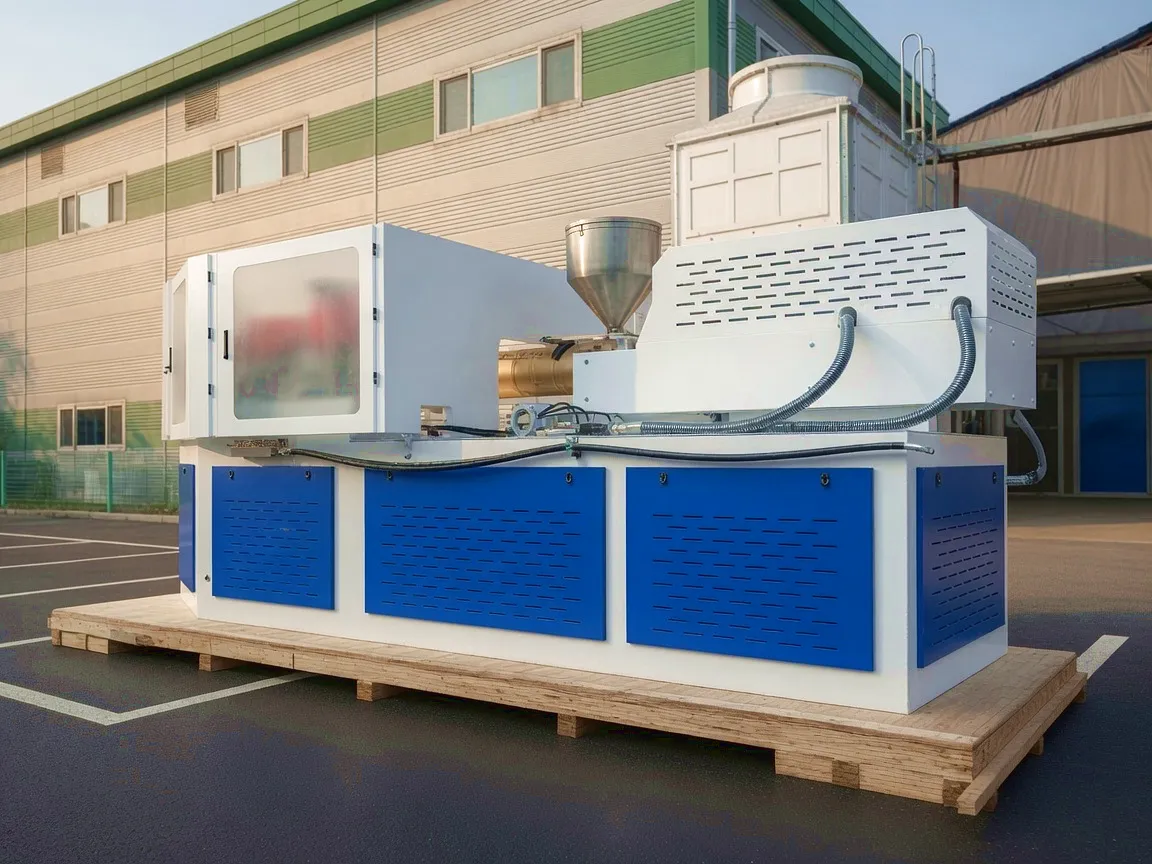
Ever Power’s IBM range is engineered to European standards, with CE certification and Siemens control architecture as standard across both the ZQ40 and ZQ60 series. Both machines incorporate servo-electric drive for injection and clamping phases, bi-metallic barrels, and independent mould-temperature control circuits. UK customers benefit from full commissioning support, English-language documentation, and a dedicated UK technical liaison covering on-site startup and operator training.
High-Capacity Series
The ZQ60 is Ever Power’s flagship IBM platform, designed for high-output pharmaceutical, food, and personal care container production. With clamping force up to 280 kN, 6–12 cavities, full servo-electric drive, and Siemens S7 PLC control, it delivers wall-thickness consistency to ±0.05 mm and production rates up to 20,000 bottles/hr on standard neck sizes. CE certified, GMP-compatible, and optimised for UK 3-phase 415V supply.
Mid-Range Series
The ZQ40 offers an outstanding cost-to-performance ratio for medium-volume production environments. Servo-hydraulic hybrid drive, 4–8 cavities, Siemens-based HMI with 10-inch touchscreen, and compatibility with PET, PP, HDPE, and PETG resins make it a versatile platform for cosmetics, food supplements, and OTC pharmaceutical containers. Ideal for UK manufacturers requiring CE compliance at a competitive investment level, with rapid tooling changeover and English-language support documentation.
Ever Power Manufacturing & Custom IBM Solutions
Ever Power Precision Manufacturing
Ever Power operates a 28,000 m² manufacturing campus equipped with CNC machining centres capable of 5-axis mould and platen machining to IT5 tolerance, dedicated injection screw and barrel manufacturing with bi-metallic lining induction systems, servo drive assembly and calibration bays aligned to Siemens integration standards, and a final QC line including mould trial and container dimensional inspection. This fully vertically integrated supply chain gives Ever Power the ability to guarantee lead times of 35–65 days for standard configurations and 60–90 days for custom IBM machine builds — a meaningful advantage for UK buyers working against capital expenditure approval windows or new production line deadlines.
Customisation capability at Ever Power extends well beyond colour and panel graphics. The engineering team provides tailored screw geometry design for specialist resins including bio-based PLA, co-polyesters, and recycled post-consumer PET. Custom clamping force configurations, clean-room compatible enclosures with HEPA integration, FDA 21 CFR Part 11 compliant data logging, and multi-language HMI packages including UK English are all engineered in-house. For UK pharmaceutical manufacturers seeking to integrate IBM output directly into an existing GMP filling line, Ever Power offers OEM interface documentation and commissioning assistance that covers both machine and line integration — reducing the risk that typically accompanies new equipment validation under MHRA oversight.
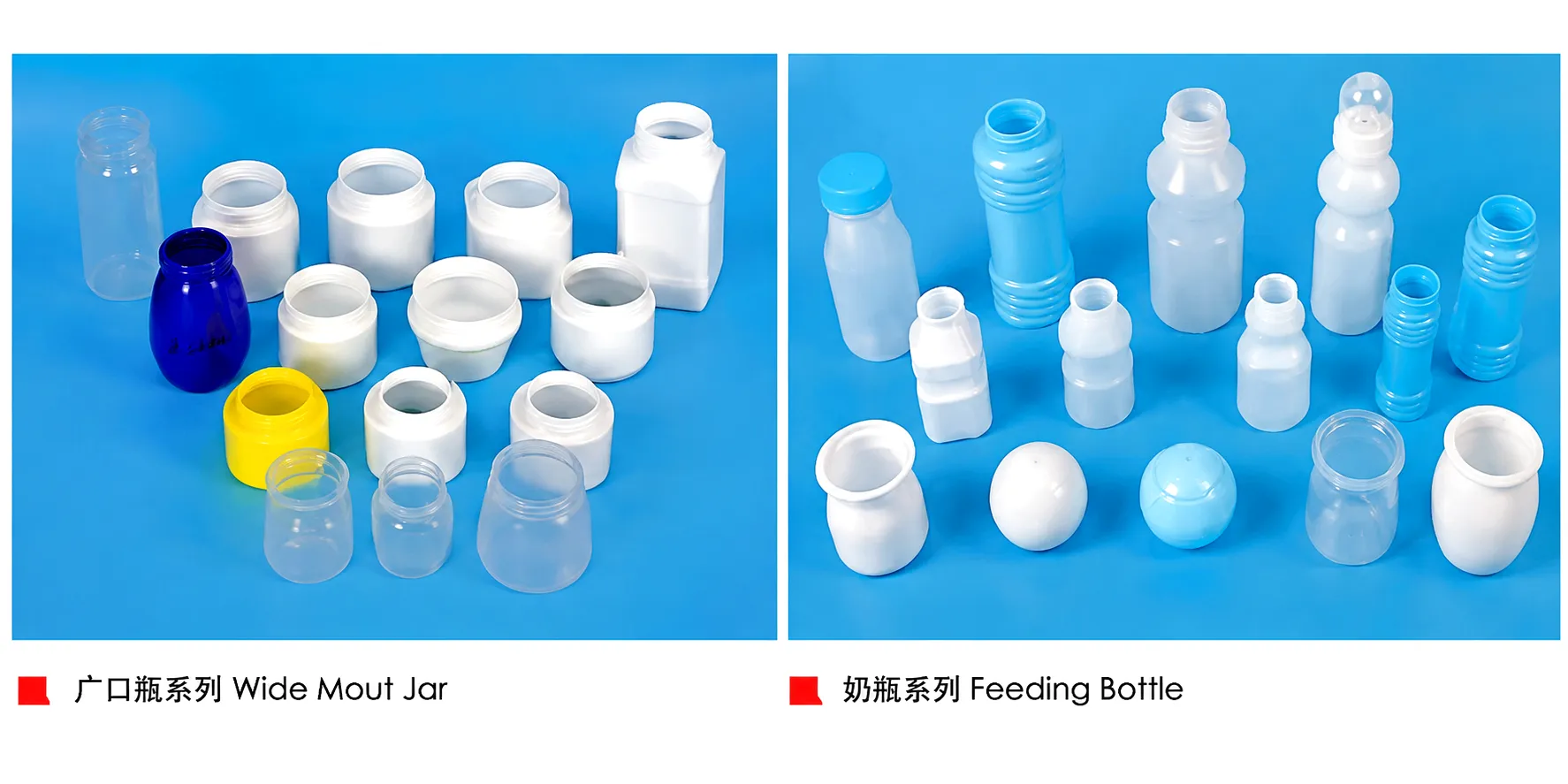
Customer Success: Sheffield Pharmaceutical Packaging Manufacturer
Case Study
Meridian Pharma Packaging Ltd — Sheffield, South Yorkshire
IBM Machine
ZQ60 × 2 Units
Meridian Pharma Packaging Ltd, a contract packaging manufacturer based in Sheffield’s Lower Don Valley industrial corridor, approached Ever Power in early 2024 facing a critical capacity gap. Their legacy hydraulic IBM line — a 14-year-old unit sourced from a European supplier now defunct — was producing HDPE dropper bottles for three NHS-supply pharmaceutical clients at OEE rates below 62%, with wall-thickness variation of ±0.19 mm causing a 7.4% rejection rate on 10 mL eye-drop bottles. The operation had recently won a significant new contract to supply bottles for an OTC analgesic brand launching into Boots and Superdrug, pushing required output from 1.1 million to 2.8 million units per month — a level the existing machine could not meet even in optimal condition.
After an initial technical consultation with Ever Power’s UK technical team, Meridian selected two ZQ60 units with 8-cavity tooling engineered specifically for their neck-finish and bottle-body geometry requirements. Ever Power’s tooling team performed cavity fill simulations prior to steel cut, validating balanced runner design that achieved less than 0.8% cavity-to-cavity weight variation at target cycle time. Installation and commissioning at the Sheffield facility were completed within an 11-day window, with Ever Power commissioning engineers on-site throughout and full operator training delivered in English covering machine operation, HMI recipe management, and planned maintenance routines.
Within six weeks of reaching full production speed, Meridian reported wall-thickness variation reduced to ±0.06 mm, rejection rate falling from 7.4% to below 0.9%, and OEE stabilising at 88% across both machines. Monthly output reached 3.1 million bottles — comfortably exceeding the new contract requirement. The energy cost difference between the old hydraulic machine and the two new servo ZQ60s, despite the higher output volume, resulted in a 28% reduction in electricity cost per thousand bottles produced, contributing materially to the return-on-investment calculation that justified board approval for the capital expenditure.
★★★★★
“The wall-thickness consistency we’re now achieving on the ZQ60 is something we genuinely didn’t think was possible without spending three times the price on European legacy brands. Ever Power’s pre-commission simulation work meant the tooling ran right from day one — no iterative adjustments, no lost production time. For a Sheffield manufacturer with monthly output commitments, that matters enormously.”
— Production Director, Meridian Pharma Packaging Ltd, Sheffield
★★★★★
“We were concerned that going with a non-European brand would create CE compliance issues or make MHRA validation more complex. Ever Power provided complete technical file documentation aligned with the EU Machinery Directive and UK PSSR regulations, and their engineers stayed on-site until our QC team signed off the IQ/OQ protocols. The level of after-sales responsiveness has also been excellent — a UK-dedicated contact who understands the regulatory environment made a real difference.”
— Quality Assurance Manager, UK Contract Pharma Packager, Birmingham
★★★★★
“The ZQ40 has been running our personal-care bottle line for 14 months without a single unplanned stoppage. The energy saving versus the old hydraulic machine is meaningful for our electricity bill — we calculated a 31% reduction per thousand units, which at our volumes adds up to real money. The customised screw geometry for our PP compound was specified perfectly; melt quality is exceptional and we have virtually zero flash. Would recommend Ever Power without hesitation to any UK packaging manufacturer looking at IBM investment.”
— Plant Manager, Personal Care Contract Manufacturer, Leeds
Frequently Asked Questions — IBM Machine Pricing & Procurement (UK)
How much does a PET injection blow molding machine cost to buy in the UK in 2025?
In 2025, PET injection blow molding machine cost in the UK ranges from approximately £28,000 for a compact entry-level hydraulic unit to £285,000 or more for a full servo-electric high-output system with multi-station rotary design. The midpoint of the market — machines suitable for most pharmaceutical, cosmetic, and food packaging applications — sits between £55,000 and £130,000. When budgeting, UK buyers should add auxiliary equipment costs (dryer, chiller, compressor, conveyor) of approximately £12,000–£38,000 on top of the machine price, plus tooling at £4,000–£18,000 per product.
What is the price difference between a hydraulic IBM machine and a servo-electric IBM machine for UK pharmaceutical production?
A servo-electric IBM machine of comparable capacity typically costs 30–55% more at point of purchase than a hydraulic equivalent. However, given UK electricity prices of 22–28p/kWh in 2025, the servo machine’s 30–45% energy saving typically recovers this premium within 2.5–4 years of two-shift operation. For pharmaceutical production in particular, the servo machine’s superior repeatability and digital clamp-force feedback also reduce resin waste and container rejection rates, adding a further cost saving that is often underestimated in initial procurement analysis.
Where can I get a reliable quote for a CE-certified injection blow molding machine supplier for my Birmingham food packaging factory?
For CE-certified IBM equipment with UK delivery, commissioning support, and English documentation, contacting Ever Power directly at
[email protected] is a reliable starting point. Providing your container specifications (volume range, resin type, neck finish diameter and thread form, required output rate) in the initial inquiry allows Ever Power’s engineers to propose the correct machine class and cavity configuration, and provide a detailed quotation covering machine, tooling, auxiliary equipment, freight, and commissioning — enabling an accurate comparison against other suppliers.
How long does it take to get an IBM machine delivered and commissioned at a UK manufacturing site in 2025?
For standard configurations, lead time from order confirmation to ex-works dispatch is typically 35–65 days. Shipping to UK ports (Felixstowe, Southampton, or Tilbury for most deliveries to the Midlands, South Yorkshire, and the South East) adds 18–28 days sea freight. Allow a further 7–14 days for customs clearance, inland haulage, and on-site positioning. On-site commissioning typically requires 5–12 working days depending on line integration complexity. Total time from order to operational production: approximately 3.5–5 months for standard builds, 4.5–7 months for custom configurations.
Which blow molding process is most cost-effective for making small pharmaceutical bottles under 100 mL for the UK NHS supply chain?
Injection blow molding is the most cost-effective process for pharmaceutical containers under 100 mL within the UK NHS supply chain. IBM’s one-stage cycle eliminates the separate reheat step required by ISBM, reducing energy cost per unit. More importantly for NHS and MHRA-regulated supply, IBM’s deterministic neck-finish formation — versus EBM’s pinched or welded seams — delivers the dimensional consistency that child-resistant closure testing (BS EN ISO 8317) requires. Tooling cost for a 6-cavity IBM pharmaceutical tool is typically £9,000–£14,000, with per-unit resin material cost for a 30 mL HDPE bottle in the range of 1.8–3.2 pence.
What ongoing maintenance costs should I budget for an IBM machine operating in a Sheffield manufacturing facility over five years?
For a servo-electric IBM machine running two shifts at a Sheffield facility, annual maintenance cost typically runs £1,600–£2,800, covering screw and barrel wear inspection, hydraulic fluid and filter change (on hybrid-drive machines), heating band and thermocouple replacement, and periodic tie-bar and lubrication service. Over five years, total maintenance budgets of £8,000–£14,000 are realistic. Hydraulic machines carry higher maintenance cost (£3,500–£5,500/year) due to oil changes, seal replacements, and proportional valve servicing. Parts availability from Ever Power for UK buyers is maintained via an authorised European spare-parts distribution point with typical delivery of 3–7 working days for standard wear items.
Ready to Get an Accurate IBM Machine Price for Your UK Operation?
Send Ever Power your container specifications and production targets. Our engineering team will respond with a detailed quotation covering machine, tooling, auxiliary equipment, and UK commissioning within 48 hours.
edit by gzl