Ever Power — UK Market Edition
Injection Blow Molding Machines: Key Applications in Personal Care & Cosmetics Packaging
A deep-dive into how modern IBM technology is reshaping shampoo, conditioner, and shower gel container production — with precision, speed, and consistency that UK manufacturers demand.
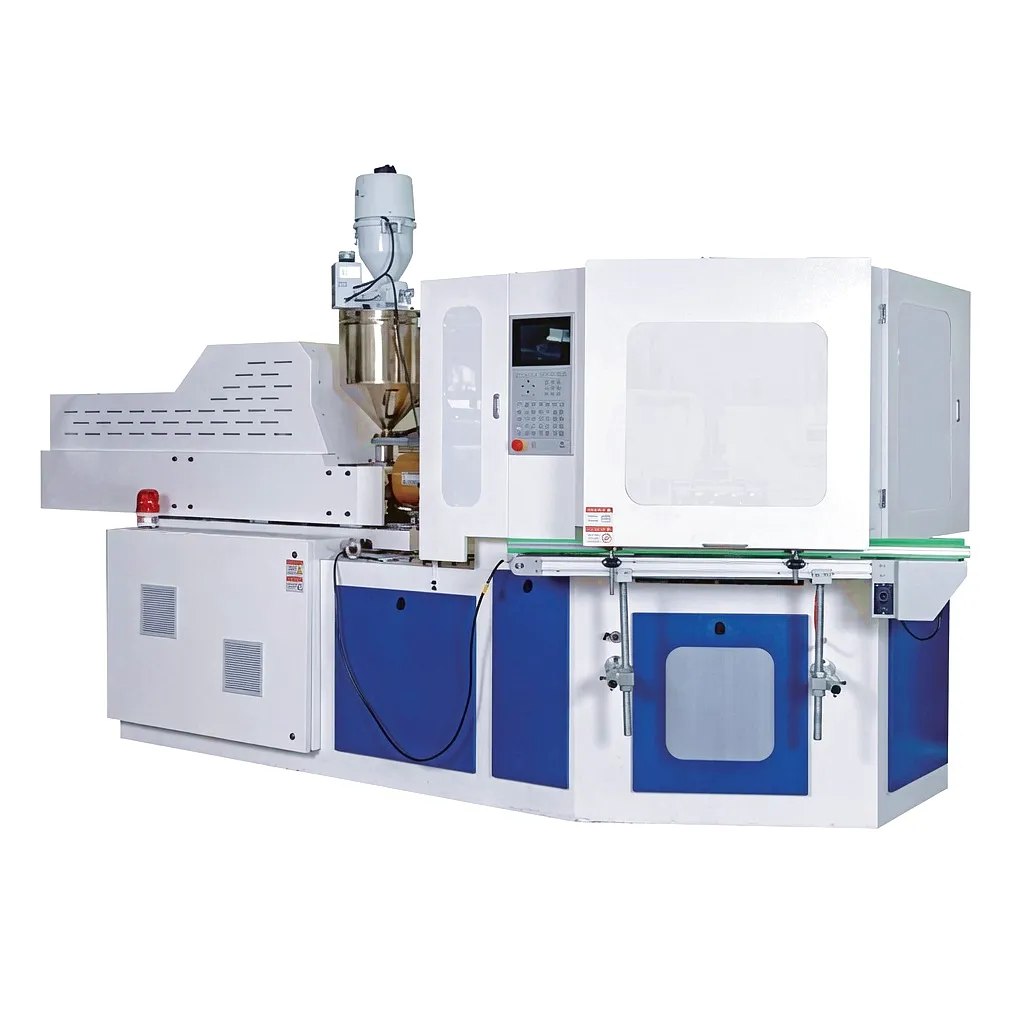 Walk into any high-street pharmacy or supermarket in Birmingham, Sheffield, or Bristol, and the shelves are lined with meticulously shaped personal care containers — shampoo bottles with ergonomic curves, conditioner flacons with precision dispensing necks, shower gel vessels that feel premium in the hand. Behind every one of those containers, somewhere along the manufacturing chain, sits an injection-blow molding machine quietly doing what it does best: producing flawless, dimensionally accurate hollow plastic bottles at volumes and tolerances that no other process can match so economically. The injection-blow molding machine — or IBM machine — has become indispensable to the personal care and cosmetics packaging sector, and for UK contract manufacturers and brand owners alike, the choice of machine directly determines whether a product line succeeds or fails on quality, cost, and lead time. Understanding how these machines work, what materials they handle, and why the engineering choices inside them matter is the first step toward making a genuinely informed procurement decision.
How the Injection-Blow Molding Process Actually Works
The injection-blow molding process operates across three precisely co-ordinated stations on a rotating index plate. At the first station, molten plastic resin — typically polyethylene terephthalate (PET), high-density polyethylene (HDPE), or polypropylene (PP) — is injection-moulded around a hardened steel core rod, producing what engineers call a parison or preform. This parison is not a finished container; it is a carefully engineered intermediate shape whose wall thickness distribution, neck geometry, and temperature profile are all set during this injection phase. The accuracy of the parison determines almost everything about the final bottle’s performance: neck finish tolerances, thread engagement force, seal integrity, and drop-resistance all trace back to the injection station.
The index plate then rotates the still-hot parison — still mounted on its core rod — to the blow station. Here, compressed air is introduced through the core rod, inflating the parison outward against the walls of the blow mould cavity. Because the parison was never ejected or reheated between stations, the temperature gradient across the plastic wall remains tightly controlled, and the resulting material distribution in the blown bottle is highly uniform. This single-stage thermal continuity is what gives injection-blow molding its characteristic advantage over stretch-blow or extrusion-blow alternatives: the neck finish, formed in the injection station, emerges dimensionally perfect and requires no secondary trimming — a critical benefit for cosmetics containers where cap thread accuracy directly affects leak rates and consumer perception of quality.
At the third station, the finished bottle is stripped from the core rod, cooled by air or contact with the mould surface, and transferred to a conveyor or collection system. The cycle then repeats. Modern injection-blow molding machines run this three-station index continuously, and the cycle time for a typical 200 ml shampoo bottle in HDPE sits between eight and fourteen seconds depending on wall thickness and cooling channel design. For high-volume personal care production runs in the UK — where a single brand might ship tens of millions of units per year to retailers including major supermarket chains — that cycle speed, combined with zero-flash necks and minimal scrap rates, makes the injection-blow molding machine the architecture of choice.
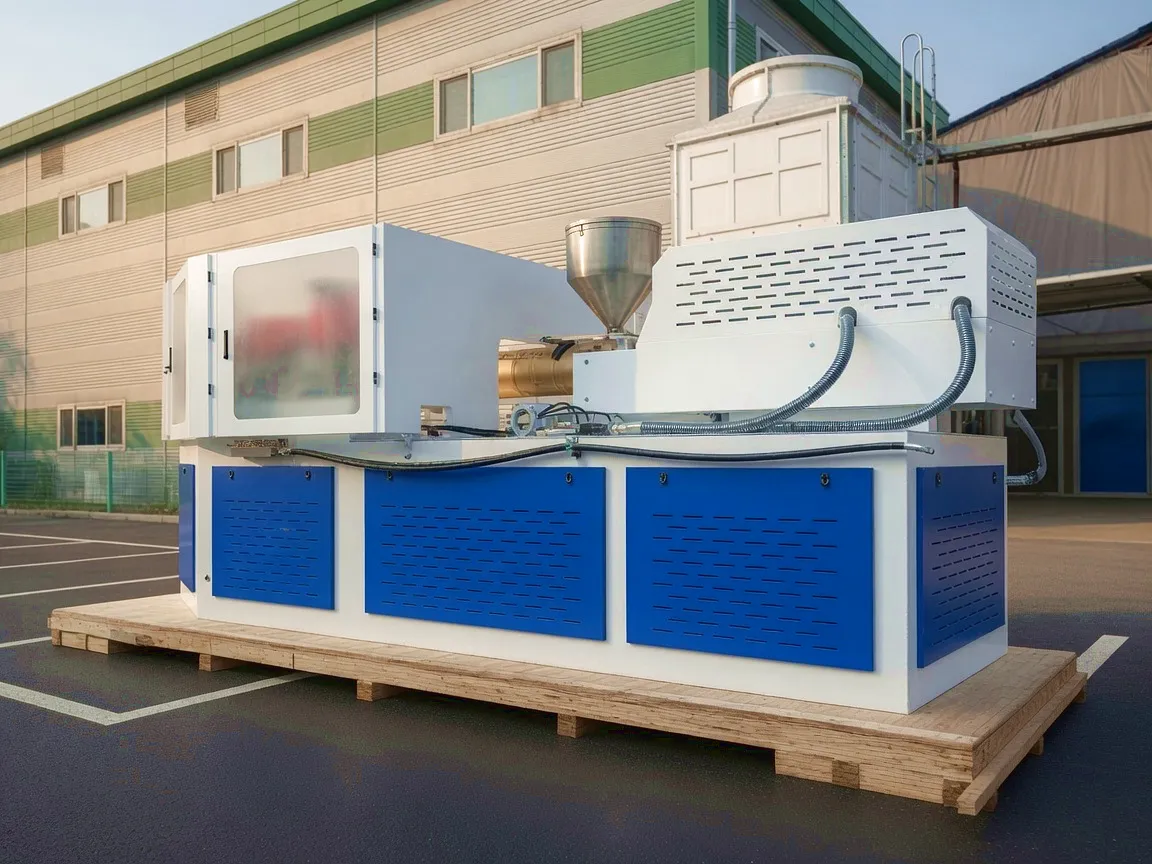
Core Materials Processed by Injection-Blow Molding Machines
PET (Polyethylene Terephthalate)
The workhorse of premium cosmetics bottles. PET delivers outstanding clarity, allowing consumers to see product level and colour. It carries an excellent barrier to moisture and oxygen, which is critical for serums, tonics, and fragrance-adjacent formulations. Its natural gloss and glass-like appearance have made it the preferred substrate for upmarket personal care brands targeting UK department store channels. Injection-blow molded PET containers are lighter than glass equivalents by roughly 85%, reducing logistics costs on palletised shipments from fulfilment centres in the East Midlands and Yorkshire.
HDPE (High-Density Polyethylene)
HDPE is the material most commonly associated with everyday shampoo and conditioner bottles. Its chemical resistance to the surfactants, conditioning agents, and pH-adjusting additives present in modern hair care formulations is exceptional. HDPE containers produced on injection-blow molding machines achieve very tight neck-finish tolerances — typically ±0.05 mm on thread pitch — ensuring that pump dispensers and flip-top closures from standard UK closure suppliers engage without leaks. HDPE is also one of the most recyclable plastics in the UK waste stream, making it the natural choice for brands working toward the UK Plastics Pact sustainability commitments.
PP (Polypropylene)
Polypropylene sits in the middle of the performance-cost curve: more heat-resistant than HDPE yet more economical than specialty barrier resins. It is the preferred material for hot-filled personal care products such as certain colour-care conditioning treatments that are filled at elevated temperatures. PP’s flex fatigue resistance also makes it suitable for squeeze-dispensing containers — a growing category in UK shower gel and body wash segments — where the container body must withstand hundreds of repeated compressions without stress-whitening or microcracking. Injection-blow molding machines with screw geometry optimised for PP deliver consistent melt homogeneity even at high throughput rates.
PC & PETG (Specialty Engineering Resins)
For luxury cosmetics containers — professional salon brands headquartered in London or Manchester, premium fragrance houses targeting Duty Free channels — polycarbonate and PETG offer near-crystal optical clarity combined with superior impact resistance. Both materials require tightly controlled melt temperatures and drying protocols, demands that advanced injection-blow molding machines meet through closed-loop barrel temperature control and integrated resin drying systems. The resulting containers command significantly higher retail price points and are typically paired with metal overcaps or weighted bases to enhance shelf presence.
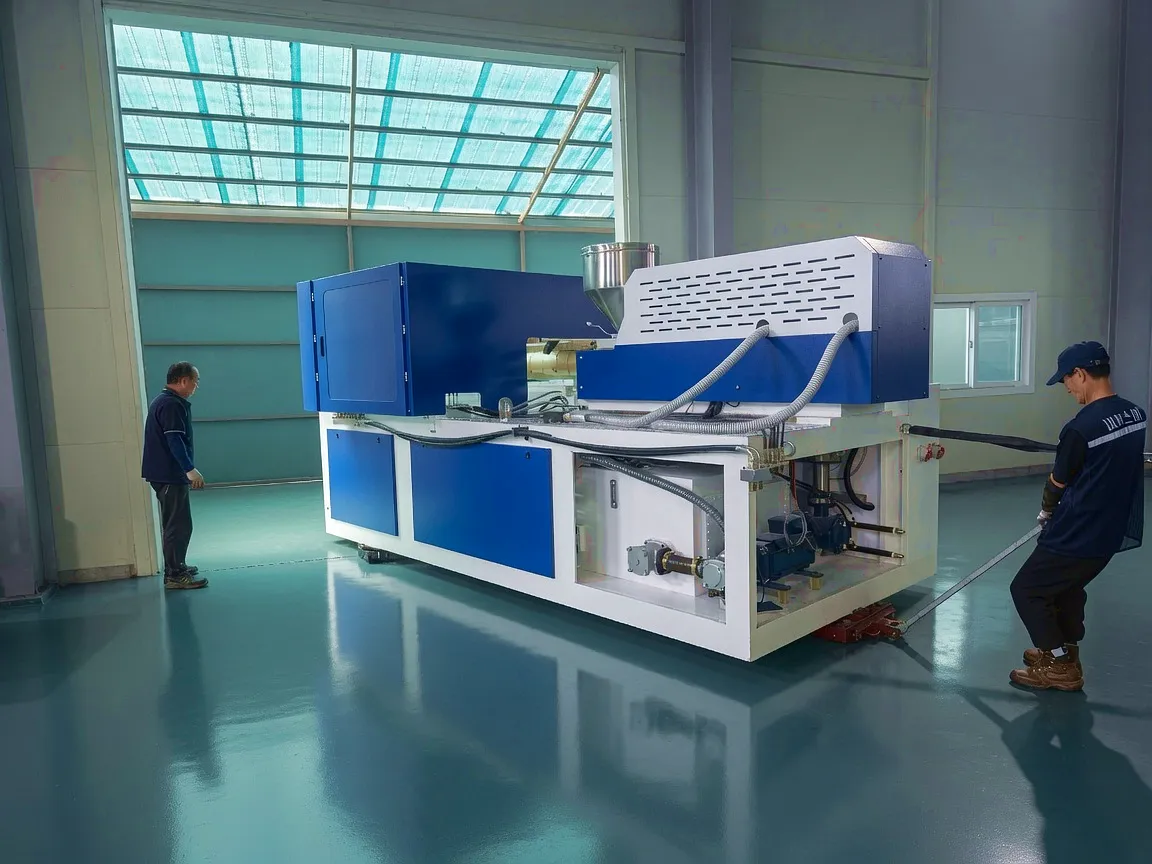
Core Technical Advantages of Injection-Blow Molding Machines
Zero Flash on Neck Finish
Because the neck finish is formed in the injection station and never re-formed during blowing, it emerges without flash or parting-line witness marks. No secondary trimming operation is needed, eliminating a significant source of scrap and contamination risk in cleanroom-adjacent personal care environments.
Tight Wall Thickness Distribution
The single-stage thermal process maintains uniform wall temperature throughout blowing, producing containers with wall thickness variation typically within ±8% across the bottle body. This consistency is critical for top-load strength testing compliance — a requirement for stacking personal care bottles on automated packing lines common in UK contract fill facilities.
Fully Enclosed Process — No Pinch Seam
Unlike extrusion blow molding, the IBM process produces containers without a bottom pinch seam. This eliminates a potential weak point and a visual defect that degrades brand perception for premium cosmetics lines. The absence of seam-trim waste also reduces material consumption by two to four percent compared to equivalent EBM operations.
High Cavitation & Output Efficiency
Modern multi-cavity IBM tooling supports four, six, or eight cavities per index rotation. Combined with cycle times under fourteen seconds, this yields production rates exceeding 5,000 bottles per hour on larger platforms — a throughput figure that makes per-unit packaging costs competitive against imported containers, supporting the case for domestic UK production.
Rapid Mould Change Capability
Quick-change mould systems — now standard on European-specification machines including the Ever Power ZQ series — reduce mould changeover time to under forty minutes. For UK contract manufacturers serving multiple personal care brands with varying container portfolios, this flexibility dramatically improves asset utilisation and reduces the minimum viable production run length.
Energy-Optimised Servo Drive Systems
All-electric and servo-hydraulic IBM machines consume considerably less energy than older hydraulic-only platforms. With UK industrial electricity prices remaining elevated, servo-driven injection and clamping units reduce energy consumption per thousand containers by fifteen to twenty-five percent, contributing meaningfully to factory-level sustainability metrics and carbon reporting obligations.
Technical & Performance Specifications — IBM Machine Reference Table
| Parameter | ZQ40 (IBM European) | ZQ60 (IBM European) | Unit / Notes |
|---|---|---|---|
| Clamping Force | 400 | 600 | kN |
| Max Container Volume | 500 | 1,000 | ml |
| Injection Shot Weight | Up to 120 | Up to 200 | g (HDPE equivalent) |
| Max Number of Cavities | 6 | 8 | Per index rotation |
| Cycle Time (200 ml HDPE) | 8–12 | 9–14 | seconds |
| Blow Pressure | 0.4–1.0 | 0.4–1.2 | MPa |
| Screw L/D Ratio | 22:1 | 24:1 | Length to diameter |
| Neck Finish Tolerance | ±0.05 | ±0.05 | mm on thread pitch |
| Compatible Materials | PET, HDPE, PP, PC | PET, HDPE, PP, PETG, PC | Resin types |
| Drive System | Servo-hydraulic | Servo-hydraulic / All-electric option | European CE standard |
| Barrel Temperature Zones | 5 | 6 | Closed-loop PID control |
| Machine Footprint (L x W x H) | 3.8 x 1.5 x 2.0 | 4.6 x 1.8 x 2.2 | m |
| Power Consumption | 18–22 | 26–32 | kW (running average) |
Application Scenario: Personal Care & Cosmetics Packaging
Shampoo, Conditioner, and Shower Gel Containers — A Sector Where IBM Machine Precision Delivers Competitive Advantage

Shampoo Bottles: Where Neck Precision Defines Brand Integrity
In shampoo container production, the neck finish is arguably the most consequential detail the bottle maker controls. The shampoo market in the UK spans a price range from value-tier supermarket own-label products filling at high speed with basic flip-top caps through to premium salon-brand flacons with precision pump dispensers retailing above fifteen pounds per unit. Across that entire range, the relationship between the bottle neck and the closure must be engineered to zero tolerance — the IBM process delivers this through the injection station, where the neck is formed under injection pressure and then never disturbed again. Unlike extrusion blow moulded shampoo bottles, which must have their neck flash trimmed and are therefore subject to dimensional variation from the trimming die, IBM shampoo bottles require no post-moulding neck work. On a six-cavity injection-blow molding machine producing 250 ml HDPE shampoo bottles at a ten-second cycle, that equates to roughly 2,160 perfect-necked bottles per hour from a single machine — at per-unit production costs that remain competitive with imported containers when UK logistics, lead time, and currency risk are properly accounted for.
Conditioner Containers: Viscosity, Weight, and Material Selection

Shower Gel Containers: Clarity, Squeeze Performance, and Sustainability
Shower gel packaging has evolved rapidly over the past decade in response to two powerful forces: consumer demand for premium sensory experience and the UK retail sector’s increasing insistence on sustainability credentials. Injection-blow molding machines are particularly well suited to shower gel container production because they process PET with a clarity and gloss that approaches glass at a fraction of the weight. A crystal-clear PET shower gel bottle produced on an IBM machine allows the product’s own colour and texture to become a visual selling point — an approach used extensively by premium bodycare brands with distribution across the UK, from independent boutiques in Sheffield’s Kelham Island district to nationwide chains. For more everyday shower gel formats in HDPE or PP, the IBM process offers the squeeze performance and chemical resistance that the formulation requires, along with the closed-base geometry that helps prevent the micro-leaks that occasionally plague EBM squeeze bottles at their bottom seam.
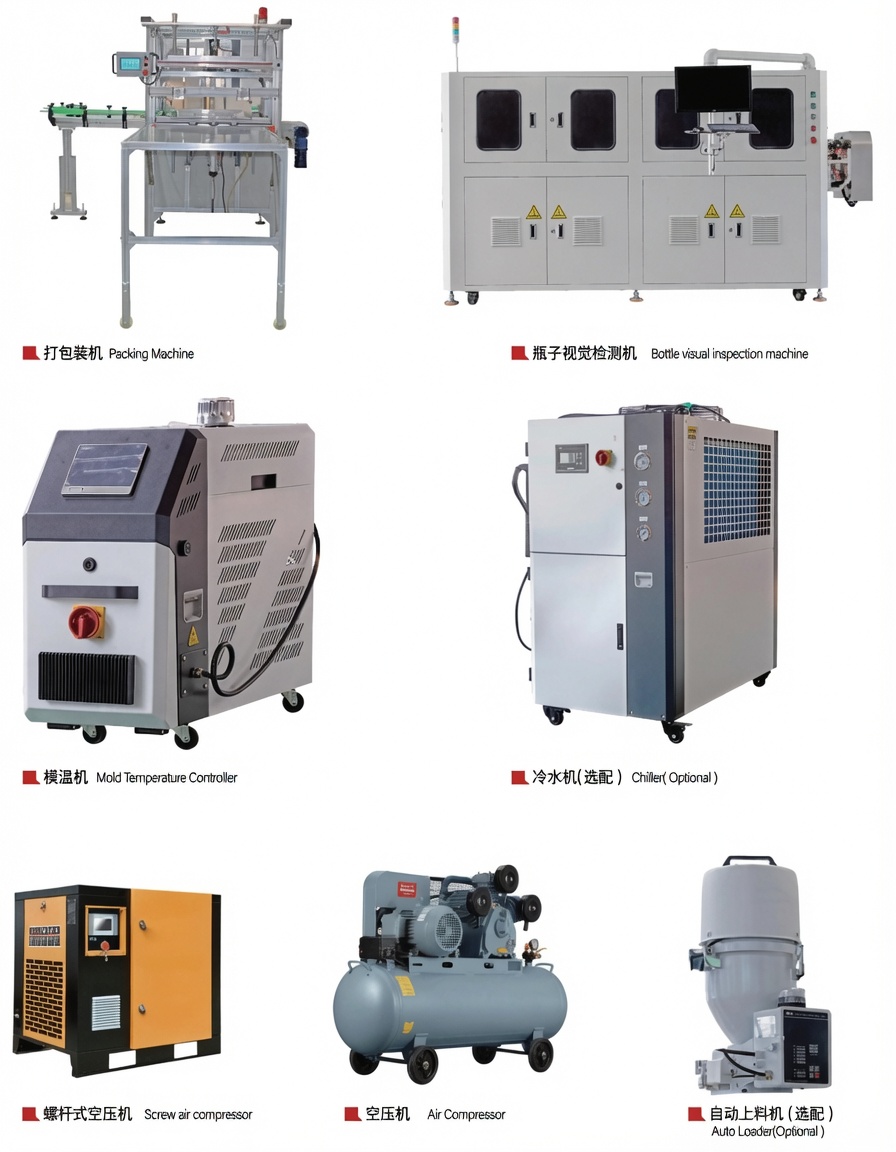
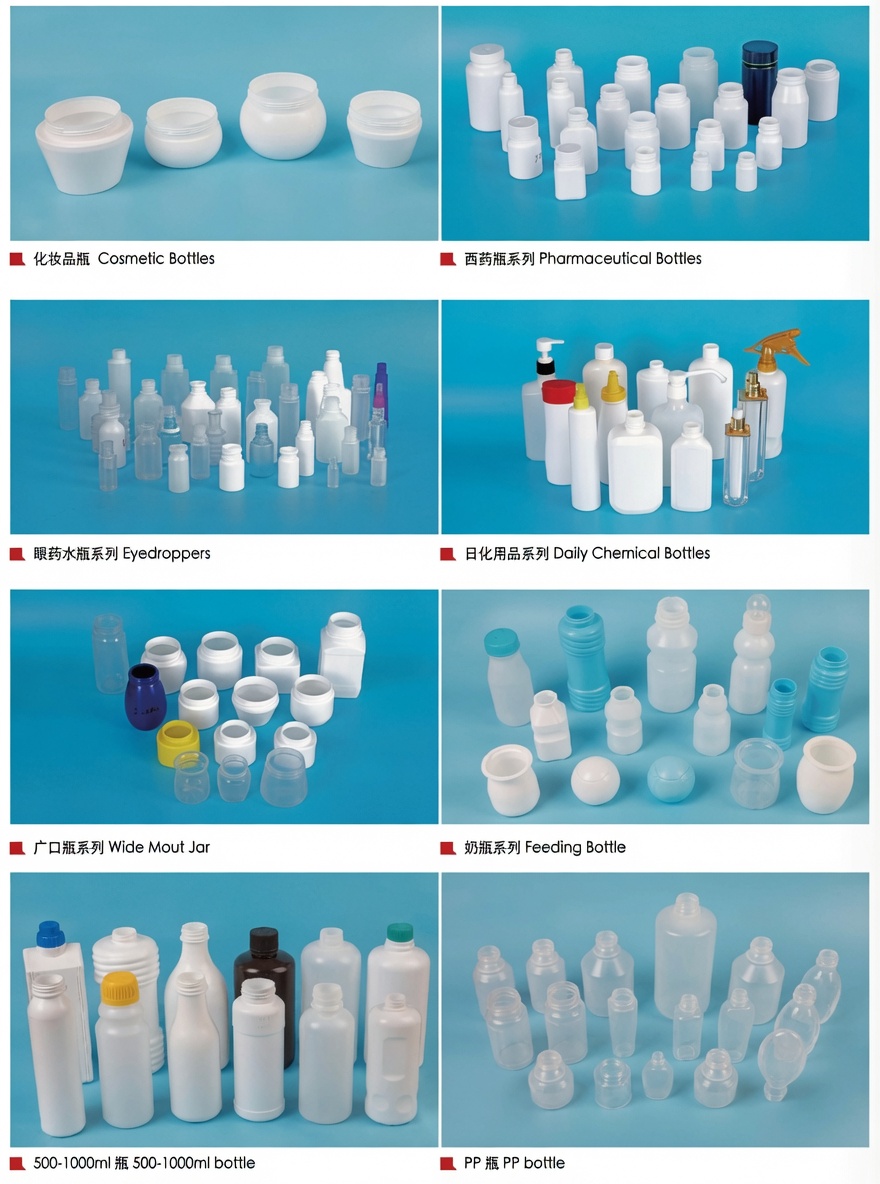
Ever Power — Precision Manufacturing & Customisation Capability
Serving the UK Personal Care Packaging Market
Ever Power designs and manufactures injection-blow molding machines built to European performance standards, with a product philosophy centred on customisation depth that most equipment suppliers cannot match. Where standard catalogue machines dictate what a customer can produce, Ever Power works in the opposite direction — beginning with the container specifications demanded by the customer’s personal care clients, then engineering the machine, tooling, and auxiliary systems around those requirements. This is not a marketing claim; it is the operational model behind every ZQ-series machine that Ever Power supplies to packaging manufacturers serving UK and European personal care brands.
Ever Power’s manufacturing facility operates with a fully integrated supply chain. Core components — injection barrels, screw assemblies, index plates, hydraulic manifolds, and control enclosures — are machined and assembled under one roof, using CNC machining centres capable of holding tolerances to within 0.005 mm on critical surfaces. This level of in-house precision manufacturing eliminates the supplier interface variability that degrades quality and extends lead times at less vertically integrated competitors. For UK customers, the practical benefit is a machine whose mould-mounting surfaces, cooling channel connections, and electrical interfaces all conform to a consistent, documented specification — meaning moulds transferred between machines of the same series fit without shimming or field modification.
Ever Power’s customisation service covers every aspect of the injection-blow molding machine: injection unit plastication capacity, blow station pressure range, index plate geometry for non-standard cavity configurations, PLC control software for integration with Industry 4.0 factory management systems, and downstream automation including vision inspection, reject handling, and bottle transport. For UK personal care packaging manufacturers operating just-in-time supply agreements with major retail buyers, the ability to integrate an IBM machine seamlessly into an existing automated line — rather than treating it as an isolated island of production — represents a significant operational advantage. Ever Power engineers provide commissioning support, operator training documentation translated to meet UK health and safety guidance standards, and a spare parts programme designed around the lead times applicable to UK-based service engineers.
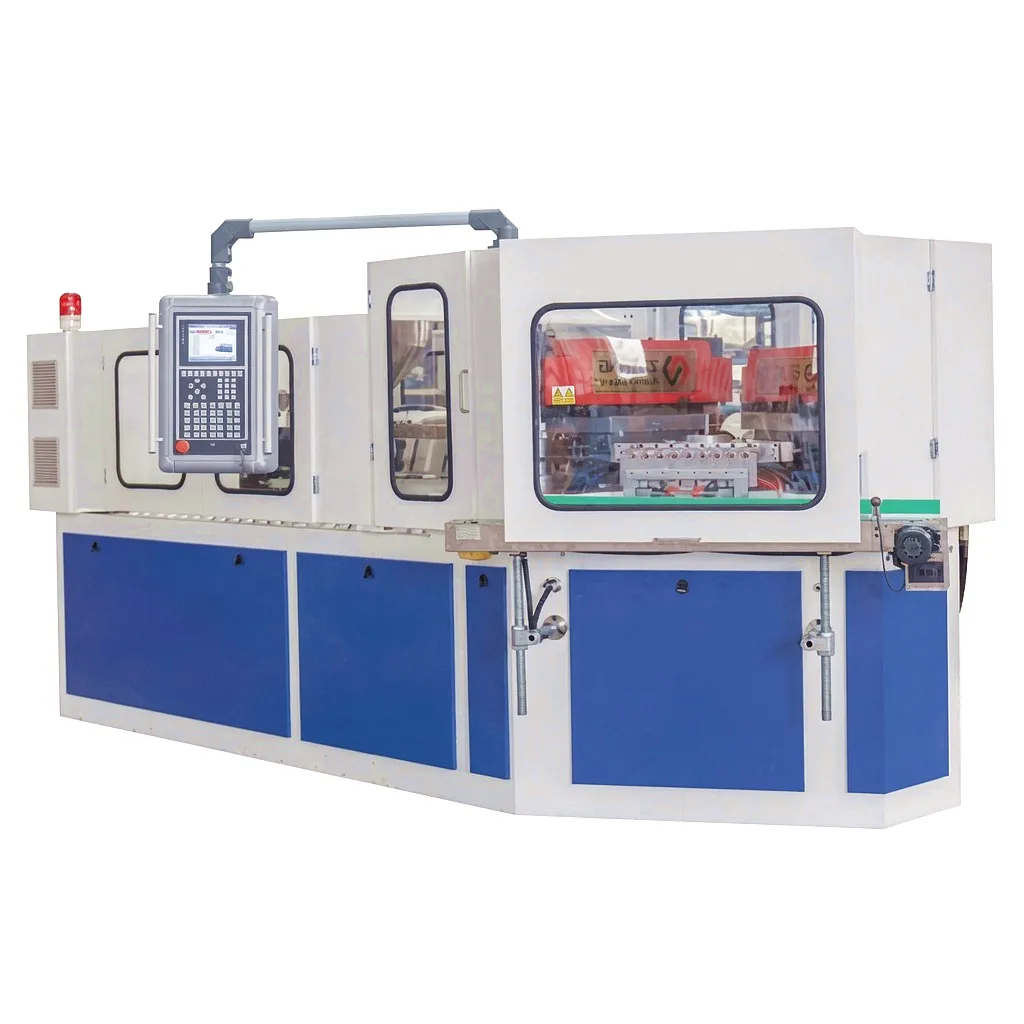
Featured Ever Power Injection-Blow Molding Machines
Sheffield Contract Packaging Firm Achieves 38% Reduction in Bottle-Related Customer Complaints
Location: Sheffield, South Yorkshire | Sector: Contract Cosmetics & Personal Care Packaging
A mid-sized contract packaging business based in Sheffield’s Attercliffe industrial corridor had been producing personal care containers on an older extrusion blow moulding line for nearly a decade. The operation was profitable but increasingly under pressure. Its two largest clients — both mid-market UK hair care brands with national supermarket distribution — were raising their container quality audit standards in line with new retail buyer requirements, and the Sheffield operation’s EBM line was consistently generating containers with marginal neck-finish variation and occasional bottom-seam leakage at a rate of roughly 1.2% of output. At thirty million bottles per year across the facility, that failure rate translated to approximately 360,000 rejected containers annually — a direct material cost, but also a growing source of customer relationship tension.
The facility’s technical director evaluated the injection-blow molding process as an alternative and entered procurement discussions with Ever Power for a pair of ZQ60 European-specification machines. The specification process was extensive: Ever Power’s engineering team worked directly with the Sheffield site’s production manager and quality assurance lead over a six-week period to define the exact neck finish geometry for each of the twelve container types in the active portfolio, design the mould cooling circuit layout to achieve target cycle times, and confirm the PLC integration approach for the facility’s existing MES system. Ever Power produced a complete factory acceptance test protocol prior to shipment, and the Sheffield team’s QA lead conducted a pre-shipment inspection at Ever Power’s manufacturing facility before final sign-off.
After commissioning and a four-week ramp period, the two ZQ60 machines were running at full production on the Sheffield site’s day and night shifts. Within the first full quarter of operation, bottle-related customer complaint rate had fallen by 38%. The zero-flash neck finish eliminated the category of cap engagement complaints entirely. Bottom-seam leakage, by definition, ceased to exist — IBM containers have no bottom seam. Material consumption per container fell by approximately 2.8% due to the elimination of EBM flash trim. The Sheffield operation subsequently won a third hair care brand account — one that had previously cited container quality concerns as the reason it procured from a competitor.
“The neck finish accuracy on the ZQ60 is genuinely on a different level from anything we ran before. We have not had a single cap engagement complaint since the machines went live. Ever Power’s application engineers understood our container portfolio before we did — they identified a cavity balance issue in our original mould design that our own toolmaker had missed entirely.”
— Technical Director, Sheffield Contract Packaging Operation
“We had specific requests around PLC integration with our warehouse management system — connectivity requirements that are not standard on machines sold into some other markets. Ever Power accommodated every one of them without treating them as extras. The customisation process was professional, well documented, and delivered on the timeline committed.”
— Production Manager, Sheffield Contract Packaging Operation
“What we did not anticipate was the downstream effect on our filling line efficiency. Because the IBM bottles are dimensionally consistent to a degree our old EBM output never was, the filling line runs with noticeably fewer stoppages. The improvement in overall equipment effectiveness has partly paid for the IBM machines ahead of the depreciation schedule we built into the business case.”
— Quality Assurance Lead, Sheffield Contract Packaging Operation
Frequently Asked Questions — Injection-Blow Molding Machine for UK Personal Care Packaging
Ready to Specify the Right Injection-Blow Molding Machine for Your UK Operation?
Ever Power’s engineering team is available to review your container specifications, annual volumes, and facility constraints — and to provide a tailored machine recommendation with a competitive quote. Contact us to begin the conversation.
edit by gzl