 Raw material selection sits at the foundation of every successful food and beverage packaging project. When your injection blow moulding line is producing bottles destined for pharmaceutical syrups, mineral water, cooking oil, or nutritional supplement liquids, the grade of PET resin you load into the hopper determines everything downstream — wall thickness uniformity, optical clarity, barrier performance, and compliance with UK and EU food contact regulations. A poorly chosen resin creates cascading problems: inconsistent preform weights, uneven wall distribution during the blow stage, elevated acetaldehyde migration that affects product flavour, and ultimately rejected batches that cost Birmingham and Sheffield packaging plants thousands of pounds per hour in downtime. This guide cuts through the noise and gives IBM line operators, procurement managers, and packaging engineers in the United Kingdom a structured, technically grounded framework for evaluating and sourcing food-grade PET resin with confidence — so that every cycle on your injection blow moulding machine delivers containers that meet both performance and regulatory requirements.
Why PET Resin Grade Dictates IBM Process Performance
Intrinsic Viscosity (IV)
IV is the single most critical specification in any PET procurement datasheet. For injection blow moulding of small-to-medium containers — the primary application of IBM machines — the optimal IV window sits between 0.72 and 0.84 dL/g. Resins with IV below 0.70 dL/g produce brittle preforms prone to cracking during blow stage pressure. Resins above 0.86 dL/g raise melt viscosity to levels that create shear stress in the IBM injection station, increasing cavity wear and reducing tool life on machines handling multi-cavity moulds. UK processors sourcing for pharmaceutical or water applications typically target 0.76–0.80 dL/g as a stable, balanced range.
Acetaldehyde Content
Acetaldehyde (AA) is a natural by-product of PET polymerisation that migrates into packaged food and beverages, introducing an off-note taste. Strict food contact regulations enforced by UK Food Standards Agency (FSA) guidelines derived from EU Regulation No 10/2011 set migration limits that make AA content in virgin resin a non-negotiable spec. For mineral water bottles, AA in incoming resin should not exceed 1 ppm, and the IBM process must be optimised to minimise further AA generation during melt processing. Choosing resins with integrated AA scavengers — typically isophthalic acid co-monomers or proprietary additives — is standard practice for UK beverage packaging lines.
IBM vs. ISBM, EBM, and Extrusion Blow Moulding: How Resin Demands Differ
Understanding where injection blow moulding sits in the landscape of blow moulding technologies is essential before specifying your resin, because each process imposes completely different rheological demands on the polymer. Misapplying a resin optimised for one process to another is one of the most common — and most costly — sourcing errors encountered on UK production floors.
| Process | Typical IV Range (dL/g) | Preferred Resin Form | AA Sensitivity | Wall Thickness Control |
|---|---|---|---|---|
| IBM (Injection Blow) | 0.72–0.84 | Crystallised pellets (dry) | Very High | Excellent (pin-controlled) |
| ISBM (Injection Stretch Blow) | 0.78–0.84 | Crystallised pellets (dry) | Very High | Very Good (stretch ratio dependent) |
| EBM (Extrusion Blow) | 0.58–0.68 | HDPE/PP usually; PET rarely | Lower (parison focus) | Moderate (die-head parison) |
| Extrusion (Continuous) | N/A (melt flow index driven) | Granules, various MFI | Low | Die-gap controlled |
The IBM process differs from ISBM in one fundamental way: it uses a rigid mandrel (core rod) that remains in the preform throughout the blow stage, which eliminates the stretch orientation step but delivers exceptionally precise neck finish geometry. This makes IBM the method of choice for wide-mouth pharmaceutical containers, cosmetic jars, and small-volume food supplement bottles where dimensional repeatability at the neck and shoulder is more important than maximum biaxial orientation. Because there is no active stretching, the resin must be able to blow purely under gas pressure while the wall is still partially plasticised — placing greater importance on IV consistency from batch to batch than any other blow moulding technique. When food-grade PET resin blow moulding operations in the UK switch resin suppliers, even a shift of 0.02 dL/g in IV can shift cycle times by 1.5–2 seconds and alter the wall thickness distribution measurably.
Wall Thickness Uniformity and Preheat Temperature Curves in PET IBM Lines
 Wall thickness uniformity in injection blow moulding is governed by three interlinked variables: the temperature gradient across the injection barrel, the core rod temperature profile, and the blowing pressure ramp rate. For food-grade PET resin operating on an IBM line, the injection barrel is typically profiled across four zones, ranging from a feed zone at 255–265°C rising to a metering zone at 275–285°C. Deviating outside these limits causes two very different defects: if the melt temperature is too low, cold spots appear in the preform, creating thin sections during blow that create stress-whitened areas visible under inspection lighting; if too high, IV degradation accelerates and AA generation spikes. UK food packaging auditors routinely test finished containers for AA content, making temperature control directly linked to commercial viability.
The core rod, which defines the internal geometry of the IBM container, must be maintained at 5–15°C above ambient to prevent premature solidification on the inner wall before the blow stage completes. Many IBM machines use oil-tempered core rods with embedded channels that allow close temperature control. When processing food-grade PET resin for pharmaceutical phials or supplement bottles, core rod temperature is typically held at 18–22°C with a closed-loop oil circulator, giving the blowing gas — usually filtered dry nitrogen at 6–9 bar — enough time to expand the outer wall uniformly against the cavity surface before freeze-off. Sheffield and Nottingham packaging manufacturers converting from HDPE to PET on IBM lines often discover that core rod tempering is the most underestimated variable in achieving the ±0.05 mm wall tolerance required for high-end cosmetic containers.
Food-Grade PET Resin Technical Specification Table for IBM Blow Moulding
| Parameter | Standard Grade | Pharma / High-Clarity Grade | Hot-Fill Grade |
|---|---|---|---|
| Intrinsic Viscosity (dL/g) | 0.76–0.80 | 0.78–0.82 | 0.80–0.84 |
| Acetaldehyde (ppm max) | < 2.0 | < 1.0 | < 1.5 |
| Moisture Content (ppm max before processing) | 50 | 30 | 30 |
| Crystallinity (%) | 50–55 | 52–58 | 55–60 |
| Melt Point (°C) | 248–252 | 250–254 | 252–256 |
| Drying Temp / Time | 170°C / 4 h | 175°C / 5 h | 175°C / 5 h |
| DEG Content (wt% max) | 1.2 | 1.0 | 1.2 |
| Colour (b* max) | 1.5 | 1.0 | 1.2 |
| Food Contact Compliance | EU 10/2011, UK FSA | EU 10/2011, USP Class VI, UK FSA | EU 10/2011, UK FSA, BfR |
 Mould design for food-grade PET containers on IBM machines is more constrained than for ISBM, because the absence of axial stretch means that bottle geometry must be achievable through radial expansion alone. This limits depth-to-diameter ratios and makes deep-shoulder geometries challenging without careful gate positioning and blow pin geometry. For UK food manufacturers targeting standard 30 ml to 500 ml pharmaceutical-style containers — volumes well-matched to the IBM process — the key mould engineering parameters are: gate land length (typically 0.8–1.2 mm for PET), vent channel depth (0.015–0.025 mm to allow air escape without resin flash), and core rod taper angle (1.5–2.5° included angle to facilitate clean demould without galling). Cavity surface finish in P20 or H13 tool steel is typically polished to SPI-A1 standard for high-clarity applications and SPI-A2 for utility packaging, with hard chrome plating used in high-volume runs exceeding 3 million shots annually. Ever Power’s in-house toolroom in Hangzhou maintains a 10-station CNC milling and EDM facility specifically for IBM cavity sets, allowing rapid iteration between bottle geometry trials — a capability that significantly benefits UK customers running product development programmes.
Common Fault Diagnosis: Troubleshooting Food-Grade PET IBM Defects
Even with a well-specified resin and correctly profiled machine, defects occur. The following troubleshooting matrix covers the most frequently encountered problems on food-grade PET resin blow moulding lines in UK packaging plants:
⚠ Haze / Cloudiness
Cause: Moisture above 50 ppm, or melt temperature below 265°C. The resin undergoes hydrolytic degradation creating random chain scission that scatters visible light. Solution: verify desiccant dryer dew point at -40°C or below, extend drying time by 1 hour, and raise barrel zone 3 by 5°C.
⚠ Thin Base / Thick Shoulder
Cause: Core rod temperature too high, causing premature softening at the base. The melt flows preferentially away from the hot core tip. Solution: reduce core rod oil temperature by 3–5°C and verify oil flow rate to confirm even tempering across the full rod length.
⚠ Gate Vestige / Stringing
Cause: Melt temperature too high combined with a slow injection speed, allowing the melt to string between the hot runner nozzle tip and the cavity gate. Solution: reduce nozzle tip temperature by 8–10°C and shorten injection time by 0.2 seconds to eliminate post-drool.
⚠ High Acetaldehyde in Finished Container
Cause: Extended residence time in the barrel, particularly during production interruptions, allowing thermal degradation. Solution: purge barrel within 6 minutes of any stoppage exceeding 3 minutes. Switch to an AA-scavenger resin grade if the line is subject to frequent planned stops for mould changes.
⚠ Neck Finish Flash
Cause: Core rod / injection mould alignment error or worn parting-line inserts allowing melt to penetrate between the injection and blow mould split lines. Solution: verify core rod centralisation with a dial gauge (max 0.03 mm runout) and replace worn lip cavity inserts. Check injection pressure is not exceeding mould clamp capacity.
⚠ Weight Variation (> ±1.5%)
Cause: Inconsistent IV from resin batch to batch, or poor resin blending between bag lots. Solution: request COA with IV measured by ASTM D4603 for every incoming batch. Install an inline viscometer on the feed line, and always blend resin transition batches over at least 50 kg of mixed material.
Energy Efficiency and Consumption Optimisation on PET IBM Lines
 Energy cost is a growing concern for UK manufacturing sites, particularly in the Midlands and North of England where plastics processing is concentrated. An IBM line running food-grade PET resin blow moulding around the clock consumes energy across four main subsystems: the injection plasticising unit (typically 35–45% of total draw), the hydraulic or servo clamping system (20–30%), the desiccant dryer (15–20%), and ancillary cooling water and chiller plant (10–15%). The greatest leverage point for energy reduction is the dryer, because over-drying PET at 180°C for 6 hours when the resin already meets specification is a common and easily avoided waste. Adopting a dewpoint-controlled hopper dryer that terminates the drying cycle when resin moisture reaches 30 ppm — rather than running a fixed timer — typically cuts dryer energy consumption by 22–28% with no impact on part quality. All Ever Power IBM machines ship with integrated dewpoint monitoring as standard, allowing this optimisation from day one.
Servo-hydraulic hybrid drive systems, now standard on current-generation IBM machines, reduce hydraulic pump energy consumption by 40–55% compared to fixed-displacement pump systems that were common in pre-2015 UK plastics plants. The servo motor only operates at the precise torque and speed demanded by each phase of the injection and clamping cycle, eliminating the continuous off-load running that wastes energy in constant-pressure hydraulic circuits. For a UK packaging plant running three shifts on a four-cavity IBM machine, switching from a fixed-pump machine to a servo-hybrid equivalent typically generates annual energy savings of £12,000–£18,000 at current UK industrial electricity rates, with payback periods below 24 months when combined with government-available Enhanced Capital Allowances for energy-saving manufacturing equipment.
Industrial Application Scenarios: Food-Grade PET IBM Containers Across UK Sectors
💊 Pharmaceutical Liquids — Manchester & Leeds
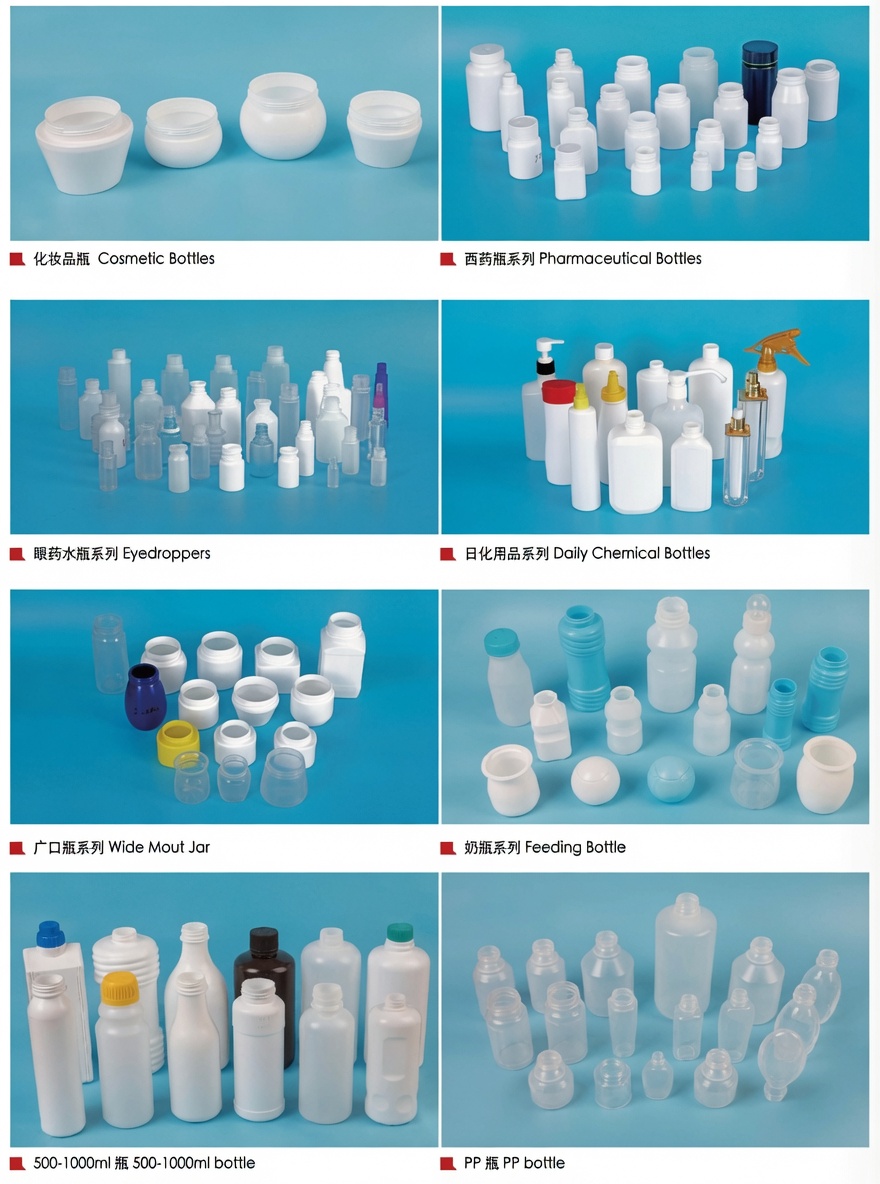
IBM is the dominant process for pharmaceutical syrup bottles, nasal spray containers, and eye drop phials in the range of 5 ml to 120 ml. The rigid core rod ensures consistent inner-diameter tolerances critical for pump fitment. Manchester’s established pharma distribution corridor and Leeds’ growing pharmaceutical manufacturing base make these cities key end-markets. Food-grade PET resin with AA below 1.0 ppm and USP Class VI compliance is the standard specification at these sites.
🍳 Nutritional Supplements — Birmingham
Wide-mouth PET containers for protein powders, vitamin tablets, and liquid supplement vials are a growing IBM application in Birmingham’s expanding health and wellness manufacturing sector. The IBM process delivers the precise wide-neck geometry and tamper-evident closure compatibility that contract packaging houses in the West Midlands require. Clarity is a key selling point — consumers expect to see the product, so haze-free food-grade PET resin blow moulding at 0.76–0.80 dL/g IV is specified here.
🍆 Food Flavourings & Condiments — Sheffield
Small-volume condiment bottles for vanilla extract, hot sauce, cooking concentrates, and premium vinegars are produced on IBM lines at several Sheffield food-technology companies. These applications demand food-grade PET with excellent chemical resistance and no flavour scalping — properties governed by low DEG content (<1.2 wt%) and high crystallinity. IBM’s superior neck-thread accuracy is essential for the precision dispensing closures used in premium food service packaging.
💉 Personal Care & Cosmetics — London
Although not strictly food contact, personal care containers produced on IBM machines use the same food-grade PET resin specifications due to skin-contact regulatory requirements under EU Cosmetics Regulation 1223/2009 as retained in UK law post-Brexit. High-clarity, low-AA PET at 0.78–0.82 dL/g IV is specified for serum bottles, toner phials, and mouthwash containers serving London’s sizeable premium cosmetics and personal care market, with fast-turnaround logistics handled by carriers out of Heathrow’s freight zone.
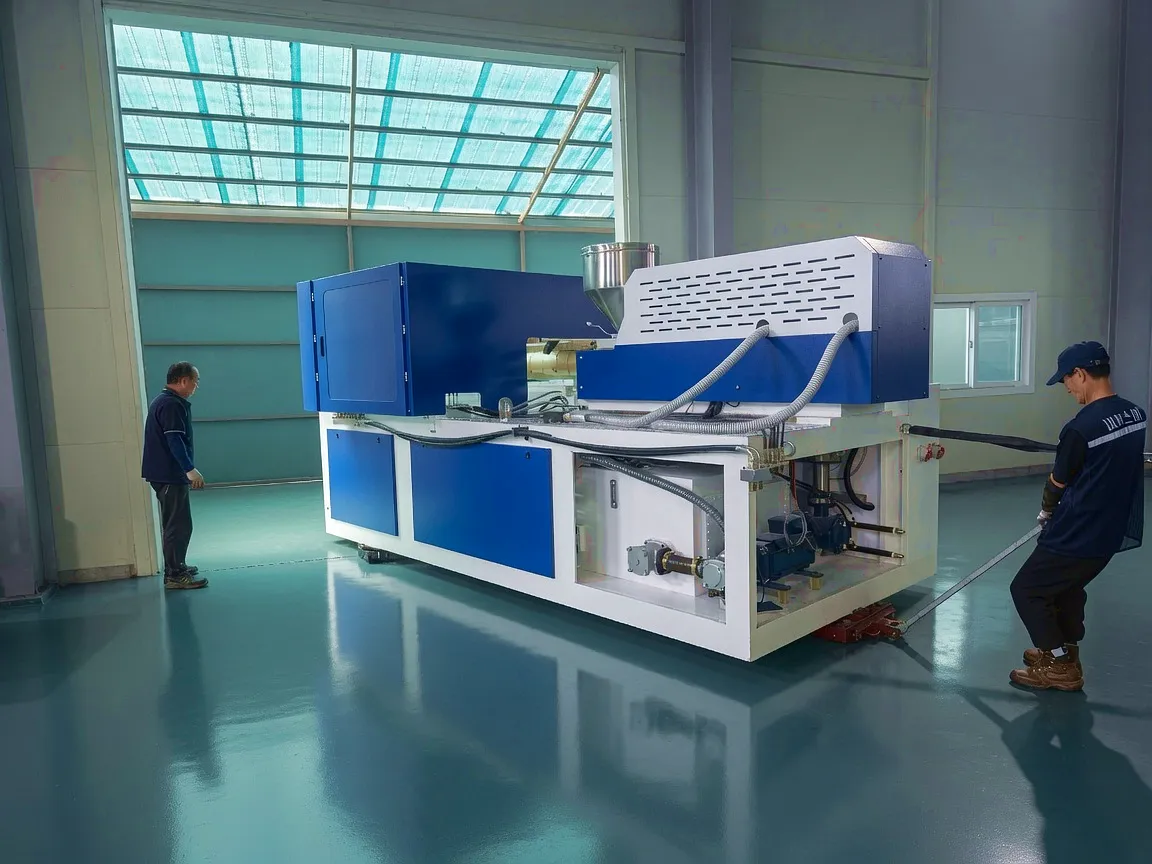
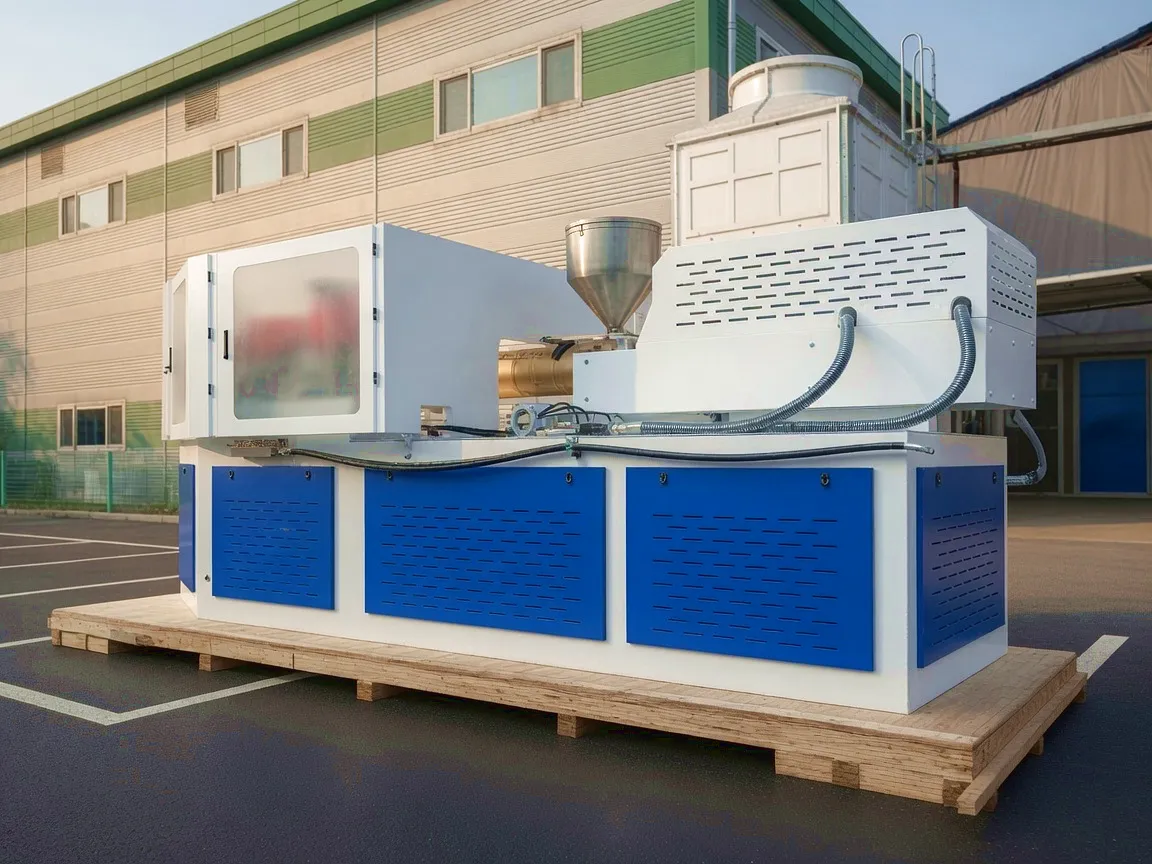
Ever Power IBM Machine Range: Recommended Models for Food-Grade PET Processing
Both machines below are engineered specifically for food-grade PET resin blow moulding, with servo-hybrid drives, integrated dewpoint dryer monitoring, and multi-zone barrel temperature control as standard.
ZQ80 Injection Blow Moulding Machine
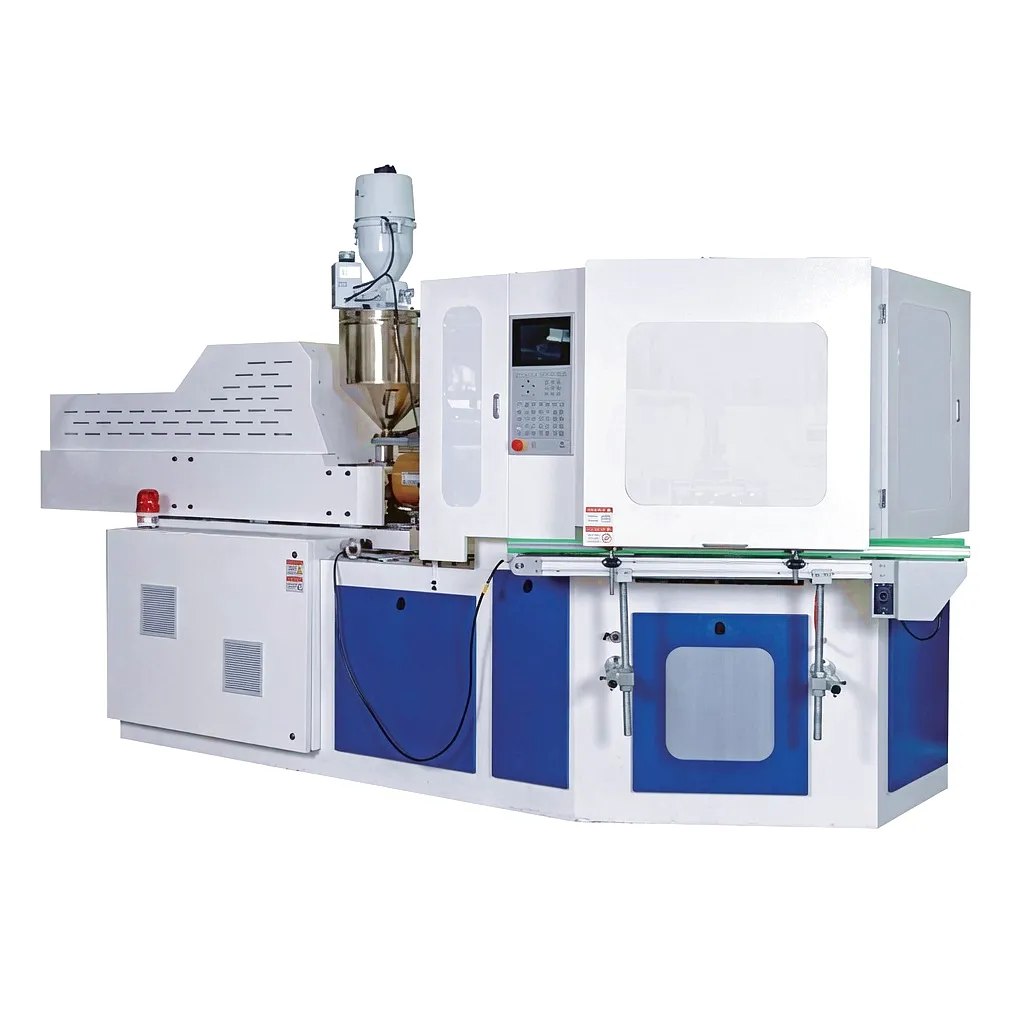
The ZQ80 is an ideal entry-to-mid-volume platform for UK processors producing pharmaceutical, food supplement, and personal care containers in food-grade PET. With 80-tonne clamp force, 4-cavity mould compatibility, and a servo-driven injection unit delivering shot-to-shot repeatability within ±0.3%, it handles IV ranges of 0.72–0.84 dL/g without parameter adjustment. The integrated hopper dryer with dewpoint output monitoring ensures moisture stays below 30 ppm. Compact footprint makes it a practical fit for Sheffield and Birmingham factory units where floor space is at a premium.
ZQ110 Injection Blow Moulding Machine
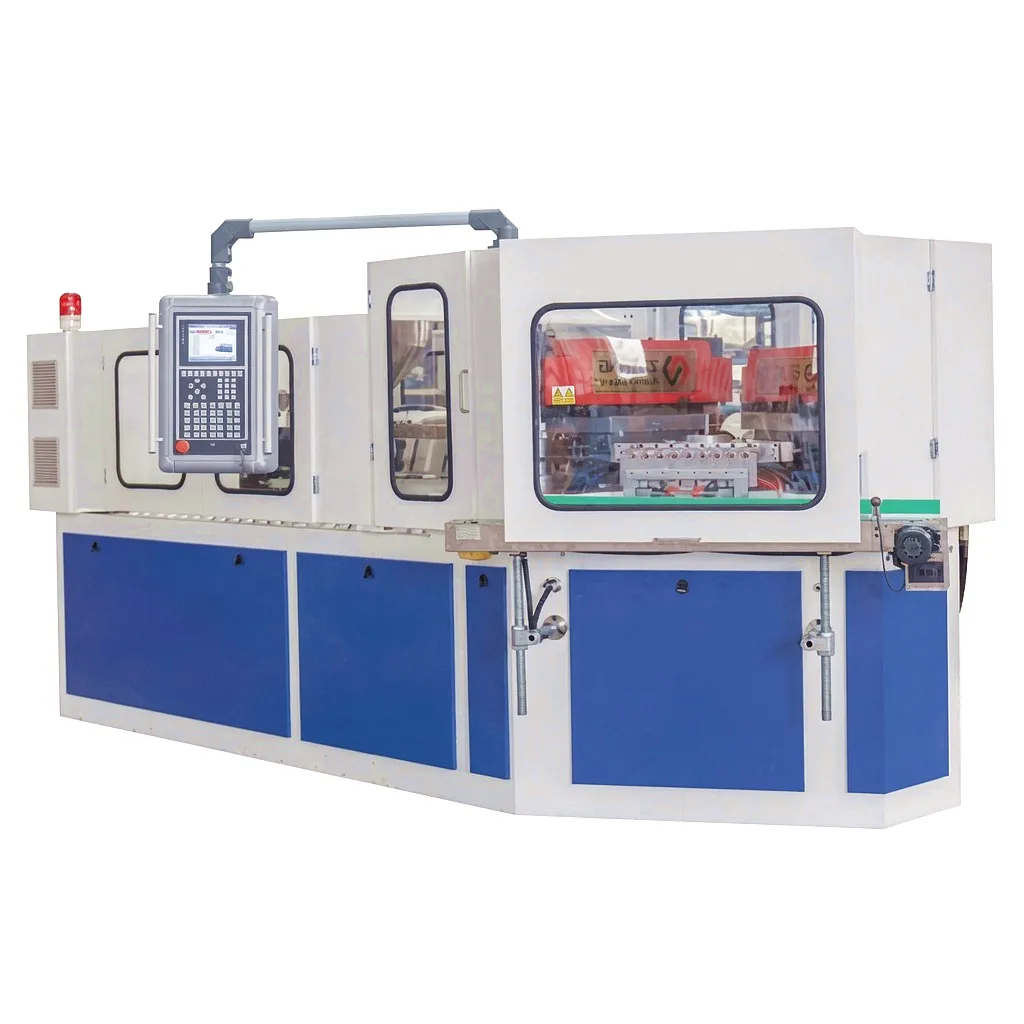
For high-output UK packaging lines running three shifts, the ZQ110 steps up to 110-tonne clamp force with 6-cavity mould support and a 10% larger barrel volume, delivering cycle rates up to 18% faster than the ZQ80 on comparable container geometries. The machine’s adaptive pressure control continuously monitors cavity fill pressure and adjusts injection velocity in real time, making it exceptionally stable when processing food-grade PET resin with IV variation up to ±0.02 dL/g between bags. Recommended for Manchester and Leeds contract packers with high volume commitments requiring rigorous batch-to-batch consistency.
IBM Auxiliary Equipment for Food-Grade PET Lines
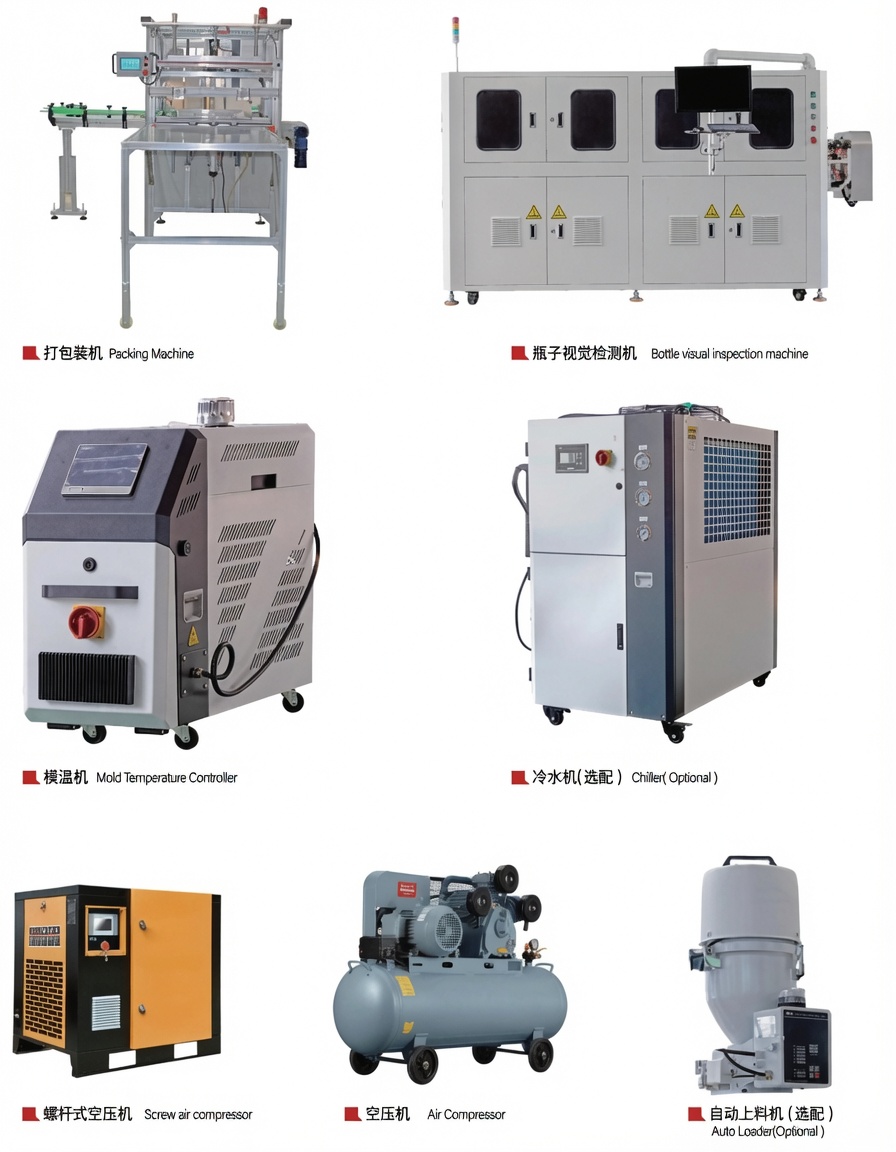
A complete food-grade PET resin blow moulding line is more than the IBM machine itself. The resin handling system — comprising a central desiccant dryer, vacuum conveying system, and stainless-steel hopper with food-contact liners — must be fully enclosed to prevent moisture pick-up and contamination between drying and processing. Ever Power supplies matched auxiliary packages for each IBM machine model, with all product-contact surfaces in 304-grade stainless steel and documentation packs covering food contact material compliance for UK BRCGS or SQF audit requirements. UK customers also benefit from the growing network of Ever Power-certified service engineers based in Birmingham, London, and Manchester, offering preventive maintenance contracts with 48-hour response to critical line stops.
Ever Power: Custom IBM Solutions for UK Food and Pharmaceutical Packaging
Ever Power’s manufacturing facility spans 60,000 m² and houses dedicated production lines for IBM machine assembly, tooling, and validation. With more than 3,000 completed machine installations across 68 countries and 150 specialist engineers on staff, the company brings genuine depth to every customisation enquiry. For UK packaging customers, the customisation capability covers four key areas that directly affect food-grade PET resin blow moulding output quality.
Mould Customisation
Full 3D CAD/CAM-driven cavity design from customer bottle drawings or physical samples. Reverse-engineered moulds from existing tooling for market-entry projects. Tolerances to ±0.01 mm on neck thread profiles.
Barrel & Screw Configuration
Bimetallic barrels and barrier screws optimised for PET IV ranges 0.72–0.84 dL/g, reducing shear heating variation by up to 18% compared to standard general-purpose screws.
Regulatory Documentation
Full CE marking, Declaration of Conformity, and material certificates for all product-contact components provided as standard for UK market delivery — essential for BRC audits.
Training & Commissioning
On-site commissioning by Ever Power engineers at the UK customer’s facility, including production trial run on customer resin, operator training, and process parameter handover documentation.
📧 Request a Custom IBM Quotation
Email: [email protected] · Response within 24 business hours
Customer Success Story: Pharmaceutical Container Production in Nottingham
MedVial UK Ltd, Nottingham — Pharmaceutical Liquid Packaging
ZQ80 IBM Machine · Food-Grade PET 0.78 dL/g IV · Production Start: Q4 2024
MedVial UK Ltd, a contract pharmaceutical packaging company operating out of Nottingham’s Beeston industrial district, approached Ever Power in mid-2024 with a specific challenge: their existing single-stage IBM machine was producing 30 ml syrup bottles with wall thickness variation of ±0.12 mm — double the ±0.06 mm tolerance demanded by their pharmaceutical client’s closure torque specification. Repeated adjustments to the process had failed to resolve the problem, and the root cause was eventually traced to inconsistent IV in the resin supply chain combined with a worn core rod assembly on the ageing machine.
Ever Power supplied a ZQ80 IBM machine with a custom 6-cavity mould engineered around MedVial’s 30 ml bottle drawing, plus a matched barrel and screw configuration tuned for the 0.78 dL/g IV food-grade PET resin that MedVial had already qualified with their pharmaceutical customer. Commissioning was completed on-site at the Beeston facility in four days, with Ever Power engineers running 2,000-shot trials on production resin to validate wall thickness distribution against the ±0.06 mm specification. The ZQ80 achieved ±0.04 mm wall uniformity in production — tighter than the client’s requirement — with a 14.2-second cycle time and a production yield of 99.1% on the first full week of operation.
The energy monitoring data from the servo-hybrid drive showed a 41% reduction in unit energy consumption per bottle compared to the previous fixed-pump machine, translating to approximately £9,800 savings in the first six months. MedVial subsequently placed an order for a second ZQ80 unit with a different cavity configuration for their 60 ml range, scheduled for commissioning in Q2 2025.
What UK Customers Say
“
The wall thickness consistency we achieved with the ZQ80 on our 0.78 IV food-grade PET resin genuinely exceeded what we expected at this price point. The commissioning engineers knew the process inside out — they had our 30 ml phial within tolerance on day two of trials. Ever Power’s documentation pack was also immediately accepted by our BRC auditor without a single query.
— Production Director, MedVial UK Ltd, Nottingham
“
We ran three competing IBM machines on a trial basis before choosing Ever Power for our Birmingham supplement container line. The ZQ110’s adaptive injection pressure control is the difference-maker when you are processing PET resin with batch-to-batch IV variation — it self-corrects rather than producing rejects. Our waste rate dropped from 2.8% to under 0.6% in the first month.
— Technical Manager, NutriForm Packaging Ltd, Birmingham
“
The custom mould Ever Power designed for our Sheffield condiment line — a 25 ml round bottle with a 28 mm DIN closure — was dimensionally perfect first time off the machine. No hand-fitting, no adjustment. The neck thread engages our pump closure to exactly the torque spec. For a company this size to deliver that accuracy on a bespoke tool is quite remarkable. We will be ordering the wider-neck variant next quarter.
— Head of Operations, Artisan Food Packaging Co., Sheffield
Frequently Asked Questions: Food-Grade PET Resin for IBM Blow Moulding (UK)
What intrinsic viscosity grade of food-grade PET resin should I be using in an injection blow moulding machine for pharmaceutical containers here in the UK? +
For pharmaceutical containers produced on IBM machines in the UK, an IV range of 0.76–0.82 dL/g is the most widely specified. The lower end of this range (0.76–0.78) suits smaller phials under 30 ml where fast cycle times are prioritised. The upper end (0.80–0.82) is used for thicker-walled containers requiring greater tensile strength. Always request an ASTM D4603 IV certificate with each incoming batch and verify against your qualified range before processing.
How does food-grade PET resin blow moulding performance differ between IBM and ISBM processes, and which one is better for small supplement bottles in Birmingham? +
IBM is generally the better choice for small-volume supplement bottles (15–120 ml) where neck accuracy and wide-mouth geometry are priorities, as the rigid core rod produces highly consistent neck finishes. ISBM offers higher biaxial orientation for carbonated or hot-fill applications but is less suited to wide-neck or short-body containers. For Birmingham’s nutritional supplement sector, IBM at 0.76–0.80 dL/g IV is the industry-standard choice.
Where can I find a reliable UK supplier of IBM machines that can process food-grade PET resin and also handle custom mould design for my Sheffield food packaging line? +
Ever Power supplies IBM machines to UK food and pharmaceutical packaging customers, with in-house custom mould design capability and on-site commissioning across the UK. For Sheffield-based food packaging operations, the ZQ80 or ZQ110 models are most commonly recommended. Contact [email protected] to discuss your specific bottle geometry and output volume requirements.
How much does an injection blow moulding machine cost for processing food-grade PET resin in the UK, and what is the typical payback period? +
IBM machine pricing varies significantly by clamping force, cavity number, and specification. Entry-level machines suitable for food-grade PET resin blow moulding in the UK typically start in the £85,000–£140,000 range (ex-works, excluding mould), with fully specified machines for pharmaceutical applications reaching £180,000–£240,000. Payback periods for UK food packaging plants running three shifts are typically 18–30 months, factoring in energy savings from servo-hybrid drives and yield improvements over older equipment. Request a detailed price and ROI calculation from [email protected].
What food contact compliance regulations apply to PET containers produced on IBM blow moulding machines sold in the United Kingdom after Brexit? +
UK food contact materials are now governed by the UK retained version of EU Regulation 10/2011 on plastic food contact materials, as enforced by the Food Standards Agency (FSA). PET containers must comply with overall migration limits of 10 mg/dm² and specific migration limits for any regulated substances. The resin itself must have a Declaration of Compliance (DoC) referencing the specific polymer type and any additives. Ever Power provides full material documentation for all product-contact components, supporting customers through FSA and BRCGS audit requirements.
Which drying temperature and dew point should I target when processing food-grade PET resin on an IBM machine to avoid haze defects in my containers? +
Food-grade PET resin should be dried at 170–180°C with the desiccant dryer dewpoint set to -40°C or below, targeting a residual moisture content of 30–50 ppm before processing. Running the dryer at temperatures above 180°C for extended periods risks crystallinity overshoot, which increases injection pressure requirements and reduces clarity. A dewpoint-controlled dryer is strongly recommended over a fixed-timer unit to avoid over-drying and unnecessary energy consumption.
When should a UK food packaging plant in Manchester consider switching from HDPE to food-grade PET resin blow moulding on its IBM production line? +
The switch makes commercial sense when the product requires optical clarity for consumer-facing presentation, when the filling liquid is incompatible with HDPE (e.g., alcohol-based or essential oil-based products), or when the target market demands the consumer perception associated with glass-like clarity. PET also offers better barrier to oxygen and CO2 for certain preserved food applications. IBM machines can typically be reconfigured for PET processing with barrel and screw changes, avoiding a full machine replacement — Ever Power’s service team can advise Manchester customers on retrofit feasibility.
Ready to Upgrade Your IBM Line?
Talk to Ever Power About Food-Grade PET IBM Machines
Custom moulds, regulatory compliance documentation, on-site commissioning, and UK service coverage — all from a single supplier with 3,000+ installations worldwide.
edit by gzl