Injection-Blow Molding Machine Applications in Pharmaceutical Packaging: Oral Solid Drug Bottles, Child-Resistant Cap Bottles and Amber Medicine Bottles
A technical deep-dive for UK pharmaceutical manufacturers, contract packagers and procurement teams seeking precision, compliance and throughput in a single production platform.
FDA / MHRA Ready
ISO 8 Cleanroom Compatible
UK Supply Chain
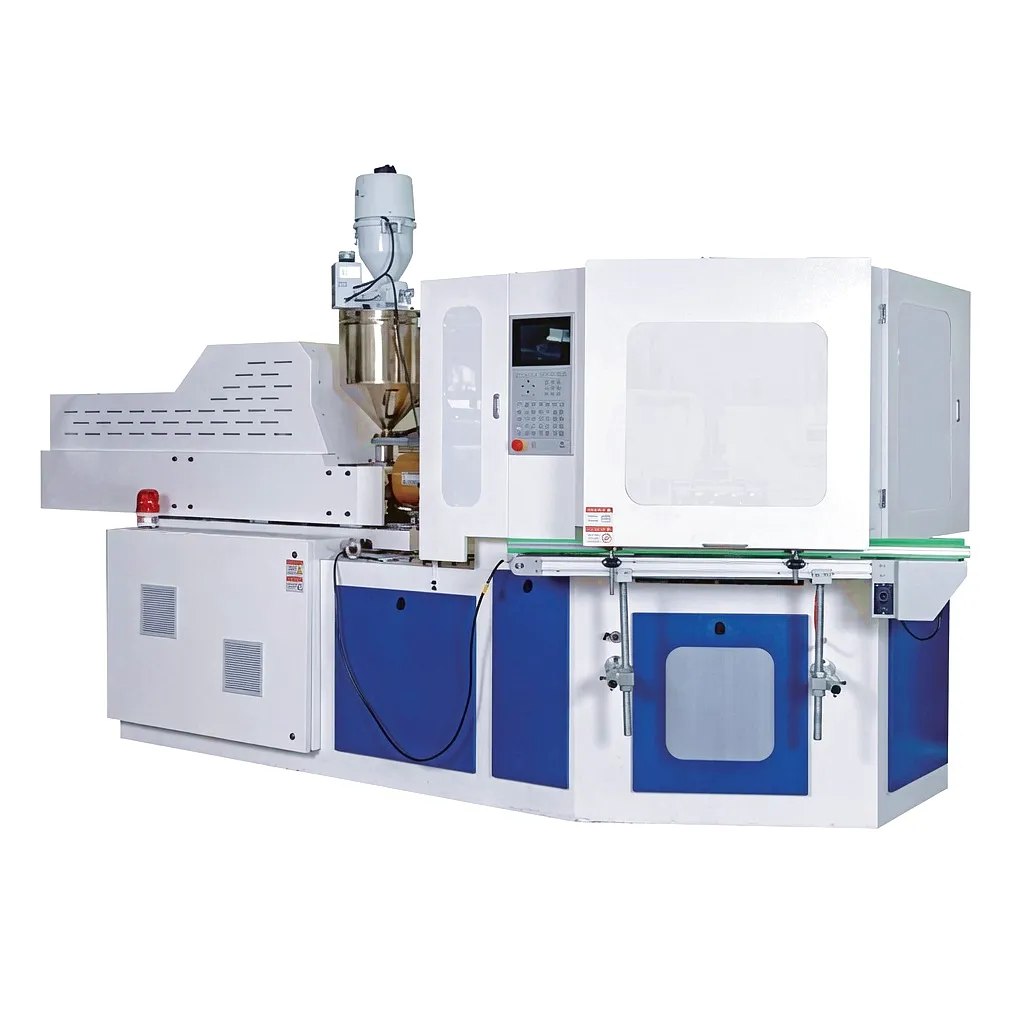 Pharmaceutical packaging sits at the intersection of regulatory obligation and manufacturing economics. Every bottle that leaves a production line must meet precise dimensional tolerances, material purity standards and safety requirements — while doing so at a pace that keeps cost-per-unit commercially viable. In the United Kingdom, where the Medicines and Healthcare products Regulatory Agency (MHRA) applies rigorous post-Brexit inspection frameworks, packaging manufacturers in cities such as Swindon, Wrexham and Huddersfield are increasingly turning to injection-blow molding machines as the platform of choice for producing oral solid drug bottles, child-resistant cap bottles and amber medicine bottles with the consistency that modern pharma demands. This article examines how injection-blow molding technology works, why it outperforms alternative methods for pharmaceutical-grade containers, and how Ever Power’s precision machinery helps UK operators meet their compliance, throughput and quality targets simultaneously.
How an Injection-Blow Molding Machine Actually Works
Injection Stage
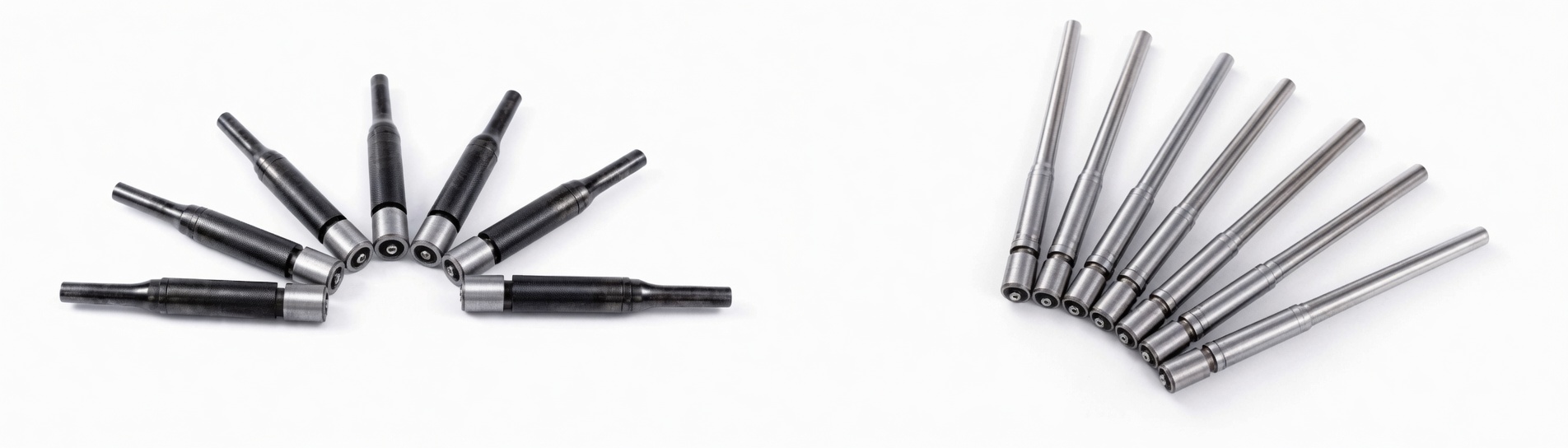
Molten polymer — typically HDPE, PP or PET — is injected around a precision steel core pin inside a closed injection mould. The result is a preform: a thick-walled, test-tube-shaped intermediate that carries the exact thread geometry for the bottle neck.
Transfer Stage
Still mounted on the core pin, the preform rotates on the machine’s indexing head to the blow station. Temperature is retained from the injection phase — no reheating required — which both saves energy and preserves material homogeneity critical for pharmaceutical-grade clarity and wall uniformity.
Blow Stage
Compressed air expands the preform against the blow mould cavity wall. The container takes its final shape — whether a round tablet bottle, an oval syrup bottle or a cylindrical amber vial — with wall thickness variation controlled to within 0.1 mm across the entire body.
Ejection Stage
The finished container is stripped from the core pin at the ejection station. Because the neck is formed in the injection stage and never deformed during blowing, flash trimming is eliminated entirely. The bottle arrives at the conveyor in a fully finished, dimensionally accurate state — ready for filling, labelling and downstream inspection with no secondary trimming operations.
This three-station rotary architecture — injection, blow, eject — is what distinguishes the injection-blow molding machine from extrusion-blow alternatives. The absence of a parison and the single-heat processing cycle means the finished container has no weld seams, no flash on the neck and no parting-line contamination risk. For pharmaceutical applications where particle generation inside a container can be a critical quality attribute, this characteristic alone often justifies the capital investment.
Core Materials Processed by Pharmaceutical-Grade IBM Equipment
| Material | Key Properties | Primary Pharma Use | Processing Temp |
|---|---|---|---|
| HDPE | Chemical resistance, low moisture permeability, USP Class VI compliance | Tablet & capsule bottles | 180 – 230 °C |
| PP | High heat tolerance, autoclave sterilisable, excellent hinge integrity | Child-resistant cap bottles | 200 – 250 °C |
| PET | Optical clarity, barrier properties, lightweight, recyclable | Liquid medicine & syrup bottles | 260 – 290 °C |
| Amber HDPE / PET | UV light blocking (>99% attenuation below 450 nm), oxidation protection | Light-sensitive drug bottles | 180 – 290 °C |
| PETG | Crystal clarity, impact resistance, excellent for ampoule-style vials | OTC oral solutions | 220 – 260 °C |
| PC (Polycarbonate) | Outstanding transparency, dimensional stability, gamma-radiation compatible | Sterile / re-sterilisable containers | 280 – 320 °C |
Material selection is not a cosmetic decision. MHRA’s guidance on container/closure systems for medicinal products requires documented compatibility studies between the packaging material and the drug formulation. An injection-blow molding machine that can accommodate the full range of pharmaceutical-grade polymers — including coloured variants with compliant pigment packages — gives your packaging operation far greater flexibility when responding to new product introduction requests from pharmaceutical clients across England, Wales and Scotland.
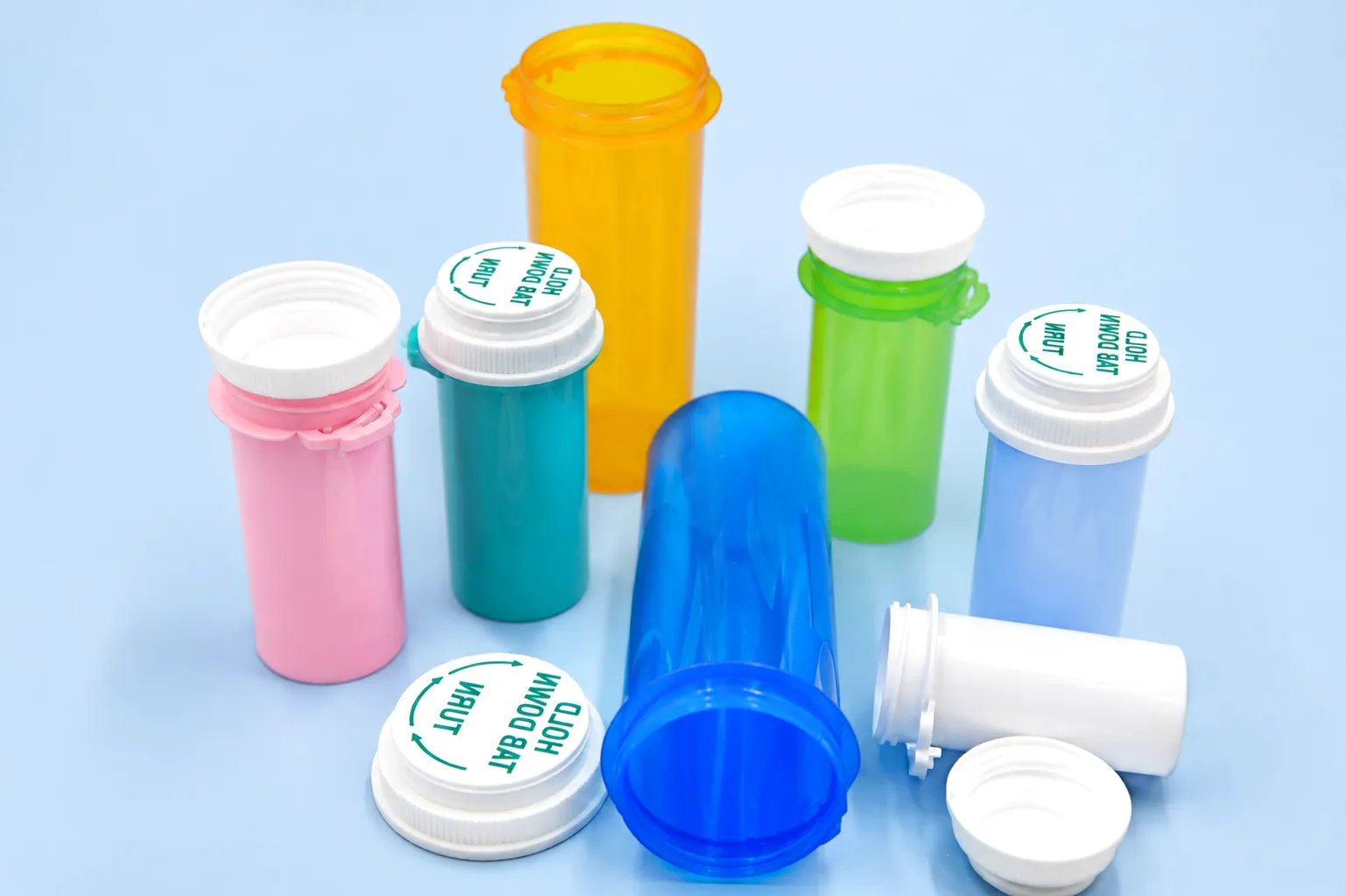
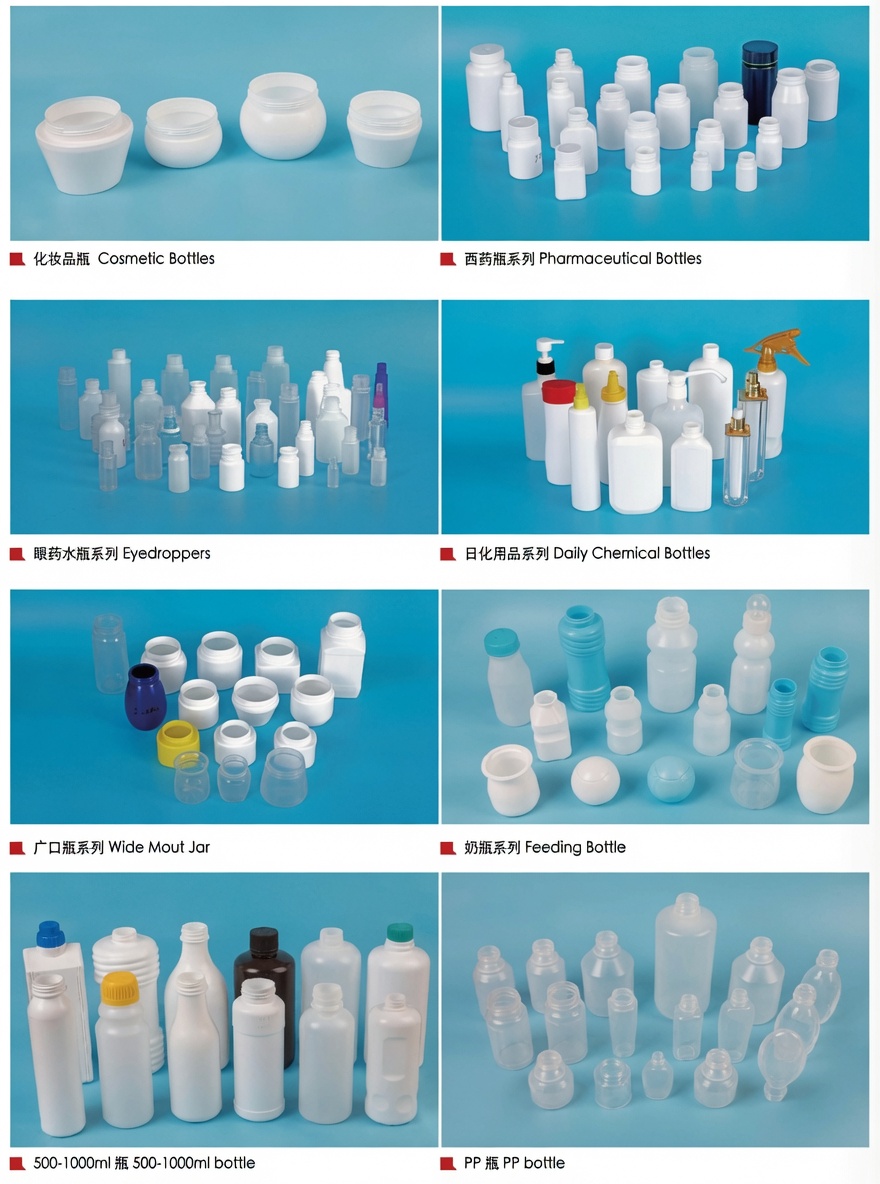
Application Scenario 1: Oral Solid Drug Bottles — Tablets, Capsules and Effervescent Packs

Application Scenario 2: Child-Resistant Cap Bottles — Safety Without Sacrificing Production Speed
Under the UK’s Medicines Act and subsequent statutory instruments, all prescription medicines and many OTC products containing paracetamol, ibuprofen, aspirin and iron supplements must be dispensed in child-resistant packaging meeting the performance requirements of BS EN ISO 8317. Meeting this obligation is non-negotiable — and the bottle is as critical a component as the cap. A child-resistant closure system works as a system: the cap mechanism interacts with the bottle neck’s geometry. If the neck thread is inconsistent, even a correctly designed cap can fail the child-resistance test protocol.
Injection-blow molding machines are uniquely well suited to producing the bottle half of this system because the neck is formed in the injection station with the same precision as an injection-moulded component. There is no post-blow trimming that introduces variability, no parison thickness gradient affecting neck geometry, and no flash zone at the thread. Manufacturers running child-resistant packaging lines in contract packaging facilities around Birmingham and Coventry report significantly reduced cap-torque variation when switching from extrusion-blow to injection-blow molding, which translates directly into fewer cap-seal failures during automated packaging audits and lower rework rates.
0.05 mm
Neck thread tolerance typical of IBM-produced pharmaceutical bottles
Zero Flash
No parting-line flash on neck area eliminates secondary trimming step
BS EN ISO 8317
UK child-resistance standard achievable through precise neck geometry control
<0.2%
Typical defect rate on well-maintained IBM pharmaceutical lines
Application Scenario 3: Amber Medicine Bottles — UV Protection as a Critical Quality Attribute
Technical and Performance Specification Table
| Parameter | ZQ40 Series | ZQ60 Series | Pharma Relevance |
|---|---|---|---|
| Container Volume Range | 5 – 250 ml | 10 – 500 ml | Covers unit-dose vials to standard 200-tablet bottles |
| Number of Cavities | 2 – 6 | 2 – 8 | Higher cavitation raises output without proportional energy increase |
| Cycle Time | 3.5 – 6 s | 4 – 8 s | Up to 8,640 bottles/hour on 6-cavity ZQ40 at 2.5 s net cycle |
| Injection Pressure | Up to 150 MPa | Up to 160 MPa | Ensures complete fill of neck thread profiles |
| Blow Pressure | 0.4 – 1.0 MPa | 0.5 – 1.2 MPa | Adjustable to optimise wall uniformity per resin grade |
| Wall Thickness Variation | ± 0.08 mm | ± 0.10 mm | Critical for amber UV protection consistency |
| Clamp Force | 400 – 600 kN | 600 – 900 kN | Supports wide-body bottle mould tooling |
| Plasticising Capacity | 80 – 120 g/s | 130 – 200 g/s | Accommodates high-viscosity pharmaceutical-grade resins |
| Temperature Control Zones | 8 independent zones | 10 independent zones | Precise thermal management reduces degradation of temperature-sensitive polymers |
| Drive System | All-electric servo | All-electric servo | No hydraulic oil contamination risk in cleanroom environments |
| Repeatability (Neck OD) | Cpk ≥ 1.67 | Cpk ≥ 1.67 | Ensures cap-seal compatibility across high-speed filling lines |
| Compatible Materials | HDPE, PP, PET, PETG, PC, amber grades | HDPE, PP, PET, PETG, PC, amber grades | Full pharmaceutical resin portfolio covered |
Ever Power Manufacturing Capabilities — Built for Pharmaceutical-Grade Precision
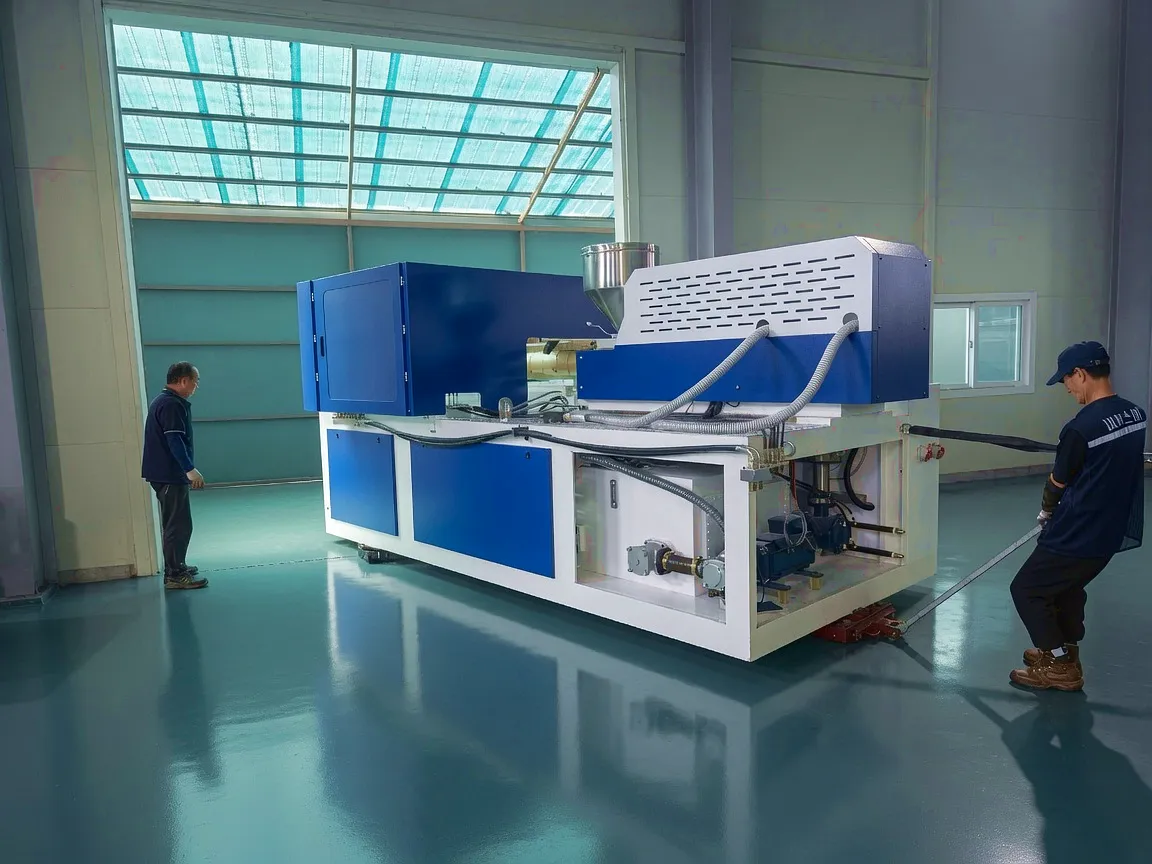
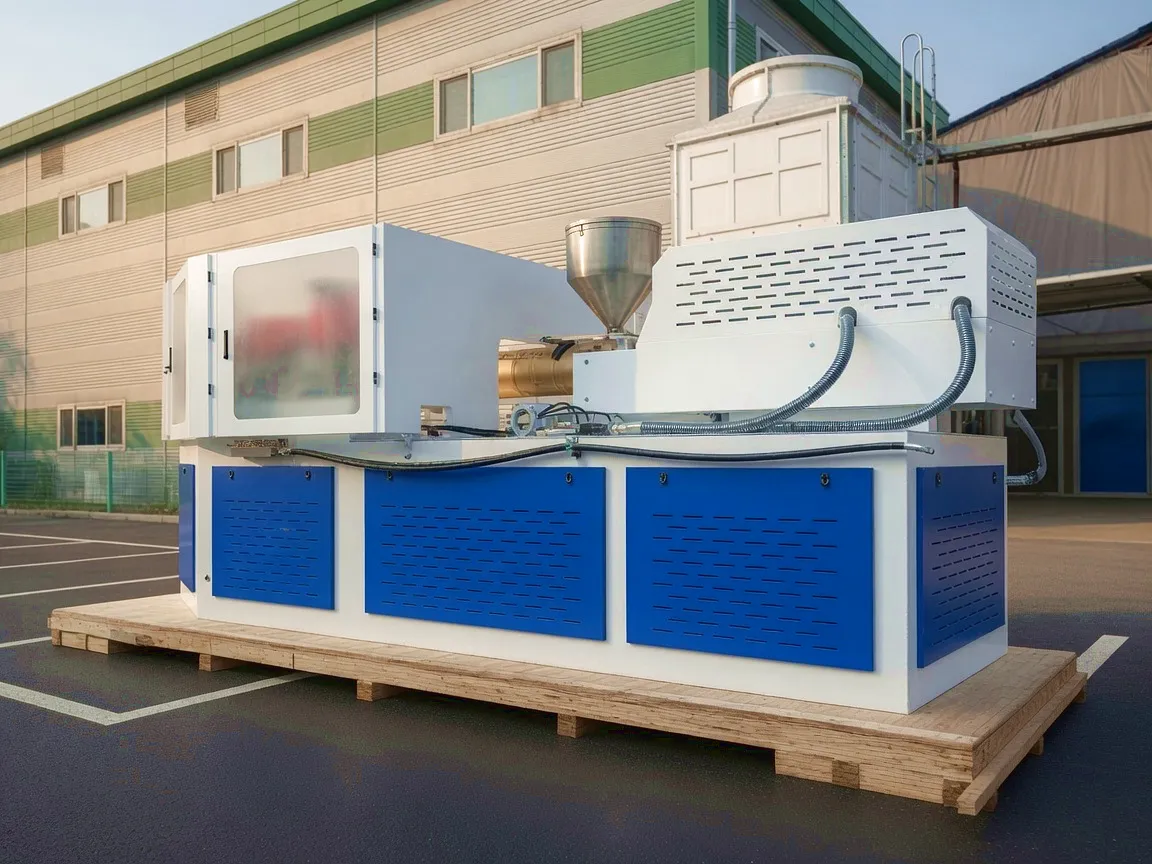
Ever Power operates a purpose-built precision manufacturing campus equipped with CNC machining centres, coordinate measuring machines (CMM) and in-house mould testing bays that allow full end-to-end verification before any machine is shipped. For pharmaceutical customers, this matters because the machine’s own manufacturing quality directly determines the dimensional quality of the containers it produces. A spindle with excessive run-out will produce core pins that are subtly off-centre, which introduces preform eccentricity, which translates into wall thickness variation in the finished bottle — a cascade of quality problems that all trace back to machine build quality.
Ever Power’s customisation capability sets the company apart in the global injection-blow molding machine market. Standard catalogue configurations cover the most common pharmaceutical bottle formats, but the team regularly develops bespoke tooling for unusual neck finishes, multi-layer constructions (where barrier resins are co-injected), integrated tamper-evidence features and controlled-space mould arrangements for ISO 7/8 cleanroom integration. UK customers in Sheffield’s advanced manufacturing corridor and along the M4 science and technology belt from London to Bristol have benefited from Ever Power’s dedicated project engineering team, which provides DFM (design for manufacturability) review, mould flow analysis and on-site commissioning support.
Ever Power Customisation Services
Tailored IBM Solutions for Your Pharmaceutical Packaging Line
- Custom cavity configurations (2 to 12 cavities)
- Proprietary amber pigment packages with full migration testing
- Child-resistant neck tool design and validation
- Cleanroom-compatible all-electric drive configurations
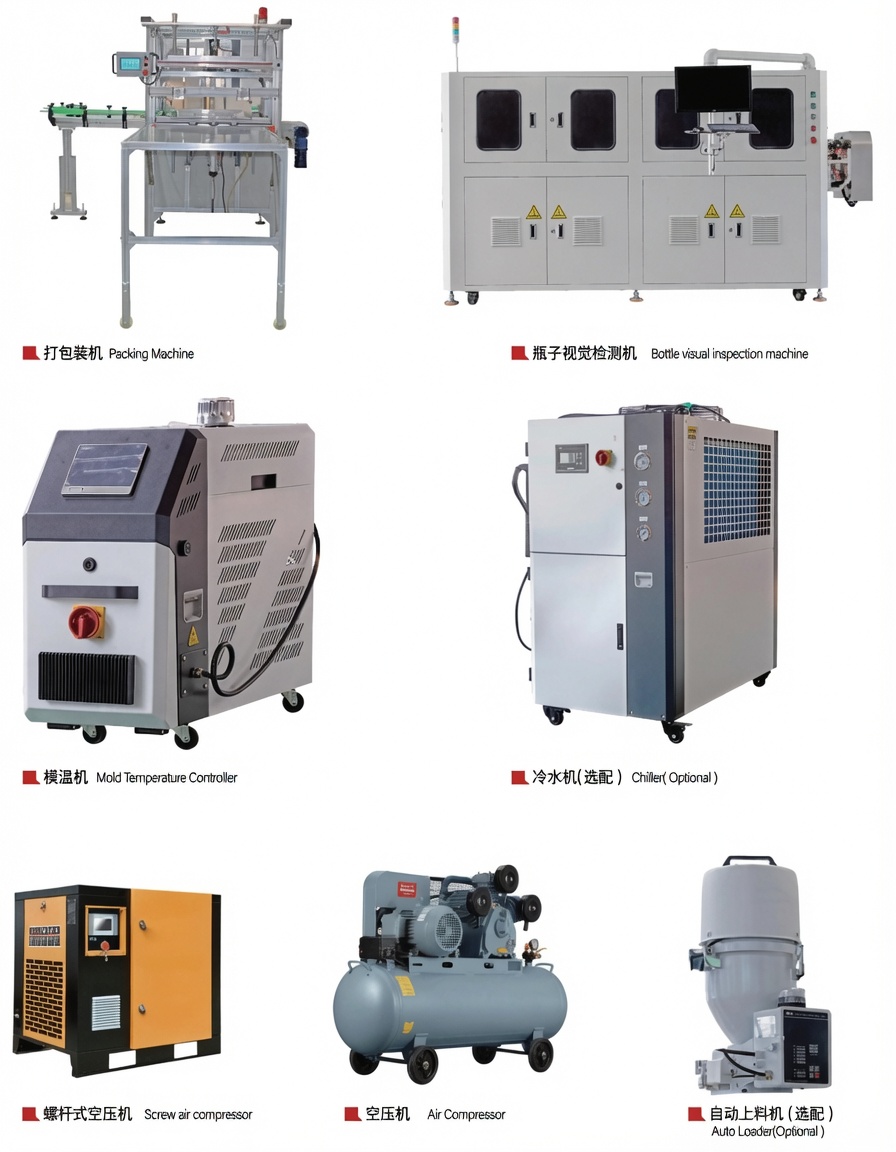
- Integration with downstream vision inspection and filling systems
- CE-marked machines for UK/EU market compliance
Response within 24 business hours
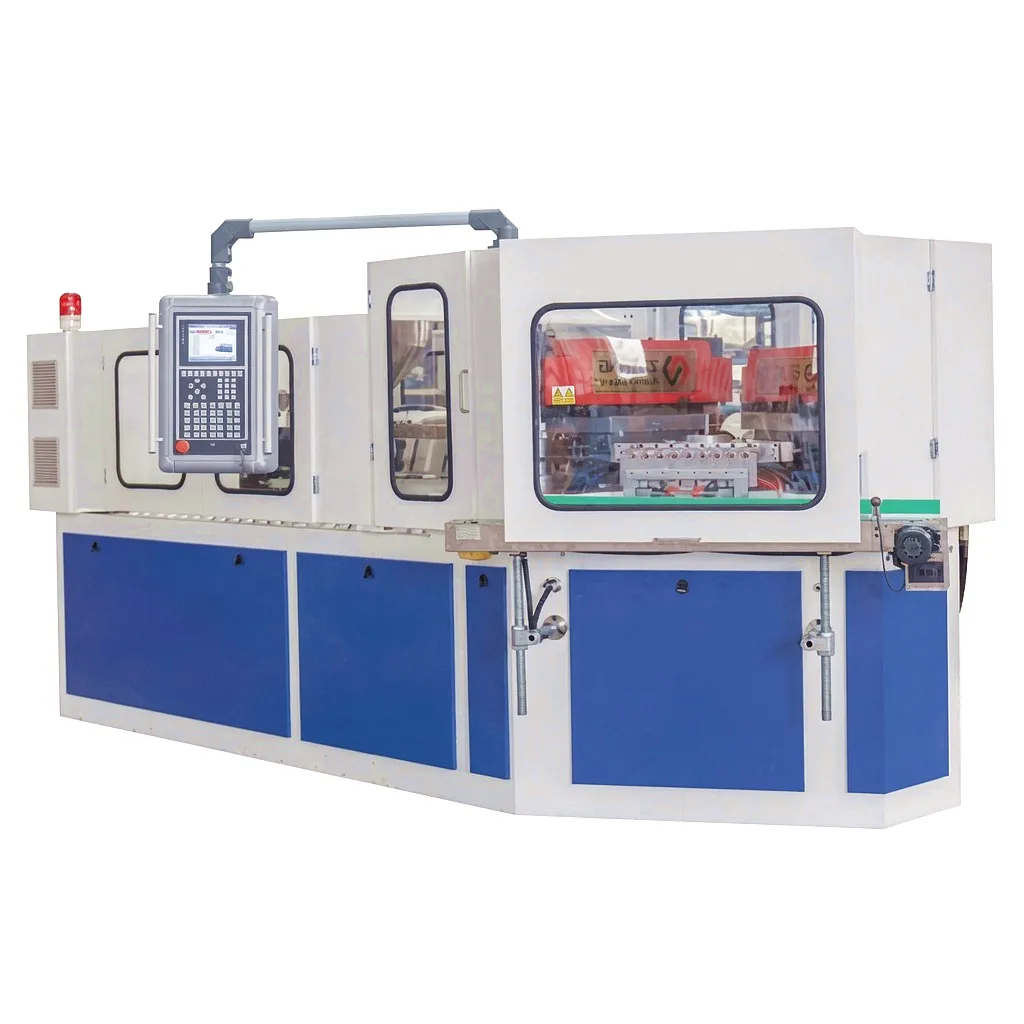
Featured Injection-Blow Molding Machine Products
Core Technical Advantages of Injection-Blow Molding for Pharmaceutical Containers
No Flash — No Secondary Trimming
Bottles are produced in a fully finished state. There is no parting-line flash on the neck or body, eliminating the trimming stations and associated particle contamination risk that extrusion-blow requires. This keeps the production environment cleaner and dramatically reduces energy consumption per unit.
Injection-Quality Neck Thread
Thread geometry is formed in the injection stage against a hardened steel core. The result is a neck with the precision of an injection-moulded component — critical for child-resistant closures, induction sealing and automated capper compatibility on high-speed pharmaceutical packaging lines.
Single-Heat Processing
No reheat phase means the polymer’s thermal history is minimised. Reduced thermal exposure lowers the risk of oxidative degradation in the resin, which is particularly relevant when running pharmaceutical-grade pigmented HDPE or light-stabilised PP through an amber-bottle production programme.
No Weld Seams
Because material flows uniformly around the core pin with no split-flow knit line, the finished container has no weld seams. This eliminates a stress-concentration zone that can be a failure point under drop-test conditions — a required performance test for pharmaceutical packaging under BS EN ISO 15223 and related standards.
Cleanroom Compatibility
All-electric servo configurations eliminate hydraulic oil entirely from the machine’s drive system. This makes the injection-blow molding machine inherently compatible with ISO Class 7 and Class 8 cleanroom environments where oil contamination of containers would be a critical non-conformance. UK pharmaceutical manufacturers operating under MHRA site licences consistently specify oil-free machinery.
Material Versatility
A single injection-blow molding machine can process HDPE, PP, PET, PETG, PC and their pharmaceutical-grade amber variants by changing the barrel temperature profile and adjusting blow parameters — no capital expenditure on separate machinery for each resin. This versatility makes the platform highly cost-effective for contract packagers serving multiple pharmaceutical clients with varied container requirements.
Customer Success Story: Pharmaceutical Packager in Huddersfield, West Yorkshire
Contract Pharmaceutical Packaging
ZQ40 + ZQ60 IBM Machines
Meridian Pharma Pack Ltd, a contract pharmaceutical packaging company operating from a purpose-built facility on the outskirts of Huddersfield, had been running two legacy extrusion-blow moulding lines for over eight years. The lines produced HDPE tablet bottles and amber medicine bottles for three NHS-supply framework clients. Although throughput was acceptable, the operation faced persistent quality challenges: neck OD variation of up to 0.4 mm was causing intermittent cap-seal failures on the induction-sealing line, and wall thickness non-uniformity in the amber bottles was generating questions during client photostability validation exercises.
Following a technical review, the Meridian engineering team evaluated injection-blow molding technology as an alternative platform. After assessing multiple suppliers, they commissioned one ZQ40 and one ZQ60 from Ever Power, specifying all-electric servo drives for cleanroom compatibility, 6-cavity tooling for their standard 100 ml tablet bottle, and 4-cavity tooling for 250 ml amber HDPE containers. Ever Power’s application team provided mould flow simulation prior to tool manufacture, verifying wall thickness distribution across the amber bottle body — a data set that Meridian’s QA team subsequently incorporated into their packaging validation dossier submitted to the MHRA.
Within twelve weeks of commissioning, Meridian reported that neck OD variation had reduced from 0.4 mm to 0.04 mm, cap-seal line stoppages attributed to bottle dimension variation had been essentially eliminated, and amber bottle wall thickness Cpk had improved from 0.95 to 1.82. The photostability validation submission was accepted by the client’s regulatory affairs team at first review — a first in Meridian’s experience with amber container changes. Total energy consumption per thousand bottles produced decreased by an estimated 22% compared with the previous extrusion-blow lines, attributing to the single-heat processing cycle and servo drive efficiency.
The case demonstrates a pattern seen repeatedly across UK pharmaceutical packaging operations that have transitioned to injection-blow molding: the technical step-change in container quality is not marginal — it is categorical. The investment case is typically justified within eighteen to twenty-four months through reduced rework, eliminated trimming labour and avoidance of client complaints that can result in costly manufacturing investigations under pharmaceutical quality system requirements.
“The neck thread consistency we are achieving on the ZQ60 has been transformative for our child-resistant cap line. We were seeing 0.6–0.8% cap-seal rejects before the switch. We are now tracking below 0.08% across a full quarter. Ever Power’s team stayed on-site for the initial three weeks until we were completely confident in the process — that level of support is rare from an international supplier.”
James Holloway, Production Director
Contract Pharmaceutical Packager, West Yorkshire
“We specified the ZQ40 for our amber HDPE bottle programme after two unsuccessful ICH Q1B studies with containers from extrusion-blow suppliers. The wall uniformity data from the ZQ40 gave our regulatory team exactly the evidence they needed. The photostability study was completed in seven months and accepted by our notified body without any packaging-related observations. Ever Power’s mould flow reports were integrated directly into our validation dossier.”
Dr Sarah Pemberton, Head of Packaging Development
Pharmaceutical Manufacturer, Greater Manchester
“Customisation capability was the decisive factor for us. We needed a non-standard 180 ml oval amber bottle with a 38 mm child-resistant neck — a geometry that nobody had off-the-shelf tooling for. Ever Power designed the mould tooling in eight weeks, delivered with mould flow simulation reports, and the first-article bottles hit every dimension in our specification at first shot. The ZQ60 is running three shifts in our Sheffield facility with no unplanned stoppages in its first eight months.”
Michael Grainger, Technical Manager
Packaging Solutions Group, Sheffield
Frequently Asked Questions
Ready to Upgrade Your Pharmaceutical Packaging Line?
Speak to Ever Power’s Injection-Blow Molding Specialists
Whether you need oral solid drug bottles, child-resistant cap containers or amber medicine bottles — our team will configure the right machine and tooling package for your UK operation.
[email protected] | Response within 24 business hours
edit by gzl