How Each Machine Works
Head-to-Head Comparison
Output & Speed
Cost Analysis
Application Fit
Decision Framework
FAQ
The Core Distinction: Automation Level in Blow Molding
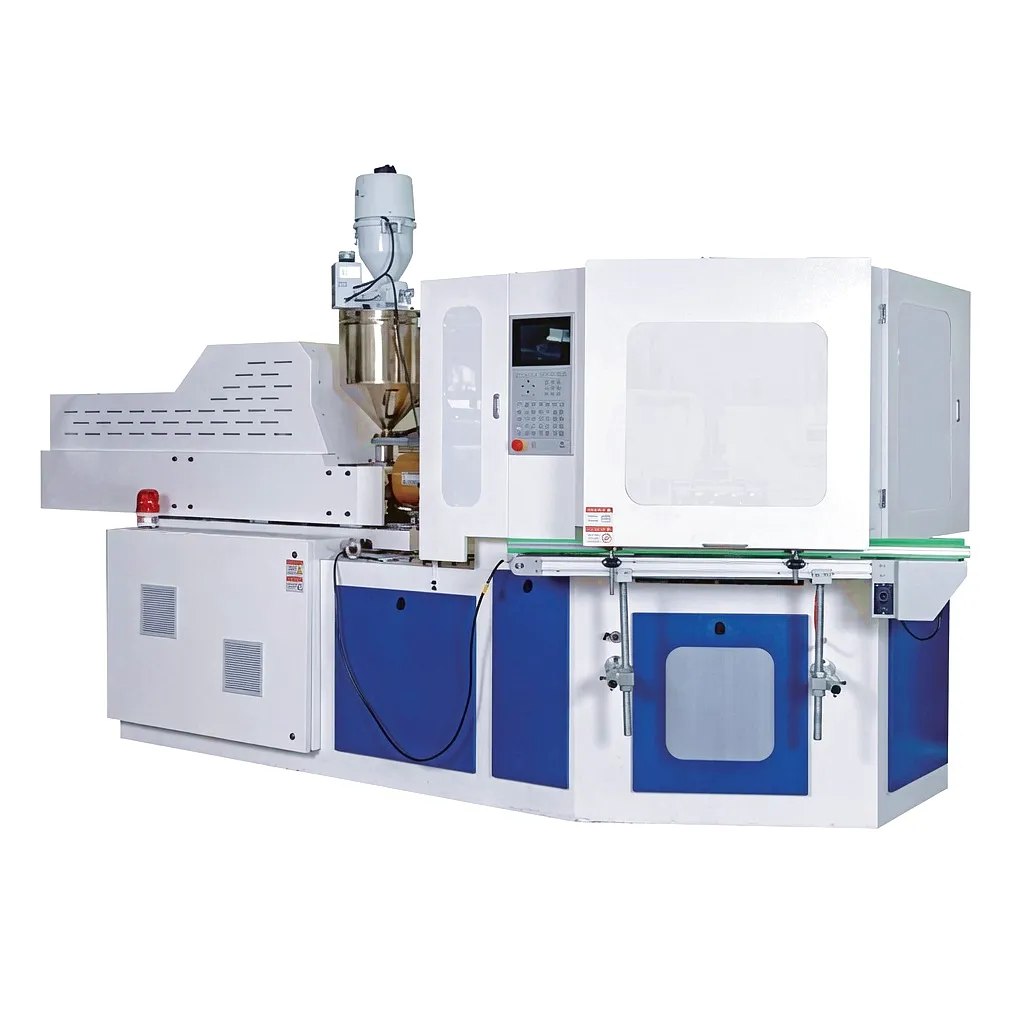 The choice between a semi-automatic and a fully automatic blow molding machine sits at the center of every serious capacity planning conversation. It affects capital expenditure, labour cost, throughput ceiling, scrap rates, and your ability to scale. Neither configuration is universally superior — each solves a specific set of production constraints, and selecting the wrong one costs far more than the price difference between the two.
In a semi-automatic blow molding machine, an operator handles one or more steps in the cycle — loading preforms, repositioning tooling, or removing finished parts — while the machine controls inflation, clamping, and cooling. In a fully automatic blow molding machine, every stage from preform feeding and heating through blowing, cooling, part ejection, and conveying runs on a closed-loop basis without manual intervention between cycles. The machine monitors itself, adjusts parameters in real time, and outputs finished containers continuously. The operational gap between these two architectures is significant, and understanding it in mechanical and economic terms is the only reliable basis for a purchasing decision.
How Each Machine Type Actually Works
In a semi-automatic blow molding machine, the operator loads preforms or parisons into the machine at the start of each cycle. The machine then takes over: the mould closes under hydraulic or toggle-clamp pressure, compressed air is injected to expand the parison against the cavity walls, the cooling circuit drops the part below the distortion temperature, and the mould opens. The operator retrieves the part, trims flash if present, and reloads. Cycle time is therefore bounded by how fast the operator can work alongside the machine, typically 8–25 seconds for the automated portion, plus 3–10 seconds of manual handling. The mechanical architecture is simpler — fewer servo axes, no automatic preform feeder or conveyor integration, and a smaller electrical cabinet. Maintenance is correspondingly straightforward, and spare parts are widely available. The machine suits lower-volume schedules where flexibility and low capital cost matter more than throughput maximisation.
A fully automatic blow molding machine integrates every sub-process into a single continuous loop controlled by a PLC or CNC system. Preforms are loaded in bulk into a hopper or silo; a sorting and orientation mechanism feeds them individually to the heating zone, where ceramic or near-infrared lamps bring the preform to the precise stretch temperature — typically 100–120°C for PET. A robotic transfer arm or rotary carousel moves the heated preform into the blow mould. High-pressure air (25–40 bar for stretch blow, 6–10 bar for extrusion blow) inflates the part against the cooled cavity. Upon mould opening, a take-out mechanism ejects the bottle onto an air conveyor or accumulation table, feeding downstream labelling, filling, or palletising lines without operator contact. Modern fully automatic machines incorporate real-time pressure profiling, cavity-specific temperature feedback, and statistical process control (SPC) dashboards. They run 24 hours per day with minimal staffing — typically one technician overseeing multiple machines per shift.
Head-to-Head Comparison: 18 Key Parameters
The table below translates the operational differences into engineering and commercial metrics. Values are representative ranges across standard industrial configurations; specific machines will vary based on cavity count, mould material, and process type (EBM, ISBM, or RSBM).
| Parameter | Semi-Automatic | Fully Automatic |
|---|---|---|
| Output (bottles/hour) | 200 – 1,800 | 1,500 – 72,000+ |
| Cavities per mould | 1 – 4 | 2 – 24+ |
| Operators per shift | 1 – 2 per machine | 1 per 2–6 machines |
| Capital investment (USD equiv.) | $8,000 – $80,000 | $80,000 – $1,200,000+ |
| Payback period (typical) | 6 – 18 months | 18 – 48 months |
| Changeover time (mould) | 15 – 45 min | 30 – 120 min |
| Wall thickness consistency (CV%) | ±5 – 10% | ±1 – 3% |
| Scrap rate (average) | 2 – 6% | <1% |
| Energy consumption (kWh/1000 bottles) | 8 – 18 | 3 – 9 |
| Container volume range (ml) | 5 – 10,000 | 10 – 30,000 |
| Compatible materials | PET, PP, HDPE, PVC, PC | PET, PP, HDPE, PVC, PC, EVOH multi-layer |
| Automation control | Basic PLC / relay logic | Advanced PLC/CNC + HMI + SPC |
| Footprint (m²) | 3 – 15 | 20 – 150+ |
| Installation complexity | Low – plug and run | High – civil, electrical, compressed air |
| Product changeover flexibility | High | Medium (dedicated lines preferred) |
| Suitability for R&D / prototyping | Excellent | Poor – high setup cost per SKU |
| FDA / ISO hygiene compliance path | Achievable with design care | Standard feature on most models |
| Ideal annual output (units) | <5 million | 5 million – 500 million+ |
Output, Speed, and the Economics of Scale
Output capacity is not a single number — it is a function of cavity count, cycle time, material handling efficiency, and uptime percentage. A semi-automatic blow molding machine with two cavities running at a 12-second automated cycle produces roughly 600 parts per hour under ideal conditions, but operator fatigue, part inspection, and minor adjustments typically reduce effective output to 400–500 per hour in a real production environment. That is entirely adequate for a contract packer producing 20 SKUs in small batches, a pharmaceutical company making specialty bottles for clinical trials, or a start-up testing a new container design before committing to high-volume tooling.
The economics shift sharply at volume. At 3 million bottles per year, the per-unit labour cost of the semi-automatic blow molding machine begins to outweigh its capital advantage. At 10 million bottles per year across a single SKU, a fully automatic blow molding machine with 6 cavities running three shifts generates a cost-per-bottle that is typically 35–55% lower, even after depreciation, energy, and maintenance are factored in. The crossover point depends heavily on labour cost in your region, but for most European manufacturing environments it falls somewhere between 2 and 5 million units per year.
Semi-Auto
Fully Auto
at scale (auto)
crossover point
Process Type and Automation Level: How They Interact
Automation level is a separate axis from process type, but the two are closely correlated in practice. Extrusion blow molding (EBM), injection blow molding (IBM), and injection stretch blow molding (ISBM or RSBM) each have their own characteristic automation path.
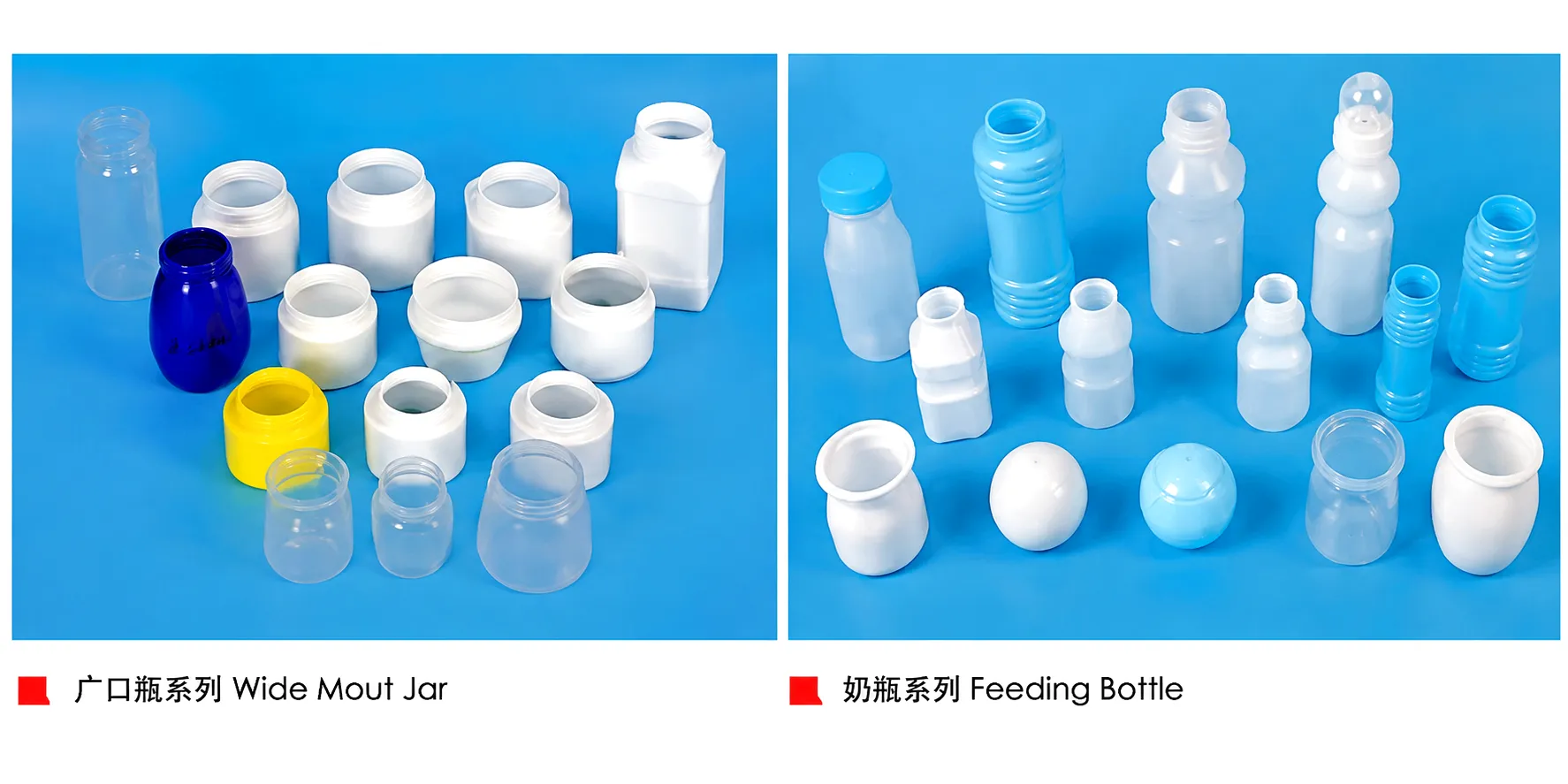
EBM extrudes a continuous hollow tube (parison) that is captured by a closing mould. It is compatible with both semi-automatic and fully automatic configurations. Semi-automatic EBM machines are common for large industrial containers (10–1,000L), where cycle times are long and output volumes are modest. Fully automatic EBM lines dominate household chemical, automotive fluid, and HDPE packaging production where volumes exceed 5 million containers per year. EBM handles complex geometry and undercuts well, but produces flash requiring trimming — this flash removal is fully automated on high-end lines but manual or semi-manual on smaller machines.
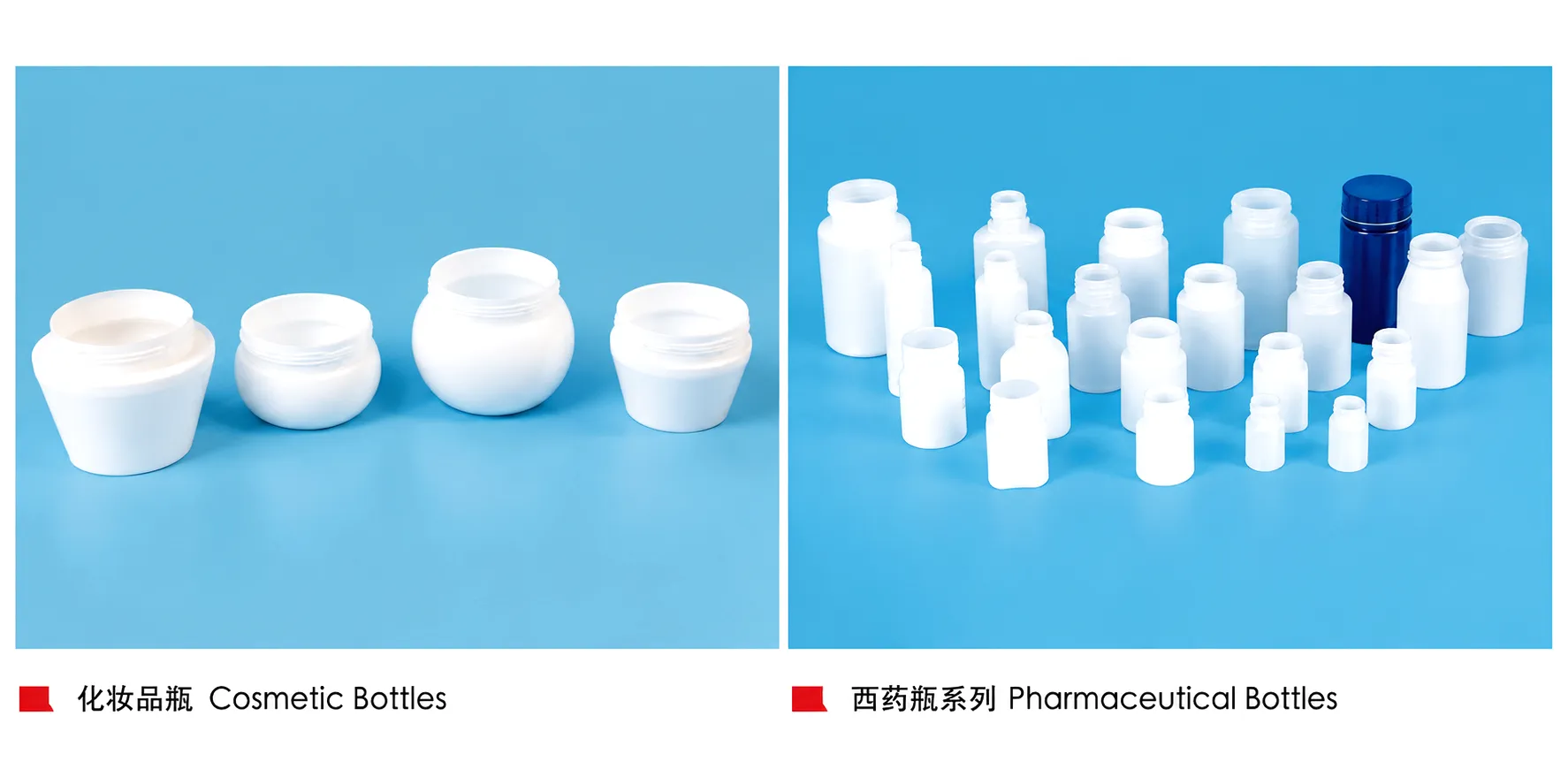
IBM produces a preform by injection moulding, then immediately blows it into the final container shape on a rotating core rod — all in one machine, without a separate preform reheating stage. This eliminates flash entirely and delivers excellent neck finish accuracy, making it the dominant technology for pharmaceutical bottles, cosmetic containers, and food jars requiring tight dimensional tolerances. IBM machines above a certain cavity count are inherently more automated than EBM equivalents, because the injection stage demands servo-controlled shot weight consistency. Semi-automatic IBM is practical for 1–4 cavities, while fully automatic IBM scales to 24 cavities with robotic take-out.
ISBM dominates high-volume PET beverage and water bottle production. The biaxial orientation achieved by simultaneous axial stretching and radial blowing increases tensile strength by 3–5x versus unoriented PET, allowing thinner, lighter walls that reduce material cost per bottle. ISBM is almost exclusively implemented in fully automatic configurations at commercial scale — the precision required for consistent stretch ratios (typically 2.5–3.5 axial, 2.0–3.5 hoop) demands servo stretch rod control and real-time feedback that is only practical in automated systems. Single-stage ISBM machines integrate injection and blowing in one unit; two-stage systems inject preforms separately and reheat them before blowing.
Application Scenarios: When Semi-Automatic Makes More Sense
There is a persistent misconception in the industry that fully automatic is always the right choice for any serious manufacturer. In reality, semi-automatic blow molding machines continue to outperform their fully automatic counterparts in a specific and commercially significant set of scenarios that have nothing to do with technology being outdated.
A new cosmetics brand entering the market with 5–10 bottle SKUs in volumes under 200,000 units each is a textbook semi-automatic candidate. The flexibility to swap moulds in under 30 minutes and the low capital threshold allow the business to validate container design and market demand without locking into large depreciation charges.
Pharmaceutical laboratories producing sample containers, clinical trial packaging, and primary drug container prototypes need precise dimensional control in small batches. A semi-automatic blow molding machine with vacuum takeout and cleanroom-compatible guarding gives the lab the capability to produce FDA-compliant parts for submission without the capital commitment of an automated line.
Jerry cans, chemical drums, and agricultural tanks in the 10–1,000L range typically run at cycle times of 60–180 seconds. At these volumes, the number of units per hour is naturally limited by the cooling requirement, making the marginal cost of full automation difficult to justify. Semi-automatic EBM machines with robotic flash removal are the dominant configuration in this category across European industrial markets.
Toolmakers, mould designers, and packaging development engineers routinely use semi-automatic machines as qualification benches. Running a new mould through its first production trials on a semi-automatic blow molding machine allows direct visual inspection between cycles, rapid parameter adjustment, and detailed measurement of each shot before committing the tool to an automated production line.
Application Scenarios: When Fully Automatic Blow Molding Is the Only Rational Choice
Once production requirements push past the 5 million unit threshold for a single container specification, fully automatic blow molding machines stop being a premium option and become an operational necessity. Below are the production environments where any other choice creates a structural cost disadvantage.
A single filling line for still water operating at 36,000 bottles per hour requires a blow molding machine capable of producing at least that rate with buffer capacity. Fully automatic ISBM machines with 12–24 cavities are the standard here. Integration with filling, capping, and labelling equipment in a hygienic closed loop is physically impossible with semi-automatic equipment.
Major personal care brands producing shampoo, conditioner, body wash, and household cleaning products in volumes exceeding 50 million containers per year per SKU cannot operate profitably without fully automatic blow molding lines. The labour cost differential alone justifies the capital expenditure within 18–24 months at these scales.
Engine oil, coolant, and AdBlue containers for automotive aftermarket supply chains require tight dimensional tolerance (neck finish within ±0.2mm), consistent wall thickness for structural integrity, and very high throughput. Fully automatic co-extrusion blow molding lines producing HDPE/EVOH/HDPE multi-layer containers are the standard configuration for tier-1 automotive packaging suppliers.
Pesticide, herbicide, and fertiliser containers requiring UN-approved chemical resistance, tamper-evident features, and precise fill-level headspace control are increasingly produced on fully automatic blow molding machines integrated with vision inspection systems that reject any container outside specification before it reaches the filling station.
Total Cost of Ownership: A Deeper Look at the Numbers
Purchase price is a fraction of total cost of ownership (TCO) for any blow molding installation. A disciplined TCO model must include capital, installation, operator labour, energy, maintenance, consumables, mould changeover time, downtime cost, and end-of-life residual value. When all seven components are properly modelled over a five-year horizon, the apparent cost advantage of a semi-automatic blow molding machine often narrows significantly, while the advantage of the fully automatic option either grows or shrinks depending primarily on volume and labour rates.
| TCO Component | Semi-Auto (5yr USD) | Fully Auto (5yr USD) | Key Driver |
|---|---|---|---|
| Capital (machine) | $25,000 | $350,000 | Cavity count, servo axes |
| Installation & commissioning | $2,000 | $40,000 | Civil, electrical, air supply |
| Labour (5yr, 2 shifts) | $480,000 | $80,000 | Biggest TCO differentiator |
| Energy (5yr) | $28,000 | $62,000 | Scale vs. per-unit efficiency |
| Maintenance & spares (5yr) | $8,000 | $55,000 | Component complexity |
| Downtime cost (5yr) | $15,000 | $90,000 | Line interdependency |
| 5-Year TCO Total | ~$558,000 | ~$677,000 | Narrows at >3M units/yr |
* Illustrative model for a single machine producing 1.5M containers/year. Labour rate assumed at $30/hr (US market basis). Actual figures will vary by region, shift pattern, and container specification.
Quality, Consistency, and Process Control
The quality gap between semi-automatic and fully automatic blow molding machines is real but context-dependent. For pharmaceutical containers, where neck finish diameter must be within ±0.15mm to ensure cap seal integrity, the servo-controlled clamping and shot weight consistency of a fully automatic IBM machine delivers demonstrably better dimensional repeatability than a manually loaded semi-automatic equivalent. The coefficient of variation (CV) for wall thickness on a modern fully automatic machine typically runs at 1–3%, versus 5–10% on a basic semi-automatic unit.
That said, for many applications — wide-mouth jars, HDPE chemical containers, large agricultural tanks — a wall thickness CV of 6% is well within specification, and spending money on automated precision that exceeds the drawing tolerance is economically irrational. The relevant question is not which machine makes the better part in absolute terms, but which machine makes a part within specification at the lowest total cost per unit.
Fully automatic machines also carry a significant advantage in SPC integration. Modern systems log process parameters — melt temperature, injection pressure, blow timing, cavity pressure, part weight — for every single shot. This data forms the basis for real-time statistical control charts, automated rejection of out-of-specification parts, and traceability records required for ISO 15378, FDA 21 CFR Part 211, and similar regulated environments. Generating equivalent documentation on a semi-automatic line requires significant manual quality control investment.
A Practical Decision Framework: 7 Questions to Ask Before Buying
Rather than relying on a single metric like output or price, the following structured assessment covers the variables that actually determine which configuration serves your operation. Work through each question honestly and the right answer usually becomes clear without needing to model complex financial scenarios.
Under 2 million units: semi-automatic is almost certainly the better economic choice. Between 2 and 5 million: run a full TCO model including your local labour rate. Over 5 million per SKU on a consistent basis: fully automatic. Be conservative — use confirmed orders, not projections.
High SKU count (10+) with small batches strongly favours semi-automatic because of faster changeover and lower tooling investment per mould. A single SKU at high volume strongly favours full automation. A mixed production environment often calls for parallel machines — one automated line for the high-runner, semi-automatic capacity for the long tail.
Regulated industries (pharma, food contact, medical device packaging) with tight ISO or FDA tolerance bands often require the automated SPC documentation and servo precision that only fully automatic machines provide. If your specification tolerance is wide and your customer’s inspection regime is informal, a semi-automatic blow molding machine running carefully is capable of producing compliant parts.
A payback requirement under 18 months at volumes below 3 million units almost always points to semi-automatic. Companies with access to low-cost financing, or those in market positions where losing production capacity to a competitor is the greater risk, may find the longer payback of a fully automatic line acceptable.
A fully automatic blow molding machine with servo drives, vision systems, and integrated conveyor controls requires a maintenance team with mechatronics competence. If your maintenance staff is skilled in basic hydraulics and pneumatics but lacks PLC diagnostics training, a fully automated line will have higher-than-expected downtime until that capability gap is closed. Factor training and potentially a service contract into the TCO model.
A semi-automatic blow molding machine can be operational on 8–15 square metres with a standard 3-phase electrical supply and a small compressed air compressor. A fully automatic line including the machine, preform hopper, conveyor, and downstream handling equipment typically requires 50–200 square metres of clear floor space, heavy-duty electrical service (100–400 kW), and a dedicated high-pressure compressor plant. If your facility cannot accommodate this infrastructure without significant civil works, semi-automatic is the practical solution.
If you are entering a new market and volume is uncertain, a semi-automatic machine reduces financial risk and can be scaled with additional semi-automatic capacity if demand grows. If you are replacing an existing semi-automatic line that is already running at capacity and the demand is confirmed, the upgrade to fully automatic makes sense even at the higher capital cost, because the labour savings alone will fund the investment.
The Hybrid Approach: Mixing Automation Levels Strategically
Many experienced blow molding operations land on a hybrid strategy that optimises the economics of each product tier independently. A typical configuration might run one or two fully automatic blow molding lines for the top 3–5 SKUs that generate 80% of volume, while maintaining a bank of semi-automatic machines for the remaining 15–20 SKUs in the product portfolio. This avoids forcing high-SKU-count variety through automation infrastructure designed for long, stable runs, while still capturing the per-unit cost benefits of automation where volume justifies it.
The hybrid model also provides resilience. If the fully automatic line goes down for a major service interval, the semi-automatic capacity can produce emergency quantities of the high-runner SKUs at reduced output, preventing supply chain disruption to key customers while repairs are completed. For operations supplying just-in-time manufacturing environments — automotive assembly plants, consumer goods filling lines — this kind of redundancy is not a luxury but a contractual requirement.
The most profitable blow moulding operations are not necessarily the most automated — they are the ones where automation level is precisely matched to volume, SKU mix, and capital structure. Over-automating a low-volume, high-mix operation creates the same waste as under-automating a high-volume, single-SKU line.
Planning Your Upgrade Path from Semi-Auto to Full Automation
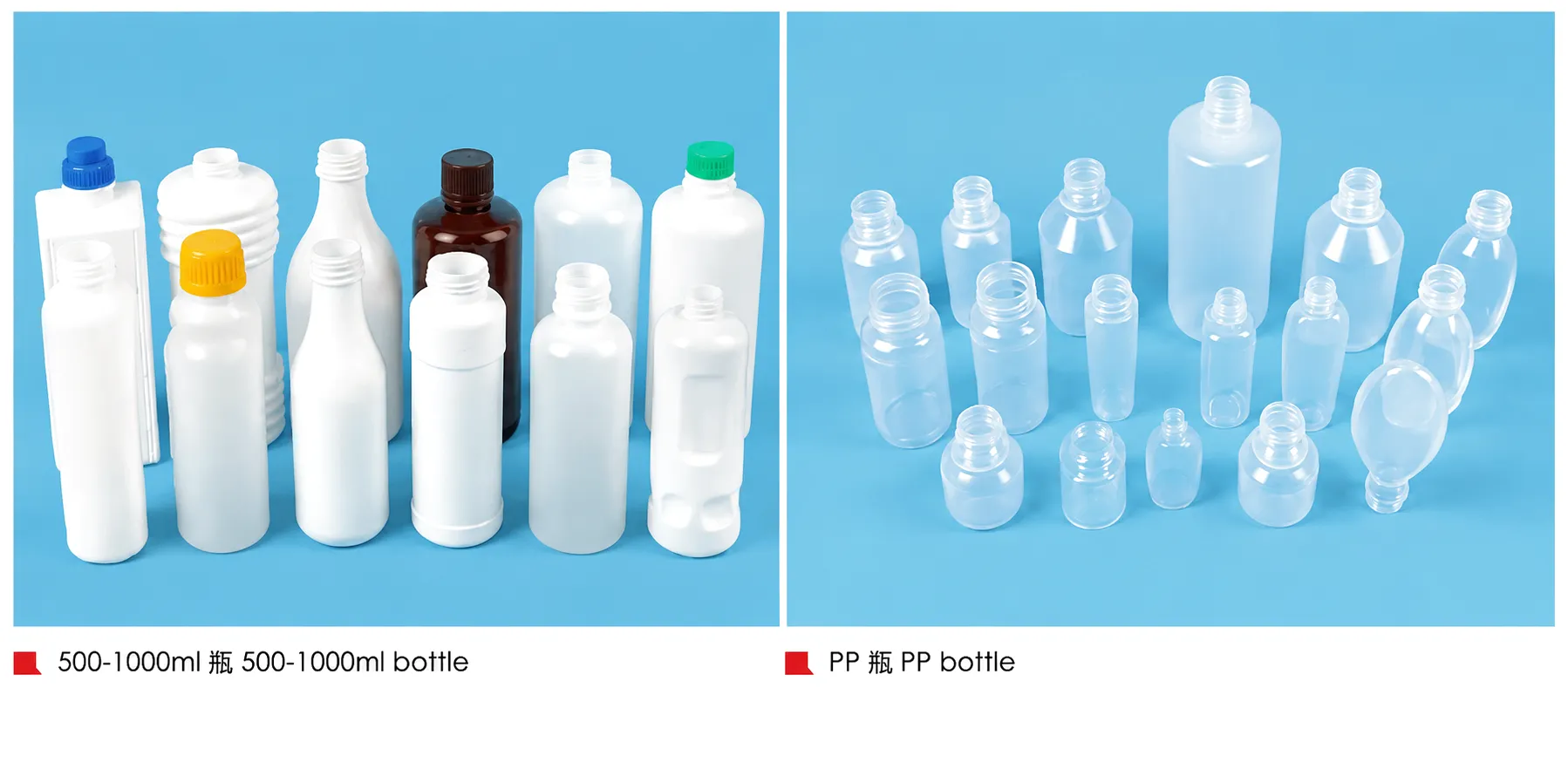
When volume growth makes the upgrade from semi-automatic to fully automatic blow molding equipment commercially justified, the transition carries engineering and operational risks that are much easier to manage if the groundwork was laid at the semi-automatic stage. Companies that plan for this upgrade from the outset typically transfer faster and with lower disruption costs than those who treat the automation upgrade as a fresh start.
Frequently Asked Questions
Describe your target container, annual volume, and material — we’ll recommend the right automation level and send a tailored specification sheet within 24 hours.