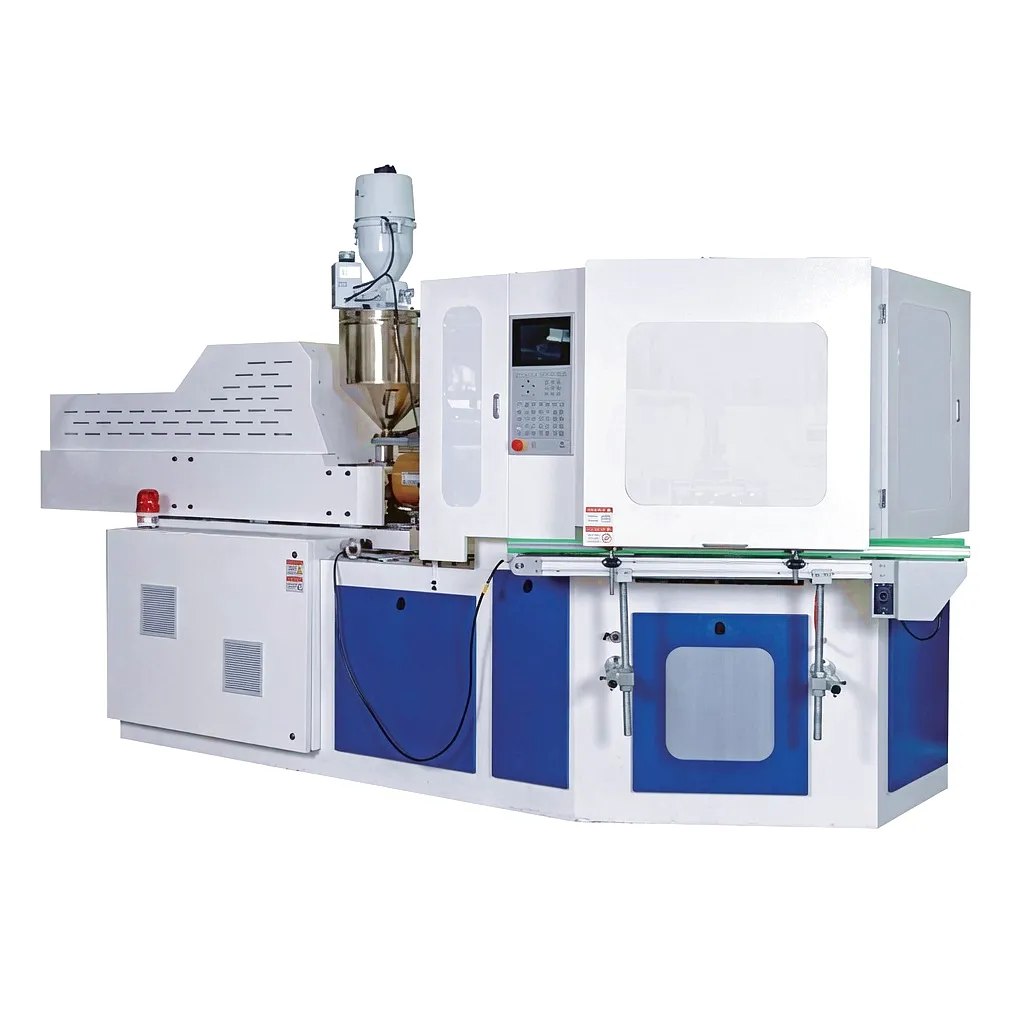
 The injection-blow molding machine sits at the intersection of polymer science and high-throughput manufacturing, and nowhere is its influence felt more acutely than in the food and beverage packaging sector. Across the United Kingdom, from the logistics corridors of Birmingham to the advanced manufacturing clusters of Sheffield, production lines that once relied on multi-stage extrusion or separate preform conditioning are now migrating toward integrated injection-blow molding (IBM) platforms. The reason is straightforward: these machines unite the dimensional precision of injection moulding with the hollow-forming capability of blow moulding, producing containers that hold exact wall thickness, superior optical clarity, and neck-finish accuracy — all in a single continuous cycle with no intermediate handling step.
How an Injection-Blow Molding Machine Works
Molten thermoplastic resin — typically PET, HDPE, or PP — is injected under controlled pressure around a hardened core rod. This creates a precisely dimensioned parison (preform) with a fully finished neck thread, an accurate wall distribution, and a sealed base. The injection mould determines the container’s final neck geometry, which is critical for achieving consistent sealing torques on automated capping lines.
The parison — still on the core rod — rotates to the blow station. Unlike stretch-blow processes, the IBM parison retains heat from the injection phase, meaning no external reheat oven is required. This thermal management is one of the defining energy efficiencies of injection-blow molding machines, reducing cycle energy demand compared with two-stage reheat-blow lines. Wall temperature uniformity across the parison is monitored via closed-loop thermal controls in modern IBM platforms.
Compressed air expands the conditioned parison against the blow-mould cavity walls. Because the neck is already finished and fixed on the core rod, blow-induced dimensional changes affect only the body geometry. Once the container has cooled against the mould surface, it is released and conveyed directly to downstream filling equipment. The complete cycle — injection, rotation, blow, eject — runs continuously, with throughput rates ranging from 1,000 to over 18,000 containers per hour depending on the number of cavities and machine class.
The rotary or shuttle-based transfer mechanism inside an injection-blow molding machine is engineered for sub-millimetre repeatability. High-precision guide pillars, hardened tool steel mould bases, and servo-driven clamping units ensure that the parison never loses its axial alignment between stations. For food and beverage applications where hygiene validation and dimensional traceability are audited by regulatory bodies, this mechanical consistency provides a measurable quality guarantee that manual or semi-automated container forming cannot approach.
Core Materials Processed by Injection-Blow Molding Machines
PET dominates the injection-blow molding machine material palette for beverage containers. Its combination of optical clarity, oxygen barrier performance, and compatibility with hot-fill temperatures up to approximately 85 °C makes it the primary choice for juice bottles, squash containers, and carbonated soft drink packaging. PET processed through IBM achieves wall thickness variation below ±0.05 mm, ensuring consistent burst strength across every bottle in a production batch.
HDPE is the material of choice for containers where chemical resistance and rigidity take priority over transparency. Condiment bottles, dairy packaging, and nutritional supplement containers commonly specified in UK supermarket supply chains utilise HDPE processed through IBM machinery. Its high melt strength supports precise neck-thread reproduction even at elevated injection pressures, and its FDA and UK FSA compliance makes it appropriate for direct food-contact applications without additional liners or coatings.
Polypropylene offers a service temperature advantage over standard PET grades, tolerating sterilisation conditions that make it attractive for aseptic filling lines, pharmaceutical packaging, and containers designed for hot-fill applications above 95 °C. Its natural hinge-fatigue resistance also suits integral-closure bottles. Injection-blow molding machines processing PP require precise barrel temperature profiling — typically 220 °C to 280 °C — and careful blow-pressure calibration to compensate for PP’s relatively lower blow-mould compliance compared to PET.
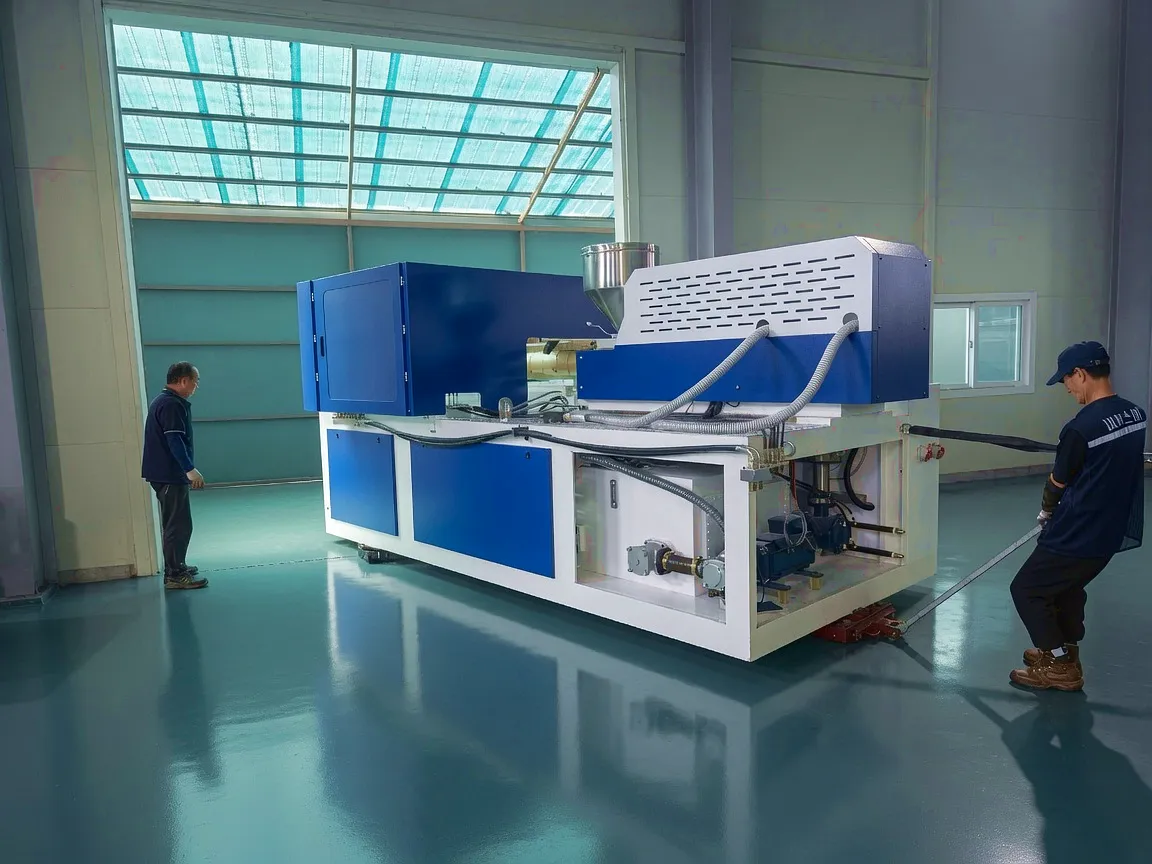
Ever Power manufacturing facility — precision injection-blow molding machine production line
Application Scenario 1: Hot-Fill Fruit Juice Bottles
Food & Beverage Packaging — High-Temperature Resistance & Dimensional Stability
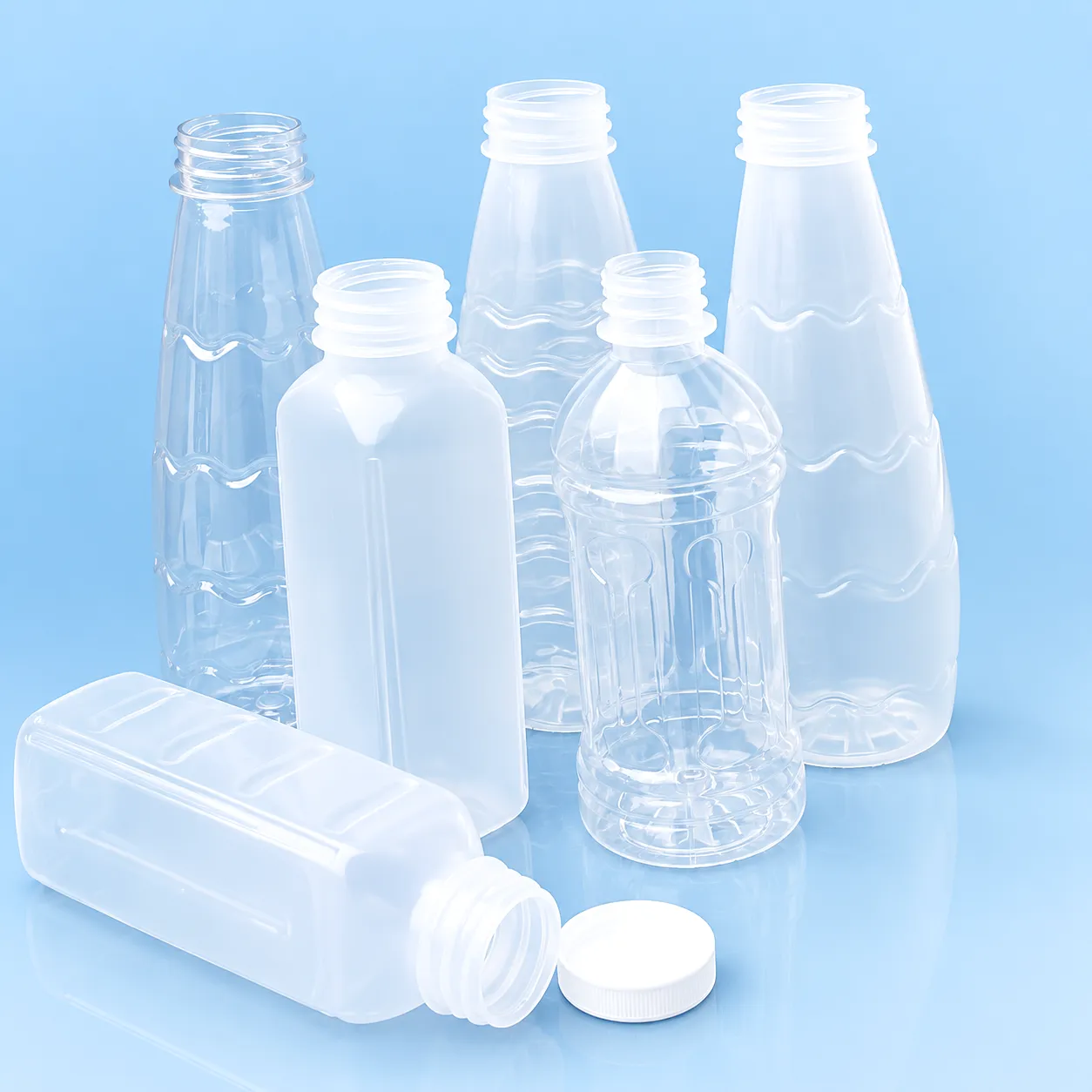
Application Scenario 2: Sports Drink Containers
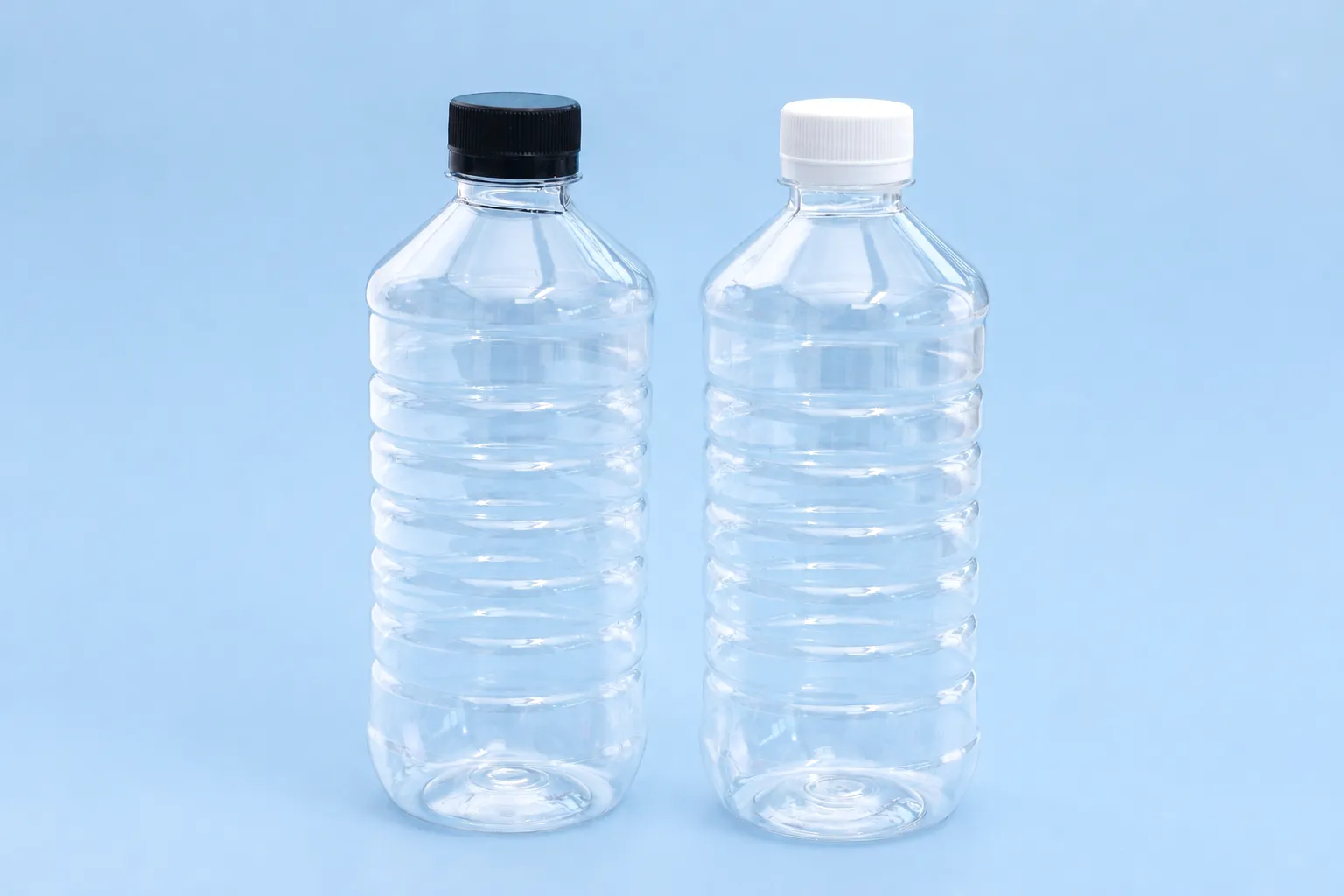
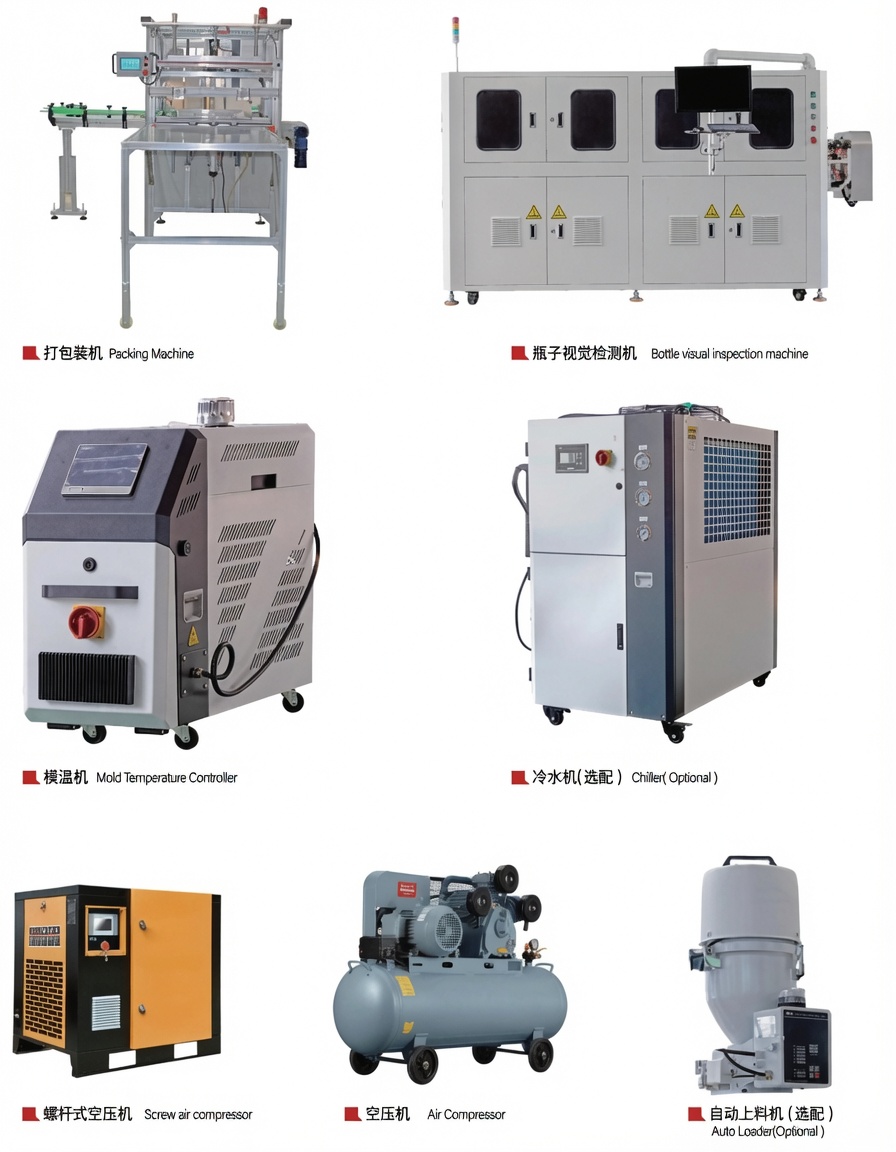
Auxiliary equipment integration on an IBM production line — chiller, conveyor, and quality inspection systems
Application Scenario 3: Condiment Containers
The condiment packaging segment — encompassing ketchup, brown sauce, mayonnaise, salad dressings, hot sauces, and a growing range of UK artisan preserves and chutneys — is an application area where the dimensional accuracy of an injection-blow molding machine becomes a direct factor in brand positioning. Condiment containers must balance squeeze-ability (requiring a specific wall compliance in HDPE or PP) with sufficient base stability for retail shelf display, sufficient shoulder strength to prevent distortion under stacking loads in transit, and an oxygen barrier performance that preserves flavour without requiring expensive multilayer structures.
IBM-produced condiment bottles routinely achieve top-load strengths exceeding 450 N when manufactured in HDPE with a base design that distributes compressive load across a petaloid or champagne-base geometry. This structural performance is directly attributable to the uniform wall distribution that injection-blow molding machines achieve — because the parison is formed precisely around the core rod rather than extruded against a die gap that can vary with polymer melt pressure fluctuations, the final container wall is homogeneous in a way that extrusion-blown condiment bottles rarely match at competitive cycle times.
Product Technical & Performance Parameters
| Parameter | ZQ40 Series | ZQ60 Series | Notes |
|---|---|---|---|
| Clamping Force | 40 kN | 60 kN | Hydraulic servo-driven |
| Container Volume Range | 5 ml – 500 ml | 30 ml – 1,000 ml | PET / HDPE / PP |
| Plasticising Capacity | Up to 18 g/s | Up to 28 g/s | Material dependent |
| Injection Pressure (max) | 180 MPa | 200 MPa | Programmable profile |
| Blow Pressure (max) | 0.6 MPa | 0.8 MPa | Adjustable per cavity |
| Cycle Time (typical) | 3.0 – 5.5 s | 3.5 – 6.0 s | Volume & material dependent |
| Barrel Temperature Range | 180 – 300 °C | 180 – 300 °C | 5-zone PID control |
| Number of Cavities | 2 / 3 / 4 | 2 / 3 / 4 / 6 | Application specific |
| Installed Power | 11 kW | 18.5 kW | Servo motor drive |
| Net Machine Weight | approx. 2,400 kg | approx. 3,800 kg | Foundation load planning req’d |
| Control System | Siemens PLC + 10.4″ touchscreen HMI, Ethernet-ready | CE certified, UK 3-phase 400V | |
| Compatible Materials | PET, HDPE, PP, LDPE, PVC (food grade), PC | Mould change required for switch | |
Core Technical Advantages of IBM Technology
Eliminating the separate preform production and reheat stages that two-stage ISBM requires reduces floor space by 30–45%, cuts labour headcount on the forming line, and removes the contamination risk associated with preform intermediate storage. For UK food manufacturers operating in GMP-regulated environments, fewer handling steps translate directly to lower microbiological risk and simplified audit trails.
Because the neck is formed in the injection mould rather than blown, it retains the dimensional accuracy of injection moulding rather than the variability inherent in blow-forming neck geometry. Thread form, sealing surface flatness, and thread-pitch consistency remain within ±0.1 mm across entire production runs. This is critical for automated capping lines running at 400 to 600 closures per minute where cap torque must remain within specification to prevent under-tightening or overcapping.
IBM containers have no pinch-off seam and no base flash — both of which are unavoidable artefacts of extrusion blow moulding. This eliminates the trimming operation and its associated polymer waste stream, improving material utilisation to above 99% in well-optimised IBM applications. For UK packaging operations pursuing ISO 14001 environmental management certification or WRAP commitments on packaging material reduction, this waste profile is a meaningful sustainability metric.
The controlled thermal path that PET follows through an injection-blow molding machine — from melt to injection mould to blow station without intermediate reheating — results in lower haze values than those achievable on reheat-blow lines processing the same resin grade. Haze values below 4% are routinely achieved in IBM-produced juice bottles, compared with 8–12% typical for extrusion-blown HDPE in the same capacity range. Retail buyers and brand managers across the UK consistently identify container clarity as a premium-tier packaging attribute.
Featured Injection-Blow Molding Machines
Both machines are CE-certified and configured for the European power supply standard (400V / 50Hz), making them ready for UK and EU production environments.
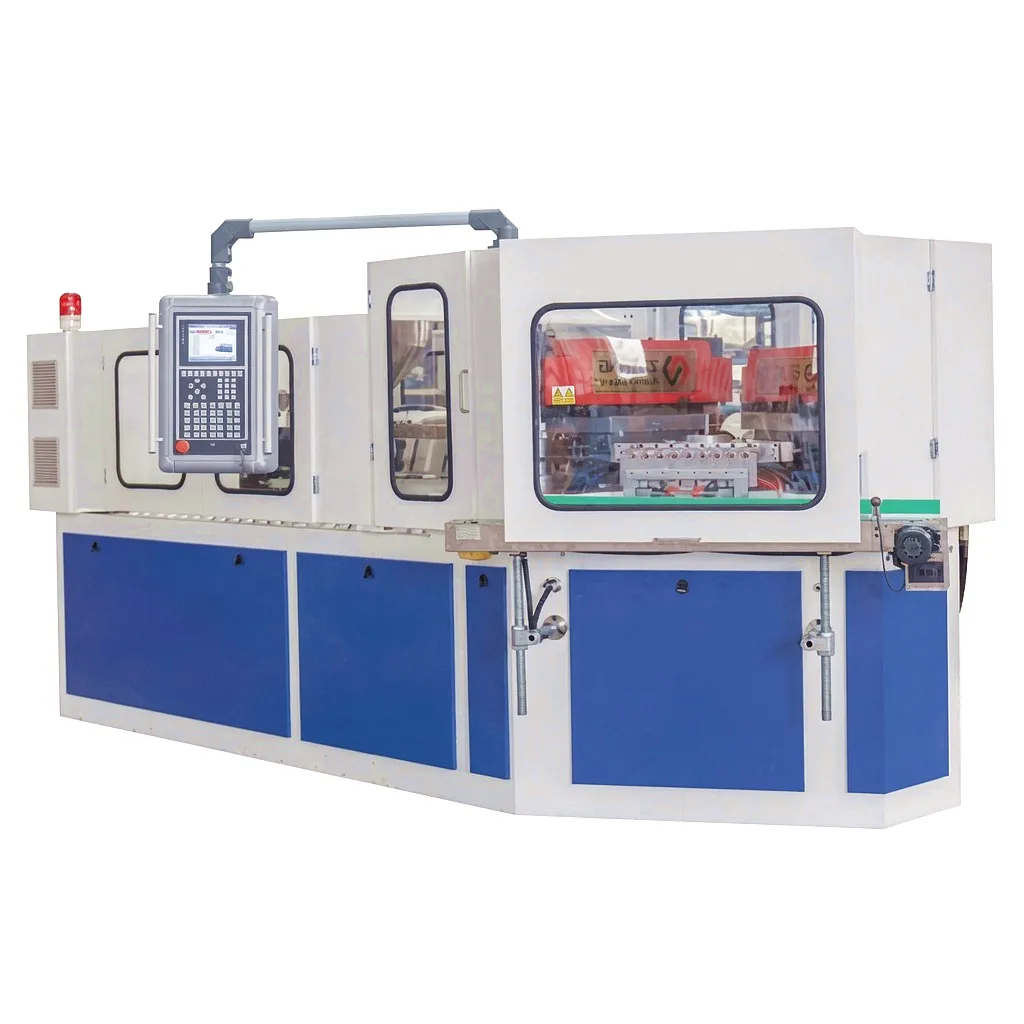
Ever Power: Manufacturing Strength & Customisation Capability
Ever Power has spent more than two decades developing injection-blow molding machine systems that address the specific requirements of global food and beverage OEM customers. Our manufacturing facility covers over 28,000 square metres of production floor space equipped with CNC machining centres, precision grinding stations, and dedicated assembly and test areas for IBM platforms. Every machine undergoes a minimum 72-hour production trial before leaving the factory, processing the customer’s specified resin grade and producing sample containers that are independently measured against the agreed dimensional specification.
Our customisation capabilities extend across every aspect of the injection-blow molding machine: injection barrel diameter and L/D ratio, screw geometry optimised for the target polymer, blow-mould cavity count, core-rod alloy selection, chilling circuit layout, and PLC programming for integration with specific downstream filling, inspection, and labelling equipment. UK customers working with regulatory frameworks such as BRC/IOP Packaging Standard or Sedex/SMETA supply chain requirements benefit from Ever Power’s ISO 9001:2015 and CE-certified machine documentation, which provides the audit-ready records needed for compliance submissions.
For beverage producers along the M1 corridor between Leicester and Sheffield, or food manufacturers clustered in the Midlands and the North West of England, Ever Power offers dedicated pre-sales technical consultancy that covers container design review, mould-filling simulation, material compatibility assessment, and projected cycle time and output calculations based on actual production parameters. This consultancy phase is included in the commercial proposal process at no charge, reflecting our confidence in the technical value the IBM platform delivers against competing container-forming technologies.
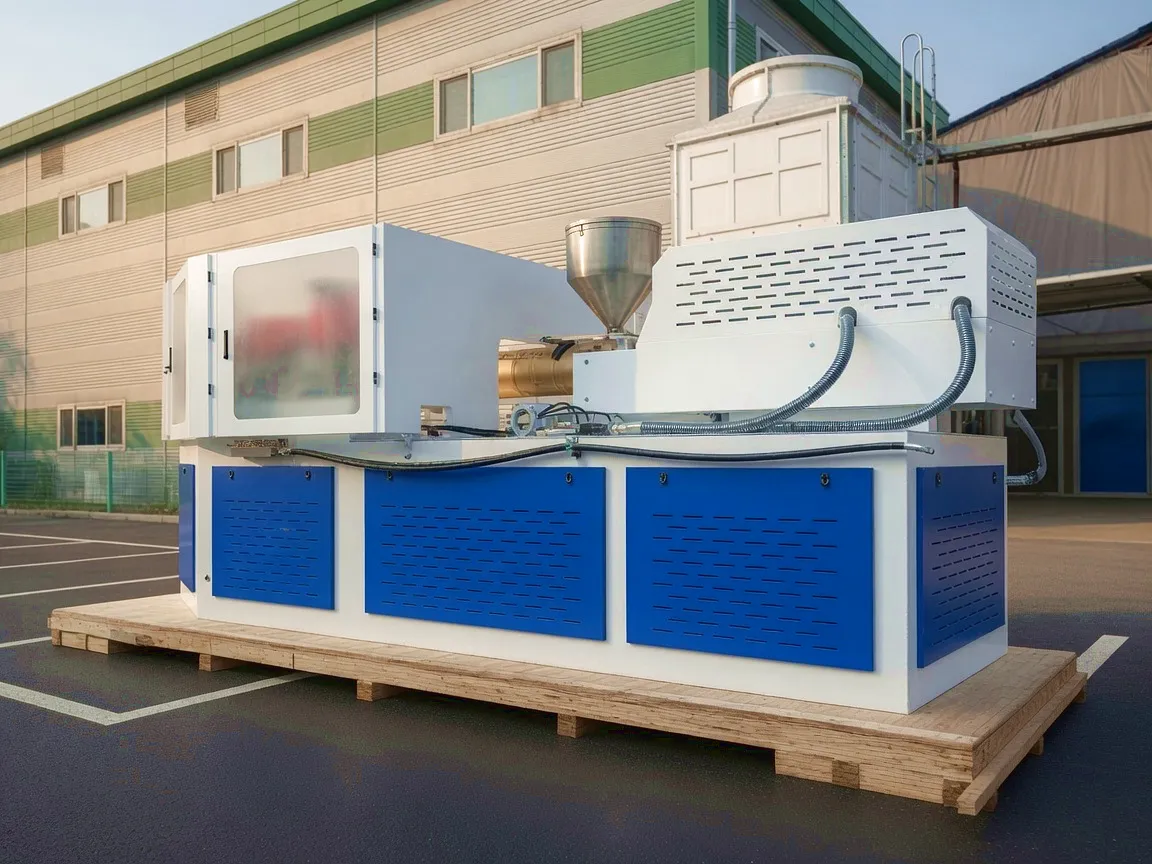
Ever Power IBM system with integrated auxiliary equipment including hopper dryer, chiller, and air compressor
Customer Success Story: Northampton Beverage Manufacturer
“The neck-thread accuracy on the ZQ60 has been transformative for our capping line performance. We went from flagging weekly quality holds with our retail buyer to running three consecutive months without a single closure-related complaint. The machine’s PLC interface is intuitive enough that our operators were running unsupported within two weeks of commissioning.”
“Ever Power’s pre-sales technical support was genuinely different from what we had experienced with other machinery suppliers. They came back with a fully quantified projection — energy saving, rejection rate improvement, payback period — based on our actual production data rather than generic marketing claims. That level of engineering rigour made the purchasing decision straightforward.”
“We specified two customisations: an extended chilling circuit for our PP condiment bottle application, and a modified core-rod coating for processing a medical-grade HDPE. Ever Power incorporated both without any price escalation beyond the initial quotation, and delivered within the agreed fourteen-week lead time. For a UK manufacturer working to retail buyers’ seasonal launch windows, that reliability of delivery was as important as the machine specification itself.”
Frequently Asked Questions
Answers to the questions UK buyers most commonly ask about injection-blow molding machines
Injection-blow molding machine pricing depends heavily on clamping tonnage, cavity count, and the level of automation integration. Entry-level IBM platforms suitable for small-format containers (under 200 ml, 2 cavities) typically fall within the £45,000 to £80,000 range ex-works. Mid-range machines such as the Ever Power ZQ40 or ZQ60 configured for food and beverage applications are priced between £90,000 and £160,000 including tooling for one container format. To receive an accurate, application-specific price for your UK operation, contact Ever Power at [email protected] with your container volume range, target material, and required annual output — our engineering team will return a detailed quotation within 48 hours.
Ever Power supplies injection-blow molding machines to UK customers across all major manufacturing regions including Birmingham, Sheffield, Leeds, Manchester, Northampton, and Bristol. All machines are shipped fully assembled on flat-rack containers via Felixstowe or Southampton, cleared through UK customs on a DDP (Delivered Duty Paid) basis when requested, and commissioned by our factory-trained engineers on site. Installation support, operator training, and a minimum 12-month parts warranty are included in the standard supply package for all ZQ-series IBM machines.
Standard lead time for an Ever Power ZQ40 or ZQ60 injection-blow molding machine with one set of production tooling is 12 to 16 weeks from order confirmation and receipt of deposit. Machines requiring significant customisation — non-standard cavity counts, specialised screw geometries, or bespoke PLC integration packages — may require 18 to 22 weeks. Sea freight transit from our port to UK ports runs approximately 28 to 35 days; we coordinate shipping and customs documentation as part of our standard export service to ensure predictable arrival within your project schedule.
An injection-blow molding machine forms containers through radial (hoop) blow expansion alone, without axial stretching of the parison. This suits smaller volumes and wide-mouth containers where radial orientation provides adequate mechanical properties. Injection-stretch-blow molding (ISBM) adds a stretch rod that simultaneously extends the parison axially, biaxially orienting the PET and significantly improving oxygen barrier performance, drop impact resistance, and material efficiency — advantages that matter for 500 ml to 2 L juice bottles where the ISBM route allows lightweighting below 18 g per bottle. For hot-fill applications in the UK market, heat-set ISBM is the dominant technology above 250 ml, while IBM excels for narrow-neck vials, personal care bottles, and containers below 200 ml where the dimensional precision of a single-stage process outweighs the orientation benefits of stretch-blow.
The switch from extrusion blow to injection-blow makes economic and technical sense for UK condiment manufacturers when neck-finish accuracy is a recurring quality issue — particularly where automated capping line efficiency is below 98% due to thread variation — or when the container volume is consistently below 500 ml and flash trimming waste represents more than 2% of polymer consumption. IBM also becomes attractive when the product requires glass-clear HDPE or transparent PP containers where haze values are a retail specification requirement, or where the production run structure favours higher cavitation efficiency over large extrusion-blow tooling investment per format. Ever Power’s pre-sales team can run a comparative cost-per-thousand analysis for your specific output volume to quantify the crossover point precisely.
For use in a UK food-grade facility, the machine must carry CE marking under the Machinery Directive (2006/42/EC, which remains applicable to UK conformity assessment under UKCA transitional arrangements) and be accompanied by a full Declaration of Conformity, technical file, and CE-compliant risk assessment documentation. Electrical panels must be certified to IEC 60204-1 standards and wired for UK three-phase supply (400V / 50Hz). Material contact components — hopper, barrel, and nozzle assemblies — should carry FDA or EU 10/2011 food-contact materials compliance documentation if the machine will process resins destined for food packaging. Ever Power provides all of the above documentation as standard with every IBM machine supplied to UK and European customers.
Tell us your container specifications and production targets — our engineering team will respond with a full technical proposal and competitive price within 48 hours.