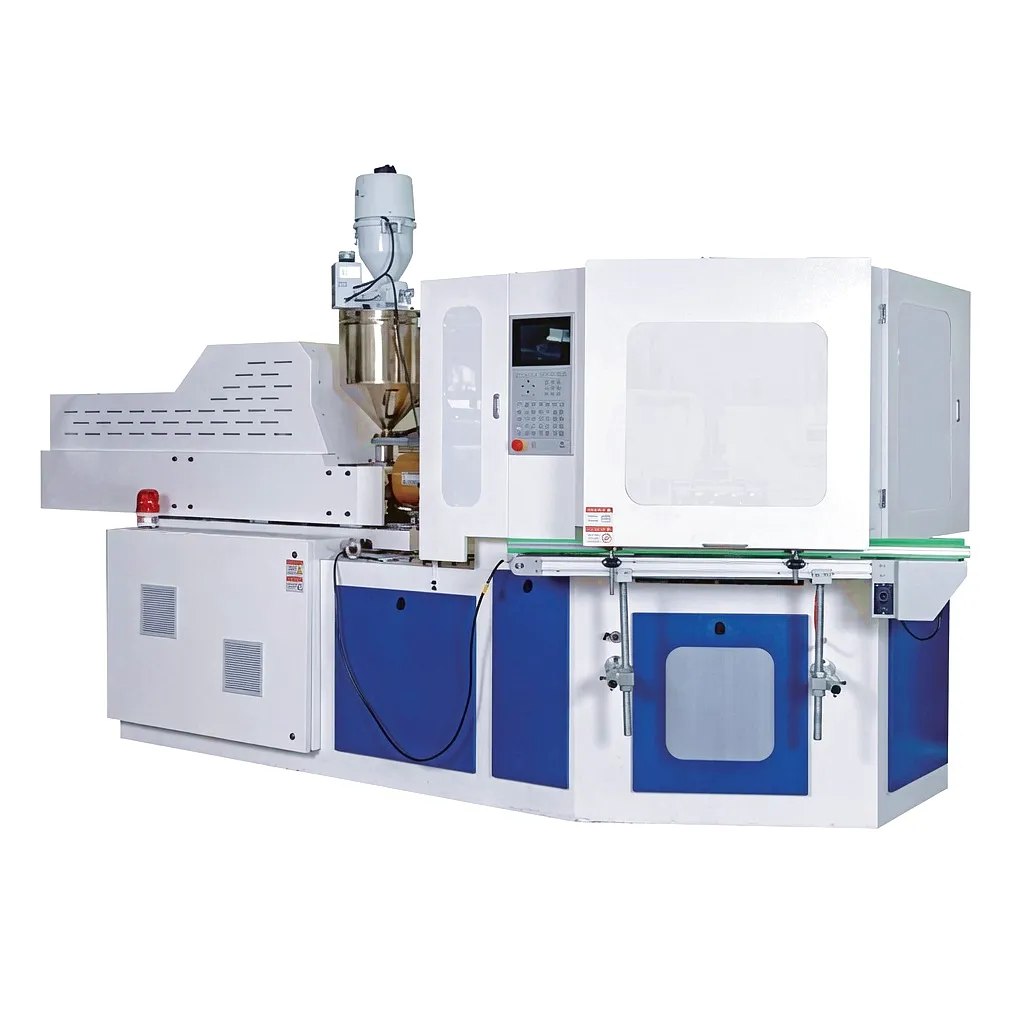
 Injection blow molding — commonly abbreviated as IBM — stands as one of the most precisely engineered thermoplastic forming processes in modern plastics manufacturing. Unlike extrusion-based techniques, IBM routes molten polymer through an injection mould before an expanding air charge shapes the final hollow vessel. The result is a bottle or container with dimensional accuracy, consistent wall thickness, and a finished neck thread that eliminates secondary trimming operations entirely. For UK packaging operations running pharmaceutical vials in the West Midlands, personal care bottles in Leeds, or speciality food containers destined for London retail chains, understanding how injection blow molding machines work is the foundation of every informed procurement decision.
The British manufacturing sector has long favoured precision-engineered solutions over volume-first approaches, and injection blow molding aligns naturally with that philosophy. Facilities in Sheffield and Birmingham have increasingly integrated IBM lines into their production floors, drawn by the technological ability to produce glass-clear PET or PP bottles with zero flash, minimal scrap, and cycle times competitive with far less sophisticated processes. This guide dissects every stage of the IBM process — from the initial injection phase through to finished container ejection — and benchmarks it against alternative blow molding routes so engineers and buyers can match technology to application with confidence.
Blow Molding Technologies Compared: IBM, ISBM, EBM and Extrusion
Before examining injection blow molding in depth, it helps to situate it within the family of blow molding technologies. Each process addresses a different set of requirements, and no single technique dominates every application. The four principal routes — injection blow molding (IBM), injection stretch blow molding (ISBM), extrusion blow molding (EBM), and simple extrusion blow molding with a parison — differ in how they form the preform or parison, how they apply air pressure, and whether a mechanical stretch rod is used to achieve biaxial orientation.
| Process | Preform Method | Stretch Rod | Wall Uniformity | Typical Materials | Flash / Trim | Ideal Applications |
|---|---|---|---|---|---|---|
| IBM | Injection mould | No | Excellent | PE, PP, PET, PVC, PS | None | Pharma, cosmetics, small precision bottles |
| ISBM | Injection mould | Yes | Excellent | PET, PP | None | Beverages, wide-mouth jars, biaxially oriented PET |
| EBM | Extruded parison | No | Moderate | HDPE, PP, PVC | Yes — bottom pinch flash | Household chemicals, automotive fluid tanks |
| Extrusion BM | Continuous or intermittent parison | No | Variable | HDPE, LDPE, PP, PA | Yes — significant | Large industrial containers, multi-layer barriers |
The defining characteristic of injection blow molding versus both EBM routes is the total absence of flash or weld lines. Because the neck finish of every bottle is formed around a precision injection core, the thread geometry meets pharmaceutical and food-grade tolerances without post-processing. That single attribute explains why the UK pharmaceutical sector — particularly contract manufacturing organisations based in the East Midlands corridor and the North West — continues to specify IBM for primary packaging despite higher tooling costs compared with extrusion methods.
The Three-Station IBM Process: Injection, Blow, and Ejection
A standard injection blow molding machine operates on a rotary table carrying a central mandrel bar — often called the core rod — that indexes through three or four stations depending on machine architecture. Each station performs a distinct operation, and all stations work simultaneously so that every machine cycle produces a finished batch of bottles. This parallel operation is what gives injection blow molding its efficiency advantage over sequential processes, even when absolute output rates are compared with high-cavitation extrusion blow molding.
Station 1 — Injection
Molten thermoplastic is injected around a precision core rod inside a temperature-controlled injection mould. The polymer fills the mould cavity and forms the preform — a test-tube-shaped intermediate with a fully formed neck thread. Melt temperature, injection speed, and pack pressure are all tightly governed to produce consistent wall distribution. For pharmaceutical-grade PP or food-contact HDPE, shot weights are repeatable to within 0.1 g per cavity.
Station 2 — Blow
The core rod, still carrying the warm preform, indexes to the blow mould. Compressed air is introduced through the core rod at pressures typically between 6 and 10 bar, inflating the preform against the chilled blow mould walls. The mould imparts the final container geometry — body shape, shoulder profile, and base radius — while rapid cooling locks the material into its permanent form. Since IBM does not deploy a mechanical stretch rod, the molecular orientation achieved is primarily axial rather than biaxial, making it distinct from ISBM.
Station 3 — Ejection
The finished bottle is stripped from the core rod and conveyed to downstream inspection or packaging. Because the neck was formed in the injection mould and never re-contacted the blow mould, it arrives with full dimensional integrity — no trimming, no secondary operations. Four-station IBM machines add a conditioning station between injection and blow, allowing finer thermal profiling of the preform wall before expansion, which improves thickness distribution in deep or complex body geometries.
Wall Thickness Uniformity and Preform Heating Temperature Curves
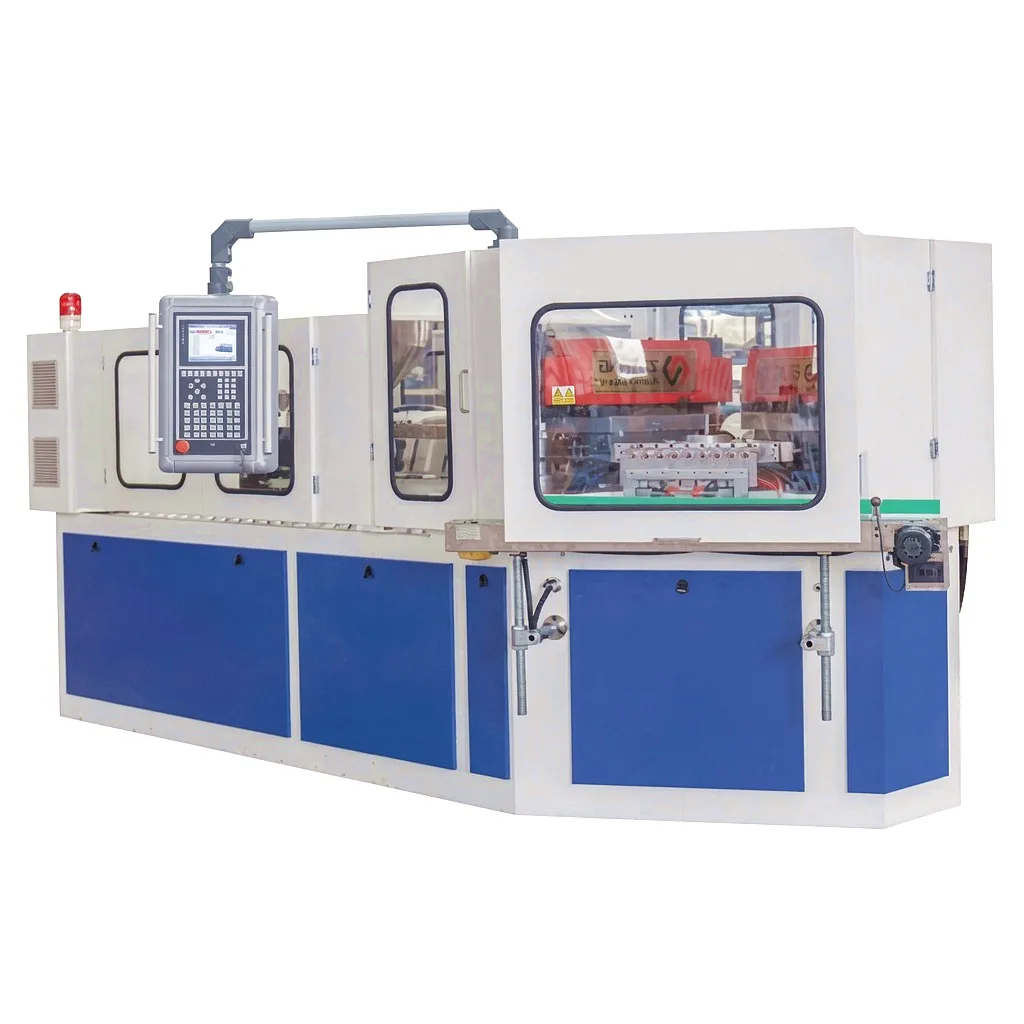 Wall thickness uniformity is the quality metric that distinguishes a well-configured injection blow molding machine from a poorly tuned one. In IBM, the preform wall geometry is determined at the injection stage: the gap between the core rod and the injection cavity defines the initial thickness profile. Engineers typically design the core rod with a slight taper so that the thinnest preform wall corresponds to the region of the bottle body that will experience the greatest stretch during blow expansion. If this tapering is miscalculated, the finished bottle develops thick bands at the shoulder and thin zones at the base, both of which compromise impact resistance and top-load strength.
Preform temperature at the moment of transfer to the blow station is equally critical. IBM machines carry the preform on the core rod without a separate reheating oven — unlike two-stage ISBM processes — so the thermal state of the preform is entirely governed by the injection cooling time. Shortening cooling time to boost output rate often leaves the preform too warm, causing sagging or preferential thinning during blow. Extending it unnecessarily increases cycle time and energy cost. Modern IBM controllers map an optimal temperature curve: the preform surface should reach approximately 15 to 25 degrees Celsius above the material glass transition temperature (Tg) at the moment of blow-mould closure. For PP this means surface temperatures around 140 to 165 degrees Celsius; for HDPE the window is 130 to 155 degrees Celsius.
±0.05mm
Wall Thickness Tolerance (pharma grade)
6–10 bar
Blow Air Pressure Range
15–25°C
Above Tg at Blow Transfer
0.1 g
Shot Weight Repeatability per Cavity
Mould Design and Bottle Profile Optimisation in Injection Blow Molding
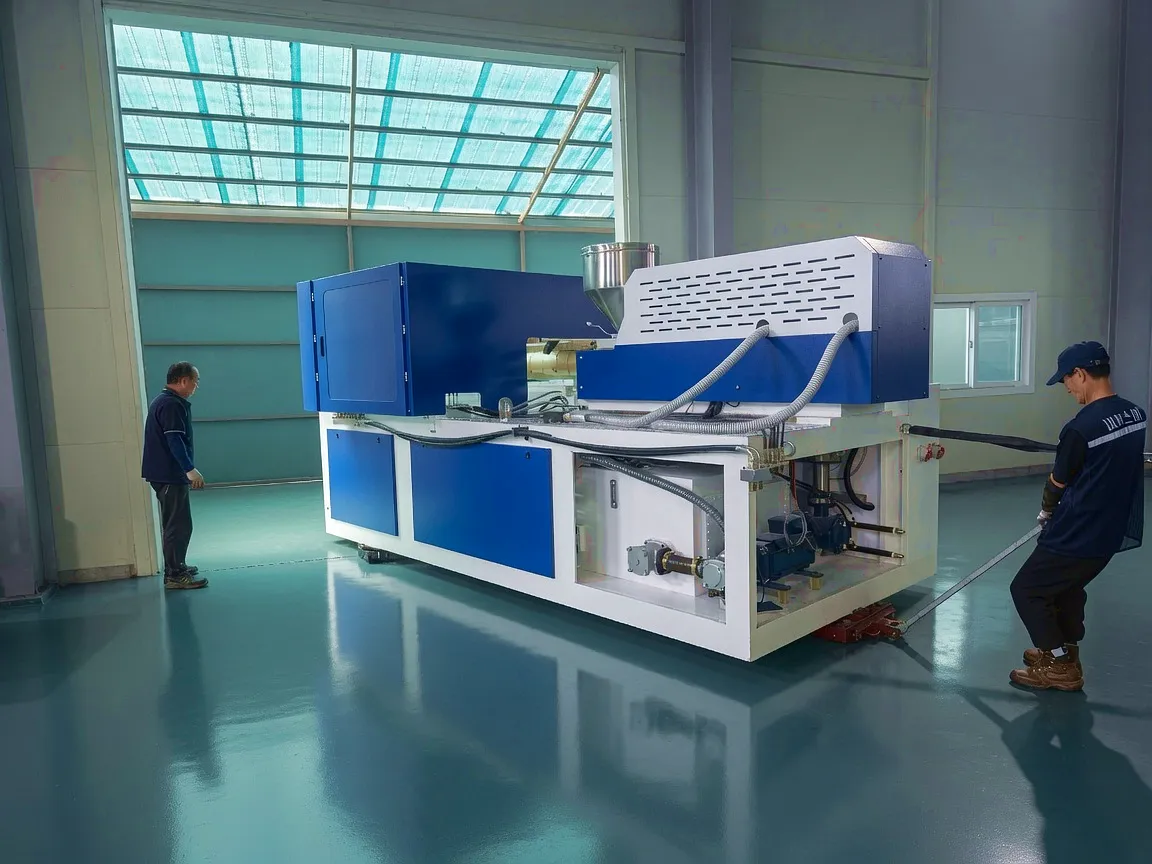 Tooling for injection blow molding is inherently more complex than extrusion blow tooling because the injection mould, core rod assembly, and blow mould must all align to the same indexing table geometry. The injection mould is typically machined from pre-hardened P20 or H13 steel and polished to a mirror finish where optical clarity is required — common in clear PP or PS cosmetic packaging produced for the luxury personal care market. Gate location on the injection mould influences how the polymer flows around the core rod: a single pin gate at the base of the preform promotes symmetrical fill, whereas offset gating can introduce weld lines that manifest as stress concentrations in the blown bottle body.
Blow mould design follows a different set of constraints. The blow cavity must accommodate the fully expanded container without excessive air travel distance, since dead zones at the corners of complex bottle profiles are the primary cause of thin spots in IBM production. Cooling channel layout within the blow mould is engineered to achieve mould surface temperatures between 10 and 30 degrees Celsius during normal production, with tighter tolerances — typically 12 to 18 degrees Celsius — when producing crystal-clear containers that would show any thermal haze from uneven cooling. Conformal cooling, machined via powder-bed fusion additive manufacturing, is increasingly being specified for high-cavity IBM tools destined for UK pharmaceutical clients who run continuous three-shift operations and cannot afford the downtime associated with conventional drilling-based cooling circuits.
IBM Machine Technical and Performance Parameters
| Parameter | ZQ40 IBM | ZQ60 IBM | Unit / Notes |
|---|---|---|---|
| Injection Unit (screw dia.) | 40 mm | 60 mm | Determines shot capacity |
| Max. Shot Weight | 120 g | 280 g | Per rotation (all cavities) |
| Clamping Force | 400 kN | 600 kN | Applied at injection mould |
| Cavity Configuration | 2 / 4 / 6 cavity | 4 / 6 / 8 / 12 cavity | Tooling-dependent |
| Bottle Volume Range | 5 – 500 ml | 20 – 1,000 ml | PE, PP, PET, PVC, PS |
| Blow Air Pressure | 6 – 8 bar | 6 – 10 bar | Adjustable per material |
| Plasticising Rate | up to 55 g/s | up to 110 g/s | Material-dependent |
| Barrel Heating Zones | 4 | 5 | PID-controlled ±1 °C |
| Cycle Time (typical) | 8 – 15 s | 10 – 20 s | Material and volume dependent |
| Connected Load | 18 kW | 32 kW | Servo-drive configuration |
| Mould Cooling Temperature | 10 – 30 °C | 10 – 30 °C | Chiller-supplied water circuit |
| Machine Dimensions (L x W x H) | 2,600 x 1,100 x 1,850 mm | 3,200 x 1,350 x 2,000 mm | Footprint excl. chiller and hopper |
| Machine Net Weight | 2,800 kg | 5,200 kg | Without tooling |
Energy Consumption Optimisation and Sustainable Production in IBM
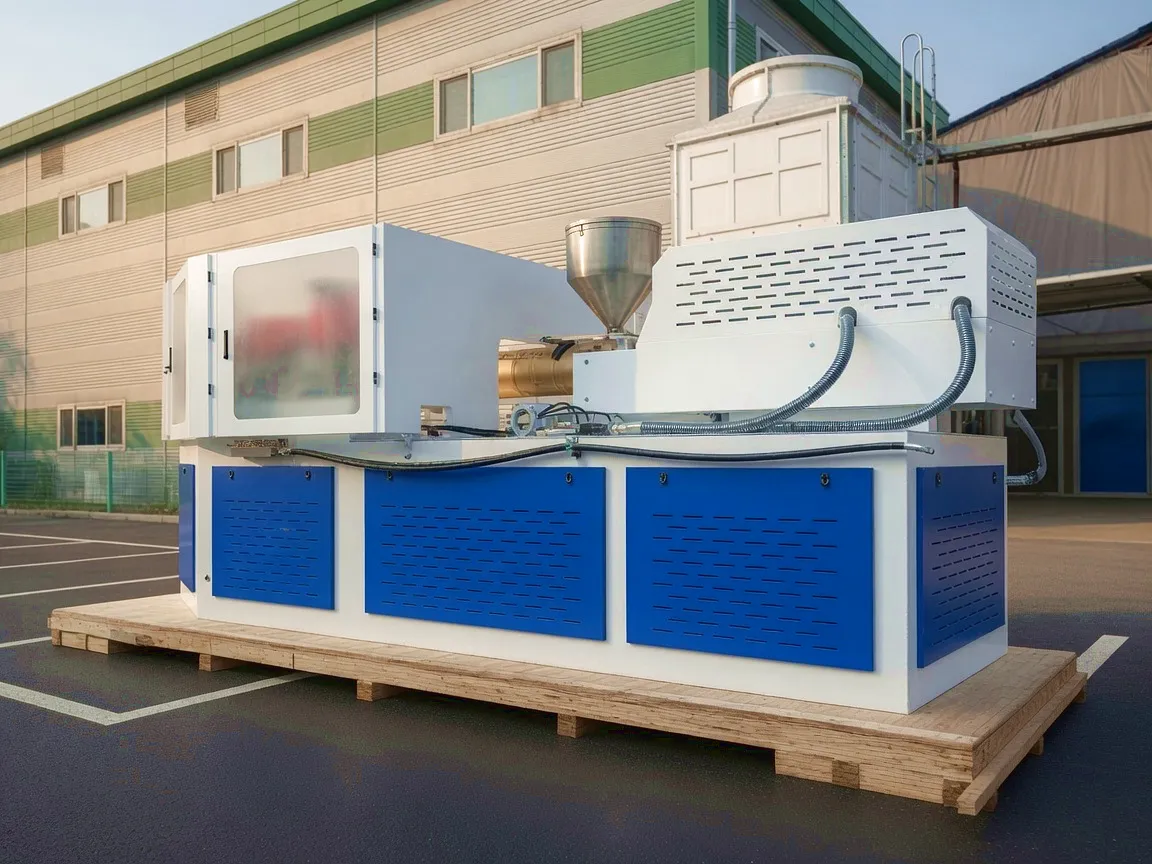 Energy cost is a pressing concern across British manufacturing, where industrial electricity tariffs have remained elevated since 2022 and net-zero commitments under the UK Climate Change Act are increasingly influencing capital equipment procurement decisions. Injection blow molding offers several structural energy advantages over alternative forming routes. Because the process does not require a separate reheating oven between preform production and blowing — as two-stage ISBM does — the total thermal energy demand per kilogram of formed polymer is inherently lower. The one-stage nature of IBM reduces the energy consumed in reheating a cold preform from ambient back to forming temperature, a step that typically accounts for 35 to 45 per cent of total energy use in two-stage lines.
Modern IBM machines from Ever Power incorporate all-electric or servo-hydraulic drive architecture, replacing the fixed-displacement hydraulic pumps found in legacy equipment. A servo-driven injection unit draws power only during active phases of the cycle — injection, pack, and hold — rather than running a constant-pressure pump throughout. In typical IBM cycle profiles, the active injection phase occupies roughly 25 to 35 per cent of the total cycle time, meaning a servo system eliminates parasitic pump losses during the remaining 65 to 75 per cent of each cycle. Field data from facilities in the East Midlands replacing older hydraulic IBM machines with servo-driven equivalents have recorded energy reductions of 30 to 42 per cent per unit of output.
Industrial Application Scenarios for Injection Blow Molding Machines
The defining applications of injection blow molding cluster around products where dimensional precision, neck-finish accuracy, and absolute absence of contamination-risk flash are non-negotiable.
Pharmaceutical Primary Packaging
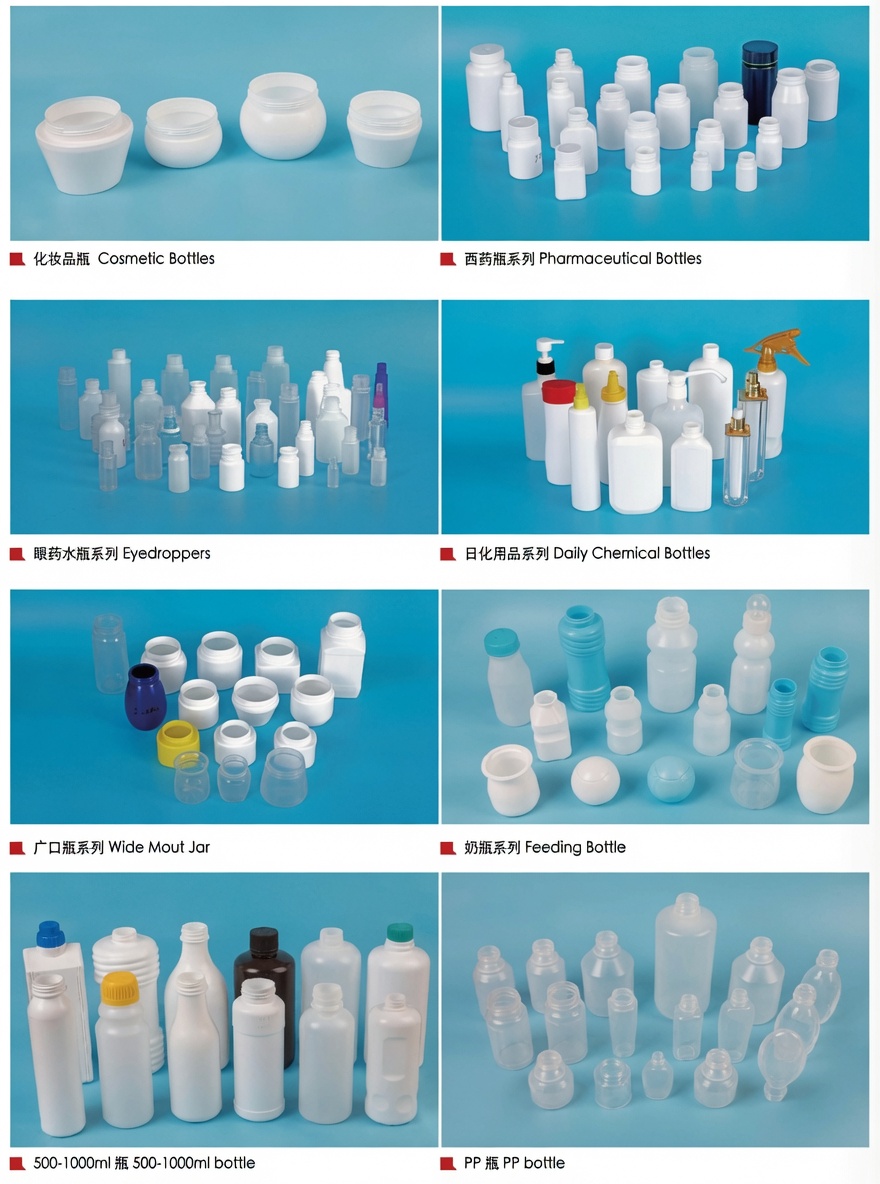
IBM is the dominant process for producing HDPE tablet bottles, PP syrup containers, and multi-dose ophthalmic vials in the UK. Manufacturing sites in Cheshire, County Durham, and the Greater Manchester pharmaceutical corridor rely on IBM for compliance with MHRA primary packaging requirements, where neck-thread precision governs tamper-evident closure performance and child-resistant cap torque specifications.
Cosmetics and Personal Care Packaging
The luxury personal care sector, centred around London, Bristol, and the Edinburgh beauty manufacturing hub, demands crystal-clear PS or PP bottles with mirror-finish surfaces and tight ovality tolerances. IBM delivers the optical clarity and surface quality that cosmetics brands require for premium shelf presence, while the absence of weld lines eliminates visual defects that would be rejected at finished goods inspection.
Food and Beverage Contact Containers
Injection blow molding machine production of food-contact HDPE or PP containers complies readily with UK food safety regulations and EU 10/2011 retained legislation for plastics in contact with food. Small honey jars, condiment bottles, and infant nutrition containers produced by manufacturers in Yorkshire and the East Midlands benefit from IBM flash-free output, which eliminates particulate contamination risk inherent in EBM flash-trimming operations.
Agrochemical and Specialty Chemical Packaging
Small-format agrochemical bottles — concentrates, adjuvants, and seed treatment solutions — require chemical resistance and precise metering neck geometry. HDPE IBM containers produced for the agricultural chemicals sector, with significant operations in Lincolnshire and the Scottish Borders, deliver the neck-thread accuracy that spray and drench applicators depend on for reliable dosing. IBM ability to form chemically inert HDPE bottles with zero weld-line weakness is a significant structural advantage in this regulated sector.
Common IBM Defects and Troubleshooting Guide
IBM processes are highly repeatable when set correctly, but several recurring defect types appear when parameters drift. The table below maps each defect to its most probable root cause and the corrective action an experienced process engineer would take.
| Defect | Probable Cause | Corrective Action |
|---|---|---|
| Thin base / thick shoulder | Core rod taper incorrect; preform too warm at blow | Re-machine core rod taper; reduce injection-to-blow transfer speed or extend cooling time |
| Surface haze / milkiness | Blow mould surface temperature too high; moisture in resin | Lower chiller set-point; verify resin drying time and dewpoint (PP: 4 h at 80 °C) |
| Neck-thread dimensional drift | Injection mould core rod wear; inconsistent pack pressure | Inspect core rod for wear; verify pack pressure consistency across cavities with cavity-pressure sensors |
| Short shot (incomplete fill) | Melt temperature too low; injection speed too slow; gate freeze-off | Raise barrel zone 2/3 set-point by 5 °C increments; check gate diameter for wear or blockage |
| Blow-out / pin holes | Blow air pressure too high relative to preform wall thickness | Reduce blow pressure in 0.5 bar steps; verify preform weight consistency |
| Sticking in blow mould | Mould surface temperature too low; insufficient mould release | Increase cooling water temperature by 3 to 5 °C; apply approved mould release agent; check ejection timing |
Ever Power: Precision Manufacturing and Custom IBM Machine Solutions
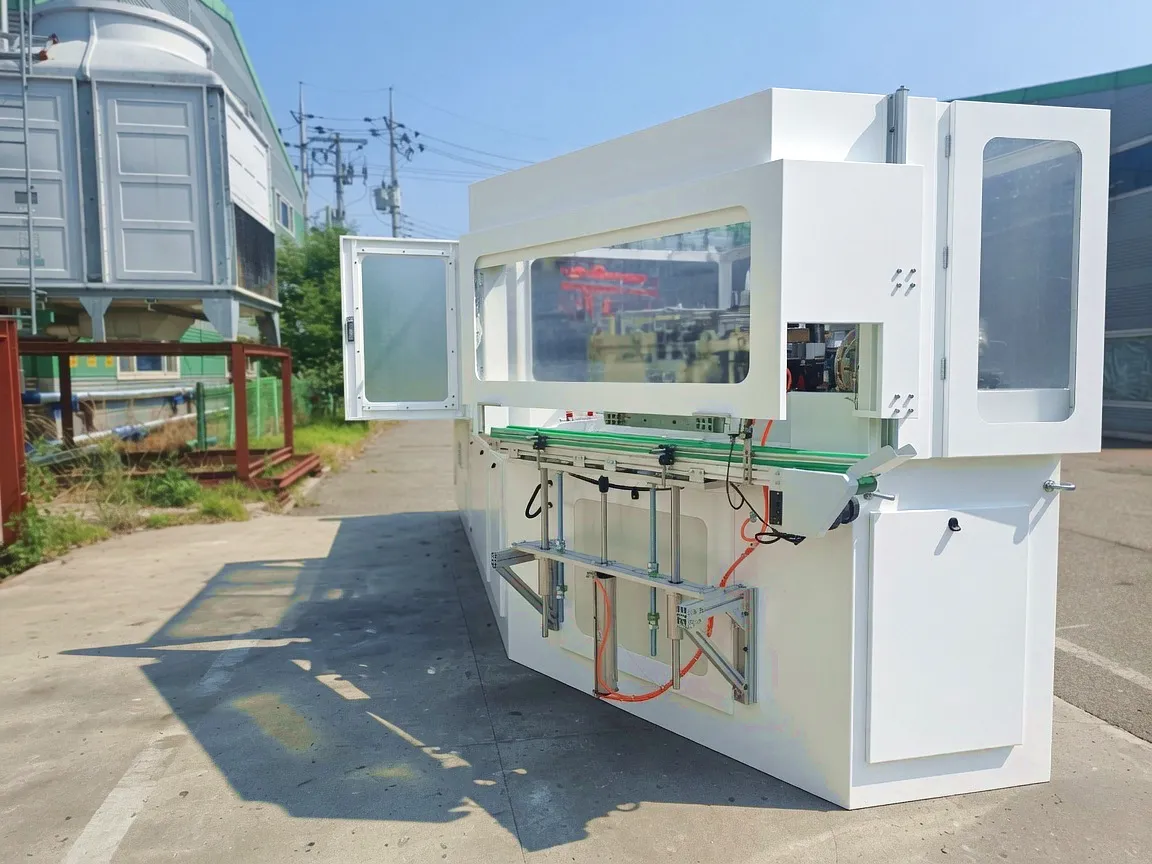 Ever Power operates a purpose-built injection blow molding machine manufacturing facility spanning over 18,000 square metres, housing five-axis CNC machining centres, automated assembly lines, and a dedicated testing bay where every machine undergoes a minimum 72-hour production trial before shipment. The manufacturing philosophy centres on precision from the first machined component: indexing table flatness is verified to 0.01 mm, core rod concentricity is checked to 0.005 mm total indicated runout, and every mould-clamping unit is hydraulic-pressure tested before assembly.
Customisation at Ever Power goes far beyond cosmetic configuration. The engineering team works from client-supplied bottle drawings or sample containers to specify injection mould cavity geometry, core rod taper profile, blow mould cooling circuit layout, and cavity count — balancing output targets against floor-space constraints that are particularly relevant for UK facilities operating within Victorian-era industrial buildings in cities like Birmingham and Manchester. Custom tooling is machined in-house on equipment calibrated to ISO 10360 standards, and all steel used in tooling passes incoming material certification against EN standards before entering the machining queue.
Ever Power IBM Machine Models: ZQ40 and ZQ60
ZQ40 Injection-Blow Molding Machine (European)
The ZQ40 is a compact, high-precision IBM machine designed for pharmaceutical vials, cosmetic bottles, and specialty food containers in the 5 to 500 ml range. Its 40 mm screw diameter and 400 kN clamping force are matched to low-to-mid cavitation tooling, making it the preferred choice for UK contract packaging businesses running frequent mould changeovers across multiple SKUs. The European-specification electrical package includes CE-marked safety guarding, ATEX-compatible control cabinet options, and an energy-monitoring dashboard calibrated to UK grid frequency.
ZQ60 Injection-Blow Molding Machine (European)
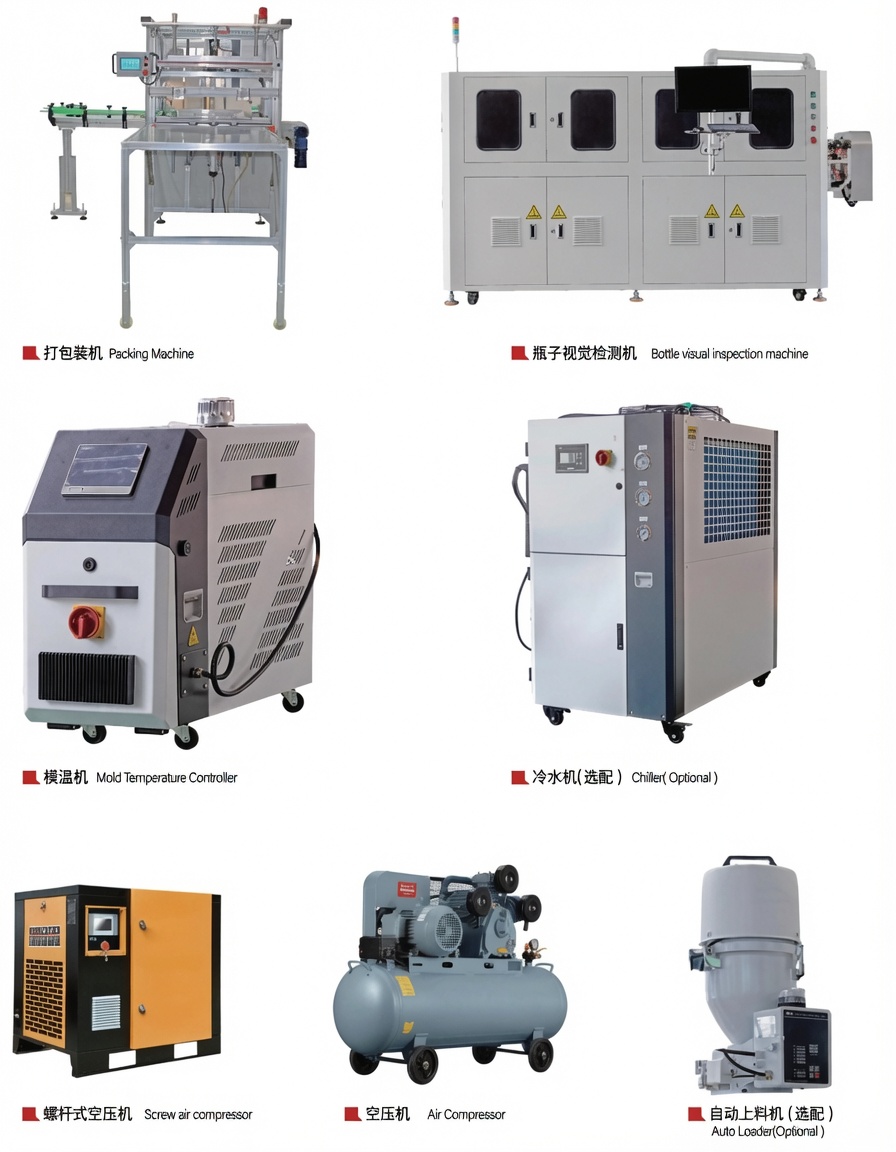
The ZQ60 scales IBM capability to higher-volume applications with a 60 mm screw, 600 kN clamping force, and up to 12-cavity tooling compatibility in the 20 to 1,000 ml bottle range. It is particularly suited to UK operations running round-the-clock pharmaceutical or personal care production, where the servo-drive architecture reduces energy cost per unit and the five-zone barrel heating system maintains melt temperature stability across extended production runs. Remote diagnostics and PLC data logging are standard, supporting UK clients managing equipment compliance documentation under Good Manufacturing Practice frameworks.
Customer Success Story: Pharmaceutical Packaging Upgrade in Sheffield
A mid-size contract pharmaceutical manufacturer based in Sheffield — producing oral liquid medicines and dermatological solutions for UK-licensed brands — was operating two ageing hydraulic IBM machines that had been in service for over fifteen years. Both machines were producing acceptable quality on established SKUs, but the ageing hydraulic systems required frequent maintenance intervention, the energy bills had become a board-level concern, and growing demand from brand-owner clients for tighter neck-thread tolerances on child-resistant closure compatibility was pushing the machines beyond their reliable process window.
After a competitive tendering process, the Sheffield facility selected an Ever Power ZQ60 injection blow molding machine with a purpose-designed 8-cavity tool for a 100 ml HDPE tablet bottle — one of their highest-volume products. Ever Power engineered the tooling from client-supplied finish gauges and bottle drawings, supplying the injection mould, core rod assembly, and blow mould as a validated package. Installation was coordinated to coincide with the facility summer shutdown, and Ever Power technicians completed mechanical commissioning and initial process qualification within the planned 5-day window, allowing the first production batch to ship within 22 days of machine switch-on.
The results after eight months of production were measurable across all three performance dimensions the Sheffield team had prioritised. Energy consumption for the IBM process fell by 38 per cent compared with the combined draw of the two retired hydraulic machines on an equivalent output basis. Neck-thread dimensional Cpk values improved from 1.12 to 1.68 across all 8 cavities, eliminating the batch-level cap torque failures that had been generating customer complaints. Machine downtime attributed to IBM process issues fell from an average of 14 hours per month to under 2 hours, releasing capacity that was immediately allocated to a new personal care contract.
★★★★★
“The neck-thread consistency on the 100 ml HDPE bottles has been outstanding. We ran a 50,000-unit batch last month and not a single cap-torque failure at incoming QC. The Ever Power tooling engineers clearly understood what pharmaceutical-grade IBM production demands.”
Production Manager, Contract Pharma Manufacturer — Sheffield
★★★★★
“Energy savings were the initial driver, but the process stability has been the real win. We used to trim scrap rates from two machines to hit our targets. The ZQ60 runs cleaner and tighter than anything we operated before. Payback period came in well inside our 24-month projection.”
Operations Director, Packaging Division — West Yorkshire
★★★★★
“Ever Power handled the complete tooling-to-commissioning package without us needing to manage multiple suppliers. The remote diagnostic login has been invaluable — their process engineer accessed our HMI data during a wall-thickness query and had a recommended parameter adjustment back to us within two hours. That level of support is genuinely rare in this market.”
Technical Manager, Cosmetics Bottle Manufacturer — Bristol
Frequently Asked Questions About Injection Blow Molding Machines
edit by gzl