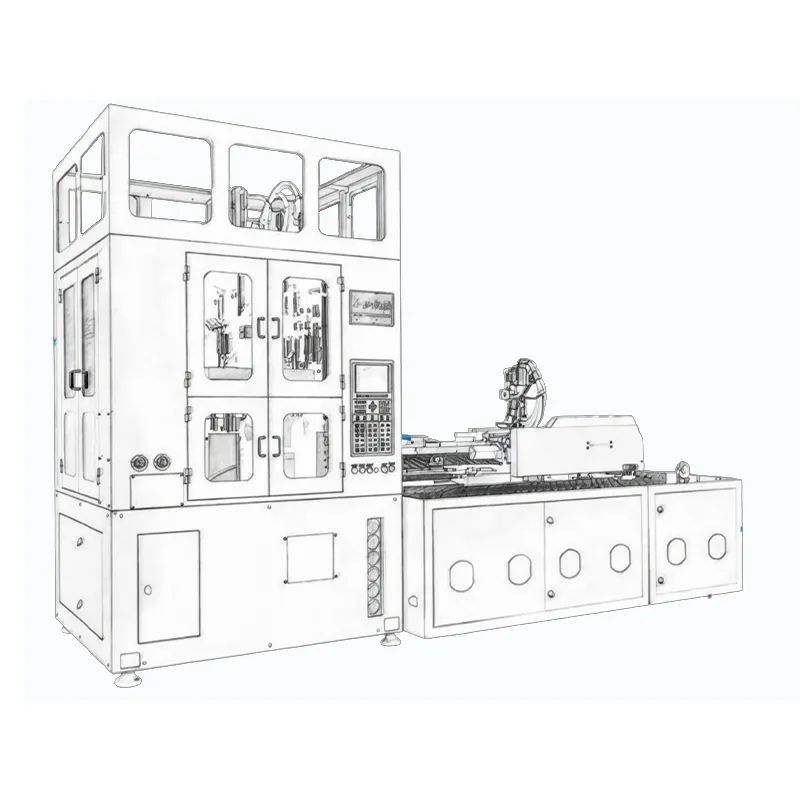
 The global packaging industry is undergoing a fundamental structural reassessment. Rising energy costs, tightening environmental legislation under the UK’s evolving Extended Producer Responsibility framework, and unrelenting pressure to simplify supply chains have converged to force manufacturers across the country to critically re-examine their production infrastructure. At the centre of this rethink sits one decisive technology: the single-stage ISBM machine — Injection Stretch Blow Moulding. Rather than treating preform manufacture and blow moulding as two separate industrial processes requiring two capital assets, two production lines, and the full energy cost of reheating every preform, the single-stage ISBM process integrates injection, thermal conditioning, and blow moulding into one continuous, thermally optimised machine cycle. The preform is formed, conditioned to the ideal blow temperature using its own residual process heat, and then stretched and blown into the finished container — all without ever cooling down. The implications for energy consumption, container quality, floor space utilisation, and supply chain resilience are genuinely transformative.
Across the UK — from Birmingham’s advanced manufacturing corridor and the precision engineering heartland of Sheffield and Rotherham, to the pharmaceutical clusters of Cambridge, the Thames Valley, and Hertfordshire, and the food and beverage production regions of Yorkshire, Northamptonshire, and the North West — plant managers and capital investment decision-makers are recognising the compelling economics and operational advantages that a well-specified ISBM blow moulding machine delivers. This guide provides the technical depth, commercial context, and practical guidance needed to evaluate single-stage ISBM technology with genuine confidence — from the underlying physics of the process, through materials and machine construction, to real-world applications and verified UK deployment outcomes.
Response within 24 hours · CE-certified documentation · Free technical consultation for UK buyers
How a Single-Stage ISBM Machine Actually Works
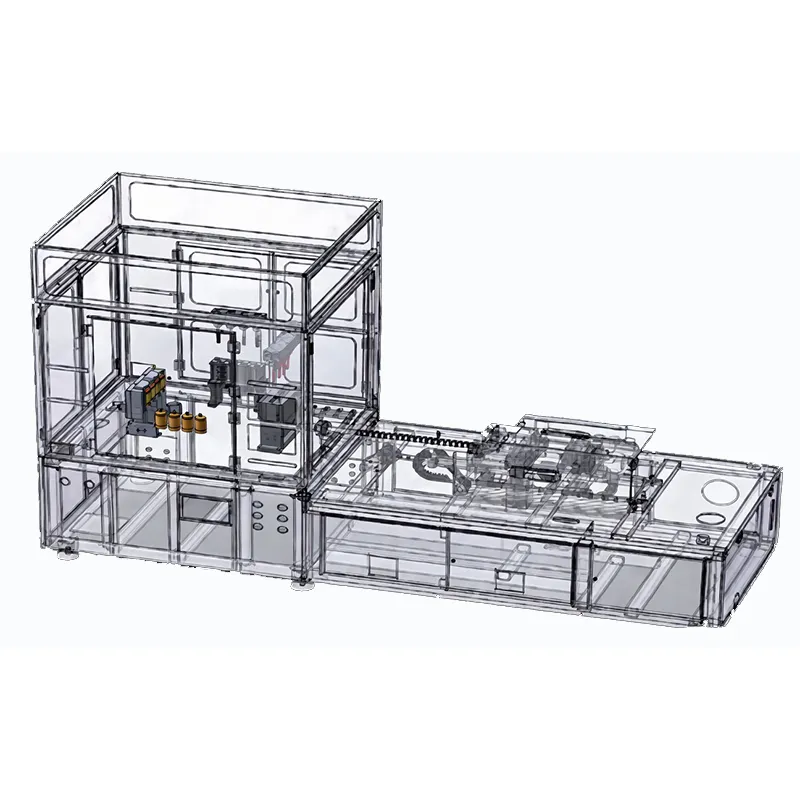
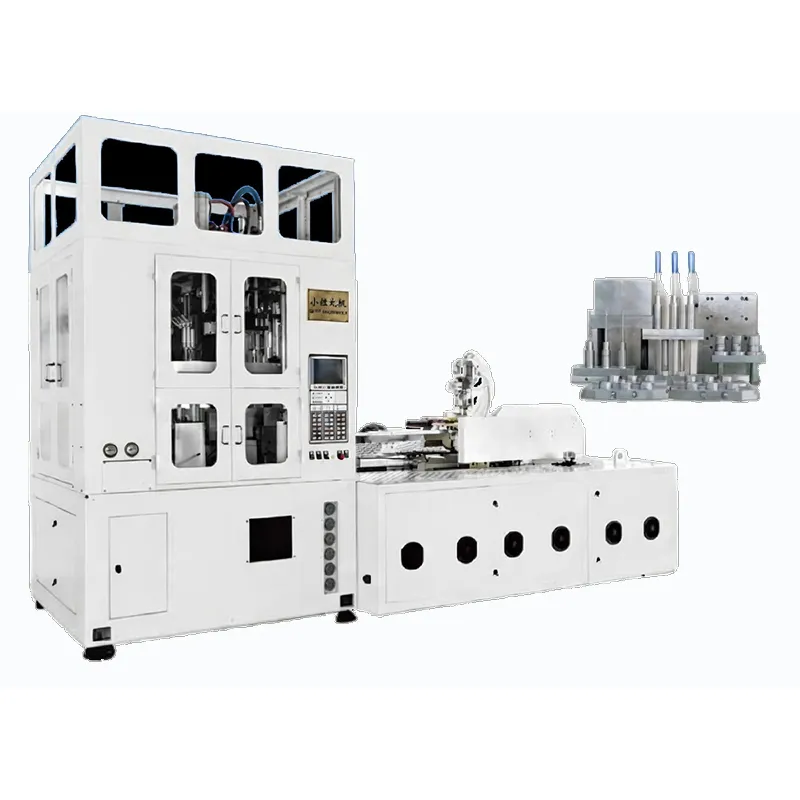
The elegance of single-stage ISBM technology lies in its thermal logic. Conventional two-stage blow moulding systems require a preform to cool fully, be stored, and then be completely reheated before the blow moulding stage can begin — a sequence that burns energy, introduces process variability, and demands capital expenditure on a second machine platform. In a single-stage ISBM machine, the preform is injected, thermally conditioned, and simultaneously stretched and blown into the finished container — all within one integrated platform, using the residual heat from the injection cycle itself. This thermodynamic efficiency is the bedrock of everything that makes the technology commercially and operationally compelling for modern UK manufacturers.
The production cycle begins when raw plastic resin — most commonly PET in granule form — is gravity-fed into the injection unit’s hopper and moved forward by a rotating screw. The screw simultaneously plasticises the material through a combination of frictional and applied heat, accumulating a precise shot weight of homogeneous melt ahead of the screw tip. When the required shot weight has been reached, the screw functions as a ram, injecting the melt under high pressure into precision-machined steel cavities that define the preform geometry: a thick-walled test-tube-shaped precursor body with a fully formed neck thread, ready to accept a standard closure.
Single-Stage ISBM Process Flow
Materials Processed & Machine Construction
 PET (Polyethylene Terephthalate) is the dominant processing material for single-stage ISBM machines, accounting for the vast majority of global output. Its exceptional optical clarity, low density, good chemical resistance, and proven recyclability make PET the default choice for beverage packaging, personal care containers, and food-grade applications. In the context of the UK’s tightening packaging legislation, PET’s established kerbside recycling infrastructure and alignment with the UK Plastics Packaging Tax requirements give it a meaningful regulatory advantage. ISBM-produced PET containers consistently meet the optical and mechanical specifications demanded by major UK retailers and brand owners, including haze values below 1% and top-load performance exceeding standard distribution requirements.
PP (Polypropylene) is the second most widely processed material on ISBM platforms, preferred where elevated temperature resistance is required — hot-fill food containers, automotive fluid packaging serving the West Midlands automotive manufacturing sector, and certain pharmaceutical formats. PC (Polycarbonate) and PEN (Polyethylene Naphthalate) are selected for high-performance niche applications demanding superior gas barrier properties or elevated heat resistance — commonly encountered in aerospace-adjacent manufacturing and specialist pharmaceutical packaging lines in the East Midlands and Thames Valley.
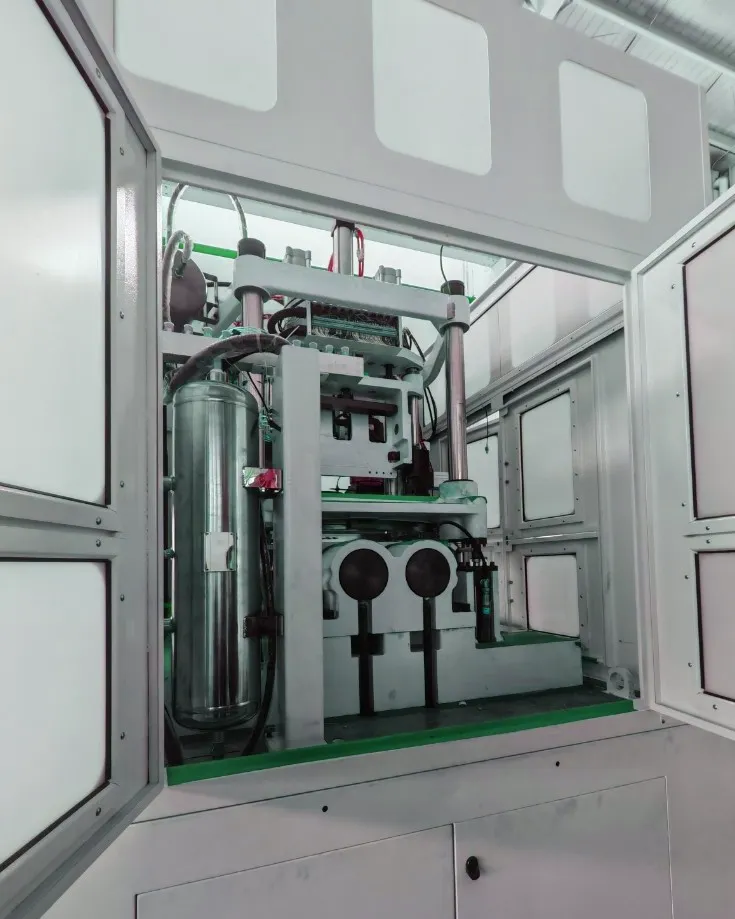
The machine itself is constructed from engineering materials selected for longevity in demanding continuous-production environments. The injection barrel and reciprocating screw are manufactured from 38CrMoAlA nitrided alloy steel, chosen for exceptional hardness, wear resistance, and dimensional stability under sustained high-temperature processing. Blow mould tooling is precision-machined from P20 or H13 tool steel, surface-finished to Ra 0.02–0.05 µm for the optical-grade cavity quality required by premium consumer packaging. Platens and structural frames are fabricated from nodular cast iron, delivering the rigidity and vibration-damping essential for dimensional consistency across high-speed, multi-shift production schedules.
ISBM Machine Performance Parameters
Reference data for the Ever Power HGY-Series single-stage ISBM machine range. Custom configurations available — contact [email protected] for project-specific sheets.
| Parameter | HGY-250 | HGY-350 | HGY-500 | HGY-1000 |
|---|---|---|---|---|
| Applicable Materials | PET, PP, PC, PEN | |||
| Bottle Volume Range | 50 ml – 500 ml | 100 ml – 1,000 ml | 200 ml – 2,000 ml | 500 ml – 5,000 ml |
| Number of Cavities | 2 / 4 | 2 / 4 / 6 | 4 / 6 / 8 | 4 / 8 |
| Output (bottles/hr) | 1,200 – 2,400 | 1,800 – 3,600 | 2,400 – 4,800 | 2,400 – 4,800 |
| Injection Clamping Force | 250 kN | 350 kN | 500 kN | 1,000 kN |
| Blow Clamping Force | 60 kN | 90 kN | 120 kN | 180 kN |
| Max Blow Pressure | 40 bar | |||
| Screw Diameter | 32 mm | 40 mm | 50 mm | 65 mm |
| Installed Power | 18 kW | 26 kW | 38 kW | 62 kW |
| Machine Footprint (L × W × H) | 2.8 × 1.6 × 2.0 m | 3.4 × 1.9 × 2.2 m | 4.1 × 2.2 × 2.4 m | 5.6 × 2.6 × 2.6 m |
| Machine Weight (approx.) | 3,200 kg | 4,800 kg | 7,200 kg | 14,500 kg |
| Control System | Siemens S7-1500 PLC · 15″ HMI touchscreen · Ethernet/IP & OPC-UA ready | |||
| Certification | CE · ISO 9001:2015 · UKCA (documentation supplied for UK customs clearance) | |||
Single-Stage ISBM vs Two-Stage SBM: A Practical Assessment for UK Manufacturers
The decision between single-stage ISBM and conventional two-stage stretch blow moulding is one of the most consequential capital investment choices a packaging or consumer goods manufacturer will make. Both technologies produce high-quality PET containers — but they do so under fundamentally different production economics, and the right choice depends critically on your volume profile, product mix, available floor space, and operational philosophy. The comparison below sets out the key differentiators with the directness that capital decision-makers require.
| Factor | Single-Stage ISBM | Two-Stage SBM |
|---|---|---|
| Capital Outlay | ✔ One machine platform; lower total capital for small-to-mid volumes | Two separate capital assets (injection moulding + blow moulding) required; higher aggregate investment |
| Energy Consumption | ✔ Significant advantage; residual process heat used directly — no reheat energy cost | Preform must be fully reheated before blowing; typically 30–40% higher energy per container unit |
| Floor Space | ✔ Compact integrated footprint; single machine with no preform buffer conveyor or storage | Two machines plus preform storage and inter-process handling infrastructure; typically 2–3× floor area |
| Maximum Throughput | Up to 6,000+ bph (multi-cavity configurations); best suited to volumes up to ~20 million units/year per line | ✔ Scalable to very high volumes; purpose-built high-speed SBM lines can exceed 80,000 bph |
| Product Flexibility | ✔ Superior for mixed SKU environments; tooling changeover achievable in 30–90 minutes by a trained two-person team | Dedicated preform and blow tooling sets required per format; changeover involves two separate machine platforms |
| Container Wall Quality | ✔ Excellent wall uniformity; controlled thermal profile from injection through blow eliminates reheat variability | Wall quality depends heavily on preform storage conditions and reheat consistency; more variables to control |
| Wide-Mouth & Custom Neck Formats | ✔ Full capability; wide-mouth jars, asymmetric forms, and custom neck finishes produced with equal ease | Wide-mouth and non-standard neck finishes require specialised preform handling and can limit line speed |
| Supply Chain Dependency | ✔ Self-contained; no preform purchasing, storage, or inbound logistics required | Dependent on external preform supply or separate in-house injection operation; adds procurement complexity |
The Practical Verdict for UK Operations
For UK manufacturers producing up to approximately 20 million containers per year across a diverse format mix — the profile that characterises the majority of British food, beverage, personal care, and pharmaceutical packaging operations — single-stage ISBM consistently delivers superior whole-life economics. The elimination of preform purchasing, the substantial energy saving from thermal integration, and the compressed capital requirement of a single machine platform are advantages that compound meaningfully over a typical 10–15-year asset life. Only at sustained very high volumes on a single container format, where the capital cost of a two-stage system can be amortised across enormous output, does the two-stage model begin to reassert commercial parity.
Ever Power applications engineers provide detailed ROI modelling benchmarked against your specific volume, format, and energy tariff data. Contact [email protected] to request a confidential analysis.
Industry Applications Across the UK Manufacturing Landscape
Single-stage ISBM technology serves an unusually broad range of end markets, a versatility that makes it a particularly compelling proposition for UK contract packaging operations and multi-category manufacturers. The following sector profiles reflect the primary deployment contexts observed across current Ever Power installations in Britain and Western Europe.
Beverage & Liquid Food
Water, juice, squash, sports drinks, sauces, and condiments represent the single largest application segment. ISBM-produced PET containers consistently achieve the haze values (<1%) and mechanical performance demanded by UK multiple retail buyers. Carbonated soft drink production requires careful selection of PET grade and blowing parameters to achieve the required CO₂ barrier performance; Ever Power applications engineers specify the optimal process window for each CSD application as standard.
Pharmaceutical & Nutraceutical
The pharmaceutical clusters of the Cambridge–Milton Keynes–Oxford corridor and the Thames Valley represent a strategically important application area. ISBM technology produces wide-mouth tablet containers, liquid medicine bottles, and supplement jars that meet BS EN ISO 15223 packaging requirements and can be validated under GMP environments. The closed, integrated process minimises contamination exposure relative to open preform handling, a meaningful advantage for pharmaceutical-grade production.
Personal Care & Home Cleaning
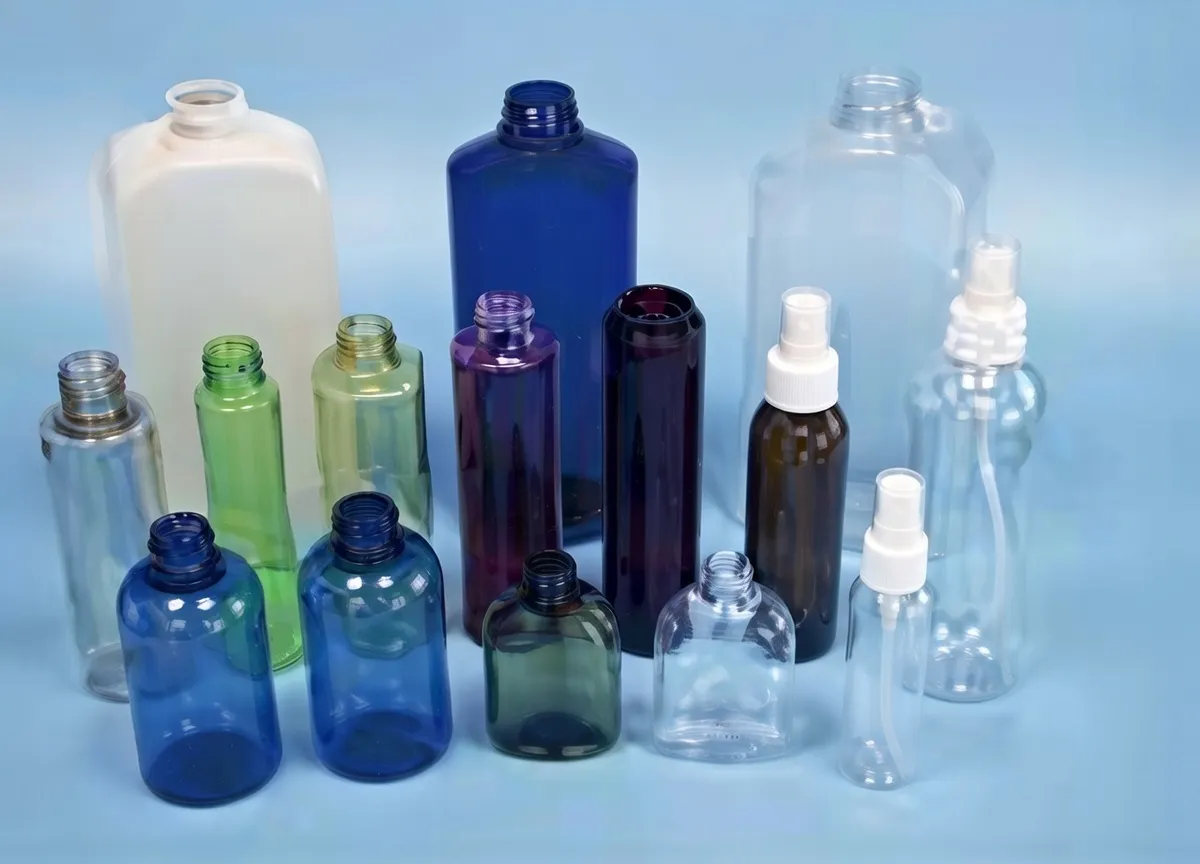
Shampoo, body wash, cleaning fluid, and cosmetic containers represent a growing segment of ISBM output for UK manufacturers. The ability to produce complex, design-led bottle geometries — oval cross-sections, waisted profiles, embossed branding panels — directly from the ISBM tooling without secondary operations is a significant commercial advantage for brands competing on shelf differentiation. PP is frequently specified here where chemical compatibility with surfactant-heavy formulations is required.
Automotive & Industrial Fluids
The West Midlands and East Midlands automotive manufacturing supply chain generates substantial demand for precisely engineered fluid containers — motor oil, screen wash, antifreeze, hydraulic fluid, and AdBlue packaging. PP-based ISBM containers for these applications deliver the temperature resistance and chemical barrier properties required, while the structural rigidity and dimensional accuracy of ISBM-produced containers simplify automated filling and capping on high-speed packaging lines.
Agricultural & Horticultural
Pesticide, herbicide, fertiliser concentrate, and specialist nutrient solution packaging represents a niche but commercially robust application. Containers must meet stringent chemical resistance requirements and, in many cases, comply with Dangerous Goods packaging regulations under ADR and the UK CLP framework. Ever Power machines configured for PP processing deliver the chemical resistance these applications demand, and the precision neck finish control inherent in ISBM technology ensures reliable tamper-evident closure seating — a critical requirement for agrochemical secondary containment compliance.
Contract Packaging
UK contract packaging operations — concentrated particularly around the M1 and M6 logistics corridors — find ISBM technology exceptionally well-suited to their multi-client, multi-format business model. The rapid tooling changeover capability (30–90 minutes), combined with the elimination of the preform procurement and storage overhead, delivers the operational agility and working capital efficiency that contract packers require to maintain competitive unit costs across diverse customer SKU portfolios.
Mould Tooling Design, Changeover, and Format Flexibility
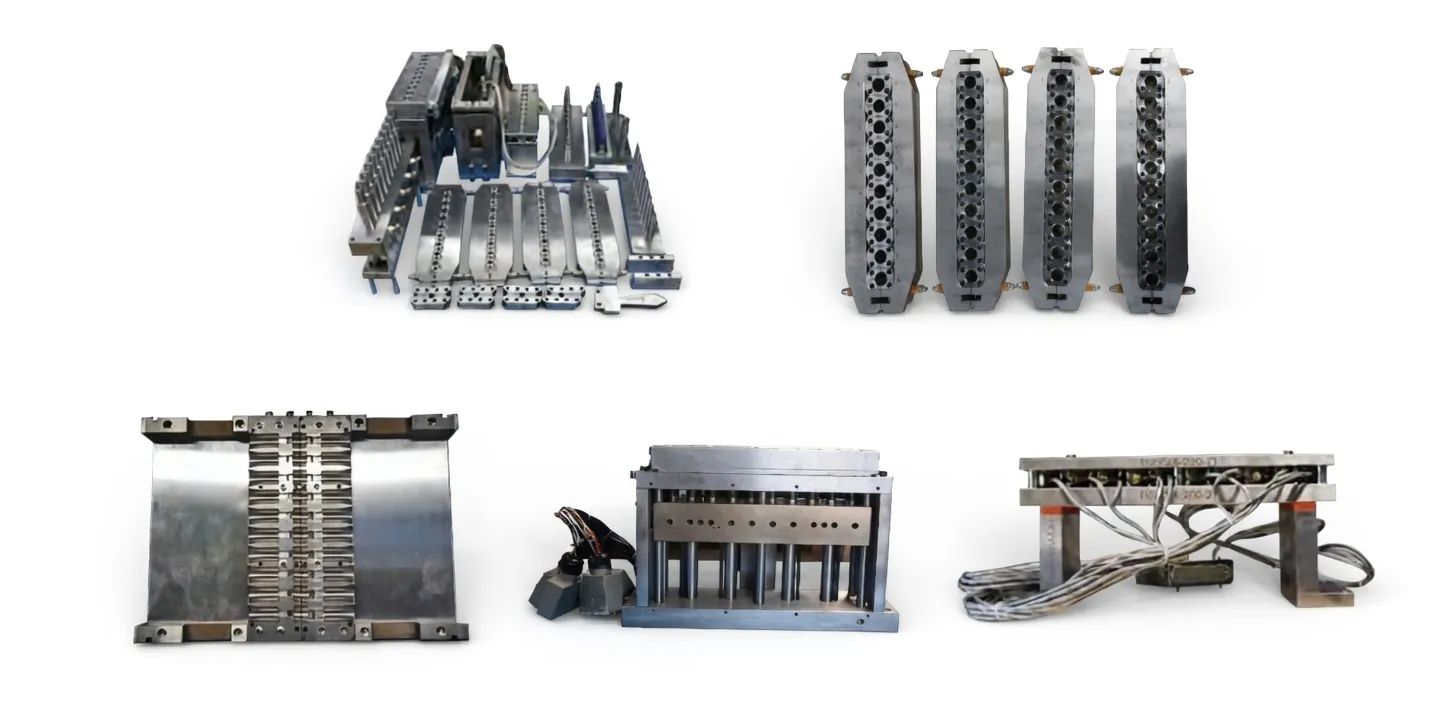
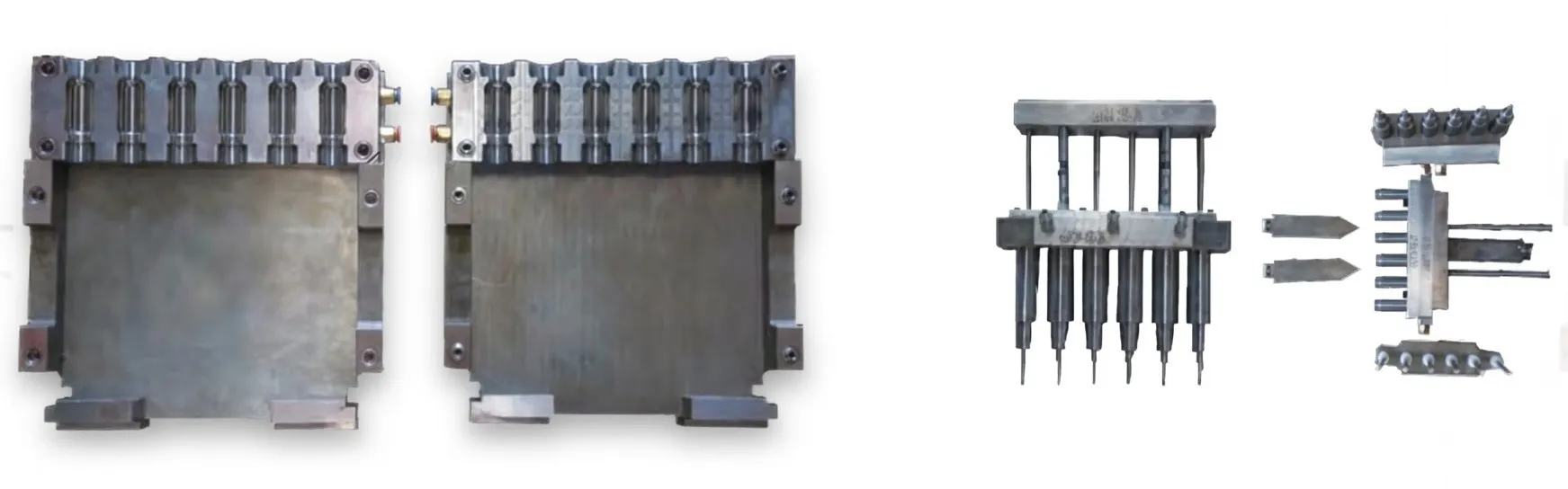
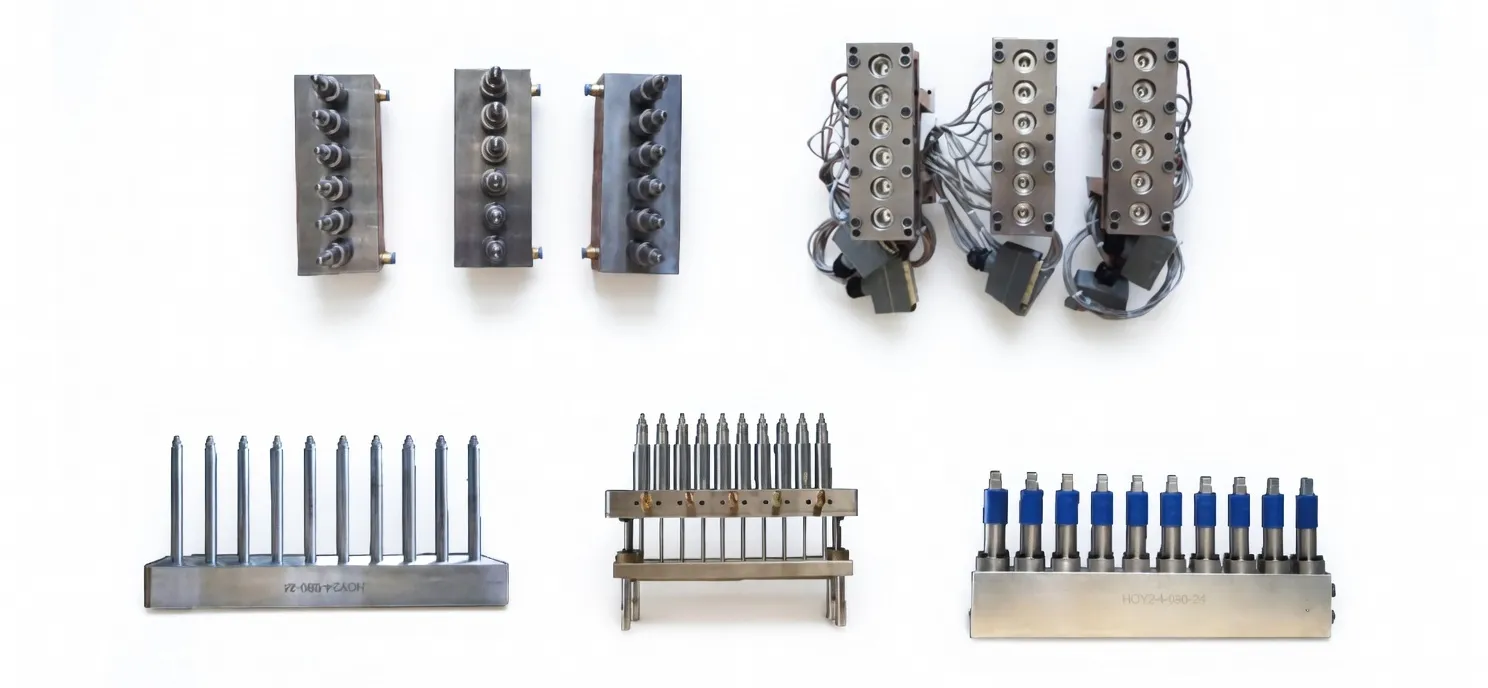
One of the most operationally significant advantages of the single-stage ISBM platform is its tooling architecture. Injection and blow mould tooling sets are precision-matched pairs: the preform geometry is designed in explicit coordination with the blow cavity to ensure the optimal material distribution, stretch ratio, and wall thickness profile in the finished container. This co-design approach — which Ever Power’s in-house tooling engineering team executes as part of every new container project — eliminates the trial-and-error process compatibility issues that arise when separately sourced preform and blow tooling are used in a two-stage system.
All Ever Power tooling is manufactured to ISO 2768-m geometric tolerancing standards and supplied with a full dimensional inspection certificate. Tooling is stored in indexed, climate-controlled carts that integrate with the machine’s RFID-based changeover management system, automatically loading the saved process recipe — injection parameters, conditioning temperatures, blow sequence timing — associated with each tooling set. This eliminates manual recipe entry errors and ensures that returning to a previously run container format requires zero trial production, preserving output efficiency and minimising material waste on every format transition.
HMI, Control Architecture, and Industry 4.0 Integration
The Ever Power HGY-Series control architecture is built around the Siemens S7-1500 PLC platform — a specification choice that reflects the preference of UK automation and maintenance engineering teams for Siemens ecosystem tooling, spares availability, and technical support infrastructure across Britain. The operator interface is a 15-inch industrial-grade capacitive touchscreen HMI running a custom-developed interface that displays all critical process parameters — injection pressure, melt temperature across all barrel zones, preform conditioning profile, blow sequence timing, and cavity-specific output counters — on a single-screen production dashboard.
Process recipes are stored in a password-protected library and called by tooling RFID tag on changeover. Full parameter logging is continuous, with data exported in standard CSV format via the machine’s Ethernet/IP interface or via OPC-UA server for integration with plant-level MES (Manufacturing Execution System) or SCADA platforms. For UK manufacturers operating under BRC, SQF, or pharmaceutical GMP quality frameworks, the continuous parameter record provides the process validation audit trail required by these standards without manual data entry by operators.
Remote diagnostic capability is standard on all HGY-Series machines: with customer permission, Ever Power’s UK-based technical support team can access live machine data via a secure encrypted VPN connection to diagnose process deviations, adjust parameters, and in many cases resolve process issues without dispatching a field engineer — a capability that typically reduces unplanned downtime resolution time from days to hours for UK-based installations.
Industry 4.0 Features
- ✔ OPC-UA server (MES/SCADA ready)
- ✔ Ethernet/IP integration
- ✔ Continuous CSV parameter logging
- ✔ RFID tooling recipe management
- ✔ Encrypted remote VPN diagnostics
- ✔ Predictive maintenance alerts
- ✔ BRC / GMP audit trail export
UK Installation, Commissioning, and After-Sales Support
Every Ever Power ISBM machine supplied to a UK customer is accompanied by a structured installation and commissioning programme managed by a dedicated project engineer. The programme covers site preparation specification (foundation loading, compressed air supply, cooling water circuit, electrical supply parameters), machine positioning and levelling, utilities connection, initial process qualification, operator training, and formal production sign-off — typically completed within 5–8 working days of machine delivery for standard configurations. Full CE technical documentation, UKCA Declaration of Conformity, and safety file are supplied as standard.
Common Questions from UK Buyers
As a general commercial threshold, single-stage ISBM begins to deliver compelling payback economics at volumes above approximately 1–2 million containers per year for a single container format. Below this level, tolling or purchased preform solutions are typically more capital-efficient. The precise breakeven point depends on container weight, energy tariff, and labour cost — Ever Power provides site-specific financial modelling for all serious UK enquiries at no charge.
Yes. Ever Power HGY-Series machines are fully qualified for processing food-grade rPET at up to 100% recycled content, subject to appropriate resin specification (IV 0.72–0.84 dl/g, low moisture content after crystalline drying). Bio-based PET (e.g. partially bio-derived PET from sugarcane ethanol) is chemically identical to fossil-derived PET and processes on the same machine settings. Consistent resin quality from the supply source is the primary prerequisite for high-percentage rPET processing; Ever Power can advise on resin specification and drying system selection.
Standard HGY-Series machine production lead time from order confirmation to machine-ready-for-shipment is 90–120 days, depending on configuration. Matched tooling for standard neck finishes and round containers can typically be completed within the same lead time window. Shipping to UK ports takes approximately 28–35 days by ocean freight (standard), or 10–14 days by air freight for urgent programmes. Commissioning follows within 2–3 weeks of machine arrival on site. Total project timeline from order to production: typically 16–22 weeks for a standard programme.
HGY-Series machines require a 3-phase 400V/50Hz electrical supply (UK standard), a clean compressed air supply at 40 bar (high-pressure) and 8–10 bar (low-pressure) for pneumatic circuits, and a chilled water cooling circuit at 12–18°C for mould and hydraulic cooling. Detailed utility specification sheets — including peak demand figures and connection point specifications — are provided as part of the pre-sale technical assessment. Ever Power’s applications team can advise on compressor and chiller sizing for new installations.
Ever Power works with a panel of UK-regulated asset finance providers to offer lease, hire purchase, and finance lease structures for qualified UK buyers. The UK’s Annual Investment Allowance (AIA) and capital allowances framework typically enables full first-year tax relief on qualifying manufacturing plant and machinery, which materially improves the post-tax economics of an ISBM investment. Buyers are advised to confirm their specific tax position with their accountant; Ever Power can provide the asset classification documentation required for AIA claims.