Περιγραφή
Two-Step Blow Moulding for Pesticide & Chemical Bottles
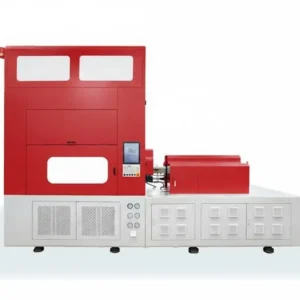
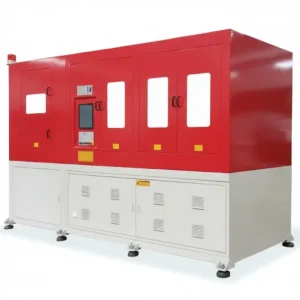
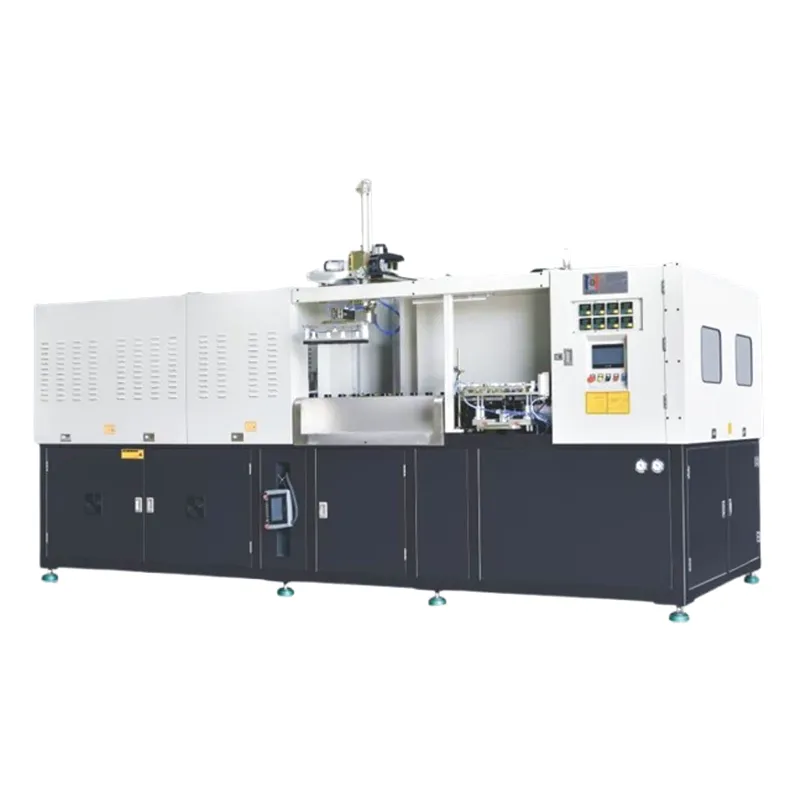
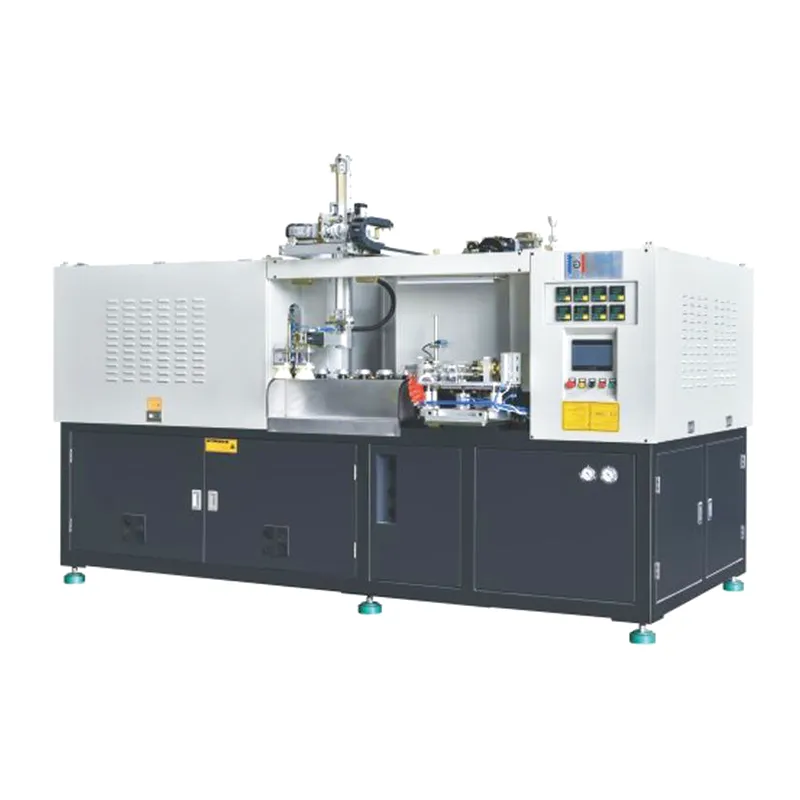
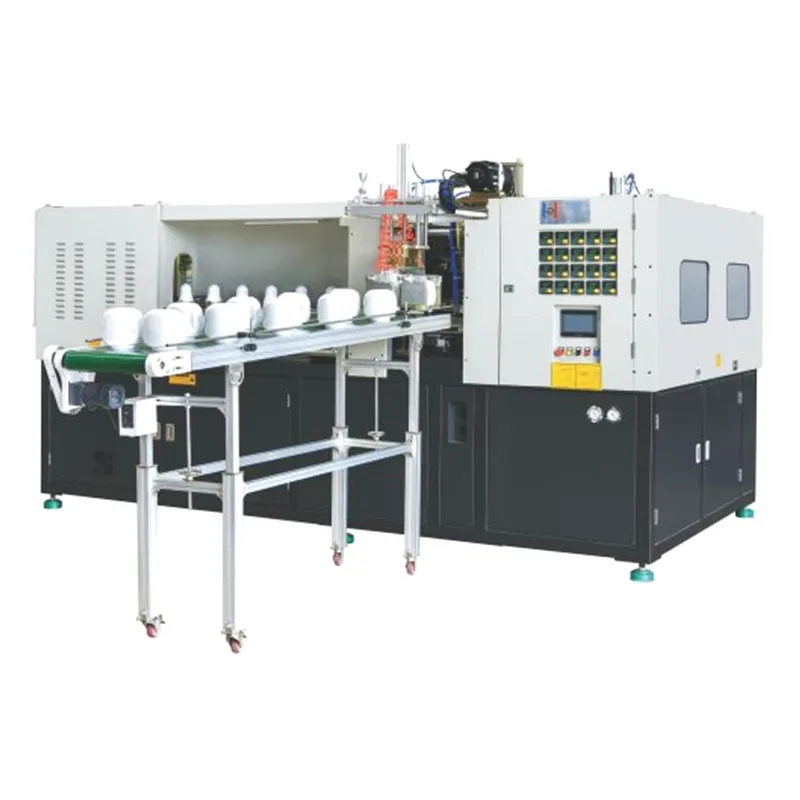
The HGA series two-step blow moulding machine is purpose-built for manufacturers of pesticide bottles, agrochemical containers, household chemical packaging, and industrial chemical bottles. Unlike single-step methods, the two-step process separates preform injection from blow moulding into independent operations, giving production teams complete freedom to source preforms from specialist suppliers, optimise cavity counts, and run multi-shift output without tying up one machine from start to finish. This separation is particularly valuable in the UK chemical packaging sector, where demanding shelf-life standards, UN certification requirements, and the need for precision wall-thickness uniformity make two-step technology the industry benchmark.
Across nine standard models — from the compact HGA.ES-1C130 handling 1,000 ml containers through to the high-volume HGA.ES-2C260 capable of producing 15,000 ml chemical drums — the series covers virtually every format needed in UK agrochemical, crop protection, and specialist chemical markets. Each machine is engineered around a servo-assisted stretch-blow cycle, precise temperature zoning for preform conditioning, and an air system rated at 35 kg/cm² blowing pressure to achieve the tight dimensional tolerances that chemical bottle wall-uniformity demands. Whether your customers operate in contract filling, own-label agrochemical blending, or large-scale industrial distribution, these blow moulding machines bring the output reliability and repeatable quality that those supply chains require.
Why Manufacturers Choose the HGA Series
True Two-Step Flexibility
Preform conditioning is handled independently from the blow cycle, allowing you to batch-buy preforms, switch container specs quickly, and run continuous production across shifts without a tied-up injection unit.
High-Output Efficiency
Theoretical output reaches 4,600 bottles per hour on the 4-cavity HGA.ES-4C100, with servo-driven clamping and precision air circuits that keep cycle times short and reject rates low — critical for competitive UK packaging lines.
Wide Container Range
From 1,000 ml pesticide spray bottles to 15,000 ml agricultural chemical drums, the HGA series covers the full spectrum of chemical packaging formats in a single machine family, simplifying your spares and training overheads.
Chemical-Grade Reliability
All contact parts are selected for compatibility with HDPE and PET preforms used in UN-certified chemical packaging. Consistent wall distribution means containers meet barrier and stacking-strength requirements without extra quality gates.
Energy-Saving Design
Heating power consumption is carefully engineered — the HGA.ES-1C130 draws just 31.5 kW maximum, while the larger multi-cavity models maintain proportional efficiency ratios, keeping electricity costs at manageable levels for UK-based packaging plants.
Precision Mould Engineering
Clamping strokes from 128 mm to 275 mm and mould-open distances up to 635 mm accommodate a huge range of container body geometries, including the wide-mouth formats increasingly specified in modern UK agrochemical dispensing systems.
How Two-Step Blow Moulding Works
In two-step (also called reheat stretch blow moulding) technology, the process is deliberately divided into two separate stages. In the first stage, preforms — small thick-walled injection-moulded tubes of PET or HDPE — are produced or purchased from a dedicated injection moulding supplier. These preforms are then stored, transported, or fed directly into the second stage: the blow moulding machine itself. Inside the HGA series machine, preforms pass through an infrared heating oven with multiple independently controlled temperature zones. Precise zone-by-zone thermal profiling ensures the preform body reaches the correct stretching temperature while the neck finish remains dimensionally stable — a detail that is critical when producing UN-certified pesticide containers with tamper-evident closures.
Once the preform reaches its target temperature window, the stretch-blow station takes over. A stretch rod advances axially to stretch the preform longitudinally, simultaneously as high-pressure air at 26–35 kg/cm² inflates the preform radially against the blow mould cavity walls. This biaxial orientation process develops the molecular alignment that gives chemical containers their characteristic top-load strength, barrier resistance, and impact performance. The cooling water system — operating at 5–6 kg/cm² and temperature-controlled between 8–12 °C — chills the bottle against the mould in milliseconds, locking in the final geometry before the mould opens and the container is ejected. The result is a chemically resistant, dimensionally consistent bottle ready for filling, labelling, and dispatch.
Materials & Applications
Primary Materials
- PET (Polyethylene terephthalate)
- HDPE (High-density polyethylene)
- PP (Polypropylene) preforms
Pesticide & Agrochemical
- Herbicide & fungicide bottles
- Crop protection spray containers
- Fertiliser solution drums
- Seed treatment packaging
Industrial & Chemical
- Cleaning chemical containers
- Industrial solvent bottles
- Automotive fluid packaging
- Laboratory reagent bottles
Household & Personal Care
- Disinfectant & sanitiser bottles
- Household bleach containers
- Garden pest control spray
- Pool & water treatment
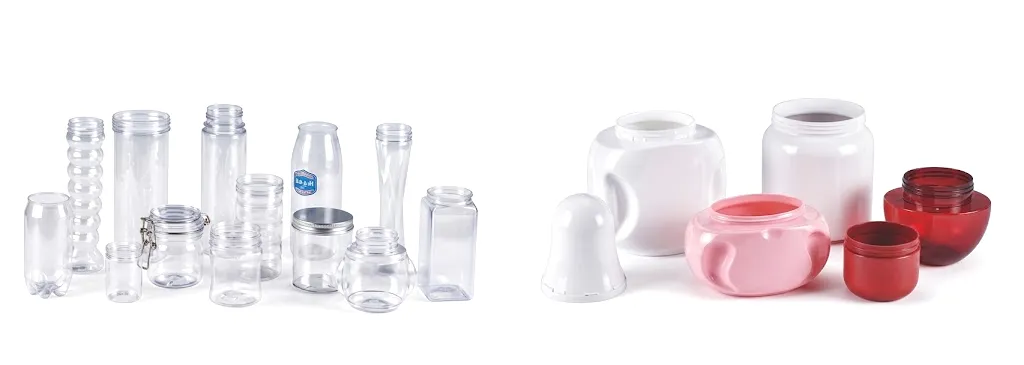
Sample Bottles Produced
Technical Specifications
HGA Series — Pesticide & Chemical Bottle Two-Step Blow Moulding Machines
Customer Success Story
Real-world performance, verified outcomes
Case Study — Germany
AgroChemPack GmbH, Bavaria
AgroChemPack GmbH is a mid-sized contract packaging company in Bavaria that fills and seals pesticide concentrates and fungicide solutions for several major European crop protection brands. In 2023, they were producing all their containers via extrusion blow moulding, which was generating significant flash waste and struggling to meet the wall-uniformity tolerances demanded by their largest customer’s UN 31H1 certification.
After a production audit, the management team identified that switching to two-step stretch blow moulding for their 1-litre and 2.5-litre pesticide containers would both resolve the certification issue and reduce raw material consumption. They trialled the HGA.ES-2C150 and immediately achieved wall-thickness standard deviations well within specification on a 2,500 ml container at 1,800 bottles per hour. Two machines were ordered and installed in Q1 2024. Within six months of full production, AgroChemPack reported approximately 18% material saving per container, a 22% reduction in reject rates, and the successful renewal of their UN certification for all affected container formats.
2 Units Installed
UN 31H1 Certified
18% Material Saving
❝
We switched from extrusion blow moulding to the HGA.ES-2C130 for our 1-litre herbicide containers. The wall uniformity is simply not comparable — our rejection rate on the filling line dropped from around 3.5% to under 0.5% within the first production month. The support team was responsive throughout installation.
— Production Director
Agrochemical Packaging, Yorkshire, UK
❝
For our 5-litre pool chemical containers, we needed precise neck dimensions and consistent top-load strength for stacking in shipping pallets. The HGA.ES-2C200 delivered both. Output at 1,600 bottles per hour exceeded what we projected, and the cooling system keeps the cycle reliable even when we run 12-hour shifts in summer.
— Plant Manager
Industrial Chemical Bottling, Netherlands
❝
We supply private-label cleaning chemicals to several UK grocery retailers and needed consistent bottle aesthetics as well as performance. The HGA.ES-4C100 at 4,600 bottles per hour gave us the throughput we needed. The two-step process also means we can change container designs without investing in new injection tooling — a significant commercial advantage.
— Operations Director
Household Chemical Manufacturer, West Midlands, UK
Manufacturing Capability & Custom Solutions
Our manufacturing base operates a full-capability factory spanning precision CNC machining, mould design, heat treatment, and assembly — enabling end-to-end control over every machine that leaves the production floor. For the pesticide bottle and chemical packaging sector, where container geometry, neck finish tolerances, and mould cavity count often need to match highly specific filling-line interfaces, bespoke configuration is not a premium add-on — it is a standard part of how we work.
🛠 Custom Mould Design
Bespoke blow mould cavities machined to your container drawing, including non-standard neck finishes, handle integration, and graduated wall-thickness profiles for chemical barrier requirements.
📚 Cavity Count Optimisation
We can advise on and build custom cavity configurations beyond the standard range, balancing output targets against capital cost and floor space available at your UK or European production site.
🌐 Export-Ready Documentation
All machines ship with full technical manuals, CE documentation packs, and electrical schematics in English, together with video commissioning support to facilitate rapid installation at your facility.
👥 Technical Support
Dedicated engineers available for remote diagnostics, spare parts supply, and on-site support for UK and European buyers, with response times agreed at the project specification stage.
Related Injection Blow Moulding Machines
Looking for injection blow moulding solutions? Explore our compatibility replacement models for established platforms:
IBM Replacement
ZQ135 — Replacement of SUMA 175iB
A precision-engineered injection blow moulding machine designed as a direct operational replacement for the SUMA 175iB platform, offering improved control and parts availability for UK and European operators.
IBM Replacement
ZQ40 — Replacement of Uniloy UIB 70
Built to replace the Uniloy UIB 70 injection blow moulding machine, the ZQ40 delivers compatible output with modern servo control and full English-language documentation for straightforward integration into existing lines.
Frequently Asked Questions
Common questions from UK & European packaging buyers
Ready to Specify Your Blow Moulding Machine?
Send us your container drawing, target output, and site specifications. Our engineering team will recommend the right HGA model and configuration for your UK or European production requirements.
edit by gzl