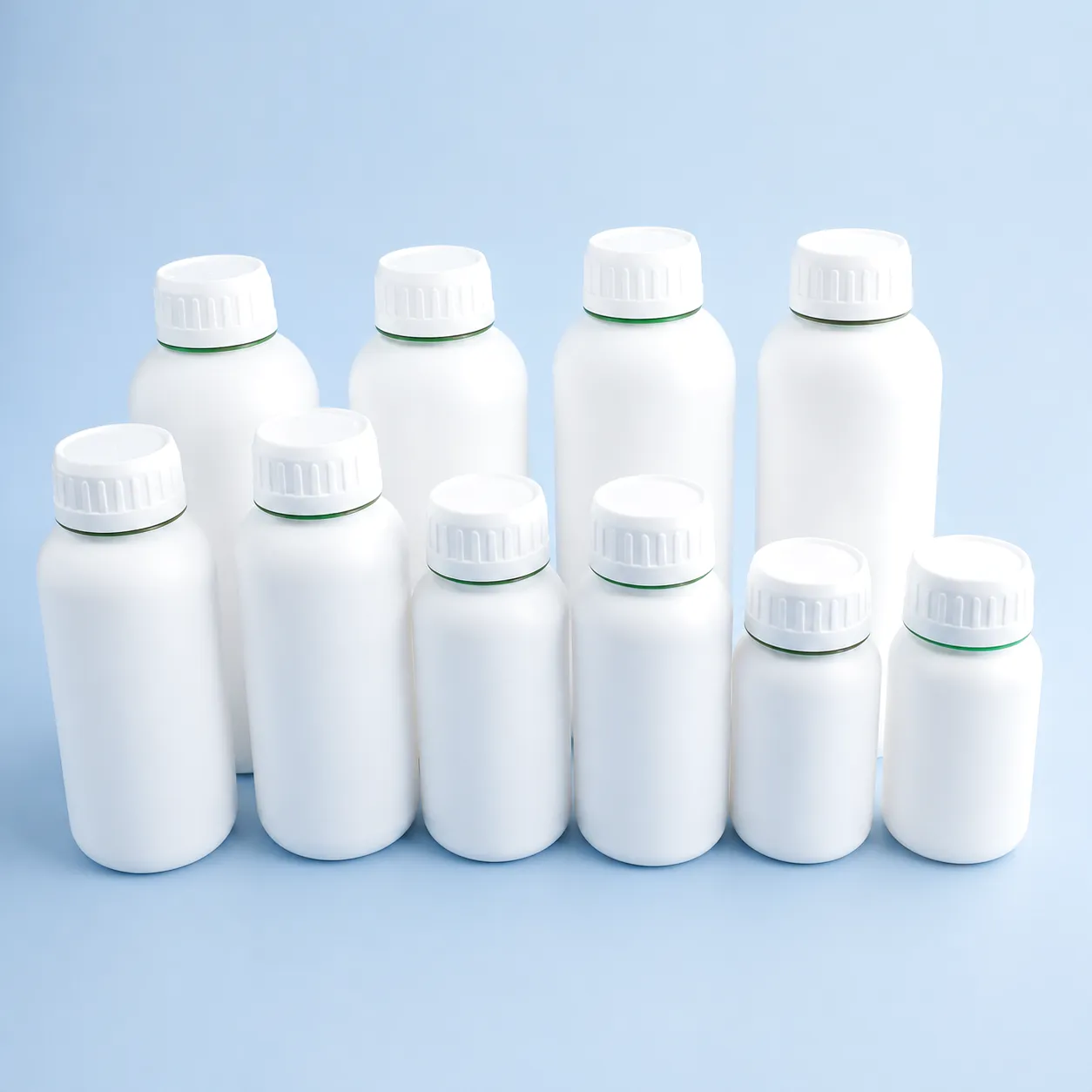
 Walk through any agrochemical distribution centre in the East Midlands or along the agricultural belts of East Anglia, and you will notice the same thing: row upon row of precisely formed bottles, each one engineered to hold concentrated pesticides, herbicides, fungicides, or liquid fertilisers without a single leak, crack, or chemical migration event. That precision does not happen by chance. It is the direct result of one manufacturing process quietly powering a multi-billion-pound industry — the injection-blow molding machine. As UK farming and crop protection businesses face tightening REACH regulations, evolving HSAD standards, and intense pressure to reduce plastic waste, the specification of the molding equipment used to make these containers has never mattered more.
What Makes an Injection-Blow Molding Machine the Right Tool for Agrochemical Containers
Seamless Container Body
Because the injection-blow molding process produces containers without a pinch-off seam at the base or sides, the finished bottle has no weak linear stress points where agrochemical solvents can migrate or mechanical stress can initiate a crack. This matters enormously for pesticide formulations that include aromatic solvents capable of attacking conventional polyethylene seam zones.
Precision Neck Finish Accuracy
Agrochemical containers must mate reliably with trigger sprayers, metered dispensers, induction seals, and childproof closures. An injection-blow molding machine produces the neck and thread geometry directly on the injection core, so the finish dimensions are held to tolerances measured in fractions of a millimetre — impossible to achieve with blow-only processes that cool the neck as an afterthought.
Chemical Resistance by Material Choice
The injection-blow molding machine is compatible with a range of engineering-grade resins — HDPE, PP, PET, and co-extruded barrier structures — enabling packaging engineers to match material properties precisely to the chemical profile of the product inside, whether that is a water-based herbicide or a highly concentrated organophosphate formulation.
How an Injection-Blow Molding Machine Works: The Three-Station Principle
Injection Station
Molten thermoplastic resin is injected at controlled pressure and temperature around a steel core rod inside a preform cavity. The injected preform already carries the exact neck geometry, thread profile, and material distribution plan for the finished container. Cycle times at this station typically range from 4 to 12 seconds depending on container wall thickness and resin viscosity.
Blow Station
The preform — still on the core rod and at a carefully controlled temperature window — rotates to the blow station. Compressed air inflates it against a chilled blow cavity, which defines the final body shape of the container. Because the core rod maintains the inner geometry throughout, wall thickness distribution is substantially more uniform than in extrusion blow molding. Blow air pressure typically ranges from 8 to 12 bar for HDPE agrochemical containers.
Ejection Station
The fully formed container cools against the blow cavity mould and is then stripped cleanly from the core rod at the ejection station. Because no cutting blade touches the container body, there is no flash or tail to trim. The ejected bottle is ready for downstream leak testing, labelling, and filling. In high-volume lines servicing Midlands-based agrochemical packers, ejection rates can exceed 6,000 containers per hour across a multi-cavity machine configuration.
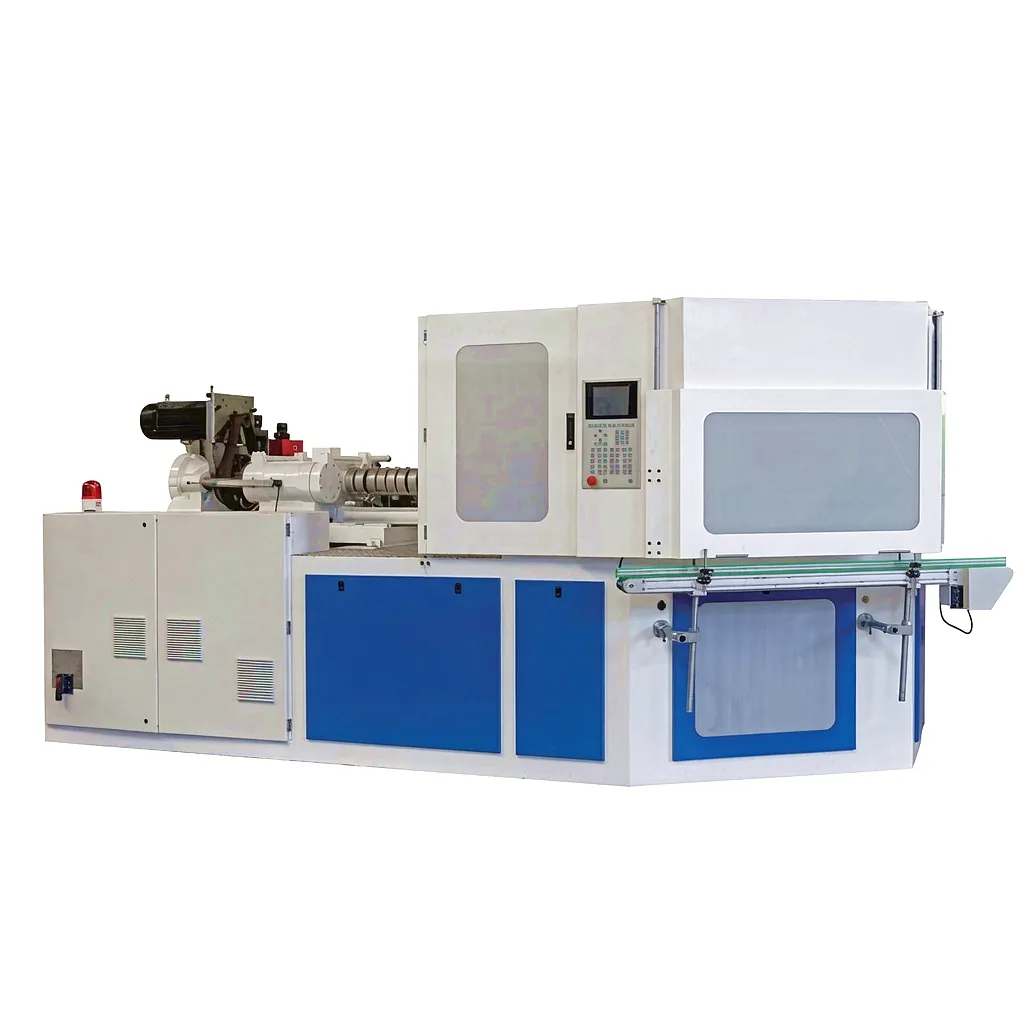
The elegance of this three-station rotary design is that all three stations operate simultaneously on different containers — while one preform is being injected, a second is being blown, and a third is being ejected — which means the theoretical output of the machine is not limited by the slowest individual step. Modern injection-blow molding machines like those produced by Ever Power incorporate servo-driven rotation, closed-loop temperature management on each zone, and real-time cavity pressure monitoring to maintain dimensional consistency across full production shifts without operator intervention.
Application Scenario: Agriculture & Crop Protection
Pesticide, Herbicide, Fungicide & Liquid Fertiliser Container Production
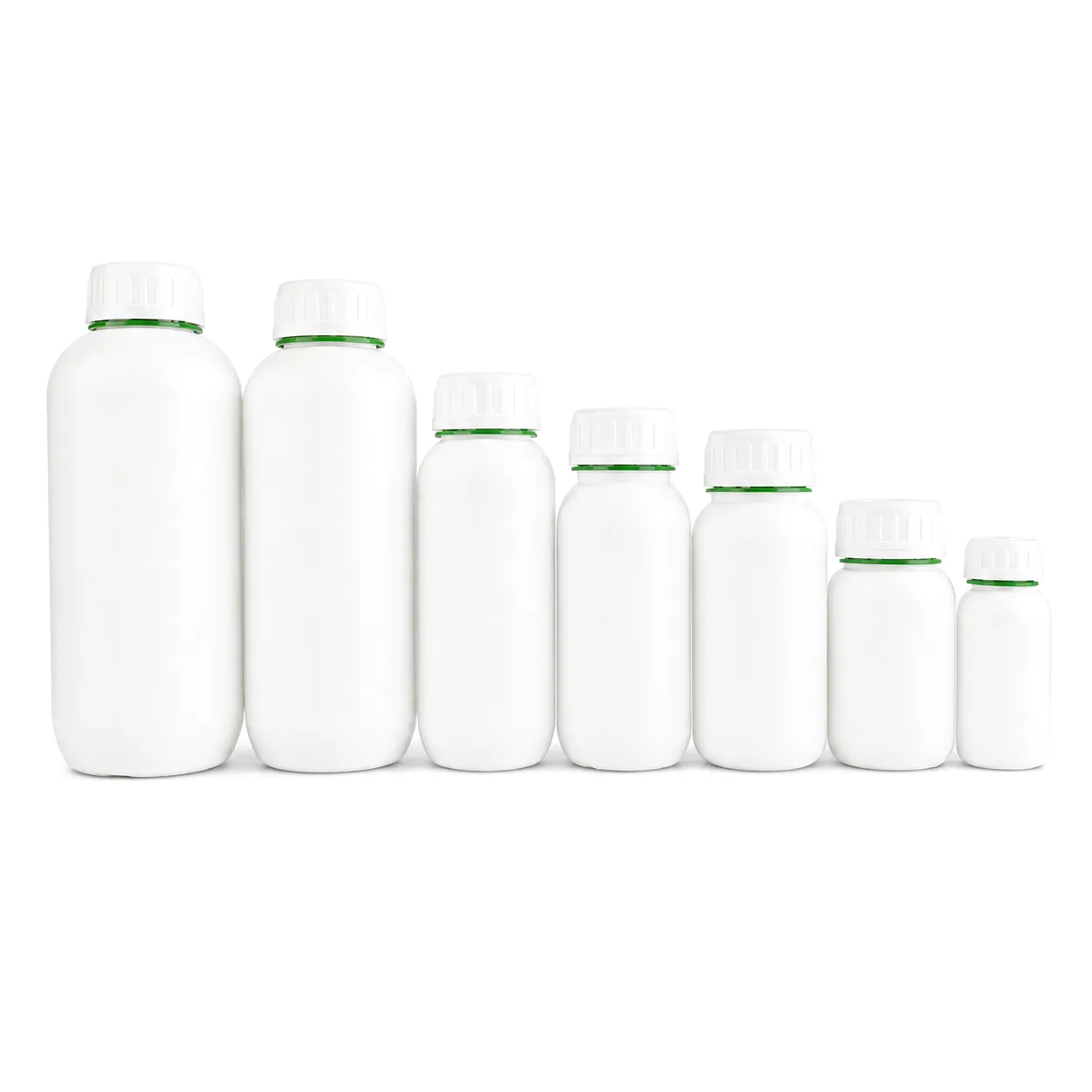 The UK crop protection market is one of the most technically demanding packaging environments in the world. Agrochemical formulations range from water-soluble powders suspended in mild carrier fluids to highly concentrated emulsifiable concentrates that would cause rapid stress-cracking in substandard polyethylene within days of contact. Regulatory requirements under UK REACH and the Control of Pesticides Regulations demand that containers demonstrate proven chemical compatibility, closure integrity under hydrostatic pressure, UV stability across multiple years of warehouse storage, and compatibility with UN certification protocols for dangerous goods transport by road freight from distribution centres in Coventry, Peterborough, and Bristol.
Pesticide Concentrate Containers
250 ml – 2 L | HDPE / PP | UN-rated optional
Herbicide Bottles
500 ml – 5 L | HDPE | Childproof-neck-compatible
Fungicide Containers
250 ml – 1 L | PP | Tamper-evident closure zones
Liquid Fertiliser Bottles
1 L – 5 L | HDPE | UV-stabilised grades available
RTU Spray Containers
500 ml – 1 L | PET / PP | Trigger-sprayer neck compatible
Ready-to-use (RTU) spray containers represent one of the fastest-growing sub-categories within agrochemical packaging, driven by consumer gardening demand across England and Wales and by professional grounds-care operators who need pre-diluted solutions that can be applied without mixing equipment. These containers have uniquely demanding requirements: the PET or PP body must tolerate multiple pump actuations without deforming around the neck zone; the thread profile must seal reliably under the back-pressure generated by trigger mechanisms; and the base geometry must be stable enough to prevent tipping on retail shelving. Every one of these requirements is natively satisfied by injection-blow molding because the process establishes those geometric relationships within the mould cavity, not in a secondary forming stage.
Core Resin Materials Used in Agrochemical Injection-Blow Molding
The choice of resin determines how a container performs across its entire service life — from the filling line in a Norfolk agrochemical plant to the end user’s storage shed in rural Shropshire. A well-configured injection-blow molding machine processes all of the following resin families without fundamental architectural changes, though each requires distinct barrel temperature profiles and screw geometry considerations.
HDPE (High-Density Polyethylene)
The industry standard for pesticide and herbicide containers. HDPE offers outstanding chemical resistance to a broad spectrum of agrochemical solvents, excellent impact strength at low temperatures — critical for UK winter storage — and straightforward recyclability through the existing UK plastics collection infrastructure. Melt index 0.3–1.0 g/10 min grades are typically selected for ISBM processing of containers in the 250 ml to 5 L range.
PP (Polypropylene)
Preferred for fungicide containers and certain micronutrient fertiliser formulations where the product chemistry interacts unfavourably with HDPE. PP is stiffer than HDPE at equivalent wall thickness, which allows thinner-walled container designs without sacrificing structural rigidity. Its higher melt point also enables hot-fill applications used by some UK agrochemical manufacturers during the winterisation additive blending process.
PET (Polyethylene Terephthalate)
Used primarily in ready-to-use garden sprays and consumer-facing liquid fertiliser bottles where transparency is a commercial advantage — the end user can see the product colour and fill level without opening the container. PET produced on an injection-blow molding machine has superior optical clarity versus extrusion-blown PET because the core-rod process prevents the microcrystalline haze that forms when PET is cooled too slowly across a broad temperature gradient. Intrinsic viscosity of 0.78–0.84 dl/g grades are typical for agrochemical RTU applications.
Product Technical & Performance Parameters
The following table summarises the key technical specifications representative of Ever Power’s injection-blow molding machine range, configured for agrochemical container production. These parameters are provided as a reference baseline; machine specifications are fully customisable to customer requirements. Contact the Ever Power technical team for container-specific configuration advice.
| Parameter | Specification / Range | Relevance for Agrochemical Packaging |
|---|---|---|
| Container Volume Range | 5 ml – 5,000 ml | Covers concentrate sachets through to 5 L farm-use bottles |
| Number of Cavities | 2 – 12 cavities (standard); up to 18 (custom) | Scales output for pilot runs and high-volume agrochemical campaigns |
| Injection Clamp Force | 60 – 200 tonnes | Maintains cavity pressure uniformity across all neck profiles |
| Blow Air Pressure | 6 – 16 bar (adjustable per resin) | Tuned for HDPE, PP, and PET without tool change |
| Barrel Temperature Zones | 5 – 8 independent PID-controlled zones | Prevents thermal degradation of UV-stabiliser additives in HDPE |
| Neck Finish Accuracy | ± 0.05 mm on thread diameter | Ensures compatibility with childproof and induction-seal closures |
| Wall Thickness Variation | < ± 8% across container body | Critical for hydrostatic pressure test compliance (UN3H2) |
| Output Rate (6-cavity machine) | 2,400 – 4,200 bottles/hr (volume-dependent) | Meets volume requirements for seasonal agrochemical campaigns |
| Servo Drive Energy Saving | 35 – 55% vs. hydraulic-only systems | Supports UK manufacturers’ net-zero operations targets |
| Mould Material (standard) | P20 / S136 stainless steel (core rods: tool steel) | Corrosion-resistant for agrochemical additive atmospheres |
| Tooling Changeover Time | 25 – 45 min (with quick-change system) | Enables multi-SKU flexibility on single production line |
| Control System | PLC + 10″ / 15″ HMI touchscreen; Industry 4.0 OPC-UA ready | Remote diagnostics support for UK-based customers |
| Machine Footprint | 3.2 m – 8.5 m length (model-dependent) | Compatible with standard UK warehouse bay widths |
Application Scenario: Pesticide Concentrate Container Production
 Pesticide concentrate containers are among the most technically challenging packaging formats in the entire agrochemical sector. They must simultaneously act as a primary containment vessel for products classified under Hazard Statements H300–H400, provide the end user with a dispensing experience that minimises splash and skin contact, and survive a supply chain that can include ambient temperature extremes from refrigerated logistics in winter to un-insulated container storage during July heatwaves. Manufacturers across the South East, East Midlands, and the Scottish Central Belt have found that injection-blow molding machines provide a process advantage that cannot be replicated through specification upgrades to conventional extrusion blow molding presses.
Application Scenario: Ready-to-Use (RTU) Spray Container Manufacturing
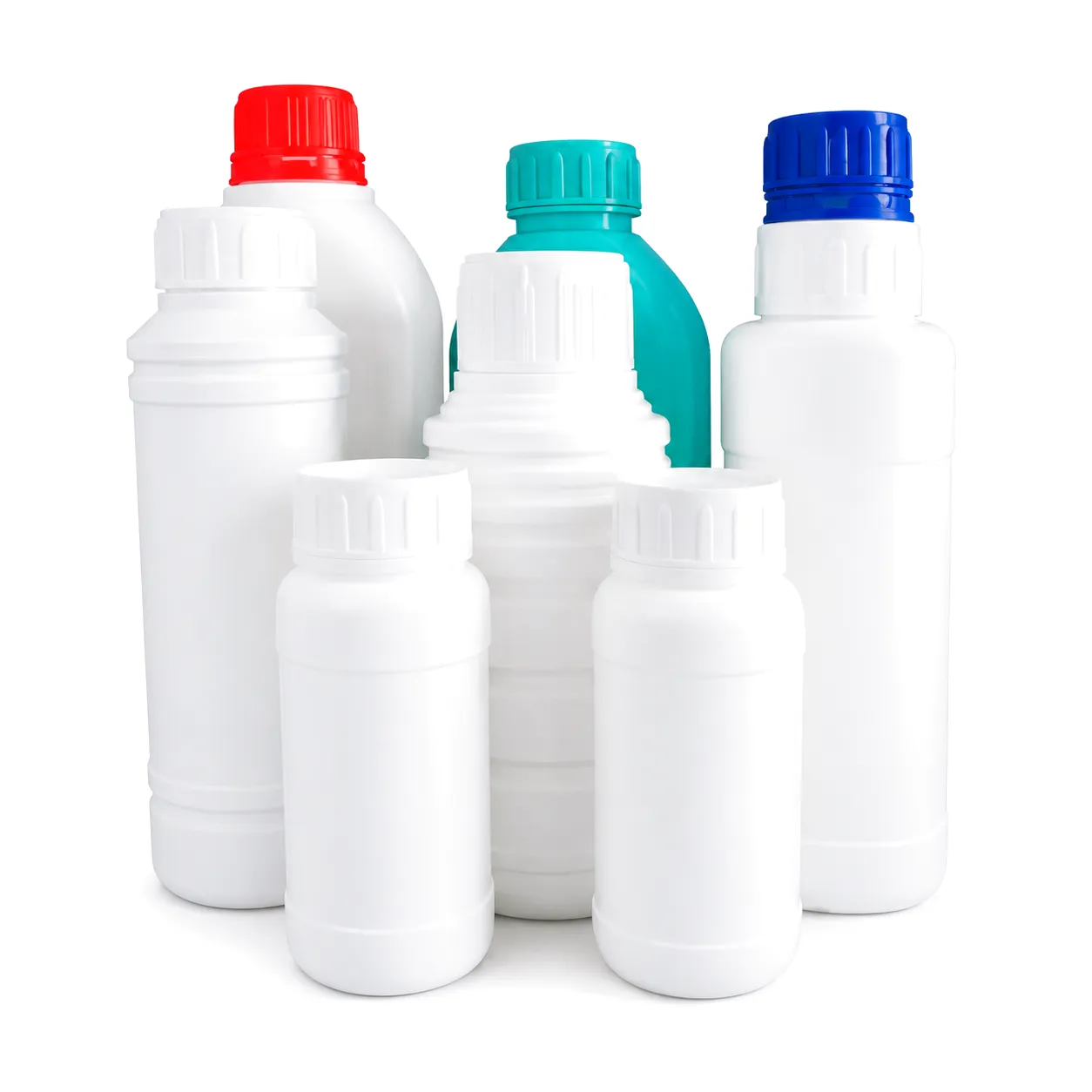 Ready-to-use spray products represent the consumer-facing end of the crop protection market — the 500 ml and 1 L bottles found in garden centres from Harrogate to Exeter, on the shelves of DIY retailers in Birmingham’s retail parks, and increasingly in the Click-and-Collect warehouses of agricultural merchants serving smallholders across rural Wales and Northern England. These containers prioritise transparency, shelf presence, and pump-compatibility as much as chemical containment, and they are precisely the application profile where injection-blow molding machines demonstrate their widest competitive moat over alternative processes.
Application Scenario: Liquid Fertiliser Bottle Production for UK Agricultural Markets
The liquid fertiliser packaging sector has undergone a significant structural change in the UK over the past decade. Environmental regulations progressively restricted granular nitrogen applications near watercourses, driving farm managers across the Fens, the Thames Valley, and Lincolnshire’s arable belt toward precision liquid fertiliser programmes delivered through fertigation systems. This created demand for containers sized and shaped to work with agricultural pump systems — a specification that conventional blow molding machines struggle to satisfy precisely because their neck-finish dimensional tolerance is insufficient for automated pump-head assembly on high-speed filling lines.
An injection-blow molding machine solves this problem at source by producing neck finishes to tolerances of ± 0.05 mm, meaning every container on a high-speed filling line accepts the pump head without operator adjustment. At production volumes of 3,000 to 5,000 bottles per hour across a multi-cavity machine, that dimensional consistency eliminates the kind of line-stop events that cost agrochemical packers tens of thousands of pounds per shift during the spring planting season — precisely the time when UK supply chain resilience matters most.
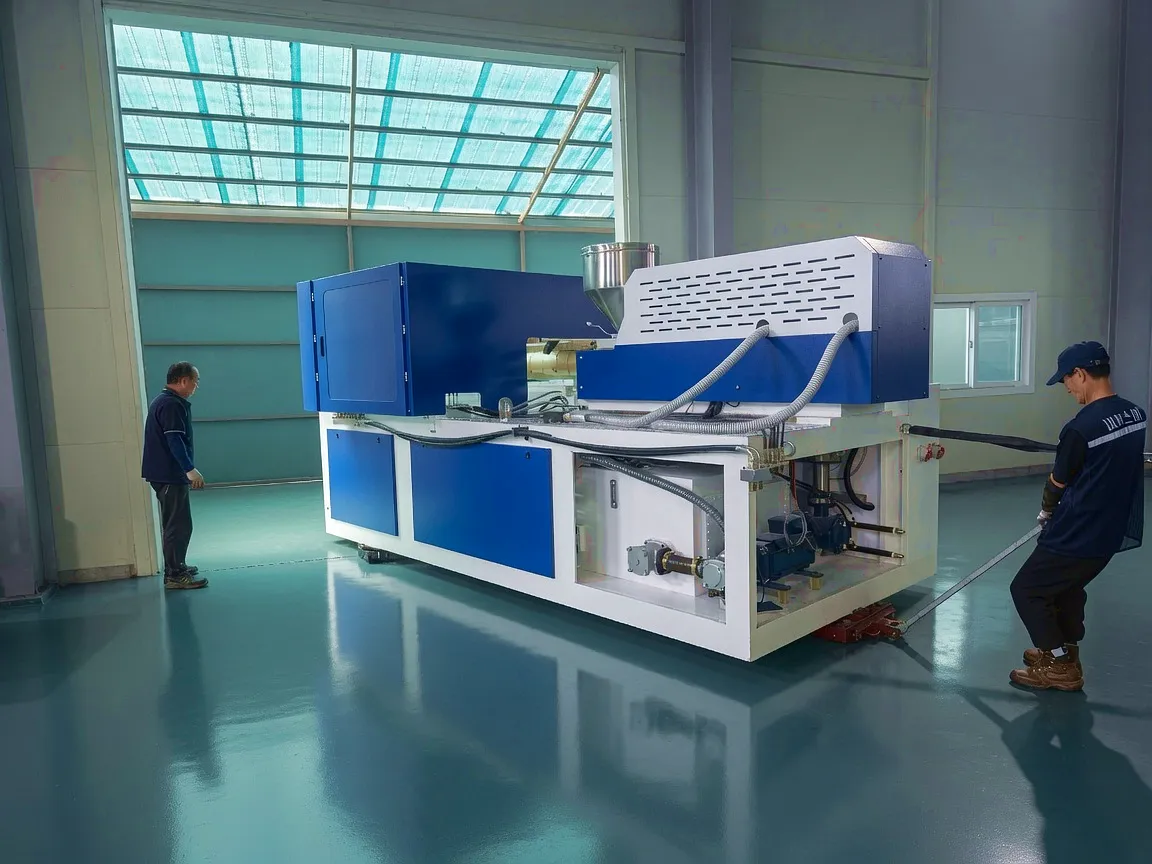
Ever Power Manufacturing Workshop — Precision Assembly Line
Core Technical Advantages of an Injection-Blow Molding Machine for Agrochemical Packaging
Zero-Flash, Zero-Tail Output
Injection-blow molding machines produce containers with no tail, no flash, and no pinch-off mark requiring secondary trimming. This eliminates a significant source of contamination risk in agrochemical production environments — plastic trimmings in a fill area can cause foreign-body contamination events that trigger costly product recalls and damage the reputation of UK-based brands in international export markets.
Superior Wall Thickness Distribution
Because the preform is inflated while still on the injection core rod — which maintains uniform temperature and geometry — the blown container wall is substantially more uniform than anything achievable by parison-based processes. For agrochemical containers required to pass the UN hydrostatic pressure test at 100 kPa, this wall uniformity directly determines whether the container passes on first presentation or fails in the thin-wall zones near the shoulder — a costly quality event for any UK packer.
High Multi-SKU Flexibility
Agrochemical product portfolios are inherently SKU-heavy, with manufacturers needing to produce dozens of distinct container formats across volume, shape, colour, and neck-finish variations. Modern injection-blow molding machines accommodate this through modular tooling systems that allow cavity changes in under forty minutes — making it economically viable to run short production campaigns of 50,000 units for niche biocide products alongside major campaigns of 500,000 units for flagship herbicide lines.
Servo-Electric Energy Efficiency
Ever Power’s servo-driven injection-blow molding machines deliver 35 to 55 percent energy savings compared with equivalent hydraulic-driven models, a factor of growing significance to UK manufacturers operating under mandatory Carbon Reduction Plans and Streamlined Energy and Carbon Reporting obligations. The servo drive also reduces hydraulic oil consumption, lowering both maintenance costs and the risk of oil contamination events — a critical concern in food-adjacent agrochemical filling environments.
Auxiliary Equipment & Complete Production Systems
A complete agrochemical container production line integrates the injection-blow molding machine with upstream resin drying, colour masterbatch dosing, and downstream container inspection, leak testing, and palletising systems. Ever Power supplies and integrates all auxiliary equipment to ensure the production line operates as a single validated system — reducing integration risk and commissioning time for UK customers establishing new packaging production capacity.
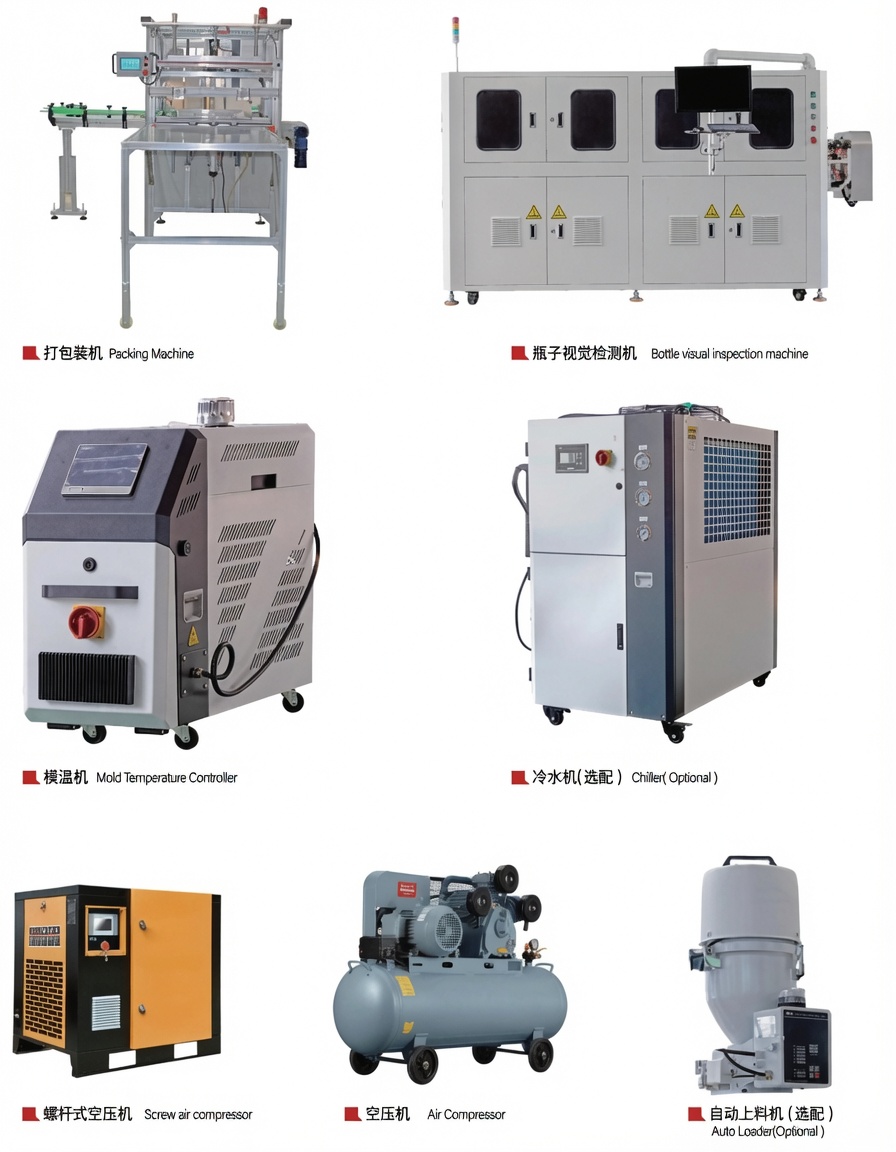
Complete auxiliary equipment range for ISBM production lines
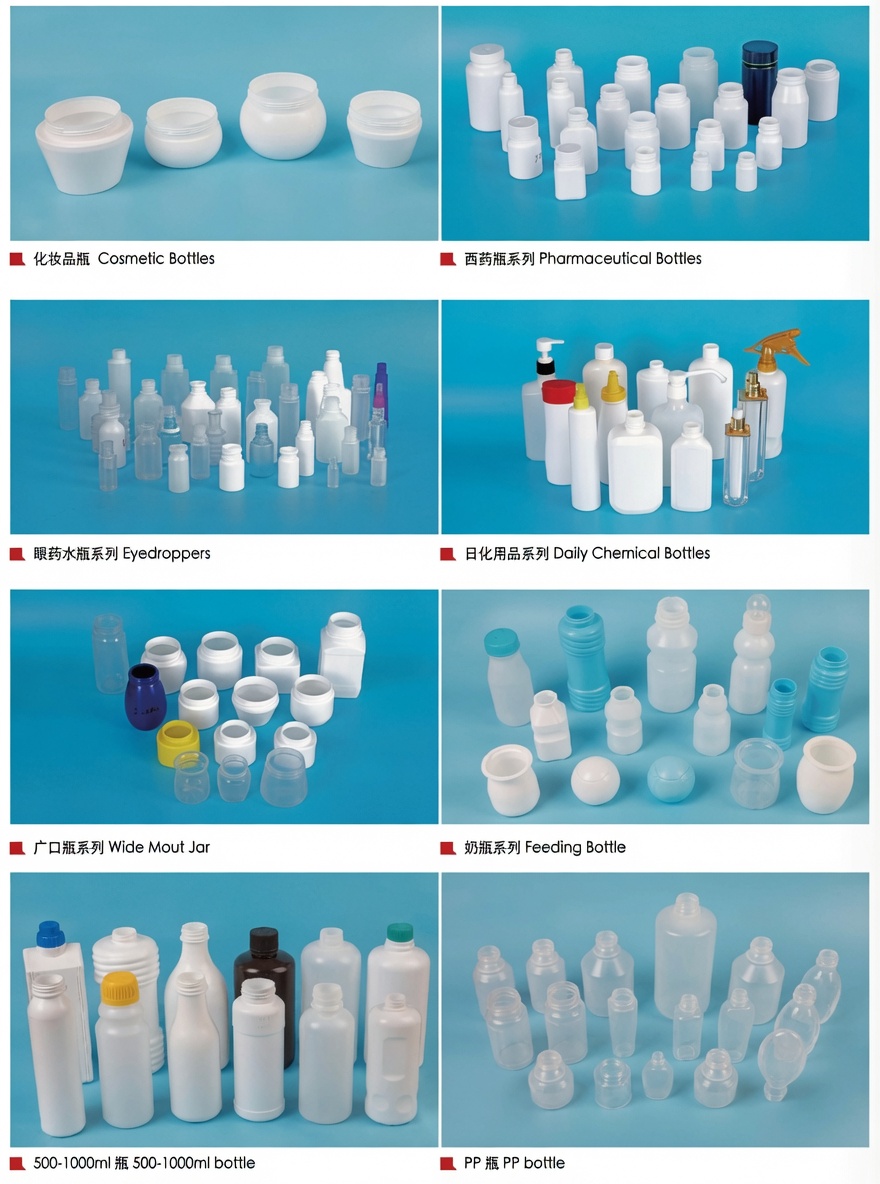
Downstream handling and inspection systems
Ever Power: Precision Manufacturing & Customisation for Global Agrochemical Packaging
Ever Power has built its reputation in the injection-blow molding machine sector through an unwavering focus on precision engineering, rigorous process control, and a customisation capability that genuinely sets it apart from commodity machine suppliers. The Ever Power production facility operates machining centres capable of holding tolerances to ± 0.01 mm on core rod geometry — the kind of precision that determines whether an agrochemical container neck threads correctly with a childproof closure at the ten-millionth cycle, not just the first. Our tooling team works directly with customers’ packaging engineers and regulatory affairs specialists to translate container requirements into tooling specifications, eliminating the expensive cycle of prototype iteration that costs agrochemical companies weeks of development time.
Full Custom Tooling
From 5 ml pharmaceutical vials to 5 L agrochemical containers, Ever Power designs and manufactures complete tooling sets from P20 and S136 stainless steel in-house, with full CMM verification of every core rod and cavity block before shipment. All tooling is designed for compatibility with quick-change systems, reducing changeover times and maximising line utilisation for UK customers with multi-SKU production schedules.
Supply Chain Assurance
Ever Power maintains a strategic stock of critical spare parts — barrel liners, screw tips, heater bands, servo drives, and valve blocks — to support fast-response maintenance for UK-based customers. Our international logistics partnerships with major freight forwarders operating out of Felixstowe and Southampton ensure that urgent parts orders reach customers across England, Scotland, and Wales within five to seven business days, minimising planned and unplanned downtime.
Regulatory Documentation
Every Ever Power injection-blow molding machine ships with a CE technical file, complete electrical schematics, calibrated test records for all temperature controllers and pressure transducers, and a commissioning protocol documented to a standard that satisfies the IQ/OQ/PQ validation requirements of pharmaceutical and regulated agrochemical packaging operations.
Ready to discuss your agrochemical container production requirements with an Ever Power applications engineer?
Ever Power Featured Injection-Blow Molding Machines
Whether you are replacing an aging Uniloy press or expanding production capacity for a new agrochemical packaging line, Ever Power offers proven drop-in replacement solutions engineered to match the technical performance of established market references while delivering significant gains in energy efficiency, throughput consistency, and operator ergonomics.
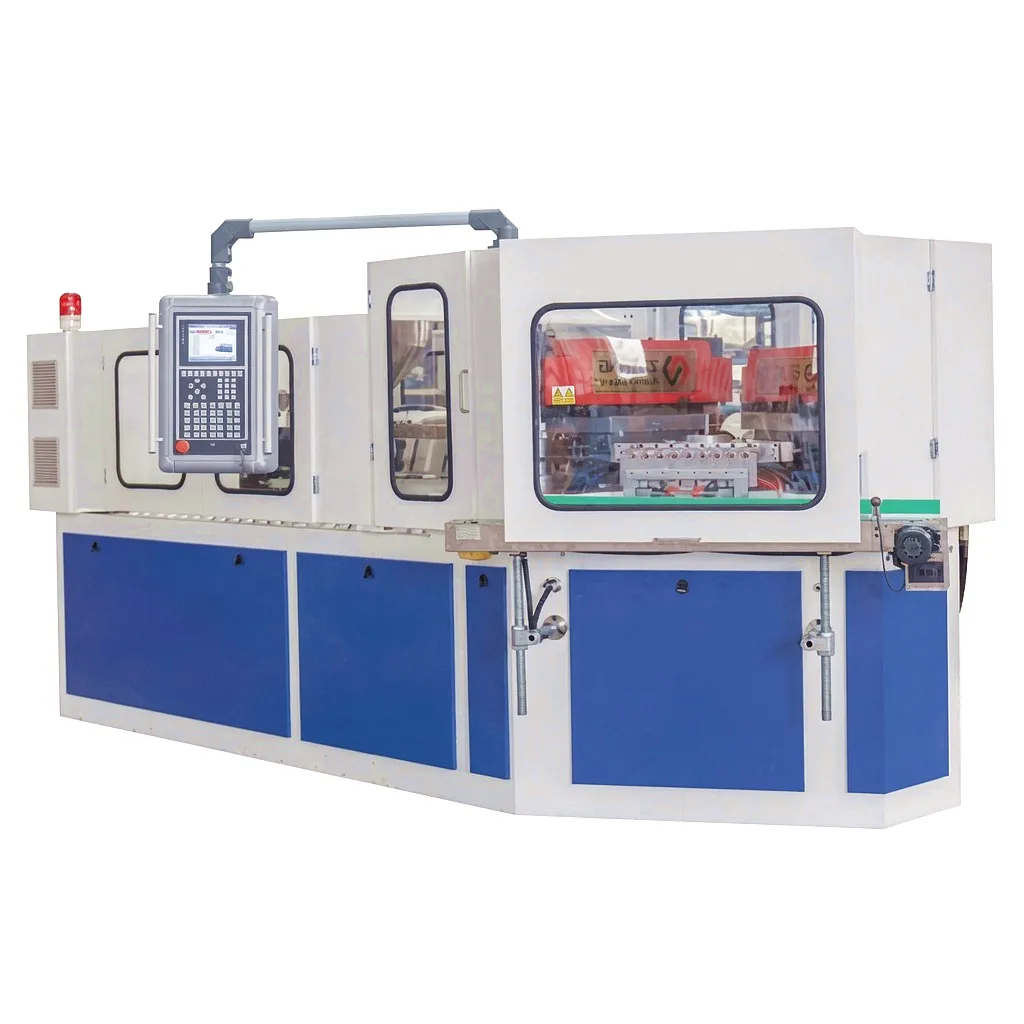
Customer Success Story: Yorkshire Agrochemical Packer Achieves 34% Output Increase with Ever Power ZQ80
Case Study | Leeds, West Yorkshire | Agrochemical Container Manufacturing
From Ageing Uniloy Press to High-Performance Production: A West Yorkshire Success Story
A mid-sized agrochemical packaging contractor based in Leeds, West Yorkshire — supplying container solutions to several of the UK’s leading crop protection brands — had been operating a pair of ageing Uniloy UIB 120 injection-blow molding machines since 2011. By 2024, the presses were consuming excessive energy, generating increasing numbers of neck-finish rejections on childproof closure trials, and requiring monthly hydraulic maintenance interventions that were disrupting production schedules during the critical spring season. The operations manager estimated that unplanned downtime was costing the business in the region of £80,000 per year in lost production and emergency contractor fees.
After evaluating options from three machine suppliers, the Leeds facility selected the Ever Power ZQ80 as a like-for-like replacement for both Uniloy UIB 120 presses. The decision was driven by three factors: tooling compatibility — existing UIB 120 tooling for fifteen container SKUs was verified compatible with the ZQ80 without modification; Ever Power’s commitment to a ten-day commissioning programme at the Leeds facility including operator training; and the factory acceptance test results, which demonstrated container neck-finish dimensional variation of ± 0.038 mm across a 10,000-piece qualification run — well within the ± 0.05 mm specification threshold.
Within six weeks of the second ZQ80 commissioning, the Leeds facility reported a verified 34 percent increase in good-part output per shift across the HDPE herbicide container SKUs that represented its highest-volume production. Neck-finish rejection rates fell from 2.3 percent on the Uniloy presses to 0.18 percent on the ZQ80 machines. Electricity consumption per thousand containers produced reduced by 41 percent — a saving that is directly reflected in the facility’s quarterly carbon reporting under its parent company’s net-zero commitment. The operations team described the ZQ80’s 15-inch HMI touchscreen as a meaningful step change in operator usability, particularly in enabling rapid parameter recall during product changeovers.
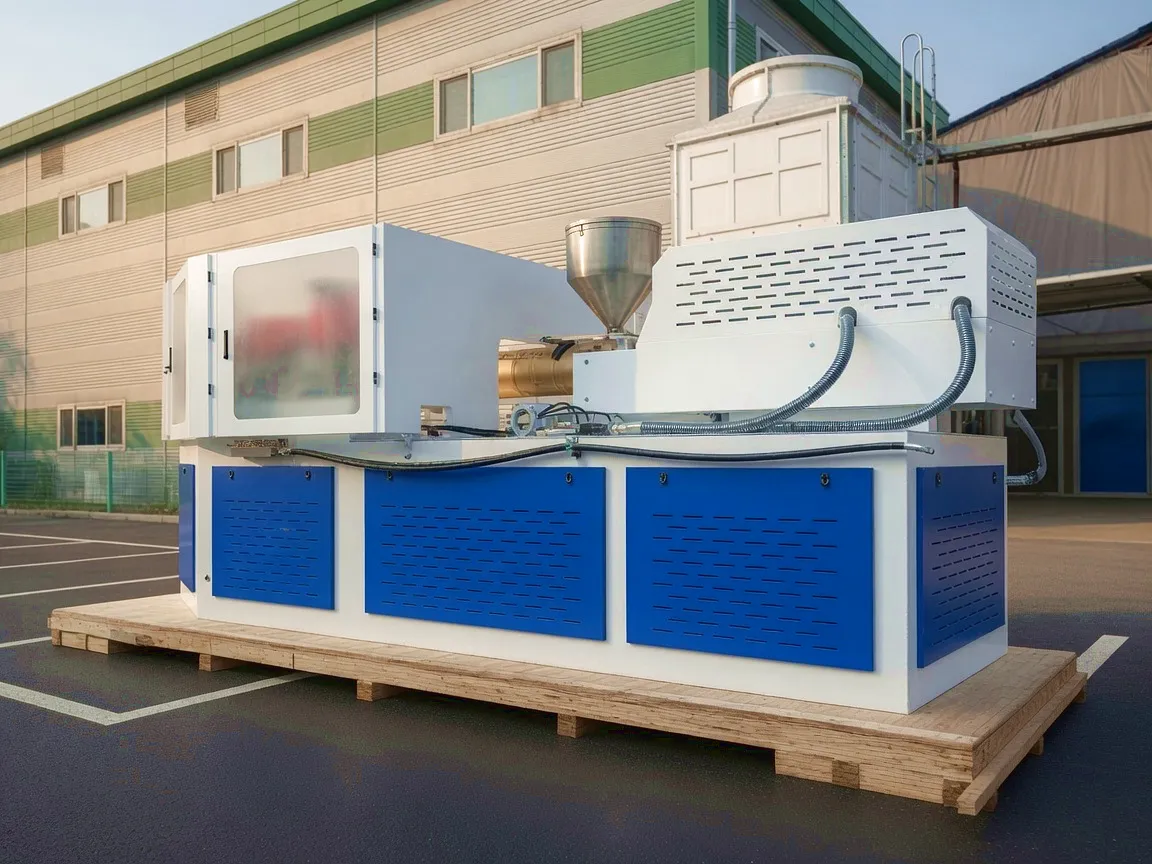
What Our Customers Are Saying
“The neck-finish consistency on the ZQ80 is genuinely in a different league from what we were getting on the old Uniloy press. We have run three million 500 ml HDPE herbicide containers since commissioning and the childproof closure rejection rate has essentially gone to zero. That alone has paid for itself in reduced rework labour.”
— Production Manager, Agrochemical Container Manufacturer, Leeds, West Yorkshire
“Ever Power’s commissioning team was on-site in Leeds for the full ten days as promised and did not leave until every operator shift had been trained and the qualification run documentation was signed off. We have bought machinery from three other suppliers over the years and that level of after-sales engagement is genuinely unusual. The energy saving versus our old hydraulic presses is being tracked monthly and is consistently above 38 percent.”
— Operations Director, Agrochemical Packaging Group, West Yorkshire
“We specified the ZQ60 for our small-format fungicide container line — 250 ml and 500 ml PP — and the tooling changeover between the two sizes now takes us under thirty minutes, compared with the two hours it used to take on the old press. During the spring campaign period that time saving adds up to something significant. Ever Power’s customisation team also modified the ejector system for our specific downstream conveyor layout without any additional charge.”
— Technical Director, Horticultural Chemicals Packaging, Lincolnshire
Ever Power — Precision Injection-Blow Molding Machine Manufacturer
Ready to Upgrade Your Agrochemical Container Production?
Contact our applications engineering team for a no-obligation technical consultation and quotation tailored to your container specifications and production volume requirements.
📅 Get a Quote: [email protected]
edit by gzl