Industry Deep-Dive · Personal Care Packaging
Enhancing Personal Care and Cosmetics Packaging with Injection Blow Molding Technology
Shampoo, Conditioner & Shower Gel Containers — Precision Engineering for the UK Beauty Manufacturing Sector
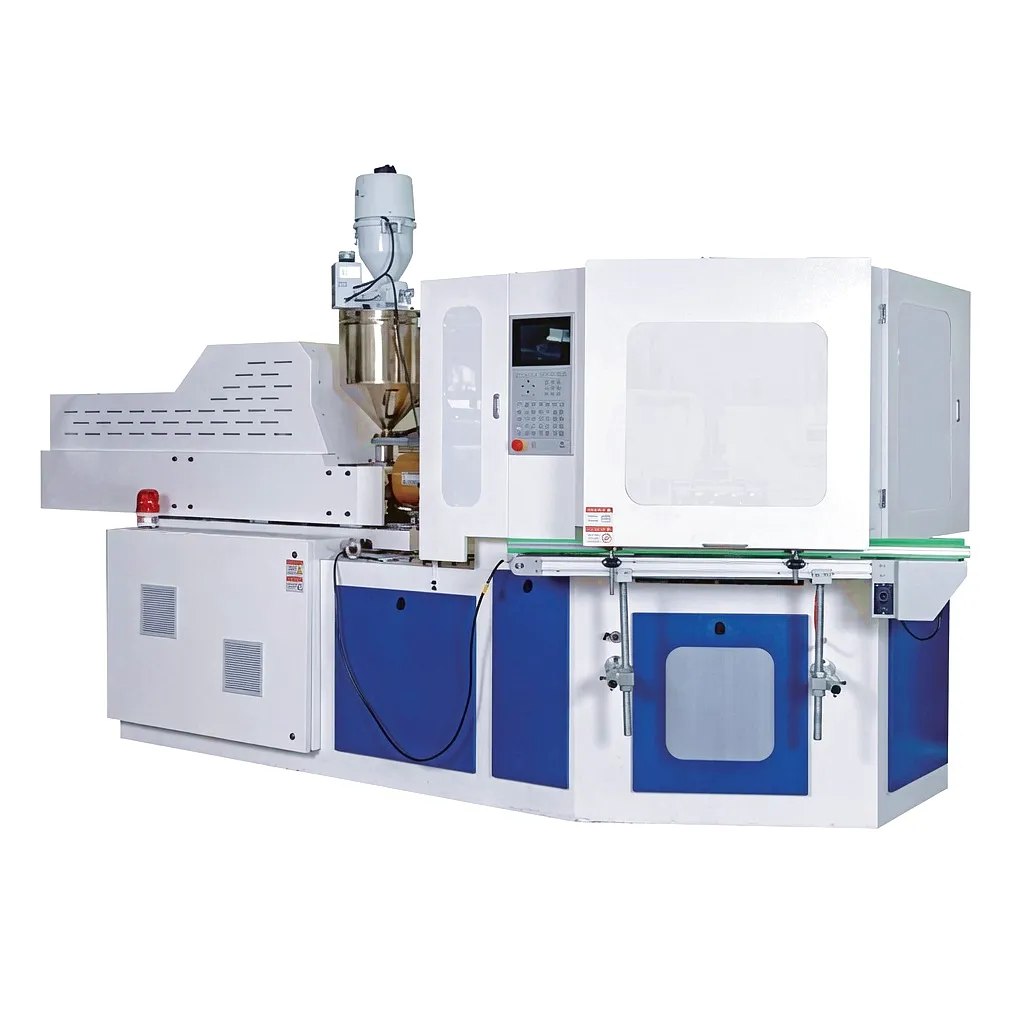 The personal care and cosmetics sector is one of Britain’s most dynamic manufacturing industries, with major production hubs stretching from the Midlands corridor around Birmingham to the chemical processing zones of Sheffield and the North West. At the heart of this packaging revolution sits the injection-blow molding machine — a precision manufacturing system that bridges the gap between injection molding accuracy and blow molding design freedom. For brand owners producing shampoo bottles, conditioner containers, and shower gel vessels at commercial scale, the injection blow molding machine delivers wall-thickness consistency, neck-finish precision, and surface clarity that conventional extrusion blow molding simply cannot match. Whether you are commissioning a new production line in the East Midlands or upgrading an existing facility near Manchester, understanding the capabilities of injection blow molding technology is the critical first step toward sustainable, high-margin packaging production.
Ready to source a high-performance injection-blow molding machine for your UK facility?
How an Injection-Blow Molding Machine Actually Works
1️⃣
Injection Stage
Molten polymer — typically HDPE, PP, or PET — is injected around a precision steel core rod inside an injection mold cavity. The result is a preform (parison) with a perfectly formed neck thread, sealing surface, and controlled wall distribution, all established before any blowing takes place.
2️⃣
Transfer & Blow Stage
The indexed core rod carries the still-warm preform into the blow mold cavity. Compressed air is introduced through the core rod at precisely calibrated pressure, inflating the preform outward against the blow mold walls. Because the neck geometry was already set in the injection stage, tolerances of ±0.1 mm on thread pitch are routinely achieved — critical for pump fitment on shampoo and conditioner products.
3️⃣
Ejection & Indexing
After the blown article has cooled sufficiently, it is stripped from the core rod and conveyed directly onto a downstream conveyor or filling line. Unlike two-step processes, the injection blow molding machine completes all three operations — injection, blow, eject — in a single rotary or shuttle cycle without trimming or waste. This flash-free output is a decisive advantage for cosmetics brands that demand label-ready surfaces.
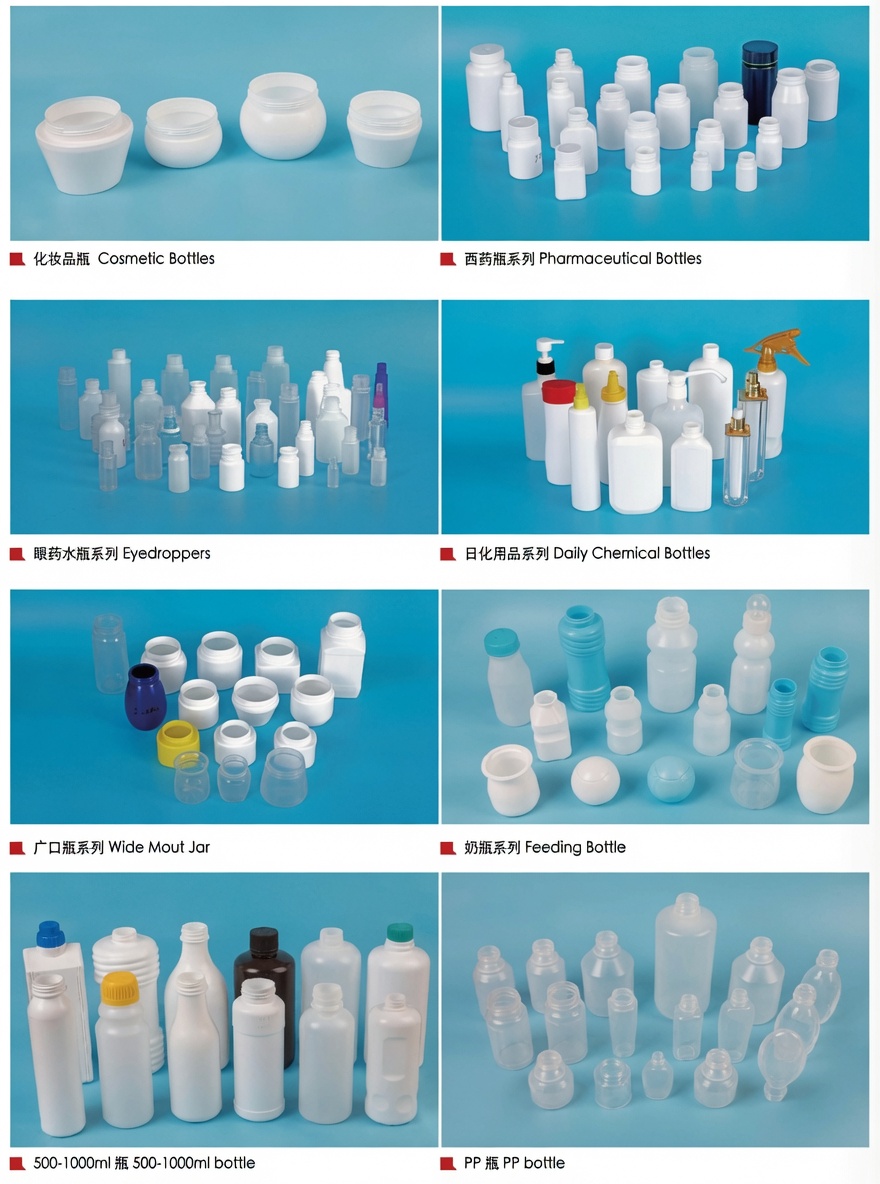
Core Materials Processed by Injection Blow Molding Machines
🔵
HDPE
High-density polyethylene remains the go-to choice for shampoo and conditioner bottles. Its chemical resistance against surfactants, sodium lauryl sulfate, and fragrance oils, combined with a density range of 0.941–0.965 g/cm³, makes it ideal for UK personal care formulators requiring stable, squeezable containers.
🟢
PP (Polypropylene)
Polypropylene offers superior heat resistance up to 130°C, which is critical when hot-filling hair treatments or sterilising containers used in premium spa and salon brands common in London and the South East. PP’s relatively low density (0.895–0.92 g/cm³) also contributes to lighter packaging, reducing logistics costs across the UK distribution network.
🔴
PET (Polyethylene Terephthalate)
PET-IBM (injection-blow molded PET) produces optically clear bottles with outstanding barrier properties against moisture vapour and oxygen. Luxury shower gel brands targeting UK premium retail channels — including department stores and specialty beauty boutiques — increasingly specify PET containers for their glass-like transparency and superior gloss. Wall thickness can be controlled to within 0.05 mm.
🟣
LDPE & LLDPE
Low-density and linear low-density polyethylene variants are processed on injection blow molding machines where a soft, squeezable tube-style body is required — particularly for travel-size toiletries and hotel amenity formats. The flexibility of LDPE (Shore D hardness 41–46) allows consumers to dispense viscous conditioners without excessive squeeze force, improving user experience significantly.
Key Technical Advantages of the Injection-Blow Molding Process
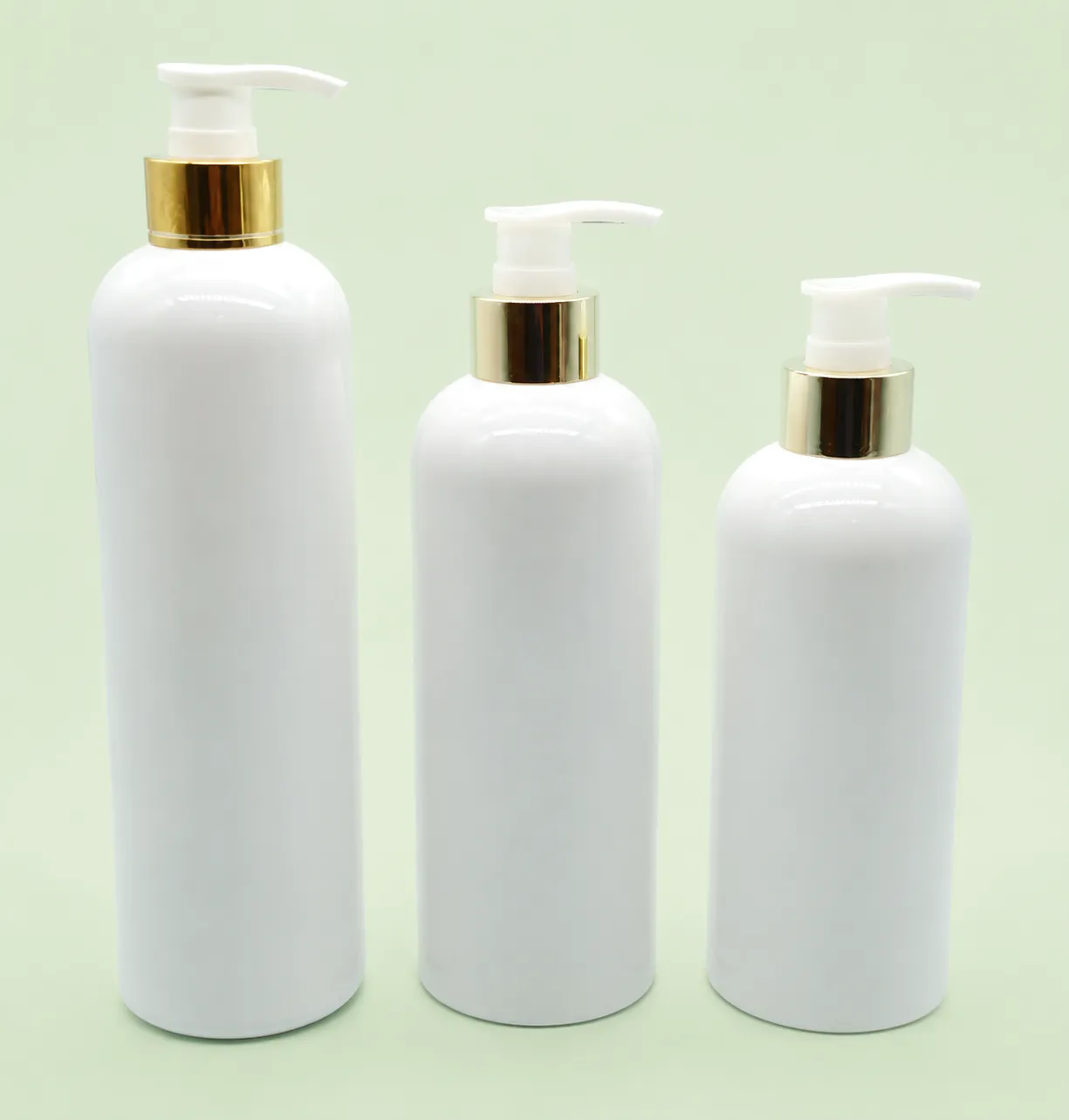 Among the various container manufacturing technologies available today, the injection blow molding machine stands apart for reasons that go beyond simple output rate. The process delivers a combination of dimensional precision, material efficiency, and surface finish that competing technologies struggle to replicate at similar cost points. For UK personal care manufacturers who must balance BRC-accredited hygiene standards with rising material costs and SKU proliferation, these advantages translate directly into bottom-line value.
One of the most frequently cited benefits is the complete absence of flash or sprue waste. Because the preform is formed inside a closed injection cavity before blowing, there is no pinch-off seam and no material trimming required. This zero-waste characteristic reduces raw material consumption by 3–8% compared with extrusion blow molding, a significant saving when processing at annual volumes of several million units — typical of major UK contract packagers supplying supermarket own-label personal care ranges. Beyond material saving, the elimination of grinding and regrinding operations also improves throughput consistency and reduces particulate contamination risk, which is valuable in cosmetics environments governed by ISO 22716 Good Manufacturing Practice.
Neck-finish accuracy is the second defining advantage. Because the thread and sealing surface are injection-molded rather than blow-molded, the injection blow molding machine consistently delivers T/E thread finishes within GPI (Glass Packaging Institute) tolerances. Pump dispensers, flip-top caps, and disc-top closures all require tight sealing land diameters and thread engagement depths — specifications that extrusion blow molding cannot achieve without secondary trimming equipment. UK cosmetics brands that outsource cap supply from European closure manufacturers benefit from this precision, since their cap specification drawings are written to injection-molded neck standards.
✅ Zero Flash / No Trimming
Closed-cavity injection stage eliminates pinch-off seams and downstream deflashing operations, reducing labour and contamination risk.
✅ Precision Neck Finish
Thread geometry injection-formed to ±0.1 mm tolerance — compatible with GPI, PCO, and bespoke European closure standards.
✅ Uniform Wall Thickness
Core-rod inflation distributes material evenly across the bottle body, preventing thin spots that cause stress cracking or panel deformation during filling.
✅ High Surface Gloss
Mirror-polished blow cavity produces label-ready surfaces with gloss values above 80 GU (60° geometry), supporting direct printing, hot stamping, and sleeve labelling.
✅ Single-Step Efficiency
Injection, blow, and ejection in one machine cycle — no intermediate storage, no reheating energy, no interstation handling damage. Ideal for clean-room adjacent production environments.
✅ Material Savings
3–8% raw material reduction vs. extrusion blow molding. At 5 million units/year, this equates to several tonnes of polymer saved — meaningful at today’s HDPE spot prices in the UK market.
Application Scenario: Personal Care & Cosmetics Packaging — Shampoo, Conditioner and Shower Gel Containers
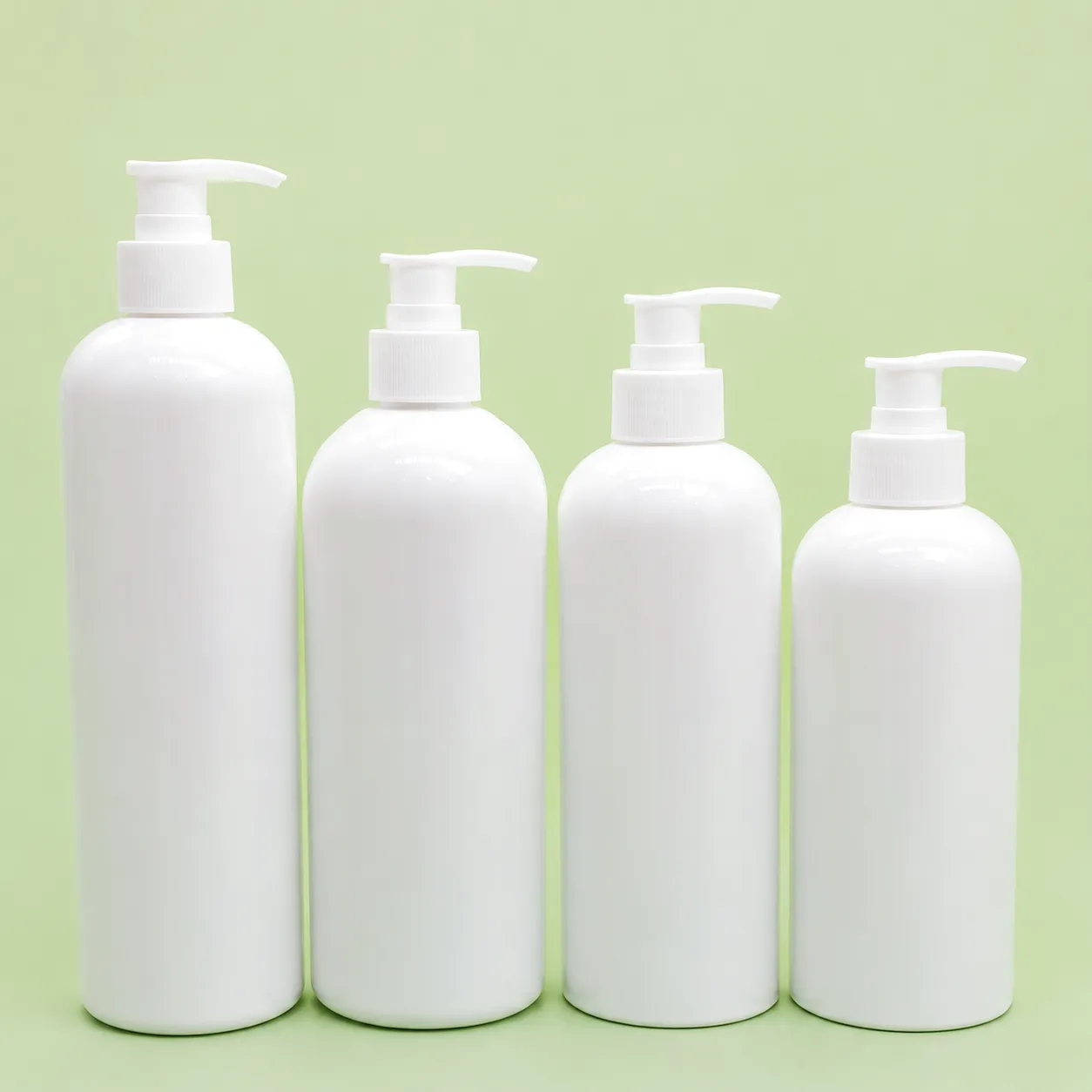 The UK personal care market — valued at over £13 billion at retail — consumes billions of plastic bottles each year, with shampoo, conditioner, and shower gel collectively representing the single largest segment of rigid plastic container demand within the beauty and grooming category. What drives the decision toward injection blow molding machines specifically for these products is a combination of factors unique to high-frequency, high-volume consumer goods: tight closure tolerances, demanding surface aesthetics, high line speeds at filling plants, and growing environmental pressure to reduce material use without compromising structural integrity.
Shampoo bottles present a specific set of engineering demands. The viscosity of shampoo formulations varies considerably — from thin clarifying shampoos to thick, conditioning-rich variants — and this viscosity range influences bottle design. An injection blow molding machine can produce the precise internal volume and orifice diameter needed to control dispensing rate, something that requires accurate wall thickness distribution and reliable neck-finish geometry. UK filling lines at sites such as those operated by major contract manufacturers in the West Midlands and Yorkshire commonly run at 200–400 bottles per minute; at these speeds, even minor dimensional variation in the bottle neck causes closure misfeed and line stoppages. The injection blow molding process inherently eliminates this risk by forming the neck in the injection mold rather than relying on a post-blow trimming step.
Conditioner containers add complexity through their interaction with pump dispensers. Premium salon brands — from London-based premium retailers to independent boutiques across Bristol, Edinburgh, and Leeds — specify 24/410 or 28/410 pump fitments that require sealing land flatness of less than 0.1 mm runout. Only injection-blow molded necks reliably achieve this on high-cavitation tooling. The injection blow molding machine also enables multi-cavity production — four, six, or eight cavities running simultaneously — giving the production economics needed to compete on unit cost while maintaining the neck precision premium brands demand.
Shower gel packaging has undergone significant design evolution over the past decade. Where once a simple cylindrical HDPE bottle sufficed, today’s retail environment — whether online via UK e-commerce platforms or on-shelf at major supermarkets — demands waisted, contoured, and panelled bottle profiles that differentiate brands visually. The injection blow molding machine handles contoured profiles through precision blow cavity design, allowing complex shoulder geometries, grip indentations, and panel configurations that improve both ergonomics and shelf presence. The flash-free surface produced by the IBM process is directly compatible with pressure-sensitive label adhesion, shrink sleeve application, and in-mould labelling — all decoration methods widely used by UK cosmetics contract fillers.
Technical Performance Parameters of Injection-Blow Molding Machines
| Parameter | ZQ40 European Model | ZQ60 European Model | Typical Range / Notes |
|---|---|---|---|
| Clamping Force | 40 kN | 60 kN | Higher force required for multi-cavity tooling |
| Injection Volume (max) | 40 cm³ | 60 cm³ | Suitable for 30 ml to 1,000 ml containers |
| Compatible Materials | HDPE, PP, PET, LDPE, LLDPE, PC (engineering grades) | Material switch within 30 min with purge | |
| Number of Cavities | 2 / 4 / 6 | 4 / 6 / 8 | Depends on bottle volume and tooling layout |
| Cycle Time | 8–14 sec | 10–18 sec | Varies by wall thickness and cooling efficiency |
| Neck Finish Tolerance | ±0.05 – ±0.1 mm (thread pitch, sealing land) | Injection-molded precision — not blow-formed | |
| Wall Thickness Range | 0.3 – 2.5 mm (body wall) | Thinner walls possible in PET pharmaceutical grade | |
| Plasticising Screw L:D Ratio | 20:1 to 24:1 | Optimised for homogeneous melt quality at target output | |
| Blow Air Pressure | 0.6 – 1.2 MPa (6 – 12 bar) | Adjustable via servo-controlled valve manifold | |
| Drive System | All-electric servo / servo-hydraulic hybrid | Energy savings up to 40% vs. full hydraulic | |
| Installed Power | 18 – 22 kW | 25 – 32 kW | Three-phase 415 V / 50 Hz (UK standard supply) |
| Control System | Siemens S7 PLC + 10-inch touch HMI | Data logging, recipe storage, remote diagnostics | |
Complete System: Auxiliary Equipment for Personal Care Container Lines
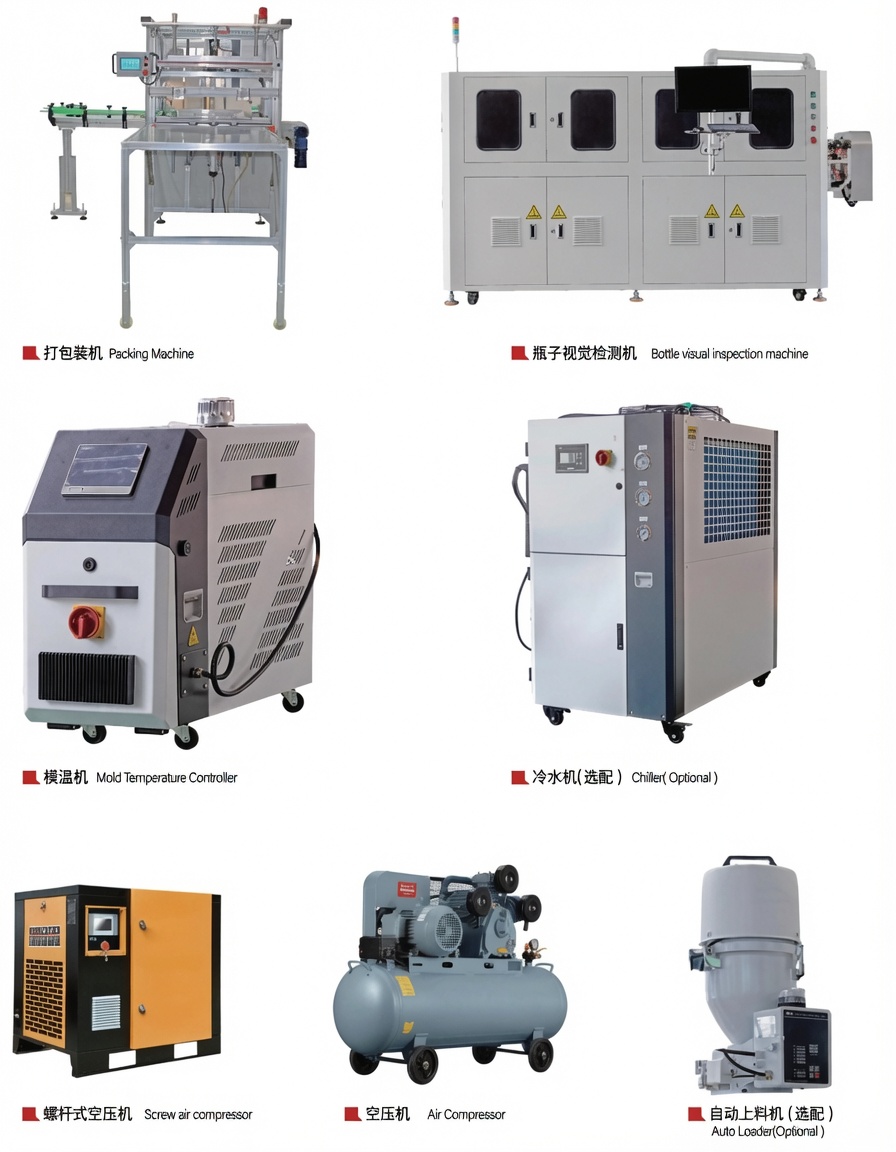
Standard Auxiliary Package
- Mould temperature controller (water-chilled, ±0.5°C)
- Hopper dryer / dehumidifying dryer
- Auto-loader / gravimetric blender
- Air compressor + refrigerated dryer (6-bar stable supply)
- Conveyor belt with bottle orientation system
- Vision inspection system (optional inline)
- Chiller unit for mould cooling water circuit
Featured Products from Ever Power
EUROPEAN SERIES
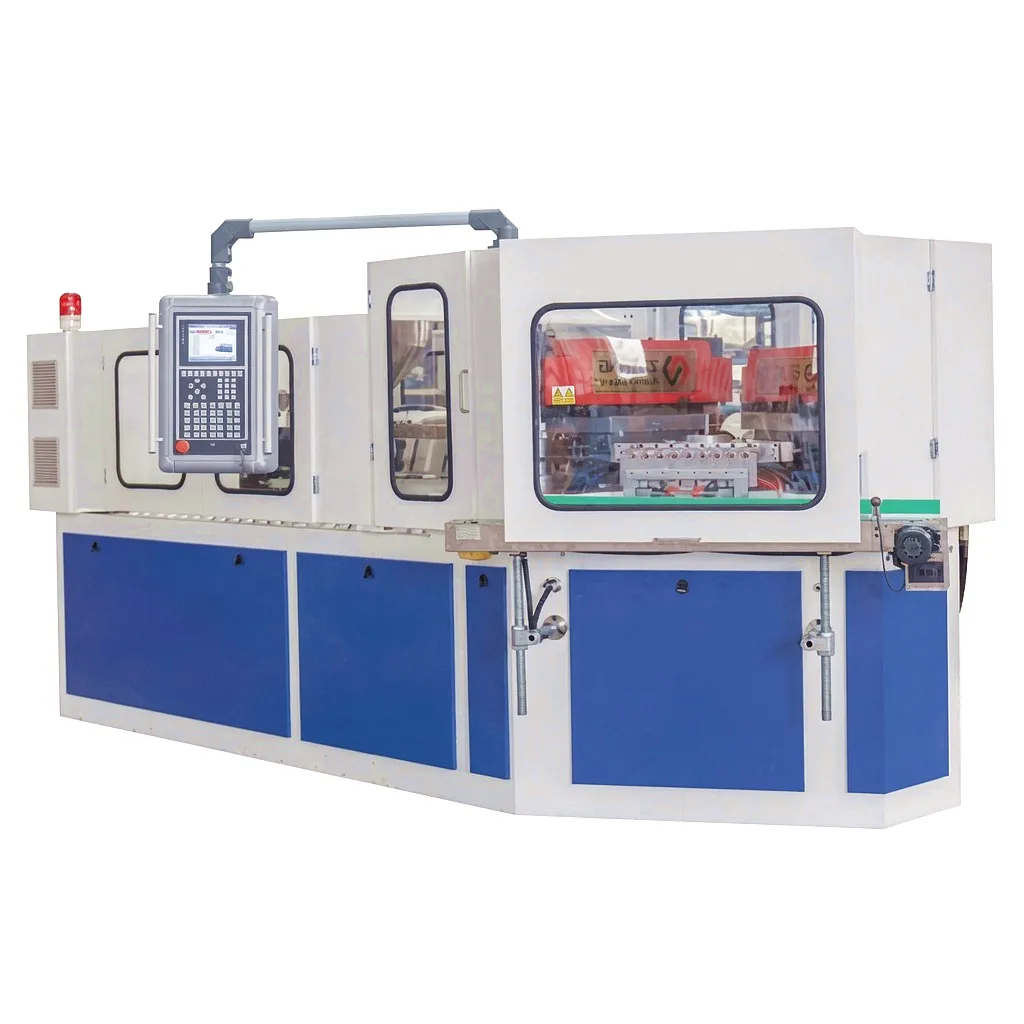
ZQ40 Injection-Blow Molding Machine
A compact, energy-efficient IBM machine with a 40 kN clamping force, all-electric servo drive, and Siemens PLC control. Designed for personal care, pharmaceutical, and cosmetics container production from 10 ml to 500 ml. Ideal for UK manufacturers seeking a space-saving, high-precision platform with minimal scrap output and rapid tooling changeover.
EUROPEAN SERIES
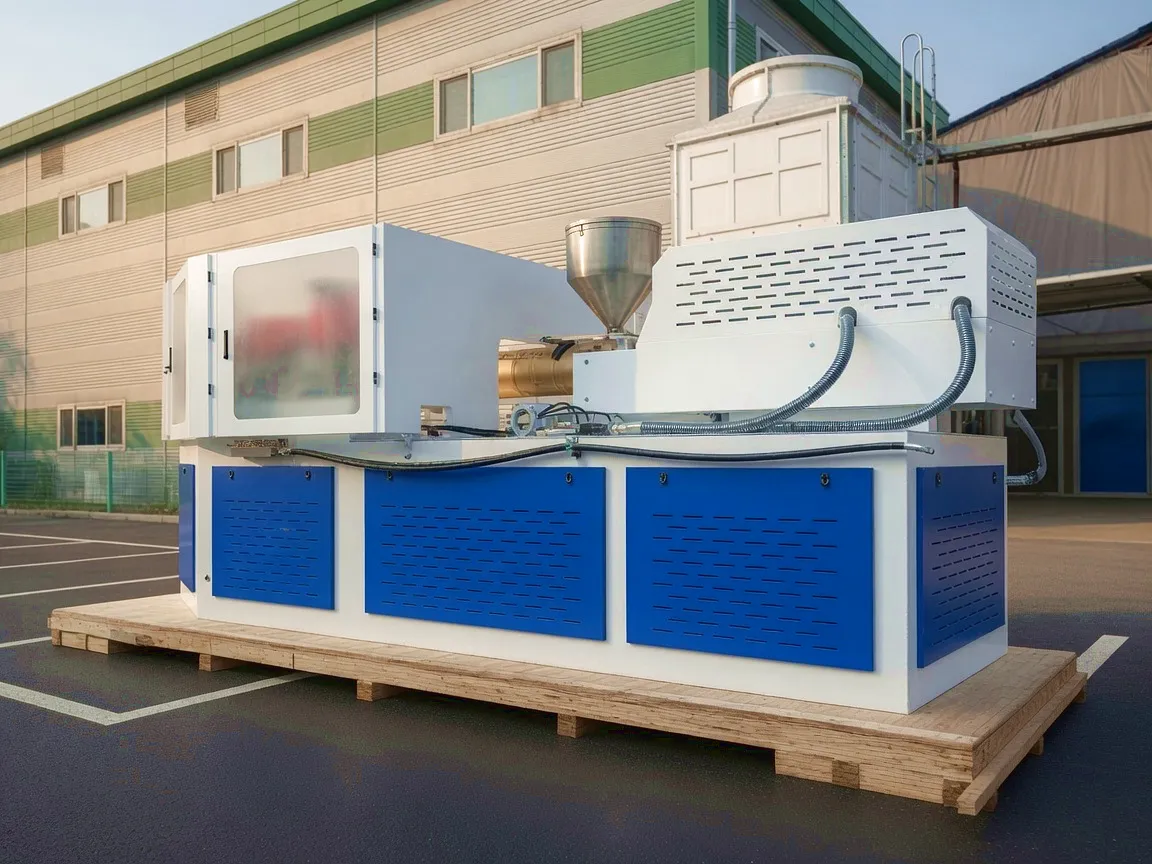
ZQ60 Injection-Blow Molding Machine
The ZQ60 steps up clamping force to 60 kN and injection volume to 60 cm³, unlocking 6- to 8-cavity tooling for high-output personal care production. Compatible with HDPE, PP, PET, and engineering polymers, it features a servo-hydraulic hybrid drive system for peak-load efficiency and a 10-inch Siemens touch-screen HMI with full recipe management. The preferred choice for contract packagers supplying major supermarket own-label bath and shower ranges across the UK.
Further Industrial Application Scenarios for Injection-Blow Molding Machines
Ever Power Manufacturing Capability & Customisation Services
Manufacturing Highlights
- Dedicated IBM machine assembly shop — 4,800 m²
- CNC machining centre with ±0.005 mm repeatability
- In-house mould tooling division (P20 and H13 steel)
- Full hydraulic and electrical test bench before dispatch
- CE-marked machines for European and UK market entry
- ISO 9001:2015 certified quality management system
- Spare parts warehouse with 48-hour global dispatch
Ever Power has been engineering injection blow molding machines for over two decades, supplying packaging manufacturers across the UK, Europe, and beyond. Our customisation capability extends well beyond colour or voltage adaptation. Every injection blow molding machine we build can be specified to a customer’s precise container family — from the core rod diameter and injection cavity geometry through to the blow mould cooling circuit layout and the PLC parameter screens displayed in the language of the operator’s choice. For UK buyers, this means receiving a machine pre-configured to 415 V / 50 Hz three-phase supply, with CE marking documentation, a UK-format electrical schematic, and an English-language operator manual — not a translated afterthought, but a designed-in standard.
Our supply chain is structured to support cosmetics manufacturers who cannot tolerate long lead times. Core mechanical components — tie bars, platens, injection barrels, and servo drives — are held in buffer stock, allowing accelerated build schedules when UK customers face urgent line commissioning timelines. Technical support is provided through a combination of remote diagnostics via the machine’s built-in Ethernet interface and a network of certified field engineers based within the UK, capable of on-site response within 48 hours for mainland locations including Birmingham, Leeds, Manchester, and Bristol. For Scotland and Northern Ireland, extended on-site support agreements are available.
Discuss your container project with Ever Power’s applications engineering team.
Customer Success Story: Contract Packaging Manufacturer, West Yorkshire
Case Study · Leeds, West Yorkshire · Personal Care Contract Packaging
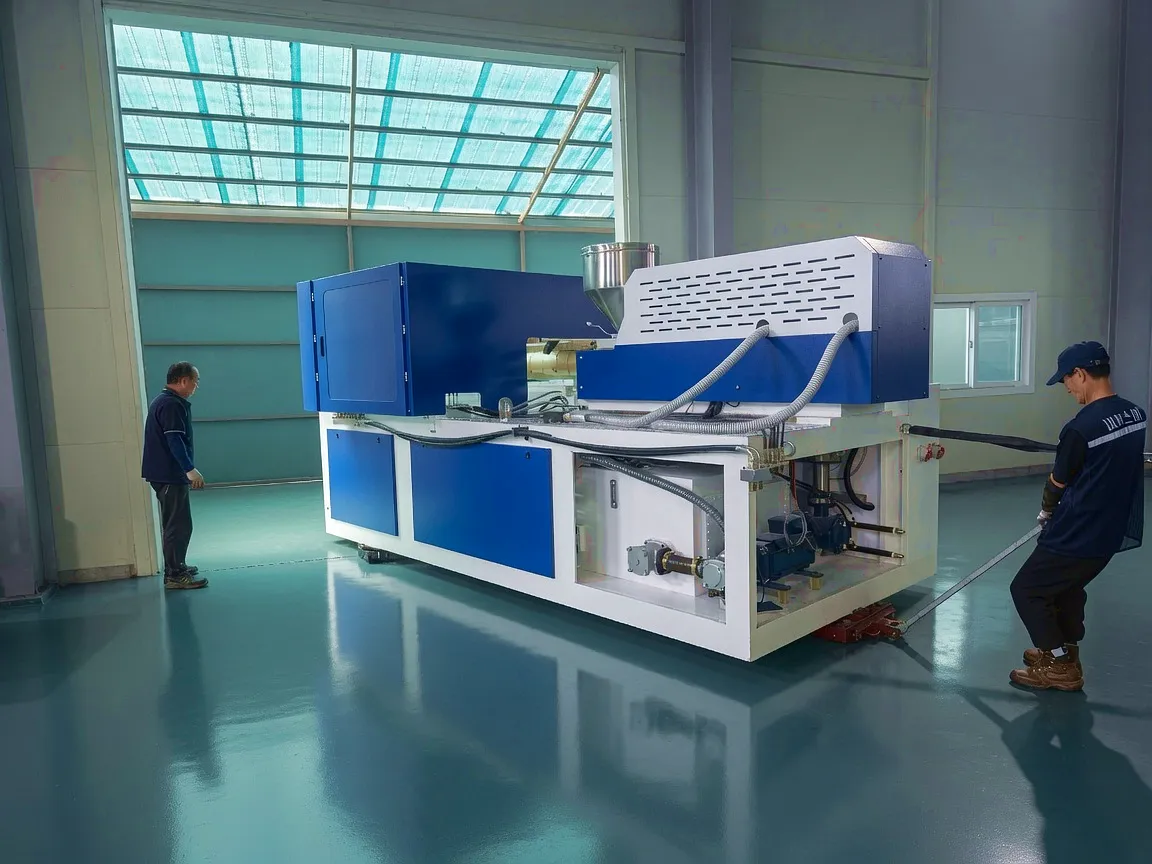
A mid-sized contract packaging operation based in the Leeds industrial corridor approached Ever Power in mid-2024 facing a specific challenge. Their existing extrusion blow molding line was producing 500 ml shampoo bottles for a major own-label supermarket contract, but rejection rates at the customer’s filling plant had risen to over 4.2% — primarily due to neck-finish inconsistency causing pump misalignment on the automated filling line. The cumulative cost of downtime, rework, and supermarket penalty charges was threatening the profitability of the contract. The packaging manager attended a machinery exhibition in Birmingham and was introduced to the Ever Power ZQ60 European injection blow molding machine.
After a detailed feasibility assessment — including a factory audit of the Leeds site by an Ever Power applications engineer — a ZQ60 configured for six-cavity 500 ml HDPE tooling was commissioned. The machine was built to UK electrical standards, pre-acceptance tested at the Ever Power facility with a sample run of 5,000 bottles, and installed on a turnkey basis with the full auxiliary package including a mould temperature controller, gravimetric blender, and conveyor integration to the existing filling line.
Within the first full production month, the rejection rate at the customer’s filling plant dropped from 4.2% to below 0.3%. Neck-finish measurements on randomly sampled bottles across the run showed thread-pitch variation within ±0.07 mm — well inside the 28/410 closure specification. The Leeds facility subsequently extended its supermarket contract by two years and ordered a second ZQ40 unit for a 200 ml conditioner bottle line, using the same tooling investment approach of customer-specific blow cavities with Ever Power-supplied core rods.
What Our UK Customers Say
★★★★★
“The ZQ60 has transformed our neck-finish consistency on the 28/410 pump bottle line. We went from constant pump misfeed stoppages to running 400 bottles a minute with zero closure issues. Ever Power’s engineers understood our problem from day one — the custom core rod geometry they specified was spot on.”
Production Director
Contract Packaging Manufacturer · Leeds, West Yorkshire
★★★★★
“We specified a bespoke 150 ml oval PET shower gel bottle with a panelled grip section — not a standard shape. Ever Power designed and manufactured the blow tooling in-house to our 3D drawing, delivered it with the ZQ40, and we were into production within nine weeks of order. The surface gloss on the PET bottles is outstanding — clients think they are glass.”
Packaging Development Manager
Premium Cosmetics Brand · Birmingham, West Midlands
★★★★★
“Spare parts availability was our biggest concern before purchasing — we had bad experiences with other Asian machine suppliers where parts took months. Ever Power holds a full stock of wear items and major assemblies. We had a screw barrel replaced and back in production within 36 hours, which is exactly what you need when you are running 24/7 on a major retail contract.”
Engineering Manager
Household & Personal Care Manufacturer · Manchester, Greater Manchester
Frequently Asked Questions
Ever Power · Injection Blow Molding Specialists
Ready to Upgrade Your Personal Care Container Line?
Speak with an Ever Power applications engineer about your project requirements — from single-machine supply to complete turnkey line solutions for UK manufacturing sites.
edit by gzl