Description
Replacement of Jomar IBM85S Injection Blow Molding Machine – ZQ80
Disclaimer: The Jomar IBM85S name is referenced solely to assist customers with equipment selection and direct comparison. We do not manufacture, sell, or represent Jomar products. The ZQ80 is an independent product developed and produced entirely by our engineering team.
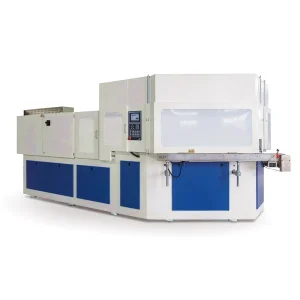
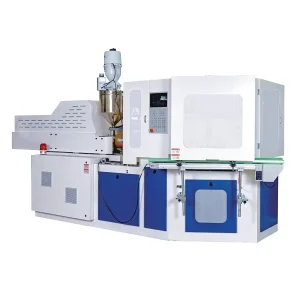
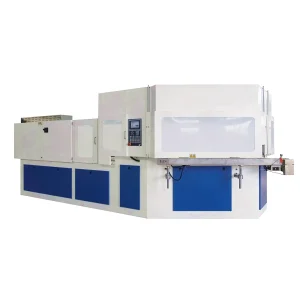
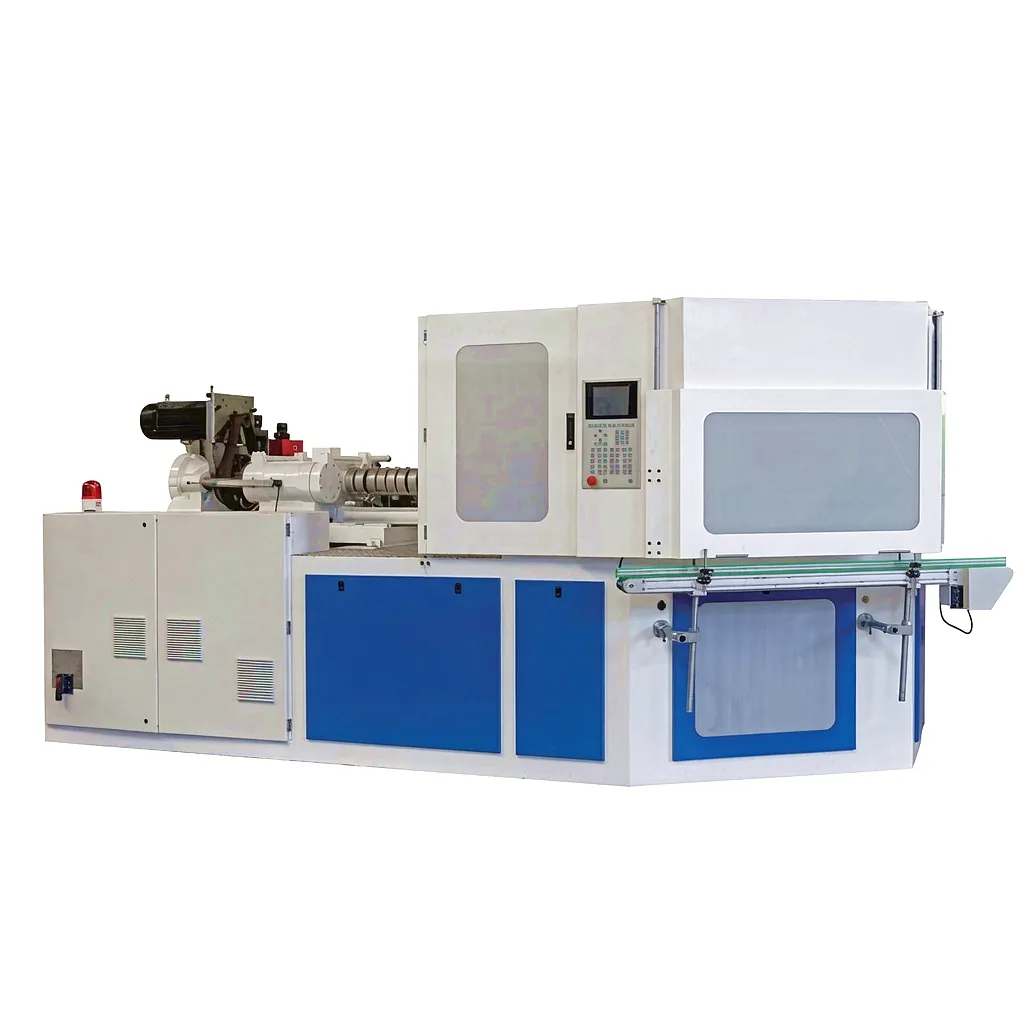 The EP ZQ80 is a full European-architecture injection blow molding machine rated at 80 tonnes clamping force, engineered as a direct functional alternative to the Jomar IBM85S for UK pharmaceutical, personal care, and food-grade packaging producers. With 466 g injection weight — 55% more than the IBM85S’s 300 g — and an 800 KN injection clamping force that outperforms equivalent-class machines from Jomar (680 KN), SUMA (720 KN), and Bloma (700 KN), the ZQ80 delivers measurable productivity gains from day one. Its pressurised hydraulic double system and high-precision angle divider make it equally at home producing BPA-free HDPE bottles, pharmaceutical vials, and multi-cavity cosmetic containers across cavitation counts from 3 to 20 nests per shot.
Why UK Manufacturers Choose the ZQ80 Over the Jomar IBM85S
20–30% Greater Clamping Force
Full European-style structure delivers 800 KN injection clamping force — 17% higher than the Jomar IBM85S’s 680 KN — reducing flash, improving neck finish consistency, and allowing higher-cavitation tooling at the same operating pressure. UK converters running BPA-free HDPE and PP pharma bottles report measurably fewer rejects per shift after switching to the ZQ80 platform.
55% Higher Injection Weight
At 466 g per shot versus the IBM85S’s 300 g, the ZQ80 handles larger preform volumes and wider bottle geometries without material starvation. This is especially relevant for 500 ml to 1,000 ml personal care and pharmaceutical packaging where shot consistency directly impacts label-sleeve fit and filling-line throughput. The 55 mm screw diameter matches Jomar’s specification while the 22:1 L/D ratio ensures thorough plasticisation of both standard and recycled-grade resins.
20–30% Lower Energy Consumption
The ZQ80’s unique pressurised clamping architecture means the booster cylinder sits out of the open/close cycle entirely. The hydraulic double system handles all motion loads, cutting idle-energy draw by 20–30% compared with conventional designs of equivalent tonnage. With UK industrial electricity costs running above 25 p/kWh in 2025, this translates to meaningful annual savings for high-shift packaging operations without any sacrifice in cycle time.
Oversized Mould Platen — 800 x 400 mm
The ZQ80’s 800 x 400 mm max platen size dwarfs the Jomar IBM85S’s 464 x 749 mm footprint in a landscape direction, allowing UK toolmakers to mount wider multi-cavity blocks or transition existing cavity layouts without expensive custom adaptors. Combined with the 280 mm mould-thickness capacity and 230 mm stripping stroke, the ZQ80 accepts a range of production moulds across bottle diameters up to 120 mm and heights to 220 mm, from nasal spray vials to 1,000 ml household cleaning bottles.
Standard High-Precision Angle Divider
Unlike machines that treat the angle divider as an optional extra, the ZQ80 ships with a precision-machined high-accuracy angle divider as standard. This component synchronises the opening and closing and turret-lifting motions simultaneously, eliminating the micro-positional drift that leads to gate-witness marks and neck ovality. For UK pharmaceutical producers subject to MHRA Good Manufacturing Practice documentation requirements, this mechanical precision supports process validation and reduces qualification time significantly.
Compact Footprint — 4.5 x 1.6 x 2 m
At 4.5 x 1.6 x 2 m the ZQ80 occupies a smaller floor envelope than both the SUMA 85iB (4.5 x 2 x 2.6 m) and Bloma IBM85 (620 x 430 x 2.55 m), making it well suited to UK cleanroom production bays and older factory shells with ceiling-height constraints. The 10-tonne net weight simplifies crane planning and concrete-loading calculations, while the 4-second dry cycle keeps overall OEE competitive across both small-batch and high-volume pharmaceutical and cosmetics runs.
Working Principle: How the ZQ80 Injection Blow Molding Machine Operates
The ZQ80 operates on the three-station rotary principle common to all injection blow molding machines — but executes each station with European-specification components that eliminate the quality compromises found in lighter-duty equivalents. At Station 1, raw polymer pellets (typically HDPE, PP, or PET) are melted and injected around a hardened steel core rod at 800 KN injection clamping force through a 55 mm diameter screw running at 22:1 L/D. The parison formed at this stage determines the final bottle’s wall distribution and neck geometry, which is why the ZQ80’s 466 g shot capacity and 4+N heating zones matter: they ensure material temperature uniformity even when processing high-viscosity medical-grade resins. At Station 2, the indexed core rod — carrying the hot parison — enters the blow mould, where 0.7–1.2 MPa compressed air stretches the parison radially against a precision-machined cavity to form the finished bottle at 120 KN blow clamping force. At Station 3, the bottle is stripped from the core rod by the 230 mm stripping stroke mechanism, routed to the downstream conveyor, and the cycle restarts in 4 seconds. The complete sequence is governed by a PLC-controlled hydraulic system running at 14 MPa system pressure, with all motion axes coordinated through the high-precision angle divider to eliminate indexing error between stations.
Material versatility is central to the ZQ80’s appeal for UK converters. The machine processes HDPE, LDPE, PP, PET, and engineering-grade resins including TPE and pharmaceutical-grade PP without screw or barrel changes in most cases. The 4+N barrel zone configuration means temperature profiles can be tuned precisely for each resin grade, preserving molecular integrity across the entire shot volume. For BPA-free personal care packaging — a growing segment across UK online retail and pharmacies — this controlled thermal profile is the difference between cosmetically acceptable and rejected containers.
ZQ80 Mold Cavitation Guide (For Reference)
| Volume (ml) | 10 | 30 | 60 | 100 | 250 | 500 | 1000 |
|---|---|---|---|---|---|---|---|
| Max. Cavitation | 20 | 18 | 14 | 12 | 8 | 5–6 | 3–4 |
Technical Specifications — ZQ80 Injection Blow Molding Machine
| System | Item | Unit | ZQ80 |
|---|---|---|---|
| Injection System | Screw Diameter | mm | 55 |
| Screw L/D | % | 22:1 | |
| Injection Weight | g | 466 | |
| Heating Power | KW | 18 | |
| Number of Barrel Zones | — | 4+N | |
| Injection Stroke | mm | 180 | |
| Clamping System | Clamping Force of Injection | KN | 800 |
| Opening Stroke for Injection | mm | 140 | |
| Clamping Force of Blowing | KN | 120 | |
| Opening Stroke for Blowing | mm | 140 | |
| Lifting Height of Rotary Table | mm | 70 | |
| Mould | Max. Platen Size (L x W) | mm | 800 x 400 |
| Mould Thickness | mm | 280 | |
| Max. Bottle Diameter | mm | 120 | |
| Max. Bottle Height | mm | 220 | |
| Suitable Bottle Volume | ml | 1–2000 | |
| Stripping Stroke | mm | 230 | |
| Hydraulic System | Hydraulic Pressure | MPa | 14 |
| Motor Power | KW | 18.5 + 18.5 | |
| Dry Cycle | s | 4 | |
| Total Power / Operating Power | KW / % | 55 / 52–70 | |
| Utilities | Min. Compressed Air Pressure | MPa | 0.7–1.2 |
| Compressed Air Capacity | M³/min | 0.7 | |
| Water Flow | M³/h | 4 | |
| Cooling Water Pressure | MPa | 0.3–0.4 | |
| Machine Dimensions | Overall Dimensions (L x W x H) | M | 4.5 x 1.6 x 2 |
| Net Weight | Ton | 10 |
Note: Parameters above are for reference only. Due to ongoing improvement, the manufacturer reserves the right to modify specifications without prior notice.
ZQ80 vs. Jomar IBM85S — Side-by-Side Comparison
Brand names of third-party machines are mentioned below for equipment-selection reference only. We have no affiliation with those manufacturers.
| Parameter | ZQ80 (Ours) | Jomar IBM85S | SUMA 85iB | Bloma IBM85 |
|---|---|---|---|---|
| Injection Clamping Force | 800 KN | 680 KN | 720 KN | 700 KN |
| Injection Weight | 466 g | 300 g | 333/480 g | 310/280 g |
| Screw Diameter | 55 mm | 55 mm | 50/60 mm | 50 mm |
| Max. Platen Size | 800 x 400 mm | 464 x 749 mm | 700 x 400 mm | 620 x 430 mm |
| Machine Footprint (L x W x H) | 4.5 x 1.6 x 2 m | 3.33 x 1.94 x 3.41 m | 4.5 x 2 x 2.6 m | 620 x 430 x 2.55 m |
| Dry Cycle | 4 s | — | — | — |
Auxiliary Equipment & Complete Production Line
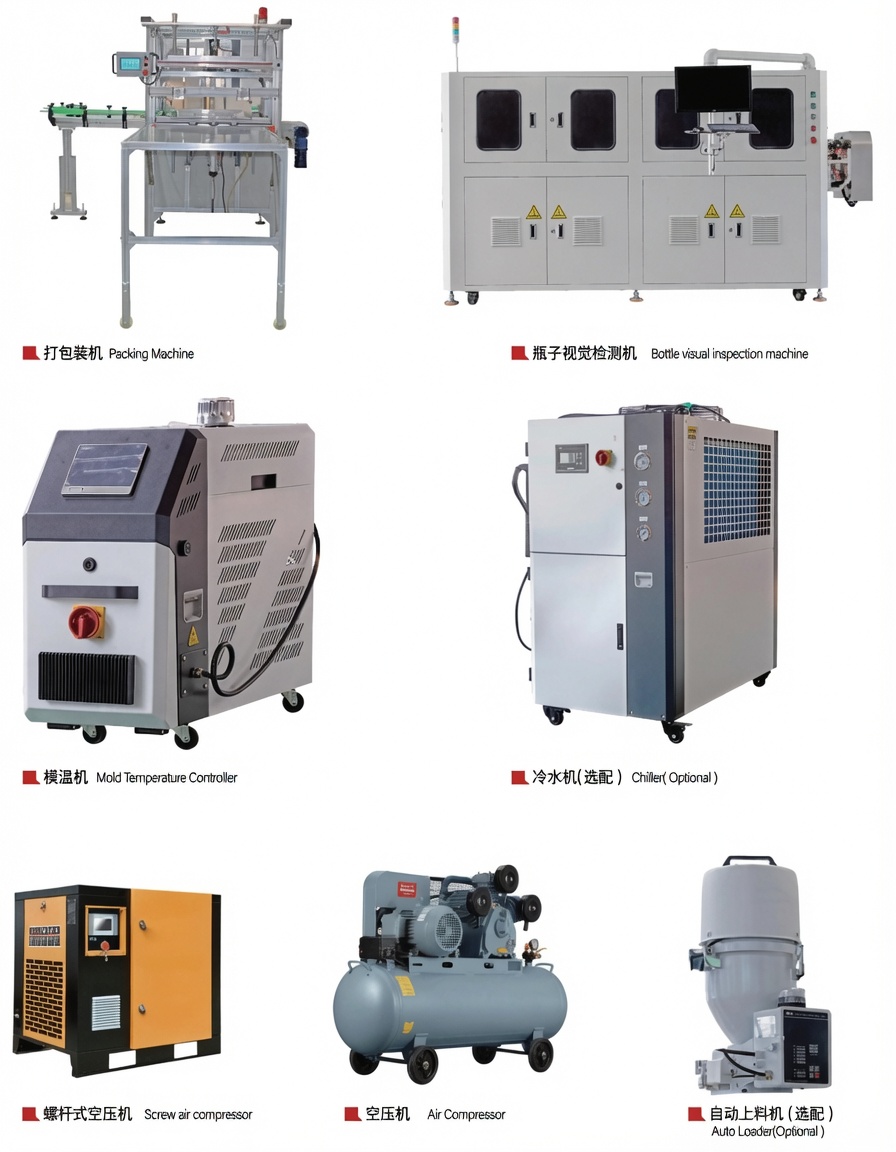
A complete injection blow molding production line around the ZQ80 typically includes a material dryer to reduce moisture in hygroscopic resins to below 0.02% before the barrel, a chiller unit maintaining mould-temperature control between 8 and 25 degrees Celsius, and a conveyor with vision inspection or leak-test station downstream. For UK pharmaceutical customers producing injectables or oral-dose packaging, a positive-pressure enclosure or laminar-flow hood over the takeout area is standard. Our engineering team can advise on line integration and utilities planning to suit your factory’s existing compressed air infrastructure and water-cooling capacity.
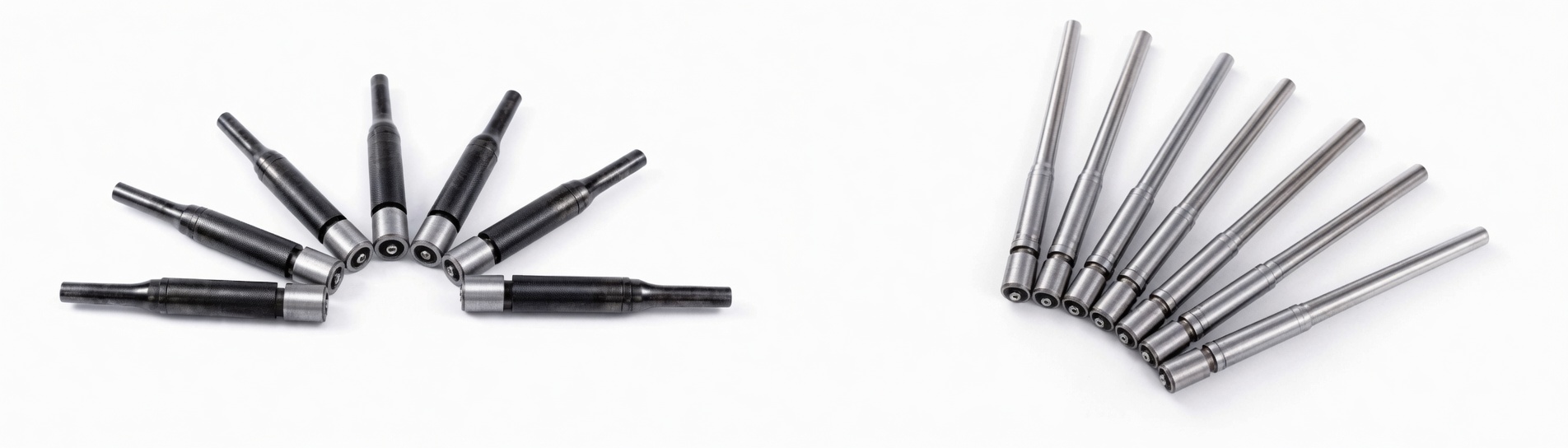
Products Made on the ZQ80 Injection Blow Molding Machine
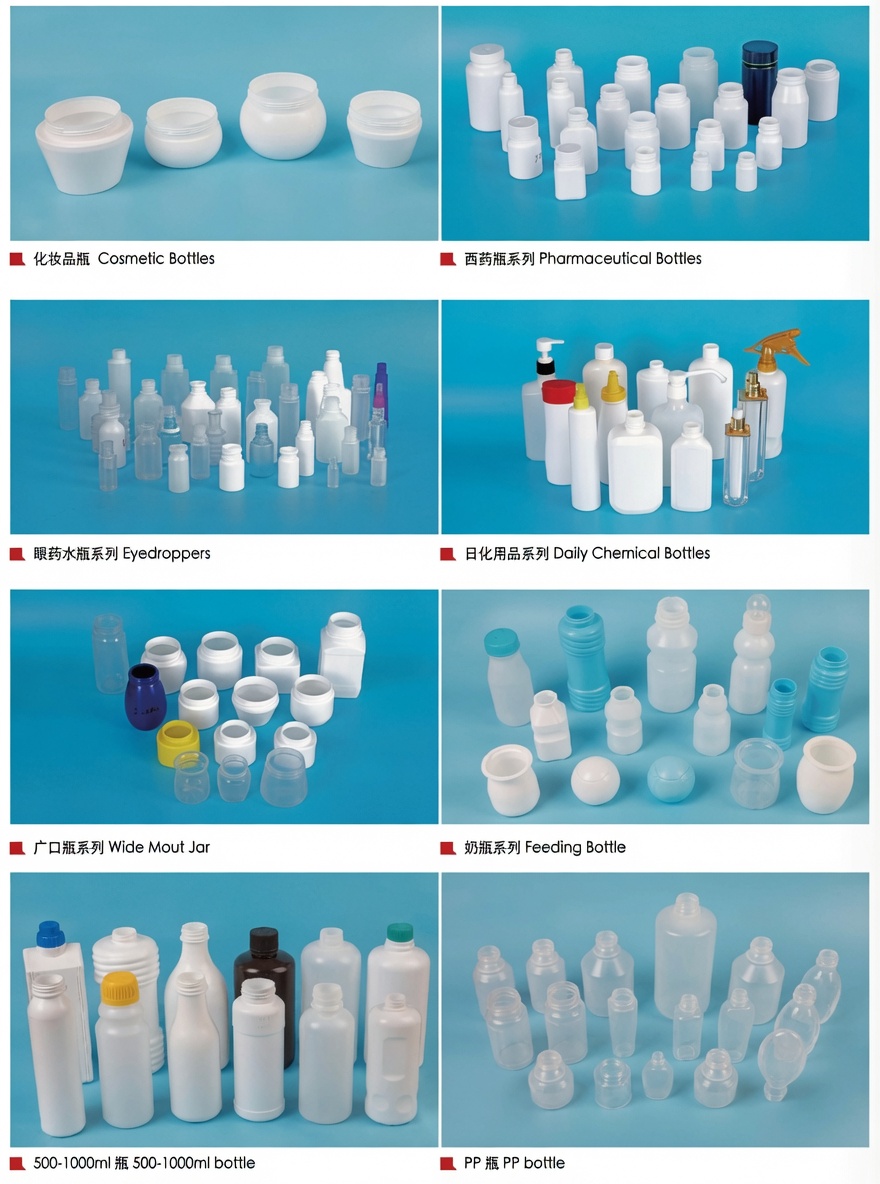
The ZQ80 excels across packaging formats that demand tight neck tolerances and consistent wall distribution — areas where the injection blow molding process outperforms ISBM and extrusion blow alternatives. Typical products from UK customers include HDPE pharmaceutical pill bottles from 30 ml to 500 ml, PP cosmetic lotion bottles and pump-top containers, BPA-free baby care bottles, LDPE nasal spray vials with controlled neck bore, and 250–1,000 ml household cleaning product bottles. The wide cavitation range — from 20-up at 10 ml to 3–4 up at 1,000 ml — means the same machine platform serves both the high-volume OTC pharmaceutical segment and the lower-volume premium personal care niche within a single production environment.
Customer Success Story
Northern England Pharmaceutical Converter Cuts Reject Rate by 34% After Switching to ZQ80
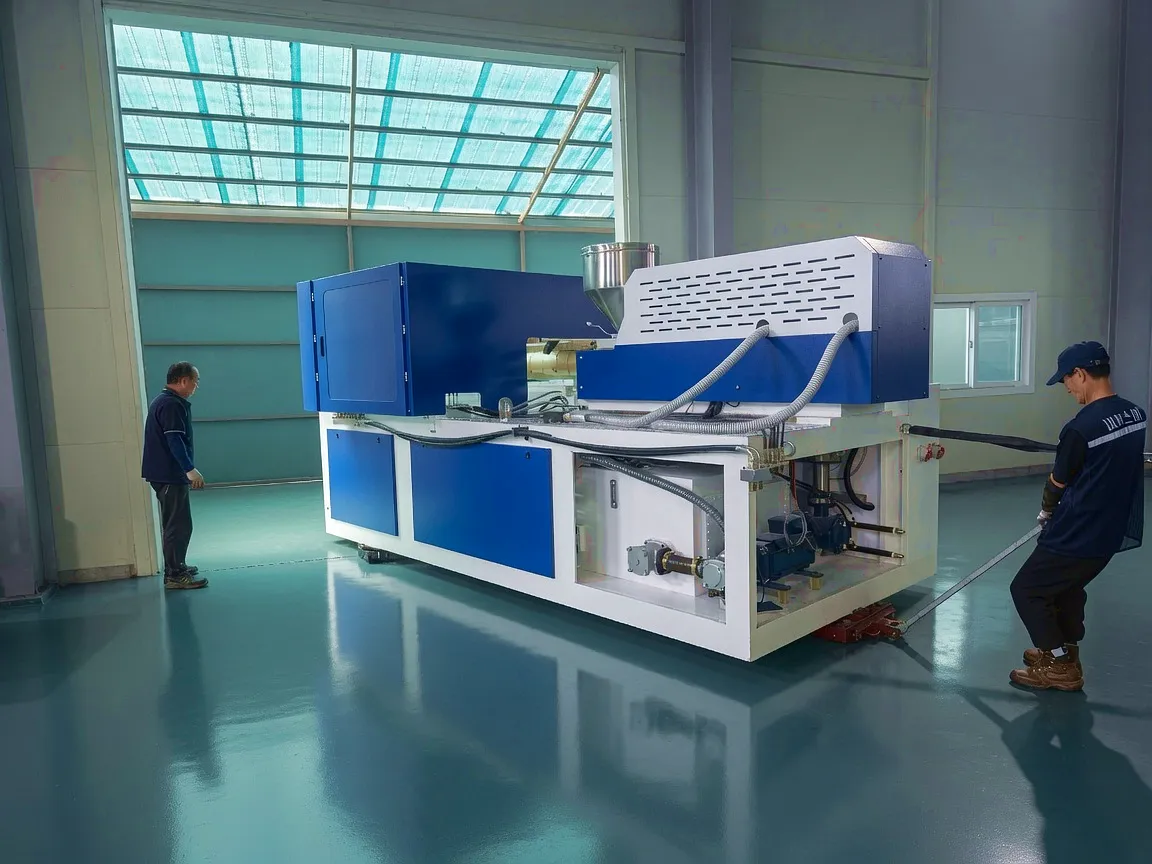
A mid-sized contract packaging manufacturer based in West Yorkshire had been operating a pair of Jomar IBM85S units running two-shift production of 100 ml HDPE tablet bottles for NHS-supply pharmaceutical clients. Recurring neck-ovality rejections at the filling line — typically running at 4.5% per shift — were adding meaningful material waste and rework costs each month. After evaluation, they commissioned two ZQ80 units in Q2 2024, retaining their existing 12-cavity moulds by fitting a simple platen adaptor plate.
Within six weeks of commissioning, reject rate had fallen to 2.9%, attributable primarily to the ZQ80’s 800 KN injection clamping force eliminating parting-line flash on the neck thread. The energy monitoring data from their site showed a 22% reduction in kWh per 1,000 bottles compared with the previous IBM85S baseline — consistent with the ZQ80’s lower operating-power profile. The production manager noted that the standard high-precision angle divider eliminated a periodic maintenance task they had previously performed every 200 hours on the Jomar units, freeing a significant block of preventive maintenance time per quarter.
“The injection clamping force difference was immediately visible in our neck-thread quality. We stopped holding bottles up to the light to check for flash after the first week. ROI calculation came in under 18 months factoring in reject savings and energy reduction alone.”
— Production Manager, Pharmaceutical Contract Packager, West Yorkshire, UK
What Our Customers Say
“We needed a machine that could handle BPA-free PP at high cavity count without costing us floor space. The ZQ80 ticks both boxes. The commissioning team resolved our mould adaption in two days.”
Operations Director, Personal Care Manufacturer — Manchester, UK
“Price was competitive versus European-built alternatives and the lead time was realistic. Documentation for process validation was complete and well-structured, which matters for our GMP audit trail.”
Quality Manager, Nutraceutical Packaging — Birmingham, UK
“The energy figures are not marketing claims — we logged them against our previous machine over three months. Running costs dropped noticeably per shift. Spare parts availability has been good and the response time on technical queries is quick.”
Plant Engineer, Household Products Converter — Leeds, UK
Manufacturing Capability & Customisation
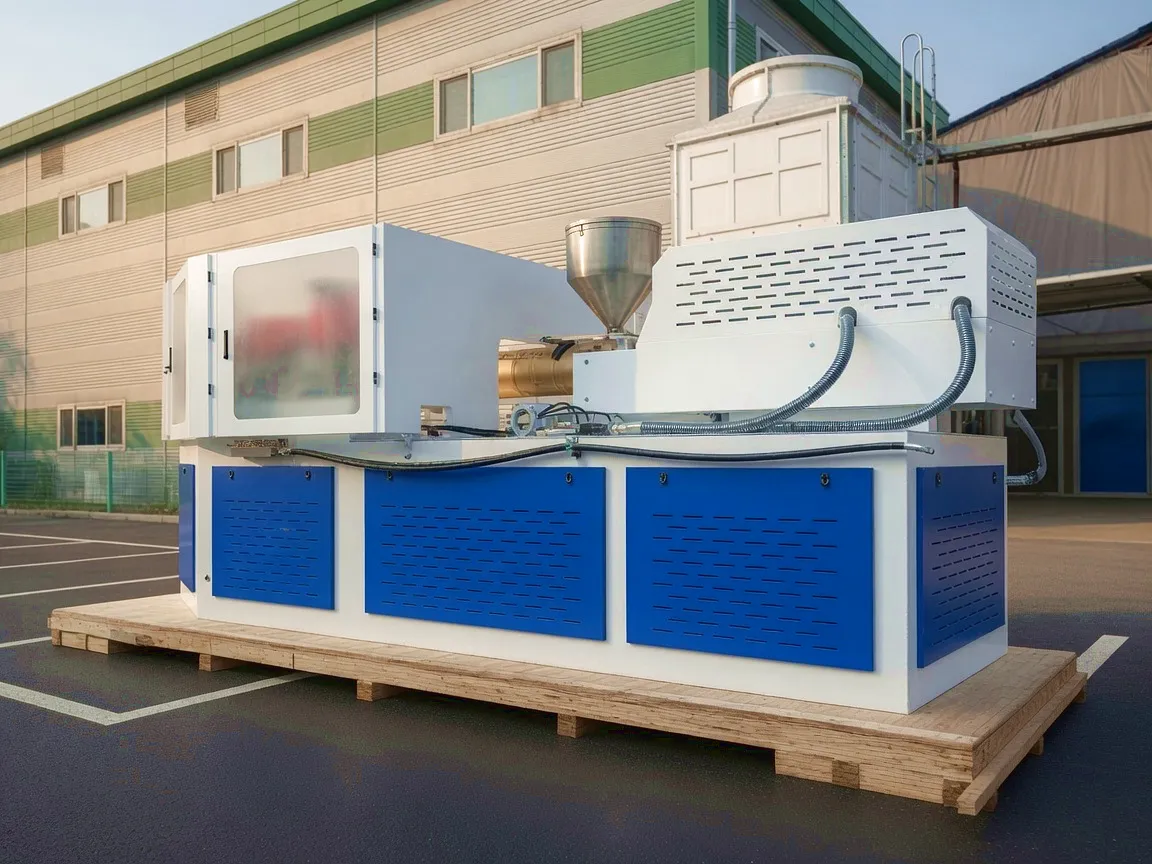
Our production facility operates across a purpose-built 60,000 m² campus with dedicated machining, assembly, and testing halls equipped with precision CNC turning and boring centres, hydraulic test rigs capable of full-pressure cycling before despatch, and a dedicated mould-matching bay where customer tooling can be validated before shipment. Over 3,000 injection blow molding projects have been commissioned through this facility, serving customers across the pharmaceutical, personal care, food and beverage, and chemical packaging sectors worldwide. Sixty-eight registered patents underpin the engineering differentiation in the ZQ80’s clamping architecture, angle-divider design, and hydraulic control system.
Customisation is a core service, not an afterthought. UK customers regularly request modifications including upgraded PLC control packages with data-logging outputs compatible with OEE monitoring platforms, stainless-steel contact-part options for food-contact or pharmaceutical applications, custom barrel configurations for speciality resins, CE-marked electrical panels built to UK/EU LV Directive standards, and non-standard platen spacer sets to accommodate existing mould libraries from legacy machines. Our engineering team works directly with your toolroom and process engineering staff to define the correct specification before order, reducing on-site commissioning time and avoiding costly field modifications.
Related Injection Blow Molding Machines
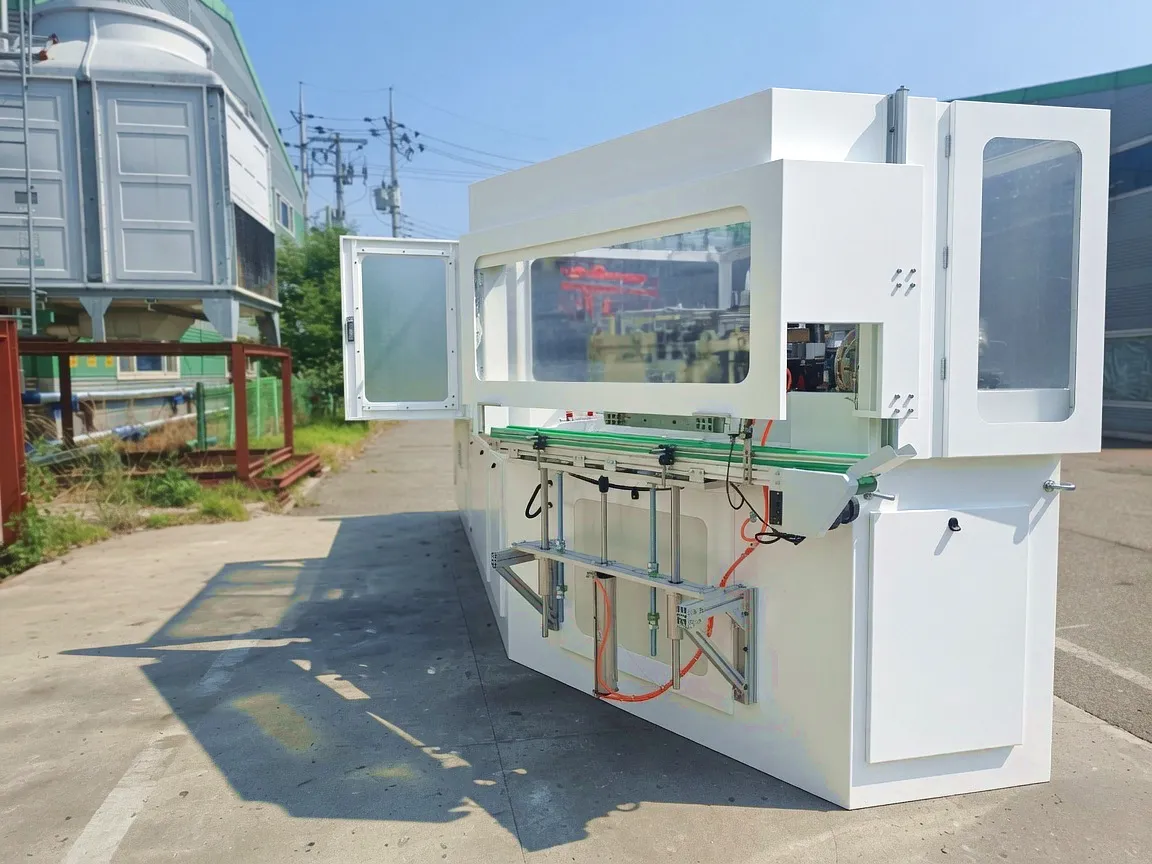
If your production requirements call for a different clamping tonnage or cavitation configuration, our extended IBM range covers the full spectrum. The HGYS200-V4 injection blow molding machine targets high-output pharmaceutical and personal care lines requiring 200-tonne class clamping with multi-layer co-injection capability, making it well suited to barrier-packaging applications in UK life sciences. For converters requiring a more compact platform focused on single-serve and travel-size containers, the HGYS150-V4-EV injection blow molding machine offers an energy-optimised servo-hydraulic variant at the 150-tonne tier, with reduced footprint and lower utility consumption suitable for cleanroom bay installations common in UK pharmaceutical secondary packaging environments.
HGYS200-V4
200-tonne class IBM machine for high-volume pharmaceutical and personal care packaging. Click to view full specification.
HGYS150-V4-EV
Energy-optimised 150-tonne servo-hydraulic IBM machine. Compact cleanroom-ready footprint for UK pharma secondary packaging.
Frequently Asked Questions
Ready to upgrade your injection blow molding line? Request a technical quote today.
edit by gzl